Garmin doesn’t overhaul the Fenix line lightly, which is why the Fenix 8 immediately feels different in a way previous generational updates didn’t. This isn’t a faster chip or a handful of new metrics layered onto the same philosophy. The shift to an AMOLED display and a genuinely dive-rated design marks a redefinition of what a Fenix is meant to be, not just what it can track.
If you’ve followed Garmin closely, you’ll recognize how deliberate this move is. For years, Fenix stood as the last major holdout for memory-in-pixel displays, prioritizing endurance, readability, and reliability over visual flair. At the same time, Garmin kept dive features siloed in the Descent line and lifestyle polish in Epix, while competitors blurred those boundaries. Fenix 8 pulls those threads together, and in doing so, reshapes the entire high-end multisport landscape.
What follows is a clear-eyed look at why this launch matters, where the real gains are, and where long-time Fenix users may need to recalibrate expectations before hitting the upgrade button.
AMOLED finally becomes core Fenix DNA
The headline change is the move to an AMOLED display as a standard, not an alternative. This isn’t simply about brighter colors or smoother animations; it fundamentally alters how the Fenix feels in daily use. Maps are more legible at a glance, data fields pop in high-contrast conditions, and the watch finally feels as polished indoors as it does on an exposed ridgeline.
🏆 #1 Best Overall

- Stylish Design, Vibrant Display: The lightweight aluminum build blends effortless style with workout durability, while the vivid 1.97" AMOLED display keeps your data easy to read, even under bright sunlight.
- All-in-One Activity Tracking: The Amazfit Bip 6 fitness tracker watch offers 140+ workout modes including HYROX Race and Strength Training, plus personalized AI coaching and 50m water resistance.
- Up to 14 Days Battery Life: The Amazfit Bip 6 smart watch powers through your training and recovery for up to two weeks at a time - no nightly charging needed.
- Accurate GPS Tracking & Navigation: Stay on course with free downloadable maps and turn-by-turn directions. Support from 5 satellite systems ensures precise tracking of every move and fast GPS connection.
- 24/7 Health Monitoring: The Amazfit Bip 6 smartwatch provides precise, real-time monitoring of heart rate, sleep, blood-oxygen and stress, empowering you with actionable insights to optimize your health and fitness.
Garmin’s challenge here is battery credibility, and the Fenix 8 walks a careful line. While it doesn’t match the marathon longevity of older MIP-based Fenix models in always-on scenarios, real-world use shows Garmin has tuned power management aggressively. With smart gesture controls, adaptive brightness, and activity-specific display behavior, it still lands in a different endurance class than Apple Watch Ultra and most AMOLED rivals, even if purists will notice the trade-off on multi-day expeditions.
A true dive-rated Fenix, not a feature add-on
The other seismic shift is underwater. Fenix 8 is dive-rated, not just water-resistant, and that distinction matters. This isn’t pool depth plus marketing language; the case construction, seals, buttons, and pressure tolerance are designed with scuba and freediving in mind, bringing Fenix closer than ever to Garmin’s Descent DNA.
That has real implications for who this watch is for. For multisport athletes who split time between trail, open water, and occasional recreational diving, the Fenix 8 eliminates the need for a second device. It doesn’t fully replace a dedicated technical dive computer for advanced or professional divers, but it comfortably covers the needs of certified recreational users while preserving the Fenix identity as an all-terrain tool.
Positioning against Epix, Ultra, and the old Fenix guard
With AMOLED and dive capability combined, the Fenix 8 effectively absorbs much of what made the Epix distinct, while still leaning harder into durability and outdoor-first ergonomics. The case remains unmistakably Fenix: substantial without being unwieldy, with robust bezel materials, glove-friendly buttons, and strap options that prioritize security over fashion, even if finishing has clearly been refined.
Against Apple Watch Ultra, the Fenix 8 doubles down on training depth, battery longevity, and offline reliability. Against Suunto and Polar, it reasserts Garmin’s software ecosystem advantage, from advanced training load analytics to navigation confidence. The real tension is internal: long-time Fenix users who loved MIP displays for their simplicity and endurance may feel this model isn’t aimed squarely at them, while users who’ve hovered between Epix and Fenix finally get a single, uncompromising option.
Who this shift is really for
The Fenix 8 makes the most sense for athletes and adventurers who want one watch that can handle daily wear, serious training, navigation, and underwater use without feeling compromised in any one area. It’s less about chasing trends and more about acknowledging how people actually use premium multisport watches in 2026: indoors, outdoors, and everywhere in between.
At the same time, this isn’t a mandatory upgrade for every Fenix 6 or 7 owner. If battery-first expeditions, solar-assisted endurance, and maximum simplicity matter more than visual richness, older models remain compelling. The Fenix 8 isn’t trying to replace those outright; it’s redefining the top of Garmin’s lineup for a broader, more visually demanding, and more cross-disciplinary audience.
From MIP to AMOLED: What the Display Change Really Means in Daily and Outdoor Use
The move from memory-in-pixel to AMOLED is the most emotionally charged change Garmin has ever made to the Fenix line, and it’s not just about looks. This shift directly affects how the watch behaves on your wrist, how often you interact with it, and how it balances clarity against endurance across very different environments.
For long-time Fenix users, the question isn’t whether AMOLED looks better. It’s whether it still feels like a Fenix when the terrain gets harsh, the light gets extreme, and the battery needs to last.
Readability: brightness versus reflectivity
MIP displays earned their reputation because they behave like paper under sunlight, becoming more legible the brighter it gets. AMOLED flips that logic, relying on high peak brightness and contrast rather than ambient reflection to remain readable outdoors.
On the Fenix 8, Garmin pushes AMOLED brightness high enough that maps, data fields, and navigation prompts remain clearly visible even under direct sun. In practice, this narrows the real-world readability gap far more than MIP loyalists might expect, especially when viewing dense topo maps or multi-field training screens.
Where MIP still has an edge is passive legibility. A Fenix 7 can be glanced at from almost any angle without waking the display, while AMOLED demands either always-on mode or a wrist gesture. Garmin’s gesture detection is reliable, but it’s still an active interaction rather than a passive one.
Always-on display and the new definition of “Fenix battery life”
Battery life is where the philosophical shift becomes tangible. With AMOLED, the Fenix 8 simply cannot match the weeks-long, solar-assisted endurance of older MIP-based Fenix models in comparable usage modes.
That said, Garmin has tuned power profiles aggressively. In smartwatch mode with always-on disabled, battery life still lands comfortably in multi-week territory for most users, and GPS endurance remains class-leading compared to Apple Watch Ultra and AMOLED-heavy rivals.
The key difference is predictability. MIP watches sip power regardless of how often you look at them, while AMOLED rewards disciplined settings. Users who live on always-on display, animated watch faces, and constant map interaction will see battery drop faster, but Garmin gives enough control that endurance can be shaped around how you actually use the watch.
Maps, metrics, and why AMOLED changes how you train
The strongest argument for AMOLED on a device like the Fenix 8 isn’t aesthetics, it’s information density. High-resolution color transforms how maps, heatmaps, and course lines are interpreted at a glance, especially when navigating complex terrain.
Training metrics also benefit. Power zones, heart rate trends, and recovery visuals are easier to parse mid-activity, reducing the cognitive load during hard efforts. This matters most for athletes who train by data rather than feel, and it’s where the Fenix 8 starts to feel more Epix-like without sacrificing button-driven control.
Garmin has kept touch optional and buttons primary, which preserves usability in rain, cold, or with gloves. AMOLED enhances the data; it doesn’t force a touchscreen-first interaction model.
Daily wear: from tool watch to true all-day smartwatch
In daily use, the AMOLED display fundamentally changes how the Fenix fits into non-training hours. Watch faces look richer, notifications feel clearer, and the watch finally blends into indoor environments rather than feeling optimized solely for the outdoors.
This is where the Fenix 8 quietly closes the gap with lifestyle-oriented smartwatches. While it still prioritizes durability over slimness, the visual upgrade makes it more acceptable as an all-day, all-context device rather than something you tolerate between workouts.
Comfort remains familiar. Case thickness and weight are still substantial, but the improved display reduces the need for exaggerated gestures or long screen-on times, which subtly improves day-to-day usability.
Underwater and low-light use: an unexpected AMOLED advantage
For dive and water-based activities, AMOLED introduces some meaningful benefits. High contrast and self-illuminating pixels improve visibility in low-light conditions where MIP displays rely heavily on backlighting.
During recreational dives, pool sessions, or early-morning open water swims, the screen remains crisp without aggressive backlight activation. Garmin’s choice to pair AMOLED with a dive-rated chassis reinforces that this isn’t just a lifestyle upgrade, but a functional one for environments where clarity matters more than passive visibility.
It’s also worth noting that AMOLED handles night mode and dimmed displays more gracefully, reducing eye strain during predawn starts or late-night navigation checks.
What MIP loyalists gain, and what they give up
For users coming from Fenix 6 or 7 models, the biggest gain is versatility. The watch adapts better to mixed indoor-outdoor lives, offers richer feedback during training, and feels more modern without losing Garmin’s core strengths.
What’s lost is simplicity. MIP-based Fenix watches excelled because they were visually quiet, relentlessly efficient, and almost indifferent to how often you looked at them. AMOLED introduces choice, settings, and trade-offs that some users never wanted to think about.
The Fenix 8 doesn’t invalidate that preference. It simply signals that Garmin believes the center of gravity for premium multisport users has shifted toward richer interaction, even in the wild.
Dive-Rated for Real: Water Resistance, Sensors, and How Serious Divers Should Read This
That AMOLED-versus-MIP debate matters even more once you go underwater, but display tech is only half the story here. With Fenix 8, Garmin is making a more explicit claim about aquatic credibility, and that shifts how this watch should be judged by swimmers, freedivers, and anyone eyeing light scuba use.
This is not just about surviving water exposure. It’s about whether the hardware, sensors, and software stack are aligned well enough that “dive-rated” actually means something beyond marketing language.
What Garmin means by “dive-rated” on Fenix 8
Garmin is positioning the Fenix 8 as genuinely capable below the surface, not merely water-resistant in the traditional 10 ATM sense. The case, seals, and buttons are designed to tolerate prolonged submersion, pressure changes, and repeated water exposure in ways earlier Fenix models were not formally framed to do.
Crucially, this places the Fenix 8 closer in philosophy to watches like Apple Watch Ultra and Suunto Ocean, rather than older Fenix generations that were excellent for swimming but carefully avoided dive terminology. Garmin still draws a clear line between Fenix and its Descent series, but the gap is narrower than it used to be.
For buyers, the takeaway is simple: this is the first Fenix that Garmin is comfortable discussing in a diving context, not just a multisport watch that happens to be waterproof.
Rank #2

- Stylish Design, Bright Display: The sleek stainless steel build blends classic style with workout durability, while the bright 1.32" AMOLED display keeps your data easy to read, even under bright sunlight.
- Precise Heart Rate and Sleep Tracking: Amazfit's BioTracker technology tracks your heart rate and sleep data with accuracy that previous sensors just can't match.
- Up to 10 Days of Battery Life: With long battery life that lasts up to 10 days with typical use, nightly recharges are a thing of the past.
- Free Maps with Turn Directions: Stay on-track with free downloadable maps, and get turn-by-turn guidance on-screen or via your Bluetooth headphones. Enjoy ski maps for global resorts, including guidance for cable cars, slopes, and more.
- Faster and More Accurate GPS Tracking: 5 satellite positioning systems ensure fast GPS connection and accurate positioning whenever you're out running, walking, cycling or hiking.
Sensors that matter underwater, and why they’re not all equal
A dive-rated claim lives or dies by its sensor suite. Beyond water resistance, accurate depth measurement, pressure stability, and temperature sensing become critical once you’re below the surface.
Garmin’s implementation focuses on recreational scenarios rather than technical diving. Depth tracking, dive timers, ascent awareness, and underwater activity logging are designed to be robust enough for casual scuba, freediving, and training use, while stopping short of replacing a dedicated dive computer for decompression-heavy profiles.
This is where experienced divers should slow down and read the fine print. If your dives involve gas switching, advanced decompression planning, or strict redundancy requirements, the Fenix 8 is still not the tool Garmin intends you to rely on exclusively.
Buttons, touchscreen behavior, and real-world underwater usability
One of the understated improvements tied to the dive-rated design is physical control reliability. Touchscreens, even good ones, are notoriously inconsistent underwater, and Garmin continues to lean heavily on button-based navigation for submerged use.
The buttons themselves feel familiar if you’ve worn a recent Fenix: firm, well-spaced, and easy to operate with gloves. What’s new is the confidence with which Garmin expects you to use them underwater, without caveats or workarounds.
The AMOLED display plays a role here too. High contrast and emissive pixels help readability in murky water or shaded environments, where reflective displays can struggle unless backlighting is aggressively engaged.
How this compares to Apple Watch Ultra and Suunto’s dive-first approach
Against Apple Watch Ultra, the Fenix 8 takes a more conservative but arguably more rugged stance. Apple leans on third-party apps and EN-standard positioning to validate its dive claims, while Garmin integrates dive features into its broader multisport ecosystem with familiar controls and training context.
Suunto, meanwhile, approaches this from the opposite direction. Its dive heritage runs deep, but its smartwatch software and daily usability lag behind Garmin’s in areas like training load, recovery analytics, and cross-sport continuity.
Fenix 8 sits between those worlds. It is less dive-specialized than a Descent or a Suunto dive computer, but more purpose-built for underwater use than any previous Fenix.
Who should trust the Fenix 8 underwater, and who shouldn’t
If your water time revolves around swimming, pool training, open-water sessions, snorkeling, freediving, or occasional recreational scuba, the Fenix 8’s dive-rated design is meaningful. It adds confidence, clarity, and durability where earlier Fenix models asked you to assume rather than know.
If diving is your primary activity and your safety depends on advanced dive planning, redundancy, and compliance with strict standards, this is still a secondary device. Garmin’s own lineup quietly reinforces that by keeping the Descent series separate.
For everyone else, the Fenix 8 marks a real shift. It’s no longer just a land-first multisport watch that tolerates water. It’s a watch Garmin expects you to take underwater on purpose, and that expectation changes how the entire device should be evaluated.
Design, Case Sizes, and Wearability: How the Fenix 8 Balances Ruggedness with a Brighter Screen
After establishing that Garmin now genuinely expects the Fenix 8 to be used underwater, the physical design takes on new importance. This is the first Fenix where the display choice directly reshapes how the watch looks, wears, and behaves in daily use, not just how it performs in bright sunlight. The move to AMOLED is not cosmetic; it forces a rethink of thickness, bezel proportions, and overall visual presence.
AMOLED Comes to Fenix, Without Turning It Into an Epix Clone
Garmin has been careful not to let the Fenix 8 drift too far toward the Epix aesthetic. The AMOLED panel is brighter, higher contrast, and dramatically more legible indoors and underwater, but it sits within a familiar Fenix architecture defined by a raised bezel and protected display edge.
Unlike earlier MIP-based Fenix models, the screen no longer disappears in low-light environments or shaded terrain. That matters not just for maps and workouts, but for everyday interactions, where the Fenix 8 finally feels competitive with Apple Watch Ultra in perceived screen quality.
Importantly, Garmin has resisted flattening the watch into a slab of glass. The display is still visually recessed, which helps with impact protection and reduces glare at extreme angles, especially underwater or in harsh alpine light.
Case Sizes and Proportions: Familiar, but Subtly Refined
The Fenix 8 continues Garmin’s multi-size strategy, with smaller and larger case options designed to fit a wide range of wrists without fragmenting features. The proportions feel more balanced this generation, with thinner sidewalls and tighter tolerances around the bezel that make the watch look less bulky than previous Fenix models at the same diameter.
Thickness is still substantial compared to lifestyle smartwatches, but it’s more evenly distributed. The watch sits flatter on the wrist, reducing the top-heavy sensation that some users experienced with older Fenix designs, particularly during sleep tracking or long endurance sessions.
Weight remains dependent on material choice, but even the heavier variants feel better controlled. The mass is centered closer to the wrist, which improves stability during technical activities like trail running, climbing, or open-water swimming.
Materials, Finishing, and Dive-Driven Durability
Material options once again span stainless steel and titanium, paired with either standard glass or sapphire crystal. The dive-rated design reinforces the value of sapphire here, not just for scratch resistance but for peace of mind when the watch is exposed to sand, rocks, or dive gear.
Button design remains unmistakably Garmin. The five-button layout is large, textured, and glove-friendly, which matters as much underwater as it does in winter conditions, and it avoids the wet-input issues that touch-first interfaces still struggle with.
Sealing and case construction feel more purposeful than before. This doesn’t turn the Fenix 8 into a full dive computer, but it does signal that Garmin engineered the enclosure with pressure, temperature shifts, and prolonged water exposure in mind, rather than relying on conservative water-resistance ratings alone.
Straps, Comfort, and All-Day Wearability
Garmin’s QuickFit strap system returns, and it remains one of the strongest parts of the Fenix ecosystem. Silicone straps are flexible enough for daily wear and water use, while nylon and metal options allow the watch to transition more convincingly into casual or professional settings.
Comfort over long periods has improved subtly but meaningfully. The caseback contours better to the wrist, and pressure points are reduced, which shows up during sleep tracking and multi-hour training sessions.
This matters because the AMOLED display encourages more frequent interaction. When the screen looks this good, you check it more often, and any discomfort becomes more noticeable over time.
Design Trade-Offs: Battery, Visibility, and Identity
The brighter screen inevitably changes the battery conversation. While Garmin continues to lead on endurance compared to AMOLED-based rivals, the Fenix 8 no longer enjoys the near-infinite-feeling standby of MIP-equipped predecessors in always-on scenarios.
That trade-off feels intentional. Garmin is prioritizing visibility, clarity, and modern usability over absolute minimal power draw, aligning the Fenix more closely with how people actually use high-end sports watches in 2026.
Crucially, the Fenix 8 still looks and feels like a Fenix. It hasn’t softened its identity to chase mainstream smartwatch trends, but it has evolved enough that longtime users will immediately notice the difference the moment the screen lights up.
Battery Life Reality Check: AMOLED Trade-Offs vs Classic Fenix Endurance
Once you accept the Fenix 8’s brighter, more interactive screen as part of its new identity, battery life becomes the unavoidable point of tension. This is where longtime Fenix users will feel the biggest philosophical shift, not because endurance has suddenly become bad, but because expectations were set so high by years of MIP dominance.
Garmin hasn’t abandoned endurance leadership, but it has clearly rebalanced priorities. The Fenix 8’s battery story is now about managed performance rather than set-and-forget longevity.
Always-On AMOLED vs the Old MIP Baseline
With the AMOLED display set to always-on, the Fenix 8 behaves more like the Epix lineage than a traditional Fenix. In real-world use, that translates to roughly a week of smartwatch duty with regular training, notifications, sleep tracking, and daily GPS sessions, depending heavily on brightness and gesture settings.
That’s a noticeable step down from MIP-equipped Fenix models that could stretch well past ten days without compromising visibility. The difference isn’t academic; it changes how you think about charging cycles, especially if you’re coming from a Fenix 6 or Fenix 7 Solar that felt almost indifferent to daily usage.
Rank #3
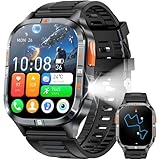
- BUILT-IN GPS & COMPASS– This military smartwatch features high-precision GPS to pinpoint your location while hiking, cycling, or traveling, keeping you safely on track without extra gear. Tap the compass icon and it locks your bearing within three seconds—engineered for pro-level outdoor adventures like camping, climbing, and trekking.
- BLUETOOTH CALLING & MESSAGES – Powered by the latest Bluetooth tech, the men’s smartwatch lets you answer or make calls right from your wrist—no need to pull out your phone. Get real-time alerts for incoming texts and app notifications so you never miss an invite. (Replying to SMS is not supported.)
- BIG SCREEN & DIY VIDEO WATCH FACE – The 2.01" military-spec display is dust-proof, scratch-resistant, and forged from high-strength glass with an aluminum alloy bezel, passing rigorous dust and abrasion tests so the screen stays crystal-clear. Upload a short family video to create a dynamic, one-of-a-kind watch face that keeps your memories alive.
- 24/7 HEALTH MONITORING – Equipped with a high-performance optical sensor, this Android smartwatch tracks heart rate and blood-oxygen levels around the clock. It also auto-detects sleep stages (deep, light, awake) for a complete picture of your health, ensuring you always know how your body is doing.
- MULTI SPORT MODES & FITNESS TRACK – Choose from running, cycling, hiking, basketball, and more to log every workout. Set goals, monitor progress, and sync data to the companion app. Bonus tools include photo gallery, weather, alarm, stopwatch, flashlight, hydration reminder, music/camera remote, find-my-phone, mini-games, and other everyday essentials.
The upside is consistency. AMOLED readability doesn’t degrade in low light, indoors, or during night training, which means fewer compromises during actual use, even if it costs you a few days of standby.
Gesture Mode and Smart Power Management in Practice
Switching the display to gesture-based activation dramatically alters the equation. With raise-to-wake enabled and the screen off when idle, the Fenix 8 regains much of its traditional endurance advantage, pushing well beyond a week for most users and into multi-week territory with lighter GPS use.
Garmin’s power profiles are doing more work here than before. Background sensor sampling, wrist heart rate polling, and screen refresh rates dynamically scale based on activity context, which is especially noticeable during sleep tracking and long periods of inactivity.
This makes the Fenix 8 more forgiving than rival AMOLED watches when you forget to charge. It doesn’t punish you for wearing it like a tool rather than a gadget.
GPS, Multiband, and Long-Duration Activity Reality
Battery drain during GPS-heavy use is where the AMOLED trade-off becomes most visible. Multiband GNSS with the display active will consume power faster than legacy Fenix models, particularly during long trail runs, hikes, or back-to-back training days.
That said, Garmin’s activity battery estimates remain conservative and reliable. You can still comfortably complete ultra-distance events or full-day adventures without anxiety, especially if you disable always-on display during activities.
Compared to the Apple Watch Ultra, the Fenix 8 remains in a different endurance class for outdoor athletes. Against Suunto and Polar rivals, it holds its ground while offering a richer screen and more granular power controls.
Solar Absence and What It Signals
The lack of a solar variant alongside the AMOLED display is telling. Garmin is no longer trying to stack every endurance-extending technology into a single model; instead, it’s making clearer trade-offs between visual performance and absolute battery maximization.
For users who relied on solar as psychological insurance more than a measurable benefit, this won’t matter. For expedition-focused athletes who valued passive top-ups over weeks in the field, it may be the clearest reason to hold onto an older Fenix or look at Garmin’s MIP-based alternatives.
This is less about regression and more about segmentation. Garmin is acknowledging that not all Fenix buyers use their watches the same way anymore.
Who the New Battery Profile Actually Suits
The Fenix 8’s battery behavior aligns best with users who train frequently, interact with their watch often, and appreciate visual clarity across all conditions. If you charge your watch once a week and already live in Garmin’s ecosystem, the shift is more adjustment than deal-breaker.
If, however, you chose Fenix specifically because it felt immune to modern smartwatch compromises, the AMOLED transition will feel like a line crossed. The endurance crown hasn’t disappeared, but it’s no longer the sole defining feature.
What Garmin has done is trade excess headroom for everyday usability. The Fenix 8 still outlasts most AMOLED competitors, but it now asks you to be more intentional about how you use its screen, which is a very different relationship than previous generations demanded.
Core Multisport and Training Metrics: What’s New, What’s Familiar, and What Still Leads the Class
With battery trade-offs now more explicit, the conversation naturally shifts to why most athletes buy a Fenix in the first place. The Fenix 8’s real value still lives in its training engine, multisport depth, and how cohesively Garmin turns raw sensor data into actionable guidance across weeks and months of use.
This is where the AMOLED transition becomes less about spectacle and more about clarity, context, and how often you actually engage with the metrics that define your training load.
The Training Stack: Evolution, Not Reinvention
At a structural level, the Fenix 8 retains Garmin’s familiar training framework: Training Readiness, Acute Load, Chronic Load, Training Status, and HRV Status all behave largely as existing users would expect. What’s changed is not the math, but how legible and immediately interpretable that data becomes on a brighter, higher-contrast display.
Morning Report, in particular, benefits from AMOLED’s visual separation. Sleep stages, overnight HRV, and recovery cues are easier to scan quickly, which subtly encourages more frequent engagement rather than relegating these insights to Garmin Connect.
Training Readiness and HRV: Now More Central to Daily Decisions
Garmin continues to anchor its ecosystem around HRV-derived readiness, and the Fenix 8 treats this less like a background metric and more like a daily decision-making tool. The watch is more assertive in surfacing when accumulated stress, poor sleep, or illness should override a preloaded workout plan.
This remains an area where Garmin still leads Apple and Suunto in long-term trend coherence. Apple’s metrics feel reactive and daily, while Garmin’s are explicitly longitudinal, rewarding consistency and restraint as much as effort.
Multisport Profiles: Familiar Breadth, Smarter Defaults
The Fenix 8 ships with the same expansive activity library that has long defined the line, from triathlon and trail running to skiing, paddling, and expedition-style tracking. What’s new is how intelligently these profiles are preconfigured, especially around power management, screen layouts, and data field prioritization.
For athletes who constantly tweak settings, this reduces setup friction. For those coming from older Fenix models, it feels like Garmin quietly applying lessons learned from years of user behavior rather than adding novelty for its own sake.
Power, Pace, and Performance Metrics Still Set the Benchmark
Running and cycling remain the clearest examples of Garmin’s platform maturity. Native running power, stamina tracking, pace-pro grading, and real-time performance condition still offer a more complete picture than most rivals without requiring third-party apps.
Apple Watch Ultra has closed the gap in raw sensor quality, but it still lacks Garmin’s depth in on-device interpretation. Suunto’s metrics are elegant but narrower, while Polar’s strength lies more in physiological modeling than in-field adaptability.
Dive-Ready Hardware, Familiar Dive Metrics
The dive-rated design doesn’t radically change Garmin’s dive metrics, but it legitimizes them within the Fenix line rather than positioning them as an edge case. Recreational dive modes, depth tracking, ascent rate alerts, and surface interval management mirror what we’ve seen on Garmin’s dedicated dive watches.
What’s significant is integration. Dive activities now sit more comfortably alongside endurance training, rather than feeling like a separate identity bolted onto the watch.
Strength Training and Indoor Workouts: Incremental but Appreciated Gains
Strength and HIIT tracking remain functional rather than inspiring, but Garmin continues to refine rep detection, muscle maps, and workout animations. The AMOLED display improves on-watch guidance during sets, making rest timers and target cues easier to follow mid-session.
This is still not a replacement for a dedicated strength platform, but it’s increasingly competent for athletes who mix gym work into endurance-heavy schedules.
Navigation, Endurance Metrics, and Ultra-Event Tools
ClimbPro, PacePro, stamina tracking, and turn-by-turn mapping all return, largely unchanged in concept but enhanced by screen clarity. Elevation profiles, upcoming climbs, and course deviations are simply easier to trust when they’re more readable at a glance.
For ultra-distance athletes, these features remain a competitive moat. No other brand combines navigation, physiological tracking, and endurance forecasting this cohesively on a single device.
What Still Separates Fenix from the Rest
The Fenix 8 doesn’t introduce a headline-grabbing new metric that reshapes training theory. Instead, it reinforces Garmin’s long-standing advantage: depth, continuity, and a system that rewards athletes who think in training cycles rather than isolated workouts.
If you already live inside Garmin’s metrics ecosystem, the Fenix 8 feels like a refinement that makes existing strengths easier to access and harder to ignore. If you’re coming from a rival platform, this is still the clearest example of what a fully integrated multisport training watch looks like when endurance athletes, not general consumers, remain the priority.
Navigation, Mapping, and Expedition Use: AMOLED Advantages and Potential Drawbacks
Garmin’s move to AMOLED on the Fenix 8 reshapes how its navigation tools feel in real use, especially for athletes who live on maps rather than data fields. The underlying software stack is familiar, but the presentation changes how confidently and how often you interact with it mid-activity. This is where the upgrade feels most immediate, and also where long-standing Fenix users may need to recalibrate expectations.
Rank #4

- 【Built-in GPS & Multi-System Positioning】Stay on track with the Tiwain smartwatch’s built-in GPS. Featuring military-grade single-frequency and six-satellite support (GPS, GLONASS, Beidou, Galileo, NAVIC, QZSS), this watch offers fast and accurate location tracking wherever you go. It also includes a compass, altimeter, and barometer, giving you real-time data on your altitude, air pressure, and position.
- 【Military-Grade Durability】Engineered to withstand the toughest conditions, the Tiwain smartwatch meets military standards for extreme temperatures, low pressure, and dust resistance. Crafted from tough zinc alloy with a vacuum-plated finish, this watch is also waterproof and built to resist wear and tear. The 1.43-inch AMOLED HD touchscreen offers clear visibility in all environments, and the watch supports multiple languages for global users.
- 【170+ Sport Modes & Fitness Tracking】Track your fitness journey with 170+ sport modes, including walking, running, cycling, hiking, basketball, and more. Set exercise goals, monitor progress, and sync your data to the companion app. The smartwatch also offers smart features like music control, camera remote, weather updates, long-sitting reminders, and more.
- 【LED Flashlight for Outdoor Adventures】The Tiwain smartwatch comes equipped with a built-in LED flashlight that can illuminate up to 20 meters. Activate it with the side button for added convenience during nighttime activities or outdoor adventures.
- 【Comprehensive Health Monitoring】Monitor your health with real-time heart rate, sleep, blood pressure, and blood oxygen level tracking. The smartwatch will vibrate to alert you of any abnormal readings. You can also make and receive calls directly from the watch, and stay connected with message and app notifications (receive only, no sending capability) – perfect for when you’re driving or exercising.
Mapping Clarity and Visual Hierarchy
On-device maps benefit disproportionately from AMOLED’s contrast and pixel density. Trails, contour lines, waterways, and POIs separate more cleanly, reducing the cognitive load when glancing at the watch while moving fast or fatigued. In wooded terrain or complex urban routing, the improved color separation makes turn decisions feel less tentative than on older MIP-based Fenix models.
Garmin’s cartography hasn’t fundamentally changed, but readability has. Zooming and panning feel more purposeful when details remain crisp rather than collapsing into grayscale noise. For runners and hikers who rely on breadcrumb trails or preloaded courses, this alone alters the perceived usefulness of wrist-based navigation.
Glanceability Versus Always-On Practicality
AMOLED excels in quick-glance scenarios, especially when following courses with frequent turns. Brief wrist raises deliver more information in less time, which suits trail running, ski touring, and fastpacking where stopping to interpret a screen is undesirable. Compared to the Epix, the Fenix 8 maintains that same visual advantage while retaining the more rugged Fenix identity.
The trade-off appears in always-on use. MIP displays still win for passive, continuous map visibility under bright sun without a gesture, particularly during long, slow expeditions. Garmin mitigates this with aggressive power management and configurable display modes, but it remains a philosophical shift from the set-and-forget feel that defined earlier Fenix generations.
Battery Impact in Navigation-Heavy Scenarios
Navigation is one of the most power-intensive use cases, and AMOLED amplifies that reality. Continuous map use with frequent screen wake-ups drains the Fenix 8 faster than equivalent sessions on a Fenix 7 Solar, especially outside of Expedition or UltraTrac-style modes. Garmin’s battery estimates remain conservative, but multi-day route-following requires more deliberate planning than before.
For users accustomed to solar-assisted endurance, this is the most tangible compromise. The Fenix 8 still outlasts most AMOLED rivals in GPS-heavy use, but the margin narrows when maps are front and center for hours at a time. Expedition athletes may need to lean more heavily on reduced refresh rates or scheduled screen timeouts.
Night Navigation and Low-Light Use
Low-light navigation is one of AMOLED’s strongest arguments. Backcountry night runs, alpine starts, or predawn navigation benefit from controlled brightness that preserves night vision better than a fully backlit MIP panel. Course lines and elevation shading remain legible without blasting the retina, especially when paired with red-shift or dim modes.
This also extends to cave diving prep, night dives, or surface navigation between dive sites, where readability under controlled lighting matters more than raw brightness. While the Fenix 8 doesn’t introduce underwater mapping, the display’s clarity aligns well with its expanded dive credentials.
Expedition Features and Long-Haul Trade-Offs
Garmin’s expedition tools, including Expedition GPS mode, reference point navigation, and trackback, function as expected. The AMOLED display doesn’t add new capability here, but it does make reviewing progress, elevation gain, and waypoint context more intuitive when you choose to engage the screen. That said, expedition users who prioritize maximum endurance over interaction may see less value in the visual upgrade.
This is where the Fenix 8 subtly shifts its center of gravity. It still supports long, remote outings, but it now favors informed interaction over pure passivity. Users crossing polar routes or undertaking week-long unsupported treks may still find MIP-based or solar-first designs better aligned with their priorities.
Positioning Against Rivals
Against Apple Watch Ultra, the Fenix 8 offers vastly superior offline mapping depth and route management, now without conceding screen quality. Compared to Suunto’s AMOLED-equipped models, Garmin retains a deeper navigation feature set and more mature course tools, albeit with similar battery considerations. Within Garmin’s own lineup, the Fenix 8 effectively absorbs the Epix’s visual strengths while maintaining broader expedition credibility.
The result is a navigation experience that feels more modern and engaging, but also more intentional. The Fenix 8 rewards users who actively interact with their maps, rather than those who simply want them running quietly in the background for days on end.
Fenix 8 vs Fenix 7 / Epix Pro: Which Garmin Power Watch Makes Sense Now?
With the Fenix 8 now absorbing AMOLED as a core identity rather than a side branch, Garmin’s high-end lineup finally converges. What used to be a three-way choice between Fenix (MIP endurance), Epix (AMOLED polish), and niche dive computers is now a more nuanced decision about priorities, not categories.
The question is no longer which screen you prefer in isolation. It’s how much interaction, visual clarity, and aquatic capability you actually want in your training and expedition watch.
Display Philosophy: AMOLED Becomes the Default Experience
The most obvious shift is that the Fenix 8 no longer treats AMOLED as optional or secondary. Compared to the Fenix 7’s MIP panel, the Fenix 8’s display fundamentally changes how maps, workouts, and data fields are consumed during active use.
Epix Pro owners will feel immediately at home here. The difference is that AMOLED is now paired with a body and software posture that still assumes long navigation days, gloves, rain, and reduced-touch scenarios, rather than short, urban workouts.
If you value passive glanceability above all else, the Fenix 7’s MIP screen remains unmatched in harsh sunlight with zero interaction. If you regularly review elevation shading, route forks, structured workouts, or dive metrics mid-activity, the Fenix 8’s screen is meaningfully more informative, not just prettier.
Dive Rating and Water Use: A Real Functional Expansion
This is where the Fenix 8 creates the clearest separation from both the Fenix 7 and Epix Pro. The new dive-rated design brings official recreational dive support into what was previously a surface-only multisport watch.
Fenix 7 models were robust swimmers and capable free-diving companions, but they stopped short of full scuba endorsement. Epix Pro, despite its premium positioning, shared that limitation.
For users who mix trail running, mountaineering, and occasional scuba trips, the Fenix 8 eliminates the need for a separate dive computer for no-decompression recreational profiles. It’s not a replacement for technical dive hardware, but it meaningfully broadens what a single wrist device can cover.
Battery Life: Endurance Still Matters, But Interaction Costs Energy
Battery life remains strong across all three families, but the trade-offs are now clearer. The Fenix 7 with MIP still delivers the longest real-world endurance in always-on navigation and expedition modes, especially with solar-assisted variants.
The Fenix 8 narrows that gap through more efficient AMOLED management, but it still rewards intentional screen use rather than constant visibility. Compared to Epix Pro, the Fenix 8 generally matches or slightly improves longevity under similar conditions, particularly in GPS-heavy outdoor activities.
If your use case involves multi-day routes with minimal charging opportunities and little need to interact with the display, the Fenix 7 remains the most conservative choice. If you want a richer interface without abandoning multi-day capability, the Fenix 8 strikes a more balanced middle ground.
Hardware, Fit, and Everyday Wearability
Physically, the Fenix 8 stays true to the Fenix lineage. Expect familiar case sizes, sapphire options, titanium bezels, and the same tool-watch-first ergonomics that prioritize button use over touch.
Epix Pro feels slightly more lifestyle-oriented by comparison, especially on smaller wrists or in everyday office wear. The Fenix 8 leans utilitarian, but the AMOLED display softens that perception when worn daily, especially with muted watch faces and lower brightness profiles.
Comfort remains largely size-dependent rather than model-dependent. Long-session wear, backpack pressure points, and wetsuit compatibility all favor the Fenix 8 and Fenix 7’s more overtly rugged case geometry.
Software Experience and Feature Parity
From a metrics standpoint, there is little daylight between these watches. Training Readiness, Endurance Score, Hill Score, advanced running dynamics, and full mapping are shared across the board.
The difference is how often you’ll engage with that data. The Fenix 8 encourages mid-activity review, post-session analysis on-wrist, and map interaction in a way the Fenix 7 never pushed visually.
Epix Pro users already know this experience. What’s new is that you no longer give up expedition credibility or water confidence to get it.
Upgrade Paths and Who Each Watch Still Serves Best
For Fenix 7 owners, the upgrade case hinges on two things: whether you want AMOLED, and whether dive capability matters. If neither applies, the Fenix 7 remains an outstanding long-haul tool with no functional deficiency.
For Epix Pro owners, the decision is more nuanced. The Fenix 8 doesn’t replace Epix Pro on style or compact comfort, but it does surpass it in aquatic versatility and expedition-first positioning.
For new buyers choosing their first premium Garmin, the Fenix 8 now reads as the most complete expression of the brand’s philosophy. It blends visibility, durability, navigation depth, and water confidence in a way that finally collapses Garmin’s internal segmentation into a single, cohesive flagship.
💰 Best Value

- Smart Watch with GPS and Offline Map: This smart watch connects to multiple satellite systems for accurate real-time positioning, and includes a professional-grade compass, altimeter, and barometer for precise data, ensuring you maintain your sense of direction in any outdoor environment. The map version supports downloading offline maps; select a route or destination to view the route even without a signal, eliminating the risk of getting lost.
- Bluetooth Call & Message Functionality: This smart watches for men allows you to make and receive calls; receive text and social media notifications (Facebook, WhatsApp, Instagram, Twitter, etc.); and reply to text messages with voice-to-text or set up quick replies (text reply functionality is available for Android phones).
- Sports & Health Monitoring: This 5ATM waterproof fitness watch supports over 100 sports modes and tracks daily activity data, calories, distance, steps, and heart rate. You can use it to monitor your health metrics (blood oxygen, heart rate, stress, and sleep), monitor your fatigue and mood, and perform PAI analysis. You can also use this smartwatch to set water intake and sedentary reminders. Stay active and healthy with this fitness tracker watch.
- Customizable Watch Faces & AI Functionality: This smart watch features a 1.46-inch HD touchscreen and over 100 downloadable and customizable watch faces. You can even use your favorite photos as your watch face. Equipped with AI technology, it supports voice descriptions in multiple languages to generate personalized AI watch faces. The watch's AI Q&A and AI translation features provide instant answers to questions and break down language barriers, making it an ideal companion for everyday life and travel.
- Large Battery & High Compatibility & More Features: This smart watch for android phones and ios phone features a large 550ml battery for extended battery life. It's compatible with iOS 9.0 and above and Android 5.0 and above. It offers a wealth of features, including an AI voice assistant, weather display, music control, camera control, calculator, phone finder, alarm, timer, stopwatch, and more. (Package Includes: Smartwatch (with leather strap), spare silicone strap, charging cable, and user manual)
Fenix 8 vs Apple Watch Ultra and Suunto Race: Positioning in the Premium Adventure Watch Market
With Garmin collapsing its own AMOLED and MIP split at the top end, the competitive lens naturally widens. The Fenix 8 no longer needs to be explained purely in Garmin terms; it now sits squarely between the Apple Watch Ultra’s smartwatch-first philosophy and Suunto’s endurance-led, minimalist approach.
What’s changed is not just the screen technology, but the confidence with which Garmin now claims all-day, all-environment dominance. AMOLED visibility, true dive credentials, and expedition-grade battery management coexist in a way that was previously fragmented across multiple product lines.
Against Apple Watch Ultra: Tools Versus Ecosystem
Apple Watch Ultra remains the most capable smartwatch in this category, full stop. App depth, LTE independence, voice interaction, and seamless iPhone integration still sit far beyond anything Garmin offers.
Where the Fenix 8 pulls ahead is sustained autonomy and off-grid reliability. Multi-day GPS use, mapping without cellular dependence, and predictable battery behavior under load continue to favor Garmin, especially for expeditions, stage races, or multi-day alpine use.
Dive support is where the comparison becomes more nuanced. Apple’s EN13319-compliant depth rating relies heavily on third-party software like Oceanic+, while the Fenix 8 integrates diving as a native sport profile alongside multisport training, reducing friction for users who split time between land and water.
Physically, the Ultra’s 49mm titanium case wears large but refined, with a flatter profile that suits daily wear. The Fenix 8 feels more like equipment, thicker and more overtly rugged, but also more tolerant of abrasion, cold, and repeated glove-based interaction.
Against Suunto Race: Endurance Philosophy Meets Feature Density
Suunto Race has earned praise for its AMOLED display, clean interface, and exceptional battery life relative to its price. For runners and endurance athletes who prioritize clarity and simplicity over feature sprawl, it remains compelling.
The Fenix 8 differentiates itself through depth rather than efficiency. Training Readiness, recovery modeling, advanced mapping layers, and sport-specific metrics are denser and more configurable, particularly for athletes juggling multiple disciplines in a single week.
Diving is the clearest line in the sand. Suunto Race is not dive-rated, pushing users toward the Suunto Ocean if underwater activity matters, whereas the Fenix 8 absorbs that role without forcing a separate device or ecosystem.
In daily wear, Suunto’s lighter case and softer design language make it easier to forget on the wrist. The Fenix 8 trades that subtlety for a more protective build, sapphire-first options, and button layouts that remain usable when hands are cold, wet, or gloved.
AMOLED as the New Battleground
All three watches now treat AMOLED as table stakes, but they deploy it differently. Apple optimizes for vibrancy and interaction, Suunto for clarity and restraint, and Garmin for information density without abandoning endurance expectations.
Garmin’s execution matters because it avoids the traditional AMOLED penalty. The Fenix 8’s ability to throttle brightness, rely on gesture-based wake, and preserve multi-day GPS runtime keeps it aligned with expedition use rather than daily charging habits.
This is the quiet shift that repositions the Fenix line. The display is no longer a compromise made for lifestyle appeal; it’s a functional upgrade that directly improves navigation, data interpretation, and confidence in low-visibility conditions.
Who Each Watch Ultimately Serves Best
The Apple Watch Ultra remains the best choice for users who live inside Apple’s ecosystem and want one device to handle communication, health, fitness, and light adventure. It is less convincing once trips extend beyond charging access or cellular coverage.
Suunto Race caters to athletes who value efficiency, battery longevity, and a streamlined experience, and who are content managing training with fewer layers of interpretation. It excels when simplicity is the goal rather than maximal versatility.
The Fenix 8 targets users who refuse to choose. It is for those who want AMOLED clarity without surrendering expedition battery life, dive capability without a secondary computer, and training depth without ecosystem lock-in. In that context, it doesn’t just compete in the premium adventure watch market; it arguably defines its most complete expression to date.
Who Should Upgrade (and Who Shouldn’t): Buying Advice for Existing Garmin Owners and Newcomers
With the Fenix 8, Garmin hasn’t just iterated; it has subtly redrawn the decision tree for its most loyal users while making the line more legible to newcomers weighing their first serious multisport watch. Whether this launch represents a must-upgrade moment or an easy skip depends heavily on what you value day to day, not just what looks good on a spec sheet.
Upgrade If You’re Coming from an Older Fenix or Enduro Generation
If you’re using a Fenix 6, Fenix 7, or even an original Enduro, the Fenix 8 is a meaningful leap rather than a cosmetic refresh. The AMOLED display alone changes how maps, structured workouts, and data-heavy screens behave in real-world conditions, especially at dawn, dusk, or underwater.
Beyond the screen, the cumulative improvements add up: faster UI responsiveness, improved GNSS reliability, more refined training readiness metrics, and a design that feels more deliberately premium on the wrist. The dive-rated construction also removes the need to baby the watch around saltwater or pressure exposure, which wasn’t always a given with previous Fenix generations.
For these users, the upgrade isn’t about chasing the newest thing; it’s about finally aligning the Fenix experience with how Garmin watches are actually used today: as daily wear devices that still need to survive expeditions, races, and rough environments.
Strong Consideration for Epix (Gen 2) Owners—But Not Automatic
Epix Gen 2 owners sit in a more nuanced position. On paper, both watches now share AMOLED displays and a similar core training feature set, which means the Fenix 8 doesn’t immediately obsolete the Epix.
Where the Fenix 8 pulls ahead is in intent. The dive rating, reinforced case design, and sapphire-forward positioning make it feel less like a luxury-adjacent fitness watch and more like a tool-first instrument that happens to look sharp. Battery behavior is also more optimized around mixed-use scenarios, with Garmin clearly prioritizing long GPS days without forcing lifestyle compromises.
If your Epix already meets your needs and you don’t dive, spend extended time navigating off-grid, or feel limited by battery margins, there’s no urgency to upgrade. But if you’ve ever hesitated to take your Epix into harsher conditions, the Fenix 8 answers those doubts directly.
For Fenix 7 Pro and Recent Upgraders: A Luxury, Not a Necessity
If you’re coming from a Fenix 7 Pro, the Fenix 8 is best viewed as a refinement rather than a revolution. The underlying training metrics, health tracking, and multisport coverage remain largely familiar, and the MIP display on the 7 Pro still excels in bright sunlight with unbeatable always-on efficiency.
The decision here comes down to display preference and use case expansion. If AMOLED clarity, richer mapping visuals, and improved low-light readability materially improve how you train or explore, the Fenix 8 delivers. If your current watch already disappears on your wrist and lasts weeks between charges, the practical gains may feel marginal.
In other words, this is an upgrade driven by desire and appreciation rather than necessity—and there’s nothing wrong with sitting this generation out.
Who the Fenix 8 Makes Sense For as a First Garmin
For newcomers, the Fenix 8 is arguably the clearest expression of what Garmin’s high-end philosophy looks like in 2026. It removes many of the historical trade-offs that confused first-time buyers, particularly the old MIP-versus-AMOLED dilemma.
You get a vivid, modern display without sacrificing expedition-grade battery life, a case and button layout designed for gloves and water, and a software platform that scales from casual fitness to serious training blocks. Compatibility across iOS and Android remains excellent, and Garmin’s ecosystem rewards long-term use rather than constant hardware turnover.
The caveat is cost and complexity. The Fenix 8 assumes you want depth: detailed metrics, configurable data screens, and a learning curve that rewards engagement. If that excites you, this is one of the strongest entry points Garmin has ever offered at the top end.
Who Should Probably Look Elsewhere
Despite its breadth, the Fenix 8 is not for everyone. If your training revolves around a single sport, or if you value simplicity and minimal interaction, a lighter, more focused watch may serve you better.
Likewise, if smartwatch features like LTE, third-party apps, voice assistants, or tight phone integration matter more than battery life and offline capability, the Apple Watch Ultra still holds an advantage. The Fenix 8 prioritizes autonomy and endurance over convenience, and that philosophy won’t suit every lifestyle.
Finally, if you’re perfectly happy with a recent Garmin and rarely feel constrained by display clarity, durability, or battery life, upgrading now may offer diminishing returns.
The Bottom Line
The Fenix 8 isn’t trying to win everyone over; it’s trying to eliminate excuses. By pairing an AMOLED display with a dive-rated, expedition-ready design, Garmin has closed one of the last gaps in its flagship line without diluting what made the Fenix name matter in the first place.
For long-time Garmin users on older hardware, it’s one of the most justifiable upgrades in years. For newcomers willing to invest in a watch that grows with them, it’s a confident, future-facing entry point. And for those already well served by their current setup, the Fenix 8 stands less as a pressure point and more as a reminder of how far the category has evolved.