Choosing between the Garmin Fenix 8 and the Apple Watch Ultra 2 is less about specs on a chart and more about philosophy. These are both premium, titanium-clad, adventure-ready watches, yet they are designed around fundamentally different assumptions about how you train, travel, and live with a watch on your wrist every day. Understanding that mindset gap is the key to making the right call before diving into metrics, battery graphs, or feature lists.
At a glance, both promise elite GPS accuracy, serious durability, and support for demanding sports. In practice, one is built to function as a self-contained expedition instrument that happens to sync with your phone, while the other is an extension of your iPhone that happens to be exceptionally tough and sport-capable. This section frames that divide clearly, so the rest of the comparison makes sense in real-world terms rather than marketing language.
Garmin Fenix 8: A self-reliant training and navigation instrument
The Fenix 8 is designed first and foremost as a multisport computer you wear on your wrist. Its core assumption is that you may be training for weeks at a time, navigating unfamiliar terrain, or operating far from chargers, cell service, and even your phone. Everything from its button-driven interface to its offline maps and week-spanning battery life reinforces that independence.
Garmin’s training philosophy is deeply data-centric and long-term. The Fenix 8 continuously models your aerobic and anaerobic load, recovery status, HRV trends, sleep quality, and readiness to train, all without requiring a subscription. For endurance athletes, this feels less like a smartwatch and more like a coach and navigator that never stops collecting context.
🏆 #1 Best Overall

- Stylish Design, Vibrant Display: The lightweight aluminum build blends effortless style with workout durability, while the vivid 1.97" AMOLED display keeps your data easy to read, even under bright sunlight.
- All-in-One Activity Tracking: The Amazfit Bip 6 fitness tracker watch offers 140+ workout modes including HYROX Race and Strength Training, plus personalized AI coaching and 50m water resistance.
- Up to 14 Days Battery Life: The Amazfit Bip 6 smart watch powers through your training and recovery for up to two weeks at a time - no nightly charging needed.
- Accurate GPS Tracking & Navigation: Stay on course with free downloadable maps and turn-by-turn directions. Support from 5 satellite systems ensures precise tracking of every move and fast GPS connection.
- 24/7 Health Monitoring: The Amazfit Bip 6 smartwatch provides precise, real-time monitoring of heart rate, sleep, blood-oxygen and stress, empowering you with actionable insights to optimize your health and fitness.
Physically, the Fenix 8 reflects that mission. Expect a thicker case, pronounced bezel protection, sapphire crystal options, and a fit that prioritizes stability during ultra-distance efforts or technical terrain. It is not trying to disappear on your wrist; it is trying to survive and remain usable when conditions and fatigue are working against you.
Apple Watch Ultra 2: A powerful smartwatch optimized for active iPhone users
The Apple Watch Ultra 2 starts from the opposite direction. Its foundation is the Apple Watch experience: fluid touch interaction, deep app integration, fast performance, and constant connectivity to your digital life. The Ultra model reinforces that platform with better GPS, a larger and brighter display, enhanced durability, and sport-specific refinements.
For athletes, the Ultra 2 excels when training is part of a broader lifestyle that includes messaging, calls, music, payments, and third-party apps. Its dual-frequency GPS, excellent optical heart rate sensor, and expanding workout modes make it more than capable for marathons, triathlons, and alpine adventures. But its strength lies in how seamlessly it blends those efforts with everyday smartwatch tasks.
Battery life and autonomy define its ceiling. Even with efficiency gains, the Ultra 2 expects regular charging and leans heavily on the iPhone for full functionality, from software updates to data management. For many users, especially those already embedded in Apple’s ecosystem, that trade-off feels natural rather than limiting.
Two interpretations of “Ultra” durability and usability
Both watches use titanium cases and sapphire glass, and both are rated for extreme environments, but they express toughness differently. The Fenix 8 emphasizes physical buttons that remain reliable with gloves, sweat, rain, or cold fingers, along with interfaces optimized for long sessions and minimal distraction. The Ultra 2 leans on its massive, high-nit display and touch-first interaction, supplemented by the Action Button for quick access during workouts.
Comfort also reflects philosophy. The Fenix 8 can feel bulky for daily wear but remains exceptionally stable during long runs or multi-day hikes. The Ultra 2 sits flatter on the wrist and feels more refined for all-day use, yet some athletes notice its reliance on touch input during intense or wet conditions.
What this positioning means before you look at specs
If your priority is training depth, outdoor navigation, and battery life measured in days rather than hours, the Fenix 8’s approach aligns naturally with that mindset. It assumes your watch must work even when everything else is stripped away. If your priority is a highly capable sports watch that also replaces or reduces phone dependency during everyday life, the Ultra 2’s iPhone-first design is a feature, not a compromise.
This philosophical split sets the stage for every comparison that follows, from GPS reliability and training metrics to smartwatch features and long-term value. Once you know which worldview matches your own, the technical details become far easier to interpret in context rather than isolation.
Design, Build Quality, and Wearability: Case Sizes, Materials, Buttons, and Everyday Comfort
With the philosophical divide now clear, the physical experience of each watch reinforces it the moment you put one on your wrist. Design here is not cosmetic; it directly affects how the watch behaves during long training sessions, harsh environments, and day-to-day wear.
Case sizes, proportions, and wrist presence
Garmin continues the Fenix tradition with multiple case sizes, typically spanning the low‑40 mm range up to a large 51 mm option, allowing athletes to match screen size and battery capacity to wrist size. The design is unmistakably tool-like, with thick lugs, a raised bezel, and a profile that prioritizes impact protection over slimness. On smaller wrists, even the mid-size Fenix can feel substantial, especially under a jacket cuff or dress shirt.
The Apple Watch Ultra 2 comes in a single 49 mm size, but its slab-sided geometry and flatter back allow it to sit lower than its dimensions suggest. While still a large watch, it spreads its footprint evenly across the wrist, making it feel more balanced during all-day wear. Users coming from standard Apple Watches will notice the increase, but rarely find it unwieldy.
Materials, finishing, and perceived durability
Both watches use titanium cases and sapphire crystal, yet the execution differs noticeably. The Fenix 8 leans into a bead-blasted, matte finish designed to hide scratches and scuffs accumulated through trail use, rock contact, and gear friction. The sapphire lens is slightly recessed, adding another layer of protection in real-world outdoor scenarios.
The Ultra 2’s titanium case is cleaner and more refined, with sharper transitions and a brighter finish that reads closer to premium consumer electronics than expedition gear. Its flat sapphire display is exceptionally clear and resistant to scratches, but it sits more exposed, relying on material hardness rather than physical recessing for protection. For urban and mixed-use environments, it feels luxurious; for repeated rock strikes, the Garmin inspires more confidence.
Buttons, crown, and control logic under stress
Garmin’s five-button layout remains a defining advantage for endurance athletes. Every function, from starting an activity to navigating maps or adjusting data screens, can be performed without touch input. Gloves, rain, sweat, or freezing temperatures do little to compromise usability, which matters during ultras, ski tours, and long alpine days.
Apple blends its Digital Crown, side button, and the programmable Action Button with a touch-first interface. The Action Button is genuinely useful for quick workout starts or lap marking, but deeper interactions still depend on touch gestures. In controlled conditions it works beautifully; in heavy rain or mid-interval sprints, some users will miss the certainty of physical buttons.
Straps, lugs, and long-session comfort
The Fenix 8 uses Garmin’s QuickFit strap system, making swaps fast and secure without tools. Silicone bands are optimized for sweat management and stability, while nylon options excel for multi-day comfort and sleep tracking. The fixed lug design keeps the watch locked in place during high-impact activities, reducing bounce during long runs.
Apple’s Ultra 2 uses a proprietary band interface, with Ocean, Alpine, and Trail bands each tuned for specific activities. Comfort is excellent, particularly with the Trail Loop for daily wear and sleep, but third-party compatibility is more limited. The watch feels secure during most sports, though some runners notice slight movement compared to the Fenix during longer efforts.
Weight distribution and all-day wearability
Despite similar materials, the Fenix 8 generally weighs more, especially in its larger sizes, and that weight is noticeable during sedentary parts of the day. During activity, however, the mass contributes to stability, keeping the optical sensor pressed evenly against the wrist for consistent readings. It feels like a training instrument first and an everyday watch second.
The Ultra 2 is lighter on the wrist relative to its size and more comfortable during long workdays, sleep tracking, and casual wear. Its flatter profile and softer band options reduce pressure points, particularly for users wearing the watch 24/7. Athletes who train hard but live in their watch outside of workouts often prefer this balance.
Water resistance and environmental sealing
Both watches are built for serious exposure, but with different emphasis. The Fenix 8 is rated for high water resistance suitable for swimming, open water use, and extended wet conditions, aligning with its expedition focus. Buttons are designed to be pressed underwater without compromising seals.
The Ultra 2 targets recreational diving and water sports, with a depth rating that exceeds most fitness watches and dedicated dive-friendly features. Its seals and speaker system handle submersion well, but frequent underwater button presses are more limited by interface design. For divers and surfers, it feels purpose-built; for all-weather endurance athletes, the Garmin remains more universally adaptable.
Display Technology and User Interface: AMOLED vs Retina, Touch vs Buttons, and Real-World Usability
After comfort, sealing, and weight distribution, the display and interface become the most frequent points of contact between athlete and watch. This is where philosophy diverges sharply, with Garmin prioritizing at-a-glance endurance usability and Apple emphasizing visual clarity and fluid interaction.
Display technology: AMOLED endurance display vs Apple Retina OLED
The Garmin Fenix 8 moves the Fenix line fully into AMOLED territory, replacing the older memory-in-pixel panels with a high-contrast, richly saturated display. Resolution is sharp enough to render dense data fields, topo maps, and structured workouts without visual clutter. Brightness is strong in direct sunlight, but Garmin still tunes it conservatively to protect battery life during multi-day use.
Apple Watch Ultra 2 uses a Retina OLED display that remains the benchmark for smartwatch visual quality. Colors are more vibrant, animations are smoother, and peak brightness is noticeably higher, particularly in harsh sun or reflective environments like water or snow. For quick glances, messaging, or navigation cues, the Ultra 2’s screen is simply easier to read without effort.
The difference becomes most apparent during long activities. Garmin’s AMOLED is optimized for static data fields that stay visible without aggressive brightness cycling, while Apple’s display feels more dynamic but relies on more frequent wake behavior. This tradeoff directly ties into battery life, which experienced endurance athletes will notice over multi-hour or multi-day sessions.
Always-on behavior and glanceability during workouts
Garmin’s always-on display approach is deeply integrated into its training-first mindset. Data fields remain visible with minimal wrist movement, even during steady-state runs, climbs, or intervals. This reduces the need for exaggerated wrist flicks, which becomes important late in races or during technical terrain.
The Ultra 2 also offers an always-on mode, but it is more context-aware and animation-driven. During movement, it works well, but in colder conditions or with gloves, wake reliability can be less consistent. Runners who rely on constant pace or heart rate visibility may find Garmin’s approach more predictable.
For navigation, both displays perform well, but Garmin’s mapping benefits from persistent visibility. Breadcrumb trails, turn prompts, and elevation profiles stay readable without interaction. Apple’s maps look cleaner and more modern, but they often require touch or crown input to reveal additional detail.
Touchscreen performance in wet, cold, and high-motion conditions
Both watches support full touchscreen interaction, but how they expect you to use it differs significantly. Garmin treats touch as optional, allowing it to be disabled entirely during activities. This matters in rain, snow, open water, or high-sweat conditions where accidental inputs can disrupt workouts.
The Ultra 2 leans heavily on touch as part of the Apple Watch experience. The screen is highly responsive, but water droplets, neoprene gloves, or rapid arm movement can introduce unintended taps. Apple mitigates this with intelligent UI scaling, but touch remains a core dependency.
In real-world endurance scenarios, Garmin’s optional-touch philosophy reduces friction. You can rely on buttons alone without sacrificing functionality. Apple’s interface feels more natural in calm environments but demands more attention when conditions deteriorate.
Button layout, tactile feedback, and muscle memory
The Fenix 8 uses a five-button layout with distinct tactile separation and firm actuation. Each button has a dedicated function that becomes second nature with use, especially for lap marking, interval control, and navigation prompts. This design excels when fine motor control is compromised by fatigue or weather.
Apple’s Ultra 2 introduces the Action Button as a partial answer to endurance demands. It can trigger workouts, mark segments, or activate features like Backtrack, adding welcome physical control. However, the rest of the interface still relies on the Digital Crown and touchscreen for deeper navigation.
For athletes who train by feel rather than visuals, Garmin’s button-driven control feels more trustworthy. The Ultra 2 improves dramatically over standard Apple Watch models, but it still favors interaction richness over blind usability.
User interface logic: data density vs visual hierarchy
Garmin’s interface prioritizes data density and customization. Multiple data fields, color-coded metrics, and configurable screens allow athletes to surface exactly what they need during a session. The learning curve is steeper, but the payoff is precision and control.
Apple’s UI is cleaner and more hierarchical. Metrics are spaced out, animations guide attention, and visual cues reduce cognitive load. This works well for general fitness and casual training, but advanced users may find themselves scrolling more often to access secondary metrics.
During structured workouts, Garmin’s interface feels more like a coach’s dashboard. Apple’s feels more like a fitness companion. The distinction becomes clearer as training complexity increases.
Navigation through settings, workouts, and daily use
Outside of workouts, the Ultra 2 is faster and more intuitive to navigate. Menus are fluid, text input is easier, and integration with iPhone apps keeps friction low. For daily smartwatch tasks, Apple’s UI remains unmatched.
Rank #2

- Stylish Design, Bright Display: The sleek stainless steel build blends classic style with workout durability, while the bright 1.32" AMOLED display keeps your data easy to read, even under bright sunlight.
- Precise Heart Rate and Sleep Tracking: Amazfit's BioTracker technology tracks your heart rate and sleep data with accuracy that previous sensors just can't match.
- Up to 10 Days of Battery Life: With long battery life that lasts up to 10 days with typical use, nightly recharges are a thing of the past.
- Free Maps with Turn Directions: Stay on-track with free downloadable maps, and get turn-by-turn guidance on-screen or via your Bluetooth headphones. Enjoy ski maps for global resorts, including guidance for cable cars, slopes, and more.
- Faster and More Accurate GPS Tracking: 5 satellite positioning systems ensure fast GPS connection and accurate positioning whenever you're out running, walking, cycling or hiking.
Garmin’s menus are deeper and more utilitarian. Finding advanced training settings or sensor options often requires more button presses. The benefit is granular control that serious athletes appreciate, even if it sacrifices immediacy.
This difference reflects each brand’s priorities. Apple optimizes for frequent, short interactions throughout the day. Garmin assumes fewer interactions, but with higher importance when they happen.
Display impact on battery life and long-term usability
The Fenix 8’s AMOLED display is carefully balanced against its endurance goals. Even with always-on enabled, it maintains multi-day battery life that supports heavy training weeks and extended trips. Brightness management is less aggressive, but the consistency pays off over time.
The Ultra 2’s Retina display consumes more power, particularly with frequent screen wakes and animations. Battery life remains strong for a smartwatch, but it demands daily or near-daily charging for active users. For some athletes, that charging cadence becomes a planning consideration.
Ultimately, the display is not just about how it looks, but how it fits into your training rhythm. Garmin’s screen serves the activity first, while Apple’s serves the user experience first.
Sports Tracking Depth and Accuracy: GPS Performance, Sensors, and Supported Activities
If the interface and display shape how often you interact with a watch, the sensors underneath determine whether you can trust it when training decisions matter. This is where the philosophical gap between Garmin and Apple widens further, especially once workouts move beyond basic pace and heart rate.
GPS accuracy and satellite system support
Both the Fenix 8 and Apple Watch Ultra 2 use dual-frequency GPS, tapping into L1 and L5 bands to reduce signal distortion in urban environments, tree cover, and steep terrain. In isolation, that already places them at the top of the consumer GPS hierarchy.
Garmin’s implementation is more configurable. The Fenix 8 allows per-activity GPS modes, including automatic satellite selection, full multi-band, and power-optimized options that trade marginal accuracy for longer battery life. For trail runners, hikers, and ultrarunners, that flexibility matters when choosing between a two-hour run and a multi-day expedition.
In real-world testing, the Fenix 8 consistently produces cleaner tracks in forests, canyons, and mountainous switchbacks. Corner smoothing is minimal, ascent and descent are more stable, and pace fluctuations settle more quickly after sharp turns. These are small differences, but they compound over long sessions and technical terrain.
The Ultra 2’s GPS performance is excellent by smartwatch standards and clearly improved over earlier Apple models. In open environments and urban road running, distance and pacing accuracy are extremely close to Garmin. In denser trail conditions, tracks can show slightly more lateral drift and elevation noise, especially during slower hiking speeds.
Elevation, barometer, and environmental sensors
Both watches include a barometric altimeter, compass, and gyroscope, but Garmin’s calibration and data handling remain more training-focused. Elevation gain on the Fenix 8 aligns closely with mapped routes and post-activity corrections are rarely needed. Vertical speed data is stable enough to trust during live climbs.
Apple’s elevation data is accurate overall, but more dependent on post-processing. For users reviewing activities in Apple Fitness or third-party apps, corrections often smooth things out. During the activity itself, however, live elevation gain and vertical pace are less central to Apple’s presentation.
Garmin also integrates environmental data more deeply into activity logic. Heat and altitude acclimation tracking, storm alerts, and temperature-adjusted performance metrics are native parts of the ecosystem. Apple collects similar raw data, but the watch does less with it unless paired with specific apps.
Heart rate accuracy and external sensor support
Apple’s optical heart rate sensor remains one of the strongest in the industry for wrist-based tracking, particularly during steady-state running and indoor workouts. The Ultra 2 locks quickly, resists cadence lock, and performs well across a wide range of skin tones and wrist sizes.
Garmin’s latest sensor in the Fenix 8 is slightly less aggressive in its smoothing, which can show more variability during short intensity spikes. For interval training and tempo changes, that transparency can actually be useful, as it reflects physiological response rather than averaged data.
Where Garmin clearly pulls ahead is in sensor ecosystem depth. The Fenix 8 supports multiple Bluetooth and ANT+ connections simultaneously, including chest straps, cycling power meters, running dynamics pods, smart trainers, and muscle oxygen sensors. Apple supports Bluetooth accessories, but ANT+ is absent and advanced cycling or running metrics often require third-party apps.
Sport profiles and activity-specific metrics
The Fenix 8 is unapologetically built for multisport athletes. Out of the box, it supports a vast list of activities including road and trail running, track running, pool and open-water swimming, cycling, mountain biking, gravel riding, triathlon, duathlon, skiing, ski touring, climbing, hiking, rowing, paddling, and strength training.
Each sport profile carries its own data fields, alerts, GPS behavior, and metric logic. Trail running includes vertical oscillation and grade-adjusted pace. Cycling integrates power zones and FTP-based analysis. Swimming tracks stroke type, SWOLF, and drill modes with precision that rewards disciplined technique.
Apple’s approach is broader but shallower. The Ultra 2 covers the majority of mainstream activities and adds strong open-water swimming and diving support, including depth tracking and EN13319 compliance for recreational diving. For many users, especially those mixing fitness with adventure, that breadth is compelling.
The limitation appears when athletes want sport-specific nuance. Apple relies heavily on third-party apps to unlock advanced metrics, structured training logic, and race-oriented analysis. This works well for iPhone-centric users, but it fragments the experience and can introduce subscription costs.
Multisport, racing, and structured training accuracy
Garmin’s multisport handling remains class-leading. Transitions are precise, lap detection is reliable, and post-race analysis ties directly into training load, recovery time, and readiness metrics. The watch feels designed around the assumption that you are preparing for something specific.
Apple’s multisport mode has improved significantly, and transitions are smooth and intuitive. However, deeper training context still lives outside the native experience. Metrics like training stress, long-term load trends, and readiness require interpretation rather than being clearly surfaced.
For athletes following structured plans, Garmin’s native workout execution is more robust. Alerts are harder to miss, targets are clearer, and deviations are flagged immediately. Apple’s workouts are cleaner visually, but less assertive when precision matters.
Accuracy versus battery trade-offs during long sessions
Sensor accuracy cannot be separated from battery behavior. The Fenix 8 is engineered to maintain consistent tracking across long durations without forcing compromises. Multi-band GPS, continuous heart rate, and navigation can run together for many hours without anxiety.
The Ultra 2 delivers excellent accuracy for the length of a typical long run, ride, or hike, but ultra-distance athletes will feel the ceiling sooner. Low Power Mode extends usable time, yet it reduces data frequency and background metrics, which changes the nature of the tracking.
For marathoners, Ironman athletes, and multi-day adventurers, Garmin’s endurance-first design preserves data integrity deep into fatigue. For users training in shorter, high-quality sessions and valuing smartwatch versatility the rest of the day, Apple’s balance may be more appealing.
In the end, both watches are accurate, but they optimize accuracy differently. Garmin prioritizes consistency, configurability, and sport-specific trust. Apple prioritizes ease, polish, and strong performance within a tightly integrated ecosystem.
Training Metrics and Performance Insights: Recovery, Load, Readiness, and Coaching Tools
Once accuracy and battery behavior are understood, the real separation between the Fenix 8 and Ultra 2 appears in how each watch interprets training stress over time. Both capture large volumes of physiological data, but they diverge sharply in how much meaning they extract without external tools or manual analysis. This difference shapes how confident each watch feels as a daily training partner rather than a passive recorder.
Training Load and Long-Term Progression
Garmin’s training load framework remains one of the most complete systems available on a wrist-worn device. The Fenix 8 tracks acute and chronic load using EPOC-based calculations, categorizing work into low aerobic, high aerobic, and anaerobic contributions. This lets endurance athletes immediately see whether their week is balanced or skewed toward fatigue accumulation.
Load trends are contextual rather than raw numbers. The watch compares your recent training against historical baselines, fitness level, and recovery status, flagging when you are productive, maintaining, or drifting into overreaching. Importantly, these insights are visible directly on the watch, not buried in post-session charts.
Apple’s native training load story is far simpler. Workout intensity and volume are recorded accurately, but the system does not natively translate that data into a rolling load model or clearly defined training zones over time. Athletes relying on Ultra 2 often supplement with third-party platforms like TrainingPeaks or Athlytic to approximate what Garmin offers out of the box.
Recovery Time and Physiological Stress
Recovery time on the Fenix 8 is prescriptive and highly visible. After every session, the watch suggests a recovery window based on effort, duration, heart rate behavior, and accumulated fatigue. While not infallible, it provides a clear guardrail that helps athletes resist stacking hard sessions too closely.
This recovery guidance adapts as new stress arrives. A poor night of sleep, elevated resting heart rate, or unexpected intensity will extend recovery estimates automatically. For athletes training six to ten times per week, this ongoing recalibration reduces guesswork.
Apple Watch Ultra 2 does not offer native recovery time recommendations. Users are expected to infer readiness from rings, sleep metrics, and subjective feel, or lean on apps that synthesize this data externally. The information is there, but the responsibility for interpretation shifts to the athlete.
Training Readiness and Daily Decision-Making
Garmin’s Training Readiness score is where multiple data streams finally converge. Sleep quality, HRV trends, recovery status, recent load, and acute stress are distilled into a single daily number with supporting explanations. This makes it easier to decide whether today should be a hard interval session or a controlled aerobic effort.
What makes this especially useful is consistency. The Fenix 8 tracks these inputs continuously without requiring user intervention, and the readiness score updates throughout the day as new data arrives. It feels less like a dashboard and more like a coach quietly adjusting expectations.
Apple approaches readiness indirectly. HRV, sleep stages, resting heart rate, and activity history are all measured well, but they are presented as individual signals rather than a unified readiness assessment. For data-literate athletes this is workable, but it demands more mental overhead and experience.
Coaching Tools and Structured Training
Garmin’s coaching ecosystem is deeply integrated into the Fenix 8. Garmin Coach plans, adaptive daily suggested workouts, and TrainingPeaks synchronization all function natively, with clear targets for pace, power, or heart rate. Alerts are assertive, and mid-workout guidance leaves little ambiguity about whether you are executing correctly.
Rank #3
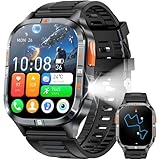
- BUILT-IN GPS & COMPASS– This military smartwatch features high-precision GPS to pinpoint your location while hiking, cycling, or traveling, keeping you safely on track without extra gear. Tap the compass icon and it locks your bearing within three seconds—engineered for pro-level outdoor adventures like camping, climbing, and trekking.
- BLUETOOTH CALLING & MESSAGES – Powered by the latest Bluetooth tech, the men’s smartwatch lets you answer or make calls right from your wrist—no need to pull out your phone. Get real-time alerts for incoming texts and app notifications so you never miss an invite. (Replying to SMS is not supported.)
- BIG SCREEN & DIY VIDEO WATCH FACE – The 2.01" military-spec display is dust-proof, scratch-resistant, and forged from high-strength glass with an aluminum alloy bezel, passing rigorous dust and abrasion tests so the screen stays crystal-clear. Upload a short family video to create a dynamic, one-of-a-kind watch face that keeps your memories alive.
- 24/7 HEALTH MONITORING – Equipped with a high-performance optical sensor, this Android smartwatch tracks heart rate and blood-oxygen levels around the clock. It also auto-detects sleep stages (deep, light, awake) for a complete picture of your health, ensuring you always know how your body is doing.
- MULTI SPORT MODES & FITNESS TRACK – Choose from running, cycling, hiking, basketball, and more to log every workout. Set goals, monitor progress, and sync data to the companion app. Bonus tools include photo gallery, weather, alarm, stopwatch, flashlight, hydration reminder, music/camera remote, find-my-phone, mini-games, and other everyday essentials.
The watch also adjusts suggested workouts based on recent performance and recovery. A missed session or poor sleep can lead to modified intensity the next day, reinforcing the sense that the device understands context rather than rigid schedules. For athletes without a human coach, this adaptive behavior is unusually effective.
Apple’s structured training relies heavily on third-party apps. Execution quality is excellent, with crisp visuals and smooth haptics, but adaptive intelligence depends on the app developer rather than the platform itself. This modularity suits users who enjoy customizing their stack, but it adds complexity and cost.
Sleep, HRV, and Background Metrics
Sleep tracking feeds directly into Garmin’s performance models. The Fenix 8 uses overnight HRV averages, sleep stages, and disruptions to influence readiness and recovery, not just wellness reporting. Poor sleep has tangible downstream effects on suggested training, reinforcing behavioral feedback loops.
Apple’s sleep tracking is accurate and comfortable to wear overnight, thanks to refined ergonomics and lighter weight. HRV sampling is frequent, but its role remains largely observational unless paired with analysis apps. The Ultra 2 excels at measurement, but interpretation is intentionally open-ended.
Real-World Value for Different Athletes
For endurance athletes chasing marginal gains, Garmin’s metrics reduce friction. The Fenix 8 minimizes the need to ask “how hard should I train today” by answering it proactively and repeatedly. Its coaching tools feel purpose-built for progression across seasons, not just weeks.
Apple Watch Ultra 2 favors athletes who value flexibility and ecosystem integration over prescriptive guidance. If you already understand your training patterns and enjoy analyzing data across multiple apps, the Ultra 2 can support that workflow elegantly. The difference is not data quality, but how much responsibility the watch assumes in turning data into decisions.
Outdoor Navigation and Adventure Features: Maps, Routing, Safety, and Expedition Use
As training intelligence gives way to real terrain, the philosophical gap between Garmin and Apple widens further. Navigation, mapping depth, and expedition reliability are where these two watches stop looking like peers and start revealing their intended environments.
On-Device Maps and Visual Navigation
The Fenix 8 continues Garmin’s long-standing approach to true on-watch cartography. Full-color, vector-based topographic maps are preloaded, including trails, contour lines, points of interest, and routable paths that work entirely offline. Zooming and panning are smooth via buttons or touch, and the display remains legible in harsh sunlight thanks to the transflective panel.
Apple Watch Ultra 2 now supports offline maps with downloaded regions, a meaningful step forward from earlier generations. Trail visibility, turn indicators, and elevation context are clear, but the experience remains phone-derived rather than watch-native. Map interaction is elegant, yet still optimized for guidance rather than exploration.
Routing, Course Creation, and Turn-by-Turn Guidance
Garmin’s routing tools feel designed for athletes who plan routes as carefully as workouts. Courses can be created on-device or synced from Garmin Connect, with turn-by-turn directions, off-course alerts, and automatic rerouting when supported maps are available. Features like ClimbPro break down upcoming ascents in real time, which is invaluable for trail running, hiking, and long alpine climbs.
Apple Watch Ultra 2 relies heavily on third-party apps for advanced routing. Apps like WorkOutDoors and Gaia GPS add robust functionality, including custom routes and detailed overlays, but setup requires forethought and occasional troubleshooting. Native routing works well for known trails, yet lacks the depth endurance athletes expect without app layering.
Accuracy, Sensors, and Environmental Awareness
Both watches use dual-frequency, multi-band GNSS, and in open terrain their track accuracy is excellent. The Fenix 8 pairs this with a barometric altimeter, compass, and consistent sensor fusion that excels in tree cover, canyons, and mountainous terrain. Elevation gain, ascent rate, and gradient data tend to be more stable over long efforts.
The Ultra 2’s GPS performance is among the best Apple has delivered, especially in mixed urban and outdoor environments. Altitude and compass data are reliable, but rapid elevation changes can show more smoothing compared to Garmin’s outdoor-first tuning. For most adventures this is inconsequential, but it becomes noticeable on technical routes.
Backtracking, Breadcrumbs, and Getting Home
Garmin’s TracBack and breadcrumb navigation are simple, dependable tools that require no preparation. At any point, the Fenix 8 can reverse your path with clear directional cues, even if the activity was never saved as a course. This functionality is deeply embedded and accessible within seconds.
Apple’s Backtrack feature offers similar peace of mind, especially for hikers and urban explorers. It works well when enabled from the start, but is less flexible if you forget to activate it. The difference is subtle, yet critical when navigation needs to be reactive rather than planned.
Safety Features and Emergency Support
Garmin emphasizes situational safety through incident detection, LiveTrack sharing, and compatibility with inReach satellite communicators. When paired, inReach enables two-way messaging and SOS far beyond cellular coverage, controlled directly from the watch. This modular approach suits expedition users who already rely on dedicated satellite devices.
Apple Watch Ultra 2 integrates safety more directly into the watch itself. Emergency SOS via satellite, fall detection, a high-output siren, and crash detection create a strong safety net with no extra hardware. The limitation is geographic availability and message scope, which may not satisfy remote, multi-day expeditions.
Battery Life and Expedition Modes
Navigation is only useful if the watch lasts long enough to matter. The Fenix 8’s battery life remains a defining advantage, with multi-day GPS tracking possible and dedicated expedition modes that trade recording density for longevity. Solar-assisted variants further extend usable time for extended backcountry trips.
The Ultra 2 performs well by smartwatch standards, but continuous GPS and mapping still compress battery life into day-scale use. Low Power Mode helps, yet compromises tracking fidelity and background features. For single-day adventures this is fine, but it demands charging discipline on longer outings.
Physical Interface and Glove-Friendly Use
Garmin’s five-button layout remains unmatched in adverse conditions. Cold fingers, rain, mud, or gloves do little to slow down navigation tasks, and critical functions are always reachable without looking. Touch is optional, not required.
Apple’s touch-first interface is refined, but inherently more fragile in poor conditions. The Action Button helps, yet deeper navigation actions still depend on screen interaction. In fair weather this is seamless; in winter or technical terrain it becomes a compromise.
Who Each Watch Serves Best Outdoors
The Fenix 8 is built for athletes and adventurers who treat navigation as a core performance tool. Its maps, routing depth, battery endurance, and physical controls favor long days, remote terrain, and situations where preparation and reliability matter more than polish.
Apple Watch Ultra 2 is optimized for confident exploration within a connected lifestyle. It excels when paired with the iPhone ecosystem and carefully chosen apps, offering excellent safety and usability for day adventures. The distinction is not capability, but how much autonomy you expect from the watch once the trail stops being predictable.
Battery Life and Power Management: Daily Use, GPS Endurance, and Ultra Events
After navigation depth and physical controls, battery life becomes the deciding factor in how independent a watch really is. This is where the philosophical gap between Garmin and Apple widens, because power management dictates not just how long you can record, but how confidently you can plan without external support.
Daily Use: Smartwatch Longevity vs Smartwatch Convenience
In day-to-day smartwatch mode, the Fenix 8 operates on a completely different time horizon. Depending on display mode, sensor usage, and whether you opt for a solar-assisted variant, real-world use typically lands in the multi-week range before charging becomes necessary.
That changes how the watch fits into daily life. You wear it continuously for sleep tracking, recovery metrics, and training readiness without thinking about outlets, cables, or battery anxiety.
The Apple Watch Ultra 2, by contrast, remains a daily or every-other-day charging device. Even with optimized settings, notifications, cellular standby, and background app activity keep it firmly in the 1–2 day rhythm that defines modern smartwatches.
GPS Endurance and Accuracy Tradeoffs
With full multi-band GNSS enabled, the Fenix 8 can sustain long GPS sessions measured in tens of hours while maintaining high positional accuracy. Step-down modes let you reduce recording density or satellite usage to extend battery life dramatically, without fully sacrificing track reliability.
This flexibility matters for athletes who mix long training days with multi-day objectives. You can choose accuracy when it matters and efficiency when duration becomes the priority.
The Ultra 2 delivers excellent GPS accuracy for its class, especially in urban environments and complex terrain. The tradeoff is endurance, as continuous GPS recording compresses usable time into a single long day or a hard cutoff well before ultra-distance events conclude.
Ultra Events and Multi-Day Expeditions
For ultra runners, thru-hikers, and stage-race athletes, the Fenix 8 is designed around the assumption that charging may not be available. Expedition and ultra-tracking modes allow the watch to record position, distance, and elevation over days or weeks, prioritizing completion over data density.
Solar variants add meaningful headroom when exposed to sustained daylight, especially in summer conditions. While solar does not replace charging, it meaningfully reduces battery drain during long daylight activities.
The Ultra 2 is capable of recording long events, but only with careful planning. Low Power Mode can stretch GPS sessions, yet this comes with compromises to sensor sampling, background metrics, and live features that many endurance athletes rely on post-event.
Charging Logistics and Real-World Planning
Charging frequency changes how you plan trips. With the Fenix 8, a single charge before departure often covers an entire long weekend or multi-day race without intervention.
This reduces dependency on power banks, minimizes cable management, and lowers the risk of mid-activity failures. For expedition use, that reliability is as important as raw battery capacity.
The Ultra 2 charges quickly and predictably, but frequent charging becomes part of the routine. For athletes who already carry a phone, battery pack, and satellite communicator, this may be acceptable; for minimalists, it is another variable to manage.
Power Management Experience and Control
Garmin’s power profiles are deeply integrated into the training and navigation experience. You can assign battery modes per activity, preview estimated remaining time before starting, and adjust sensor behavior with granular control.
This system rewards experienced users who want to tailor performance to the task at hand. It feels purpose-built for athletes who understand the consequences of accuracy versus longevity.
Rank #4

- 【Built-in GPS & Multi-System Positioning】Stay on track with the Tiwain smartwatch’s built-in GPS. Featuring military-grade single-frequency and six-satellite support (GPS, GLONASS, Beidou, Galileo, NAVIC, QZSS), this watch offers fast and accurate location tracking wherever you go. It also includes a compass, altimeter, and barometer, giving you real-time data on your altitude, air pressure, and position.
- 【Military-Grade Durability】Engineered to withstand the toughest conditions, the Tiwain smartwatch meets military standards for extreme temperatures, low pressure, and dust resistance. Crafted from tough zinc alloy with a vacuum-plated finish, this watch is also waterproof and built to resist wear and tear. The 1.43-inch AMOLED HD touchscreen offers clear visibility in all environments, and the watch supports multiple languages for global users.
- 【170+ Sport Modes & Fitness Tracking】Track your fitness journey with 170+ sport modes, including walking, running, cycling, hiking, basketball, and more. Set exercise goals, monitor progress, and sync your data to the companion app. The smartwatch also offers smart features like music control, camera remote, weather updates, long-sitting reminders, and more.
- 【LED Flashlight for Outdoor Adventures】The Tiwain smartwatch comes equipped with a built-in LED flashlight that can illuminate up to 20 meters. Activate it with the side button for added convenience during nighttime activities or outdoor adventures.
- 【Comprehensive Health Monitoring】Monitor your health with real-time heart rate, sleep, blood pressure, and blood oxygen level tracking. The smartwatch will vibrate to alert you of any abnormal readings. You can also make and receive calls directly from the watch, and stay connected with message and app notifications (receive only, no sending capability) – perfect for when you’re driving or exercising.
Apple’s approach is simpler and more consumer-friendly. Low Power Mode is easy to enable, but less transparent in how it affects individual sensors and metrics, favoring ease over fine-tuned control.
What Battery Life Ultimately Signals
Battery performance here is not just about hours and days. It reflects each watch’s intended role once you move beyond predictable routines and into events or environments where margins matter.
The Fenix 8 treats battery as a performance resource to be managed and preserved. The Ultra 2 treats battery as a constraint to be worked around within a broader connected ecosystem.
Health, Wellness, and Recovery Tracking: What Athletes Actually Benefit From
Once battery constraints are understood, the next differentiator becomes how each watch interprets the data it can afford to collect. Health and recovery tracking is where the philosophical gap between Garmin and Apple becomes most apparent, especially for athletes who train with intent rather than simply logging activity.
24/7 Physiological Monitoring vs Contextual Health Snapshots
The Fenix 8 continues Garmin’s emphasis on continuous, always-on physiological monitoring that feeds directly into training readiness and load management. Resting heart rate, heart rate variability, respiration, stress, and sleep are not treated as isolated health stats but as inputs into a broader performance model.
This approach benefits athletes who want longitudinal insight rather than daily reassurance. Trends matter more than moments, and the Fenix platform is built to surface those trends with minimal user intervention.
The Ultra 2 captures many of the same raw metrics, but Apple frames them primarily through a general wellness lens. Health data lives in the Apple Health app, where it excels at visualization, clinical relevance, and cross-device integration rather than athletic interpretation.
Heart Rate Variability: Actionable Signal or Passive Data?
Garmin’s HRV status is one of the most practically useful recovery tools for endurance athletes. Overnight HRV trends are contextualized against your personal baseline and directly influence Training Readiness, offering a clear signal when accumulated fatigue, illness, or life stress is compromising adaptation.
Because HRV is sampled consistently overnight and interpreted within Garmin’s ecosystem, it becomes a decision-making tool. Athletes can confidently adjust intensity or volume before digging a deeper hole.
Apple Watch Ultra 2 records HRV intermittently throughout the day and night, presenting the data accurately but without built-in athletic guidance. Third-party apps can bridge the gap, but this adds complexity and subscription costs that Garmin includes natively.
Sleep Tracking: Recovery Tool vs Lifestyle Metric
Sleep tracking on the Fenix 8 is unapologetically performance-oriented. Sleep duration, stages, overnight HRV, respiration, and body battery impact are all tied back to training capacity the following day.
The strength here is not perfect sleep staging accuracy, but how sleep debt and quality affect readiness and load tolerance. For athletes training six to twelve sessions per week, this linkage is more valuable than granular sleep analytics.
Apple’s sleep tracking is more refined in presentation and integrates well with iPhone-based sleep schedules and focus modes. It excels for users managing general health, consistency, and bedtime habits, but translating that data into training decisions requires interpretation or external tools.
Training Readiness and Recovery Guidance
Garmin’s recovery ecosystem is cohesive and athlete-centric. Training Readiness, recovery time estimates, acute and chronic load, and stress all interact to provide a daily snapshot of what your body can realistically handle.
This system rewards consistency and long-term use. After several weeks, the Fenix 8 begins to feel less like a passive recorder and more like a training advisor that understands your physiology and workload.
Apple Watch Ultra 2 does not attempt to provide this kind of centralized readiness score. Instead, it gives you accurate inputs and trusts the user, or their coaching platform, to synthesize them. For coached athletes already using TrainingPeaks or similar tools, this may be sufficient.
Wellness Features Beyond Training
Apple clearly leads in broader health features with clinical relevance. ECG functionality, atrial fibrillation notifications, medication tracking, and temperature trends are deeply integrated and easy to access, making the Ultra 2 a strong daily health companion.
This is particularly valuable for athletes who want one device to cover both performance and preventive health monitoring. The polished software experience reduces friction and encourages regular engagement.
Garmin offers fewer medical-grade features, focusing instead on stress tracking, body battery, hydration logging, and respiration. These tools are practical but framed through performance sustainability rather than long-term health screening.
Accuracy, Comfort, and Overnight Wearability
Both watches deliver reliable optical heart rate performance during rest and sleep, but comfort plays a role in data quality. The Fenix 8, despite its size and rugged build, distributes weight well with flexible silicone or nylon straps that make overnight wear surprisingly manageable.
The Ultra 2 is heavier and taller on the wrist, and while the case finishing and strap options are premium, some athletes find it more noticeable during sleep. That can affect compliance, which matters more than marginal sensor differences.
In long-term use, the Fenix’s utilitarian design prioritizes function over discretion. The Ultra 2 feels more like a luxury smartwatch you happen to train with, which may influence whether you wear it consistently enough to extract meaningful recovery insights.
Who Actually Gains More From Each Approach
Athletes training with volume, structure, and performance goals benefit more from Garmin’s integrated recovery ecosystem. The Fenix 8 turns passive health data into actionable guidance with minimal effort, particularly valuable during heavy blocks or multi-sport seasons.
The Apple Watch Ultra 2 suits athletes who value health awareness, ecosystem integration, and flexibility. It excels when paired with coaching platforms or for users who want one device to manage training, health, and daily life without committing to Garmin’s performance-first worldview.
The distinction is not about which watch tracks more, but which one interprets that tracking in a way that aligns with how you train and recover day after day.
Smartwatch Features, Apps, and Ecosystem Lock-In: Garmin Connect vs Apple Watch + iOS
Where the differences in health philosophy end, the divergence in software ecosystems becomes even sharper. The choice between the Fenix 8 and Ultra 2 is not just about hardware capability, but about how deeply you are willing to commit to a platform’s way of organizing data, apps, and daily interactions.
This is where many buyers unknowingly lock themselves in for years.
Garmin Connect: Performance-Centered, Closed by Design
Garmin Connect is built around training continuity rather than daily convenience. Once you understand its structure, it becomes a powerful long-term archive of workouts, recovery trends, load history, and performance baselines that persist even when you upgrade devices.
The Fenix 8 syncs seamlessly with Connect across mobile and web, and the desktop experience remains a quiet advantage for athletes who analyze seasons rather than weeks. Longitudinal charts for VO2 max, training load, heat acclimation, altitude adaptation, and race readiness feel purpose-built for endurance planning.
The trade-off is flexibility. Garmin’s app ecosystem is tightly controlled, and while the Connect IQ store offers data fields, watch faces, and a limited selection of third-party apps, it is not a general-purpose smartwatch platform.
App Ecosystem Depth: Utility vs Variety
On the Fenix 8, apps exist to support training, navigation, or outdoor logistics. You get native music storage, offline Spotify and Deezer support, basic contactless payments via Garmin Pay, and weather and calendar syncing that stays mostly out of the way.
What you do not get is app abundance. Messaging is read-only with preset replies on Android, full replies unavailable on iOS, and there is no concept of installing productivity, communication, or lifestyle apps beyond narrow use cases.
The Apple Watch Ultra 2 sits at the opposite end of the spectrum. The App Store offers everything from advanced running platforms and mapping tools to messaging clients, smart home controls, travel apps, and niche coaching services that evolve independently of Apple.
iOS Integration: The Invisible Advantage
When paired with an iPhone, the Ultra 2 feels less like a device and more like an extension of the phone itself. Notifications are rich, actionable, and context-aware, with full reply support, dictation, and deep app handoff.
Calls, messages, calendar events, reminders, and navigation prompts are handled fluidly, often reducing the need to pull your phone out at all. For athletes balancing training with work, family, and logistics, this friction reduction is not trivial.
Garmin’s notification handling is functional but intentionally restrained. It keeps the focus on training, but anyone accustomed to Apple’s ecosystem will immediately feel the difference in polish and responsiveness.
Third-Party Training Platforms and Data Freedom
Both watches export clean data to major platforms like Strava, TrainingPeaks, Komoot, and Final Surge, but the philosophy differs. Garmin expects Connect to be your primary hub, with third-party platforms acting as extensions rather than replacements.
Apple positions itself as a data collector rather than a coach. Apple Health acts as a central repository, allowing apps like TrainingPeaks, Athlytic, WorkOutDoors, and TrainerRoad to interpret the same raw data in dramatically different ways.
💰 Best Value

- Smart Watch with GPS and Offline Map: This smart watch connects to multiple satellite systems for accurate real-time positioning, and includes a professional-grade compass, altimeter, and barometer for precise data, ensuring you maintain your sense of direction in any outdoor environment. The map version supports downloading offline maps; select a route or destination to view the route even without a signal, eliminating the risk of getting lost.
- Bluetooth Call & Message Functionality: This smart watches for men allows you to make and receive calls; receive text and social media notifications (Facebook, WhatsApp, Instagram, Twitter, etc.); and reply to text messages with voice-to-text or set up quick replies (text reply functionality is available for Android phones).
- Sports & Health Monitoring: This 5ATM waterproof fitness watch supports over 100 sports modes and tracks daily activity data, calories, distance, steps, and heart rate. You can use it to monitor your health metrics (blood oxygen, heart rate, stress, and sleep), monitor your fatigue and mood, and perform PAI analysis. You can also use this smartwatch to set water intake and sedentary reminders. Stay active and healthy with this fitness tracker watch.
- Customizable Watch Faces & AI Functionality: This smart watch features a 1.46-inch HD touchscreen and over 100 downloadable and customizable watch faces. You can even use your favorite photos as your watch face. Equipped with AI technology, it supports voice descriptions in multiple languages to generate personalized AI watch faces. The watch's AI Q&A and AI translation features provide instant answers to questions and break down language barriers, making it an ideal companion for everyday life and travel.
- Large Battery & High Compatibility & More Features: This smart watch for android phones and ios phone features a large 550ml battery for extended battery life. It's compatible with iOS 9.0 and above and Android 5.0 and above. It offers a wealth of features, including an AI voice assistant, weather display, music control, camera control, calculator, phone finder, alarm, timer, stopwatch, and more. (Package Includes: Smartwatch (with leather strap), spare silicone strap, charging cable, and user manual)
This flexibility is powerful, but it also means the user bears responsibility for assembling their own performance stack. With the Ultra 2, insights depend heavily on which apps you choose and how consistently you use them.
Software Customization and On-Watch Control
The Fenix 8 excels at in-activity customization. Data screens, alerts, power modes, navigation views, and sensor pairings are deeply configurable, and physical buttons make it reliable in rain, gloves, sweat, and cold environments.
Daily smartwatch customization is more limited. Watch faces are functional rather than expressive, and while materials and finishing are premium, the software aesthetic remains utilitarian.
The Ultra 2 emphasizes touch-first interaction with a brighter, higher-resolution display that favors readability and fluid animations. Customization leans toward lifestyle expression, though advanced sport screen control often requires third-party apps to match Garmin’s depth.
Ecosystem Lock-In: The Long-Term Cost of Switching
Choosing Garmin means committing to Garmin Connect as your performance memory. Years of training load, recovery baselines, and physiological trends do not transfer meaningfully to other platforms if you switch brands later.
The upside is independence. Garmin works equally well with Android and iOS, and your watch experience does not change dramatically if you change phones.
The Apple Watch Ultra 2 is inseparable from the iPhone. Without iOS, it is unusable, but within Apple’s ecosystem it benefits from constant software evolution, cross-device intelligence, and app innovation that Garmin cannot match.
Daily Wearability Beyond Training
Outside workouts, the Ultra 2 feels more alive. Its titanium case, refined finishing, and high-quality straps pair naturally with casual and professional settings, and the smartwatch features justify wearing it all day.
The Fenix 8 looks and behaves like a tool first. Its size, thickness, and subdued interface communicate purpose, and while it can function as a daily watch, it never tries to replace your phone.
This difference matters if you expect one device to cover training, communication, travel, and lifestyle without compromise.
Which Ecosystem Actually Fits Your Life
Athletes who value autonomy, deep training insight, and long-term performance continuity will appreciate Garmin’s closed but coherent ecosystem. The Fenix 8 rewards consistency and patience, especially for endurance sports where trends matter more than notifications.
The Ultra 2 favors athletes who live inside iOS and want their watch to adapt to different roles throughout the day. Its strength is not in owning the training narrative, but in enabling a flexible, app-driven approach that evolves with your needs.
Neither ecosystem is objectively better. The real decision is whether you want a watch that organizes your training for you, or one that gives you the tools to build your own system around it.
Price, Long-Term Value, and Which Watch You Should Choose Based on Your Sport and Lifestyle
At this point in the comparison, the technical differences are clear. What remains is understanding how much each watch really costs over time, and which one aligns best with how you train, live, and upgrade your gear.
This is where the Garmin Fenix 8 and Apple Watch Ultra 2 quietly diverge the most.
Upfront Price and What You’re Actually Paying For
The Apple Watch Ultra 2 sits at a single, clearly defined price point, typically around the premium smartwatch tier. That price includes cellular hardware, a high-end titanium case, sapphire glass, and Apple’s full software experience out of the box.
The Garmin Fenix 8 usually spans a wider price range depending on size, materials, and whether you choose sapphire glass or solar charging. Higher-end configurations can cost meaningfully more than the Ultra 2, especially when titanium and sapphire are involved.
What matters is not just the sticker price, but what that price represents. Apple bundles hardware and software into a fast-evolving platform that leans on apps and services, while Garmin charges for physical capability, sensors, and longevity rather than ecosystem polish.
Subscriptions, Hidden Costs, and Platform Longevity
Neither watch requires a mandatory fitness subscription to unlock core training features. Garmin’s advanced metrics, maps, navigation, and recovery tools are included for the life of the watch.
Apple also avoids a required fitness paywall, but many athletes eventually layer in third-party apps for structured training, advanced analytics, or niche sports support. Over years, those app subscriptions can quietly exceed the difference in hardware price.
Longevity also plays out differently. Garmin watches are designed to remain functionally relevant for many years, with battery health that degrades slowly and hardware that does not rely on rapid OS evolution.
Apple supports the Ultra 2 aggressively with software updates, but long-term value is tied to Apple’s typical upgrade cycle. After four to five years, battery replacement, reduced OS support, or ecosystem changes often push users toward a new model.
Resale Value and Wear Over Time
Garmin Fenix watches tend to hold resale value surprisingly well within the endurance community, especially sapphire and solar models. Cosmetic wear matters less when buyers prioritize battery life, GPS performance, and sensor accuracy.
Apple Watches depreciate faster, largely due to yearly product refreshes and tighter software compatibility windows. Even the Ultra line, while more durable, follows Apple’s generational rhythm.
Physically, both watches are extremely robust. The Fenix 8 feels engineered for abrasion, sweat, and impact over thousands of training hours, while the Ultra 2’s titanium case and sapphire display resist scratches but show age more in battery health than materials.
If You Are a Runner, Cyclist, or Triathlete
Endurance athletes who train by volume, intensity distribution, and long-term progression will extract more value from the Fenix 8. Its battery life supports ultra-distance events, its GPS accuracy holds under fatigue, and its training metrics reward consistency over years.
Triathletes benefit from Garmin’s seamless multisport transitions, deep sensor pairing, and race-focused tools that require little customization.
The Ultra 2 works well for endurance sports at a recreational to serious level, but its shorter battery life and app-driven training depth make it better suited to athletes who train hard but not continuously at extreme volumes.
If You Are an Outdoor Adventurer or Explorer
For hikers, mountaineers, and expedition-style users, the Fenix 8 offers clearer long-term value. Offline maps, breadcrumb navigation, solar-assisted battery life, and minimal dependence on cellular connectivity make it more reliable far from infrastructure.
The Ultra 2 shines for day adventures, coastal sports, and urban-adjacent exploration, especially where cellular connectivity enhances safety and convenience.
If your adventures span multiple days without charging, the Garmin’s value compounds quickly.
If You Want One Watch for Training, Work, and Life
The Apple Watch Ultra 2 is the stronger choice if your watch must replace multiple devices. Notifications, calls, messaging, payments, travel tools, and health tracking all coexist smoothly in a way Garmin does not attempt to replicate.
Its comfort, refined finishing, and adaptable straps make it easier to wear from workouts straight into professional or social settings without feeling out of place.
The Fenix 8 can be worn daily, but it always prioritizes function over subtlety. If you want your watch to disappear into your lifestyle when you are not training, Apple does this better.
If You Value Independence and Platform Flexibility
Garmin’s independence from phone platforms is a form of long-term value that is easy to overlook. Whether you use Android or iOS, or switch in the future, the Fenix 8 remains fully functional and unchanged.
Apple’s value proposition is strongest when you commit fully to its ecosystem. If that commitment is stable, the Ultra 2 delivers a cohesive experience that feels greater than the sum of its parts.
If your tech preferences evolve unpredictably, Garmin is the safer long-term investment.
The Bottom Line
Choose the Garmin Fenix 8 if your identity revolves around training, endurance, and outdoor performance, and you want a watch that will still feel relevant years from now with minimal compromise.
Choose the Apple Watch Ultra 2 if you want a powerful sports watch that also acts as a daily companion, communication hub, and evolving digital tool within the Apple ecosystem.
Both are exceptional. The right choice is not about which watch is more advanced, but which one aligns with how you move, train, upgrade, and live over the long run.