If you’re shopping Garmin’s top-tier multisport watches in 2026, you’re not choosing between “good” and “better.” You’re choosing between three watches that all look similar on paper, all cost serious money, and all promise to be the one device you trust for training, adventure, and daily wear. The problem is that Garmin’s own lineup now overlaps so much that spec sheets stop being helpful almost immediately.
This comparison matters because the Fenix 8, Epix Pro, and Epix (Gen 2) are no longer separated by simple generational gaps. They differ in how they feel on the wrist, how often you charge them, how readable they are in harsh light or at night, and how much of Garmin’s latest software and sensor stack you actually need. For most buyers, the wrong choice isn’t catastrophic, but it can quietly frustrate you for years.
What follows is a practical breakdown of what really separates these three watches in daily use, training blocks, and long-term ownership. The goal is not to crown a spec winner, but to help you quickly identify which one fits your priorities, your sport mix, and your tolerance for charging cables versus visual clarity.
Garmin’s Lineup Has Matured, Not Simplified
By 2026, Garmin’s premium watches have reached a point where performance ceilings are high across the board. GPS accuracy, training metrics, mapping, and durability are excellent on all three models, and most users will never “outgrow” any of them functionally. The decision now hinges on experience rather than capability.
🏆 #1 Best Overall

- Stylish Design, Vibrant Display: The lightweight aluminum build blends effortless style with workout durability, while the vivid 1.97" AMOLED display keeps your data easy to read, even under bright sunlight.
- All-in-One Activity Tracking: The Amazfit Bip 6 fitness tracker watch offers 140+ workout modes including HYROX Race and Strength Training, plus personalized AI coaching and 50m water resistance.
- Up to 14 Days Battery Life: The Amazfit Bip 6 smart watch powers through your training and recovery for up to two weeks at a time - no nightly charging needed.
- Accurate GPS Tracking & Navigation: Stay on course with free downloadable maps and turn-by-turn directions. Support from 5 satellite systems ensures precise tracking of every move and fast GPS connection.
- 24/7 Health Monitoring: The Amazfit Bip 6 smartwatch provides precise, real-time monitoring of heart rate, sleep, blood-oxygen and stress, empowering you with actionable insights to optimize your health and fitness.
The Fenix 8 represents Garmin’s most traditional expression of a serious outdoor tool, prioritizing battery endurance, always-on visibility, and a more instrument-like feel. The Epix Pro takes nearly the same core platform and reframes it around a high-resolution AMOLED display and modern smartwatch aesthetics. The Epix (Gen 2), while older, still delivers flagship-level performance at a price point that can make it the quiet value pick.
Display and Battery Are the Real Fork in the Road
The AMOLED versus MIP display decision is not about which looks better in a store. It’s about how you train, where you train, and how often you’re willing to charge. AMOLED on the Epix Pro and Epix Gen 2 offers stunning clarity for maps, workouts, and daily wear, but it trades endurance unless you manage settings carefully.
The Fenix 8’s memory-in-pixel display remains unbeatable for multi-day expeditions, ultra events, and users who value constant visibility in bright sun with minimal battery anxiety. In real-world use, this difference shapes behavior more than any sensor upgrade or software feature ever will.
Pricing, Longevity, and Who Each Watch Is Really For
In 2026, pricing gaps matter more than launch-year hype. The Epix (Gen 2) often sits at a compelling discount, making it ideal for athletes who want premium Garmin features without paying for the latest iteration. The Epix Pro justifies its cost for users who want maximum screen quality, updated sensors, and a watch that transitions seamlessly from training to office wear.
The Fenix 8 remains the choice for those who treat their watch as equipment first and lifestyle accessory second. If your training involves long hours outdoors, cold weather, gloves, or extended GPS use far from chargers, its strengths are not theoretical, they are felt every single week.
At-a-Glance Differences: Display Type, Battery Philosophy, and Positioning
This is where the decision stops being abstract and becomes practical. Once you accept that training metrics, GPS accuracy, and core software are largely shared, the remaining differences define how the watch fits into your life day after day.
Garmin isn’t offering three versions of the same watch by accident. Each model reflects a different philosophy about visibility, charging habits, and what a “premium” multisport watch should feel like on the wrist.
Display Philosophy: Always-Readable Instrument vs High-Impact Screen
The Fenix 8 stays loyal to Garmin’s memory-in-pixel display, and that choice continues to make sense in demanding environments. The screen is always on, perfectly readable in direct sunlight, and doesn’t punish you for glancing at it dozens of times an hour during long sessions. It behaves like a true instrument panel rather than a miniature phone screen.
The Epix Pro and Epix (Gen 2) lean fully into AMOLED, and the visual difference is immediate. Maps are sharper, data fields pop with contrast, and daily smartwatch use feels more modern and engaging, especially indoors or at night. The tradeoff is that visibility is achieved through brightness and refresh cycles rather than passive readability.
In real-world training, AMOLED shines during structured workouts, gym sessions, and navigation-heavy runs where clarity matters more than permanence. MIP shines when conditions are unpredictable and attention is split between terrain, weather, and effort.
Battery Philosophy: Set-and-Forget vs Managed Performance
Battery life is not just about numbers on a spec sheet, it’s about how often you think about charging. The Fenix 8 is built for neglect in the best possible way, comfortably handling multi-day GPS use, cold conditions, and always-on display behavior without lifestyle adjustments. You wear it, train hard, and charge when convenient rather than necessary.
The Epix Pro narrows the historical battery gap significantly, but it still rewards users who are willing to manage settings. Turning off always-on display, lowering brightness, or using gesture-based wake extends runtime meaningfully, but those are conscious choices you make. It’s a watch that offers flexibility rather than brute endurance.
The Epix (Gen 2) sits slightly behind the Pro in efficiency, especially during long GPS sessions with the AMOLED fully engaged. For most athletes training under 10 to 12 hours per week, this won’t be limiting, but it becomes noticeable on back-to-back long days or travel-heavy schedules.
Physical Feel, Materials, and Wrist Presence
On the wrist, the Fenix 8 feels unapologetically rugged. The case, bezel, and button layout emphasize grip, durability, and tactile confidence, especially with gloves or wet hands. It wears like equipment, and that’s exactly the point.
The Epix Pro softens that impression without sacrificing build quality. Titanium options, smoother case transitions, and the AMOLED panel give it a more refined presence that works as well with casual clothing as it does with a running vest. It feels like a high-end sports watch that’s comfortable being seen outside training.
The Epix (Gen 2) shares much of that refined DNA but lacks some of the Pro’s subtle polish and sensor updates. It remains comfortable, well-balanced, and premium in daily wear, particularly for users who prioritize screen quality over the most current hardware.
Market Positioning: Three Watches, Three Clear Audiences
The Fenix 8 is positioned for users who see their watch as a tool first and a smartwatch second. It favors endurance athletes, outdoor professionals, and anyone whose training routinely stretches into long, unsupported hours. Its value comes from reliability rather than novelty.
The Epix Pro is Garmin’s answer for athletes who want flagship performance without giving up modern display expectations. It targets users who train seriously but also wear their watch all day, in mixed environments, and want it to feel current rather than utilitarian.
The Epix (Gen 2) now occupies a strategic value position. It delivers nearly the full Epix experience at a lower cost, making it ideal for buyers upgrading from older Fenix or Forerunner models who want AMOLED without paying for the newest release.
How to Think About the Choice Without Overthinking It
If you prioritize battery confidence, constant visibility, and minimal interaction overhead, the Fenix 8 aligns naturally with your habits. If you value visual clarity, indoor usability, and a watch that feels equally at home in training and everyday settings, the Epix Pro makes more sense. If price-to-performance is your main concern and you still want a premium AMOLED experience, the Epix (Gen 2) remains a smart and relevant option.
These aren’t minor preferences, they shape how the watch behaves every single day. Once you decide which philosophy matches your routine, the right model tends to reveal itself quickly.
Design, Case Sizes, and Wearability: Fenix Ruggedness vs Epix Everyday Appeal
Once you’ve settled on display philosophy and battery priorities, design and wearability become the deciding factors you feel every hour on your wrist. This is where the Fenix 8 and Epix family diverge most clearly, not in quality, but in intent.
Garmin hasn’t softened the Fenix to chase mass appeal, and it hasn’t overbuilt the Epix just to look tough. Each watch communicates what it’s for the moment you put it on.
Case Design and Materials: Tool Watch vs Refined Instrument
The Fenix 8 remains unapologetically utilitarian in its design language. Its thicker mid-case, prominent lugs, and protective bezel geometry prioritize impact resistance and glove-friendly handling over subtlety.
Material choices reinforce that message. Titanium and sapphire options feel engineered rather than decorative, with a matte, low-reflective finish that resists scratches and doesn’t draw attention outdoors.
The Epix Pro and Epix (Gen 2) lean toward a cleaner, more watch-like presentation. The case profiles are smoother, the transitions more refined, and the overall silhouette reads as premium sports watch rather than expedition equipment.
On the wrist, the Epix models feel intentionally styled for mixed environments. They still meet Garmin’s durability standards, but visually they sit closer to a modern luxury sports watch than a survival instrument.
Case Sizes and Thickness: Similar Numbers, Different Feel
On paper, the Fenix 8 and Epix Pro share comparable case size options, but they wear differently. The Fenix’s added thickness and flatter caseback create a more planted, tool-like feel, especially noticeable on smaller wrists.
That extra height is functional rather than accidental. It accommodates larger batteries and reinforces the sense that the watch is built for long-duration use without compromise.
The Epix Pro, particularly in the mid-size option, distributes its mass more evenly across the wrist. The slightly slimmer profile and curved caseback help it disappear under sleeves in a way the Fenix never quite does.
The Epix (Gen 2) feels closest to the Pro in day-to-day wear, though it lacks some of the subtle weight balancing improvements introduced later. It’s still comfortable for all-day use, just not quite as refined in how it settles on the wrist.
Weight and Long-Term Comfort: All-Day vs All-Conditions
During extended wear, the Fenix 8 makes its presence known. That’s not a flaw, it’s a tradeoff that endurance athletes and outdoor professionals often prefer because the watch feels stable and immovable during rough activity.
For trail running, hiking with packs, or multi-day events, that locked-in sensation adds confidence. The watch doesn’t shift, rotate, or bounce, even when fatigue sets in.
The Epix Pro excels in scenarios where the watch stays on from morning to night. Its balance and slightly lighter feel reduce wrist fatigue during desk work, sleep tracking, and casual wear.
If you’re someone who forgets they’re wearing a watch, the Epix line is more likely to deliver that experience. The Epix (Gen 2) still does this well, though heavier users may notice the difference during sleep compared to the Pro.
Buttons, Bezel, and Interaction
All three watches rely on Garmin’s five-button layout, but the tactile experience differs. The Fenix 8’s buttons are firmer, deeper, and clearly tuned for reliability in wet, cold, or gloved conditions.
They require more deliberate presses, which reduces accidental inputs during technical activity. That design choice reinforces the Fenix’s role as a no-nonsense training tool.
The Epix buttons are slightly softer and quicker to actuate. This makes everyday navigation feel faster and more fluid, particularly when paired with the responsive AMOLED touchscreen.
In real-world use, the Epix models feel more approachable indoors and during casual use. The Fenix feels more deliberate, which some users interpret as confidence and others as overkill.
Rank #2

- Stylish Design, Bright Display: The sleek stainless steel build blends classic style with workout durability, while the bright 1.32" AMOLED display keeps your data easy to read, even under bright sunlight.
- Precise Heart Rate and Sleep Tracking: Amazfit's BioTracker technology tracks your heart rate and sleep data with accuracy that previous sensors just can't match.
- Up to 10 Days of Battery Life: With long battery life that lasts up to 10 days with typical use, nightly recharges are a thing of the past.
- Free Maps with Turn Directions: Stay on-track with free downloadable maps, and get turn-by-turn guidance on-screen or via your Bluetooth headphones. Enjoy ski maps for global resorts, including guidance for cable cars, slopes, and more.
- Faster and More Accurate GPS Tracking: 5 satellite positioning systems ensure fast GPS connection and accurate positioning whenever you're out running, walking, cycling or hiking.
Straps, Lugs, and Daily Versatility
All three models support Garmin’s QuickFit system, but how they look with different straps matters. The Fenix 8 looks best on technical silicone or woven straps that match its rugged identity.
Swapping to leather or metal is possible, but the overall effect still leans industrial. It works, but it never pretends to be something it’s not.
The Epix Pro handles strap changes more gracefully. Silicone, nylon, leather, and even metal bracelets feel visually coherent, making it easier to dress up or down without the watch feeling out of place.
The Epix (Gen 2) shares this versatility, though the Pro’s slightly refined case finishing gives it the edge when paired with premium straps. For users who care about aesthetics beyond training, this difference is noticeable.
Which Design Actually Fits Your Life
If your watch regularly scrapes rock, ice, or gear, the Fenix 8’s design makes complete sense. It looks and feels like equipment because it is equipment.
If your watch splits time between workouts, office hours, and social settings, the Epix Pro is the most balanced option Garmin currently offers. It delivers flagship capability without demanding visual compromise.
If you want that same everyday-friendly design at a lower price and can live without the latest refinements, the Epix (Gen 2) remains a strong and comfortable choice. The design differences aren’t cosmetic; they shape how naturally each watch fits into your routine.
Display Reality Check: AMOLED vs MIP in Real Outdoor and Training Use
Once you get past case design and button feel, the display is the decision that quietly dictates how these watches behave every single day. Garmin markets AMOLED versus MIP as a lifestyle preference, but in practice it affects training flow, outdoor visibility, battery strategy, and even how often you interact with the watch at all.
The Fenix 8 sticks with a transflective MIP display, while both the Epix Pro and Epix (Gen 2) use high-resolution AMOLED panels. On paper, that sounds like an aesthetic choice. In real use, it’s a functional one.
Outdoor Visibility: Sunlight Changes Everything
In direct sunlight, the Fenix 8’s MIP display is still the benchmark. It becomes clearer as ambient light increases, with no glare management or brightness adjustments needed.
On long runs, rides, or hikes, you glance down and the data is simply there. No wrist gesture, no wake delay, no battery penalty for keeping the screen active.
AMOLED on the Epix Pro and Gen 2 has improved significantly, especially with higher peak brightness and better anti-reflective coatings. In bright sun, they are readable, but they are never as effortless as MIP when you’re moving fast or wearing sunglasses.
During alpine travel or midday trail running, the difference is subtle but constant. The Fenix feels passive and always ready, while the Epix demands slightly more attention.
Low Light, Indoors, and Everyday Use
Indoors and in low light, the advantage flips immediately. AMOLED looks sharper, cleaner, and more modern, especially for maps, widgets, and data-dense screens.
The Epix Pro, in particular, makes Garmin’s interface feel more contemporary. Health metrics, sleep graphs, and navigation maps are easier to parse at a glance, especially in gyms or evening settings.
The Epix (Gen 2) delivers the same core visual benefits, though its lower peak brightness and older panel are slightly less punchy side by side. That said, it still feels far more refined indoors than any MIP-based Garmin.
Always-On vs Gesture: How You Actually Use the Watch
MIP fundamentally changes how you interact with the watch. On the Fenix 8, the display is always on, always readable, and doesn’t change behavior based on movement.
This matters more than most people expect. During intervals, technical climbs, or cold-weather training with gloves, the lack of reliance on gestures is a real advantage.
AMOLED watches live in a balance between visual appeal and power management. You can enable always-on display on the Epix models, but brightness drops and battery life takes a noticeable hit.
Most users default to gesture-based wake, which works well day to day. During structured workouts, however, there are moments where that extra wrist movement feels like friction.
Battery Reality: Display Choice Is the Multiplier
Garmin quotes impressive battery numbers across all three watches, but display behavior is what determines whether you actually reach them.
The Fenix 8’s MIP screen is extremely power-efficient. Long GPS activities, multi-day expeditions, and ultra events barely dent battery life relative to AMOLED models.
The Epix Pro has narrowed the gap significantly thanks to its larger battery and smarter power profiles. For most users training daily and charging weekly, it’s no longer a limitation.
The Epix (Gen 2) trails slightly behind the Pro, especially if you push brightness or use always-on display. It’s still perfectly capable, but less forgiving if you forget to top up before a long weekend.
Mapping, Navigation, and Data Density
AMOLED shines when you’re actively using maps. Trail lines, elevation shading, and turn prompts are more visually distinct on the Epix models, particularly when zooming or panning.
For slower navigation, urban exploration, or planned routes, the Epix Pro is simply more pleasant to use. The added clarity reduces cognitive load when interpreting complex screens.
The Fenix 8 counters with consistency. Maps are always visible, even when paused mid-climb or standing in harsh light, without dimming or timeouts.
For endurance navigation where you check direction hundreds of times, that reliability matters more than visual flair.
Who Each Display Actually Serves Best
If your training and adventures prioritize endurance, exposure, and minimal interaction, MIP remains unmatched. The Fenix 8 is the better tool for athletes who want the watch to disappear until it’s needed.
If your watch is part training instrument, part daily wearable, AMOLED makes the experience feel richer and more modern. The Epix Pro strikes the best balance Garmin currently offers, especially for users who train hard but live mostly indoors.
If you want that AMOLED experience at a lower cost and accept some compromises in brightness and battery headroom, the Epix (Gen 2) remains a smart value pick.
This isn’t about which display is better. It’s about which one aligns with how often you train outdoors, how long you stay out there, and how much you want to think about your watch while doing it.
Battery Life in Practice: What You Actually Get With GPS, Maps, and AMOLED
On paper, Garmin’s battery claims look wildly different between Fenix and Epix. In practice, the gap is smaller than it used to be, but it still shows up the moment you add long GPS sessions, maps, and an always-on screen into the mix.
What matters here isn’t maximum smartwatch days with notifications turned off. It’s how these watches behave when you actually train, navigate, and wear them daily.
GPS Training: Daily Use vs. Long Sessions
For typical training blocks—an hour run, a structured bike workout, maybe a weekend hike—the Epix Pro holds up extremely well. With multi-band GPS enabled and gesture-based AMOLED, you’re realistically looking at 6 to 7 days of training before thinking about charging.
The Epix (Gen 2) is closer to 4 to 5 days under the same conditions. Turn on always-on display, push brightness outdoors, or stack multiple GPS sessions in a day, and that margin shrinks fast.
The Fenix 8 remains the least demanding. Daily GPS workouts barely move the needle, and it’s not unusual to finish a full training week with over half the battery remaining.
Mapping and Navigation: Where Power Drain Gets Real
Maps are where battery differences stop being theoretical. Actively navigating with frequent zooming and panning is one of the most power-hungry scenarios for any Garmin.
On the Epix Pro, long mapped activities—think 6 to 8 hour hikes with navigation—are absolutely doable, but you’ll see meaningful battery loss by the end of the day. It’s reliable, but not something you forget about.
Rank #3
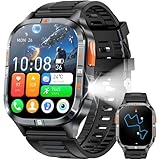
- BUILT-IN GPS & COMPASS– This military smartwatch features high-precision GPS to pinpoint your location while hiking, cycling, or traveling, keeping you safely on track without extra gear. Tap the compass icon and it locks your bearing within three seconds—engineered for pro-level outdoor adventures like camping, climbing, and trekking.
- BLUETOOTH CALLING & MESSAGES – Powered by the latest Bluetooth tech, the men’s smartwatch lets you answer or make calls right from your wrist—no need to pull out your phone. Get real-time alerts for incoming texts and app notifications so you never miss an invite. (Replying to SMS is not supported.)
- BIG SCREEN & DIY VIDEO WATCH FACE – The 2.01" military-spec display is dust-proof, scratch-resistant, and forged from high-strength glass with an aluminum alloy bezel, passing rigorous dust and abrasion tests so the screen stays crystal-clear. Upload a short family video to create a dynamic, one-of-a-kind watch face that keeps your memories alive.
- 24/7 HEALTH MONITORING – Equipped with a high-performance optical sensor, this Android smartwatch tracks heart rate and blood-oxygen levels around the clock. It also auto-detects sleep stages (deep, light, awake) for a complete picture of your health, ensuring you always know how your body is doing.
- MULTI SPORT MODES & FITNESS TRACK – Choose from running, cycling, hiking, basketball, and more to log every workout. Set goals, monitor progress, and sync data to the companion app. Bonus tools include photo gallery, weather, alarm, stopwatch, flashlight, hydration reminder, music/camera remote, find-my-phone, mini-games, and other everyday essentials.
The Epix (Gen 2) feels more fragile here. Long navigation days are fine if you start full, but it’s less forgiving if you’re stacking activities across a weekend without charging.
The Fenix 8 handles mapping with far less anxiety. Because the display doesn’t spike power draw when active, navigation feels steady and predictable, even deep into multi-day outings.
AMOLED Always-On vs. Gesture Mode
Always-on display is the silent battery killer on Epix models. It looks great, especially indoors, but it can cut real-world endurance by a third depending on brightness and activity mix.
Gesture mode is where the Epix Pro shines. Screen wake is fast, visibility is excellent, and battery life becomes much more competitive with MIP, especially for runners and gym-focused athletes.
If you insist on always-on AMOLED for training and daily wear, expect the Epix Pro to need charging every 3 to 4 days, and the Epix (Gen 2) even sooner.
Multi-Day Trips and Ultra Scenarios
This is still Fenix territory. Multi-day trail runs, backcountry navigation, or ultra events barely dent battery life relative to AMOLED models.
The Fenix 8’s MIP display, solar assist on applicable models, and conservative power draw mean you can finish long events without micromanaging settings or brightness.
The Epix Pro has narrowed the gap significantly thanks to its larger battery and smarter power profiles. For most users training daily and charging weekly, it’s no longer a limitation.
The Epix (Gen 2) trails slightly behind the Pro, especially if you push brightness or use always-on display. It’s still perfectly capable, but less forgiving if you forget to top up before a long weekend.
Battery Life as a Lifestyle Choice
Battery behavior shapes how you live with these watches. The Fenix 8 is for people who don’t want to think about charging at all, even during heavy training or travel.
The Epix Pro suits users who want a modern, high-contrast display and are comfortable charging once a week, maybe twice during peak training blocks.
The Epix (Gen 2) is best for those who value AMOLED clarity and price over absolute endurance, and who don’t mind planning around the charger.
Battery life here isn’t about winning spec sheets. It’s about how much mental bandwidth you’re willing to spend managing your watch instead of your training.
Performance, Sensors, and Training Features: What’s Truly New — and What Isn’t
Once you get past display technology and battery behavior, the differences between Fenix 8, Epix Pro, and Epix (Gen 2) become much more subtle. Garmin’s marketing suggests big generational leaps, but in daily training use, most of what matters comes down to sensors, durability extras, and a handful of quality-of-life upgrades.
This is the section where expectations need recalibrating. None of these watches is meaningfully “faster” than the others, and none will suddenly transform your fitness. The real question is how much of Garmin’s newest sensor stack and hardware refinements you actually need.
Core Performance: Same Engine, Same Experience
In day-to-day use, all three watches feel virtually identical in speed. Menu navigation, activity start times, map panning, and post-workout syncing are consistent across the lineup.
Garmin has been using variations of the same internal platform for several generations now, and it shows. There’s no performance bottleneck on the Epix (Gen 2), and no noticeable snappiness advantage on the Fenix 8 or Epix Pro.
This matters because it means you’re not “future-proofing” performance by spending more. If your concern is lag, loading delays, or slow GPS acquisition, none of these models should worry you.
GPS Accuracy: Marginal Gains, Not a Revolution
All three watches deliver excellent GPS performance, especially on models equipped with multi-band GNSS. In open environments, tracks are nearly indistinguishable between the Epix (Gen 2), Epix Pro, and Fenix 8.
Where the newer hardware helps slightly is in difficult conditions. Dense tree cover, urban canyons, and technical trail networks show marginally cleaner tracks on the Pro and Fenix 8, but this is refinement, not reinvention.
For runners, cyclists, and hikers upgrading from a Fenix 6 or older Forerunner, the jump will feel meaningful. Between these three, however, GPS accuracy alone should not drive your decision.
Heart Rate and Health Sensors: Pro Models Pull Ahead
This is where a real generational difference exists. The Epix Pro and Fenix 8 use Garmin’s newer optical heart rate sensor, while the Epix (Gen 2) relies on the previous generation.
In practice, that means better stability during intervals, fewer cadence lock issues, and improved reliability for all-day stress and recovery metrics. Strength training and short bursts still favor a chest strap, but wrist-based tracking is more trustworthy on the Pro and Fenix 8.
Health features like ECG support, where available by region and software update, are also tied to the newer sensor hardware. The Epix (Gen 2) remains a strong fitness tracker, but it’s clearly a step behind in raw sensor capability.
Training Metrics: Nearly Identical Across the Board
This is where many buyers expect separation, and where Garmin delivers almost none. Training Readiness, HRV Status, Acute Load, Training Status, Endurance Score, and Hill Score are shared across all three watches.
Daily suggested workouts behave the same. Recovery time guidance feels the same. Race widgets, pacing strategies, and performance condition metrics are functionally identical.
If you’re buying a Fenix 8 expecting deeper or more advanced training intelligence than the Epix (Gen 2), you’ll be disappointed. Garmin’s ecosystem advantage lies in consistency, not exclusivity.
Mapping, Navigation, and Outdoor Tools
Full-color offline maps, turn-by-turn navigation, ClimbPro, and course guidance are excellent on all three watches. The differences here are more about visibility and battery confidence than features.
The Epix models benefit from AMOLED clarity when viewing maps up close, especially indoors or in low light. The Fenix 8’s MIP display trades visual punch for legibility in harsh sunlight and extended battery life during long navigational efforts.
Functionally, they guide you just as well. The choice comes down to how often you navigate for hours at a time versus how often you glance quickly at a map mid-run or ride.
LED Flashlight and Hardware Extras
The built-in LED flashlight is one of Garmin’s most underrated hardware additions, and it’s exclusive to the Fenix 8 and Epix Pro. Once you’ve used it for pre-dawn runs, night hikes, or campsite tasks, it’s hard to go back.
It’s not just a novelty. Strobe modes for visibility, red light for night vision, and instant access from a button make it genuinely useful.
The Epix (Gen 2) lacks this feature entirely. If you train early, finish late, or spend time outdoors beyond daylight hours, this alone may justify stepping up to a Pro or Fenix 8.
Durability, Materials, and Real-World Wear
All three watches are built to take abuse, but the Pro and Fenix 8 lean harder into the “tool watch” identity. Sapphire options, reinforced bezels, and slightly improved button feel give them a more confidence-inspiring presence.
The Epix (Gen 2) is still rugged, but its lighter feel and lack of flashlight make it feel more like a premium fitness watch than an expedition instrument.
On the wrist, comfort is excellent across the range, especially in the mid-size cases. Weight differences are noticeable only during sleep or long ultras, and even then, strap choice often matters more than the watch itself.
Software Support and Longevity
Garmin’s update strategy favors newer hardware, but not aggressively. The Epix (Gen 2) continues to receive meaningful feature updates and remains fully supported for the foreseeable future.
That said, sensor-driven features will increasingly favor the Pro and Fenix 8. Health metrics tied to optical hardware won’t backport, no matter how similar the watches feel today.
If long-term platform relevance matters to you, the Epix Pro and Fenix 8 are safer bets. If value matters more, the Epix (Gen 2) still delivers nearly everything that defines Garmin’s training ecosystem.
Rank #4

- 【Built-in GPS & Multi-System Positioning】Stay on track with the Tiwain smartwatch’s built-in GPS. Featuring military-grade single-frequency and six-satellite support (GPS, GLONASS, Beidou, Galileo, NAVIC, QZSS), this watch offers fast and accurate location tracking wherever you go. It also includes a compass, altimeter, and barometer, giving you real-time data on your altitude, air pressure, and position.
- 【Military-Grade Durability】Engineered to withstand the toughest conditions, the Tiwain smartwatch meets military standards for extreme temperatures, low pressure, and dust resistance. Crafted from tough zinc alloy with a vacuum-plated finish, this watch is also waterproof and built to resist wear and tear. The 1.43-inch AMOLED HD touchscreen offers clear visibility in all environments, and the watch supports multiple languages for global users.
- 【170+ Sport Modes & Fitness Tracking】Track your fitness journey with 170+ sport modes, including walking, running, cycling, hiking, basketball, and more. Set exercise goals, monitor progress, and sync your data to the companion app. The smartwatch also offers smart features like music control, camera remote, weather updates, long-sitting reminders, and more.
- 【LED Flashlight for Outdoor Adventures】The Tiwain smartwatch comes equipped with a built-in LED flashlight that can illuminate up to 20 meters. Activate it with the side button for added convenience during nighttime activities or outdoor adventures.
- 【Comprehensive Health Monitoring】Monitor your health with real-time heart rate, sleep, blood pressure, and blood oxygen level tracking. The smartwatch will vibrate to alert you of any abnormal readings. You can also make and receive calls directly from the watch, and stay connected with message and app notifications (receive only, no sending capability) – perfect for when you’re driving or exercising.
This is the core truth of Garmin’s high-end lineup: performance parity is real, training depth is shared, and hardware extras quietly shape the experience more than headline features ever do.
Navigation, Mapping, and Outdoor Use: Hiking, Ultra, and Expedition Scenarios
Once you step beyond daily training and into real navigation, the differences between these three watches stop being theoretical. Mapping quality, display behavior in sunlight or darkness, battery management under continuous GPS, and how quickly you can interact with routes all matter more than sensor charts.
Garmin positions all three as full mapping watches, but they do not behave the same when you’re five hours into a ridge traverse, navigating by headlamp, or rationing battery on a multi-day ultra.
Maps, Routing, and Navigation Parity
At a functional level, the Fenix 8, Epix Pro, and Epix (Gen 2) share the same mapping foundation. Full-color topographic maps, turn-by-turn routing, course loading from Garmin Connect, breadcrumb tracks, and on-device rerouting are consistent across all three.
You get multi-band GNSS, SatIQ automatic mode switching, ClimbPro, Up Ahead, and round-trip routing regardless of which one you choose. In terms of raw navigation accuracy, there is no meaningful winner here; all three lock quickly and hold signal reliably even under tree cover or in mountainous terrain.
Where they diverge is how usable those tools feel over long days outdoors.
AMOLED vs. MIP: The Display Trade-Off in the Field
The Epix Pro and Epix (Gen 2) use AMOLED displays, and they are undeniably gorgeous for maps. Contour lines, trail overlays, and course colors pop in a way that makes quick glances genuinely easier, especially when you’re moving fast or fatigued.
The trade-off is always-on behavior. Even with gesture wake and smart dimming, AMOLED requires more active power management during long hikes or ultras, particularly if you keep maps open frequently.
The Fenix 8’s MIP display is less dramatic, but it excels at passive readability. In harsh sunlight, snow glare, or desert conditions, the map is always there without a wrist flick, and battery draw stays predictable.
For expeditions, thru-hikes, and multi-day navigation where charging opportunities are limited, this consistency matters more than visual polish.
Battery Life Under Continuous GPS and Mapping
This is where the Fenix 8 quietly separates itself. With multi-band GPS and mapping enabled, it delivers longer real-world endurance, especially when paired with solar-assisted variants.
The Epix Pro improves significantly over the Epix (Gen 2), particularly in GPS-only and SatIQ modes, but AMOLED still costs you runtime if you’re actively navigating for hours at a time. The Epix (Gen 2) remains capable, but it requires more conscious settings management to stretch into ultra-distance territory.
For 50K to 100K ultras, all three can finish the job. For multi-day stage races, fastpacking, or unsupported expeditions, the Fenix 8 is simply easier to live with.
Buttons, Touch, and Cold-Weather Use
All three watches support touch navigation on maps, but physical buttons remain the primary interface outdoors. Garmin’s five-button layout is unchanged, and that’s a good thing when gloves, rain, or numb fingers enter the equation.
The Fenix 8 and Epix Pro benefit from slightly improved button tactility, especially when wet or muddy. It’s a subtle upgrade, but one you notice during long descents or repeated zooming and panning.
Touchscreens are useful for quick map manipulation in fair weather. In winter or alpine conditions, buttons are still king, and all three deliver, with a slight edge to the newer hardware.
Flashlight Integration and Night Navigation
The built-in LED flashlight on the Fenix 8 and Epix Pro changes how these watches function outdoors after dark. It’s not just about seeing; it’s about situational awareness.
Being able to check your map, light up trail markers, or find gear without pulling out a headlamp is a real advantage during night sections of ultras or early-morning summit pushes. Red light mode preserves night vision, and strobe adds a safety element in exposed terrain.
The Epix (Gen 2), lacking this feature, feels immediately dated in comparison once you’ve used the Pro or Fenix 8 in low-light conditions.
Size, Weight, and Long-Hour Comfort
Case size matters more outdoors than many people expect. Larger cases offer bigger maps and longer battery life, but they can become intrusive during sleep tracking on multi-day efforts or when worn under jacket cuffs.
Mid-size variants across all three lines strike the best balance for most users. Weight differences are minimal on paper, but during 12-hour days, lighter builds like the Epix (Gen 2) do feel slightly less fatiguing on the wrist.
Strap choice can mitigate most comfort concerns, but if you’re sensitive to wrist bulk, the Epix models wear a touch more “watch-like” compared to the Fenix 8’s more overt tool-watch stance.
Which Watch Makes Sense for Your Outdoor Use
If your outdoor activities lean toward true expeditions, multi-day hikes, or long ultras where battery predictability and passive readability matter most, the Fenix 8 is the strongest and least compromised choice.
If you want the best possible map clarity, frequently train at night, and still need serious battery life, the Epix Pro is the most balanced option. It delivers nearly all of the Fenix 8’s outdoor capability with a more modern display and slightly lighter feel.
If your adventures are mostly day-based hikes, trail runs, or supported ultras, and you value price-to-performance, the Epix (Gen 2) remains an excellent navigator. It does almost everything its newer siblings do, just with fewer hardware luxuries and tighter battery margins.
The key takeaway is simple: all three can get you there. The right choice depends on how long you stay out, how often you navigate in the dark, and whether battery anxiety is something you want to think about at all.
Software Longevity and Feature Parity: Which Watch Will Age Best
Once you’ve narrowed down hardware, display preference, and outdoor use, software support becomes the quiet tie-breaker. Garmin watches live or die by firmware updates, and the real question is not what these watches do today, but which ones will still feel current three or four years from now.
Garmin’s track record is better than most in this space, but not all models age equally. Hardware ceilings, sensor stacks, and display choices increasingly determine who gets new features and who gets left with maintenance updates only.
Garmin’s Update Philosophy: Shared Features, Hardware Gates
Garmin generally rolls out major training, health, and navigation features across families rather than locking them to a single flagship. That’s why older Fenix and Epix models have received meaningful upgrades long after launch, including Training Readiness, Morning Report, advanced sleep metrics, and map improvements.
Where things diverge is when new features rely on physical components. ECG, flashlight-based safety tools, multi-band GNSS refinements, and display-driven UI changes are not software-only decisions, and this is where the Epix (Gen 2) starts to show its age.
The Fenix 8 and Epix Pro sit at the top of Garmin’s current hardware stack, which makes them the reference platforms for future updates. Historically, those reference models receive features first and lose them last.
Fenix 8: Longest Runway, Fewest Compromises
The Fenix 8 is positioned as Garmin’s longest-lived platform, and not just because of its price. Its MIP display aligns perfectly with Garmin’s endurance-first philosophy, meaning battery-impacting features are less likely to be withheld for power reasons.
In practical terms, this makes the Fenix 8 the safest bet for future navigation upgrades, expedition-focused tools, and sensor-driven metrics. When Garmin introduces new endurance, safety, or mapping features, the Fenix line is almost always the baseline for compatibility.
There is also a subtler advantage: Garmin is conservative about removing support for MIP-based flagships. Even when AMOLED UI changes accelerate elsewhere, the Fenix typically retains feature parity longer simply because its display and battery model remain predictable.
Epix Pro: Nearly Identical Today, Slightly Less Certain Tomorrow
Right now, the Epix Pro and Fenix 8 are functionally very close. Training metrics, mapping, flashlight features, health tracking, and GNSS performance are largely interchangeable in daily use.
Where uncertainty creeps in is battery-dependent software evolution. AMOLED-driven features often arrive with power trade-offs, and Garmin has shown a tendency to slow-roll or fine-tune these on Epix models to preserve advertised battery life.
That said, the Pro’s updated sensor suite and flashlight mean it is firmly in Garmin’s “modern” tier. It will age far better than the Epix (Gen 2) and should remain feature-complete for most users over a typical upgrade cycle of three to four years.
Epix (Gen 2): Stable, Mature, but Past Its Expansion Phase
The Epix (Gen 2) is not at risk of becoming obsolete overnight. Garmin will continue to support it with bug fixes, compatibility updates, and occasional shared features where hardware allows.
However, the lack of a built-in flashlight and older sensor configuration already excludes it from some newer safety and health features. As Garmin leans more heavily into integrated hardware experiences, those gaps will only become more noticeable.
💰 Best Value

- Smart Watch with GPS and Offline Map: This smart watch connects to multiple satellite systems for accurate real-time positioning, and includes a professional-grade compass, altimeter, and barometer for precise data, ensuring you maintain your sense of direction in any outdoor environment. The map version supports downloading offline maps; select a route or destination to view the route even without a signal, eliminating the risk of getting lost.
- Bluetooth Call & Message Functionality: This smart watches for men allows you to make and receive calls; receive text and social media notifications (Facebook, WhatsApp, Instagram, Twitter, etc.); and reply to text messages with voice-to-text or set up quick replies (text reply functionality is available for Android phones).
- Sports & Health Monitoring: This 5ATM waterproof fitness watch supports over 100 sports modes and tracks daily activity data, calories, distance, steps, and heart rate. You can use it to monitor your health metrics (blood oxygen, heart rate, stress, and sleep), monitor your fatigue and mood, and perform PAI analysis. You can also use this smartwatch to set water intake and sedentary reminders. Stay active and healthy with this fitness tracker watch.
- Customizable Watch Faces & AI Functionality: This smart watch features a 1.46-inch HD touchscreen and over 100 downloadable and customizable watch faces. You can even use your favorite photos as your watch face. Equipped with AI technology, it supports voice descriptions in multiple languages to generate personalized AI watch faces. The watch's AI Q&A and AI translation features provide instant answers to questions and break down language barriers, making it an ideal companion for everyday life and travel.
- Large Battery & High Compatibility & More Features: This smart watch for android phones and ios phone features a large 550ml battery for extended battery life. It's compatible with iOS 9.0 and above and Android 5.0 and above. It offers a wealth of features, including an AI voice assistant, weather display, music control, camera control, calculator, phone finder, alarm, timer, stopwatch, and more. (Package Includes: Smartwatch (with leather strap), spare silicone strap, charging cable, and user manual)
Think of the Epix (Gen 2) as a finished product rather than an evolving one. It does almost everything well today, but it is unlikely to gain many meaningful new capabilities beyond what it already offers.
Real-World Aging: What You’ll Notice Over Time
Over years of ownership, software longevity shows up in small but important ways. New data fields appear in Garmin Connect, recovery insights get refined, mapping becomes smoother, and training suggestions adapt to newer methodologies.
Fenix 8 owners are least likely to feel left behind during those transitions. Epix Pro owners will stay very close, with the added benefit of a modern display that already feels aligned with Garmin’s current UI direction.
Epix (Gen 2) owners will still have a powerful, reliable watch, but future comparisons will increasingly highlight what it doesn’t receive rather than what it does. That distinction matters if you keep watches for the long haul rather than upgrading frequently.
Pricing, Value, and Upgrade Logic: When Each Watch Makes Financial Sense
After long-term usability and software longevity, the financial logic becomes the deciding factor. These three watches overlap heavily in capability, but they sit at very different points on Garmin’s pricing curve, and that gap directly affects who should buy what.
This is less about finding the “cheapest” option and more about avoiding overpaying for features you’ll never use, or underbuying if you expect to keep the watch for years.
Fenix 8: Highest Cost, Longest Value Horizon
The Fenix 8 commands the highest upfront price in this comparison, especially once you factor in sapphire glass, titanium bezels, or solar variants. That premium is not about raw performance today, but about buying into Garmin’s longest-supported hardware platform.
From a materials standpoint, it feels closest to a modern tool watch. The case finishing is more refined than older Fenix generations, buttons are tighter and quieter, and the watch tolerates abuse in a way AMOLED models still struggle to match over time.
Financially, the Fenix 8 makes sense if you plan to keep the watch for four to five years, rely heavily on navigation or expedition-style battery life, or train across multiple seasons without charging anxiety. Over that ownership window, the cost per year often ends up lower than upgrading an AMOLED model sooner.
Epix Pro: The Best Price-to-Experience Ratio Right Now
The Epix Pro typically sits meaningfully below the Fenix 8 in price while sharing nearly all of the same core training, health, and safety features. You still get the upgraded heart rate sensor, the built-in flashlight, multiband GPS, full mapping, and Garmin’s current training ecosystem.
What you are paying for instead is the AMOLED display and a slightly shorter battery runway. In daily life, that display transforms usability, especially indoors, in the gym, or when quickly glancing at maps and metrics mid-activity.
From a value perspective, this is the sweet spot for most buyers. If you upgrade every three to four years and want a watch that feels modern every time you look at it, the Epix Pro delivers nearly flagship capability without flagship pricing.
Epix (Gen 2): Where Discounts Change the Equation
At original retail pricing, the Epix (Gen 2) is a harder sell today. Its missing flashlight, older sensor array, and reduced future feature eligibility limit its long-term value compared to the Pro.
However, once discounted, the story changes quickly. At the right price, it remains one of the best AMOLED multisport watches Garmin has ever made, with excellent GPS accuracy, strong battery life for its display class, and a polished software experience that feels stable rather than dated.
This model makes financial sense if you are buying new at a significant markdown, do not rely on the flashlight or latest health metrics, and want premium Garmin mapping and training tools without paying for the newest hardware cycle.
Upgrade Logic: Who Should Actually Spend More
If you are upgrading from an older Fenix 5, 6, or early Forerunner, both the Fenix 8 and Epix Pro represent massive jumps in display clarity, sensor accuracy, and training insight. In that case, paying more for the newest hardware usually makes sense because the difference will be felt daily.
If you already own an Epix (Gen 2), the upgrade case is more nuanced. The Pro is worth it if the flashlight, improved heart rate accuracy, or longer software relevance matter to you; otherwise, the performance gap alone does not justify the spend.
For buyers coming from an Epix Pro or Fenix 7 generation, the Fenix 8 only makes financial sense if you specifically want maximum battery longevity, MIP readability in harsh light, or plan to keep the watch well beyond the typical upgrade cycle.
Cost vs. Ownership Reality
These watches are not disposable tech. Comfort, strap compatibility, case size options, and how often you actually charge the device matter just as much as specs on paper.
The Fenix 8 rewards patience and long-term ownership. The Epix Pro rewards daily interaction and visual clarity. The Epix (Gen 2) rewards buyers who time the market and prioritize value over future-proofing.
Seen through that lens, the “best” deal depends less on MSRP and more on how long you intend to live with the watch on your wrist.
Our Clear Recommendations: Which Garmin You Should Buy (and Which You Should Skip)
With the upgrade logic and ownership realities in mind, the decision becomes less about raw specifications and more about how each watch actually fits into your daily training, outdoor use, and long-term expectations. Garmin’s lineup overlaps heavily on paper, but in practice, each model has a very clear “right buyer” and a very clear audience that should look elsewhere.
Buy the Fenix 8 if You Value Battery Life, Durability, and Longevity Above All
The Fenix 8 is the watch we recommend for athletes and adventurers who treat their watch as long-term equipment rather than yearly-upgrade tech. Its MIP display may look conservative next to AMOLED, but in harsh sunlight, snow, or multi-day trips, it remains effortlessly readable while consuming far less power.
In real-world use, the extended battery life fundamentally changes how you interact with the watch. You charge less, rely on solar assistance more, and can confidently track multi-day hikes, ultras, or expedition travel without battery anxiety creeping into decision-making.
The physical build also favors this mindset. The case proportions wear better than the numbers suggest, button interaction is excellent with gloves or wet hands, and sapphire options paired with a titanium bezel give it the most “tool-watch” feel in Garmin’s current lineup.
If you want the most future-proof Garmin you can buy today, plan to keep it for many years, and train outdoors more than you stare at your screen, the Fenix 8 is the safest and most rational purchase.
Buy the Epix Pro if You Want the Best Everyday Garmin Experience
For most active users, the Epix Pro is the easiest recommendation and the most enjoyable watch to live with day to day. The AMOLED display dramatically improves readability for maps, workouts, and metrics during quick glances, and it makes the watch feel more like a premium smartwatch without sacrificing Garmin’s training depth.
Battery life, while shorter than the Fenix 8, is still strong enough that charging rarely becomes a burden unless you are logging very long GPS sessions every week. For runners, cyclists, gym users, and even most trail athletes, it comfortably balances visual clarity with practical endurance.
The built-in flashlight sounds like a small addition but proves genuinely useful in daily life, from early-morning training to late-night navigation. Combined with the improved heart rate sensor and ongoing software support, the Epix Pro feels like the most refined execution of Garmin’s high-end platform.
If you train frequently, wear the watch all day, and want premium visuals without sacrificing serious sports performance, this is the model that delivers the most satisfaction per dollar at current pricing.
Buy the Epix (Gen 2) Only If the Price Is Right
The Epix (Gen 2) still holds up remarkably well in performance terms. GPS accuracy, mapping, training metrics, and general stability remain excellent, and the AMOLED display continues to look great even compared to newer models.
Where it falls behind is not in what it can do today, but in what it may not receive tomorrow. The older sensor package, lack of flashlight, and more limited future feature eligibility reduce its long-term appeal at full price.
That said, once discounted meaningfully, it becomes a very smart value play. If you want Garmin’s premium AMOLED experience, do not need the flashlight or the very latest health metrics, and plan to upgrade again in a few years anyway, this watch still delivers far more capability than most users will ever exhaust.
Which One You Should Skip
You should skip the Fenix 8 if you primarily train indoors, value screen clarity over battery longevity, or simply enjoy interacting with your watch frequently throughout the day. In those cases, the MIP display can feel like a compromise rather than a benefit.
You should skip the Epix Pro if your training regularly involves multi-day efforts, expedition use, or weeks away from reliable charging. Even with strong battery performance, it cannot match the peace of mind the Fenix 8 provides in those scenarios.
You should skip the Epix (Gen 2) entirely if it is priced close to the Pro. At small price differences, the newer hardware and longer relevance of the Epix Pro make it the objectively better buy.
Our Bottom-Line Recommendation
If you want one clear answer without overthinking it, the Epix Pro is the best choice for most people. It offers the best balance of display quality, features, comfort, and long-term usability in Garmin’s current lineup.
Choose the Fenix 8 if your priorities lean toward endurance, outdoor reliability, and keeping one watch for the long haul. Choose the Epix (Gen 2) only when the discount is substantial and your expectations are realistic.
Garmin does not make bad watches at this level, but buying the right one means understanding how you will actually live with it. Get that part right, and any of these models can be a near-perfect training partner rather than an expensive compromise.