Choosing between the Fenix 8 and Instinct 3 usually means you already know you want a rugged Garmin, but you are unsure how much watch you actually need. Both are built for harsh environments, long days outdoors, and dependable GPS tracking, yet they sit at very different philosophical points inside Garmin’s lineup. Understanding that intent matters more than any single feature comparison.
This comparison is not about declaring a winner. It is about clarifying why Garmin built these watches so differently, how that affects daily use, training depth, and long-term satisfaction, and which type of user each one is genuinely designed to serve. By the end of this section, the differences should already feel intuitive before we even touch specs.
Fenix 8 as Garmin’s flagship tool watch
The Fenix 8 represents Garmin at its most ambitious, combining top-tier training metrics, full mapping and navigation, premium materials, and smartwatch polish into a single platform. It is designed as a no-compromise endurance and adventure watch, meant to replace multiple devices for athletes who train hard, travel widely, and expect deep physiological insight alongside outdoor navigation.
In Garmin’s hierarchy, the Fenix line sits at the top alongside Epix, defining what the ecosystem can do when price and complexity are secondary to capability. Sapphire crystal options, metal bezels, high-resolution displays, and extensive software features position it as a long-term investment rather than a purely functional tool. It is built to feel substantial on the wrist, both physically and in how much data it delivers.
🏆 #1 Best Overall

- Stylish Design, Vibrant Display: The lightweight aluminum build blends effortless style with workout durability, while the vivid 1.97" AMOLED display keeps your data easy to read, even under bright sunlight.
- All-in-One Activity Tracking: The Amazfit Bip 6 fitness tracker watch offers 140+ workout modes including HYROX Race and Strength Training, plus personalized AI coaching and 50m water resistance.
- Up to 14 Days Battery Life: The Amazfit Bip 6 smart watch powers through your training and recovery for up to two weeks at a time - no nightly charging needed.
- Accurate GPS Tracking & Navigation: Stay on course with free downloadable maps and turn-by-turn directions. Support from 5 satellite systems ensures precise tracking of every move and fast GPS connection.
- 24/7 Health Monitoring: The Amazfit Bip 6 smartwatch provides precise, real-time monitoring of heart rate, sleep, blood-oxygen and stress, empowering you with actionable insights to optimize your health and fitness.
The philosophy behind the Fenix 8 is breadth plus depth. It assumes the wearer wants advanced training load analysis, recovery modeling, multisport race support, routable maps, and everyday smartwatch conveniences, even if they only use a portion of that capability on any given day.
Instinct 3 as the modernized utilitarian Garmin
The Instinct 3 takes the opposite approach: intentional restraint. It prioritizes durability, clarity, and battery life over visual refinement or feature saturation, focusing on what most outdoor users actually rely on when conditions get rough. This is a watch built to be trusted, not admired.
Within Garmin’s lineup, the Instinct series exists to serve users who value reliability and simplicity above all else. The fiber-reinforced polymer case, recessed display, and button-first interface signal that this watch is meant to be used with gloves, mud, sweat, and minimal attention. It trades full mapping and advanced analytics for directional guidance, essential metrics, and exceptional endurance.
The Instinct 3’s philosophy is doing fewer things, but doing them consistently well. It assumes the wearer would rather charge less often, scroll less data, and focus on the activity itself instead of post-session analysis or visual flair.
Premium versatility versus focused resilience
Garmin positions the Fenix 8 as the watch for athletes who want one device that can handle structured training plans, expedition-level navigation, and daily smartwatch duties without switching contexts. It is versatile by design, but that versatility brings complexity, higher cost, and a steeper learning curve.
The Instinct 3 is positioned for users who want a watch that disappears into the background until it is needed. Its simpler display and streamlined software reduce cognitive load during activities, especially in environments where speed, visibility, and battery life matter more than data density.
This philosophical split explains why the Fenix 8 feels closer to a high-end mechanical tool watch in spirit, while the Instinct 3 feels like a digital field instrument. Both are rugged, but they express that ruggedness in very different ways.
Who Garmin expects to buy each watch
Garmin clearly expects Fenix 8 buyers to be serious endurance athletes, frequent adventurers, or data-driven users who want maximum insight into performance and recovery. These users often train across multiple disciplines, travel with their watch, and appreciate premium materials and display technology as part of the ownership experience.
Instinct 3 buyers are typically outdoor-first users who hike, trail run, work outdoors, or train consistently but do not need elite-level analytics. They value long battery life, toughness, and straightforward operation, often at a price point that feels practical rather than aspirational.
Understanding this intent upfront makes the rest of the comparison clearer. Every difference in display, software depth, battery behavior, and price flows directly from these two very different design philosophies inside Garmin’s ecosystem.
Design, Materials & Wearability: Premium Tool Watch vs. Tactical Utility
The philosophical split outlined earlier becomes most obvious the moment you put these two watches on your wrist. The Fenix 8 is designed to feel like a premium, modern tool watch that can live comfortably in both technical environments and everyday settings. The Instinct 3, by contrast, embraces a purely functional, almost military-grade aesthetic that prioritizes resilience and clarity over refinement.
Neither approach is better in isolation, but they deliver very different ownership experiences depending on how and where the watch will be worn.
Case construction and material choices
The Fenix 8 uses a multi-material case architecture that blends fiber-reinforced polymer with a metal bezel, offered in stainless steel or titanium depending on configuration. This metal bezel is not decorative; it provides meaningful impact protection while contributing to the watch’s higher-end feel. Sapphire glass options further reinforce its positioning as a long-term, premium sports instrument rather than a disposable gadget.
Instinct 3 takes a more utilitarian route with a fully polymer case designed to absorb shocks rather than deflect them. There is no exposed metal bezel, and that is intentional. The softer exterior resists scuffs, doesn’t show wear easily, and performs exceptionally well in environments where the watch will be scraped, knocked, or covered in dirt regularly.
In hand, the Fenix 8 feels dense and deliberate, like a mechanical tool watch translated into a digital form. The Instinct 3 feels lighter, more forgiving, and purpose-built for abuse rather than admiration.
Size options, wrist presence, and daily comfort
Garmin offers the Fenix 8 in multiple case sizes to accommodate different wrists, typically ranging from compact to very large expedition-ready formats. Even in smaller sizes, the watch has noticeable wrist presence due to its bezel thickness and display surface. On slim wrists, it feels substantial; on average and larger wrists, it feels appropriately robust without tipping into awkwardness.
The Instinct 3 also comes in multiple sizes, but its lighter construction and simpler case geometry make it easier to forget you are wearing it. The absence of a metal bezel reduces perceived bulk, and the curved lugs help the watch sit flatter against the wrist. This becomes particularly noticeable during sleep tracking, long hikes, or multi-day wear where pressure points matter.
For users who wear their watch 24/7, including overnight, the Instinct 3 generally causes less fatigue. The Fenix 8 is still comfortable, but its weight and structure are more noticeable during extended non-training wear.
Display integration and visual character
The Fenix 8’s display is a central part of its design identity. Whether configured with a high-resolution AMOLED or a refined memory-in-pixel panel depending on variant, the screen is expansive, detailed, and visually modern. Data fields, maps, and widgets are framed by the bezel in a way that feels intentional and premium rather than purely functional.
Instinct 3 uses a monochrome, low-power display with a distinctive circular data window embedded into the main screen. This design is polarizing, but it serves a purpose. Key information remains visible at a glance, even in harsh sunlight, while the display consumes minimal power and remains readable in conditions that would challenge more complex panels.
Visually, the Fenix 8 resembles a contemporary sports watch you might comfortably wear to work or travel. The Instinct 3 looks unapologetically like field equipment, and it does not attempt to blur that line.
Buttons, controls, and real-world usability
Both watches rely on Garmin’s five-button layout, but the tactile experience differs. The Fenix 8’s buttons are typically metal or metal-capped, with a more refined click and smoother travel. They feel precise and engineered, aligning with the watch’s premium positioning.
Instinct 3’s buttons are oversized, deeply textured, and designed for gloves, cold weather, and muddy conditions. They require slightly more force but offer absolute certainty when pressed. In high-stress or low-visibility situations, this directness can be an advantage.
From a usability standpoint, neither is objectively better. The Fenix 8 feels refined and controlled, while the Instinct 3 feels decisive and fail-safe.
Straps, fit adjustments, and long-term wear
The Fenix 8 supports Garmin’s QuickFit strap system, opening the door to silicone, nylon, leather, and metal bracelet options. This flexibility reinforces its role as a watch that can adapt to different environments and outfits. Strap changes are fast, secure, and encourage personalization.
Instinct 3 uses a more traditional pinned strap system with thick, durable silicone bands designed for longevity. Strap options exist, but the emphasis is on function rather than aesthetics. Once fitted correctly, the watch stays planted during movement without requiring frequent adjustment.
For users who enjoy changing straps to match activities or clothing, the Fenix 8 offers a richer experience. For users who want one strap that works everywhere and never needs attention, the Instinct 3 delivers exactly that.
Durability ratings and environmental resistance
Both watches meet military-grade durability standards and are rated for serious outdoor use, including high shock resistance and water exposure well beyond casual swimming. The difference lies in how that durability is expressed.
The Fenix 8 protects itself through material strength and layered construction. The Instinct 3 protects itself through simplicity and flexibility. In real-world terms, the Instinct 3 is often more forgiving when dropped or scraped, while the Fenix 8 is more resistant to visible wear over time.
Users who work outdoors, climb, or regularly expose their watch to rough treatment may appreciate the Instinct 3’s resilience-first approach. Users who want durability without sacrificing refinement will gravitate toward the Fenix 8.
Design value and ownership experience
Design is not just about appearance; it shapes how a watch fits into daily life. The Fenix 8 feels like a premium object that justifies its price through materials, finish, and versatility. It is a watch that owners tend to keep for years and use across training, travel, and everyday routines.
The Instinct 3 feels like a dependable tool that earns trust through consistency and endurance rather than aesthetics. It is less about emotional attachment and more about confidence that it will work no matter what conditions you throw at it.
This distinction matters. If you want a watch that feels special every time you put it on, the Fenix 8 delivers that experience. If you want a watch that disappears until you need it and never demands attention, the Instinct 3 embodies that philosophy completely.
Display Technology & Interface: AMOLED/MIP Sophistication vs. Solar Simplicity
After design and durability, the display is where the philosophical gap between the Fenix 8 and Instinct 3 becomes impossible to ignore. These watches are built for similar environments, yet they communicate with the user in completely different ways.
Garmin has effectively split its rugged lineup into two display ideologies. The Fenix 8 embraces visual richness and interface flexibility, while the Instinct 3 doubles down on clarity, efficiency, and minimal power draw.
Fenix 8 display options: AMOLED immersion or MIP endurance
The Fenix 8 is available with two fundamentally different display technologies depending on the variant: a high-resolution AMOLED panel or a solar-assisted memory-in-pixel (MIP) display. This choice alone lets buyers tailor the watch to how they train and live.
The AMOLED version delivers exceptional contrast, deep blacks, and vibrant color saturation. Maps, charts, and data fields are easier to parse at a glance, especially during complex navigation or structured workouts, and the watch feels closer to a modern smartwatch than a traditional outdoor instrument.
For users prioritizing battery longevity and constant visibility, the solar MIP version retains Garmin’s classic transflective look. It is always readable in direct sunlight, consumes very little power, and maintains a consistent appearance regardless of lighting conditions.
Instinct 3 display: monochrome clarity with solar efficiency
The Instinct 3 uses a monochrome memory-in-pixel display with solar charging as a core part of its identity. It is not designed to impress visually, but to remain readable in every environment from bright alpine sun to overcast forest cover.
Contrast is high, fonts are thick, and data fields are intentionally sparse. This makes the Instinct 3 exceptionally easy to read during movement, particularly when hiking, climbing, or working with gloves.
Solar charging plays a more meaningful role here than on most premium models. In expedition-style usage with sufficient sunlight, the Instinct 3 can meaningfully extend runtime, reinforcing its reputation as a watch that prioritizes self-sufficiency over visual polish.
Touchscreen versus button-first control
The Fenix 8 combines a touchscreen with Garmin’s five-button layout, giving users flexibility in how they interact with the watch. Touch gestures make map panning, widget scrolling, and menu navigation faster and more intuitive during everyday use.
During workouts or harsh conditions, buttons remain fully functional and reliable. Touch can also be disabled entirely, which many runners and mountaineers will appreciate in rain, snow, or cold weather.
The Instinct 3 is strictly button-controlled, and that simplicity is deliberate. Every interaction is predictable, tactile, and unaffected by moisture, mud, or gloves, reinforcing its tool-first philosophy.
Rank #2

- Stylish Design, Bright Display: The sleek stainless steel build blends classic style with workout durability, while the bright 1.32" AMOLED display keeps your data easy to read, even under bright sunlight.
- Precise Heart Rate and Sleep Tracking: Amazfit's BioTracker technology tracks your heart rate and sleep data with accuracy that previous sensors just can't match.
- Up to 10 Days of Battery Life: With long battery life that lasts up to 10 days with typical use, nightly recharges are a thing of the past.
- Free Maps with Turn Directions: Stay on-track with free downloadable maps, and get turn-by-turn guidance on-screen or via your Bluetooth headphones. Enjoy ski maps for global resorts, including guidance for cable cars, slopes, and more.
- Faster and More Accurate GPS Tracking: 5 satellite positioning systems ensure fast GPS connection and accurate positioning whenever you're out running, walking, cycling or hiking.
Interface depth and data presentation
On the Fenix 8, the richer display allows Garmin to present more complex information without overwhelming the user. Training metrics, navigation prompts, and health insights are layered visually, with graphs and color-coded alerts that improve comprehension at speed.
Watch faces on the Fenix 8 can be customized extensively, balancing aesthetic preferences with dense data layouts. This flexibility matters for users who want their watch to function equally well as a daily wearable and a training computer.
The Instinct 3 keeps its interface intentionally restrained. Data is presented one priority at a time, and navigation through menus is linear and fast, with very little visual noise.
Readability in real-world conditions
In bright sunlight, both watches perform exceptionally well, though they achieve this in different ways. The Fenix 8’s AMOLED panel compensates with high brightness and contrast, while the MIP variant and the Instinct 3 rely on reflected light for effortless visibility.
At night or indoors, the AMOLED Fenix 8 clearly pulls ahead. Its display is easier on the eyes, requires less backlight management, and feels more natural during evening wear or indoor training sessions.
The Instinct 3 remains perfectly functional in low light, but it never fades into the background. You are always aware that you are looking at a utilitarian instrument rather than a lifestyle smartwatch.
Battery implications of display choice
Display technology directly shapes how these watches behave over days and weeks of use. The AMOLED Fenix 8 offers outstanding visual quality but demands more frequent charging, particularly if always-on display is enabled.
The solar MIP Fenix 8 and the Instinct 3 both excel in long-duration scenarios. The Instinct 3, however, pushes this advantage further, with solar input playing a larger role in extending battery life during outdoor exposure.
For users planning multi-day trips without charging access, display efficiency becomes more than a spec sheet detail. It becomes a practical advantage that shapes how confidently you can rely on the watch.
Which display philosophy fits your use case
The Fenix 8’s display and interface are designed for users who value visual clarity, rich data presentation, and a watch that transitions seamlessly between training and everyday life. It rewards those who interact with their watch frequently and want information delivered in the most legible, refined way possible.
The Instinct 3’s display is for users who want zero distraction and maximum reliability. It is not about immersion or customization, but about ensuring that critical information is always visible with minimal power cost and no learning curve.
Neither approach is inherently better. The right choice depends on whether you see your watch as a sophisticated performance companion or a solar-powered survival tool that simply never stops working.
Durability, Water Resistance & Outdoor Readiness
Once display philosophy is decided, durability becomes the next defining factor. Both the Fenix 8 and Instinct 3 are built to survive environments that would quickly overwhelm a conventional smartwatch, but they approach toughness from very different design and engineering priorities.
The Fenix 8 aims to be indestructible without looking like survival gear. The Instinct 3 embraces function-first ruggedness, prioritizing resilience and simplicity over refinement.
Case materials, construction, and real-world toughness
The Fenix 8 uses a reinforced fiber-polymer core paired with either a stainless steel or titanium bezel, depending on the variant. This layered construction helps absorb shock while protecting the display edges from impact, and in practice it handles trail falls, pack straps, and daily abrasion extremely well.
Sapphire glass options on the Fenix 8 significantly raise scratch resistance, especially for users who spend time scrambling over rock or handling metal equipment. While sapphire does add cost, it meaningfully reduces long-term cosmetic wear and preserves resale value.
The Instinct 3 takes a different approach, using a fully fiber-reinforced polymer case with a raised bezel designed to shield the display from direct impact. There is no pretense of luxury here, but the case is exceptionally resistant to cracking and deformation under stress.
In field testing, the Instinct line has long proven almost comically hard to kill. The Instinct 3 continues that tradition, tolerating repeated knocks, compression under backpack straps, and exposure to mud, sand, and grit without complaint.
Buttons, controls, and glove usability
Both watches rely on Garmin’s five-button layout rather than touchscreen-only interaction, which is critical for outdoor reliability. Buttons remain usable with gloves, wet hands, or in freezing conditions where capacitive touchscreens can fail.
The Fenix 8’s buttons feel more refined, with tighter tolerances and a smoother press that reflects its premium positioning. They are sealed well against dust and moisture, though the finish can show wear over time depending on use.
The Instinct 3’s buttons are larger, stiffer, and unapologetically industrial. They require more force to press but are extremely resistant to accidental activation and remain reliable in mud, heavy rain, or sub-zero environments.
Water resistance, swimming, and exposure tolerance
Both the Fenix 8 and Instinct 3 carry a 10 ATM water resistance rating, making them suitable for swimming, snorkeling, and high-impact water sports. This level of sealing also provides peace of mind during heavy rain, river crossings, and prolonged exposure to wet conditions.
For swimmers and triathletes, the Fenix 8 pairs this water resistance with more advanced swim metrics and stroke analysis. It is clearly optimized for users who treat swimming as a structured training discipline rather than a survival skill.
The Instinct 3 is less analytical in the water but no less capable. It thrives in scenarios where water exposure is unpredictable and prolonged, such as kayaking, fishing, or expedition travel, where reliability matters more than detailed performance metrics.
Temperature extremes and environmental resilience
Garmin rates both watches to operate across a wide temperature range, but the Instinct 3 feels more at home at the extremes. Its simpler display, thicker case walls, and lower power demands make it especially stable in very cold conditions.
In winter testing, MIP-based Instinct models tend to maintain readability and battery performance better than AMOLED watches. The Fenix 8 remains dependable in the cold, but users may notice faster battery drain and more frequent backlight engagement in harsh winter environments.
Heat tolerance is strong on both models, with neither showing issues during desert hiking or summer ultra-distance events. The Instinct 3’s polymer shell does stay cooler to the touch than metal-bezel Fenix variants under direct sun.
Outdoor features that go beyond durability
Durability is not just about surviving impact. It is also about maintaining function when conditions degrade, and this is where both watches reinforce their identities.
The Fenix 8 integrates advanced navigation tools, multi-band GNSS, detailed mapping, and route guidance that support complex outdoor objectives. Its durability supports precision exploration, where knowing exactly where you are matters as much as surviving the journey.
The Instinct 3 strips navigation down to essentials like breadcrumb trails, TracBack routing, and clear directional data. Combined with solar charging and long battery life, it is optimized for staying operational when planning, mapping, and charging infrastructure are limited.
Long-term wear, comfort, and strap durability
Despite its robust build, the Fenix 8 wears surprisingly comfortably for its size, particularly in titanium configurations. Weight distribution is well managed, and the silicone or nylon strap options are suitable for all-day wear and multi-day activity tracking.
The Instinct 3 is lighter overall and sits flatter on the wrist, making it easier to forget during sleep or long endurance efforts. Its strap system is simple, durable, and inexpensive to replace, which matters when gear is expected to wear out rather than stay pristine.
Over years of ownership, the Instinct 3 tends to show cosmetic wear quickly but remains functionally unchanged. The Fenix 8 ages more gracefully, especially with sapphire and titanium, but may prompt more careful handling from owners due to its higher replacement cost.
Choosing based on how hard you are on your gear
If your watch routinely scrapes rock, gets submerged without warning, or lives on your wrist for weeks without charging access, the Instinct 3’s no-nonsense construction is hard to beat. It is designed to be used aggressively and replaced eventually without regret.
The Fenix 8 is for users who want maximum outdoor capability without sacrificing refinement, mapping depth, or daily wear appeal. It is extremely durable, but it assumes a user who values performance precision as much as physical toughness.
Both watches are unquestionably outdoor-ready. The real decision is whether you want a tool that disappears into the abuse of the environment, or one that brings structure, data, and polish into it while still standing up to the challenge.
Health, Fitness & Training Metrics: What You Get — and What You Don’t
Once you move past build quality and navigation philosophy, the real separation between Fenix 8 and Instinct 3 shows up in how deeply each watch understands your body. Both track the basics reliably, but only one is designed to act as a full-time training analyst rather than a durable activity logger.
This is where Garmin’s product tiering is clearest, and where buyers either feel fully supported or quietly boxed in over time.
Core health tracking: similar foundations, different depth
Both the Fenix 8 and Instinct 3 deliver Garmin’s standard 24/7 health suite, including continuous heart rate tracking, sleep monitoring, Pulse Ox during sleep, stress tracking, respiration rate, and Body Battery. For everyday wellness awareness, neither watch feels incomplete.
The difference is how much context those numbers receive. On the Fenix 8, raw health data feeds directly into broader readiness and recovery frameworks, while on the Instinct 3 it largely exists as standalone information.
If you want to glance at trends and stay generally aware of fatigue, hydration, and sleep quality, Instinct 3 handles that well. If you want your watch to interpret those signals and adjust training guidance automatically, the Fenix 8 operates at another level.
Sleep tracking and recovery insights
Both watches track sleep stages, duration, and disturbances with solid accuracy, especially when worn snugly overnight. The lighter Instinct 3 is easier to forget on the wrist, which can lead to more consistent sleep data for some users.
The Fenix 8, however, layers that sleep data into metrics like Training Readiness, Recovery Time, and daily performance recommendations. Poor sleep does not just register as a bad night; it actively changes how the watch advises you to train the next day.
Instinct 3 shows you how you slept. Fenix 8 explains what that sleep means for your next workout.
Rank #3
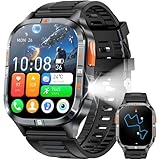
- BUILT-IN GPS & COMPASS– This military smartwatch features high-precision GPS to pinpoint your location while hiking, cycling, or traveling, keeping you safely on track without extra gear. Tap the compass icon and it locks your bearing within three seconds—engineered for pro-level outdoor adventures like camping, climbing, and trekking.
- BLUETOOTH CALLING & MESSAGES – Powered by the latest Bluetooth tech, the men’s smartwatch lets you answer or make calls right from your wrist—no need to pull out your phone. Get real-time alerts for incoming texts and app notifications so you never miss an invite. (Replying to SMS is not supported.)
- BIG SCREEN & DIY VIDEO WATCH FACE – The 2.01" military-spec display is dust-proof, scratch-resistant, and forged from high-strength glass with an aluminum alloy bezel, passing rigorous dust and abrasion tests so the screen stays crystal-clear. Upload a short family video to create a dynamic, one-of-a-kind watch face that keeps your memories alive.
- 24/7 HEALTH MONITORING – Equipped with a high-performance optical sensor, this Android smartwatch tracks heart rate and blood-oxygen levels around the clock. It also auto-detects sleep stages (deep, light, awake) for a complete picture of your health, ensuring you always know how your body is doing.
- MULTI SPORT MODES & FITNESS TRACK – Choose from running, cycling, hiking, basketball, and more to log every workout. Set goals, monitor progress, and sync data to the companion app. Bonus tools include photo gallery, weather, alarm, stopwatch, flashlight, hydration reminder, music/camera remote, find-my-phone, mini-games, and other everyday essentials.
Training load, readiness, and performance analytics
This is the most decisive split between the two watches. The Fenix 8 includes Garmin’s full advanced training ecosystem, with metrics such as Training Readiness, Acute and Chronic Training Load, Training Status, HRV Status, performance condition, VO2 max trends, and race-focused planning tools.
Instinct 3 supports basic VO2 max estimates, recovery time, and intensity minutes, but stops well short of full load management. There is no holistic readiness score, no multi-day training balance analysis, and limited insight into whether your fitness is building, stagnating, or drifting toward overtraining.
For endurance athletes following structured plans or balancing volume across multiple sports, this difference compounds quickly. The Fenix 8 acts as a coach that adjusts with you, while the Instinct 3 behaves more like a logbook that records what already happened.
HRV tracking and long-term fatigue awareness
Heart rate variability has become one of Garmin’s most important signals, and the Fenix 8 fully embraces it. Nightly HRV tracking feeds into readiness scores, recovery recommendations, and longer-term wellness trends that help identify accumulated fatigue or stress before performance drops.
Instinct 3 may display basic HRV-related insights depending on configuration, but it does not integrate HRV into a broader decision-making framework. You can observe changes, but the watch will not meaningfully guide training adjustments based on them.
If you train frequently, especially with intensity, the absence of actionable HRV insights on Instinct 3 is one of its biggest long-term limitations.
Sport profiles and activity-specific metrics
Both watches cover core outdoor and fitness activities such as running, hiking, cycling, strength training, and swimming. For general use, there is no shortage of supported sports on either model.
The Fenix 8 expands deeply into sport-specific metrics, offering running dynamics, advanced cycling analytics, multisport and triathlon support, climb tracking, stamina insights, and activity-specific performance metrics that change how sessions are evaluated.
Instinct 3 keeps things intentionally simpler. It tracks distance, pace, elevation, heart rate, and time extremely well, but does not attempt to dissect efficiency, form, or fatigue in detail.
Strength training and gym use
Strength training works on both watches, but with very different expectations. The Fenix 8 supports advanced strength metrics, rep tracking with greater accuracy, rest timers, muscle group targeting, and better workout structure support.
Instinct 3 handles basic rep counting and time tracking but is less precise and more manual. It is perfectly adequate for general conditioning, circuits, or functional training, but not ideal for athletes who want their gym work quantified and optimized.
Health features you simply do not get on Instinct 3
The Instinct 3 deliberately omits several higher-end health features found on the Fenix 8. These can include ECG capability in supported regions, deeper health snapshots, and more advanced trend analysis tools that depend on additional processing and sensors.
Garmin positions these features as premium not because they are flashy, but because they rely on continuous interpretation rather than raw measurement. Instinct 3 prioritizes reliability and battery life over computational depth.
If you value minimalism and longevity, that trade-off makes sense. If you want your watch to act as an ongoing health and performance interpreter, it will feel limiting.
Daily usability versus long-term training value
Day to day, Instinct 3 feels straightforward and unintimidating. You can check heart rate, review sleep, log workouts, and move on without being buried in charts or recommendations.
The Fenix 8 demands more attention but gives more back. Over months of training, its health and fitness metrics become increasingly personalized, which is where its higher cost begins to justify itself.
The question is not whether Instinct 3 tracks enough data. It is whether you want data collection, or data-driven decision-making built into your wrist.
GPS, Sensors & Real‑World Accuracy: Multi‑Band Performance vs. Proven Reliability
All the training insight in the world is meaningless if the raw data underneath it is inconsistent. This is where the philosophical split between Fenix 8 and Instinct 3 becomes most obvious, because Garmin treats positioning accuracy and sensor sophistication very differently across these two lines.
The Fenix 8 is built to minimize error in difficult environments. The Instinct 3 is built to stay locked on, no matter how long or how remote the activity becomes.
GPS hardware and satellite support
Fenix 8 uses a multi-band, multi-constellation GNSS chipset, pulling from GPS, GLONASS, Galileo, and QZSS simultaneously. More importantly, it can receive signals on multiple frequencies at once, which dramatically improves accuracy in places where satellite reflections normally confuse watches.
Instinct 3 uses a single-band GNSS system with multi-constellation support. It does not offer dual-frequency tracking, but Garmin’s long-standing antenna tuning and filtering make it far more reliable than budget outdoor watches from other brands.
On open roads, trails, and rolling terrain, both watches produce clean, consistent tracks. The difference appears when conditions become hostile to GPS signals.
Urban, forest, and mountain accuracy in practice
In dense cities, deep forests, or narrow mountain valleys, the Fenix 8 clearly pulls ahead. Multi-band reception reduces track wobble, corner cutting, and elevation drift, especially during slow hiking or technical trail running.
Distance totals on the Fenix 8 tend to be extremely close to surveyed routes, and pace stability improves noticeably when speed changes frequently. This matters for structured workouts, interval pacing, and post-activity analysis.
Instinct 3 remains impressively dependable, but it will show more smoothing and occasional line drift in the same environments. For most users, this shows up as small discrepancies rather than dramatic errors, but side-by-side comparisons do favor the Fenix.
Battery trade-offs tied to GPS performance
Multi-band GPS comes at a cost, and Garmin gives Fenix 8 users control over how much accuracy they want versus how much battery they are willing to spend. Full multi-band tracking delivers the best results, but it consumes power quickly during long activities.
Instinct 3 avoids this complexity entirely. Its simpler GNSS system sips power, allowing multi-day hikes, ultra-distance events, and expeditions without constant charging anxiety.
If your adventures last hours, the Fenix 8’s accuracy advantage is easy to justify. If they last days, Instinct 3’s efficiency becomes the stronger asset.
Elevation, barometer, and environmental sensors
Both watches use a barometric altimeter rather than GPS-only elevation, which is essential for meaningful ascent and descent data. The Fenix 8 applies more aggressive filtering and calibration, producing smoother elevation profiles during rolling terrain and stair-heavy urban use.
Instinct 3’s elevation tracking is reliable but slightly noisier, especially during rapid weather changes. It excels in steady environments like long climbs, backpacking routes, and sustained ascents.
Each includes a compass and thermometer, but the Fenix 8 benefits from faster sensor sampling and better sensor fusion during navigation. That shows up as more stable heading data when moving slowly or stopping frequently.
Heart rate and motion sensor accuracy
Fenix 8 uses Garmin’s newer-generation optical heart rate sensor with improved low-intensity and recovery tracking. It handles daily wear, sleep, and steady aerobic sessions extremely well, and it recovers faster after signal dropouts during interval work.
Instinct 3’s optical heart rate sensor is slightly older but still dependable for endurance efforts. During high-intensity intervals, strength training, or rapid wrist movement, it is more likely to lag or smooth spikes.
Both watches fully support external chest straps and cycling sensors. For users who rely on external sensors during key sessions, the gap here matters far less.
Navigation accuracy and mapping confidence
The Fenix 8 integrates its GPS accuracy directly into full-color onboard mapping, turn-by-turn routing, and dynamic course recalculation. Missed turns, trail forks, and off-course alerts are handled with clarity and confidence.
Instinct 3 supports breadcrumb navigation and course following without full maps. Its positioning accuracy is sufficient for staying on route, but decision-making relies more on the user than on visual context.
For exploration-heavy users who navigate complex trail networks or unfamiliar terrain, the Fenix 8 provides a much richer safety net.
Reliability versus precision: what matters more to you
Instinct 3 has earned its reputation by being boring in the best possible way. It locks on quickly, holds signal for absurdly long durations, and rarely surprises you with strange data, even after days away from power.
Fenix 8 is more ambitious. It pushes accuracy boundaries, integrates sensors more aggressively, and delivers data that supports deeper analysis, but it asks for more battery management and user involvement in return.
Neither approach is objectively better. One prioritizes trust through simplicity, the other confidence through precision.
Navigation, Mapping & Adventure Features Compared
Where the previous discussion highlighted accuracy and trust, navigation is where those differences become tangible. This is the point where hardware capability, software maturity, and battery strategy collide in real-world decision-making on the trail, in the mountains, or deep into a multi-day effort.
Onboard maps vs. breadcrumb navigation
Fenix 8 sits firmly in Garmin’s full-navigation tier, with onboard, full-color topographic maps covering roads, trails, contours, and points of interest. These maps are routable, searchable, and layered, meaning you can plan routes directly on the watch, follow GPX files with turn-by-turn prompts, and visually interpret terrain without reaching for your phone.
Instinct 3 deliberately omits full maps in favor of breadcrumb navigation. You see your track, your course line, and your position relative to it, but not the surrounding context. This is enough to stay on route, but not enough to understand alternate trails, nearby shelters, or terrain features at a glance.
The difference is not about whether you can navigate at all, but how much mental effort navigation requires while fatigued, cold, or time-pressured.
Rank #4

- 【Built-in GPS & Multi-System Positioning】Stay on track with the Tiwain smartwatch’s built-in GPS. Featuring military-grade single-frequency and six-satellite support (GPS, GLONASS, Beidou, Galileo, NAVIC, QZSS), this watch offers fast and accurate location tracking wherever you go. It also includes a compass, altimeter, and barometer, giving you real-time data on your altitude, air pressure, and position.
- 【Military-Grade Durability】Engineered to withstand the toughest conditions, the Tiwain smartwatch meets military standards for extreme temperatures, low pressure, and dust resistance. Crafted from tough zinc alloy with a vacuum-plated finish, this watch is also waterproof and built to resist wear and tear. The 1.43-inch AMOLED HD touchscreen offers clear visibility in all environments, and the watch supports multiple languages for global users.
- 【170+ Sport Modes & Fitness Tracking】Track your fitness journey with 170+ sport modes, including walking, running, cycling, hiking, basketball, and more. Set exercise goals, monitor progress, and sync your data to the companion app. The smartwatch also offers smart features like music control, camera remote, weather updates, long-sitting reminders, and more.
- 【LED Flashlight for Outdoor Adventures】The Tiwain smartwatch comes equipped with a built-in LED flashlight that can illuminate up to 20 meters. Activate it with the side button for added convenience during nighttime activities or outdoor adventures.
- 【Comprehensive Health Monitoring】Monitor your health with real-time heart rate, sleep, blood pressure, and blood oxygen level tracking. The smartwatch will vibrate to alert you of any abnormal readings. You can also make and receive calls directly from the watch, and stay connected with message and app notifications (receive only, no sending capability) – perfect for when you’re driving or exercising.
Turn-by-turn guidance and rerouting behavior
With Fenix 8, turn-by-turn directions are tightly integrated into both course following and on-device routing. When you miss a turn, the watch can recalculate or clearly show how to rejoin the route, depending on your settings. In practice, this dramatically reduces hesitation at trail junctions or urban intersections.
Instinct 3 supports turn prompts when following a preloaded course, but it does not dynamically reroute or suggest alternatives. If you go off course, the watch tells you that you are off course, not how to fix it. That distinction matters when visibility is low or when stopping to think is not ideal.
For users who frequently improvise or explore unfamiliar areas, the Fenix’s navigation logic feels like a quiet co-pilot rather than a passive recorder.
ClimbPro, elevation data, and terrain awareness
Fenix 8 fully supports ClimbPro with mapped courses, breaking climbs into segments with distance, grade, and remaining elevation. For mountain running, hiking, and cycling, this is one of Garmin’s most practically useful features, helping pace efforts and manage nutrition without guessing what’s ahead.
Instinct 3 provides elevation profiles and ascent/descent data but lacks the same climb segmentation and visual forecasting. You know how much you’ve climbed and how much remains, but not how it is distributed across the route.
Both watches use barometric altimeters, but the Fenix 8’s combination of mapping and climb analytics creates a more predictive experience rather than a reactive one.
Multi-band GPS and navigation confidence in difficult terrain
Fenix 8 pairs its mapping system with multi-band GNSS support, improving positional accuracy in dense forests, canyons, and mountainous terrain. The benefit is not just cleaner tracks but more reliable turn alerts and fewer false off-course warnings when trails zigzag or overlap.
Instinct 3 typically relies on single-band or less aggressive GNSS configurations to preserve battery life. Its tracks are consistent and trustworthy, but less precise when trails run close together or when elevation changes rapidly.
For users navigating complex trail networks, that extra positional clarity on the Fenix directly supports safer and more confident decision-making.
Backtracking, emergency tools, and expedition use
Both watches support TrackBack, allowing you to retrace your path to the start. On Instinct 3, this feature aligns perfectly with the watch’s philosophy: simple, dependable, and extremely battery-efficient, even over multiple days.
Fenix 8 expands on this with map-based backtracking, waypoint management, and better visualization of escape routes. Combined with incident detection and LiveTrack when paired to a phone, it offers a more comprehensive safety toolkit for solo adventures.
If your trips involve extended isolation or unfamiliar terrain, the Fenix’s layered approach to safety adds meaningful reassurance beyond raw durability.
Battery trade-offs in navigation-heavy use
Navigation features are only as good as the battery supporting them. Fenix 8’s mapping, brighter display, and higher processing demands mean navigation sessions consume power faster, especially with multi-band GPS enabled. Smart configuration is essential for long days or multi-day routes.
Instinct 3’s lack of maps works in its favor here. Breadcrumb navigation combined with conservative GPS modes allows it to run for days, sometimes weeks, without intervention. For expedition-style use where charging is uncertain, this reliability is a feature, not a compromise.
Choosing between them often comes down to whether you want information density or operational longevity.
Who benefits most from each navigation approach
Fenix 8 is built for users who want situational awareness at a glance. If you value seeing terrain, understanding alternatives, pacing climbs intelligently, and navigating with minimal cognitive load, its mapping-first approach justifies the higher cost and complexity.
Instinct 3 serves adventurers who already know their routes, prioritize endurance over insight, and want navigation that never becomes the limiting factor. It asks more of the user, but it asks far less of the battery.
Neither system is incomplete. They simply assume very different definitions of what navigation should do for you when conditions stop being ideal.
Battery Life & Charging: Expedition Longevity vs. Everyday Endurance
After navigation capability, battery strategy becomes the real dividing line between these two watches. The Fenix 8 and Instinct 3 are both built to go the distance, but they interpret endurance very differently depending on how much information, connectivity, and display richness you expect along the way.
This is less about which watch lasts longer on paper and more about how predictably each one survives real-world use when GPS, sensors, and screens are working hard.
Baseline smartwatch battery performance
In everyday smartwatch mode, Fenix 8 delivers solid but clearly finite endurance. Expect roughly one to two weeks depending on display type, notification volume, and how often you interact with the screen. The AMOLED variants skew toward the lower end, while solar and memory-in-pixel versions stretch further with careful settings.
Instinct 3, by contrast, is built around passive efficiency. With its low-power monochrome display and simplified interface, it routinely lasts multiple weeks in standard use without requiring lifestyle changes. You wear it, train with it, sleep with it, and largely forget about charging.
For users coming from traditional watches or older Garmins, Instinct 3’s baseline endurance feels almost liberating.
GPS battery life: maps versus mileage
Once GPS enters the equation, the philosophical split becomes even clearer. Fenix 8 supports multi-band GNSS, onboard maps, higher sampling rates, and richer sensor fusion, all of which increase energy draw. In all-systems or multi-band GPS modes, battery life is excellent for long days but not infinite, particularly if you keep the display active for navigation.
Instinct 3 trades mapping and visual density for efficiency. Breadcrumb navigation, single- or dual-band GPS options, and fewer background processes allow it to log long activities for days at a time. In expedition-style GPS modes, it can extend tracking into the realm of multi-week outings with reduced fix intervals.
If your priority is recording distance and direction for as long as physically possible, Instinct 3 has the advantage. If you want precise tracks, complex routes, and on-wrist decision-making, Fenix 8 spends battery to earn that capability.
Solar charging: meaningful assist or situational bonus
Both watches benefit from Garmin’s latest solar technology, but the impact differs. On Fenix 8, solar acts as a buffer rather than a primary power source. It meaningfully slows drain during outdoor use, especially in smartwatch mode or low-power GPS settings, but it rarely offsets heavy navigation or frequent screen wake-ups.
Instinct 3 integrates solar more centrally into its power model. Because the display and processor draw so little energy, solar input can materially extend time between charges. In bright conditions with consistent outdoor exposure, it can feel like the watch is barely aging its battery at all.
For expedition users who spend long hours outside and short ones near outlets, solar matters more on Instinct 3.
Charging speed and logistics in the field
Fenix 8 supports faster charging, making it more compatible with modern power banks and short recharge windows. A brief stop at a hut, café, or car charger can restore a meaningful percentage of battery, which suits stage-based adventures or travel-heavy schedules.
Instinct 3 charges more slowly, but it also needs charging far less often. When it does, the process is uncomplicated and forgiving, with less anxiety about topping off before a long day.
In practice, Fenix 8 favors planned recharging. Instinct 3 favors avoiding the need to recharge at all.
Battery behavior under training load
Heavy training weeks amplify these differences. Fenix 8 users running daily GPS workouts, strength sessions, music playback, and sleep tracking will need to think about charging cadence. The watch supports this workflow well, but it demands attention.
Instinct 3 absorbs high-volume training with minimal impact on battery confidence. You can stack long runs, hikes, and overnight recovery tracking without watching percentages closely.
For athletes who already manage enough variables, that mental simplicity can be a decisive advantage.
Which battery philosophy fits your use
Fenix 8 treats battery as a resource to be intelligently managed in exchange for capability. It rewards users who customize power modes, understand GPS trade-offs, and plan recharging into their routines.
Instinct 3 treats battery as a constraint that should rarely affect behavior. It prioritizes consistency and predictability, especially when charging access is uncertain or irrelevant.
Neither approach is universally better. One is optimized for information-rich performance, the other for relentless endurance when the environment, not the interface, sets the limits.
Smart Features, Connectivity & Ecosystem Integration
The battery philosophies outlined above directly shape how each watch behaves once it leaves pure training mode and enters everyday life. Fenix 8 is designed to be a full-time connected device that happens to thrive outdoors. Instinct 3 treats smart features as a utility layer, present when helpful but rarely central to the experience.
Notifications, calls, and daily smart usability
Both watches mirror smartphone notifications reliably for calls, messages, and app alerts, with support for quick replies on Android. In practice, Fenix 8 presents this information more fluidly thanks to its higher-resolution display and denser UI layout, making longer messages easier to scan at a glance.
Fenix 8 also leans further into smartwatch territory with on-device call handling via a built-in speaker and microphone. This is genuinely useful for taking quick calls during walks, in the car, or around camp without pulling out a phone, but it does increase overall power draw.
Instinct 3 keeps things intentionally simpler. Notifications are clear and readable on the monochrome display, but interaction is limited and there is no voice support, reinforcing its focus on awareness rather than engagement.
Music, storage, and phone independence
Fenix 8 supports offline music storage and playback, including Spotify, Amazon Music, and Deezer when paired with Bluetooth headphones. For runners or hikers who want to leave their phone behind, this is one of the most meaningful quality-of-life upgrades over Instinct 3.
Instinct 3 does not offer onboard music storage. Media control is limited to basic playback commands for a connected phone, which is fine for users who already carry a phone but removes the option of true device independence.
💰 Best Value

- Smart Watch with GPS and Offline Map: This smart watch connects to multiple satellite systems for accurate real-time positioning, and includes a professional-grade compass, altimeter, and barometer for precise data, ensuring you maintain your sense of direction in any outdoor environment. The map version supports downloading offline maps; select a route or destination to view the route even without a signal, eliminating the risk of getting lost.
- Bluetooth Call & Message Functionality: This smart watches for men allows you to make and receive calls; receive text and social media notifications (Facebook, WhatsApp, Instagram, Twitter, etc.); and reply to text messages with voice-to-text or set up quick replies (text reply functionality is available for Android phones).
- Sports & Health Monitoring: This 5ATM waterproof fitness watch supports over 100 sports modes and tracks daily activity data, calories, distance, steps, and heart rate. You can use it to monitor your health metrics (blood oxygen, heart rate, stress, and sleep), monitor your fatigue and mood, and perform PAI analysis. You can also use this smartwatch to set water intake and sedentary reminders. Stay active and healthy with this fitness tracker watch.
- Customizable Watch Faces & AI Functionality: This smart watch features a 1.46-inch HD touchscreen and over 100 downloadable and customizable watch faces. You can even use your favorite photos as your watch face. Equipped with AI technology, it supports voice descriptions in multiple languages to generate personalized AI watch faces. The watch's AI Q&A and AI translation features provide instant answers to questions and break down language barriers, making it an ideal companion for everyday life and travel.
- Large Battery & High Compatibility & More Features: This smart watch for android phones and ios phone features a large 550ml battery for extended battery life. It's compatible with iOS 9.0 and above and Android 5.0 and above. It offers a wealth of features, including an AI voice assistant, weather display, music control, camera control, calculator, phone finder, alarm, timer, stopwatch, and more. (Package Includes: Smartwatch (with leather strap), spare silicone strap, charging cable, and user manual)
That distinction matters less on long expeditions and more in everyday training. If solo runs or gym sessions without a phone are part of your routine, Fenix 8 clearly aligns better with that workflow.
Garmin Pay, safety features, and real-world convenience
Garmin Pay is available on Fenix 8, allowing contactless payments with supported banks. It’s the kind of feature that fades into the background until it saves a situation, like grabbing food mid-run or paying at a trailhead kiosk.
Instinct 3 omits Garmin Pay entirely. This keeps the platform lean but limits its usefulness in urban or travel-heavy scenarios where carrying minimal gear is part of the appeal.
Both watches support Garmin’s safety features, including LiveTrack, incident detection, and assistance alerts when connected to a phone. These systems behave similarly across both models and are more dependent on smartphone connectivity than on the watch itself.
Connectivity stability and sensor pairing
Bluetooth and ANT+ performance is excellent on both platforms, with reliable pairing to heart rate straps, power meters, bike sensors, and smart trainers. In multi-sensor setups, Fenix 8 handles dense environments slightly better thanks to newer chipset optimizations, particularly indoors.
Wi‑Fi support on Fenix 8 enables faster syncs, map downloads, software updates, and music transfers without relying on a phone. Instinct 3 lacks Wi‑Fi, meaning all syncing is routed through Bluetooth, which is slower but also simpler and more predictable.
Neither watch struggles with core connectivity, but Fenix 8 is clearly optimized for users who manage large data loads and frequent updates.
Garmin Connect, training platforms, and ecosystem depth
Both watches live inside the same Garmin Connect ecosystem, which means access to identical training logs, health trends, recovery metrics, and long-term performance analytics. This is a major equalizer, as Instinct 3 users are not locked out of Garmin’s core insights.
Where Fenix 8 differentiates itself is in how deeply it integrates advanced metrics into daily decision-making. Features like Training Readiness, Endurance Score, and more detailed recovery visualizations feel more actionable when paired with the richer on-watch interface.
Instinct 3 still records the same foundational data, but it expects the user to interpret it later in the app. The watch itself emphasizes execution over analysis, which many outdoor users prefer.
Navigation software and data presentation
Fenix 8 benefits heavily from its mapping engine and screen quality when interacting with navigation features. Course following, route recalculation, and point-of-interest browsing feel closer to a handheld GPS experience than a traditional watch.
Instinct 3 supports breadcrumb navigation, TracBack, and basic waypoint management, but it lacks the contextual awareness of full maps. This keeps the interface fast and readable but places more responsibility on pre-planning and situational awareness.
The difference is not about accuracy but about information density. Fenix 8 gives you more data in the moment; Instinct 3 assumes you already know where you’re going.
Software updates, longevity, and platform stability
Garmin tends to prioritize feature updates and refinements on its flagship lines, and Fenix 8 benefits from that status. New training tools, UI refinements, and expanded integrations typically arrive here first and remain supported for many years.
Instinct 3 receives updates focused on stability, performance, and core feature reliability rather than expanding scope. This results in fewer headline additions but also fewer disruptions to established workflows.
From a long-term ownership perspective, Fenix 8 is more future-facing. Instinct 3 is more static, but also more predictable.
Choosing between smart capability and intentional restraint
Fenix 8 integrates deeply into both Garmin’s ecosystem and modern smartphone life, offering communication, entertainment, and navigation without constant phone dependence. It rewards users who want one device to handle training, logistics, and daily convenience.
Instinct 3 deliberately resists that convergence. Its smart features support the mission rather than redefining it, making it ideal for users who value durability, endurance, and mental simplicity over digital immersion.
The right choice here is less about what the watches can do and more about how much you want them to participate in your day beyond the workout.
Price, Value & Buying Recommendations by User Type
Once feature depth and philosophy are clear, price becomes the final filter—and it is where the Fenix 8 and Instinct 3 separate most decisively. These watches are not competing at the margins; they are built for different definitions of value.
Fenix 8 is positioned as a premium, long-horizon investment. Instinct 3 is a purpose-built tool that maximizes function per dollar by stripping away anything non-essential.
Pricing landscape and what you’re actually paying for
Garmin Fenix 8 pricing typically starts in the upper premium tier and scales quickly with size, display type, and materials. Sapphire glass, titanium bezels, AMOLED panels, and larger case options all push the price higher, placing the Fenix 8 firmly in flagship smartwatch territory.
That cost reflects more than hardware. You are paying for Garmin’s most advanced software stack, longest feature runway, full onboard mapping, top-tier training analytics, and a display experience designed for constant interaction both on and off the trail.
Instinct 3 sits solidly in the mid-range, often costing less than half of a well-specced Fenix 8. The materials are utilitarian—fiber-reinforced polymer case, chemically strengthened glass, and a simple monochrome display—but they are chosen for resilience and battery efficiency rather than prestige.
Here, the value equation is brutally practical. Instinct 3 delivers accurate GPS, strong multisport support, solar-assisted endurance (on Solar models), and proven durability without asking you to pay for features you may never use.
Long-term ownership value and depreciation logic
Fenix 8 holds value through longevity rather than resale. Owners tend to keep it for many years because ongoing software updates extend relevance well beyond the typical smartwatch replacement cycle.
Its higher upfront cost is offset if you actually use its deeper training tools, navigation, and daily smart features over time. If you engage with those systems, the per-year cost of ownership narrows significantly.
Instinct 3 depreciates faster in absolute terms, but the entry cost is low enough that this matters less. It is the kind of watch you buy, use hard, and replace when your needs change rather than when the watch fails.
From a durability standpoint, Instinct models are famously hard to kill. Their value lies in reliability and low anxiety rather than future-proofing.
Buying recommendations by user type
Serious endurance athletes and data-driven trainers
If structured training, recovery analysis, performance trends, and deep physiological metrics guide how you train, Fenix 8 is the clear choice. Training Readiness, advanced load tracking, race planning, and full post-workout analytics reward athletes who adjust their plans based on data.
The larger, higher-resolution display also matters here. Reviewing maps mid-run, analyzing intervals during workouts, and interacting with complex data fields is simply easier and safer on the Fenix platform.
Instinct 3 can record the workouts, but it does not contextualize them to the same degree. For athletes chasing marginal gains or long-term performance progression, the savings are rarely worth the compromises.
Outdoor adventurers, hikers, and expedition users
This is where the decision becomes more nuanced. If you rely heavily on onboard maps, dynamic rerouting, and visual terrain awareness, Fenix 8 justifies its price quickly.
However, for multi-day hikers, backpackers, and expedition users who prioritize battery life, simplicity, and resilience over visual navigation, Instinct 3 often delivers better real-world value. Breadcrumb navigation combined with excellent battery endurance reduces charging logistics and mental overhead.
If your adventures are more about endurance than optimization, Instinct 3 may actually feel more trustworthy over long distances.
Tactical, military, and high-durability users
Instinct 3 is purpose-built for this category. Its subdued display, physical-button-only interface, high-contrast readability, and exceptional battery life align perfectly with operational use.
The watch disappears on the wrist, survives abuse, and demands very little attention. For users who need a tool rather than a computer, Instinct 3 offers unmatched value.
Fenix 8 can fill this role, but it is heavier, more visually conspicuous, and arguably overqualified. You pay more while gaining features that may actively work against mission simplicity.
Everyday fitness users and lifestyle wearers
For users who want one watch to handle workouts, navigation, travel, notifications, and daily life without compromise, Fenix 8 earns its premium. The AMOLED display, refined materials, and richer smart features make it far more enjoyable as a 24/7 wearable.
Instinct 3 works as a daily watch, but it always feels like a tool first. If comfort, aesthetics, and smart convenience matter alongside fitness, the Fenix experience is simply more complete.
Budget-conscious buyers who still want serious capability
Instinct 3 is one of Garmin’s strongest value propositions. It covers core fitness tracking, GPS accuracy, navigation basics, and durability at a price point that feels reasonable rather than aspirational.
You sacrifice visual polish and advanced analytics, but you do not sacrifice reliability. For many users, that trade-off is not only acceptable—it is preferred.
Final guidance: buying the watch that matches your intent
Fenix 8 is not “better” in a universal sense; it is better if you intend to use its depth. Its price only makes sense when its software, display, and ecosystem integration become part of your daily decision-making.
Instinct 3 is better when restraint is a feature, not a limitation. It excels when you want a watch that supports the mission, stays out of the way, and keeps going long after others need charging.
The smartest purchase is the one aligned with how you train, explore, and live. Choose the watch that fits your intent, not the one that simply offers more on paper.