Choosing between the Garmin Fenix 8 and the Samsung Galaxy Watch Ultra isn’t about specs alone; it’s about what role you expect the watch to play in your life. One is designed first as an instrument for training, navigation, and endurance, the other as a high-end smartwatch that happens to be extremely tough. Understanding that philosophical split upfront makes every downstream comparison clearer.
Both wear the “Ultra” label in spirit, but they arrive there from opposite directions. Garmin builds outward from sport science and outdoor reliability, while Samsung builds upward from a polished smartwatch experience, layering durability and adventure features on top. What follows is less about which is better, and more about which worldview aligns with how you train, travel, and use technology day to day.
Garmin Fenix 8: Purpose-Built Adventure Instrument
The Fenix 8 is unapologetically engineered as a performance tool first, with smartwatch features existing to support training rather than define the experience. Its design language prioritizes legibility, button-driven control, and environmental resilience, favoring function over minimalism. This is a watch meant to be operated with gloves, wet hands, or cold fingers at altitude.
Garmin’s philosophy centers on depth rather than immediacy. Training load, recovery metrics, physiological modeling, and multi-band GPS accuracy are treated as core features, not optional extras. The software experience assumes the wearer wants to understand their body, plan sessions, and analyze performance trends over weeks and months, not just close rings by the end of the day.
🏆 #1 Best Overall

- Stylish Design, Vibrant Display: The lightweight aluminum build blends effortless style with workout durability, while the vivid 1.97" AMOLED display keeps your data easy to read, even under bright sunlight.
- All-in-One Activity Tracking: The Amazfit Bip 6 fitness tracker watch offers 140+ workout modes including HYROX Race and Strength Training, plus personalized AI coaching and 50m water resistance.
- Up to 14 Days Battery Life: The Amazfit Bip 6 smart watch powers through your training and recovery for up to two weeks at a time - no nightly charging needed.
- Accurate GPS Tracking & Navigation: Stay on course with free downloadable maps and turn-by-turn directions. Support from 5 satellite systems ensures precise tracking of every move and fast GPS connection.
- 24/7 Health Monitoring: The Amazfit Bip 6 smartwatch provides precise, real-time monitoring of heart rate, sleep, blood-oxygen and stress, empowering you with actionable insights to optimize your health and fitness.
Materials and construction reinforce this intent. Titanium or steel cases, a thick sapphire crystal, and a substantial case profile prioritize survivability and battery capacity over slimness. On the wrist, the Fenix 8 feels like a serious piece of expedition gear, something you trust on a multi-day trek where charging and connectivity are afterthoughts.
Samsung Galaxy Watch Ultra: Premium Smartwatch with Rugged Ambitions
The Galaxy Watch Ultra approaches the category from the opposite direction, starting as a refined, full-featured smartwatch and pushing it toward outdoor credibility. Its design balances rugged cues with consumer-friendly aesthetics, aiming to look as appropriate in a boardroom as it does on a trail run. Touch interaction remains central, complemented rather than replaced by physical controls.
Samsung’s core strength lies in integration and immediacy. Notifications, calls, apps, voice assistants, and health features are tightly woven into the Wear OS and Galaxy ecosystem, creating a watch that feels like an extension of your phone. Fitness tracking is broad and accessible, emphasizing convenience and everyday health insights over deep performance analytics.
Despite its tougher branding, the Ultra is still optimized for daily wearability. The case is substantial but more sculpted, the display brighter and more visually rich, and the overall experience smoother for casual interaction. It’s a watch that assumes frequent charging, constant connectivity, and a lifestyle where smart features are just as important as step counts or GPS tracks.
Two Definitions of “Ultra”
Ultimately, the Fenix 8 defines “ultra” in terms of endurance, autonomy, and analytical depth. It’s built for users who are willing to trade app ecosystems and visual polish for battery life measured in days or weeks and data that goes far beyond surface-level fitness. The learning curve is steeper, but so is the long-term payoff for committed athletes and outdoor enthusiasts.
The Galaxy Watch Ultra defines “ultra” as versatility within a premium smart device. It prioritizes responsiveness, ecosystem features, and a refined user experience while still offering credible durability and outdoor tools. For users who want one watch to do almost everything, especially within the Android and Samsung ecosystem, its philosophy will feel immediately intuitive.
Design, Case Construction & Wearability in the Real World
Understanding how these two watches feel and function on the wrist brings the philosophical divide into sharp focus. Both are undeniably “ultra” in size and intent, but they express that ambition through very different industrial design priorities. One is a tool-first instrument shaped by decades of outdoor watchmaking, the other a modern smartwatch reinforced for harsher environments.
Case Materials, Finishing, and Visual Identity
The Garmin Fenix 8 continues Garmin’s established design language: round, purposeful, and unapologetically utilitarian. The case construction emphasizes structural rigidity, typically pairing a fiber-reinforced polymer body with a metal bezel in stainless steel or titanium, depending on the variant. Finishing is functional rather than decorative, prioritizing scratch resistance, impact tolerance, and long-term durability over visual refinement.
In contrast, the Galaxy Watch Ultra leans heavily into premium smartwatch aesthetics while borrowing cues from professional dive and adventure watches. Its case blends titanium elements with a more sculpted mid-case, smoother transitions, and tighter tolerances that feel closer to luxury consumer electronics than expedition gear. The result is a watch that looks intentionally designed rather than purely engineered.
This difference is immediately visible on the wrist. The Fenix 8 looks like a piece of equipment, something meant to be worn with a pack strap digging into your shoulder or gloves pulled over your hands. The Galaxy Watch Ultra looks like a statement device, clearly rugged, but equally comfortable peeking out from under a jacket cuff or dress shirt.
Size, Thickness, and Everyday Ergonomics
Both watches are large, but how they carry that size is markedly different. The Fenix 8 sits tall and broad, with a pronounced bezel and a case profile that prioritizes internal space for sensors and battery. On smaller wrists, it can feel imposing, and there’s no disguising its presence during daily wear.
Garmin’s design makes sense in context. The larger footprint improves button spacing, enhances glove usability, and helps protect the display from edge impacts. During long training sessions or multi-day hikes, the watch’s size fades into the background because its ergonomics are tuned for stability rather than elegance.
The Galaxy Watch Ultra, while still substantial, distributes its mass more carefully. The case contours and lug design allow it to sit flatter on the wrist, reducing the “top-heavy” sensation common in rugged watches. Over a full workday, this makes a meaningful difference, especially for users not accustomed to oversized sports watches.
Buttons, Touch Interaction, and Control Logic
Physical controls are a defining strength of the Fenix 8. Multiple dedicated buttons offer consistent, tactile input regardless of weather, sweat, or gloves. This matters in real-world outdoor use, where touchscreens can become unreliable during rain, cold, or high-intensity efforts.
The button layout is logical and deeply integrated into Garmin’s software. After a learning period, muscle memory takes over, allowing users to start activities, mark laps, zoom maps, or navigate menus without ever looking at the screen. For athletes and outdoor users, this control scheme is one of the Fenix line’s biggest long-term advantages.
Samsung takes a hybrid approach with the Galaxy Watch Ultra. Touch remains central, supported by physical buttons that provide redundancy rather than full operational independence. In dry, controlled environments, the interface feels fluid and intuitive, but during heavy rain or technical activities, reliance on touch can still introduce friction.
Display Integration and Real-World Visibility
The Fenix 8’s display is designed to serve data first. Whether using a memory-in-pixel or AMOLED panel depending on configuration, the emphasis is on clarity, legibility, and efficiency rather than visual flair. Reflections are managed well, and the recessed bezel adds an extra layer of protection against knocks.
In outdoor conditions, especially under direct sunlight, the Fenix’s screen remains readable without demanding attention or power. This is a critical factor during long activities, where quick glances matter more than vibrant animations. The display feels like an instrument panel rather than a smartphone screen.
The Galaxy Watch Ultra’s display is brighter, richer, and more visually impressive. Colors pop, animations are smoother, and text is razor-sharp, reinforcing its identity as a premium smartwatch. Indoors and in urban settings, it’s clearly superior from a purely visual standpoint.
However, that visual strength comes with trade-offs. The exposed glass and edge-to-edge design feel more vulnerable, even if the materials are technically robust. Users may find themselves more conscious of protecting the screen during rough use, something Fenix owners rarely think about.
Straps, Weight Distribution, and All-Day Comfort
Garmin’s strap system is designed for stability under motion. Silicone and nylon options prioritize sweat management, quick drying, and secure fit during high-impact activities. The watch stays planted during interval training, trail running, and climbing, even when worn slightly loose for comfort.
The trade-off is that the Fenix 8 can feel rigid during sedentary wear. At a desk or during sleep, its size and stiffness are more noticeable, particularly for users with smaller wrists or those sensitive to pressure points. Comfort improves with the right strap choice, but it’s never invisible.
Samsung’s approach favors versatility. The Galaxy Watch Ultra’s bands are softer, more flexible, and designed to adapt between workouts and daily life. Weight distribution feels more balanced, and the watch is less likely to dig into the wrist during typing, driving, or sleeping.
This makes the Ultra easier to live with as a single watch. It transitions seamlessly from exercise to social settings, reinforcing its role as an all-day smart companion rather than a dedicated training instrument.
Durability in Practice, Not Just on Paper
Both watches meet high durability standards, but their resilience shows up differently over time. The Fenix 8 is built to absorb abuse with minimal cosmetic concern. Scratches, scuffs, and signs of wear tend to feel like earned character rather than damage.
For users who regularly scrape against rock, gear, or gym equipment, this psychological durability matters. You wear the Fenix without hesitation, confident it’s designed for exactly that kind of treatment.
The Galaxy Watch Ultra is tough, but it feels more precious. While it can handle demanding use, owners may be more aware of impacts and abrasions, especially given the premium finish and exposed surfaces. It’s durable enough for adventure, but it doesn’t invite abuse in the same way.
In the real world, that distinction often shapes behavior. The Fenix 8 encourages you to forget it’s on your wrist and focus on the task at hand. The Galaxy Watch Ultra reminds you that you’re wearing an expensive, beautifully made piece of technology, even when pushing its limits.
Display Technology, Controls & Everyday Usability
That difference in how each watch invites hard use versus careful wear carries directly into how you interact with them day to day. Display choices, control schemes, and interface priorities reveal what each brand expects you to be doing most of the time.
Display Philosophy: Readability vs Visual Impact
The Garmin Fenix 8 continues Garmin’s pragmatic approach to displays, offering variants focused on endurance and visibility rather than visual drama. Depending on configuration, that means a transflective memory-in-pixel panel optimized for sunlight legibility and ultra-low power draw, or an AMOLED option for users who want richer visuals without leaving the Garmin ecosystem.
In real-world outdoor use, the MIP display excels when conditions are harsh. Direct sun, glare off snow, or quick wrist glances mid-interval all favor a screen that gets clearer the brighter it gets. There’s no need for exaggerated brightness or aggressive auto-dimming, and battery impact remains minimal.
Samsung’s Galaxy Watch Ultra leans unapologetically into AMOLED performance. The panel is large, dense, and vibrant, with deep blacks and high peak brightness that makes maps, notifications, and watch faces feel immediate and modern. Indoors and at night, it’s a clear win for visual clarity and polish.
Under sustained sunlight, the Ultra still performs well, but it relies more on brightness scaling and contrast rather than passive reflectivity. That costs power, and while Samsung has improved outdoor visibility, it doesn’t quite match the effortless readability of Garmin’s outdoor-first panels.
Touch, Buttons, and Muscle Memory
Garmin’s five-button layout remains one of the most effective control systems ever put on a sports watch. Every function can be accessed without touch input, which matters when wearing gloves, dealing with rain, sweat, or cold, or navigating mid-activity when precision matters.
Touch is available on the Fenix 8, but it’s optional and context-aware. Most experienced users treat it as a convenience layer for maps or menus, not a dependency, and that separation reinforces reliability during training and navigation.
The Galaxy Watch Ultra is fundamentally touch-driven, supplemented by physical controls for key actions. Samsung includes a dedicated action button that can be customized for workouts or tools, which adds a welcome tactile element to an otherwise screen-centric interface.
In daily use, Samsung’s approach feels faster and more intuitive, especially for users accustomed to smartphones. In demanding conditions, however, touch reliance can introduce friction, particularly when water or gloves enter the equation.
User Interface and Information Density
Garmin’s interface prioritizes information density and predictability over visual flair. Data fields are legible, customizable, and consistent across activities, which reduces cognitive load once muscle memory develops.
This design favors users who want metrics first and minimal distractions. It’s not the most elegant UI, but it’s extremely efficient, particularly during long sessions when repeated glances matter more than aesthetics.
Samsung’s One UI Watch environment is more expressive and layered. Animations are smooth, widgets are visually rich, and the watch feels like a natural extension of a modern smartphone rather than a standalone instrument.
That comes with trade-offs. Important fitness data sometimes sits a swipe or tap deeper, and during workouts, the interface can feel busier than necessary. For casual fitness users, that’s rarely an issue, but serious training exposes the difference quickly.
Always-On Displays and Battery Implications
Garmin’s always-on implementation is central to its usability. On MIP models, the display is effectively always readable with no meaningful battery penalty, reinforcing the watch-as-tool philosophy.
On AMOLED variants, Garmin takes a conservative approach, dimming intelligently while preserving glanceable data. Battery impact is measurable but manageable, especially compared to typical smartwatch behavior.
Rank #2

- Stylish Design, Bright Display: The sleek stainless steel build blends classic style with workout durability, while the bright 1.32" AMOLED display keeps your data easy to read, even under bright sunlight.
- Precise Heart Rate and Sleep Tracking: Amazfit's BioTracker technology tracks your heart rate and sleep data with accuracy that previous sensors just can't match.
- Up to 10 Days of Battery Life: With long battery life that lasts up to 10 days with typical use, nightly recharges are a thing of the past.
- Free Maps with Turn Directions: Stay on-track with free downloadable maps, and get turn-by-turn guidance on-screen or via your Bluetooth headphones. Enjoy ski maps for global resorts, including guidance for cable cars, slopes, and more.
- Faster and More Accurate GPS Tracking: 5 satellite positioning systems ensure fast GPS connection and accurate positioning whenever you're out running, walking, cycling or hiking.
Samsung’s always-on display looks excellent, preserving the Ultra’s premium feel throughout the day. However, it draws significantly more power, and users who want multi-day endurance often disable or restrict it.
That decision affects usability subtly but consistently. The Ultra feels more alive with AOD enabled, but the cost shows up in charging frequency rather than immediate experience.
Everyday Wear: From Desk to Trail
In daily scenarios like typing, driving, or sleeping, the Galaxy Watch Ultra’s interface feels more accommodating. Notifications are clearer, interactions are quicker, and the watch behaves more like a compact computer than a training device.
Garmin’s Fenix 8 asks more of the user in exchange for reliability and autonomy. It’s less interruptive, less animated, and less socially expressive, which some users prefer during focused work or extended outdoor trips.
Over time, these differences define ownership experience. The Fenix 8 fades into the background until you need it to perform, while the Galaxy Watch Ultra stays present, responsive, and visually engaging throughout the day.
Neither approach is inherently better, but they serve very different definitions of everyday usability.
Fitness, Training Metrics & Sports Science Depth
Those everyday usability differences become even more pronounced once workouts start. Both watches track a wide range of activities, but they approach fitness from fundamentally different philosophies, and that divergence defines how useful each device feels once training becomes structured rather than casual.
Sport Profile Breadth and Activity Recognition
Garmin’s Fenix 8 is built around sport specificity. It supports dozens of native profiles spanning endurance sports, strength training, winter disciplines, watersports, and niche activities like adventure racing and multi-sport expeditions, each with tailored data fields and algorithms.
The Galaxy Watch Ultra also covers the mainstream well, with strong support for running, cycling, swimming, gym workouts, and outdoor hiking. Automatic activity recognition is fast and reliable, but once beyond common disciplines, metrics tend to generalize rather than adapt to the sport.
In practice, Garmin assumes the user knows what they are training for and wants the watch to mirror that intent. Samsung assumes the watch should quietly keep up without demanding much configuration.
Training Load, Recovery, and Performance Modeling
This is where the Fenix 8 separates itself decisively. Garmin’s Firstbeat-based ecosystem delivers training load, acute-to-chronic workload ratios, recovery time, training readiness, and long-term performance condition using a deep pool of historical data.
Metrics like VO2 max, lactate threshold estimation, endurance score, and hill score aren’t isolated stats; they feed into each other over weeks and months. The watch actively tells you not just how hard today’s session was, but how it fits into your overall training trajectory.
Samsung offers solid session summaries and trend views, including heart rate zones, calories, and recovery guidance. However, the Ultra lacks a unified physiological model that connects training stress to readiness and adaptation in the same rigorous way.
Heart Rate Accuracy and Sensor Behavior
Both watches use advanced optical heart rate sensors, and for steady-state efforts like endurance runs or long rides, accuracy is generally comparable. During high-intensity intervals or rapid changes in effort, the Fenix 8 tends to stabilize faster and recover more cleanly.
Garmin’s algorithms prioritize consistency and filtering over responsiveness, which suits endurance training well. Paired with an external chest strap, the Fenix unlocks additional metrics like running dynamics and more precise HRV tracking during workouts.
Samsung’s sensor is impressively responsive for an AMOLED smartwatch, but it occasionally trades smoothing for immediacy. For gym-based workouts or HIIT sessions, this feels intuitive, though serious athletes will still prefer pairing a chest strap where possible.
Strength Training and Structured Workouts
Garmin treats strength training as a first-class citizen. Rep counting, set detection, rest timers, and muscle group tracking are deeply integrated, and structured workouts can be built in Garmin Connect with precise targets and progression.
The Fenix 8 also supports advanced structured plans across running, cycling, and triathlon training, with on-watch guidance that adjusts in real time. This makes it viable as a standalone coach during long training blocks.
Samsung’s strength tracking is cleaner visually and easier to start, but less granular. Rep counts and exercise recognition work well, yet long-term progression and muscle load analysis are lighter, favoring convenience over depth.
HRV, Sleep, and Daily Physiological Context
Garmin’s HRV status is a cornerstone of its sports science approach. Nightly HRV trends feed directly into training readiness and recovery recommendations, contextualizing performance against stress, sleep quality, and recent workload.
Sleep tracking on the Fenix 8 emphasizes consistency over presentation. The data is dense, sometimes austere, but it’s actionable, particularly for endurance athletes balancing volume and recovery.
Samsung’s sleep experience is more polished and immediately understandable. Stages, sleep coaching, and readiness cues are easier to interpret, though they operate more as lifestyle indicators than inputs into a broader performance model.
Coaching, Guidance, and Long-Term Adaptation
Garmin’s adaptive coaching plans and daily suggested workouts evolve continuously based on performance, recovery, and upcoming goals. For runners and cyclists especially, the Fenix 8 can function as a long-term training partner rather than a passive tracker.
These recommendations remain visible on the watch itself, reinforcing autonomy during training blocks or multi-day trips without phone access. It aligns perfectly with the Fenix’s tool-first identity.
Samsung offers guided workouts and coaching programs that excel for general fitness improvement. They are well-designed, encouraging, and accessible, but they don’t adapt with the same physiological granularity over time.
Data Access, Analysis, and Athlete Control
Garmin Connect prioritizes depth and transparency. Users can inspect raw data, long-term trends, and performance correlations, with minimal abstraction or simplification.
This appeals to athletes who enjoy analyzing their training and making informed adjustments. The trade-off is a steeper learning curve and a less visually refined interface.
Samsung Health emphasizes clarity and approachability. Trends are presented cleanly, insights are summarized, and the experience is welcoming, but power users may find themselves wanting more control over the underlying data.
Who Each Watch Truly Serves
The Fenix 8 is designed for athletes who structure their training around metrics, recovery, and progression. It rewards consistency, patience, and curiosity, especially in endurance and outdoor disciplines.
The Galaxy Watch Ultra serves users who want robust fitness tracking integrated into a broader smartwatch lifestyle. It handles workouts confidently but stops short of becoming a dedicated training instrument.
Once training becomes intentional rather than incidental, these differences stop being subtle. They define whether the watch feels like a coach, a companion, or simply a very capable observer.
Outdoor Navigation, Mapping & Expedition Features
Where training structure defines how you prepare, navigation defines how far you can safely go. This is the point where the philosophical gap between Garmin and Samsung widens from preference to purpose, especially once terrain, weather, and time away from civilization enter the equation.
Mapping Depth and On‑Device Cartography
The Fenix 8 treats maps as a core system rather than a supporting feature. Full-color, preloaded topographic maps are stored directly on the watch, with terrain shading, contour lines, land cover, water features, and detailed trail networks available without a phone connection.
Garmin’s map engine allows panning, zooming, waypoint selection, and route inspection using physical buttons, which remains reliable with gloves, rain, or cold-swollen fingers. This matters in real-world conditions where touchscreens often become a liability rather than a convenience.
The Galaxy Watch Ultra offers offline maps, but they function more as route visualizers than navigational tools. Maps are typically tied to imported GPX routes or third-party apps, with limited contextual data and fewer tools for improvisation once you deviate from the plan.
Route Creation, Course Guidance, and Re‑Routing
Garmin’s ecosystem excels before you ever step outside. Routes can be created in Garmin Connect or synced from platforms like Komoot and Strava, then followed with turn-by-turn guidance, distance-to-next, elevation remaining, and off-course alerts displayed clearly on the watch.
If you miss a turn or intentionally explore, the Fenix 8 can dynamically re-route you back to your course or guide you home using trackback or “back to start” functions. These tools are fully watch-native and do not require connectivity, which is critical in remote terrain.
Samsung supports GPX route following, but re-routing logic is limited and often dependent on companion apps or phone connectivity. It works well for planned hikes and runs near coverage, but it lacks the autonomy that expedition users expect once conditions become unpredictable.
Elevation Data, Terrain Awareness, and Environmental Context
The Fenix 8 integrates barometric altimeter data tightly with mapping and navigation. Real-time elevation profiles, total ascent, grade-adjusted pace, and climb-specific metrics help users anticipate effort rather than react to it.
Garmin’s ClimbPro feature remains a standout for mountain travel, breaking routes into individual ascents with distance, elevation gain, and average grade displayed mid-activity. This is especially valuable during long alpine days where energy management is as important as direction.
Samsung provides altitude tracking and elevation gain, but these metrics live more in post-activity review than live navigational decision-making. Terrain awareness exists, but it does not actively shape how the watch guides you through a route.
Multi‑Band GPS Accuracy and Track Reliability
Both watches support multi-band GNSS, but they prioritize it differently. The Fenix 8 allows granular control over satellite modes, balancing accuracy and battery life depending on the activity and environment.
In dense forests, urban canyons, or narrow valleys, Garmin’s track fidelity remains consistently tight. This reliability extends over long durations, where positional drift can compound into meaningful navigational errors.
Rank #3
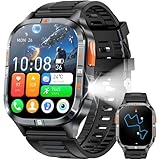
- BUILT-IN GPS & COMPASS– This military smartwatch features high-precision GPS to pinpoint your location while hiking, cycling, or traveling, keeping you safely on track without extra gear. Tap the compass icon and it locks your bearing within three seconds—engineered for pro-level outdoor adventures like camping, climbing, and trekking.
- BLUETOOTH CALLING & MESSAGES – Powered by the latest Bluetooth tech, the men’s smartwatch lets you answer or make calls right from your wrist—no need to pull out your phone. Get real-time alerts for incoming texts and app notifications so you never miss an invite. (Replying to SMS is not supported.)
- BIG SCREEN & DIY VIDEO WATCH FACE – The 2.01" military-spec display is dust-proof, scratch-resistant, and forged from high-strength glass with an aluminum alloy bezel, passing rigorous dust and abrasion tests so the screen stays crystal-clear. Upload a short family video to create a dynamic, one-of-a-kind watch face that keeps your memories alive.
- 24/7 HEALTH MONITORING – Equipped with a high-performance optical sensor, this Android smartwatch tracks heart rate and blood-oxygen levels around the clock. It also auto-detects sleep stages (deep, light, awake) for a complete picture of your health, ensuring you always know how your body is doing.
- MULTI SPORT MODES & FITNESS TRACK – Choose from running, cycling, hiking, basketball, and more to log every workout. Set goals, monitor progress, and sync data to the companion app. Bonus tools include photo gallery, weather, alarm, stopwatch, flashlight, hydration reminder, music/camera remote, find-my-phone, mini-games, and other everyday essentials.
The Galaxy Watch Ultra delivers strong GPS performance for a lifestyle-focused device, especially during shorter outdoor activities. Over multi-hour or multi-day use, however, track smoothing and battery optimization can subtly trade precision for efficiency.
Expedition Mode and Multi‑Day Autonomy
Garmin’s Expedition Mode is designed for extended travel where charging may be infrequent or impossible. By reducing GPS sampling and background processes, the Fenix 8 can stretch battery life into weeks while still recording a breadcrumb trail and key checkpoints.
This mode pairs naturally with solar-assisted charging on compatible Fenix variants, reinforcing its role as a self-contained navigation instrument. For thru-hikes, ski traverses, or remote expeditions, this autonomy is not theoretical; it’s operational.
Samsung does not offer a true expedition equivalent. Battery life can be extended through power-saving modes, but navigation and tracking capabilities scale down sharply, limiting usefulness beyond conventional weekend outings.
Safety, Orientation, and Emergency Tools
Garmin’s navigation features are tightly linked to safety systems. TracBack, reference points, and location marking are designed to function under stress, supported by physical controls and high-contrast mapping.
When paired with Garmin’s satellite communicators, the Fenix 8 becomes part of a broader expedition safety ecosystem. Even standalone, it supports incident detection and emergency alerts with precise location data.
Samsung includes emergency SOS and fall detection, but these are optimized for urban and suburban contexts where cellular coverage is assumed. In remote environments, their effectiveness diminishes alongside connectivity.
Who Navigation Truly Favors
The Fenix 8 is built for users who expect to navigate actively, not just follow lines on a screen. It assumes you will make decisions mid-route, adjust plans, and rely on the watch when conditions deteriorate or coverage disappears.
The Galaxy Watch Ultra supports outdoor navigation as a feature, not a discipline. It works best when the route is known, the phone is nearby, and the adventure fits neatly within a connected lifestyle.
Once navigation becomes mission-critical rather than recreational, the difference is no longer about maps. It becomes about trust.
Health Tracking, Recovery Insights & Daily Wellness
Where navigation reveals how each watch handles the extremes, health and recovery tracking shows how they behave the other 23 hours of the day. This is where philosophy matters more than specs, and where Garmin and Samsung diverge sharply in how they interpret data and guide decisions.
Sensor Foundations and Measurement Philosophy
Both the Fenix 8 and Galaxy Watch Ultra rely on modern optical heart rate sensors, blood oxygen tracking, skin temperature estimation, and accelerometer-driven activity recognition. In controlled conditions, raw heart rate accuracy during steady-state efforts is broadly comparable, especially when paired with a chest strap on the Garmin.
The difference is less about what is measured and more about how often and why. Garmin samples continuously with a bias toward longitudinal trends, while Samsung emphasizes frequent spot insights optimized for everyday health awareness.
During high-motion activities like trail running or strength circuits, the Fenix 8 tends to smooth data more conservatively. Samsung’s readings can be more reactive, which feels responsive on-screen but occasionally introduces short-term variability that matters less for lifestyle users than for structured training.
Sleep Tracking and Overnight Recovery
Sleep is central to both platforms, but the interpretation differs significantly. Garmin’s sleep tracking feeds directly into recovery metrics like Body Battery, HRV status, and Training Readiness, making the night a critical input for the next day’s workload.
Sleep stages, respiration, and overnight SpO₂ are presented with minimal visual clutter. The emphasis is on consistency and baseline deviation rather than chasing perfect scores.
Samsung’s sleep experience is more narrative-driven. Sleep coaching, sleep animals, and clearer explanations of habits make the data approachable, especially for users trying to improve routines rather than optimize performance.
For athletes, Garmin’s advantage is integration. Poor sleep immediately alters suggested workouts and recovery expectations. Samsung highlights sleep quality well, but the downstream impact on training guidance is less tightly coupled.
HRV, Stress, and Recovery Readiness
Garmin’s HRV tracking is one of its most mature tools. Nightly HRV averages are contextualized against a rolling baseline, allowing the watch to flag strain, illness risk, or under-recovery before it becomes obvious.
This feeds directly into Training Readiness, a composite score that blends sleep, HRV, recent load, and recovery time. It is not prescriptive, but it is consistently conservative, often nudging users toward restraint when enthusiasm outpaces physiology.
Samsung tracks stress continuously and presents it in a more immediate, real-time format. Guided breathing sessions and quick interventions are easy to access, reinforcing the Galaxy Watch Ultra’s role as a daily wellness companion rather than a coach holding you back.
Daily Activity, Body Metrics, and Lifestyle Health
Step counts, active minutes, calories, and movement reminders are standard on both, but the framing differs. Garmin treats daily activity as background context supporting training and recovery, not the main goal.
Body Battery is particularly effective here, translating complex physiological signals into a single energy estimate that aligns well with subjective fatigue. Over time, it becomes a reliable gauge for pacing workdays and workouts alike.
Samsung expands into broader wellness with features like body composition estimates and ECG support in supported regions. These are compelling for users invested in holistic health tracking, especially when paired with Samsung Health’s smartphone dashboards.
Comfort, Wearability, and 24/7 Use
Health tracking only works if the watch is worn consistently. The Fenix 8 is large, dense, and unapologetically tool-like, but its weight is well distributed, and the caseback design minimizes pressure points during sleep for most users.
Silicone and nylon strap options help, though smaller wrists may always feel its presence overnight. The payoff is durability and sensor stability during long sessions.
The Galaxy Watch Ultra wears flatter and feels more like a traditional smartwatch despite its rugged positioning. Its lighter feel and smoother case transitions make it easier to forget during sleep, which can improve overnight data continuity for some users.
Interpreting the Data, Not Just Collecting It
Garmin assumes the user wants to adapt behavior based on physiological limits. Its health metrics are blunt but honest, sometimes telling you to back off when motivation says otherwise.
Samsung assumes the user wants to understand themselves better day by day. Insights are framed to encourage healthier habits without challenging training identity.
Both approaches are valid. One is designed to protect long-term performance, the other to improve everyday well-being within a connected lifestyle.
Smart Features, Apps & Ecosystem Integration
Once health data is interpreted and acted upon, the next question is how well each watch fits into the rest of your digital life. This is where the philosophical split between Garmin and Samsung becomes impossible to ignore.
Garmin views smart features as supportive utilities that should never compromise battery life, training reliability, or outdoor performance. Samsung treats the Galaxy Watch Ultra as a wrist-based extension of the phone, prioritizing interaction, convenience, and platform depth.
Notifications, Calls, and Daily Interactions
Both watches handle notifications reliably, but the experience differs in tone and intent. The Fenix 8 delivers clear, glanceable alerts with granular filtering controls, yet interactions remain intentionally limited.
Android users can reply to messages with preset responses, but there is no voice dictation or rich app interaction. Calls can be viewed but not taken directly from the watch, reinforcing Garmin’s stance that focus should remain on the task at hand.
The Galaxy Watch Ultra functions as a full communication hub. Calls, message dictation, quick replies, emoji reactions, and app-specific interactions all feel native, fluid, and fast.
Samsung’s haptics and UI animations make everyday interactions feel more refined, especially during busy workdays. For users who want to leave their phone behind during short errands or workouts, the Ultra delivers a genuinely standalone experience when LTE is enabled.
Voice Assistants and On-Wrist Intelligence
Garmin continues to avoid always-on voice assistants, favoring deterministic button-driven control. This keeps battery draw predictable and eliminates dependency on cloud processing, which matters during multi-day trips or remote training blocks.
The Fenix 8 supports basic voice commands only through paired phone interactions, primarily for quick actions like message responses on Android. It is functional, but intentionally restrained.
Samsung leans fully into voice-first interaction. Google Assistant integration allows for reminders, navigation prompts, smart home control, and message handling directly from the wrist.
In daily life, this shifts how the watch is used. The Galaxy Watch Ultra becomes an active participant in scheduling and task management, whereas the Fenix 8 remains a silent partner focused on execution rather than orchestration.
App Ecosystem and Third-Party Support
Garmin’s Connect IQ store is purpose-built for performance users. Apps, watch faces, and data fields tend to be lightweight, stable, and conservative in design.
The selection is smaller than mainstream app stores, but quality and battery efficiency are generally high. Navigation tools, endurance sport utilities, and sensor integrations dominate, aligning well with the Fenix 8’s mission.
Samsung’s Wear OS ecosystem is broader and more dynamic. Popular apps like Spotify, Google Maps, Strava, WhatsApp, and fitness companions feel native rather than adapted.
Rank #4

- 【Built-in GPS & Multi-System Positioning】Stay on track with the Tiwain smartwatch’s built-in GPS. Featuring military-grade single-frequency and six-satellite support (GPS, GLONASS, Beidou, Galileo, NAVIC, QZSS), this watch offers fast and accurate location tracking wherever you go. It also includes a compass, altimeter, and barometer, giving you real-time data on your altitude, air pressure, and position.
- 【Military-Grade Durability】Engineered to withstand the toughest conditions, the Tiwain smartwatch meets military standards for extreme temperatures, low pressure, and dust resistance. Crafted from tough zinc alloy with a vacuum-plated finish, this watch is also waterproof and built to resist wear and tear. The 1.43-inch AMOLED HD touchscreen offers clear visibility in all environments, and the watch supports multiple languages for global users.
- 【170+ Sport Modes & Fitness Tracking】Track your fitness journey with 170+ sport modes, including walking, running, cycling, hiking, basketball, and more. Set exercise goals, monitor progress, and sync your data to the companion app. The smartwatch also offers smart features like music control, camera remote, weather updates, long-sitting reminders, and more.
- 【LED Flashlight for Outdoor Adventures】The Tiwain smartwatch comes equipped with a built-in LED flashlight that can illuminate up to 20 meters. Activate it with the side button for added convenience during nighttime activities or outdoor adventures.
- 【Comprehensive Health Monitoring】Monitor your health with real-time heart rate, sleep, blood pressure, and blood oxygen level tracking. The smartwatch will vibrate to alert you of any abnormal readings. You can also make and receive calls directly from the watch, and stay connected with message and app notifications (receive only, no sending capability) – perfect for when you’re driving or exercising.
App updates are more frequent, and developers prioritize Wear OS in ways Garmin rarely sees. The trade-off is higher background activity and greater battery variability depending on usage patterns.
Music, Payments, and Convenience Features
Both watches support offline music playback, but Samsung’s execution is more flexible. The Galaxy Watch Ultra integrates seamlessly with Spotify, YouTube Music, and Bluetooth accessories, making it easy to replace a phone during gym sessions.
Garmin supports offline playlists through Spotify, Amazon Music, and Deezer, but syncing can feel slower and less intuitive. Once loaded, playback is reliable and power-efficient, especially during long workouts.
Contactless payments highlight ecosystem priorities. Garmin Pay works well but remains limited in bank support across regions.
Samsung Pay and Google Wallet offer broader compatibility, faster authentication, and better real-world acceptance. For daily commuting or travel, Samsung’s approach is noticeably more convenient.
Phone Compatibility and Platform Lock-In
The Fenix 8 plays best with Android but remains fully functional on iOS, with the same core training, health, and navigation features intact. The limitations mostly affect interaction, not capability.
This cross-platform consistency makes Garmin uniquely flexible for users who switch phones or mix ecosystems. Training history, maps, and performance data remain unchanged regardless of smartphone choice.
The Galaxy Watch Ultra is effectively locked to Android, and works best within Samsung’s own ecosystem. Features like ECG, body composition, and advanced health insights often require Samsung phones and region-specific support.
For users already invested in Samsung hardware, the integration is powerful and cohesive. For everyone else, compatibility compromises are unavoidable.
Software Longevity and Update Philosophy
Garmin’s software evolves slowly but predictably. Major feature updates often arrive months after launch, yet core functionality remains stable for years.
Older Fenix models continue receiving meaningful updates long after competitors have moved on. This long-term support reinforces the Fenix 8’s value as a tool rather than a disposable gadget.
Samsung operates on a faster software cycle, with frequent updates and new features tied closely to Wear OS and Android development. This keeps the Galaxy Watch Ultra feeling modern, but long-term feature parity is less guaranteed.
Over several years, the Fenix 8 is more likely to feel familiar and dependable. The Galaxy Watch Ultra is more likely to feel exciting, expressive, and tightly woven into the broader smart device ecosystem.
Which Ecosystem Actually Serves You Better
If your watch needs to manage notifications, calls, apps, and daily logistics with minimal friction, Samsung’s ecosystem is unmatched in this comparison. The Galaxy Watch Ultra excels as a lifestyle device that happens to be rugged.
If your watch is expected to disappear into the background while quietly supporting training, recovery, and outdoor exploration, Garmin’s ecosystem remains the gold standard. The Fenix 8 sacrifices interaction depth to preserve focus, battery life, and long-term reliability.
Neither approach is inherently better. The right choice depends on whether you want your watch to think for you, or simply help you perform.
Battery Life, Charging & Long-Term Ownership Reality
Battery behavior is where the philosophical gap between these two watches becomes impossible to ignore. Software ecosystems may define daily interaction, but battery life defines how often the watch interrupts your routine.
This is also where expectations must be recalibrated. These watches are both “Ultra” by branding, yet they live in completely different energy realities.
Real-World Battery Life: What You Actually Get
The Garmin Fenix 8 is designed around endurance first, with battery life scaling depending on display type, size, and usage mode. In everyday smartwatch use with continuous health tracking, notifications, and regular workouts, it comfortably stretches into multi-day territory, often measured in weeks rather than days.
With GPS-heavy training, mapping, and multi-band GNSS active, battery life compresses, but remains predictable. Even under demanding outdoor use, the Fenix 8 is engineered to last through multi-day adventures without anxiety.
The Galaxy Watch Ultra operates on a fundamentally different assumption. With its bright AMOLED display, Wear OS background processes, and deep app integration, typical real-world battery life sits around one to two days for most users.
Heavy GPS workouts, LTE usage, always-on display, and health monitoring can push that closer to daily charging. It is manageable, but it is never something you forget about.
Display Technology and Its Battery Consequences
Garmin’s advantage is not just battery size, but display philosophy. Depending on configuration, the Fenix 8 leverages either power-efficient display technology or aggressive refresh management that prioritizes legibility over visual flair.
The result is a screen that remains readable outdoors without constantly pulling energy from the battery. It is less cinematic, but relentlessly practical.
Samsung’s AMOLED panel is stunning, sharp, and expressive, especially indoors and at night. That visual richness comes at a cost, particularly when paired with frequent wrist raises, animations, and third-party apps running in the background.
GPS, Sensors, and Endurance Under Load
During long activities, the Fenix 8’s battery curve is remarkably flat. Multi-band GPS, onboard mapping, continuous heart rate, and advanced training metrics are all designed to coexist without sudden drops in remaining charge.
This makes it a watch you trust during ultra-distance events, multi-day hikes, or backcountry travel. You plan around weather and terrain, not your charger.
The Galaxy Watch Ultra can handle long GPS sessions, but endurance under sustained load is its weakest point. Extended tracking sessions noticeably accelerate battery drain, and multi-day trips require deliberate power management or backup charging solutions.
Charging Speed, Convenience, and Daily Friction
Samsung counters shorter battery life with fast, convenient charging. The Galaxy Watch Ultra charges quickly, works with common wireless chargers, and supports power sharing from compatible phones.
Topping up during a shower or while getting ready is often enough to get through the day. This rhythm fits urban and office-based lifestyles extremely well.
Garmin’s charging is slower and relies on a proprietary cable. It is less convenient in the short term, but also less frequent, which changes how often you think about it.
Over time, charging once every several days—or longer—becomes a background task rather than a daily ritual.
Battery Aging and Multi-Year Ownership
Lithium batteries degrade, and long-term ownership exposes differences in design priorities. Watches that require daily charging inevitably cycle their batteries more aggressively over the same ownership period.
After two to three years, Galaxy Watch Ultra owners are more likely to notice reduced daily endurance. This does not make the watch unusable, but it tightens margins and increases reliance on frequent charging.
The Fenix 8’s longer battery intervals mean fewer charge cycles over time. In practice, this translates to slower perceived degradation and more consistent endurance several years into ownership.
Durability, Repairability, and Wear Over Time
Garmin builds the Fenix line as long-term equipment. Sapphire glass options, reinforced bezels, and conservative thermal management all support longevity beyond typical upgrade cycles.
While battery replacement is not trivial, the watch is clearly engineered to survive years of hard use without becoming fragile or obsolete.
The Galaxy Watch Ultra is robust by smartwatch standards, with strong materials and water resistance, but it still follows consumer electronics norms. Sealed construction, integrated batteries, and rapid model turnover mean it is less likely to be serviced and kept indefinitely.
The Psychological Cost of Charging
Over months of ownership, battery life becomes emotional rather than technical. A watch that needs nightly charging subtly trains you to think of it as another device.
The Galaxy Watch Ultra fits seamlessly into that mindset if you already charge a phone, earbuds, and laptop daily. It asks little more than habit consistency.
The Fenix 8 encourages a different relationship. When charging fades into the background, the watch feels less like a gadget and more like a piece of gear that simply happens to be smart.
Durability, Water Resistance & Extreme-Use Readiness
If battery life shapes how often you think about charging, durability determines whether you think about the watch at all once conditions deteriorate. This is where design philosophy becomes tangible, not in lab specs but in how confidently each watch disappears into demanding environments.
Case Construction and Materials
The Fenix 8 continues Garmin’s equipment-first approach, with a fiber-reinforced polymer case wrapped in a metal bezel, typically offered in stainless steel or titanium depending on configuration. Sapphire crystal options are common across the range, chosen less for visual flair and more for scratch resistance when brushing against rock, ice tools, or pack hardware.
💰 Best Value

- Smart Watch with GPS and Offline Map: This smart watch connects to multiple satellite systems for accurate real-time positioning, and includes a professional-grade compass, altimeter, and barometer for precise data, ensuring you maintain your sense of direction in any outdoor environment. The map version supports downloading offline maps; select a route or destination to view the route even without a signal, eliminating the risk of getting lost.
- Bluetooth Call & Message Functionality: This smart watches for men allows you to make and receive calls; receive text and social media notifications (Facebook, WhatsApp, Instagram, Twitter, etc.); and reply to text messages with voice-to-text or set up quick replies (text reply functionality is available for Android phones).
- Sports & Health Monitoring: This 5ATM waterproof fitness watch supports over 100 sports modes and tracks daily activity data, calories, distance, steps, and heart rate. You can use it to monitor your health metrics (blood oxygen, heart rate, stress, and sleep), monitor your fatigue and mood, and perform PAI analysis. You can also use this smartwatch to set water intake and sedentary reminders. Stay active and healthy with this fitness tracker watch.
- Customizable Watch Faces & AI Functionality: This smart watch features a 1.46-inch HD touchscreen and over 100 downloadable and customizable watch faces. You can even use your favorite photos as your watch face. Equipped with AI technology, it supports voice descriptions in multiple languages to generate personalized AI watch faces. The watch's AI Q&A and AI translation features provide instant answers to questions and break down language barriers, making it an ideal companion for everyday life and travel.
- Large Battery & High Compatibility & More Features: This smart watch for android phones and ios phone features a large 550ml battery for extended battery life. It's compatible with iOS 9.0 and above and Android 5.0 and above. It offers a wealth of features, including an AI voice assistant, weather display, music control, camera control, calculator, phone finder, alarm, timer, stopwatch, and more. (Package Includes: Smartwatch (with leather strap), spare silicone strap, charging cable, and user manual)
The Galaxy Watch Ultra counters with a more overtly premium shell, combining a titanium case with a flat sapphire crystal and softened edge geometry. It feels exceptionally solid for a Wear OS device, but its refinement also reveals its consumer electronics roots, with tighter tolerances and fewer sacrificial surfaces meant to absorb repeated impacts.
Water Resistance and Pressure Tolerance
On paper, both watches land in similar territory with 10 ATM water resistance, making them safe for swimming, surf sessions, and high-pressure water exposure. In practice, Garmin’s sealing and button architecture have a long track record among endurance athletes, guides, and expedition users who expose their watches to water daily, often for years.
Samsung adds IP68 certification and emphasizes open-water capability, which reassures casual adventure users. However, the Galaxy Watch Ultra still treats water as an activity mode, while the Fenix 8 treats it as an assumed condition, reflected in conservative depth ratings, sensor protection, and drainage design.
Buttons, Touchscreens, and Glove Use
Extreme-use readiness often comes down to input reliability rather than raw toughness. The Fenix 8’s five-button layout remains fully operable with gloves, wet fingers, or numb hands, and every critical function can be executed without touching the screen.
The Galaxy Watch Ultra blends physical buttons with a large, bright touchscreen that excels in clear conditions. Under rain, salt spray, or cold-weather gloves, interaction becomes less predictable, and users may find themselves adapting behavior to the watch rather than the other way around.
Shock, Vibration, and Environmental Stress
Garmin designs the Fenix line to tolerate sustained vibration, repeated shock, and wide temperature swings without recalibration or erratic behavior. This matters for activities like trail running with poles, mountain biking, or multi-day pack carry, where micro-impacts accumulate rather than arrive as single dramatic blows.
Samsung’s Ultra meets military-grade durability standards and feels reassuringly stiff on the wrist. Still, its internal layout prioritizes compactness and display quality, which can make long-term exposure to vibration and extreme cold more consequential over years of use.
Straps, Lugs, and Real-World Wear Damage
The Fenix 8 uses standard quick-release or fixed lug systems depending on size, with silicone, nylon, and metal options that are easy to swap and cheap to replace after abrasion. Scratches on the bezel tend to read as honest wear rather than visual damage, reinforcing its tool-watch character.
The Galaxy Watch Ultra’s integrated strap system looks cleaner and wears comfortably, but replacement options are more limited and typically more expensive. Cosmetic damage stands out more clearly, which can affect how willing owners are to expose it to truly rough conditions.
Long-Term Survivability Versus Perceived Toughness
Over months and years, the Fenix 8 earns trust by remaining boringly consistent. Sensors keep working, buttons stay tactile, and cosmetic wear rarely affects function, which is exactly what experienced outdoor users value.
The Galaxy Watch Ultra feels impressively rugged at first contact and holds up well to demanding lifestyles. Its durability is real, but it is optimized for active daily life rather than indefinite exposure to harsh environments, drawing a clear line between a high-end smartwatch and purpose-built outdoor equipment.
Platform Compatibility, Data Ownership & Ecosystem Lock-In
After durability and long-term wear trust, the next pressure point is software dependence. These watches may live on your wrist, but they are anchored to phones, cloud services, and long-term data histories that can be harder to leave than the hardware itself.
Phone Compatibility and Day-One Flexibility
The Garmin Fenix 8 works with both iOS and Android, and it does so with near feature parity. Notifications, syncing, mapping, workouts, and health metrics behave consistently regardless of phone brand, which is rare at this level of device complexity.
The Galaxy Watch Ultra is fundamentally a Samsung-first product. While it runs Wear OS, full functionality requires a recent Samsung Galaxy phone, with non-Samsung Android users losing features and iPhone users excluded entirely.
Software Experience: Utility Versus Integration
Garmin Connect prioritizes clarity, depth, and long-term trend analysis over visual polish. It feels more like a training log and physiological database than a lifestyle app, which aligns with how Fenix owners typically use their watches over years rather than upgrade cycles.
Samsung Health is cleaner, more modern, and deeply integrated with One UI and Samsung services. That integration enhances daily convenience, but it also ties your experience to Samsung’s broader ecosystem in a way that becomes difficult to disentangle over time.
Data Ownership and Export Control
Garmin allows relatively open access to your data, including activity files, health metrics, and historical records. Exports to third-party platforms like TrainingPeaks, Strava, Komoot, and even raw file downloads are straightforward and well-supported.
Samsung Health is more restrictive by comparison. While syncing to major fitness platforms is possible, granular exports and long-term archival outside Samsung’s cloud are less transparent, reinforcing a model where your data lives best inside Samsung’s environment.
Longevity of Data Versus Device Lifecycle
Many Fenix users replace hardware every five to seven years while maintaining a continuous training history that stretches far longer. Garmin’s ecosystem supports that kind of longitudinal use, making the watch feel like an interchangeable tool rather than a disposable endpoint.
The Galaxy Watch Ultra follows a faster consumer electronics cadence. Its software support and feature evolution are closely tied to Samsung’s phone roadmap, which can make older data feel less central once you step outside the latest generation.
Subscriptions, Paywalls, and Hidden Commitments
Garmin does not require a subscription to unlock core training, navigation, or recovery features. What you pay upfront largely defines the long-term value, which is one reason Fenix watches retain relevance long after release.
Samsung Health currently avoids aggressive paywalls, but premium features increasingly appear across Samsung’s ecosystem. The long-term risk is not cost alone, but feature dependency that nudges users deeper into Samsung hardware to maintain parity.
App Ecosystem and Third-Party Dependence
Garmin’s app ecosystem is narrower but purpose-built, focusing on sport-specific tools, data fields, and navigation extensions. Most Fenix owners rely more on built-in functions than external apps, which reduces friction when connectivity is limited or phones are absent.
The Galaxy Watch Ultra benefits from Wear OS access to Google services and mainstream apps. That flexibility enhances daily smart functionality, but it also increases reliance on connectivity, background syncing, and phone proximity for full value.
Switching Costs and Psychological Lock-In
Leaving Garmin typically means abandoning a deeply personal training archive, but the option exists to take much of it with you. That choice remains yours, even if the emotional cost is high.
Leaving Samsung is harder if your watch, phone, health data, and services are tightly interwoven. The Galaxy Watch Ultra excels inside its ecosystem, but stepping outside it often feels less like a transition and more like a reset.
Price, Value Proposition & Which Watch Makes Sense for You
All of the ecosystem friction, software philosophy, and long-term data ownership discussed above eventually collapses into a simple question: what are you actually paying for, and how long does that value last.
This is where the Garmin Fenix 8 and Samsung Galaxy Watch Ultra diverge most clearly, not just in price tags, but in how each brand defines “worth” over the life of the watch.
Upfront Pricing and What It Buys You
The Garmin Fenix 8 sits firmly in premium territory, with launch pricing expected to land in the upper tier of Garmin’s lineup depending on size, materials, and solar options. Sapphire glass, titanium bezels, multi-band GNSS, and full offline mapping are not add-ons here; they are the product.
The Galaxy Watch Ultra undercuts the Fenix on paper, typically launching several hundred dollars lower. You still get premium materials, a bright AMOLED display, LTE options, and a refined industrial design, but a meaningful portion of its value is tied to software services and phone integration rather than raw hardware capability.
In practical terms, Garmin asks you to pay more upfront to avoid paying later. Samsung asks you to pay less now, with the assumption that you remain within its ecosystem to extract full value.
Cost Over Time and Device Longevity
Garmin’s value proposition improves the longer you own the watch. Fenix models are routinely used for five to seven years, not because users tolerate them, but because the core experience remains relevant as fitness goals evolve.
Battery longevity, physical durability, and offline functionality mean the Fenix 8 ages like a tool rather than a gadget. Even when newer models appear, older Fenix watches continue to deliver the same training load metrics, navigation reliability, and recovery insights they did on day one.
The Galaxy Watch Ultra follows a more traditional consumer electronics curve. Software support is strong early, but feature prioritization inevitably shifts toward newer hardware, and battery degradation has a larger impact on day-to-day usability due to charging frequency.
Value for Athletes vs Value for Everyday Users
For endurance athletes, mountaineers, trail runners, and multi-sport users, the Fenix 8’s pricing makes sense because it replaces multiple devices. GPS head unit, training log, navigation tool, recovery coach, and expedition watch all live on your wrist without subscriptions or signal dependence.
Its physical bulk and utilitarian design may feel excessive for casual fitness tracking, but for users who train with intent, the watch earns its cost through depth and reliability rather than polish.
The Galaxy Watch Ultra delivers excellent value for users who split their time between workouts and everyday life. Notifications, calls, music, payments, and Google services are first-class citizens, not secondary features.
If your training sessions are measured in hours per week rather than lifestyle identity, the Ultra’s balance of smarts and fitness capability often feels like the more rational spend.
Phone Compatibility and Ecosystem Math
The Fenix 8 remains platform-agnostic. iPhone and Android users receive the same core experience, and switching phones does not devalue the watch.
The Galaxy Watch Ultra is a different calculation. Its best features assume a Samsung phone, and while it works with other Android devices, the experience narrows quickly outside that ideal pairing.
If you already own a recent Samsung flagship and plan to stay there, the Ultra’s value increases. If your phone loyalty is fluid, Garmin’s neutrality becomes an asset.
Which Watch Actually Makes Sense for You
Choose the Garmin Fenix 8 if your priority is long-term training progression, outdoor reliability, and owning your data without recurring commitments. It is the better value for users who see their watch as a piece of performance equipment rather than a lifestyle accessory.
Choose the Samsung Galaxy Watch Ultra if you want a rugged smartwatch that excels at daily convenience, seamless phone integration, and modern smart features while still supporting structured fitness tracking. It rewards users who live inside Samsung’s ecosystem and upgrade phones regularly.
Both watches justify their price in different ways. The Fenix 8 earns loyalty through endurance and depth, while the Galaxy Watch Ultra earns it through immediacy and integration.
The right choice is less about which watch is “better” and more about whether you want a watch that fades into the background of your life, or one that quietly documents it for years to come.