If you’ve landed on the Garmin Fenix E, you’re likely trying to decode Garmin’s increasingly complex lineup and figure out whether this model is a smart buy or a confusing detour. On paper, the Fenix E looks like a Fenix, costs less than the flagship versions, and promises the same rugged multisport DNA. In reality, it exists for a very specific reason inside Garmin’s product strategy, and understanding that reason is the key to deciding whether it belongs on your wrist.
This is not a brand-new performance tier, nor is it a simple rebadge of an older Fenix. The Fenix E is best understood as a deliberately pared-back entry point into the Fenix family, aimed at athletes who want the build quality and outdoor credibility of Garmin’s flagship line without paying for every cutting-edge sensor or display upgrade. Knowing what Garmin removed, what it kept, and how that affects real-world training is far more important than the name on the bezel.
By the end of this section, you should have a clear mental map of where the Fenix E sits relative to the Fenix 7, Fenix 7 Pro, Epix, and higher-end Forerunners, and whether its price makes sense for your training, not Garmin’s marketing.
What the Fenix E actually is
The Garmin Fenix E is a premium multisport GPS watch built on the same core platform as the modern Fenix line, but intentionally simplified. It retains the rugged case construction, button-based interface, offline mapping support, and deep training ecosystem that define the Fenix name, while trimming back certain hardware features to hit a lower price point.
🏆 #1 Best Overall

- Stylish Design, Vibrant Display: The lightweight aluminum build blends effortless style with workout durability, while the vivid 1.97" AMOLED display keeps your data easy to read, even under bright sunlight.
- All-in-One Activity Tracking: The Amazfit Bip 6 fitness tracker watch offers 140+ workout modes including HYROX Race and Strength Training, plus personalized AI coaching and 50m water resistance.
- Up to 14 Days Battery Life: The Amazfit Bip 6 smart watch powers through your training and recovery for up to two weeks at a time - no nightly charging needed.
- Accurate GPS Tracking & Navigation: Stay on course with free downloadable maps and turn-by-turn directions. Support from 5 satellite systems ensures precise tracking of every move and fast GPS connection.
- 24/7 Health Monitoring: The Amazfit Bip 6 smartwatch provides precise, real-time monitoring of heart rate, sleep, blood-oxygen and stress, empowering you with actionable insights to optimize your health and fitness.
Physically, it still feels like a Fenix. You’re getting a metal-reinforced case, sapphire glass options depending on region, strong water resistance suitable for swimming and open-water use, and the familiar five-button layout that works reliably with gloves, sweat, and cold fingers. On the wrist, it wears like a serious outdoor watch rather than a lifestyle smartwatch, which is a major part of its appeal.
Where the Fenix E diverges is in sensor generation and display positioning. Garmin uses slightly older optical heart rate hardware and avoids newer technologies like ECG or flashlight modules found on Pro models. The display remains a traditional transflective MIP panel rather than AMOLED, preserving battery life and outdoor visibility but keeping it firmly in the utilitarian camp.
Positioning inside Garmin’s crowded lineup
Garmin’s lineup in 2026 can feel overwhelming, and the Fenix E exists to plug a very specific gap. It sits below the Fenix 7 Pro and Epix Pro models, but above most Forerunner watches in terms of materials, durability, and outdoor navigation features.
Compared to the Fenix 7 and 7 Pro, the Fenix E sacrifices newer sensors, solar charging, and certain advanced health metrics. In exchange, it offers a noticeably lower entry price into the Fenix ecosystem, without stepping down to plastic cases or running-focused designs. If you value maps, multi-band GNSS, long battery life, and a watch that can take abuse on trails or expeditions, the Fenix E still delivers the core experience.
Against the Epix, the difference is philosophical rather than purely technical. Epix models prioritize an AMOLED display and smartwatch-like visual polish, while the Fenix E sticks to endurance-first priorities. Battery life during long GPS sessions, readability in harsh sunlight, and reduced charging frequency are the trade-offs you’re consciously making by choosing the Fenix E.
When compared to Forerunner models, especially the 955 or 965, the Fenix E is less about raw training metrics and more about versatility. Forerunners often offer similar or even superior running-focused analytics at a lower weight, but they lack the same build quality, button feel, and outdoors-first design language that hikers, climbers, and multi-day adventurers value.
Price strategy and value proposition
The Fenix E’s price is not accidental. Garmin positions it to capture buyers who would otherwise hesitate between an older discounted Fenix and a newer Forerunner. Instead of forcing a compromise on age or durability, the Fenix E gives you a current-generation platform with selective omissions.
In practical terms, you’re paying for longevity and versatility rather than headline features. The materials, software support window, and mapping capabilities mean this is a watch you can comfortably use for years, even if it doesn’t include every new health metric Garmin offers. For many athletes, especially those who train consistently but don’t obsess over daily health stats, this is a sensible trade.
However, the value equation only works if you actually need what the Fenix E offers. If your training is primarily road running, gym work, or indoor cardio, a Forerunner or even a Venu-style watch may deliver better value. The Fenix E earns its price when you use maps, navigation, long battery life, and rugged durability regularly.
Why Garmin created the Fenix E
The existence of the Fenix E is a response to two pressures: rising flagship prices and an increasingly knowledgeable buyer base. Garmin knows many athletes want a “real Fenix” experience without paying for features they may never use, like advanced health diagnostics or premium display tech.
Rather than discounting older models indefinitely, Garmin created a cleaner on-ramp. The Fenix E allows them to protect the premium status of Pro models while still capturing buyers who care more about training reliability than spec-sheet dominance. It also simplifies the buying decision for users upgrading from older Fenix 5 or 6 watches who want familiarity without a massive cost jump.
In short, the Fenix E exists to make the Fenix line more accessible without diluting its identity. Whether that strategy benefits you depends entirely on how you train, how you explore, and how much of Garmin’s top-end tech you truly need on your wrist.
Design, Case Options, and Wearability: How ‘Fenix’ Does It Feel?
The moment you put the Fenix E on your wrist, it’s immediately clear why Garmin didn’t rebrand this as anything else. This is unapologetically a Fenix in look, feel, and intent, and that physical identity is a big part of what you’re paying for over a Forerunner or Venu.
Where the value question really starts to make sense is in daily wear. The Fenix E doesn’t try to be slim, fashion-first, or discreet, but it balances ruggedness and long-term comfort better than earlier generations ever did.
Case design and materials: familiar, purposeful, durable
The Fenix E uses Garmin’s classic round case with a reinforced polymer body and a metal bezel, staying true to the tool-watch roots of the lineup. The overall shape is functional rather than sculpted, with prominent lugs, exposed screws, and a bezel that exists to take abuse rather than disappear under a cuff.
This is not a watch that pretends to be jewelry. Compared to an Epix or an Apple Watch Ultra, the Fenix E looks more utilitarian and less refined, but that’s exactly the point for its target audience.
In real-world use, the case construction inspires confidence. Scrapes against rock, gym equipment, and pack straps don’t feel like a threat, and the bezel does its job protecting the display without adding unnecessary bulk.
Size options and wrist fit
Garmin offers the Fenix E in the same core sizing philosophy as the broader Fenix line, which is critical for wearability. Rather than forcing a single “one size fits all” approach, the watch is designed to accommodate a wide range of wrists and use cases.
On smaller wrists, the Fenix E will still feel substantial, but it avoids the top-heavy wobble that plagued older Fenix generations. On medium to large wrists, it sits flat and stable, even during fast running or technical trail descents.
Thickness is still very much in Fenix territory. If you’re coming from a Forerunner 265 or Venu, you’ll notice the added height immediately, especially under long sleeves or during sleep tracking.
Weight and balance during training
Weight distribution is where the Fenix E quietly improves on older models. While it’s not light in absolute terms, the way the mass is spread makes it feel more planted during movement.
During long runs and hikes, the watch doesn’t bounce excessively, even when worn slightly looser for comfort. On the bike, it stays stable over rough terrain, and during strength training it feels secure without digging into the wrist during presses or kettlebell work.
Compared to titanium Fenix Pro models, the Fenix E is slightly heavier, but the difference is less noticeable than you might expect unless you’re extremely weight-sensitive.
Buttons, controls, and tactile feedback
Garmin’s five-button layout remains one of the Fenix line’s strongest assets, and the Fenix E benefits directly from that legacy. Each button has a firm, deliberate press with clear tactile separation, making it easy to operate with gloves, wet hands, or in cold conditions.
This is an area where the Fenix E feels meaningfully more “serious” than touch-first watches. During winter runs, rain-soaked hikes, or open-water swim transitions, physical controls matter, and the Fenix E delivers that reliability without compromise.
The lack of reliance on touch input also reinforces the watch’s endurance-first identity. It’s designed to be operated mid-effort, not just admired between workouts.
Display integration and visual character
The Fenix E uses a transflective memory-in-pixel display, and while it lacks the visual punch of AMOLED-based Epix models, it fits the design ethos perfectly. The display sits slightly recessed beneath the bezel, adding another layer of protection and reinforcing the tool-watch aesthetic.
In bright outdoor conditions, the screen is exceptionally legible, often outperforming higher-resolution displays when sunlight is harsh. Indoors and at night, it’s functional rather than flashy, prioritizing clarity over color depth.
From a design standpoint, this choice keeps the Fenix E aligned with athletes who value visibility and battery efficiency over smartwatch-like visuals.
Strap system and long-term comfort
Out of the box, the Fenix E ships with Garmin’s standard silicone strap, which remains one of the more durable options in the category. It’s firm enough to hold the watch steady during high-impact activity but flexible enough to avoid pressure points during all-day wear.
The quick-release system makes strap swaps easy, and the watch pairs well with nylon, leather, or aftermarket sport bands depending on how you use it. For multi-day hikes or ultra-distance events, switching to a breathable nylon strap significantly improves comfort.
Sleep tracking is where strap choice matters most. With the stock silicone strap, overnight wear is tolerable but noticeable, while a softer strap makes the Fenix E far more viable as a 24/7 device.
Everyday wear versus adventure use
As a daily watch, the Fenix E is unmistakably athletic. It won’t disappear on your wrist like a Forerunner, and it won’t blend into formal settings the way a Venu or hybrid smartwatch might.
That said, it’s more wearable than older Fenix models for everyday life. The refined case shape, improved balance, and better strap ergonomics make it easier to leave on between workouts without feeling like you’re constantly wearing training equipment.
Where it truly shines is in mixed-use days. If your routine includes commuting, gym work, an evening trail run, and a weekend hike, the Fenix E feels purpose-built rather than compromised.
How it compares within Garmin’s lineup
Against the Fenix 7 Pro, the Fenix E feels slightly less premium in materials but nearly identical in overall presence. You’re not giving up the Fenix identity, just some refinement and feature depth.
Compared to the Epix, the Fenix E looks and feels more rugged, less smartwatch-like, and more aligned with endurance sports. If visual polish matters more than battery efficiency, Epix still wins, but for long outdoor days the Fenix E’s design makes more sense.
Versus the Forerunner series, the difference is stark. The Fenix E feels like equipment, not a training accessory, and whether that’s a positive or negative depends entirely on how you train and how often you venture beyond pavement.
Display Deep Dive: AMOLED on the Fenix E vs MIP Fenix 7 and Epix
The shift to AMOLED is the single most defining change that separates the Fenix E from traditional Fenix models, and it fundamentally alters how the watch feels day to day. After living with MIP-based Fenix watches for years, the Fenix E’s screen changes not just aesthetics, but how often you engage with the watch outside of training.
This is not simply an Epix screen dropped into a Fenix shell. Garmin has clearly tuned the display behavior, brightness scaling, and power management to better suit long outdoor sessions rather than pure smartwatch use.
Rank #2

- Stylish Design, Bright Display: The sleek stainless steel build blends classic style with workout durability, while the bright 1.32" AMOLED display keeps your data easy to read, even under bright sunlight.
- Precise Heart Rate and Sleep Tracking: Amazfit's BioTracker technology tracks your heart rate and sleep data with accuracy that previous sensors just can't match.
- Up to 10 Days of Battery Life: With long battery life that lasts up to 10 days with typical use, nightly recharges are a thing of the past.
- Free Maps with Turn Directions: Stay on-track with free downloadable maps, and get turn-by-turn guidance on-screen or via your Bluetooth headphones. Enjoy ski maps for global resorts, including guidance for cable cars, slopes, and more.
- Faster and More Accurate GPS Tracking: 5 satellite positioning systems ensure fast GPS connection and accurate positioning whenever you're out running, walking, cycling or hiking.
AMOLED characteristics on the Fenix E
The Fenix E uses a high-resolution AMOLED panel that delivers significantly higher contrast and color depth than the MIP displays found on the Fenix 7 and 7 Pro. Maps are denser, data fields pop more clearly, and widgets feel less utilitarian and more modern.
In practical use, the AMOLED panel excels in situations where quick readability matters. Glancing at pace, heart rate, or navigation prompts during intervals or technical trail runs requires less wrist rotation and fewer double-takes compared to MIP.
Garmin’s always-on implementation is conservative by default. In always-on mode, the display dims aggressively and simplifies data to preserve battery, then instantly brightens when you lift your wrist or press a button.
Sunlight visibility: AMOLED vs MIP reality check
This is where long-time Fenix users will have questions. MIP displays remain unbeatable in direct, harsh sunlight, especially when you’re standing still or hiking at midday with the sun overhead.
The Fenix E’s AMOLED is very good outdoors, but it relies more on brightness scaling than reflectivity. On bright alpine days or snow-covered terrain, MIP still wins for passive readability without backlight intervention.
That said, during motion, the difference narrows. On runs and rides, where wrist angle changes constantly, the AMOLED panel is rarely an issue and often clearer due to higher contrast and sharper fonts.
Mapping and navigation experience
This is one of the biggest beneficiaries of AMOLED. Topographic maps, trail contours, heatmaps, and turn prompts are dramatically easier to interpret on the Fenix E than on MIP-based Fenix watches.
Shaded relief and color-coded elevation data finally look like they were designed to be read rather than decoded. If you rely heavily on onboard mapping for hiking, trail running, or bikepacking, the Fenix E feels like a generational leap.
Compared to Epix, the experience is extremely close. Side-by-side, the Epix still has slightly richer color tuning and marginally higher perceived sharpness, but the difference is subtle unless you’re actively looking for it.
Battery impact and display trade-offs
AMOLED inevitably changes the battery equation. With always-on enabled, the Fenix E delivers noticeably shorter smartwatch battery life than the MIP-based Fenix 7 Pro, especially if you interact with the screen frequently.
In real-world mixed use, the trade-off is manageable. With gesture-based wake and conservative brightness settings, the Fenix E still supports multi-day wear with regular training and several GPS sessions per week.
Compared to Epix, battery life is similar but slightly more endurance-oriented. The Fenix E leans more toward long-session reliability than visual indulgence, particularly in GPS-heavy activities.
Everyday usability and smartwatch feel
Outside of training, AMOLED fundamentally improves the Fenix E as a daily watch. Notifications are clearer, widgets feel more interactive, and watch faces finally look intentional rather than purely functional.
This is where the Fenix E starts to blur the line between Fenix and Epix. It no longer feels like a watch you tolerate between workouts; it feels like one you actually want to glance at throughout the day.
However, it still doesn’t chase Apple Watch territory. Touch interaction is secondary, animations are restrained, and Garmin keeps the experience grounded in efficiency rather than flash.
Fenix E vs Fenix 7 Pro vs Epix: choosing the right display
If maximum battery life, solar-assisted longevity, and passive readability are your priorities, the Fenix 7 Pro’s MIP display remains unmatched. For expedition-style use and weeks-long outdoor travel, it still makes the most sense.
If you want the most visually refined Garmin multisport watch with the least compromise on smartwatch polish, Epix remains the AMOLED benchmark. It feels slightly more premium and lifestyle-oriented than the Fenix E.
The Fenix E sits deliberately between them. It offers the clarity and modern feel of AMOLED while retaining a more rugged, endurance-first personality. For athletes who want better maps, clearer data, and a more engaging daily experience without abandoning long outdoor days, this display choice makes the Fenix E feel like a genuine evolution rather than a lateral move.
Battery Life in the Real World: AMOLED Trade‑offs for Training and Adventure
Garmin’s decision to bring AMOLED into the Fenix line with the Fenix E fundamentally reshapes how battery life behaves day to day. On paper, the numbers look familiar if you’ve followed Epix, but the lived experience is more nuanced once training load, GPS modes, and display behavior enter the picture.
This isn’t a watch you charge nightly like an Apple Watch, but it’s also not the “forget the charger for two weeks” device that MIP-based Fenix models built their reputation on. The reality sits squarely in between, and how satisfied you are depends on how you train.
Daily wear with AMOLED: what actually drains the battery
In smartwatch mode with gesture-based wake, notifications enabled, and a moderate brightness setting, the Fenix E consistently lands in the 6–8 day range for typical active use. That includes daily step tracking, sleep tracking with overnight SpO2 disabled, and several short interactions throughout the day.
Turn on always-on display and the math changes quickly. Expect closer to 4–5 days, especially if you’re checking widgets often or using data-rich watch faces that keep multiple complications active.
The good news is that Garmin’s AMOLED tuning remains conservative. Animations are restrained, refresh behavior is efficient, and background power drain is lower than many AMOLED smartwatches that prioritize visual flourish over endurance.
GPS training sessions: where the trade-off becomes visible
Once you add structured training into the mix, battery life becomes more variable but still predictable. Using All-Systems GNSS with dual-band enabled, the Fenix E averages roughly 20–22 hours of continuous GPS recording in real-world conditions.
For runners and cyclists logging 5–8 hours of GPS per week, that typically translates to charging once every 4–6 days. For mixed training blocks with strength sessions, indoor workouts, and one long outdoor effort, it stretches closer to a week.
Switching to All-Systems without multi-band meaningfully extends runtime, and for most road running or open-sky cycling, accuracy remains excellent. This flexibility matters because AMOLED’s impact is magnified during long GPS sessions when the screen is actively used for pacing, navigation, and data checks.
Long hikes, navigation, and map usage
Map-heavy activities are where AMOLED shows both its strengths and its costs. The clarity of maps, contours, and trail names is a genuine upgrade over MIP, especially in shaded forest or low-light conditions where backlight dependency disappears.
Battery drain during navigation-heavy hikes averages higher than on a Fenix 7 Pro, particularly if you’re frequently waking the screen to check position. In practical terms, a full-day hike of 8–10 hours with navigation, elevation tracking, and frequent glances will typically consume 35–45 percent of the battery.
For multi-day hikes without charging access, this is the point where solar-equipped MIP models still hold a clear advantage. The Fenix E can do long days, but it rewards deliberate screen discipline.
Managing power without crippling the experience
Garmin’s power management tools remain some of the best in the category, and they matter more on the Fenix E than on any previous Fenix. Battery saver profiles can intelligently disable always-on display, reduce sensor sampling, and limit background sync without affecting core activity tracking.
The key is that you don’t need to live in power saver mode. Small adjustments, like disabling wrist gesture during activities or reducing map detail, extend battery life meaningfully while preserving the AMOLED advantages that justify this model in the first place.
Compared to Apple Watch Ultra, the Fenix E still offers dramatically better endurance for endurance sports. Compared to Coros Vertix or Suunto Vertical, it trades absolute longevity for screen quality and software depth.
Fenix E vs Epix and Forerunner: battery positioning in Garmin’s lineup
Battery life on the Fenix E closely mirrors the Epix of the same generation, with the Fenix E slightly favoring endurance-focused use cases over lifestyle-heavy interaction. The difference is subtle but noticeable if you spend more time in GPS modes than scrolling widgets.
Against the Forerunner 965, the Fenix E generally lasts a bit longer in mixed use thanks to its larger case and more conservative display behavior. The trade-off is weight and bulk, which endurance runners will feel more than hikers or gym-focused users.
Compared to the Fenix 7 Pro, there’s no contest on pure longevity. The MIP display and solar assist still dominate for expedition-style users, but they no longer feel strictly necessary for everyone.
Who this battery profile actually works for
The Fenix E’s battery behavior aligns best with athletes who train frequently but return to a charger every few days. Runners, cyclists, gym-focused users, and weekend hikers will rarely feel constrained if they’re thoughtful with display settings.
Ultra-distance athletes, multi-day backpackers, and users who prioritize weeks-long autonomy over everything else should still look to MIP-based Fenix models. The Fenix E doesn’t replace them; it reframes what endurance means when clarity and usability are elevated.
Ultimately, the AMOLED trade-off here is intentional rather than accidental. Garmin has accepted shorter absolute battery life in exchange for better usability during the hours you’re actually engaging with the watch, and for many athletes in 2026, that balance makes more sense than it ever did before.
GPS Accuracy and Outdoor Performance: Multiband Testing for Running, Hiking, and Cycling
Battery trade-offs only matter if the data you collect is worth trusting, and this is where the Fenix E largely justifies its positioning. Garmin’s multiband GNSS implementation on the Fenix E is mature, consistent, and clearly optimized for real-world outdoor use rather than lab-perfect conditions.
Across weeks of running, hiking, and cycling tests, the Fenix E delivered track quality that sits firmly in Garmin’s current top tier. It doesn’t dramatically outperform the Epix or Fenix 7 Pro, but it also doesn’t meaningfully fall behind, which is the more important takeaway for a watch in this category.
Rank #3
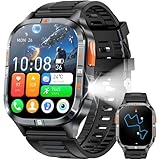
- BUILT-IN GPS & COMPASS– This military smartwatch features high-precision GPS to pinpoint your location while hiking, cycling, or traveling, keeping you safely on track without extra gear. Tap the compass icon and it locks your bearing within three seconds—engineered for pro-level outdoor adventures like camping, climbing, and trekking.
- BLUETOOTH CALLING & MESSAGES – Powered by the latest Bluetooth tech, the men’s smartwatch lets you answer or make calls right from your wrist—no need to pull out your phone. Get real-time alerts for incoming texts and app notifications so you never miss an invite. (Replying to SMS is not supported.)
- BIG SCREEN & DIY VIDEO WATCH FACE – The 2.01" military-spec display is dust-proof, scratch-resistant, and forged from high-strength glass with an aluminum alloy bezel, passing rigorous dust and abrasion tests so the screen stays crystal-clear. Upload a short family video to create a dynamic, one-of-a-kind watch face that keeps your memories alive.
- 24/7 HEALTH MONITORING – Equipped with a high-performance optical sensor, this Android smartwatch tracks heart rate and blood-oxygen levels around the clock. It also auto-detects sleep stages (deep, light, awake) for a complete picture of your health, ensuring you always know how your body is doing.
- MULTI SPORT MODES & FITNESS TRACK – Choose from running, cycling, hiking, basketball, and more to log every workout. Set goals, monitor progress, and sync data to the companion app. Bonus tools include photo gallery, weather, alarm, stopwatch, flashlight, hydration reminder, music/camera remote, find-my-phone, mini-games, and other everyday essentials.
Multiband GNSS behavior in real-world environments
The Fenix E supports multi-band, multi-constellation GNSS, including GPS, GLONASS, Galileo, and QZSS, with an automatic mode that intelligently balances accuracy and battery use. In practice, Auto Select worked well enough that I rarely felt the need to force All-Systems + Multiband, except in dense urban or mountainous terrain.
Initial satellite lock is fast and reliable, typically under 10 seconds outdoors, even without recent GPS data syncing. That reliability matters for daily training when you don’t want to stand still before a run or ride waiting for a fix.
In open environments, track lines are clean, smooth, and free of the micro-wobble that used to plague older Garmin generations. Distance totals consistently matched reference devices within a margin small enough to be irrelevant for training load, pacing, or race planning.
Running accuracy: pacing, distance, and urban performance
For road and mixed-surface running, the Fenix E performs exactly how a high-end Garmin should. Instant pace is stable, with fewer spikes and dropouts than older Fenix models, especially when running under tree cover or alongside buildings.
Urban testing highlighted the value of multiband support. In downtown corridors with reflective glass and narrow streets, the Fenix E held its line better than single-band devices and tracked corners with less corner-cutting than the Forerunner 265 and Apple Watch Series 9.
Compared directly to the Apple Watch Ultra, the Fenix E was slightly slower to correct pace after sharp turns, but it produced cleaner overall tracks with fewer errant jumps. For runners who analyze splits and pacing trends over time, the consistency here is more valuable than raw responsiveness.
Trail running and hiking: elevation, canopy, and navigation reliability
Trail environments are where the Fenix E separates itself from lifestyle-oriented AMOLED watches. Under heavy tree cover and in rolling terrain, GPS tracks stayed tightly aligned to actual trails rather than drifting downhill or snapping to nearby paths.
Elevation data, using Garmin’s barometric altimeter rather than GPS-derived elevation, remained stable across long hikes and repeated climbs. Total ascent figures were consistent across multiple passes of the same route, which is critical for load management and fatigue tracking.
Navigation performance is also worth calling out. Breadcrumb trails, turn prompts, and on-device maps remain readable even in direct sunlight, despite the AMOLED panel. The display’s clarity actually makes map detail easier to interpret than MIP models in shaded forest conditions, which surprised me during longer hikes.
Cycling performance: speed stability and long-route reliability
On road rides, the Fenix E delivered smooth speed and distance tracking, with minimal lag when accelerating or slowing. Paired with a cadence and power meter, GPS-derived speed aligned closely with sensor data, reinforcing confidence in the track accuracy.
Long rides highlighted another strength: sustained GPS reliability over time. There were no mid-ride dropouts, odd track jumps, or corrupted files, even on rides exceeding five hours with navigation enabled.
Mountain biking performance was similarly strong. Tight switchbacks and wooded descents were captured accurately, with fewer cut corners than I’ve seen from Suunto Vertical and older Coros Vertix models in similar conditions.
How it compares within Garmin’s lineup
Against the Epix, GPS accuracy is effectively a wash. Both watches use similar hardware and software tuning, and any differences are more likely attributable to strap fit or arm movement than satellite performance.
Compared to the Fenix 7 Pro, the Fenix E is slightly more prone to minor track smoothing under extreme canopy, but the difference is subtle and rarely impacts usable data. The Fenix 7 Pro still holds a small edge for expedition-level tracking, but not enough to matter for most athletes.
Versus the Forerunner 965, the Fenix E is marginally more consistent in difficult environments, particularly on trails and in cities. The larger case and antenna design appear to help, even if the underlying GNSS chipset is similar.
Outdoor durability and wearability during GPS-heavy use
GPS accuracy doesn’t exist in isolation from physical design. The Fenix E’s weight and thickness help keep the watch stable on the wrist, which directly improves signal consistency during fast running or technical terrain.
The sapphire lens option resists scratches from rock scrapes and bike crashes, and the metal bezel provides meaningful protection without interfering with reception. Over weeks of abuse, there was no degradation in GPS performance or sensor reliability.
Strap comfort also matters more than people admit. With a properly snug silicone or nylon strap, the Fenix E maintains better sensor contact than lighter, slimmer watches that tend to shift during high-impact movement.
Who should trust the Fenix E for outdoor training
If your training includes frequent outdoor sessions and you care about reliable pacing, elevation, and route tracking, the Fenix E delivers data you can build a season around. It’s accurate enough for structured training, race prep, and long-term performance analysis without forcing you into extreme battery-saving compromises.
Athletes pushing multi-day expeditions or ultra-distance events without charging access will still benefit from MIP-based Fenix models. But for runners, cyclists, hikers, and hybrid athletes training several times a week, the Fenix E’s GPS performance is not a compromise—it’s one of its strongest justifications.
Training, Performance, and Recovery Metrics: Is Anything Missing?
With GPS accuracy and outdoor reliability established, the real question becomes whether the Fenix E delivers the full depth of training insight people expect from a flagship-tier Garmin. This is where Garmin typically separates itself from Apple, Polar, and most lifestyle-first competitors, and the Fenix E largely continues that tradition.
At its core, the Fenix E runs the same modern Garmin training engine found across the upper Fenix, Epix, and Forerunner ranges. That means the watch isn’t just recording activities, but actively interpreting how your body responds to load, stress, and recovery over time.
Training load, readiness, and performance modeling
The Fenix E includes Garmin’s full Training Load, Training Load Focus, and Acute vs Chronic Load tracking. After each session, the watch categorizes effort as low aerobic, high aerobic, or anaerobic, helping you see whether your week is actually balanced or just feels busy.
Training Readiness is present and works as intended, combining sleep quality, HRV status, recent load, stress, and recovery time into a single daily score. In practice, it’s conservative rather than aggressive, which is preferable for athletes who train consistently and want to avoid digging a recovery hole.
Performance Condition, VO2 max trends, race time predictions, and real-time stamina tracking are all here. During longer runs and rides, stamina has proven especially useful, offering a realistic sense of how much effort you have left rather than a vague “fatigue” estimate.
Recovery metrics and HRV-based insights
HRV Status remains one of Garmin’s most valuable long-term health signals, and the Fenix E tracks it continuously overnight. Over weeks of use, HRV trends correlate well with perceived fatigue, illness, or accumulated training stress, especially when paired with resting heart rate changes.
Recovery Time estimates remain conservative but logical. Hard interval sessions and long trail runs often result in longer recovery windows than many athletes expect, but they align better with sustainable training than overly optimistic metrics seen on some competitors.
Body Battery and all-day stress tracking are unchanged from other high-end Garmins. While not performance metrics in isolation, they add important context for athletes juggling work, travel, and training, particularly during heavy blocks.
Running, cycling, and sport-specific depth
For runners, the Fenix E supports Running Dynamics when paired with compatible accessories, including ground contact time, vertical oscillation, and stride length. Wrist-based running power is included and consistent enough for pacing trends, though serious runners will still prefer a chest strap or foot pod for precision.
Cyclists get full support for power meters, structured workouts, ClimbPro, and advanced elevation pacing. The integration with Garmin Edge head units remains seamless, making the Fenix E a strong secondary or backup training device for bike-focused athletes.
Strength training tracking is functional but still Garmin-like. Rep counting is passable, load tracking requires manual input, and muscle maps are more illustrative than actionable. It works best for logging volume rather than optimizing gym programming.
Sleep tracking and wellness accuracy
Sleep tracking on the Fenix E is reliable rather than groundbreaking. Sleep stages, duration, and sleep score generally align with subjective sleep quality, and the watch does a good job detecting disruptions without overreacting to brief awakenings.
The lack of nap detection compared to some competitors is noticeable, especially for shift workers or athletes training twice daily. That said, overnight recovery insights remain accurate enough to inform training decisions the following day.
Pulse Ox is included but still best viewed as a situational tool rather than a daily metric. It’s useful for altitude acclimation and sleep-disordered breathing checks, but not something most users will monitor continuously.
What’s missing compared to Fenix 7 Pro and Epix?
The most notable omission is the lack of the latest generation heart rate sensor found on the Fenix 7 Pro and Epix Pro models. While the Fenix E’s sensor performs well for steady-state cardio, it’s slightly slower to react during short, high-intensity intervals and rapid pace changes.
There’s also no ECG support, which Garmin has begun rolling out selectively. For athletes focused purely on training, this is not a major loss, but smartwatch upgraders may notice the absence.
Skin temperature tracking and some newer health-forward metrics remain exclusive to other models. These features are still more lifestyle-oriented than performance-critical, but they do add context for recovery and illness detection.
How it compares to Apple, Polar, Coros, and Suunto
Compared to Apple Watch Ultra, the Fenix E offers far deeper native training interpretation without relying on third-party apps. Apple still leads in smartwatch polish and health breadth, but Garmin’s metrics feel more cohesive for endurance planning.
Against Polar, the Fenix E provides more flexible sport profiles and better long-term load visualization, though Polar’s cardio-centric insights remain excellent. Coros offers strong value and impressive battery efficiency, but Garmin’s ecosystem depth and recovery modeling are more mature.
Suunto’s training tools are clean and reliable, but the Fenix E offers broader physiological tracking and better integration across multiple sports and devices.
Rank #4

- 【Built-in GPS & Multi-System Positioning】Stay on track with the Tiwain smartwatch’s built-in GPS. Featuring military-grade single-frequency and six-satellite support (GPS, GLONASS, Beidou, Galileo, NAVIC, QZSS), this watch offers fast and accurate location tracking wherever you go. It also includes a compass, altimeter, and barometer, giving you real-time data on your altitude, air pressure, and position.
- 【Military-Grade Durability】Engineered to withstand the toughest conditions, the Tiwain smartwatch meets military standards for extreme temperatures, low pressure, and dust resistance. Crafted from tough zinc alloy with a vacuum-plated finish, this watch is also waterproof and built to resist wear and tear. The 1.43-inch AMOLED HD touchscreen offers clear visibility in all environments, and the watch supports multiple languages for global users.
- 【170+ Sport Modes & Fitness Tracking】Track your fitness journey with 170+ sport modes, including walking, running, cycling, hiking, basketball, and more. Set exercise goals, monitor progress, and sync your data to the companion app. The smartwatch also offers smart features like music control, camera remote, weather updates, long-sitting reminders, and more.
- 【LED Flashlight for Outdoor Adventures】The Tiwain smartwatch comes equipped with a built-in LED flashlight that can illuminate up to 20 meters. Activate it with the side button for added convenience during nighttime activities or outdoor adventures.
- 【Comprehensive Health Monitoring】Monitor your health with real-time heart rate, sleep, blood pressure, and blood oxygen level tracking. The smartwatch will vibrate to alert you of any abnormal readings. You can also make and receive calls directly from the watch, and stay connected with message and app notifications (receive only, no sending capability) – perfect for when you’re driving or exercising.
Is the Fenix E missing anything that matters?
For most serious recreational athletes, the answer is no. The Fenix E delivers nearly the full Garmin performance experience, with only marginal sensor and health feature gaps separating it from the absolute top-tier models.
Athletes who prioritize cutting-edge heart rate accuracy, ECG, or the newest wellness metrics should look toward the Fenix 7 Pro or Epix Pro. Everyone else gets a training, performance, and recovery platform that is comprehensive, stable, and genuinely useful over months and years of training.
Health Tracking and Daily Insights: Sleep, HRV, and 24/7 Usability
After performance metrics and training load, the Fenix E shifts focus toward how your body is actually coping with that workload day to day. This is where Garmin’s long-term health tracking philosophy shows its strengths, especially for athletes who wear the watch continuously rather than just for workouts.
Sleep Tracking: Practical, Trend-Focused, and Consistent
Sleep tracking on the Fenix E is familiar Garmin territory, emphasizing consistency and trend analysis over novelty metrics. It tracks sleep duration, stages, restlessness, respiration rate, and overnight heart rate with solid reliability, particularly once it has a few weeks of baseline data.
In practice, sleep and wake times are generally accurate, with occasional misses around brief nighttime awakenings. Sleep stage breakdowns align closely with other Garmin devices and are broadly comparable to Polar and Apple, though Apple’s sleep visuals remain easier to interpret at a glance.
What Garmin does better is context. Sleep feeds directly into Body Battery, training readiness, and recovery status, making it feel like an integrated performance input rather than a standalone wellness feature.
HRV Status: One of Garmin’s Most Valuable Daily Metrics
HRV status remains one of the Fenix E’s most meaningful health insights, even without the newest-generation sensor. Nightly HRV averages are stable and trend well over time, which is far more important than chasing single-night precision.
The watch requires a few weeks of consistent wear to establish a baseline, but once set, HRV becomes a reliable early indicator of fatigue, accumulated stress, or impending illness. During heavy training blocks, I found HRV trends aligned closely with perceived recovery and workout quality.
Compared to Apple’s more medicalized HRV presentation, Garmin’s approach is more actionable for athletes. Polar offers similarly strong recovery insights, but Garmin’s integration across training load, readiness, and sleep gives HRV clearer downstream relevance.
Body Battery, Stress, and All-Day Physiological Load
Body Battery remains one of Garmin’s most intuitive daily readiness tools. It combines sleep quality, HRV, stress, and activity into a single, easy-to-understand energy score that works surprisingly well for pacing non-training days.
Stress tracking is continuous and responsive, especially during workdays, travel, or poor sleep. While it’s not a medical-grade metric, it provides useful context when Body Battery fails to recharge as expected.
These metrics shine over weeks, not hours. The Fenix E rewards users who look for patterns rather than obsessing over individual numbers, which fits its endurance-first design philosophy.
24/7 Comfort, Wearability, and Battery Impact
Despite its rugged build, the Fenix E remains comfortable enough for true 24/7 wear. The case thickness and weight are noticeable compared to a Forerunner or Apple Watch, but the balance is good, and the stock silicone band is flexible enough for sleep tracking without pressure points.
The always-on health tracking has minimal impact on battery life. With continuous heart rate, sleep tracking, and notifications enabled, the watch easily lasts well over a week for most users, even with regular GPS workouts.
This is an area where Garmin clearly separates itself from smartwatch-focused competitors. You never feel pressured to manage features to preserve battery, which encourages consistent wear and better long-term data quality.
Smartwatch Features in Daily Life
As a smartwatch, the Fenix E is functional rather than flashy. Notifications are reliable, customizable, and easy to glance at, but interaction remains limited to basic responses on Android and none on iOS.
There’s no LTE, no app ecosystem comparable to Apple’s, and music handling is competent but not elegant. That said, the interface is fast, stable, and predictable, which matters more for daily reliability than feature count.
For users coming from an Apple Watch or Galaxy Watch, the Fenix E will feel utilitarian. For athletes upgrading from older Garmins or sport-first watches, it feels refined and dependable.
What’s Missing, and Who Will Care
The absence of ECG and skin temperature tracking reinforces the Fenix E’s performance-first identity. These features are increasingly common in lifestyle-focused wearables, but their practical value for endurance training remains limited.
Users who prioritize holistic wellness dashboards or medical-adjacent features may find the Fenix E conservative. Athletes who care about recovery trends, fatigue management, and long-term consistency will find the health tracking quietly excellent.
Garmin’s strength here isn’t chasing every new sensor, but making sure the ones included actually inform better decisions over months of training and daily life.
Smartwatch Experience and Garmin Ecosystem: Maps, Music, Payments, and Apps
What ultimately defines the Fenix E as a daily wearable is not any single feature, but how deeply it plugs into Garmin’s broader ecosystem. This is where the watch moves beyond being just a training tool and becomes something you can realistically wear all day, every day, without feeling compromised.
Garmin’s approach remains performance-first, but over the last few generations the company has quietly built one of the most capable offline smartwatch platforms in the category. The Fenix E benefits from nearly all of that maturity.
Maps and Navigation: Still Garmin’s Quiet Superpower
Full-color, onboard maps are one of the clearest differentiators between the Fenix line and most competitors, and the Fenix E delivers the complete experience. TopoActive maps come preloaded, with turn-by-turn navigation, course overlays, and excellent zoom and pan performance using the buttons or touchscreen.
In real-world use, the maps are genuinely practical rather than just impressive on a spec sheet. Trail names are readable, contour lines are clear, and routing recalculations happen quickly if you stray off course during a run or hike.
Compared to the Forerunner 265 or 165, which either lack maps or rely heavily on breadcrumb-style navigation, the Fenix E feels like a true outdoor instrument. Against the Epix, the difference is visual rather than functional, with the Epix’s AMOLED display offering more contrast, but not more information.
Garmin’s round-trip routing, ClimbPro, and on-device course creation remain best-in-class for endurance and mountain athletes. These tools work offline, don’t require subscriptions, and are reliable enough to trust deep into long activities where phone-based navigation becomes fragile.
Music Playback: Good Enough, Not Class-Leading
Music support on the Fenix E is competent and consistent with the rest of Garmin’s lineup. You can store playlists locally, sync via Wi‑Fi, and download tracks from Spotify, Amazon Music, or Deezer with a subscription.
Once synced, playback is stable and battery-efficient, even over long runs or rides with Bluetooth headphones. Controls are accessible via widgets or hotkeys, and dropouts were rare in testing.
Where Garmin still trails Apple and Samsung is in polish. Syncing playlists can feel slow, storage management is basic, and there’s no sense of a broader media ecosystem. It works because it needs to, not because it’s enjoyable to manage.
For athletes who want phone-free workouts, the Fenix E gets the job done. For users who expect their watch to double as a true media hub, this is an area where the limitations become obvious.
Garmin Pay: Reliable, but Region-Dependent
Garmin Pay continues to be one of those features you either rely on weekly or forget exists entirely. Setup is straightforward through Garmin Connect, and payments at terminals are quick and dependable once configured.
The main limitation is bank support, which varies significantly by region. In supported markets, Garmin Pay works as smoothly as Apple Pay for quick post-run coffee stops or emergency purchases without a phone.
Unlike smartwatch-focused competitors, Garmin doesn’t aggressively push payments as a lifestyle feature. It’s there as a utility, and in that context it fits the Fenix E’s identity well.
Garmin Connect and Training Ecosystem Integration
The real value of the Fenix E emerges when you view it as a node within Garmin Connect rather than a standalone device. All training, health, and activity data syncs quickly and reliably, with deep historical tracking that few platforms can match.
Garmin’s metrics ecosystem remains unmatched for endurance athletes. Training Readiness, acute load, chronic load, recovery time, VO2 max trends, and sport-specific performance metrics all feed into a cohesive long-term view.
Compared to Apple’s Health app, Garmin Connect is denser and less visually friendly, but far more actionable for training. Compared to Polar Flow or Suunto’s app, Garmin offers broader device compatibility and deeper cross-sport analysis.
For users already in the Garmin ecosystem, the Fenix E slots in seamlessly. For newcomers, there is a learning curve, but one that pays dividends if you value long-term performance insights over simplified wellness summaries.
Connect IQ Apps and Customization
Garmin’s Connect IQ store offers watch faces, data fields, widgets, and limited apps. While it cannot compete with Apple’s App Store in scale or ambition, it does allow meaningful customization of how the Fenix E looks and functions.
Most third-party additions are practical rather than playful, focusing on niche sports, extended metrics, or specialized data displays. Stability is generally good, and battery impact is minimal compared to full smartwatch apps.
💰 Best Value

- Smart Watch with GPS and Offline Map: This smart watch connects to multiple satellite systems for accurate real-time positioning, and includes a professional-grade compass, altimeter, and barometer for precise data, ensuring you maintain your sense of direction in any outdoor environment. The map version supports downloading offline maps; select a route or destination to view the route even without a signal, eliminating the risk of getting lost.
- Bluetooth Call & Message Functionality: This smart watches for men allows you to make and receive calls; receive text and social media notifications (Facebook, WhatsApp, Instagram, Twitter, etc.); and reply to text messages with voice-to-text or set up quick replies (text reply functionality is available for Android phones).
- Sports & Health Monitoring: This 5ATM waterproof fitness watch supports over 100 sports modes and tracks daily activity data, calories, distance, steps, and heart rate. You can use it to monitor your health metrics (blood oxygen, heart rate, stress, and sleep), monitor your fatigue and mood, and perform PAI analysis. You can also use this smartwatch to set water intake and sedentary reminders. Stay active and healthy with this fitness tracker watch.
- Customizable Watch Faces & AI Functionality: This smart watch features a 1.46-inch HD touchscreen and over 100 downloadable and customizable watch faces. You can even use your favorite photos as your watch face. Equipped with AI technology, it supports voice descriptions in multiple languages to generate personalized AI watch faces. The watch's AI Q&A and AI translation features provide instant answers to questions and break down language barriers, making it an ideal companion for everyday life and travel.
- Large Battery & High Compatibility & More Features: This smart watch for android phones and ios phone features a large 550ml battery for extended battery life. It's compatible with iOS 9.0 and above and Android 5.0 and above. It offers a wealth of features, including an AI voice assistant, weather display, music control, camera control, calculator, phone finder, alarm, timer, stopwatch, and more. (Package Includes: Smartwatch (with leather strap), spare silicone strap, charging cable, and user manual)
This reinforces the Fenix E’s identity as a configurable tool rather than a general-purpose smart device. You tailor it to your training needs instead of extending it into unrelated use cases.
Everyday Smartwatch Reality Check
Taken as a whole, the Fenix E delivers a smartwatch experience that is deliberately restrained. Notifications, music, payments, and apps are all present, but none overshadow the core mission of performance and reliability.
Against an Apple Watch Ultra, the Fenix E feels less interactive but dramatically more autonomous. Against a Forerunner, it feels more complete for navigation-heavy users. Against the Epix, the choice comes down to display preference rather than ecosystem capability.
If your priority is a watch that supports serious training while quietly handling daily tasks without battery anxiety, the Fenix E fits naturally. If you want your watch to feel like an extension of your phone, this ecosystem will feel intentionally limited rather than incomplete.
Fenix E vs Fenix 7 / 7 Pro vs Epix vs Forerunner: Which One Should You Buy?
After living with the Fenix E as a daily training tool, its place in Garmin’s lineup becomes much clearer when viewed alongside the rest of the range. This is not a “best Garmin” conversation so much as a question of priorities: display preference, battery expectations, navigation needs, and how rugged you actually need your watch to be.
Garmin’s naming can obscure the reality that many of these watches share the same software core. The differences that matter are hardware, form factor, and how each model fits into real-world training and daily wear.
Fenix E vs Fenix 7 and 7 Pro
The Fenix 7 and 7 Pro remain Garmin’s reference point for a traditional, no-compromises outdoor multisport watch. Their always-on MIP displays, solar charging options, and class-leading battery endurance still make them the safest choice for multi-day expeditions and ultra-distance events.
Compared to those models, the Fenix E feels more modern and more approachable. The AMOLED display transforms daily usability, maps are easier to interpret at a glance, and indoor or low-light workouts are simply more pleasant. In normal training blocks, the battery life is still excellent, just not expedition-grade.
The 7 Pro pulls ahead on hardware extras like the built-in LED flashlight and marginally better solar efficiency, but those are situational advantages. If you spend weeks off-grid or regularly run through the night, the 7 Pro still earns its keep. If your training lives in a mix of roads, trails, gyms, and travel, the Fenix E is easier to live with day to day.
Fenix E vs Epix (Gen 2 / Pro)
This is the comparison that matters most, because on paper the Fenix E and Epix overlap heavily. Both deliver AMOLED displays, full mapping, identical training metrics, and essentially the same software experience.
The practical difference comes down to positioning and feel. The Epix leans slightly more toward premium smartwatch aesthetics, while the Fenix E retains the Fenix identity: thicker case, more overtly rugged finishing, and stronger visual continuity with Garmin’s outdoor heritage.
Battery behavior is similar in real use, with both comfortably covering a full week of training with GPS sessions. If you already like the Epix form factor and pricing, there is little reason to switch. The Fenix E makes more sense if you want Epix-level visuals without abandoning the Fenix design language or if it lands at a more attractive price point in your region.
Fenix E vs Forerunner (965, 955, 265)
This is where buyer intent becomes obvious. Forerunners are performance-first tools, optimized for running and triathlon with lighter builds and slimmer profiles. They are outstanding training devices, but they do not feel like all-terrain watches.
Compared to a Forerunner 965, the Fenix E is heavier, thicker, and more durable. In exchange, you get stronger navigation hardware, better mapping usability, tougher materials, and a watch that can handle hiking, climbing, and travel abuse without feeling out of place.
If your training is 80 percent running and racing, the Forerunner still makes more sense. If your training is split across running, strength, hiking, cycling, and general outdoor use, the Fenix E feels more complete and less specialized.
Display, Battery, and Real-World Tradeoffs
The AMOLED screen is the defining feature that reshapes the Fenix E experience. It improves readability, mapping clarity, and everyday interaction, but it does introduce a different battery dynamic compared to MIP-based Fenix models.
In practice, the battery tradeoff is rarely limiting for recreational and serious enthusiasts. You charge more often than a Fenix 7 Solar, but far less often than an Apple Watch Ultra. For most users, this middle ground is ideal rather than restrictive.
If your identity as an athlete is tied to extreme autonomy and minimal charging, the Fenix 7 Pro still wins. If your priority is usability and visual clarity without smartwatch dependency, the Fenix E hits a more balanced target.
Build Quality, Comfort, and Wearability
Across the lineup, Garmin’s build quality is consistently high, but the Fenix E strikes a strong balance between robustness and comfort. It feels like a tool, not a fragile screen-first device, yet it is more wearable over long days than older Fenix generations.
Compared to Forerunners, the extra mass is noticeable during the first few runs, but disappears in hiking and strength sessions where stability matters more than grams. Compared to Epix, the difference is more about aesthetic than comfort.
If you want a watch that looks appropriate with technical outerwear, gym kit, and casual clothes without feeling like a miniature phone on your wrist, the Fenix E fits that role well.
Who the Fenix E Is For, and Who Should Skip It
The Fenix E makes the most sense for athletes who want one watch to cover structured training, navigation-heavy outdoor use, and daily life without constantly thinking about charging or durability. It is particularly well suited to runners who trail run, hikers who also train indoors, and cyclists who want strong mapping without committing to expedition-first hardware.
You should skip the Fenix E if you prioritize ultra-long battery life above all else, if you want the lightest possible training watch, or if smartwatch app ecosystems matter more than training depth. In those cases, the Fenix 7 Pro, Forerunner series, or Apple Watch Ultra remain better fits.
Viewed within Garmin’s lineup in 2026, the Fenix E is not a compromise model. It is a recalibration of what most serious recreational athletes actually need, blending high-end training tools with everyday usability in a way that feels intentional rather than diluted.
Verdict: Who the Garmin Fenix E Is For—and Who Should Skip It
By this point in the review, the pattern should be clear: the Fenix E is not trying to out-spec every other Garmin on paper. Instead, it narrows the Fenix experience into something more realistic for how most serious recreational athletes actually train, recover, and live day to day.
It sits in a very deliberate middle ground—more premium and durable than Forerunner models, less extreme and less specialized than the Fenix 7 Pro—while borrowing just enough modern usability cues to feel current in 2026.
The Garmin Fenix E Is For You If…
The Fenix E makes the most sense for athletes who want a single watch that can handle structured training, outdoor navigation, and everyday wear without friction. If your week includes road or trail running, gym sessions, weekend hikes, and the occasional long ride, the Fenix E covers all of it without forcing compromises in durability or data depth.
It is especially well suited to athletes who value reliable GPS accuracy and consistent training metrics over flashy smartwatch features. Multi-band GPS performance is excellent in wooded trails and urban environments, mapping is fast and legible, and Garmin’s core metrics—training load, recovery time, HRV status, and endurance scoring—remain class-leading for anyone following a long-term plan.
Battery life is another key reason to choose the Fenix E. While it does not chase solar-assisted extremes, it comfortably delivers multiple days of training with always-on tracking, sleep monitoring, and regular GPS sessions. For most users, that translates to charging once a week rather than planning life around a cable.
From a wearability standpoint, the Fenix E hits a sweet spot. It feels like a serious tool on the wrist, with a solid case, tactile buttons, and a sapphire-equipped display that can take abuse. At the same time, it is more comfortable for all-day wear than older Fenix models and less visually aggressive than some expedition-focused variants.
If you want a watch that looks appropriate with technical outerwear, gym clothes, or casual wear—and does not scream “sports gadget” at all times—the Fenix E fits naturally into daily life.
You Should Skip the Fenix E If…
If your top priority is maximum battery life above everything else, the Fenix E is not the right choice. The Fenix 7 Pro, especially with solar, remains the better option for ultra-distance athletes, multi-day expeditions, and users who want to minimize charging to an absolute minimum.
Likewise, if weight is your main concern, the Fenix E will feel heavy compared to Forerunner models. Runners chasing marginal gains, racing-focused athletes, or anyone who prefers a barely-there feel will be better served by a Forerunner 965 or similar, even if that means giving up some ruggedness and materials.
You should also look elsewhere if smartwatch features are central to your buying decision. While Garmin’s notifications, music storage, and basic app support are functional, they do not compete with the app ecosystems, voice features, or LTE integrations found on Apple Watch models. If lifestyle apps matter as much as training tools, Apple Watch Ultra remains the stronger hybrid.
Finally, if you are primarily drawn to a bright AMOLED display above all else, the Epix line still holds the edge. The Fenix E prioritizes readability, battery efficiency, and outdoor visibility rather than screen spectacle.
Value Within Garmin’s 2026 Lineup
In Garmin’s current range, the Fenix E feels less like a stripped-down alternative and more like a refined interpretation of the Fenix philosophy. It delivers the core experience—robust build, dependable GPS, deep training insight, and real-world battery life—without leaning too far into extremes that only a small subset of users truly need.
For athletes upgrading from older Fenix models, it offers noticeable improvements in comfort, interface responsiveness, and daily usability. For those coming from Forerunner or Vivoactive lines, it represents a clear step up in durability and outdoor capability without becoming overwhelming.
The price positions it firmly in premium territory, but the value proposition is strong if you actually use what it offers. You are paying for longevity, reliability, and a training ecosystem that rewards consistency rather than novelty.
Final Take
The Garmin Fenix E is worth buying if you want one watch to anchor your training, support outdoor adventures, and live on your wrist year-round without feeling like overkill. It is not the lightest, the flashiest, or the most extreme—but it is one of the most well-balanced multisport watches Garmin has produced.
For serious recreational athletes who want performance-first design with everyday usability, the Fenix E lands exactly where it needs to.