Choosing between the Garmin Fenix E and Apple Watch Ultra 2 isn’t really about specs on a comparison table; it’s about aligning with two fundamentally different philosophies of what a “top-tier” smartwatch should be. Both sit at the apex of their respective ecosystems, both are unapologetically rugged, and both command premium pricing, yet they’re built to serve very different priorities once you move beyond marketing language.
If you’re here, you’re likely weighing expedition-level endurance, mapping depth, and training analytics against polish, app richness, and seamless iPhone integration. This section sets the foundation for the entire comparison by explaining why these watches feel so different in daily use, on long adventures, and over years of ownership. Understanding this philosophical split makes every later detail about battery life, fitness accuracy, and software behavior click into place.
Garmin Fenix E: Built as an Expedition Instrument First
The Fenix E is designed from the ground up as a self-sufficient outdoor and performance tool, not an accessory to a phone. Garmin’s philosophy prioritizes autonomy: long battery life measured in days or weeks, on-device mapping and navigation, and deep training metrics that remain usable even when you’re far from cell service or a charger.
Physically, this intent shows up immediately. The case construction, button-heavy control scheme, and transflective display are optimized for reliability, glove use, and visibility in harsh light rather than visual flair. Comfort is balanced against durability, with materials and finishing that favor scratch resistance and long-term wear over slimness or lightness.
🏆 #1 Best Overall

- Stylish Design, Vibrant Display: The lightweight aluminum build blends effortless style with workout durability, while the vivid 1.97" AMOLED display keeps your data easy to read, even under bright sunlight.
- All-in-One Activity Tracking: The Amazfit Bip 6 fitness tracker watch offers 140+ workout modes including HYROX Race and Strength Training, plus personalized AI coaching and 50m water resistance.
- Up to 14 Days Battery Life: The Amazfit Bip 6 smart watch powers through your training and recovery for up to two weeks at a time - no nightly charging needed.
- Accurate GPS Tracking & Navigation: Stay on course with free downloadable maps and turn-by-turn directions. Support from 5 satellite systems ensures precise tracking of every move and fast GPS connection.
- 24/7 Health Monitoring: The Amazfit Bip 6 smartwatch provides precise, real-time monitoring of heart rate, sleep, blood-oxygen and stress, empowering you with actionable insights to optimize your health and fitness.
From a software standpoint, the Fenix E treats fitness and navigation as core functions, not features layered on top of a smartwatch OS. Training load, recovery, multi-band GPS accuracy, and route guidance are always front and center, and the watch remains fully functional without a smartphone connection. Notifications, music, and smart features exist, but they’re clearly secondary to the watch’s role as a performance instrument.
Apple Watch Ultra 2: A Smartwatch That Happens to Be Extremely Tough
The Apple Watch Ultra 2 approaches the same “rugged flagship” category from the opposite direction. At its core, it’s still an Apple Watch, meaning its identity is deeply tied to the iPhone and the broader Apple ecosystem. The Ultra designation doesn’t replace that philosophy; it reinforces it with stronger materials, better battery life, and outdoor-focused features layered onto a smartwatch-first foundation.
Design and finishing reflect Apple’s priorities. The titanium case, large OLED display, and refined haptics emphasize clarity, responsiveness, and comfort in everyday wear. It’s meant to feel premium on the wrist during a workday just as much as it does on a trail run or dive, with a visual polish that Garmin simply doesn’t chase.
Software is where the Ultra 2 most clearly reveals its intent. Health tracking, third-party apps, communication, and system-wide integrations are seamless, but they assume the presence of an iPhone. Navigation, workouts, and safety features are excellent within that context, yet the watch rarely tries to replace the phone entirely; it extends it.
Two Definitions of “Flagship” That Rarely Overlap
What separates these watches isn’t capability so much as emphasis. Garmin treats the watch as the primary tool and the phone as optional support, while Apple treats the phone as the hub and the watch as a powerful, always-available interface. This difference influences everything from battery expectations to how often you interact with menus versus apps.
For endurance athletes, ultrarunners, mountaineers, and users who value long-term training data independence, the Fenix E’s philosophy feels purpose-built. For iPhone power users who want a single device that handles fitness, communication, health monitoring, and everyday convenience with minimal friction, the Ultra 2’s approach feels natural and cohesive.
As the comparison moves forward, this philosophical split will explain why certain specs matter more on one watch than the other, and why “better” depends entirely on how you train, travel, and live with your smartwatch day after day.
Design, Case Construction & Wearability in the Real World
Once the philosophical split is clear, the physical design makes immediate sense. These watches look rugged for different reasons, and more importantly, they feel different after a full day on the wrist, a long training session, or a multi-day trip away from a charger.
Case Materials and Structural Priorities
The Apple Watch Ultra 2 is built around a single 49mm aerospace-grade titanium case, with a flat sapphire front and pronounced protective edges around the display. The finishing is clean and industrial rather than sporty, with uniform brushing and minimal visual noise that aligns with Apple’s broader hardware language.
Garmin’s Fenix E takes a more traditional tool-watch approach, using a fiber-reinforced polymer body paired with a metal bezel that absorbs impacts before they reach the display. It looks busier and more utilitarian, but that complexity serves a purpose when the watch is scraped against rock, pack straps, or gym equipment.
In real-world abuse, both are extremely tough, but they fail differently. The Ultra 2 resists scratches impressively thanks to sapphire and titanium, while the Fenix E is better at shrugging off repeated knocks without making you worry about cosmetic damage.
Size, Thickness, and Wrist Presence
On paper, the Apple Watch Ultra 2 is large, but its slab-sided design and relatively short lug span help it sit flatter than expected. It wears more like a compact dive computer than an oversized smartwatch, especially on medium to large wrists.
The Fenix E is visually larger and thicker, with a round case that prioritizes internal space for sensors and battery over elegance. On smaller wrists, it is unmistakably a serious sports watch, and there is no hiding its presence under a cuff.
For users coming from traditional watches, the Fenix E feels familiar in shape but substantial in mass. For users coming from standard Apple Watches, the Ultra 2 feels like a confident size increase without crossing into discomfort.
Buttons, Touch, and Control in Motion
Apple relies on a hybrid approach: a highly responsive touchscreen, a digital crown, a side button, and the oversized Action Button. In cold weather, underwater, or during high-intensity intervals, that Action Button becomes essential, but touch interaction remains central to the experience.
Garmin goes all-in on physical controls, with five buttons that work identically whether your hands are wet, gloved, or numb. Touch is available, but it is optional, and many athletes disable it entirely during workouts.
In practice, the Fenix E is easier to operate during hard training or technical terrain. The Ultra 2 is faster and more intuitive for everyday interactions, messaging, and app navigation.
Display Integration and Visual Practicality
The Ultra 2’s OLED display is stunning, with exceptional brightness and contrast that makes maps, notifications, and data fields pop instantly. The flat sapphire also reduces glare and distortion when viewed at sharp angles.
The Fenix E’s AMOLED panel is less flashy but more purpose-driven, prioritizing readability, consistent data density, and battery efficiency. It does not demand attention, but it remains legible in harsh sunlight and during long sessions without draining power aggressively.
If you want a screen that feels like a miniature smartphone, Apple wins easily. If you want a screen that quietly supports training without becoming the focal point, Garmin’s implementation feels more restrained and practical.
Straps, Attachment Systems, and Long-Term Comfort
Apple’s proprietary band system is elegant and extremely comfortable, with excellent options for diving, trail running, and daily wear. The downside is cost and compatibility, as you are locked into Apple’s ecosystem or licensed third-party bands.
Garmin uses standard quick-release straps, opening the door to inexpensive replacements and niche options for ultrarunning, expedition use, or minimalist wear. Comfort is excellent once fitted properly, though the overall watch weight becomes noticeable during sleep tracking or all-day wear.
Over long periods, the Ultra 2 tends to disappear on the wrist during normal life. The Fenix E is always present, which some athletes appreciate as reassurance and others find fatiguing outside training hours.
Water Resistance and Environmental Readiness
The Apple Watch Ultra 2 is rated to 100 meters and certified for recreational diving, with a depth gauge and water temperature sensor integrated into the design. The case and seals are built to handle repeated immersion without concern.
Garmin rates the Fenix E to 10 ATM, which covers swimming, heavy rain, and water sports, but it approaches water as another environment to train in rather than a core identity. It feels more at home transitioning from trail to gym to sleep than dedicating itself to underwater use.
For divers and ocean-focused athletes, Apple’s hardware feels intentionally specialized. For multi-sport users who move across environments in a single week, Garmin’s durability is broader rather than deeper.
Everyday Wear Versus Training-First Design
The Ultra 2 is designed to look acceptable in almost any non-formal setting, and it succeeds more often than not. Its case finishing, haptics, and slim integration with clothing make it easy to wear all day without thinking about it.
The Fenix E prioritizes function over subtlety, and that choice is visible at all times. It feels like equipment first and an accessory second, which aligns perfectly with its target audience.
Ultimately, wearability comes down to whether you want a watch that adapts to your life or one that anchors itself around training. Both are comfortable, but they are comfortable for very different reasons.
Display Technology & On-Wrist Usability (AMOLED vs Retina)
After comfort and case ergonomics, the display is the next place where these two watches reveal their priorities. Both are excellent screens, but they behave very differently once you step outside, start sweating, or spend hours navigating by wrist rather than glancing at notifications.
Panel Type and Visual Character
The Garmin Fenix E uses an AMOLED panel tuned for endurance use rather than visual drama. Colors are saturated but restrained, with an emphasis on legibility of data fields, maps, and metrics rather than cinematic flair.
Apple’s Ultra 2 relies on a Retina LTPO OLED display that is unapologetically vivid. Animations are fluid, text is razor-sharp, and the interface feels closer to a miniature iPhone than a sports instrument.
In isolation, the Ultra 2’s display looks more impressive. In context, the Fenix E’s screen is designed to disappear into the background while you focus on the activity.
Brightness, Sunlight, and Outdoor Visibility
The Ultra 2’s display is among the brightest ever put on a smartwatch, and that matters in direct sun, snow, or open water. Glancing at pace or depth while running at noon or diving offshore is effortless, even at oblique angles.
The Fenix E’s AMOLED is not as aggressively bright, but it compensates with contrast-first layouts and thick fonts that remain readable in harsh light. Garmin’s UI design prioritizes information hierarchy, so critical metrics stay legible even when brightness is moderated to preserve battery.
For outdoor athletes, both are readable, but Apple wins brute-force visibility. Garmin counters with consistency across long sessions rather than momentary brilliance.
Always-On Behavior and Battery Tradeoffs
Garmin’s always-on display is built into how the Fenix E is meant to be used. Data fields remain visible with minimal dimming, and the watch rarely feels “asleep” during an activity, even hours into a run or ride.
Apple’s always-on mode is visually elegant but more conditional. The Ultra 2 dims aggressively when inactive and relies heavily on wrist-raise, which works well in daily life but can feel less predictable during technical movement or when mounted on handlebars.
This difference directly affects battery strategy. Garmin treats the display as a long-haul instrument, while Apple treats it as a responsive interface that assumes frequent recharging.
Touch Versus Buttons in Real Conditions
The Ultra 2 leans heavily on touch, supported by the Digital Crown and Action button. In dry, controlled conditions, it is intuitive and fast, but wet screens, gloves, or cold fingers introduce friction that no amount of software polish fully eliminates.
The Fenix E pairs its touchscreen with a full five-button layout that remains reliable regardless of conditions. Touch is helpful for maps and menus, but buttons are always there when sweat, rain, or gloves make precision difficult.
For trail runners, mountaineers, and winter athletes, Garmin’s input redundancy is a real usability advantage. For everyday fitness users, Apple’s touch-first approach feels more natural.
Maps, Data Density, and Training Readability
On the Fenix E, the AMOLED panel elevates Garmin’s already excellent mapping and data screens. Contours, breadcrumb trails, and multi-field workout pages are easy to parse at a glance without visual clutter.
Apple’s maps look beautiful, but they are more reactive than predictive. The interface excels at turn-by-turn navigation and quick checks, yet it is less efficient when you need to monitor multiple metrics continuously.
This is the difference between a display designed for reference versus one designed for interaction. Garmin expects you to look quickly and keep moving; Apple invites you to engage.
Night Use, Sleep, and Low-Light Comfort
Garmin’s AMOLED implementation includes robust night modes and dimming options that genuinely work for sleep tracking and overnight wear. The display can stay readable without lighting up a dark room or distracting a sleeping partner.
Apple’s Ultra 2 supports night-focused watch faces and red-accent modes, particularly useful for diving and low-light environments. Even so, the screen feels more present on the wrist after dark.
Rank #2

- Stylish Design, Bright Display: The sleek stainless steel build blends classic style with workout durability, while the bright 1.32" AMOLED display keeps your data easy to read, even under bright sunlight.
- Precise Heart Rate and Sleep Tracking: Amazfit's BioTracker technology tracks your heart rate and sleep data with accuracy that previous sensors just can't match.
- Up to 10 Days of Battery Life: With long battery life that lasts up to 10 days with typical use, nightly recharges are a thing of the past.
- Free Maps with Turn Directions: Stay on-track with free downloadable maps, and get turn-by-turn guidance on-screen or via your Bluetooth headphones. Enjoy ski maps for global resorts, including guidance for cable cars, slopes, and more.
- Faster and More Accurate GPS Tracking: 5 satellite positioning systems ensure fast GPS connection and accurate positioning whenever you're out running, walking, cycling or hiking.
If you wear your watch 24/7, Garmin’s display management is easier to live with over time. Apple’s is more visually expressive but harder to forget.
Which Display Works Better for Which User
The Ultra 2’s Retina display is unmatched for clarity, brightness, and interface fluidity, especially for iPhone power users who value visual polish and responsiveness. It feels like a smart device first, even when training hard.
The Fenix E’s AMOLED is about control and endurance, offering consistent readability, predictable behavior, and minimal cognitive load during long sessions. It feels like an instrument that happens to have a screen, not a screen that happens to track workouts.
Your choice here depends less on which display is “better” and more on how you use your wrist while moving. One rewards interaction, the other rewards discipline.
Sports, Training & Performance Metrics: Depth vs Convenience
The display philosophies outlined above directly shape how each watch handles sport and performance. Once the screen stops being the star, the real question becomes how much thinking the watch does for you versus how much it asks from you.
This is where the Garmin Fenix E and Apple Watch Ultra 2 separate most clearly, not in raw sensor quality, but in training philosophy.
Activity Coverage and Sport Profiles
The Fenix E is unapologetically exhaustive. Dozens of preloaded sport profiles cover everything from trail running and gravel cycling to ski mountaineering, open-water swimming, paddling, and multisport racing with native transitions.
Apple’s Ultra 2 focuses on the sports most people actually do, then relies on apps for everything else. Running, cycling, swimming, hiking, diving, and gym workouts are polished and easy, but niche or complex activities often require third‑party solutions.
If your training calendar includes edge cases, seasons, or structured multisport blocks, Garmin meets you where you are. Apple expects you to simplify or outsource.
GPS Accuracy and Environmental Awareness
Both watches support dual-frequency GPS, and in open conditions their tracks are similarly clean. The difference shows up when terrain, tree cover, or tall buildings start to interfere.
Garmin’s multiband implementation feels more conservative and stable, with fewer mid-activity spikes and better elevation consistency on long trail efforts. Apple’s Ultra 2 is impressively accurate for a smartwatch, but it still prioritizes responsiveness over long-term smoothing.
For runners and cyclists reviewing post-activity data, Garmin’s tracks tend to require less mental filtering. Apple’s are excellent visually, but occasionally need interpretation.
Training Load, Recovery, and Performance Modeling
This is Garmin’s home turf. The Fenix E continuously models training load, acute versus chronic effort, recovery time, VO2 max trends, heat and altitude acclimation, and race readiness without user input.
Apple provides high-quality raw data but fewer native conclusions. You get heart rate zones, effort metrics, and cardio fitness estimates, yet deeper insights usually depend on apps like TrainingPeaks, Athlytic, or HealthFit.
Garmin tells you what today’s workout means for tomorrow. Apple shows you what happened and lets you decide what to do next.
Workout Structure and On-Wrist Guidance
Garmin’s structured workouts feel built for compliance. Interval prompts, power targets, pace ranges, and alerts are persistent, clear, and difficult to miss during hard efforts.
Apple’s workouts are smoother and more conversational, with coaching cues that feel less rigid. The trade-off is that complex interval sessions require more setup and are easier to drift away from mid-workout.
Athletes who want the watch to enforce discipline will prefer Garmin. Those who want encouragement without friction will gravitate toward Apple.
Heart Rate, Effort, and Sensor Ecosystem
Both watches deliver reliable wrist-based heart rate for steady-state efforts. During intervals, cold weather, or strength training, Garmin’s ecosystem advantage becomes clear through seamless pairing with chest straps, power meters, running dynamics pods, and cycling sensors.
Apple supports Bluetooth accessories well, but the experience is less unified and more app-dependent. Data lives in multiple places unless you actively manage your ecosystem.
Garmin feels like a closed-loop training lab. Apple feels like a hub that connects tools you bring yourself.
Battery Life and Long-Session Reliability
Battery life is not just about charging frequency, it defines what training is possible. The Fenix E supports multi-day GPS use, ultra events, and back-to-back long sessions without anxiety.
The Ultra 2 lasts far longer than standard Apple Watches, but extended GPS use still requires planning, especially with LTE, music, or navigation active. It supports long adventures, just not forget-the-charger adventures.
For endurance athletes, battery headroom is a training feature, not a convenience.
Post-Workout Analysis and Long-Term Progress
Garmin Connect emphasizes trends over time. Training status, fitness age, load focus, and recovery insights persist whether you check them daily or once a week.
Apple’s Fitness and Health apps shine at daily engagement but feel fragmented when reviewing months of progress. Third-party platforms can bridge the gap, but they add cost and complexity.
Garmin assumes training is a long game. Apple assumes consistency comes from engagement.
Who Benefits From Each Approach
The Garmin Fenix E is built for athletes who want structure, predictability, and depth baked into the watch itself. It excels when training decisions matter and margins are thin.
The Apple Watch Ultra 2 is ideal for users who want strong performance tracking without surrendering smartwatch convenience. It rewards curiosity, flexibility, and an app-driven approach to improvement.
Neither approach is universally better, but they demand different levels of commitment from the person wearing them.
GPS Accuracy, Mapping & Outdoor Navigation Capabilities
After battery life and long-term training reliability, GPS performance is the next hard divider. This is where real-world outdoor use exposes not just signal quality, but how each ecosystem thinks about navigation under stress, fatigue, and imperfect conditions.
Satellite Systems and Signal Precision
Both the Garmin Fenix E and Apple Watch Ultra 2 support multi-band, dual-frequency GNSS, pulling from GPS, GLONASS, Galileo, and QZSS for improved accuracy in challenging environments. In open terrain, their raw track accuracy is broadly comparable, with clean lines and minimal drift.
The difference appears in difficult signal conditions. The Fenix E’s SatIQ logic dynamically switches between GPS modes based on signal quality and movement, preserving accuracy without burning unnecessary battery during long sessions.
Apple’s dual-frequency implementation is excellent in urban canyons and tree cover, but it tends to maintain higher power draw to sustain that accuracy. For shorter activities this is irrelevant, but it becomes noticeable over all-day or multi-day use.
Consistency Over Long and Technical Activities
Garmin’s advantage grows as duration increases. Long trail runs, alpine hikes, and ultra-distance rides benefit from stable pacing data, reliable elevation profiles, and minimal track smoothing even after many hours.
The Fenix E maintains GPS integrity late into sessions, when cheaper watches often show drift or lag. Elevation data from the barometric altimeter stays coherent with climb and descent metrics, which matters for pacing on mountainous routes.
The Ultra 2 remains accurate for typical adventures, but extended GPS with navigation, cellular, and background apps can introduce compromises. You are more likely to manage settings mid-activity to preserve battery and signal quality.
On-Watch Maps and Route Visibility
This is one of the clearest functional gaps between the two. The Fenix E includes full-color, offline TopoActive maps stored directly on the watch, covering roads, trails, elevation contours, and points of interest without requiring a phone.
You can pan, zoom, re-center, and follow routes entirely from the watch, even with gloves or wet hands thanks to physical buttons. Course lines, upcoming turns, and off-course alerts are persistent and visible without digging through menus.
Apple Watch Ultra 2 now supports offline maps, but the experience is simplified. Maps are visually clean and easy to read, yet lack detailed topographic layers, trail classification, and on-device route management depth.
Routing, Courses, and Turn-by-Turn Navigation
Garmin treats navigation as a core athletic function. You can create routes in Garmin Connect, sync GPX files, follow breadcrumb trails, or recalculate paths directly on the Fenix E when you miss a turn.
Features like ClimbPro show remaining elevation and gradient for upcoming climbs, while course point alerts warn you about aid stations, turns, or hazards ahead. This information is integrated into training screens rather than isolated in a map view.
Apple relies more heavily on third-party apps for equivalent functionality. Apps like WorkOutDoors, AllTrails, or Gaia GPS can deliver excellent navigation, but each has its own interface, battery behavior, and subscription model.
Backtracking and Safety-Oriented Navigation
Both watches include backtracking tools, but their intent differs. Garmin’s TrackBack is built for deliberate retracing of complex routes, even after many hours or days, with consistent directional guidance.
Apple’s Backtrack is optimized for safety and simplicity. It excels as a quick escape tool for hikers or divers who need a reliable path home, but it is not designed for multi-stage navigation or course-based training.
For serious outdoor athletes, Garmin’s approach feels proactive and planned. Apple’s feels reactive, prioritizing reassurance over precision control.
Usability in Harsh Environments
Physical controls matter when navigation gets real. The Fenix E’s five-button layout allows full map control, zooming, and screen cycling without relying on touch input.
Rank #3
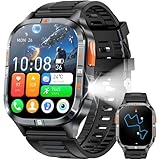
- BUILT-IN GPS & COMPASS– This military smartwatch features high-precision GPS to pinpoint your location while hiking, cycling, or traveling, keeping you safely on track without extra gear. Tap the compass icon and it locks your bearing within three seconds—engineered for pro-level outdoor adventures like camping, climbing, and trekking.
- BLUETOOTH CALLING & MESSAGES – Powered by the latest Bluetooth tech, the men’s smartwatch lets you answer or make calls right from your wrist—no need to pull out your phone. Get real-time alerts for incoming texts and app notifications so you never miss an invite. (Replying to SMS is not supported.)
- BIG SCREEN & DIY VIDEO WATCH FACE – The 2.01" military-spec display is dust-proof, scratch-resistant, and forged from high-strength glass with an aluminum alloy bezel, passing rigorous dust and abrasion tests so the screen stays crystal-clear. Upload a short family video to create a dynamic, one-of-a-kind watch face that keeps your memories alive.
- 24/7 HEALTH MONITORING – Equipped with a high-performance optical sensor, this Android smartwatch tracks heart rate and blood-oxygen levels around the clock. It also auto-detects sleep stages (deep, light, awake) for a complete picture of your health, ensuring you always know how your body is doing.
- MULTI SPORT MODES & FITNESS TRACK – Choose from running, cycling, hiking, basketball, and more to log every workout. Set goals, monitor progress, and sync data to the companion app. Bonus tools include photo gallery, weather, alarm, stopwatch, flashlight, hydration reminder, music/camera remote, find-my-phone, mini-games, and other everyday essentials.
The Ultra 2’s larger display is excellent for quick glances, but touch navigation becomes less reliable in rain, cold, or while wearing gloves. Apple mitigates this with the Action Button, though it cannot replace full button-driven map control.
Material choices also influence confidence. Both watches are rugged, but Garmin’s interface feels designed for continuous interaction in adverse conditions rather than occasional checks.
Navigation as a Training Tool vs a Smart Feature
Garmin integrates navigation directly into training logic. Pace, heart rate, elevation, and route context coexist on the same screens, reinforcing decision-making during effort rather than after the fact.
Apple treats navigation as a powerful feature layered onto workouts. It works well for exploration and casual adventure, but it remains adjacent to training rather than central to it.
If navigation is part of how you structure performance and manage energy, the Fenix E feels purpose-built. If navigation supports the experience rather than defining it, the Ultra 2 remains compelling.
Health, Recovery & Wellness Tracking Compared
After navigation and training logic, the real separation between these two watches emerges in how they interpret strain, recovery, and day‑to‑day physiological readiness. Both collect a lot of data, but they answer very different questions with it.
Garmin focuses on preparedness and load management over days and weeks. Apple emphasizes health visibility, trends, and integration with a broader medical and lifestyle ecosystem.
Heart Rate Accuracy and Sensor Behavior
Both watches use advanced optical heart rate sensors with continuous background sampling, and in steady-state efforts they perform similarly well. During running, hiking, and long aerobic sessions, real‑world accuracy is consistently strong on both, especially when worn snugly on the wrist.
The difference appears during intervals and recovery windows. Garmin’s Fenix E prioritizes stability and trend consistency, smoothing spikes to preserve clean training metrics. Apple’s Ultra 2 is more reactive, showing faster rises and drops, which benefits real‑time awareness but can introduce noise in structured training analysis.
For athletes who regularly pair a chest strap, Garmin’s ecosystem is more tightly integrated with external sensors across all metrics. Apple supports Bluetooth straps well, but deeper training calculations still favor Apple’s own optical data.
Recovery Metrics and Readiness Scoring
Garmin’s recovery framework is one of its strongest differentiators. Training Readiness combines sleep quality, overnight HRV status, acute training load, stress, and recovery time into a single daily score that actually changes how the watch recommends you train.
Recovery Time is explicit and unapologetically directive. After a hard session, the Fenix E tells you how many hours to wait before your next intense workout, and it adjusts dynamically if sleep or stress data changes.
Apple does not present recovery as a single authoritative metric. Instead, it distributes insight across trends like resting heart rate, HRV, sleep stages, and, more recently, Training Load summaries, leaving interpretation to the user rather than the watch.
HRV: Central Metric vs Background Signal
Garmin treats heart rate variability as foundational. Overnight HRV status establishes a rolling baseline and flags when your nervous system is strained, balanced, or suppressed, directly influencing readiness and training suggestions.
On the Ultra 2, HRV is tracked passively and visualized cleanly in the Health app. It is accurate and useful, but it does not actively steer workouts or recovery guidance unless the user engages with the data themselves.
For endurance athletes managing cumulative fatigue, Garmin’s HRV integration feels actionable. For users interested in long‑term wellness or stress awareness, Apple’s approach is informative without being prescriptive.
Sleep Tracking and Overnight Insights
Both watches deliver reliable sleep stage detection, including REM, deep, and light sleep, along with overnight heart rate trends. Comfort matters here, and while both are large watches, Apple’s flatter caseback and softer strap options often feel less intrusive in bed.
Garmin extends sleep data into coaching. Sleep Score, Sleep Coach suggestions, and nap detection feed directly into recovery and readiness metrics, reinforcing the idea that sleep is part of training, not just wellness.
Apple’s sleep tracking excels in visualization and longitudinal trends. Temperature deviation tracking and sleep consistency metrics integrate seamlessly with iOS health features, but they remain observational rather than performance‑driven.
Stress, Body Battery, and Daily Energy Management
Garmin’s Body Battery remains one of the most intuitive wellness tools in wearables. It models energy depletion and recharge throughout the day using heart rate variability, activity, and stress, making it easy to see how meetings, workouts, and poor sleep compound fatigue.
Stress tracking on the Fenix E is continuous and tightly linked to breathing prompts and recovery suggestions. It feels purpose-built for athletes balancing training with real life.
Apple tracks stress indirectly through HRV and mindfulness sessions. While less explicit, it integrates well with mental health features, guided breathing, and broader wellness initiatives within iOS.
Health Monitoring and Medical-Oriented Features
This is where Apple clearly expands the scope. The Ultra 2 includes ECG capability, irregular rhythm notifications, and deeper integration with clinical health records, depending on region. For users managing cardiovascular health alongside fitness, this adds meaningful value.
Garmin does not pursue medical diagnostics. Its health tracking is framed entirely around performance sustainability, fatigue management, and trend awareness rather than condition detection.
Blood oxygen monitoring exists on both, though its usefulness remains situational. Garmin integrates it into altitude acclimation and sleep analysis, while Apple positions it more as a general health signal.
Long-Term Insight vs Immediate Guidance
Garmin’s strength lies in telling you what today means for tomorrow’s training. The Fenix E continuously nudges behavior, adjusting suggested workouts, recovery expectations, and intensity targets based on your current state.
Apple excels at building a comprehensive health record over months and years. The Ultra 2 shines when paired with an iPhone as a central hub, making it easy to share data with clinicians, apps, or coaching platforms.
If you want your watch to actively manage load and recovery with minimal interpretation, Garmin leads. If you prefer to contextualize your health through rich data and ecosystem integration, Apple’s approach is compelling.
Who Each Approach Serves Best
For endurance athletes, multi‑sport competitors, and users training with intent week after week, Garmin’s recovery and wellness model feels like an extension of a coach. It prioritizes durability, consistency, and decision support over elegance.
For iPhone power users, health‑conscious athletes, and those balancing fitness with broader wellness goals, the Apple Watch Ultra 2 offers unmatched health visibility without demanding adherence to a rigid training framework.
Neither approach is inherently better. They simply reflect two philosophies: one centered on performance readiness, the other on holistic health intelligence.
Battery Life, Charging & Long-Duration Use Scenarios
The philosophical split outlined above becomes most obvious when you stop thinking in days and start thinking in weeks. Battery behavior shapes how these watches fit into training cycles, expeditions, and everyday routines far more than spec sheets suggest.
Where Apple optimizes around frequent interaction and ecosystem convenience, Garmin designs around endurance, predictability, and autonomy from chargers. The result is not just different runtimes, but fundamentally different usage patterns.
Everyday Battery Life and Real-World Expectations
In normal smartwatch mode, the Garmin Fenix E comfortably operates in the 10–14 day range depending on display configuration, sensor usage, and notification volume. With the always-on AMOLED enabled and regular health tracking active, most users will still see well over a week between charges.
The Apple Watch Ultra 2 delivers roughly 36 hours of typical use, extending to around 72 hours in Low Power Mode with reduced background activity. In practice, this means nightly or near-daily charging for users who track workouts, sleep, and notifications consistently.
This difference isn’t subtle. Garmin users tend to forget about charging altogether, while Apple users plan around it as part of daily device maintenance.
GPS Tracking and Training Load Impact
Under sustained GPS use, Garmin’s advantage widens significantly. The Fenix E can record multi-band GPS activities for 20–30 hours depending on accuracy mode, with extended tracking modes pushing well beyond that for ultrarunning, bikepacking, or multi-day hikes.
Apple’s Ultra 2 performs admirably for its class, offering up to 12 hours of high-accuracy GPS tracking, or around 17 hours in Low Power Mode. That’s sufficient for marathons, long trail runs, and most single-day adventures, but it becomes limiting for ultra-distance events or back-to-back long sessions.
For athletes training daily, Garmin’s battery consistency means no trade-off between accuracy and anxiety. With Apple, users often need to decide when to conserve power, particularly during heavy training weeks.
Multi-Day Adventures and Expedition Use
This is where Garmin’s design intent is unmistakable. The Fenix E supports expedition-style GPS modes that dramatically reduce power draw, enabling multi-day or even multi-week tracking with minimal interaction.
Paired with its robust offline mapping, breadcrumb navigation, and physical button controls, the watch remains usable deep into long trips without access to power. It feels purpose-built for environments where charging is uncertain or impossible.
The Apple Watch Ultra 2 can support overnight trips and short expeditions, especially with a battery pack. However, its reliance on frequent charging and touch-first interaction makes it less self-sufficient in truly remote scenarios.
Charging Speed, Convenience, and Habits
Apple counters its shorter battery life with fast, predictable charging. The Ultra 2 can recover a substantial portion of its battery in under an hour, making top-ups during showers or desk time genuinely effective.
Garmin’s charging is slower by comparison, often taking closer to 90 minutes for a full charge. The trade-off is that charging happens far less often, and partial charges still deliver days of use.
There’s also a psychological difference. Apple users tend to integrate charging into daily routines, while Garmin users treat charging as an occasional task rather than a recurring obligation.
Battery Longevity and Long-Term Ownership
Battery degradation matters more on a device you charge daily. Over multiple years, the Apple Watch Ultra 2’s lithium-ion battery will inevitably show reduced capacity, potentially impacting usability unless replaced.
Garmin’s longer charge cycles place less cumulative stress on the battery over time. Combined with Garmin’s slower product refresh cadence and strong device support, the Fenix E often remains viable for many years without noticeable battery anxiety.
Rank #4

- 【Built-in GPS & Multi-System Positioning】Stay on track with the Tiwain smartwatch’s built-in GPS. Featuring military-grade single-frequency and six-satellite support (GPS, GLONASS, Beidou, Galileo, NAVIC, QZSS), this watch offers fast and accurate location tracking wherever you go. It also includes a compass, altimeter, and barometer, giving you real-time data on your altitude, air pressure, and position.
- 【Military-Grade Durability】Engineered to withstand the toughest conditions, the Tiwain smartwatch meets military standards for extreme temperatures, low pressure, and dust resistance. Crafted from tough zinc alloy with a vacuum-plated finish, this watch is also waterproof and built to resist wear and tear. The 1.43-inch AMOLED HD touchscreen offers clear visibility in all environments, and the watch supports multiple languages for global users.
- 【170+ Sport Modes & Fitness Tracking】Track your fitness journey with 170+ sport modes, including walking, running, cycling, hiking, basketball, and more. Set exercise goals, monitor progress, and sync your data to the companion app. The smartwatch also offers smart features like music control, camera remote, weather updates, long-sitting reminders, and more.
- 【LED Flashlight for Outdoor Adventures】The Tiwain smartwatch comes equipped with a built-in LED flashlight that can illuminate up to 20 meters. Activate it with the side button for added convenience during nighttime activities or outdoor adventures.
- 【Comprehensive Health Monitoring】Monitor your health with real-time heart rate, sleep, blood pressure, and blood oxygen level tracking. The smartwatch will vibrate to alert you of any abnormal readings. You can also make and receive calls directly from the watch, and stay connected with message and app notifications (receive only, no sending capability) – perfect for when you’re driving or exercising.
For buyers thinking in terms of long-term value rather than annual upgrades, this difference becomes increasingly relevant.
Who Battery Life Actually Favors
If your watch is an extension of your phone, lives near a charger, and benefits from frequent top-ups, the Apple Watch Ultra 2’s battery profile is manageable and predictable. It prioritizes responsiveness, brightness, and connectivity over endurance.
If your watch is a training instrument, navigation tool, and off-grid companion, the Garmin Fenix E’s battery life changes how you plan activities altogether. It enables long-duration use without compromise or constant power management.
Neither approach is inherently superior, but they reward very different habits. Your tolerance for charging, and how far you roam from outlets, may ultimately matter more than any single feature.
Software Ecosystem, Apps & Platform Lock-In
Battery habits shape how often you interact with software, but ecosystem determines what that interaction actually delivers. This is where the Garmin Fenix E and Apple Watch Ultra 2 diverge most clearly, not just in features, but in philosophy and long-term consequences.
One platform is deliberately closed, deeply integrated, and app-driven. The other is purpose-built, data-centric, and largely self-contained.
Apple watchOS: Power Through Integration
The Apple Watch Ultra 2 runs watchOS, which is effectively an extension of iOS rather than a standalone system. Its greatest strength is how seamlessly it connects to an iPhone, sharing apps, notifications, services, and system intelligence with almost no friction.
Third-party app support is unmatched. From Strava and TrainingPeaks to Spotify, Audible, AllTrails, Slack, and countless niche fitness or productivity apps, the Apple Watch thrives on breadth rather than specialization.
This flexibility makes the Ultra 2 feel less like a sports watch and more like a wrist-mounted computer. You can customize complications, automate behaviors with Shortcuts, respond to messages, take calls, and control smart home devices without touching your phone.
Garmin OS: Purpose-Built and Performance-First
Garmin’s operating system on the Fenix E is far more focused and far less flashy. It is designed to serve training, navigation, and physiological analysis first, with smart features included only where they do not compromise reliability or battery life.
Garmin Connect is the real centerpiece of the ecosystem. It acts as a long-term training archive, health dashboard, and performance analysis tool, often providing deeper native insights than third-party apps on Apple’s platform.
While Garmin’s Connect IQ store does offer apps, watch faces, and data fields, the experience is narrower. Most users rely on Garmin’s built-in features rather than extending the watch through external software.
Training Data, Ownership, and Depth
Garmin treats training data as a long-term asset. Metrics like Training Load, Acute Load, Training Readiness, HRV Status, Body Battery, and performance trends persist across device upgrades and remain accessible years later.
The Fenix E can function as a complete training system without any subscriptions. Advanced metrics, navigation tools, and performance analytics are unlocked at purchase, not drip-fed through paid services.
Apple’s approach relies more heavily on third-party apps to unlock depth. While Apple’s raw sensor accuracy is excellent, especially for heart rate and GPS, long-term training analysis often depends on external platforms that may require subscriptions or fragmented data management.
Health Tracking Philosophy
Apple prioritizes health awareness and early detection. Features like ECG, blood oxygen, sleep staging, crash detection, and irregular heart rhythm notifications are tightly integrated into the Apple Health framework.
This makes the Ultra 2 extremely compelling for users focused on holistic health, safety, and medical-grade features, especially within Apple’s regulated ecosystem.
Garmin emphasizes continuous physiological monitoring rather than medical alerts. Its strength lies in trend-based insights over weeks and months, rather than moment-to-moment health notifications.
Platform Lock-In: iOS Dependency vs Cross-Platform Freedom
The Apple Watch Ultra 2 is completely locked to the iPhone. There is no Android compatibility, and switching platforms means abandoning the watch entirely.
This lock-in is not subtle. Features like iMessage, Apple Pay, Find My, and app syncing only function within Apple’s ecosystem, reinforcing long-term commitment to iOS hardware.
Garmin operates differently. The Fenix E works equally well with iOS and Android, with minimal feature disparity between platforms. Notifications, syncing, and data access remain consistent regardless of phone choice.
Daily Usability vs Expedition Reliability
On a day-to-day basis, the Apple Watch Ultra 2 feels alive. Animations are smooth, interactions are immediate, and the interface rewards frequent engagement.
The Fenix E feels quieter and more deliberate. Menus are utilitarian, button-driven, and designed to be used in gloves, rain, cold, or fatigue without accidental inputs.
For extended trips, remote training blocks, or navigation-heavy activities, Garmin’s software stability and offline-first design inspire confidence. For urban life, productivity, and constant connectivity, Apple’s ecosystem simply does more.
Update Cadence and Longevity
Apple delivers frequent watchOS updates, often annually introducing major interface changes and new features. While this keeps the platform feeling modern, it also means older hardware may eventually lose access to newer capabilities.
Garmin updates are slower and more conservative. When features are added, they tend to focus on training algorithms, sensor improvements, or navigation enhancements rather than cosmetic changes.
This slower pace aligns with Garmin’s longer hardware lifespan. A Fenix E purchased today is likely to receive meaningful updates and remain fully usable far longer than a typical smartwatch upgrade cycle.
Which Ecosystem Fits Which User
If your watch is an extension of your phone, relies on apps, messaging, music streaming, and productivity tools, and lives inside Apple’s ecosystem, the Ultra 2’s software experience is unmatched.
If your watch is a training instrument, data archive, navigation tool, and long-term performance companion that needs to work reliably regardless of phone brand or connectivity, the Fenix E’s ecosystem is more resilient and self-sufficient.
The decision here is less about features and more about commitment. Once chosen, each ecosystem quietly nudges you to stay, shaping how you train, recover, and interact with your watch over years rather than months.
Durability, Water Resistance & Adventure Readiness
Once you commit to an ecosystem, the next question is whether the hardware can survive the environments that ecosystem encourages you to explore. This is where the philosophical divide between Apple and Garmin becomes physical, visible in materials, sealing, controls, and how each watch behaves when conditions stop being friendly.
Both the Fenix E and Apple Watch Ultra 2 are positioned as no-compromise rugged flagships. The difference lies in whether that ruggedness is designed around occasional extremes or sustained exposure to them.
Case Construction and Materials
The Apple Watch Ultra 2 uses a 49 mm titanium case with a flat sapphire crystal, raised slightly by a protective bezel lip. Titanium keeps weight manageable while offering strong corrosion resistance, particularly useful for saltwater and humid environments. The case finishing is precise and industrial, with tight tolerances that feel closer to a dive instrument than a traditional smartwatch.
The Fenix E follows Garmin’s long-established tool-watch blueprint. Depending on configuration, you’re looking at a fiber-reinforced polymer case with a metal rear housing, paired with a steel or titanium bezel and a sapphire or hardened glass lens. It feels less refined to the touch, but more sacrificial, designed to pick up scratches without compromising structural integrity.
In real-world wear, the Ultra 2 feels denser and more monolithic, while the Fenix E feels lighter and more forgiving during long sessions. On multi-day outings, that weight difference becomes noticeable, especially when worn 24/7.
Buttons, Controls, and Glove-Friendly Operation
Control schemes are a critical part of durability, especially when touchscreens stop cooperating. The Apple Watch Ultra 2 relies primarily on its touchscreen, supported by a Digital Crown, side button, and the programmable Action button. Apple has improved touch responsiveness in rain and cold, but the interface still assumes visual attention and fine motor input.
The Fenix E is unapologetically button-first. Five physical buttons handle all navigation, activity control, mapping, and data screens, with the touchscreen acting as a convenience rather than a dependency. In gloves, snow, mud, or heavy rain, the Garmin remains fully operable without adaptation.
For adventure athletes, this isn’t a minor preference. It directly affects safety when you need to start navigation, mark a waypoint, or stop an activity under stress or fatigue.
Water Resistance and Dive Credibility
On paper, both watches offer 100 meters of water resistance, but their intent diverges beneath the surface. The Apple Watch Ultra 2 is certified to EN13319 and supports recreational diving to 40 meters with native depth tracking and third-party dive apps. The larger display, high brightness, and haptic alerts translate well underwater.
The Fenix E is swim-proof and surf-ready, excelling in pool swimming, open water tracking, and water sports where GPS accuracy matters more than depth readouts. While it supports pressure-based depth sensing for activities like snorkeling, it is not positioned as a dedicated dive computer in the same way Apple markets the Ultra line.
If scuba or frequent technical water use is part of your routine, Apple’s implementation is more polished. For triathletes, open water swimmers, and paddlers, Garmin’s tracking reliability and battery longevity are often more valuable.
Environmental Resistance and Thermal Limits
Apple rates the Ultra 2 to military environmental standards, including shock, vibration, and extreme temperatures. In practice, it handles heat and cold well during workouts, but battery performance still degrades faster in low temperatures, particularly when cellular features are active.
Garmin’s Fenix lineage is designed around prolonged exposure to temperature swings, altitude, and vibration. Battery chemistry, passive displays, and conservative power management help maintain usable runtime in cold conditions where OLED-based watches tend to struggle.
For alpine starts, winter ultras, or multi-day backcountry travel, this difference matters more than peak brightness or UI fluidity. The Garmin is built to remain predictable when conditions become unpredictable.
Straps, Mounting, and Wear Security
The Apple Watch Ultra 2 uses a proprietary lug system with adventure-focused bands like the Alpine Loop and Ocean Band. These are comfortable, well-engineered, and secure, but replacements are expensive and limited to Apple’s ecosystem.
The Fenix E uses standard quick-release or Garmin’s QuickFit system, opening the door to a wide range of third-party straps, from nylon and silicone to leather and metal. For expedition use, this flexibility makes field replacement and customization easier.
Long-term, strap availability becomes part of durability. A watch that survives years of abuse but relies on discontinued or costly bands loses practical resilience.
💰 Best Value

- Smart Watch with GPS and Offline Map: This smart watch connects to multiple satellite systems for accurate real-time positioning, and includes a professional-grade compass, altimeter, and barometer for precise data, ensuring you maintain your sense of direction in any outdoor environment. The map version supports downloading offline maps; select a route or destination to view the route even without a signal, eliminating the risk of getting lost.
- Bluetooth Call & Message Functionality: This smart watches for men allows you to make and receive calls; receive text and social media notifications (Facebook, WhatsApp, Instagram, Twitter, etc.); and reply to text messages with voice-to-text or set up quick replies (text reply functionality is available for Android phones).
- Sports & Health Monitoring: This 5ATM waterproof fitness watch supports over 100 sports modes and tracks daily activity data, calories, distance, steps, and heart rate. You can use it to monitor your health metrics (blood oxygen, heart rate, stress, and sleep), monitor your fatigue and mood, and perform PAI analysis. You can also use this smartwatch to set water intake and sedentary reminders. Stay active and healthy with this fitness tracker watch.
- Customizable Watch Faces & AI Functionality: This smart watch features a 1.46-inch HD touchscreen and over 100 downloadable and customizable watch faces. You can even use your favorite photos as your watch face. Equipped with AI technology, it supports voice descriptions in multiple languages to generate personalized AI watch faces. The watch's AI Q&A and AI translation features provide instant answers to questions and break down language barriers, making it an ideal companion for everyday life and travel.
- Large Battery & High Compatibility & More Features: This smart watch for android phones and ios phone features a large 550ml battery for extended battery life. It's compatible with iOS 9.0 and above and Android 5.0 and above. It offers a wealth of features, including an AI voice assistant, weather display, music control, camera control, calculator, phone finder, alarm, timer, stopwatch, and more. (Package Includes: Smartwatch (with leather strap), spare silicone strap, charging cable, and user manual)
Long-Term Wear and Battle Scars
After months of hard use, the Apple Watch Ultra 2 tends to show fewer visible scratches thanks to its flat sapphire and uniform titanium finish. When it does get damaged, however, repairs are costly and often require full unit replacement.
The Fenix E is more likely to pick up cosmetic wear, especially on the bezel, but those marks feel expected rather than alarming. Garmin’s design tolerates visible aging without affecting function, reinforcing its role as a long-term training instrument rather than a pristine gadget.
This difference reflects the broader ownership experience. Apple prioritizes structural integrity and visual durability, while Garmin prioritizes functional survival over time, even when aesthetics degrade.
Adventure Readiness in Context
The Apple Watch Ultra 2 is exceptionally tough for a smartwatch, and for many users it will handle every adventure they realistically attempt. It shines when rugged hardware is paired with modern smart features, fast performance, and deep iPhone integration.
The Fenix E feels purpose-built for people who regularly push beyond coverage, charging access, and predictable conditions. Its durability is less about surviving an impact and more about continuing to operate, record, and navigate without compromise when everything else becomes secondary.
Ownership Experience: Pricing, Longevity, Updates & Resale Value
All the hardware toughness and adventure readiness discussed so far ultimately feeds into a bigger question: what is it actually like to live with these watches for years, not just months. Pricing, software support, battery aging, and resale value quietly determine whether a flagship watch feels like a smart investment or a recurring upgrade cycle.
This is where the philosophical gap between Garmin and Apple becomes most obvious.
Upfront Pricing and What You’re Paying For
The Apple Watch Ultra 2 enters the market at a premium price that reflects Apple’s positioning as a do-everything flagship smartwatch. A significant portion of that cost goes toward the display quality, titanium case finishing, powerful chipset, and Apple’s tightly integrated ecosystem of apps and services.
The Garmin Fenix E is also expensive, but its pricing is more closely tied to hardware capability and training depth. Multi-band GPS, offline mapping, advanced endurance metrics, long battery life, and physical controls are the core value drivers, rather than third-party apps or smart features.
In practical terms, Apple charges for polish, performance, and ecosystem access, while Garmin charges for independence, sensor depth, and longevity in demanding conditions.
Battery Aging and Long-Term Usability
Battery degradation is one of the biggest long-term ownership differentiators. The Apple Watch Ultra 2 starts strong with impressive daily battery life for a smartwatch, but it remains a device designed around daily or near-daily charging.
As the battery ages, that charging dependency becomes more noticeable. After two to three years, many users find themselves charging earlier in the day, especially if workouts, cellular use, or navigation are involved.
The Fenix E operates on a very different curve. Its much larger battery and conservative power management mean that even after years of degradation, it typically remains usable for multi-day trips and long training blocks.
For endurance athletes and expedition users, this buffer matters. The watch remains functional long after peak battery health has passed, rather than feeling compromised.
Software Updates and Feature Longevity
Apple leads in update cadence and polish. The Ultra 2 receives frequent watchOS updates that bring new features, UI refinements, and health tools, often in lockstep with iPhone releases.
The tradeoff is hardware dependency. Major new features are sometimes restricted to newer processors, meaning older models gradually fall behind even if the hardware is still physically sound.
Garmin’s update philosophy is slower but more durable. The Fenix E receives firmware updates that prioritize stability, sensor improvements, and incremental training features over visual changes.
Garmin is also more consistent about supporting hardware long-term. Even as new models launch, older Fenix watches continue receiving meaningful updates for years, preserving core functionality rather than nudging users toward replacement.
Ecosystem Lock-In and Platform Compatibility
Ownership experience is inseparable from ecosystem commitment. The Apple Watch Ultra 2 is iPhone-only, with no exceptions. If you leave iOS, the watch becomes unusable.
For iPhone power users, this is rarely a concern and often a benefit. Apple’s ecosystem delivers seamless syncing, fast app performance, tight health data integration, and a level of convenience Garmin simply does not match.
The Fenix E works across iOS and Android with near feature parity. While smart features are more limited on iPhone due to Apple’s restrictions, core training, navigation, and health tracking remain intact regardless of phone choice.
This flexibility increases the watch’s usable lifespan, especially for users who change phones or platforms over time.
Repairs, Service, and Real-World Longevity
Apple’s service model prioritizes replacement over repair. While AppleCare+ offers peace of mind, out-of-warranty repairs are expensive, and many issues result in full unit swaps rather than component fixes.
Garmin’s service experience is quieter but often more forgiving. Garmin has a reputation for reasonable out-of-warranty replacement offers and long-term parts availability, especially for flagship outdoor watches.
Neither device is designed for user repair, but Garmin’s approach tends to support longer ownership cycles with fewer forced upgrade moments.
Resale Value and Secondary Market Strength
The Apple Watch Ultra 2 holds resale value well in the short term, especially while current-generation. Demand remains strong due to Apple’s brand power and ecosystem lock-in.
However, resale drops sharply once a new Ultra generation launches or major watchOS features become hardware-gated. Older Apple Watches age faster in perceived value, even if they still function well.
The Fenix E depreciates more slowly over time. Garmin watches retain appeal for years because their core features remain relevant, and newer models rarely make older ones obsolete overnight.
For buyers who plan to resell or upgrade later, Garmin’s slower depreciation curve often results in better long-term value.
Which Ownership Model Fits Your Reality
If you upgrade frequently, live in Apple’s ecosystem, and value software polish over maximum lifespan, the Apple Watch Ultra 2 delivers a premium ownership experience with minimal friction.
If you buy a watch intending to use it hard for years, across training cycles, adventures, and possibly multiple phones, the Fenix E feels less like a gadget and more like equipment.
Neither approach is universally better. They simply reward different ownership mindsets, and understanding that difference is critical before choosing which wrist companion you’ll rely on long after the novelty wears off.
Which Watch Is Right for You? Buyer Profiles & Final Verdict
By this point, the differences between the Fenix E and Apple Watch Ultra 2 should feel less about specs and more about philosophy. Both are premium, rugged smartwatches, but they reward very different habits, priorities, and ownership expectations. The right choice depends on how you train, where you spend time, and how tightly your watch needs to integrate into the rest of your tech life.
The Endurance Athlete and Structured Trainer
If your training revolves around long runs, cycling blocks, triathlon plans, or multi-day load management, the Garmin Fenix E is the clear fit. Its training metrics are deeper, more transparent, and designed to be acted on rather than merely observed. Battery life alone changes how you train, removing anxiety around ultra-long sessions, back-to-back days, or travel weeks.
The Fenix E also feels purpose-built on the wrist during workouts. Physical buttons remain reliable in rain, gloves, or fatigue, and the interface stays consistent whether you are pacing an interval or navigating mid-run. For athletes who care more about progression than notifications, Garmin’s ecosystem remains unmatched.
The Outdoor Adventurer and Expedition User
For hikers, mountaineers, backcountry skiers, and anyone who routinely leaves cell service behind, the Fenix E again has the edge. Offline mapping, breadcrumb navigation, multi-band GPS endurance, and expedition battery modes make it feel like genuine outdoor equipment. It is a watch you trust to last the entire trip, not just the day.
The Ultra 2 is rugged and capable, but it still assumes frequent charging and an iPhone nearby. For shorter adventures or guided routes it performs well, yet it lacks the same sense of self-reliance. If your trips span days instead of hours, Garmin’s approach aligns better with real-world demands.
The iPhone Power User and Smartwatch-First Buyer
If you live inside Apple’s ecosystem, the Apple Watch Ultra 2 is extraordinarily compelling. Notifications, calls, Siri, Apple Pay, music, and third-party apps work with a level of polish Garmin simply does not match. The OLED display is brighter, more interactive, and better suited to daily smartwatch tasks.
For this buyer, fitness is important but not the sole reason for wearing a watch. The Ultra 2 integrates seamlessly into work, travel, and social life, feeling like an extension of the iPhone rather than a separate device. As long as daily charging fits your routine, Apple’s experience is hard to beat.
The Everyday Fitness User Who Trains Consistently
If you work out several times a week, care about heart rate trends, sleep quality, and recovery, but are not chasing ultra events, this is the most nuanced decision. The Apple Watch Ultra 2 delivers excellent health tracking, strong workout accuracy, and unmatched ease of use. It makes fitness frictionless and approachable.
The Fenix E, however, offers more context and long-term insight if you enjoy understanding the why behind your numbers. It asks more of the user, but rewards curiosity with clearer patterns over time. The choice here depends on whether you want guidance served simply, or data you can actively explore.
The Multi-Device or Platform-Agnostic User
If you switch between iPhone and Android, or expect to do so in the future, the Fenix E is the safer investment. Garmin’s platform independence ensures your watch remains fully functional regardless of phone brand. It also avoids the ecosystem lock-in that defines Apple’s wearable strategy.
The Ultra 2 only reaches its full potential when paired with an iPhone. Outside that environment, it is effectively unusable. Buyers who value flexibility or long-term compatibility should factor this in heavily.
The Value-Oriented Long-Term Owner
For users who plan to keep their watch for many years, the Fenix E offers stronger long-term value. Its slower depreciation, durable design, and evergreen feature set mean it ages gracefully. Even as newer models arrive, it remains relevant rather than feeling left behind.
The Apple Watch Ultra 2 feels more disposable by comparison, despite its premium build. Software evolution and hardware gating shorten its perceived lifespan, encouraging upgrades more frequently. If you view your watch as equipment rather than a yearly tech refresh, Garmin’s model makes more sense.
Final Verdict
The Garmin Fenix E is the better watch for athletes, adventurers, and anyone who prioritizes battery life, training depth, and long-term ownership over convenience. It excels when pushed hard, used daily, and relied on far from chargers and cell towers. It feels less like a gadget and more like a tool.
The Apple Watch Ultra 2 is the better watch for iPhone power users who want top-tier smartwatch functionality alongside strong fitness and health tracking. Its display, app ecosystem, and seamless integration make it unmatched as a daily wearable. As long as charging often and upgrading periodically are acceptable, it delivers a refined, modern experience.
Neither watch is universally superior. The right choice comes down to how you train, how you live, and how long you expect your watch to serve you. Choose the one that fits your reality, not just your aspirations, and you will end up with a wrist companion that earns its place every day.