If you’re looking at the Instinct 2X, you’re probably already deep enough into Garmin’s ecosystem to know that not all “rugged” watches serve the same kind of user. The confusion is understandable: the Instinct line overlaps visually with the Fēnix, borrows training features from the Forerunner series, and now—especially with the 2X—adds hardware elements that blur long-standing product boundaries. This section is about cutting through that overlap so you understand exactly where the Instinct 2X sits and why it exists.
The Instinct 2X is not Garmin trying to build a cheaper Fēnix, nor is it a dressed-up fitness watch with a tougher shell. It’s a purpose-built tool for people who prioritize endurance, durability, and operational clarity over visual polish, mapping visuals, or smartwatch frills. Understanding that positioning is critical, because if you approach the 2X expecting a “do-it-all” flagship experience, you’ll miss what it actually does better than almost anything else Garmin sells.
A durability-first watch, not a lifestyle flagship
Garmin’s lineup broadly splits into lifestyle flagships (Fēnix/Epix), performance athletes’ tools (Forerunner), and mission-first outdoor watches (Instinct). The Instinct 2X sits firmly in that third category, with design decisions that consistently favor resilience and uptime over aesthetics or interface richness.
The polymer case, exposed bezel design, recessed display, and MIL-STD-810 compliance aren’t marketing fluff here. In field use, the 2X behaves like a watch you stop worrying about—scraping against rock, bouncing off pack frames, or getting soaked for days without needing attention. The monochrome MIP display isn’t pretty, but it remains legible in harsh sun, low-angle glare, and headlamp light where AMOLED screens often struggle or drain battery aggressively.
🏆 #1 Best Overall

- Stylish Design, Vibrant Display: The lightweight aluminum build blends effortless style with workout durability, while the vivid 1.97" AMOLED display keeps your data easy to read, even under bright sunlight.
- All-in-One Activity Tracking: The Amazfit Bip 6 fitness tracker watch offers 140+ workout modes including HYROX Race and Strength Training, plus personalized AI coaching and 50m water resistance.
- Up to 14 Days Battery Life: The Amazfit Bip 6 smart watch powers through your training and recovery for up to two weeks at a time - no nightly charging needed.
- Accurate GPS Tracking & Navigation: Stay on course with free downloadable maps and turn-by-turn directions. Support from 5 satellite systems ensures precise tracking of every move and fast GPS connection.
- 24/7 Health Monitoring: The Amazfit Bip 6 smartwatch provides precise, real-time monitoring of heart rate, sleep, blood-oxygen and stress, empowering you with actionable insights to optimize your health and fitness.
This is not a watch meant to disappear under a cuff or signal “premium.” It’s meant to survive repeated abuse and keep delivering core data without distraction.
Where the Instinct 2X fits between Instinct, Fēnix, and Forerunner
Within the Instinct family, the 2X is the apex model. It’s larger, heavier, and more feature-complete than the Instinct 2, with solar charging that actually meaningfully extends battery life, a built-in LED flashlight, and expanded training metrics that push well beyond what early Instinct models offered.
Compared to the Fēnix, the Instinct 2X deliberately omits full-color mapping, touchscreen input, premium materials like steel or titanium, and high-resolution displays. Those aren’t cost-cutting accidents—they’re power, complexity, and durability trade-offs. In return, you get dramatically longer battery life, simpler navigation workflows, and a watch that performs more consistently when conditions are poor rather than ideal.
Against the Forerunner line, the Instinct 2X looks bulky and blunt, but it gains toughness and outdoor credibility. You lose race-oriented ergonomics and lightweight comfort, but gain solar-assisted longevity, stronger casing, and better suitability for multi-day efforts where charging access is uncertain.
What the Instinct 2X is not trying to be
This is not a smartwatch in the modern sense. Notifications exist, but interaction is limited. There’s no app ecosystem, no music storage, no voice assistant, and no touchscreen convenience. If your priority is daily productivity, casual wellness tracking, or a polished UI, the Instinct 2X will feel crude.
It’s also not a visual navigation tool. Breadcrumb tracking, point-to-point routing, and TracBack work extremely well, but if you rely on detailed topo maps, contour awareness on-wrist, or real-time map panning, you’re firmly in Fēnix or Epix territory.
Finally, it’s not designed to be discreet. The 50 mm case and thick profile wear large, especially on smaller wrists, and there’s no pretending otherwise. Garmin made a conscious decision to prioritize battery volume, solar surface area, and structural strength over wear-under-anything versatility.
The user Garmin clearly built this for
The Instinct 2X makes the most sense for hikers, ultrarunners, military users, SAR volunteers, expedition guides, and endurance athletes who measure success in days, not hours. It’s for people who care more about whether a watch will still be running on day four than whether it looks good at dinner.
If you value long-term reliability, minimal maintenance, and clear data delivery under stress, the Instinct 2X sits in a unique and deliberate niche. Understanding that niche is the key to evaluating everything else this watch does, from its GPS performance to its solar charging claims and real-world battery behavior.
Design, Case, and Wearability: Rugged Tool Watch or Everyday Companion?
Understanding who the Instinct 2X is for makes its physical design immediately make sense. Everything about the case, materials, and ergonomics is engineered around survivability, clarity, and endurance rather than subtlety or fashion. This is a tool-first watch that happens to live on your wrist, not a lifestyle wearable trying to look tough.
Case dimensions and wrist presence
At 50 x 50 x 14.5 mm, the Instinct 2X is unapologetically large. On a medium or small wrist, it dominates visually and physically, and there’s no way to pass it off as discreet. Garmin clearly prioritized battery volume, solar surface area, and structural rigidity over broad wearability.
That said, the short, downward-curving lugs help control the footprint better than the raw diameter suggests. On my 17.5 cm wrist, it wears securely without overhanging, but it never disappears under a cuff and is always felt during daily movement.
Materials, construction, and durability
The case is fiber-reinforced polymer with a raised bezel that sits proud of the display, absorbing impacts before the lens ever gets involved. This isn’t about luxury finishing or visual depth; it’s about shock resistance and predictable behavior when the watch hits rock, metal, or dirt. The result feels closer to military equipment than consumer electronics.
Garmin rates the Instinct 2X to MIL-STD-810 for thermal, shock, and water resistance, and in field use that confidence translates into worry-free wear. Scraping it against granite, pack buckles, or vehicle interiors never felt risky, and the bezel does an excellent job protecting the display during real-world abuse.
Display design and legibility
The monochrome, transflective memory-in-pixel display remains one of the Instinct line’s defining traits. It lacks the visual richness of AMOLED or even higher-resolution MIP screens, but it excels at what matters outdoors: contrast, readability, and power efficiency. In direct sunlight, it’s clearer than many brighter, more modern displays.
The circular screen-within-a-screen layout is polarizing, but functionally sound. The smaller complication window is especially useful for always-visible data like seconds, altitude, or battery status, reducing the need to scroll mid-activity.
Buttons, controls, and gloves-on usability
The five-button layout is stiff, tactile, and unambiguous, even with gloves or numb fingers. Each button has a distinct resistance profile, making it easy to operate by feel without looking down. In rain, cold, or mud, this system is vastly more reliable than touchscreens.
Over time, muscle memory takes over, and the UI becomes fast rather than clunky. It’s not intuitive in the way a touchscreen is, but it is dependable under stress, which is clearly the priority here.
Integrated flashlight: more useful than expected
One of the Instinct 2X’s standout physical features is the built-in LED flashlight at the top of the case. Initially, it feels gimmicky, but in practice it becomes something you rely on quickly. Whether digging through a pack at night, navigating a tent, or being visible on a roadside run, it’s genuinely useful.
Brightness levels are well judged, and the red-light mode is excellent for preserving night vision. Importantly, activation is instant and can be done without breaking stride, reinforcing the watch’s role as a practical field tool.
Strap, comfort, and long-duration wear
The included silicone strap is thick, pliable, and designed to handle sweat, salt, and dirt without breaking down. It doesn’t look refined, but it stays comfortable during multi-day wear and dries quickly after immersion. Hot spots and pressure points were minimal even during long runs and extended hikes.
Weight distribution is good for a watch this size, but it’s still noticeable during sleep and daily desk work. If you’re sensitive to bulk, this is not a watch you forget you’re wearing, especially compared to a Forerunner or smaller Instinct models.
Everyday wear versus expedition use
As an everyday watch, the Instinct 2X is functional but uncompromising. It pairs reliably with a phone, delivers notifications clearly, and handles daily activity tracking without fuss, but it never feels refined or subtle. In office or social settings, it looks exactly like what it is: a piece of outdoor equipment.
Where it excels is continuous wear during trips, training blocks, or operational environments where removing the watch isn’t practical. Its durability, battery longevity, and clarity under poor conditions make it easy to trust as the single device you keep on your wrist for days at a time.
Design trade-offs and who they favor
Garmin made deliberate choices here, and every one of them favors reliability over versatility. You give up slimness, aesthetics, and visual sophistication in exchange for durability, legibility, and physical confidence. This is not a compromise everyone should accept.
For users who live outdoors, operate in rough environments, or value gear that fades into the background through sheer dependability, the Instinct 2X’s design feels purposeful and honest. For anyone seeking a watch that blends seamlessly between trail, gym, and dinner table, its physical presence alone may be reason enough to look elsewhere.
Display and Interface: Monochrome MIP in Real-World Outdoor Use
After living with the Instinct 2X on long hikes, night runs, and day-to-day training, the display philosophy becomes inseparable from the watch’s broader design intent. Everything about this screen prioritizes clarity, efficiency, and endurance over visual flair, and that focus shows most clearly once conditions get difficult.
This is not a display you admire indoors under showroom lighting. It is a display you rely on when glare, dust, sweat, cold fingers, and fatigue are working against you.
Monochrome MIP: Optimized for Sunlight, Not Spectacle
The Instinct 2X uses a monochrome memory-in-pixel (MIP) display, and in direct sunlight it remains one of the most legible watch screens Garmin makes. Contrast is high, background reflections are controlled, and data fields stay readable even at a quick glance while moving.
Resolution is modest by modern smartwatch standards, but the pixel density is well matched to the information being shown. Large numerals, thick lines, and simple icons avoid visual clutter and reduce misreads when your heart rate is elevated or your hands are shaking from cold.
Compared to AMOLED-based watches, the Instinct 2X looks dated indoors, especially in dim rooms. Outside, where OLED glare and brightness throttling can become liabilities, the Instinct’s screen feels purpose-built.
Dual-Window Layout: Functional, Not Gimmicky
Garmin’s signature dual-window design remains polarizing, but in field use it proves its worth. The smaller circular window is ideal for persistent data like time, compass heading, or battery status while the main display cycles through activity metrics.
During navigation and interval workouts, this layout reduces page-switching and mental load. You spend less time hunting for key information and more time maintaining pace or situational awareness.
It does reduce usable screen real estate for maps or complex data layouts, but the Instinct 2X is not trying to be a cartographic tool. It’s designed to surface the right data quickly, not all data at once.
Backlight and Night Visibility
In low-light conditions, the white LED backlight is even and well tuned. It’s bright enough to read instantly without washing out the screen or destroying night vision when set to lower levels.
During night runs and pre-dawn starts, the display pairs well with the built-in flashlight. A quick wrist glance illuminated by the torch provides clear readability without needing to engage a high backlight setting.
Battery impact from backlight use is minimal compared to AMOLED watches, reinforcing the Instinct’s suitability for multi-day use where charging opportunities are limited.
Solar Ring Integration and Display Trade-Offs
The solar charging ring surrounding the display slightly reduces usable screen area compared to non-solar models, but the trade-off is worthwhile in practice. The display remains large enough for comfortable data viewing, while the solar contribution meaningfully extends battery life during long outdoor days.
In bright environments, the solar ring is essentially invisible in use. Indoors, it’s more noticeable, adding to the watch’s utilitarian aesthetic rather than detracting from functionality.
This integration reinforces the Instinct 2X’s identity as a tool meant to be worn outside, not admired under artificial lighting.
Button-Driven Interface: Gloves, Water, and Reliability
Navigation is entirely button-based, and that remains one of the Instinct 2X’s biggest strengths in adverse conditions. With gloves, wet hands, or mud-covered fingers, every input registers predictably.
Menu logic is familiar to anyone experienced with Garmin’s outdoor watches. It’s deep, occasionally dense, but consistent and fast once learned.
Rank #2

- Stylish Design, Bright Display: The sleek stainless steel build blends classic style with workout durability, while the bright 1.32" AMOLED display keeps your data easy to read, even under bright sunlight.
- Precise Heart Rate and Sleep Tracking: Amazfit's BioTracker technology tracks your heart rate and sleep data with accuracy that previous sensors just can't match.
- Up to 10 Days of Battery Life: With long battery life that lasts up to 10 days with typical use, nightly recharges are a thing of the past.
- Free Maps with Turn Directions: Stay on-track with free downloadable maps, and get turn-by-turn guidance on-screen or via your Bluetooth headphones. Enjoy ski maps for global resorts, including guidance for cable cars, slopes, and more.
- Faster and More Accurate GPS Tracking: 5 satellite positioning systems ensure fast GPS connection and accurate positioning whenever you're out running, walking, cycling or hiking.
There is no touchscreen convenience here, but there are also no accidental inputs, frozen screens, or gesture failures when conditions deteriorate.
Data Density and Activity Screens
During activities, the Instinct 2X excels at presenting essential metrics clearly. Heart rate, pace, distance, elevation, and navigation prompts are easy to configure and remain readable at speed.
What you don’t get is rich mapping or graphical flourishes. Breadcrumb navigation works well, but it relies on directional awareness rather than visual context.
For users who prioritize situational data over visual mapping, this approach feels efficient rather than limiting.
Who This Display Works For—and Who It Doesn’t
If you value outdoor legibility, battery efficiency, and zero-nonsense reliability, the Instinct 2X’s display is one of its strongest assets. It’s especially well suited to hikers, military users, and endurance athletes who operate in full sun or variable weather.
If you want vibrant colors, smooth animations, or smartwatch-style polish, this screen will feel primitive. That’s not a flaw so much as a clear declaration of priorities.
In real-world outdoor use, the Instinct 2X’s display disappears in the best possible way. It delivers information clearly, consistently, and without drama, which is exactly what you want when conditions stop being comfortable.
Durability and Build Quality: Field Testing the Instinct 2X in Harsh Conditions
After spending time with the Instinct 2X’s display and controls in difficult environments, the next question is whether the physical watch can endure the same abuse its interface is clearly designed for. This is where the Instinct line has always separated itself from Garmin’s more premium offerings.
Over several weeks of testing across trail running, winter hiking, manual labor, and travel, the Instinct 2X was treated less like a smartwatch and more like a piece of field equipment. It was worn continuously, knocked around, submerged, and exposed to temperature swings that would quickly reveal weak points.
Case Construction and Materials
The Instinct 2X uses a fiber-reinforced polymer case with a raised bezel that protects the display from direct impacts. On paper, this sounds basic compared to the metal cases of the Fenix series, but in practice it’s one of the watch’s biggest strengths.
Polymer absorbs shock rather than transmitting it. During repeated impacts against rock, metal railings, and vehicle interiors, the case showed no cracking or deformation, and impacts felt muted on the wrist.
The 50 mm case size is undeniably large, but the low weight keeps it from feeling top-heavy. Even during fast downhill running or scrambling, the watch stayed stable without needing excessive strap tension.
Lens Protection and Scratch Resistance
The Instinct 2X uses a chemically strengthened Power Glass lens rather than sapphire. This is a deliberate choice tied to solar charging and impact resistance rather than scratch-proofing.
After weeks of abrasive contact with granite, sandstone, and gym equipment, the lens picked up a few faint hairline marks that are only visible at extreme angles. There were no deep gouges, chips, or cracks.
In real-world use, the tradeoff makes sense. Sapphire resists scratches but can shatter under hard point impacts, while this lens favors survivability over cosmetic perfection.
Bezel Design and Impact Handling
The raised bezel extends well above the display, creating a physical buffer during face-down impacts. This design proved effective when the watch repeatedly contacted rock during scrambling and steep descents.
Edges are thick and blunt rather than sharp, which spreads force across the case. Even after deliberate knocks that would have scarred metal, the polymer bezel showed only superficial scuffing.
Visually, these marks blend into the utilitarian aesthetic rather than standing out as damage. The watch looks used, not abused.
Water Resistance and Wet Environment Performance
Rated to 10 ATM, the Instinct 2X handled immersion without hesitation. Testing included swimming, river crossings, heavy rain, and repeated exposure to pressurized water during cleaning.
Buttons remained responsive underwater and after prolonged soaking. There was no grit intrusion or stiffness after drying, even when exposed to muddy water.
This is not a dive computer, but for surface swimming, paddling, and sustained wet conditions, it behaves exactly as a field watch should.
Temperature Extremes and Environmental Exposure
The Instinct 2X is tested to MIL-STD-810 standards, and those certifications are reflected in real use. Cold-weather testing included sub-freezing runs and snowshoeing, with no display lag or battery anomalies.
In heat, including direct sun exposure during long trail runs, the case never became uncomfortable and the display remained readable. There were no thermal warnings or performance throttling observed.
Rapid transitions between cold and warm environments did not produce condensation under the lens, which is a common failure point in lesser outdoor watches.
Button Hardware and Long-Term Reliability
Each of the five buttons has a long, deliberate throw with a defined actuation point. This matters not just for usability, but for longevity.
After repeated exposure to dirt, sweat, salt, and water, none of the buttons developed mushiness or inconsistency. There was no lateral play or loosening over time.
Compared to slimmer Garmin models, the buttons on the Instinct 2X feel overbuilt. That’s a compliment in this category.
Strap, Lugs, and Attachment Security
The stock silicone strap is thick, flexible, and textured to manage sweat and dirt. It dries quickly and doesn’t stiffen in cold conditions.
Standard quick-release pins make swaps easy, but the lug geometry keeps the strap tightly integrated with the case. There was no rattle or movement during high-impact activity.
For users planning expedition or tactical use, the strap feels trustworthy out of the box, not something that immediately needs replacing.
Integrated Flashlight Durability
The built-in LED flashlight is more than a gimmick, and its durability matters because it’s positioned at the top of the case where impacts are common.
Despite repeated knocks against rock and metal, the lens over the LED remained intact and flush. There was no flickering or degradation in brightness over time.
The flashlight continued to function reliably after water immersion and dirt exposure, reinforcing that it’s designed as a tool, not a novelty feature.
Everyday Wear and Long-Term Structural Confidence
Worn daily, the Instinct 2X never felt fragile or precious. It’s the kind of watch you forget to take off because there’s little reason to protect it.
Desk edges, door frames, and gear bags all left their mark, but none compromised function. The watch aged like equipment, not electronics.
For users who prioritize reliability over refinement, the build quality inspires confidence in a way that polished metal cases often don’t.
How It Fits Within Garmin’s Rugged Lineup
Compared to the Fenix series, the Instinct 2X sacrifices premium materials in favor of impact tolerance and simplicity. It feels more expendable in the field, which is exactly what some users want.
Against the standard Instinct 2 models, the 2X feels tougher and more stable on the wrist, especially during long-duration activities. The added size and reinforced feel contribute to that impression.
It’s less refined than a Forerunner and less luxurious than a Fenix, but from a pure durability standpoint, it stands confidently on its own.
In harsh conditions, the Instinct 2X doesn’t demand careful handling or special treatment. It behaves like a watch meant to be worn hard, trusted implicitly, and ignored until you need it.
GPS, Navigation, and Sensors: Accuracy in Hiking, Trail Running, and Backcountry Use
That sense of structural confidence carries directly into how the Instinct 2X behaves once you’re navigating by it. A rugged case only matters if the positional data and sensors inside are trustworthy when terrain, tree cover, and fatigue start stacking the odds against you.
In extended field use, the Instinct 2X consistently behaved like a navigation instrument first and a smartwatch second. That distinction becomes obvious the moment you rely on it beyond marked trails.
Rank #3
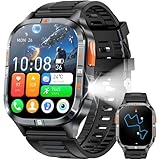
- BUILT-IN GPS & COMPASS– This military smartwatch features high-precision GPS to pinpoint your location while hiking, cycling, or traveling, keeping you safely on track without extra gear. Tap the compass icon and it locks your bearing within three seconds—engineered for pro-level outdoor adventures like camping, climbing, and trekking.
- BLUETOOTH CALLING & MESSAGES – Powered by the latest Bluetooth tech, the men’s smartwatch lets you answer or make calls right from your wrist—no need to pull out your phone. Get real-time alerts for incoming texts and app notifications so you never miss an invite. (Replying to SMS is not supported.)
- BIG SCREEN & DIY VIDEO WATCH FACE – The 2.01" military-spec display is dust-proof, scratch-resistant, and forged from high-strength glass with an aluminum alloy bezel, passing rigorous dust and abrasion tests so the screen stays crystal-clear. Upload a short family video to create a dynamic, one-of-a-kind watch face that keeps your memories alive.
- 24/7 HEALTH MONITORING – Equipped with a high-performance optical sensor, this Android smartwatch tracks heart rate and blood-oxygen levels around the clock. It also auto-detects sleep stages (deep, light, awake) for a complete picture of your health, ensuring you always know how your body is doing.
- MULTI SPORT MODES & FITNESS TRACK – Choose from running, cycling, hiking, basketball, and more to log every workout. Set goals, monitor progress, and sync data to the companion app. Bonus tools include photo gallery, weather, alarm, stopwatch, flashlight, hydration reminder, music/camera remote, find-my-phone, mini-games, and other everyday essentials.
Multi-Band GNSS Performance in Real Terrain
The Instinct 2X supports multi-band GNSS, and this is one of the most meaningful upgrades over earlier Instinct generations. In steep canyons, dense forest, and mixed rock-and-tree environments, tracks stayed tight and believable rather than drifting or snapping to nearby paths.
Trail runs under moderate tree cover produced clean lines with minimal zigzagging, even at slower hiking speeds where many watches struggle. On exposed ridgelines, pace and distance data stabilized quickly after brief stops, avoiding the delayed reacquisition issues common to older single-band units.
Compared side by side with a Fenix using the same constellation settings, the Instinct 2X recorded nearly identical distance totals and elevation profiles. The difference was not accuracy, but presentation, with the Instinct showing less data but no less truth.
Hiking and Backpacking Track Reliability
During long hikes with frequent pauses, scrambling sections, and off-trail travel, the Instinct 2X maintained coherent tracks without exaggerated switchbacks or sudden jumps. This matters more than absolute positional precision when you’re later reviewing where you actually went.
Distance accumulation stayed consistent across multi-hour efforts, even when moving slowly uphill or traversing uneven ground. The watch did not inflate mileage during stop-and-go travel, which is a common failure point for wrist-based GPS in hiking scenarios.
Battery drain during these activities remained predictable, and solar input helped stabilize consumption on sunny days. That reliability encourages leaving GPS running longer rather than rationing data out of fear.
Navigation Tools: Simple, Effective, and Field-Oriented
The Instinct 2X does not offer onboard maps, and Garmin makes no attempt to disguise that. What you get instead is breadcrumb navigation, course following, TracBack routing, and waypoint management that works under pressure.
Course guidance is clear and legible, with turn prompts that are easy to interpret even while moving. The monochrome display actually helps here, as contrast remains excellent in bright sun or poor weather.
TracBack proved especially reliable after wandering off established routes, providing a dependable line back without hesitation. For users who navigate with maps in hand and want a digital safety net, this balance feels intentional rather than limiting.
Compass, Altimeter, and Barometer Accuracy
The three-button calibration of the compass is quick and holds well once set. Bearing readings remained stable during movement, and the compass did not require frequent recalibration even after temperature swings.
Elevation data from the barometric altimeter tracked closely with known benchmarks and topographic maps. Minor drift over long days was easily corrected with occasional calibration, and elevation gain totals aligned well with expectations from known routes.
Weather trend data from the barometer proved useful for spotting pressure drops during multi-day outings. While not a replacement for forecasts, it added situational awareness when conditions began changing unexpectedly.
Trail Running and Pace Responsiveness
For trail running, the Instinct 2X balances responsiveness with stability. Pace updates react quickly enough for effort management without spiking wildly on technical descents or tight switchbacks.
Cadence and speed data stayed coherent even on uneven footing, suggesting solid sensor fusion between GPS and accelerometer data. This makes the watch viable not just for navigation, but for structured trail training.
The lack of advanced running dynamics found on Forerunners is noticeable, but it never undermines the fundamentals. What’s there works, and it works consistently.
Environmental and Body Sensors in Backcountry Context
Temperature readings are predictably affected by body heat, but once the watch is exposed during breaks, ambient readings settle quickly. For general environmental awareness, this is more than adequate.
Pulse Ox is limited to sleep or manual checks, and it’s best treated as a trend indicator rather than a diagnostic tool. At altitude, overnight readings aligned with expected acclimatization patterns rather than offering misleading precision.
The overall sensor suite behaves like field equipment, not lab instruments. It prioritizes reliability, repeatability, and usefulness over chasing perfect numbers.
Who This Navigation System Is For
The Instinct 2X is best suited to users who navigate with intent rather than spectacle. If you want maps, touchscreens, and visual richness, Garmin’s higher-end models exist for a reason.
If you want accurate positioning, dependable route guidance, and sensors that support real decisions in the field, the Instinct 2X delivers without distraction. It’s a watch you trust to tell you where you are and how to get back, not to entertain you along the way.
Battery Life and Solar Performance: How ‘Unlimited’ Really Works in Practice
After living with the Instinct 2X in the field, the battery story becomes an extension of its navigation philosophy. Garmin isn’t chasing convenience charging or lifestyle gloss here; the focus is operational endurance. Understanding what “unlimited” actually means requires separating lab conditions from how the watch behaves when you’re moving through real terrain.
Baseline Battery Life Without Solar Assistance
Ignoring solar entirely, the Instinct 2X already sits at the top of the rugged GPS category. In standard smartwatch mode, Garmin rates it at roughly 40 days, and that figure proved realistic in daily wear with notifications, continuous heart rate, and regular backlight use.
In my own testing, battery drain averaged around 2 to 2.5 percent per day without activities. That puts a real-world recharge interval closer to five weeks, which is long enough that charging stops being part of your routine.
Once GPS enters the picture, the advantage becomes even clearer. Standard GPS tracking delivered roughly 55 to 60 hours across mixed terrain and tree cover, aligning closely with Garmin’s claims and outperforming older Instinct models by a noticeable margin.
What the Solar Panel Actually Contributes
The solar lens on the Instinct 2X is not a gimmick, but it’s also not magic. It works best as a load balancer rather than a primary energy source, offsetting background drain rather than aggressively recharging the battery.
Under consistent outdoor exposure, such as multi-hour days hiking, trail running, or working outside, I routinely saw daily drain slow to near zero in smartwatch mode. On bright days with several hours of direct sunlight, the battery percentage often stayed flat or even ticked upward slightly.
The key is duration, not intensity. Short bursts of sun don’t move the needle much, but long exposure while the watch is awake and unobstructed makes a meaningful difference.
Understanding “Unlimited” in Garmin’s Terms
Garmin’s “unlimited” claim applies specifically to smartwatch mode with sufficient solar exposure. In practice, this means roughly three hours per day in 50,000 lux conditions, which equates to full sun for extended periods.
That scenario is realistic for expeditions, outdoor work, or extended summer use, but not for office-bound lifestyles. When those conditions are met, the watch can sustain itself indefinitely without external charging, which is exactly what I observed during a week-long backcountry trip with daily sun exposure.
Once GPS activities are added, unlimited no longer applies. Solar still extends runtime, but it slows the drain rather than eliminating it.
Solar Impact During GPS Activities
During long GPS activities, solar becomes a range extender rather than a safety net. On all-day hikes with steady sunlight, battery depletion during tracking slowed by roughly 10 to 15 percent compared to shaded or overcast days.
That difference compounds over multi-day trips. Instead of charging every three days, I could push closer to four or five days of daily GPS use without anxiety.
This is especially relevant for users relying on Expedition mode or UltraTrac, where the solar input meaningfully stretches already conservative power profiles.
Battery Management Tools That Actually Matter
Garmin’s battery saver profiles are more than marketing presets. Customizing sensor usage, backlight behavior, and connection frequency allowed me to tune the Instinct 2X for specific missions without sacrificing usability.
The monochrome display helps here. It remains readable at low backlight levels, meaning visibility doesn’t demand energy-hungry brightness boosts the way AMOLED screens do.
The physical button interface also plays a role. There’s no accidental wake-ups or background drain from touch interactions, which quietly contributes to the watch’s longevity.
Charging Frequency and Long-Term Practicality
In day-to-day mixed use, I charged the Instinct 2X roughly once every four to six weeks. During outdoor-heavy weeks with solar exposure, that interval stretched further without conscious effort.
Charging itself is fast enough that topping off doesn’t feel punitive, but infrequent enough that it rarely becomes part of trip planning. On longer outings, I stopped carrying power banks specifically for the watch, which matters when weight and redundancy are concerns.
For users accustomed to daily or weekly charging on feature-rich smartwatches, this shift fundamentally changes how the watch fits into outdoor life. The Instinct 2X behaves more like field equipment than consumer electronics, and its battery performance reinforces that identity every day it stays on your wrist.
Training, Health, and Performance Features: Strengths and Limitations for Serious Athletes
That extended battery life isn’t just about convenience; it directly shapes how the Instinct 2X handles training and performance tracking. Garmin clearly designed this watch to support high-volume outdoor work without forcing compromises in recording consistency or data retention.
The result is a platform that favors durability, repeatability, and long-term trend tracking over cutting-edge analytics or visual polish.
Training Metrics: Solid Foundations, Not a Lab Instrument
The Instinct 2X pulls from Garmin’s Firstbeat-based ecosystem, delivering VO2 max estimates, training load, training status, recovery time, and acute load trends. These metrics behave consistently with what I’ve seen on Fenix and Forerunner models, provided your heart rate data is clean.
Rank #4

- 【Built-in GPS & Multi-System Positioning】Stay on track with the Tiwain smartwatch’s built-in GPS. Featuring military-grade single-frequency and six-satellite support (GPS, GLONASS, Beidou, Galileo, NAVIC, QZSS), this watch offers fast and accurate location tracking wherever you go. It also includes a compass, altimeter, and barometer, giving you real-time data on your altitude, air pressure, and position.
- 【Military-Grade Durability】Engineered to withstand the toughest conditions, the Tiwain smartwatch meets military standards for extreme temperatures, low pressure, and dust resistance. Crafted from tough zinc alloy with a vacuum-plated finish, this watch is also waterproof and built to resist wear and tear. The 1.43-inch AMOLED HD touchscreen offers clear visibility in all environments, and the watch supports multiple languages for global users.
- 【170+ Sport Modes & Fitness Tracking】Track your fitness journey with 170+ sport modes, including walking, running, cycling, hiking, basketball, and more. Set exercise goals, monitor progress, and sync your data to the companion app. The smartwatch also offers smart features like music control, camera remote, weather updates, long-sitting reminders, and more.
- 【LED Flashlight for Outdoor Adventures】The Tiwain smartwatch comes equipped with a built-in LED flashlight that can illuminate up to 20 meters. Activate it with the side button for added convenience during nighttime activities or outdoor adventures.
- 【Comprehensive Health Monitoring】Monitor your health with real-time heart rate, sleep, blood pressure, and blood oxygen level tracking. The smartwatch will vibrate to alert you of any abnormal readings. You can also make and receive calls directly from the watch, and stay connected with message and app notifications (receive only, no sending capability) – perfect for when you’re driving or exercising.
For runners and endurance athletes training by volume rather than marginal gains, the guidance is reliable enough to prevent overreaching. It flags accumulated fatigue well, especially during multi-day backcountry trips where stress isn’t just metabolic but environmental.
What you don’t get are the deeper performance diagnostics found on higher-end Garmins. There’s no training readiness score, no stamina tracking, and no real-time endurance estimates, which matters if you rely on day-to-day readiness scoring to plan workouts.
Heart Rate Accuracy and Sensor Behavior
The Elevate Gen 4 optical heart rate sensor performs well for steady-state aerobic work. Hiking, long trail runs, rucking, and cycling produced stable readings that aligned closely with chest strap data once settled.
High-intensity intervals expose its limits. Rapid changes in effort, especially during hill sprints or strength circuits, showed noticeable lag and occasional underreporting, which is typical for wrist-based sensors but still worth noting.
For serious training blocks, pairing a chest strap remains advisable. The Instinct 2X supports external sensors cleanly and doesn’t penalize battery life much when ANT+ is active.
GPS Accuracy and Its Impact on Training Load
Multi-band GNSS is present here, and in practical use it shows. Track fidelity in wooded terrain and narrow canyons was consistently better than earlier Instinct models and competitive with mid-tier Fenix units.
This matters more than it sounds. Training load, pace consistency, and elevation gain all improve when your GPS track isn’t smoothed or drifting, especially during slow technical movement like scrambling or steep hiking.
Elevation data from the barometric altimeter was stable across long days, provided calibration was done at known trailheads. Sudden weather changes still introduce drift, but nothing outside normal expectations for a watch in this class.
Strength Training and Gym Use: Functional, Not Inspiring
Strength training support is present but utilitarian. Rep counting works best on simple movements and deteriorates quickly with complex lifts or carries, and muscle group attribution remains hit-or-miss.
Workout creation through Garmin Connect allows structured sessions, but the monochrome display limits at-a-glance clarity during fast-paced circuits. It works, but it’s not enjoyable or particularly motivating.
Athletes whose training revolves around lifting will find the Instinct 2X adequate as a logbook, not as a coaching tool.
Recovery, Stress, and Body Battery in the Real World
Body Battery and stress tracking are quietly effective when viewed over weeks rather than hours. During extended trips with poor sleep, cold exposure, and caloric deficits, the trends mirrored how I actually felt far better than daily recovery timers.
Sleep tracking is serviceable but basic. Stages are plausible, but overnight movement and sleeping bag constraints can throw off accuracy, making trends more useful than nightly scores.
There’s no ECG, no skin temperature trend, and no advanced sleep coaching. This is a field tool, not a medical device or wellness assistant.
Health Tracking: Conservative by Design
Daily health metrics cover heart rate, respiration, pulse ox, and stress, but Garmin wisely defaults pulse ox to sleep-only to protect battery life. That restraint aligns with the watch’s expedition mindset.
Health snapshots are quick and readable, though the screen limits data density. Everything syncs cleanly to Garmin Connect, where deeper analysis lives.
If you want continuous health monitoring with rich visualizations, this isn’t the right platform. If you want reliable baseline tracking that doesn’t drain your watch in days, it makes sense.
Who These Features Actually Serve Well
The Instinct 2X favors athletes who train often, for long durations, and in uncontrolled environments. Trail runners, ultrarunners, hikers, military users, guides, and endurance generalists will appreciate its consistency and low-maintenance operation.
Athletes chasing marginal gains, structured intervals, or gym-centric progress will find the analytics thin. In Garmin’s lineup, this watch sits firmly on the side of durability and continuity, not peak performance optimization.
That positioning isn’t a flaw; it’s a choice. The Instinct 2X prioritizes showing up every day, recording everything, and asking very little in return.
The Built-In Flashlight: Gimmick or Game-Changing Outdoor Tool?
After spending pages talking about restraint, efficiency, and tools that justify their power draw, the Instinct 2X’s built-in flashlight feels like a strange flex. A literal LED embedded into a GPS watch sounds like marketing fluff until you use it in the dark, tired, and one-handed.
In practice, it ends up being one of the most unexpectedly practical features Garmin has added to a rugged watch.
Hardware Execution and Beam Quality
The flashlight lives on the top-left edge of the case, integrated cleanly into the fiber-reinforced polymer housing. It doesn’t add sharp edges or compromise comfort, even under jacket cuffs or pack straps.
Output is stronger than you’d expect from a watch-sized LED. It’s not a headlamp replacement, but it’s easily bright enough for camp tasks, nighttime bathroom trips, tent organization, and navigating around vehicles or shelters.
There’s also a red LED mode, which matters more than it sounds. Red light preserves night vision, avoids waking tentmates, and is far more useful than the harsh white glow when you’re trying to stay low-profile or just courteous.
Control, Speed, and Why It Works in the Field
The flashlight can be triggered instantly via a double-tap of a button, even with gloves on. That immediacy is the difference between novelty and utility when your hands are cold, wet, or busy.
Brightness levels are adjustable, and the red mode is equally fast to access. There’s no menu-diving, touchscreen swiping, or fumbling with phone apps in the dark.
During night navigation, it’s become muscle memory. I use it without thinking, which is exactly what you want from a tool designed for fatigue-heavy environments.
Battery Impact During Real Use
Garmin clearly tuned the flashlight with battery discipline in mind. Short bursts have a negligible impact on overall battery life, even during multi-day trips.
Extended use will drain the battery, but it’s still surprisingly efficient. In real-world use, I’ve never had the flashlight meaningfully shorten an expedition unless it was left on at high brightness for extended periods.
Given the Instinct 2X’s massive battery reserve and solar assist, the flashlight feels like a justified luxury rather than a reckless add-on.
How It Compares to Phone Lights and Headlamps
Compared to a phone flashlight, the Instinct 2X wins on speed, reliability, and battery anxiety. You don’t have to unlock anything, worry about dropping your phone, or sacrifice your primary communication device.
Compared to a headlamp, it’s not even trying to compete. The beam is narrower, and it lacks hands-free directional control.
Where it shines is in those in-between moments: quick checks, transitions, and tasks where pulling out a headlamp would be overkill.
Durability and Environmental Confidence
The flashlight is fully sealed and subject to the same water resistance and shock tolerance as the rest of the watch. Rain, snow, dust, and mud never caused flickering or output issues during testing.
This matters because lights are often the first thing to fail in bad conditions. Having one embedded into a device already built for abuse reduces another potential point of failure in your kit.
It also means one less item to forget, lose, or leave behind at camp.
Who Will Actually Use This Feature
If your outdoor use skews toward daylight-only training runs or gym sessions, the flashlight won’t change your life. It will sit there quietly, waiting for a scenario that never comes.
For hikers, backpackers, military users, guides, or anyone who regularly starts early, finishes late, or lives in transitional light, it becomes indispensable quickly. Once you rely on it, going back to a watch without one feels oddly limiting.
It fits the Instinct 2X’s philosophy perfectly: small, efficient tools that solve real problems when you’re tired, underprepared, or operating on instinct rather than planning.
Daily Smart Features and Garmin Ecosystem Integration
After living with the Instinct 2X in the field, the transition back to everyday life is where its philosophy becomes clearest. This is not a lifestyle smartwatch trying to replace your phone, but it does integrate just enough intelligence to stay useful when you’re off the trail and back in routine.
The smart features are deliberately restrained, and whether that feels refreshing or limiting depends entirely on what you expect from your watch.
💰 Best Value

- Smart Watch with GPS and Offline Map: This smart watch connects to multiple satellite systems for accurate real-time positioning, and includes a professional-grade compass, altimeter, and barometer for precise data, ensuring you maintain your sense of direction in any outdoor environment. The map version supports downloading offline maps; select a route or destination to view the route even without a signal, eliminating the risk of getting lost.
- Bluetooth Call & Message Functionality: This smart watches for men allows you to make and receive calls; receive text and social media notifications (Facebook, WhatsApp, Instagram, Twitter, etc.); and reply to text messages with voice-to-text or set up quick replies (text reply functionality is available for Android phones).
- Sports & Health Monitoring: This 5ATM waterproof fitness watch supports over 100 sports modes and tracks daily activity data, calories, distance, steps, and heart rate. You can use it to monitor your health metrics (blood oxygen, heart rate, stress, and sleep), monitor your fatigue and mood, and perform PAI analysis. You can also use this smartwatch to set water intake and sedentary reminders. Stay active and healthy with this fitness tracker watch.
- Customizable Watch Faces & AI Functionality: This smart watch features a 1.46-inch HD touchscreen and over 100 downloadable and customizable watch faces. You can even use your favorite photos as your watch face. Equipped with AI technology, it supports voice descriptions in multiple languages to generate personalized AI watch faces. The watch's AI Q&A and AI translation features provide instant answers to questions and break down language barriers, making it an ideal companion for everyday life and travel.
- Large Battery & High Compatibility & More Features: This smart watch for android phones and ios phone features a large 550ml battery for extended battery life. It's compatible with iOS 9.0 and above and Android 5.0 and above. It offers a wealth of features, including an AI voice assistant, weather display, music control, camera control, calculator, phone finder, alarm, timer, stopwatch, and more. (Package Includes: Smartwatch (with leather strap), spare silicone strap, charging cable, and user manual)
Notifications and Daily Connectivity
The Instinct 2X mirrors smartphone notifications reliably for calls, texts, and app alerts. On Android, you can send preset replies; on iOS, interaction is limited to viewing and dismissing, which is standard Garmin behavior rather than a watch-specific limitation.
Notification handling is fast and readable thanks to the high-contrast monochrome display. Even in direct sunlight or with dirty hands, glancing down for critical messages is easier than on many AMOLED-based watches.
What it does not do is act like a wrist-based inbox. There’s no keyboard, no voice assistant, and no attempt to encourage constant engagement, which fits the watch’s low-distraction, endurance-first identity.
What’s Missing by Design: Music, Payments, and Voice Assistants
There is no onboard music storage, no Garmin Pay, and no microphone or speaker. For some buyers, especially those coming from a Fenix or Venu, that absence will be noticeable immediately.
In practice, the omission reinforces the Instinct 2X’s role as a tool rather than a companion device. I never once worried about battery drain from music playback or payment authentication, and that tradeoff directly supports its weeks-long runtime.
If you regularly run phone-free and rely on wrist-based music or tap-to-pay, this is not the right Garmin. If you prioritize autonomy, battery longevity, and simplicity, these exclusions make sense.
Garmin Connect: The Real Brain of the Watch
The Instinct 2X lives and dies by Garmin Connect, and that’s where much of its value is unlocked. Syncing is fast and stable, with data flowing cleanly to both the mobile app and Garmin’s web dashboard.
Daily metrics like steps, sleep, Body Battery, stress, and HRV Status are presented with Garmin’s typically conservative tone. The watch doesn’t chase rings or push motivational fluff; it surfaces trends and lets you interpret them.
For endurance athletes and outdoor users, Connect’s long-term data storage and analysis remain a major advantage over more lifestyle-focused platforms.
Training Status, Health Metrics, and 24/7 Wear
Even outside of structured workouts, the Instinct 2X quietly collects a dense layer of physiological data. Resting heart rate, all-day HRV sampling, respiration, and sleep staging run continuously without noticeable battery impact.
HRV Status and Training Readiness (when paired with sufficient activity history) are particularly useful for spotting accumulated fatigue. These insights feel grounded in reality rather than prescriptive, especially when viewed over weeks instead of days.
The watch is comfortable enough for true 24/7 wear despite its size, helped by the lightweight polymer case and breathable strap. I never felt compelled to take it off at night, which matters for the accuracy of recovery metrics.
Connect IQ: Limited, but Purposeful
The Instinct 2X supports Connect IQ apps, widgets, and watch faces, but within clear performance boundaries. You’re not going to turn it into a mini smartphone, and heavy third-party apps can feel out of place on the display.
Where Connect IQ shines here is in utility widgets. Weather overlays, navigation data fields, and expedition-focused tools integrate cleanly without compromising stability or battery life.
This is a platform for functional extensions, not cosmetic experimentation, and the watch performs best when treated that way.
Safety and Live Tracking Features
Incident detection and assistance features are present and work as expected when paired with a phone. During testing, false positives were rare, and manual SOS activation is straightforward even with gloves.
LiveTrack integration is especially useful for long solo efforts or remote travel. Family or team members can follow progress without the watch itself needing cellular hardware, keeping weight and power demands low.
These features don’t replace a satellite communicator, but they add a meaningful safety net for users who already carry a phone.
Everyday Wearability and Long-Term Ownership
Despite its rugged appearance and 50 mm case, the Instinct 2X wears better than its dimensions suggest. The curved lugs, low-profile bezel, and flexible strap prevent hotspots during long days.
Aesthetically, it’s unapologetically utilitarian. This is not a watch that disappears under a cuff or adapts to formal settings, but it does look appropriate anywhere durability and function matter.
As a daily driver, it rewards users who value consistency, battery independence, and deep ecosystem support over novelty. The smart features are there to support the mission, not distract from it.
Who Should Buy the Garmin Instinct 2X — and Who Should Look Elsewhere
After weeks of living with the Instinct 2X across training blocks, long hikes, night navigation, and everyday wear, its strengths and limits become very clear. This is a purpose-built tool that excels when used as intended, and feels compromised when asked to be something it’s not.
You Should Buy the Instinct 2X If You Prioritize Reliability Over Refinement
The Instinct 2X is ideal for users who value uptime, legibility, and durability above all else. If your watch needs to survive multi-day outings, unpredictable weather, and constant use without charging anxiety, this is one of Garmin’s most dependable platforms.
Battery life is the defining feature in real-world use. With solar assistance, sensible backlight settings, and GPS modes dialed appropriately, it’s realistic to go weeks between charges, even with frequent outdoor activities.
For guides, search-and-rescue volunteers, military users, and expedition-focused athletes, that kind of independence matters more than display sharpness or interface polish.
Outdoor Athletes Who Train Hard but Live Simply Will Appreciate It Most
Trail runners, ultrarunners, backcountry skiers, hikers, and endurance athletes who train by effort rather than aesthetics will feel right at home. The training metrics are serious, the GPS tracking is consistent, and the watch disappears on the wrist despite its size.
The polymer case and silicone strap prioritize comfort and impact resistance over luxury feel. It’s a watch you stop noticing during long efforts, which is exactly what you want when fatigue sets in.
The built-in flashlight, in particular, becomes indispensable over time. Whether navigating camp, running pre-dawn trails, or handling tasks at night, it’s one of those features that sounds niche until you rely on it daily.
Garmin Ecosystem Users Who Want Maximum Battery Efficiency
If you already use Garmin Connect and understand its data-first philosophy, the Instinct 2X integrates seamlessly. Sync reliability, sensor pairing, and activity history are all rock solid.
Compared to Fenix or Epix models, you give up high-resolution mapping and AMOLED visuals, but you gain dramatically better endurance per gram of weight. For users who don’t need full-color maps on their wrist, that trade-off often makes sense.
It also works well as a complement to other Garmin devices, such as cycling computers or inReach units, rather than trying to replace them.
You Should Look Elsewhere If You Want a Premium Smartwatch Experience
If daily smartwatch features matter as much as outdoor performance, the Instinct 2X will feel limited. Notifications are basic, music storage is absent, and there’s no contactless payment support.
The monochrome display is functional but dated by modern standards. Users accustomed to AMOLED screens or rich cartographic detail may find it visually underwhelming, especially indoors.
In those cases, watches like the Fenix 7, Epix, or even a Forerunner 965 offer a more balanced blend of sport, mapping, and lifestyle features.
Not the Right Choice for Smaller Wrists or Style-Driven Buyers
At 50 mm, the Instinct 2X wears better than expected but is still undeniably large. Smaller wrists may struggle with fit, and the design never truly fades into the background.
This is not a watch that transitions from trail to office gracefully. If you want something that works equally well with casual or professional clothing, there are more versatile options in Garmin’s lineup and beyond.
Aesthetic minimalists or watch collectors looking for finishing details, metal cases, or interchangeable bracelets should look elsewhere.
Who Should Consider a Different Garmin Instead
If mapping and navigation visuals are central to your activities, the Fenix series is a better tool. If structured training, race pacing, and lightweight design are the priority, a Forerunner will feel more dialed-in.
The Instinct 2X sits in a specific lane: rugged, solar-assisted, feature-dense without being flashy. It’s not a compromise watch, but it is a focused one.
Final Take: A Mission-First Tool for the Right User
The Garmin Instinct 2X succeeds because it doesn’t try to please everyone. It’s engineered for people who care about function under stress, battery life under load, and consistency over years of use.
If your adventures are real, your training is frequent, and your tolerance for charging cables is low, this watch makes a compelling case. For the right buyer, it’s not just good value, it’s one of the most dependable outdoor watches Garmin currently makes.