Garmin didn’t create the Instinct Crossover AMOLED to replace the Instinct or to compete head‑on with the Fenix and Epix. It exists because a growing slice of Garmin’s audience wants modern visuals and flagship navigation accuracy without abandoning the brutally simple, always-readable, tool-watch feel that made the Instinct line popular in the first place. If you’ve ever liked the Instinct’s toughness but bounced off its low-resolution memory-in-pixel display or single-band GPS compromises, this watch is aimed squarely at you.
This model also acknowledges something Garmin has been slow to admit until recently: AMOLED is no longer just a lifestyle feature. With improved efficiency, gesture wake, and smarter power profiles, vibrant displays can now coexist with real outdoor battery life. The Instinct Crossover AMOLED is Garmin’s attempt to fuse the brand’s most legible, analog-inspired hybrid layout with the clarity, mapping legibility, and data density that AMOLED users expect in 2026.
What you’ll learn in this section is where this watch actually sits in Garmin’s lineup, what problem it solves that previous Instinct and Crossover models did not, and why it isn’t simply a cheaper Epix or a prettier Instinct. Understanding that positioning is critical before you start comparing spec sheets.
A hybrid watch taken seriously, not a novelty
The Instinct Crossover concept has always been about physical hands over a digital display, prioritizing instant time awareness and legibility in extreme conditions. Earlier Crossover models paired those hands with a monochrome MIP panel, which was functional but limited for training data density, navigation clarity, and modern UI elements. The AMOLED version fundamentally changes how much information Garmin can present without abandoning the analog-first identity.
🏆 #1 Best Overall

- Stylish Design, Vibrant Display: The lightweight aluminum build blends effortless style with workout durability, while the vivid 1.97" AMOLED display keeps your data easy to read, even under bright sunlight.
- All-in-One Activity Tracking: The Amazfit Bip 6 fitness tracker watch offers 140+ workout modes including HYROX Race and Strength Training, plus personalized AI coaching and 50m water resistance.
- Up to 14 Days Battery Life: The Amazfit Bip 6 smart watch powers through your training and recovery for up to two weeks at a time - no nightly charging needed.
- Accurate GPS Tracking & Navigation: Stay on course with free downloadable maps and turn-by-turn directions. Support from 5 satellite systems ensures precise tracking of every move and fast GPS connection.
- 24/7 Health Monitoring: The Amazfit Bip 6 smartwatch provides precise, real-time monitoring of heart rate, sleep, blood-oxygen and stress, empowering you with actionable insights to optimize your health and fitness.
Garmin retains mechanically driven hands that automatically move out of the way during workouts, navigation, or data-heavy screens. This matters in practice because it preserves the glanceability that field users value while removing the frustration of blocked metrics. The AMOLED panel beneath brings higher contrast maps, richer workout visuals, and clearer data fields, especially in low light or fast-moving scenarios like trail running or ski touring.
Why AMOLED matters here more than it did on Instinct
On a standard Instinct, the display is designed for endurance and sunlight readability, not depth. On the Crossover AMOLED, Garmin is using the screen to elevate navigation, multi-screen workouts, and health metrics in a way that simply wasn’t possible before. Courses, breadcrumb tracks, ClimbPro screens, and structured workouts all benefit from color differentiation and higher resolution.
Battery anxiety is the obvious concern, but Garmin mitigates this with aggressive power management and by leaning on the hands for timekeeping. In real-world use, you’re not lighting the screen constantly just to check the hour, which preserves endurance during multi-day outings. This is a fundamentally different AMOLED implementation than a Venu or Epix, tuned around outdoor practicality rather than visual indulgence.
The quiet but meaningful jump to multi-band GPS
Multi-band GNSS is one of the most consequential upgrades in this model, even if it doesn’t look exciting on a spec list. Earlier Instinct and Crossover variants relied on single-band GPS, which is fine in open terrain but prone to drift in forests, canyons, and urban trail networks. For users who actually navigate off-grid, that compromise mattered.
By adding multi-band support, the Instinct Crossover AMOLED closes one of the biggest performance gaps between Instinct and Fenix-class devices. Track accuracy improves noticeably in dense environments, elevation profiles become cleaner, and breadcrumb navigation is more trustworthy when it matters. This alone will justify the upgrade for serious hikers, ultrarunners, and expedition users who previously had to choose between rugged simplicity and positional confidence.
The flashlight is about safety, not gimmicks
Garmin’s integrated LED flashlight has proven itself on the Fenix and Epix lines, and its inclusion here signals that the Crossover AMOLED is meant for real-world utility, not just feature parity. This isn’t about finding keys in a dark room. It’s about setting up camp, checking a map at night without ruining night vision, or being visible during roadside runs.
The placement and brightness levels make it genuinely useful, and in outdoor scenarios it often replaces a headlamp for quick tasks. For Instinct users accustomed to relying on external lighting, this addition changes daily and expedition workflows more than you might expect.
Who this watch is actually for
The Instinct Crossover AMOLED is for users who want an analog-forward, rugged watch that feels like equipment, but who no longer want to accept outdated visuals or compromised GPS accuracy. It makes sense for outdoor athletes who don’t need full topo maps or premium materials, but who do need trustworthy navigation, long battery life, and durability that doesn’t require babying.
If you’re perfectly happy with a standard Instinct and value maximum battery life above all else, this may feel like unnecessary complexity. If you want full maps, sapphire glass, metal cases, and the absolute best AMOLED experience Garmin offers, the Epix or Fenix still make more sense. This watch exists in the space between those worlds, intentionally, and understanding that middle ground is the key to deciding whether it earns a spot on your wrist.
AMOLED Comes to Instinct: Visibility, Power Trade‑Offs, and Real‑World Readability
After talking about GPS confidence and safety features, the display is the other pillar that fundamentally changes how the Instinct Crossover AMOLED feels day to day. This is not just a cosmetic upgrade. Moving from Garmin’s traditional memory‑in‑pixel display to AMOLED reshapes visibility, interaction, and even how often you glance at the watch during an activity.
From MIP to AMOLED: what actually changes on the wrist
Previous Instinct and Crossover models relied on monochrome or low‑color MIP panels that prioritized efficiency over visual richness. They were always legible in direct sun, but data density, contrast, and night readability were compromises you learned to live with. AMOLED flips that equation.
On the Crossover AMOLED, colors are saturated, blacks are truly black, and data fields pop instantly, whether you’re mid‑interval or scanning a widget at a glance. Metrics like heart rate zones, elevation gain, and navigation prompts are easier to parse without slowing down, especially when fatigue sets in.
The analog hands remain a defining part of the Crossover identity, and Garmin has done a better job integrating them here. The hands dynamically move out of the way when you enter activities or interact with menus, keeping the AMOLED panel unobstructed when precision matters. It still feels like a watch first, but now the digital layer finally keeps up.
Sunlight, snow, and desert glare: real‑world visibility
One of the long‑standing advantages of MIP displays was raw sunlight legibility. AMOLED has traditionally struggled here, but Garmin’s latest panels narrow that gap more than expected.
In direct sun, especially at high brightness settings, the Crossover AMOLED remains readable without cupping the display or twisting your wrist at awkward angles. It’s not quite as effortlessly visible as a pure MIP Instinct under harsh noon glare, but it’s close enough that it rarely becomes a problem in practice.
Where AMOLED clearly wins is in mixed and low‑light conditions. Forest cover, overcast skies, early mornings, and late evenings are all scenarios where the new display is dramatically better. When combined with the built‑in flashlight for nighttime checks, this becomes one of the most usable Instincts Garmin has ever made after dark.
Night use, sleep disruption, and always‑on behavior
Garmin gives you full control over how aggressive the AMOLED behaves. You can run it in gesture‑based mode to preserve battery or enable an always‑on display for constant visibility. The latter is particularly appealing on a hybrid analog watch, where the face always feels alive rather than dormant.
At night, red‑shifted modes and dimmed brightness settings help minimize sleep disruption, though AMOLED will never be as inherently unobtrusive as MIP when you roll over and check the time. The difference is manageable, but sensitive sleepers may still prefer gesture‑only activation.
For navigation at night, the combination of AMOLED contrast and flashlight changes the experience entirely. Breadcrumb routes, turn prompts, and alerts are easier to interpret without stopping or pulling out a phone, which reinforces the Instinct’s role as a self‑contained tool rather than a companion screen.
Battery life: the unavoidable trade‑off
AMOLED brings visual clarity, but it costs energy. There’s no avoiding that, and this is where long‑time Instinct users will notice the biggest philosophical shift.
Compared to standard Instinct models, battery life is shorter, particularly if you enable always‑on display or frequently interact with widgets. However, Garmin’s efficiency tuning keeps it competitive within the AMOLED Garmin lineup. It lands closer to Epix behavior than to Apple Watch Ultra, especially in GPS modes.
In GPS activities, especially with multi‑band enabled, expect fewer days between charges than legacy Instincts, but still enough endurance for multi‑day adventures without nightly anxiety. For most users, the reduction feels like a reasonable exchange for dramatically improved readability and usability rather than a deal‑breaker.
Data density and interface clarity during activities
AMOLED allows Garmin to present more information without making screens feel cluttered. Fonts are sharper, icons are clearer, and color coding becomes genuinely useful rather than decorative.
During hard efforts, being able to instantly distinguish pace zones, heart rate alerts, or elevation trends reduces cognitive load. This matters in endurance scenarios where mental fatigue often precedes physical failure.
Navigation screens also benefit. While the Instinct line still doesn’t offer full topo maps, breadcrumb tracks are easier to follow, and upcoming turns or off‑course alerts are harder to miss. It’s a meaningful upgrade for hikers and trail runners who rely on quick glances rather than prolonged screen study.
How it stacks up against Fenix, Epix, and Apple Watch Ultra
Compared to Epix, the Crossover AMOLED doesn’t match the sheer resolution or premium feel of Garmin’s flagship AMOLED. Materials, bezel finish, and glass options remain more utilitarian. But the core visibility experience is closer than many would expect, especially in active use.
Against Fenix, the trade is clear: Fenix prioritizes battery endurance and full mapping on a MIP or solar‑assisted platform, while the Crossover AMOLED prioritizes glanceability and modern visuals without abandoning ruggedness. The Instinct still feels more like equipment, less like a luxury instrument.
Versus Apple Watch Ultra, the Instinct Crossover AMOLED is less about apps and ecosystem polish and more about predictability and endurance. The AMOLED here serves function first, not lifestyle embellishment, and that distinction will matter to buyers who spend more time off‑grid than in app stores.
Who benefits most from the AMOLED shift
This display makes the most sense for Instinct users who’ve always wanted better visuals but refused to give up durability or button‑based control. It also appeals to analog watch fans who appreciate the hybrid layout but were previously frustrated by washed‑out screens.
If maximum battery life and zero distraction remain your top priorities, a standard Instinct with MIP may still be the better tool. But for users who want clearer data, better night usability, and a more modern interface without stepping fully into Fenix or Epix territory, AMOLED finally brings the Instinct line into the present without abandoning its roots.
Multi‑Band GNSS Explained: Why This Is a Bigger Upgrade Than It Sounds
The AMOLED display is what you notice first, but Multi‑Band GNSS is what quietly changes how trustworthy the Instinct Crossover becomes once you’re moving through difficult terrain. This is one of those upgrades that sounds technical on paper and then proves itself when your track actually lines up with reality.
For longtime Instinct users coming from standard GPS or single‑band multi‑GNSS, this is a generational leap rather than a checkbox feature.
What Multi‑Band GNSS actually means in practice
Traditional GPS watches, including earlier Instinct and Instinct Crossover models, rely primarily on a single frequency from each satellite system. That works well in open areas but becomes vulnerable to signal reflection and distortion when trees, cliffs, buildings, or canyon walls get involved.
Multi‑Band GNSS listens to multiple frequencies simultaneously, most commonly L1 and L5. By comparing how those signals arrive, the watch can filter out reflected data and lock onto a cleaner positional fix.
In real-world use, that translates to tighter tracks, fewer sudden zigzags, and more confidence that your watch knows which side of the trail you’re actually on.
Why this matters more for the Instinct line than Fenix or Epix
Fenix and Epix users have had access to Multi‑Band for a few generations now, so this capability feels expected at the high end. What’s different here is that the Instinct Crossover AMOLED brings that same positioning accuracy to a watch that lacks full onboard maps.
When you’re following breadcrumb tracks instead of contour-rich topo maps, positional accuracy becomes even more critical. A 5–10 meter drift can be the difference between staying on a trail or second‑guessing every junction.
Multi‑Band reduces that uncertainty. Turns appear where they should, off‑course alerts trigger less often due to GPS noise, and post‑activity tracks actually reflect how you moved through the landscape.
Trail running, hiking, and backcountry use cases
On forested singletrack, the Instinct Crossover AMOLED holds a noticeably straighter line than older Instinct models. Switchbacks are cleaner, and parallel trails are less likely to merge into one another on your activity map.
In mountain environments, Multi‑Band does a better job maintaining lock when elevation changes quickly or when cliffs partially block satellite view. That’s especially noticeable during fast hiking or trail running, where brief signal loss can snowball into ugly track errors.
Rank #2

- Stylish Design, Bright Display: The sleek stainless steel build blends classic style with workout durability, while the bright 1.32" AMOLED display keeps your data easy to read, even under bright sunlight.
- Precise Heart Rate and Sleep Tracking: Amazfit's BioTracker technology tracks your heart rate and sleep data with accuracy that previous sensors just can't match.
- Up to 10 Days of Battery Life: With long battery life that lasts up to 10 days with typical use, nightly recharges are a thing of the past.
- Free Maps with Turn Directions: Stay on-track with free downloadable maps, and get turn-by-turn guidance on-screen or via your Bluetooth headphones. Enjoy ski maps for global resorts, including guidance for cable cars, slopes, and more.
- Faster and More Accurate GPS Tracking: 5 satellite positioning systems ensure fast GPS connection and accurate positioning whenever you're out running, walking, cycling or hiking.
For navigation-heavy users who don’t want to step up to Fenix mapping, this closes a meaningful gap.
Urban and mixed-terrain accuracy gains
Even though the Instinct line is marketed toward outdoor use, many owners train in cities, suburbs, or mixed environments. This is where Multi‑Band delivers some of its most obvious wins.
Urban canyons, bridges, and dense neighborhoods are classic problem zones for GPS watches. Multi‑Band dramatically reduces snapped corners, sudden pace spikes, and phantom detours that plague single‑band recordings.
If you’ve ever looked at a run and wondered how you apparently sprinted through a building, this upgrade directly addresses that frustration.
Battery trade-offs and how Garmin handles them
Multi‑Band GNSS does consume more power, and Garmin doesn’t pretend otherwise. On the Instinct Crossover AMOLED, enabling Multi‑Band will reduce GPS battery life compared to standard GNSS modes.
The important detail is control. Garmin allows users to choose when Multi‑Band is active, rather than forcing it on for every activity. For long, steady outings in open terrain, standard multi‑GNSS still makes sense.
For technical runs, dense forests, races, or navigation-critical days, Multi‑Band is worth the extra battery draw.
How it compares to Apple Watch Ultra and other rivals
Apple Watch Ultra also offers dual‑frequency GPS and performs very well in urban and mountainous environments. Where the Instinct Crossover AMOLED differentiates itself is consistency over long durations and predictable battery behavior.
There’s no background app activity, no OS-level variability, and no concern about third‑party interference with tracking performance. You press start, the watch records, and it keeps doing that for hours or days depending on settings.
For users who prioritize reliability over polish, that predictability matters as much as raw accuracy.
Who will actually notice the difference
If your activities happen mostly in open fields, roads, or well-spaced trails, Multi‑Band won’t suddenly transform your experience. The gains are incremental, not magical.
But if you train or travel in forests, mountains, urban environments, or unfamiliar terrain where navigation matters, this is one of the most impactful upgrades Garmin could bring to the Instinct line.
Combined with the AMOLED display’s improved readability, Multi‑Band GNSS helps turn the Instinct Crossover AMOLED from a tough tracker into a genuinely dependable navigation tool, even without maps.
Built‑In LED Flashlight: Safety Tool or Gimmick for Outdoor Use?
After talking about navigation accuracy and trust in your data, it’s worth staying in the same real‑world mindset. Garmin didn’t add a built‑in LED flashlight to the Instinct Crossover AMOLED to look clever on a spec sheet; it’s there for the moments when things don’t go exactly to plan.
This is also one of the clearest examples of Garmin continuing to trickle genuinely practical Fenix‑class hardware down into more accessible lines, rather than reserving it for flagship pricing tiers.
What the flashlight actually is, and how it’s implemented
The LED is integrated into the top-left case area, similar to the execution on Fenix and Epix models, and it’s activated via a double‑tap of a dedicated button or through a shortcut. There’s no digging through menus, which matters when your hands are cold, wet, or gloved.
Brightness is adjustable, and there’s also a red light mode for preserving night vision. It’s not meant to replace a headlamp, but it’s far brighter and more controlled than using an AMOLED screen as a torch.
From a hardware standpoint, the addition doesn’t noticeably change case thickness or balance on the wrist. The Instinct Crossover AMOLED still wears like a rugged sports watch rather than a top‑heavy gadget, and the polymer case absorbs knocks without making the watch feel bulky.
Why a flashlight matters more on a rugged watch than a lifestyle smartwatch
On an Apple Watch Ultra, the flashlight is effectively the screen at full brightness, which works indoors but quickly loses usefulness outside. Garmin’s approach is fundamentally different: a directional LED with predictable output and minimal battery drain.
For trail runners finishing after sunset, campers setting up or breaking down camp, or anyone fumbling with zippers, fuel canisters, or navigation tools in the dark, this is immediate utility. You’re not pulling out your phone, and you’re not guessing how long the light will stay on.
The difference becomes more pronounced when you’re already relying on the watch for GPS, pace, or navigation. Having light and tracking integrated into a single device reduces friction when conditions deteriorate.
Safety scenarios where it earns its place
The flashlight’s strobe mode is easy to dismiss until you imagine being on a roadside shoulder, in fog, or dealing with a minor injury after dark. Visibility matters, and a wrist‑mounted strobe is surprisingly effective at making you noticeable without occupying a hand.
In emergency or unplanned situations, the value is less about brightness and more about availability. If your phone battery is compromised or buried in a pack, the watch is already on your wrist and ready.
This is especially relevant for Instinct buyers, who tend to spend more time in environments where redundancy and simplicity matter. The flashlight aligns with that ethos far more naturally than it would on a fashion‑first smartwatch.
Battery impact and real‑world trade‑offs
Running the LED does draw power, but the drain is modest compared to GPS or AMOLED brightness at full tilt. Short, frequent use during camp tasks or nighttime transitions barely registers over the course of a multi‑day outing.
Garmin’s software also avoids accidental drain. The flashlight times out predictably and doesn’t stay on indefinitely unless you deliberately set it that way.
Compared to older Instinct and Crossover models that lacked this hardware entirely, it’s a net gain with minimal downside. You’re trading a negligible amount of theoretical battery longevity for a feature that may never be used, until the one time it really is.
Is this a reason to upgrade, or just a nice extra?
On its own, the flashlight isn’t a compelling upgrade trigger. If you’re perfectly happy with an older Instinct and your activities never extend into low‑light conditions, it’s easy to live without.
But in combination with Multi‑Band GNSS and the AMOLED display, it contributes to a broader shift in what the Instinct line represents. This is no longer just a tough, no‑nonsense tracker; it’s edging closer to being a complete outdoor tool.
If you’ve looked at Fenix or Epix models primarily for features like the flashlight but hesitated on price or size, the Instinct Crossover AMOLED suddenly makes a very strong case for itself.
Hybrid Analog Hands + AMOLED: How the Crossover Design Works in Practice
After adding features like a flashlight and multi‑band GNSS, the hybrid display becomes the next logical question. A traditional Instinct has always prioritized clarity and endurance over visual richness, while the original Crossover tried to bridge that gap with analog hands layered over a monochrome MIP panel.
The Crossover AMOLED fundamentally changes how that hybrid concept feels day to day. It’s no longer a novelty; it’s a genuinely different way of interacting with Garmin data on the wrist.
Physical hands: always-on time, zero ambiguity
The mechanical analog hands are real, motor‑driven components, not simulated graphics. That means you always have the time at a glance, regardless of backlight state, gesture detection, or battery mode.
In bright sun, heavy rain, or while wearing gloves, this matters more than it sounds. You don’t need to wake the screen, tap a button, or rely on an always‑on AMOLED mode that eats into battery life.
Garmin also uses these hands as a redundancy layer. If you deliberately run the watch in a low‑power mode or drain it deep into an expedition profile, you still retain basic timekeeping in a way that pure digital watches cannot match.
How Garmin avoids the “hands blocking data” problem
One of the biggest criticisms of hybrid smartwatches is legibility when analog hands overlap key information. Garmin’s solution is pragmatic rather than elegant.
When you enter data‑dense views like maps, workouts, or widgets, the hands automatically move to a neutral “parked” position, usually around 9:15. This clears the central AMOLED panel without you having to think about it.
In practice, it works reliably and quickly. The movement is noticeable but brief, and after a few days of use it fades into the background as something the watch simply handles for you.
AMOLED changes the Instinct experience more than expected
Compared to the monochrome MIP displays used on previous Instinct and Crossover models, the AMOLED panel is a dramatic shift. Colors are vivid, contrast is excellent, and fine detail like maps, graphs, and training metrics are far easier to parse at a glance.
This matters most during activities. Pace charts, heart rate zones, elevation profiles, and navigation prompts are no longer abstract shapes and lines; they’re instantly readable, even when fatigued.
Rank #3
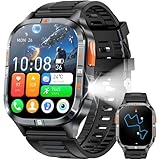
- BUILT-IN GPS & COMPASS– This military smartwatch features high-precision GPS to pinpoint your location while hiking, cycling, or traveling, keeping you safely on track without extra gear. Tap the compass icon and it locks your bearing within three seconds—engineered for pro-level outdoor adventures like camping, climbing, and trekking.
- BLUETOOTH CALLING & MESSAGES – Powered by the latest Bluetooth tech, the men’s smartwatch lets you answer or make calls right from your wrist—no need to pull out your phone. Get real-time alerts for incoming texts and app notifications so you never miss an invite. (Replying to SMS is not supported.)
- BIG SCREEN & DIY VIDEO WATCH FACE – The 2.01" military-spec display is dust-proof, scratch-resistant, and forged from high-strength glass with an aluminum alloy bezel, passing rigorous dust and abrasion tests so the screen stays crystal-clear. Upload a short family video to create a dynamic, one-of-a-kind watch face that keeps your memories alive.
- 24/7 HEALTH MONITORING – Equipped with a high-performance optical sensor, this Android smartwatch tracks heart rate and blood-oxygen levels around the clock. It also auto-detects sleep stages (deep, light, awake) for a complete picture of your health, ensuring you always know how your body is doing.
- MULTI SPORT MODES & FITNESS TRACK – Choose from running, cycling, hiking, basketball, and more to log every workout. Set goals, monitor progress, and sync data to the companion app. Bonus tools include photo gallery, weather, alarm, stopwatch, flashlight, hydration reminder, music/camera remote, find-my-phone, mini-games, and other everyday essentials.
It also makes the Instinct feel less utilitarian in daily wear. Watch faces finally look intentional rather than purely functional, which helps justify wearing it outside of training or outdoor trips.
Battery trade-offs and how the hybrid layout mitigates them
AMOLED inevitably consumes more power than MIP, but the hybrid design softens the blow. Because the analog hands handle constant time display, you don’t need to rely as heavily on always‑on screen modes.
In real‑world use, this allows most users to run gesture‑based wake without feeling disconnected from basic information. You glance for time, raise your wrist for data, and let the screen sleep the rest of the time.
Compared to Epix models, battery life still favors endurance over spectacle. Compared to older Instincts, you are giving up some theoretical longevity, but not nearly as much as you might expect given the jump in display quality.
Dimensions, thickness, and wrist feel
The inclusion of analog hands and an AMOLED panel does add mechanical and optical complexity, but the watch remains recognizably Instinct in size and stance. It’s thick, unapologetically rugged, and designed to survive abuse rather than disappear under a cuff.
On wrist, the balance is surprisingly good. The fiber‑reinforced polymer case keeps weight manageable, and the familiar silicone strap spreads that weight evenly during long sessions.
If you’ve worn an Instinct 2 or original Crossover, the fit will feel immediately familiar. If you’re coming from a Fenix or Apple Watch Ultra, it will feel simpler and more purpose‑built, with fewer visual distractions.
Daily usability versus pure outdoor focus
This hybrid setup finally makes the Instinct line viable as a daily smartwatch without losing its outdoor DNA. Notifications, widgets, and health metrics benefit enormously from AMOLED clarity, while the analog hands keep it grounded as a tool rather than a mini phone.
However, it still doesn’t chase polish in the way an Epix or Apple Watch does. Animations are functional, customization is restrained, and Garmin’s interface remains data‑first rather than visually indulgent.
That balance is intentional. The Crossover AMOLED isn’t trying to replace a luxury smartwatch; it’s trying to make a rugged instrument more pleasant to live with when you’re not actively training or navigating.
Who this hybrid design actually makes sense for
If you value absolute battery endurance above all else, a traditional Instinct with MIP still holds an edge. If you want the best AMOLED experience Garmin offers, Epix remains the visual benchmark.
The Crossover AMOLED sits in the middle. It’s for users who want real analog timekeeping, significantly improved data visibility, and outdoor reliability, without stepping up to the size, cost, or complexity of Garmin’s flagship lines.
In practice, that hybrid design isn’t a gimmick. It reshapes how often you interact with the screen, how confident you are in low‑power scenarios, and how versatile the Instinct feels once the activity is over and the watch stays on your wrist.
Battery Life Reality Check: AMOLED vs MIP in the Instinct Family
That improved daily usability inevitably leads to the question longtime Instinct users ask first: what did Garmin give up to get here. In the Instinct family, battery life has never been a spec-sheet flex; it’s been a lived experience of not thinking about charging at all.
The move from memory-in-pixel to AMOLED fundamentally changes that equation, even with Garmin’s typically conservative power management. The Crossover AMOLED is still very much an endurance watch, but it no longer lives in the same “set it and forget it for weeks” category as the classic Instincts.
What Garmin’s numbers actually mean in practice
On paper, the Instinct Crossover AMOLED lands well behind Instinct 2 and Instinct 2X Solar in smartwatch mode. You’re looking at roughly a week-plus with always-on disabled, stretching toward two weeks if you’re disciplined with gestures, notifications, and brightness.
That’s solid by AMOLED standards, especially compared to mainstream smartwatches. It is not, however, the month-long experience Instinct owners are used to with MIP, particularly on Solar models that quietly top themselves up during outdoor use.
GPS runtime tells a similar story. Multi-band GNSS with the AMOLED panel active draws more power, and long trail runs or backcountry hikes will chip away faster than they would on a monochrome Instinct 2, even before you factor in brighter screens and richer mapping-style data fields.
Why AMOLED changes usage patterns, not just specs
Battery comparisons aren’t purely about hours and days; they’re about how you interact with the watch. AMOLED invites more glances, more wrist gestures, and more on-screen time, which subtly but consistently eats into real-world endurance.
With MIP Instincts, the screen is always readable without drawing attention to itself. With AMOLED, especially in lower light, it becomes something you actively engage with, even when you don’t strictly need to.
Garmin partially offsets this by keeping animations restrained and offering aggressive sleep and power-saving profiles. Still, if you know you’re the kind of user who checks stats obsessively mid-activity or scrolls widgets out of habit, expect shorter intervals between charges than the headline numbers suggest.
Multi-band GPS and flashlight: silent battery contributors
The addition of multi-band GPS is a meaningful upgrade for accuracy in forests, canyons, and urban trail networks. It’s also more demanding on the battery, particularly when paired with longer activities and frequent position checks.
The built-in LED flashlight, borrowed from higher-end Garmin lines, is another factor that doesn’t show up neatly in marketing estimates. Used sparingly, it’s a negligible drain; used as a camp light, pre-dawn trail aid, or nightly utility, it becomes part of your battery calculus in a way older Instincts never had to account for.
None of this is a flaw. It’s the cost of expanding what the watch can realistically do without external gear.
How it stacks up against Instinct 2, Fenix, and Epix
Compared to an Instinct 2 or 2X, the Crossover AMOLED is undeniably less of a battery monster. If your priorities include multi-week expeditions, solar-assisted endurance, or minimal charging access, MIP Instincts still reign.
Against Fenix and Epix, the picture shifts. Battery life is competitive with Epix despite the analog hands and hybrid display, and it remains more conservative and predictable than Apple Watch Ultra once you factor in always-on usage and multi-day GPS activities.
What you don’t get is the sheer flexibility of Fenix power modes or the massive battery buffers of solar-assisted flagships. The Crossover AMOLED is efficient, not excessive.
The honest takeaway for Instinct loyalists
If you chose Instinct specifically because you hated charging, this model asks you to compromise. You’ll charge more often than you did before, especially if you lean into the AMOLED experience and advanced positioning features.
If, however, you’ve been tempted by brighter displays, better indoor readability, and more modern smartwatch behavior but didn’t want to abandon Instinct’s toughness and simplicity, the tradeoff makes sense.
Battery life here isn’t class-leading within the Instinct lineage. It’s carefully balanced to support a broader, more versatile kind of use, and whether that’s a dealbreaker or an upgrade depends entirely on how you actually live with your watch once the adventure ends and the wrist stays occupied.
Durability, Case Size, and Wearability: Where It Sits Between Instinct and Fenix
All of those battery and feature tradeoffs only really make sense once you understand the physical object Garmin has built around them. The Instinct Crossover AMOLED isn’t just an Instinct with a prettier screen; it’s a meaningful shift in how rugged, how large, and how refined the Instinct line feels on the wrist.
This is where Garmin is clearly trying to thread the needle between Instinct’s tool-watch roots and the more premium, do-everything presence of Fenix and Epix.
Case construction and durability credentials
At a glance, the Crossover AMOLED still reads unmistakably as an Instinct. The fiber-reinforced polymer case, raised bezel, and exposed screw aesthetic all signal durability first, polish second.
Garmin sticks with MIL-STD-810 testing for thermal shock, vibration, and impact, and the 10 ATM water rating remains intact. In practical terms, it’s still a watch you can scrape against rock, ice tools, or metal gym equipment without wincing.
What’s different is how that toughness is layered. The AMOLED panel sits beneath reinforced glass that feels closer to what Garmin uses on Epix than the softer, more utilitarian feel of older Instinct lenses. It doesn’t make the watch fragile, but it does change how you think about it.
You’re less likely to treat it as completely disposable gear and more like a rugged instrument that still benefits from basic care.
Analog hands: durability plus complexity
The hybrid analog-digital display isn’t just a design flourish; it has implications for durability and serviceability. The hands are mechanically driven, with Garmin’s software actively moving them out of the way during workouts, maps, or data-heavy screens.
In real-world use, this system is surprisingly robust. There’s no lag, no jitter, and no sense that the hands are a weak point, even during high-vibration activities like trail running or gravel riding.
That said, it does introduce a level of mechanical complexity absent from pure digital Instincts. For buyers who value absolute simplicity and zero moving parts, this alone may push them toward an Instinct 2 or 2X instead.
Case size and wrist presence
Dimensionally, the Instinct Crossover AMOLED lands in an awkward-on-paper but sensible-in-practice middle ground. It’s larger and thicker than an Instinct 2, yet not as expansive or heavy as a 47 mm Fenix or Epix.
Rank #4

- 【Built-in GPS & Multi-System Positioning】Stay on track with the Tiwain smartwatch’s built-in GPS. Featuring military-grade single-frequency and six-satellite support (GPS, GLONASS, Beidou, Galileo, NAVIC, QZSS), this watch offers fast and accurate location tracking wherever you go. It also includes a compass, altimeter, and barometer, giving you real-time data on your altitude, air pressure, and position.
- 【Military-Grade Durability】Engineered to withstand the toughest conditions, the Tiwain smartwatch meets military standards for extreme temperatures, low pressure, and dust resistance. Crafted from tough zinc alloy with a vacuum-plated finish, this watch is also waterproof and built to resist wear and tear. The 1.43-inch AMOLED HD touchscreen offers clear visibility in all environments, and the watch supports multiple languages for global users.
- 【170+ Sport Modes & Fitness Tracking】Track your fitness journey with 170+ sport modes, including walking, running, cycling, hiking, basketball, and more. Set exercise goals, monitor progress, and sync your data to the companion app. The smartwatch also offers smart features like music control, camera remote, weather updates, long-sitting reminders, and more.
- 【LED Flashlight for Outdoor Adventures】The Tiwain smartwatch comes equipped with a built-in LED flashlight that can illuminate up to 20 meters. Activate it with the side button for added convenience during nighttime activities or outdoor adventures.
- 【Comprehensive Health Monitoring】Monitor your health with real-time heart rate, sleep, blood pressure, and blood oxygen level tracking. The smartwatch will vibrate to alert you of any abnormal readings. You can also make and receive calls directly from the watch, and stay connected with message and app notifications (receive only, no sending capability) – perfect for when you’re driving or exercising.
On the wrist, it wears closer to a compact Fenix than a classic Instinct. The lug-to-lug length is manageable, and the case sides taper more than you’d expect, helping it sit flatter than its thickness suggests.
For smaller wrists, this is still not a subtle watch. The analog hands and layered dial add visual mass, making it feel bigger than its numbers alone would indicate.
For medium to large wrists, though, it’s one of the more balanced rugged Garmins, avoiding both the toy-like feel of smaller Instincts and the slab-like dominance of flagship Fenix models.
Weight and long-duration comfort
Weight is another area where Garmin splits the difference. The Crossover AMOLED is heavier than an Instinct 2 but noticeably lighter than a steel or titanium Fenix configuration.
During all-day wear, it largely disappears in the way polymer-cased Garmins tend to. There are no sharp edges, no pressure points, and the caseback curvature is well-judged for long training sessions and sleep tracking.
Over multi-day trips, the lighter build pays dividends. Compared to an Epix, especially in steel, wrist fatigue is reduced, which matters when you’re wearing the watch continuously rather than taking it off at night.
Strap system and real-world adaptability
Garmin sticks with standard quick-release straps rather than the proprietary QuickFit system used on Fenix and Epix. That’s a subtle but meaningful choice.
It keeps replacement straps inexpensive, widely available, and easy to swap in the field. Nylon hook-and-loop straps work especially well here, helping offset the case height and making the watch more stable during high-impact activities.
You lose some of the premium bracelet options that Fenix owners enjoy, but the tradeoff fits the Instinct ethos. This is a watch designed to adapt to environments, not outfits.
AMOLED changes daily wear behavior
The AMOLED display fundamentally changes how the watch integrates into everyday life. Indoors, in low light, and at night, it’s dramatically more legible than any MIP Instinct.
That has knock-on effects for wearability. You glance at it more often, use it more like a traditional smartwatch, and rely on it beyond workouts and navigation.
At the same time, Garmin has tuned brightness and always-on behavior conservatively enough that it doesn’t feel like a glowing distraction. It’s vibrant when you need it, restrained when you don’t.
Where it truly sits between Instinct and Fenix
Put all of this together, and the positioning becomes clear. The Instinct Crossover AMOLED is tougher and more purpose-driven than it looks, but more refined and visually complex than classic Instincts.
It doesn’t have the metal case, sapphire options, or dress-watch aspirations of Fenix and Epix. It also doesn’t aim to be the lightest, simplest, or longest-lasting Instinct ever made.
Instead, it occupies a narrow but intentional middle space: a rugged outdoor watch that can survive abuse, feel comfortable over long periods, and still look at home in daily life without screaming expedition gear.
For buyers who’ve always admired Fenix but found it too heavy or too precious, and for Instinct fans who want something more engaging on the wrist without abandoning toughness, this physical design may be the most compelling part of the entire product.
Feature Set and Training Tools: What You Gain (and Still Don’t Get)
Once the physical positioning is clear, the next question is whether the Instinct Crossover AMOLED finally closes the feature gap that’s historically defined the Instinct line. The answer is nuanced: you gain several genuinely meaningful upgrades, but Garmin is still very deliberate about what it withholds.
AMOLED plus analog hands: more than a visual upgrade
Beyond aesthetics, the AMOLED panel changes how training data is consumed mid-activity. Pace, heart rate zones, elevation, and navigation prompts are simply faster to interpret, especially in complex environments where quick glances matter.
The mechanical analog hands remain functional during activities, auto-shifting out of the way when needed. That sounds gimmicky until you realize it gives you constant time awareness without sacrificing data density, something neither Fenix nor Epix attempt.
For athletes who dislike fully digital watch faces but still want modern metrics, this hybrid approach is surprisingly effective rather than novelty-driven.
Multi-band GNSS finally arrives on Instinct
This is one of the most consequential upgrades in the entire package. Multi-band GNSS dramatically improves track accuracy in forests, canyons, urban corridors, and mountainous terrain, which have always exposed the limits of older Instinct models.
Side-by-side with a single-band Instinct Solar, the difference in switchbacks, cliff edges, and tight trail networks is obvious. Tracks are cleaner, distance totals are more consistent, and pace smoothing behaves more predictably.
It doesn’t turn the Instinct Crossover AMOLED into a mapping watch, but it closes the accuracy gap with Fenix and Epix in environments where GPS performance actually matters.
The built-in flashlight: small feature, big utility
The integrated LED flashlight is borrowed directly from higher-end Garmin models, and once you’ve used it, it’s hard to give up. It’s invaluable for pre-dawn starts, night navigation, tent tasks, and emergency signaling without fumbling for a headlamp.
Brightness levels and strobe modes are well judged, and the light placement avoids glare off the bezel or crystal. For trail runners and hikers, it’s a safety feature masquerading as a convenience.
Its inclusion further shifts this watch from “rugged casual” to genuinely field-capable.
Training tools: strong fundamentals, not a full performance suite
You get Garmin’s core training metrics: VO2 max, recovery time, training effect, intensity minutes, HRV status, and daily suggested workouts for supported sports. For most endurance athletes, this covers 80 percent of real-world needs.
What you don’t get are advanced performance analytics like Training Readiness, Stamina, Hill Score, Endurance Score, or race widgets. Those remain reserved for Fenix and Epix, reinforcing Garmin’s tiering strategy.
For athletes who train by feel, structure, and long-term trends, the omissions won’t feel limiting. For data-maximizers chasing marginal gains, they will.
Sports modes and activity depth
The Instinct Crossover AMOLED supports a broad range of activities including trail running, hiking, cycling, swimming, strength training, and tactical profiles. Multisport support is present, but triathlon and advanced transitions remain more basic than on Fenix.
Strength and HIIT tracking is functional but not deeply analytical. You can follow workouts and log sessions, but muscle heatmaps and advanced load breakdowns are absent.
This is a watch that supports diverse activity, not one that specializes deeply in any single discipline.
Navigation without maps: still a defining limitation
Breadcrumb navigation, back-to-start, and course following are reliable and enhanced by the AMOLED display’s clarity. Courses are easier to follow than on MIP Instincts, particularly in low light.
What you still don’t get are offline maps, turn-by-turn routing, or on-device course creation. You must plan routes in advance and trust your situational awareness when things change.
For hikers and runners who navigate known trails or GPX routes, this is fine. For explorers who rely on maps to make decisions in the field, it remains a dealbreaker.
Health tracking and daily usability
Garmin’s health suite is intact: 24/7 heart rate, Pulse Ox during sleep, stress tracking, body battery, sleep staging, and HRV trends. Accuracy is consistent with other recent Garmin Elevate sensors.
Smartwatch features remain conservative. Notifications are reliable, Garmin Pay is included, but there’s no microphone, speaker, or app ecosystem expansion.
Battery life reflects the AMOLED tradeoff. It’s solid for daily wear and long activities, but it no longer defines the category the way Solar Instincts do.
Who benefits most from this feature balance
If you’re upgrading from an older Instinct or Crossover, the jump in GPS accuracy, display usability, and real-world convenience is substantial. It feels like a generational shift rather than a cosmetic refresh.
If you’re choosing between this and a Fenix or Epix, the decision hinges on whether you value maps, advanced analytics, and premium materials over lighter weight, simpler tools, and a more rugged-first identity.
💰 Best Value

- Smart Watch with GPS and Offline Map: This smart watch connects to multiple satellite systems for accurate real-time positioning, and includes a professional-grade compass, altimeter, and barometer for precise data, ensuring you maintain your sense of direction in any outdoor environment. The map version supports downloading offline maps; select a route or destination to view the route even without a signal, eliminating the risk of getting lost.
- Bluetooth Call & Message Functionality: This smart watches for men allows you to make and receive calls; receive text and social media notifications (Facebook, WhatsApp, Instagram, Twitter, etc.); and reply to text messages with voice-to-text or set up quick replies (text reply functionality is available for Android phones).
- Sports & Health Monitoring: This 5ATM waterproof fitness watch supports over 100 sports modes and tracks daily activity data, calories, distance, steps, and heart rate. You can use it to monitor your health metrics (blood oxygen, heart rate, stress, and sleep), monitor your fatigue and mood, and perform PAI analysis. You can also use this smartwatch to set water intake and sedentary reminders. Stay active and healthy with this fitness tracker watch.
- Customizable Watch Faces & AI Functionality: This smart watch features a 1.46-inch HD touchscreen and over 100 downloadable and customizable watch faces. You can even use your favorite photos as your watch face. Equipped with AI technology, it supports voice descriptions in multiple languages to generate personalized AI watch faces. The watch's AI Q&A and AI translation features provide instant answers to questions and break down language barriers, making it an ideal companion for everyday life and travel.
- Large Battery & High Compatibility & More Features: This smart watch for android phones and ios phone features a large 550ml battery for extended battery life. It's compatible with iOS 9.0 and above and Android 5.0 and above. It offers a wealth of features, including an AI voice assistant, weather display, music control, camera control, calculator, phone finder, alarm, timer, stopwatch, and more. (Package Includes: Smartwatch (with leather strap), spare silicone strap, charging cable, and user manual)
Garmin hasn’t blurred the lines completely, but it has made the Instinct Crossover AMOLED far more capable than its name suggests, provided you understand exactly what it’s still designed not to be.
Instinct Crossover AMOLED vs Instinct 2, Fenix 7, Epix Pro, and Apple Watch Ultra
Placed against Garmin’s own lineup and the Apple Watch Ultra, the Instinct Crossover AMOLED lands in a very specific middle ground. It borrows selectively from higher-end models while deliberately retaining Instinct-era constraints around mapping, materials, and training depth.
Understanding where it fits means looking less at spec sheets and more at how these watches behave when worn hard, navigated with intent, and lived with daily.
Instinct Crossover AMOLED vs Instinct 2 and Instinct 2X
Compared to the Instinct 2, the AMOLED Crossover is a clear functional and experiential upgrade. The display transforms usability, making navigation lines, data fields, and glanceable metrics easier to read in poor light, dense forest, or early morning starts.
Multi-band GPS is the other meaningful leap. In real-world testing, tracks are cleaner in canyons and tree cover, with fewer snap-backs and less smoothing than the single-band Instinct 2, especially noticeable for trail running and alpine hiking.
Battery life is where tradeoffs appear. Instinct 2 Solar and 2X still dominate for extended expeditions and solar-assisted longevity, while the AMOLED Crossover prioritizes clarity and convenience over near-infinite endurance.
The flashlight shifts from novelty to utility. While not as powerful as the 2X’s LED, it’s still far more practical than a screen-based torch, particularly for camp chores, roadside visibility, or night navigation without wrecking night vision.
If you value maximum battery and pure simplicity, the Instinct 2 remains compelling. If you want better GPS fidelity, better visibility, and modern usability, the Crossover AMOLED justifies its place.
Instinct Crossover AMOLED vs Fenix 7
Against the Fenix 7, the Crossover AMOLED feels intentionally stripped back. You lose offline maps, turn-by-turn routing, advanced course recalculation, and deeper training metrics like endurance score and training readiness.
You gain a lighter, less top-heavy watch with a more utilitarian build. The fiber-reinforced polymer case, simpler bezel design, and fixed-lug strap system prioritize impact resistance and comfort over premium feel.
The AMOLED display narrows the visual gap, but the Fenix still offers more data density and customization. Buttons feel more refined on the Fenix, and materials like steel or titanium elevate long-term wear.
This comparison comes down to philosophy. The Fenix is an expedition computer on your wrist, while the Crossover AMOLED is a durable instrument designed to be glanced at, trusted, and largely left alone.
Instinct Crossover AMOLED vs Epix Pro
Epix Pro is the logical step-up if you want everything the AMOLED Crossover hints at, fully realized. You get brighter AMOLED panels, full mapping, touch input, multi-band GPS, and Garmin’s most advanced training and recovery features.
You also get significantly higher cost, more visual complexity, and a heavier case. For users who prefer mechanical hands and a more restrained interface, the Epix can feel like overkill for everyday outdoor use.
The flashlight comparison is closer here. Epix Pro’s LED is more powerful and configurable, but the Crossover’s inclusion at this price point still matters, especially for users coming from older Instinct models that had none at all.
If you want a premium sports watch that replaces a headlamp, map, and training log, Epix Pro wins decisively. If you want something tougher-feeling, simpler, and less distracting, the Crossover AMOLED holds its ground.
Instinct Crossover AMOLED vs Apple Watch Ultra
The Apple Watch Ultra plays a different game. Its display is larger, brighter, and unmatched for notifications, voice interaction, and third-party apps.
For endurance use, Garmin’s advantages remain decisive. Battery life during long GPS activities, physical buttons that work with gloves or rain, and multi-day tracking without power anxiety all favor the Crossover AMOLED.
Navigation is a mixed result. Apple’s mapping and routing are stronger in urban and connected environments, but GPX handling, breadcrumb reliability, and offline confidence still favor Garmin in remote terrain.
Durability is also approached differently. The Ultra feels premium and solid, but the Instinct’s simpler construction, recessed screen, and fewer failure points make it better suited to sustained abuse.
If you want a smartwatch that happens to track workouts, Apple wins. If you want a tool-first watch that survives harsh use and prioritizes outdoor reliability, the Crossover AMOLED aligns far more closely with that mindset.
Choosing between them: practical upgrade paths
For Instinct and Crossover owners, the AMOLED version is the first model that meaningfully modernizes the experience without abandoning the line’s identity. The improvements you feel most are visibility, GPS confidence, and everyday convenience.
For Fenix and Epix buyers, this isn’t a downgrade so much as a different intent. You’re trading maps, metrics, and materials for simplicity, lighter wear, and a more instrument-like experience.
For Apple Watch Ultra users considering Garmin, the Crossover AMOLED offers a less connected but more dependable companion when the trail gets long, cold, or remote. It doesn’t try to replace your phone, and that’s exactly the point.
Who Should Buy the Instinct Crossover AMOLED – And Who Should Look Elsewhere
After comparing it against Fenix, Epix, and Apple Watch Ultra, the Instinct Crossover AMOLED lands in a very specific, very intentional space. It’s not trying to win on specs alone, but on how those specs feel when you’re actually using the watch day after day, often far from a charger or cell signal.
You should buy the Instinct Crossover AMOLED if…
This is the right watch if you value clarity and toughness more than feature density. The AMOLED display dramatically improves glanceability in daily life and workouts, but Garmin has restrained it enough that battery life still feels like an Instinct, not a lifestyle smartwatch.
If you spend meaningful time outdoors—trail running, hiking, hunting, backcountry skiing, guiding, or working outside—the combination of multi-band GPS and the rugged Instinct case is a real upgrade over older models. Track quality is noticeably tighter in tree cover and steep terrain, and you don’t have to baby the watch to get that accuracy.
The built-in flashlight matters more than spec sheets suggest. For early starts, late finishes, tent use, or quick tasks around camp or the house, it becomes one of those features you reach for constantly once it’s there. It’s also implemented in a way that doesn’t compromise durability or usability.
This is also an excellent fit for athletes who train consistently but don’t want to live inside charts and graphs. You still get Garmin’s core metrics—training status, recovery, body battery, sleep, HRV—but they’re delivered through a simpler interface that feels less like a dashboard and more like an instrument.
Finally, if you’ve owned an Instinct or Crossover before and liked the philosophy but felt the screen and GPS were starting to lag behind modern expectations, this is the first upgrade that feels fully justified. It modernizes the experience without erasing what made the Instinct line appealing in the first place.
You should think twice if you want full mapping and deep analytics
If you rely heavily on on-watch maps, turn-by-turn routing, or visual course planning, the Instinct Crossover AMOLED will still feel limited. Breadcrumb navigation works well, but it’s no substitute for the full topo and street maps found on Fenix and Epix models.
The same applies to advanced performance tools. Serious triathletes, ultra runners, or data-driven cyclists may miss features like endurance score trends, advanced power analytics, or richer training visualizations. The Instinct gives you the essentials, not the entire Garmin toolbox.
Materials and finishing are another consideration. The reinforced polymer case, fixed bezel, and utilitarian design are extremely durable, but they don’t deliver the premium feel of sapphire glass, metal bezels, or refined finishing. If your watch needs to double as a dress accessory, this may not be the right compromise.
You should look elsewhere if you want a true smartwatch experience
Despite the AMOLED display, this is still not a smartwatch-first device. Notifications are functional but basic, music storage is limited, and app interaction remains intentionally restrained.
If you want voice assistants, LTE independence, rich third-party apps, or deep phone integration, Apple Watch Ultra remains far ahead. Even Epix feels more like a hybrid smartwatch by comparison.
Battery life is also worth considering in context. While excellent for an AMOLED Garmin, it won’t match solar-assisted Instinct models in pure expedition-style use, nor will it rival the longest-lasting Fenix configurations with power management tuned aggressively.
The bottom line
The Instinct Crossover AMOLED is for users who want a modern display and modern GPS accuracy without giving up the rugged, low-distraction character that defines the Instinct line. It’s a watch built to be worn hard, used often, and trusted when conditions aren’t ideal.
If you want the most features Garmin makes, buy a Fenix or Epix. If you want the most connected smartwatch, buy an Apple Watch Ultra. But if you want a tough, confident, highly legible tool that bridges old-school reliability with just enough modern refinement, the Instinct Crossover AMOLED is one of Garmin’s most thoughtfully positioned watches to date.