The Instinct line has always spoken to a particular kind of buyer: someone who values legibility, resilience, and trust over polish. If you grew up wearing square digital watches, or you still rotate a G-Shock for hard days outdoors, the Instinct’s appeal is instantly familiar. The Instinct Crossover AMOLED takes that nostalgia and dares to layer it with Garmin’s most modern display tech, creating a watch that looks stubbornly old-school while quietly being one of Garmin’s most technically ambitious hybrids.
This section is about understanding where that design comes from, and why it matters. The Crossover AMOLED isn’t just an Instinct with a prettier screen; it’s the culmination of Garmin borrowing from decades of tool-watch culture while trying to solve one of the biggest tensions in modern wearables: how to add richness without sacrificing endurance or clarity. To judge whether that compromise works, you need to understand the DNA it’s built on.
Tool-watch roots and the shadow of G-Shock
Garmin has never publicly acknowledged G-Shock as a design reference, but the lineage is impossible to ignore. The Instinct family inherits the same philosophy that made Casio’s toughest watches iconic: oversized bezels, recessed crystals, protected buttons, and a visual language that prioritizes function over elegance. This is a watch designed to be hit, scraped, and forgotten about, not babied.
The Crossover AMOLED keeps that unapologetically rugged stance. The case remains thick and purposeful, with a raised bezel that acts as a physical bumper around the display, just as early Instinct models did with their monochrome panels. Even with AMOLED underneath, the watch still looks more like a survival instrument than a smartwatch.
🏆 #1 Best Overall

- Stylish Design, Vibrant Display: The lightweight aluminum build blends effortless style with workout durability, while the vivid 1.97" AMOLED display keeps your data easy to read, even under bright sunlight.
- All-in-One Activity Tracking: The Amazfit Bip 6 fitness tracker watch offers 140+ workout modes including HYROX Race and Strength Training, plus personalized AI coaching and 50m water resistance.
- Up to 14 Days Battery Life: The Amazfit Bip 6 smart watch powers through your training and recovery for up to two weeks at a time - no nightly charging needed.
- Accurate GPS Tracking & Navigation: Stay on course with free downloadable maps and turn-by-turn directions. Support from 5 satellite systems ensures precise tracking of every move and fast GPS connection.
- 24/7 Health Monitoring: The Amazfit Bip 6 smartwatch provides precise, real-time monitoring of heart rate, sleep, blood-oxygen and stress, empowering you with actionable insights to optimize your health and fitness.
What’s crucial here is that Garmin didn’t smooth the edges to chase mainstream appeal. The lugs are still short and squared, the bezel markings are bold and utilitarian, and the button layout remains symmetric and glove-friendly. It wears like a tool first, even before you power it on.
The Instinct design language evolves, not replaces
Previous Instinct models were defined by their transflective displays and the distinctive circular “window” cutout, a visual trick that became a hallmark of the line. With the Crossover AMOLED, that window is gone, but the spirit remains. Garmin replaces it with physical analog hands, a far more radical nod to traditional watchmaking than a digital sub-dial ever was.
Those hands are not decorative. They’re lume-filled, motor-driven, and designed to disappear automatically when data needs to be read beneath them. This is Garmin leaning directly into analog watch logic, borrowing from hybrid watches while keeping full smartwatch capability intact.
The result is a face that feels instantly readable at a glance. Time is always visible without gestures, taps, or wake delays, which matters in cold, wet, or high-stress environments. It’s a subtle but important shift in how the Instinct communicates information.
AMOLED without abandoning legibility
AMOLED is often associated with lifestyle watches, but Garmin tuned this panel for outdoor use first. Colors are vivid without being cartoonish, and contrast is high enough that data fields remain legible in harsh sunlight. It doesn’t chase the glossy look of a Venu; it remains restrained and functional.
Resolution and pixel density are high enough that maps, widgets, and watch faces look modern, but Garmin avoids clutter. Fonts remain blocky and practical, and data layouts are conservative, clearly descended from Garmin’s sports-first design philosophy.
The always-on mode deserves specific mention. Garmin uses a dimmed, power-efficient presentation that keeps the watch readable while preserving battery life, a key concern for anyone used to the legendary endurance of older Instinct models.
Physical hands in a digital world
The analog hands are the most polarizing design choice here, and also the most interesting. Mechanically, they’re precise and well-calibrated, snapping cleanly to time and shifting out of the way when a workout or menu demands it. There’s no lag, and in real-world use they quickly fade into muscle memory.
Aesthetically, they transform the watch. On the wrist, the Crossover AMOLED reads more like a rugged analog field watch than a smartwatch, especially at a distance. That matters for users who dislike the constant glow or visual noise of fully digital wearables.
There is a trade-off. In very data-dense screens, the hands can briefly obscure information before moving aside, and purists may question the added complexity. But for those who value instant time visibility and a traditional silhouette, this hybrid approach feels deliberate rather than gimmicky.
Materials, dimensions, and real-world wearability
The case construction sticks to fiber-reinforced polymer, prioritizing shock resistance and weight savings over premium metals. It doesn’t feel cheap, but it also doesn’t pretend to be luxurious. This is consistent with the Instinct’s mission and keeps the watch comfortable during long activities and sleep tracking.
Thickness remains substantial, especially compared to slimmer AMOLED Garmins, but the short lug-to-lug distance helps it sit securely on smaller wrists than its diameter suggests. The raised bezel and recessed screen mean you can scrape it against rock or gym equipment without wincing.
The included silicone strap is soft, breathable, and purpose-built for sweat and water exposure. It’s not trying to mimic a bracelet or leather; it’s designed to disappear during use, which is exactly what an outdoor-focused watch strap should do.
Design intent over universal appeal
What Garmin has done with the Instinct Crossover AMOLED is double down on identity rather than dilute it. This is not a watch meant to convert Apple Watch users or fashion-first buyers. It’s aimed squarely at people who already trust rugged digital watches and want modern visuals without surrendering that ethos.
Every design decision reinforces that stance, from the physical hands to the thick bezel to the conservative AMOLED tuning. It’s a watch that looks backward to move forward, and whether that resonates depends entirely on how much you value heritage over minimalism.
Understanding this design heritage is key to evaluating the rest of the watch, because everything from battery behavior to software layout flows from these choices. The Crossover AMOLED isn’t confused about what it wants to be, even if it refuses to fit neatly into any single category.
The Hybrid Display Concept: Mechanical Hands Meet AMOLED Reality
If the case design establishes the Instinct Crossover AMOLED’s intent, the display is where Garmin fully commits to its hybrid thesis. This is not simply an AMOLED screen with an analog-style watch face layered on top. Garmin has physically integrated mechanical hands above a full-color AMOLED panel, creating a literal overlap of old-school timekeeping and modern smartwatch visuals.
The result is visually striking in a way that feels purposeful rather than theatrical. You always have a real, glanceable analog time reference, even when the screen is asleep, while the AMOLED layer handles everything else from metrics to mapping cues. It’s a fusion that challenges the assumption that analog nostalgia and high-resolution displays are mutually exclusive.
Physical hands in a digital ecosystem
The hands themselves are motor-driven and independently controlled, not decorative elements tied to the screen. They can move out of the way when the display needs to show data, and they realign instantly when you return to timekeeping. This choreography happens quickly enough that it fades into the background after a few days of use.
From a usability standpoint, this solves a long-standing complaint about AMOLED sports watches: the need to wake the screen just to check the time. Here, the time is always visible, regardless of gesture settings, gloves, or battery-saving modes. For outdoor users accustomed to classic digital or analog field watches, this alone makes the Crossover AMOLED feel familiar in the best way.
There is, however, an inherent compromise. The hands can partially obscure on-screen data fields, especially in denser workout layouts. Garmin mitigates this with smart hand repositioning, but it’s not magic; in edge cases, clarity still favors a pure digital display.
AMOLED tuning for utility, not spectacle
Garmin’s AMOLED implementation here is deliberately restrained. Brightness is strong enough for direct sunlight, but color saturation and contrast are tuned to prioritize legibility over visual drama. This isn’t the candy-coated look you see on lifestyle-focused AMOLED watches, and that’s entirely intentional.
Text remains crisp, icons are clean, and data-heavy screens avoid unnecessary gradients or animations. In low-light conditions, the display dims smoothly without blooming, preserving night vision better than many brighter AMOLED competitors. For navigation prompts, workout metrics, and glanceable widgets, the panel delivers clarity without demanding attention.
Resolution is more than sufficient for the Instinct interface, but the real win is consistency. Whether you’re mid-interval, scrolling through health stats, or checking sunrise times at camp, the display feels like a tool rather than a showpiece. That aligns perfectly with the broader Instinct philosophy.
Durability and long-term reliability questions
Integrating moving hands above an AMOLED panel introduces obvious questions about durability. Garmin addresses this with a recessed screen, a raised bezel, and hardened materials designed to absorb shock before it reaches the display or hand assembly. In daily use and during outdoor activities, the setup feels robust, not delicate.
Water resistance and vibration tolerance remain in line with what Instinct users expect. The hands don’t jitter during high-impact activities like trail running or strength training, and they remain readable even when the watch is wet or dirty. This reinforces the sense that the hybrid design wasn’t added at the expense of ruggedness.
That said, this is undeniably more complex than a standard Instinct or a typical AMOLED Garmin. Long-term reliability will matter more here than on simpler models, especially for buyers who keep their watches for years. Garmin’s track record with outdoor hardware inspires confidence, but this is still a more intricate system than most in its lineup.
Battery life shaped by hybrid priorities
The presence of physical hands subtly changes how battery life plays out in real use. Because time is always visible without waking the AMOLED panel, you’re less tempted to rely on always-on display modes. This helps offset some of the power demands associated with AMOLED technology.
In smartwatch mode, battery life lands closer to AMOLED Garmins than traditional Instinct models, but smart power management makes it feel better than the raw numbers suggest. You can leave the screen gesture-based, trust the hands for quick checks, and still get through long days without anxiety. GPS-heavy activities will, as expected, tax the system more, but that’s true across Garmin’s lineup.
For endurance athletes and multi-day adventurers, this balance is crucial. The hybrid display doesn’t magically restore the legendary battery life of the original Instinct, but it avoids the worst compromises of AMOLED watches by leaning on analog visibility whenever possible.
Who this display is actually for
This hybrid setup won’t appeal to users who want maximum screen real estate or the cleanest possible data layouts. If you value minimalist design, touch-first interaction, or fashion-driven aesthetics, the mechanical hands will feel unnecessary. In those cases, Garmin’s standard AMOLED offerings make more sense.
But for users who grew up on digital Casios, analog field watches, or early GPS units, this display feels intuitive. It respects the idea that time should be visible instantly and passively, while still delivering the richness of modern smartwatch data when you need it. That’s a niche, but it’s a well-defined one.
The Instinct Crossover AMOLED doesn’t treat the hybrid display as a novelty. It treats it as a functional answer to a specific way people use watches outdoors. Whether that answer resonates depends less on specs and more on how much you value the quiet confidence of always knowing the time without asking a screen to wake up.
Case, Materials, and Wearability: Rugged Dimensions and Everyday Comfort
That sense of always-on time awareness carries directly into how the Instinct Crossover AMOLED wears on the wrist. This is not a sleek AMOLED slab softened for lifestyle appeal, but a watch that very deliberately preserves the Instinct’s tool-watch proportions while accommodating a brighter, more power-hungry display stack beneath the crystal.
Dimensions and visual presence
At roughly 45 mm in diameter and just over 16 mm thick, the Instinct Crossover AMOLED is unapologetically substantial. On paper, those numbers read large, but the short lug-to-lug span and integrated strap design prevent it from feeling ungainly in practice. The watch sits tall rather than wide, which keeps it from overhanging smaller wrists in the way some 47–51 mm Garmin models can.
Rank #2

- Stylish Design, Bright Display: The sleek stainless steel build blends classic style with workout durability, while the bright 1.32" AMOLED display keeps your data easy to read, even under bright sunlight.
- Precise Heart Rate and Sleep Tracking: Amazfit's BioTracker technology tracks your heart rate and sleep data with accuracy that previous sensors just can't match.
- Up to 10 Days of Battery Life: With long battery life that lasts up to 10 days with typical use, nightly recharges are a thing of the past.
- Free Maps with Turn Directions: Stay on-track with free downloadable maps, and get turn-by-turn guidance on-screen or via your Bluetooth headphones. Enjoy ski maps for global resorts, including guidance for cable cars, slopes, and more.
- Faster and More Accurate GPS Tracking: 5 satellite positioning systems ensure fast GPS connection and accurate positioning whenever you're out running, walking, cycling or hiking.
Visually, the case feels closer to a modernized G-Shock than to Garmin’s Epix or Fenix families. The prominent fixed bezel, raised chapter ring, and exposed fasteners reinforce the sense that this is equipment first and a smartwatch second. If you’re coming from a traditional Instinct or a rugged digital watch, the transition feels natural rather than jarring.
Case construction and materials
Garmin sticks with its proven fiber-reinforced polymer case, and that choice makes sense here. It keeps weight down while offering impressive impact resistance, and it avoids the cold, sometimes slippery feel of bare metal in harsh conditions. The material doesn’t try to masquerade as luxury; it’s matte, slightly textured, and purpose-built.
The bezel is molded rather than metal, but it’s thick and protective, rising above the display to shield the crystal from direct hits. In real-world use, this matters more than exotic materials, especially for climbing, trail running, or manual work where accidental knocks are inevitable. The overall impression is utilitarian confidence rather than spec-sheet bravado.
Crystal, water resistance, and durability
The AMOLED display is protected by a chemically strengthened glass rather than sapphire, a choice that prioritizes impact resilience over scratch immunity. In outdoor use, this is often the smarter compromise, as sharp impacts tend to be more catastrophic than superficial abrasions. The raised bezel further reduces the likelihood of direct contact with rock or metal.
Water resistance remains a solid 10 ATM, making the Crossover AMOLED suitable for swimming, heavy rain, and prolonged exposure to wet conditions. It’s not a dive watch, but it doesn’t pretend to be one. For its intended use cases, from alpine storms to muddy obstacle races, it feels appropriately overbuilt.
Buttons, controls, and tactile usability
Five physical buttons line the case, each oversized and deeply textured. They’re easy to find by feel, even with gloves or cold fingers, and they deliver a firm, decisive click that reinforces the watch’s tool-oriented character. This is especially important given the hybrid display, where touch interaction takes a clear back seat.
The absence of reliance on touch gestures improves reliability in rain, snow, or sweat-heavy workouts. It also aligns with the analog hands concept, keeping interaction deliberate rather than reactive. If you’re accustomed to Garmin’s button logic, there’s no learning curve here.
Weight, balance, and long-term comfort
Despite its thickness, the Instinct Crossover AMOLED remains relatively light, thanks to the polymer case and silicone strap. On the wrist, the weight is evenly distributed, avoiding the top-heavy feel that some metal-cased AMOLED watches can develop. This balance is noticeable during long runs, hikes, or all-day wear.
The caseback sits flat and broad, spreading pressure across the wrist rather than creating hot spots. During sleep tracking and multi-day wear, it stays unobtrusive enough that you don’t feel compelled to take it off, which is critical for users who rely on continuous health and recovery metrics.
Strap design and everyday wearability
Garmin’s silicone strap is familiar, functional, and well-ventilated, with enough stiffness to stabilize the watch during high-impact activities. The integrated lug design enhances security and reduces flex points, though it does limit third-party strap options. For most users, the stock strap will be perfectly adequate across sports and daily use.
Aesthetically, the watch leans hard into its rugged identity, which may limit its versatility in formal settings. That said, the analog hands soften the look just enough to make it more socially acceptable than a purely digital Instinct. It’s still a field instrument at heart, but one that can live on your wrist from trailhead to office without feeling completely out of place.
AMOLED Performance in the Wild: Brightness, Clarity, and Power Trade‑offs
After addressing comfort and physical wearability, the AMOLED display becomes the next make‑or‑break element in daily use. This is where the Instinct Crossover AMOLED most clearly departs from its transflective ancestors, and where Garmin takes its biggest philosophical risk with the Instinct line. The question isn’t whether AMOLED looks better, but whether it still behaves like a true outdoor instrument.
Brightness and Outdoor Legibility
In direct sunlight, the AMOLED panel is impressively bright, pushing well beyond what earlier Garmin AMOLED implementations managed. At peak brightness, data fields, maps, and widget screens remain legible even under harsh midday sun, including reflective environments like snowfields or exposed rock. Garmin’s ambient light sensor reacts quickly, avoiding the dim lag that plagued older Venu generations.
That said, this is still emissive technology, not reflective. Compared side‑by‑side with a traditional Instinct Solar or Fenix with MIP, the AMOLED requires more active brightness to achieve the same glanceability, especially when your wrist is angled awkwardly mid‑stride. It’s readable, but it’s working harder to get there.
Clarity, Color, and Data Density
Where the AMOLED truly shines is clarity. Fine text, small metrics, and dense data screens are cleaner and easier to parse at speed, particularly during interval sessions or navigation-heavy activities. The contrast between foreground data and background is excellent, reducing eye strain during long workouts or night use.
Color is used tastefully rather than gratuitously. Garmin avoids the oversaturated, toy‑like palettes seen on some lifestyle smartwatches, opting instead for muted tones that preserve the Instinct’s utilitarian character. The analog hands remain clearly visible against the AMOLED background, and their integration feels intentional rather than gimmicky.
Night Visibility and Low‑Light Use
In low‑light environments, the AMOLED panel offers clear advantages. Backcountry mornings, night runs, and tent-side glances are all improved by the even illumination and crisp contrast. Red shift and low‑brightness modes help preserve night vision, and the display never blooms or flares in total darkness.
This is one area where AMOLED arguably surpasses MIP for real-world usability. You no longer need a wrist twist or button press to catch faint digits, and the watch face remains readable without blasting your eyes at 3 a.m. during a recovery check or navigation stop.
Always‑On Display and the Analog Hands Factor
Garmin’s always‑on AMOLED mode is central to how the Instinct Crossover works conceptually. With physical analog hands always visible, the watch maintains a constant time reference even when the display dims aggressively. This mitigates one of AMOLED’s biggest ergonomic weaknesses: the need to wake the screen just to check the time.
The dimmed always‑on state is readable indoors and serviceable outdoors, though it won’t match full brightness in sun. Importantly, the analog hands preserve the “watch first” experience, allowing Garmin to keep the digital layer more conservative without sacrificing usability. It’s a clever compromise that fits the Instinct’s old‑school ethos.
Power Consumption and Battery Reality
AMOLED inevitably impacts battery life, and Garmin is refreshingly honest about the trade‑offs. Compared to the MIP-based Instinct Solar, you’ll see significantly shorter runtimes, particularly with always‑on display enabled. In real-world mixed use, expect days rather than weeks, with GPS-heavy training accelerating the drain.
However, battery performance remains competitive within the AMOLED outdoor category. It outlasts lifestyle-focused AMOLED watches and holds its own against Fenix AMOLED variants when configured conservatively. Turning off always‑on display and relying on the analog hands restores some endurance, reinforcing that this watch rewards intentional setup rather than default indulgence.
Durability and Display Confidence
Despite the shift to AMOLED, Garmin hasn’t softened the Instinct’s durability posture. The recessed display design and raised bezel provide meaningful protection against knocks, branches, and rock scrapes. You’re less likely to drag the glass across surfaces compared to flatter, edge-to-edge AMOLED designs.
There’s still a psychological difference between trusting a MIP panel and an AMOLED one in harsh environments. While the glass itself holds up well, users who treat their watches as expendable tools may still feel more comfortable with the older technology. That tension underscores the entire Crossover concept: modern visuals layered onto a traditionally uncompromising platform.
Durability and Outdoor Credibility: MIL‑STD, Water Resistance, and Real Abuse
If the AMOLED display introduces a note of modern fragility, the rest of the Instinct Crossover pushes firmly in the opposite direction. This is still a watch built around Garmin’s most unapologetically utilitarian design language, and that matters when you stop thinking about specs and start thinking about consequences. Drops, scrapes, mud, salt water, cold mornings, and careless impacts are assumed, not treated as edge cases.
The Crossover doesn’t ask you to baby it, and more importantly, it doesn’t behave like a device that expects to be babied.
MIL‑STD‑810 and What It Actually Means Here
Garmin rates the Instinct Crossover to MIL‑STD‑810 for thermal, shock, and water resistance, a spec that often gets waved around casually but is meaningful in this context. Temperature swings, vibration, and repeated mechanical stress are exactly where cheaper AMOLED watches tend to reveal weaknesses. The Instinct platform has years of field history backing it up.
In practice, this means the watch tolerates being left in a freezing car overnight, baked on a dashboard during summer approaches, or rattled for hours on handlebars without losing calibration or stability. Buttons don’t develop mush, sensors stay aligned, and the case doesn’t creak or flex under torsion.
This is where the Crossover earns credibility over more lifestyle-oriented rugged watches. It isn’t just styled to look tough; it’s engineered to keep functioning when conditions are hostile and user behavior is careless.
Case Construction, Bezel Design, and Impact Resistance
The fiber-reinforced polymer case keeps weight down while absorbing shock far better than metal would in this category. It doesn’t dent, it doesn’t cold-soak the wrist in winter, and it shrugs off cosmetic damage that would visibly scar aluminum. The aesthetic cost is minimal, and the functional upside is substantial.
The raised bezel remains one of the Instinct line’s most underrated design decisions. It physically separates the AMOLED glass from most lateral impacts, which matters when scrambling, bushwhacking, or working with hands near rock and metal. You’re far more likely to scrape the bezel than the display itself.
Over weeks of hard use, scuffs accumulate on the bezel but not on the glass, which is exactly the wear pattern you want from a tool watch. Damage becomes character, not a failure point.
Water Resistance and Real Aquatic Use
Rated to 10 ATM, the Instinct Crossover is built for far more than incidental splashes. Open-water swimming, surf exposure, paddle sports, and repeated submersion pose no issue, and the sealed button design avoids the accidental presses and pressure quirks seen on some touchscreen-heavy watches.
Unlike dive watches that advertise depth ratings they’ll never see, this one thrives in realistic aquatic scenarios. Salt water, rinse cycles, and wet-to-dry transitions don’t degrade button feel or compromise sensor accuracy over time.
For users coming from traditional digital watches like the G-Shock Frogman or Rangeman, the Crossover feels familiar in how little you have to think about water exposure. You wear it, you use it, and you rinse it when you remember.
Rank #3
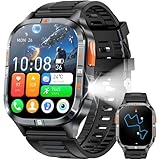
- BUILT-IN GPS & COMPASS– This military smartwatch features high-precision GPS to pinpoint your location while hiking, cycling, or traveling, keeping you safely on track without extra gear. Tap the compass icon and it locks your bearing within three seconds—engineered for pro-level outdoor adventures like camping, climbing, and trekking.
- BLUETOOTH CALLING & MESSAGES – Powered by the latest Bluetooth tech, the men’s smartwatch lets you answer or make calls right from your wrist—no need to pull out your phone. Get real-time alerts for incoming texts and app notifications so you never miss an invite. (Replying to SMS is not supported.)
- BIG SCREEN & DIY VIDEO WATCH FACE – The 2.01" military-spec display is dust-proof, scratch-resistant, and forged from high-strength glass with an aluminum alloy bezel, passing rigorous dust and abrasion tests so the screen stays crystal-clear. Upload a short family video to create a dynamic, one-of-a-kind watch face that keeps your memories alive.
- 24/7 HEALTH MONITORING – Equipped with a high-performance optical sensor, this Android smartwatch tracks heart rate and blood-oxygen levels around the clock. It also auto-detects sleep stages (deep, light, awake) for a complete picture of your health, ensuring you always know how your body is doing.
- MULTI SPORT MODES & FITNESS TRACK – Choose from running, cycling, hiking, basketball, and more to log every workout. Set goals, monitor progress, and sync data to the companion app. Bonus tools include photo gallery, weather, alarm, stopwatch, flashlight, hydration reminder, music/camera remote, find-my-phone, mini-games, and other everyday essentials.
Buttons, Straps, and Glove-Friendly Usability
Physical buttons remain central to the Instinct experience, and they’re critical to its outdoor credibility. They’re large, well-spaced, and firm enough to operate with gloves, cold fingers, or limited dexterity. There’s no reliance on touchscreen gestures when conditions get messy.
The included silicone strap is thick, flexible, and purpose-built rather than decorative. It resists salt, sweat, and UV exposure without stiffening, and the keeper design actually holds under movement. Quick-release compatibility means swapping to nylon or third-party straps is easy, but most users won’t feel the need.
Comfort over long days matters here too. Despite the rugged build, the watch sits securely without pressure points, even when worn tightly over long efforts or layered over base sleeves in cold weather.
Abuse Testing in the Real World
Trail runs through dense brush, multi-day hikes with pack straps grinding against the case, and strength training where steel meets polymer are where the Crossover feels most at home. Impacts that would make you wince on a polished AMOLED watch barely register here.
Dust and grit don’t migrate into button housings, and sweat doesn’t cause long-term odor or degradation. The watch looks better worn than pristine, which is a subtle but important psychological factor for gear meant to be used hard.
This isn’t a device that rewards careful ownership. It rewards indifference, consistency, and repetition, which is exactly what outdoor athletes and field users tend to deliver.
Where the AMOLED Still Changes the Equation
The AMOLED panel remains the one component that asks for trust rather than demanding it. While protected and robust in practice, it doesn’t yet carry the same mental invincibility as the old MIP displays for some users. That hesitation is emotional more than empirical, but it’s real.
Garmin mitigates this with smart design choices rather than marketing claims. Recessed glass, conservative brightness defaults, and the analog hands reduce reliance on the display during quick checks, subtly lowering exposure to risk.
For most users, the durability ceiling remains far above anything they’ll realistically throw at it. For those who want absolute indifference to damage, the MIP Instinct still exists, and Garmin makes no attempt to pretend otherwise.
Navigation, Sensors, and Core Garmin Smarts: GPS, ABC, and Training Tools
Once you accept the physical resilience of the Instinct Crossover AMOLED, the conversation naturally shifts to what it actually does once you leave the trailhead. This is still very much a Garmin Instinct at heart, and that means navigation reliability, sensor depth, and training logic matter more than flashy maps or smartwatch theatrics.
The hybrid analog-AMOLED layout doesn’t dilute Garmin’s core outdoor toolset. Instead, it reframes it through a more legible, more expressive interface that still prioritizes function over spectacle.
Multi-Band GPS and Real-World Tracking Accuracy
The Crossover AMOLED uses Garmin’s multi-band GNSS chipset with support for GPS, GLONASS, Galileo, and QZSS, and in open terrain it performs exactly as expected for a modern Garmin. Track lines are clean, pacing is stable, and distance totals line up closely with higher-tier Fenix and Forerunner models.
In wooded trails and canyon-like environments, the advantage of multi-band becomes more apparent. Switchbacks are captured with minimal corner cutting, and pace smoothing avoids the jitter that older Instinct models could show when signal quality degraded.
What’s notable is how readable this data is at a glance. The AMOLED panel makes breadcrumb tracks, direction arrows, and distance-to-waypoint fields far easier to parse without stopping, even under harsh midday light.
Breadcrumb Navigation Without Pretending to Be a Map Watch
Garmin doesn’t try to oversell navigation here. There are no full-color topographic maps, no touchscreen panning, and no illusion that this replaces a Fenix or Epix for deep route planning.
Instead, you get classic Instinct navigation: breadcrumb trails, point-to-point routing, back-to-start, TracBack, and waypoint navigation. For hikers, trail runners, and off-grid workers who already plan routes externally, this remains an efficient and low-friction system.
The analog hands actually help more than expected. When navigating, Garmin intelligently parks or moves them to preserve data visibility, while still providing a constant sense of heading that feels closer to a traditional compass than a smartwatch UI.
ABC Sensors: Altimeter, Barometer, and Compass in Practice
The altimeter remains one of the strongest arguments for the Instinct line. Elevation gain and loss track cleanly during long efforts, with fewer mid-activity drift issues than wrist-based GPS elevation alone.
Barometric trend tracking is especially useful for multi-day trips. Storm alerts are subtle but effective, and the historical pressure graph benefits from the AMOLED’s contrast without becoming visually noisy.
The three-axis compass is fast to lock and stable once calibrated. It works equally well for navigation screens and casual bearing checks, and the physical buttons make it usable with gloves or cold hands where touch-first watches struggle.
Training Tools and Performance Metrics
Under the hood, the Instinct Crossover AMOLED shares much of Garmin’s established training ecosystem. You get VO2 max estimates, training load, training status, recovery time, and daily suggested workouts for supported activities.
Heart rate tracking is consistent during steady-state efforts, though optical limitations still appear during rapid intensity changes or strength training. Pairing a chest strap unlocks the full value of Garmin’s metrics and is still recommended for serious athletes.
The watch supports structured workouts, interval sessions, and sport-specific profiles ranging from trail running to gravel cycling. It lacks the deepest race-focused analytics found on Forerunner flagships, but it covers the needs of most endurance users without feeling stripped down.
Health, Recovery, and All-Day Metrics
Outside of training sessions, the Crossover AMOLED tracks Body Battery, stress, respiration, sleep stages, and blood oxygen during sleep. None of this is unique within Garmin’s lineup, but the presentation is clearer and more engaging on AMOLED.
Sleep tracking benefits from the always-visible analog hands acting as a visual anchor when checking the watch at night. The display dims intelligently, avoiding the flashlight effect common on brighter AMOLED sports watches.
Battery life naturally takes a hit compared to MIP Instinct models, but in smartwatch mode it still comfortably spans multiple days with GPS-heavy use requiring more deliberate charging planning. For users coming from traditional AMOLED Garmins, it remains competitive rather than compromised.
Software Experience and Button-First Control
The interface remains unapologetically button-driven. Menus are logically stacked, muscle memory carries over from other Garmin devices, and nothing essential is locked behind gestures.
This matters most in bad weather, on technical terrain, or when fatigue sets in. The AMOLED enhances clarity, but the Instinct philosophy of tactile certainty remains intact.
Connect IQ support allows limited customization, but this is not a platform for visual experimentation. Data density, reliability, and predictability are still the guiding principles, just rendered with more color and contrast than any Instinct before it.
Health, Fitness, and Sports Tracking: What You Gain (and Miss) vs Fenix and Epix
Coming from the Instinct philosophy, the Crossover AMOLED lands in an interesting middle ground. It borrows heavily from Fenix and Epix in core health and activity tracking, but it deliberately stops short of being a full flagship replacement. Understanding those trade-offs is key to knowing whether this hybrid makes sense for your training and lifestyle.
Core Health Metrics: Flagship Parity, With One Caveat
On paper, the Instinct Crossover AMOLED delivers near parity with Fenix and Epix for day-to-day health tracking. Body Battery, all-day stress, respiration, hydration tracking, sleep stages, and nightly Pulse Ox are all present and behave exactly as seasoned Garmin users expect.
Sleep tracking quality matches Epix closely, including sleep score breakdowns and recovery insights. The main omission is ECG support, which remains limited to select Venu models and newer flagships depending on region, so cardiac-focused users may feel that gap.
Where the Crossover stands apart is presentation. The AMOLED panel makes trends, charts, and sleep timelines easier to parse at a glance, without pushing the watch into the glossy, lifestyle-first aesthetic of the Epix.
Training Load, Recovery, and Readiness: Mostly There, Selectively Trimmed
Training Load, Training Effect, VO2 max, recovery time, and intensity minutes are all included. For endurance athletes, this covers the bulk of actionable insight needed to manage week-to-week volume and avoid overreaching.
What you miss versus Fenix and Epix Pro models are the more advanced layers of interpretation. Features like Training Readiness, Hill Score, Endurance Score, and more granular performance condition overlays are absent or simplified, depending on firmware generation.
Rank #4

- 【Built-in GPS & Multi-System Positioning】Stay on track with the Tiwain smartwatch’s built-in GPS. Featuring military-grade single-frequency and six-satellite support (GPS, GLONASS, Beidou, Galileo, NAVIC, QZSS), this watch offers fast and accurate location tracking wherever you go. It also includes a compass, altimeter, and barometer, giving you real-time data on your altitude, air pressure, and position.
- 【Military-Grade Durability】Engineered to withstand the toughest conditions, the Tiwain smartwatch meets military standards for extreme temperatures, low pressure, and dust resistance. Crafted from tough zinc alloy with a vacuum-plated finish, this watch is also waterproof and built to resist wear and tear. The 1.43-inch AMOLED HD touchscreen offers clear visibility in all environments, and the watch supports multiple languages for global users.
- 【170+ Sport Modes & Fitness Tracking】Track your fitness journey with 170+ sport modes, including walking, running, cycling, hiking, basketball, and more. Set exercise goals, monitor progress, and sync your data to the companion app. The smartwatch also offers smart features like music control, camera remote, weather updates, long-sitting reminders, and more.
- 【LED Flashlight for Outdoor Adventures】The Tiwain smartwatch comes equipped with a built-in LED flashlight that can illuminate up to 20 meters. Activate it with the side button for added convenience during nighttime activities or outdoor adventures.
- 【Comprehensive Health Monitoring】Monitor your health with real-time heart rate, sleep, blood pressure, and blood oxygen level tracking. The smartwatch will vibrate to alert you of any abnormal readings. You can also make and receive calls directly from the watch, and stay connected with message and app notifications (receive only, no sending capability) – perfect for when you’re driving or exercising.
In practice, this positions the Crossover as a tool for athletes who want reliable feedback rather than constant algorithmic judgment. It tells you what happened and how hard it was, but it does less to tell you how to feel about it.
Sport Profiles and Multisport Depth: Broad, Not Exhaustive
The Instinct Crossover AMOLED supports a wide range of sport profiles including trail running, ultra running, gravel cycling, MTB, hiking, skiing, swimming, and gym-based training. Multisport mode is present, making it viable for triathlon-style events, albeit without the deep transition analytics of Forerunner flagships.
Compared to Fenix and Epix, the biggest differences show up in niche activities. There is no native golf ecosystem, no advanced ski resort mapping, and no sailing-specific instrumentation, which may matter for highly specialized users.
For most outdoor athletes, the coverage feels intentional rather than limited. It prioritizes activities where durability, GPS reliability, and battery discipline matter more than animated maps or sport-specific gloss.
GPS Accuracy and Navigation: Trustworthy, but Less Visual
Multi-band GNSS performance is strong and aligns closely with Fenix and Epix under open and mixed conditions. Track fidelity on trails, in forests, and around elevation changes is consistently reliable, and altitude data remains stable over long efforts.
Where the difference becomes obvious is navigation experience. Breadcrumb routing, back-to-start, and course following are supported, but full onboard maps and turn-by-turn visuals are not part of the Instinct identity.
This reinforces the watch’s tool-watch mentality. You gain confidence in where you’ve been and how to get back, but you give up the visual storytelling and exploratory mapping that define the Epix experience.
Strength Training and Indoor Workouts: Functional, Not Flashy
Strength training profiles offer rep counting, rest timers, and basic muscle group tracking. Like most Garmin optical setups, rep accuracy varies with exercise type, and serious lifters will still benefit from pairing a chest strap for cleaner heart rate data.
Compared to Fenix and Epix, the difference is not capability but refinement. Flagships offer more detailed workout animations, clearer muscle maps, and a slightly smoother post-workout review process.
The Crossover’s analog hands and smaller effective data area mean you check metrics between sets rather than immerse yourself in them. For many, that restraint is a feature rather than a flaw.
Daily Activity and Lifestyle Tracking: Purposefully Understated
Steps, floors climbed, move alerts, and calorie tracking behave identically to higher-end Garmins. The watch integrates cleanly with Garmin Connect, and long-term trend analysis remains one of Garmin’s strongest ecosystem advantages.
What you do not get is the lifestyle polish of Epix. There is no touch-first interface, limited smartwatch app interaction, and fewer glanceable widgets designed around casual use.
Instead, the Instinct Crossover AMOLED rewards consistency. It fades into the background during daily wear, surfacing data when needed without demanding attention.
Who Gains the Most, and Who Should Look Elsewhere
Athletes coming from older Instinct models gain dramatically improved readability, richer data visualization, and a more engaging health dashboard without abandoning battery discipline or ruggedness. Compared to Fenix and Epix, you trade luxury features and deep analytics for simplicity, durability, and tactile certainty.
If your training revolves around structured endurance work, outdoor navigation, and long-term health trends, the Crossover delivers nearly everything that matters. If you crave maps, training readiness scores, or the most advanced performance modeling Garmin offers, the flagship lines still justify their premium.
Battery Life Explained: How the Crossover AMOLED Actually Lasts in Real Use
Battery life is where the Instinct Crossover AMOLED most clearly reveals its hybrid philosophy. It does not chase the multi-week extremes of solar-assisted Instinct models, nor does it collapse into the daily charging routine of lifestyle-first AMOLED watches.
Instead, it lands in a carefully managed middle ground, where traditional watch restraint and modern display demands coexist more peacefully than expected.
AMOLED Changes the Equation, but Not the Rules
Moving from memory-in-pixel to AMOLED fundamentally alters Garmin’s power calculus. The display is brighter, more saturated, and vastly more legible indoors and at night, but it is also the single largest energy draw on the watch.
Garmin mitigates this by keeping the screen off by default, relying on wrist gestures, button presses, and short wake intervals. The analog hands further reduce the need to wake the display just to check the time, which quietly saves more power than most users realize.
Real-World Daily Use: What Owners Actually See
In mixed daily use with gesture-based wake, notifications enabled, continuous heart rate, and sleep tracking, the Crossover AMOLED typically settles into a rhythm of several days per charge. That places it well ahead of most touchscreen AMOLED competitors, even if it falls short of solar Instinct longevity.
Disable always-on display and keep interactions intentional, and battery drain remains predictable rather than spiky. The watch never feels anxious about power, which matters more than raw numbers when worn continuously.
Training Impact: GPS and Sensor Load
GPS sessions predictably accelerate battery consumption, but not disproportionately so. Standard GPS with multi-band disabled delivers long enough endurance for full-day hikes, ultra training blocks, or multi-hour trail runs without forcing compromises.
Adding music playback, multi-band GNSS, or pulse ox during sleep shortens the runway, but the Crossover behaves consistently rather than erratically. It rewards users who understand their sensor stack and configure profiles accordingly.
Always-On Display: The Optional Temptation
Enable always-on AMOLED and the personality of the watch changes immediately. Battery life compresses sharply, pulling the Crossover closer to Epix territory rather than Instinct heritage.
This is a deliberate trade-off, not a flaw. Garmin gives users the choice, and the watch feels most authentic when you resist the temptation and let the analog hands do their quiet work.
Charging Habits and Long-Term Ownership
Charging is quick enough to integrate into routine without friction. A short top-up while showering or working at a desk is usually sufficient to reset anxiety-free operation.
Over weeks of use, the Crossover AMOLED encourages fewer, more intentional charges rather than constant micro-management. That behavior aligns with its outdoor-first ethos and makes it easier to trust on longer trips.
Contextualizing It Against Fenix, Epix, and Instinct Solar
Compared to Epix, battery life is meaningfully longer if you avoid always-on display, despite similar AMOLED demands. Compared to Fenix, it trades mapping and training depth for a simpler power profile and less background drain.
Against Instinct Solar models, it clearly loses the endurance crown, but gains visual clarity and night-time usability that solar MIP cannot match. The Crossover AMOLED is not about winning spec charts, but about preserving enough battery discipline to feel like a tool rather than a gadget.
Software Experience and Daily Usability: Buttons, Hands, and UI Friction
The battery discipline and display choices shape how the Instinct Crossover AMOLED feels in daily use, but software is where the hybrid concept is either validated or quietly undermined. Garmin’s decision to keep this watch button-driven, even with an AMOLED panel, immediately signals priorities that lean closer to expedition gear than lifestyle smartwatch.
That philosophy mostly works, but the presence of physical hands introduces a layer of interaction complexity that no other Garmin model has to manage.
Button-Only Control in an AMOLED World
The Crossover AMOLED uses the familiar five-button Garmin layout, with no touchscreen at all. In cold weather, wet conditions, or while wearing gloves, this remains a clear advantage over Epix or Venu models, where touch-first interactions can become unreliable.
Menu navigation follows standard Garmin logic: left side for scrolling and back, right side for select and activity control. Anyone coming from Instinct, Fenix, or Forerunner will feel immediately at home, with minimal learning curve.
That said, AMOLED subtly raises expectations. Animations are smoother and colors richer, but the underlying UI remains function-first rather than fluid, and button-driven scrolling through dense widgets can feel slower than it looks.
Analog Hands: Character and Compromise
The defining feature of the Crossover is also its most frequent source of friction. Physical hands permanently occupy the display space, and despite being skeletonized, they can obscure data fields at inconvenient moments.
💰 Best Value

- Smart Watch with GPS and Offline Map: This smart watch connects to multiple satellite systems for accurate real-time positioning, and includes a professional-grade compass, altimeter, and barometer for precise data, ensuring you maintain your sense of direction in any outdoor environment. The map version supports downloading offline maps; select a route or destination to view the route even without a signal, eliminating the risk of getting lost.
- Bluetooth Call & Message Functionality: This smart watches for men allows you to make and receive calls; receive text and social media notifications (Facebook, WhatsApp, Instagram, Twitter, etc.); and reply to text messages with voice-to-text or set up quick replies (text reply functionality is available for Android phones).
- Sports & Health Monitoring: This 5ATM waterproof fitness watch supports over 100 sports modes and tracks daily activity data, calories, distance, steps, and heart rate. You can use it to monitor your health metrics (blood oxygen, heart rate, stress, and sleep), monitor your fatigue and mood, and perform PAI analysis. You can also use this smartwatch to set water intake and sedentary reminders. Stay active and healthy with this fitness tracker watch.
- Customizable Watch Faces & AI Functionality: This smart watch features a 1.46-inch HD touchscreen and over 100 downloadable and customizable watch faces. You can even use your favorite photos as your watch face. Equipped with AI technology, it supports voice descriptions in multiple languages to generate personalized AI watch faces. The watch's AI Q&A and AI translation features provide instant answers to questions and break down language barriers, making it an ideal companion for everyday life and travel.
- Large Battery & High Compatibility & More Features: This smart watch for android phones and ios phone features a large 550ml battery for extended battery life. It's compatible with iOS 9.0 and above and Android 5.0 and above. It offers a wealth of features, including an AI voice assistant, weather display, music control, camera control, calculator, phone finder, alarm, timer, stopwatch, and more. (Package Includes: Smartwatch (with leather strap), spare silicone strap, charging cable, and user manual)
Garmin mitigates this with an automatic hand-shift function that moves the hands out of the way when entering menus, starting activities, or viewing widgets. It works reliably, but it is still a mechanical action layered on top of a digital interface.
During workouts, especially interval sessions or navigation screens, there are moments where the hands briefly cover pace or distance fields before shifting. It never breaks functionality, but it does interrupt visual flow in a way no fully digital Garmin does.
UI Density and Data Visibility
The AMOLED panel allows for higher contrast and better low-light readability than the MIP-based Instinct Solar. Text is crisper, colors are more legible, and night viewing is dramatically improved without backlight flare.
However, Garmin largely preserves Instinct-style data layouts rather than exploiting AMOLED density. Fields are big, conservative, and information-rich rather than elegant, which suits outdoor use but can feel visually underutilized given the screen’s capabilities.
Compared to Epix, there is less sense of spatial efficiency. Compared to traditional Instinct models, the gain is clarity rather than information depth.
Notifications, Smart Features, and Daily Wear
Smart notifications are handled cleanly, with readable text and predictable button responses. The lack of touch means dismissing long notifications takes more effort, but accidental interactions are virtually eliminated.
There is no voice assistant, no on-watch calls, and no app ecosystem ambition beyond Connect IQ basics. Music control exists, but this is not a watch that encourages constant phone replacement behavior.
In daily wear, this restraint becomes a feature. The Crossover AMOLED feels like a watch that happens to be smart, not a smartwatch pretending to be a watch.
Training Controls and In-Activity Confidence
During workouts, the button-driven interface is a strength. Lap marking, pausing, and data page switching are precise and glove-friendly, with zero ambiguity even when fatigued.
The physical hands do not interfere with button operation, and once shifted, remain out of the way until the activity ends. Navigation prompts, alerts, and structured workout steps remain easy to interpret thanks to the AMOLED contrast.
This is where the hybrid design earns credibility. In demanding conditions, usability remains predictable, even if it lacks the polish of Garmin’s flagship UI layers.
Friction You Notice Over Time
Long-term use reveals small but cumulative compromises. Menu-heavy interactions take longer than on touch-enabled models, and the constant hand-shifting, while clever, never fully disappears from awareness.
Watch face customization is more limited than it appears, because designs must accommodate physical hands and avoid critical data near the center. Some faces look stunning at a glance but lose practicality once you live with them.
None of this makes the watch frustrating, but it does make it opinionated. The Crossover AMOLED rewards users who value tactile certainty and visual character over interaction efficiency.
Who This Software Experience Is Really For
If you want the smoothest, most modern Garmin UI, Epix and Venu are objectively better. If you want maximum endurance and minimal interaction overhead, Instinct Solar remains more single-minded.
The Crossover AMOLED sits deliberately between those extremes. Its software experience is not frictionless, but it is consistent, dependable, and unapologetically mechanical, much like the analog hands that define it.
Who the Instinct Crossover AMOLED Is For: Value, Alternatives, and Final Verdict
By this point, it should be clear that the Instinct Crossover AMOLED is not trying to win on spec-sheet efficiency. It exists because a certain kind of user wants a modern Garmin that still feels like a watch first, and is willing to accept some inefficiency in exchange for character, clarity, and confidence.
This is a niche product, but it is a deliberate one. Understanding whether it fits you comes down to how you value interaction style, aesthetics, and long-term wearability over raw software speed.
The Right Buyer: Who Will Genuinely Enjoy Living With It
The Instinct Crossover AMOLED is best suited to outdoor-focused users who value tactile control and instant legibility over touch-driven convenience. If you train in gloves, cold weather, rain, or technical terrain, the physical buttons and always-present hands feel reassuring rather than old-fashioned.
It also appeals strongly to digital watch enthusiasts who have historically worn G-Shock, Pro Trek, or Suunto Core-style watches and now want modern GPS, health tracking, and structured training without abandoning that visual language. The hybrid dial, chunky case, and exposed functionality feel familiar in a way most AMOLED Garmins do not.
Long-term Garmin users who have bounced between Instinct and Fenix lines may also find this model scratches a specific itch. It delivers AMOLED clarity and richer data presentation while preserving the Instinct’s no-nonsense attitude, reinforced by the fiber-reinforced polymer case, 10 ATM water resistance, and sapphire option depending on configuration.
Who Should Probably Look Elsewhere
If you want the smoothest, most refined Garmin software experience, this is not it. The Epix Pro and Venu 3 families are faster to navigate, more flexible in watch face layouts, and better suited to users who interact with their watch dozens of times per day.
Endurance-focused athletes who prioritize multi-week battery life over visual appeal will also be better served by the Instinct Solar or Enduro lines. Even with sensible settings, the AMOLED display introduces charging frequency that pure MIP users may find hard to justify.
Style-conscious buyers looking for a slim, versatile daily watch may find the Crossover bulky and unapologetically utilitarian. At 45 mm with a thick profile and aggressive lug geometry, it wears like a tool, not an accessory, and makes no attempt to disappear under a cuff.
Value and Pricing Context
Pricing places the Instinct Crossover AMOLED in an awkward but interesting position. It costs more than standard Instinct models while approaching entry-level Epix territory, forcing buyers to think carefully about priorities rather than tiers.
What you are paying for is not extra sensors or training depth. You are paying for a unique interface concept, physical hands driven by an internal stepper motor, and a design that intentionally resists full digitization.
From a pure feature-per-dollar perspective, other Garmins offer more. From a design and usability philosophy perspective, very few offer anything like it.
Key Alternatives Worth Considering
Garmin Epix Pro is the obvious alternative for those who want AMOLED brilliance with maximum software polish. It offers superior mapping, more advanced training analytics, and a more flexible UI, but sacrifices the analog-inspired identity and tactile simplicity.
Garmin Instinct 2 Solar remains the better choice for extreme battery life and minimalist reliability. It lacks visual flair, but its MIP display and solar charging deliver a set-it-and-forget-it experience that the Crossover AMOLED cannot match.
Outside Garmin, Suunto Vertical and Polar Grit X Pro target similar outdoor users, but both lean more heavily into traditional smartwatch interaction patterns. Neither offers the hybrid analog-digital presence that defines the Crossover’s appeal.
Final Verdict: Vividly Old School, Intentionally So
The Garmin Instinct Crossover AMOLED is a watch built on conviction rather than compromise. It does not chase the cleanest UI, the thinnest case, or the longest battery life, because that was never the goal.
Instead, it delivers something rarer in the modern smartwatch space: a sense of mechanical permanence layered over genuinely capable digital performance. The physical hands, button-first control scheme, and rugged construction create a device that feels trustworthy in environments where touchscreens and gesture-heavy interfaces can falter.
If you want a smartwatch that behaves like a miniature phone, look elsewhere. If you want a watch that happens to track your training, guide you through the backcountry, and still look at home on your wrist ten years from now, the Instinct Crossover AMOLED makes a compelling, and refreshingly opinionated, case for itself.