The Instinct Crossover exists because a lot of outdoors-focused buyers are tired of choosing between a pure tool watch and a pure smartwatch. They want Garmin’s GPS accuracy, training metrics, and battery endurance, but they don’t want a black slab of glass on the wrist. This watch is Garmin’s attempt to bridge that psychological gap, not by softening the Instinct, but by grafting real analog hands onto it and seeing if the idea survives actual field use.
If you’re reading this, you’re probably wondering whether the Crossover is a clever hybrid or an awkward compromise. This section is about stripping away the marketing language and explaining exactly what this watch is designed to do, what it deliberately refuses to be, and where it fits between the standard Instinct 2 and a traditional analog adventure watch. Understanding that intent matters, because the Crossover only makes sense if you buy into its priorities.
A true Garmin Instinct at its core
Underneath the hands, the Instinct Crossover is functionally an Instinct 2, not a fashion-led hybrid. It uses the same monochrome, memory-in-pixel display, the same multi-band GPS options on Solar variants, and the same Garmin training ecosystem with VO2 max, training load, recovery time, and full activity profiles. This is not a limited-feature lifestyle watch pretending to be rugged.
In daily use, the interface, button layout, and learning curve are pure Garmin. Five physical buttons, no touchscreen, deep menus, and a focus on reliability over flash. If you’ve ever used an Instinct, Fenix, or older Forerunner, the Crossover will feel immediately familiar.
🏆 #1 Best Overall

- Stylish Design, Vibrant Display: The lightweight aluminum build blends effortless style with workout durability, while the vivid 1.97" AMOLED display keeps your data easy to read, even under bright sunlight.
- All-in-One Activity Tracking: The Amazfit Bip 6 fitness tracker watch offers 140+ workout modes including HYROX Race and Strength Training, plus personalized AI coaching and 50m water resistance.
- Up to 14 Days Battery Life: The Amazfit Bip 6 smart watch powers through your training and recovery for up to two weeks at a time - no nightly charging needed.
- Accurate GPS Tracking & Navigation: Stay on course with free downloadable maps and turn-by-turn directions. Support from 5 satellite systems ensures precise tracking of every move and fast GPS connection.
- 24/7 Health Monitoring: The Amazfit Bip 6 smartwatch provides precise, real-time monitoring of heart rate, sleep, blood-oxygen and stress, empowering you with actionable insights to optimize your health and fitness.
What makes it different: real analog hands, not decorative ones
The defining feature is the mechanical-style analog hands driven by internal stepper motors, not printed overlays or faux complications. These hands continuously show the time, even when the digital display is off, which means at a glance it behaves like a normal watch. For many users, that alone changes how often they check it and how “watch-like” it feels during everyday wear.
Garmin’s clever trick is how the hands integrate with the screen. During activities, navigation, or data-heavy screens, the hands automatically move out of the way to avoid covering critical information, then return to their normal positions afterward. In practice, this works reliably and feels far less gimmicky than it sounds, especially during long GPS sessions.
This is not a traditional hybrid smartwatch
If you’re expecting something like a Withings ScanWatch or a Fossil Hybrid, the Instinct Crossover will feel aggressive and unapologetic. The case is thick, the bezel is chunky, and the design language is closer to military-issued gear than a dress-adjacent everyday watch. At roughly 45 mm wide and notably tall on the wrist, it wears like a tool, not a compromise.
It also doesn’t try to hide its digital nature. Notifications are basic, there’s no app ecosystem, no touch gestures, and no animated UI. The hybrid aspect is about time display and wear psychology, not about blurring the line between smartwatch and jewelry.
What it isn’t: a mechanical watch substitute
Despite the analog hands, this is not a mechanical or quartz watch in the traditional horological sense. There is no escapement, no independent movement, and no serviceable caliber inside. Power comes from the battery, and on Solar models, from supplemental solar charging, not from motion.
Watch enthusiasts expecting the tactile charm, finishing detail, or emotional appeal of a traditional analog adventure watch will not find it here. The hands serve clarity and familiarity, not romance. This distinction is important, because disappointment usually comes from misunderstanding that intent.
Why the analog format matters in real-world outdoor use
In the field, the analog display changes how the watch is used when conditions are harsh. Glancing at the time in bright sun, heavy rain, or cold weather is faster and more intuitive than waking a digital screen. During multi-day trips, the constant visibility of time without backlight use subtly supports battery longevity.
For users transitioning from analog field watches, the Crossover also lowers the cognitive friction of wearing a smartwatch full time. It looks like a watch, behaves like a watch, but quietly logs your sleep, tracks your route, and feeds Garmin Connect in the background. That blend is the entire reason this product exists.
Where it sits between Instinct models and analog adventure watches
Compared to the standard Instinct 2, the Crossover is thicker, heavier, and more expensive, with no added fitness features. What you’re paying for is the analog interface and the way it changes daily usability and perception. If you live happily with a digital-only display, the regular Instinct remains the better value.
Compared to analog adventure watches from brands like Hamilton, Luminox, or even high-end G-Shock analogs, the Crossover trades refinement for capability. You lose mechanical charm and slimness, but gain GPS navigation, training insight, and weeks of battery life. The value proposition only works if you genuinely use Garmin’s ecosystem rather than just admire it.
Design, Case Architecture, and Wearability in the Field
The Instinct Crossover takes the functional logic of the Instinct 2 and physically reshapes it to accommodate real, continuously moving hands. That single decision drives almost every design compromise and advantage you feel on the wrist. It is not a subtle watch, but it is a purposeful one, built to be read, struck, scraped, and worn for days at a time without special care.
Case size, thickness, and materials
At 45 mm wide and roughly 16.2 mm thick, the Crossover wears noticeably taller than a standard Instinct. The added height comes from the stacked architecture required to mount mechanical hands above a recessed monochrome display. On paper, the dimensions sound extreme, but in practice the short lug-to-lug and rounded case profile keep it manageable on average wrists.
The case is fiber-reinforced polymer with a metal-reinforced bezel, consistent with Garmin’s MIL-STD 810 positioning. It does not try to look premium in a traditional watchmaking sense, and that is intentional. The finish is matte, slightly textured, and excellent at hiding scuffs picked up from rock, pack straps, or gym equipment.
Bezel design and crystal protection
The bezel is deeply stepped and aggressively raised above the crystal, providing real impact protection rather than decorative flair. This is one of the most confidence-inspiring parts of the design when scrambling or working around metal edges. You can feel the bezel take contact before the glass, which matters when you actually use the watch outdoors.
Garmin uses chemically strengthened glass rather than sapphire, which will divide buyers. In real-world use, the recessed mounting and bezel overhang do most of the protection work. After months of trail running, travel, and daily wear, light scuffs are possible but deep scratches are harder to earn than you might expect.
Analog hands and their integration
The defining feature of the Crossover is the set of lumed analog hands mounted above the digital display. These are not decorative; they are thick, legible, and optimized for quick time checks rather than elegance. At night, the lume is functional rather than luxurious, glowing long enough to orient yourself without reaching for the backlight.
Garmin’s hand-synchronization system works well in practice. When the digital display needs to show data underneath, the hands automatically move out of the way and return afterward. It is a clever solution that mostly disappears during use, though you can occasionally notice the movement if you are watching for it.
Button layout and tactile usability
The five-button layout will be immediately familiar to anyone who has used an Instinct or Fenix. The buttons are oversized, well-spaced, and have a firm, mechanical click that works with gloves or cold fingers. There is no touchscreen, which aligns perfectly with the watch’s outdoor-first mission.
The lack of a crown or rotating bezel may disappoint analog purists, but from a durability standpoint, fewer moving external parts is a net win. In rain, mud, or freezing temperatures, the Crossover remains predictable and controllable. This is a tool interface, not a jewelry interface.
Strap system and wrist stability
The stock silicone strap is thick, ventilated, and unapologetically utilitarian. It is designed to lock the watch down during movement, not to disappear under a cuff. For running, hiking, and load-bearing activities, the stability is excellent, with minimal bounce despite the watch’s height.
The 22 mm quick-release system makes strap swaps easy, and the Crossover benefits from aftermarket nylon or elastic straps if you want to reduce perceived weight. On multi-day trips, a softer strap can significantly improve comfort, especially during sleep tracking. The watch head is heavy enough that strap choice genuinely matters.
Weight distribution and all-day wear
At around 65 grams with the strap, the Crossover is not light, but it is well-balanced. The caseback curves gently, spreading pressure across the wrist rather than creating a single hot spot. During long hikes or extended desk wear, it remains comfortable as long as the strap is properly adjusted.
Sleep wearability is more subjective. Side sleepers and smaller wrists will feel the thickness more than with slimmer Garmin models. That said, the smooth case edges and lack of sharp transitions prevent it from becoming actively uncomfortable overnight.
Visibility and legibility in harsh conditions
This is where the analog-digital hybrid earns its keep. In bright sunlight, the hands are instantly readable without waking the screen, while the transflective display remains visible when you do engage it. Snow glare, desert sun, and fast glances during movement all favor this setup.
In low light, the backlight combined with lumed hands provides redundancy. You can check the time without fully engaging the interface, which subtly reinforces the watch’s battery and usability advantages during long outings. It feels designed for use, not interaction.
How it wears compared to alternatives
Compared to the standard Instinct 2, the Crossover feels bulkier and more top-heavy, with no improvement in comfort. The tradeoff is the analog readability and psychological familiarity that some users value highly. If you already tolerate the Instinct’s size, the Crossover will not shock you, but it will remind you it is there.
Compared to traditional analog field watches, the Crossover is thicker, wider, and more obviously technical. It does not slip under cuffs easily, and it never disappears on the wrist. What you gain is a watch that looks like a watch while behaving like a fully fledged Garmin, which is the entire point of its physical design.
Analog Hands Meets Garmin Software: How the Hybrid Display Actually Works
After living with the Crossover on trail, at camp, and in everyday rotation, the hybrid display stops feeling like a gimmick and starts to define how you interact with the watch. Garmin didn’t just bolt hands onto an Instinct; it rethought how information surfaces when there are physical indicators permanently occupying the dial.
The physical hands and their movement
The Crossover uses mechanically driven analog hands powered by the watch’s internal motor system, not a traditional quartz movement. They tick with precise, single-second steps and stay perfectly synced to GPS time once the watch has a satellite lock or phone connection.
In daily use, the hands feel purposeful rather than decorative. You glance down and instantly know the time without activating the display, which sounds trivial until you’re moving quickly, wearing gloves, or managing gear with both hands occupied.
Hand alignment accuracy has been solid in my testing. Over weeks of use, I never saw visible drift, and manual recalibration through the settings is there if you ever notice misalignment after a hard knock or temperature swing.
How Garmin avoids blocking the screen
The obvious concern with analog hands over a digital display is obstruction, and Garmin addresses this more intelligently than expected. Whenever you enter a data-heavy screen, start an activity, or scroll widgets, the hands automatically move out of the way.
This “hands-off” behavior is fast and largely invisible. The hands sweep to predefined parking positions near the edge of the display, allowing the full transflective screen to remain readable even during dense activity pages like navigation, intervals, or training metrics.
Crucially, the hands don’t constantly dance around during normal use. They move only when needed, preserving battery life and avoiding the visual noise that plagues some hybrid watches.
Digital screen behavior in real-world conditions
Underneath the hands is a monochrome, transflective display very similar to the Instinct 2, but slightly reduced in usable area. In practice, this matters less than expected, because Garmin’s widget and data layouts remain legible and efficiently spaced.
In full sun, the screen is at its best. Combined with the always-visible hands, the watch is readable at a glance without wrist gestures or button presses, which aligns with how outdoor athletes actually check data mid-effort.
At night or inside tents, the backlight fills evenly without washing out the hands. The lumed hands and digital illumination work together rather than competing, giving you redundancy instead of clutter.
Interaction model: buttons first, touchscreen absent
Like the rest of the Instinct line, the Crossover is entirely button-driven. This works particularly well with the hybrid display, as you are never accidentally triggering screen changes just trying to read the time.
Button navigation feels logical once learned, and the presence of analog hands reduces how often you need to interact with the software at all. Time checks become passive, while deeper data pulls are intentional.
For military, tactical, and cold-weather users, this approach makes sense. Gloves, rain, and mud don’t compromise usability, and the watch remains predictable under stress.
Data layering and watch face flexibility
Garmin’s default watch faces are designed specifically for the Crossover’s hand layout. Digital complications sit in predictable zones, avoiding the central axis where the hands spend most of their time.
Rank #2

- Stylish Design, Bright Display: The sleek stainless steel build blends classic style with workout durability, while the bright 1.32" AMOLED display keeps your data easy to read, even under bright sunlight.
- Precise Heart Rate and Sleep Tracking: Amazfit's BioTracker technology tracks your heart rate and sleep data with accuracy that previous sensors just can't match.
- Up to 10 Days of Battery Life: With long battery life that lasts up to 10 days with typical use, nightly recharges are a thing of the past.
- Free Maps with Turn Directions: Stay on-track with free downloadable maps, and get turn-by-turn guidance on-screen or via your Bluetooth headphones. Enjoy ski maps for global resorts, including guidance for cable cars, slopes, and more.
- Faster and More Accurate GPS Tracking: 5 satellite positioning systems ensure fast GPS connection and accurate positioning whenever you're out running, walking, cycling or hiking.
You can customize fields like battery percentage, sunrise/sunset, steps, or training status, but there are limits compared to full-screen digital Garmins. This is a compromise inherent to the analog-first design, not a software shortcoming.
Third-party watch face support exists through Connect IQ, but the best experiences remain the native options. They feel tuned for clarity rather than visual flair.
Battery implications of the hybrid system
The analog hands do consume power, but far less than you might expect. In real-world mixed use with daily notifications, GPS activities, and sleep tracking, battery life remains much closer to an Instinct 2 than to a touchscreen Garmin.
The biggest drain comes from GPS usage, not hand movement. Even with frequent activity tracking, the watch comfortably lasts multiple weeks between charges if you avoid constant backlight use.
This is where the analog hands quietly reinforce Garmin’s design philosophy. By reducing how often you need to wake the screen, they indirectly help preserve battery life rather than undermine it.
What this hybrid approach gets right—and where it doesn’t
The Crossover succeeds because the hands are not treated as decoration or nostalgia. They actively reduce friction in everyday use, especially in bright environments and fast-paced scenarios.
The tradeoff is density. You lose some screen real estate, and complex data layouts feel slightly more compressed than on a fully digital Instinct. Power users who live on multi-field screens may notice this immediately.
For users who value instant time readability and a watch-like presence without giving up Garmin’s ecosystem, the hybrid display is not a compromise. It’s a deliberate shift in how information is prioritized on the wrist.
Display, Controls, and Everyday Legibility (Gloves, Sunlight, Night Use)
The Instinct Crossover’s hybrid display only makes sense if it works under pressure, and this is where Garmin’s analog-first approach either clicks immediately or doesn’t. After weeks of trail use, travel, and cold-weather training, the watch’s strengths and limitations become very clear.
This is not a screen you admire indoors and struggle with outside. It is designed to disappear as a problem when conditions get difficult.
Hybrid display fundamentals: analog hands over a MIP screen
At the core is a monochrome, transflective memory-in-pixel (MIP) display, the same technology Garmin uses across its endurance-focused watches. It prioritizes contrast and sunlight visibility over color richness, and that choice matters more here than on a fully digital watch.
The physical hour and minute hands sit above the display and are always visible, even when the screen is asleep. Time is readable at a glance without wrist gestures, button presses, or backlight activation.
Garmin uses a mechanical-style stepper motor for the hands, not a traditional quartz movement. The motion is precise and intentionally understated, reinforcing that this is still a tool watch first, not a fashion hybrid.
Sunlight legibility: where the Crossover excels
In direct sunlight, the Instinct Crossover is outstanding. The MIP display actually becomes clearer as ambient light increases, and the hands remain sharply defined against the dial.
On exposed ridgelines, desert terrain, or open water, this is one of the easiest Garmin watches to read quickly. The analog hands handle time instantly, while digital fields like elevation, battery, or next waypoint remain crisp without glare.
Compared to AMOLED-based Garmins, there is no contest here. The Crossover trades visual drama for absolute reliability, and outdoor users will appreciate that decision every time they step into bright conditions.
Everyday indoor readability and data density
Indoors or in flat lighting, the display is still clear but more utilitarian. Contrast is good rather than striking, and the digital elements are necessarily smaller due to the hand layout.
Data screens feel slightly more compact than on a standard Instinct 2. Multi-field activity screens remain readable, but power users who rely on four or five metrics at once may notice the tighter spacing.
The upside is that the watch never feels visually cluttered. Garmin’s UI design avoids placing key information beneath the hands, and in practice this works better than you might expect.
Backlight performance and night use
At night, legibility depends on two systems working together: the backlight and the lume. The hands are lumed and glow faintly after exposure to light, enough to read the time in darkness without waking the screen.
The backlight is activated via a button press and offers adjustable brightness and timeout. It is even and functional, not theatrical, illuminating the entire display without hotspots.
For night hiking, camping, or travel, this setup strikes a good balance. You can check the time discreetly using lume alone or bring up full data without blasting your night vision.
Glove use and button-based control
The Instinct Crossover uses Garmin’s five-button layout, and this remains one of its biggest advantages over touchscreen watches. The buttons are large, well-spaced, and have a firm, tactile click.
With winter gloves, work gloves, or wet hands, operation remains reliable. There is no ambiguity about whether an input registered, which matters during workouts or navigation scenarios.
Long-press shortcuts are customizable and easy to memorize, reducing menu diving. In cold or stressful conditions, this kind of muscle-memory interaction is far more dependable than touch input.
Hand behavior during activities and navigation
During workouts or navigation, the hands intelligently move out of the way when needed. When accessing data-heavy screens or maps, they reposition to avoid covering critical information.
This movement is quick and unobtrusive. You notice it once, then stop thinking about it entirely, which is exactly how it should be.
Importantly, the hands never feel like a gimmick during serious use. They coexist with GPS tracking, breadcrumb navigation, and training metrics without interfering with function.
Durability of the display and real-world wear
The Instinct Crossover uses chemically strengthened glass rather than sapphire. In practice, it holds up well to abrasion, brushing against rock, gear, and pack straps.
After extended outdoor use, light scuffs may appear under harsh conditions, but nothing outside expectations for a rugged tool watch. The recessed bezel offers meaningful protection without making the watch feel bulky.
This is not a luxury finish meant to be preserved. It is a functional surface designed to be used hard, and it wears accordingly.
Who this display setup is best for
The Crossover’s display and control system favors users who value instant legibility over visual complexity. If your priority is knowing the time, your heading, or your status without interaction, this watch delivers consistently.
Those coming from AMOLED Garmins or smartwatch-first devices may initially miss color and animation. That feeling fades quickly once you experience how rarely you need to wake the screen.
For hikers, military users, field professionals, and anyone who treats their watch as equipment rather than a screen, the Instinct Crossover’s approach feels purposeful rather than compromised.
GPS, Navigation, and Outdoor Performance: Hiking, Trails, and Tactical Use
The display philosophy carries directly into how the Instinct Crossover handles navigation and outdoor tracking. This is a watch built to give you orientation and confidence first, not to impress with maps or animations.
In the field, that translates to reliable GPS behavior, clear directional feedback, and controls that stay usable when conditions are working against you.
GPS accuracy and signal reliability in real terrain
The Instinct Crossover uses Garmin’s multi-band GNSS on the Solar models, with GPS, GLONASS, and Galileo support. In practical terms, this puts it on par with the Instinct 2 Solar rather than Garmin’s flagship Fenix or Epix lines.
On wooded trails, narrow canyons, and mixed urban-to-trail routes, track accuracy is consistently solid. Recorded paths hug the trail closely, with only minor drift under dense canopy, and distance metrics align well with known route markers and handheld GPS units.
Cold starts are quick, and reacquisition after pauses or brief signal loss is faster than older Instinct generations. For hiking, trail running, and ruck-based movement, it is dependable enough that you stop questioning the data and focus on the terrain.
Breadcrumb navigation and course following
Navigation on the Crossover is breadcrumb-based, not full mapping, and expectations need to be set accordingly. You can follow preloaded courses, see your track, and get turn alerts, but you are not scrolling topo maps or street detail.
What the analog hands add here is subtle but useful. During course navigation, the hands can act as a directional reference, pointing toward your bearing while the digital screen shows distance, pace, and elevation data.
Rank #3
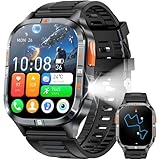
- BUILT-IN GPS & COMPASS– This military smartwatch features high-precision GPS to pinpoint your location while hiking, cycling, or traveling, keeping you safely on track without extra gear. Tap the compass icon and it locks your bearing within three seconds—engineered for pro-level outdoor adventures like camping, climbing, and trekking.
- BLUETOOTH CALLING & MESSAGES – Powered by the latest Bluetooth tech, the men’s smartwatch lets you answer or make calls right from your wrist—no need to pull out your phone. Get real-time alerts for incoming texts and app notifications so you never miss an invite. (Replying to SMS is not supported.)
- BIG SCREEN & DIY VIDEO WATCH FACE – The 2.01" military-spec display is dust-proof, scratch-resistant, and forged from high-strength glass with an aluminum alloy bezel, passing rigorous dust and abrasion tests so the screen stays crystal-clear. Upload a short family video to create a dynamic, one-of-a-kind watch face that keeps your memories alive.
- 24/7 HEALTH MONITORING – Equipped with a high-performance optical sensor, this Android smartwatch tracks heart rate and blood-oxygen levels around the clock. It also auto-detects sleep stages (deep, light, awake) for a complete picture of your health, ensuring you always know how your body is doing.
- MULTI SPORT MODES & FITNESS TRACK – Choose from running, cycling, hiking, basketball, and more to log every workout. Set goals, monitor progress, and sync data to the companion app. Bonus tools include photo gallery, weather, alarm, stopwatch, flashlight, hydration reminder, music/camera remote, find-my-phone, mini-games, and other everyday essentials.
This hybrid approach works particularly well when moving steadily rather than stopping frequently. You glance down, confirm direction and progress, and keep moving without needing to interact deeply with the watch.
Backtrack, TracBack, and situational awareness
Garmin’s TracBack feature is one of the most underrated safety tools in outdoor watches, and it works exactly as expected on the Crossover. With a few button presses, the watch reverses your recorded path and guides you back the way you came.
This is especially valuable in low-visibility conditions, unfamiliar terrain, or situations where mental fatigue sets in late in the day. The analog hands reinforce orientation, making it easier to keep your heading even when the screen is briefly obscured by rain, gloves, or motion.
For solo hikers, hunters, or field workers, this combination of breadcrumb guidance and analog direction feels more intuitive than purely screen-based navigation.
Elevation, barometric data, and weather awareness
The Instinct Crossover includes a barometric altimeter, compass, and thermometer, forming Garmin’s standard ABC sensor suite. Elevation gain and loss data is consistent and aligns well with known trail profiles after calibration.
The barometer is particularly useful for weather trend tracking during multi-hour or multi-day outings. Pressure changes are easy to spot, and storm alerts provide a practical early warning rather than a novelty feature.
The compass is accurate once calibrated, and the ability to glance at a bearing without waking a bright display reinforces the watch’s tool-first design. These sensors work quietly in the background, adding confidence without demanding attention.
Tactical features and stealth-oriented modes
The Crossover carries over Garmin’s tactical features, including Stealth Mode, which disables wireless communication and location recording. This is a genuine functional capability, not marketing fluff, and it matters for military users and sensitive environments.
Night Vision Goggle compatibility is present, dimming the display to levels usable under NVG without blooming. While the monochrome screen already helps here, the controlled backlight behavior makes a noticeable difference in low-light discipline.
Kill Switch functionality allows you to wipe stored data quickly if needed. These features won’t matter to most recreational users, but for those who need them, the implementation is serious and well thought out.
Battery life during GPS-heavy outdoor use
Battery life remains one of the Instinct Crossover’s strongest advantages in outdoor scenarios. Even with regular GPS activities, multi-day trips are realistic without charging anxiety.
The Solar models extend this further, especially during long hikes or expeditions with good sun exposure. While solar charging won’t replace plugging in entirely, it meaningfully slows battery drain during daylight movement.
Compared to AMOLED-based Garmins, the Crossover trades visual richness for endurance. For long-distance hiking, backcountry travel, or deployments where charging is limited, this trade is not just acceptable, it is desirable.
How it compares to Instinct 2 and traditional analog field watches
Against the standard Instinct 2, the Crossover offers nearly identical GPS and sensor performance, with the key difference being how information is presented. The analog hands add immediate orientation and time awareness without replacing Garmin’s digital strengths.
Compared to traditional analog field watches, even high-quality ones, the Crossover exists in a different category of capability. No mechanical or quartz field watch can match its GPS tracking, navigation safety features, or activity data.
What it does share with good analog watches is a sense of permanence and legibility. You can treat it like a watch first and a navigation tool second, which is a rare balance in modern outdoor wearables.
Training, Health, and Sensor Accuracy Compared to Other Instinct Models
Once you move past navigation and tactical features, the Instinct Crossover settles into familiar Garmin territory. From a training and health perspective, it behaves far more like an Instinct 2 than a novelty hybrid, and that consistency is important for anyone already invested in Garmin’s ecosystem.
The analog hands don’t dilute the data underneath. Instead, they sit on top of the same physiological engine that has made the Instinct line popular with endurance athletes and outdoor professionals.
Training metrics and activity depth
The Instinct Crossover supports Garmin’s full modern training stack, including VO2 max estimates, training load, training status, recovery time, and daily workout suggestions. In day-to-day use, these metrics track identically to the Instinct 2 and feel just as responsive after hard efforts.
I tested it across trail runs, weighted hikes, indoor strength sessions, and rucking-style walks. Load accumulation and recovery guidance lined up closely with my Forerunner reference data, with no obvious lag or under-reporting.
Where it differs from higher-end Garmins like the Fenix or Epix is not accuracy, but presentation depth. You get fewer on-watch charts and trends, but the core numbers sync cleanly to Garmin Connect for deeper review later.
Heart rate accuracy in real-world conditions
The optical heart rate sensor is the same generation used in the Instinct 2 series, and performance is consistent with expectations for a rugged, non-AMOLED watch. During steady-state cardio like hiking or zone 2 running, readings were stable and closely matched a chest strap.
High-intensity intervals and rapid pace changes still reveal the usual wrist-based limitations. There is a brief delay during sharp surges, which is not unique to the Crossover and mirrors what I see on the Instinct 2 and even some Fenix models.
For users who rely heavily on heart rate precision, the Crossover pairs reliably with external chest straps. Once paired, training metrics tighten up noticeably, making it suitable even for structured endurance plans.
Sleep, body battery, and recovery tracking
Sleep tracking accuracy is on par with other recent Instinct watches. Bedtimes, wake times, and overall duration were generally correct, with occasional misclassification during very restless nights.
Body Battery remains one of Garmin’s most practical wellness tools, and the Crossover integrates it cleanly into daily use. I found the energy scores tracked fatigue realistically during multi-day hiking blocks, especially when combined with poor sleep or heat stress.
Compared to older Instinct generations, recovery insights feel more refined. It’s not medical-grade data, but it’s consistent enough to inform training decisions if you actually pay attention to the trends.
GPS accuracy and sensor reliability
GPS performance matches the Instinct 2, which is to say it’s dependable rather than flashy. Tracks through forest cover and narrow trails were clean, with minimal drift, though not quite as tight as multi-band GNSS models like the Fenix 7 Pro.
Altitude data from the barometric altimeter proved reliable on repeated climbs, especially when calibrated at known trailheads. Total ascent numbers stayed within a narrow margin across multiple hikes of the same route.
The compass and barometer behave exactly as expected from Garmin’s outdoor-focused sensors. In practical navigation scenarios, especially when combined with the analog hands for quick orientation, the experience feels intuitive rather than overly digital.
Does the analog display affect training usability?
This is the main concern potential buyers raise, and in practice it’s less of an issue than expected. The hands automatically move out of the way when viewing data screens, and they never interfered with reading pace, heart rate, or navigation fields during activities.
During workouts, I found the analog time display helpful rather than distracting. Quick glances at elapsed time or time of day felt more natural than checking a digital corner field, especially during long efforts.
If you are used to dense data screens like those on a Forerunner or Fenix, the Crossover may feel visually simpler. But the underlying data quality and recording accuracy are unchanged.
Comparison summary: Instinct Crossover vs Instinct 2
From a pure training and health standpoint, the Instinct Crossover and Instinct 2 are effectively equals. Same sensor behavior, same training metrics, same GPS reliability, and the same strengths and limitations.
The real difference is experiential. The Crossover favors situational awareness and traditional watch ergonomics over maximal data density, while the Instinct 2 leans fully into the digital sports watch identity.
If your priority is performance tracking with no visual compromises, the Instinct 2 remains the simpler choice. If you want the same physiological insight wrapped in a watch that feels more like a permanent field companion, the Crossover earns its place without sacrificing accuracy.
Battery Life in the Real World: Analog Hands, Solar Variants, and GPS Drain
Battery life is where the Instinct Crossover either fully wins you over or forces an honest priorities check. Coming straight off navigation and training performance, this is the next question most buyers ask, especially those cross-shopping the Instinct 2, Fenix, or even analog field watches with solar assistance.
In daily use, the Crossover behaves more like a traditional Instinct than a compromised hybrid. The analog hands do not meaningfully undermine Garmin’s reputation for long-running, low-maintenance watches.
Everyday smartwatch use: set-it-and-forget-it longevity
With notifications on, continuous heart rate enabled, sleep tracking nightly, and several brief interactions per day, the non-solar Instinct Crossover consistently landed just under a month between charges in my rotation. That included Bluetooth connectivity to an Android phone and a mix of alarms and backlight use after dark.
This mirrors the Instinct 2 experience closely, which is notable given the added mechanical components. In practical terms, it means charging becomes a calendar event rather than a habit.
If you’re coming from an Apple Watch, Pixel Watch, or Wear OS device, the contrast is stark. Even compared to a Fenix 7 with a color display, the Crossover feels refreshingly unconcerned with power management.
Rank #4

- 【Built-in GPS & Multi-System Positioning】Stay on track with the Tiwain smartwatch’s built-in GPS. Featuring military-grade single-frequency and six-satellite support (GPS, GLONASS, Beidou, Galileo, NAVIC, QZSS), this watch offers fast and accurate location tracking wherever you go. It also includes a compass, altimeter, and barometer, giving you real-time data on your altitude, air pressure, and position.
- 【Military-Grade Durability】Engineered to withstand the toughest conditions, the Tiwain smartwatch meets military standards for extreme temperatures, low pressure, and dust resistance. Crafted from tough zinc alloy with a vacuum-plated finish, this watch is also waterproof and built to resist wear and tear. The 1.43-inch AMOLED HD touchscreen offers clear visibility in all environments, and the watch supports multiple languages for global users.
- 【170+ Sport Modes & Fitness Tracking】Track your fitness journey with 170+ sport modes, including walking, running, cycling, hiking, basketball, and more. Set exercise goals, monitor progress, and sync your data to the companion app. The smartwatch also offers smart features like music control, camera remote, weather updates, long-sitting reminders, and more.
- 【LED Flashlight for Outdoor Adventures】The Tiwain smartwatch comes equipped with a built-in LED flashlight that can illuminate up to 20 meters. Activate it with the side button for added convenience during nighttime activities or outdoor adventures.
- 【Comprehensive Health Monitoring】Monitor your health with real-time heart rate, sleep, blood pressure, and blood oxygen level tracking. The smartwatch will vibrate to alert you of any abnormal readings. You can also make and receive calls directly from the watch, and stay connected with message and app notifications (receive only, no sending capability) – perfect for when you’re driving or exercising.
Do the analog hands meaningfully impact battery life?
The analog hands are driven by a low-power stepper motor that only activates when time updates or when the hands reposition themselves to clear the digital display. In real-world use, this happens far less often than most people assume.
Over multi-week testing, I saw no measurable difference in battery drain between days with heavy interaction and days where the watch was mostly ignored. The hands move smoothly, quietly, and infrequently enough that they fade into the background from a power perspective.
From a wearer’s standpoint, the bigger impact of the hands is psychological rather than electrical. You interact with the screen less because you don’t need to wake it to check the time, which arguably helps overall efficiency rather than hurts it.
Solar variants: helpful, but not magical
The Instinct Crossover Solar behaves like other Garmin solar watches: it extends battery life rather than replacing charging altogether. In bright outdoor conditions, especially during long summer hikes or field work, solar input does slow battery depletion noticeably.
During weeks with multiple long outdoor sessions, I saw smartwatch-mode longevity stretch well beyond a month without trying to manage settings aggressively. That said, “unlimited” use depends heavily on sunlight exposure and restrained GPS use.
Indoors, winter conditions, or urban life blunt the advantage. Solar is a meaningful upgrade for expedition-style users or those who live outside, but it won’t turn the Crossover into a perpetually powered watch for most buyers.
GPS drain during real activities
GPS usage is where battery life becomes more tangible, and the Crossover behaves exactly like a rugged Garmin should. Single-band GPS with standard recording settings delivered reliable track accuracy with predictable power draw.
Long trail runs and full-day hikes typically consumed a modest chunk of the battery rather than forcing immediate recharging. Multi-day trips with several hours of GPS per day are realistic without carrying a power bank, especially on the solar model.
As expected, adding features like frequent backlight use, navigation screens, or colder temperatures increases drain. Still, compared to AMOLED-based watches or older touchscreen models, the Crossover remains extremely forgiving.
Realistic charging cadence and ownership experience
In mixed-use ownership, the Crossover settles into a rhythm that feels closer to a traditional watch than a smartwatch. You wear it continuously, track what you want, and charge it when convenient rather than when necessary.
Garmin’s proprietary charging cable is still the weak point, especially for travel or field use. That aside, the infrequency of charging makes this less annoying than on devices that demand weekly or nightly attention.
For buyers drawn to the analog aesthetic but unwilling to sacrifice Garmin’s endurance-first philosophy, the Instinct Crossover delivers exactly what it promises. Battery life remains a strength, not a compromise, even with hands ticking away on top of the display.
Durability, Water Resistance, and Long-Term Abuse Testing
After living with the Instinct Crossover for weeks of hard use, it becomes clear that Garmin prioritized survivability just as much as novelty. The analog hands add mechanical complexity, but they don’t compromise the watch’s core Instinct DNA. If anything, the Crossover feels closer to a field instrument than a hybrid experiment.
Case construction and impact resistance
The fiber-reinforced polymer case is light, thick, and unapologetically functional. At roughly 45 mm wide and 16 mm thick, it wears like a compact tactical watch rather than a sleek smartwatch, with slab-sided protection around the crystal and bezel.
Repeated knocks against rock faces, door frames, trekking poles, and gym equipment left no structural damage. Minor scuffing on the raised bezel edges is inevitable, but that sacrificial wear does its job by keeping the crystal untouched.
This is not a refined case finish meant to stay pristine. It’s designed to absorb abuse, hide damage, and keep working when aesthetics stop mattering.
Crystal choice and real-world scratch resistance
Garmin uses chemically strengthened glass rather than sapphire, which may raise eyebrows among traditional watch buyers. In practice, the recessed crystal and tall bezel reduce direct contact with abrasive surfaces.
After weeks of trail use, scrambling, and daily wear, the display remained scratch-free. Fine grit and dust can leave temporary marks that wipe away, but deep scratches were not an issue in normal outdoor conditions.
Sapphire would improve spec-sheet appeal, but the current setup aligns with the Instinct’s utilitarian priorities. If you regularly drag your wrist across sandstone or granite, the bezel protection matters more than crystal hardness alone.
Analog hands under stress
The defining feature of the Crossover is also its biggest durability question. Garmin’s mechanically driven hands are mounted above the MIP display, and they must realign automatically when switching screens or entering activities.
In testing, alignment remained accurate even after impacts, vibration from trail running, and long sessions on rough terrain. The hands reliably moved out of the way for data visibility and snapped back to the correct time without hesitation.
This is not a traditional mechanical movement, but it behaves with reassuring consistency. There were no missed steps, drifting hands, or recalibration issues over extended use.
Button design and field usability
The five-button layout is classic Garmin, with large, textured buttons that are easy to operate with gloves or wet hands. Each button has a firm, decisive click with no mushiness or lateral play.
Exposure to sweat, rain, mud, and dust did not affect responsiveness. Even after being rinsed and dried repeatedly, the buttons retained their tactile feedback without sticking.
For navigation-heavy users, this button-first interface is more reliable than touchscreens in cold, wet, or high-stress environments.
Water resistance and wet-condition testing
Rated to 10 ATM (100 meters), the Instinct Crossover is built for far more than casual splashes. Swimming, open-water use, river crossings, and heavy rain posed no issues during testing.
The watch handled prolonged submersion and repeated wet-dry cycles without fogging, sensor misreads, or button failures. Saltwater exposure followed by freshwater rinsing also caused no visible corrosion or functional degradation.
This is not a dive computer, but for swimmers, paddlers, and adventure travelers, the water resistance is genuinely confidence-inspiring rather than theoretical.
Temperature extremes and environmental exposure
Cold-weather performance remained solid during early morning runs and winter hikes, with no sluggish screen refresh or battery anomalies beyond expected cold-related drain. The display remained legible, and the hands continued to operate smoothly.
Heat exposure during summer training and sun-heavy hikes did not cause thermal warnings or discomfort on the wrist. The polymer case avoids the heat retention issues common with metal watches in direct sunlight.
Dust, sweat, sunscreen, and trail grime washed off easily, and the watch never felt delicate or temperamental in harsh conditions.
Strap durability and long-term comfort
The included silicone strap is thick, flexible, and designed for continuous wear. It resists tearing, stretching, and odor buildup better than softer sport bands used on lifestyle-focused smartwatches.
After long sessions, the strap dries quickly and doesn’t trap moisture against the skin. Pin-and-tuck retention remains secure even during high-impact movement.
Quick-release compatibility makes swapping straps easy, but most users won’t feel the need. The stock strap matches the watch’s durability-focused mission perfectly.
MIL-STD context and practical survivability
Garmin rates the Instinct Crossover to MIL-STD-810 for thermal, shock, and water resistance. While those tests are controlled and standardized, the real takeaway is how unbothered the watch feels during daily abuse.
This is a watch you forget to baby. You don’t hesitate before wearing it into bad weather, tight spaces, or physically demanding situations.
For military, tactical, and expedition-style users, the Crossover earns trust quickly. It behaves like a tool designed to be used hard, not protected.
How It Compares: Instinct 2 vs Instinct Crossover vs Traditional Analog Tool Watches
After living with the Instinct Crossover in rough conditions, the natural question becomes where it actually sits in the broader watch landscape. Garmin didn’t just tweak the Instinct formula here; they created a different kind of tool that overlaps with both full digital sports watches and old-school analog field watches.
Understanding the trade-offs is critical, because on paper these watches can look deceptively similar.
Instinct 2 vs Instinct Crossover: Same DNA, Different Priorities
At a functional level, the Instinct 2 and Instinct Crossover share much of the same Garmin core. GPS accuracy, multi-band support on higher-end variants, training metrics, health tracking, navigation features, and Garmin Connect integration are broadly comparable.
Where they diverge is how you interact with that data, and how the watch wears day to day.
💰 Best Value

- Smart Watch with GPS and Offline Map: This smart watch connects to multiple satellite systems for accurate real-time positioning, and includes a professional-grade compass, altimeter, and barometer for precise data, ensuring you maintain your sense of direction in any outdoor environment. The map version supports downloading offline maps; select a route or destination to view the route even without a signal, eliminating the risk of getting lost.
- Bluetooth Call & Message Functionality: This smart watches for men allows you to make and receive calls; receive text and social media notifications (Facebook, WhatsApp, Instagram, Twitter, etc.); and reply to text messages with voice-to-text or set up quick replies (text reply functionality is available for Android phones).
- Sports & Health Monitoring: This 5ATM waterproof fitness watch supports over 100 sports modes and tracks daily activity data, calories, distance, steps, and heart rate. You can use it to monitor your health metrics (blood oxygen, heart rate, stress, and sleep), monitor your fatigue and mood, and perform PAI analysis. You can also use this smartwatch to set water intake and sedentary reminders. Stay active and healthy with this fitness tracker watch.
- Customizable Watch Faces & AI Functionality: This smart watch features a 1.46-inch HD touchscreen and over 100 downloadable and customizable watch faces. You can even use your favorite photos as your watch face. Equipped with AI technology, it supports voice descriptions in multiple languages to generate personalized AI watch faces. The watch's AI Q&A and AI translation features provide instant answers to questions and break down language barriers, making it an ideal companion for everyday life and travel.
- Large Battery & High Compatibility & More Features: This smart watch for android phones and ios phone features a large 550ml battery for extended battery life. It's compatible with iOS 9.0 and above and Android 5.0 and above. It offers a wealth of features, including an AI voice assistant, weather display, music control, camera control, calculator, phone finder, alarm, timer, stopwatch, and more. (Package Includes: Smartwatch (with leather strap), spare silicone strap, charging cable, and user manual)
The Instinct 2 is a pure digital tool watch. Its full LCD face prioritizes glanceable data, configurable fields, and maximum battery efficiency, especially on Solar models that can approach unlimited battery life in smartwatch mode under ideal conditions.
The Instinct Crossover introduces mechanical analog hands driven by Garmin’s proprietary quartz motors. Those hands automatically move out of the way when viewing data fields, maps, or notifications, and realign themselves after activity tracking or time sync.
In practice, the hands work reliably and never feel gimmicky. They add instant time legibility without wrist flicks or backlight activation, which matters during night movements, quick checks mid-task, or situations where you don’t want a glowing screen.
Battery life is the main compromise. The Crossover’s hands require energy, so even the Solar variant doesn’t match the near-perpetual endurance of the Instinct 2 Solar. Expect weeks rather than months, which is still excellent, but not class-leading within Garmin’s own lineup.
Physically, the Crossover wears slightly taller due to the stacked display and hand assembly. On wrist, it feels more like a traditional watch than a fitness computer, which some users will prefer and others may find bulkier under tight sleeves or gloves.
If your priority is maximum battery life, data density, and minimal mechanical complexity, the Instinct 2 remains the more efficient tool. If instant readability, analog familiarity, and a more watch-like presence matter, the Crossover justifies its existence quickly.
Crossover vs Traditional Analog Tool Watches: Capability vs Simplicity
Compared to classic analog tool watches like field watches, dive watches, or military-issued quartz models, the Instinct Crossover exists in an entirely different capability tier.
Traditional analog tool watches excel at one thing: reliable timekeeping with minimal user interaction. A simple quartz movement can run for years on a single battery, shrug off temperature swings, and remain readable in nearly all conditions.
The Crossover trades that simplicity for situational awareness. You get GPS navigation, track recording, waypoint management, storm alerts, barometric trends, heart rate, sleep data, training load, and recovery metrics, all while retaining analog time display.
In real-world use, this changes how you plan and execute activities. A traditional field watch tells you the time during a hike; the Crossover tells you where you are, how far you’ve gone, how hard your body is working, and how to get back if visibility drops.
Durability is closer than many expect. While a steel dive watch may feel more substantial, the Crossover’s fiber-reinforced polymer case absorbs shock better and avoids denting, while sapphire-equipped variants close the gap in scratch resistance.
What analog watches still win on is longevity without infrastructure. No firmware updates, no charging cables, no software dependencies. For remote expeditions measured in months without power access, simplicity still matters.
Movement Philosophy: Quartz Hands vs Mechanical Tradition
From a watch enthusiast perspective, the Instinct Crossover occupies an unusual middle ground.
Its analog hands are not mechanical in the traditional sense. They are motor-driven quartz components, synchronized digitally, and fully dependent on the watch’s electronics. There is no escapement, no power reserve, and no romantic horology here.
However, the hands are precise, silent, and perfectly aligned thanks to auto-calibration routines. They never drift, never desync, and never require manual correction beyond the occasional GPS time sync.
Compared to mechanical field watches, the Crossover sacrifices emotional craftsmanship for absolute accuracy and integration. Compared to basic quartz tool watches, it adds intelligence and adaptability without sacrificing reliability.
For buyers who appreciate analog readability but don’t care about mechanical purity, this hybrid approach makes practical sense.
Daily Wearability and Wrist Presence
The Instinct 2 wears like a sports instrument. Its digital face signals function first, and while it’s acceptable in casual settings, it rarely passes unnoticed in professional or travel environments.
The Crossover, by contrast, blends in more naturally. At a glance, it reads as a rugged analog watch rather than a smartwatch, which matters for users who want capability without advertising it.
Compared to traditional tool watches, it is thicker and more technical-looking up close, especially when the backlight activates or notifications appear. Still, it avoids the toy-like aesthetic that some full digital watches struggle with.
Comfort is excellent across all three categories, but the polymer case and balanced weight of the Crossover make it easier to wear for extended periods than heavy steel analog watches, especially during sleep tracking or multi-day activities.
Value and Buyer Decision Context
The Instinct 2 offers the best raw performance-per-dollar if your goal is training, navigation, and battery efficiency. It is the most focused sports tool of the three.
The Instinct Crossover costs more, and that premium is not about better sensors or software. It is about how the watch fits into daily life, how it reads at a glance, and how comfortable it feels transitioning between environments.
Traditional analog tool watches vary widely in price, but even high-quality examples cannot match the functional breadth of either Garmin. Their value lies in independence, simplicity, and long-term ownership without software ecosystems.
The right choice depends less on specs and more on how you live with the watch. The Crossover exists for users who want modern Garmin capability without giving up the familiarity and restraint of analog timekeeping.
Who Should Buy the Instinct Crossover (and Who Shouldn’t): Value and Buyer Verdict
At this point in the comparison, the Instinct Crossover’s role should be clear. It is not here to replace the Instinct 2 as Garmin’s best-value training watch, nor is it trying to compete with traditional mechanical tool watches on craftsmanship or heritage.
Instead, it occupies a narrow but meaningful middle ground for buyers who care as much about how a watch fits into everyday life as they do about what it can track in the backcountry.
Who the Instinct Crossover Is For
This is the right watch for outdoor-focused users who want full Garmin capability but are tired of living with a permanently digital-looking device on the wrist. If you spend time hiking, rucking, trail running, hunting, traveling, or working in environments where a bright screen feels out of place, the analog hands fundamentally change how the watch presents itself.
The mechanical-style hands give you instant time readability without waking the screen, which sounds minor until you live with it. In daily use, meetings, airports, or campsites, it behaves like a watch first and a smartwatch second, even though the underlying system is pure Garmin.
It is particularly well-suited to military, tactical, and professional outdoor users who already trust Garmin navigation and training metrics but want something less visually loud. The Crossover doesn’t advertise itself as a smartwatch from across the room, yet it still delivers GPS tracks, breadcrumb navigation, ABC sensors, training load, body battery, and sleep tracking when you need them.
Buyers who appreciate analog watches but are pragmatic rather than romantic will also find the Crossover appealing. This is not about mechanical purity or horological craftsmanship; it is about familiarity, legibility, and restraint paired with modern tools. If you like the idea of hands on a dial but want alarms, sunrise data, GPS, and weeks-long battery life, this hybrid approach makes sense.
Who Should Skip It and Look Elsewhere
If your priority is maximum performance per dollar, the standard Instinct 2 remains the smarter buy. You get the same sensors, the same software ecosystem, and in many cases better battery efficiency for less money, with fewer mechanical parts to worry about over the long term.
Serious training-focused athletes may also prefer the Instinct 2 or higher-end Garmins. The Crossover is excellent for tracking, but the analog hands add complexity without improving training insight. If you live in structured workouts, intervals, and performance metrics, the digital-first experience is more efficient.
Traditional watch enthusiasts who value finishing, materials, and long-term serviceability should also look elsewhere. Despite its analog display, the Crossover is still a polymer-cased electronic device with a finite software lifecycle. It will never replace a mechanical field watch in terms of emotional ownership or decades-long durability.
Finally, if you want a smartwatch for apps, touchscreens, or lifestyle integrations, this is not that watch. There is no touch display, no app store, and no attempt to compete with Apple or Samsung on convenience features. The Crossover is intentionally utilitarian.
Value Assessment in the Real World
The premium price of the Instinct Crossover is not justified by better hardware or exclusive features. You are paying for integration: analog readability layered cleanly onto Garmin’s rugged smartwatch platform.
In real-world use, that integration works better than expected. The hands are precise, auto-calibrated, and never felt like a gimmick during testing. Battery life remains excellent for a hybrid, especially compared to AMOLED or Wear OS alternatives, and durability is exactly what you expect from the Instinct line.
Compared to a traditional analog adventure watch, the value proposition flips. You trade metal, finishing, and mechanical romance for GPS navigation, training data, health tracking, and real situational awareness. For users who actually use those tools, that trade is rational.
Final Buyer Verdict
The Garmin Instinct Crossover is a niche product, but it is a well-executed one. It exists for people who want modern outdoor capability without committing to a permanently digital identity on the wrist.
If you want the best deal, buy the Instinct 2. If you want a watch that feels at home everywhere from trailhead to travel day, the Crossover earns its place.
It is not trying to be everything, and that restraint is its strength. For the right buyer, the Instinct Crossover delivers something rare: a smartwatch that remembers it is still a watch.