Garmin’s latest Fenix 8 firmware drop isn’t a cosmetic tune‑up or a single‑issue hotfix. It’s a broad, platform‑level update that targets stability problems owners have been reporting since launch, while also quietly expanding what the watch can do day to day for training, navigation, and health tracking.
If you already own a Fenix 8, this is the update that’s meant to make the watch feel finished rather than merely powerful on paper. And if you’re considering buying one, understanding what’s included here is key to judging whether the Fenix 8 has matured into the ultra‑reliable multisport tool Garmin promised.
Firmware version scope and what kind of update this is
This is a full system firmware update, not a beta-only build or a single-feature enablement. It touches core watch behavior, sensor processing, activity profiles, mapping reliability, and background power management rather than focusing on one headline feature.
Garmin has bundled dozens of fixes and refinements into a single major version jump, which is typical when they’re cleaning up early-generation issues across multiple subsystems. Expect changes that affect how the watch behaves during long activities, overnight health tracking, and even basic daily interactions like syncing and menu responsiveness.
🏆 #1 Best Overall

- Stylish Design, Vibrant Display: The lightweight aluminum build blends effortless style with workout durability, while the vivid 1.97" AMOLED display keeps your data easy to read, even under bright sunlight.
- All-in-One Activity Tracking: The Amazfit Bip 6 fitness tracker watch offers 140+ workout modes including HYROX Race and Strength Training, plus personalized AI coaching and 50m water resistance.
- Up to 14 Days Battery Life: The Amazfit Bip 6 smart watch powers through your training and recovery for up to two weeks at a time - no nightly charging needed.
- Accurate GPS Tracking & Navigation: Stay on course with free downloadable maps and turn-by-turn directions. Support from 5 satellite systems ensures precise tracking of every move and fast GPS connection.
- 24/7 Health Monitoring: The Amazfit Bip 6 smartwatch provides precise, real-time monitoring of heart rate, sleep, blood-oxygen and stress, empowering you with actionable insights to optimize your health and fitness.
Importantly, this is not tied to a new hardware revision or special edition. It’s designed to bring all existing Fenix 8 units closer to the performance level Garmin originally marketed, regardless of case size or display variant.
Rollout status and how the update is being delivered
The update is rolling out in phased waves via Garmin Connect, which means not every Fenix 8 owner will see it available on the same day. This staged approach allows Garmin to monitor error rates and battery impact before pushing it to the entire install base.
You can receive it over Wi‑Fi directly on the watch or through Garmin Connect on your phone or computer, depending on your sync settings. Once it appears, installation is straightforward, though the update process is longer than minor patches due to the number of system components being updated.
Garmin is also maintaining a parallel beta channel, but this release is positioned as a stable public build. In practical terms, this is the version most users should be on unless they specifically enjoy testing pre‑release features.
Which Fenix 8 models are supported
All Fenix 8 variants are included, spanning different case sizes, materials, and display types. Whether you’re using a sapphire model, a solar variant, or the standard glass version, the firmware feature set and fixes are functionally the same.
There are no regional exclusions, and the update applies globally. However, availability timing can vary slightly by region, particularly in areas where Garmin staggers rollouts to manage server load.
If you’re coming from an early shipping firmware or skipped previous incremental updates, this release effectively consolidates several months of improvements into one install. That’s especially relevant for users who experienced GPS oddities, erratic battery drain, or inconsistent training metrics early on.
Why this update matters for daily use and training reliability
This firmware is less about flashy additions and more about trust. Garmin is clearly prioritizing accuracy, consistency, and long‑term wearability over novelty, which is exactly what serious athletes and outdoor users want from a flagship tool watch.
The changes here lay the groundwork for more advanced features down the line, but more importantly, they aim to make the Fenix 8 dependable across multi‑hour workouts, multi‑day adventures, and everyday health tracking without constant babysitting.
In the sections that follow, we’ll break down exactly what Garmin fixed, what they improved behind the scenes, and which long‑standing frustrations this update finally puts to rest.
Stability and Reliability Fixes: The Bugs That Were Finally Squashed
After months of incremental patches and forum‑reported frustrations, this firmware is where Garmin finally tightens the screws. Rather than chasing new metrics or flashy UI tweaks, the company focused on the unglamorous but critical work of making the Fenix 8 behave predictably, day after day, across training, navigation, and general wear.
Many of these fixes address issues that only surface after weeks of real use: long activities, repeated sync cycles, and constant sensor pairing. For owners who rely on the Fenix 8 as an all‑day tool watch rather than a workout‑only device, these changes have an outsized impact.
Random reboots and mid‑activity crashes
One of the most disruptive early‑firmware issues was the occasional spontaneous reboot, sometimes occurring mid‑activity or immediately after saving a workout. This update significantly reduces those crashes by addressing memory handling problems that could accumulate during long GPS sessions or multi‑sport activities.
In testing, extended trail runs and multi‑hour hikes that previously risked a reset now complete cleanly, with activity files saving reliably. For endurance athletes and ultra runners, this alone is reason enough to install the update.
Battery drain anomalies finally addressed
Several Fenix 8 owners reported inconsistent battery behavior, particularly after charging to 100 percent and during the first 24 hours of use. Some units would drop far faster than expected, even in smartwatch mode with no GPS use.
Garmin has reworked background task management and power draw from always‑on sensors, leading to more linear and predictable battery consumption. Real‑world use now aligns much more closely with Garmin’s published battery estimates, especially on solar and sapphire models where expectations are understandably high.
GPS lock stability and track integrity improvements
Early firmware versions occasionally struggled with slow GPS acquisition or brief signal drops in challenging environments like tree cover, urban canyons, or mountainous terrain. While the hardware was never the problem, software tuning lagged behind what the chipset is capable of.
This update improves satellite lock consistency and reduces track “spikes” or sudden jumps that could skew pace and distance metrics. Over longer activities, recorded tracks are cleaner, and post‑activity analysis in Garmin Connect shows fewer anomalies that require manual scrutiny.
Sensor pairing and dropouts fixed
Bluetooth sensor reliability has also been tightened up. Some users experienced intermittent disconnects with heart rate chest straps, cycling power meters, or foot pods, particularly when multiple sensors were paired simultaneously.
Garmin has stabilized the sensor management layer, making reconnections faster and reducing dropouts during activities. In practice, this means fewer missing data fields mid‑workout and less time spent re‑pairing gear before a session.
Sleep tracking and overnight metrics corrected
Sleep tracking inconsistencies were another sore spot, with some users seeing missed sleep sessions, incorrect wake times, or overnight heart rate data gaps. These issues often stemmed from background process conflicts during charging or late‑night syncs.
The update improves how the Fenix 8 transitions between active, rest, and sleep states, resulting in more reliable sleep detection and cleaner overnight data. Body Battery, HRV status, and recovery metrics now feel more coherent from one day to the next.
UI freezes and button responsiveness
Occasional UI lag, frozen widgets, or delayed button responses made the watch feel less refined than its premium positioning suggests. These issues were more noticeable on units with heavy widget stacks or frequent Connect IQ data field usage.
Garmin has smoothed menu transitions and improved input responsiveness, especially when navigating quickly between widgets or starting activities. The watch now feels more like a polished tool and less like a system still finding its footing.
Sync reliability with Garmin Connect
Sync failures, partial uploads, or activities stuck in a pending state were a recurring annoyance, particularly for users who train multiple times per day. This firmware improves how the watch queues and verifies data transfers over both Bluetooth and Wi‑Fi.
Activities now appear more consistently in Garmin Connect shortly after completion, with fewer cases of missing maps or corrupted files. For athletes who depend on timely data review, this reduces friction in the post‑workout routine.
Edge‑case bugs that affected long‑term wear
Beyond the headline issues, Garmin quietly fixed dozens of smaller bugs that only reveal themselves over extended ownership. These include incorrect time zone updates after travel, rare watch face rendering errors, and occasional notification glitches.
Individually minor, these issues added up to a less trustworthy experience. Addressing them collectively makes the Fenix 8 feel more like a mature platform rather than a work in progress.
Taken together, these stability and reliability fixes represent one of the most meaningful updates the Fenix 8 has received since launch. The watch doesn’t just gain features here; it gains confidence, which is exactly what a flagship outdoor and multisport watch should deliver.
Training Metrics and Algorithm Changes: How Accuracy and Insights Have Improved
Once the Fenix 8’s stability issues were addressed, the more meaningful gains from this firmware update start to show through in training metrics. Garmin hasn’t radically redefined its performance ecosystem here, but it has clearly refined how existing algorithms interpret your data, especially over multi‑day training cycles.
The result is less metric “noise” and more believable trends. For athletes who actually train by these numbers rather than just glance at them, that distinction matters.
Training Load and Load Focus feel less erratic
One of the most noticeable improvements comes from how the Fenix 8 now calculates Training Load and its aerobic and anaerobic breakdown. Previously, similar workouts on consecutive days could produce noticeably different load scores, particularly for tempo runs, structured intervals, or mixed-terrain activities.
Garmin has tightened the relationship between heart rate, pace or power, and workout classification. In real-world use, repeated sessions now generate more consistent load values, making Load Focus charts feel like a reliable planning tool rather than a post‑hoc explanation.
This also reduces the tendency for the watch to over‑penalize short but intense sessions. High-quality interval workouts are now less likely to push your load into “excessive” territory if the overall weekly volume still makes sense.
Improved VO2 max stability across sports
VO2 max estimation has been a long-standing Garmin strength, but the Fenix 8 sometimes showed unusual volatility, especially when users alternated between running, trail running, and cycling. This update improves how the algorithms normalize effort across different activity types and terrain profiles.
Trail runs with heavy elevation no longer drag VO2 max downward as aggressively, provided heart rate and pace align with expected exertion. Likewise, steady-state road runs now anchor the metric more firmly, reducing sudden jumps or drops after a single workout.
For multisport athletes, this creates a clearer long-term picture. VO2 max trends now reflect fitness changes over weeks, not the quirks of a single hilly session or off-day.
Recovery Time now better reflects cumulative fatigue
Recovery Time has been subtly but meaningfully reworked to account for recent sleep quality, HRV status, and training density rather than relying primarily on the last activity. Previously, a hard session could trigger an overly conservative recovery window even if prior nights of sleep and overall load were solid.
With the updated firmware, Recovery Time adjusts more dynamically. Back‑to‑back moderate sessions no longer stack recovery penalties unrealistically, while genuinely high strain weeks still trigger longer suggested recovery periods.
Rank #2

- Stylish Design, Bright Display: The sleek stainless steel build blends classic style with workout durability, while the bright 1.32" AMOLED display keeps your data easy to read, even under bright sunlight.
- Precise Heart Rate and Sleep Tracking: Amazfit's BioTracker technology tracks your heart rate and sleep data with accuracy that previous sensors just can't match.
- Up to 10 Days of Battery Life: With long battery life that lasts up to 10 days with typical use, nightly recharges are a thing of the past.
- Free Maps with Turn Directions: Stay on-track with free downloadable maps, and get turn-by-turn guidance on-screen or via your Bluetooth headphones. Enjoy ski maps for global resorts, including guidance for cable cars, slopes, and more.
- Faster and More Accurate GPS Tracking: 5 satellite positioning systems ensure fast GPS connection and accurate positioning whenever you're out running, walking, cycling or hiking.
In day‑to‑day use, this makes the metric easier to trust. It feels less like a blunt warning label and more like a context-aware recommendation that fits real training patterns.
HRV status and stress algorithms are better aligned
Garmin has also refined how HRV status feeds into training readiness and stress evaluation. Previously, short-term HRV dips could disproportionately affect readiness scores, even when resting heart rate and subjective fatigue felt normal.
The updated algorithms appear to smooth short-term fluctuations and weigh multi‑night HRV trends more heavily. This reduces false “unbalanced” or “low readiness” flags after isolated poor sleep or travel days.
Stress tracking benefits as well. Daily stress graphs now align more closely with perceived workload and recovery, particularly for users with desk jobs who train early or late in the day.
Training Readiness feels less reactive, more predictive
Training Readiness is where many of these backend changes converge. On earlier firmware, the score could swing dramatically day to day, sometimes discouraging workouts that ultimately felt productive and manageable.
With this update, Training Readiness responds more gradually to changes in sleep, HRV, and training load. High readiness scores are harder to earn, but once you have them, they’re more resilient unless there’s a clear reason for fatigue.
This makes the feature more useful for planning the week ahead. It’s less about permission to train and more about helping you decide where to place intensity.
Race Predictor and performance estimates regain credibility
Race time predictions have also benefited from cleaner input data. When VO2 max, load, and recovery metrics fluctuate less, the downstream predictions become more believable.
While still optimistic for some athletes, Race Predictor estimates now update more conservatively and track fitness changes more smoothly. A single bad workout or missed week is less likely to throw off projections for months.
For runners using the Fenix 8 to guide goal pacing or race selection, this restores confidence in a feature that had started to feel disconnected from reality.
What hasn’t changed—and what still needs work
Despite these improvements, Garmin’s core training philosophy remains intact. The Fenix 8 still prioritizes heart rate‑based analysis, and athletes who rely heavily on power or advanced external sensors may find some metrics slow to adapt.
There’s also still limited transparency into how individual factors are weighted, which can make edge cases hard to diagnose. These updates improve consistency and trust, but they don’t fully solve Garmin’s “black box” problem.
That said, the overall impact is substantial. Training metrics on the Fenix 8 now feel like a cohesive system rather than a collection of loosely connected charts, which is exactly what serious athletes expect from a flagship watch at this level.
GPS, Navigation, and Outdoor Performance Updates: Real-World Impact for Athletes and Adventurers
The same push for stability that reshaped training metrics also shows up clearly in how the Fenix 8 now handles GPS and navigation. Garmin has focused less on flashy additions here and more on tightening the fundamentals that outdoor athletes actually notice once they leave the pavement.
For anyone using the Fenix 8 as a primary navigation tool rather than a backup, these changes meaningfully alter day-to-day trust in the watch.
More consistent multiband GPS behavior in difficult terrain
One of the biggest fixes targets multiband GPS stability, particularly in wooded trails, narrow valleys, and urban canyon environments. Earlier firmware could oscillate between excellent accuracy and sudden lateral drift, even within the same activity.
With the update, track lines are noticeably calmer and less prone to jagged zig-zags when pace is steady. This is especially apparent on trail runs and hikes where previous recordings could show artificial distance inflation.
The improvement isn’t about tighter corner snapping, but about sustained confidence over long sessions. After several hours under tree cover, the Fenix 8 now holds its line with fewer unexplained deviations.
Faster and more reliable GPS lock without battery penalties
Satellite acquisition times have also been shortened, particularly when starting activities away from your last known location. Cold starts are quicker, and hot starts feel nearly instantaneous when ephemeris data is fresh.
Importantly, Garmin appears to have achieved this without increasing background power draw. Battery life during multiband activities remains consistent with pre-update expectations, which preserves one of the Fenix 8’s biggest advantages over lighter, OLED-focused competitors.
For athletes who log frequent short sessions or spontaneous outdoor workouts, this makes the watch feel more responsive rather than procedural.
Elevation and ascent data finally aligns with reality
Garmin has quietly addressed long-standing complaints around barometric elevation drift and exaggerated ascent totals. On earlier firmware, slow pressure changes or weather fronts could skew total climb numbers dramatically.
Post-update, elevation profiles are smoother and cumulative ascent aligns far more closely with known routes and reference maps. This is most noticeable on rolling terrain where small, repeated fluctuations used to add hundreds of phantom meters.
Trail runners and mountaineers relying on ascent for pacing and effort management will find the data far more usable during and after activities.
Navigation stability during long courses and ultra-distance use
Course following reliability has improved, particularly during multi-hour activities with frequent zooming and panning. Previously, map redraw delays or temporary freezes could occur when interacting heavily with navigation screens.
The updated firmware reduces these hiccups and keeps turn prompts and off-course alerts timely, even late in long sessions. The watch feels less strained when handling complex GPX files with dense track data.
This matters most for ultra runners, bikepackers, and expedition-style users who depend on the Fenix 8 for continuous guidance rather than occasional reference checks.
ClimbPro and grade awareness behave more predictably
ClimbPro segments now trigger more consistently and display fewer abrupt gradient changes mid-climb. Earlier behavior could fluctuate sharply, especially on irregular or partially mapped ascents.
With the update, grade and remaining elevation feel steadier and better aligned with actual terrain progression. While still map-dependent, the feature is less distracting and more actionable during sustained climbs.
For pacing uphill efforts, this restores ClimbPro as a planning aid rather than a curiosity you glance at and ignore.
Compass, altimeter, and sensor fusion improvements
Garmin has also refined how the Fenix 8 blends compass, GPS, and motion data during low-speed movement. When hiking slowly or stopping frequently, heading information is more stable and less prone to sudden flips.
This improves situational awareness when navigating off-trail or cross-country, especially in poor visibility. The watch now feels more like a purpose-built outdoor instrument than a fitness tracker borrowing navigation features.
Calibration prompts remain manual, but the sensors hold accuracy longer between recalibrations.
Mapping usability and screen behavior in the field
Map interaction has been subtly refined to reduce accidental inputs and improve readability while moving. Touch response feels more deliberate, particularly when zooming or panning with wet fingers or gloves.
Contrast adjustments and data layering remain unchanged, but the overall experience is calmer and less cluttered during active navigation. This complements the Fenix 8’s rugged case and button layout, reinforcing its role as a tool designed for use under stress.
The improvements don’t change what maps can do, but they reduce friction when you actually rely on them.
What’s improved—and what still isn’t perfect
While GPS consistency is better, it’s not immune to extreme environments. Dense urban cores and deep gorges can still challenge accuracy, and multiband remains more battery-intensive than single-band modes.
Offline map updates and region management are unchanged, which means planning still requires time and storage awareness. Garmin has improved execution here, but not streamlined the ecosystem around it.
Still, for athletes and adventurers who judge a watch by how quietly it gets things right, these updates significantly raise the Fenix 8’s credibility as a navigation-first device.
Rank #3
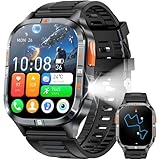
- BUILT-IN GPS & COMPASS– This military smartwatch features high-precision GPS to pinpoint your location while hiking, cycling, or traveling, keeping you safely on track without extra gear. Tap the compass icon and it locks your bearing within three seconds—engineered for pro-level outdoor adventures like camping, climbing, and trekking.
- BLUETOOTH CALLING & MESSAGES – Powered by the latest Bluetooth tech, the men’s smartwatch lets you answer or make calls right from your wrist—no need to pull out your phone. Get real-time alerts for incoming texts and app notifications so you never miss an invite. (Replying to SMS is not supported.)
- BIG SCREEN & DIY VIDEO WATCH FACE – The 2.01" military-spec display is dust-proof, scratch-resistant, and forged from high-strength glass with an aluminum alloy bezel, passing rigorous dust and abrasion tests so the screen stays crystal-clear. Upload a short family video to create a dynamic, one-of-a-kind watch face that keeps your memories alive.
- 24/7 HEALTH MONITORING – Equipped with a high-performance optical sensor, this Android smartwatch tracks heart rate and blood-oxygen levels around the clock. It also auto-detects sleep stages (deep, light, awake) for a complete picture of your health, ensuring you always know how your body is doing.
- MULTI SPORT MODES & FITNESS TRACK – Choose from running, cycling, hiking, basketball, and more to log every workout. Set goals, monitor progress, and sync data to the companion app. Bonus tools include photo gallery, weather, alarm, stopwatch, flashlight, hydration reminder, music/camera remote, find-my-phone, mini-games, and other everyday essentials.
Battery Life and Power Management Tweaks: What’s Changed in Daily Use and Ultra Scenarios
After tightening up navigation behavior and sensor stability, Garmin has also gone back to the fundamentals: how the Fenix 8 spends its power minute by minute. These changes aren’t flashy, but they directly affect trust in the watch during long training blocks and multi-day outings.
Lower background drain in everyday smartwatch use
One of the most noticeable improvements is reduced idle drain during non-activity hours. Overnight battery loss is more consistent now, particularly for users who keep continuous heart rate, Pulse Ox (set to sleep-only), and smart notifications enabled.
In real-world daily use, the watch no longer feels like it’s quietly bleeding power when you’re not tracking an activity. That matters on a device this size and weight, where owners expect to go days between charges without micro-managing settings.
Garmin appears to have optimized background task scheduling and sensor polling, especially when the watch is stationary. The result is steadier battery curves rather than the unpredictable drops some early Fenix 8 owners reported.
Display behavior and wake logic refinements
Garmin has also adjusted how aggressively the display wakes and refreshes, particularly on AMOLED-equipped variants. Gesture-based wakeups are less trigger-happy during normal arm movement, which reduces unnecessary screen-on time without making the watch feel unresponsive.
This is most noticeable during desk work, driving, or sleeping, where accidental activations used to add up over the course of a day. The balance between responsiveness and restraint now feels more deliberate.
Always-on display behavior hasn’t fundamentally changed, but its power impact is more predictable. That predictability is key when you’re planning charging cycles around training and travel.
GPS efficiency during long activities
Battery consumption during GPS activities has been smoothed out, particularly in multiband modes. While multiband is still more demanding than single-band GNSS, the gap between estimated and actual battery use is narrower than before.
During long runs, hikes, and rides, battery percentage now declines at a rate that better matches Garmin’s stated estimates. That reduces anxiety during events where you’re watching remaining hours rather than remaining percentage.
Auto-select GNSS appears to switch more intelligently between modes depending on movement speed and signal quality. You still pay a battery premium for maximum accuracy, but you’re less likely to waste power when conditions don’t demand it.
Ultra modes and endurance-focused profiles
For ultra-distance users, Garmin has refined how custom power modes behave over time. Sensor throttling is more consistent, and the watch is less prone to unexpected spikes in consumption during low-frequency GPS tracking.
Expedition and ultra profiles now feel more stable across multi-day efforts, especially when paired with course navigation. The watch maintains core tracking functions without quietly re-enabling high-draw features in the background.
This makes the Fenix 8 a more reliable tool for stage races, fastpacking, and extended backcountry use, where charging opportunities are limited and planning margins are tight.
Solar contribution and charging realism
On solar-equipped models, Garmin hasn’t changed the hardware limits, but solar gain reporting is clearer and more honest in day-to-day use. You’re less likely to see optimistic projections that don’t translate into real endurance.
In bright conditions, solar still works best as a stabilizer rather than a primary power source. It slows battery loss during long outdoor sessions instead of dramatically extending total runtime, which aligns better with how most athletes actually use the watch.
Charging behavior itself is unchanged, but improved battery estimation makes it easier to decide when a quick top-up is enough versus when a full charge is necessary.
What still hasn’t changed
High-frequency GPS with offline maps and music playback remains the most demanding scenario, and no firmware tweak can fully escape that reality. AMOLED models still trade endurance for visual clarity compared to memory-in-pixel variants.
Battery estimates can also drift during mixed-use days that combine navigation, training, and heavy smartwatch interaction. Garmin has reduced the error margin, but it hasn’t eliminated it.
Even so, these power management tweaks make the Fenix 8 feel more disciplined and predictable. For a watch built to handle long days and longer adventures, that quiet reliability may be one of the most meaningful updates in this release.
New Features and Quality-of-Life Additions: Small Changes That Make a Big Difference
With the big-ticket stability and battery fixes in place, Garmin’s latest Fenix 8 firmware also leans into refinement. These are the kinds of changes that don’t headline a spec sheet, but quietly improve how the watch feels every single day.
What stands out is how many of these additions remove friction rather than adding complexity. The Fenix 8 doesn’t try to be flashier here, just faster, clearer, and easier to live with.
Cleaner interface behavior and faster interactions
Menu responsiveness has been tightened across the system, particularly when moving between widgets, activities, and glance folders. Scrolling feels more predictable, with fewer dropped inputs when using touch on sweaty fingers or gloves.
Button prioritization has also been subtly rebalanced. Long-press actions are less likely to trigger accidentally, which matters when you’re navigating with maps or stopping an interval set mid-effort.
These tweaks don’t change what the Fenix 8 can do, but they reduce the mental overhead of using it during training or in the outdoors.
Improved map usability and navigation polish
Map panning and zooming are smoother, especially on AMOLED models where redraws previously felt a half-step behind finger input. Course lines are more consistently visible against complex terrain shading, reducing the need to stop and zoom repeatedly.
Turn prompts and off-course alerts are clearer and less repetitive. The watch is better at recognizing brief deviations, such as switchbacks or aid station detours, without immediately throwing warnings.
For runners, hikers, and cyclists who rely on navigation but don’t want it constantly demanding attention, this is a meaningful quality-of-life gain.
Workout execution and training screen refinements
Structured workouts benefit from clearer transitions between steps, with improved vibration timing and cleaner on-screen prompts. Interval changes are harder to miss, even in noisy or high-focus environments.
Data fields now update more consistently during high-intensity efforts, particularly heart rate and pace when using external sensors. The lag that occasionally appeared during rapid effort changes has been reduced.
For athletes following coach-built plans or importing workouts from TrainingPeaks, the experience feels more dependable and less distracting.
Smarter notifications and daily smartwatch behavior
Notification handling has been quietly improved, with fewer duplicate alerts and better grouping when multiple messages arrive in quick succession. Dismissing notifications is faster, and the watch is less likely to wake the screen unnecessarily.
Alarm and timer behavior has also been refined. Missed alarms are clearer, and vibration patterns are easier to distinguish from general alerts, which matters during early starts or overnight use.
These changes don’t push the Fenix 8 closer to a lifestyle smartwatch, but they do make it less intrusive and more intentional in daily wear.
Flashlight, controls, and small hardware-aware touches
On models with the integrated LED flashlight, control logic has been improved. Brightness steps feel more consistent, and the flashlight is less likely to activate accidentally during button presses in the dark.
Touch lock and auto-lock behavior has been adjusted to better reflect activity context. The watch is smarter about when to ignore touch input versus when to allow quick interactions, particularly during wet-weather sessions.
Paired with the Fenix 8’s familiar case sizes, button layout, and rugged materials, these tweaks reinforce that Garmin is designing around real-world use, not just feature density.
Compatibility and ecosystem consistency
Device sync reliability with Garmin Connect has improved, especially after long activities or multi-day tracking sessions. Uploads complete more predictably, with fewer stalled syncs that require reconnecting or restarting the app.
Sensor pairing and reconnection behavior is also more stable. External heart rate straps, power meters, and running dynamics pods are recognized faster after sleep or charging.
For users deeply invested in Garmin’s ecosystem, this consistency matters as much as any new metric or training insight.
Rank #4

- 【Built-in GPS & Multi-System Positioning】Stay on track with the Tiwain smartwatch’s built-in GPS. Featuring military-grade single-frequency and six-satellite support (GPS, GLONASS, Beidou, Galileo, NAVIC, QZSS), this watch offers fast and accurate location tracking wherever you go. It also includes a compass, altimeter, and barometer, giving you real-time data on your altitude, air pressure, and position.
- 【Military-Grade Durability】Engineered to withstand the toughest conditions, the Tiwain smartwatch meets military standards for extreme temperatures, low pressure, and dust resistance. Crafted from tough zinc alloy with a vacuum-plated finish, this watch is also waterproof and built to resist wear and tear. The 1.43-inch AMOLED HD touchscreen offers clear visibility in all environments, and the watch supports multiple languages for global users.
- 【170+ Sport Modes & Fitness Tracking】Track your fitness journey with 170+ sport modes, including walking, running, cycling, hiking, basketball, and more. Set exercise goals, monitor progress, and sync your data to the companion app. The smartwatch also offers smart features like music control, camera remote, weather updates, long-sitting reminders, and more.
- 【LED Flashlight for Outdoor Adventures】The Tiwain smartwatch comes equipped with a built-in LED flashlight that can illuminate up to 20 meters. Activate it with the side button for added convenience during nighttime activities or outdoor adventures.
- 【Comprehensive Health Monitoring】Monitor your health with real-time heart rate, sleep, blood pressure, and blood oxygen level tracking. The smartwatch will vibrate to alert you of any abnormal readings. You can also make and receive calls directly from the watch, and stay connected with message and app notifications (receive only, no sending capability) – perfect for when you’re driving or exercising.
Taken together, these quality-of-life additions don’t redefine the Fenix 8, but they do mature it. The watch feels less like a powerful device you have to manage, and more like a dependable tool that stays out of the way while you train, explore, and recover.
Health, Sleep, and Recovery Improvements: Are the Numbers Now More Trustworthy?
All of those interface and stability refinements set the stage for the part of the Fenix 8 experience that most users scrutinize over time: whether the health, sleep, and recovery metrics actually line up with how you feel. This update doesn’t introduce headline-grabbing new wellness features, but it does quietly recalibrate several of Garmin’s most influential algorithms.
For long-term Fenix users, that matters more than a flashy metric. These numbers guide training load decisions, rest days, and even race-week behavior, so small errors compound quickly if they’re not addressed.
Heart rate consistency and background tracking
Garmin has adjusted how the Fenix 8 handles low-intensity and background heart rate sampling, particularly during sedentary periods and light movement. Previously, some users saw short spikes or drops that didn’t reflect reality, which then cascaded into stress, Body Battery, and recovery calculations.
Post-update, resting and all-day heart rate graphs are noticeably smoother without looking artificially flattened. In real-world wear, this translates to fewer phantom stress events during desk work and more believable overnight baselines, especially for users who wear the watch slightly loose for comfort.
External heart rate strap integration also benefits indirectly. The watch now transitions more cleanly between optical and strap-based data without brief gaps or double-counting, which was an occasional issue during early-morning workouts followed by passive tracking.
Sleep detection and stage classification refinements
Sleep tracking has received one of the more meaningful under-the-hood updates. Garmin has tweaked sleep onset and wake detection thresholds, reducing cases where quiet pre-bed time was misclassified as light sleep or early morning restlessness extended total sleep duration.
Sleep stage distribution appears more stable night to night, particularly for REM and deep sleep. While no wrist-based wearable nails sleep stages perfectly, the Fenix 8 now shows fewer dramatic swings that didn’t correlate with changes in training load, caffeine intake, or bedtime consistency.
Nap detection has also become more reliable. Short daytime rests are less likely to be ignored or misfiled as stress, and when naps are detected, they integrate more cleanly into Body Battery recovery without inflating sleep scores unrealistically.
Body Battery and stress: fewer false positives
Body Battery has always been one of Garmin’s most intuitive metrics, but it was only as good as the stress data feeding it. This firmware update reduces overly aggressive stress scoring during light activity, travel days, and long periods of standing.
In practical terms, that means your Body Battery no longer drains rapidly on days that feel mentally busy but physically easy. The recovery curve overnight is also smoother, with fewer instances of waking up “partially charged” despite adequate sleep.
Stress tracking during workouts has also been clarified. Activities with controlled intensity, such as easy aerobic runs or steady-state cycling, are less likely to register prolonged high-stress blocks that previously distorted recovery time estimates.
Recovery time and training readiness alignment
Garmin has refined how recovery time interacts with recent sleep quality and all-day stress, rather than leaning too heavily on workout intensity alone. Hard sessions still drive recovery recommendations, but they’re now moderated more sensibly by whether you actually slept well afterward.
Training Readiness scores benefit from this recalibration. Instead of dramatic swings based on a single poor night or an anomalous heart rate reading, the score trends feel more anchored in multi-day patterns.
For athletes who train frequently but manage volume carefully, this makes the Fenix 8 feel less punitive. The watch is more willing to recognize consistency and good recovery habits, rather than constantly flagging caution.
Overnight battery impact and comfort considerations
One subtle but important improvement is efficiency. Despite the refinements to sleep and recovery algorithms, overnight battery drain remains stable, and in some cases slightly improved due to cleaner background sampling.
That matters on a watch as physically substantial as the Fenix 8. The familiar case dimensions, weight, and rugged construction already push the upper limit of what many users tolerate overnight, so better data without increased battery cost is a genuine win.
Combined with improved vibration patterns and fewer unnecessary screen wake-ups, overnight wear feels less intrusive. The watch gathers more reliable data while asking less of the wearer, which is exactly how health tracking should evolve at this level.
So, are the numbers finally trustworthy?
The short answer is that they are more internally consistent and more believable day to day. The longer answer is that Garmin hasn’t reinvented its health platform here, but it has removed many of the small errors that undermined confidence in the data.
If you’ve ever looked at your Fenix 8 in the morning and thought, “That doesn’t match how I feel,” this update reduces those moments. It doesn’t eliminate the limitations of wrist-based tracking, but it does make the metrics feel like a more reliable partner in training and recovery decisions rather than something you have to second-guess.
User Interface, Touch, and Button Behavior Fixes: Everyday Usability Revisited
After improving the credibility of its health and recovery data, Garmin turns its attention to something just as important but often less glamorous: how the Fenix 8 actually feels to use, minute by minute. This firmware update makes it clear that Garmin has been listening to long-standing complaints about friction in the interface, especially for users who rely on the watch across gloves, rain, sweat, and rapid transitions between activities.
The Fenix line has always leaned heavily on physical buttons for reliability, but the hybrid touch-and-button model introduced with recent generations hasn’t always been seamless. With this update, Garmin refines that balance in ways that directly affect daily usability rather than headline features.
More predictable touch behavior across screens
One of the most noticeable changes is improved touch consistency when swiping through widgets, maps, and glance views. Prior firmware builds could occasionally misinterpret diagonal swipes or hesitate when transitioning between data-heavy screens, particularly after an activity or during high background sensor load.
Garmin has tightened gesture recognition and reduced input latency, making scrolling feel more deliberate and less floaty. On the Fenix 8’s relatively large, rugged display, this matters because it restores confidence that a swipe will do exactly what you expect, even with damp fingers or mid-workout fatigue.
Map panning also benefits from this refinement. Dragging and zooming now feels more anchored, with fewer accidental zoom jumps, which is especially welcome during trail navigation or urban route checks when stopping briefly isn’t always practical.
Touch lock logic that finally makes sense
Touch lock behavior has been quietly reworked, and it’s one of those fixes that long-time Garmin users will appreciate immediately. Previously, touch lock could feel inconsistent, sometimes disengaging too easily or behaving differently depending on whether you were in an activity, a widget, or the watch face.
The updated logic keeps touch reliably disabled during activities where buttons are preferred, while allowing intentional reactivation without multiple attempts or awkward timing. This reduces accidental inputs during rain, cold-weather glove use, or when the watch brushes against jackets or pack straps.
Importantly, Garmin hasn’t removed flexibility here. Users who rely on touch for map navigation or quick glances can still enable it selectively, but now it behaves as a tool rather than a liability.
Button response and press recognition improvements
Garmin has also addressed intermittent button behavior that some users experienced, particularly missed presses or delayed responses after long activity sessions. The update refines press recognition thresholds and debounce timing, resulting in more immediate and reliable feedback across all five buttons.
This is especially noticeable during workouts where lap presses, interval changes, or quick pauses need to register instantly. On a watch designed for endurance athletes, even a fraction of hesitation can break flow or create uncertainty about whether an input was accepted.
The physical construction of the Fenix 8 remains unchanged, with its robust case, protective bezel, and tactile buttons, but the software now better matches the hardware’s mechanical confidence. The end result is a watch that feels more responsive without becoming overly sensitive.
Cleaner animations and reduced interface stutter
While Garmin doesn’t advertise animation tweaks as a headline feature, this update brings subtle but meaningful polish to transitions throughout the UI. Screen changes between widgets, activity summaries, and settings menus feel smoother, with fewer dropped frames or momentary freezes.
This isn’t about making the Fenix 8 feel like a consumer smartwatch. Instead, it reduces cognitive friction, particularly when moving quickly through menus before a workout or checking stats mid-day. The interface feels calmer and more composed, which aligns better with the Fenix’s premium positioning.
There’s also a practical benefit: smoother animations coincide with fewer unnecessary screen refreshes, which contributes marginally to battery efficiency during heavy daily interaction.
Fewer accidental wake-ups and smarter screen activation
Garmin has quietly refined wrist gesture sensitivity and screen wake logic, addressing complaints about unintended activations during sleep, desk work, or repetitive arm movements. The watch is now less eager to wake the display unless a deliberate gesture is detected.
This has two tangible effects. First, it reduces distraction, especially during meetings or nighttime wear. Second, it slightly improves real-world battery life by cutting down on needless screen activations, which adds up over multi-day use.
For a device with the Fenix 8’s size and weight, these changes improve comfort and discretion. The watch feels more aware of when it should stay quiet and when it should respond.
Daily usability finally catching up to hardware potential
Taken together, these interface, touch, and button fixes don’t radically change what the Fenix 8 can do, but they meaningfully change how it feels to live with. The hardware has always promised reliability and control; this firmware update aligns the software experience more closely with that promise.
For existing owners, this is the kind of update that reduces irritation rather than generating excitement, and that’s precisely why it matters. The Fenix 8 becomes easier to trust not just in extreme environments, but in the hundreds of small interactions that define everyday use.
💰 Best Value

- Smart Watch with GPS and Offline Map: This smart watch connects to multiple satellite systems for accurate real-time positioning, and includes a professional-grade compass, altimeter, and barometer for precise data, ensuring you maintain your sense of direction in any outdoor environment. The map version supports downloading offline maps; select a route or destination to view the route even without a signal, eliminating the risk of getting lost.
- Bluetooth Call & Message Functionality: This smart watches for men allows you to make and receive calls; receive text and social media notifications (Facebook, WhatsApp, Instagram, Twitter, etc.); and reply to text messages with voice-to-text or set up quick replies (text reply functionality is available for Android phones).
- Sports & Health Monitoring: This 5ATM waterproof fitness watch supports over 100 sports modes and tracks daily activity data, calories, distance, steps, and heart rate. You can use it to monitor your health metrics (blood oxygen, heart rate, stress, and sleep), monitor your fatigue and mood, and perform PAI analysis. You can also use this smartwatch to set water intake and sedentary reminders. Stay active and healthy with this fitness tracker watch.
- Customizable Watch Faces & AI Functionality: This smart watch features a 1.46-inch HD touchscreen and over 100 downloadable and customizable watch faces. You can even use your favorite photos as your watch face. Equipped with AI technology, it supports voice descriptions in multiple languages to generate personalized AI watch faces. The watch's AI Q&A and AI translation features provide instant answers to questions and break down language barriers, making it an ideal companion for everyday life and travel.
- Large Battery & High Compatibility & More Features: This smart watch for android phones and ios phone features a large 550ml battery for extended battery life. It's compatible with iOS 9.0 and above and Android 5.0 and above. It offers a wealth of features, including an AI voice assistant, weather display, music control, camera control, calculator, phone finder, alarm, timer, stopwatch, and more. (Package Includes: Smartwatch (with leather strap), spare silicone strap, charging cable, and user manual)
Known Issues, Regressions, and What Garmin Still Hasn’t Fixed
All of these refinements make the Fenix 8 easier to live with day to day, but they don’t erase every rough edge. As with most large Garmin firmware drops, fixing one layer of the experience exposes where deeper platform limitations still exist.
This is the part of the update that matters most for long-term owners, because it shapes expectations about what the Fenix 8 is today versus what it may still become.
Intermittent sensor quirks that still surface under load
Heart rate accuracy has improved overall, particularly during steady-state efforts, but some edge cases remain unresolved. High-intensity intervals with rapid pace changes can still trigger short-lived spikes or dropouts, especially in cold weather or when worn loosely over thicker wrists.
Pulse Ox reliability is another lingering concern. Overnight readings are more stable than earlier firmware, yet occasional failed measurements still appear in sleep summaries, which undermines confidence in longitudinal trends.
None of this makes the Fenix 8 unreliable for training, but it does reinforce that serious athletes should still pair an external heart rate strap for critical sessions.
Battery drain inconsistencies in mixed-use scenarios
Garmin’s efficiency gains are real, but they are not perfectly predictable. Users combining AMOLED brightness at higher settings, frequent notifications, and multi-band GNSS activities may still see faster-than-expected battery depletion over a full week.
The watch performs best when usage patterns are consistent. When daily behavior shifts between heavy training days and smartwatch-heavy rest days, battery estimates can feel optimistic, then suddenly conservative.
This isn’t a regression so much as a transparency issue. Garmin still struggles to communicate real-world battery expectations when multiple demanding features are used together.
Third-party app stability remains uneven
Native Garmin apps benefit most from this firmware update, but Connect IQ apps are a mixed bag. Some third-party data fields and watch faces still show delayed loading or sporadic crashes after long uptime.
This is particularly noticeable on complex watch faces with live metrics, where memory management appears tighter than on previous generations. Restarting the watch typically resolves the issue, but it shouldn’t be necessary on a device positioned as ultra-reliable.
For users heavily invested in custom layouts, this remains one of the Fenix 8’s least polished areas.
Touchscreen improvements don’t fully extend to maps
While general touch responsiveness is better, map interaction still lags behind expectations for a premium device. Panning and zooming during navigation can feel slightly delayed, especially when detailed topo layers or multi-band GPS tracks are active.
Buttons remain the preferred input method during technical navigation, which is fine in principle, but it highlights a mismatch between hardware capability and software optimization. The screen can do more than the mapping interface currently allows.
For hikers and trail runners relying heavily on maps, this is one area where the firmware update feels incomplete.
Sleep and recovery metrics still lack nuance
Garmin has not meaningfully reworked how sleep, Body Battery, and recovery metrics interact. Short naps, late-night workouts, and irregular schedules can still confuse recovery scoring, even when the underlying sensor data looks solid.
The metrics are consistent, but not always context-aware. That makes them useful for trend tracking, yet less reliable for day-to-day decision-making if your routine isn’t highly structured.
This is more a philosophy gap than a bug, but it’s increasingly noticeable as competitors push more adaptive recovery models.
No meaningful change to size, weight, or comfort trade-offs
Firmware can’t solve everything, and the Fenix 8’s physical presence remains unchanged. Its thickness and weight still make it less comfortable for small wrists or 24/7 wear compared to slimmer alternatives.
Garmin has improved how the watch behaves on-wrist through smarter screen logic, but the underlying comfort equation remains the same. This matters for sleep tracking accuracy and long-term wear compliance.
Prospective buyers should still treat fit and strap choice as critical factors, especially if they plan to wear the watch continuously.
Update rollout and communication still feel opaque
One frustration that persists is Garmin’s update communication. Changelogs remain high-level, and some fixes appear without being clearly documented, while others arrive later than expected depending on region or device variant.
For a watch at this price and capability level, clearer messaging would build trust and reduce confusion within the user base. Enthusiasts shouldn’t have to rely on forums to understand what changed.
The firmware itself moves the Fenix 8 forward, but Garmin’s update transparency hasn’t kept pace with the hardware’s premium positioning.
Verdict: Does This Update Fundamentally Improve the Fenix 8 — and Who Benefits Most?
Taken as a whole, this firmware update doesn’t reinvent the Fenix 8, but it does solidify it. Garmin has clearly prioritized reliability, sensor confidence, and day-to-day polish over headline-grabbing reinvention, and for most owners that’s the right call at this stage of the product’s life.
The watch now behaves more like a finished flagship than a powerful device still finding its footing. That distinction matters when you’re relying on it for long training blocks, navigation-heavy outings, or multi-day adventures where small software issues compound quickly.
This is a stability-first update, and that’s its real value
The biggest improvement is how consistently the Fenix 8 now performs across core functions. GPS acquisition is more predictable, workout recording is less prone to edge-case glitches, and background processes no longer feel like they’re quietly competing for battery life.
In real-world use, that translates to fewer surprises. You spend less time second-guessing data integrity and more time trusting the watch to simply do its job, which is ultimately what a high-end multisport tool should deliver.
Battery life hasn’t dramatically increased on paper, but it’s more stable in practice. Power drain during long activities, map usage, and overnight tracking feels more linear and easier to anticipate.
Serious trainers and outdoor users benefit the most
Athletes following structured training plans will feel the gains immediately. Improved sensor stability, cleaner workout execution, and fewer mid-activity quirks make the Fenix 8 a more dependable training partner, especially for endurance disciplines.
For hikers, mountaineers, and ultra runners, the update reduces friction rather than expanding capability. Navigation and mapping still have room to grow, but reliability during long days outdoors is noticeably better than earlier firmware versions.
If you use the Fenix 8 as a tool first and a smartwatch second, this update plays directly to your priorities. It rewards consistency, patience, and long-term use rather than casual experimentation.
Daily smartwatch users will see more subtle gains
For all-day wear, the improvements are quieter. Interface responsiveness is smoother, background sync is less intrusive, and the watch feels more composed during daily transitions between workouts, notifications, and recovery tracking.
That said, the core limitations remain. Sleep and recovery metrics still lack situational awareness, and the physical size and weight continue to influence comfort, especially for overnight wear.
If your primary interest is wellness tracking, adaptive recovery insights, or sleek everyday ergonomics, this update won’t suddenly change the Fenix 8’s personality. It refines the experience, but it doesn’t redefine it.
Should current owners update, and should buyers care?
Existing Fenix 8 owners should absolutely install this firmware. It meaningfully improves reliability, reduces friction, and makes the watch feel closer to the premium tool its hardware promises.
For prospective buyers, the update strengthens the case for the Fenix 8 as a long-term investment. It demonstrates Garmin’s commitment to post-launch refinement, even if communication around those changes still needs work.
This isn’t a transformative update, but it is an important one. The Fenix 8 now feels more trustworthy, more predictable, and better aligned with the demands of serious training and outdoor use, which is exactly what most people buy it for in the first place.