Garmin has been conspicuously quiet about LTE for years, which is exactly why this leak matters. Buried not in marketing material but in firmware references and regulatory paperwork, the evidence points to cellular connectivity quietly re‑entering Garmin’s high-performance lineup rather than another niche experiment.
If you’ve followed Garmin long enough to remember the Forerunner 945 LTE, this feels different. The signals here are more subtle, more systemic, and tied to a watch that most buyers would actually recognize as a core model, not a side branch. What follows is a breakdown of what the leak objectively shows, where the information comes from, and why it strongly suggests a deliberate LTE revival rather than leftover code.
Firmware strings explicitly reference LTE hardware and carrier logic
The first clues surfaced inside pre-release Garmin firmware builds tracked by community developers and beta testers who routinely diff system files across models. Within these builds, multiple references appear to LTE-specific components, including modem initialization calls, carrier provisioning flags, and power management states that only make sense for cellular radios.
Notably, these strings are not generic leftovers from the Forerunner 945 LTE era. File paths and hardware identifiers differ, indicating a newer platform with updated silicon support and revised antenna handling. That strongly suggests this isn’t recycled code accidentally left behind, but firmware actively being compiled with LTE hardware in mind.
🏆 #1 Best Overall

- Stylish Design, Vibrant Display: The lightweight aluminum build blends effortless style with workout durability, while the vivid 1.97" AMOLED display keeps your data easy to read, even under bright sunlight.
- All-in-One Activity Tracking: The Amazfit Bip 6 fitness tracker watch offers 140+ workout modes including HYROX Race and Strength Training, plus personalized AI coaching and 50m water resistance.
- Up to 14 Days Battery Life: The Amazfit Bip 6 smart watch powers through your training and recovery for up to two weeks at a time - no nightly charging needed.
- Accurate GPS Tracking & Navigation: Stay on course with free downloadable maps and turn-by-turn directions. Support from 5 satellite systems ensures precise tracking of every move and fast GPS connection.
- 24/7 Health Monitoring: The Amazfit Bip 6 smartwatch provides precise, real-time monitoring of heart rate, sleep, blood-oxygen and stress, empowering you with actionable insights to optimize your health and fitness.
Even more telling is that these references appear alongside newer GNSS and sensor frameworks introduced with Garmin’s latest-generation watches. That places LTE support squarely in the current product cycle rather than as a legacy holdover.
The model identifier points to a mainstream performance watch
According to the leak trail, the LTE references are associated with an internal model code widely believed to correspond to the upcoming Forerunner refresh rather than a Venu, Instinct, or kids-focused Bounce derivative. While Garmin’s internal naming conventions are opaque, the identifier aligns with the same hardware family as the expected Forerunner 9xx successor.
That matters because Garmin historically treated LTE as an optional variant, not a default capability. The Forerunner 945 LTE was its own SKU, with compromises in mapping, music, and training features compared to the standard 945. The leaked firmware does not show those kinds of feature exclusions, which implies LTE may coexist with the full feature set this time.
If accurate, that would mark a significant philosophical shift. LTE would no longer be positioned as an emergency-only runner’s tool, but as a background connectivity layer for a flagship training watch.
Regulatory filings quietly reinforce the firmware evidence
Firmware leaks alone can be ambiguous, but recent regulatory filings strengthen the case considerably. Submissions to certification bodies include radio band testing consistent with LTE Cat-M or NB-IoT rather than full smartphone-grade LTE, which is exactly what you’d expect for a battery-sensitive sports watch.
These filings also reference integrated eSIM support, removing the need for physical SIM trays and allowing Garmin to manage carrier relationships centrally. This mirrors the approach used on the 945 LTE, but with broader band coverage listed, suggesting improved global usability rather than a US-centric rollout.
Crucially, the filings are tied to the same internal hardware identifier seen in the firmware. That overlap is difficult to dismiss as coincidence and indicates the device has moved beyond prototyping into formal compliance testing.
Why this doesn’t look like another limited LTE experiment
Garmin’s previous LTE attempt was deliberately constrained. The 945 LTE focused almost exclusively on LiveTrack, emergency assistance, and spectator messaging, with no music streaming, no phone-free data syncing, and limited third-party integration. Many users found it underwhelming relative to the added cost.
The leaked references paint a broader picture. There are hooks for background data synchronization, periodic server check-ins, and power-state scaling that implies LTE is meant to operate opportunistically rather than only during workouts. That would align better with modern expectations while still preserving Garmin’s hallmark battery life.
Battery life remains the biggest unknown, but the use of low-power cellular standards suggests Garmin is prioritizing multi-day endurance over always-on connectivity. For endurance athletes, trail runners, and triathletes who train without phones, that tradeoff is far more appealing than full smartwatch LTE.
What this means for users if the leak proves accurate
If this watch launches with LTE as suggested, the biggest beneficiaries won’t be casual smartwatch buyers. It will matter most to runners, cyclists, and outdoor athletes who already trust Garmin’s training metrics, durability, and comfort, and simply want a safety net and light connectivity without carrying a phone.
Expect LTE to enhance LiveTrack reliability, incident detection, and possibly automated workout uploads rather than replace your smartphone. Music streaming independence and app-heavy experiences still seem unlikely, given Garmin’s software philosophy and battery priorities.
What’s significant is not that Garmin is adding LTE again, but that it appears ready to integrate it into a flagship watch without carving away core features. That alone would make this its most credible cellular sports watch yet, assuming the final product matches what the firmware and filings quietly reveal.
The Watch Model at the Center of the Leak: Why All Signs Point to a New Forerunner LTE Variant
Given the scope of the leaked LTE-related references, the obvious next question is which Garmin watch is actually getting this treatment. Based on firmware breadcrumbs, hardware patterns, and Garmin’s own product logic, all signs point toward a new Forerunner LTE variant rather than a surprise expansion into Fenix or Venu territory.
This matters, because the choice of platform tells us just as much as the presence of LTE itself. Garmin doesn’t add radios casually, and the Forerunner line has historically been its testbed for performance-first connectivity experiments.
Why the Forerunner family fits the leak better than Fenix or Venu
The leaked identifiers consistently map to mid-range to high-end performance hardware, not lifestyle-focused devices. That immediately rules out Venu, which prioritizes AMOLED visuals, touch interaction, and smartwatch polish over ultra-efficient background connectivity.
Fenix is less likely for different reasons. Garmin positions Fenix as its no-compromise, expedition-grade line, and adding LTE there would introduce complexity around battery expectations, regional carrier support, and pricing that Garmin has so far avoided in that segment.
Forerunner sits in the sweet spot. It’s performance-driven, weight-conscious, and already accepted by its audience as a tool rather than a fashion object, making it the least risky place to reintroduce LTE with expanded ambition.
Clues pointing specifically to a 9xx-series or 7xx-series derivative
Several of the leaked software flags align closely with recent Forerunner architectures, particularly those used in the 955 and 965. Power-state handling, sensor polling cadence, and background sync logic all mirror what Garmin already uses on its advanced training watches.
That strongly suggests this isn’t a ground-up new platform. Instead, it looks like an LTE-capable variant built on an existing Forerunner chassis, likely sharing the same multi-band GNSS, barometric altimeter, advanced training readiness metrics, and full Firstbeat analytics stack.
A 9xx-series successor makes the most sense strategically. The original 945 LTE already established the naming precedent, and Garmin can quietly correct course by delivering what many expected from that watch the first time around.
Hardware design implications: thin, light, and built for all-day wear
If this is indeed a Forerunner LTE, expect familiar dimensions and materials. Reinforced polymer cases, Corning Gorilla Glass or Power Glass variants, and lightweight silicone straps optimized for long runs and rides are all consistent with the Forerunner ethos.
Comfort is critical here. LTE hardware adds internal complexity, but Garmin has already proven it can integrate antennas without turning the watch into a brick, as seen on the 945 LTE and even earlier safety-focused models.
The likely result is a watch that feels indistinguishable from a standard Forerunner on the wrist, with LTE functioning quietly in the background rather than demanding constant user attention.
Why this would be a deliberate reboot of Garmin’s LTE strategy
The original Forerunner 945 LTE was intentionally limited, arguably to a fault. It proved Garmin could make LTE work reliably, but stopped short of delivering everyday utility beyond safety and tracking.
The current leak suggests Garmin learned from that response. Instead of a narrowly scoped safety feature, LTE now appears positioned as an infrastructure layer supporting syncing, status updates, and reliability rather than flashy standalone apps.
That approach only makes sense on a watch already trusted as a primary training tool. Forerunner users are far more likely to appreciate invisible connectivity enhancements than overt smartwatch tricks.
What this choice signals about Garmin’s intended audience
A new Forerunner LTE variant would not be chasing Apple Watch Ultra buyers or casual smartwatch upgraders. It would be aimed squarely at runners, triathletes, and endurance athletes who already accept Garmin’s interface quirks in exchange for data depth and battery life.
These users care about leaving the phone behind without feeling disconnected or unsafe. LTE that strengthens LiveTrack, incident alerts, and workout uploads fits that need precisely, without undermining multi-day battery expectations.
In that context, the Forerunner isn’t just the most likely candidate. It’s arguably the only Garmin line where a second attempt at LTE could genuinely succeed without diluting what makes the brand distinct.
Rank #2

- Stylish Design, Bright Display: The sleek stainless steel build blends classic style with workout durability, while the bright 1.32" AMOLED display keeps your data easy to read, even under bright sunlight.
- Precise Heart Rate and Sleep Tracking: Amazfit's BioTracker technology tracks your heart rate and sleep data with accuracy that previous sensors just can't match.
- Up to 10 Days of Battery Life: With long battery life that lasts up to 10 days with typical use, nightly recharges are a thing of the past.
- Free Maps with Turn Directions: Stay on-track with free downloadable maps, and get turn-by-turn guidance on-screen or via your Bluetooth headphones. Enjoy ski maps for global resorts, including guidance for cable cars, slopes, and more.
- Faster and More Accurate GPS Tracking: 5 satellite positioning systems ensure fast GPS connection and accurate positioning whenever you're out running, walking, cycling or hiking.
A Brief but Crucial History Lesson: Garmin’s First LTE Attempt and Why It Quietly Faded Away
To understand why this new leak matters, you have to rewind to Garmin’s first serious experiment with LTE on a performance watch. It wasn’t a failure in the traditional sense, but it also wasn’t a success that Garmin felt confident scaling across its lineup.
The lessons from that attempt explain both the caution and the restraint we’re seeing hinted at in this latest leak.
The Forerunner 945 LTE: Technically impressive, strategically cautious
Garmin introduced the Forerunner 945 LTE in mid-2021 as a fork of the existing 945 rather than a full generational replacement. Physically, it stayed true to the Forerunner formula: a lightweight polymer case, 44.4mm diameter, always-on transflective display, and a comfortable silicone strap designed for multi-hour wear.
Internally, the LTE hardware was deeply integrated but deliberately invisible. There was no speaker, no microphone, no calling, no texting, and no music streaming over cellular.
Instead, LTE was used almost exclusively for safety and oversight features. LiveTrack could run without a phone, incident detection could alert contacts directly, and coaches could send short text-based encouragement during races.
Subscription LTE, but not the kind users expected
Garmin paired the 945 LTE with a required subscription, handled directly by Garmin rather than a carrier. In the US, the watch relied on Verizon’s network, while international availability varied sharply by region and often lagged months behind the hardware launch.
The pricing wasn’t extreme, but the value proposition was narrow. Users were paying monthly for features that activated only during activities, not for general connectivity throughout the day.
For many buyers, this felt like LTE with an asterisk. It worked reliably when it worked, but it didn’t replace a phone in any meaningful way.
Why the feature set stalled instead of expanding
What surprised many observers was how little the LTE feature set evolved after launch. Firmware updates improved stability, but Garmin never unlocked broader use cases like background syncing, real-time weather updates, or richer third-party integrations.
Battery life also imposed hard limits. Even with Garmin’s efficiency, LTE sessions had to be tightly controlled to preserve the multi-day endurance Forerunners are known for, especially during GPS-heavy workouts.
The result was a watch that felt technically capable but intentionally constrained, as if Garmin was testing infrastructure rather than committing to a full LTE roadmap.
Market confusion and internal competition
The timing didn’t help. Shortly after the 945 LTE launched, Garmin introduced the Forerunner 955 with a newer platform, touch support, multi-band GPS, and no LTE at all.
For most athletes, the choice was clear. Better training features and navigation mattered more than emergency-focused LTE, especially when LiveTrack could already run through a phone.
That left the 945 LTE in an awkward middle ground: more expensive than the standard model, less capable than the next generation, and harder to explain at retail.
Why Garmin quietly moved on without calling it a retreat
Garmin never publicly abandoned LTE, but it also stopped talking about it. The 945 LTE remained on sale, received maintenance updates, and gradually faded from marketing emphasis.
LTE resurfaced in other niches, notably the Bounce kids smartwatch and select cycling safety products, suggesting Garmin never lost faith in the technology itself. What it lost faith in was broad, always-on cellular as a selling point for endurance athletes.
That distinction matters now, because the current leak doesn’t suggest a reversal of that philosophy. It suggests Garmin may finally be ready to reintroduce LTE on its own terms, shaped by what the 945 LTE taught them about restraint, battery priorities, and what serious users actually value.
How This LTE Implementation Appears Different: Subscription Model, Standalone Use, and Feature Scope
What makes the current leak compelling isn’t just that LTE is back on the table, but that it appears to be framed far more narrowly and deliberately than before. Rather than resurrecting the Forerunner 945 LTE concept wholesale, the evidence points to a specific model variant with LTE designed as a situational tool, not a headline lifestyle feature.
Based on internal references and regional certification clues, the watch in question appears to be a Forerunner-class device rather than a Fenix or Epix derivative. That matters, because it signals Garmin is still prioritizing low weight, wrist comfort, and battery efficiency over premium materials or always-connected smartwatch ambitions.
A more constrained, purpose-built subscription model
One of the clearest differences suggested by the leak is how Garmin may be handling the LTE subscription itself. Instead of positioning LTE as a continuously active service tier, this implementation appears to lean toward conditional activation tied to specific safety or event-driven features.
That would align with Garmin’s existing infrastructure for Assistance, LiveTrack, and incident detection, but with a tighter scope and clearer value proposition. Rather than paying monthly for vague “connectivity,” users would be subscribing to guaranteed off-phone access for a defined set of scenarios, likely at a lower ongoing cost and with less expectation of daily use.
This approach also sidesteps one of the biggest complaints about the 945 LTE: paying a recurring fee for a feature many athletes only used a handful of times per year. If the leak is accurate, Garmin seems intent on making LTE feel like insurance rather than a lifestyle service.
Standalone, but not untethered in the Apple Watch sense
Importantly, nothing in the leak suggests Garmin is chasing full smartwatch-style independence. There’s no indication of app stores over cellular, music streaming, or real-time message syncing without a phone nearby.
Instead, the standalone aspect appears tightly focused on outbound communication and limited data exchange during activities. Think incident alerts, location pings, race tracking, and possibly lightweight text-based status updates, all designed to function when a phone is absent or unusable.
That distinction preserves Garmin’s core strengths. By avoiding always-on background data, the watch can maintain the multi-day battery life runners expect, even with frequent GPS use, while still offering a genuine safety net during long solo efforts.
Feature scope shaped by battery reality, not marketing ambition
Battery life is where this implementation most clearly diverges from broader LTE smartwatch strategies. The leak strongly suggests LTE will remain dormant unless explicitly triggered, either manually or by predefined conditions.
This has implications for hardware design as well. A Forerunner-style polymer case, lightweight construction, and familiar silicone strap point toward comfort during long runs rather than premium heft. LTE becomes an invisible layer rather than something that alters daily wear or charging habits.
Garmin appears to be accepting that endurance athletes will never trade five-day battery life for passive connectivity. Instead, LTE is treated as a high-impact, low-frequency tool that complements training, navigation, and safety without redefining the watch’s identity.
Why this matters more than a simple LTE comeback
If Garmin executes this as the leak suggests, it would represent a philosophical shift rather than a technical one. LTE isn’t being used to compete with Apple or Samsung on smart features, but to deepen Garmin’s advantage in trust, reliability, and off-grid usability.
For users, this could finally make LTE feel worth the trade-offs. You wouldn’t buy this watch to leave your phone at home every day, but you might buy it to run ultramarathons, train in remote areas, or race with confidence that support is one tap away.
Rank #3
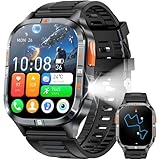
- BUILT-IN GPS & COMPASS– This military smartwatch features high-precision GPS to pinpoint your location while hiking, cycling, or traveling, keeping you safely on track without extra gear. Tap the compass icon and it locks your bearing within three seconds—engineered for pro-level outdoor adventures like camping, climbing, and trekking.
- BLUETOOTH CALLING & MESSAGES – Powered by the latest Bluetooth tech, the men’s smartwatch lets you answer or make calls right from your wrist—no need to pull out your phone. Get real-time alerts for incoming texts and app notifications so you never miss an invite. (Replying to SMS is not supported.)
- BIG SCREEN & DIY VIDEO WATCH FACE – The 2.01" military-spec display is dust-proof, scratch-resistant, and forged from high-strength glass with an aluminum alloy bezel, passing rigorous dust and abrasion tests so the screen stays crystal-clear. Upload a short family video to create a dynamic, one-of-a-kind watch face that keeps your memories alive.
- 24/7 HEALTH MONITORING – Equipped with a high-performance optical sensor, this Android smartwatch tracks heart rate and blood-oxygen levels around the clock. It also auto-detects sleep stages (deep, light, awake) for a complete picture of your health, ensuring you always know how your body is doing.
- MULTI SPORT MODES & FITNESS TRACK – Choose from running, cycling, hiking, basketball, and more to log every workout. Set goals, monitor progress, and sync data to the companion app. Bonus tools include photo gallery, weather, alarm, stopwatch, flashlight, hydration reminder, music/camera remote, find-my-phone, mini-games, and other everyday essentials.
In that sense, this isn’t Garmin “returning” to LTE so much as refining it into something that fits the brand’s endurance-first DNA. The leak suggests a company that learned from the 945 LTE’s missteps and is now reintroducing cellular connectivity with clearer boundaries, sharper intent, and far fewer compromises for the athletes who actually wear these watches.
Expected Hardware and Core Features: Battery Life Trade-Offs, Sensors, Display, and Build
Seen through the lens of Garmin’s endurance-first philosophy, the leaked LTE implementation immediately frames expectations for the rest of the hardware. Rather than rethinking the watch from the ground up, the evidence points to a familiar Forerunner-class platform with carefully contained compromises, where LTE support subtly coexists with proven training hardware.
This is not about pushing new silicon or flashy materials, but about preserving the core experience runners already trust while layering in connectivity that only surfaces when it matters.
Battery life: preserved endurance, conditional compromise
Battery behavior is where the leak aligns most closely with Garmin’s recent design priorities. Based on the code references and LTE trigger conditions, cellular radios appear designed to remain fully dormant during normal use, including daily wear and most GPS activities.
If this is accurate, real-world battery life should land close to existing Forerunner models in the same size class. Expect multi-day smartwatch use and roughly 20 to 24 hours of GPS tracking, depending on display type and satellite mode, with LTE only shaving meaningful runtime during active emergency use or live tracking events.
This approach also suggests Garmin is avoiding larger batteries or thicker cases to offset LTE draw. Instead, it is relying on usage discipline enforced at the software level, accepting brief, situational drain rather than constant background consumption.
Sensors and positioning: proven Garmin stack, not experimental tech
Nothing in the leak points to a radical sensor upgrade, and that is likely intentional. The watch is expected to use Garmin’s current Elevate optical heart rate sensor, with Pulse Ox, respiration tracking, HRV status, and stress metrics consistent with recent Forerunner and Fenix releases.
Multi-band GNSS support is strongly implied, especially if this model is positioned toward serious runners and trail users who benefit most from LTE-backed safety features. SatIQ-style adaptive GPS management would fit naturally here, balancing positional accuracy with battery preservation during long sessions.
Crucially, there is no indication of LTE being used for continuous data streaming or cloud syncing during workouts. The watch still behaves like a training instrument first, with LTE reserved for alerts, tracking pings, and post-event safety workflows rather than performance analytics.
Display expectations: AMOLED likely, but MIP not impossible
Display choice is one of the few open questions the leak does not definitively answer. Given Garmin’s recent momentum, an AMOLED panel similar to the Forerunner 265 or 965 feels more likely than a memory-in-pixel display, particularly if Garmin wants to keep the watch visually aligned with its mainstream running lineup.
If AMOLED is used, expect the usual trade-offs: excellent clarity, strong indoor readability, and a slight hit to always-on endurance compared to MIP-based siblings. However, Garmin’s aggressive display sleep management means real-world impact may be modest for runners who rely on gesture-based wake during activity.
That said, a MIP variant cannot be fully ruled out if Garmin intends this model to appeal to ultra-distance athletes who prioritize maximum sunlight visibility and week-long battery life over visual polish.
Case, materials, and wearability: functional, lightweight, familiar
The physical design implied by the leak fits squarely within Garmin’s established Forerunner playbook. Expect a fiber-reinforced polymer case, stainless steel or titanium bezel depending on tier, and a standard 22mm quick-release silicone strap designed for long-duration comfort.
Case size is likely to sit between 42mm and 47mm, keeping weight low enough for race use while accommodating LTE hardware without crowding internal components. Water resistance should remain at 5 ATM, consistent with Garmin’s running-focused watches rather than its dive-oriented models.
Importantly, nothing suggests Garmin is chasing premium smartwatch aesthetics here. Finishing will prioritize durability and comfort over jewelry appeal, reinforcing the idea that this is a tool you forget you are wearing until you need it.
Hardware consistency as a strategic choice
Taken together, the expected hardware profile reinforces the broader message of the leak. Garmin is not using LTE to redefine what this watch is, but to extend what it already does well into more demanding, higher-risk training scenarios.
For existing Garmin users, this familiarity matters. It lowers the psychological barrier to adopting LTE while preserving trust in battery life, comfort, and training reliability, areas where Garmin has little margin for error.
If the leak proves accurate, the real story is not any single component, but how deliberately unchanged most of the hardware remains. LTE is being added without disturbing the physical and functional equilibrium that endurance athletes depend on, and that restraint may be the most telling design decision of all.
What LTE Would (and Would Not) Enable on This Garmin Watch
Seen in that light, LTE becomes less of a headline feature and more of a connective layer. It slots into Garmin’s existing training-first philosophy rather than pushing this watch toward full smartwatch territory, and the leak strongly suggests Garmin is being deliberately conservative about what always-on connectivity actually does here.
Safety, tracking, and live awareness—this is the core use case
If Garmin is indeed reviving LTE on a Forerunner-class device, the primary enablement will almost certainly mirror and modestly expand what we saw on the Forerunner 945 LTE. That means LiveTrack without a phone, automatic incident detection alerts, and real-time location sharing for trusted contacts during runs or rides.
For solo runners, trail athletes, and anyone training in low-coverage or higher-risk environments, this is the real value proposition. LTE turns the watch into a safety node rather than a communication hub, allowing others to see where you are and be alerted if something goes wrong, even if your phone is left behind or dead.
Importantly, this kind of LTE usage is burst-based rather than constant. Data pings happen intermittently, preserving battery life and aligning with Garmin’s endurance-first priorities.
Emergency assistance, not full independence
Garmin’s previous LTE implementation also enabled on-device emergency assistance, and there is little reason to believe that philosophy has changed. Expect the ability to trigger an SOS from the watch itself, relaying your GPS location to designated contacts or emergency services depending on region.
What you should not expect is voice calling. There is no evidence of a speaker or microphone upgrade in the leak, and Garmin has historically avoided turning its performance watches into wrist phones.
This distinction matters. LTE here is about redundancy and resilience, not replacing your smartphone during daily life.
Limited messaging, if any—and almost certainly no app streaming
One of the most common misconceptions around LTE leaks is the assumption of Apple Watch-style freedom. Based on Garmin’s past behavior, that assumption would be misplaced.
The Forerunner 945 LTE supported limited coach-to-athlete messaging during structured training sessions, not general-purpose texting or messaging apps. If this new model expands messaging at all, it is far more likely to be templated or system-driven rather than open-ended communication.
There is also no realistic path to app streaming, music browsing, or third-party LTE apps here. Garmin’s Connect IQ ecosystem is not designed for continuous cellular data use, and enabling that would carry heavy battery and subscription trade-offs that contradict the rest of the hardware decisions described earlier.
Live tracking during races and events—quietly powerful
Where LTE could meaningfully evolve is in race-day visibility. Real-time tracking without a phone allows spectators, coaches, or family members to follow progress during marathons, ultras, and organized events where carrying a phone may be undesirable or impractical.
This also opens the door to more robust event integrations over time. Split visibility, progress markers, and automated status updates are all plausible evolutions that fit Garmin’s ecosystem-first approach without requiring radical new hardware.
Rank #4

- 【Built-in GPS & Multi-System Positioning】Stay on track with the Tiwain smartwatch’s built-in GPS. Featuring military-grade single-frequency and six-satellite support (GPS, GLONASS, Beidou, Galileo, NAVIC, QZSS), this watch offers fast and accurate location tracking wherever you go. It also includes a compass, altimeter, and barometer, giving you real-time data on your altitude, air pressure, and position.
- 【Military-Grade Durability】Engineered to withstand the toughest conditions, the Tiwain smartwatch meets military standards for extreme temperatures, low pressure, and dust resistance. Crafted from tough zinc alloy with a vacuum-plated finish, this watch is also waterproof and built to resist wear and tear. The 1.43-inch AMOLED HD touchscreen offers clear visibility in all environments, and the watch supports multiple languages for global users.
- 【170+ Sport Modes & Fitness Tracking】Track your fitness journey with 170+ sport modes, including walking, running, cycling, hiking, basketball, and more. Set exercise goals, monitor progress, and sync your data to the companion app. The smartwatch also offers smart features like music control, camera remote, weather updates, long-sitting reminders, and more.
- 【LED Flashlight for Outdoor Adventures】The Tiwain smartwatch comes equipped with a built-in LED flashlight that can illuminate up to 20 meters. Activate it with the side button for added convenience during nighttime activities or outdoor adventures.
- 【Comprehensive Health Monitoring】Monitor your health with real-time heart rate, sleep, blood pressure, and blood oxygen level tracking. The smartwatch will vibrate to alert you of any abnormal readings. You can also make and receive calls directly from the watch, and stay connected with message and app notifications (receive only, no sending capability) – perfect for when you’re driving or exercising.
For competitive and semi-competitive athletes, this is one of those features that feels unnecessary until the day it becomes indispensable.
What LTE will not fix: training load, insights, or recovery
It is equally important to be clear about what LTE does not improve. Training readiness, recovery metrics, VO2 max estimates, and adaptive coaching all continue to live primarily on-device and in Garmin Connect.
LTE does not make the sensors more accurate, the algorithms smarter, or the insights more actionable in isolation. Those gains come from firmware, physiology models, and long-term data consistency, not connectivity.
In other words, if you are buying this watch expecting LTE to transform how Garmin analyzes your fitness, you are likely to be disappointed.
Battery life trade-offs, carefully managed
Perhaps the most telling implication of the leak is how restrained Garmin appears to be in its LTE ambitions. Always-on cellular would be catastrophic for a watch expected to handle long training weeks, GPS-heavy workouts, and multi-day events.
By limiting LTE usage to safety, tracking, and event-driven scenarios, Garmin can preserve the multi-day battery life Forerunner users expect. Based on past models, LTE standby impact should be minimal when not actively transmitting, with heavier drain only during live tracking sessions.
This approach reinforces the idea that LTE is an optional layer, not a constant drain, and that restraint is likely intentional.
Subscription reality: unavoidable, but likely focused
Finally, LTE on a Garmin watch almost certainly means a subscription, as it did with the 945 LTE. The difference this time may be in how narrowly that subscription is framed.
Rather than positioning it as a lifestyle add-on, Garmin appears poised to sell LTE as a safety and performance service. That framing matters, because athletes are far more willing to pay for peace of mind than for features they rarely use.
If the leak is accurate, LTE returns not as a bid to compete with Apple or Samsung on smartwatch breadth, but as a targeted answer to a specific athlete problem: staying connected when it actually matters, and disappearing when it doesn’t.
Who This LTE Garmin Is Really For—and Who Should Probably Skip It
Seen through the lens of those battery and subscription constraints, the leaked LTE return starts to look far less like a mass-market play and much more like a deliberately narrow tool. Assuming the model in question is a Forerunner-class device—most likely a Forerunner 965 LTE or a parallel safety-focused variant—this is a watch with a very specific user in mind.
Ideal for solo runners who train without a phone
The clearest beneficiary is the runner who routinely leaves their phone behind, whether for weight, comfort, or mental focus. If your typical run involves urban routes, trail networks, or early-morning sessions where situational awareness matters, LTE-based LiveTrack and incident alerts offer tangible peace of mind.
On a lightweight Forerunner case—typically around 42–44mm with a polymer body, fiber-reinforced lugs, and a soft silicone strap—this kind of safety layer adds minimal bulk or comfort penalty. You still get the slim profile, low wrist fatigue, and breathable fit that makes long tempo runs or double days realistic.
Also compelling for racers and structured-event athletes
Garmin’s previous LTE implementation quietly shined during races, and that’s likely where this leak points again. Live spectator tracking, emergency alerts mid-race, and post-incident communication all matter more when you’re pushing limits in unfamiliar environments.
For marathoners, triathletes, and endurance racers who rely on Forerunner pacing tools, structured workouts, and race-day widgets, LTE complements the existing ecosystem rather than competing with it. It doesn’t replace the GPS, barometric altimeter, or multiband GNSS, but it makes those efforts more visible and safer to share in real time.
Trail runners and endurance athletes, with caveats
There’s also a subset of trail runners and ultra athletes who may find this LTE approach appealing—but only within bounds. LTE coverage drops quickly once you leave populated areas, and Garmin is unlikely to oversell connectivity in true backcountry conditions.
For mixed-terrain athletes who train near civilization but race in remote locations, LTE becomes situational insurance rather than a guarantee. It pairs best with features like breadcrumb navigation, offline maps, and long GPS battery modes, not as a substitute for satellite communicators like inReach.
Probably not for smartwatch-first users
If your expectation is that LTE turns this Garmin into a phone-free Apple Watch alternative, this leak is not pointing in that direction. Messaging will almost certainly remain limited, app ecosystems constrained, and voice features absent.
Garmin’s software experience is still fitness-forward, not communication-centric. Notifications, calendar mirroring, and basic controls will work as they always have, but LTE won’t unlock rich third-party apps or conversational interaction.
A questionable upgrade for existing Forerunner owners
For owners of recent Forerunner models without LTE, the value proposition will be highly personal. If you already carry your phone on most runs or train indoors, LTE may feel redundant.
Training metrics, AMOLED displays, multiband GPS accuracy, and recovery insights are already excellent on current models. LTE does not meaningfully change daily training outcomes, so upgrading purely for connectivity is hard to justify unless safety or live tracking is a genuine need.
Not aimed at budget buyers or casual fitness users
Between the likely premium pricing and an added monthly subscription, this watch will sit firmly in enthusiast territory. Casual users who primarily log gym workouts, walks, or occasional runs won’t extract enough value from LTE to offset the cost.
Garmin’s materials and build quality—scratch-resistant glass, water resistance suitable for open water swimming, and durable polymer housings—remain excellent, but they don’t change the reality that this is a specialist tool. If your training is infrequent or phone-dependent, simpler models will deliver better value.
The bigger takeaway: a watch with intent, not ambition
What the leak ultimately suggests is that Garmin knows exactly who this LTE watch is not for. This isn’t about chasing smartwatch dominance or expanding daily engagement metrics.
Instead, it’s a return to LTE with guardrails: targeted connectivity, controlled battery impact, and a clear focus on athlete safety and visibility. For the right user, that restraint is the feature—not the limitation.
Strategic Context: Why Garmin Might Be Revisiting LTE Now
Taken together, the leak doesn’t read like a change of heart so much as a recalibration. Garmin isn’t suddenly chasing Apple Watch-style independence; it appears to be revisiting LTE only where it reinforces the core promise laid out in the previous section: safety, autonomy, and controlled connectivity for serious training.
The choice of platform and timing matter here. Garmin’s earlier LTE effort, centered on the Forerunner 945 LTE, arrived before the company had fully standardized AMOLED displays, multiband GNSS, and unified sensor stacks across its performance lineup. Today’s hardware and software ecosystem looks far more mature.
Learning from the 945 LTE without repeating it
The Forerunner 945 LTE was never a failure in capability, but it was a commercial misfire. Its LTE features were tightly scoped—LiveTrack, incident detection, spectator messaging—yet many buyers struggled to justify the extra cost and subscription when the standard 945 already covered their training needs.
What the current leak suggests is that Garmin has internalized that lesson. Instead of adding LTE to a flagship and asking users to pay more for a marginal gain, Garmin may be repositioning LTE as a variant within an already popular mid-to-upper tier model, likely a Forerunner line that prioritizes running and triathlon rather than multisport generalism.
That distinction matters. Runners and endurance athletes are far more likely to train phone-free, and far more sensitive to safety features during long solo sessions.
💰 Best Value

- Smart Watch with GPS and Offline Map: This smart watch connects to multiple satellite systems for accurate real-time positioning, and includes a professional-grade compass, altimeter, and barometer for precise data, ensuring you maintain your sense of direction in any outdoor environment. The map version supports downloading offline maps; select a route or destination to view the route even without a signal, eliminating the risk of getting lost.
- Bluetooth Call & Message Functionality: This smart watches for men allows you to make and receive calls; receive text and social media notifications (Facebook, WhatsApp, Instagram, Twitter, etc.); and reply to text messages with voice-to-text or set up quick replies (text reply functionality is available for Android phones).
- Sports & Health Monitoring: This 5ATM waterproof fitness watch supports over 100 sports modes and tracks daily activity data, calories, distance, steps, and heart rate. You can use it to monitor your health metrics (blood oxygen, heart rate, stress, and sleep), monitor your fatigue and mood, and perform PAI analysis. You can also use this smartwatch to set water intake and sedentary reminders. Stay active and healthy with this fitness tracker watch.
- Customizable Watch Faces & AI Functionality: This smart watch features a 1.46-inch HD touchscreen and over 100 downloadable and customizable watch faces. You can even use your favorite photos as your watch face. Equipped with AI technology, it supports voice descriptions in multiple languages to generate personalized AI watch faces. The watch's AI Q&A and AI translation features provide instant answers to questions and break down language barriers, making it an ideal companion for everyday life and travel.
- Large Battery & High Compatibility & More Features: This smart watch for android phones and ios phone features a large 550ml battery for extended battery life. It's compatible with iOS 9.0 and above and Android 5.0 and above. It offers a wealth of features, including an AI voice assistant, weather display, music control, camera control, calculator, phone finder, alarm, timer, stopwatch, and more. (Package Includes: Smartwatch (with leather strap), spare silicone strap, charging cable, and user manual)
Why now: hardware efficiency finally makes LTE viable
LTE radios are power-hungry, and battery anxiety has always been Garmin’s biggest constraint. The leak lands at a moment when Garmin’s latest chipsets, GNSS tuning, and AMOLED power management are significantly more efficient than they were in 2021.
In real-world terms, this means Garmin can plausibly offer LTE without compromising what users care about most: multi-day battery life, accurate tracking, and consistent recovery metrics. Even if LTE is only active during workouts or emergencies, the underlying hardware is now capable of absorbing that load without turning the watch into a daily charger-dependent device.
That’s a critical difference from the broader smartwatch market. Garmin can afford to be conservative because its audience values endurance and reliability over constant connectivity.
LTE as a safety layer, not a smartwatch feature
The leak reinforces that Garmin still views LTE as infrastructure, not a headline feature. There’s no indication of voice calling, app stores, or messaging threads expanding beyond preset interactions.
Instead, LTE appears positioned as a background safety net: incident detection that works without a phone, LiveTrack that doesn’t depend on cellular coverage from a paired device, and limited inbound messages designed to reassure rather than converse. This aligns with Garmin’s fitness-first software philosophy and avoids the complexity that comes with broader LTE ambitions.
For athletes, this framing is deliberate. LTE is there when something goes wrong, not to distract during training.
Subscription fatigue, handled more carefully
Garmin’s LTE subscription model has historically been a sticking point, and the company is clearly aware of that friction. The leak suggests a continuation of a flat, predictable fee rather than tiered plans or carrier lock-ins, keeping LTE decoupled from mobile contracts.
While a subscription will still limit mass adoption, this approach keeps expectations aligned. Users aren’t paying for “smartwatch features” they’ll never get; they’re paying for peace of mind during specific activities.
In that sense, Garmin may be betting that clarity is more important than scale.
Why this matters within Garmin’s broader lineup
Reintroducing LTE now also helps Garmin differentiate internally. With AMOLED displays, multiband GPS, and advanced training metrics increasingly common across models, connectivity becomes one of the few remaining levers for segmentation.
An LTE-equipped Forerunner variant would sit cleanly between phone-dependent training watches and fully self-contained adventure tools like the inReach ecosystem. It offers autonomy without the size, weight, or complexity of satellite communicators.
That positioning explains why this leak matters even if LTE adoption remains niche. It signals that Garmin sees value in selective connectivity, applied with restraint, and tailored to athletes who actually benefit from it rather than the broader smartwatch market Garmin has never tried to dominate.
What to Watch Next: Timelines, Red Flags, and How Credible This Leak Really Is
With Garmin’s LTE strategy framed as restrained and purpose-built rather than expansive, the next question is whether this leak reflects an imminent product or a longer-term experiment still being validated internally. The details we have point toward something closer to the former, but there are still important caveats worth watching closely.
Expected timelines: reading Garmin’s usual signals
If this leak is accurate, the launch window likely aligns with Garmin’s typical Forerunner cadence rather than a surprise standalone reveal. Historically, Garmin refreshes Forerunner lines on an 18–24 month cycle, with software references and regulatory filings appearing three to six months before announcement.
The appearance of LTE-specific identifiers tied to a Forerunner-class device suggests we are already in that pre-launch window. That puts a potential announcement in the late spring to early summer timeframe, when Garmin traditionally targets runners and triathletes ramping up for race season.
A fall release would be less consistent with Garmin’s playbook for performance-focused watches, especially those positioned around safety during solo training. If nothing materializes by mid-year, that would meaningfully weaken the leak’s credibility.
The model question: why a Forerunner LTE makes sense
The leak appears to point toward a Forerunner variant rather than a Fenix or Venu-class device, and that distinction matters. Forerunners prioritize light weight, comfort over long distances, and button-first usability, all of which are critical if LTE is meant to operate quietly in the background.
Adding LTE to a 42–47mm polymer-cased watch with a nylon or silicone strap is far easier from a wearability and battery perspective than retrofitting it into a heavier metal adventure watch. Expect modest case thickness growth, likely under 1 mm, and no meaningful change to day-to-day comfort.
Just as important, a Forerunner LTE would avoid stepping on the toes of Garmin’s inReach satellite devices. Cellular LTE complements GPS-based incident detection and LiveTrack without threatening Garmin’s higher-margin satellite ecosystem.
Red flags to keep in mind
The biggest red flag is how quiet Garmin has been publicly about LTE since the original Forerunner 945 LTE. That model never saw broad regional expansion or aggressive marketing, which suggests internal caution rather than enthusiasm.
Battery life is another potential pressure point. LTE radios, even when used sparingly, complicate Garmin’s core promise of multi-day endurance. If this watch launches with noticeably reduced GPS or smartwatch battery life compared to non-LTE siblings, adoption will be limited regardless of safety benefits.
There’s also the subscription question. While a flat fee sounds user-friendly, pricing still matters. Anything creeping too close to cellular smartwatch plans from Apple or Samsung would undermine Garmin’s fitness-first positioning.
What would strengthen or weaken this leak quickly
The strongest confirmation would be regulatory filings referencing LTE bands alongside known Forerunner model numbers. Garmin has a long history of leaving these breadcrumbs well before launch, and they are difficult to fake.
Software leaks are the second tell. If Garmin Connect or device firmware references LTE-specific setup flows, emergency messaging toggles, or new LiveTrack dependencies, that would strongly validate the hardware rumor.
Conversely, if upcoming Forerunner releases arrive without any LTE mention and the software remains unchanged, this leak likely reflects an internal prototype that didn’t survive cost or battery trade-off reviews.
So how credible is this, really?
Taken together, this leak sits in the “plausible and strategically consistent” category rather than wishful speculation. It aligns with Garmin’s conservative connectivity philosophy, addresses a real use case for solo athletes, and fits cleanly within the Forerunner lineup without forcing broader ecosystem changes.
It is not a signal that Garmin is re-entering the LTE smartwatch arms race. Instead, it suggests a narrow, disciplined return to cellular features where they add safety without undermining battery life, simplicity, or focus.
For runners, cyclists, and triathletes who train alone and want reassurance without carrying a phone, this could be one of Garmin’s most quietly meaningful updates in years. For everyone else, it’s a reminder that Garmin is still willing to revisit old ideas—just on its own terms, and only when the trade-offs finally make sense.