Garmin doesn’t quietly cut the price of its halo product unless something fundamental has changed. That’s why the permanent reduction on the Fenix 8 Pro MicroLED lands differently than the familiar holiday discounts or short-lived retail promos long-time Garmin buyers are used to tracking. This isn’t a sale designed to clear inventory; it’s a recalibration of where Garmin believes its most advanced hardware now belongs in the market.
If you’ve been watching Fenix pricing for years, the pattern has been predictable: launch high, hold MSRP for 9–12 months, then allow modest promotional dips without ever officially rewriting the price floor. What’s happened here breaks that pattern. Garmin has adjusted the official list price downward across regions, and crucially, it has done so without tying the move to an event, a bundle, or a limited-time campaign.
That distinction matters because it signals intent. A permanent MSRP change reshapes perceived value, resale expectations, and buying timing for the entire Fenix and Epix lineup, not just this single SKU.
This Is an MSRP Reset, Not a Retail Discount
Temporary sales preserve the illusion of exclusivity: buy now at full price, or wait and gamble on a deal. An MSRP reset removes that tension entirely. Garmin has effectively told retailers, partners, and buyers that the new lower price is the baseline, not a reward for patience or luck.
🏆 #1 Best Overall

- Stylish Design, Vibrant Display: The lightweight aluminum build blends effortless style with workout durability, while the vivid 1.97" AMOLED display keeps your data easy to read, even under bright sunlight.
- All-in-One Activity Tracking: The Amazfit Bip 6 fitness tracker watch offers 140+ workout modes including HYROX Race and Strength Training, plus personalized AI coaching and 50m water resistance.
- Up to 14 Days Battery Life: The Amazfit Bip 6 smart watch powers through your training and recovery for up to two weeks at a time - no nightly charging needed.
- Accurate GPS Tracking & Navigation: Stay on course with free downloadable maps and turn-by-turn directions. Support from 5 satellite systems ensures precise tracking of every move and fast GPS connection.
- 24/7 Health Monitoring: The Amazfit Bip 6 smartwatch provides precise, real-time monitoring of heart rate, sleep, blood-oxygen and stress, empowering you with actionable insights to optimize your health and fitness.
From a buyer’s perspective, that immediately changes decision-making. There’s no longer a reason to wait for Black Friday or a seasonal clearance if you’re set on the Fenix 8 Pro MicroLED. From Garmin’s perspective, it standardizes margins and messaging globally, which only makes sense if the company expects this pricing to hold through the remainder of the product’s lifecycle.
It also protects the brand in a subtle way. Heavy discounting trains customers to delay purchases; permanent repricing resets expectations without undermining the product’s premium positioning.
Why MicroLED Is Central to the Decision
MicroLED is the most expensive and strategically important component in the Fenix 8 Pro’s bill of materials. It delivers AMOLED-level contrast with dramatically improved efficiency, higher peak brightness for harsh sunlight, and reduced long-term burn-in risk, all while preserving the rugged, sapphire-protected, always-on usability Fenix users demand.
By lowering the price now, Garmin is signaling increased confidence in MicroLED yield, supply stability, and long-term cost control. This suggests the display is no longer an experimental differentiator reserved for ultra-early adopters, but a platform Garmin expects to scale across future high-end models.
That’s fundamentally different from discounting a watch because a successor is imminent. It’s about making MicroLED viable at volume, not phasing it out.
What This Changes Versus Epix and the Rest of the Lineup
The price cut compresses the gap between Fenix and Epix in a way that materially affects buying decisions. Previously, Epix offered AMOLED appeal at a lower entry point, while Fenix commanded a premium for endurance-first design and display efficiency. With the Fenix 8 Pro MicroLED now priced closer to where Epix models traditionally sit, that separation blurs.
For endurance athletes and outdoor users, the value proposition shifts sharply toward Fenix. You’re getting longer real-world battery life, superior sunlight legibility, and the same top-tier training metrics, mapping, and multisport depth, without paying a disproportionate premium for the display upgrade.
Internally, this also hints that Garmin may be preparing to rethink how many parallel flagship display strategies it maintains long term.
Why Garmin Is Doing This Now
Competition has finally caught up at the high end. Apple’s Ultra line has normalized four-figure smartwatch pricing while delivering increasingly credible endurance and outdoor features. At the same time, Coros and Suunto continue to undercut on price while narrowing the performance gap for serious athletes.
By lowering the barrier to entry for its most advanced hardware, Garmin defends its ecosystem without racing competitors to the bottom. It keeps Fenix aspirational but no longer unreachable, especially for users already invested in Garmin Connect, training readiness metrics, and long-term performance tracking.
This move also future-proofs Garmin’s pricing ladder. When the next generation arrives, there’s already space above and below it without relying on aggressive discounting to make the numbers work.
Understanding the Fenix 8 Pro MicroLED: Why This Display Was Supposed to Redefine the Fenix Line
To understand why Garmin is comfortable permanently lowering the Fenix 8 Pro MicroLED’s price, you have to revisit why this display mattered so much in the first place. MicroLED wasn’t positioned as a cosmetic upgrade or a spec-sheet flex. It was intended to resolve the long-standing tension at the heart of the Fenix lineup: maximum visibility versus maximum endurance.
For over a decade, Fenix defined itself through memory-in-pixel (MIP) displays that favored efficiency and sunlight legibility over visual punch. MicroLED was Garmin’s attempt to leap forward without abandoning those core principles.
What MicroLED Promised That MIP and AMOLED Couldn’t
MicroLED sits in a rare middle ground between traditional MIP and AMOLED. Each pixel emits its own light like AMOLED, but without organic materials, which dramatically improves longevity, burn-in resistance, and efficiency at sustained brightness.
In practice, that meant a display that could remain always-on, highly legible in direct sunlight, and still deliver richer colors, sharper contrast, and smoother map rendering than any previous Fenix. For outdoor athletes navigating trails, snowfields, or open water, that combination directly impacts usability, not just aesthetics.
This was never about making Fenix “prettier.” It was about making maps clearer at a glance, data fields easier to parse under fatigue, and navigation safer when conditions deteriorate.
Why Garmin Didn’t Jump Straight to AMOLED on Fenix
Garmin’s reluctance to move Fenix entirely to AMOLED wasn’t stubbornness. AMOLED panels, even highly optimized ones, still trade visibility and battery longevity for visual richness, especially in always-on scenarios.
That’s why Epix exists. It serves users who prioritize screen vibrancy and daily smartwatch appeal, even if it means charging more often. Fenix, by contrast, has always been about predictable endurance under stress, whether that’s a multi-day ultra, an expedition, or back-to-back long training blocks.
MicroLED allowed Garmin to keep Fenix true to its identity while modernizing the experience. It narrowed the experiential gap with AMOLED without inheriting its weaknesses.
Real-World Benefits Beyond the Spec Sheet
On the wrist, MicroLED changes how the Fenix wears day to day. The display’s higher native brightness improves legibility at steeper viewing angles, which matters when your wrist is bent on handlebars or trekking poles.
Sharper contrast improves map contour readability and makes training metrics stand out without cranking brightness. That directly contributes to battery life, because the display doesn’t need to brute-force visibility the way AMOLED often does outdoors.
Paired with the Fenix 8 Pro’s titanium case options, sapphire lens, and familiar 47mm and 51mm sizing, MicroLED integrates cleanly into Garmin’s established comfort and durability equation. It doesn’t force a thicker case or compromise thermal performance during long GPS sessions.
Why MicroLED Was Always a Long-Term Bet, Not a One-Off
From an industry perspective, MicroLED has never been cheap. Yields are complex, scaling is difficult, and early production runs are costly. Garmin knew this going in, which is why the original pricing placed the Fenix 8 Pro MicroLED firmly in early-adopter territory.
But unlike experimental features that quietly disappear, MicroLED aligns too well with Garmin’s endurance-first philosophy to abandon. It offers a pathway to future displays that scale across product tiers without forcing a binary choice between battery life and visual clarity.
The permanent price reduction signals that Garmin believes those scaling challenges are now manageable. This isn’t a retreat from MicroLED. It’s the first step toward normalizing it within the Fenix lineage.
Why This Display Matters More Now Than at Launch
At launch pricing, MicroLED felt aspirational but optional. At its new price, it becomes a defining differentiator again.
Buyers comparing Fenix 8 Pro MicroLED against Epix are no longer weighing a dramatic cost delta. They’re choosing between display philosophies and usage patterns. For athletes who live outdoors, train long, and value consistency over spectacle, MicroLED suddenly looks like the most balanced option Garmin has ever produced.
That context is crucial. The display didn’t fail to redefine Fenix. The price simply got in the way. Now that barrier is gone, MicroLED finally gets to play the role Garmin originally designed it for.
The Real Reasons Behind the Permanent Price Drop: MicroLED Costs, Yield Reality, and Demand Signals
Seen in isolation, a permanent price cut looks like generosity. In context, it’s a correction driven by manufacturing reality, market feedback, and Garmin’s need to realign MicroLED with how Fenix actually sells.
This isn’t about clearing inventory or reacting to a bad quarter. It’s about bringing MicroLED back into the gravitational center of the Fenix lineup where it was always meant to live.
MicroLED Component Costs Have Finally Bent, Not Broken
At launch, MicroLED panels were absorbing a disproportionate share of the bill of materials. Early production meant lower economies of scale, higher rejection rates, and custom driver solutions that didn’t yet benefit from cross-product reuse.
Rank #2

- Stylish Design, Bright Display: The sleek stainless steel build blends classic style with workout durability, while the bright 1.32" AMOLED display keeps your data easy to read, even under bright sunlight.
- Precise Heart Rate and Sleep Tracking: Amazfit's BioTracker technology tracks your heart rate and sleep data with accuracy that previous sensors just can't match.
- Up to 10 Days of Battery Life: With long battery life that lasts up to 10 days with typical use, nightly recharges are a thing of the past.
- Free Maps with Turn Directions: Stay on-track with free downloadable maps, and get turn-by-turn guidance on-screen or via your Bluetooth headphones. Enjoy ski maps for global resorts, including guidance for cable cars, slopes, and more.
- Faster and More Accurate GPS Tracking: 5 satellite positioning systems ensure fast GPS connection and accurate positioning whenever you're out running, walking, cycling or hiking.
Over the past 12 to 18 months, those costs have eased. Not collapsed, but normalized enough that MicroLED is no longer an outlier compared to high-end AMOLED once you factor in sapphire, titanium, and Garmin’s multi-band GPS stack.
Just as importantly, MicroLED power efficiency reduces downstream costs elsewhere. Smaller thermal margins, less aggressive brightness compensation, and more predictable battery performance allow Garmin to keep the familiar Fenix case thickness and internal layout without redesign penalties.
Yield Reality: Acceptable, Predictable, and Scalable Enough
Early MicroLED yields weren’t disastrous, but they weren’t comfortable either. For a premium sports watch sold in multiple sizes and SKUs, inconsistency is expensive even when demand is healthy.
What’s changed is predictability. Garmin now appears confident that MicroLED yields are stable enough to support sustained production without buffering the retail price for risk.
That matters because Fenix volumes are fundamentally different from niche halo devices. Once yields cross a reliability threshold, the economic logic shifts from protecting margins to maximizing install base.
Demand Signaling Was Clear: Early-Adopter Pricing Hit a Ceiling
Sales data doesn’t need to be public to be loud. At its original price, the Fenix 8 Pro MicroLED appealed to Garmin loyalists, engineers, and display obsessives, but it stalled before reaching the broader endurance market.
Athletes comparing a 47mm or 51mm Fenix against an Epix or even an Apple Watch Ultra weren’t rejecting MicroLED. They were rejecting the premium attached to it.
Garmin’s permanent price adjustment acknowledges that MicroLED was being perceived as an optional luxury rather than a functional advantage. That perception caps volume, and volume is where Garmin’s ecosystem strength actually compounds.
Internal Lineup Pressure: Epix Was Winning the Wrong Comparisons
The biggest competitive threat to the Fenix 8 Pro MicroLED wasn’t Samsung or Apple. It was the Epix sitting next to it on the same comparison chart.
When MicroLED carried a steep premium, buyers defaulted to AMOLED spectacle, even if it meant shorter battery life and more aggressive brightness management. That outcome undermined Garmin’s own endurance-first narrative.
By narrowing the price gap permanently, Garmin reframes the decision. Battery longevity, outdoor readability, and training consistency come back to the foreground, especially for users logging multi-day activities or ultra-distance events.
Why This Is Permanent, Not Promotional
Temporary discounts move units. Permanent price resets move strategy.
Garmin would not normalize a lower price if MicroLED economics were still fragile. Doing so would expose the company to margin erosion across every future production run.
Instead, this signals confidence that MicroLED can now support long-term pricing discipline, allowing Garmin to plan future Fenix generations, software investment, and accessory compatibility around a stable cost base.
What This Signals About Garmin’s Display Strategy Going Forward
Garmin is no longer treating MicroLED as an experiment. It’s being repositioned as a core display option that can coexist with AMOLED without fracturing the lineup.
That opens the door to MicroLED expanding beyond a single Pro variant over time, potentially reaching more sizes or even trickling into other adventure-focused families.
For buyers, the implication is subtle but important. Choosing MicroLED now no longer feels like betting on a side path. It feels like buying into the direction Garmin actually intends to scale.
The Competitive Pricing Ripple Effect
At its new price, the Fenix 8 Pro MicroLED lands uncomfortably close to competitors that still trade battery life for brightness. Apple Watch Ultra and high-end AMOLED sports watches now look less defensible on endurance alone.
More importantly, Garmin has reset expectations for what a premium sports smartwatch should cost when it prioritizes multi-day GPS, titanium construction, sapphire durability, and a display optimized for real-world training, not showroom appeal.
That recalibration doesn’t just affect this model. It pressures the entire premium segment to justify why endurance-first hardware should command early-adopter pricing once the technology matures.
What This Says About Garmin’s Long-Term Display Strategy: MicroLED vs AMOLED vs MIP
The permanent price reset doesn’t just reframe the Fenix 8 Pro MicroLED. It clarifies how Garmin now sees the role of every display technology in its ecosystem, and why none of them are being treated as transitional anymore.
Rather than converging on a single “best” screen, Garmin is deliberately diverging, aligning each display type with distinct usage philosophies, battery expectations, and training behaviors.
MicroLED Becomes the Endurance-First Flagship, Not a Tech Demo
By locking in a lower MicroLED price, Garmin is signaling that this display is no longer reserved for early adopters willing to subsidize manufacturing learning curves. It’s now positioned as the long-term answer for athletes who want modern contrast and clarity without sacrificing multi-week battery life.
MicroLED neatly solves the historical trade-off between MIP’s efficiency and AMOLED’s visual punch. In real-world use, that means high legibility under harsh sun, zero burn-in anxiety, and dramatically lower power draw during always-on data screens, especially during multi-day GPS tracking.
That matters more than spec sheets suggest. For ultra runners, mountaineers, and expedition users wearing a 47–51 mm titanium case for 18 hours a day, the display isn’t about animation or color depth. It’s about whether pace, elevation, and maps stay readable on day four without rationing brightness or disabling features.
AMOLED Remains the Lifestyle-Forward Performance Option
Garmin isn’t abandoning AMOLED. If anything, the strategy suggests it’s doubling down on it for users who want their training watch to also function as a daily smartwatch.
AMOLED still wins indoors, at night, and in casual wear. The thinner panel stack allows for slightly slimmer cases, and the visual experience pairs better with richer UI elements, music controls, and smartwatch interactions that matter during non-training hours.
For buyers choosing between Epix and Fenix, this pricing move sharpens the decision. AMOLED isn’t the “better” screen anymore; it’s the different one. You’re trading some battery headroom for aesthetic appeal, not paying a premium for perceived modernity.
MIP Quietly Holds Its Ground as the Efficiency Baseline
Memory-in-pixel isn’t being pushed out. It’s being protected.
MIP remains unmatched for pure efficiency, especially in smaller case sizes and solar-assisted models where every milliamp-hour counts. It also offers unmatched consistency across temperature extremes, a detail that still matters for winter athletes and high-altitude users.
What changes is perception. With MicroLED now priced closer to mainstream, MIP’s role becomes clearer: it’s the utilitarian, no-compromises option, not the “older” one. That keeps Instinct and certain Fenix variants viable without forcing Garmin into unnecessary tech escalation.
Rank #3
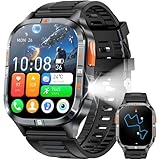
- BUILT-IN GPS & COMPASS– This military smartwatch features high-precision GPS to pinpoint your location while hiking, cycling, or traveling, keeping you safely on track without extra gear. Tap the compass icon and it locks your bearing within three seconds—engineered for pro-level outdoor adventures like camping, climbing, and trekking.
- BLUETOOTH CALLING & MESSAGES – Powered by the latest Bluetooth tech, the men’s smartwatch lets you answer or make calls right from your wrist—no need to pull out your phone. Get real-time alerts for incoming texts and app notifications so you never miss an invite. (Replying to SMS is not supported.)
- BIG SCREEN & DIY VIDEO WATCH FACE – The 2.01" military-spec display is dust-proof, scratch-resistant, and forged from high-strength glass with an aluminum alloy bezel, passing rigorous dust and abrasion tests so the screen stays crystal-clear. Upload a short family video to create a dynamic, one-of-a-kind watch face that keeps your memories alive.
- 24/7 HEALTH MONITORING – Equipped with a high-performance optical sensor, this Android smartwatch tracks heart rate and blood-oxygen levels around the clock. It also auto-detects sleep stages (deep, light, awake) for a complete picture of your health, ensuring you always know how your body is doing.
- MULTI SPORT MODES & FITNESS TRACK – Choose from running, cycling, hiking, basketball, and more to log every workout. Set goals, monitor progress, and sync data to the companion app. Bonus tools include photo gallery, weather, alarm, stopwatch, flashlight, hydration reminder, music/camera remote, find-my-phone, mini-games, and other everyday essentials.
Why This Three-Track Strategy Actually Strengthens the Lineup
Most brands chase consolidation. Garmin is doing the opposite, and the price reset makes that possible without internal cannibalization.
By stabilizing MicroLED costs, Garmin can space its lineup by use case rather than by artificial price walls. Display choice becomes a functional decision tied to battery life, visibility, and wear patterns, not a proxy for “new versus old.”
For consumers, this reduces buyer’s remorse. Choosing MicroLED no longer feels like paying for a science project, AMOLED no longer feels like the default premium upsell, and MIP no longer feels like a compromise.
What Buyers Should Take Away Right Now
This shift gives buyers clarity that hasn’t existed in Garmin’s lineup before.
If your priority is training continuity, long GPS sessions, and minimal charging anxiety in a rugged titanium-and-sapphire build, MicroLED is now the most future-proof choice. If you want richer visuals and a watch that blends into everyday life with fewer aesthetic compromises, AMOLED still makes sense. If efficiency, reliability, and extreme battery conservation matter most, MIP remains unmatched.
The key change is confidence. Garmin’s pricing tells you these display paths aren’t experiments anymore. They’re commitments, and the company is now willing to price them like mature, long-term platforms rather than transitional technologies.
Fenix 8 Pro vs Epix Pro vs Standard Fenix: How the New Pricing Reshapes the Buying Decision
With MicroLED no longer sitting in its own pricing stratosphere, the internal logic of Garmin’s flagship lineup changes immediately. What used to be a ladder now looks more like a fork, where display technology, battery behavior, and wear style matter more than raw spend.
The result is a more deliberate choice between Fenix 8 Pro MicroLED, Epix Pro AMOLED, and the standard Fenix MIP models, rather than a default march toward the most expensive SKU.
Fenix 8 Pro MicroLED: The New Center of Gravity
At its new permanent price, the Fenix 8 Pro MicroLED becomes the most balanced expression of Garmin’s long-term thinking. You’re getting a titanium case, sapphire crystal, full multi-band GNSS, advanced training load analytics, and expedition-grade durability without paying a speculative premium for the display.
MicroLED changes how the watch wears day to day. Visibility is excellent in full sun and snow glare, power draw is dramatically lower than AMOLED during static use, and there’s no burn-in anxiety for users who keep always-on data fields visible for years.
Battery life sits in a rare middle ground. It doesn’t touch solar-assisted MIP endurance for multi-week expeditions, but it comfortably outlasts Epix Pro in real-world mixed use while still feeling modern on the wrist.
This is the model for buyers who train hard, travel often, and want one watch that doesn’t force compromises between performance, longevity, and visual clarity.
Epix Pro: Still the Lifestyle-Forward Performance Watch
The Epix Pro doesn’t lose relevance, but its value proposition becomes more specific. AMOLED remains unmatched for indoor visibility, gym sessions, nighttime readability, and rich map rendering in urban environments.
Where it now feels narrower is endurance per charge. Even with Garmin’s excellent power management, AMOLED’s always-on mode and high refresh behavior still demand more frequent charging, especially with multi-band GNSS enabled.
For buyers who wear their watch as much to work as they do to train, Epix Pro remains the most seamless crossover. The thinner visual profile, deeper contrast, and phone-like UI experience still matter if the watch rarely leaves your wrist.
The difference is psychological. You’re no longer choosing Epix Pro because it feels like the “true premium” option. You’re choosing it because AMOLED genuinely fits your lifestyle better.
Standard Fenix (MIP): Purpose-Built, Not a Step Down
The standard Fenix with MIP display benefits indirectly from this pricing reset. By anchoring MicroLED closer to the core lineup, Garmin clarifies that MIP isn’t a legacy holdover but a deliberate efficiency-first platform.
In smaller case sizes and solar variants, MIP still delivers unmatched battery longevity, especially for ultrarunners, mountaineers, and multi-day expedition users who may go weeks without reliable charging.
The trade-off remains visual richness. Maps look flatter, color depth is limited, and indoor visibility isn’t as forgiving. But comfort, consistency across temperature extremes, and predictable power usage are where MIP continues to dominate.
For buyers who measure value in hours tracked rather than pixels rendered, standard Fenix models remain the most rational choice.
How the Price Reset Alters Real-World Comparisons
Previously, MicroLED’s price forced buyers into justification mode. Now, comparisons shift to usage patterns rather than budgets.
If you train outdoors extensively and care about battery stability without sacrificing modern readability, Fenix 8 Pro MicroLED becomes the default recommendation. If your watch is part training tool, part daily accessory, Epix Pro still makes sense. If your priority is endurance above all else, standard Fenix MIP remains unmatched.
This also impacts competitor comparisons. Apple Watch Ultra and high-end AMOLED rivals look more constrained on battery life, while Suunto and Polar’s efficiency-focused models face renewed pressure from MicroLED’s balance.
Garmin’s permanent price move doesn’t just shuffle SKUs. It reframes what “premium” means in a sports watch: not maximal specs at maximal cost, but the most appropriate technology for how the watch is actually used.
Competitive Pressure Check: Apple Watch Ultra, Suunto, COROS, and the Premium Sports Watch Ceiling
Once MicroLED pricing drops into the psychological range of the core Fenix lineup, the competitive landscape sharpens quickly. Garmin’s move doesn’t exist in a vacuum; it directly collides with how much athletes are willing to pay for a wrist computer, regardless of brand loyalty.
This is where the idea of a “premium ceiling” matters. Across the sports watch market, buyers consistently hesitate once prices push too far beyond the Apple Watch Ultra, even when those buyers understand the technical differences.
Apple Watch Ultra: The Price Anchor Garmin Can’t Ignore
Apple Watch Ultra has quietly become the de facto price reference for high-end wearables. Its titanium case, sapphire crystal, dual-frequency GPS, and bright OLED display establish a clear expectation of what $700–$800 should buy, even if battery life tops out at two to three days for most users.
For endurance athletes, Ultra’s limitations remain obvious. Daily charging, touch-first navigation, and watchOS’s app-centric experience still feel fragile during multi-day events, cold exposure, or long navigation sessions.
But Apple’s strength isn’t endurance credibility; it’s lifestyle integration. Ultra is comfortable under a cuff, visually refined enough for daily wear, and deeply embedded in iOS, which shapes consumer perception of value far beyond training metrics.
By lowering the Fenix 8 Pro MicroLED price, Garmin effectively concedes that charging materially more than Ultra was unsustainable. The specs may justify it on paper, but market psychology does not.
Why Garmin Can’t Let Ultra Own the “Best Under $800” Narrative
Before the price cut, MicroLED sat in an awkward middle ground. It outperformed Apple Watch Ultra on battery life, durability, and training depth, yet cost enough more to trigger hesitation, especially among crossover buyers.
Rank #4

- 【Built-in GPS & Multi-System Positioning】Stay on track with the Tiwain smartwatch’s built-in GPS. Featuring military-grade single-frequency and six-satellite support (GPS, GLONASS, Beidou, Galileo, NAVIC, QZSS), this watch offers fast and accurate location tracking wherever you go. It also includes a compass, altimeter, and barometer, giving you real-time data on your altitude, air pressure, and position.
- 【Military-Grade Durability】Engineered to withstand the toughest conditions, the Tiwain smartwatch meets military standards for extreme temperatures, low pressure, and dust resistance. Crafted from tough zinc alloy with a vacuum-plated finish, this watch is also waterproof and built to resist wear and tear. The 1.43-inch AMOLED HD touchscreen offers clear visibility in all environments, and the watch supports multiple languages for global users.
- 【170+ Sport Modes & Fitness Tracking】Track your fitness journey with 170+ sport modes, including walking, running, cycling, hiking, basketball, and more. Set exercise goals, monitor progress, and sync your data to the companion app. The smartwatch also offers smart features like music control, camera remote, weather updates, long-sitting reminders, and more.
- 【LED Flashlight for Outdoor Adventures】The Tiwain smartwatch comes equipped with a built-in LED flashlight that can illuminate up to 20 meters. Activate it with the side button for added convenience during nighttime activities or outdoor adventures.
- 【Comprehensive Health Monitoring】Monitor your health with real-time heart rate, sleep, blood pressure, and blood oxygen level tracking. The smartwatch will vibrate to alert you of any abnormal readings. You can also make and receive calls directly from the watch, and stay connected with message and app notifications (receive only, no sending capability) – perfect for when you’re driving or exercising.
Now the comparison becomes simpler and more favorable to Garmin. At similar pricing, Fenix 8 Pro MicroLED offers dramatically longer battery life, physical buttons that remain usable with gloves or sweat, more reliable GPS tracks in difficult terrain, and a training ecosystem built for long-term progression rather than daily activity rings.
Materials also matter here. Garmin’s use of titanium bezels, fiber-reinforced polymer cases, and transflective-adjacent MicroLED efficiency reads as purpose-built rather than decorative. Apple’s finishing is cleaner and more luxurious, but Garmin’s design communicates resilience, not polish.
The pricing reset ensures Garmin competes head-to-head on value rather than asking buyers to accept a philosophical premium.
Suunto: Technical Credibility, Narrower Appeal
Suunto occupies a different strategic lane. Its watches emphasize durability, strong navigation tools, and efficient battery profiles, often at prices that undercut Garmin’s top-tier models.
However, Suunto’s software experience remains a limiting factor. Training insights are less comprehensive, ecosystem integration is narrower, and firmware evolution feels slower compared to Garmin’s near-continuous platform refinement.
Display technology is also a constraint. While AMOLED has improved visual appeal on recent models, battery life under real navigation and mapping loads still trails MicroLED when brightness is normalized.
Garmin’s MicroLED price reduction compresses Suunto’s differentiation. When the Fenix 8 Pro sits closer in price, Garmin’s broader feature depth and accessory ecosystem become harder to ignore.
COROS: Value Leader, Not a Premium Challenger
COROS has built its reputation on aggressive pricing, excellent GPS accuracy, and strong battery life per dollar. For many runners and cyclists, COROS still represents the most rational entry into serious training hardware.
But COROS does not meaningfully challenge Garmin at the top of the market. Case materials are simpler, displays are less refined, and daily wear comfort, while good, lacks the polish expected of a $700-plus device.
Software philosophy is also different. COROS prioritizes clean execution over expansive health and lifestyle features, which appeals to purists but limits crossover appeal.
Garmin’s price move doesn’t target COROS directly. Instead, it reinforces Garmin’s role as the brand that offers depth, polish, and durability without drifting into luxury pricing territory.
The Premium Sports Watch Ceiling Is Real—and Garmin Just Acknowledged It
Across brands, one pattern is consistent: buyers accept paying more for endurance watches, but only up to a point. Once prices drift too far above mainstream smartwatches, even committed athletes start asking whether the gains are incremental rather than transformative.
Garmin’s permanent MicroLED price reduction signals a recognition that display innovation alone cannot justify unlimited pricing. Battery life, software maturity, and real-world usability carry more weight than novelty.
This is not a retreat from premium positioning. It’s a recalibration that keeps Garmin competitive where it matters most: at the intersection of performance, reliability, and perceived fairness.
In that sense, the price cut isn’t defensive. It’s Garmin reinforcing the boundary of the premium sports watch category before competitors, or consumer fatigue, force the issue for them.
Who Should Buy the Fenix 8 Pro MicroLED Now—and Who Shouldn’t
Garmin’s recalibrated pricing reshapes the buying calculus more than any spec sheet tweak. With the Fenix 8 Pro MicroLED now anchored closer to its Epix sibling and well below its original ceiling, the question shifts from “Is it worth the premium?” to “Is this the right Garmin for how you actually train and live?”
Buy It If You Want the Most Complete Garmin—Not Just the Brightest One
The Fenix 8 Pro MicroLED makes sense for athletes who want Garmin’s deepest hardware and software stack in a single device. That means full multisport support, top-tier mapping with on-device routing, training readiness, advanced physiology metrics, and broad accessory compatibility, all without compromises.
MicroLED strengthens that proposition by delivering exceptional brightness and contrast without the battery penalties traditionally associated with AMOLED panels. In real-world use, it preserves the Fenix identity: multi-day GPS endurance, strong always-on readability, and fewer trade-offs between visibility and longevity.
If you train across disciplines, travel with your watch, and rely on maps, sensors, and data continuity rather than isolated features, this is Garmin at its most cohesive.
Buy It If You Actually Use the Fenix Form Factor and Durability
The Fenix 8 Pro remains unapologetically substantial. Case sizes hover in the familiar 47–51mm range depending on configuration, with titanium and steel options that emphasize durability over minimalism.
That heft pays dividends for climbers, ultra runners, expedition users, and outdoor professionals who value sapphire glass, robust bezels, and physical buttons that work in cold, wet, or gloved conditions. MicroLED improves screen legibility outdoors, but the watch still prioritizes resilience and control over fashion-forward slimness.
If your watch regularly scrapes rock, lives on a backpack strap, or gets submerged in open water, the Fenix chassis still makes more sense than sleeker alternatives.
Buy It If You Were Cross-Shopping Epix Pro and Hesitating
This is where the price cut matters most. Previously, choosing MicroLED meant paying a steep premium over the Epix Pro for display innovation alone.
At its new price, the Fenix 8 Pro MicroLED sits closer to the Epix while offering a clearer long-term bet. Battery behavior is more predictable across always-on and training modes, outdoor readability is stronger in direct sun, and there’s less anxiety about managing brightness to protect endurance.
For buyers who like AMOLED aesthetics but prioritize battery resilience and outdoor clarity, the MicroLED Fenix now looks like the more future-proof choice rather than an indulgent one.
Skip It If You Mostly Want a Daily Smartwatch with Occasional Training
Even at its reduced price, the Fenix 8 Pro MicroLED is still a performance-first tool. Notifications are functional, music support is solid, and smartwatch features are competent, but they are not the emotional center of the experience.
If your training is limited to gym sessions, casual runs, or weekend rides, the Fenix depth can feel excessive. Lighter, slimmer Garmin models or even mainstream smartwatches with fitness tracking will deliver similar day-to-day satisfaction at a lower cost and with better comfort for smaller wrists.
This is not the watch to buy “just in case” you get serious later.
Skip It If You Value Comfort and Low-Profile Wear Above All Else
Despite refinements, the Fenix 8 Pro MicroLED is still thick, wide, and visually assertive. On smaller wrists, it dominates rather than disappears, and even with softer straps, it’s noticeable during sleep and all-day wear.
If comfort, discreet sizing, or office-friendly aesthetics are top priorities, the Epix Pro or a lighter Forerunner model will integrate more naturally into daily life. MicroLED improves usability, not ergonomics.
Garmin has made the Fenix more approachable on price, not smaller on wrist.
💰 Best Value

- Smart Watch with GPS and Offline Map: This smart watch connects to multiple satellite systems for accurate real-time positioning, and includes a professional-grade compass, altimeter, and barometer for precise data, ensuring you maintain your sense of direction in any outdoor environment. The map version supports downloading offline maps; select a route or destination to view the route even without a signal, eliminating the risk of getting lost.
- Bluetooth Call & Message Functionality: This smart watches for men allows you to make and receive calls; receive text and social media notifications (Facebook, WhatsApp, Instagram, Twitter, etc.); and reply to text messages with voice-to-text or set up quick replies (text reply functionality is available for Android phones).
- Sports & Health Monitoring: This 5ATM waterproof fitness watch supports over 100 sports modes and tracks daily activity data, calories, distance, steps, and heart rate. You can use it to monitor your health metrics (blood oxygen, heart rate, stress, and sleep), monitor your fatigue and mood, and perform PAI analysis. You can also use this smartwatch to set water intake and sedentary reminders. Stay active and healthy with this fitness tracker watch.
- Customizable Watch Faces & AI Functionality: This smart watch features a 1.46-inch HD touchscreen and over 100 downloadable and customizable watch faces. You can even use your favorite photos as your watch face. Equipped with AI technology, it supports voice descriptions in multiple languages to generate personalized AI watch faces. The watch's AI Q&A and AI translation features provide instant answers to questions and break down language barriers, making it an ideal companion for everyday life and travel.
- Large Battery & High Compatibility & More Features: This smart watch for android phones and ios phone features a large 550ml battery for extended battery life. It's compatible with iOS 9.0 and above and Android 5.0 and above. It offers a wealth of features, including an AI voice assistant, weather display, music control, camera control, calculator, phone finder, alarm, timer, stopwatch, and more. (Package Includes: Smartwatch (with leather strap), spare silicone strap, charging cable, and user manual)
Think Twice If You’re Chasing Cutting-Edge Health or Lifestyle Metrics
Garmin leads in training depth, not in experimental wellness features. Sleep tracking, HRV trends, and recovery metrics are excellent, but they evolve conservatively and emphasize longitudinal consistency over novelty.
If you’re drawn to rapid feature experimentation, third-party app ecosystems, or health insights framed for lifestyle coaching rather than performance training, other platforms may feel more dynamic. The Fenix excels when you already understand your data and want to refine it, not when you want the watch to interpret everything for you.
The Bottom Line for Buyers on the Fence
Garmin’s permanent price reduction turns the Fenix 8 Pro MicroLED into a rational flagship rather than an aspirational outlier. It now rewards buyers who fully exploit its capabilities instead of asking them to justify paying for potential.
For committed endurance athletes, outdoor users, and long-term Garmin ecosystem customers, this is the clearest signal yet that buying at the top of Garmin’s range no longer means paying a novelty tax.
Implications for Existing Owners and Resale Values: Early Adopters, Depreciation, and Trust
The permanent price reset doesn’t just reshape the buying decision for new customers; it inevitably ripples backward to those who bought the Fenix 8 Pro MicroLED at launch pricing. For a product positioned as Garmin’s technological summit, the shift reframes what early adoption now means inside the brand’s ecosystem.
Early Adopters Absorb the Cost of Strategy, Not Just Technology
Owners who paid full MSRP effectively underwrote Garmin’s MicroLED transition phase. They received the hardware first, but not exclusivity in long-term value, and the gap between early and late buyers is now unusually visible for a Garmin flagship.
Unlike limited-run mechanical watches where scarcity cushions early pricing, premium sports watches behave more like performance tools. Once the price is cut permanently, launch buyers experience depreciation tied to corporate strategy rather than product aging or functional obsolescence.
Resale Values Reset to the New Reality
On secondary markets, the Fenix 8 Pro MicroLED will now anchor to its new retail baseline, not its original MSRP. That compresses resale spreads and accelerates depreciation curves, particularly for units with cosmetic wear on bezels, sapphire coatings, or titanium cases.
Expect resale prices to stabilize faster than usual, but at a lower plateau. The upside is liquidity: buyers are more willing to transact when retail pricing feels rational, which keeps the used market active even if margins are thinner.
Condition, Size, and Strap Configuration Matter More Than Ever
With price headroom reduced, differentiation shifts to specifics. Case size, band condition, battery health, and whether the watch includes original Garmin straps or premium third-party options now have outsized influence on resale outcomes.
MicroLED longevity should help long-term value retention from a display durability standpoint, but real-world wearability still dictates demand. Larger case variants and heavily worn bezels will feel the pricing pressure first.
Trust and Brand Perception: A Delicate Trade-Off
Garmin’s challenge is not the price cut itself, but how often and how decisively it does this at the top end. Power users tend to accept depreciation when it tracks predictable product cycles; abrupt, permanent resets risk making early adoption feel like a gamble.
That said, Garmin has avoided the worst outcome: rapid successive cuts or silent discounting. By clearly repositioning the Fenix 8 Pro MicroLED as the new normal rather than a failed premium experiment, Garmin preserves credibility even as it tests loyalty.
What This Signals for Buying at Launch Going Forward
For existing owners, the lesson is not that the Fenix 8 Pro MicroLED was a bad purchase, but that Garmin’s flagship pricing is no longer sacrosanct. Future launches will likely be evaluated less on headline MSRP and more on how long Garmin intends that price to hold.
In practical terms, experienced Garmin buyers may wait for confirmation rather than immediacy, especially when the hardware leap is evolutionary rather than transformational. That behavioral shift could ultimately push Garmin toward more disciplined, defensible launch pricing across its premium tiers.
What Comes Next: How This Move Sets Up Fenix 9, Epix Evolution, and Premium Garmin Pricing
Seen in context, the permanent Fenix 8 Pro MicroLED price reset is less a retreat and more a board reset. Garmin is clarifying where its true ceiling sits, and more importantly, what kind of innovation actually earns a four-figure MSRP going forward.
This move creates cleaner separation between generations, displays, and user profiles, which has implications well beyond one model cycle.
Fenix 9: A Higher Bar for “Pro” to Mean Pro
If Fenix 8 Pro MicroLED is now the baseline premium outdoor flagship, Fenix 9 cannot rely on incremental gains. Battery life alone will not justify a return to ultra-premium pricing unless paired with a meaningful architectural leap, such as materially improved solar efficiency, a new sensor stack, or a lighter case construction that meaningfully changes all-day wearability.
Expect Garmin to rethink how it defines “Pro” at launch. That could mean tighter case sizing options, slimmer profiles despite rugged materials, or software features that go beyond metrics into actionable coaching, particularly for endurance athletes who already understand their data.
Crucially, Fenix 9 pricing is likely to be more defensible out of the gate. The lesson from Fenix 8 Pro MicroLED is clear: asking buyers to fund early-stage display or platform transitions upfront carries reputational risk.
Epix Is No Longer the Safe Alternative, It’s the Wild Card
The Epix line now sits at an inflection point. With MicroLED no longer positioned as an untouchable halo feature, AMOLED-based Epix models need clearer differentiation than simply “brighter screen, slightly less battery.”
Garmin could push Epix toward refinement rather than rugged maximalism. Thinner cases, lighter titanium options, improved haptics, and a more lifestyle-forward strap ecosystem would give Epix its own identity rather than making it a Fenix derivative with a different display.
There is also a real possibility that Epix becomes Garmin’s primary testbed for next-gen display tech before it reaches Fenix. After absorbing the pricing backlash once, Garmin has incentive to stage innovation more gradually.
MicroLED’s Future: Strategic, Not Aspirational
The price cut does not signal abandonment of MicroLED. It signals normalization. Garmin is repositioning MicroLED as a long-life, durability-first display choice rather than a luxury statement, which aligns better with how Fenix owners actually use their watches.
That framing matters for long-term value. MicroLED’s resistance to burn-in, lower degradation over years, and outdoor legibility are advantages that only become obvious with time, not in a spec sheet comparison at launch.
Future MicroLED implementations will likely arrive with quieter pricing and stronger value narratives, reducing shock to both buyers and the resale market.
What This Means for Premium Garmin Pricing Overall
The biggest shift is philosophical. Garmin is moving away from aspirational pricing and toward earned pricing at the top end. That brings it closer to how serious buyers already evaluate these watches: not as luxury objects, but as tools that must justify size, weight, comfort, battery endurance, and software longevity every single day.
For consumers, this improves trust. Launch prices may still be high, but they are more likely to reflect where Garmin intends to stay, not where it hopes the market might stretch.
For Garmin, it creates pressure to deliver substance early rather than relying on time to smooth over positioning mistakes.
The Takeaway for Buyers Watching the Next Cycle
If you are deciding whether to buy now or wait, this pricing reset provides clarity. The Fenix 8 Pro MicroLED is no longer an experiment priced like a gamble; it is the new reference point.
Fenix 9 will need to earn its premium more convincingly, Epix is poised to evolve rather than coast, and Garmin’s highest prices are no longer immune to correction. That combination ultimately benefits informed buyers who value long-term usability over launch-day bragging rights.
In that sense, Garmin’s decision may prove less about cutting price and more about restoring credibility at the very top of its lineup.