If you’re comparing the Garmin Venu 2 and Venu 2 Plus, you’re probably not wondering which one is the “better” smartwatch in general. You’re trying to work out whether the Plus model meaningfully changes the day-to-day experience, or if it’s essentially the same watch with a few extras layered on top. That distinction matters, because on paper these two sit extremely close together in Garmin’s lineup.
Both watches share the same core DNA: an AMOLED display, Garmin’s mid-range fitness and health tracking suite, strong battery life by smartwatch standards, and a design that’s meant to transition cleanly from workouts to everyday wear. Where things get interesting is how the Venu 2 Plus subtly shifts the balance from fitness-first smartwatch toward a more phone-like, communication-capable wearable, without fully becoming a smartwatch in the Apple or Wear OS sense.
Why this comparison isn’t just about features
At a glance, the spec sheets suggest the Venu 2 Plus simply adds a microphone and speaker, enabling Bluetooth calling and voice assistant access. In practice, those additions affect size, battery behaviour, comfort, and how often you interact with the watch away from your phone. This comparison is about understanding those trade-offs, not just ticking off features.
The Venu 2 comes in two case sizes, which has real implications for wrist fit, battery longevity, and who it’s best suited for. The Venu 2 Plus, by contrast, is a single, larger option, designed to accommodate its extra hardware. That makes this less of a straight upgrade path and more of a fork in the road depending on wrist size, usage patterns, and how much you value on-wrist communication.
🏆 #1 Best Overall

- Stylish Design, Vibrant Display: The lightweight aluminum build blends effortless style with workout durability, while the vivid 1.97" AMOLED display keeps your data easy to read, even under bright sunlight.
- All-in-One Activity Tracking: The Amazfit Bip 6 fitness tracker watch offers 140+ workout modes including HYROX Race and Strength Training, plus personalized AI coaching and 50m water resistance.
- Up to 14 Days Battery Life: The Amazfit Bip 6 smart watch powers through your training and recovery for up to two weeks at a time - no nightly charging needed.
- Accurate GPS Tracking & Navigation: Stay on course with free downloadable maps and turn-by-turn directions. Support from 5 satellite systems ensures precise tracking of every move and fast GPS connection.
- 24/7 Health Monitoring: The Amazfit Bip 6 smartwatch provides precise, real-time monitoring of heart rate, sleep, blood-oxygen and stress, empowering you with actionable insights to optimize your health and fitness.
Who should actually be choosing between these two
This comparison is aimed squarely at Garmin users who already value health metrics like Body Battery, sleep tracking, HRV-adjacent insights, and guided workouts, but want a more lifestyle-friendly device than a Forerunner or Fenix. It’s also for buyers deciding whether smartwatch conveniences like calls and voice commands are worth sacrificing a bit of simplicity and, potentially, battery efficiency.
By the end of this comparison, you should clearly understand what you gain and what you give up with the Venu 2 Plus, how the real-world experience differs from the standard Venu 2, and which model makes more sense for your wrist, your training habits, and your daily routine. From here, we’ll break down those differences in detail, starting with design, sizing, and how each watch actually feels to live with day to day.
Design, Case Sizes and Wearability: One Size vs Two Options
Once you move past the headline features, the most immediate difference between the Venu 2 Plus and the standard Venu 2 is how they approach sizing and physical design. This is where Garmin’s decision-making has the biggest impact on daily comfort, wrist compatibility, and long-term wearability.
The Venu 2 Plus simplifies the lineup with a single, do-it-all case, while the Venu 2 offers two distinct sizes aimed at very different wrists. That choice alone can matter more than microphone support or calling for a lot of buyers.
Case dimensions and wrist fit
The Garmin Venu 2 Plus comes in a single 43.6mm case, with a thickness of around 12.9mm. On paper that doesn’t sound excessive, but in the real world it wears closer to a traditional 44mm smartwatch, especially thanks to its slightly broader bezel and flatter case sides.
By comparison, the Venu 2 is available in 45mm and 40mm versions. The 45mm model is similar in footprint to the Plus but feels a touch lighter and slimmer on the wrist, while the 40mm Venu 2 is meaningfully more compact and better suited to smaller wrists or anyone who prioritises comfort over screen real estate.
This is not a cosmetic difference. If you’ve ever found larger Garmin watches top-heavy during sleep or distracting during all-day wear, the smaller Venu 2 option remains a genuine advantage.
Weight, balance and all-day comfort
The added speaker and microphone hardware inside the Venu 2 Plus subtly changes how the watch balances on the wrist. It’s still light compared to metal-cased watches like the Fenix line, but there’s a slightly denser feel that becomes noticeable during sleep tracking or when worn loosely.
The standard Venu 2, especially the 40mm version, disappears more easily once you’ve been wearing it for a few hours. For users who rely heavily on sleep data, Body Battery, and continuous health tracking, that reduced wrist presence can make a real difference over weeks and months.
During workouts, both watches remain stable thanks to Garmin’s well-shaped caseback and comfortable silicone straps, but smaller wrists will generally experience less movement and better sensor contact with the smaller Venu 2.
Materials, finishing and durability
Both models use the same core materials: a fibre-reinforced polymer case, stainless steel bezel, and Gorilla Glass 3 protecting the AMOLED display. From a durability standpoint, there’s no meaningful separation here, and neither watch feels cheap or fragile in daily use.
The finishing is clean and restrained rather than flashy. Garmin has clearly designed both watches to sit comfortably in casual, office, and gym settings without leaning too far into either sporty or fashion-first territory.
Where the Plus subtly differs is button design. The extra side button required for call handling and voice activation slightly alters the right-hand profile, making the watch look more like a smartwatch than a pure fitness wearable when viewed from the side.
Buttons, touch interaction and physical ergonomics
The Venu 2 uses Garmin’s familiar two-button layout paired with a responsive touchscreen. It’s simple, unobtrusive, and works well for users who rely heavily on gestures and on-screen controls.
The Venu 2 Plus adds a third button, primarily to support calling and voice assistant interactions. In daily use, that extra button is useful, but it does add a little visual and physical complexity, especially for users who prefer a cleaner, more traditional watch silhouette.
For athletes who interact with the watch mid-workout, both models perform similarly, though touch reliance remains a limitation compared to button-heavy Forerunner or Fenix watches in wet or cold conditions.
Strap sizing and wearability flexibility
Strap compatibility is another area where size matters. The Venu 2 Plus uses 20mm quick-release straps, as does the 40mm Venu 2, while the 45mm Venu 2 uses 22mm straps. This gives the larger Venu 2 more flexibility for users who already own Garmin straps or prefer a wider, more substantial band.
All models ship with soft silicone straps that are comfortable for workouts and sleep, but the smaller strap and case pairing on the 40mm Venu 2 again reinforces its appeal for all-day, all-night wear.
If you like to swap straps regularly for style or comfort, the two-size Venu 2 lineup offers more tailoring to wrist size and personal preference than the single-size Plus.
Screen size versus physical footprint
The AMOLED displays across the lineup are excellent, but size differences matter here too. The Venu 2 Plus and 45mm Venu 2 both feature a 1.3-inch display, while the 40mm Venu 2 uses a 1.1-inch panel.
In practice, the larger screens are easier to read during workouts and when glancing at notifications, but the smaller display is still sharp and perfectly usable. The trade-off is straightforward: visibility versus discretion.
For users who value a watch that feels proportionate rather than screen-dominant, the smaller Venu 2 remains a compelling option that the Plus simply doesn’t cater to.
Choosing based on wearability, not just features
Garmin’s decision to make the Venu 2 Plus a single-size device wasn’t accidental. The additional hardware needed for calls and voice assistants requires internal space, and Garmin has clearly optimised for average-to-larger wrists.
The standard Venu 2, by offering two sizes, remains the more inclusive and flexible design choice. If comfort, sleep tracking, and subtlety are top priorities, sizing alone may push you toward the regular Venu 2 before you even consider software features or smart capabilities.
This is one of those comparisons where fit genuinely dictates function, and it’s why design and wearability deserve as much attention as microphones and spec sheets.
Display, Build Quality and Everyday Durability
Once sizing and strap compatibility are out of the way, the next differentiator is how these watches actually look and hold up day to day. On paper, the Venu 2 Plus and Venu 2 share a lot of hardware DNA, but small physical changes have a noticeable impact in real-world use.
AMOLED display quality and visibility
Garmin uses the same AMOLED panel technology across the Venu 2 Plus and both sizes of the Venu 2, and it remains one of the strongest displays in this price bracket. Colours are punchy without looking artificial, blacks are genuinely deep, and contrast is excellent whether you are viewing workout data or watch faces.
Brightness levels are also comparable across the range, with enough peak output for outdoor visibility in direct sunlight. There is no advantage to choosing the Plus or the larger Venu 2 here in terms of raw panel quality, only in how much information you can comfortably see at a glance.
Always-on display performance is similarly matched. All models dim intelligently to preserve battery life, but legibility remains good indoors and acceptable outdoors, especially when using simpler watch faces.
Glass, bezels and case construction
All versions use Gorilla Glass 3 rather than sapphire, which is a sensible compromise at this price point. It resists everyday scuffs well but will pick up fine scratches over time if you are rough on your wrists or frequently brush against hard surfaces.
The cases are made from Garmin’s fibre-reinforced polymer, paired with a stainless steel bezel that adds both rigidity and a more premium visual edge. The finish is clean and functional rather than decorative, with the Venu line clearly prioritising comfort and weight over jewellery-like presence.
In daily wear, the lighter polymer construction pays dividends. Even the larger Venu 2 and the Plus avoid the top-heavy feel you get from fully metal smartwatches, which matters during long workouts and overnight sleep tracking.
Buttons, microphones and structural changes
This is where the Venu 2 Plus subtly diverges from the standard Venu 2. To support phone calls and voice assistants, Garmin added a microphone and speaker, along with an extra button on the right side of the case.
The additional hardware slightly alters the symmetry of the watch and introduces small grille openings for audio. They are discreet and well-integrated, but they do add complexity compared to the sealed simplicity of the standard Venu 2 models.
Rank #2

- Stylish Design, Bright Display: The sleek stainless steel build blends classic style with workout durability, while the bright 1.32" AMOLED display keeps your data easy to read, even under bright sunlight.
- Precise Heart Rate and Sleep Tracking: Amazfit's BioTracker technology tracks your heart rate and sleep data with accuracy that previous sensors just can't match.
- Up to 10 Days of Battery Life: With long battery life that lasts up to 10 days with typical use, nightly recharges are a thing of the past.
- Free Maps with Turn Directions: Stay on-track with free downloadable maps, and get turn-by-turn guidance on-screen or via your Bluetooth headphones. Enjoy ski maps for global resorts, including guidance for cable cars, slopes, and more.
- Faster and More Accurate GPS Tracking: 5 satellite positioning systems ensure fast GPS connection and accurate positioning whenever you're out running, walking, cycling or hiking.
From a durability standpoint, Garmin’s execution is reassuring. The openings are well-protected and do not compromise water resistance, but users who prioritise minimalism or regularly expose their watch to dust and grit may still prefer the cleaner, button-only layout of the regular Venu 2.
Water resistance and everyday toughness
All models are rated to 5 ATM, making them suitable for swimming, showering, and sweaty training sessions without concern. This rating is unchanged by the addition of microphones and speakers on the Plus, which speaks to Garmin’s confidence in its sealing and internal design.
In practice, the Venu 2 and Venu 2 Plus handle everyday abuse similarly well. Gym use, rain, handwashing, and accidental knocks are all well within their comfort zone, though they are not built to the same rugged standard as Garmin’s outdoor-focused watches.
If you are coming from a Fenix or Instinct line device, these will feel more lifestyle-oriented. For most users, however, the balance between durability and comfort is exactly right for all-day wear.
Weight, comfort and long-term wear
The Venu 2 Plus is marginally heavier than the 40mm Venu 2 and closer in feel to the 45mm model, which aligns with its single-size positioning. The difference is not dramatic, but it is noticeable over long days or during sleep if you are sensitive to wrist weight.
Case thickness is well controlled across the lineup, and none of the models feel bulky under cuffs or during desk work. The curved caseback and soft strap interface help spread pressure evenly, reducing hot spots during extended wear.
Ultimately, build quality is consistent across the Venu family, but the standard Venu 2 offers more physical flexibility through sizing, while the Plus trades that flexibility for added hardware and smarter features. Which approach feels more durable or comfortable will depend less on materials and more on how you plan to use the watch every single day.
The Headline Difference: Mic, Speaker and On‑Wrist Calling
After weighing comfort and durability, the real functional split between these watches becomes clear the moment your phone rings. The Venu 2 Plus is the only model in this family with a built‑in microphone and speaker, unlocking true on‑wrist calling and voice assistant support. The standard Venu 2 models, by contrast, remain notification-only devices when it comes to communication.
This single hardware addition reshapes how the watch fits into daily life, especially for users who want less dependence on pulling out their phone.
On‑wrist phone calls: what the Plus can do that the Venu 2 cannot
With the Venu 2 Plus paired to your smartphone, you can answer and make calls directly from the watch. Audio is routed through the integrated speaker, while the microphone handles your voice, turning the watch into a compact speakerphone for short conversations.
Call quality is surprisingly clear in quiet environments. Indoors or in the car, voices sound natural and intelligible, though the small speaker lacks volume headroom in busy streets or gyms, where background noise can overpower it.
The standard Venu 2 and Venu 2S do not support calling in any form. You can accept or reject calls and see who is ringing, but you must move the conversation back to your phone or a connected headset.
Voice assistants without a “smartwatch OS” compromise
The Venu 2 Plus also supports voice assistant passthrough, allowing access to Siri, Google Assistant, or Bixby depending on your phone. This is not a native Garmin assistant, but rather a bridge that lets the watch trigger and relay audio to your phone’s existing assistant.
In practice, this works well for quick tasks like setting timers, sending texts, checking the weather, or controlling smart home devices. The experience is intentionally lightweight, avoiding the complexity and battery drain of a full smartwatch voice ecosystem.
On the regular Venu 2, voice control is entirely absent. There is no microphone, no assistant access, and no way to dictate replies, which reinforces its more traditional Garmin-first approach.
Real‑world usefulness versus novelty
Whether on‑wrist calling is a must-have depends heavily on your routine. If you frequently leave your phone in a bag, move between rooms at home, or want to stay reachable during walks or workouts without earbuds, the Plus adds genuine convenience.
For many fitness-focused users, however, calling on the wrist remains an occasional feature rather than a daily habit. Short interactions feel natural, but longer calls are better handled by a phone or headphones, both for audio quality and social comfort.
It is also worth noting that the Venu 2 Plus does not offer LTE. Your phone still needs to be nearby, which means this is about convenience, not independence.
Battery life and trade‑offs
Adding a microphone and speaker inevitably introduces extra power demands. While everyday battery life remains strong, heavy use of calls or voice assistants will drain the Venu 2 Plus faster than the standard Venu 2 under similar conditions.
In mixed use, the difference is modest rather than dramatic. Users who rarely make calls will see little impact, but those who rely on voice features daily should expect slightly more frequent charging.
The regular Venu 2 benefits from its simpler hardware, delivering more predictable endurance and fewer background processes competing for power.
Privacy, controls and design implications
Garmin has been conservative with how these features are implemented. The microphone is only active during calls or when explicitly triggering a voice assistant, and there is no always-listening mode.
From a design perspective, the speaker and mic openings subtly alter the case layout on the Plus. They are well integrated, but users who prefer the cleanest possible aesthetic may still lean toward the button-only simplicity of the standard Venu 2.
This makes the choice clear. The Venu 2 Plus adds modern communication tools that push it closer to a general-purpose smartwatch, while the Venu 2 stays focused on fitness, notifications, and battery-first priorities.
Voice Assistant Support: What the Venu 2 Plus Can (and Can’t) Do
Following on from calling and microphone support, voice assistants are the other headline feature that separates the Venu 2 Plus from the standard Venu 2. This is where Garmin takes a very deliberate, and somewhat conservative, approach compared to Apple and Samsung.
How voice assistants actually work on the Venu 2 Plus
The Venu 2 Plus does not have a built‑in voice assistant of its own. Instead, it acts as a remote trigger for your phone’s native assistant, using the onboard microphone to pass commands through to Siri (iPhone), Google Assistant (Android), or Bixby on compatible Samsung phones.
A long press of the top button launches the assistant, at which point the watch becomes a conduit rather than the brain. All processing happens on the phone, and the watch simply handles audio input and displays basic responses.
This design keeps things lightweight on the watch itself, which helps preserve battery life and system stability. It also means Garmin avoids maintaining its own voice ecosystem, something it has historically shown little interest in.
What you can do with voice commands
In day‑to‑day use, the experience is straightforward and largely dependable. You can set timers, send messages, control smart home devices, check the weather, or add reminders without touching your phone.
For quick, utilitarian tasks, it works well. Asking for a timer while cooking or replying to a message mid‑walk feels natural, especially if your phone is in a pocket or bag.
Audio feedback comes through the watch speaker for simple responses, while longer interactions typically stay visual or push back to the phone. This keeps the experience discreet, but also limits how conversational it feels.
What the Venu 2 Plus cannot do
The most important limitation is that voice assistants cannot control Garmin‑specific functions. You cannot start a workout, check Body Battery, log a strength session, or ask for recovery metrics using your voice.
There is also no offline functionality. If your phone is out of range, in airplane mode, or has no data connection, voice assistant features simply do not work.
Compared to an Apple Watch or Wear OS device, this feels restrained. Those platforms allow deeper system control and tighter integration between voice and health features, which Garmin has clearly chosen not to pursue here.
Rank #3
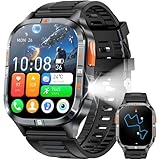
- BUILT-IN GPS & COMPASS– This military smartwatch features high-precision GPS to pinpoint your location while hiking, cycling, or traveling, keeping you safely on track without extra gear. Tap the compass icon and it locks your bearing within three seconds—engineered for pro-level outdoor adventures like camping, climbing, and trekking.
- BLUETOOTH CALLING & MESSAGES – Powered by the latest Bluetooth tech, the men’s smartwatch lets you answer or make calls right from your wrist—no need to pull out your phone. Get real-time alerts for incoming texts and app notifications so you never miss an invite. (Replying to SMS is not supported.)
- BIG SCREEN & DIY VIDEO WATCH FACE – The 2.01" military-spec display is dust-proof, scratch-resistant, and forged from high-strength glass with an aluminum alloy bezel, passing rigorous dust and abrasion tests so the screen stays crystal-clear. Upload a short family video to create a dynamic, one-of-a-kind watch face that keeps your memories alive.
- 24/7 HEALTH MONITORING – Equipped with a high-performance optical sensor, this Android smartwatch tracks heart rate and blood-oxygen levels around the clock. It also auto-detects sleep stages (deep, light, awake) for a complete picture of your health, ensuring you always know how your body is doing.
- MULTI SPORT MODES & FITNESS TRACK – Choose from running, cycling, hiking, basketball, and more to log every workout. Set goals, monitor progress, and sync data to the companion app. Bonus tools include photo gallery, weather, alarm, stopwatch, flashlight, hydration reminder, music/camera remote, find-my-phone, mini-games, and other everyday essentials.
Voice assistant support vs the standard Venu 2
The regular Venu 2 offers no voice assistant support at all. There is no microphone, no speaker, and no way to trigger Siri or Google Assistant from the wrist.
For users who never talk to their smartwatch, this is not a loss. Most Garmin owners interact through buttons, touch gestures, and structured data screens, and the Venu 2 delivers that experience cleanly and efficiently.
However, if you already use voice assistants heavily on your phone, the Venu 2 Plus provides a meaningful convenience upgrade. It bridges a gap between fitness watch and lifestyle smartwatch without fully crossing into smartwatch‑first territory.
Practical value and who it is really for
In real‑world testing, voice assistants on the Venu 2 Plus tend to be used in short bursts rather than continuously. It is a feature that proves its worth in specific moments, not something that reshapes how you train or track health.
For fitness‑focused users, the benefit is situational rather than essential. For users balancing workouts, work calls, and daily tasks, it adds polish and flexibility that the standard Venu 2 simply cannot match.
Ultimately, Garmin’s implementation is cautious but intentional. The Venu 2 Plus gives you access to voice assistants when you want them, without letting them dominate the experience or compromise the watch’s core strengths.
Health and Fitness Tracking: Identical Sensors, Identical Insights
After the discussion around voice assistants and lifestyle features, this is where the comparison simplifies dramatically. When it comes to health monitoring and fitness tracking, the Venu 2 Plus and the standard Venu 2 are functionally the same watch.
Garmin did not differentiate these models at the sensor or algorithm level. If your buying decision is driven primarily by training data, wellness insights, or workout tracking depth, neither watch holds an advantage over the other.
Same sensor suite, same data quality
Both watches use Garmin’s Elevate v4 optical heart rate sensor, delivering identical performance for 24/7 heart rate tracking, resting heart rate trends, and workout intensity zones. In testing, heart rate accuracy during steady-state cardio, intervals, and indoor workouts is indistinguishable between the two.
You also get the same Pulse Ox sensor on both models, used for sleep tracking and optional all-day monitoring. Blood oxygen readings, while best treated as trend-based rather than clinical, behave the same in overnight and spot-check scenarios.
Other core sensors are mirrored as well: barometric altimeter for elevation and floors climbed, accelerometer for movement and step detection, compass, gyroscope, and ambient light sensor. There are no hidden hardware advantages reserved for the Plus.
Sleep, Body Battery, and recovery metrics
Sleep tracking is identical across both devices, covering sleep stages, sleep score, respiration rate, Pulse Ox during sleep, and restlessness. The nightly reports, sleep coach insights, and long-term trends in Garmin Connect look and behave exactly the same.
Body Battery, one of Garmin’s most useful daily readiness tools, pulls from the same inputs on both watches: heart rate variability, activity levels, sleep quality, and stress. The resulting energy scores and recharge patterns match closely when worn side by side.
Stress tracking, relaxation reminders, and guided breathing sessions are also shared features. Even with the Venu 2 Plus adding a microphone, Garmin does not use it for any enhanced recovery or wellness features.
Workout tracking and sport profiles
From a fitness perspective, both watches support the same extensive list of activity profiles. That includes running, cycling, swimming (pool and open water), strength training, HIIT, yoga, Pilates, golf, hiking, skiing, indoor cardio, and a wide range of gym-based activities.
Workout screens, data fields, and customization options are identical. You can build structured workouts in Garmin Connect, sync training plans, and follow guided sessions on either watch without limitation.
Strength training deserves special mention, as Garmin’s rep counting, muscle maps, and set detection perform the same on both models. The presence of a speaker on the Venu 2 Plus does not translate into audible rep counting or coaching during workouts.
GPS performance and outdoor reliability
GPS hardware and tracking performance are unchanged between the two. Both watches use the same single-band GNSS setup, delivering reliable route tracking for runs, walks, and rides, with typical Garmin consistency in open environments.
In urban settings or tree cover, performance is solid but not class-leading compared to Garmin’s newer multi-band watches. Importantly, there is no accuracy advantage gained by choosing the Plus.
Battery impact from GPS usage is also the same. Recorded activities drain both watches at near-identical rates, reinforcing that the underlying hardware and power management are shared.
Health software experience and Garmin Connect integration
All health data feeds into Garmin Connect in exactly the same way. Dashboards, charts, long-term trend analysis, and health snapshots are indistinguishable whether you are wearing a Venu 2 or Venu 2 Plus.
Features like Health Snapshot, hydration tracking, menstrual cycle tracking, fitness age, and respiration are present on both. Software updates have historically rolled out to both models in parallel, with no sign that Garmin treats the Plus as a higher-priority health platform.
This consistency extends to third-party integrations, data exports, and compatibility with Garmin’s wider ecosystem. If you are already invested in Garmin Connect, switching between these two models feels seamless.
What this means for buyers
The key takeaway is simple: Garmin did not use health or fitness tracking as a way to upsell the Venu 2 Plus. There are no exclusive metrics, no improved accuracy claims, and no hidden training features tied to the higher-priced model.
If your primary use case revolves around workouts, recovery, and daily health monitoring, the standard Venu 2 delivers the full experience without compromise. The Venu 2 Plus earns its premium entirely through lifestyle features, not through deeper insight into your body or training.
Sports Modes, GPS Performance and Training Experience
With health and baseline fitness tracking effectively matched, the real comparison now shifts to how these two watches behave when you actively train. Here, the similarities are more important than the differences, and understanding that helps set realistic expectations.
Sports modes and activity profiles
The Venu 2 and Venu 2 Plus ship with the same core set of sports profiles, covering running, cycling, swimming (pool and open water), strength training, HIIT, yoga, Pilates, rowing, skiing, snowboarding, golf, and a wide range of indoor cardio activities.
Garmin’s animated workout support is identical on both, with clear on-screen guidance for strength, mobility, and yoga sessions. This is especially useful for gym users who want structure without relying on a phone.
There are no exclusive sports modes or hidden activity types reserved for the Plus. If you see a workout profile on one, you will see it on the other, down to field customization and data screens.
GPS performance and outdoor reliability
GPS hardware and tracking performance are unchanged between the two. Both watches use the same single-band GNSS setup, delivering reliable route tracking for runs, walks, and rides, with typical Garmin consistency in open environments.
In urban settings or tree cover, performance is solid but not class-leading compared to Garmin’s newer multi-band watches. Importantly, there is no accuracy advantage gained by choosing the Plus.
Battery impact from GPS usage is also the same. Recorded activities drain both watches at near-identical rates, reinforcing that the underlying hardware and power management are shared.
Heart rate accuracy and sensor behavior during training
Both models use Garmin’s same-generation optical heart rate sensor, and in real-world testing they behave virtually identically. Steady-state cardio like running, cycling, and rowing produces clean, believable heart rate curves with minimal lag.
High-intensity intervals and rapid pace changes expose the same limitations on both watches. Spikes during HIIT or heavy strength work can occasionally lag compared to a chest strap, which is expected at this level.
Rank #4

- 【Built-in GPS & Multi-System Positioning】Stay on track with the Tiwain smartwatch’s built-in GPS. Featuring military-grade single-frequency and six-satellite support (GPS, GLONASS, Beidou, Galileo, NAVIC, QZSS), this watch offers fast and accurate location tracking wherever you go. It also includes a compass, altimeter, and barometer, giving you real-time data on your altitude, air pressure, and position.
- 【Military-Grade Durability】Engineered to withstand the toughest conditions, the Tiwain smartwatch meets military standards for extreme temperatures, low pressure, and dust resistance. Crafted from tough zinc alloy with a vacuum-plated finish, this watch is also waterproof and built to resist wear and tear. The 1.43-inch AMOLED HD touchscreen offers clear visibility in all environments, and the watch supports multiple languages for global users.
- 【170+ Sport Modes & Fitness Tracking】Track your fitness journey with 170+ sport modes, including walking, running, cycling, hiking, basketball, and more. Set exercise goals, monitor progress, and sync your data to the companion app. The smartwatch also offers smart features like music control, camera remote, weather updates, long-sitting reminders, and more.
- 【LED Flashlight for Outdoor Adventures】The Tiwain smartwatch comes equipped with a built-in LED flashlight that can illuminate up to 20 meters. Activate it with the side button for added convenience during nighttime activities or outdoor adventures.
- 【Comprehensive Health Monitoring】Monitor your health with real-time heart rate, sleep, blood pressure, and blood oxygen level tracking. The smartwatch will vibrate to alert you of any abnormal readings. You can also make and receive calls directly from the watch, and stay connected with message and app notifications (receive only, no sending capability) – perfect for when you’re driving or exercising.
Support for external sensors is also the same. ANT+ and Bluetooth heart rate straps, cadence sensors, and speed sensors pair without issue, making either watch suitable for more structured training setups.
Training metrics and recovery insights
Neither watch is positioned as a full training-load or performance analytics tool in the way Garmin’s Forerunner or Fenix lines are. That philosophy is consistent across both models.
You still get VO2 max estimates, workout history, intensity minutes, Body Battery, and basic recovery insights, but not training readiness, acute load, or advanced race widgets. This keeps the experience approachable rather than overwhelming.
Importantly, those metrics are calculated in exactly the same way on both watches. There is no algorithmic advantage or deeper analysis unlocked by the Plus.
Everyday training experience and usability
From a comfort perspective, both watches feel nearly identical during workouts. The lightweight polymer case, curved AMOLED display, and silicone strap sit flat against the wrist, even during longer sessions.
Touchscreen responsiveness during sweaty workouts is the same on both, and both retain physical buttons for starting, stopping, and lap marking. There is no added training control benefit from the Plus’s microphone or speaker during activities.
If your routine involves frequent workouts mixed with all-day wear, the experience is effectively interchangeable. Training on a Venu 2 Plus does not feel more advanced, more accurate, or more flexible than training on a Venu 2.
Battery Life in the Real World: Does the Venu 2 Plus Sacrifice Endurance?
After looking at training parity, battery life is the next area where buyers expect a trade-off. Adding a microphone, speaker, and voice assistant support sounds like the kind of upgrade that usually chips away at endurance, especially on an AMOLED-based Garmin.
On paper, Garmin’s own specs already hint at a small gap. In practice, that gap exists, but it is narrower and more situational than spec sheets suggest.
Official figures versus day-to-day reality
Garmin rates the Venu 2 at up to 11 days in smartwatch mode for the 45mm model, while the Venu 2 Plus drops to around 9 days. With the always-on display enabled, both fall to roughly 2–3 days, depending on settings.
In real-world mixed use, those numbers largely hold. With notifications enabled, continuous heart rate, sleep tracking, several workouts per week, and the display set to gesture wake, the Venu 2 consistently lands in the 7–9 day range. The Venu 2 Plus typically settles closer to 6–8 days under the same conditions.
That difference is measurable, but it is not dramatic. For most users, both watches still comfortably clear a full work week with room to spare.
The impact of calls and voice assistants
Where the Venu 2 Plus can lose ground is during frequent use of its headline features. Taking Bluetooth calls directly on the watch, triggering voice assistants, or dictating responses engages the speaker and microphone, which are comparatively power-hungry components.
If you regularly answer calls on your wrist or lean heavily on voice commands, expect battery life to compress by another half-day to a day over a typical charge cycle. This is especially noticeable if those interactions happen alongside GPS workouts on the same day.
That said, occasional call handling has a minimal impact. Using the Plus as a convenience tool rather than a primary calling device keeps battery behavior close to the standard Venu 2.
GPS workouts and AMOLED drain
During GPS activities, both watches behave almost identically. An hour-long outdoor run or ride with GPS and heart rate tracking consumes roughly the same percentage on each, and multi-band GNSS is not a factor here, as neither model supports it.
The AMOLED display remains the biggest variable. Longer outdoor sessions with frequent wrist raises, bright sunlight, and higher brightness settings will drain both watches at similar rates. The Plus does not show any inherent inefficiency during activities themselves.
If your usage leans toward frequent GPS workouts, the battery difference between the two models becomes largely irrelevant. Charging patterns will be dictated by training volume rather than smart features.
Charging speed and daily usability
Both watches use Garmin’s proprietary charging cable and refill at nearly the same pace. A quick top-up of 15–20 minutes can easily recover a day or two of smartwatch use, which reduces the practical impact of slightly shorter endurance on the Plus.
From a wearability standpoint, neither watch demands lifestyle compromises. Sleep tracking, overnight SpO2 (if enabled), and early-morning workouts are all manageable without daily charging anxiety.
The key takeaway is that the Venu 2 Plus does not meaningfully sacrifice endurance unless you actively use the features that differentiate it. If your usage mirrors the Venu 2’s strengths, fitness tracking and notifications, battery life remains firmly within Garmin’s strong mid-range standards.
Smartwatch Features, App Ecosystem and Phone Compatibility
Once battery behavior is understood, the real separation between the Venu 2 and Venu 2 Plus shows up in how “smart” each watch feels day to day. This is where Garmin intentionally drew a line between fitness-first smartwatch functionality and a more phone-adjacent experience.
Both watches sit on the same Garmin software foundation, but the Plus layers in hardware and system-level features that subtly change how often you reach for your phone.
Core smartwatch experience: what’s shared
At a baseline level, the Venu 2 and Venu 2 Plus are identical in their core smartwatch toolkit. Notifications, widgets, glanceable health stats, Garmin Pay, offline music storage, alarms, timers, calendar syncing, and weather all behave the same on both models.
The AMOLED interface is smooth and responsive on each, driven by Garmin’s custom OS rather than Wear OS or watchOS. There’s no app grid sprawl here; navigation relies on widgets and glance views that prioritize speed and battery efficiency over visual flair.
Daily usability is strong on both watches. Notifications are easy to read, vibration strength is well tuned, and the touchscreen remains responsive even during sweaty workouts or quick interactions on the move.
Calling, microphone, and speaker: the defining difference
The Venu 2 Plus adds a built-in microphone and speaker, which immediately unlocks wrist-based calling. You can answer and place calls directly from the watch when connected to your phone, with audio routed through the watch itself rather than acting as a Bluetooth relay.
Call quality is surprisingly usable in quiet to moderately noisy environments. The speaker gets loud enough for short conversations, and the microphone reliably picks up your voice during normal arm positioning, though it’s not designed to replace earbuds or a handset for longer calls.
The standard Venu 2 lacks this hardware entirely. Calls can be accepted or rejected, but you’ll need to switch to your phone or connected headphones to actually talk.
Voice assistants and hands-free control
The microphone on the Venu 2 Plus also enables voice assistant passthrough. This means you can access Siri, Google Assistant, or Bixby depending on your phone, with voice processing handled by the phone rather than the watch itself.
In practice, this allows quick commands like setting reminders, sending texts, controlling smart home devices, or starting timers without touching the screen. It feels like a convenience feature rather than a transformative one, but it’s useful during workouts, cooking, or driving.
The Venu 2 does not support voice assistants in any form. All interactions are touch- or button-based, which some users will actually prefer for predictability and simplicity.
Messaging and notification interaction
Notification handling is similar across both models, but phone platform matters. Android users can reply to messages using predefined quick replies on both watches, while iPhone users are limited to viewing notifications only.
The Venu 2 Plus gains an advantage through voice assistant integration, which can indirectly allow message replies via Siri or Google Assistant. This isn’t as seamless as native dictation, but it does give Plus owners a workaround that the standard Venu 2 simply doesn’t have.
💰 Best Value

- Smart Watch with GPS and Offline Map: This smart watch connects to multiple satellite systems for accurate real-time positioning, and includes a professional-grade compass, altimeter, and barometer for precise data, ensuring you maintain your sense of direction in any outdoor environment. The map version supports downloading offline maps; select a route or destination to view the route even without a signal, eliminating the risk of getting lost.
- Bluetooth Call & Message Functionality: This smart watches for men allows you to make and receive calls; receive text and social media notifications (Facebook, WhatsApp, Instagram, Twitter, etc.); and reply to text messages with voice-to-text or set up quick replies (text reply functionality is available for Android phones).
- Sports & Health Monitoring: This 5ATM waterproof fitness watch supports over 100 sports modes and tracks daily activity data, calories, distance, steps, and heart rate. You can use it to monitor your health metrics (blood oxygen, heart rate, stress, and sleep), monitor your fatigue and mood, and perform PAI analysis. You can also use this smartwatch to set water intake and sedentary reminders. Stay active and healthy with this fitness tracker watch.
- Customizable Watch Faces & AI Functionality: This smart watch features a 1.46-inch HD touchscreen and over 100 downloadable and customizable watch faces. You can even use your favorite photos as your watch face. Equipped with AI technology, it supports voice descriptions in multiple languages to generate personalized AI watch faces. The watch's AI Q&A and AI translation features provide instant answers to questions and break down language barriers, making it an ideal companion for everyday life and travel.
- Large Battery & High Compatibility & More Features: This smart watch for android phones and ios phone features a large 550ml battery for extended battery life. It's compatible with iOS 9.0 and above and Android 5.0 and above. It offers a wealth of features, including an AI voice assistant, weather display, music control, camera control, calculator, phone finder, alarm, timer, stopwatch, and more. (Package Includes: Smartwatch (with leather strap), spare silicone strap, charging cable, and user manual)
Garmin’s notification system remains reliable rather than flashy. You won’t get rich app interactions, but alerts are timely, readable, and easy to dismiss during workouts or meetings.
App ecosystem and Connect IQ reality
Both watches support the Garmin Connect IQ store, giving access to third-party watch faces, data fields, widgets, and a limited selection of apps. In reality, most users stick to watch faces and widgets rather than full apps.
Performance is identical between the two models, and neither gains exclusive software experiences beyond what the microphone enables. There’s no meaningful difference in app availability or compatibility.
Garmin’s strength here is stability. Apps rarely crash, battery impact is predictable, and updates tend to prioritize function over novelty.
Music, payments, and everyday conveniences
Offline music storage works the same on both watches, with support for Spotify, Deezer, Amazon Music, and locally transferred MP3s. Playback reliability is solid, and Bluetooth headphone pairing is consistent across models.
Garmin Pay is also identical, offering contactless payments where supported by your bank. It’s not as universally accepted as Apple Pay or Google Wallet, but it works reliably once set up.
From a daily wear standpoint, strap comfort, button feel, and screen clarity are effectively the same. The Plus does not feel heavier or bulkier in use, despite the added hardware.
Size options and wearability considerations
One practical difference that often gets overlooked is sizing. The Venu 2 is available in two sizes, making it easier to find a comfortable fit for smaller or larger wrists.
The Venu 2 Plus comes in a single 43mm case size. For many wrists it’s a sweet spot, but users who preferred the smaller Venu 2S or the larger standard Venu 2 may notice the lack of choice.
Materials, finishing, and strap compatibility remain consistent across the range, so comfort differences come down primarily to case diameter and thickness rather than weight or build quality.
iOS and Android compatibility in real-world use
Both watches are fully compatible with iOS and Android, but the experience is better on Android overall. Deeper notification interaction, easier permissions handling, and tighter voice assistant integration give Android users more flexibility.
iPhone users still get excellent fitness tracking, stable notifications, and access to Garmin’s full health ecosystem through the Connect app. What’s missing are interactive replies and Apple Pay, which Garmin Pay does not replace one-to-one.
Neither watch feels crippled on iOS, but neither competes with the Apple Watch for ecosystem integration. Garmin’s value lies in consistency across platforms rather than deep alignment with one.
Which smartwatch experience actually fits your usage
If you primarily want notifications, fitness tracking, music, and payments with minimal distraction, the Venu 2 already delivers a complete experience. It feels focused, efficient, and intentionally restrained.
The Venu 2 Plus makes sense if you value occasional wrist calls, hands-free commands, or reducing how often you pull out your phone. Those features don’t change how the watch tracks fitness, but they do change how it fits into daily life.
The key is honesty about usage. If calling and voice control sound nice but won’t be used regularly, the standard Venu 2 remains the cleaner, simpler smartwatch choice.
Price, Value and Upgrade Verdict: Which Venu Makes Sense for You?
With the feature differences clearly defined, the decision ultimately comes down to pricing, perceived value, and whether the Venu 2 Plus justifies its premium in your day-to-day use. This is where the two watches separate most clearly, not on fitness capability, but on how much smartwatch convenience you want strapped to your wrist.
Launch pricing vs real-world pricing today
At launch, the Venu 2 Plus carried a noticeable premium over the Venu 2, reflecting the addition of a microphone, speaker, and voice assistant support. Garmin positioned it as a more lifestyle-oriented smartwatch without changing the underlying fitness engine.
In the real world, prices have softened for both models. The Venu 2 is now frequently discounted and often represents one of Garmin’s strongest value buys in the AMOLED category, while the Venu 2 Plus still tends to sit a step higher, even when on sale.
That gap matters because the core experience remains largely shared. Display quality, health metrics, training features, build materials, and overall durability are effectively identical.
What you’re actually paying extra for with the Venu 2 Plus
The additional cost of the Venu 2 Plus buys you three things: Bluetooth calling, voice assistant access, and the internal hardware needed to support them. There’s no uplift in GPS accuracy, sensor quality, screen sharpness, or battery endurance in standard smartwatch mode.
In daily wear, calling and voice control are conveniences rather than essentials. They’re useful for quick replies, hands-free moments, or staying reachable during walks and commutes, but they don’t transform how the watch performs as a fitness tracker.
If those features become part of your routine, the premium feels justified. If they remain occasional novelties, the extra spend is harder to defend.
Battery life and long-term value considerations
Battery life is broadly similar, but the Venu 2 Plus can drain faster if you regularly use calls or voice commands. Over time, that can subtly change how often you need to charge, especially compared to a Venu 2 used primarily for tracking and notifications.
Both watches benefit from Garmin’s strong software support, consistent firmware updates, and mature Connect ecosystem. From a longevity standpoint, neither model feels more “future-proof” than the other in terms of fitness features.
Resale value tends to favor the Plus slightly due to its broader smartwatch appeal, but not enough to offset the initial price difference for most buyers.
Should you upgrade from Venu 2 to Venu 2 Plus?
For existing Venu 2 owners, this is a cautious recommendation. The fitness experience, health tracking depth, and training insights remain unchanged, so there’s no performance-driven reason to upgrade.
An upgrade only makes sense if wrist-based calling or voice assistant access solves a real friction point in your daily routine. If your phone already fills that role comfortably, the Venu 2 Plus won’t feel like a meaningful leap forward.
In most cases, the Venu 2 still feels current, capable, and complete.
The clear buying verdict
Choose the Venu 2 if you want the best balance of price, battery life consistency, size options, and Garmin’s full health and fitness feature set without paying for extras you may not use. It remains one of the most well-rounded mid-range Garmin smartwatches available.
Choose the Venu 2 Plus if smartwatch convenience matters as much as fitness tracking, and you genuinely want to take calls or issue commands from your wrist. It’s a lifestyle upgrade, not a training one.
Both are excellent watches. The smarter purchase is the one that matches how you actually use your watch, not how you think you might use it six months from now.