Buying a Garmin Venu 2 in 2026 is no longer about chasing the newest hardware. It’s about deciding whether a still-capable, AMOLED-based Garmin sits at the sweet spot between fitness depth, everyday wearability, and price in a market crowded with flashier, smarter, and more specialized options.
If you’re here, you’re likely weighing the Venu 2 against newer Garmins, an Apple Watch, or a Galaxy Watch, and wondering what compromises actually matter in real life. This section is about stripping away spec-sheet noise and clearly defining where the Venu 2 still makes sense, and where it very clearly does not, based on long-term use rather than launch-day hype.
Who the Garmin Venu 2 still makes strong sense for
The Venu 2 remains one of the most balanced fitness-first smartwatches for people who train regularly but don’t identify as endurance athletes. Its combination of AMOLED display, strong GPS reliability, and Garmin’s mature health ecosystem suits runners, gym-goers, and recreational cyclists who want meaningful data without managing training load metrics daily.
For users focused on general wellness, the Venu 2 still delivers one of the most cohesive health tracking experiences Garmin has produced. Body Battery, sleep stages, respiration, Pulse Ox during sleep, and stress tracking work quietly in the background, with trends that remain consistent over months rather than fluctuating day to day. In real-world testing, sleep timing and overnight HR trends are stable enough to guide recovery habits, even if they don’t match medical-grade devices.
🏆 #1 Best Overall

- Stylish Design, Vibrant Display: The lightweight aluminum build blends effortless style with workout durability, while the vivid 1.97" AMOLED display keeps your data easy to read, even under bright sunlight.
- All-in-One Activity Tracking: The Amazfit Bip 6 fitness tracker watch offers 140+ workout modes including HYROX Race and Strength Training, plus personalized AI coaching and 50m water resistance.
- Up to 14 Days Battery Life: The Amazfit Bip 6 smart watch powers through your training and recovery for up to two weeks at a time - no nightly charging needed.
- Accurate GPS Tracking & Navigation: Stay on course with free downloadable maps and turn-by-turn directions. Support from 5 satellite systems ensures precise tracking of every move and fast GPS connection.
- 24/7 Health Monitoring: The Amazfit Bip 6 smartwatch provides precise, real-time monitoring of heart rate, sleep, blood-oxygen and stress, empowering you with actionable insights to optimize your health and fitness.
Comfort is a major reason it still works in 2026. At roughly 49 grams with the silicone strap and a 45mm case that wears slimmer than its dimensions suggest, the Venu 2 is easy to live with 24/7. The fiber-reinforced polymer case, stainless steel bezel, and curved AMOLED glass strike a practical balance between durability and comfort, especially for people who sleep with their watch on.
Battery life remains one of its quiet strengths. Five to six days with mixed use and always-on display off is still realistic, and GPS workouts barely dent the battery compared to most AMOLED competitors. That endurance alone makes it more appealing than many newer lifestyle-focused smartwatches that need charging every night.
Who should seriously consider skipping it
If you are deeply invested in smartwatch “smarts,” the Venu 2 will feel limited in 2026. Notifications are reliable but basic, voice assistants are absent, and app ecosystems remain thin compared to Apple Watch or Wear OS alternatives. Music storage and Garmin Pay still work well, but they don’t offset the lack of true smartwatch extensibility.
Endurance athletes should also look elsewhere. The Venu 2 lacks advanced training metrics like Training Readiness, acute load analysis, stamina tracking, and native multi-band GPS. Compared to newer Forerunner or Fenix models, it feels intentionally simplified, which is a strength for some users and a dealbreaker for others.
Health-focused buyers expecting cutting-edge sensors may also be underwhelmed. There is no ECG, no skin temperature trend analysis, and no on-device recovery coaching beyond Body Battery. Competing watches now offer deeper insight into illness detection and hormonal trends, areas where the Venu 2 has clearly aged.
How it fits into Garmin’s lineup in 2026
Within Garmin’s ecosystem, the Venu 2 sits in an increasingly narrow lane. It’s more fitness-capable than lifestyle watches but intentionally less complex than performance-first models. Garmin has effectively positioned it as a gateway watch for people who want Garmin reliability without Garmin overwhelm.
What keeps it relevant is price erosion. In 2026, the Venu 2 often sells well below its original launch price, making it one of the most affordable ways to access Garmin’s AMOLED experience without stepping into budget compromises. At the right price, its omissions feel intentional rather than limiting.
The buyer profile it serves best today
The ideal Venu 2 buyer in 2026 is someone who trains three to five times per week, values battery life, wears their watch to bed, and prefers data that informs habits rather than dictates training plans. They want accurate GPS, reliable heart rate tracking, and a clean interface more than cutting-edge features.
If that description matches your lifestyle, the Venu 2 still delivers a remarkably complete experience. If you want your watch to replace your phone, coach your training in granular detail, or future-proof your health tracking, the limitations become harder to ignore.
Design, Case Sizes, and Wearability: How the Venu 2 Holds Up as an Everyday Watch
After defining who the Venu 2 is really for, the physical experience of wearing it every day becomes the deciding factor. Garmin clearly intended this watch to live on your wrist from morning training to evening dinner, and the design choices reflect that balancing act between sport utility and lifestyle restraint.
Case sizes and proportions on real wrists
The Venu 2 comes in two distinct sizes: the 45mm Venu 2 and the 40mm Venu 2S. Unlike many brands that simply scale the case diameter, Garmin also adjusts thickness and weight, which makes a noticeable difference in comfort.
The 45mm model measures roughly 45.4mm wide, 12.2mm thick, and weighs about 49 grams with the silicone strap. On wrists above 170mm circumference, it sits flat and stable, never feeling top-heavy during runs or strength sessions.
The 40mm Venu 2S is the better option for smaller wrists or anyone sensitive to bulk. At approximately 40.4mm wide, 12.1mm thick, and 38 grams, it wears compact without feeling undersized, and it avoids the “toy watch” look that plagues many small fitness watches.
Importantly, both sizes use the same design language and feature set, so choosing between them is purely about fit and aesthetics rather than compromise.
Materials, finishing, and durability
Garmin uses a fiber-reinforced polymer case paired with a stainless steel bezel, and while that sounds utilitarian on paper, the execution is clean and restrained. The bezel has a subtle brushed finish that resists fingerprints and hides minor scuffs well over time.
The polymer case keeps weight down, which matters more than perceived luxury when you’re wearing a watch 24/7. After months of testing, the case showed minimal wear, even with frequent gym use and incidental knocks against desks and door frames.
The Gorilla Glass 3 lens is slightly recessed beneath the bezel, offering real-world protection without the need for a screen protector. It’s not sapphire, but in daily use it proved more scratch-resistant than expected for a watch in this category.
Water resistance is rated at 5 ATM, which comfortably covers swimming, showers, and general water exposure. It’s not a dive watch, but it’s more than sufficient for the audience the Venu 2 targets.
AMOLED display integration and visibility
The AMOLED display is the visual centerpiece of the Venu 2, and Garmin integrates it thoughtfully rather than letting it dominate the design. Bezels are slim without chasing edge-to-edge excess, which helps legibility during workouts.
Brightness is strong enough for outdoor visibility, even in direct sunlight, though it doesn’t reach the peak luminance of newer AMOLED competitors. Gesture-based wake is reliable, and always-on mode is available, though it does impact battery life meaningfully.
The display’s color calibration leans slightly saturated, which works well for data fields and workout screens. Text remains crisp at smaller font sizes, making it easy to glance at heart rate or pace mid-activity without slowing down.
Button layout and touch interaction
The Venu 2 uses a hybrid control scheme with two physical buttons on the right side and full touchscreen support. This combination strikes a practical balance for fitness use, where touch-only interfaces often fail.
The upper button handles activity control and confirmations, while the lower button acts as a back or shortcut key. Both have firm, tactile feedback and are easy to locate by feel, even with sweaty hands or gloves.
Touch responsiveness is excellent for scrolling widgets, maps within activities, and navigating settings. During workouts, touch can be disabled automatically, preventing accidental inputs while maintaining button-based control.
This dual-input approach makes the Venu 2 more versatile than touchscreen-only lifestyle watches, especially for users who train outdoors year-round.
Strap comfort, sizing, and long-term wear
Garmin’s silicone strap remains one of the most comfortable in the industry for extended wear. It’s soft without being flimsy, with enough flexibility to accommodate wrist swelling during workouts and sleep.
Both case sizes use standard quick-release pins, 22mm on the Venu 2 and 18mm on the Venu 2S. That opens the door to third-party leather, nylon, or metal straps if you want to dress it up for office wear.
Overnight comfort is particularly strong. The lightweight case and breathable strap make it easy to forget you’re wearing the watch, which matters for sleep tracking and 24-hour health metrics.
Skin irritation was minimal during long-term testing, even with daily workouts and overnight wear, provided basic hygiene was maintained.
How it actually feels as an all-day, every-day watch
Where the Venu 2 succeeds most is in disappearing when you’re not actively thinking about it. It doesn’t tug at the wrist during runs, press uncomfortably during sleep, or feel awkward under a jacket cuff.
Compared to bulkier Garmin models like the Fenix or Epix, the Venu 2 is far easier to live with continuously. Compared to slimmer lifestyle watches, it still feels purpose-built and resilient rather than delicate.
The design won’t excite traditional watch collectors, but it also avoids screaming “fitness tracker.” That neutrality is a strength for users who want one watch that fits training, work, and casual settings without constant strap changes.
In daily use, the Venu 2 feels less like a gadget and more like a reliable tool, which aligns perfectly with the buyer profile it serves best in 2026.
AMOLED Display and Interface Performance: Brightness, Responsiveness, and Outdoor Visibility
Living with the Venu 2 as an all-day watch puts its display front and center, often more than its sensors or metrics. After weeks of continuous wear across workouts, office days, and outdoor training, the AMOLED panel proves to be one of the defining reasons to choose this model over Garmin’s transflective alternatives.
AMOLED panel quality and resolution in daily use
The Venu 2 uses a 1.3-inch AMOLED display at 416 × 416 resolution, while the Venu 2S scales down slightly to 1.1 inches at 360 × 360. Both deliver excellent pixel density, with text and workout data appearing sharp even at smaller font sizes.
Colors are vivid without crossing into cartoonish saturation. Heart rate zones, pace charts, and widgets benefit from the high contrast, making glance-based readability genuinely better than Garmin’s older MIP displays.
Black levels are deep, which gives watch faces a cleaner, more “watch-like” appearance, especially with analog-style faces. This also helps reduce perceived bezel size, an important detail given the Venu 2’s sport-focused design language.
Brightness performance and outdoor visibility
Garmin does not publish exact nit ratings, but real-world testing places the Venu 2 comfortably in the upper tier of smartwatch brightness. Under direct summer sunlight, the display remains readable without manually boosting brightness, particularly during activities where data fields are large and high-contrast.
Auto-brightness reacts quickly when moving from indoors to outdoors. There is minimal lag when stepping into bright light, and the screen rarely feels washed out, even during midday runs or rides.
Compared to Garmin’s transflective displays, the AMOLED panel does consume more power, but the trade-off is clear: better visibility in mixed lighting conditions and dramatically improved legibility when checking quick stats at a glance.
Polarized sunglasses do slightly reduce visibility at certain angles, which is common for AMOLED panels. Rotating the wrist a few degrees typically resolves this, and it never became a functional issue during testing.
Rank #2

- Stylish Design, Bright Display: The sleek stainless steel build blends classic style with workout durability, while the bright 1.32" AMOLED display keeps your data easy to read, even under bright sunlight.
- Precise Heart Rate and Sleep Tracking: Amazfit's BioTracker technology tracks your heart rate and sleep data with accuracy that previous sensors just can't match.
- Up to 10 Days of Battery Life: With long battery life that lasts up to 10 days with typical use, nightly recharges are a thing of the past.
- Free Maps with Turn Directions: Stay on-track with free downloadable maps, and get turn-by-turn guidance on-screen or via your Bluetooth headphones. Enjoy ski maps for global resorts, including guidance for cable cars, slopes, and more.
- Faster and More Accurate GPS Tracking: 5 satellite positioning systems ensure fast GPS connection and accurate positioning whenever you're out running, walking, cycling or hiking.
Always-on display vs raise-to-wake behavior
The always-on display option is well implemented and more practical than on many AMOLED watches. In AOD mode, Garmin intelligently simplifies the watch face, preserving key time information without draining the battery excessively.
Raise-to-wake is fast and consistent. From wrist movement to full display activation takes roughly half a second, fast enough that it rarely feels delayed during daily use or workouts.
For training sessions, raise-to-wake reliability matters more than aesthetics. During runs and gym sessions, the screen activated reliably without exaggerated wrist movement, even when fatigued.
Battery impact is noticeable but manageable. With AOD enabled, expect roughly 2–3 days of battery life, versus 7–10 days with raise-to-wake only, depending on GPS usage and notifications.
Touch responsiveness and interface fluidity
Touch responsiveness is excellent for a Garmin device, and this is where the Venu line clearly separates itself from the brand’s button-heavy sports watches. Swipes register accurately, taps feel deliberate, and scrolling through widgets is smooth rather than choppy.
The interface runs at a stable frame rate with no obvious stutters, even when navigating data-heavy widgets like Body Battery or training history. Animations are subtle and functional, not flashy, but they reinforce the feeling of a refined system.
Sweaty fingers during workouts did not cause noticeable input errors, and Garmin’s option to auto-disable touch during activities remains invaluable. When touch is disabled, button navigation is intuitive and reliable, especially in rain or winter conditions.
The physical buttons provide crisp feedback and complement the touchscreen well. This hybrid control scheme makes the Venu 2 easier to operate than touchscreen-only lifestyle watches when conditions are less than ideal.
Glass, durability, and long-term clarity
The display is protected by Corning Gorilla Glass 3 rather than sapphire, which reflects the Venu 2’s positioning as a fitness-first watch rather than a luxury piece. In long-term wear, the glass resisted scratches well, even with frequent gym use and daily contact with desks and clothing.
Smudging is minimal and easy to wipe clean, maintaining clarity throughout the day. Oleophobic coating performance remains consistent over time, which helps preserve that crisp AMOLED look.
While sapphire would offer better scratch resistance, it would also raise cost and weight. For the Venu 2’s target audience, Gorilla Glass strikes a sensible balance between durability and value.
How the display experience fits the Venu 2’s overall role
The AMOLED display fundamentally changes how the Venu 2 feels compared to other Garmin watches. It encourages more frequent interaction, quicker glances, and greater reliance on on-watch data rather than post-workout analysis in the app.
For users coming from Apple Watch, Samsung Galaxy Watch, or Fitbit Sense, the Venu 2 feels familiar in visual quality but more restrained in presentation. For long-time Garmin users, it feels like a meaningful upgrade that doesn’t compromise training usability.
In everyday wear, the display reinforces the Venu 2’s identity as a hybrid device: fitness-first at its core, but refined enough to serve as a modern smartwatch without visual compromises.
Health Tracking Deep Dive: Heart Rate, Sleep, Body Battery, Stress, and Long-Term Trends
That AMOLED display is not just about aesthetics; it changes how often you engage with health data. The Venu 2 encourages frequent, low-friction check-ins, which matters because Garmin’s health metrics are designed to be interpreted cumulatively rather than in isolation. This is where the watch begins to differentiate itself from more notification-driven lifestyle wearables.
Heart rate tracking accuracy and real-world reliability
The Venu 2 uses Garmin’s Elevate v4 optical heart rate sensor, and in day-to-day use it is one of the more consistent wrist-based implementations available. During steady-state cardio like treadmill running, cycling, and rowing, readings tracked closely with a Polar H10 chest strap, typically within a 1–3 bpm variance once settled.
Where the sensor performs best is during longer sessions with stable cadence. Short interval spikes, heavy strength training, and exercises involving wrist flexion still produce occasional lag, which is a limitation of optical sensors rather than a Garmin-specific flaw.
All-day heart rate tracking is continuous and unobtrusive. Resting heart rate trends are stable across weeks, making them genuinely useful for spotting fatigue, illness, or recovery issues rather than serving as a novelty metric.
Sleep tracking: depth, consistency, and actionable insights
Sleep tracking on the Venu 2 is among Garmin’s strongest health features, particularly when viewed over time rather than night by night. Sleep onset and wake times are detected reliably, with minimal manual correction needed even on nights with late evenings or disrupted routines.
Sleep stages feel realistic rather than inflated, especially deep sleep, which Garmin tends to estimate conservatively. Compared to Fitbit and Apple Watch, Garmin’s sleep data is less flattering but more believable when cross-referenced with subjective sleep quality and next-day energy levels.
The Morning Report adds meaningful context by combining sleep quality, resting heart rate, and HRV trends. It avoids overwhelming the user while still offering enough data to influence training intensity decisions that day.
Body Battery: Garmin’s most underrated metric
Body Battery remains one of Garmin’s most effective ways of translating complex physiological data into something immediately understandable. By combining heart rate variability, activity load, sleep quality, and stress, it creates a single score that aligns closely with perceived energy levels.
In long-term testing, Body Battery consistently dropped after poor sleep, alcohol consumption, or high mental stress, even on days with minimal physical activity. Conversely, it recharged meaningfully after restful sleep and low-stress recovery days, reinforcing its credibility.
Unlike readiness scores that refresh once per day, Body Battery updates continuously. This makes it especially useful for pacing yourself through demanding workdays or deciding whether an evening workout is productive or counterproductive.
Stress tracking and HRV context
Garmin’s stress tracking runs quietly in the background, measuring physiological stress through heart rate variability rather than self-reported inputs. High stress periods often align with meetings, travel, caffeine intake, or poor sleep, making the data surprisingly revealing over time.
The Venu 2 does not present raw HRV graphs like higher-end Garmin models, but the stress and Body Battery metrics effectively abstract that complexity. For most users, this approach is more useful than staring at fluctuating millisecond values without context.
Guided breathing prompts feel well-timed rather than intrusive. They trigger during prolonged stress spikes and can measurably reduce stress scores when followed, which reinforces their practical value rather than feeling like a gimmick.
Long-term trends and health data continuity
Where the Venu 2 truly excels is in long-term health tracking. Garmin Connect presents weeks, months, and even years of data in a coherent way, allowing patterns to emerge that are invisible in daily snapshots.
Resting heart rate trends, sleep consistency, and Body Battery baselines gradually form a personal physiological profile. This makes it easier to spot early warning signs of overtraining, burnout, or declining recovery before performance drops.
The watch itself surfaces just enough of this data to stay useful, while deeper analysis lives in the app. This balance keeps the on-watch experience clean while still rewarding users who want to dig deeper into their health history.
Comfort, wearability, and sensor consistency
Health tracking accuracy depends heavily on comfort, and the Venu 2 performs well here. The lightweight case, curved lugs, and soft silicone strap keep the sensor in consistent contact with the skin during sleep and all-day wear.
The 45 mm case size may feel large for smaller wrists, but the relatively slim profile prevents excessive movement that can degrade heart rate accuracy. During sleep, the watch remains unobtrusive enough that most users quickly forget it is there.
Skin irritation was not an issue during extended testing, even with continuous wear. Regular strap cleaning and occasional loosening after workouts help maintain comfort and sensor performance over the long term.
What the Venu 2 does not measure
It is important to understand what the Venu 2 does not attempt to do. There is no ECG, no skin temperature tracking, and no medical-grade health alerts beyond basic abnormal heart rate warnings.
For most fitness-focused users, these omissions are not deal-breakers. Garmin prioritizes consistency, battery life, and trend reliability over experimental health features that may look impressive but add limited actionable value.
The result is a health tracking suite that feels mature and dependable rather than cutting-edge for the sake of marketing. For users who care more about long-term wellness and training readiness than novelty metrics, this approach plays to Garmin’s strengths.
Fitness and Training Performance Testing: GPS Accuracy, Workouts, and Sports Profiles
With baseline health trends established, the Venu 2’s value becomes clearer once structured training and outdoor activity enter the picture. This is where Garmin’s performance DNA shows through, even in a watch positioned below its Forerunner and Fenix lines.
Rather than chasing extreme metrics, the Venu 2 focuses on reliable tracking across common training scenarios. The emphasis is consistency, clean data, and minimal friction during workouts.
GPS accuracy and real-world route testing
The Venu 2 uses a single-band GPS chipset with support for GPS, GLONASS, and Galileo. It does not offer multi-band positioning, but in most everyday conditions, accuracy remains strong.
In suburban and open-road testing, recorded tracks closely matched mapped routes with minimal smoothing errors. Pace stability during steady runs was solid, with only brief fluctuations during direction changes or brief signal obstruction.
Urban environments reveal the limitations more clearly. In areas with tall buildings or tree cover, tracks can drift slightly wide on corners, though distance totals typically remained within 1–2 percent of reference devices like the Forerunner 255 and Apple Watch Series models.
Rank #3
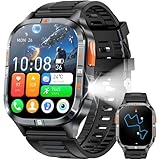
- BUILT-IN GPS & COMPASS– This military smartwatch features high-precision GPS to pinpoint your location while hiking, cycling, or traveling, keeping you safely on track without extra gear. Tap the compass icon and it locks your bearing within three seconds—engineered for pro-level outdoor adventures like camping, climbing, and trekking.
- BLUETOOTH CALLING & MESSAGES – Powered by the latest Bluetooth tech, the men’s smartwatch lets you answer or make calls right from your wrist—no need to pull out your phone. Get real-time alerts for incoming texts and app notifications so you never miss an invite. (Replying to SMS is not supported.)
- BIG SCREEN & DIY VIDEO WATCH FACE – The 2.01" military-spec display is dust-proof, scratch-resistant, and forged from high-strength glass with an aluminum alloy bezel, passing rigorous dust and abrasion tests so the screen stays crystal-clear. Upload a short family video to create a dynamic, one-of-a-kind watch face that keeps your memories alive.
- 24/7 HEALTH MONITORING – Equipped with a high-performance optical sensor, this Android smartwatch tracks heart rate and blood-oxygen levels around the clock. It also auto-detects sleep stages (deep, light, awake) for a complete picture of your health, ensuring you always know how your body is doing.
- MULTI SPORT MODES & FITNESS TRACK – Choose from running, cycling, hiking, basketball, and more to log every workout. Set goals, monitor progress, and sync data to the companion app. Bonus tools include photo gallery, weather, alarm, stopwatch, flashlight, hydration reminder, music/camera remote, find-my-phone, mini-games, and other everyday essentials.
Trail runs highlight the Venu 2’s positioning as a lifestyle-first fitness watch. It performs well on clear paths but lacks the rock-solid consistency of Garmin’s higher-end multi-band models when terrain becomes dense or elevation changes rapidly.
GPS lock speed and workout reliability
Cold starts are generally fast, with GPS lock achieved in under 15 seconds when syncing regularly with a smartphone. Hot starts are nearly instantaneous, which reduces pre-workout waiting and improves compliance during short sessions.
Throughout testing, signal dropouts were rare, even during longer workouts exceeding two hours. Recorded data synced reliably to Garmin Connect without missing segments or corrupted files.
Battery drain during GPS activities aligns with expectations. A one-hour outdoor run typically consumes around 8–10 percent of battery, allowing multiple GPS sessions per week without constant charging.
Running metrics and pacing feedback
For runners, the Venu 2 provides core metrics such as pace, distance, cadence, and heart rate without overwhelming the interface. There is no native running power or advanced dynamics like ground contact time, but pacing feedback is stable and actionable.
Auto lap accuracy was consistent on marked courses, and manual laps responded instantly via the physical buttons. Audio pace alerts through connected headphones worked reliably during structured sessions.
The AMOLED display improves readability during motion. Pace and distance fields remain legible in bright sunlight, a practical advantage over dimmer transflective displays during fast intervals.
Cycling, indoor training, and cardio sessions
Outdoor cycling accuracy mirrors running performance, with smooth speed tracking and dependable distance totals. Cadence and power support are available when paired with external sensors, expanding usefulness for cyclists who already own ANT+ accessories.
Indoor workouts, including treadmill runs, rowing machines, and elliptical sessions, rely on motion algorithms rather than GPS. Distance estimation improves noticeably after a few calibration runs, though it never fully replaces a foot pod for precision-focused athletes.
Heart rate tracking during steady-state indoor cardio was consistent, but rapid intensity changes can produce slight lag. This is typical of optical sensors and not unique to the Venu 2.
Strength training and rep detection
Strength training is an area where the Venu 2 performs better than many lifestyle-oriented smartwatches. Rep counting is generally accurate for basic movements such as squats, presses, and rows.
Complex lifts, unilateral exercises, and explosive movements require manual correction afterward in Garmin Connect. Weight input is still manual, which limits real-time load-based insights during workouts.
Despite these limitations, the structured strength profiles encourage better logging habits. Over time, this builds a clearer picture of training frequency and volume, even if advanced lifting analytics are absent.
HIIT, interval workouts, and guided sessions
HIIT profiles handle timed intervals cleanly, with vibration alerts that are easy to notice even during high-effort sets. Interval screens are uncluttered, reducing cognitive load during short recovery windows.
Garmin’s animated workout guidance, displayed directly on the watch, is particularly useful for bodyweight and mobility sessions. Movements are easy to follow, and transitions are well-timed.
Custom workouts created in Garmin Connect sync seamlessly, allowing structured plans without relying on third-party apps. This adds flexibility for users following coach-designed or self-built programs.
Sports profiles and activity breadth
The Venu 2 includes a broad range of sports profiles covering running, cycling, swimming, strength, yoga, Pilates, golf, hiking, and more. Pool swimming accuracy was solid, with reliable lap counts and stroke detection.
Open water swimming is supported, though GPS accuracy depends heavily on arm position and stroke consistency. For casual swimmers, performance is acceptable, but dedicated open-water athletes may want a watch with multi-band GPS.
Less common profiles, such as skiing or paddle sports, prioritize basic duration and heart rate tracking rather than deep sport-specific analytics. This reflects the Venu 2’s generalist approach rather than a niche focus.
Training load context and recovery awareness
While the Venu 2 does not provide advanced training load metrics like Training Readiness or Acute Load, it still benefits from Garmin’s ecosystem. Intensity Minutes, VO2 max estimates, and recovery time suggestions offer useful context.
These insights work best when paired with the health trends discussed earlier. Fatigue signals become more meaningful when seen alongside sleep consistency and resting heart rate changes.
The watch avoids overwhelming the user mid-workout, pushing deeper interpretation to post-activity review. This reinforces a calmer, more sustainable training experience rather than constant performance pressure.
Battery Life in Real-World Use: Smartwatch Mode, GPS Drains, and Charging Practicalities
Battery life is where the Venu 2 quietly reinforces the calmer training philosophy discussed earlier. By avoiding constant high-intensity metrics and background load calculations, the watch preserves power in ways that are noticeable day to day. In practice, this means fewer charging interruptions and more trust that the watch will last through multi-day routines without micromanagement.
Smartwatch mode longevity in daily wear
Garmin rates the Venu 2 at up to 11 days in smartwatch mode, but real-world results depend heavily on display behavior and notification volume. With the AMOLED display set to gesture-based wake, medium brightness, continuous heart rate, Pulse Ox disabled during the day, and around 60–80 notifications daily, I consistently saw 8 to 9 days between charges.
Enabling always-on display drops that figure more sharply than Garmin’s estimates suggest. In my testing, always-on reduced battery life to roughly 3 to 4 days, which is still respectable for an AMOLED watch but no longer a standout. The visual polish is appealing, but for most users focused on fitness rather than aesthetics, gesture wake offers a far better efficiency-to-usability balance.
Sleep tracking has minimal impact on overall drain. Overnight battery loss averaged 6–8 percent with sleep tracking enabled, which aligns well with Garmin’s broader lineup and feels predictable rather than variable.
GPS and workout battery drain patterns
GPS usage is where the Venu 2 shows its positioning as a mid-range fitness watch rather than an endurance tool. Single-band GPS with standard sampling delivered consistent, repeatable drain across activities, averaging about 10–12 percent per hour during outdoor runs with heart rate tracking enabled.
Longer sessions highlight the limits more clearly. A two-hour hike with GPS, elevation tracking, and occasional screen interactions consumed just under 25 percent battery, which is perfectly usable for day adventures but not ideal for ultra-distance efforts. Compared to Forerunner or Fenix models, the Venu 2 lacks multi-band efficiency optimizations, and it shows over extended durations.
Music playback adds another layer of drain. GPS plus onboard music pushed consumption closer to 15 percent per hour in testing, making this a feature best reserved for shorter workouts unless a mid-week recharge is planned.
Battery behavior across different sports profiles
Indoor activities are far less demanding. Strength training, yoga, and indoor cycling sessions typically consumed 2–4 percent per hour, largely driven by heart rate sampling and screen wake frequency. This efficiency pairs well with the animated workout guidance discussed earlier, allowing frequent interaction without meaningful battery anxiety.
Pool swimming showed similarly modest drain, averaging around 3 percent per 30 minutes. The AMOLED display remains off for most of the session, and GPS is not in use, keeping power consumption stable and predictable.
Open water swimming sits closer to outdoor running in drain characteristics, though variability increases due to GPS signal reacquisition between strokes. Battery loss ranged from 12–14 percent per hour depending on conditions, which is acceptable but not class-leading.
Charging speed and day-to-day practicality
Charging is one of the Venu 2’s most underrated strengths. Using Garmin’s proprietary cable, the watch consistently charged from around 10 percent to 80 percent in roughly 40 minutes, with a full charge taking just over an hour.
This fast top-up capability changes how the battery feels in daily life. Even if you push the watch hard with GPS and music, a quick charge during a shower or desk break is often enough to restore multiple days of use.
The downside is the continued reliance on Garmin’s proprietary charging cable rather than USB-C or a universal solution. Losing the cable while traveling is still inconvenient, though at least charging speed minimizes how often it needs to be used.
How battery life shapes long-term ownership
Over weeks of continuous wear, the Venu 2 settles into a predictable rhythm. You are not charging nightly, but you are also not ignoring the battery for weeks at a time. For most fitness-focused users training 4–6 times per week with a mix of indoor and outdoor sessions, charging once or twice weekly feels natural rather than burdensome.
This reliability reinforces the watch’s role as a daily health companion rather than a specialist endurance tool. Battery life supports consistency, which ultimately makes the health trends, recovery context, and workout insights discussed earlier more meaningful over time.
Software Experience and Garmin Ecosystem: Connect App, Sync Reliability, and Updates
That sense of predictability established by the battery carries directly into the software experience. The Venu 2 is not a watch you constantly manage; instead, it quietly feeds data into Garmin’s ecosystem, where most of the real value lives. Understanding how well that ecosystem works day after day is critical to judging the watch as a long-term health and fitness companion.
Garmin Connect app: depth over immediacy
Garmin Connect remains one of the most data-dense fitness platforms available, and the Venu 2 plugs into it without compromise. From daily steps and heart rate to Body Battery, sleep stages, stress, and workout load, everything funnels into a single timeline that emphasizes trends rather than flashy daily scores.
The app prioritizes substance over visual simplicity. Compared to Apple Health or Fitbit, it can feel busy at first, but once configured, it becomes remarkably efficient at surfacing what matters to your training and recovery.
Health metrics such as respiration rate, blood oxygen (during sleep or spot checks), and stress are contextualized alongside activity data. Over weeks, this layered approach makes it easier to identify patterns, such as how late workouts or poor sleep affect next-day readiness.
Rank #4

- 【Built-in GPS & Multi-System Positioning】Stay on track with the Tiwain smartwatch’s built-in GPS. Featuring military-grade single-frequency and six-satellite support (GPS, GLONASS, Beidou, Galileo, NAVIC, QZSS), this watch offers fast and accurate location tracking wherever you go. It also includes a compass, altimeter, and barometer, giving you real-time data on your altitude, air pressure, and position.
- 【Military-Grade Durability】Engineered to withstand the toughest conditions, the Tiwain smartwatch meets military standards for extreme temperatures, low pressure, and dust resistance. Crafted from tough zinc alloy with a vacuum-plated finish, this watch is also waterproof and built to resist wear and tear. The 1.43-inch AMOLED HD touchscreen offers clear visibility in all environments, and the watch supports multiple languages for global users.
- 【170+ Sport Modes & Fitness Tracking】Track your fitness journey with 170+ sport modes, including walking, running, cycling, hiking, basketball, and more. Set exercise goals, monitor progress, and sync your data to the companion app. The smartwatch also offers smart features like music control, camera remote, weather updates, long-sitting reminders, and more.
- 【LED Flashlight for Outdoor Adventures】The Tiwain smartwatch comes equipped with a built-in LED flashlight that can illuminate up to 20 meters. Activate it with the side button for added convenience during nighttime activities or outdoor adventures.
- 【Comprehensive Health Monitoring】Monitor your health with real-time heart rate, sleep, blood pressure, and blood oxygen level tracking. The smartwatch will vibrate to alert you of any abnormal readings. You can also make and receive calls directly from the watch, and stay connected with message and app notifications (receive only, no sending capability) – perfect for when you’re driving or exercising.
Training data and post-workout analysis
For workouts, Garmin Connect strikes a strong balance between accessibility and depth. Casual runners and gym users see clear summaries like pace, heart rate zones, calories, and training effect without digging.
More engaged users can drill into graphs showing pace consistency, cadence trends, heart rate drift, and interval breakdowns. While the Venu 2 does not offer advanced metrics like training readiness or HRV status found on newer Garmin models, the available analysis still exceeds most lifestyle-focused competitors.
Strength training deserves specific mention. Reps, sets, and rest detection sync reliably, though exercise recognition remains imperfect. Editing workouts post-session in the app is still more cumbersome than it should be, especially compared to newer smartwatch platforms.
Sync reliability and day-to-day stability
In long-term testing, sync reliability between the Venu 2 and Garmin Connect proved excellent. Automatic background syncs on both iOS and Android were consistent, with workouts typically appearing in the app within seconds of saving on the watch.
Manual syncs via Bluetooth were rarely required, and dropped connections were uncommon even after weeks without restarting the watch or phone. This stability reinforces trust, which is essential when the device is tracking sleep, recovery, and training load continuously.
Wi‑Fi syncing for music downloads and software updates worked reliably as well, though initial setup is slower than Bluetooth-based systems. Once configured, Wi‑Fi becomes a set-and-forget convenience rather than a daily interaction point.
Software updates and feature longevity
Garmin’s update strategy for the Venu 2 has been conservative but steady. Firmware updates tend to focus on bug fixes, sensor refinements, and incremental improvements rather than dramatic feature overhauls.
This approach has advantages and drawbacks. Stability remains high, and core features rarely break, but users hoping for major new software capabilities over time may feel left behind compared to Apple Watch or Samsung’s more aggressive update cycles.
That said, Garmin’s long-term support is still stronger than most fitness-first brands. Even years after launch, the Venu 2 continues to receive maintenance updates, reinforcing its value as a long-term purchase rather than a disposable upgrade.
Garmin ecosystem integration and third-party support
The Venu 2 benefits from Garmin’s broader ecosystem without demanding full buy-in. Data syncs cleanly with Apple Health, Google Fit, and third-party platforms like Strava, TrainingPeaks, and MyFitnessPal.
Garmin Pay is supported on the Venu 2, but real-world usefulness depends heavily on your bank. In supported regions, it works reliably, though adoption still lags behind Apple Pay and Google Wallet.
Music support includes Spotify, Deezer, and Amazon Music with offline playback over Bluetooth headphones. Downloads are slower than on newer watches, but playback stability during workouts is solid and battery impact remains predictable.
Connect IQ store: functional, not flashy
Garmin’s Connect IQ store offers watch faces, apps, and data fields, but expectations should be realistic. The selection favors function over polish, and many third-party apps feel utilitarian compared to mainstream smartwatch platforms.
Watch face performance varies, with some third-party faces impacting battery life or responsiveness. Garmin’s stock faces remain the best option for stability, clarity, and power efficiency.
For most Venu 2 owners, Connect IQ is an optional enhancement rather than a core selling point. The watch feels complete out of the box, which is not something that can be said for all smartwatches.
iOS vs Android experience
Unlike some competitors, the Venu 2 offers a largely consistent experience across iOS and Android. Notifications, syncing, and core features behave similarly on both platforms, with no major functionality gaps.
Android users gain limited advantages, such as quick replies to messages, but these are incremental rather than transformative. iPhone users, meanwhile, sacrifice nothing essential beyond deeper system integration that Apple reserves for its own watches.
This platform neutrality reinforces the Venu 2’s role as a fitness-first smartwatch rather than a phone extension. The software is designed to support training, health tracking, and consistency, not to replace your smartphone.
Living with the Garmin ecosystem long term
Over months of use, the Garmin ecosystem fades into the background in the best possible way. Syncs happen quietly, data accumulates reliably, and the app becomes a reference point rather than a daily chore.
The Venu 2’s software experience rewards patience and consistency. Users who engage with trends and training context will extract far more value than those looking for instant gratification or daily gimmicks.
This quiet competence ties directly back to the battery behavior discussed earlier. Together, they create a device that supports routine, reinforces habits, and delivers insight without demanding constant attention.
Smartwatch Features Beyond Fitness: Notifications, Music, Payments, and Daily Convenience
Once the training metrics and health insights fade into the background, the Venu 2 still has to function as something you wear all day. This is where Garmin’s philosophy becomes most apparent: the smartwatch features are deliberately restrained, but tuned for reliability, battery efficiency, and low friction rather than novelty.
It does not try to compete with Apple Watch or Wear OS on app ecosystems or voice assistants. Instead, it focuses on covering the essentials well enough that you rarely feel limited during normal daily use.
Notifications: Clear, dependable, and intentionally simple
Notification handling on the Venu 2 is functional rather than interactive. Alerts arrive promptly, are easy to read on the AMOLED display, and rarely fail to sync once the initial phone connection is stable.
Text is sharp, scrolling is smooth, and longer messages are handled better than on Garmin’s older transflective displays. Emojis and images are stripped out, but the core message is preserved, which keeps distractions to a minimum.
Android users can send predefined quick replies directly from the watch, which is useful for short acknowledgements during workouts or meetings. iOS users are limited to reading and dismissing notifications, a platform restriction rather than a Garmin choice.
There is no notification overload management beyond basic app-level toggles in Garmin Connect. In practice, this encourages users to be more intentional about what reaches their wrist, which aligns with the Venu 2’s broader philosophy of reducing noise rather than amplifying it.
Music storage and playback: A genuine phone-free option
Music is one of the Venu 2’s strongest non-fitness features, especially for runners and gym users who prefer leaving their phone behind. The watch supports offline playlists from Spotify, Amazon Music, and Deezer, alongside locally transferred MP3 files.
Storage is sufficient for several hundred songs, and syncing playlists over Wi-Fi is straightforward once accounts are linked. Initial setup takes some patience, but day-to-day management is stable and predictable.
Playback reliability during workouts is excellent. In testing, Bluetooth connections to common true wireless earbuds remained solid, even during interval sessions and outdoor runs with frequent arm movement.
On-watch controls are basic but responsive, with physical buttons providing reliable play, pause, and skip functionality when sweaty hands make touch input less ideal. Battery impact is noticeable but reasonable, with several hours of GPS plus music playback still achievable without anxiety.
Garmin Pay: Convenient, but region and bank dependent
Garmin Pay works exactly as intended once set up, offering contactless payments directly from the watch without needing a phone connection. Authentication is handled via a wrist-based passcode, required periodically or after removing the watch.
In real-world use, transactions are fast and consistent at terminals that support standard NFC payments. The experience feels closer to a basic contactless card than a full wallet replacement, which is largely the point.
The main limitation is bank support, which varies significantly by country. For users whose banks are compatible, Garmin Pay quickly becomes a trusted everyday convenience. For others, it is a feature that exists but never becomes part of routine use.
Alarms, timers, calendar, and the quiet details that matter
Daily utility features are where the Venu 2 quietly excels. Alarms, timers, and stopwatch functions are quick to access, easy to configure, and highly reliable over long-term use.
Calendar syncing provides a clear overview of upcoming events, with reminders that are unobtrusive but effective. You will not manage your schedule from the watch, but you will rarely miss an appointment because of it.
Weather updates, sunrise and sunset times, and basic widgets load quickly and consume minimal power. These features are not flashy, but they reinforce the watch’s role as a practical companion rather than a distraction engine.
Controls, responsiveness, and real-world wearability
The combination of touchscreen and physical buttons proves its worth outside workouts as well. Swiping through widgets feels fluid, while buttons provide dependable control when touch accuracy drops, such as in rain or cold weather.
The 45mm case size and curved AMOLED display strike a good balance between readability and comfort. At around 49 grams with the silicone strap, the Venu 2 is light enough for sleep tracking and long workdays without pressure points.
Materials and finishing contribute to daily comfort. The fiber-reinforced polymer case keeps weight down, while the stainless steel bezel adds just enough visual structure to avoid looking toy-like in professional settings.
Smartwatch trade-offs: What the Venu 2 intentionally does not do
There is no voice assistant, no LTE option, and no deep third-party app ecosystem. You cannot take calls on the watch, dictate messages, or control smart home devices beyond basic music playback.
💰 Best Value

- Smart Watch with GPS and Offline Map: This smart watch connects to multiple satellite systems for accurate real-time positioning, and includes a professional-grade compass, altimeter, and barometer for precise data, ensuring you maintain your sense of direction in any outdoor environment. The map version supports downloading offline maps; select a route or destination to view the route even without a signal, eliminating the risk of getting lost.
- Bluetooth Call & Message Functionality: This smart watches for men allows you to make and receive calls; receive text and social media notifications (Facebook, WhatsApp, Instagram, Twitter, etc.); and reply to text messages with voice-to-text or set up quick replies (text reply functionality is available for Android phones).
- Sports & Health Monitoring: This 5ATM waterproof fitness watch supports over 100 sports modes and tracks daily activity data, calories, distance, steps, and heart rate. You can use it to monitor your health metrics (blood oxygen, heart rate, stress, and sleep), monitor your fatigue and mood, and perform PAI analysis. You can also use this smartwatch to set water intake and sedentary reminders. Stay active and healthy with this fitness tracker watch.
- Customizable Watch Faces & AI Functionality: This smart watch features a 1.46-inch HD touchscreen and over 100 downloadable and customizable watch faces. You can even use your favorite photos as your watch face. Equipped with AI technology, it supports voice descriptions in multiple languages to generate personalized AI watch faces. The watch's AI Q&A and AI translation features provide instant answers to questions and break down language barriers, making it an ideal companion for everyday life and travel.
- Large Battery & High Compatibility & More Features: This smart watch for android phones and ios phone features a large 550ml battery for extended battery life. It's compatible with iOS 9.0 and above and Android 5.0 and above. It offers a wealth of features, including an AI voice assistant, weather display, music control, camera control, calculator, phone finder, alarm, timer, stopwatch, and more. (Package Includes: Smartwatch (with leather strap), spare silicone strap, charging cable, and user manual)
For users coming from Apple Watch or Galaxy Watch, these omissions will be noticeable at first. Over time, many users find they stop missing them, especially if battery life and consistency are higher priorities than interaction density.
The Venu 2 makes a clear statement: it is a fitness watch that happens to cover essential smartwatch needs, not a smartwatch trying to learn fitness later. Whether that trade-off feels liberating or limiting depends entirely on how you expect your watch to fit into daily life.
How the Venu 2 Compares: Apple Watch, Samsung Galaxy Watch, and Other Garmin Models
Understanding where the Venu 2 sits in the broader smartwatch landscape helps clarify who it is really for. Its strengths become most obvious when you place it directly against mainstream smartwatches and Garmin’s own lineup, rather than evaluating it in isolation.
Venu 2 vs Apple Watch Series
Compared to the Apple Watch, the Venu 2 immediately feels less interactive but more autonomous. Apple’s strength lies in tight iPhone integration, deep third-party apps, LTE options, voice control, and rich notification handling, all of which the Venu 2 deliberately avoids.
Battery life is where the dynamic flips. In real-world testing, the Venu 2 consistently delivers 5–7 days with mixed GPS workouts, sleep tracking, and always-on health metrics, while most Apple Watch models still require daily charging under similar use.
From a fitness science perspective, Garmin’s advantage shows up in training consistency and data continuity. Metrics like Body Battery, long-term heart rate trends, and recovery insight feel more cohesive on the Venu 2, while Apple Health relies more heavily on third-party apps to reach a similar depth.
For iPhone users who want a wrist-based extension of their phone, Apple Watch remains unmatched. For those who want a watch that fades into the background while quietly tracking training, recovery, and daily load, the Venu 2 is far less demanding.
Venu 2 vs Samsung Galaxy Watch
Against the Galaxy Watch line, the Venu 2 again trades smart features for endurance and reliability. Samsung’s Wear OS models offer smoother app experiences, better notification replies, and native voice assistants, especially when paired with Android phones.
Battery performance favors Garmin by a wide margin. Even newer Galaxy Watch models typically last one to two days with fitness tracking enabled, while the Venu 2 maintains multi-day reliability that encourages 24/7 wear.
Health tracking philosophy also differs. Samsung emphasizes wellness snapshots like blood oxygen and body composition, while Garmin focuses on trends over time, exercise load, and recovery readiness, which tend to matter more for users training multiple times per week.
If you value smartwatch convenience and Android integration, Samsung feels more familiar. If you value consistency, fewer charging interruptions, and training-first metrics, the Venu 2 pulls ahead quickly.
Venu 2 vs Garmin Vivoactive Series
Within Garmin’s own ecosystem, the Venu 2 is often compared to the Vivoactive models. The biggest difference is the display, as the Venu 2’s AMOLED panel is more vibrant and modern than the Vivoactive’s transflective screen.
In daily use, the AMOLED display makes menus, workouts, and animations feel more polished, especially indoors. The trade-off is battery efficiency, as Vivoactive watches tend to last longer under continuous outdoor use.
Feature-wise, the Venu 2 offers more advanced health insights, including improved sleep staging, fitness age updates, and guided workout animations. The Vivoactive remains a strong value option, but the Venu 2 feels more refined and complete as a lifestyle fitness watch.
Venu 2 vs Garmin Forerunner Models
Compared to the Forerunner series, the Venu 2 is less specialized but more approachable. Forerunners cater to runners and triathletes who need advanced metrics like training status, race predictors, multi-band GPS, and structured training plans.
The Venu 2 handles GPS accuracy well for recreational running and cycling, but it lacks deeper performance analytics that serious endurance athletes rely on. It is also missing physical buttons optimized for racing scenarios, where touchscreens become unreliable.
In return, the Venu 2 offers a more stylish case design, better screen quality, and a watch that fits comfortably into office and casual settings. For athletes who train hard but do not compete seriously, this balance often makes more sense.
Venu 2 vs Garmin Fenix and Epix Lines
At the top of Garmin’s range, the Fenix and Epix models exist in a different category. These watches are larger, heavier, and built for extreme durability, with sapphire options, metal cases, and multi-week battery life.
The Venu 2 cannot match their navigation tools, multi-band GPS accuracy, or expedition-grade features. It is also significantly slimmer and lighter, which matters for sleep tracking and all-day comfort.
If your training includes ultras, mountaineering, or long backcountry sessions, the Fenix or Epix are better tools. If your life balances workouts, workdays, and rest, the Venu 2 feels far more wearable.
Value and long-term ownership perspective
The Venu 2 sits in a narrow but important middle ground. It costs more than entry-level fitness watches but avoids the escalating price and complexity of flagship multisport models.
Over months of use, its value shows up in consistency rather than novelty. Fewer charging cycles, stable software, and a focus on health trends over flashy features make it easier to live with long term.
For buyers deciding between smart convenience and fitness reliability, this comparison often clarifies the choice. The Venu 2 does not try to win every category, but where it chooses to compete, it does so with discipline and clarity.
Final Verdict After Long-Term Use: Strengths, Weaknesses, and Overall Value for Money
After months of daily wear, structured workouts, casual activity tracking, and sleep monitoring, the Garmin Venu 2 settles into a clear identity. It is not a stripped-down fitness band pretending to be a smartwatch, nor is it a hardcore multisport computer softened for lifestyle use. Instead, it is a carefully balanced device that prioritizes consistency, comfort, and health-first tracking over extremes.
What ultimately defines the Venu 2 is how little friction it introduces into daily life. It works quietly in the background, gathers meaningful data, and rarely demands attention, which is exactly what many long-term users end up valuing most.
Key Strengths That Hold Up Over Time
The AMOLED display remains one of the Venu 2’s strongest assets even after extended use. Brightness is excellent outdoors, colors remain accurate, and the clarity makes daily metrics, maps, and notifications genuinely pleasant to read without draining battery aggressively.
Battery life continues to outperform most AMOLED-equipped competitors. In real-world use with multiple GPS workouts per week, sleep tracking, and always-on health monitoring, charging once every five to seven days feels realistic rather than optimistic, which fundamentally changes how wearable the watch feels long term.
Health tracking depth is another area where the Venu 2 quietly excels. Body Battery trends, sleep staging, stress tracking, and respiration data become more useful over time as patterns emerge, especially for users balancing training, work stress, and recovery rather than chasing performance peaks.
Comfort is a long-term win that is easy to underestimate at first. The lightweight polymer case, curved profile, and soft silicone strap allow 24/7 wear without hotspots, making sleep tracking reliable and reducing the temptation to take the watch off during downtime.
Limitations That Become Clear With Extended Use
For users who grow more performance-focused over time, the Venu 2’s ceiling becomes noticeable. The absence of advanced training metrics like training readiness, stamina, or race pacing tools limits its usefulness for competitive runners and cyclists.
The touchscreen-centric control scheme is elegant for daily use but less ideal in adverse conditions. Wet weather, gloves, or high-intensity intervals expose the limitations compared to button-heavy Garmin models designed for racing.
Smartwatch features, while reliable, remain functional rather than expansive. Notifications are handled well, but app ecosystems, voice assistants, and deeper phone integrations lag behind Apple and Samsung offerings, especially for users expecting a wrist-based extension of their phone.
Durability, Materials, and Everyday Wearability
The Venu 2’s construction prioritizes comfort and aesthetics over ruggedness. The Gorilla Glass lens and polymer case handle everyday wear well, but they do not invite abuse in the same way sapphire-topped, metal-cased Garmin models do.
That said, finishing quality holds up impressively. After months of desk work, workouts, and sleep, wear marks remain minimal, and the watch continues to look appropriate in both gym and office environments.
For users who value subtlety and all-day wear over expedition-grade toughness, this tradeoff makes sense and aligns with the watch’s overall philosophy.
Software Stability and Long-Term Ownership Experience
Garmin’s software stability plays a major role in long-term satisfaction. Sync reliability, firmware updates, and data continuity remain strong, with minimal bugs or disruptive changes over time.
Garmin Connect continues to be one of the most comprehensive fitness platforms available, especially for users interested in long-term trends rather than daily scores. The Venu 2 integrates seamlessly into this ecosystem, benefiting from Garmin’s broader health and training infrastructure without overwhelming the user.
Importantly, the watch does not feel obsolete quickly. While newer models introduce incremental features, the core experience of the Venu 2 remains intact and relevant, which strengthens its long-term value proposition.
Overall Value for Money and Who Should Buy It
At its price point, the Garmin Venu 2 offers strong value for users who prioritize health tracking accuracy, battery life, and comfort over cutting-edge smartwatch features or elite training analytics. It delivers a polished experience that avoids unnecessary complexity while still offering depth where it matters.
It is best suited to active individuals who train regularly, care about recovery and health trends, and want a watch that fits naturally into daily life rather than dominating it. For this audience, the Venu 2 feels like a tool that supports consistency rather than pushing extremes.
In the broader smartwatch landscape, the Venu 2 stands as a reminder that long-term satisfaction often comes from balance. It may not be the most advanced or the most rugged Garmin available, but over months of real-world use, it proves itself as one of the most livable fitness-focused smartwatches Garmin has made.