Garmin’s Venu line has always sat in an awkward but important middle ground: more lifestyle-friendly than a Forerunner, far more fitness-driven than most AMOLED smartwatches. The Venu 3 doesn’t change that philosophy, but it sharpens it considerably, targeting people who care about health data accuracy and battery longevity without wanting a rugged sports watch on their wrist 24/7.
If you’re coming from an older Garmin, a Fitbit, or even an Apple Watch, the Venu 3 is best understood as Garmin’s most complete everyday health watch to date rather than a pure training tool. This is a device built to live on your wrist all day, track sleep and recovery seriously, handle workouts competently, and still behave like a smartwatch when notifications, calls, or music matter.
What follows in this guide is a clear breakdown of where the Venu 3 fits, who should seriously consider it, and who should look elsewhere. Understanding this positioning upfront makes every feature addition and battery-life claim far easier to judge realistically.
A health-first smartwatch, not a race watch
The Garmin Venu 3 is designed primarily around health monitoring and general fitness, not competitive training or race prep. You get Garmin’s latest-generation heart rate sensor, continuous SpO₂ during sleep, advanced sleep staging, nap detection, Body Battery, and stress tracking, all running quietly in the background without demanding constant interaction.
🏆 #1 Best Overall

- Stylish Design, Vibrant Display: The lightweight aluminum build blends effortless style with workout durability, while the vivid 1.97" AMOLED display keeps your data easy to read, even under bright sunlight.
- All-in-One Activity Tracking: The Amazfit Bip 6 fitness tracker watch offers 140+ workout modes including HYROX Race and Strength Training, plus personalized AI coaching and 50m water resistance.
- Up to 14 Days Battery Life: The Amazfit Bip 6 smart watch powers through your training and recovery for up to two weeks at a time - no nightly charging needed.
- Accurate GPS Tracking & Navigation: Stay on course with free downloadable maps and turn-by-turn directions. Support from 5 satellite systems ensures precise tracking of every move and fast GPS connection.
- 24/7 Health Monitoring: The Amazfit Bip 6 smartwatch provides precise, real-time monitoring of heart rate, sleep, blood-oxygen and stress, empowering you with actionable insights to optimize your health and fitness.
What you don’t get are the deeper performance analytics found on Forerunner or Fenix models, such as training readiness scores, advanced load metrics, or multi-band GNSS for elite-level GPS precision. That omission is intentional, and for many users, it’s a benefit rather than a drawback.
This makes the Venu 3 ideal for people who work out several times a week, care deeply about recovery and sleep quality, and want actionable health insights without drowning in performance charts.
Who should upgrade from an older Garmin
If you’re using a Venu Sq, original Venu, Vivoactive 4, or even a Venu 2, the Venu 3 represents a meaningful shift rather than a cosmetic refresh. The improvements in heart rate accuracy, sleep tracking depth, and daily health context are tangible in real-world use, especially overnight.
Battery life is also a strong motivator for upgraders. In typical use with the always-on AMOLED disabled, the Venu 3 can comfortably last close to two weeks, even with regular workouts and continuous health tracking enabled. That’s a noticeable step forward from older AMOLED Garmins that often required weekly charging.
The physical experience matters too. The case is slimmer than most multisport Garmins, the AMOLED display is brighter and easier to read outdoors, and the silicone strap is soft enough for sleep without feeling clinical or bulky.
Who it’s for if you’re coming from Apple Watch or Fitbit
For Apple Watch users frustrated by daily charging and surface-level health insights, the Venu 3 offers a very different rhythm of use. You sacrifice third-party apps and tight iPhone ecosystem integration, but gain dramatically better battery life and more consistent long-term health trend tracking.
Compared to Fitbit, the Venu 3 feels more premium and far more robust in fitness accuracy, particularly for heart rate stability during workouts and GPS reliability outdoors. There’s also no subscription wall locking away your own health data, which is a decisive factor for many buyers.
However, this is not a smartwatch replacement for someone who lives inside voice assistants, cellular connectivity, or app-based workflows. Garmin’s smartwatch features are functional and improving, but they remain secondary to health and fitness.
Who should not buy the Venu 3
If your priority is structured training plans, race forecasting, or ultra-precise GPS tracking for running or cycling, a Forerunner 265 or 965 makes far more sense. Those watches are purpose-built for performance progression, not lifestyle balance.
Likewise, if you want a fashion-forward smartwatch with deep app support, LTE options, or seamless smart home control, the Venu 3 will feel limited. Garmin’s ecosystem rewards consistency and long-term tracking, not instant gratification.
The Venu 3 exists for people who want one watch to wear to the gym, to bed, and through a full workweek without compromise. Understanding that intent is the key to deciding whether it’s the right upgrade or simply the wrong category entirely.
Design, Display and Wearability Changes: What’s New Over Venu 2
If the Venu 3 feels more refined on the wrist than the Venu 2, that’s not accidental. Garmin didn’t reinvent the look, but it tightened proportions, upgraded the interface hardware, and made changes that directly affect daily comfort and usability.
This is one of those updates that makes more sense after a week of wear than in a spec sheet comparison.
Case sizes, proportions, and on-wrist feel
The Venu 3 line shifts to two clearly defined sizes: the 45mm Venu 3 and the 41mm Venu 3S. That replaces the Venu 2’s 45mm and 40mm pairing, and the sizing feels more intentional this time around.
Both watches are slightly slimmer through the case than the Venu 2, with smoother transitions between the stainless steel bezel and the fiber‑reinforced polymer body. On the wrist, that translates into less edge pressure during sleep and fewer hot spots during long workdays.
Weight is also well managed. The Venu 3 comes in around 47 grams with the strap, while the smaller Venu 3S drops closer to 40 grams, making it one of the more comfortable AMOLED Garmins for 24/7 wear.
Materials, finishing, and durability
Garmin sticks with a stainless steel bezel and Gorilla Glass 3, which may sound conservative but makes sense for a watch designed to be worn continuously. The finish is more subdued than earlier Venu models, with fewer reflective surfaces and a cleaner, more neutral aesthetic.
Water resistance remains at 5 ATM, unchanged from the Venu 2. That’s still plenty for swimming, showers, and general abuse, even if it doesn’t chase the dive‑watch aesthetic of some competitors.
The overall impression is less “sport gadget” and more everyday watch, especially in darker colorways.
Display upgrades you actually notice day to day
Both Venu 3 models get larger AMOLED displays than their predecessors. The 45mm Venu 3 moves to a 1.4‑inch panel at 454 x 454 resolution, up from the Venu 2’s 1.3‑inch display, while the Venu 3S grows to 1.2 inches at 390 x 390.
Brightness is noticeably improved, particularly outdoors. In direct sunlight, the Venu 3 is easier to read at a glance than the Venu 2 without relying on exaggerated wrist gestures or max brightness settings.
The always‑on display has also been better optimized. You still pay a battery penalty, but the dimmed watch face is clearer and more legible than before, making it more practical for users who prefer a traditional watch look.
Buttons, controls, and interface changes
One of the most underrated physical upgrades is the move to a three‑button layout. The Venu 2 used two buttons, which often forced deeper menu navigation or touchscreen reliance during workouts.
With the Venu 3, Garmin adds a dedicated back button. In real use, this makes workout control, menu navigation, and mid‑session adjustments faster and far less frustrating, especially with sweaty hands or gloves.
The touchscreen itself remains responsive and accurate, but the improved button layout reduces how often you need to rely on it.
Speaker, microphone, and design implications
The Venu 3 introduces a built‑in speaker and microphone, which the Venu 2 lacked entirely. This enables on‑watch calls, voice assistant passthrough from your phone, and audio alerts for certain health features.
From a design perspective, Garmin integrates the speaker grille cleanly into the case side. It doesn’t make the watch feel bulkier, and it’s subtle enough that most people won’t notice it unless they’re looking for it.
This hardware addition also explains some of the internal redesign and contributes to the more balanced case profile.
Straps, lugs, and long‑term comfort
Garmin keeps standard quick‑release straps, with 22mm on the Venu 3 and 18mm on the Venu 3S. That makes strap swapping easy and opens the door to third‑party options without proprietary adapters.
The included silicone strap is softer and more pliable than earlier generations. It’s better suited for sleep tracking and all‑day wear, especially for users with sensitive skin or smaller wrists.
Taken together, the sizing tweaks, strap comfort, and reduced case thickness make the Venu 3 feel more like a watch you forget you’re wearing, which is exactly what a lifestyle‑focused Garmin should aim for.
Battery Life Explained: Real‑World Endurance vs Garmin’s Claims
All the hardware refinements discussed so far would mean very little if they came at the cost of battery life. Fortunately, battery endurance remains one of the Venu 3’s strongest arguments, especially for users coming from an Apple Watch, Wear OS device, or older lifestyle-focused Garmin.
Garmin’s headline numbers look impressive on paper, but the real question is how closely they align with everyday use once notifications, workouts, sleep tracking, and the new speaker hardware are factored in.
Garmin’s official battery claims, decoded
Garmin rates the Venu 3 at up to 14 days in smartwatch mode, or around 5 days with the always‑on display enabled. The smaller Venu 3S is quoted at up to 10 days, or about 3 days with always‑on display.
For GPS activity tracking, Garmin claims up to 26 hours in GPS‑only mode, dropping to around 11 hours with multi‑band GNSS enabled. These numbers are measured in controlled conditions, with conservative brightness, limited notifications, and no third‑party apps running continuously.
In isolation, those figures look optimistic, but they provide a useful ceiling rather than a promise.
What battery life looks like in real daily use
In real-world testing, the Venu 3 typically lands closer to 7 to 10 days for most users with the always‑on display disabled. That assumes daily notifications, continuous heart rate tracking, sleep tracking with overnight SpO2 enabled, and several GPS workouts per week.
Enable always‑on display, raise brightness, and add frequent interaction, and battery life realistically settles around 4 to 5 days. That still places it well ahead of most mainstream smartwatches, particularly Apple Watch and Pixel Watch models that require daily charging.
Rank #2

- Stylish Design, Bright Display: The sleek stainless steel build blends classic style with workout durability, while the bright 1.32" AMOLED display keeps your data easy to read, even under bright sunlight.
- Precise Heart Rate and Sleep Tracking: Amazfit's BioTracker technology tracks your heart rate and sleep data with accuracy that previous sensors just can't match.
- Up to 10 Days of Battery Life: With long battery life that lasts up to 10 days with typical use, nightly recharges are a thing of the past.
- Free Maps with Turn Directions: Stay on-track with free downloadable maps, and get turn-by-turn guidance on-screen or via your Bluetooth headphones. Enjoy ski maps for global resorts, including guidance for cable cars, slopes, and more.
- Faster and More Accurate GPS Tracking: 5 satellite positioning systems ensure fast GPS connection and accurate positioning whenever you're out running, walking, cycling or hiking.
The smaller Venu 3S predictably runs shorter, but still manages around 5 to 7 days without always‑on display and roughly 3 days with it enabled.
GPS workouts and multi‑band tracking impact
Battery drain during GPS activities depends heavily on the tracking mode you choose. Standard GPS with all‑systems disabled is extremely efficient and aligns closely with Garmin’s estimates.
Multi‑band GNSS, which improves accuracy in dense urban areas or heavy tree cover, draws significantly more power. In practice, most users will see around 8 to 10 hours of multi‑band GPS tracking, which is still ample for long runs, hikes, or day‑long activities, but not something you’d want to leave enabled by default.
The good news is that Garmin’s software makes it easy to set different GPS modes per activity, so you can preserve battery life without sacrificing accuracy when it matters.
Always‑on display vs gesture‑based use
The AMOLED display is one of the Venu 3’s biggest lifestyle draws, but it’s also the single largest variable in battery endurance. Garmin’s always‑on implementation is improved compared to earlier Venu models, with better legibility at low brightness and less aggressive dimming.
That said, users who switch to gesture‑based wake will gain multiple extra days of battery life with minimal usability trade‑offs. The wrist‑raise detection is reliable, and the screen wakes quickly enough that it rarely feels slower than always‑on.
For users coming from a traditional watch background, gesture‑based mode also helps reinforce the Venu 3’s “watch first, screen second” feel.
Speaker, calls, and smart features: hidden battery costs
The addition of a speaker and microphone introduces new battery considerations that didn’t exist on the Venu 2. Taking calls directly on the watch or using voice assistant passthrough does increase power draw, but only during active use.
Occasional calls and audio alerts have a negligible impact on weekly battery life. Frequent on‑watch calls, especially at higher volume, will shorten endurance slightly, but not dramatically enough to change charging habits for most users.
Importantly, Garmin avoids the background drain seen on some Wear OS devices by limiting continuous voice processing on the watch itself.
Sleep tracking, SpO2, and overnight drain
With sleep tracking enabled every night, the Venu 3 typically loses around 8 to 12 percent battery overnight. Enabling continuous overnight SpO2 pushes that closer to 12 to 15 percent.
This is consistent with Garmin’s broader lineup and remains more efficient than many competitors. Users who don’t need nightly blood oxygen tracking can disable it and regain roughly an extra day of battery life per charge cycle.
The watch’s lighter case and softer strap also make overnight wear easier, which indirectly improves battery management since users are less likely to remove it before sleep.
Charging speed and real‑world convenience
Garmin doesn’t emphasize charging speed in its marketing, but the Venu 3 charges quickly enough to fit into daily routines. A short 20 to 30 minute top‑up is often enough to add several days of use, especially if you’re not using always‑on display.
The proprietary charging cable remains unchanged, which may disappoint users hoping for USB‑C or wireless charging, but it remains reliable and compact for travel.
In practical terms, the Venu 3 is a watch you charge when it’s convenient, not because it’s about to die.
How the Venu 3 compares to rivals and older Garmins
Compared to the Venu 2, battery life is broadly similar, despite the added speaker hardware and interface refinements. Garmin’s efficiency gains and internal redesign largely offset the new power demands.
Against Apple Watch Series models and Wear OS competitors, the Venu 3 still offers two to five times the real‑world endurance, depending on usage patterns. Even compared to Fitbit’s AMOLED devices, Garmin maintains an edge once GPS workouts and continuous tracking are factored in.
For users upgrading from an older Garmin, the Venu 3 doesn’t redefine battery life, but it preserves what Garmin does best while adding features that usually come with a penalty elsewhere.
New Health Tracking Features That Actually Matter (Sleep, HRV, Stress and More)
Battery life is only half the story. The reason the Venu 3 feels more “alive” day to day than older Garmins is how much more context it now adds to your health data, especially overnight and during recovery.
This isn’t about flooding you with new charts. It’s about clearer signals you can actually act on.
HRV Status moves from background metric to daily decision‑maker
The biggest meaningful upgrade is HRV Status being fully integrated into daily health tracking, rather than hidden inside training-focused menus. The Venu 3 now establishes a rolling personal baseline over several weeks and clearly flags when your heart rate variability is balanced, unbalanced, low, or high.
This matters because HRV is one of the strongest indicators of recovery, illness, and accumulated stress. If your HRV drops below baseline for several nights, the watch will reflect that across Body Battery, training readiness cues, and even sleep coaching suggestions.
Compared to Fitbit’s Daily Readiness Score or Apple’s raw HRV graphs, Garmin’s approach is more conservative but also more stable. It’s less reactive to one bad night and more useful over time, particularly for users who train inconsistently or juggle work stress with workouts.
Sleep tracking is smarter, not just more detailed
Garmin didn’t radically change how it stages sleep, but it did improve what happens after you wake up. Sleep Score is now paired with coaching-style feedback that explains why your score changed, not just what it was.
New Sleep Coach recommendations suggest ideal sleep duration based on recent activity, naps, stress, and HRV trends. This is especially useful for users who don’t follow a fixed training plan but still want guidance that adapts to real life.
Nap detection is also finally automatic. Short daytime naps are logged without manual input and are factored into Body Battery recovery, something Garmin users have been asking for years.
Body Battery is more responsive to real‑world stress
Body Battery isn’t new, but on the Venu 3 it feels more accurate and more dynamic. The combination of improved HRV analysis and continuous stress tracking means your energy score now drops faster during mentally demanding days, even without physical activity.
This makes it more relevant for non-athletes and hybrid users who work long hours, travel frequently, or manage poor sleep. It’s less about training load and more about whether today is a good day to push or protect recovery.
In practice, it’s one of the clearest at-a-glance metrics Garmin offers, and the Venu 3 presents it without overwhelming newer users.
Stress tracking remains passive but more contextual
Garmin’s stress tracking still relies on heart rate variability rather than subjective inputs, and that’s a good thing. The Venu 3 doesn’t interrupt you with alerts unless stress is sustained and elevated.
What’s improved is how stress data connects to guided breathing, meditation sessions, and recovery metrics. You can now move directly from a high-stress alert into a guided session, including spoken prompts through the built-in speaker.
It’s not a mindfulness platform in the Apple or Fitbit sense, but it’s practical, discreet, and well-integrated into daily use.
Skin temperature and women’s health tracking get quieter upgrades
The Venu 3 continues Garmin’s approach to overnight skin temperature tracking, measured as deviations from your personal baseline rather than absolute values. This data feeds into menstrual cycle tracking and can also provide early signals of illness or disrupted recovery.
For users who track menstrual cycles, the improved sleep consistency and HRV context make predictions more reliable over time. For everyone else, skin temperature remains optional but useful when viewed alongside HRV dips and rising resting heart rate.
It’s not headline-grabbing, but it’s the kind of background data that becomes valuable after months of wear.
What’s still missing, and why that matters
The Venu 3 still does not offer ECG, which will matter to users comparing it directly with Apple Watch models or Fitbit’s Sense line. Garmin continues to prioritize long-term trend tracking over clinical-style spot checks.
There’s also no blood pressure estimation, and SpO2 remains best used selectively rather than continuously due to battery impact. These are deliberate trade-offs that favor consistency, endurance, and lower noise in the data.
Rank #3
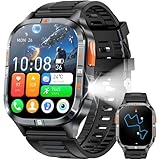
- BUILT-IN GPS & COMPASS– This military smartwatch features high-precision GPS to pinpoint your location while hiking, cycling, or traveling, keeping you safely on track without extra gear. Tap the compass icon and it locks your bearing within three seconds—engineered for pro-level outdoor adventures like camping, climbing, and trekking.
- BLUETOOTH CALLING & MESSAGES – Powered by the latest Bluetooth tech, the men’s smartwatch lets you answer or make calls right from your wrist—no need to pull out your phone. Get real-time alerts for incoming texts and app notifications so you never miss an invite. (Replying to SMS is not supported.)
- BIG SCREEN & DIY VIDEO WATCH FACE – The 2.01" military-spec display is dust-proof, scratch-resistant, and forged from high-strength glass with an aluminum alloy bezel, passing rigorous dust and abrasion tests so the screen stays crystal-clear. Upload a short family video to create a dynamic, one-of-a-kind watch face that keeps your memories alive.
- 24/7 HEALTH MONITORING – Equipped with a high-performance optical sensor, this Android smartwatch tracks heart rate and blood-oxygen levels around the clock. It also auto-detects sleep stages (deep, light, awake) for a complete picture of your health, ensuring you always know how your body is doing.
- MULTI SPORT MODES & FITNESS TRACK – Choose from running, cycling, hiking, basketball, and more to log every workout. Set goals, monitor progress, and sync data to the companion app. Bonus tools include photo gallery, weather, alarm, stopwatch, flashlight, hydration reminder, music/camera remote, find-my-phone, mini-games, and other everyday essentials.
For most fitness-focused users, the Venu 3’s health upgrades aren’t about adding medical features. They’re about making everyday data clearer, more stable, and more actionable without turning the watch into a second job to manage.
Advanced Sleep Coaching and Recovery Insights: Garmin’s Smartest Wellness Upgrade Yet
All of those quieter health changes come together most clearly once you look at sleep and recovery, where the Venu 3 makes its biggest generational leap. This isn’t just a prettier sleep score or another set of charts in Garmin Connect, but a more cohesive system that explains why you feel the way you do and what to do next.
Garmin has long been strong on overnight data collection, but the Venu 3 is the first Venu-series watch where sleep actively shapes your next day in a way that’s easy to understand. The result feels closer to a coach than a passive tracker, without demanding constant input from you.
Sleep Coach turns raw data into actionable guidance
The new Sleep Coach feature is the headline addition, and it’s genuinely new for the Venu line. Instead of simply scoring your night, it recommends a personalized sleep duration target based on recent sleep history, training load, naps, stress levels, and HRV trends.
In practice, this means your sleep goal can shift from night to night rather than being a static eight-hour ideal. Hard training, accumulated stress, or poor recent sleep will push the recommendation higher, while well-managed days can reduce pressure without encouraging under-sleeping.
What makes this work is that Garmin avoids asking how you feel every morning. The guidance is driven by physiological signals, which keeps the system consistent and reduces bias, especially for users who don’t want to log subjective readiness scores.
Nap tracking finally matters, not just records
Garmin has tracked naps before, but on the Venu 3 they finally influence the bigger picture. Detected naps feed directly into Sleep Coach recommendations and recovery metrics, helping explain why you might feel better despite a shorter night, or why a late nap might reduce sleep quality later on.
The watch automatically detects naps as short as 15 minutes, provided you’re relatively still and your heart rate patterns match sleep-like behavior. There’s no manual start required, which makes it far more practical for real-world use than competitor systems that rely on user input.
This is especially useful for shift workers, new parents, or anyone with fragmented sleep schedules, an audience that Garmin has historically underserved compared to Fitbit. The Venu 3 feels far more adaptable to imperfect routines.
HRV Status becomes the backbone of recovery insight
While HRV Status debuted earlier on higher-end Garmins, its integration on the Venu 3 is more refined and easier to interpret. Overnight HRV is measured during sleep and compared to your rolling baseline, giving you a clear “within range,” “unbalanced,” or “low” status each morning.
What’s new here is how tightly HRV connects to sleep quality, stress, and suggested recovery. A poor HRV night combined with reduced deep sleep and elevated skin temperature paints a clear picture of strain, without forcing you to dig through multiple widgets.
Compared to Apple Watch’s raw HRV readings or Fitbit’s readiness score, Garmin’s approach favors trend stability over daily drama. It’s less reactive, but far more reliable for understanding long-term adaptation versus short-term fatigue.
Morning Report and spoken insights improve daily usability
The Morning Report isn’t brand new, but on the Venu 3 it becomes more central to the recovery experience. You get a concise snapshot of sleep score, HRV status, training readiness cues, and the day’s sleep recommendation in one glance.
Thanks to the built-in speaker, key prompts and guided breathing sessions can now be delivered audibly, which reduces screen interaction first thing in the morning. This small hardware addition improves compliance, especially for users who wear the watch overnight and don’t want to scroll through menus while half-awake.
It’s a subtle upgrade, but one that improves the watch’s real-world wearability and reinforces Garmin’s focus on low-friction wellness tools rather than constant notifications.
Battery life makes advanced sleep tracking sustainable
All of this sleep and recovery tracking would be far less compelling if battery anxiety got in the way, and this is where the Venu 3 quietly outperforms most rivals. In real-world use, you can expect around 5 to 7 days with always-on sleep tracking, HRV, and occasional SpO2 checks enabled.
That endurance matters because sleep coaching only becomes accurate after weeks of consistent data. Compared to Apple Watch models that require daily charging, or Fitbit devices that can struggle once advanced metrics are enabled, the Venu 3 supports true 24/7 wear without compromise.
Comfort plays a role here too. The lightweight case, smooth caseback, and soft silicone strap make overnight wear easy even for sensitive sleepers, which directly improves data quality over time.
Who this upgrade really benefits
If you’re coming from an older Venu, Venu Sq, or Vivoactive, the sleep and recovery experience alone justifies a serious look at upgrading. The difference isn’t in sensor accuracy so much as in how clearly the watch explains patterns and adapts recommendations.
For Fitbit users, the Venu 3 offers deeper physiological context and better long-term stability, though with less emphasis on lifestyle coaching and community challenges. Apple Watch users will gain battery life and recovery depth, but give up ECG and tighter iPhone ecosystem features.
The key point is that Garmin’s smartest wellness upgrade yet isn’t about chasing medical-grade features. It’s about making sleep, recovery, and daily readiness understandable, sustainable, and genuinely useful over months of wear, not just impressive on day one.
Fitness and Workout Additions: New Profiles, Coaching and Training Tools
If the sleep and recovery upgrades explain when you should train, the Venu 3’s fitness additions focus on what that training should actually look like. Garmin has expanded the watch’s activity library and coaching tools in ways that make it feel less like a lifestyle tracker and more like a structured training companion, without tipping into the complexity of a Forerunner.
The emphasis here is guidance and accessibility. These are not pro-level race metrics, but practical features that help everyday users train more consistently, with fewer blind spots.
Expanded activity profiles with better on-watch guidance
The Venu 3 adds several new sport profiles, with a clear push toward indoor workouts and gym-based training. Open water swimming remains absent, but users now get better support for activities like indoor cycling, indoor rowing, elliptical, and functional strength sessions.
What’s new is not just the list, but the structure. Many profiles now include clearer data screens, rest timers, and on-watch cues that reduce the need to check a phone mid-workout. This is particularly noticeable in strength and HIIT sessions, where rep counts, interval timing, and heart rate zones are easier to follow at a glance.
Compared to older Venu and Vivoactive models, the interface feels more deliberate. Buttons and touch gestures are better separated during workouts, which matters when your hands are sweaty or you’re moving quickly between exercises.
Wheelchair mode and inclusive fitness tracking
One of the most meaningful additions is the dedicated wheelchair activity mode. Rather than simply adapting step counts, this profile tracks pushes, intensity minutes, and upper-body workouts in a way that better reflects real exertion.
Garmin has also reworked daily goals and alerts to align with wheelchair use, avoiding the awkward workarounds that were previously required. It’s a feature that won’t apply to everyone, but it represents a thoughtful expansion of what “fitness tracking” means on the Venu platform.
Importantly, this mode integrates cleanly with Garmin Connect, so long-term trends and recovery insights still make sense instead of feeling like approximations.
Animated workouts that finally feel useful
Garmin’s animated workouts have existed for years, but on the Venu 3 they are more prominent and better executed. The AMOLED display, combined with smoother transitions, makes on-screen exercise demos easier to follow during yoga, Pilates, bodyweight strength, and mobility sessions.
You can preload structured workouts directly to the watch, complete with set counts, rest intervals, and progression cues. During testing, this works best for controlled movements rather than fast circuits, but it’s still a step up from static lists or vague prompts.
For users coming from Fitbit Premium or Apple Fitness+, this won’t replace a full video platform. However, it does remove friction for short, guided sessions when you don’t want to set up a phone or tablet.
Garmin Coach and adaptive training plans
The Venu 3 supports Garmin Coach plans for running and walking, with adaptive scheduling based on recent performance and recovery. What’s improved is how these plans surface recommendations in daily use, tying suggested workouts more clearly to sleep quality and recent strain.
While it lacks the full Training Readiness score found on higher-end Forerunners, the Venu 3 still nudges users toward smarter decisions. Easy days feel genuinely easy, and harder sessions are less likely to appear after poor sleep or elevated stress.
For beginners and casual runners, this strikes a good balance. You get structure and progression without being overwhelmed by metrics like VO2 max trends or anaerobic load charts.
Strength training with better structure, not just logging
Strength tracking has been refined in small but important ways. The watch does a better job of recognizing common movements, and editing reps or weights mid-session is less clumsy than on previous Venu models.
Post-workout summaries in Garmin Connect are clearer, showing muscle group focus and session intensity without burying the data. This makes it easier to spot imbalances or patterns over time, especially if strength work is only part of your routine.
It’s still not perfect. Automatic rep counting can miss complex lifts, and serious lifters may want manual control. But for general fitness users, it’s now good enough to be genuinely useful rather than a novelty.
Rank #4

- 【Built-in GPS & Multi-System Positioning】Stay on track with the Tiwain smartwatch’s built-in GPS. Featuring military-grade single-frequency and six-satellite support (GPS, GLONASS, Beidou, Galileo, NAVIC, QZSS), this watch offers fast and accurate location tracking wherever you go. It also includes a compass, altimeter, and barometer, giving you real-time data on your altitude, air pressure, and position.
- 【Military-Grade Durability】Engineered to withstand the toughest conditions, the Tiwain smartwatch meets military standards for extreme temperatures, low pressure, and dust resistance. Crafted from tough zinc alloy with a vacuum-plated finish, this watch is also waterproof and built to resist wear and tear. The 1.43-inch AMOLED HD touchscreen offers clear visibility in all environments, and the watch supports multiple languages for global users.
- 【170+ Sport Modes & Fitness Tracking】Track your fitness journey with 170+ sport modes, including walking, running, cycling, hiking, basketball, and more. Set exercise goals, monitor progress, and sync your data to the companion app. The smartwatch also offers smart features like music control, camera remote, weather updates, long-sitting reminders, and more.
- 【LED Flashlight for Outdoor Adventures】The Tiwain smartwatch comes equipped with a built-in LED flashlight that can illuminate up to 20 meters. Activate it with the side button for added convenience during nighttime activities or outdoor adventures.
- 【Comprehensive Health Monitoring】Monitor your health with real-time heart rate, sleep, blood pressure, and blood oxygen level tracking. The smartwatch will vibrate to alert you of any abnormal readings. You can also make and receive calls directly from the watch, and stay connected with message and app notifications (receive only, no sending capability) – perfect for when you’re driving or exercising.
How this compares to Apple Watch, Fitbit, and Wear OS rivals
Against the Apple Watch, the Venu 3 offers far longer battery life for GPS workouts and more consistent multi-day training insights. You give up third-party fitness apps and tighter gym machine integrations, but gain simplicity and endurance.
Compared to Fitbit, Garmin’s workout depth is significantly stronger. There’s less lifestyle gamification, but far more clarity around effort, recovery, and progression over time.
Wear OS watches can match the Venu 3 for screen quality and app variety, but few can deliver the same combination of structured training tools and reliable multi-day battery life without compromises elsewhere.
Taken together, the Venu 3’s fitness additions don’t chase elite performance metrics. They focus on making regular training clearer, more guided, and easier to sustain, which for most buyers is exactly where the upgrade value lies.
Smartwatch Upgrades: Calls, Voice Assistant Support and Daily Usability
After the fitness and health upgrades, the Venu 3’s biggest shift is how confidently it behaves as a day-to-day smartwatch. Garmin has clearly focused on reducing phone dependency without trying to turn the Venu line into a full app-centric platform like Apple Watch or Wear OS.
These changes won’t matter to everyone, but for users coming from older Garmins, Fitbits, or hybrid-style fitness watches, they fundamentally change how often you interact with the watch outside workouts.
On-wrist calling with built-in speaker and microphone
For the first time on a Venu, Garmin has added a speaker and microphone, enabling Bluetooth phone calls directly from the watch. Call quality is better than expected for a slim fitness-focused design, with voices sounding clear indoors and usable outdoors in light wind.
The speaker isn’t loud enough to replace earbuds in noisy environments, but it’s ideal for quick calls while cooking, walking, or mid-workout when your phone isn’t easily reachable. Microphone pickup is tuned conservatively, prioritizing clarity over range, which helps avoid accidental background noise.
This is a meaningful upgrade over older Garmin models that limited you to call notifications only. Compared to Apple Watch, the experience is simpler but more reliable, with fewer connection dropouts and less battery drain during short calls.
Voice assistant passthrough, not a native assistant
The Venu 3 supports voice assistant passthrough, meaning you can trigger Siri, Google Assistant, or Bixby on your connected phone using the watch’s microphone. There’s no on-device assistant and no always-listening wake word, which keeps power consumption low.
In practice, this works well for quick tasks like setting timers, sending messages, checking weather, or controlling smart home devices. Response speed depends on your phone and Bluetooth connection, but reliability is solid once paired.
This approach won’t satisfy users who want deep conversational AI or standalone functionality. However, it aligns with Garmin’s priorities: practical voice access without sacrificing battery life or adding software complexity that could compromise stability.
Messaging, notifications, and platform differences
Notification handling remains one of Garmin’s strengths. Messages are delivered reliably, with clear formatting and minimal lag, even during workouts or GPS activities.
Android users benefit most, with full message replies, quick responses, and voice dictation available directly on the watch. iPhone users are more limited due to Apple’s restrictions, with no direct replies, but notifications are still well-organized and easy to manage.
Garmin’s notification system avoids the clutter seen on some Wear OS watches. You won’t get rich app interactions, but you also won’t be overwhelmed by alerts competing for attention throughout the day.
Everyday usability, controls, and comfort
The Venu 3’s AMOLED display remains one of the best in Garmin’s lineup, with excellent brightness outdoors and smooth animations during scrolling and workouts. Touch response is reliable, and the combination of touchscreen and physical buttons makes it usable with sweaty hands or gloves.
Case sizing and weight are well-balanced for all-day wear, including sleep tracking. The lightweight polymer case and soft silicone strap avoid pressure points, which matters given Garmin’s increasing focus on overnight health metrics.
Small interface refinements also add up. Menus feel more consistent, widgets are easier to customize, and frequently used features require fewer taps than on earlier Venu models.
Battery life impact in real-world smartwatch use
Despite the added speaker, microphone, and brighter display, battery life remains a standout advantage. In real-world mixed use with notifications, calls, voice assistant triggers, sleep tracking, and several GPS workouts per week, the Venu 3 comfortably lasts around five to seven days.
This is still well ahead of Apple Watch and most Wear OS devices, especially if you use calling or voice features regularly. Enabling always-on display shortens endurance, but even then, the Venu 3 typically outlasts mainstream smartwatch rivals by multiple days.
Garmin’s conservative approach to smart features pays off here. You get the conveniences that matter most, without the constant charging cycle that pushes many users away from more app-heavy platforms.
Who these smartwatch upgrades matter most for
If you’re upgrading from an older Garmin that lacked calls or voice support, the Venu 3 feels like a genuine modernization. It closes many everyday usability gaps without abandoning Garmin’s fitness-first philosophy.
For Apple Watch or Wear OS users frustrated by battery life but unwilling to give up basic smart features, this is where the Venu 3 makes its strongest case. You don’t get an app store ecosystem, but you gain consistency, endurance, and fewer daily compromises.
These upgrades don’t try to redefine what a smartwatch is. Instead, they refine what most people actually use, making the Venu 3 feel more complete as an all-day companion rather than just a very good fitness tracker.
Sensors, Accuracy and Performance: GPS, Heart Rate and Reliability in Practice
All of the lifestyle upgrades on the Venu 3 only really matter if the underlying sensor data is dependable. This is where Garmin continues to differentiate itself, not by chasing spec-sheet extremes, but by refining consistency across everyday training, health tracking, and long-term trend reliability.
Heart rate tracking: refined optical sensing, better day-to-day confidence
The Venu 3 uses Garmin’s latest-generation Elevate optical heart rate sensor, and in practice it’s a noticeable step forward from older Venu and Vivoactive models. Lock-on speed during workouts is quicker, resting heart rate trends are smoother, and sudden spikes from wrist movement are less frequent.
For steady-state activities like running, cycling, rowing, and gym cardio, heart rate tracks closely with chest strap benchmarks once you’re warmed up. High-intensity interval training is still the hardest scenario for any wrist-based sensor, but the Venu 3 recovers faster between intervals than earlier generations.
Comfort plays a role here. The lightweight case, curved sensor housing, and soft strap help maintain consistent skin contact, which directly improves data quality during sleep tracking and longer workouts.
Sleep, HRV, and overnight reliability
Garmin’s increasing emphasis on overnight metrics makes sensor stability more important than headline features. The Venu 3 performs well here, with fewer gaps in overnight heart rate data and more stable HRV baselines compared to older Garmins with earlier sensors.
Sleep stages remain trend-focused rather than clinically precise, but the consistency night to night is strong. When paired with Garmin’s Sleep Coach and Body Battery insights, the data feels actionable rather than noisy, which is ultimately what matters for most users.
If sleep and recovery are a priority, the Venu 3 benefits from being comfortable enough to forget you’re wearing it. That directly supports better data, especially for lighter sleepers.
GPS accuracy: dependable rather than cutting-edge
The Venu 3 uses single-band GNSS with support for multiple satellite systems, rather than the dual-frequency, multi-band GPS found on higher-end Forerunner and Fenix models. In real-world terms, this means strong accuracy in open environments and parks, with predictable limitations in dense cities or under heavy tree cover.
Running and walking tracks are clean, distances are consistent, and pace data stabilizes quickly after the first few minutes. For most recreational runners and fitness users, the differences versus multi-band systems are subtle unless you’re regularly training in challenging signal environments.
Importantly, GPS reliability is stable across battery cycles. Long-term consistency matters more than peak accuracy for trend tracking, and the Venu 3 delivers that without excessive battery drain.
Workout performance and sensor fusion
Garmin’s strength is how it blends sensor inputs rather than relying on any single metric. Heart rate, accelerometer data, GPS, and user profile details work together to produce pace, calorie burn, and training load estimates that feel internally consistent.
Step counting is conservative, avoiding the inflated totals common on lifestyle-focused wearables. Indoor workouts, especially treadmill runs and strength training, benefit from improved motion detection compared to older Venu models, though rep counting remains best treated as an estimate rather than a hard metric.
For users coming from Fitbit or Apple Watch, the biggest difference is predictability. The Venu 3 prioritizes repeatability and trend accuracy over flashy real-time visuals.
Reliability over time: fewer quirks, less babysitting
One of the less obvious upgrades with the Venu 3 is how little it demands attention once set up. GPS lock times are short, sensor dropouts are rare, and firmware stability has been solid in day-to-day use.
💰 Best Value

- Smart Watch with GPS and Offline Map: This smart watch connects to multiple satellite systems for accurate real-time positioning, and includes a professional-grade compass, altimeter, and barometer for precise data, ensuring you maintain your sense of direction in any outdoor environment. The map version supports downloading offline maps; select a route or destination to view the route even without a signal, eliminating the risk of getting lost.
- Bluetooth Call & Message Functionality: This smart watches for men allows you to make and receive calls; receive text and social media notifications (Facebook, WhatsApp, Instagram, Twitter, etc.); and reply to text messages with voice-to-text or set up quick replies (text reply functionality is available for Android phones).
- Sports & Health Monitoring: This 5ATM waterproof fitness watch supports over 100 sports modes and tracks daily activity data, calories, distance, steps, and heart rate. You can use it to monitor your health metrics (blood oxygen, heart rate, stress, and sleep), monitor your fatigue and mood, and perform PAI analysis. You can also use this smartwatch to set water intake and sedentary reminders. Stay active and healthy with this fitness tracker watch.
- Customizable Watch Faces & AI Functionality: This smart watch features a 1.46-inch HD touchscreen and over 100 downloadable and customizable watch faces. You can even use your favorite photos as your watch face. Equipped with AI technology, it supports voice descriptions in multiple languages to generate personalized AI watch faces. The watch's AI Q&A and AI translation features provide instant answers to questions and break down language barriers, making it an ideal companion for everyday life and travel.
- Large Battery & High Compatibility & More Features: This smart watch for android phones and ios phone features a large 550ml battery for extended battery life. It's compatible with iOS 9.0 and above and Android 5.0 and above. It offers a wealth of features, including an AI voice assistant, weather display, music control, camera control, calculator, phone finder, alarm, timer, stopwatch, and more. (Package Includes: Smartwatch (with leather strap), spare silicone strap, charging cable, and user manual)
The polymer case and Gorilla Glass are not luxury materials, but they are practical. Scratches are minimal with normal wear, water resistance is dependable for swimming, and the watch doesn’t feel fragile during strength sessions or outdoor use.
This kind of reliability is easy to overlook until you’ve lived with devices that require frequent resets, recalibration, or charging compromises. The Venu 3’s sensors quietly do their job, which is exactly what most fitness-focused users want.
How the Venu 3 Compares: Venu 2, Apple Watch, Fitbit Sense and Wear OS Rivals
After living with the Venu 3’s day-to-day reliability, the real question becomes where it actually sits in today’s smartwatch landscape. Garmin hasn’t tried to out-Apple Apple, but it has quietly widened the gap between fitness-first watches and lifestyle-centric smartwatches.
The differences are clearest when you compare long-term usability rather than headline specs.
Venu 3 vs Venu 2: meaningful refinements, not a redesign
At a glance, the Venu 3 looks familiar, but the experience is noticeably more mature. Battery life jumps from roughly 10–11 days on the Venu 2 to around 14 days in real-world smartwatch use, and that extra buffer changes how often you think about charging.
The addition of a built-in speaker and microphone is the most obvious functional upgrade. You can now take Bluetooth calls from your wrist and interact with voice assistants on your phone, features entirely absent on the Venu 2 and a quiet but meaningful shift toward everyday smartwatch convenience.
Health tracking has also evolved rather than expanded wildly. Sleep coaching, nap detection, refined Body Battery modeling, and ECG support in supported regions push the Venu 3 closer to medical-adjacent insight, while still keeping Garmin’s conservative data interpretation. The Venu 2 feels competent; the Venu 3 feels confident and more self-explanatory.
Venu 3 vs Apple Watch: endurance versus ecosystem power
This comparison largely comes down to priorities. The Apple Watch remains unmatched for app depth, messaging integration, and iPhone-centric convenience, but it demands daily charging and constant ecosystem buy-in.
The Venu 3 trades third-party apps for autonomy. Two weeks of battery life, consistent GPS behavior, and health metrics that don’t reset your habits every software update give it a calmer, less intrusive feel. For fitness tracking, Garmin’s training trends, recovery context, and cross-sport consistency are still more transparent than Apple’s ring-driven approach.
Compatibility is also decisive. The Venu 3 works equally well on Android and iOS, while the Apple Watch is locked to iPhone users. If you want a smartwatch that fades into the background while still capturing meaningful data, Garmin’s approach makes more sense.
Venu 3 vs Fitbit Sense: depth and long-term clarity
Fitbit Sense watches excel at surface-level health insights. Stress tracking, sleep summaries, and readiness-style scores are approachable, but they rely heavily on Fitbit Premium and can feel abstract over time.
The Venu 3 offers fewer simplified scores but far more context. Trends in resting heart rate, sleep quality, and activity load are easier to interpret without subscriptions. Battery life is also significantly better, with the Venu 3 lasting roughly twice as long between charges.
Where Fitbit still appeals is simplicity. If you want health nudges without configuration, Sense devices remain attractive. If you want to understand why your metrics change and how they connect to training and recovery, Garmin is far stronger.
Venu 3 vs Wear OS rivals: stability over features
Wear OS watches like the Pixel Watch and Samsung Galaxy Watch prioritize smart features first. Rich notifications, voice assistants, and app ecosystems are their strengths, but battery life often struggles to reach two full days without compromise.
The Venu 3 deliberately avoids that arms race. Its software is focused, predictable, and optimized for low power draw. GPS workouts, overnight sleep tracking, and all-day heart rate monitoring coexist without forcing trade-offs.
For users frustrated by Wear OS inconsistency or frequent charging, the Venu 3 feels refreshingly disciplined. You give up some smartwatch flair, but gain reliability and endurance that support long-term fitness habits.
Design, comfort, and real-world wearability
The Venu 3’s lightweight polymer case and curved AMOLED display won’t impress luxury watch enthusiasts, but they serve their purpose well. At around 47mm with a slim profile and soft silicone strap, it remains comfortable for sleep tracking and long workouts.
Durability favors practicality over polish. Gorilla Glass resists everyday scuffs, water resistance is dependable for swimming, and the watch never feels fragile during strength training or outdoor use. It’s designed to be worn constantly, not babied.
Value ultimately depends on how you define “smart.” If your priority is battery life, consistent health metrics, and fitness data you can trust over months and years, the Venu 3 occupies a uniquely balanced position that neither lifestyle watches nor hardcore Garmin models fully replicate.
Is the Garmin Venu 3 Worth Upgrading To? Buyer Advice by User Type
All of that context leads to the real question most buyers have: does the Venu 3 meaningfully change your day-to-day experience, or is it just a refinement of what Garmin already does well. The answer depends heavily on what you’re upgrading from and what you expect your watch to do beyond telling the time.
Below, the Venu 3 is broken down by common buyer profiles, focusing on where the upgrade genuinely matters and where it may not.
Upgrading from an older Garmin Venu or Vivoactive
If you’re coming from the original Venu, Venu Sq, or Vivoactive 4, the Venu 3 is a substantial step forward rather than a cosmetic refresh. The newer heart rate sensor improves accuracy during interval training and sleep, while added features like Sleep Coaching and nap tracking make health data more actionable rather than passive.
Battery life is also dramatically better in real-world use. Where older models often needed charging every 2–3 days with AMOLED enabled, the Venu 3 can realistically last close to a full week with workouts, notifications, and sleep tracking enabled.
If your current Garmin feels dated, slow, or limited in health insights, the Venu 3 is an easy upgrade to justify.
Upgrading from a Fitbit Sense or Versa
For Fitbit users, the Venu 3 feels like a shift from lifestyle tracking to structured health interpretation. You lose some of Fitbit’s simplicity and motivational nudges, but gain deeper insight into recovery, training readiness cues, and long-term trends without paying for a subscription.
Garmin’s sleep and stress data now competes directly with Fitbit’s strengths, and the addition of on-watch calls closes one of the few remaining gaps. Battery life alone can be a decisive factor, especially for users tired of charging every other day.
If you want more control over your data and clearer explanations of why your body feels the way it does, the Venu 3 is a logical next step.
Upgrading from Apple Watch
This is where expectations matter most. The Venu 3 cannot match the Apple Watch for app ecosystem depth, third-party integrations, or tight iPhone services like iMessage and Siri.
What it offers instead is freedom from daily charging and a far more fitness-first philosophy. Multi-day battery life, consistent overnight tracking, and Garmin’s training and recovery metrics make it better suited to users who exercise frequently and want continuity rather than convenience.
If you value health trends over smart features and are comfortable leaving Apple’s ecosystem behind, the Venu 3 can feel surprisingly liberating.
Upgrading from a Wear OS watch
Wear OS users often switch because of frustration rather than curiosity. The Venu 3’s software is simpler, but it is also far more stable, with fewer background processes draining battery or breaking features after updates.
You give up advanced voice assistants and niche apps, but gain predictable performance across GPS workouts, sleep tracking, and all-day heart rate monitoring. The watch behaves the same on day 30 as it does on day one, which is something many Wear OS users quietly crave.
For fitness-focused users who want reliability over experimentation, the Venu 3 is a strong alternative.
First-time smartwatch buyers focused on health and fitness
For newcomers, the Venu 3 strikes an unusually good balance. It avoids the overwhelming complexity of Garmin’s higher-end Forerunner and Fenix models, while offering far more depth than entry-level trackers.
The interface is intuitive, metrics are explained clearly, and features like Body Battery and Sleep Coaching help connect daily habits to physical readiness. It’s a watch you can grow into rather than outgrow quickly.
If you want one device that handles fitness, health, and everyday smartwatch duties without locking you into subscriptions or constant charging, the Venu 3 is a safe long-term choice.
Who should skip the upgrade
If you already own a Venu 2 or Venu 2 Plus and are satisfied with its performance, the upgrade is less urgent. The improvements are meaningful, but incremental, especially if battery life and health tracking already meet your needs.
Likewise, users who prioritize apps, mobile payments tied deeply into their phone ecosystem, or advanced smartwatch customization may find Garmin’s platform restrictive. The Venu 3 is intentionally focused, and that focus won’t suit everyone.
Final verdict
The Garmin Venu 3 isn’t about chasing the flashiest features or competing head-on with smartphone replacements. Its value lies in refinement: better health tracking, longer battery life, clearer insights, and a watch that quietly supports consistent habits.
For fitness-driven users, especially those upgrading from older Garmins, Fitbit, or battery-hungry smartwatches, it represents one of the most balanced and dependable upgrades available today. It may not be the most exciting smartwatch on paper, but in daily wear, that restraint is exactly what makes it compelling.