Garmin’s Venu line has always lived in the uncomfortable middle ground between lifestyle smartwatch and serious training tool, and the Venu 3 is the clearest statement yet of who that compromise is meant for. This is not Garmin trying to chase Apple or Samsung feature-for-feature, nor is it a softened Forerunner in disguise. It is a premium, fitness-first smartwatch designed for people who train regularly, care deeply about health data, and still want something that looks and feels appropriate for daily life.
If you are coming to the Venu 3, you are likely weighing depth versus convenience. You want richer health insights than an Apple Watch delivers without nightly charging anxiety, but you do not want the bulk, buttons, or training complexity of a Fenix or Forerunner. Understanding whether the Venu 3 hits that balance for you depends entirely on how you train, how you live, and how much smartwatch functionality you genuinely use.
Who the Garmin Venu 3 is built for
The Venu 3 is ideal for fitness-focused users who train several times per week but are not chasing podiums or structured race plans. Gym-goers, runners, cyclists, and hybrid athletes will appreciate Garmin’s reliable GPS, class-leading battery life, and continuous health tracking that runs quietly in the background without micromanagement. It excels for people who want their watch to support consistency and recovery, not dictate their training life.
Wellness-driven professionals are another core audience. Features like Body Battery, advanced sleep tracking with nap detection, stress trends, HRV status, and on-wrist guided breathing make more sense when paired with a watch that lasts close to two weeks rather than one day. The AMOLED display, slim case profile, and lightweight polymer construction make it comfortable enough to wear 24/7, which is essential for Garmin’s data to actually be meaningful.
🏆 #1 Best Overall

- Stylish Design, Vibrant Display: The lightweight aluminum build blends effortless style with workout durability, while the vivid 1.97" AMOLED display keeps your data easy to read, even under bright sunlight.
- All-in-One Activity Tracking: The Amazfit Bip 6 fitness tracker watch offers 140+ workout modes including HYROX Race and Strength Training, plus personalized AI coaching and 50m water resistance.
- Up to 14 Days Battery Life: The Amazfit Bip 6 smart watch powers through your training and recovery for up to two weeks at a time - no nightly charging needed.
- Accurate GPS Tracking & Navigation: Stay on course with free downloadable maps and turn-by-turn directions. Support from 5 satellite systems ensures precise tracking of every move and fast GPS connection.
- 24/7 Health Monitoring: The Amazfit Bip 6 smartwatch provides precise, real-time monitoring of heart rate, sleep, blood-oxygen and stress, empowering you with actionable insights to optimize your health and fitness.
Existing Garmin users upgrading from older Venu models or Vivoactive watches will find the Venu 3 a substantial step forward. The addition of speaker and microphone for calls, improved sleep coaching, and more refined UI finally closes some everyday usability gaps without sacrificing Garmin’s strengths. It feels like a mature, fully realized version of what the Venu line has been aiming for since the original.
Who should look elsewhere
If your smartwatch priorities revolve around apps, voice assistants, and tight phone integration, the Venu 3 will feel limited. Notifications are reliable but basic, replies are restricted, and there is no equivalent to Apple’s App Store or Google’s Wear OS ecosystem. Compared to an Apple Watch Series or Galaxy Watch, it is unapologetically utilitarian.
Performance-driven endurance athletes may also find it lacking. There is no training readiness, race widgets, multi-band GPS, or deep performance analytics that define the Forerunner 955 or Fenix 7. If your training revolves around structured plans, power-based running metrics, or detailed load management, the Venu 3 is intentionally not built for that level of analysis.
Finally, casual users who primarily want a smartwatch with occasional fitness tracking may be overspending. The Venu 3’s value only reveals itself when you consistently wear it, train with it, and pay attention to the long-term trends it surfaces. Without that engagement, cheaper fitness watches or mainstream smartwatches will feel more intuitive and entertaining.
How it fits against Apple and Samsung
Against the Apple Watch, the Venu 3 trades smart features for endurance and health continuity. Battery life stretches into days instead of hours, and health metrics feel more cohesive over weeks rather than snapshots between charges. You give up cellular options, rich apps, and Siri, but gain a watch that prioritizes recovery and consistency.
Compared to Samsung’s Galaxy Watch line, Garmin’s advantage lies in accuracy, long-term tracking, and platform neutrality. The Venu 3 works equally well on Android and iOS, with no meaningful feature penalties, and its fitness metrics are less glossy but more actionable. Samsung wins on display polish and smartwatch flair, while Garmin wins on trust and depth.
Where the Venu 3 sits inside Garmin’s own lineup
Within Garmin’s ecosystem, the Venu 3 is the lifestyle flagship, not the training one. It offers better daily usability than a Forerunner and far more approachability than a Fenix, while still delivering the health and fitness fundamentals Garmin is known for. Think of it as a premium health watch that happens to be very good at sports, rather than a sports watch trying to behave like a smartwatch.
For buyers who want one watch to wear everywhere, track almost everything, and rarely think about charging, the Venu 3 occupies a very specific and increasingly rare sweet spot.
Design, Build Quality, and Wearability: A Smartwatch That Looks Like a Watch
After defining where the Venu 3 sits functionally, its physical design reinforces that positioning immediately. This is a Garmin meant to live on your wrist all day, not just during workouts, and the hardware choices reflect that intent with unusual restraint for a fitness-first brand.
Case design and sizing: Clean, modern, and intentionally neutral
The Venu 3 is offered in two sizes: the 45mm Venu 3 and the smaller 41mm Venu 3S. Both share the same visual language, scaled intelligently rather than compromised for size.
On-wrist, the round case reads more like a contemporary analog watch than a piece of sports equipment. The proportions are balanced, with short, curved lugs that keep the footprint compact and prevent the watch from overhanging smaller wrists.
Thickness is well judged for daily wear. At just over 12mm, it sits lower than most Garmin sports watches and feels noticeably slimmer than a Fenix or Epix, especially under cuffs.
Materials and finishing: Practical premium, not luxury theater
Garmin uses a stainless steel bezel paired with a fiber-reinforced polymer case. This combination keeps weight down while still delivering a reassuring sense of durability.
The bezel finishing is understated rather than flashy. There’s no mirror polish here, just a clean, lightly brushed surface that avoids scratches looking dramatic over time.
The display is protected by Corning Gorilla Glass 3, which is not exotic but proven. In real-world use, it holds up well to gym equipment, desk edges, and everyday knocks without demanding babying.
Display integration: AMOLED done Garmin’s way
The AMOLED panel is one of the Venu 3’s visual highlights, but it’s integrated with restraint. Bezels are slim enough to feel modern without chasing the edge-to-edge aesthetic of an Apple Watch.
Brightness is excellent outdoors, and the always-on mode is readable without draining the battery aggressively. Garmin’s interface design prioritizes clarity over animation, which suits the display’s role as an information surface rather than visual entertainment.
Importantly, the screen doesn’t dominate the watch’s personality. It enhances legibility and polish without turning the Venu 3 into a glowing gadget strapped to your wrist.
Buttons, controls, and daily interaction
Garmin sticks with a hybrid control scheme: touchscreen plus three physical buttons. This setup remains one of the brand’s most underrated strengths.
Buttons are tactile, well-spaced, and easy to locate by feel, even during sweaty workouts or with gloves. The touchscreen is responsive for everyday navigation but never mandatory when conditions make touch unreliable.
Compared to fully touch-driven smartwatches, this makes the Venu 3 feel more like an instrument than an app launcher. It’s a subtle but meaningful distinction during training and outdoor use.
Comfort and wearability: Built for 24/7 tracking
Weight is kept impressively low. The larger Venu 3 comes in around 47 grams without the strap, while the Venu 3S is significantly lighter, making both suitable for sleep tracking and all-day wear.
The included silicone strap is soft, flexible, and breathable enough for workouts without irritation. Quick-release pins make strap swaps effortless, and standard lug widths mean third-party options are abundant if you want leather or nylon for office wear.
Over long days, the Venu 3 largely disappears on the wrist. That matters because Garmin’s health features depend on consistency, and a watch you forget you’re wearing is one you actually keep wearing.
Durability and water resistance: Everyday tough, not expedition-grade
With a 5 ATM water rating, the Venu 3 is safe for swimming, showers, and general water exposure. It’s not designed for deep diving or extreme adventure, but it’s more than capable for the activities it targets.
This level of durability fits the watch’s role perfectly. It’s tough enough for daily training and travel, without the bulk or visual aggression of Garmin’s outdoor-focused models.
Aesthetic versatility: Gym-ready without looking like gym gear
Where the Venu 3 really distinguishes itself is aesthetic flexibility. It works just as well with gym clothes as it does with business casual or weekend wear.
Compared to an Apple Watch, it feels less like a piece of consumer electronics. Compared to a Galaxy Watch, it’s less stylized and more timeless.
For buyers who want one watch to wear everywhere, without switching between a fitness tracker and a “nice” watch, the Venu 3 delivers a rare balance. It doesn’t scream performance, but it quietly supports it all day long.
Display, Interface, and Everyday Usability: AMOLED Done the Garmin Way
That understated, wear-anywhere design sets the stage for the Venu 3’s biggest visual upgrade. Garmin’s AMOLED implementation here isn’t about visual flash for its own sake, but about making data clearer, faster to read, and more usable across a full day of training and living.
AMOLED display: Bright, sharp, and fitness-first
The Venu 3 features a 1.4-inch AMOLED display, while the Venu 3S scales down to 1.2 inches, both with excellent pixel density and deep contrast. Text, charts, and workout screens are crisp without feeling cluttered, and Garmin’s restrained color palette prioritizes legibility over visual theatrics.
Brightness is more than sufficient for outdoor training, even in harsh midday sun. Garmin’s automatic brightness tuning reacts quickly to changing light, which matters when you’re moving between indoor gyms, shaded paths, and open roads.
Unlike Apple and Samsung, Garmin remains conservative with always-on display behavior. The always-on mode is usable and readable, but it’s clearly optimized to preserve battery life rather than mimic a traditional watch face at all costs, reinforcing the Venu 3’s fitness-first priorities.
Touch plus buttons: A hybrid interface that actually works
Garmin continues to refine its hybrid control approach, combining a responsive touchscreen with two physical buttons. This immediately separates the Venu 3 from fully touch-driven smartwatches that struggle during sweaty workouts, cold weather, or swimming.
Touch is excellent for daily tasks like scrolling widgets, reviewing health stats, or navigating menus. When it’s time to train, the buttons take over for starting, stopping, and marking laps, offering tactile reliability that endurance athletes will appreciate.
Compared to the Apple Watch’s Digital Crown or Samsung’s touch bezel, Garmin’s system feels less playful but more dependable. It’s designed to minimize accidental inputs and keep you focused on the session rather than the interface.
Garmin UI: Data-dense without feeling overwhelming
The Venu 3 runs Garmin’s latest smartwatch interface, and it’s the most approachable version the company has shipped. Widgets are cleanly stacked, animations are subtle, and core metrics like heart rate, Body Battery, and sleep score are never more than a swipe away.
Importantly, Garmin hasn’t tried to turn the Venu 3 into an app-first device. Third-party apps exist, but the experience is still centered around native health and training features, which remain faster, more reliable, and better integrated than most Connect IQ offerings.
For users coming from older Venu models, the interface feels smoother and more coherent. For Apple or Galaxy Watch users, there’s a learning curve, but one that rewards consistency with far deeper long-term insight.
Watch faces and customization: Functional by default
Garmin’s default watch faces strike a careful balance between aesthetics and utility. You can surface multiple data fields without sacrificing clarity, and complications remain readable at a glance, even on the smaller Venu 3S.
Customization options are extensive but not chaotic. You can tweak colors, data density, and layouts directly on the watch or through Garmin Connect, without needing third-party downloads to achieve something practical.
This approach contrasts with Apple’s highly stylized faces and Samsung’s flashier designs. Garmin’s faces feel purpose-built, more like instrument panels than digital art, which aligns with the Venu 3’s overall philosophy.
Rank #2

- Stylish Design, Bright Display: The sleek stainless steel build blends classic style with workout durability, while the bright 1.32" AMOLED display keeps your data easy to read, even under bright sunlight.
- Precise Heart Rate and Sleep Tracking: Amazfit's BioTracker technology tracks your heart rate and sleep data with accuracy that previous sensors just can't match.
- Up to 10 Days of Battery Life: With long battery life that lasts up to 10 days with typical use, nightly recharges are a thing of the past.
- Free Maps with Turn Directions: Stay on-track with free downloadable maps, and get turn-by-turn guidance on-screen or via your Bluetooth headphones. Enjoy ski maps for global resorts, including guidance for cable cars, slopes, and more.
- Faster and More Accurate GPS Tracking: 5 satellite positioning systems ensure fast GPS connection and accurate positioning whenever you're out running, walking, cycling or hiking.
Notifications, calls, and daily smart features
Everyday smartwatch functionality is solid, if not class-leading. Notifications are clear and actionable, with Android users able to reply from the wrist, while iPhone users are limited by Apple’s ecosystem restrictions.
The built-in speaker and microphone enable on-wrist calls and voice assistant access, and call quality is surprisingly good in quiet environments. It’s not a replacement for your phone, but it’s genuinely useful for quick interactions during walks, commutes, or workouts.
Music controls, offline Spotify support, calendar alerts, and weather updates all work reliably. What Garmin avoids is overloading the watch with features that drain battery or distract from health tracking.
Everyday usability: Where Garmin quietly wins
What stands out over time is how little friction there is in daily use. The display is always readable, the interface rarely gets in the way, and the watch remains comfortable enough to wear from early morning workouts through sleep tracking at night.
Compared to an Apple Watch, the Venu 3 feels less like a miniature smartphone and more like a personal health instrument. Compared to a Galaxy Watch, it’s less expressive but far more consistent in battery life and performance.
This is AMOLED done the Garmin way. Not to impress in a showroom, but to support training, recovery, and daily life without demanding attention, which ultimately makes the Venu 3 feel like a serious upgrade for anyone who values fitness credibility over smartwatch theatrics.
Health and Wellness Tracking: Where the Venu 3 Truly Feels ‘Super’
All of that everyday polish would matter far less if the Venu 3 didn’t deliver where Garmin’s reputation was built: health insight you can actually trust. This is the point where the Venu 3 stops feeling like a lifestyle smartwatch with fitness features and starts behaving like a serious wellness instrument.
Garmin hasn’t chased novelty metrics here. Instead, it’s refined its core health stack into something that works continuously, quietly, and with a level of depth Apple and Samsung still struggle to match outside of daily snapshots.
Heart rate accuracy and continuous physiological tracking
At the center of the Venu 3’s health platform is Garmin’s latest Elevate Gen 5 optical heart rate sensor. In real-world use, it performs consistently across steady-state cardio, strength training, and daily movement, with fewer spikes and dropouts than earlier Venu generations.
During treadmill runs and outdoor cycling, heart rate tracks closely to a chest strap once intensity stabilizes. High-rep strength sessions still challenge any wrist sensor, but the Venu 3 recovers faster between sets than most AMOLED competitors.
What matters more is 24/7 consistency. Resting heart rate trends, stress detection, and overnight recovery data feel cohesive rather than stitched together from isolated readings.
Body Battery and stress: Garmin’s most useful daily metrics
Body Battery remains one of Garmin’s most practical health tools, and the Venu 3 uses it well. Instead of vague wellness scores, it shows how sleep, stress, activity, and recovery interact throughout your day.
Stress tracking runs continuously using heart rate variability, not just during moments of inactivity. You can see stress spikes during meetings, commutes, or late-night screen time, and more importantly, how quickly you recover afterward.
Compared to Apple’s rings or Samsung’s energy scores, Garmin’s approach feels more explanatory than motivational. It’s less about closing loops and more about understanding why today feels harder than yesterday.
Sleep tracking that prioritizes recovery, not just duration
Sleep is where the Venu 3 makes a clear case for wearing it overnight. The lightweight case, curved lugs, and soft silicone strap make it easy to forget on the wrist, even for side sleepers.
Sleep tracking breaks down stages, movement, respiration, overnight heart rate, and HRV status. The morning sleep report is clean, readable, and actionable without drowning you in graphs.
Nap detection is now automatic and works reliably, feeding directly into Body Battery. Apple still lacks native nap tracking, and Samsung’s implementation feels less tightly integrated with recovery metrics.
HRV status and long-term health context
Garmin’s HRV status is one of the most underrated features for non-elite athletes. Rather than showing raw variability numbers, the Venu 3 compares your overnight HRV to your personal baseline over weeks.
When HRV trends outside your normal range, the watch flags it clearly and explains potential causes like illness, poor sleep, or accumulated fatigue. It’s subtle but powerful, especially for gym-goers and recreational endurance athletes balancing training with work stress.
This kind of longitudinal context is still largely missing from mainstream smartwatches, which tend to focus on daily readiness without enough historical grounding.
Advanced wellness features you’ll actually use
Beyond the headline metrics, the Venu 3 includes blood oxygen tracking, respiration rate, hydration logging, and women’s health tracking. None of these feel like checkbox additions, but they’re also optional, preserving battery life if you don’t need them running continuously.
The guided breathing sessions and meditation timers are simple but effective, especially when paired with real-time stress data. This is wellness framed as physiological regulation, not mindfulness theater.
There’s also ECG support in supported regions, adding another layer of cardiovascular awareness. It’s not a diagnostic tool, but for users with family history or elevated concern, it’s a meaningful addition.
Health meets training without overwhelming the user
Crucially, the Venu 3 bridges health and fitness without dragging users into full athlete mode. You get recovery time recommendations, workout impact insights, and training load awareness without the dense performance analytics of a Forerunner or Fenix.
For runners and cyclists who train several times a week, this strikes a sweet spot. You’re informed enough to avoid overreaching, but not buried under metrics designed for race-season optimization.
Apple Watch remains excellent for guided workouts and third-party coaching apps. Garmin wins when it comes to helping you understand how your body is responding between sessions.
Battery life that makes continuous health tracking practical
All of this health tracking would collapse if battery life couldn’t support it. In real use, the Venu 3 comfortably delivers five to seven days with continuous heart rate, sleep tracking, stress monitoring, and several GPS workouts per week.
That fundamentally changes how you interact with health features. You stop managing charging schedules around sleep tracking and start trusting the data to be complete.
This is the clearest advantage over Apple Watch and Galaxy Watch, both of which still force compromises between features and endurance.
Who this level of health tracking is really for
The Venu 3 isn’t trying to replace medical devices or elite training tools. It’s designed for people who care about health trends, recovery quality, and sustainable fitness progress.
If you want a smartwatch that treats sleep, stress, and recovery as core features rather than secondary dashboards, this is where the Venu 3 earns its “super” label.
Fitness and Training Features: Serious Tracking Without Full Sports-Watch Complexity
Where the health features set the foundation, the Venu 3’s fitness and training tools build upward in a way that feels intentional rather than aspirational. Garmin clearly designed this watch for people who train regularly, not occasionally, but who don’t want their wrist turning into a performance dashboard mid-workout.
This is where the Venu 3 separates itself from lifestyle-first smartwatches and justifies its place below the Forerunner and Fenix families.
Sport profiles that cover real-world training habits
Out of the box, the Venu 3 supports a wide range of activities: indoor and outdoor running, cycling, pool and open-water swimming, strength training, HIIT, yoga, Pilates, rowing, hiking, and a growing list of niche gym and cardio modes. The coverage reflects how people actually train across a week, not just race-day scenarios.
Garmin’s GPS performance remains a strong point, with fast satellite lock and reliable distance tracking in urban and mixed environments. It’s not multi-band like higher-end Forerunners, but accuracy is more than sufficient for recreational and serious training alike.
Training Effect and intensity without athlete-level overload
Rather than bombarding users with VO2 max charts and race predictors, the Venu 3 focuses on aerobic and anaerobic Training Effect, workout duration, and intensity balance. After each session, you get a clear sense of whether you’ve built endurance, improved speed, or simply added low-intensity volume.
For most users training three to six times per week, this is the right level of feedback. You understand what a workout did to your body without needing a coaching background to interpret it.
Strength training that’s actually usable
Strength tracking is one area where Garmin quietly outpaces Apple and Samsung. The Venu 3 automatically detects reps, tracks sets and rest time, and allows post-workout edits without friction.
Workout animations on the AMOLED display guide movements clearly, which matters during gym sessions when you don’t want to check your phone between sets. It’s not a replacement for a coach or detailed logging app, but it’s far more functional than the checkbox-style strength modes found on most smartwatches.
HIIT, intervals, and structured workouts made simple
HIIT and interval training feel especially well suited to the Venu 3’s design philosophy. You can follow time-based, rep-based, or EMOM-style sessions with clear prompts and haptic cues that don’t interrupt flow.
Structured workouts created in Garmin Connect sync seamlessly, and the interface on-watch remains readable even when you’re breathing hard. Apple Watch still excels at guided, subscription-driven workouts, but Garmin wins on flexibility and long-term training consistency.
Recovery awareness without recovery anxiety
The Venu 3 continues Garmin’s emphasis on recovery time recommendations and post-workout readiness cues, but without escalating into daily training prescriptions. You’re told how long to recover, not what to do next.
Rank #3
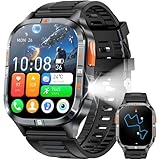
- BUILT-IN GPS & COMPASS– This military smartwatch features high-precision GPS to pinpoint your location while hiking, cycling, or traveling, keeping you safely on track without extra gear. Tap the compass icon and it locks your bearing within three seconds—engineered for pro-level outdoor adventures like camping, climbing, and trekking.
- BLUETOOTH CALLING & MESSAGES – Powered by the latest Bluetooth tech, the men’s smartwatch lets you answer or make calls right from your wrist—no need to pull out your phone. Get real-time alerts for incoming texts and app notifications so you never miss an invite. (Replying to SMS is not supported.)
- BIG SCREEN & DIY VIDEO WATCH FACE – The 2.01" military-spec display is dust-proof, scratch-resistant, and forged from high-strength glass with an aluminum alloy bezel, passing rigorous dust and abrasion tests so the screen stays crystal-clear. Upload a short family video to create a dynamic, one-of-a-kind watch face that keeps your memories alive.
- 24/7 HEALTH MONITORING – Equipped with a high-performance optical sensor, this Android smartwatch tracks heart rate and blood-oxygen levels around the clock. It also auto-detects sleep stages (deep, light, awake) for a complete picture of your health, ensuring you always know how your body is doing.
- MULTI SPORT MODES & FITNESS TRACK – Choose from running, cycling, hiking, basketball, and more to log every workout. Set goals, monitor progress, and sync data to the companion app. Bonus tools include photo gallery, weather, alarm, stopwatch, flashlight, hydration reminder, music/camera remote, find-my-phone, mini-games, and other everyday essentials.
This approach pairs well with the earlier health metrics like sleep quality and stress trends. Over time, you start to see patterns between training intensity, recovery, and how you feel, rather than chasing a single readiness score.
Everyday training usability and comfort
At roughly 45mm with a slim profile and lightweight polymer case, the Venu 3 stays comfortable during long workouts and all-day wear. The silicone strap is soft enough for sweaty sessions and unobtrusive enough for office use, reinforcing its dual-purpose role.
Touch controls work reliably for gym and casual runs, while the physical button remains crucial during intervals or wet conditions. It’s a practical balance that avoids the button-heavy feel of full sports watches while remaining more dependable than touch-only rivals.
How it stacks up against Apple Watch and Galaxy Watch for fitness
Compared to Apple Watch, the Venu 3 prioritizes long-term training trends over app-driven coaching and smartwatch polish. You trade LTE options and richer third-party apps for better battery life, clearer recovery insights, and a more cohesive fitness ecosystem.
Against Galaxy Watch, Garmin’s advantage is even clearer. Training depth, GPS reliability, and strength tracking sophistication all favor the Venu 3, especially for users who care more about performance than phone mirroring.
The right amount of Garmin for most active users
The Venu 3 deliberately stops short of advanced metrics like power-based running dynamics, multi-day training load charts, or race-specific tools. That restraint is the point.
For gym-focused athletes, recreational runners, cyclists, and wellness-driven professionals, this level of training insight feels empowering rather than intimidating. It’s serious fitness tracking that respects the reality of everyday training, not just peak performance weeks.
Battery Life and Charging: The Venu 3’s Biggest Advantage Over Apple and Samsung
After living with the Venu 3’s training insights, comfort, and day-to-day usability, battery life becomes the quiet feature that ties everything together. Garmin’s philosophy here is fundamentally different from Apple and Samsung, and for fitness-focused users, it’s one of the most meaningful differences you’ll feel week after week.
This is where the Venu 3 stops being just a balanced smartwatch and starts to feel liberating.
Real-world battery life that changes how you use the watch
Garmin rates the Venu 3 at up to 14 days in smartwatch mode, and in realistic mixed use, that figure holds up impressively well. With continuous heart rate tracking, sleep tracking, stress monitoring, notifications, and three to five GPS workouts per week, 9 to 11 days is a reasonable expectation.
That kind of longevity fundamentally alters the ownership experience. You stop thinking about battery management, stop planning workouts around charging windows, and stop waking up to a dead watch after a late night you forgot to top up.
By comparison, Apple Watch Series models typically last 18 to 36 hours, while Galaxy Watch models hover around two days at best with fitness features enabled. Both require daily or near-daily charging, which subtly discourages consistent sleep tracking and long-term health trend continuity.
Always-on display without battery anxiety
One of the Venu 3’s understated strengths is how comfortably it supports an always-on AMOLED display. With always-on enabled, battery life naturally drops, but it remains measured in days rather than hours.
In practice, that means four to five days with always-on active, continuous health tracking running, and regular workouts logged. That’s still double or triple what you’ll see from Apple or Samsung when their always-on modes are enabled.
For users who value glanceable data during workouts or simply prefer a traditional watch-like presence on the wrist, this matters. You’re not forced to choose between usability and endurance.
GPS endurance for real training weeks
GPS is where many smartwatches collapse into charging dependency, but the Venu 3 remains impressively resilient. Expect roughly 20 to 26 hours of GPS activity depending on settings and satellite mode.
That’s more than enough for long weekend runs, multi-hour rides, or a full training week without touching a charger. While it doesn’t chase the ultra-endurance figures of a Fenix or Enduro, it easily outlasts Apple Watch and Galaxy Watch during sustained outdoor training.
For recreational runners and cyclists, this means confidence. You can train freely without constantly checking battery percentages before heading out the door.
Charging speed and everyday convenience
Garmin doesn’t chase ultra-fast charging headlines, but the Venu 3’s charging experience is still very practical. A full charge takes roughly an hour, and a quick 15-minute top-up can add several days of general use.
More importantly, charging is infrequent. When you’re only plugging in once a week, the exact speed matters far less than it does on watches that demand daily attention.
The proprietary Garmin charging cable remains a mild annoyance for travelers, especially compared to Apple’s increasingly standardized ecosystem. Still, the trade-off feels acceptable given how rarely you need to use it.
Battery life as a fitness feature, not a spec-sheet flex
What Garmin understands better than most is that battery life isn’t just about endurance, it’s about data quality. Consistent sleep tracking, uninterrupted recovery metrics, and continuous stress monitoring all depend on the watch actually being on your wrist.
With Apple Watch and Galaxy Watch, many users remove the watch overnight to charge, creating blind spots in health data. The Venu 3 quietly avoids that problem by design.
Over weeks and months, this consistency pays off. Trends become clearer, recovery guidance becomes more reliable, and the watch feels like a passive companion rather than a device demanding attention.
Why this matters more than smartwatch extras
Apple and Samsung still lead in app ecosystems, LTE options, and phone integration polish. But all of those advantages come at the cost of battery life, and for fitness-focused users, that cost is ongoing and unavoidable.
The Venu 3 makes a different trade. You sacrifice some smartwatch flair in exchange for a device that supports your training, health tracking, and daily wear without friction.
For anyone who wants a premium fitness-first smartwatch that fits into life rather than interrupting it, battery life isn’t just an advantage here. It’s the foundation that makes everything else work.
Smartwatch Features and App Ecosystem: Garmin vs Apple Watch and Galaxy Watch
That battery-first philosophy shapes everything about how the Venu 3 behaves as a smartwatch. Garmin’s approach isn’t to out-feature Apple or Samsung, but to deliver the essentials cleanly, reliably, and in a way that doesn’t undermine long-term health and training data.
For buyers coming from Apple Watch or Galaxy Watch, the adjustment isn’t about what’s missing day one. It’s about how differently the Venu 3 prioritizes stability, consistency, and low-friction daily use.
Notifications, calls, and daily smart essentials
At a baseline level, the Venu 3 covers the core smartwatch expectations well. Notifications are reliable and readable on the 1.4-inch AMOLED display, with crisp text and enough customization to filter out noise before it hits your wrist.
Android users get the most flexibility, including the ability to reply to messages with preset responses or a full on-watch keyboard. iPhone users are limited to notification viewing and call handling, a restriction imposed by iOS rather than Garmin, but still an important buying consideration.
Built-in speaker and microphone support phone calls directly from the watch, and call quality is surprisingly usable in quiet environments. It’s not meant to replace earbuds, but it’s perfectly serviceable for quick conversations during walks or between meetings.
Voice features: practical, not assistant-driven
Garmin’s voice tools are intentionally narrow in scope. You won’t find Siri, Google Assistant, or Bixby here, and that absence is felt most by users accustomed to dictating messages or controlling smart home devices from their wrist.
Instead, Garmin offers voice notes, call handling, and basic on-device controls that work without an always-listening assistant draining battery in the background. It’s a quieter, more focused experience that aligns with the Venu 3’s health-first design.
For fitness-focused users, this trade-off often feels reasonable. You lose conversational AI, but you gain a watch that doesn’t constantly demand attention or connectivity to justify its presence.
App ecosystem: Garmin Connect versus WatchOS and Wear OS
This is where the philosophical gap widens. Apple Watch and Galaxy Watch thrive on rich third-party app ecosystems, with everything from productivity tools to media controllers and niche lifestyle apps.
Garmin Connect, by contrast, is not an app store-driven experience. Connect IQ exists, but it’s better viewed as an extension platform for watch faces, data fields, and lightweight utilities rather than a true smartwatch app marketplace.
The upside is cohesion. Garmin’s native apps feel deeply integrated with the hardware, sensors, and training metrics, avoiding the fragmented experience that third-party apps sometimes introduce on WatchOS and Wear OS.
Health and fitness software depth: Garmin’s real advantage
Where Apple and Samsung emphasize features, Garmin emphasizes context. Metrics like Body Battery, HRV Status, Sleep Score, stress tracking, and recovery insights aren’t just standalone charts, they’re interlinked and updated continuously.
The Venu 3 benefits directly from Garmin’s broader sports watch lineage, even if it lacks the advanced training load tools of a Forerunner or Fenix. You still get meaningful trend analysis over weeks and months, not just daily snapshots.
Apple Watch offers excellent raw sensor accuracy and increasingly strong health features, but much of the interpretation happens across multiple apps. Garmin Connect centralizes that information in a way that’s easier to act on without feeling overwhelmed.
Workout experience and gym usability
For gym-goers, the Venu 3 is one of Garmin’s most polished offerings. Strength training profiles are intuitive, rep counting is more reliable than previous Venu generations, and the new muscle map visuals help contextualize what you actually trained.
Rank #4

- 【Built-in GPS & Multi-System Positioning】Stay on track with the Tiwain smartwatch’s built-in GPS. Featuring military-grade single-frequency and six-satellite support (GPS, GLONASS, Beidou, Galileo, NAVIC, QZSS), this watch offers fast and accurate location tracking wherever you go. It also includes a compass, altimeter, and barometer, giving you real-time data on your altitude, air pressure, and position.
- 【Military-Grade Durability】Engineered to withstand the toughest conditions, the Tiwain smartwatch meets military standards for extreme temperatures, low pressure, and dust resistance. Crafted from tough zinc alloy with a vacuum-plated finish, this watch is also waterproof and built to resist wear and tear. The 1.43-inch AMOLED HD touchscreen offers clear visibility in all environments, and the watch supports multiple languages for global users.
- 【170+ Sport Modes & Fitness Tracking】Track your fitness journey with 170+ sport modes, including walking, running, cycling, hiking, basketball, and more. Set exercise goals, monitor progress, and sync your data to the companion app. The smartwatch also offers smart features like music control, camera remote, weather updates, long-sitting reminders, and more.
- 【LED Flashlight for Outdoor Adventures】The Tiwain smartwatch comes equipped with a built-in LED flashlight that can illuminate up to 20 meters. Activate it with the side button for added convenience during nighttime activities or outdoor adventures.
- 【Comprehensive Health Monitoring】Monitor your health with real-time heart rate, sleep, blood pressure, and blood oxygen level tracking. The smartwatch will vibrate to alert you of any abnormal readings. You can also make and receive calls directly from the watch, and stay connected with message and app notifications (receive only, no sending capability) – perfect for when you’re driving or exercising.
Compared to Apple Watch, workouts feel less flashy but more structured. You’re guided through sessions with clearer intent, rather than simply recording activity and reviewing it later.
Samsung’s Galaxy Watch sits somewhere in between, with solid workout detection but less depth in post-workout analysis unless you lean heavily on Samsung Health’s evolving ecosystem.
Music, payments, and offline convenience
Offline music support is strong, with Spotify, Amazon Music, and Deezer syncing directly to the watch. Pair it with Bluetooth earbuds and the Venu 3 becomes a genuinely phone-free training companion.
Garmin Pay works reliably for contactless payments, though bank support still lags behind Apple Pay and Google Wallet depending on region. When supported, it’s fast and secure, but not universally available.
These features reinforce the Venu 3’s independence during workouts and daily errands, even if they don’t match the breadth of Apple’s or Google’s payment ecosystems.
Software stability and long-term usability
One understated advantage of Garmin’s platform is how little it changes day to day. Updates tend to be incremental, focused on improving accuracy, battery efficiency, or sensor behavior rather than redesigning interfaces.
Apple and Samsung move faster, which brings innovation but also occasional growing pains. New features can introduce bugs, battery regressions, or interface changes that disrupt established routines.
With the Venu 3, the experience you buy is largely the experience you keep. For users who value predictability and long-term data continuity, that stability is a meaningful feature in its own right.
Smartwatch trade-offs in real-world context
The Venu 3 is not trying to replace your phone. There’s no LTE option, no deep app multitasking, and no wrist-based productivity suite.
What it offers instead is a smartwatch layer that supports fitness, health tracking, and daily life without competing for attention. Notifications inform rather than interrupt, and features exist to enable activity, not distract from it.
For buyers weighing Apple Watch or Galaxy Watch primarily for smartwatch convenience, those platforms still win. But for users who care most about health trends, recovery, and consistency, the Venu 3’s restrained approach often proves more satisfying over time.
Where the Venu 3 fits in the smartwatch landscape
Positioned between lifestyle smartwatches and hardcore sports watches, the Venu 3 occupies a niche few competitors serve well. It’s more refined and approachable than a Forerunner, but far more fitness-driven than mainstream smartwatches.
If your priority is apps, assistants, and deep phone integration, Apple Watch and Galaxy Watch remain the better fit. If your priority is wearing one watch all day, every day, without charging anxiety or data gaps, the Venu 3 makes a compelling case.
In that sense, Garmin’s smartwatch limitations aren’t oversights. They’re deliberate boundaries that keep the Venu 3 focused on what it does best.
Accuracy, Sensors, and Real-World Performance: GPS, Heart Rate, and Sleep Data
All of Garmin’s platform stability would mean little if the underlying data couldn’t be trusted. The Venu 3 earns its reputation not through headline-grabbing features, but through consistently reliable sensor performance across everyday training and long-term health tracking.
This is where Garmin’s fitness-first philosophy becomes tangible. The watch prioritizes clean, repeatable data over flashy metrics, and in real-world use that approach pays off.
GPS accuracy and outdoor tracking reliability
The Venu 3 uses a multi-band GNSS chipset supporting GPS, GLONASS, Galileo, BeiDou, and QZSS, with dual-frequency available for improved accuracy in difficult environments. It’s the same core positioning technology found in higher-end Garmin models, even if the antenna design is more lifestyle-oriented.
In open areas, tracks are tight and predictable, matching dedicated running watches like the Forerunner 265 within a few meters over long routes. Distance totals consistently align with known course markers, and pace smoothing avoids the jitter common on many lifestyle smartwatches.
Urban performance is notably strong for a watch without a bulky external antenna. Through city streets, tree cover, and park paths, the Venu 3 maintains stable tracks with minimal corner cutting, outperforming Apple Watch Series models in battery-efficient GPS modes and matching Samsung’s best efforts without the same drain.
Cyclists and runners who rely on accurate lap splits and post-workout analysis will appreciate how rarely Garmin’s GPS data needs second-guessing. It’s not expedition-grade like a Fenix with full mapping, but for daily training it’s impressively dependable.
Optical heart rate accuracy during training
Garmin’s Elevate Gen 5 optical heart rate sensor is one of the Venu 3’s most meaningful upgrades over earlier Venu models. It improves both sampling rate and signal consistency, particularly during variable-intensity workouts.
In steady-state efforts like endurance runs, indoor cycling, and long gym sessions, heart rate tracking closely mirrors chest strap data with minimal lag. Average and max heart rate values routinely fall within a few beats of reference sensors, which is critical for training load and recovery metrics downstream.
High-intensity interval training is where wrist-based sensors are traditionally challenged. The Venu 3 performs better than most lifestyle smartwatches here, though it still can’t fully match a chest strap during rapid spikes and drops. That said, it recovers quickly between intervals and avoids the prolonged dropouts seen on some Apple and Samsung watches during strength training.
For users who care deeply about heart rate zones or VO2 max trends, pairing a chest strap remains an option. But for the majority of gym-goers and endurance athletes, the built-in sensor is accurate enough to trust daily.
All-day heart rate, HRV, and health trend reliability
Beyond workouts, the Venu 3 excels at continuous heart rate monitoring. Resting heart rate trends are stable and consistent across weeks, which is more important than single-day precision for long-term health insights.
Heart rate variability is measured overnight and integrated into Garmin’s broader recovery framework. While Garmin doesn’t surface raw HRV data as aggressively as some platforms, the trends feed directly into Body Battery, sleep scores, and training readiness-style insights.
Compared to Apple Watch, Garmin’s approach feels more conservative but also more consistent. Apple provides more raw data points, but Garmin’s summaries tend to be easier to act on without interpretation fatigue.
Sleep tracking accuracy and overnight insights
Sleep tracking is one of the Venu 3’s strongest areas, particularly for users who wear their watch 24/7. Sleep onset and wake times are reliably detected, even during late nights or irregular schedules.
Sleep stage breakdowns align well with consumer-grade sleep trackers and generally match Apple Watch trends, though Garmin tends to classify slightly less deep sleep. More importantly, night-to-night patterns remain consistent, which makes the data useful for identifying habits rather than chasing perfection.
Respiration rate, overnight SpO2, and skin temperature trends add valuable context without overwhelming the user. The Venu 3’s improved comfort and lighter case make overnight wear easy, reducing the data gaps that plague heavier sports watches.
Sensor performance in daily wear
Accuracy isn’t just about workouts. Step counting, active minutes, and calorie burn estimates feel realistic rather than inflated, especially compared to more aggressive algorithms used by mainstream smartwatches.
The watch’s lightweight polymer case and well-balanced design help maintain consistent skin contact, which directly improves sensor reliability. Strap comfort matters here, and Garmin’s silicone band avoids the micro-slippage that can degrade heart rate readings during long days.
Battery life also plays a role in accuracy. With up to two weeks in smartwatch mode and several days even with frequent GPS use, users are far less likely to remove the watch overnight, preserving continuity in health data.
How it compares to Apple Watch and Galaxy Watch
Apple Watch still leads in raw sensor responsiveness and ECG-style spot measurements, especially for users who want medical-adjacent features. However, its shorter battery life often breaks data continuity, particularly for sleep and recovery tracking.
Samsung’s Galaxy Watch has improved significantly in sensor hardware, but software consistency and long-term trend reliability remain less predictable. Metrics can shift with updates, undermining confidence in year-over-year comparisons.
The Venu 3’s advantage lies in boring reliability. The data doesn’t dazzle on day one, but over months it builds a clear, trustworthy picture of fitness, sleep, and recovery that rewards consistent wear.
Trusting the data over time
For a fitness-first smartwatch, accuracy isn’t about winning lab tests. It’s about whether users trust the numbers enough to change behavior.
The Venu 3 delivers GPS tracks you don’t need to clean up, heart rate data you can train from, and sleep insights that actually reflect how you feel. That quiet confidence is what elevates it from a capable smartwatch to a genuinely effective fitness companion.
Venu 3 vs Venu 2, Apple Watch, and Galaxy Watch: Key Comparisons That Matter
Once data trust is established, the real buying decision comes down to context. Not specs in isolation, but how the Venu 3 fits between Garmin’s own lineup and the broader smartwatch market dominated by Apple and Samsung.
This is where the Venu 3 quietly but decisively separates itself.
Venu 3 vs Venu 2: A generational shift, not a cosmetic update
At a glance, the Venu 3 looks like a refined Venu 2 rather than a reinvention. The AMOLED display, clean case design, and lifestyle-first positioning remain familiar, but the internal changes are substantial.
The biggest difference is sensor generation. Venu 3 introduces Garmin’s newer Elevate heart rate sensor with improved low-intensity accuracy, better overnight tracking, and more stable readings during strength training, where the Venu 2 could struggle with wrist flexion.
💰 Best Value

- Smart Watch with GPS and Offline Map: This smart watch connects to multiple satellite systems for accurate real-time positioning, and includes a professional-grade compass, altimeter, and barometer for precise data, ensuring you maintain your sense of direction in any outdoor environment. The map version supports downloading offline maps; select a route or destination to view the route even without a signal, eliminating the risk of getting lost.
- Bluetooth Call & Message Functionality: This smart watches for men allows you to make and receive calls; receive text and social media notifications (Facebook, WhatsApp, Instagram, Twitter, etc.); and reply to text messages with voice-to-text or set up quick replies (text reply functionality is available for Android phones).
- Sports & Health Monitoring: This 5ATM waterproof fitness watch supports over 100 sports modes and tracks daily activity data, calories, distance, steps, and heart rate. You can use it to monitor your health metrics (blood oxygen, heart rate, stress, and sleep), monitor your fatigue and mood, and perform PAI analysis. You can also use this smartwatch to set water intake and sedentary reminders. Stay active and healthy with this fitness tracker watch.
- Customizable Watch Faces & AI Functionality: This smart watch features a 1.46-inch HD touchscreen and over 100 downloadable and customizable watch faces. You can even use your favorite photos as your watch face. Equipped with AI technology, it supports voice descriptions in multiple languages to generate personalized AI watch faces. The watch's AI Q&A and AI translation features provide instant answers to questions and break down language barriers, making it an ideal companion for everyday life and travel.
- Large Battery & High Compatibility & More Features: This smart watch for android phones and ios phone features a large 550ml battery for extended battery life. It's compatible with iOS 9.0 and above and Android 5.0 and above. It offers a wealth of features, including an AI voice assistant, weather display, music control, camera control, calculator, phone finder, alarm, timer, stopwatch, and more. (Package Includes: Smartwatch (with leather strap), spare silicone strap, charging cable, and user manual)
Sleep and recovery metrics are also meaningfully expanded. Venu 3 adds sleep coaching, nap detection, and a more contextual Body Battery model that reflects cumulative stress and recovery rather than just daily snapshots.
Smartwatch behavior improves too. Speaker and microphone support enable on-watch calls and voice assistant access via a connected phone, pushing Venu 3 closer to mainstream smartwatch expectations without sacrificing Garmin’s battery advantage.
If you already own a Venu 2 and primarily use it for casual workouts and notifications, the upgrade isn’t mandatory. But for users who care about sleep quality, recovery trends, and all-day wear with fewer compromises, the Venu 3 feels like the version the Venu line was always meant to be.
Venu 3 vs Apple Watch: Fitness depth versus smartwatch polish
Apple Watch remains the benchmark for app ecosystem depth, interface fluidity, and sensor responsiveness. Touch input is instant, third-party apps are abundant, and features like ECG, blood oxygen spot checks, and fall detection feel more medical-adjacent than fitness-oriented.
Where the comparison shifts is endurance and training philosophy. Even the best Apple Watch models struggle to exceed two days of battery life with mixed use, which directly impacts sleep tracking consistency and long-term health trend reliability.
Venu 3’s two-week smartwatch battery life changes how the device is used. Overnight charging becomes optional rather than mandatory, which dramatically improves recovery metrics, sleep staging accuracy, and overall data continuity.
Training tools also favor Garmin. Apple Watch excels at recording workouts, but Garmin’s ecosystem is built around interpretation. Training load trends, recovery time guidance, and cardio fitness insights feel cohesive and longitudinal rather than reactive.
For iPhone users who want a wrist-based extension of their phone first and a fitness tool second, Apple Watch still makes sense. For users who want fitness and health metrics to quietly guide daily behavior without constant charging or app juggling, Venu 3 is the more disciplined choice.
Venu 3 vs Galaxy Watch: Consistency versus capability creep
Samsung’s Galaxy Watch line has evolved rapidly, especially in sensor hardware. Recent models offer body composition estimates, ECG in supported regions, and deep integration with Android phones.
The challenge lies in software consistency. Metrics and interpretations can change noticeably with firmware updates, which makes year-over-year tracking less stable. For fitness users who rely on trends rather than features, that inconsistency matters.
Battery life is another dividing line. Galaxy Watch models typically require daily or near-daily charging, especially with always-on display and health tracking enabled. That interrupts sleep tracking and reduces the usefulness of recovery insights.
Venu 3’s Garmin OS feels less flashy but more predictable. Menus are utilitarian, data fields are clearly labeled, and updates tend to refine rather than redefine metrics. For users training multiple times per week, that stability builds trust.
If your priority is Android smartwatch features and tight phone integration, Galaxy Watch is compelling. If your priority is fitness data that behaves the same way six months from now as it does today, Venu 3 has the edge.
Comfort, wearability, and daily realism
Across all comparisons, comfort plays a surprisingly decisive role. The Venu 3’s lightweight polymer case, smooth caseback, and flexible silicone strap make it easy to wear 24/7, including sleep.
Apple Watch’s squarer case and heavier materials can feel more premium, but some users experience pressure points overnight. Galaxy Watch sits between the two, though its bulkier designs can be noticeable during long desk days or side sleeping.
This matters because the best health metrics only work if the watch stays on your wrist. Venu 3’s design prioritizes invisibility in daily life, which directly improves data completeness.
Which one actually makes sense for most buyers
The Venu 3 isn’t trying to out-smart Apple or out-feature Samsung. It’s trying to be worn more, charged less, and trusted longer.
Compared to Venu 2, it’s a clear upgrade for users who care about recovery, sleep, and health trends rather than just workout logs. Compared to Apple Watch and Galaxy Watch, it trades app density and flashy features for endurance, consistency, and fitness clarity.
For buyers who want a premium smartwatch that behaves like a serious training tool rather than a phone accessory, the Venu 3 occupies a uniquely balanced position in the current market.
Final Verdict: Is the Garmin Venu 3 the Best Fitness-First Smartwatch Right Now?
The Venu 3 ultimately succeeds because it stays disciplined about what kind of watch it wants to be. It prioritizes health accuracy, training consistency, and real-world wearability over trying to replace your phone.
That clarity of purpose is what makes it feel “super” for fitness, even if it never chases smartwatch flashiness.
Why the Venu 3 works so well for fitness-focused users
At its core, the Venu 3 delivers Garmin’s strongest health and recovery stack outside of its dedicated sports watches. Continuous heart rate tracking, HRV status, sleep staging with coaching insights, Body Battery, stress tracking, and nap detection all work together rather than existing as isolated widgets.
The addition of more structured sleep coaching and recovery context makes the data easier to act on, especially for users training several times per week. You don’t just see numbers; you see trends that guide intensity, rest, and readiness.
Battery life is the silent advantage that ties everything together. Lasting close to two weeks in smartwatch mode means sleep tracking is uninterrupted, recovery metrics are complete, and you’re not constantly managing charging around workouts.
Training depth without crossing into sports-watch complexity
The Venu 3 sits in a deliberate middle ground between lifestyle smartwatch and performance tool. You get multi-band GPS accuracy, reliable pace and distance data, structured workouts, and a wide range of activity profiles without the dense training load analytics of a Forerunner or Fenix.
For most gym-goers, runners, cyclists, and cross-trainers, this is the sweet spot. It delivers confidence in your data without overwhelming you with metrics you’ll never reference.
If you’re training for podium finishes or obsessing over power curves, Garmin’s higher-end sports watches still make more sense. For everyone else, Venu 3 covers far more ground than its clean interface suggests.
Everyday smartwatch trade-offs, honestly acknowledged
This is not the best smartwatch if your definition revolves around apps, voice assistants, or deep phone mirroring. Notifications are reliable and clear, but responses are limited, and third-party app support remains sparse compared to Apple Watch or Galaxy Watch.
There’s no LTE option, and music handling, while solid, is functional rather than seamless. Garmin Pay works well but lacks the universal adoption of Apple Pay or Google Wallet.
These compromises feel intentional rather than limiting. Garmin clearly optimized for battery life, stability, and long-term usability instead of chasing feature parity with phone-centric watches.
Design, comfort, and long-term wearability
Physically, the Venu 3 nails daily comfort better than most competitors. The lightweight polymer case, curved AMOLED display, and soft-touch silicone strap make it easy to forget you’re wearing it, even overnight.
At 45 mm, it wears slimmer than the dimensions suggest thanks to balanced lug design and low profile. Materials are practical rather than luxurious, but finishing is clean, durable, and appropriate for a watch meant to be worn constantly.
This comfort directly improves the quality of health data. A watch that stays on your wrist during sleep, desk work, and recovery days is simply more useful.
Is it a meaningful upgrade from Venu 2?
For casual users, the Venu 2 remains a capable watch, but the Venu 3 is a noticeable step forward in health intelligence. Improved sleep insights, better recovery context, refined sensors, and longer battery life make it feel more mature and more helpful over time.
If you primarily use your watch for workouts alone, the upgrade may feel incremental. If you care about wellness trends, readiness, and long-term health awareness, the difference is significant.
For first-time Garmin buyers, the Venu 3 is an easier entry point than ever into the Garmin ecosystem.
Who should buy the Garmin Venu 3
The Venu 3 is best suited for users who train regularly, care about recovery and sleep, and want a smartwatch that supports those goals without demanding constant attention. It’s ideal for professionals who wear a watch all day, athletes who value consistency over novelty, and smartwatch upgraders who are tired of daily charging.
If your priority is maximum smartwatch functionality or tight ecosystem lock-in, Apple Watch and Galaxy Watch still lead. If your priority is fitness data you can trust over months and years, the Venu 3 stands apart.
The bottom line
The Garmin Venu 3 may not be the smartest smartwatch, but it is one of the smartest choices for fitness-first users. It balances health depth, training reliability, battery life, and comfort better than anything else in its category.
For buyers who want one watch that genuinely supports both daily life and long-term fitness, without crossing into hardcore sports-watch territory, the Venu 3 is currently the most complete answer on the market.