If you’re stuck choosing between the Garmin Venu 3 and the Fenix 7, you’re really deciding how far down the performance rabbit hole you want to go. Both deliver excellent health tracking, reliable GPS, and Garmin’s mature software ecosystem, but they’re built with very different priorities in mind. One is designed to blend seamlessly into everyday life, the other to survive and support serious training and harsh environments.
This quick verdict cuts straight to who each watch is for, where the money goes, and which compromises actually matter once you start wearing one daily. By the end of this section, you should already have a strong instinct for which model fits your training habits, lifestyle, and expectations before we dig into the deeper comparisons.
Choose the Garmin Venu 3 if you want a fitness-first smartwatch that works effortlessly every day
The Venu 3 is the better choice for most people who train regularly but live in the real world the rest of the time. It prioritizes comfort, a bright AMOLED touchscreen, intuitive navigation, and health insights that are easy to understand without feeling overwhelming. Sleep tracking, Body Battery, stress, HRV status, nap detection, and the newer guided breathing and recovery features are front and center, making it ideal for users focused on consistency rather than extremes.
In daily wear, the lighter case and slimmer profile make a meaningful difference, especially for smaller wrists or all-day office use. Battery life is strong for an AMOLED watch, typically lasting around a week with normal use, and the smartwatch experience feels more polished thanks to the responsive display and clean interface. If your workouts include gym sessions, running, cycling, yoga, or general fitness—and you want something that looks appropriate with casual or work clothes—the Venu 3 fits naturally.
🏆 #1 Best Overall

- Stylish Design, Vibrant Display: The lightweight aluminum build blends effortless style with workout durability, while the vivid 1.97" AMOLED display keeps your data easy to read, even under bright sunlight.
- All-in-One Activity Tracking: The Amazfit Bip 6 fitness tracker watch offers 140+ workout modes including HYROX Race and Strength Training, plus personalized AI coaching and 50m water resistance.
- Up to 14 Days Battery Life: The Amazfit Bip 6 smart watch powers through your training and recovery for up to two weeks at a time - no nightly charging needed.
- Accurate GPS Tracking & Navigation: Stay on course with free downloadable maps and turn-by-turn directions. Support from 5 satellite systems ensures precise tracking of every move and fast GPS connection.
- 24/7 Health Monitoring: The Amazfit Bip 6 smartwatch provides precise, real-time monitoring of heart rate, sleep, blood-oxygen and stress, empowering you with actionable insights to optimize your health and fitness.
Price is also a key part of its appeal. You’re getting Garmin’s latest health sensors, accurate GPS, music storage, phone-free payments, and solid sport tracking without paying for expedition-level tools you may never touch. For recreational athletes and fitness-focused users, the Venu 3 delivers better value and less complexity.
Choose the Garmin Fenix 7 if training, durability, and outdoor navigation come first
The Fenix 7 is built for athletes who treat training as a long-term pursuit and frequently venture outdoors. It offers deeper performance metrics, advanced training load analysis, endurance scores, multi-band GPS options, and full mapping with turn-by-turn navigation. If you hike, trail run, ski, climb, or train for endurance events, these tools aren’t luxuries—they’re central to how you plan and execute workouts.
Physically, the Fenix 7 feels like equipment rather than an accessory. The larger case, reinforced materials, physical buttons, and sapphire or solar options emphasize durability over elegance. It’s heavier on the wrist, but that weight brings confidence in rough conditions, and battery life is on another level, often stretching into multiple weeks depending on usage and solar exposure.
The trade-off is everyday usability. The memory-in-pixel display isn’t as vibrant indoors, the interface is denser, and it can feel like overkill if most of your training happens on pavement or in the gym. You’re paying more for tools that only make sense if you actively use them, but for serious athletes and outdoor-focused users, the Fenix 7 justifies its price with depth and reliability the Venu simply doesn’t aim to match.
The short answer on value and fit
Buy the Venu 3 if you want a comfortable, modern smartwatch that supports your fitness goals without demanding constant attention or technical knowledge. Buy the Fenix 7 if your training and adventures require maximum battery life, navigation, and performance data, and you’re willing to trade everyday elegance for capability. The right choice isn’t about which watch is “better,” but which one aligns with how hard, how often, and where you actually train.
Who Each Watch Is Really For: Lifestyle Fitness vs. Adventure Performance
At this point, the differences between the Venu 3 and Fenix 7 aren’t about which one tracks steps or heart rate better. They’re about how deeply you want to engage with your data, how rugged your training environment is, and whether your watch needs to disappear into daily life or assert itself as a piece of gear.
Garmin Venu 3: Fitness-first, lifestyle-friendly, and easy to live with
The Venu 3 is designed for people who train regularly but don’t want training to dominate their watch experience. It fits runners, gym-goers, cyclists, yoga practitioners, and general fitness users who care about recovery, sleep quality, and long-term health trends without obsessing over every metric. You get excellent heart rate tracking, Body Battery, sleep coaching, stress monitoring, HRV status, and a wide range of activity profiles, all presented in a way that’s approachable rather than overwhelming.
Physically, the Venu 3 is far more watch-like in everyday wear. The AMOLED display is sharp and bright indoors, the aluminum case keeps weight down, and the slim profile slides easily under cuffs or gloves. At roughly 45 mm with a lighter build, it’s comfortable for all-day and all-night wear, which matters if sleep tracking and continuous health monitoring are priorities.
Battery life supports this lifestyle focus. You’re looking at several days with the always-on display enabled and well over a week without it, which means less charging anxiety than most AMOLED-based smartwatches. It won’t rival the Fenix in raw endurance, but for daily workouts, commuting, travel, and rest days, it’s more than sufficient.
Smartwatch functionality also plays a bigger role here. The Venu 3 handles notifications cleanly, supports calls from the wrist, integrates smoothly with smartphones, and feels closer to a modern wellness smartwatch than a training computer. For users who want fitness insights without sacrificing comfort, aesthetics, or simplicity, this balance is exactly the point.
Garmin Fenix 7: Built for structured training, harsh environments, and long-term progression
The Fenix 7 is aimed squarely at athletes who see their watch as part of their training system. If you follow structured plans, analyze load and recovery, train across multiple disciplines, or spend long hours outdoors, the Fenix’s depth becomes essential rather than excessive. Features like advanced training readiness, endurance score, multi-band GPS, and full-color maps with turn-by-turn navigation aren’t background tools—they actively shape how you train and explore.
That purpose-driven mindset is reflected in the hardware. The case is larger and thicker, materials range from stainless steel to titanium with sapphire glass options, and the button-based interface is designed to work with gloves, sweat, rain, and cold. It’s heavier on the wrist, but the weight conveys durability, especially for trail running, hiking, climbing, or multi-day trips where failure isn’t an option.
Battery life is where the Fenix 7 truly separates itself. Depending on size, usage, and whether you opt for solar charging, you can go weeks between charges, even with frequent GPS activity. For ultrarunners, expedition hikers, or anyone who hates planning trips around chargers, this alone can justify the higher price.
The trade-off is that the Fenix demands more from its wearer. The interface is denser, the learning curve is steeper, and many of its features only make sense if you’re willing to invest time into understanding them. It can function as a daily smartwatch, but it never forgets that its core identity is performance and resilience, not minimalism or fashion.
Design, comfort, and how they fit into real life
Where these two watches diverge most clearly is how they coexist with the rest of your day. The Venu 3 is easy to forget you’re wearing, which is exactly what many users want. It works just as well at a desk, in a gym class, or out to dinner, and its cleaner design makes it feel like a lifestyle accessory rather than a tool.
The Fenix 7, by contrast, is always present. It looks and feels like equipment, and that’s a positive if your daily routine includes rough conditions or long training sessions. For office wear or smaller wrists, though, it can feel bulky and visually dominant, especially compared to the Venu’s softer lines and lighter materials.
Who should spend more, and who shouldn’t
Choosing between these two often comes down to how much of the Fenix’s capability you’ll actually use. If mapping, advanced performance analytics, and extreme battery life are central to your training or outdoor life, the Fenix 7 earns its higher price through capability and longevity. If those features sound impressive but hypothetical, the Venu 3 avoids unnecessary complexity while still delivering Garmin’s strongest health and fitness fundamentals.
Neither watch is a compromise in quality. The difference is intent. One is built to support a fitness-focused lifestyle without friction, while the other is engineered to handle ambitious training and demanding environments without limits.
Design, Materials, and Wearability: AMOLED Elegance or Tool-Watch Toughness
If the earlier sections were about what these watches can do, this is where intent becomes visible. The Venu 3 and Fenix 7 don’t just perform differently; they project different identities the moment you put them on your wrist. One prioritizes visual refinement and comfort, the other durability and presence, and that distinction shapes how each fits into daily life.
Case design and visual character
The Garmin Venu 3 leans heavily into modern smartwatch aesthetics. Its rounded case, slim bezel, and uninterrupted AMOLED display give it a clean, contemporary look that feels closer to a premium lifestyle watch than a traditional sports instrument. On the wrist, it blends in rather than standing out, which is exactly why many people gravitate toward it.
The Fenix 7 looks unapologetically utilitarian. Its exposed screws, angular lugs, and pronounced bezel make it feel more like expedition gear than a fashion accessory. Even in its smallest size, it communicates toughness first, and that visual language doesn’t soften just because you’re wearing it to the office.
Materials and build quality
Venu 3 uses a fiber-reinforced polymer case paired with a stainless steel bezel, striking a balance between durability and weight. The materials feel solid but not overbuilt, which keeps the watch comfortable for all-day wear without sacrificing perceived quality. It’s designed to handle workouts, sweat, and daily knocks, not repeated impacts against rock or ice.
Fenix 7 goes several steps further. Depending on the variant, you get a steel or titanium bezel, reinforced polymer case, and sapphire glass options designed to survive real abuse. This is the kind of construction that feels reassuring when you’re far from civilization, but it also adds noticeable heft compared to the Venu.
Size, thickness, and wrist presence
The Venu 3 comes in a single, restrained size that works well on a wide range of wrists. Its relatively slim profile allows it to slide under sleeves easily, and it never feels top-heavy or awkward during long periods of wear. For smaller wrists or those sensitive to bulk, this is a major advantage.
Fenix 7 offers multiple case sizes, which helps with fit, but even the smallest model wears thick. The height of the case and the wide lug structure mean it always has presence, sometimes more than you want outside of training or outdoor use. It’s manageable, but it’s never subtle.
Display technology and everyday interaction
The Venu 3’s AMOLED display is a major part of its appeal. Colors are rich, text is sharp, and visibility indoors is excellent, making it feel more like a premium smartwatch during daily interactions. That visual polish reinforces its role as an all-day companion rather than a single-purpose training device.
The Fenix 7 uses a transflective memory-in-pixel display designed for visibility in direct sunlight and minimal battery drain. It’s highly functional, especially outdoors, but it lacks the visual impact of AMOLED. This is a practical choice, not an aesthetic one, and it aligns perfectly with the Fenix’s priorities.
Buttons, touch, and physical interaction
Venu 3 relies on a hybrid control scheme with a responsive touchscreen and a small number of buttons. For gym sessions, casual runs, and daily navigation, it feels intuitive and modern. Touch-first interaction makes the watch approachable, especially for users coming from phone-centric ecosystems.
Fenix 7 is button-driven first, with touch as an optional supplement. The buttons are large, tactile, and reliable in rain, gloves, or cold conditions where touchscreens struggle. This approach adds to the learning curve, but it’s also one of the reasons the Fenix is trusted in demanding environments.
Straps, comfort, and long-term wear
Out of the box, the Venu 3’s silicone strap is soft, flexible, and designed for continuous wear. It’s comfortable during sleep, workouts, and long desk days, reinforcing the watch’s strength as a 24/7 health tracker. Swapping to leather or metal bands is easy, further enhancing its versatility as a daily watch.
The Fenix 7’s strap is more rugged and structured, built to stay secure during high-intensity activity and harsh conditions. It’s comfortable during training, but some users will notice its stiffness during sleep or extended sedentary wear. This isn’t a flaw so much as a reflection of its intended use.
How each fits into real life
The Venu 3 disappears into your routine. It complements professional clothing, feels natural during workouts, and never demands attention unless you want it to. That ease of integration is one of its strongest, and most underestimated, advantages.
The Fenix 7 asserts itself. It’s a constant reminder that you’re wearing a serious piece of equipment, which can be motivating if training and exploration define your lifestyle. For those whose days are more mixed or socially varied, that assertiveness can occasionally feel like overkill.
In the end, this isn’t about which design is better, but which philosophy aligns with how you live. The Venu 3 is built to support fitness without reshaping your identity, while the Fenix 7 is built to endure environments that demand commitment, preparation, and a willingness to wear your priorities on your wrist.
Display Technology and Everyday Interaction: AMOLED Touchscreen vs. MIP Button-First Control
That contrast in how each watch fits into daily life becomes even clearer the moment you wake the screen. Display technology and interaction style aren’t just spec-sheet differences here; they fundamentally shape how often you look at the watch, how you navigate it, and how it behaves across workouts, workdays, and weekends.
Rank #2

- Stylish Design, Bright Display: The sleek stainless steel build blends classic style with workout durability, while the bright 1.32" AMOLED display keeps your data easy to read, even under bright sunlight.
- Precise Heart Rate and Sleep Tracking: Amazfit's BioTracker technology tracks your heart rate and sleep data with accuracy that previous sensors just can't match.
- Up to 10 Days of Battery Life: With long battery life that lasts up to 10 days with typical use, nightly recharges are a thing of the past.
- Free Maps with Turn Directions: Stay on-track with free downloadable maps, and get turn-by-turn guidance on-screen or via your Bluetooth headphones. Enjoy ski maps for global resorts, including guidance for cable cars, slopes, and more.
- Faster and More Accurate GPS Tracking: 5 satellite positioning systems ensure fast GPS connection and accurate positioning whenever you're out running, walking, cycling or hiking.
AMOLED on the Venu 3: Visual richness and instant clarity
The Venu 3 uses a high-resolution AMOLED touchscreen that prioritizes color, contrast, and visual impact. Text is crisp, animations are fluid, and watch faces feel more like a modern smartphone UI than a traditional sports watch. Indoors or at night, it’s effortlessly legible and genuinely pleasant to glance at.
In everyday use, this display encourages interaction. Notifications are easier to read at a glance, health metrics feel more approachable, and touch-based navigation makes browsing menus intuitive even for first-time Garmin users. If your smartwatch lives as much in meetings and cafes as it does in the gym, AMOLED fits naturally into that rhythm.
The trade-off is power consumption. While Garmin has tuned the Venu 3 well for battery efficiency, the always-on display option comes with a noticeable hit to longevity, nudging users toward gesture-based wake if they want to stretch days between charges.
MIP on the Fenix 7: Functional visibility and endurance-first design
The Fenix 7 relies on a transflective memory-in-pixel display, designed for visibility rather than spectacle. Colors are muted, contrast is lower, and animations are minimal, but readability in direct sunlight is excellent. In bright outdoor conditions, it often outperforms AMOLED without needing to boost brightness.
This display is always on by default, which changes how the watch feels on the wrist. Time, data fields, and navigation prompts are constantly visible without wrist gestures or taps, reinforcing the Fenix’s role as a tool rather than a gadget. For long activities, especially hiking, trail running, or multi-day adventures, that consistency matters.
The payoff is battery life. Combined with solar variants and aggressive power management, the Fenix 7’s display enables weeks of smartwatch use and extremely long GPS sessions. If you value autonomy and reliability over visual flair, MIP remains unmatched.
Touch versus buttons: how control shapes confidence
The Venu 3 is unapologetically touch-first. Swipes, taps, and on-screen controls dominate navigation, with physical buttons acting as secondary shortcuts. This feels fast and familiar, especially for users coming from Apple Watch or Samsung Galaxy Watch ecosystems.
In controlled environments, touch is smooth and efficient. During workouts, however, sweat, rain, or fast movements can occasionally introduce friction, particularly when precision matters. Garmin mitigates this with large UI elements, but it’s still a consideration for intense sessions.
The Fenix 7 flips that equation. Five physical buttons handle nearly everything, with touch available as an optional layer that many users disable entirely during activities. In gloves, cold weather, or heavy rain, this button-first approach inspires confidence that the watch will respond exactly as intended.
Learning curve versus long-term mastery
The Venu 3 has almost no learning curve. Most users understand how to navigate it within minutes, and its interface encourages casual exploration of features like Body Battery, sleep insights, and quick workouts. That accessibility makes it an excellent everyday health companion.
The Fenix 7 demands more patience. Menus are deeper, button combinations take time to memorize, and customization options can feel overwhelming early on. Over time, however, that complexity becomes a strength, especially for athletes who rely on structured training, data screens, and navigation tools.
This difference isn’t about intelligence or experience level; it’s about intent. The Venu 3 is designed to be immediately useful, while the Fenix 7 is designed to be deeply capable once mastered.
Everyday readability and social wearability
In social settings, the Venu 3’s display quietly elevates its presence. Watch faces look polished, colors pop just enough to feel premium, and the screen blends well with casual or professional attire. It behaves like a modern smartwatch that happens to be excellent at fitness tracking.
The Fenix 7 looks utilitarian by comparison, and that’s intentional. The display emphasizes data density over aesthetics, which can feel out of place in formal settings but perfectly aligned with outdoor or athletic contexts. It communicates purpose the same way a tool watch does.
Ultimately, the choice comes down to how you want your watch to communicate with you and with others. The Venu 3 speaks the language of daily life and wellness, while the Fenix 7 speaks in metrics, maps, and reliability under pressure.
Fitness and Training Depth: Casual Health Tracking or Elite Performance Metrics
All of the differences in interface, buttons, and everyday wearability ultimately point to a bigger question: how deep do you actually want your fitness data to go. Both the Venu 3 and Fenix 7 track workouts accurately, but they serve very different types of athletes once you look beyond basic stats.
Activity tracking fundamentals: where they overlap
At a baseline level, both watches cover the essentials extremely well. You get GPS-based pace and distance, wrist-based heart rate, calories, VO2 max estimates, workout history, and Garmin’s well-known activity profiles for running, cycling, strength training, swimming, and general cardio.
In real-world use, accuracy is comparable for most mainstream workouts. For a 5K run, gym session, or weekend ride, the Venu 3 and Fenix 7 will deliver nearly identical core metrics, synced into the same Garmin Connect ecosystem.
This shared foundation means the decision isn’t about whether one can track workouts and the other can’t. It’s about how far the data goes after the activity ends.
Training load, recovery, and performance modeling
This is where the Fenix 7 begins to separate itself. It offers full access to Training Load, Load Focus, Acute Load, Training Readiness, and Recovery Time, giving athletes context around how hard they’re training and whether their body is prepared for more.
These metrics pull from heart rate variability, sleep quality, recent intensity, and workout volume to create a performance narrative rather than isolated data points. Over weeks of use, the Fenix 7 starts to feel like a coach that remembers everything you’ve done.
The Venu 3 simplifies this experience. You still get recovery time suggestions and high-level fitness insights, but the watch avoids deeper load analytics that might overwhelm casual users. It focuses on how you feel today, not whether your anaerobic load is trending too high over the past ten days.
Advanced sport profiles and multisport depth
For single-sport athletes, the Venu 3 handles running, cycling, swimming, yoga, Pilates, and strength training comfortably. It even includes guided workouts and animated strength exercises that make it friendly for gym-based routines.
The Fenix 7 expands that list dramatically. Triathlon mode, open-water swimming, trail running with elevation-adjusted pacing, skiing, backcountry touring, rowing, and expedition profiles are all built in. Multisport athletes can switch disciplines seamlessly without breaking a session.
This matters less if your routine stays consistent. It matters a lot if your training spans seasons, terrain, and disciplines.
Running dynamics and performance analytics
Runners will notice another clear divide. The Fenix 7 supports advanced running dynamics such as cadence, stride length, vertical oscillation, ground contact time, and stamina tracking when paired with compatible sensors.
It also introduces race-focused tools like PacePro strategies, course-based pacing adjustments, and real-time stamina estimates that help manage effort during long events. These features shine during half marathons, ultras, or hilly trail races.
The Venu 3 keeps running data approachable. You get pace, splits, heart rate zones, and post-run insights without turning each session into a technical breakdown. For many runners, that simplicity is refreshing rather than limiting.
Navigation, maps, and outdoor intelligence
Fitness depth on the Fenix 7 isn’t just about training metrics; it’s about where those workouts happen. Built-in topographic maps, turn-by-turn navigation, breadcrumb trails, and ClimbPro elevation profiles turn outdoor sessions into structured experiences.
You can preload routes, reroute mid-activity, and trust the watch deep into the backcountry thanks to its multi-band GNSS support on select models. That capability fundamentally changes how you plan hikes, trail runs, and long rides.
The Venu 3 offers basic GPS tracking but no onboard maps. It records where you went, not where you’re going next, which is perfectly adequate for urban routes and familiar paths but limiting for exploration.
Strength training, recovery, and daily fitness balance
Strength training is one area where the Venu 3 feels surprisingly well-tuned. Its animated workouts, rep tracking, and clean touchscreen interface make it easy to follow routines in a gym environment without constant button presses.
The Fenix 7 supports strength training just as thoroughly, but its strength lies in how those sessions feed into broader training load calculations. Heavy leg days impact recovery metrics, which then influence running or cycling recommendations.
If your fitness routine blends workouts with daily wellness goals, the Venu 3 keeps everything lightweight and encouraging. If training structure dictates your week, the Fenix 7 turns every session into part of a larger performance system.
Who benefits from each approach
The Venu 3 is best for users who want to stay active, improve health, and track workouts without feeling managed by data. It supports consistency, enjoyment, and balance rather than optimization at all costs.
Rank #3
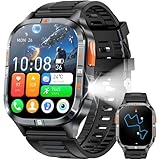
- BUILT-IN GPS & COMPASS– This military smartwatch features high-precision GPS to pinpoint your location while hiking, cycling, or traveling, keeping you safely on track without extra gear. Tap the compass icon and it locks your bearing within three seconds—engineered for pro-level outdoor adventures like camping, climbing, and trekking.
- BLUETOOTH CALLING & MESSAGES – Powered by the latest Bluetooth tech, the men’s smartwatch lets you answer or make calls right from your wrist—no need to pull out your phone. Get real-time alerts for incoming texts and app notifications so you never miss an invite. (Replying to SMS is not supported.)
- BIG SCREEN & DIY VIDEO WATCH FACE – The 2.01" military-spec display is dust-proof, scratch-resistant, and forged from high-strength glass with an aluminum alloy bezel, passing rigorous dust and abrasion tests so the screen stays crystal-clear. Upload a short family video to create a dynamic, one-of-a-kind watch face that keeps your memories alive.
- 24/7 HEALTH MONITORING – Equipped with a high-performance optical sensor, this Android smartwatch tracks heart rate and blood-oxygen levels around the clock. It also auto-detects sleep stages (deep, light, awake) for a complete picture of your health, ensuring you always know how your body is doing.
- MULTI SPORT MODES & FITNESS TRACK – Choose from running, cycling, hiking, basketball, and more to log every workout. Set goals, monitor progress, and sync data to the companion app. Bonus tools include photo gallery, weather, alarm, stopwatch, flashlight, hydration reminder, music/camera remote, find-my-phone, mini-games, and other everyday essentials.
The Fenix 7 is built for athletes who care deeply about progression, fatigue, and performance trends over time. It rewards curiosity, discipline, and a willingness to engage with complex metrics that influence real training decisions.
Neither approach is inherently better. The right choice depends on whether you want your watch to quietly support your fitness, or actively challenge how you train.
Outdoor Navigation and Adventure Features: Where the Fenix 7 Pulls Ahead
That philosophical split between supportive fitness tracking and performance-driven training becomes even clearer once you step outdoors. This is the point in the comparison where the Fenix 7 stops feeling like a more capable Garmin and starts feeling like a fundamentally different tool.
The Venu 3 can record outdoor activities reliably, but the Fenix 7 is designed to guide, protect, and inform you when terrain, distance, or conditions become unpredictable.
Full-color maps vs. simple GPS tracks
The most obvious separation is onboard mapping. The Fenix 7 includes full-color topographic maps with terrain contours, trails, roads, waterways, and points of interest baked directly into the watch.
You can follow turn-by-turn routes, zoom and pan using buttons, and understand where you are in relation to the surrounding landscape. When you miss a turn, the watch can reroute you rather than simply recording the mistake.
The Venu 3 lacks onboard maps entirely. It records GPS tracks accurately, but navigation stops at breadcrumb trails and post-workout review in Garmin Connect, which is fine for familiar loops but limiting once you leave known routes.
Advanced route planning and ClimbPro in real-world use
Route creation on the Fenix 7 goes far beyond importing GPX files. You can generate courses directly on the watch, sync routes from platforms like Komoot or Strava, and even request round-trip routes based on distance and direction.
ClimbPro is one of the most practical features for hikers, trail runners, and cyclists. It breaks a route into individual climbs, showing remaining distance, elevation gain, and gradient so you can pace intelligently instead of reacting late.
On the Venu 3, elevation data is recorded but not actively used to shape your effort during an activity. You find out how hard the climb was after the fact, not while it matters.
Multi-band GNSS and navigation confidence
The Fenix 7 supports multi-band GNSS on select models, combining multiple satellite frequencies for better accuracy in dense forests, canyons, and urban environments with tall buildings. In real-world testing, tracks are cleaner and less prone to drift, especially during slow hiking or technical trail running.
This accuracy directly impacts navigation reliability. When a junction appears on-screen, you can trust it matches the ground in front of you rather than second-guessing the watch.
The Venu 3 uses standard GNSS, which is accurate enough for road running and open areas. Once terrain becomes complex, the margin for error grows, and that’s where the Fenix earns its reputation.
Outdoor sensors: barometer, compass, and altitude awareness
The Fenix 7 includes a full ABC sensor suite: altimeter, barometer, and compass. These aren’t novelty features, but tools that actively support decision-making during long days outside.
Barometric altitude improves elevation accuracy over GPS alone, while the compass enables proper bearing navigation even when standing still. Storm alerts based on pressure drops can also be enabled, which adds a subtle layer of situational awareness during hikes or alpine activities.
The Venu 3 relies primarily on GPS-derived elevation and does not position itself as a navigation-first device. It’s perfectly capable for activity logging, but it doesn’t replace a map or handheld GPS in challenging environments.
Battery life that enables multi-day adventures
Navigation features are only useful if the watch lasts long enough to use them. The Fenix 7’s battery life is engineered for extended outdoor sessions, with multi-day GPS tracking possible depending on mode and model size.
Solar-equipped versions can further stretch battery life during daylight exposure, which is particularly valuable on long hikes, bikepacking trips, or ultra-distance events. You worry less about power management and more about the route ahead.
The Venu 3 offers excellent battery life for a smartwatch, but continuous GPS usage drains it far faster. It’s built for daily wear with workouts, not multi-day navigation away from chargers.
Physical controls and glove-friendly usability
The Fenix 7’s five-button interface is more than a design choice. Buttons remain usable in rain, snow, mud, or with gloves, which matters when conditions deteriorate or fine motor control is compromised.
Menus are structured for muscle memory, allowing you to zoom maps, mark waypoints, or change screens without looking. That kind of tactile reliability is hard to appreciate until you need it.
The Venu 3 leans heavily on its touchscreen, which feels intuitive indoors and during gym sessions but less dependable in wet or cold environments.
Build quality and environmental durability
The Fenix 7’s case, bezel options, and sapphire lens variants are designed to absorb abuse. Stainless steel or titanium bezels, reinforced polymer cases, and higher water resistance ratings reflect its expedition-ready intent.
It wears larger and heavier than the Venu 3, but that mass translates into confidence when scraping against rock, branches, or gear. This is a watch you expect to come back scratched but functional.
The Venu 3 prioritizes comfort and aesthetics, making it easier to wear all day and sleep with. It’s durable enough for everyday activity, but it doesn’t invite punishment in the same way.
Who actually needs these features
If your outdoor activities include unfamiliar terrain, long distances, or any situation where getting lost would be more than inconvenient, the Fenix 7’s navigation tools justify their complexity. They actively change how you plan and execute adventures rather than simply recording them.
For users whose outdoor workouts stay close to home or follow well-known routes, the Venu 3 avoids unnecessary bulk and learning curves. It tracks reliably, stays comfortable, and keeps the focus on health and enjoyment rather than exploration mechanics.
This difference isn’t about capability on paper. It’s about whether your watch is expected to guide you through the outdoors, or simply come along for the ride.
Health, Wellness, and Daily Insights: Sleep, Recovery, and 24/7 Monitoring Compared
After build quality and navigation, the real long-term difference between these two watches shows up when you stop moving. This is where Garmin’s health algorithms work quietly in the background, shaping how each watch fits into everyday life rather than just workouts.
Both the Venu 3 and Fenix 7 track continuously, but they interpret that data through very different lenses.
Sleep tracking accuracy and nightly comfort
Both watches deliver Garmin’s full sleep staging, including light, deep, REM, awake time, overnight respiration rate, and Pulse Ox during sleep. In practice, sleep and wake times are similarly accurate on both, especially when paired with consistent bedtime routines.
Where they separate is comfort. The Venu 3’s slimmer case, lighter weight, and softer strap options make it easier to forget you’re wearing it overnight, which matters if you’re sensitive to wrist pressure or toss and turn.
The Fenix 7 is absolutely sleep-trackable, but its thicker case and heavier build are more noticeable in bed. For many users it’s fine, yet for others it’s a watch you tolerate at night rather than enjoy wearing.
Sleep coaching, naps, and daily readiness signals
The Venu 3 leans heavily into guidance. Sleep Coach adjusts recommended sleep duration based on recent activity, stress, and prior rest, and nap detection integrates short daytime rest into overall recovery metrics.
The Fenix 7 also supports advanced sleep metrics and nap detection, but its presentation is more utilitarian. You get the data clearly, though the coaching feels less central to the experience and more like one input among many.
Rank #4

- 【Built-in GPS & Multi-System Positioning】Stay on track with the Tiwain smartwatch’s built-in GPS. Featuring military-grade single-frequency and six-satellite support (GPS, GLONASS, Beidou, Galileo, NAVIC, QZSS), this watch offers fast and accurate location tracking wherever you go. It also includes a compass, altimeter, and barometer, giving you real-time data on your altitude, air pressure, and position.
- 【Military-Grade Durability】Engineered to withstand the toughest conditions, the Tiwain smartwatch meets military standards for extreme temperatures, low pressure, and dust resistance. Crafted from tough zinc alloy with a vacuum-plated finish, this watch is also waterproof and built to resist wear and tear. The 1.43-inch AMOLED HD touchscreen offers clear visibility in all environments, and the watch supports multiple languages for global users.
- 【170+ Sport Modes & Fitness Tracking】Track your fitness journey with 170+ sport modes, including walking, running, cycling, hiking, basketball, and more. Set exercise goals, monitor progress, and sync your data to the companion app. The smartwatch also offers smart features like music control, camera remote, weather updates, long-sitting reminders, and more.
- 【LED Flashlight for Outdoor Adventures】The Tiwain smartwatch comes equipped with a built-in LED flashlight that can illuminate up to 20 meters. Activate it with the side button for added convenience during nighttime activities or outdoor adventures.
- 【Comprehensive Health Monitoring】Monitor your health with real-time heart rate, sleep, blood pressure, and blood oxygen level tracking. The smartwatch will vibrate to alert you of any abnormal readings. You can also make and receive calls directly from the watch, and stay connected with message and app notifications (receive only, no sending capability) – perfect for when you’re driving or exercising.
Morning Report appears on both, summarizing sleep quality, recovery cues, calendar items, and weather. On the Venu 3 it feels like a daily wellness briefing, while on the Fenix 7 it reads more like a training and readiness dashboard.
Recovery, HRV, and training load context
Both watches track overnight HRV and present HRV Status trends, which are some of Garmin’s most valuable long-term health signals. Changes in baseline are easy to spot and often correlate well with illness, stress, or accumulated fatigue.
The Fenix 7 pulls ahead when recovery is tied to performance. Training Readiness combines HRV, sleep, acute load, recovery time, and stress into a single readiness score that directly influences how hard you should train.
The Venu 3 lacks Training Readiness and advanced load metrics, instead using Body Battery as its core recovery indicator. Body Battery is intuitive and effective, but it doesn’t offer the same depth for athletes managing structured training blocks.
24/7 health monitoring and sensors
Both watches provide continuous heart rate, all-day stress tracking, respiration rate, and optional all-day Pulse Ox. Data quality is consistent across both models, and in daily use neither feels meaningfully more accurate than the other.
The Venu 3 adds ECG functionality in supported regions, which the Fenix 7 does not offer. This can be a meaningful differentiator for users with heart health concerns or those who want occasional rhythm checks beyond basic heart rate trends.
Neither watch feels medically intrusive, but the Venu 3 is clearly designed to make health monitoring feel approachable, while the Fenix 7 treats it as part of a larger performance ecosystem.
Battery life versus monitoring depth
Running all-day health tracking has very different consequences on these two watches. The Fenix 7’s larger battery means you can enable continuous monitoring, including overnight Pulse Ox, with far less concern about daily charging.
The Venu 3 handles 24/7 tracking well for a lifestyle watch, but features like Pulse Ox and frequent AMOLED wake-ups will shorten time between charges. In real use, most owners adapt settings to balance convenience and longevity.
If you value always-on health insights with minimal battery anxiety, the Fenix 7’s endurance supports that mindset more naturally.
Who benefits most from each approach
The Venu 3 excels for users who want health insights that feel integrated into daily life rather than framed around training stress. Its comfort, ECG support, sleep coaching, and clean presentation make it especially appealing for wellness-focused buyers.
The Fenix 7 is better suited to users who treat health data as a performance tool. Recovery metrics, HRV trends, and readiness scores are designed to influence training decisions, not just reflect how you feel.
Both watches track you around the clock, but they tell very different stories with that data. One focuses on how you’re living. The other focuses on how you’re preparing to perform.
Smartwatch Features and Ecosystem: Calls, Apps, Music, and Phone Compatibility
Once you step beyond health and training metrics, the differences between the Venu 3 and Fenix 7 become more philosophical than technical. Both live inside Garmin’s Connect ecosystem, but they prioritize very different interpretations of what a “smartwatch” should do day to day.
Calls, microphone, and speaker support
The Venu 3 is clearly positioned as Garmin’s most complete lifestyle smartwatch. It includes both a microphone and speaker, allowing you to take Bluetooth calls directly from your wrist when paired with a compatible phone.
Call quality is surprisingly solid for a watch this size, and the speaker is loud enough for quick conversations without feeling tinny. You can also initiate calls from recent contacts, which makes the Venu 3 feel far closer to an Apple Watch or Galaxy Watch in everyday convenience.
The Fenix 7 does not support on-watch calling. There is no microphone or speaker, and all call handling is limited to notifications and dismissing incoming calls from the watch face.
For users who want their watch to meaningfully reduce phone reach during the day, this alone can be a deciding factor in favor of the Venu 3.
Voice features and smart assistance
The Venu 3 also supports basic voice assistant passthrough. You can trigger your phone’s native assistant, such as Siri or Google Assistant, directly from the watch for tasks like setting reminders or checking quick information.
This is not a standalone voice assistant and still relies on the phone, but in real-world use it works reliably and fits naturally into daily routines. It reinforces the Venu 3’s role as a lifestyle-first device rather than a pure training tool.
The Fenix 7 offers no voice interaction at all. Garmin’s assumption here is clear: this is a watch designed for environments where touch and buttons matter more than conversational control.
Apps and the Garmin Connect IQ ecosystem
Both watches use Garmin’s Connect IQ app platform, and the experience is functionally the same across the two models. You can install third-party apps, data fields, watch faces, and widgets through the Connect IQ store.
That said, Garmin’s app ecosystem is utilitarian rather than expansive. You will find essentials like Spotify, Amazon Music, Komoot, and a handful of smart home or productivity tools, but nothing approaching the breadth of Apple’s or Google’s app stores.
On the Venu 3, apps tend to feel more at home thanks to the AMOLED display and touch-first interface. On the Fenix 7, apps are more about extending function rather than adding lifestyle flair, and most users rely heavily on buttons rather than touch.
Music storage and offline playback
Music support is strong on both watches, with some important nuances. The Venu 3 includes onboard music storage as standard, supporting offline playlists from Spotify, Deezer, and Amazon Music, along with locally transferred MP3 files.
The Fenix 7 is available in both music and non-music variants, depending on the specific model and size. If you choose a music-enabled version, functionality mirrors the Venu 3, including Bluetooth headphone pairing and offline playback.
In practice, music feels more central to the Venu 3’s identity, especially for gym workouts and casual runs. On the Fenix 7, music is more of a convenience feature layered onto a watch that is otherwise focused on navigation, endurance, and battery longevity.
Notifications, messaging, and daily interactions
Notification handling is consistent across both watches and works well for calls, texts, calendar alerts, and app notifications. You can read full notifications on either device, and vibration alerts are strong enough to be felt during activity.
Android users gain the ability to send quick replies directly from the watch, including custom responses. iPhone users are limited to viewing notifications only, a restriction imposed by Apple rather than Garmin.
The Venu 3’s touch screen and smoother animations make notification management feel faster and more natural. The Fenix 7 favors reliability and tactile button control, which is often preferable when wearing gloves or operating in wet or cold conditions.
Garmin Pay and everyday convenience features
Both the Venu 3 and Fenix 7 support Garmin Pay for contactless payments, assuming your bank is supported. Setup is straightforward, and payments are fast and reliable in daily use.
You also get standard smartwatch tools like weather, calendar syncing, alarms, timers, and phone find features on both models. These are polished and stable, but not designed to be flashy or deeply customizable.
Where the Venu 3 stands out is how seamlessly these features integrate into daily wear. Its slimmer profile, lighter weight, and AMOLED display make it feel natural to use as an all-day digital companion.
iOS and Android compatibility realities
Both watches work well with iOS and Android, but neither offers deep platform-specific integration beyond what Garmin allows. You will not find rich app mirroring or system-level interactions like you would with platform-native smartwatches.
Android users benefit slightly more overall, thanks to reply support and broader notification control. iPhone users still get a smooth experience, but it is clearly more passive.
💰 Best Value

- Smart Watch with GPS and Offline Map: This smart watch connects to multiple satellite systems for accurate real-time positioning, and includes a professional-grade compass, altimeter, and barometer for precise data, ensuring you maintain your sense of direction in any outdoor environment. The map version supports downloading offline maps; select a route or destination to view the route even without a signal, eliminating the risk of getting lost.
- Bluetooth Call & Message Functionality: This smart watches for men allows you to make and receive calls; receive text and social media notifications (Facebook, WhatsApp, Instagram, Twitter, etc.); and reply to text messages with voice-to-text or set up quick replies (text reply functionality is available for Android phones).
- Sports & Health Monitoring: This 5ATM waterproof fitness watch supports over 100 sports modes and tracks daily activity data, calories, distance, steps, and heart rate. You can use it to monitor your health metrics (blood oxygen, heart rate, stress, and sleep), monitor your fatigue and mood, and perform PAI analysis. You can also use this smartwatch to set water intake and sedentary reminders. Stay active and healthy with this fitness tracker watch.
- Customizable Watch Faces & AI Functionality: This smart watch features a 1.46-inch HD touchscreen and over 100 downloadable and customizable watch faces. You can even use your favorite photos as your watch face. Equipped with AI technology, it supports voice descriptions in multiple languages to generate personalized AI watch faces. The watch's AI Q&A and AI translation features provide instant answers to questions and break down language barriers, making it an ideal companion for everyday life and travel.
- Large Battery & High Compatibility & More Features: This smart watch for android phones and ios phone features a large 550ml battery for extended battery life. It's compatible with iOS 9.0 and above and Android 5.0 and above. It offers a wealth of features, including an AI voice assistant, weather display, music control, camera control, calculator, phone finder, alarm, timer, stopwatch, and more. (Package Includes: Smartwatch (with leather strap), spare silicone strap, charging cable, and user manual)
This neutrality is intentional. Garmin builds watches that are phone-agnostic and long-lasting, and that philosophy applies equally to the Venu 3 and Fenix 7, even if the Venu leans harder into convenience.
Battery Life and Charging Reality: How Long They Last in the Real World
Battery life is where Garmin’s design philosophy becomes impossible to ignore. The Venu 3 and Fenix 7 approach endurance from very different angles, and those differences show up quickly once you move beyond spec sheets and into everyday wear.
If notifications, health tracking, and workouts are your priority, both easily outperform mainstream smartwatches. How long they last between charges, and how forgiving they are when you forget to plug in, is where the decision really takes shape.
AMOLED lifestyle efficiency vs. endurance-first design
The Venu 3 uses a bright AMOLED display that looks fantastic indoors and out, but it demands more power when actively in use. In real-world testing with always-on disabled, notifications flowing all day, sleep tracking nightly, and three to five GPS workouts per week, it typically lasts around 7 to 9 days per charge.
Garmin rates it higher on paper, but AMOLED reality means usage patterns matter. Turn on always-on display or stack longer GPS sessions, and you will feel the battery drop faster, especially compared to Garmin’s outdoor-focused models.
The Fenix 7, by contrast, is built around a transflective memory-in-pixel display that sips power. With similar daily usage and regular workouts, it comfortably runs 14 to 18 days, and even longer on Solar editions when worn outdoors consistently.
GPS and workout drain: where the gap widens
Once you introduce frequent GPS tracking, the difference becomes more pronounced. The Venu 3 handles runs, rides, and gym sessions well, but long GPS activities will noticeably chip away at its battery, making it less ideal for multi-day training blocks without charging.
For runners doing hour-long sessions a few times a week, this is not an issue. For hikers, ultra runners, or cyclists stacking long rides, you will be charging the Venu 3 more often than you might like.
The Fenix 7 is in a different league here. Even without solar assistance, it supports extended GPS modes that allow multi-day tracking, long races, and back-to-back outdoor sessions with minimal anxiety. It is designed to keep recording when charging simply is not an option.
Solar charging: helpful, but not magical
Solar models of the Fenix 7 do not eliminate the need for charging, but they meaningfully extend time between plug-ins. In bright conditions, especially during long outdoor activities, solar input slows battery drain and can add several days over time.
This benefit only matters if you spend real time outdoors. Indoor athletes or office-bound users will see little difference between solar and non-solar versions in daily life.
The Venu 3 offers no solar option, reinforcing its role as a lifestyle-first smartwatch rather than an expedition tool.
Charging speed and daily ownership reality
Neither watch supports true fast charging in the way modern phones or some competing smartwatches do. Garmin’s proprietary charging cable is reliable, but not quick.
The Venu 3 typically takes around an hour to go from low battery to full, making it easy to top up during a shower or desk break. Because you charge it more often, this becomes part of a regular routine rather than an inconvenience.
The Fenix 7 takes longer to fully recharge, especially larger case sizes, but you do it far less often. Many owners settle into a rhythm of charging every two to three weeks, which is a very different ownership experience.
What battery life says about who each watch is for
The Venu 3’s battery life is excellent by smartwatch standards and perfectly aligned with its role as an everyday health and fitness companion. It rewards lighter weight, a slimmer case, and a vivid display, at the cost of needing more frequent charging.
The Fenix 7 treats battery life as a core performance metric. Its size, weight, and utilitarian display all serve the goal of staying alive during long adventures, heavy training loads, and unpredictable conditions.
If charging once a week feels acceptable and you value visual polish, the Venu 3 fits naturally. If the idea of planning around a charger feels like friction, the Fenix 7’s endurance alone can justify its higher price and bulk.
Price, Value, and Final Recommendation: Is the Fenix 7 Worth the Extra Spend?
Battery life, charging habits, and durability naturally lead to the final question most buyers wrestle with: how much is all of this capability actually worth in daily use. The Venu 3 and Fenix 7 are not separated by a small pricing gap, and understanding what you’re paying for is critical before committing.
Current pricing and where the gap comes from
The Garmin Venu 3 typically sits in the mid-premium range, often retailing hundreds less than the Fenix 7 depending on size and configuration. Discounts are common, and it frequently drops into a price bracket that competes directly with high-end Apple Watch and Samsung Galaxy Watch models.
The Fenix 7 commands a higher price because it is not one watch, but a platform. You are paying for a reinforced case, sapphire glass options, multi-band GPS, onboard mapping, advanced training analytics, and in some models, solar charging hardware.
Size also affects cost. Larger Fenix 7 variants with sapphire and solar features can climb significantly higher than a standard Venu 3, pushing the decision firmly into “do I need this?” territory rather than simple preference.
What you’re really paying for with the Fenix 7
The Fenix 7’s value is not in any single feature, but in how those features hold up under stress. Its stainless steel or titanium bezel, thicker case walls, and button-driven interface are designed for gloved hands, rain, sweat, and impact.
Mapping and navigation alone can justify the cost for trail runners, hikers, skiers, and cyclists who train far from urban environments. Turn-by-turn navigation, breadcrumb trails, elevation profiles, and route recalculation fundamentally change how you plan and execute outdoor activities.
Training depth is the other major differentiator. Metrics like Training Readiness, Endurance Score, real-time stamina, and deeper performance analytics reward users who train frequently and follow structured plans over months, not weeks.
Where the Venu 3 delivers better value
The Venu 3 offers exceptional value because it prioritizes features people actually use every day. The AMOLED display is brighter and more engaging indoors, notifications are easier to read, and the overall experience feels closer to a modern smartwatch.
Health tracking is strong and approachable. Sleep coaching, body battery, heart rate variability trends, stress tracking, and recovery insights are presented clearly without overwhelming the user with performance jargon.
Comfort also matters. The Venu 3’s slimmer case, lighter weight, and softer edges make it easier to wear 24/7, including during sleep. For many users, that comfort translates directly into better long-term health data.
Long-term ownership and resale considerations
Fenix models historically age well. Garmin supports them with software updates for years, and their rugged construction means they often look good even after heavy use, which helps resale value.
The Venu line tends to depreciate faster, partly because AMOLED-based lifestyle watches are refreshed more frequently. That does not diminish its usefulness, but it does mean it is best viewed as a value-driven purchase rather than a long-term hardware investment.
If you plan to keep your watch for many years and push it hard, the Fenix 7’s durability and extended relevance strengthen its value proposition.
Final recommendation: which Garmin should you buy?
Choose the Garmin Venu 3 if you want an excellent everyday smartwatch with strong fitness and health tracking, a beautiful display, and a design that works equally well at the gym, office, and dinner table. It delivers nearly everything most recreational athletes need at a price that feels justified the moment you start wearing it all day.
Choose the Garmin Fenix 7 if your training and lifestyle consistently push beyond paved roads and predictable routines. If you rely on navigation, train with structure and intent, spend long days outdoors, or simply hate charging your watch, the higher price is not just justified, it makes sense.
The Fenix 7 is worth the extra spend only if you will actually use its depth. If you won’t, the Venu 3 is not a compromise; it’s the smarter, more enjoyable watch to live with.