Choosing between the Venu 3 and the Forerunner 265 isn’t about which watch is “better” in isolation, but which philosophy aligns with how you actually live and train. Both sit in Garmin’s mid-to-premium tier, both use vibrant AMOLED displays, and both promise serious health and fitness tracking. Yet they are designed with fundamentally different priorities, and those priorities shape everything from the metrics you see each morning to how the watch feels on your wrist at dinner.
If you’re torn between wanting a watch that looks polished all day and one that feels like a dedicated training tool, you’re exactly where Garmin intends you to be. This section breaks down how Garmin positions the Venu line versus the Forerunner line, and why that positioning matters in real-world use, not just on a spec sheet. By the end, you should already have a strong sense of which camp you fall into before we dive deeper into metrics, battery life, and training tools.
Venu 3: Health-First, Lifestyle-Led Garmin
The Venu 3 is Garmin’s interpretation of a modern wellness smartwatch that still happens to be very capable for fitness. Its design language is clean and understated, with a rounded case, slim profile, and minimal visual noise that fits naturally in office, casual, and social settings. At roughly 45 mm with a lightweight polymer case and steel bezel accents, it wears closer to a traditional smartwatch than a sports instrument.
Philosophically, the Venu 3 is built around 24/7 health visibility rather than structured performance improvement. Garmin puts daily comfort, continuous health tracking, and smartwatch usability front and center, with features like advanced sleep coaching, nap detection, HRV status presented in plain language, and a strong emphasis on Body Battery and stress trends. These are framed less as training inputs and more as tools to help you feel better day to day.
🏆 #1 Best Overall

- Stylish Design, Vibrant Display: The lightweight aluminum build blends effortless style with workout durability, while the vivid 1.97" AMOLED display keeps your data easy to read, even under bright sunlight.
- All-in-One Activity Tracking: The Amazfit Bip 6 fitness tracker watch offers 140+ workout modes including HYROX Race and Strength Training, plus personalized AI coaching and 50m water resistance.
- Up to 14 Days Battery Life: The Amazfit Bip 6 smart watch powers through your training and recovery for up to two weeks at a time - no nightly charging needed.
- Accurate GPS Tracking & Navigation: Stay on course with free downloadable maps and turn-by-turn directions. Support from 5 satellite systems ensures precise tracking of every move and fast GPS connection.
- 24/7 Health Monitoring: The Amazfit Bip 6 smartwatch provides precise, real-time monitoring of heart rate, sleep, blood-oxygen and stress, empowering you with actionable insights to optimize your health and fitness.
This mindset extends to how the Venu 3 handles workouts. You get accurate GPS, solid activity tracking, and enough data for recreational runners and gym users, but without the deep training load analytics, race forecasting, or performance condition overlays that define the Forerunner line. The Venu 3 isn’t trying to coach you to a PR; it’s trying to help you stay consistent, healthy, and balanced.
Forerunner 265: Performance Comes First, Always
The Forerunner 265 is unapologetically a training watch, even with its AMOLED display. Every design choice prioritizes function during runs, intervals, and races, from the lighter, more utilitarian case to the five-button layout that favors tactile control over touch interaction. At a similar size on paper, it feels more compact and purpose-built on the wrist, especially during long or sweaty sessions.
Garmin positions the 265 squarely within its performance ecosystem, where metrics are meant to drive adaptation and progression. Training Readiness, acute and chronic load, HRV status tied directly to training outcomes, daily suggested workouts, and race-focused tools like PacePro aren’t optional extras; they’re the core experience. This watch assumes you want guidance, structure, and feedback, even if you’re not following a formal plan.
Health tracking is still present and robust, but it plays a supporting role rather than leading the narrative. Sleep, stress, and recovery are interpreted through the lens of how ready you are to train today, not just how you feel overall. For runners, triathletes, and data-driven athletes, this framing turns the watch into a daily decision-making tool rather than a passive tracker.
AMOLED, But With Very Different Intentions
Both watches use bright AMOLED displays, but they’re tuned for different use cases. On the Venu 3, the screen is part of the lifestyle appeal, optimized for glanceability, rich watch faces, and smartwatch interactions throughout the day. Touch controls feel natural here, and the interface encourages frequent casual engagement.
On the Forerunner 265, AMOLED is more about clarity during motion. Data fields are bold, contrast is optimized for outdoor visibility, and button-first navigation ensures nothing goes wrong mid-interval or mid-race. It’s visually attractive, but never at the expense of reliability when effort levels are high.
This distinction matters more than it seems. If you want a watch that feels alive on your wrist all day, the Venu 3’s display philosophy makes sense. If you want a screen that disappears into the background until you need precise data at speed, the Forerunner 265 gets the nod.
Who Each Watch Is Really Built For
At a high level, the Venu 3 is aimed at fitness-focused users who train regularly but don’t want their watch to dominate their identity. It suits gym-goers, casual to moderate runners, wellness-driven users, and anyone who values comfort, aesthetics, and health insights as much as structured exercise. It’s a watch you wear because it fits your life, not because it demands one.
The Forerunner 265 is for athletes who think in training blocks, weekly mileage, and recovery windows. Even if you’re not elite, the watch assumes ambition, consistency, and a desire to improve measurable performance. It’s less about blending in and more about showing up ready to work.
Understanding this philosophical split is the key to the entire comparison. From here on, every difference in features, battery behavior, and software experience traces back to whether Garmin designed the watch to support your lifestyle first, or your training first.
Design, Wearability & Display: Case Sizes, Comfort, and AMOLED Differences in Daily Use
Once you understand the philosophical split between lifestyle-first and training-first, the physical design of these two watches starts to make immediate sense. Garmin didn’t just differentiate them in software; the cases, materials, and even how the displays behave on your wrist reinforce what each watch expects you to do with it.
Case Sizes, Materials, and Wrist Presence
The Venu 3 comes in two sizes, 45 mm and 41 mm, which already signals broader lifestyle intent. Both sizes use a fiber-reinforced polymer case with a stainless steel bezel, giving it a cleaner, more “watch-like” appearance that blends easily into casual or work settings.
The Forerunner 265 is available in 46 mm and 42 mm variants, and its design language is unapologetically sporty. The case is all polymer with no metal accents, prioritizing weight savings and durability over visual refinement.
On the wrist, the Venu 3 looks more finished and intentional as an everyday accessory. The Forerunner 265 looks like a tool, and that’s not a criticism; it simply makes no attempt to disguise its performance-first DNA.
Thickness, Weight, and Long-Term Comfort
In daily wear, thickness and mass matter more than raw case diameter, especially for sleep tracking and all-day use. The Venu 3 sits slightly slimmer on the wrist and carries its weight in a more balanced way, which becomes noticeable during long office days or overnight wear.
The Forerunner 265 is marginally thicker and feels more top-heavy, particularly in the larger size. During runs and workouts this disappears entirely, but when worn 24/7, especially on smaller wrists, it’s more noticeable.
For athletes who wear their watch only during training blocks and sleep, this won’t matter. For users who want continuous health tracking, stress monitoring, and sleep insights without being constantly aware of the device, the Venu 3 is easier to live with.
Buttons, Touch, and How You Interact Mid-Day vs. Mid-Workout
Both watches offer touchscreens, but how Garmin expects you to use them is very different. On the Venu 3, touch is front and center, supported by three physical buttons that feel secondary in everyday navigation.
Scrolling through widgets, responding to notifications, or adjusting settings feels fluid and intuitive. This is the watch you instinctively tap and swipe throughout the day.
The Forerunner 265 uses a five-button layout with touch acting as a supplement rather than the primary control method. In sweaty, rainy, or high-intensity scenarios, buttons are more reliable, and Garmin leans heavily into that.
This distinction shows up quickly in real use. If your watch interaction is mostly casual and frequent, the Venu 3 feels more natural. If your interactions happen while breathing hard and moving fast, the Forerunner 265’s controls are simply more dependable.
AMOLED Displays: Same Tech, Different Priorities
Both watches use high-resolution AMOLED panels, but they are tuned very differently. The Venu 3’s display emphasizes vibrancy, smooth animations, and rich color depth, making watch faces and health widgets visually engaging.
Brightness is excellent indoors and outdoors, and the always-on display mode is optimized to look attractive rather than purely functional. It’s the kind of screen that invites interaction, even when you’re not training.
The Forerunner 265’s AMOLED display is all about legibility at speed. Data fields are larger, contrast is stronger, and color choices are deliberately conservative to avoid confusion during intervals or races.
Animations are restrained, and the interface favors instant readability over visual flair. When you glance down mid-stride, the information is exactly where you expect it to be, and nothing feels decorative.
Outdoor Visibility and Motion Clarity
In direct sunlight, both displays perform well, but the experience differs in motion. The Forerunner 265’s font sizing and data density are clearly designed for quick glances while running, cycling, or transitioning in multisport sessions.
The Venu 3 remains readable outdoors, but its layouts are more information-rich and slightly less optimized for high-speed interpretation. This isn’t a flaw; it simply reflects that it’s not primarily designed to be read while hitting threshold pace.
For runners who train by pace, heart rate zones, or structured workouts, the Forerunner 265 feels purpose-built. For users who check metrics before and after sessions, the Venu 3 is more than sufficient.
Straps, Fit, and Skin Contact Over Long Periods
Both watches ship with Garmin’s standard silicone straps, which are durable, sweat-resistant, and easy to clean. The difference lies in how the watch body interacts with the wrist over time.
The Venu 3’s smoother case edges and slightly more refined curvature reduce pressure points during sleep and all-day wear. It’s particularly noticeable for side sleepers or users sensitive to wrist bulk.
The Forerunner 265’s case prioritizes stability during movement, hugging the wrist securely during high-impact activity. It feels locked in during runs, but slightly more utilitarian when worn around the clock.
Design as a Signal of Intent
Ultimately, design and display choices reinforce what Garmin expects from you as a user. The Venu 3 is designed to disappear into your daily life, offering comfort, polish, and a visually engaging screen that supports wellness and fitness without demanding attention.
The Forerunner 265 is designed to show up when it matters most, delivering clarity, control, and reliability under physical stress. It may not blend in as easily, but it earns its place every time a workout gets hard.
These aren’t cosmetic differences; they shape how often you wear the watch, how you interact with it, and whether it feels like a companion or a coach strapped to your wrist.
Sports & Training Depth: Running Metrics, Multi-Sport Support, and Coaching Tools Compared
Design intent becomes even clearer once you move past how the watches look and feel and into what they ask of you physically. This is where Garmin’s product segmentation stops being subtle and starts to materially affect how you train, recover, and plan your weeks.
The Venu 3 and Forerunner 265 both track workouts accurately and reliably, but the depth, context, and actionable guidance they provide diverge quickly once you move beyond casual sessions.
Core Running Metrics and Real-Time Feedback
Both watches deliver the essentials: GPS pace, distance, heart rate, lap tracking, cadence, and elevation. Accuracy is comparable thanks to multi-band GNSS support on the Forerunner 265 and highly refined single-band performance on the Venu 3 for most environments.
The difference is not what they record, but what they do with that data. The Forerunner 265 layers in advanced running dynamics such as training effect (aerobic and anaerobic), VO2 max trends, race time predictions, and pace-based performance condition during the run.
The Venu 3 focuses on post-workout clarity rather than in-run coaching. You’ll see clean summaries, heart rate zones, and effort breakdowns, but fewer metrics designed to influence pacing decisions mid-session.
Rank #2

- Stylish Design, Bright Display: The sleek stainless steel build blends classic style with workout durability, while the bright 1.32" AMOLED display keeps your data easy to read, even under bright sunlight.
- Precise Heart Rate and Sleep Tracking: Amazfit's BioTracker technology tracks your heart rate and sleep data with accuracy that previous sensors just can't match.
- Up to 10 Days of Battery Life: With long battery life that lasts up to 10 days with typical use, nightly recharges are a thing of the past.
- Free Maps with Turn Directions: Stay on-track with free downloadable maps, and get turn-by-turn guidance on-screen or via your Bluetooth headphones. Enjoy ski maps for global resorts, including guidance for cable cars, slopes, and more.
- Faster and More Accurate GPS Tracking: 5 satellite positioning systems ensure fast GPS connection and accurate positioning whenever you're out running, walking, cycling or hiking.
Training Load, Readiness, and Periodization
The Forerunner 265 pulls heavily from Garmin’s endurance training framework. Training Load, Acute Load, Load Focus, Training Readiness, and Recovery Time all work together to guide how hard you should train on any given day.
These metrics update dynamically and respond well to structured plans, back-to-back hard sessions, and accumulated fatigue. For runners following polarized, pyramidal, or threshold-heavy training blocks, the watch actively shapes decision-making.
The Venu 3 includes recovery time and basic training effect, but lacks Training Readiness and long-term load analysis. It’s informative rather than directive, better suited to users who self-regulate intensity without relying on algorithmic guidance.
Structured Workouts and Daily Coaching
Garmin Coach plans are available on both watches, supporting goal-based running plans with adaptive scheduling. Execution is smoother on the Forerunner 265, where workout screens emphasize pace targets, intervals, and transitions with minimal visual clutter.
Daily Suggested Workouts are a major differentiator. On the Forerunner 265, these suggestions adapt to sleep, HRV status, recent load, and race events on your calendar, often replacing static plans entirely for experienced runners.
The Venu 3 does not offer Daily Suggested Workouts in the same depth. It supports structured workouts, but expects you to initiate training rather than respond to daily prompts shaped by physiology and recovery trends.
Multi-Sport and Triathlon Support
This is where the two watches separate cleanly. The Forerunner 265 supports multi-sport profiles, including triathlon, duathlon, brick sessions, and custom multi-sport modes with one-button transitions.
It tracks discipline-specific metrics cleanly and preserves lap integrity across transitions, making it viable for race-day use without workarounds. Battery management during long sessions is also tuned for extended GPS use.
The Venu 3 supports a wide range of individual sports but does not offer true multi-sport modes. You can track swim, bike, and run separately, but transitions must be handled manually, which limits its usefulness for structured multi-discipline training.
Indoor Training, Strength, and Cross-Training
Strength training support exists on both watches, including rep counting, muscle maps, and guided workouts. The Venu 3 feels more at home here, with larger visuals, smoother animations, and a UI that suits gym-based sessions.
The Forerunner 265’s strength features are functional but clearly secondary to endurance sports. It tracks what’s needed, but doesn’t elevate the experience in the same way the Venu 3 does for general fitness users.
For indoor cardio like treadmill running, rowing, and cycling, both watches perform well. The Forerunner 265’s value lies in how these sessions feed into broader load calculations, while the Venu 3 treats them as discrete fitness events.
Swimming and Open Water Capabilities
Pool swimming metrics are strong on both watches, including stroke detection, SWOLF, and interval tracking. Accuracy is consistent, and neither watch feels compromised in a standard lap pool environment.
Open water swimming is supported on the Forerunner 265 and integrated cleanly into multi-sport workflows. The Venu 3 supports open water swimming as well, but again lacks the broader race and transition context.
For recreational swimmers, this distinction barely matters. For triathletes or open water-focused athletes, it’s a practical limitation rather than a theoretical one.
How the Data Feels in Daily Use
Living with the Forerunner 265 feels like having a coach that expects consistency. Miss sessions, stack intensity poorly, or sleep badly, and the watch reflects that back with adjusted recommendations and readiness scores.
The Venu 3 feels more like a well-informed training journal. It records everything accurately, presents trends cleanly, and supports improvement, but doesn’t attempt to steer your training unless you ask it to.
Neither approach is inherently better. The right choice depends on whether you want your watch to challenge your assumptions or quietly support your habits as they already exist.
Health, Wellness & Recovery Tracking: HRV, Sleep, Body Battery, and Everyday Insights
The philosophical split between these two watches becomes even clearer once training stops and recovery begins. Both the Venu 3 and Forerunner 265 share Garmin’s latest Elevate heart rate sensor and core wellness algorithms, but the way they surface and contextualize that data is very different.
Where the Forerunner treats recovery as a performance variable, the Venu 3 treats it as a quality-of-life signal. That distinction shapes everything from how HRV is framed to how sleep insights feel in daily use.
Heart Rate Variability and Recovery Context
Both watches track overnight HRV status using Garmin’s rolling baseline approach, comparing recent nights to your personal norm rather than chasing absolute numbers. Accuracy between the two is effectively identical, assuming similar fit and wear consistency.
On the Forerunner 265, HRV is tightly linked to Training Readiness, daily workout suggestions, and long-term load balance. A suppressed HRV doesn’t just show up as a warning; it actively reduces intensity recommendations and can flip a planned hard session into a recovery run.
The Venu 3 presents HRV more passively. You still get nightly averages, trend arrows, and deviations from baseline, but the watch doesn’t aggressively translate that into behavior changes unless you choose to act on it. For users who already understand recovery principles, this feels respectful rather than lacking.
Sleep Tracking and Sleep Coach Experience
Sleep tracking is excellent on both devices, with consistent detection of sleep onset, wake times, and stage distribution. In side-by-side testing, total sleep time and wake-after-sleep-onset are typically within minutes of each other.
The Venu 3’s edge is experiential. Its larger AMOLED display makes the Sleep Coach easier to digest, with clearer explanations around sleep need, debt, and consistency. It’s better at nudging healthier routines rather than optimizing race readiness.
The Forerunner 265’s sleep data feeds more directly into next-day performance metrics. Poor sleep immediately impacts Training Readiness and suggested workouts, reinforcing the idea that recovery is not optional if you want to perform.
Body Battery, Stress, and All-Day Energy Awareness
Body Battery remains one of Garmin’s most intuitive wellness metrics, blending heart rate variability, activity load, stress, and sleep into a single energy score. On both watches, it behaves consistently and responds quickly to poor sleep, illness, or stacked training stress.
The difference is how often you’re encouraged to look at it. The Venu 3’s interface invites casual check-ins throughout the day, making Body Battery feel like a pacing tool for work, workouts, and social commitments.
On the Forerunner 265, Body Battery exists more in the background. It’s there if you want it, but Training Readiness and load metrics tend to dominate attention, especially for runners and triathletes.
Stress Tracking, Respiration, and Daily Health Signals
All-day stress tracking, respiration rate, and resting heart rate trends are identical across both models from a data standpoint. The sensors are the same, and Garmin Connect processes them with the same algorithms.
The Venu 3 surfaces this information in a more lifestyle-oriented way, with glanceable widgets that make stress patterns feel relevant beyond training. It’s easier to spot how meetings, travel, or poor hydration affect your physiology.
The Forerunner 265 treats these signals as supporting data. They matter, but mostly in how they explain changes in readiness or recovery rather than as standalone wellness insights.
Comfort, Wearability, and 24/7 Compliance
Recovery metrics are only as good as wear consistency, and both watches are comfortable enough for true 24/7 wear. The Forerunner 265 is lighter and more sport-focused, which some users prefer overnight, especially those sensitive to wrist weight.
The Venu 3 feels more refined against the skin, with smoother case finishing and a strap that’s better suited to all-day, non-training wear. For users who sleep light or wear their watch during work and social settings, this can meaningfully improve compliance.
Battery life supports continuous tracking on both, but the Forerunner 265’s longer endurance makes it easier to forget about charging during heavy training weeks. The Venu 3 still lasts comfortably for multi-day use, especially with smartwatch features balanced intelligently.
How Recovery Data Feels Over Time
Living with the Forerunner 265 reinforces accountability. Recovery data accumulates into a narrative that either supports or challenges your training decisions, and it rarely lets you ignore patterns for long.
The Venu 3 builds awareness rather than pressure. Trends are clear, insights are accessible, and the watch trusts you to connect the dots between how you live and how you feel.
For athletes chasing performance ceilings, the Forerunner’s approach is more actionable. For users prioritizing sustainable fitness, health awareness, and daily balance, the Venu 3’s recovery experience feels more human.
GPS, Sensors & Accuracy: Real-World Performance for Runners and Outdoor Athletes
If recovery data shapes how you train, GPS and sensor accuracy determine whether you trust what the watch tells you once you step outside. This is where the philosophical split between the Venu 3’s generalist design and the Forerunner 265’s performance-first DNA becomes most obvious.
Rank #3
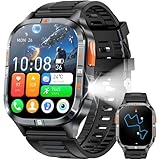
- BUILT-IN GPS & COMPASS– This military smartwatch features high-precision GPS to pinpoint your location while hiking, cycling, or traveling, keeping you safely on track without extra gear. Tap the compass icon and it locks your bearing within three seconds—engineered for pro-level outdoor adventures like camping, climbing, and trekking.
- BLUETOOTH CALLING & MESSAGES – Powered by the latest Bluetooth tech, the men’s smartwatch lets you answer or make calls right from your wrist—no need to pull out your phone. Get real-time alerts for incoming texts and app notifications so you never miss an invite. (Replying to SMS is not supported.)
- BIG SCREEN & DIY VIDEO WATCH FACE – The 2.01" military-spec display is dust-proof, scratch-resistant, and forged from high-strength glass with an aluminum alloy bezel, passing rigorous dust and abrasion tests so the screen stays crystal-clear. Upload a short family video to create a dynamic, one-of-a-kind watch face that keeps your memories alive.
- 24/7 HEALTH MONITORING – Equipped with a high-performance optical sensor, this Android smartwatch tracks heart rate and blood-oxygen levels around the clock. It also auto-detects sleep stages (deep, light, awake) for a complete picture of your health, ensuring you always know how your body is doing.
- MULTI SPORT MODES & FITNESS TRACK – Choose from running, cycling, hiking, basketball, and more to log every workout. Set goals, monitor progress, and sync data to the companion app. Bonus tools include photo gallery, weather, alarm, stopwatch, flashlight, hydration reminder, music/camera remote, find-my-phone, mini-games, and other everyday essentials.
Both watches are reliable, but they prioritize accuracy in different contexts and with different assumptions about how you train.
GNSS Hardware and Satellite Support
The Forerunner 265 uses Garmin’s multi-band, dual-frequency GNSS with SatIQ, dynamically switching accuracy modes based on signal conditions. In practice, this gives it a measurable advantage in urban corridors, wooded trails, and rolling terrain where signal bounce and canopy interference usually degrade pace and distance.
The Venu 3 supports multi-GNSS (GPS, GLONASS, Galileo, QZSS), but not dual-frequency tracking. For most open-sky running, cycling, and walking, its tracks are clean and consistent, but it can drift slightly more in dense environments.
On steady-state road runs, the difference is minimal. Once you introduce tight turns, city blocks, or trail switchbacks, the Forerunner’s tracks stay closer to the true line.
Pace Stability and Distance Consistency
Real-world pace stability matters more than post-run maps, especially for runners training by effort or intervals. The Forerunner 265 delivers steadier instant pace and faster correction after surges or terrain changes, which is noticeable during fartleks, hill repeats, and threshold sessions.
The Venu 3’s pace data is accurate on average but reacts more slowly to abrupt changes. For long aerobic runs or casual training, this is inconsequential, but interval-focused runners may find it slightly less responsive.
Distance totals between the two rarely differ meaningfully over longer runs. The distinction is about confidence mid-run, not post-run totals.
Heart Rate Accuracy and Optical Sensor Behavior
The Venu 3 uses Garmin’s newer Elevate Gen 5 optical heart rate sensor, while the Forerunner 265 relies on the previous generation. In daily wear and steady aerobic sessions, both are excellent, but the Venu 3 shows marginally better stability during low-intensity movement and sleep.
During high-intensity intervals, rapid cadence changes, or cold-weather runs, both watches still benefit from a chest strap. The Forerunner 265’s training ecosystem assumes external sensors, and it integrates seamlessly with ANT+ and Bluetooth straps.
Neither watch replaces a chest strap for precision work, but both are dependable enough for the majority of recreational and even serious training.
Elevation, Barometer, and Outdoor Metrics
Both watches include a barometric altimeter, and elevation gain data is consistent and believable on rolling terrain. The Forerunner 265’s elevation smoothing feels slightly more conservative, which aligns better with trail running and hill repeat analysis.
The Venu 3 occasionally over-smooths small elevation changes, which is fine for general fitness tracking but less ideal for athletes who care about vertical metrics. Neither watch is designed for technical navigation, but elevation profiles are trustworthy for training review.
Weather shifts and pressure changes are handled similarly, with no meaningful divergence in storm or altitude trends.
Sensor Fusion and Training Context
Garmin’s real advantage lies in how GPS, heart rate, and motion sensors work together. The Forerunner 265 uses this fusion aggressively to inform pace targets, training effect, and readiness, which makes GPS accuracy feel directly tied to performance outcomes.
The Venu 3 captures the same raw data but presents it with less urgency. GPS accuracy supports activity tracking and health trends rather than driving training decisions in real time.
For runners and outdoor athletes who want their watch to actively guide effort, the Forerunner’s tighter sensor integration feels more purposeful.
Who Each Watch Serves Best Outdoors
If your training includes intervals, races, trail runs, or pace-critical workouts, the Forerunner 265’s dual-frequency GPS and faster pace response offer a tangible advantage. It rewards precision-focused athletes who care about every data point.
The Venu 3 is better suited to users whose outdoor activities are part of a broader wellness routine. Its GPS is accurate enough to trust, but its strength lies in consistency and ease rather than edge-case performance.
Both watches will track your run accurately. Only one is designed to challenge how you run while you’re still moving.
Smartwatch & Lifestyle Features: Calls, Music, Apps, and Daily Convenience
After the training-focused differences outdoors, the contrast between the Venu 3 and Forerunner 265 becomes even clearer once you step back into everyday life. This is where Garmin’s product segmentation shows its hand, not through specs alone, but through how each watch fits into daily routines away from workouts.
Calls, Voice Interaction, and Phone Independence
The Venu 3 includes a built-in microphone and speaker, enabling Bluetooth phone calls directly from the wrist when paired with a smartphone. In practice, call quality is surprisingly usable for quick conversations, especially indoors or in a quiet office, though it’s not meant to replace earbuds for long calls.
The Forerunner 265 does not support on-wrist calling and has no microphone or speaker. Notifications can be viewed and dismissed, but all interaction remains one-way, reinforcing its training-first identity.
Beyond calls, the Venu 3 also supports Garmin’s on-device voice assistant for simple tasks like starting activities, setting timers, or responding to messages on Android phones. It’s limited compared to Siri or Google Assistant, but it reduces friction for daily tasks in a way the Forerunner simply doesn’t attempt.
Music Storage and Playback Experience
Both watches support onboard music storage and offline playback from Spotify, Amazon Music, and Deezer, with Bluetooth headphone pairing that’s stable during runs and gym sessions. Capacity is effectively the same, allowing room for several playlists without micromanagement.
Where they differ is usability. The Venu 3’s touch-first interface makes browsing playlists, adjusting volume, and switching tracks feel more like a traditional smartwatch experience.
The Forerunner 265 relies more heavily on buttons, which works well mid-run or with sweaty hands, but feels utilitarian when used casually. For athletes who treat music as workout fuel, this is fine; for everyday listening, the Venu 3 is more inviting.
Apps, Watch Faces, and Garmin Connect IQ
Both watches support Garmin Connect IQ for third-party apps, data fields, and watch faces, and both handle core smart features like weather, calendar sync, and notification mirroring reliably. Performance is smooth on both AMOLED displays, with no meaningful lag in daily use.
That said, the Venu 3 benefits from a broader lifestyle app focus. Meditation timers, breathwork apps, hydration reminders, and visually rich watch faces feel more at home on the Venu’s UI and larger-feeling screen.
The Forerunner 265 supports the same ecosystem, but many users will find themselves installing fewer apps over time. Garmin’s native training tools dominate the experience, and third-party additions tend to be performance-oriented rather than lifestyle-driven.
Payments, Notifications, and Everyday Utility
Garmin Pay is available on both watches and works reliably for contactless payments, assuming bank compatibility. It’s equally convenient on the Venu 3 and Forerunner 265, with no functional difference beyond how you navigate to the wallet.
Notification handling is similar in fundamentals, but different in feel. The Venu 3 encourages interaction, especially on Android where replies can be dictated or selected quickly, while the Forerunner 265 treats notifications as informational rather than actionable.
If your watch frequently replaces pulling out your phone, the Venu 3 saves more time across a typical day.
Display, Controls, and All-Day Wearability
Both watches use bright AMOLED displays, but their interaction models differ. The Venu 3 leans heavily on touch, supported by a simple button layout, which feels natural for scrolling widgets, checking stats, or navigating apps.
The Forerunner 265 balances touch with Garmin’s traditional five-button system, prioritizing muscle memory and reliability during workouts. This makes it less fluid in casual use but more dependable in rain, cold, or high-intensity sessions.
In terms of comfort, both are lightweight and suitable for all-day wear, but the Venu 3’s softer design language, curved case, and lifestyle-oriented strap options blend more easily into office or social settings. The Forerunner 265 looks and feels like a performance tool, even when worn casually.
Battery Trade-Offs in Daily Smartwatch Use
Smartwatch features carry different battery implications on each device. The Venu 3 handles calls, voice interaction, and frequent screen-on time efficiently, but heavy use of these features will still shorten time between charges.
The Forerunner 265’s simpler smart feature set helps preserve battery for training, even with the AMOLED display active. If music playback and notifications are secondary to workouts, its power profile aligns better with endurance-focused use.
These differences aren’t about raw battery life, but about where Garmin expects you to spend that energy: convenience and interaction on the Venu 3, or training consistency on the Forerunner 265.
Battery Life & Charging Reality: AMOLED Trade-Offs in Training and Smartwatch Modes
Once you move past interface feel and daily comfort, battery behavior becomes the most practical divider between the Venu 3 and the Forerunner 265. Both use AMOLED panels, both charge quickly, and both outperform typical consumer smartwatches, but they are optimized for very different usage patterns.
Rank #4

- 【Built-in GPS & Multi-System Positioning】Stay on track with the Tiwain smartwatch’s built-in GPS. Featuring military-grade single-frequency and six-satellite support (GPS, GLONASS, Beidou, Galileo, NAVIC, QZSS), this watch offers fast and accurate location tracking wherever you go. It also includes a compass, altimeter, and barometer, giving you real-time data on your altitude, air pressure, and position.
- 【Military-Grade Durability】Engineered to withstand the toughest conditions, the Tiwain smartwatch meets military standards for extreme temperatures, low pressure, and dust resistance. Crafted from tough zinc alloy with a vacuum-plated finish, this watch is also waterproof and built to resist wear and tear. The 1.43-inch AMOLED HD touchscreen offers clear visibility in all environments, and the watch supports multiple languages for global users.
- 【170+ Sport Modes & Fitness Tracking】Track your fitness journey with 170+ sport modes, including walking, running, cycling, hiking, basketball, and more. Set exercise goals, monitor progress, and sync your data to the companion app. The smartwatch also offers smart features like music control, camera remote, weather updates, long-sitting reminders, and more.
- 【LED Flashlight for Outdoor Adventures】The Tiwain smartwatch comes equipped with a built-in LED flashlight that can illuminate up to 20 meters. Activate it with the side button for added convenience during nighttime activities or outdoor adventures.
- 【Comprehensive Health Monitoring】Monitor your health with real-time heart rate, sleep, blood pressure, and blood oxygen level tracking. The smartwatch will vibrate to alert you of any abnormal readings. You can also make and receive calls directly from the watch, and stay connected with message and app notifications (receive only, no sending capability) – perfect for when you’re driving or exercising.
Garmin’s quoted numbers tell part of the story, yet real-world battery life depends far more on how often the screen wakes, how long GPS stays active, and whether training or lifestyle features dominate your week.
Smartwatch Mode: Screen Time Is the Silent Battery Killer
In pure smartwatch mode with gesture-based display wake, the Venu 3 can realistically last around five to six days for most users. That assumes notifications throughout the day, regular health tracking, sleep monitoring, and occasional voice assistant or call use.
Turn on always-on display, frequent voice interactions, or heavy widget browsing, and that drops closer to four days. The AMOLED panel itself is efficient, but the Venu 3’s design encourages more interaction, which naturally increases screen-on time.
The Forerunner 265, despite similar display technology, stretches closer to six to seven days in comparable smartwatch use. It benefits from a simpler widget layout, fewer interactive prompts, and a user experience that doesn’t constantly invite you to tap or scroll.
For users who glance more than they engage, the Forerunner quietly preserves battery without feeling restrictive.
GPS Training: Where the Philosophies Truly Diverge
During GPS workouts, the Forerunner 265’s endurance-first tuning becomes obvious. In GPS-only mode with the AMOLED display set to gesture wake, it comfortably delivers around 20 hours of tracking, which translates to a full training week for most runners without charging.
Even with multi-band GNSS enabled for accuracy in dense environments, the battery hit is predictable and manageable. Long runs, back-to-back workouts, or weekend races don’t require constant planning around the charger.
The Venu 3, while capable for training, is less forgiving under sustained GPS use. Expect closer to 15 to 16 hours of GPS tracking with typical settings, and less if music playback or frequent screen checks are involved.
For gym sessions, short runs, or occasional outdoor workouts, that’s more than sufficient. For marathon blocks, triathlon training, or multi-day events, it demands more charging discipline.
Music, Calls, and Sensors: Hidden Drains That Add Up
Both watches support offline music playback, which is one of the fastest ways to drain battery during workouts. On either device, streaming music over Bluetooth can cut GPS battery life by roughly 30 to 40 percent.
The difference is that the Venu 3 is more likely to be used this way. Taking calls from the wrist, responding to notifications, or using voice features adds small but cumulative power costs throughout the day.
The Forerunner 265 avoids many of these drains by design. It supports music, but lacks microphone-driven features, and its training-first interface discourages constant interaction mid-workout.
Heart rate tracking, SpO2 during sleep, and body battery monitoring affect both similarly. The key variable remains how often the screen and wireless radios are active beyond training.
Charging Speed and Day-to-Day Convenience
Neither watch supports wireless charging, but Garmin’s proprietary cable remains fast and reliable. A short charge while showering or during breakfast can restore a meaningful percentage on both devices.
The Venu 3 benefits more from opportunistic charging because its battery curve drops faster under heavy use. Topping it up for 20 minutes every couple of days keeps it comfortably in rotation.
The Forerunner 265, by contrast, feels more forgiving if you forget to charge. It tolerates missed plug-in windows better, which matters during travel, race weekends, or high-volume training blocks.
What Battery Life Says About Who Each Watch Is For
Battery life on these two models isn’t about which one lasts longer on paper. It’s about which one aligns with how you use a watch when you’re not thinking about battery at all.
If your watch replaces phone interactions, lights up often, and acts as a daily lifestyle hub, the Venu 3 delivers solid endurance for an AMOLED smartwatch, as long as you accept more frequent charging.
If your priority is consistent training, predictable GPS longevity, and fewer battery-related compromises during workouts, the Forerunner 265’s restraint pays off in real-world reliability.
Both are excellent by modern AMOLED standards. Only one feels like it was designed to disappear into a demanding training schedule without constant power management.
Garmin Connect Ecosystem: Data Presentation, Training Readiness, and Long-Term Progression
Battery behavior hints at philosophy, but Garmin Connect is where that philosophy becomes tangible. Both the Venu 3 and Forerunner 265 live inside the same platform, yet they surface very different layers of Garmin’s data stack depending on how seriously you train.
What matters here isn’t whether Garmin Connect is powerful—it clearly is—but how much of that power each watch actually unlocks, and how clearly it presents the story of your fitness over weeks and months rather than single workouts.
Garmin Connect: Same Platform, Different Depth
At a glance, Garmin Connect looks identical for both watches. The home dashboard, calendar view, activity summaries, and health snapshots follow the same layout whether you’re wearing a Venu 3 or a Forerunner 265.
The difference appears as soon as you scroll. The Forerunner 265 populates the app with training-centric widgets like Training Readiness, Acute Load, Training Status, VO2 max trends, and race-focused insights that simply don’t exist for the Venu 3.
The Venu 3, by contrast, leans heavily into health continuity. Body Battery, sleep score, HRV status, stress tracking, respiration, and nap detection are front and center, with fitness metrics supporting general improvement rather than structured progression.
Training Readiness: The Defining Divider
Training Readiness is the single most important ecosystem difference between these two watches. It’s exclusive to the Forerunner 265 and fundamentally changes how you interpret your day before you even lace up.
Each morning, Training Readiness blends sleep quality, HRV status, recovery time, acute training load, and stress into a single score with clear guidance. It doesn’t just tell you how hard you trained yesterday; it tells you what kind of effort your body is prepared to handle today.
On the Venu 3, you must infer this manually. Body Battery, HRV status, and sleep metrics are all there, but Garmin doesn’t synthesize them into a decision-making tool. For lifestyle users, that’s fine. For runners managing volume, intensity, and fatigue, it’s a meaningful limitation.
Daily Suggested Workouts and Adaptive Guidance
The Forerunner 265 fully supports Garmin’s Daily Suggested Workouts ecosystem, and this goes well beyond basic pace prompts. Workouts adapt based on recent load, recovery, upcoming races, and even heat acclimation if you train outdoors consistently.
When paired with Training Readiness, these suggestions feel contextual rather than generic. Easy days stay easy when fatigue is high, and intensity appears when recovery metrics align, which is exactly how experienced coaches structure training blocks.
The Venu 3 offers basic workout suggestions but lacks the adaptive intelligence that makes Garmin’s system powerful over time. It’s suitable for maintaining fitness, not optimizing performance.
Long-Term Load, Trends, and Progression Tracking
Zooming out to multi-week or multi-month views reveals another sharp split. The Forerunner 265 tracks Acute Load and Load Focus, letting you see whether your training skews aerobic, high aerobic, or anaerobic, and how balanced that distribution remains over time.
Training Status adds further context by classifying your trajectory as productive, maintaining, overreaching, or detraining. These labels aren’t motivational fluff; they’re grounded in VO2 max trends relative to training load, and they’re surprisingly effective at catching subtle stagnation.
The Venu 3 tracks activity history cleanly but stops short of this analytical layer. You can see that you’re exercising regularly, but you don’t get feedback on whether that exercise is actually moving your fitness forward in a structured way.
Health Metrics as a Foundation, Not a Finish Line
Where the Venu 3 excels is consistency. Its health metrics are always on, always visible, and framed for daily decision-making rather than performance peaks. HRV status, sleep coaching, nap tracking, and stress trends feel cohesive and easy to act on.
For users balancing gym sessions, walks, yoga, and occasional runs, this approach makes Garmin Connect feel supportive rather than demanding. You’re encouraged to move and recover well, not chase numbers.
The Forerunner 265 includes these same health metrics, but they play a supporting role. They exist to protect training quality, not to define the experience.
How Data Feels on the Watch Itself
Presentation on-device mirrors the app’s priorities. The Forerunner 265 surfaces training widgets quickly, with glanceable readiness scores, load charts, and upcoming workouts accessible in seconds.
The Venu 3 emphasizes clarity and polish. Health summaries are visually cleaner, touch interaction feels more natural, and the watch encourages frequent casual check-ins rather than pre-workout analysis.
💰 Best Value

- Smart Watch with GPS and Offline Map: This smart watch connects to multiple satellite systems for accurate real-time positioning, and includes a professional-grade compass, altimeter, and barometer for precise data, ensuring you maintain your sense of direction in any outdoor environment. The map version supports downloading offline maps; select a route or destination to view the route even without a signal, eliminating the risk of getting lost.
- Bluetooth Call & Message Functionality: This smart watches for men allows you to make and receive calls; receive text and social media notifications (Facebook, WhatsApp, Instagram, Twitter, etc.); and reply to text messages with voice-to-text or set up quick replies (text reply functionality is available for Android phones).
- Sports & Health Monitoring: This 5ATM waterproof fitness watch supports over 100 sports modes and tracks daily activity data, calories, distance, steps, and heart rate. You can use it to monitor your health metrics (blood oxygen, heart rate, stress, and sleep), monitor your fatigue and mood, and perform PAI analysis. You can also use this smartwatch to set water intake and sedentary reminders. Stay active and healthy with this fitness tracker watch.
- Customizable Watch Faces & AI Functionality: This smart watch features a 1.46-inch HD touchscreen and over 100 downloadable and customizable watch faces. You can even use your favorite photos as your watch face. Equipped with AI technology, it supports voice descriptions in multiple languages to generate personalized AI watch faces. The watch's AI Q&A and AI translation features provide instant answers to questions and break down language barriers, making it an ideal companion for everyday life and travel.
- Large Battery & High Compatibility & More Features: This smart watch for android phones and ios phone features a large 550ml battery for extended battery life. It's compatible with iOS 9.0 and above and Android 5.0 and above. It offers a wealth of features, including an AI voice assistant, weather display, music control, camera control, calculator, phone finder, alarm, timer, stopwatch, and more. (Package Includes: Smartwatch (with leather strap), spare silicone strap, charging cable, and user manual)
Both displays are sharp AMOLED panels, but the intent behind what they show is very different.
Who Benefits Most from Each Ecosystem Experience
If you care about long-term progression, structured improvement, and knowing not just how you trained but how well your body absorbed that training, the Forerunner 265’s integration with Garmin Connect is on another level.
If your priority is sustainable health, intuitive insights, and a watch that helps you feel better day to day without pulling you into performance optimization, the Venu 3’s lighter data layer is a strength, not a weakness.
Garmin Connect adapts to both philosophies, but only one of these watches fully unlocks its coaching DNA.
Value, Pricing & Longevity: Which Watch Makes Sense Over 2–3 Years of Use
When the differences between training philosophy and daily experience are clear, value becomes less about the sticker price and more about how well the watch continues to fit your life over time. Both the Venu 3 and Forerunner 265 sit in Garmin’s mid-to-premium tier, and both ask you to commit to an ecosystem rather than a single feature set.
Over a 2–3 year ownership window, the smarter buy depends on whether your needs are likely to evolve toward structured training or remain centered on health, convenience, and everyday wearability.
Upfront Pricing and Real-World Market Behavior
At launch, both watches carry the same MSRP, positioning them as equals on paper. In practice, the Forerunner 265 is more frequently discounted during major retail events, especially in regions where Garmin’s running-focused models are bundled with training accessories.
The Venu 3 tends to hold closer to full price for longer, largely because it appeals to a broader audience that includes non-runners and smartwatch-first buyers. If you’re paying full retail, the value argument hinges almost entirely on how much you’ll use the training tools you’re paying for.
What You’re Actually Paying For Over Time
With the Forerunner 265, a significant portion of the value is front-loaded into advanced training metrics. Training Readiness, load focus, race widgets, and adaptive workouts continue to gain relevance the more consistently you train, meaning the watch often feels more valuable in year two than in month one.
The Venu 3’s value is spread more evenly across daily use. You’re paying for polish, comfort, and health features that you’ll interact with multiple times per day, even on weeks when you don’t train much at all.
Software Support and Feature Longevity
Garmin’s update cadence favors longevity, with meaningful firmware and feature updates typically extending well beyond two years. Training-focused watches like the Forerunner 265 historically receive deeper performance-related updates, especially within Garmin Connect’s coaching and analytics layers.
The Venu 3 benefits more from platform-wide improvements to health tracking, sleep algorithms, and UI refinements. Its newer heart rate sensor generation and ECG capability in supported regions give it a longer runway for health-related features as Garmin expands that side of the ecosystem.
Hardware Durability and Daily Wear Considerations
Physically, both watches are built to last, but they age differently. The Forerunner 265’s fiber-reinforced polymer case and button-driven interface are extremely resilient for sweaty training blocks, repeated GPS use, and rough handling.
The Venu 3’s stainless steel bezel, cleaner finishing, and more lifestyle-oriented design tend to hold up better visually over time. If you plan to wear the watch 24/7, including work and social settings, it’s more likely to still look appropriate two years down the line.
Battery Life Degradation Over 2–3 Years
Battery longevity is often overlooked, but it matters over multi-year ownership. The Forerunner 265’s simpler smartwatch feature set and button-first navigation generally result in more predictable battery aging, especially for users who train frequently with GPS.
The Venu 3’s AMOLED display, touch interaction, and smartwatch features place more consistent daily demand on the battery. That said, its larger battery capacity helps offset degradation, keeping real-world usability solid even as the watch ages.
Resale Value and Exit Strategy
Garmin watches retain resale value better than most smartwatches, but performance models tend to depreciate faster once newer training metrics appear. The Forerunner 265’s value is closely tied to Garmin’s current training framework, which evolves quickly.
The Venu 3’s broader appeal and lifestyle positioning give it a longer secondhand shelf life. Buyers entering Garmin later often gravitate toward health-focused models, which helps stabilize resale value after two or three years.
Which Watch Delivers Better Long-Term Value for You
If you expect your training to become more structured, more frequent, or more performance-driven over time, the Forerunner 265 delivers compounding value. The more you invest in training consistency, the more return you get from the watch.
If your priorities are unlikely to shift away from health, comfort, and daily usability, the Venu 3 often makes more sense financially over the long run. You’re less likely to outgrow it, even if your fitness routine changes.
Decision Guide: Which Garmin Is Right for Runners, Multi-Sport Athletes, Gym-Goers, and Wellness Users
At this point, the differences between the Venu 3 and Forerunner 265 should feel less about specs and more about intent. Both are capable, reliable Garmins, but they reward very different priorities once training volume, daily wear, and long-term habits are factored in.
The easiest way to choose is to start with how you actually move through your week, not how you imagine training might look at its peak.
If You’re a Dedicated Runner
For runners who train three or more times per week with structured goals, the Forerunner 265 is the clearer choice. Its access to Training Readiness, daily suggested workouts that adapt to recovery, and race-oriented metrics like pace strategies and course-aware guidance meaningfully improve training quality over time.
The physical button layout matters more than most expect, especially during intervals, cold weather runs, or races where touchscreens become unreliable. The lighter case and more utilitarian strap also reduce bounce and wrist fatigue during longer efforts.
Choose the Venu 3 only if running supports a broader wellness routine rather than driving it. You’ll still get accurate GPS and solid run tracking, but fewer tools to guide progression or manage cumulative load.
If You’re a Multi-Sport Athlete or Triathlete
The Forerunner 265 was built with multi-sport structure in mind, even if it stops short of full triathlon flagship status. Seamless sport switching, deeper performance analytics, and clearer insight into how cycling, running, and intensity balance affect recovery give it a strong edge.
Its software ecosystem aligns tightly with Garmin’s training load logic, making it easier to plan weeks, not just sessions. Over months of mixed-discipline training, this coherence becomes one of its biggest advantages.
The Venu 3 can track multiple sports accurately, but it treats them more as parallel activities than an integrated system. For athletes chasing performance across disciplines, that distinction matters.
If You Train in the Gym or Mix Strength With Cardio
This is where the Venu 3 starts to shine. Its strength training interface is more intuitive, the on-screen animations are easier to follow between sets, and touch navigation feels natural during rest periods.
The newer heart rate sensor also improves tracking during variable-intensity workouts, especially for circuits, HIIT, and machine-based cardio. Combined with the larger AMOLED display, it’s simply more pleasant to use indoors.
The Forerunner 265 handles strength sessions competently, but it always feels like a runner’s watch adapting to the gym rather than embracing it. If lifting is a primary focus, the Venu 3 fits better.
If Health, Recovery, and Daily Wellness Come First
For users focused on sleep quality, stress trends, energy levels, and general well-being, the Venu 3 offers a more refined daily experience. Its sleep tracking, nap detection, and HRV insights are easier to access and interpret without digging through training menus.
Smartwatch features like calls from the wrist, voice assistant support, and smoother touch interactions also make it more useful during the non-training hours that dominate most days. Comfort matters here, and the Venu 3’s case shape and finishing are better suited to 24/7 wear.
The Forerunner 265 still tracks health well, but its interface consistently frames data through a performance lens. If you don’t plan to act on that training feedback, much of its value goes unused.
If You Want One Watch for Everything
Choosing a single watch to handle workouts, workdays, weekends, and sleep often pushes buyers toward the Venu 3. Its design transitions more naturally between environments, and its smartwatch capabilities reduce the need to reach for your phone.
Battery life remains strong enough for frequent GPS use, and the larger screen improves glanceability throughout the day. For users who train consistently but not obsessively, this balance is hard to beat.
The Forerunner 265 works as a daily watch, but it always feels like training gear first. If that identity excites you, it’s the right call; if not, it can feel slightly out of place outside workouts.
The Bottom Line
Choose the Forerunner 265 if your identity is tied to running or structured endurance training, and you want a watch that actively shapes how you train week after week. It rewards discipline, consistency, and performance-focused goals better than the Venu 3 ever could.
Choose the Venu 3 if fitness is part of a larger lifestyle that includes the gym, recovery, work, and everyday wear. It delivers a more complete daily experience while still covering the fundamentals of serious fitness tracking.
Both are excellent Garmins, but only one will feel like it truly fits once the novelty fades. The right choice is the one that matches how you’ll actually use the watch, not how impressive it looks on a spec sheet.