Choosing between the Venu 3 and Venu 2 isn’t really about which watch is “better” on paper. It’s about understanding how Garmin has subtly repositioned the Venu line from a fitness-first lifestyle watch into something that now overlaps more clearly with everyday smartwatches and light training tools.
If you’re comparing these two, you’re likely deciding whether to save money on a still-capable model or pay more for refinements that change how the watch fits into daily life. This section breaks down where each watch sits in Garmin’s ecosystem, who Garmin clearly had in mind when designing them, and which type of user each one genuinely serves best.
By the end of this section, you should already have a strong sense of whether the Venu 3 is an upgrade you’ll feel every day, or whether the Venu 2 remains the smarter buy for your needs.
Where the Venu Series Sits in Garmin’s Broader Line‑Up
The Venu family exists to bridge the gap between Garmin’s hardcore sports watches and mainstream smartwatches from Apple or Samsung. It prioritizes an AMOLED display, clean industrial design, and simplified training tools over deep performance analytics.
🏆 #1 Best Overall

- Stylish Design, Vibrant Display: The lightweight aluminum build blends effortless style with workout durability, while the vivid 1.97" AMOLED display keeps your data easy to read, even under bright sunlight.
- All-in-One Activity Tracking: The Amazfit Bip 6 fitness tracker watch offers 140+ workout modes including HYROX Race and Strength Training, plus personalized AI coaching and 50m water resistance.
- Up to 14 Days Battery Life: The Amazfit Bip 6 smart watch powers through your training and recovery for up to two weeks at a time - no nightly charging needed.
- Accurate GPS Tracking & Navigation: Stay on course with free downloadable maps and turn-by-turn directions. Support from 5 satellite systems ensures precise tracking of every move and fast GPS connection.
- 24/7 Health Monitoring: The Amazfit Bip 6 smartwatch provides precise, real-time monitoring of heart rate, sleep, blood-oxygen and stress, empowering you with actionable insights to optimize your health and fitness.
Neither Venu model is meant to replace a Forerunner, Fenix, or Epix for serious athletes. Instead, they’re built for people who care about fitness consistency, health tracking, and comfort, without wanting to manage complex metrics every day.
Garmin Venu 2: Fitness‑First, Simpler by Design
The Venu 2 was positioned as a stylish fitness watch for people who train regularly but don’t need advanced coaching tools. It offers solid GPS tracking, strong battery life for an AMOLED watch, and Garmin’s core health features in a lighter, more approachable package.
This is a watch that works best for gym workouts, casual running, cycling, and general wellness tracking. Its smaller case options, lightweight polymer build, and excellent screen make it comfortable for all-day wear without feeling like a sports instrument on your wrist.
The Venu 2 makes the most sense for users who want Garmin reliability and health tracking, but don’t care about taking calls, advanced recovery insights, or more personalized health feedback.
Garmin Venu 3: A Shift Toward Daily Smartwatch Use
With the Venu 3, Garmin clearly nudged the line closer to full-time smartwatch territory. Features like a built-in speaker and microphone, improved sleep and recovery insights, and more contextual health tracking signal a shift toward all-day, everyday engagement.
This model is aimed at users who want their watch to play a bigger role outside workouts. Taking calls from the wrist, using voice assistants via a paired phone, and receiving more meaningful health prompts changes how often you interact with the watch throughout the day.
It’s also positioned as a softer entry point for people coming from Apple Watch or Samsung Galaxy Watch who want better battery life and fitness depth without jumping straight into Garmin’s performance-focused ranges.
Which Type of User Each Watch Really Serves
The Venu 2 is best suited to value-conscious buyers, fitness-focused users, and those upgrading from older Garmin models who want AMOLED without overpaying. It remains highly capable for tracking activity, sleep, and workouts while staying out of your way.
The Venu 3 is designed for users who want a more conversational, health-aware smartwatch that still carries Garmin’s DNA. If daily comfort, call handling, improved recovery feedback, and longer-term health insights matter more than saving money, Garmin clearly intends the Venu 3 to be your pick.
Understanding this positioning makes the rest of the comparison clearer, because most of the real differences between these two watches flow directly from who Garmin built them for, not just what features made the spec sheet.
Design, Case Sizes, and Everyday Wearability Differences
Once you understand who Garmin built each watch for, the physical design choices make a lot more sense. The Venu 3 leans harder into being worn all day, every day, while the Venu 2 still feels like a fitness watch that happens to look good outside workouts.
Both share Garmin’s familiar design language, but the small refinements in case shape, controls, and sizing have a real impact on comfort and usability over long periods.
Case Materials and Overall Aesthetic
At a glance, the Venu 3 and Venu 2 look closely related, using the same fiber‑reinforced polymer case paired with a stainless steel bezel. This keeps weight down while maintaining a clean, slightly dressy appearance that works just as well in the office as it does at the gym.
The Venu 3’s case feels subtly more refined in person. Edges are a bit softer, the bezel sits more flush with the glass, and the overall silhouette looks more like a modern lifestyle smartwatch than a traditional Garmin sports device.
The Venu 2 still looks good, but it wears a little more utilitarian. That’s not a flaw, especially for fitness-first users, but it’s noticeable when you wear both back to back.
Case Sizes and Wrist Fit Options
Garmin continues to offer two size options for each generation, but the sizing strategy has evolved. The Venu 2 comes in 45mm and a smaller 40mm Venu 2S, while the Venu 3 is available in 45mm and a 41mm Venu 3S.
That 1mm increase on the smaller Venu 3S doesn’t sound like much, but it gives Garmin room for a larger display and battery without making the watch feel oversized. For many smaller wrists, the Venu 3S strikes a better balance between screen readability and comfort than the Venu 2S.
Both 45mm models suit medium to larger wrists well, but the Venu 3’s slightly improved weight distribution makes it feel less top‑heavy, especially during long workdays or sleep tracking.
Display Integration and Visual Presence
Both watches use bright AMOLED displays, but the Venu 3 benefits from a more efficient screen layout. Bezels are a bit slimmer, which makes the display feel larger and more immersive even when dimensions are similar on paper.
On the Venu 2, the screen is excellent for workouts and notifications, but the watch face feels more contained within the case. The Venu 3 feels closer to a full-face display, which enhances glanceability for health stats, messages, and calls.
Indoors and outdoors, both are easy to read, but the Venu 3’s screen integration contributes to a more polished, modern look that encourages constant wear.
Buttons, Controls, and Day-to-Day Interaction
One of the most important physical changes is the control layout. The Venu 2 uses Garmin’s familiar two-button system, which works well for workouts but can feel limiting in daily smartwatch navigation.
The Venu 3 adds a third button, and this small change has an outsized effect on usability. Navigating menus, dismissing notifications, and controlling calls feels more intuitive, especially when you don’t want to rely on the touchscreen.
For users wearing gloves, dealing with sweat, or interacting with the watch frequently throughout the day, the Venu 3’s control scheme simply feels more thought out.
Speaker, Microphone, and Design Trade-Offs
The addition of a speaker and microphone on the Venu 3 introduces subtle design differences. You’ll notice small grille openings in the case, but Garmin integrates them cleanly without breaking the watch’s visual balance.
These additions slightly change the internal layout, yet the Venu 3 doesn’t feel bulkier than the Venu 2. In everyday wear, the benefit of taking calls or triggering voice features far outweighs the minimal aesthetic compromise.
The Venu 2’s cleaner case design may appeal to purists, but it also reinforces its more passive role outside workouts.
Comfort for All-Day and Night Wear
Both watches are comfortable, but the Venu 3 is clearly optimized for 24/7 use. Its improved weight distribution and slightly smoother caseback make it easier to forget you’re wearing, which matters for sleep tracking and continuous health monitoring.
The Venu 2 is still comfortable enough for all-day wear, but some users may be more aware of it during sleep, especially with the larger 45mm version.
Strap compatibility remains excellent on both models, with standard quick‑release bands that make it easy to dress the watch up or down. The Venu 3’s more lifestyle-oriented design pairs especially well with leather or fabric straps for non‑sport settings.
Durability and Real-World Use
Neither watch is meant to be a rugged outdoor tool, but both handle daily life well. Gym sessions, showers, commuting, and light outdoor activity are all well within their comfort zone.
The Venu 3 doesn’t sacrifice durability for its smarter features. It feels just as robust as the Venu 2, while offering better everyday interaction and comfort that encourage you to keep it on longer.
From a wearability standpoint, the Venu 3 feels like Garmin’s most convincing attempt yet at a true all-day smartwatch, while the Venu 2 remains a strong, fitness-first option that still looks good off the track.
Display Technology and Interface Experience (AMOLED, Touch, and Buttons)
That all-day comfort only matters if the watch is equally easy to interact with, and this is where the Venu line has always leaned more toward a smartwatch feel than Garmin’s button-heavy sports models. Both the Venu 3 and Venu 2 rely on AMOLED displays and touch-first navigation, but the experience isn’t identical once you live with them.
AMOLED Display Quality and Size Differences
Both watches use vibrant AMOLED panels that look excellent indoors and pop with color during workouts, menus, and watch faces. Blacks are deep, animations are smooth, and the overall presentation feels far closer to an Apple or Samsung smartwatch than a traditional Garmin.
Rank #2

- Stylish Design, Bright Display: The sleek stainless steel build blends classic style with workout durability, while the bright 1.32" AMOLED display keeps your data easy to read, even under bright sunlight.
- Precise Heart Rate and Sleep Tracking: Amazfit's BioTracker technology tracks your heart rate and sleep data with accuracy that previous sensors just can't match.
- Up to 10 Days of Battery Life: With long battery life that lasts up to 10 days with typical use, nightly recharges are a thing of the past.
- Free Maps with Turn Directions: Stay on-track with free downloadable maps, and get turn-by-turn guidance on-screen or via your Bluetooth headphones. Enjoy ski maps for global resorts, including guidance for cable cars, slopes, and more.
- Faster and More Accurate GPS Tracking: 5 satellite positioning systems ensure fast GPS connection and accurate positioning whenever you're out running, walking, cycling or hiking.
The Venu 3 gains a noticeable size advantage. The larger model jumps to a 1.4-inch display compared to the Venu 2’s 1.3-inch panel, while the smaller Venu 3 increases to 1.2 inches versus 1.1 inches on the smaller Venu 2.
That extra screen real estate matters more than it sounds. Text is easier to read at a glance, data fields feel less cramped during workouts, and notifications don’t feel as compressed, especially for messages or call screens.
Brightness appears improved on the Venu 3 in real-world use, particularly outdoors. Garmin doesn’t publish brightness numbers, but side-by-side, the Venu 3 is easier to read in direct sunlight and needs fewer wrist movements to wake and adjust.
Always-On Display and Battery Trade-Offs
Both models support an always-on display mode, but it remains a trade-off feature rather than a default recommendation. With always-on enabled, battery life drops sharply on both watches, making it more of a situational choice than an everyday one.
The Venu 3 manages this balance slightly better thanks to more efficient power management. You still won’t want always-on active all the time, but occasional use feels less punishing than it does on the Venu 2.
For most users, gesture-based wake remains the sweet spot. On the Venu 3, wrist-raise detection feels more reliable and quicker to respond, which reduces the need for repeated gestures during daily use.
Touch Interface and Responsiveness
Garmin’s touch interface is functional rather than flashy, and that hasn’t changed dramatically between generations. Swipes are consistent, taps register accurately, and scrolling through widgets feels predictable rather than playful.
The Venu 3 benefits from subtle software refinements. Menus feel better spaced, touch targets are slightly larger, and navigation feels calmer, especially when interacting with health data or smartwatch features rather than workout screens.
Sweaty fingers and rain remain weak points for any touch-first watch, and neither model escapes that reality. Garmin mitigates this with lock options during activities, but touch reliability still drops slightly during intense sessions.
Button Layout and Physical Controls
Both watches use a two-button layout on the right side, and the hardware hasn’t meaningfully changed. The buttons are firm, well-defined, and easy to locate by feel without looking down.
The top button typically confirms actions and opens activity tracking, while the bottom button acts as a back or shortcut key. This consistency makes switching between Venu models frictionless for existing Garmin users.
What changes is how often you rely on those buttons. On the Venu 3, improved touch reliability and interface spacing reduce the need to fall back on physical controls outside workouts.
During workouts, the buttons remain essential. Starting, pausing, or ending an activity is more dependable with a physical press, especially when gloves, sweat, or water are involved.
User Interface Design and Daily Usability
The Venu 2’s interface feels more fitness-first, with denser data screens and slightly smaller fonts. It works well during training but can feel busy during casual daily interactions.
The Venu 3 leans more lifestyle-oriented in its presentation. Fonts are larger, spacing is more relaxed, and health metrics feel easier to absorb at a glance rather than something you have to study.
This difference becomes clear during notifications, wellness check-ins, and voice-related interactions. The Venu 3 feels designed for frequent, lightweight interactions throughout the day, while the Venu 2 feels better suited to quick checks between workouts.
Neither watch aims to compete with full smartwatch ecosystems in terms of visual flair. The Venu 3 simply executes Garmin’s interface philosophy more cleanly, making the display feel like a genuine upgrade rather than a spec-sheet tweak.
Health and Wellness Tracking: What’s New on Venu 3 and What Venu 2 Still Does Well
The shift toward a more lifestyle-friendly interface on the Venu 3 carries directly into health tracking. Garmin hasn’t reinvented its wellness stack here, but it has meaningfully refined how data is collected, interpreted, and presented day to day.
Where the Venu 2 still feels like a fitness watch with wellness features layered on, the Venu 3 treats health tracking as a continuous background process that gently guides behavior rather than just reporting stats after the fact.
Heart Rate Monitoring and Sensor Upgrades
The Venu 3 uses Garmin’s newer Elevate Gen 5 optical heart rate sensor, while the Venu 2 relies on the older Gen 4 hardware. In real-world use, the Venu 3 shows slightly better stability during low-intensity movement and daily wear, particularly when typing, walking, or doing household tasks.
During structured workouts, both watches perform similarly for steady-state cardio. Neither is designed to replace a chest strap for high-intensity interval training, but for most users, accuracy is more than adequate.
The newer sensor also enables additional background metrics on the Venu 3 that the Venu 2 simply can’t support. This is less about raw heart rate numbers and more about what Garmin can do with them overnight and between workouts.
Sleep Tracking, Sleep Coach, and Nap Detection
Sleep tracking is where the Venu 3 clearly pulls ahead. Both watches provide sleep stages, sleep score, and overnight Pulse Ox, but the Venu 3 adds Sleep Coach and automatic nap detection.
Sleep Coach goes beyond a simple score by suggesting how much sleep you need based on recent activity, stress, and sleep debt. It’s practical rather than preachy, and over a few weeks it becomes one of the more useful features for recovery-aware users.
Nap detection is another small but impactful addition. Short daytime naps feed back into Body Battery and recovery metrics on the Venu 3, while the Venu 2 treats sleep as a strictly overnight event.
HRV Status and Recovery Insight
One of the most important health upgrades on the Venu 3 is HRV Status. This tracks overnight heart rate variability trends and contextualizes them against your personal baseline.
Rather than showing a raw HRV number, Garmin frames the data as balanced, unbalanced, or low, making it accessible even if you’re not deeply familiar with HRV science. For users training frequently or juggling stress and exercise, this adds meaningful recovery context.
The Venu 2 does not offer HRV Status. It still tracks stress and Body Battery well, but it lacks this deeper layer of physiological insight that increasingly defines Garmin’s newer ecosystem.
Body Battery, Stress, and Daily Energy Management
Both watches use Garmin’s Body Battery as the core daily readiness metric, combining sleep, stress, and activity into a single energy score. On the Venu 2, it’s already one of the strongest implementations in the smartwatch market.
The Venu 3 improves Body Battery accuracy by factoring in naps and more refined overnight data. The result isn’t dramatic on a single day, but over time the score feels more responsive to how you actually feel.
Stress tracking remains largely the same on both models, using heart rate variability throughout the day. The difference is presentation, with the Venu 3 making trends easier to spot at a glance rather than burying them in graphs.
Skin Temperature and Nighttime Metrics
The Venu 3 adds skin temperature variation tracking during sleep, something the Venu 2 lacks due to hardware limitations. This metric doesn’t provide absolute temperature readings, but instead highlights deviations from your baseline.
In practice, it’s most useful for spotting early signs of illness, overreaching, or hormonal changes when viewed alongside sleep and HRV data. It’s subtle, but for users who like to understand patterns rather than single data points, it adds value.
The Venu 2 still covers the fundamentals well at night, but it doesn’t offer this extra layer of context that’s becoming standard across Garmin’s newer health-focused watches.
Breathing, Pulse Ox, and Mindfulness
Breathing rate tracking, all-day Pulse Ox options, and guided breathwork sessions are available on both watches. These features behave almost identically, with similar accuracy and battery impact.
Rank #3
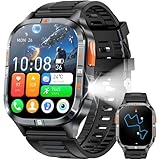
- BUILT-IN GPS & COMPASS– This military smartwatch features high-precision GPS to pinpoint your location while hiking, cycling, or traveling, keeping you safely on track without extra gear. Tap the compass icon and it locks your bearing within three seconds—engineered for pro-level outdoor adventures like camping, climbing, and trekking.
- BLUETOOTH CALLING & MESSAGES – Powered by the latest Bluetooth tech, the men’s smartwatch lets you answer or make calls right from your wrist—no need to pull out your phone. Get real-time alerts for incoming texts and app notifications so you never miss an invite. (Replying to SMS is not supported.)
- BIG SCREEN & DIY VIDEO WATCH FACE – The 2.01" military-spec display is dust-proof, scratch-resistant, and forged from high-strength glass with an aluminum alloy bezel, passing rigorous dust and abrasion tests so the screen stays crystal-clear. Upload a short family video to create a dynamic, one-of-a-kind watch face that keeps your memories alive.
- 24/7 HEALTH MONITORING – Equipped with a high-performance optical sensor, this Android smartwatch tracks heart rate and blood-oxygen levels around the clock. It also auto-detects sleep stages (deep, light, awake) for a complete picture of your health, ensuring you always know how your body is doing.
- MULTI SPORT MODES & FITNESS TRACK – Choose from running, cycling, hiking, basketball, and more to log every workout. Set goals, monitor progress, and sync data to the companion app. Bonus tools include photo gallery, weather, alarm, stopwatch, flashlight, hydration reminder, music/camera remote, find-my-phone, mini-games, and other everyday essentials.
Pulse Ox is still best left to nighttime use unless you specifically need daytime readings, as continuous tracking significantly affects battery life on both models. Garmin’s implementation remains conservative and clinically aligned rather than flashy.
Meditation and relaxation tools feel more integrated on the Venu 3 thanks to interface tweaks, but functionally, the Venu 2 holds its own here.
Women’s Health and Inclusive Tracking
Both watches support Garmin’s women’s health tracking features, including menstrual cycle and pregnancy tracking. Data syncs cleanly with Garmin Connect and integrates with broader wellness metrics.
The Venu 3 expands inclusivity with a dedicated wheelchair mode that adjusts activity tracking and health metrics for wheelchair users. This is absent on the Venu 2 and represents a meaningful step toward broader accessibility.
For users who don’t need these additions, the Venu 2 still delivers a solid and reliable health tracking experience that covers the essentials without feeling outdated.
Health Tracking and Battery Life Trade-Offs
All-day health tracking is only useful if the watch lasts long enough to support it. Both models handle continuous monitoring well, but the Venu 3’s newer hardware and efficiency tweaks make it easier to leave features like sleep tracking, HRV, and skin temperature enabled without constant battery anxiety.
The Venu 2 remains efficient, especially if you’re selective with Pulse Ox usage. However, as Garmin continues to build more advanced health features around newer sensors, the Venu 3 feels better positioned for long-term software relevance.
For buyers focused purely on core health metrics, the Venu 2 still performs admirably. For those who want deeper recovery insight and a more holistic picture of daily wellness, the Venu 3 delivers a clear, experience-driven upgrade.
Fitness, Sports Modes, and Training Insights Compared
Where the previous section focused on passive health monitoring, the differences become more tangible once you start actively training. Both the Venu 2 and Venu 3 sit firmly on the fitness-first side of the smartwatch spectrum, but Garmin has clearly shifted the Venu 3 closer to its performance-oriented DNA.
At a glance, the core activity experience feels familiar across both watches. Under the surface, however, the Venu 3 gains meaningful refinements in coaching depth, data interpretation, and how clearly that data translates into day-to-day training decisions.
Sports Mode Coverage and Activity Profiles
Both watches support a wide range of indoor and outdoor activity profiles, including running, cycling, pool swimming, strength training, yoga, Pilates, HIIT, and various cardio modes. GPS-based activities behave similarly, with comparable satellite lock times and stable distance tracking in open environments.
The Venu 3 expands the activity list with wheelchair-specific sports profiles that align with its broader accessibility push. These modes alter calorie calculations, intensity minutes, and effort metrics in ways the Venu 2 simply cannot replicate.
Beyond that, activity parity is strong. If your workouts stick to mainstream gym sessions, outdoor runs, or recreational cycling, the Venu 2 does not feel limited or incomplete.
Strength Training, HIIT, and On-Watch Workouts
Garmin’s strength training experience remains one of its strongest differentiators versus general-purpose smartwatches, and both models benefit here. Rep counting, exercise detection, and set tracking perform similarly, with occasional miscounts that are easy to correct post-workout.
The Venu 3 improves clarity rather than capability. Workout screens are cleaner, transitions between sets feel faster, and rest timers are easier to manage mid-session, particularly on the larger 45mm Venu 3 case.
HIIT workouts also feel more structured on the Venu 3, with better visual pacing cues and smoother guidance through interval-based sessions. The Venu 2 still supports HIIT, but the experience is slightly more utilitarian and less polished.
Running Metrics and GPS Performance
Neither watch is aimed at serious runners chasing advanced dynamics like ground contact time or running power. Both deliver reliable basics such as pace, distance, cadence, and heart rate without overwhelming the user.
GPS accuracy is effectively a draw. In real-world use, both watches track urban routes, park runs, and open-road efforts with minimal drift, though neither benefits from multi-band GNSS found in Garmin’s higher-end Forerunner and Fenix lines.
The practical difference lies in post-run interpretation. The Venu 3 integrates recovery and readiness insights more clearly into the training narrative, helping casual runners understand not just how far they went, but how that effort fits into their overall load.
Training Load, Recovery, and Readiness Insights
This is where the Venu 3 most clearly separates itself. While the Venu 2 provides basic recovery time estimates, the Venu 3 introduces more contextual guidance that ties workouts, sleep quality, HRV trends, and daily stress into a single readiness picture.
Rather than treating workouts as isolated events, the Venu 3 frames them as part of an ongoing training cycle. Morning summaries, training readiness indicators, and post-workout feedback all push users toward smarter intensity decisions.
The Venu 2 remains functional but simpler. It tells you when you’re recovered, but it does less to explain why or how lifestyle factors influence that status.
Heart Rate Accuracy and Sensor Improvements
Both watches rely on optical heart rate sensors, and for steady-state activities, accuracy is comparable. Gym workouts, walking, and moderate runs produce clean, consistent data on either model.
The Venu 3’s newer sensor handles variability better during interval training and daily movement. Sudden spikes and drops are smoothed more effectively, which improves calorie estimates and stress scoring throughout the day.
For users training by heart rate zones rather than raw pace, this refinement subtly improves confidence in the data without requiring external chest straps.
Coaching, Prompts, and Daily Training Guidance
Neither watch offers full adaptive training plans like Garmin’s dedicated running watches, but both include basic coaching features. The Venu 3 delivers these prompts more naturally, with clearer language and better timing around recovery and effort.
Movement reminders, intensity minutes, and post-workout suggestions feel more proactive on the Venu 3. The watch nudges rather than nags, encouraging consistency without pushing users into overtraining.
On the Venu 2, these insights exist but feel more fragmented. You often need to open Garmin Connect to fully understand what the watch is trying to tell you.
Everyday Fitness Usability and Comfort
Both watches are comfortable enough for all-day wear and training sessions, with lightweight cases and breathable silicone straps that handle sweat well. The Venu 3’s slightly thinner profile and refined case curvature make it marginally more comfortable during longer workouts and sleep tracking.
Button responsiveness during sweaty sessions is solid on both, though the Venu 3’s interface feels more forgiving when navigating mid-workout. Touch inputs register more consistently, especially during fast transitions.
From a durability standpoint, both watches are equally capable for gym use, outdoor training, and pool sessions, with similar water resistance and scratch-resistant glass.
Who Each Watch Suits from a Training Perspective
If your fitness routine revolves around staying active, structured gym sessions, and occasional outdoor workouts, the Venu 2 still delivers a capable and dependable experience. It tracks reliably, presents clean data, and avoids unnecessary complexity.
The Venu 3 is better suited for users who want their watch to act as a training partner rather than a passive recorder. Its ability to connect workouts to recovery, readiness, and lifestyle factors makes it easier to train consistently without burning out.
For fitness-focused buyers deciding between the two, the difference is less about what activities you can track and more about how intelligently the watch helps you interpret and act on that data.
Sleep Tracking, Recovery, and Daily Readiness Features
As the training experience shifts from simply logging workouts to managing long-term consistency, sleep and recovery become the real differentiators between the Venu 2 and Venu 3. This is where Garmin’s newer health platform on the Venu 3 clearly separates itself, offering insights that feel more contextual and actionable rather than purely descriptive.
Rank #4

- 【Built-in GPS & Multi-System Positioning】Stay on track with the Tiwain smartwatch’s built-in GPS. Featuring military-grade single-frequency and six-satellite support (GPS, GLONASS, Beidou, Galileo, NAVIC, QZSS), this watch offers fast and accurate location tracking wherever you go. It also includes a compass, altimeter, and barometer, giving you real-time data on your altitude, air pressure, and position.
- 【Military-Grade Durability】Engineered to withstand the toughest conditions, the Tiwain smartwatch meets military standards for extreme temperatures, low pressure, and dust resistance. Crafted from tough zinc alloy with a vacuum-plated finish, this watch is also waterproof and built to resist wear and tear. The 1.43-inch AMOLED HD touchscreen offers clear visibility in all environments, and the watch supports multiple languages for global users.
- 【170+ Sport Modes & Fitness Tracking】Track your fitness journey with 170+ sport modes, including walking, running, cycling, hiking, basketball, and more. Set exercise goals, monitor progress, and sync your data to the companion app. The smartwatch also offers smart features like music control, camera remote, weather updates, long-sitting reminders, and more.
- 【LED Flashlight for Outdoor Adventures】The Tiwain smartwatch comes equipped with a built-in LED flashlight that can illuminate up to 20 meters. Activate it with the side button for added convenience during nighttime activities or outdoor adventures.
- 【Comprehensive Health Monitoring】Monitor your health with real-time heart rate, sleep, blood pressure, and blood oxygen level tracking. The smartwatch will vibrate to alert you of any abnormal readings. You can also make and receive calls directly from the watch, and stay connected with message and app notifications (receive only, no sending capability) – perfect for when you’re driving or exercising.
Both watches track sleep stages, overnight heart rate, respiration, and blood oxygen, but how that data is interpreted and surfaced to the user is markedly different.
Sleep Tracking Accuracy and Depth
The Venu 2 delivers solid baseline sleep tracking, breaking your night into light, deep, REM, and awake time with a nightly sleep score. For most users, accuracy is dependable, but the analysis stops short of explaining how sleep quality should affect the next day.
The Venu 3 builds on this foundation with Garmin’s newer Sleep Coach features, which go beyond scoring to offer guidance. Instead of just telling you how you slept, it suggests how much sleep you should aim for based on recent activity, stress, and recovery trends.
Nap detection is another meaningful addition on the Venu 3. Short daytime sleeps are automatically recognized and factored into overall recovery, something the Venu 2 simply does not account for.
Recovery Metrics and HRV Integration
One of the biggest real-world differences is heart rate variability tracking. The Venu 3 continuously monitors HRV and integrates it into daily recovery insights, helping you spot trends tied to stress, illness, or accumulated fatigue.
On the Venu 2, HRV data exists primarily as a background metric and is less visible in day-to-day decision-making. You often need to dig into Garmin Connect to extract meaningful patterns, which limits its usefulness for quick check-ins.
The Venu 3’s on-watch HRV status gives immediate context, letting you know whether your body is trending balanced, strained, or under-recovered. For users training several days a week, this becomes one of the most valuable upgrades.
Daily Readiness and Morning Feedback
The Venu 3’s Morning Report ties sleep quality, HRV, recovery status, and planned workouts into a single, readable briefing when you wake up. It feels like a natural extension of the watch’s role as a daily companion rather than a passive data collector.
Body Battery on both watches estimates energy levels using sleep, stress, and activity, but it behaves more intelligently on the Venu 3. Recovery after poor sleep or hard training is reflected faster and with clearer explanations.
On the Venu 2, readiness cues are more fragmented. You still get useful indicators, but they are scattered across widgets and lack the cohesive narrative that helps guide training decisions without opening the app.
Sleep Comfort, Battery Impact, and Daily Wear
Both watches are comfortable enough for overnight wear, with lightweight cases and soft silicone straps that avoid pressure points. The Venu 3’s refined case profile and slightly improved weight distribution make it easier to forget you’re wearing it, especially for side sleepers.
Battery life during sleep tracking is strong on both, but the Venu 3 manages its expanded health monitoring without a noticeable penalty. Even with continuous HRV tracking and nap detection enabled, it remains reliable for several days between charges.
For users who prioritize sleep and recovery data, the Venu 3 feels purpose-built for 24/7 wear. The Venu 2 still works well overnight, but it lacks the depth and immediacy that make recovery insights feel genuinely useful rather than informational.
Smartwatch Features: Calls, Voice Assistant, Notifications, and Apps
After sleep, recovery, and daily readiness, the smartwatch layer is where the Venu 3 most clearly steps away from the Venu 2. This is the point where Garmin stops behaving like a pure fitness watch and starts competing more directly with lifestyle-focused smartwatches.
On-Wrist Calls and Audio Hardware
The single biggest functional gap is calling. The Venu 3 adds a built-in microphone and speaker, allowing you to answer and place Bluetooth calls directly from your wrist when paired to your phone.
In practice, call quality is better than expected for a fitness-first watch. Voices come through clearly in quiet environments, and the microphone handles short replies or quick conversations without forcing you to reach for your phone.
The Venu 2 has no microphone or speaker at all. You can see incoming calls and reject them, but any interaction requires picking up your phone, which immediately dates it next to the Venu 3 for everyday convenience.
Voice Assistant Support
That microphone also enables voice assistant passthrough on the Venu 3. You can trigger Siri, Google Assistant, or Bixby from the watch, with all processing handled by your phone rather than the watch itself.
This works best for simple tasks like setting timers, replying to messages, or checking the weather. It is not a standalone assistant, but it integrates smoothly into daily routines if you already rely on voice commands.
The Venu 2 offers no voice interaction of any kind. If voice control matters to you, this alone can justify the jump to the Venu 3, especially for hands-busy situations like cooking, commuting, or mid-workout adjustments.
Notifications and Message Handling
Notifications are handled similarly on both watches, with clean presentation and reliable vibration alerts. Garmin’s notification system is stable and low-drama, which long-term users often appreciate compared to more aggressive smartwatch platforms.
Android users get the most functionality on both models, including quick replies to messages and basic interaction with certain app notifications. The Venu 3’s microphone does not currently enable voice-to-text replies, so messaging remains button- and touch-based.
iPhone users are more limited due to iOS restrictions. You can read notifications and clear them, but you cannot reply from either watch, keeping the experience consistent but less interactive than on Android.
App Ecosystem and Daily Utilities
Both watches rely on the Connect IQ app store, which prioritizes stability and battery efficiency over app volume. You will find essentials like Spotify, Amazon Music, Deezer, navigation utilities, weather apps, and watch faces, but not the deep third-party ecosystem of Apple or Wear OS.
The Venu 3 feels faster and smoother when navigating widgets and apps, thanks to newer internals and subtle software refinements. Animations are cleaner, and touch response feels more immediate during daily use.
The Venu 2 is still perfectly usable, but side-by-side it feels more utilitarian. Apps load a bit slower, and multitasking between notifications, widgets, and workouts lacks the polish that defines the newer model.
Payments, Music, and Everyday Extras
Garmin Pay works the same on both watches and remains one of Garmin’s most reliable smartwatch features. Setup is straightforward, and payment reliability is excellent once supported banks are configured.
Music storage and offline playback are also identical, with support for Bluetooth headphones and enough onboard storage for workouts without your phone. Battery drain during music playback is comparable, though the Venu 3 manages background tasks slightly more efficiently.
What ultimately separates them is not the checklist of features, but how often you actually use them. The Venu 3 invites more interaction throughout the day, while the Venu 2 stays firmly in the role of a fitness watch that happens to show notifications.
Battery Life and Charging: Real‑World Endurance Differences
Battery life is where Garmin traditionally separates itself from lifestyle-focused smartwatches, and the Venu line is no exception. While both models outperform Apple Watch and Wear OS rivals by a wide margin, the Venu 3 quietly extends that advantage in daily use rather than rewriting the rulebook.
Rated Battery Life vs What You Actually Get
On paper, the Venu 3 stretches to around 14 days in smartwatch mode for the 45 mm case, compared to roughly 11 days on the Venu 2. In practice, that translates to about two extra days for most users running continuous heart rate, sleep tracking, notifications, and regular screen wake-ups.
If you enable the always-on AMOLED display, the gap becomes more noticeable. The Venu 3 typically lasts around five days with always-on enabled, while the Venu 2 lands closer to three days under the same conditions, making the newer watch far more viable if you prefer a traditional watch-like display.
GPS and Workout Battery Performance
During GPS activities, the Venu 3 also edges ahead. Expect around 24 to 26 hours of GPS-only tracking on the Venu 3 versus roughly 20 to 22 hours on the Venu 2, assuming similar sensor usage and no music playback.
In mixed training weeks with daily workouts, the difference adds up gradually rather than dramatically. The Venu 3 drains more consistently and predictably, while the Venu 2 tends to lose larger chunks of battery after longer GPS sessions or multi-activity days.
Music, Calls, and Smart Features Impact
Music playback affects both watches similarly, with offline Spotify or Amazon Music sessions noticeably accelerating battery drain. A one-hour GPS workout with music typically consumes around 10 to 15 percent on either model, though the Venu 3 recovers faster thanks to better idle efficiency.
💰 Best Value

- Smart Watch with GPS and Offline Map: This smart watch connects to multiple satellite systems for accurate real-time positioning, and includes a professional-grade compass, altimeter, and barometer for precise data, ensuring you maintain your sense of direction in any outdoor environment. The map version supports downloading offline maps; select a route or destination to view the route even without a signal, eliminating the risk of getting lost.
- Bluetooth Call & Message Functionality: This smart watches for men allows you to make and receive calls; receive text and social media notifications (Facebook, WhatsApp, Instagram, Twitter, etc.); and reply to text messages with voice-to-text or set up quick replies (text reply functionality is available for Android phones).
- Sports & Health Monitoring: This 5ATM waterproof fitness watch supports over 100 sports modes and tracks daily activity data, calories, distance, steps, and heart rate. You can use it to monitor your health metrics (blood oxygen, heart rate, stress, and sleep), monitor your fatigue and mood, and perform PAI analysis. You can also use this smartwatch to set water intake and sedentary reminders. Stay active and healthy with this fitness tracker watch.
- Customizable Watch Faces & AI Functionality: This smart watch features a 1.46-inch HD touchscreen and over 100 downloadable and customizable watch faces. You can even use your favorite photos as your watch face. Equipped with AI technology, it supports voice descriptions in multiple languages to generate personalized AI watch faces. The watch's AI Q&A and AI translation features provide instant answers to questions and break down language barriers, making it an ideal companion for everyday life and travel.
- Large Battery & High Compatibility & More Features: This smart watch for android phones and ios phone features a large 550ml battery for extended battery life. It's compatible with iOS 9.0 and above and Android 5.0 and above. It offers a wealth of features, including an AI voice assistant, weather display, music control, camera control, calculator, phone finder, alarm, timer, stopwatch, and more. (Package Includes: Smartwatch (with leather strap), spare silicone strap, charging cable, and user manual)
The Venu 3’s built-in microphone and speaker introduce a new variable. Taking calls on the wrist does consume extra power, but unless you rely on it heavily, the impact is modest and far less severe than full music streaming or long GPS activities.
Sleep Tracking and Overnight Drain
Overnight battery drain is one of the Venu 3’s strongest improvements. With advanced sleep tracking, HRV status, blood oxygen sampling, and skin temperature variation enabled, the Venu 3 typically loses only 3 to 5 percent per night.
The Venu 2 often drops closer to 6 to 8 percent under similar conditions, which shortens the usable gap between charges if you wear the watch 24/7. For users who prioritize sleep insights and never take the watch off overnight, this alone can change charging habits.
Charging Speed and Daily Convenience
Both watches use Garmin’s proprietary clip-style charging cable, and neither supports wireless charging. That said, the Venu 3 charges noticeably faster from low battery to usable levels, making short top-ups more practical before workouts or bedtime.
A quick 15-minute charge on the Venu 3 can comfortably cover a full day of smartwatch use, while the Venu 2 benefits less from brief charging windows. Over weeks of ownership, this makes the Venu 3 feel more forgiving if you forget to charge on a schedule.
Battery Longevity and Long-Term Ownership
Long-term battery health also favors the Venu 3 due to its more efficient chipset and refined power management. After months of daily wear, it holds its charge stability better, particularly for users who keep brightness high and notifications frequent.
The Venu 2 still delivers excellent endurance by smartwatch standards, but it demands more routine charging discipline. The Venu 3, by contrast, feels closer to Garmin’s higher-end fitness watches in how rarely it asks for a cable.
Software Longevity, Sensors, and Future‑Proofing
Battery endurance sets the day‑to‑day rhythm, but long‑term satisfaction with a Garmin watch is shaped just as much by how its software evolves and how capable its sensors remain over time. This is where the generational gap between the Venu 3 and Venu 2 becomes most apparent.
Update Horizon and Feature Backporting
Garmin typically supports its lifestyle watches for several years, but not all features are treated equally across generations. The Venu 3 launched on a newer software branch that aligns more closely with Garmin’s current health‑first roadmap, which means it receives new wellness features sooner and more consistently.
The Venu 2 still receives stability updates and minor refinements, but it is now largely in maintenance mode. Core fitness tracking remains excellent, yet newer health metrics and interface changes increasingly skip the Venu 2 due to hardware and processing limits rather than artificial segmentation.
User Interface and Day‑to‑Day Software Experience
Both watches run Garmin’s familiar AMOLED‑optimized interface, but the Venu 3 feels smoother in daily use. Menu navigation, widget scrolling, and post‑activity review screens load faster, especially when multiple background health metrics are active.
This responsiveness matters more over time than it does in short demos. As Garmin Connect continues to surface deeper health insights, the Venu 3 handles that growing data load with less friction, while the Venu 2 occasionally shows its age when syncing or digging into historical trends.
Heart Rate Sensor Generations and Accuracy
The Venu 2 uses Garmin’s Elevate Gen 4 optical heart rate sensor, which remains accurate for steady‑state cardio, daily tracking, and sleep. It performs well for most users, particularly runners and gym‑goers who train at consistent intensities.
The Venu 3 upgrades to the Elevate Gen 5 sensor, and the difference shows most clearly during rapid intensity changes and overnight tracking. Heart rate during intervals stabilizes faster, HRV readings are cleaner, and sleep data feels more reliable night after night, especially for lighter sleepers.
ECG, Skin Temperature, and Advanced Health Metrics
One of the Venu 3’s most meaningful sensor upgrades is ECG support via the Garmin ECG app, where regionally available and approved. This uses the Gen 5 sensor hardware and adds a layer of cardiovascular insight that the Venu 2 cannot replicate through software updates.
The Venu 3 also expands overnight skin temperature variation tracking, using it more directly in sleep insights and recovery context. While neither watch replaces medical devices, the Venu 3 clearly pushes further into proactive health monitoring, whereas the Venu 2 stays focused on baseline wellness.
Sleep Coaching, HRV, and Recovery Intelligence
Both watches track HRV, sleep stages, and body battery, but the Venu 3 interprets that data more holistically. Sleep coaching, nap detection, and improved overnight summaries make the data easier to act on without opening Garmin Connect every morning.
On the Venu 2, the data is still there, but it feels more static. You get the numbers and charts, yet fewer contextual nudges about how sleep, stress, and training readiness interact across the week.
Smartwatch Features and Platform Longevity
The Venu 3’s built‑in microphone and speaker unlock on‑wrist calls and voice assistant passthrough, which is as much a future‑proofing play as it is a convenience feature. As Garmin continues blending fitness and lifestyle functionality, this hardware opens doors the Venu 2 simply does not have.
Connect IQ app support remains strong on both watches, but newer third‑party apps increasingly assume faster processors and newer APIs. Over time, the Venu 3 is more likely to remain fully compatible with upcoming watch faces, widgets, and system‑level enhancements.
Hardware Headroom and Long‑Term Value
Future‑proofing is ultimately about margins. The Venu 3 has more processing headroom, newer sensors, and a software foundation designed to carry it forward for several more update cycles.
The Venu 2 still offers excellent value today, especially at discounted prices, but its ceiling is now well defined. Buyers who plan to keep their watch for four or five years, and who care about evolving health insights rather than static tracking, will feel the difference sooner than they might expect.
Price, Value in 2026, and Which Garmin Venu You Should Buy or Upgrade To
By this point, the technical differences between the Venu 3 and Venu 2 are clear. The final question is whether those differences justify the price gap in 2026, and which watch actually makes sense for how you train, recover, and live with a smartwatch day to day.
Current Pricing and Market Position in 2026
In 2026, the Garmin Venu 3 still sits firmly in Garmin’s upper‑midrange lifestyle category, typically selling close to its original retail price depending on size and finish. You are paying for newer sensors, a microphone and speaker, longer battery life, and a software platform that Garmin is actively building on.
The Venu 2, by contrast, has settled into a value sweet spot. It is widely available at meaningful discounts, often hundreds less than the Venu 3, and that price gap is now large enough to influence buying decisions more than it did at launch.
What You’re Really Paying For With the Venu 3
The Venu 3’s value is not about headline specs so much as daily usability over the next several years. The newer Elevate sensor, improved sleep and HRV interpretation, nap detection, and sleep coaching create a noticeably more guided health experience.
Add in the microphone and speaker for calls and voice assistant passthrough, and the Venu 3 starts to feel like Garmin’s most complete lifestyle watch outside the Epix and Fenix families. It is the Venu that feels designed to age gracefully as Garmin’s software becomes more conversational, contextual, and recovery‑focused.
Why the Venu 2 Still Makes Sense for the Right Buyer
The Venu 2 remains a very capable fitness watch in 2026, especially if your priorities are activity tracking, structured workouts, GPS accuracy, and a clean AMOLED display. Core health metrics like heart rate, sleep stages, Body Battery, and stress tracking are all still strong and reliable.
What you give up is interpretation and headroom. The data is there, but it asks more of you to make sense of it, and you should not expect major new features to land going forward. As a discounted purchase for someone upgrading from a basic smartwatch or fitness band, it still delivers excellent return on investment.
Which Garmin Venu Should You Buy New in 2026?
If you are buying new and plan to keep the watch for several years, the Venu 3 is the safer long‑term choice. Its health insights feel more modern, its smartwatch features are more complete, and its battery life holds up better as features accumulate.
The Venu 2 only makes sense as a new purchase if the price difference is substantial and your expectations are realistic. If you want Garmin’s fitness DNA with a bright AMOLED screen and do not care about calls, voice features, or evolving sleep analytics, the Venu 2 can still be a smart buy.
Should You Upgrade From the Venu 2 to the Venu 3?
For existing Venu 2 owners, the upgrade decision hinges on how much you value recovery intelligence and smartwatch convenience. If sleep quality, HRV trends, and day‑to‑day energy management matter to your training or overall health, the Venu 3 feels like a genuine step forward rather than a cosmetic refresh.
If your Venu 2 still meets your needs and you mostly glance at metrics rather than acting on them, there is no urgency to upgrade. The Venu 2 remains stable, reliable, and comfortable to wear, even if it no longer sits at the cutting edge of Garmin’s ecosystem.
Final Verdict: Value Is About Longevity, Not Just Price
In isolation, the Venu 2 looks like the better bargain. In context, the Venu 3 offers better value for anyone thinking beyond the next year or two.
The Venu 3 is the watch Garmin is clearly investing in, refining, and building around. The Venu 2 is a strong snapshot of where Garmin’s AMOLED fitness watches were, not where they are going. Choose accordingly, and you will end up with a watch that feels right not just today, but years into your training and daily life.