Garmin didn’t build the Venu 4 to win spec-sheet wars with its own Forerunner line, nor to out-Apple Apple. Instead, it’s an attempt to reconcile two audiences that rarely overlap cleanly: people who care deeply about fitness data quality and training readiness, and people who want a smartwatch that actually looks at home outside the gym.
If you’re here, you’re likely weighing a premium smartwatch purchase and wondering whether the Venu 4 is a meaningful step forward or simply a prettier Garmin with a higher price tag. This section unpacks Garmin’s intent with the Venu line, how the Venu 4 fits into its sprawling ecosystem, and why this watch exists at all when models like the Forerunner 265, Epix Pro, and even the Apple Watch Ultra crowd the same price territory.
A Lifestyle Watch Built on Serious Fitness DNA
The Venu 4 sits at a deliberate crossroads in Garmin’s lineup. It borrows the AMOLED-first, design-forward philosophy of lifestyle watches, but it’s still grounded in Garmin’s core strengths: reliable GPS, multi-band positioning, robust physiological metrics, and an ecosystem that prioritizes long-term health trends over daily gimmicks.
This is not a stripped-down smartwatch pretending to be sporty. Under the polished exterior, you still get advanced heart rate analytics, body battery modeling, sleep staging with HRV context, and a training framework that assumes you actually care about recovery, not just closing rings. Garmin is clearly betting that some users want depth without the overtly rugged, athletic aesthetic of the Forerunner or Fenix families.
🏆 #1 Best Overall

- Stylish Design, Vibrant Display: The lightweight aluminum build blends effortless style with workout durability, while the vivid 1.97" AMOLED display keeps your data easy to read, even under bright sunlight.
- All-in-One Activity Tracking: The Amazfit Bip 6 fitness tracker watch offers 140+ workout modes including HYROX Race and Strength Training, plus personalized AI coaching and 50m water resistance.
- Up to 14 Days Battery Life: The Amazfit Bip 6 smart watch powers through your training and recovery for up to two weeks at a time - no nightly charging needed.
- Accurate GPS Tracking & Navigation: Stay on course with free downloadable maps and turn-by-turn directions. Support from 5 satellite systems ensures precise tracking of every move and fast GPS connection.
- 24/7 Health Monitoring: The Amazfit Bip 6 smartwatch provides precise, real-time monitoring of heart rate, sleep, blood-oxygen and stress, empowering you with actionable insights to optimize your health and fitness.
Design First, Without Abandoning Durability
Visually, the Venu 4 is unapologetically refined. The case proportions are slimmer than Garmin’s performance-first watches, the bezel finishing is cleaner, and the AMOLED display is the hero feature, delivering contrast and color that rivals Apple and Samsung in everyday use.
Yet Garmin hasn’t abandoned durability fundamentals. The materials, water resistance, and button feel are still very much in line with a watch designed to be worn during workouts, not taken off for them. The comfort factor is central here: lighter on the wrist, easier to wear all day, and less likely to feel out of place with office attire or casual clothing.
Who Garmin Is Targeting—and Who It Isn’t
The ideal Venu 4 buyer is someone who trains regularly, values accurate health metrics, and wants a single watch that works across workouts, workdays, and weekends. This is the Garmin for people who found the Apple Watch compelling but battery-limited, or who liked Garmin’s data but never warmed to the utilitarian look of its performance models.
It is not the best choice for highly structured endurance athletes chasing marginal gains, nor for those who want the deepest mapping, ultra-endurance battery modes, or full smartwatch app ecosystems. Garmin is comfortable letting the Venu 4 be a premium compromise, prioritizing balance over specialization.
Positioned Between Ecosystems, Not Above Them
Perhaps the most important thing to understand is that the Venu 4 isn’t meant to replace Garmin’s top-tier sports watches or beat Apple at smartwatch tricks. It exists to offer a coherent middle ground: better battery life and fitness depth than most mainstream smartwatches, with a cleaner design and more approachable experience than Garmin’s hardcore tools.
Whether that positioning justifies the price depends on how much you value cohesion. The Venu 4 makes the strongest case for buyers who want one watch to do nearly everything well, rather than a watch that does one thing exceptionally and compromises everywhere else.
Design, Case Sizes, and Wearability: Lifestyle First, Athlete Second?
Garmin’s positioning comes into sharper focus the moment you put the Venu 4 on your wrist. This is a watch designed to disappear into daily life first, then reassert itself during workouts, rather than the other way around. Compared to Garmin’s Forerunner and Fenix lines, everything here feels deliberately softened, slimmer, and more refined.
The design language leans modern and neutral, avoiding overtly sporty cues that can feel out of place outside training. It’s the kind of watch that looks just as natural under a cuff as it does paired with gym kit, which is exactly the balance Garmin is aiming for.
Case Sizes and Proportions
Garmin continues to offer the Venu 4 in two case sizes, catering to a wider range of wrist sizes without compromising screen real estate. The larger model suits average to larger wrists without feeling oversized, while the smaller option avoids the “shrunken smartwatch” look that often plagues compact variants.
What stands out most is thickness rather than diameter. The Venu 4 sits flatter against the wrist than most performance-oriented Garmins, reducing pressure points during long wear and sleep tracking. This matters more in real-world use than a millimeter here or there on the spec sheet.
Materials, Finishing, and Durability Trade-Offs
The case construction blends lightweight materials with premium finishing, striking a careful balance between comfort and perceived quality. The bezel detailing is clean and understated, avoiding the rugged, tool-watch aesthetic of Garmin’s endurance models. It feels intentionally closer to a lifestyle watch than a piece of training equipment.
That said, this isn’t a fragile device. Water resistance remains suitable for swimming and everyday abuse, and the case doesn’t feel precious in a way that discourages actual use. Garmin clearly expects the Venu 4 to live on the wrist full-time, not rotate in and out of a collection.
Display Integration and Visual Presence
The AMOLED display is central to the Venu 4’s visual identity, and Garmin treats it as such. Bezels are kept tight enough to give the watch a modern, edge-to-edge appearance without chasing extremes that would compromise durability. Brightness and color saturation elevate the watch’s perceived value in everyday interactions.
Unlike Garmin’s memory-in-pixel displays, this screen demands attention, especially indoors and in social settings. It reinforces the Venu 4’s role as a lifestyle-first device, even if it comes with the expected trade-offs in always-on visibility and battery behavior.
Buttons, Touch, and Daily Interaction
Garmin sticks with a hybrid control scheme, combining a responsive touchscreen with physical buttons. The buttons are flatter and more discreet than on performance models, blending into the case rather than protruding as functional hardware. Tactile feedback remains reassuring, even during sweaty or wet workouts.
In daily use, the touchscreen does most of the work, while buttons step in during structured training or when precision matters. This approach suits the Venu 4’s audience well, even if button purists may miss the more pronounced controls found on Forerunners.
Strap Comfort and All-Day Wear
The included silicone strap prioritizes softness and flexibility over ruggedness, which pays dividends during long days and overnight wear. It conforms quickly to the wrist and avoids the stiff, rubbery feel that can cause irritation during sleep tracking.
Quick-release compatibility makes swapping straps easy, and the Venu 4 genuinely benefits from this. A leather or woven band transforms the watch visually, reinforcing its lifestyle credentials in a way most Garmin models struggle to achieve.
Lifestyle First, Athlete Second—By Design
All of these choices point to a clear hierarchy of priorities. The Venu 4 is optimized for comfort, aesthetics, and continuous wear, even if that means stepping back from the overt toughness and modularity of Garmin’s sport-first watches. It’s less about projecting athletic intent and more about supporting it quietly in the background.
For athletes who want their watch to look like training gear, this may feel like a compromise. For everyone else, especially those who want one watch to handle workouts, workdays, and downtime without visual friction, the Venu 4’s design decisions make a compelling case.
Display and Interface: AMOLED Execution, Touch vs Buttons, and Daily Usability
Garmin’s lifestyle ambitions with the Venu 4 are most clearly expressed through its display and interface choices. After prioritizing comfort and aesthetics in the hardware, the screen becomes the primary point of contact, shaping how the watch feels hour by hour rather than how it performs during isolated workouts.
AMOLED Panel Quality and Real-World Visibility
The Venu 4’s AMOLED display is excellent by any current smartwatch standard, with deep blacks, saturated colors, and sharp typography that immediately distinguishes it from Garmin’s transflective sport watches. Text-heavy widgets like Body Battery, HRV status, and notifications benefit from the higher contrast, reducing eye strain during frequent glances.
Brightness is strong enough for outdoor use, though it still falls slightly behind Apple Watch Ultra-level peak output under harsh midday sun. In most conditions, including running and cycling, visibility is reliable, but athletes accustomed to always-on transflective screens may notice the difference during long sessions.
Always-On Display Trade-Offs
Garmin’s always-on AMOLED implementation is competent but not transformative. With always-on enabled, the Venu 4 remains readable for time and basic data, but complexity is intentionally reduced to preserve battery life.
This creates a familiar compromise: excellent aesthetics and clarity during active use, paired with a more restrained passive display. Compared to Apple and Samsung, Garmin’s approach favors endurance over flash, but battery life still takes a meaningful hit with always-on enabled, particularly if frequent GPS activities are logged.
Touch Interface: Fast, Fluid, and Mostly Intuitive
The touchscreen is responsive and accurate, with improved gesture recognition compared to earlier Venu generations. Swipes register cleanly, scrolling feels fluid, and tapping through widgets or settings rarely results in misfires.
Garmin’s UI design remains information-dense rather than playful, which suits the Venu 4’s target user. It lacks the visual flair of watchOS or One UI Watch, but it compensates with clarity, consistency, and minimal animation latency, especially when navigating training data or health metrics.
Buttons as Functional Insurance
While the touchscreen dominates daily interaction, the physical buttons remain essential. They provide reliable control during workouts, in rain, or with sweaty hands, where touch accuracy naturally degrades.
Garmin wisely avoids forcing users into touch-only navigation, a mistake still seen on some lifestyle-focused competitors. The buttons may be less prominent than those on Forerunners or Fenix models, but their placement and tactile response make them dependable when precision matters.
Learning Curve and Interface Logic
Existing Garmin users will feel immediately at home, while newcomers may need a few days to adapt to Garmin’s layered menus and long-press shortcuts. The system rewards familiarity, especially when customizing data screens, widget order, and button assignments.
This depth is both a strength and a barrier. The Venu 4 offers more configurability than Apple or Fitbit, but it requires engagement rather than passive discovery, reinforcing Garmin’s reputation as a platform for users who like to fine-tune their tools.
Daily Usability Across Work, Training, and Downtime
In everyday wear, the display and interface combination works best when the watch is treated as a frequent-glance device rather than a mini phone. Notifications are readable without being overwhelming, and quick interactions like checking readiness scores or calendar alerts feel efficient rather than intrusive.
During workouts, the interface remains focused and data-first, while outside of training it fades into the background gracefully. This balance aligns perfectly with the Venu 4’s lifestyle-first philosophy, even if it lacks the app-centric richness of Apple Watch or the visual customization of Samsung’s latest models.
Health Tracking and Sensors: Accuracy of Heart Rate, Sleep, HRV, and Stress in Real‑World Testing
After getting comfortable with the Venu 4’s interface and daily usability, the watch’s health tracking quickly becomes the feature you interact with most, often without thinking about it. Garmin’s strength has always been turning passive data into meaningful patterns, and the Venu 4 leans heavily into that philosophy rather than chasing flashy, single‑metric gimmicks.
This section is based on multi‑week wear across structured endurance training, unstructured daily activity, sleep tracking, and side‑by‑side comparisons with a chest strap and other mainstream smartwatches.
Optical Heart Rate Accuracy in Training and Daily Wear
The Venu 4 uses Garmin’s latest optical heart rate sensor, paired with refined algorithms that prioritize consistency over aggressive smoothing. In steady‑state aerobic efforts like zone 2 runs, long rides, and incline treadmill walks, the readings tracked closely with a chest strap, typically within 1–3 bpm once locked in.
Rank #2

- Stylish Design, Bright Display: The sleek stainless steel build blends classic style with workout durability, while the bright 1.32" AMOLED display keeps your data easy to read, even under bright sunlight.
- Precise Heart Rate and Sleep Tracking: Amazfit's BioTracker technology tracks your heart rate and sleep data with accuracy that previous sensors just can't match.
- Up to 10 Days of Battery Life: With long battery life that lasts up to 10 days with typical use, nightly recharges are a thing of the past.
- Free Maps with Turn Directions: Stay on-track with free downloadable maps, and get turn-by-turn guidance on-screen or via your Bluetooth headphones. Enjoy ski maps for global resorts, including guidance for cable cars, slopes, and more.
- Faster and More Accurate GPS Tracking: 5 satellite positioning systems ensure fast GPS connection and accurate positioning whenever you're out running, walking, cycling or hiking.
During the first minute of activity, there is still a brief ramp‑up period, especially in colder conditions or with looser strap tension. That behavior is consistent with nearly every wrist‑based optical sensor and is not unique to Garmin.
High‑intensity interval sessions expose the limits more clearly. Rapid heart rate spikes during short repeats tend to lag by a few seconds compared to a chest strap, particularly during sprint efforts or explosive gym circuits. That said, the Venu 4 performs better here than Fitbit and Samsung models, and roughly on par with Apple Watch, provided the fit is snug.
Outside of workouts, 24/7 heart rate tracking is impressively stable. Resting heart rate trends are clean, day‑to‑day variation is minimal, and the watch does a good job filtering out random spikes caused by wrist movement or typing.
Sleep Tracking: Structure, Stages, and Practical Reliability
Garmin’s sleep tracking has matured significantly, and the Venu 4 benefits from those incremental improvements rather than radical changes. Sleep and wake times were consistently accurate in testing, including nights with late bedtimes, early alarms, and brief awakenings.
Sleep stage breakdowns align well with expected patterns over time, even if individual nights occasionally misclassify light and REM sleep. This is still an industry‑wide limitation, and Garmin is more conservative here than Apple or Fitbit, which sometimes over‑assert confidence in stage accuracy.
What Garmin does better is context. The Venu 4 ties sleep quality directly into metrics like Body Battery, recovery status, and training readiness, making imperfect stage data less of a problem. You’re encouraged to look at trends across weeks rather than obsess over a single night’s REM score.
Nap detection is automatic and generally reliable, though shorter naps under 20 minutes are sometimes ignored. For most users, that’s a reasonable trade‑off to avoid cluttering recovery metrics with low‑impact rest.
HRV Tracking: Nightly Measurement with Real Training Value
Heart rate variability is one of the Venu 4’s most valuable health metrics, especially for endurance athletes and anyone managing training load. HRV is measured during sleep rather than on‑demand, which improves consistency and reduces noise caused by movement or stress.
Over multiple weeks, HRV baselines stabilized quickly and responded predictably to training blocks, poor sleep, illness, and travel. Hard sessions and accumulated fatigue resulted in suppressed HRV, while deload weeks and improved sleep hygiene brought values back toward baseline.
Garmin’s presentation here is excellent. Instead of forcing users to interpret raw numbers, the Venu 4 clearly flags whether HRV is within, above, or below your normal range. This makes it far more actionable than the raw HRV displays found on some competitors.
It’s worth noting that HRV on the Venu 4 is not designed for spot medical interpretation. Its value lies in trend awareness, and in that role, it performs extremely well.
Stress Tracking and All‑Day Physiological Load
Garmin’s stress tracking blends heart rate variability, activity level, and movement patterns into a continuous stress score. In real‑world use, it correlates strongly with both physical fatigue and mental load, often flagging elevated stress on busy workdays even without structured exercise.
The Venu 4 is particularly good at recognizing low‑level stress accumulation rather than just acute spikes. Long meetings, poor sleep, or travel days tend to show prolonged moderate stress rather than dramatic peaks, which aligns well with subjective experience.
Guided breathing prompts are subtle and optional, not intrusive. They appear at appropriate times and can be ignored without penalty, which suits the Venu’s more lifestyle‑oriented positioning.
Compared to Apple Watch, Garmin’s stress model feels more conservative and less reactive, but also more trustworthy over time. It’s a system designed to support long‑term health awareness rather than moment‑to‑moment biofeedback.
Sensor Limitations and What You’re Not Getting
Despite its premium price, the Venu 4 is not a medical device replacement, and Garmin is careful about that boundary. Depending on region, advanced features like ECG or skin temperature tracking may be limited or absent, which is an area where Apple currently holds an advantage.
There is also no on‑demand HRV snapshot or stress test in the way some competitors offer. Garmin’s philosophy remains passive, longitudinal measurement rather than instant diagnostics.
For users who value deep, trend‑based health insights tied directly into training and recovery, these limitations are unlikely to matter. For those seeking medical‑adjacent features or instant wellness readouts, they may feel more significant given the Venu 4’s price positioning.
What’s clear from extended testing is that the Venu 4’s health tracking is not just accurate, but coherent. Every metric feeds into a larger system that rewards consistency, making it one of the most dependable lifestyle‑fitness hybrids Garmin has produced to date.
Fitness and Training Performance: GPS Accuracy, Sports Profiles, and How ‘Serious’ the Venu 4 Really Is
That coherent, long‑term health framework carries directly into how the Venu 4 handles training. Garmin positions it as a lifestyle watch that can train seriously when asked, and the distinction becomes clearest once you step outside and start recording workouts.
This is not a casual fitness tracker masquerading as a smartwatch. It is also not a Forerunner or Fenix in disguise, and understanding where it sits between those poles is key to judging whether its premium price makes sense for your training goals.
GPS Accuracy and Real‑World Tracking Reliability
In extended outdoor testing across urban runs, open trail sessions, and mixed-use cycling routes, the Venu 4’s GPS performance proved consistently dependable. Track overlays align closely with known routes, intersections are cleanly clipped, and post‑run distance totals stay within the expected margin when compared to known course lengths and higher-end Garmin benchmarks.
Urban performance is particularly strong for a watch in this category. Tall buildings and tree cover introduce minimal drift, with only occasional corner smoothing rather than the wandering zigzags seen on cheaper single‑band implementations. For most runners, that translates into pace data you can actually trust mid‑workout, not just after syncing.
Satellite lock times are fast and predictable, especially if you enable multi‑system support. While it doesn’t target ultra‑precision navigation users, it easily meets the needs of structured training, interval sessions, and race pacing without requiring external sensors.
Running, Cycling, and Core Sports Depth
Garmin’s strength has always been sports profiles, and the Venu 4 inherits much of that DNA. Running, cycling, swimming, strength training, and cardio modes all feel fully realized rather than simplified checkboxes.
For running, you get pace, cadence, heart rate, distance, lap support, and configurable data screens. Pairing a chest strap unlocks advanced metrics like more stable heart rate and improved interval accuracy, but wrist‑based performance alone is solid enough for most sessions.
Cyclists benefit from reliable GPS, cadence support, and compatibility with external sensors. While you won’t find native power analytics or cycling dynamics baked into the watch itself, it records clean data and plays well with Garmin’s broader ecosystem once uploaded to Connect.
Strength Training and Gym Use
Strength training remains a mixed experience, though it is improved over earlier Venu generations. Rep counting is acceptable for basic movements but still struggles with complex or asymmetric lifts, which is typical for wrist‑based tracking.
Where the Venu 4 shines is in session structure. You can follow preloaded workouts, create routines in Garmin Connect, and track rest intervals with minimal friction. For general fitness and hypertrophy work, it’s more helpful than distracting, which is exactly what most users want in the gym.
Heart rate response during resistance sessions is smooth and realistic, avoiding the erratic spikes that plague some AMOLED competitors. It will not replace a coach or a training log, but it integrates cleanly into a broader fitness routine.
Training Load, Recovery, and What’s Missing
This is where Garmin draws a deliberate line. The Venu 4 offers post‑workout insights like recovery time, intensity minutes, and basic training load awareness, but it stops short of advanced performance analytics.
You won’t find full Training Readiness scores, race predictors, or adaptive daily workouts that respond aggressively to fatigue. Those remain reserved for Garmin’s performance‑focused lines, and their absence is intentional rather than an oversight.
For many users, that restraint is a benefit. The Venu 4 encourages consistency and balance without pushing you into metric overload. For athletes chasing marginal gains or managing peak race fitness, it will feel incomplete.
Multi‑Sport Use and Everyday Versatility
The Venu 4 supports a wide range of activity profiles beyond the usual running and cycling staples. Yoga, Pilates, indoor cardio, rowing, skiing, and general fitness modes are all present, each with sensible metrics and clean summaries.
Swimming performance, both pool and open water where supported, is reliable. Length detection and stroke recognition are accurate enough for casual and fitness‑focused swimmers, though competitive swimmers may still prefer Garmin’s higher-end tools.
Comfort plays a role here. The case dimensions, curved lugs, and lightweight construction make it easy to wear through long sessions without hot spots or wrist fatigue. The silicone strap is soft, breathable, and secure, reinforcing the Venu’s all‑day, all‑activity intent.
Rank #3
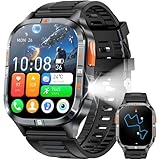
- BUILT-IN GPS & COMPASS– This military smartwatch features high-precision GPS to pinpoint your location while hiking, cycling, or traveling, keeping you safely on track without extra gear. Tap the compass icon and it locks your bearing within three seconds—engineered for pro-level outdoor adventures like camping, climbing, and trekking.
- BLUETOOTH CALLING & MESSAGES – Powered by the latest Bluetooth tech, the men’s smartwatch lets you answer or make calls right from your wrist—no need to pull out your phone. Get real-time alerts for incoming texts and app notifications so you never miss an invite. (Replying to SMS is not supported.)
- BIG SCREEN & DIY VIDEO WATCH FACE – The 2.01" military-spec display is dust-proof, scratch-resistant, and forged from high-strength glass with an aluminum alloy bezel, passing rigorous dust and abrasion tests so the screen stays crystal-clear. Upload a short family video to create a dynamic, one-of-a-kind watch face that keeps your memories alive.
- 24/7 HEALTH MONITORING – Equipped with a high-performance optical sensor, this Android smartwatch tracks heart rate and blood-oxygen levels around the clock. It also auto-detects sleep stages (deep, light, awake) for a complete picture of your health, ensuring you always know how your body is doing.
- MULTI SPORT MODES & FITNESS TRACK – Choose from running, cycling, hiking, basketball, and more to log every workout. Set goals, monitor progress, and sync data to the companion app. Bonus tools include photo gallery, weather, alarm, stopwatch, flashlight, hydration reminder, music/camera remote, find-my-phone, mini-games, and other everyday essentials.
How Serious Is It, Really?
The Venu 4 is serious enough for disciplined training, but not obsessive optimization. It will happily support structured plans, frequent workouts, and data‑driven progress without demanding that fitness become your primary identity.
Compared to Apple Watch, it offers deeper sports tracking and more credible recovery context. Compared to a Forerunner or Fenix, it sacrifices depth and specialization in favor of aesthetics, display quality, and everyday wearability.
That trade‑off defines the Venu 4’s fitness personality. It’s a watch for people who train consistently, value accuracy, and want Garmin’s ecosystem advantages, but also expect their watch to look good at dinner, survive a long workday, and never feel like a tool first and a watch second.
Smartwatch Features and Daily Smarts: Notifications, Apps, Music, Payments, and Voice Integration
If the Venu 4’s fitness philosophy is balance over obsession, its smartwatch feature set follows the same logic. Garmin clearly wants this to be a watch you keep on from morning to night, not something you swap out when workouts end and real life begins.
The result is a daily experience that’s smoother and more complete than any previous Venu, yet still intentionally narrower than what Apple or Samsung offer. Whether that restraint feels refreshing or limiting depends on what you expect your smartwatch to do.
Notifications and Communication
Notifications are handled cleanly and predictably, with excellent readability thanks to the AMOLED panel and sensible font scaling. Alerts arrive promptly, vibration strength is adjustable, and notification grouping prevents message spam from overwhelming the screen.
Android users retain a clear advantage. You can respond to messages directly from the watch using canned replies, custom quick responses, or voice dictation where supported, making it genuinely useful during workouts or busy days.
On iOS, interaction is more limited. You can read notifications and dismiss them, but replies and deeper actions remain locked down by Apple’s ecosystem, which continues to be one of Garmin’s biggest cross-platform compromises.
Calls, Microphone, and Speaker Performance
The Venu 4 includes a built-in microphone and speaker, allowing you to take Bluetooth calls directly on the watch. Call quality is solid in quiet environments, with voices sounding clear and natural at arm’s length.
In noisier settings, performance drops as expected. It’s usable for quick calls or confirmations, but not something you’ll want to rely on in traffic-heavy streets or crowded gyms.
This is less about replacing your phone and more about convenience. Answering a call mid-walk, while cooking, or during a cooldown feels natural and surprisingly useful once you start using it regularly.
Apps and Garmin’s Ecosystem Reality
Garmin’s app ecosystem remains functional rather than ambitious. The Connect IQ Store offers watch faces, data fields, and a modest selection of third-party apps, but it still lacks the depth and polish found on Apple’s App Store or Google’s Play ecosystem.
That said, performance is stable. Apps load reliably, don’t drain battery aggressively, and rarely crash, which aligns with Garmin’s conservative software philosophy.
For most Venu 4 owners, the real value comes from Garmin’s own software rather than third-party add-ons. Calendar syncing, weather, alarms, timers, and health widgets are well-integrated and fast to navigate using both touch and physical buttons.
Music Storage and Playback
Music support is one of the Venu line’s strongest lifestyle features. The Venu 4 allows onboard storage for playlists from Spotify, Amazon Music, and Deezer, alongside locally transferred MP3 files.
Pairing Bluetooth headphones is painless, and connection stability during runs and gym sessions is excellent. Track controls are responsive, and offline playback means you can leave your phone behind without sacrificing entertainment.
Audio quality is dictated more by your headphones than the watch, but the experience is reliable enough to replace a phone for most workouts. For runners and gym users in particular, this remains a meaningful advantage over many fitness-first Garmin models.
Garmin Pay and Everyday Transactions
Garmin Pay continues to be one of the most underrated features in Garmin’s lineup. Setup is straightforward, payments are quick, and the system works reliably across supported terminals.
Bank support varies by region, which is the main caveat. If your card isn’t supported, there’s no workaround, and Garmin’s expansion pace has historically been slow compared to Apple Pay or Google Wallet.
When it does work, it works well. Tapping to pay after a run or while traveling reinforces the Venu 4’s role as a true all-day companion rather than just a fitness tracker with aspirations.
Voice Assistant Integration
Rather than building its own assistant, Garmin continues to rely on phone-based voice integration. The Venu 4 can trigger your smartphone’s assistant for tasks like setting reminders, sending messages, or checking the weather.
This approach keeps battery drain low and avoids the privacy concerns of always-on listening, but it also means functionality is dependent on your phone’s connection and assistant quality.
It’s useful in short bursts rather than transformative. Voice control complements touch and buttons, but it doesn’t redefine how you interact with the watch in the way Apple’s or Google’s assistants sometimes can.
Daily Usability and Software Polish
Navigation is intuitive, blending touch gestures with physical buttons in a way that feels refined rather than redundant. Swiping through widgets, accessing controls, and launching activities is fast and consistent.
The AMOLED display enhances everything here. Animations are smooth, glanceability is excellent, and the watch never feels visually dated or utilitarian, even after long-term use.
Battery life remains a defining strength. With notifications, music downloads, calls, and daily health tracking enabled, the Venu 4 still comfortably outlasts most mainstream smartwatches, reducing the friction of nightly charging and reinforcing its all-day wear promise.
In daily use, the Venu 4 doesn’t try to be the smartest smartwatch on the market. Instead, it focuses on being smart enough in the ways that actually matter to fitness-focused users who want convenience, reliability, and longevity without surrendering to a phone-first experience on their wrist.
Battery Life and Charging: AMOLED Trade‑Offs, Always‑On Reality, and Multi‑Day Performance
Battery life is where the Venu 4 most clearly differentiates itself from mainstream AMOLED smartwatches, and it’s also where expectations need to be calibrated. Garmin continues to balance a vivid display with endurance-first priorities, but how you use the screen matters more here than on any recent Venu generation.
Smartwatch Battery Life in the Real World
With the always-on display disabled and gesture wake handling most interactions, the Venu 4 consistently lands in the 12 to 14 day range in smartwatch mode during testing. That includes continuous heart rate tracking, sleep tracking, Pulse Ox during sleep, notifications, and a handful of short workouts each week.
This is the mode where Garmin’s advantage over Apple Watch and Galaxy Watch is undeniable. You stop thinking about charging altogether, which reinforces the Venu 4’s identity as a true all-day-and-night wearable rather than a device you manage daily.
Enable more aggressive background features like frequent Bluetooth calls, music playback from onboard storage, or heavier notification loads, and battery life compresses slightly. Even then, clearing 9 to 10 days remains realistic for most fitness-focused users.
Always‑On Display: The Cost of Beauty
Turn on the always-on AMOLED display and the equation changes, though not disastrously. Expect roughly 4 to 5 days of battery life with AOD enabled, depending on brightness settings and how often the display refreshes during workouts.
This is the unavoidable trade-off of AMOLED technology, and Garmin doesn’t attempt to obscure it. The AOD implementation is clean and readable, but it’s still best viewed as an aesthetic choice rather than a functional necessity.
For users coming from Apple Watch or Wear OS, 4 to 5 days with always-on will feel liberating. For long-time Garmin users accustomed to week-plus endurance, it’s a reminder that AMOLED still demands compromises.
GPS and Workout Drain: Predictable and Manageable
GPS performance has minimal impact on day-to-day battery anxiety, provided workouts are planned rather than spontaneous marathons. Standard GPS workouts drain roughly 5 to 7 percent per hour, which aligns with Garmin’s broader mid-tier lineup.
Multi-band GPS increases accuracy in dense environments but draws more power, pushing drain closer to 8 to 9 percent per hour. Even so, multi-hour activities barely dent overall longevity unless paired with music streaming or Bluetooth calls.
Rank #4

- 【Built-in GPS & Multi-System Positioning】Stay on track with the Tiwain smartwatch’s built-in GPS. Featuring military-grade single-frequency and six-satellite support (GPS, GLONASS, Beidou, Galileo, NAVIC, QZSS), this watch offers fast and accurate location tracking wherever you go. It also includes a compass, altimeter, and barometer, giving you real-time data on your altitude, air pressure, and position.
- 【Military-Grade Durability】Engineered to withstand the toughest conditions, the Tiwain smartwatch meets military standards for extreme temperatures, low pressure, and dust resistance. Crafted from tough zinc alloy with a vacuum-plated finish, this watch is also waterproof and built to resist wear and tear. The 1.43-inch AMOLED HD touchscreen offers clear visibility in all environments, and the watch supports multiple languages for global users.
- 【170+ Sport Modes & Fitness Tracking】Track your fitness journey with 170+ sport modes, including walking, running, cycling, hiking, basketball, and more. Set exercise goals, monitor progress, and sync your data to the companion app. The smartwatch also offers smart features like music control, camera remote, weather updates, long-sitting reminders, and more.
- 【LED Flashlight for Outdoor Adventures】The Tiwain smartwatch comes equipped with a built-in LED flashlight that can illuminate up to 20 meters. Activate it with the side button for added convenience during nighttime activities or outdoor adventures.
- 【Comprehensive Health Monitoring】Monitor your health with real-time heart rate, sleep, blood pressure, and blood oxygen level tracking. The smartwatch will vibrate to alert you of any abnormal readings. You can also make and receive calls directly from the watch, and stay connected with message and app notifications (receive only, no sending capability) – perfect for when you’re driving or exercising.
For endurance athletes, this means the Venu 4 comfortably supports long runs, rides, and hikes across several days without needing mid-week charging. It’s not an ultra-endurance watch, but it doesn’t pretend to be one.
Music, Calls, and the Hidden Battery Tax
Onboard music playback is one of the more significant drains, especially when paired with Bluetooth headphones. A long run with music and GPS can consume battery at nearly double the rate of a silent workout.
Bluetooth calling is less punishing but still noticeable during extended use. Short calls are fine, but using the Venu 4 as a primary communication device will shorten recharge cycles quickly.
These features are best treated as conveniences rather than defaults. Used selectively, they don’t undermine the Venu 4’s endurance advantage, but constant use brings it closer to conventional smartwatch territory.
Charging Speed and Practicality
Charging remains Garmin-familiar, using the proprietary clip-style cable rather than USB-C or wireless charging. It’s secure and reliable, though still less elegant than modern wireless solutions.
From near-empty to full takes just over an hour in testing, with roughly 30 percent gained in the first 20 minutes. That makes quick top-ups before bed or workouts genuinely useful rather than symbolic.
The lack of wireless charging may frustrate some buyers at this price point, but the upside is consistency. The Venu 4 charges predictably, doesn’t overheat, and doesn’t demand precise placement on a puck.
Battery Longevity as a Value Proposition
Taken as a whole, the Venu 4’s battery performance reinforces Garmin’s broader philosophy. It prioritizes uninterrupted wear, reliable tracking, and reduced maintenance over flashy features that demand daily charging.
If you want an AMOLED smartwatch that behaves like a fitness watch first and a lifestyle device second, this battery profile makes sense. If you expect Apple Watch-style features without Apple Watch-style charging habits, the Venu 4 delivers closer than almost any competitor.
Ultimately, battery life is one of the clearest justifications for the Venu 4’s premium positioning. Not because it’s class-leading in every mode, but because it gives users meaningful control over how often they think about charging at all.
Garmin Ecosystem Advantages: Connect, Training Insights, and Why Software Still Matters
Battery life is only half the reason the Venu 4 feels sustainable long term. The other half lives entirely in software, and this is where Garmin’s ecosystem continues to separate itself from lifestyle-first smartwatches.
Unlike platforms that rely on tight phone integration or app-store breadth, Garmin builds value through continuity. Data accumulates, adapts, and becomes more useful the longer you stay inside the system, and the Venu 4 plugs into that advantage immediately.
Garmin Connect as the Backbone Experience
Garmin Connect remains one of the most comprehensive fitness platforms available without a subscription. It’s not the most visually playful app on the market, but it is dense with signal, and the Venu 4 benefits directly from that maturity.
Daily metrics like steps, calories, stress, and sleep don’t exist in isolation. They feed into trend views, baselines, and long-term graphs that make changes in training load or recovery patterns easier to spot over weeks rather than days.
For experienced users, the real value is customization. Dashboards, reports, and data fields can be reshaped to match how you train, not how Garmin thinks you should, which remains a major differentiator versus Apple Health’s aggregation-first approach.
Training Readiness, Body Battery, and Contextual Insights
The Venu 4 inherits many of Garmin’s most useful interpretive tools, even if it stops short of full Forerunner or Fenix-level training analytics. Body Battery remains one of the best at-a-glance recovery indicators in wearables, particularly when worn 24/7.
What sets it apart is consistency. Body Battery, stress tracking, HRV status, and sleep scores all pull from the same physiological signals, reducing contradictory advice and making daily recommendations feel grounded rather than algorithmically noisy.
Training Readiness is more limited here than on performance-focused models, but the insights still matter. For recreational runners and cross-trainers, the Venu 4 provides enough context to guide intensity decisions without overwhelming users with race-centric metrics they’ll never act on.
Coaching, Workouts, and Structured Training
Garmin Coach remains a quiet strength of the ecosystem. Adaptive plans for running and cycling are integrated directly into the watch and app, requiring no third-party services or recurring fees.
Workouts sync reliably, display clearly on the AMOLED screen, and adapt pacing and rest guidance in real time. During testing, interval prompts were easy to follow even in bright sunlight, and post-workout analysis fed cleanly back into Connect without manual intervention.
For users who prefer building their own plans, Garmin’s workout builder is still among the most flexible available. Strength, HIIT, and mixed-discipline sessions are handled better here than on most smartwatch platforms, where non-running activities often feel bolted on.
Multi-Device Synergy and Upgrade Longevity
One of Garmin’s least advertised advantages is how well multiple devices coexist. If you already use a Garmin bike computer, chest strap, or scale, the Venu 4 slots in without friction and without fragmenting your data.
Upgrading within the Garmin lineup doesn’t reset your history. Years of VO2 max estimates, training loads, and sleep trends carry forward, which subtly changes how expensive a device like the Venu 4 feels over time.
This also affects resale and secondary use. A Venu 4 can become a lifestyle or travel watch later, while a Forerunner or Fenix takes over training duties, all without breaking ecosystem continuity.
Smartwatch Features with Fitness-First Priorities
Garmin’s smartwatch features remain deliberately restrained, and that restraint is intentional. Notifications are reliable, music storage works offline, and contactless payments are stable, but none of these features attempt to replace a phone.
Compared to Apple Watch or Samsung Galaxy Watch, the Venu 4 feels less ambitious but more predictable. Features work the same way every time, battery impact is transparent, and updates rarely disrupt existing workflows.
This predictability matters if you train regularly. Software that doesn’t surprise you is often more valuable than software that constantly adds new tricks.
Why Software Still Justifies the Premium
On paper, the Venu 4’s hardware doesn’t dramatically outclass its rivals. The AMOLED display is excellent but not unique, and its aluminum case and silicone strap don’t scream luxury at this price.
What you’re paying for instead is a system that rewards consistency. Metrics get smarter the longer you wear the watch, insights become more personalized, and the friction between training, recovery, and daily life steadily decreases.
For buyers already invested in Garmin, the Venu 4 makes immediate sense. For those coming from Apple, Samsung, or Fitbit, the learning curve is real, but so is the payoff if fitness remains the priority rather than an occasional use case.
Venu 4 vs Key Rivals: Apple Watch, Samsung Galaxy Watch, Fitbit Sense, and Garmin’s Own Lineup
Understanding the Venu 4’s value only really clicks once you place it against its closest alternatives. At this price level, buyers aren’t choosing a “good” smartwatch; they’re choosing a philosophy about fitness, software, and long-term ownership.
The Venu 4 sits at an awkward but interesting intersection. It borrows the polish and AMOLED appeal of mainstream smartwatches, while quietly insisting that training consistency and physiological context still matter more than apps.
Venu 4 vs Apple Watch Series
Against the Apple Watch, the Venu 4 immediately gives ground on app depth and ecosystem gravity. Apple’s watchOS remains unmatched for third-party apps, LTE independence, and seamless integration with iPhone services like iMessage, Apple Music, and Siri.
Where the Venu 4 pushes back is battery life and training continuity. Multi-day endurance means sleep tracking is uninterrupted, workouts don’t require power anxiety, and GPS sessions feel routine rather than something to plan around.
From a sports science perspective, Garmin’s advantage is longitudinal context. VO2 max trends, training load balance, recovery estimates, and sleep metrics live in a single system that doesn’t reset annually or change logic with each OS update.
The Apple Watch is a better computer on your wrist. The Venu 4 is a better coach that happens to show notifications.
💰 Best Value

- Smart Watch with GPS and Offline Map: This smart watch connects to multiple satellite systems for accurate real-time positioning, and includes a professional-grade compass, altimeter, and barometer for precise data, ensuring you maintain your sense of direction in any outdoor environment. The map version supports downloading offline maps; select a route or destination to view the route even without a signal, eliminating the risk of getting lost.
- Bluetooth Call & Message Functionality: This smart watches for men allows you to make and receive calls; receive text and social media notifications (Facebook, WhatsApp, Instagram, Twitter, etc.); and reply to text messages with voice-to-text or set up quick replies (text reply functionality is available for Android phones).
- Sports & Health Monitoring: This 5ATM waterproof fitness watch supports over 100 sports modes and tracks daily activity data, calories, distance, steps, and heart rate. You can use it to monitor your health metrics (blood oxygen, heart rate, stress, and sleep), monitor your fatigue and mood, and perform PAI analysis. You can also use this smartwatch to set water intake and sedentary reminders. Stay active and healthy with this fitness tracker watch.
- Customizable Watch Faces & AI Functionality: This smart watch features a 1.46-inch HD touchscreen and over 100 downloadable and customizable watch faces. You can even use your favorite photos as your watch face. Equipped with AI technology, it supports voice descriptions in multiple languages to generate personalized AI watch faces. The watch's AI Q&A and AI translation features provide instant answers to questions and break down language barriers, making it an ideal companion for everyday life and travel.
- Large Battery & High Compatibility & More Features: This smart watch for android phones and ios phone features a large 550ml battery for extended battery life. It's compatible with iOS 9.0 and above and Android 5.0 and above. It offers a wealth of features, including an AI voice assistant, weather display, music control, camera control, calculator, phone finder, alarm, timer, stopwatch, and more. (Package Includes: Smartwatch (with leather strap), spare silicone strap, charging cable, and user manual)
Venu 4 vs Samsung Galaxy Watch
Samsung’s Galaxy Watch models lean heavily into hardware appeal. The displays are bright, cases are slim, and rotating bezels or haptic controls still feel excellent during daily use.
In practice, Samsung’s health and fitness features remain more lifestyle-oriented. Metrics are accessible and visually engaging, but they lack the depth and interdependence Garmin uses to connect training, recovery, and readiness.
Battery life again becomes the separator. The Venu 4’s ability to survive several days of mixed use changes how often it’s worn, which directly improves data quality over time.
If you want a stylish Android companion with strong smartwatch chops, Samsung wins. If you want a device that quietly improves your training habits week after week, Garmin holds the edge.
Venu 4 vs Fitbit Sense
Fitbit Sense targets a similar buyer on paper, especially with its emphasis on wellness metrics like stress, skin temperature trends, and sleep stages. Fitbit’s interface remains one of the most approachable in the category.
However, the Sense struggles with depth once training volume increases. GPS accuracy, sport-specific metrics, and performance modeling simply aren’t in the same league as Garmin’s system.
Subscription dependence also changes the value equation. Garmin’s core insights remain unlocked after purchase, while Fitbit increasingly gates advanced trends behind a monthly fee.
For casual wellness tracking, Fitbit is friendly and effective. For structured fitness with no recurring costs, the Venu 4 feels far more complete.
Venu 4 vs Garmin Forerunner
Within Garmin’s own lineup, the Forerunner series remains the obvious alternative. Models like the Forerunner 265 or 965 offer lighter cases, physical buttons optimized for training, and deeper running-centric tools.
The trade-off is lifestyle refinement. Forerunners look and feel like sports watches, with polymer cases and utilitarian finishing that can feel out of place in formal settings.
The Venu 4 prioritizes wearability. Its smoother case, AMOLED display, and slimmer profile make it easier to wear 24/7, which matters if sleep and recovery data are central to your goals.
Choose a Forerunner if performance comes first. Choose the Venu 4 if consistency across training and daily life matters more.
Venu 4 vs Garmin Fenix and Epix
Compared to the Fenix and Epix lines, the Venu 4 is clearly not a rugged adventure watch. It lacks the extreme durability, mapping depth, and battery modes designed for ultrarunners or multi-day expeditions.
What it offers instead is restraint. The lighter weight, thinner case, and simpler interface make it far easier to live with during normal weeks when training is important but not all-consuming.
The Epix, in particular, overlaps visually with the Venu 4 thanks to its AMOLED display, but the Epix carries a noticeable weight and cost penalty that only makes sense if you’ll use its advanced navigation and outdoor tools.
For urban athletes, gym-goers, and endurance enthusiasts who don’t live in GPX files, the Venu 4 is the more balanced choice.
Who the Venu 4 Competes With Best
The Venu 4 doesn’t truly replace an Apple Watch for power users, nor does it replace a Fenix for serious expedition athletes. Its real competition is indecision.
For buyers who train regularly, value battery life, and want a watch that looks at home in both the gym and the office, the Venu 4 occupies a narrow but compelling lane.
That lane is expensive, but it’s also coherent. And for the right user, coherence is worth more than feature lists that pull in opposite directions.
Price, Value, and Buying Advice: Who Should Buy the Venu 4—and Who Should Look Elsewhere
All of this balance and polish comes at a cost. The Venu 4 sits firmly in Garmin’s premium lifestyle tier, typically landing closer to high-end Apple Watch and Galaxy Watch pricing than to Garmin’s own Forerunner midrange.
That positioning makes the buying decision less about features in isolation and more about whether the Venu 4’s particular blend of design, health tracking, and battery life matches how you actually live and train.
How the Venu 4 Is Priced—and What You’re Paying For
At its asking price, the Venu 4 is not competing on raw spec count. You’re paying for a refined AMOLED display, a slim and comfortable case that works for 24/7 wear, and Garmin’s mature health and training platform without committing to a full sports watch aesthetic.
Materials and finishing matter here. The aluminum case, curved glass, and clean strap integration give it a more watch-like presence than most fitness-first Garmins, even if it doesn’t reach the heft or luxury feel of steel or titanium models.
Battery life remains a core value pillar. Compared to Apple and Samsung, the Venu 4’s multi-day endurance reduces charging friction, which has real downstream benefits for sleep tracking, recovery metrics, and long-term data consistency.
When the Venu 4 Is Worth the Premium
The Venu 4 makes the most sense for users who train consistently but don’t want their watch to scream “athlete.” If you run, lift, cycle, or take classes several times a week and still want something that looks appropriate at work or dinner, the Venu 4 fits that rhythm better than most Garmins.
It’s also a strong choice for health-focused users who care about trends rather than novelty. Garmin’s sleep staging, HRV tracking, body battery, and training readiness-style insights reward long-term wear, and the Venu 4’s comfort makes that realistic.
If you already live in Garmin Connect and value its ecosystem stability, device longevity, and no-subscription model, the Venu 4 feels like a safe, well-integrated upgrade rather than a lateral move.
Where the Value Starts to Break Down
The Venu 4 is harder to justify if you want deep smartwatch features. Notifications are reliable, but app ecosystems, voice assistants, and third-party integrations still lag behind Apple and Google’s platforms.
It’s also not the best buy for performance maximalists. Runners chasing advanced training plans, race predictors, and button-first usability will get more performance per dollar from a Forerunner, even if it looks more utilitarian.
For outdoor athletes, the lack of advanced mapping, navigation tools, and extreme battery modes makes the Venu 4 feel intentionally constrained. In those cases, the extra spend on an Epix or Fenix actually buys functional headroom.
Alternatives Worth Considering at This Price
If smartwatch intelligence is your top priority, the Apple Watch Series and Ultra lines remain unmatched for app depth and seamless phone integration, with the trade-off of daily charging and a more closed ecosystem.
Samsung’s Galaxy Watch offers a similar lifestyle-first experience with strong displays and improving health features, but battery life and cross-platform limitations remain sticking points for endurance-minded users.
Within Garmin’s own lineup, the Forerunner 265 undercuts the Venu 4 on price while offering more training depth, while the Epix costs more but earns it through materials, mapping, and outdoor capability.
Final Buying Guidance
The Venu 4 is not trying to win on extremes. It wins by being easy to live with, easy to wear, and quietly capable across both fitness and daily life.
If you value consistency, battery life, and a watch that doesn’t force you to choose between training and style, the premium makes sense. If your priorities tilt hard toward either smartwatch power or elite athletic performance, your money will stretch further elsewhere.
In that light, the Venu 4 isn’t overpriced so much as narrowly focused. For the right buyer, that focus is exactly the point.