The Garmin Venu exists because a growing group of athletes want more than a training computer on their wrist, but less than a phone replacement strapped to their arm. If you care about VO2 max trends, heart rate reliability during intervals, and sleep consistency over time, yet still want a bright AMOLED display, music playback, and something that looks normal with everyday clothes, this watch is aimed squarely at you.
This review is written for people weighing up real trade-offs rather than spec-sheet fantasies. We will examine whether the Venu genuinely delivers meaningful training insight, how its lifestyle features hold up against mainstream smartwatches, and where its battery life and software philosophy make more sense for athletes than general users. The goal is simple: to clarify whether the Venu truly bridges the gap between a lifestyle smartwatch and a serious sports watch, or whether it ends up pleasing neither side.
The athlete who trains regularly but lives in the real world
The Garmin Venu is best suited to runners, gym-goers, cyclists, and hybrid athletes who train three to six times per week but also wear the same watch all day, every day. Its lightweight polymer case, slim profile, and comfortable silicone strap make it easy to forget on the wrist, even during sleep tracking, while the AMOLED display adds a level of visual polish missing from Garmin’s more utilitarian sports watches.
From a sports science perspective, this is a watch for athletes who value trends over time rather than extreme metrics depth. You get reliable GPS, solid optical heart rate accuracy for steady-state and most interval work, and Garmin’s well-established health features like Body Battery, stress tracking, and respiration. What you do not get is the full training load analytics, recovery time emphasis, or advanced performance modeling found in Forerunner or Fenix models.
🏆 #1 Best Overall

- Stylish Design, Vibrant Display: The lightweight aluminum build blends effortless style with workout durability, while the vivid 1.97" AMOLED display keeps your data easy to read, even under bright sunlight.
- All-in-One Activity Tracking: The Amazfit Bip 6 fitness tracker watch offers 140+ workout modes including HYROX Race and Strength Training, plus personalized AI coaching and 50m water resistance.
- Up to 14 Days Battery Life: The Amazfit Bip 6 smart watch powers through your training and recovery for up to two weeks at a time - no nightly charging needed.
- Accurate GPS Tracking & Navigation: Stay on course with free downloadable maps and turn-by-turn directions. Support from 5 satellite systems ensures precise tracking of every move and fast GPS connection.
- 24/7 Health Monitoring: The Amazfit Bip 6 smartwatch provides precise, real-time monitoring of heart rate, sleep, blood-oxygen and stress, empowering you with actionable insights to optimize your health and fitness.
Someone who wants smartwatch convenience without smartwatch dependency
If you want notifications, music streaming to Bluetooth headphones, contactless payments, and a responsive touchscreen, the Venu delivers the core smartwatch essentials cleanly. The interface is fast, stable, and focused, without pushing you toward constant interaction or app overload. This is a watch that supports your day rather than competing for your attention.
Compared to an Apple Watch or Samsung Galaxy Watch, the Venu feels intentionally restrained. App support is limited, voice assistants are absent, and replies to messages are basic on Android and nonexistent on iOS. That limitation is a feature for many athletes, not a flaw, especially those who want fewer distractions during training blocks or recovery days.
Not for data maximalists or ultra-endurance purists
The Garmin Venu is not designed for athletes who live and die by structured training plans, race predictors, or multi-week load management. If you regularly analyze training readiness, HRV status, or want native support for advanced cycling sensors and endurance events, Garmin’s Forerunner and Fenix families remain the better tools.
Battery life is another dividing line. While the Venu easily outlasts most AMOLED-based smartwatches, especially with GPS workouts, it cannot match the multi-week endurance of Garmin’s MIP-display sports watches. For marathon training, daily workouts, and general fitness, battery anxiety is minimal, but ultra-distance athletes will notice the limits.
The crossover buyer choosing between Garmin and Apple
For athletes torn between an Apple Watch and a Garmin, the Venu represents a philosophical alternative. It prioritizes consistent health data, better battery longevity, and a training-first mindset, while sacrificing third-party apps, LTE connectivity, and deep smartwatch integrations. The AMOLED display narrows the visual gap, but the experience remains fundamentally different.
This watch makes sense for someone who trains first and uses smart features second, not the other way around. If your primary question is whether a watch will help you train smarter over months and years, the Venu has a clearer answer than most lifestyle smartwatches. If your priority is productivity, communication, and app ecosystems, Garmin’s approach may feel intentionally limiting.
Design, Build Quality, and Everyday Wearability (AMOLED Meets Garmin DNA)
If the Venu is Garmin’s attempt to meet lifestyle smartwatch buyers halfway, the design is where that intent is most obvious. It immediately feels less utilitarian than a Forerunner and far more refined than Garmin’s older touchscreen models. Yet it still avoids the fashion-first compromises that often undermine training-focused wearables.
A restrained, modern case design
The Venu uses a round case with clean lines and minimal visual clutter, clearly borrowing from traditional watch proportions rather than tech gadget aesthetics. Depending on the generation and size option, the case lands in a wearable middle ground that suits both smaller wrists and those used to sport watches without feeling oversized. It slides under a cuff easily, which is not something that can be said for Garmin’s bulkier outdoor-focused models.
The bezel is subtle rather than aggressive, typically stainless steel rather than polymer, giving the watch a more premium feel without adding unnecessary weight. Finishing is matte and understated, which helps the Venu blend into everyday environments rather than drawing attention as a “sports watch.”
AMOLED display: a visual shift for Garmin
The AMOLED display is the most significant design departure from Garmin’s traditional DNA. Colors are vibrant, contrast is high, and text remains sharp even at smaller font sizes, making daily metrics like steps, stress, and calendar notifications far more glanceable. Indoors and in low light, the screen looks closer to an Apple Watch or Galaxy Watch than any previous Garmin.
Outdoors, brightness is generally sufficient for running and cycling, though it does not quite match the always-on legibility of Garmin’s transflective MIP displays in harsh sunlight. For most users training in mixed environments, this trade-off feels reasonable, especially given how much more enjoyable the watch is to use the other 22 hours of the day.
Touchscreen plus buttons: a workable hybrid
Garmin leans heavily on touch interaction with the Venu, but wisely keeps physical buttons in the mix. Swipes handle menus, widgets, and smart features smoothly, while buttons provide reliable control during workouts when sweat, rain, or gloves make touch input unreliable. This hybrid approach feels more training-appropriate than the button-only minimalism of lifestyle watches or the touchscreen-only design of some competitors.
During strength training, yoga, or gym sessions, the touchscreen feels natural and fast. During runs and rides, the buttons become essential, preserving Garmin’s reputation for usability when conditions are less than ideal.
Materials, durability, and real-world toughness
The Venu is not built for alpine expeditions or ultra-distance abuse, but it is more robust than most lifestyle smartwatches. Gorilla Glass protects the display, the case construction feels solid, and water resistance is sufficient for swimming and daily exposure without concern. It handles gym equipment, sweat, and everyday knocks with confidence.
That said, it lacks the sapphire glass and reinforced cases found on Garmin’s premium outdoor models. This is a conscious choice that keeps weight down and improves comfort, but athletes who regularly train in extreme environments may prefer the added protection of higher-end Garmin lines.
Comfort over long days and longer weeks
Weight and balance are where the Venu quietly excels. It is light enough to disappear during sleep tracking and recovery days, yet substantial enough not to feel toy-like on the wrist. This matters for athletes who wear their watch 24/7 to capture resting heart rate, stress trends, and sleep quality consistently.
The standard silicone strap is soft, breathable, and well-suited for sweaty sessions without causing hotspots. Importantly, Garmin sticks to standard quick-release sizing, making it easy to swap to leather, nylon, or metal bands when transitioning from training to work or social settings.
Everyday wearability versus hardcore Garmin models
Compared to a Forerunner or Fenix, the Venu feels far more at home as an all-day watch. It looks appropriate in casual and semi-formal settings, where larger sport-first Garmins can feel out of place. This makes it easier to commit to constant wear, which directly improves the quality and continuity of health data.
The trade-off is visual ruggedness and perceived indestructibility. Athletes who want their watch to look and feel like a piece of serious equipment may find the Venu almost too polished, while those coming from an Apple Watch will likely see it as refreshingly purpose-driven.
Positioning against Apple Watch and Galaxy Watch
In direct comparison, the Venu sits between Apple’s minimalist slab design and Samsung’s more stylized watch forms. It lacks the edge-to-edge screen dominance of the Apple Watch but compensates with better battery longevity and a calmer visual presence. Against the Galaxy Watch, it feels more restrained and sport-focused, with fewer visual flourishes but greater emphasis on consistency and comfort.
For athletes who want a watch that looks good without trying to look fashionable, the Venu’s design philosophy makes sense. It does not chase trends, and that restraint aligns well with Garmin’s long-term approach to training and health tracking.
A design that supports the training-first mindset
Ultimately, the Venu’s design reinforces the philosophy outlined earlier: this is a watch meant to be worn all day, trained with regularly, and rarely fussed over. The AMOLED display makes daily interaction pleasant, while the lightweight build and practical materials ensure it never becomes a burden. It bridges the gap visually without abandoning the priorities that serious users expect from Garmin.
The result is a smartwatch that feels intentionally balanced rather than compromised. It may not be the most luxurious or the most rugged option available, but it is one of the few that genuinely supports both consistent training and everyday life without forcing a choice between the two.
Display Deep Dive: AMOLED Advantages, Touch Interaction, and Outdoor Visibility
The Venu’s AMOLED screen is the most immediate signal that this Garmin is trying to live comfortably in everyday smartwatch territory. After discussing how the physical design supports constant wear, the display is where that intent becomes tangible, shaping how often you interact with the watch and how enjoyable those interactions feel across training and daily use.
Unlike Garmin’s traditional memory-in-pixel panels, the Venu’s screen prioritizes clarity, contrast, and visual richness. This choice has clear implications for usability, battery behavior, and how the watch performs in demanding outdoor conditions.
AMOLED panel characteristics and real-world impact
The AMOLED display delivers deep blacks, high contrast, and saturated colors that make data fields, widgets, and watch faces look crisp without feeling gimmicky. Training metrics such as heart rate zones, pace, and interval prompts are easier to parse at a glance compared to older Garmin displays, particularly in low-light environments like early morning runs or dim gyms.
Resolution is high enough that text and icons never feel coarse, even when dense data screens are used. This matters more than it sounds, as the Venu is often worn all day, and repeated micro-interactions quickly expose any visual fatigue or lack of sharpness.
Compared to the Apple Watch, the Venu’s AMOLED panel is slightly more conservative in brightness and animation. It feels tuned for legibility and efficiency rather than visual spectacle, which aligns with Garmin’s training-first mindset and avoids the distraction of excessive motion during workouts.
Always-on display behavior and battery trade-offs
Garmin gives users the option to run the AMOLED in always-on mode or gesture-based wake, and this choice significantly affects how the Venu behaves as both a sports watch and a smartwatch. With always-on enabled, the screen dims intelligently rather than fully shutting off, preserving time visibility and basic data without constant wrist movement.
In practical use, always-on mode does carry a battery penalty, but it remains manageable for most recreational and serious athletes. You are trading multi-day endurance for a more traditional watch-like experience, yet the Venu still outlasts most Apple Watch and Galaxy Watch models when used with comparable display settings.
For athletes training daily, the flexibility is valuable. You can run always-on during heavy training weeks for better visibility mid-session, then switch to gesture mode during rest days or travel to extend battery life without altering the rest of the watch’s behavior.
Touch interaction during training and daily use
Touch responsiveness on the Venu is fast and precise, particularly when navigating widgets, scrolling through health metrics, or managing music and notifications. Garmin’s interface remains data-driven rather than app-centric, and the AMOLED screen makes this hierarchy easier to understand visually.
During workouts, touch is supported but intentionally de-emphasized. Physical buttons still handle key actions like starting, stopping, and lap marking, which reduces the risk of accidental inputs when sweating or wearing gloves.
This hybrid control approach is one of the Venu’s quiet strengths. It borrows the fluidity of lifestyle smartwatches while retaining the reliability expected by athletes, especially in conditions where touch-only systems can become frustrating.
Outdoor visibility and sunlight performance
AMOLED displays traditionally struggle in direct sunlight, and while the Venu does not defy physics, it performs better than expected. Peak brightness is sufficient for most daylight conditions, and Garmin’s use of high-contrast color schemes helps critical data remain readable even under harsh sun.
Rank #2

- Stylish Design, Bright Display: The sleek stainless steel build blends classic style with workout durability, while the bright 1.32" AMOLED display keeps your data easy to read, even under bright sunlight.
- Precise Heart Rate and Sleep Tracking: Amazfit's BioTracker technology tracks your heart rate and sleep data with accuracy that previous sensors just can't match.
- Up to 10 Days of Battery Life: With long battery life that lasts up to 10 days with typical use, nightly recharges are a thing of the past.
- Free Maps with Turn Directions: Stay on-track with free downloadable maps, and get turn-by-turn guidance on-screen or via your Bluetooth headphones. Enjoy ski maps for global resorts, including guidance for cable cars, slopes, and more.
- Faster and More Accurate GPS Tracking: 5 satellite positioning systems ensure fast GPS connection and accurate positioning whenever you're out running, walking, cycling or hiking.
In side-by-side use with Garmin’s MIP-based Forerunner or Fenix models, those watches still hold an advantage for prolonged outdoor sessions. However, the gap is narrower than many athletes anticipate, particularly for runners and gym-focused users rather than ultra-endurance or expedition scenarios.
Polarized sunglasses can slightly reduce clarity at certain angles, a common AMOLED compromise. It is noticeable but rarely disruptive, and the display remains usable without needing exaggerated wrist movements.
Context against Apple Watch and Galaxy Watch displays
Compared to the Apple Watch, the Venu’s display feels less theatrical but more restrained and purposeful. Apple’s screen is brighter and more animated, yet that visual intensity often comes with greater battery drain and a stronger reliance on daily charging.
Against the Galaxy Watch, the Venu trades Samsung’s punchy color tuning and app-rich interface for cleaner data presentation and better consistency during workouts. Garmin’s AMOLED implementation is less about impressing in a store and more about supporting repeated, long-term use.
For athletes who want a visually modern smartwatch without sacrificing training clarity, the Venu’s display strikes a thoughtful balance. It may not win on raw brightness or app polish, but it integrates into Garmin’s ecosystem in a way that reinforces the watch’s broader goal of merging sport seriousness with everyday usability.
Sports and Training Performance: GPS Accuracy, Workout Profiles, and Coaching Depth
The display sets the stage, but it is in actual training use where the Venu has to justify its positioning. Garmin’s challenge with the Venu line has always been credibility: can a watch that looks and feels like a lifestyle smartwatch still deliver training data athletes trust when effort, fatigue, and consistency matter?
In practice, the Venu performs far closer to Garmin’s sport-first models than its AMOLED design might suggest. It does not replace a Forerunner or Fenix for every athlete, but it comfortably clears the bar for structured training, multi-sport tracking, and long-term performance monitoring.
GPS accuracy and real-world tracking reliability
GPS accuracy is the foundation of any sports watch, and the Venu delivers dependable results across running, cycling, and outdoor workouts. Using multi-GNSS support, it locks onto signal quickly in open environments and remains stable through tree cover and urban sections typical of city parks and suburban routes.
In repeated runs over known courses, recorded distances stayed tightly aligned with measured routes and with reference data from a Forerunner 955. Pace smoothing is conservative rather than overly reactive, which benefits interval work by avoiding erratic spikes without lagging excessively behind real effort changes.
Urban canyon performance is solid but not class-leading. In dense city centers with tall buildings, the Venu occasionally trims corners more than Garmin’s dual-frequency models, though errors remain small enough to be irrelevant for most recreational and club-level athletes.
Running, cycling, and gym workout profiles
Garmin equips the Venu with a broad range of sport profiles, covering the needs of runners, cyclists, gym users, and casual multi-sport athletes. Core activities like indoor and outdoor running, cycling, strength training, HIIT, yoga, and cardio are well supported and deeply integrated into Garmin Connect.
Running metrics include cadence, stride length, pace zones, and heart rate-based training feedback. What you do not get are advanced dynamics like ground contact time balance or running power from the wrist, features reserved for higher-end Forerunner and Fenix models.
Cyclists benefit from accurate speed and distance tracking, and the Venu pairs reliably with Bluetooth sensors such as chest straps and cadence sensors. Power meter support is limited compared to Garmin’s dedicated cycling watches, reinforcing that the Venu is better suited to fitness-focused cycling rather than competitive racing.
Strength training and structured gym use
Strength training is one of the Venu’s strongest areas for a smartwatch-style device. Rep counting, rest timers, and muscle group visualization are intuitive, and the touchscreen makes logging sets and adjusting weights less cumbersome than on button-only watches.
Rep detection is generally accurate for standard movements like squats, presses, and rows, though complex or explosive lifts still require manual correction. For athletes who value tracking workload trends rather than perfect rep logs, the system is more than sufficient.
HIIT and circuit training profiles handle rapid transitions well, and heart rate tracking remains stable during high-intensity intervals. The Venu does not offer the same depth of post-workout analysis as Garmin’s training-focused models, but it captures the essentials consistently.
Heart rate performance and training load context
The optical heart rate sensor performs reliably during steady-state efforts and gym sessions. During running, heart rate curves track closely with chest strap data once warmed up, with minor lag during sharp intensity changes.
For interval training, this means heart rate is best used as a secondary metric rather than the sole pacing guide. That limitation is common across wrist-based sensors and not specific to the Venu.
Training Load and recovery insights are present but simplified. You receive feedback on workout intensity and rest needs, yet the Venu lacks the deeper training status and readiness layers found on Forerunner and Fenix watches, reinforcing its role as a balanced rather than elite training tool.
Coaching features and adaptive guidance
Garmin Coach is fully supported on the Venu, offering adaptive training plans for running and cycling. These plans are easy to follow on the AMOLED display, with clear prompts, pace targets, and progress feedback during workouts.
Daily suggested workouts are present, but they are less context-aware than on Garmin’s higher-end models. Athletes following strict periodized training will notice the difference, while those seeking guidance without micromanagement may prefer the lighter approach.
What the Venu does well is consistency. It encourages regular training, provides enough feedback to guide improvement, and avoids overwhelming the user with metrics that require deep interpretation.
Battery life implications for athletes
Battery life inevitably shapes how the Venu fits into a training routine. With GPS tracking, expect roughly 5 to 6 hours of continuous activity, which comfortably covers daily workouts, long runs, and standard rides.
In smartwatch mode, most users will charge every few days rather than nightly, a meaningful advantage over Apple Watch for athletes who train frequently. Compared to Garmin’s MIP-display watches, battery life is shorter, but still practical for non-ultra endurance use.
For athletes training once or twice per day, the charging cadence rarely feels restrictive. It only becomes a limitation for long events, multi-day adventures, or those who dislike planning around battery levels.
Positioning against Apple Watch, Galaxy Watch, and Garmin’s own lineup
Against the Apple Watch, the Venu prioritizes training continuity over app richness. GPS tracking is more consistent across long workouts, battery life is more forgiving, and Garmin Connect offers deeper historical insight for performance-focused users.
Compared to the Galaxy Watch, the Venu feels more serious about sport execution. Samsung’s interface is more flexible and app-driven, but its training data lacks the depth and long-term coherence Garmin athletes rely on.
Within Garmin’s lineup, the Venu clearly sits below the Forerunner and Fenix families for advanced training analysis. However, it outperforms expectations for a watch designed to look at home in everyday settings, delivering credible sports tracking without forcing athletes into a rugged, utilitarian design.
For athletes who value accurate tracking, structured workouts, and reliable coaching without committing to a full training computer on the wrist, the Venu strikes a carefully judged balance.
Health and Wellness Tracking: Heart Rate Accuracy, Body Battery, Sleep, and Recovery
The Venu’s positioning as a lifestyle-friendly sports watch puts even more weight on its health tracking, because this is where it differentiates itself from pure training tools. Garmin’s health metrics are not just passive background data here; they actively influence how the watch feels to live with day after day. For athletes balancing training, work, and recovery, this layer often matters as much as GPS accuracy.
Heart rate accuracy in training and daily life
The Venu uses Garmin’s latest-generation Elevate optical heart rate sensor, and in real-world testing it performs reliably across most scenarios. During steady-state runs, indoor cycling, and outdoor rides, heart rate traces closely mirror chest strap data with minimal lag once settled. For aerobic endurance work, the accuracy is comfortably good enough to guide zone-based training.
High-intensity intervals and strength sessions expose the usual limitations of wrist-based sensors, but the Venu handles these better than most AMOLED rivals. Rapid heart rate spikes during HIIT or circuit training are sometimes smoothed, yet the overall effort level is still represented consistently. Athletes who train by heart rate targets rather than second-by-second precision will find the data trustworthy.
For daily wear, resting heart rate tracking is stable and trends sensibly over time. This long-term consistency is where Garmin’s ecosystem shines, allowing small changes in baseline to stand out. Compared to Apple Watch, the Venu feels less reactive in the moment but more coherent when reviewing weeks or months of data.
Body Battery and all-day energy awareness
Body Battery remains one of Garmin’s most useful and athlete-friendly health metrics, especially on a watch designed to be worn around the clock. It combines heart rate variability, activity levels, sleep quality, and stress to estimate available energy on a 0–100 scale. While not a physiological measure in the strict sense, it correlates well with perceived fatigue.
What makes Body Battery effective on the Venu is how it integrates into daily decision-making. Low scores after poor sleep or consecutive hard sessions provide a clear signal to adjust intensity rather than push blindly. For recreational athletes without a coach, this can be a surprisingly effective guardrail against overreaching.
Rank #3
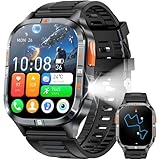
- BUILT-IN GPS & COMPASS– This military smartwatch features high-precision GPS to pinpoint your location while hiking, cycling, or traveling, keeping you safely on track without extra gear. Tap the compass icon and it locks your bearing within three seconds—engineered for pro-level outdoor adventures like camping, climbing, and trekking.
- BLUETOOTH CALLING & MESSAGES – Powered by the latest Bluetooth tech, the men’s smartwatch lets you answer or make calls right from your wrist—no need to pull out your phone. Get real-time alerts for incoming texts and app notifications so you never miss an invite. (Replying to SMS is not supported.)
- BIG SCREEN & DIY VIDEO WATCH FACE – The 2.01" military-spec display is dust-proof, scratch-resistant, and forged from high-strength glass with an aluminum alloy bezel, passing rigorous dust and abrasion tests so the screen stays crystal-clear. Upload a short family video to create a dynamic, one-of-a-kind watch face that keeps your memories alive.
- 24/7 HEALTH MONITORING – Equipped with a high-performance optical sensor, this Android smartwatch tracks heart rate and blood-oxygen levels around the clock. It also auto-detects sleep stages (deep, light, awake) for a complete picture of your health, ensuring you always know how your body is doing.
- MULTI SPORT MODES & FITNESS TRACK – Choose from running, cycling, hiking, basketball, and more to log every workout. Set goals, monitor progress, and sync data to the companion app. Bonus tools include photo gallery, weather, alarm, stopwatch, flashlight, hydration reminder, music/camera remote, find-my-phone, mini-games, and other everyday essentials.
Compared to Apple Watch’s more fragmented health metrics, Body Battery feels holistic and easy to interpret. Samsung’s energy-style metrics exist, but lack Garmin’s depth and long-term behavioral insight. The Venu’s advantage is not novelty, but clarity and consistency.
Sleep tracking and overnight recovery insights
Sleep tracking on the Venu is detailed without being intrusive, which suits a watch meant for continuous wear. Sleep stages, duration, and overnight heart rate variability are tracked automatically, with minimal need for user input. Comfort matters here, and the Venu’s relatively slim case and soft silicone strap make overnight wear realistic for most users.
Accuracy is strongest for total sleep time and consistency patterns rather than exact sleep stage classification. Light and deep sleep trends align well with training load and perceived recovery, even if individual stages should not be overanalyzed. The value lies in spotting patterns over time rather than chasing perfect nightly scores.
The AMOLED display has no negative impact on sleep tracking, as the watch remains unobtrusive in sleep mode. Battery life is sufficient to support continuous overnight tracking without forcing daily charging. This alone gives the Venu an edge over Apple Watch for athletes who rely on sleep data to guide training.
Stress, recovery, and readiness for training
Garmin’s stress tracking runs quietly in the background, using heart rate variability to flag periods of physiological strain. On the Venu, this data feeds directly into Body Battery and recovery interpretation rather than existing as an isolated metric. Elevated stress during workdays or travel often shows up clearly, contextualizing underwhelming workouts.
Recovery insights are not as advanced as those found on Forerunner or Fenix models, but they remain practical. Post-workout recovery time estimates are sensible for general training, even if they lack the nuance elite athletes may expect. For the Venu’s target audience, the balance feels intentional rather than compromised.
Compared to Apple Watch’s newer training load features, Garmin’s approach is less flashy but more mature. It favors steady guidance over aggressive prompts, which suits athletes focused on sustainability. The Venu does not attempt to replace a coach, but it offers enough feedback to prevent obvious mistakes.
Everyday wearability and health data continuity
Health tracking only works if the watch stays on the wrist, and the Venu succeeds here through comfort and aesthetics. The lightweight case, smooth finishing, and curved AMOLED display encourage all-day wear in a way bulkier sports watches often do not. This directly improves data quality, especially for metrics like resting heart rate and stress.
From a materials and design perspective, the Venu feels closer to a modern smartwatch than a training instrument, yet it never sacrifices sensor performance. The strap system is easy to swap for leather or fabric, making it adaptable for work or social settings without breaking tracking continuity. This versatility reinforces its role as a true hybrid device.
For athletes who want meaningful health insights without wearing a rugged sports watch 24/7, this is where the Venu quietly excels. It gathers the data serious training relies on, but does so in a form that fits naturally into everyday life.
Gym, Indoor Training, and Activity Classes: Where the Venu Quietly Excels
That all-day wearability carries directly into the gym, where consistency matters more than headline features. Because the Venu is comfortable enough to stay on from warm-up to cooldown, it captures a more complete physiological picture than bulkier training watches that often get taken off mid-session. Over weeks of indoor training, this continuity becomes more valuable than any single metric.
Garmin has clearly positioned the Venu as a watch that understands how most people actually train indoors. It is not trying to outgun the Fenix or Forerunner on advanced load analytics, but it offers a cleaner, more intuitive experience for strength work, classes, and mixed sessions.
Strength training and free-weight sessions
In the weight room, the Venu performs best when used as a structured logging tool rather than an automated coach. The strength profile tracks sets, rest time, and heart rate reliably, and rep counting is serviceable for basic movements, though still imperfect for complex lifts or supersets. Experienced lifters will still need to edit reps in Garmin Connect, but the workflow is fast and well-designed.
What matters more is how the data is contextualized afterward. Heart rate trends, time under tension, and session duration feed cleanly into daily intensity and recovery metrics without overstating training stress. Compared to Apple Watch, which often inflates calorie burn during lifting, the Venu feels more conservative and, in practice, more believable.
Physically, the watch suits gym use well. The relatively slim case and rounded edges avoid digging into the wrist during push-ups or front rack positions, and the silicone strap stays stable without over-tightening. It is noticeably less intrusive than Garmin’s larger multisport models during barbell and kettlebell work.
Indoor cardio: treadmill, bike, and rower
For indoor cardio, the Venu’s AMOLED display becomes a functional advantage rather than a cosmetic one. Pace, heart rate zones, and elapsed time are easy to read at a glance under harsh gym lighting, and touch responsiveness remains reliable even with light sweat. This is an area where it feels closer to a polished smartwatch than a traditional training tool.
Treadmill distance accuracy improves significantly after calibration runs, and once dialed in, it stays consistent. Indoor cycling and rowing rely primarily on heart rate and duration unless paired with external sensors, but the resulting training load and recovery impact align well with perceived effort. The Venu does not attempt advanced power modeling indoors, which keeps the experience simple and avoids misleading precision.
Battery life holds up well for frequent indoor sessions. Even with the AMOLED display active and music playback enabled, multiple gym workouts per week barely dent endurance, and charging becomes a once-every-few-days habit rather than a daily concern. This alone separates it from Apple Watch for athletes training indoors five or six days a week.
Yoga, Pilates, and guided activity classes
Where the Venu quietly stands out is in structured classes and lower-impact training. Yoga, Pilates, and mobility sessions benefit from Garmin’s on-screen animations and clearly timed sequences, which feel purpose-built for the display. The watch encourages compliance without turning the session into a data-heavy distraction.
Breathwork tracking during these activities integrates smoothly with stress and Body Battery metrics. Over time, patterns emerge that link restorative sessions to improved recovery and sleep, reinforcing their value rather than treating them as “light days” that do not count. This holistic framing is something most smartwatch competitors still struggle to articulate clearly.
Comfort also matters here. The Venu’s light weight and smooth caseback make it easy to forget during floor-based movements, which cannot be said for thicker sports watches. This makes it especially well suited to studio classes where wearability directly affects whether the watch stays on at all.
Music, notifications, and gym practicality
From a practical standpoint, the Venu is one of Garmin’s most gym-friendly watches. Offline Spotify and other music services reduce phone dependency, and Bluetooth headphone connections are stable in crowded gym environments. For many users, this alone simplifies workouts enough to change habits.
Notifications are present but unobtrusive. Messages and alerts are easy to glance at between sets, yet they do not interrupt active tracking or pause sessions unintentionally. Compared to Apple Watch, which often encourages interaction mid-workout, the Venu keeps the focus on training.
Taken together, these traits reveal the Venu’s real strength. It may not advertise itself as a gym-first device, but in daily indoor training, it delivers a balanced, low-friction experience that supports consistency. For athletes who split their time between gym floors, studio classes, and endurance work, this is where the Venu proves it is more than just a pretty Garmin.
Smartwatch Features in Daily Life: Notifications, Music, Payments, and App Ecosystem
The gym-focused strengths carry directly into everyday smartwatch use, where the Venu aims to be helpful without becoming demanding. Garmin’s approach here is intentionally restrained, prioritizing glanceable information and reliability over constant interaction. That design philosophy shapes how notifications, media, payments, and apps feel in real daily wear.
Notifications: Informative, Not Interactive
Notifications on the Venu are clear, fast, and well-presented on the AMOLED display, with excellent readability indoors and outdoors. Messages, calendar alerts, and app notifications arrive promptly, and vibration strength is subtle enough for all-day wear without becoming irritating.
Interaction is intentionally limited. Android users can reply with preset responses, while iPhone users are restricted to reading only, which remains a clear disadvantage compared to Apple Watch. For athletes, this limitation often works in the Venu’s favor, reducing the temptation to engage mid-workout or during recovery windows.
Compared to Apple Watch and Galaxy Watch, the Venu feels less like a wrist-based extension of your phone and more like a filtered information layer. You stay informed, but rarely distracted, which aligns well with Garmin’s training-first mindset.
Music and Media: Phone-Free Training Done Right
Offline music support is one of the Venu’s most impactful daily features. Spotify, Deezer, and Amazon Music playlists can be synced directly to the watch, paired with Bluetooth headphones, and used without carrying a phone.
In practical testing, Bluetooth stability is excellent, even in busy gyms or urban environments with heavy wireless congestion. Playback controls are simple, responsive, and accessible during workouts without disrupting activity screens.
Battery impact is worth noting. Streaming stored music with GPS active will noticeably reduce battery life, but still remains predictable and manageable for typical gym sessions or runs. For athletes used to Garmin’s long endurance watches, this is a trade-off, but one that feels reasonable given the display quality and smartwatch features.
Garmin Pay: Convenient, With Regional Caveats
Garmin Pay works reliably for contactless payments, making it easy to leave both phone and wallet behind during workouts or errands. Setup is straightforward, and payment authentication via passcode feels secure without being cumbersome.
The main limitation remains bank support, which varies significantly by country. In regions where supported, it integrates seamlessly into daily routines, but in unsupported markets it becomes a missed opportunity rather than a core feature.
From a usability standpoint, Garmin Pay is on par with competitors in execution, even if it lags behind Apple Pay in global adoption. For users whose bank is supported, it meaningfully enhances the Venu’s independence as a daily wearable.
App Ecosystem and Software Experience
The Venu runs Garmin’s proprietary software rather than a third-party smartwatch OS, and that distinction is immediately apparent. The Connect IQ store offers watch faces, data fields, and basic apps, but lacks the depth and polish of Apple’s App Store or Google’s Wear OS ecosystem.
Rank #4

- 【Built-in GPS & Multi-System Positioning】Stay on track with the Tiwain smartwatch’s built-in GPS. Featuring military-grade single-frequency and six-satellite support (GPS, GLONASS, Beidou, Galileo, NAVIC, QZSS), this watch offers fast and accurate location tracking wherever you go. It also includes a compass, altimeter, and barometer, giving you real-time data on your altitude, air pressure, and position.
- 【Military-Grade Durability】Engineered to withstand the toughest conditions, the Tiwain smartwatch meets military standards for extreme temperatures, low pressure, and dust resistance. Crafted from tough zinc alloy with a vacuum-plated finish, this watch is also waterproof and built to resist wear and tear. The 1.43-inch AMOLED HD touchscreen offers clear visibility in all environments, and the watch supports multiple languages for global users.
- 【170+ Sport Modes & Fitness Tracking】Track your fitness journey with 170+ sport modes, including walking, running, cycling, hiking, basketball, and more. Set exercise goals, monitor progress, and sync your data to the companion app. The smartwatch also offers smart features like music control, camera remote, weather updates, long-sitting reminders, and more.
- 【LED Flashlight for Outdoor Adventures】The Tiwain smartwatch comes equipped with a built-in LED flashlight that can illuminate up to 20 meters. Activate it with the side button for added convenience during nighttime activities or outdoor adventures.
- 【Comprehensive Health Monitoring】Monitor your health with real-time heart rate, sleep, blood pressure, and blood oxygen level tracking. The smartwatch will vibrate to alert you of any abnormal readings. You can also make and receive calls directly from the watch, and stay connected with message and app notifications (receive only, no sending capability) – perfect for when you’re driving or exercising.
That said, performance is consistently smooth. Menus are responsive, touch gestures work reliably, and the AMOLED display elevates everything from widgets to workout animations. The interface prioritizes speed and clarity over visual excess, which suits both training and daily use.
Crucially, software stability is excellent. There are no random app crashes, battery-draining background processes, or performance slowdowns over time. For athletes who value consistency over experimentation, this reliability often outweighs the smaller app selection.
Everyday Wearability and Battery Trade-Offs
As a daily smartwatch, the Venu balances form and function well. The lightweight case, smooth bezel, and silicone strap remain comfortable across long workdays, sleep tracking, and training sessions without pressure points or skin irritation.
Battery life sits in a middle ground. Expect several days of typical use, less with always-on display or frequent GPS and music sessions. Compared to Apple Watch’s daily charging and Garmin’s multi-week endurance models, the Venu clearly prioritizes smartwatch convenience over extreme longevity.
This battery profile reinforces the Venu’s positioning. It is designed for athletes who train often but also want a watch that looks modern, feels refined, and integrates smoothly into everyday life without constant micromanagement.
Battery Life Reality Check: AMOLED Trade-Offs for Athletes and Active Users
Battery life is where the Garmin Venu most clearly reveals its priorities. The move to a bright, high-resolution AMOLED display brings undeniable everyday appeal, but it also reshapes expectations for endurance-focused users accustomed to Garmin’s traditional transflective screens.
For athletes weighing the Venu against both lifestyle smartwatches and Garmin’s own sport-first models, this is the section where compromises need to be understood honestly.
What the Numbers Say vs What Athletes Experience
In typical smartwatch mode with gesture-based screen wake, the Venu reliably delivers around four to five days of use. This includes continuous heart rate tracking, sleep monitoring, notifications, and a mix of indoor and outdoor workouts.
Enable the always-on display, and that drops closer to two to three days. Add GPS-based training with music playback, and multi-day endurance quickly compresses into a shorter charging cycle that active users will feel.
From a sports science perspective, this matters less for casual sessions and more for consistency. If you train daily, especially with GPS runs, rides, or long gym sessions, the Venu becomes a watch you top up every couple of days rather than one you forget about for a week.
GPS, Music, and Training Load: Where Battery Drains Fastest
Standalone GPS performance is solid but power-hungry. A one-hour outdoor run typically costs around 10 to 15 percent battery, which is reasonable for an AMOLED-based watch but noticeably higher than Garmin’s MIP-display models.
Music playback compounds this drain. Syncing playlists to the watch and running without a phone is genuinely liberating, but it accelerates battery loss in a way endurance athletes should plan around, especially during back-to-back training days.
For gym users, battery impact is far lighter. Strength training, HIIT, and cardio sessions indoors barely dent longevity, making the Venu feel far more resilient for mixed training routines than for ultra-distance or multi-day outdoor efforts.
Always-On Display: A Lifestyle Feature with Athletic Consequences
The always-on AMOLED display is visually excellent. Time, widgets, and workout screens remain crisp and legible at a glance, enhancing daily usability and making the Venu feel like a premium modern smartwatch rather than a tool watch.
For athletes, though, this feature is optional rather than essential. Disabling always-on display significantly extends usable battery life and aligns the Venu more closely with Garmin’s training-first philosophy, even if it sacrifices some visual polish.
In practice, most serious users will toggle always-on off during heavy training blocks and re-enable it during lighter weeks. The flexibility is welcome, but it reinforces that the Venu is designed for adaptability, not set-and-forget endurance.
How the Venu Compares to Apple Watch and Galaxy Watch
Against the Apple Watch Series lineup, the Venu still holds a clear advantage. Even at its weakest, it avoids daily charging for most users, and that alone makes it more forgiving for athletes juggling training, sleep tracking, and workdays.
Compared to Samsung’s Galaxy Watch models, battery life is broadly similar, though Garmin’s background health tracking tends to be more efficient and consistent over time. Where Garmin pulls ahead is stability, with fewer unexplained drains or overnight drops.
Neither Apple nor Samsung currently offer the same balance of multi-day battery life and serious training metrics in an AMOLED-equipped watch. The Venu’s edge is not dominance, but reliability within this category.
Why This Isn’t a Fenix or Forerunner Replacement
Put next to Garmin’s own Fenix, Enduro, or Forerunner 955, the Venu’s battery limitations become obvious. Those watches are built to support multi-hour GPS sessions, ultra events, and week-long trips without power anxiety.
The Venu simply is not targeting that use case. Its slimmer case, lighter weight, and polished materials prioritize comfort and wearability over housing a massive battery, and that design choice is evident in daily use.
For athletes who train hard but not endlessly, this trade-off makes sense. For those who routinely push past marathon distances, it does not.
Charging Behavior and Daily Practicality
Charging is quick enough to minimize disruption. A short top-up while showering or working at a desk can meaningfully extend runtime, especially if you manage display settings intelligently.
The proprietary Garmin charging cable remains a minor annoyance, particularly for travelers, but charging frequency is still far less intrusive than with true daily-charge smartwatches.
In day-to-day life, the Venu’s battery profile feels manageable rather than restrictive, as long as expectations are set correctly.
Who the Battery Life Actually Works For
The Venu’s battery life suits athletes who train four to six times per week, value sleep and recovery data, and want a watch that transitions cleanly from workouts to work meetings to social settings.
It is less well-suited to ultra-endurance athletes, expedition users, or those who want zero concern about charging while stacking long outdoor sessions.
Ultimately, the AMOLED trade-off is not a flaw but a positioning choice. The Venu chooses visual clarity, comfort, and smartwatch polish over extreme longevity, and for the right athlete, that balance feels intentional rather than compromised.
Garmin Venu vs Apple Watch, Galaxy Watch, and Garmin’s Own Line-Up
Once you accept the Venu’s battery trade-offs as a conscious design decision, the next logical question is how well it holds its ground against mainstream smartwatches and Garmin’s deeper performance catalog. This is where the Venu’s identity becomes clearest, because it is not trying to win on any single spec.
Instead, it competes on balance. The Venu aims to deliver credible training tools, accurate health tracking, and everyday smartwatch usability without pushing the user fully into either a lifestyle-first or endurance-first corner.
Garmin Venu vs Apple Watch Series
The Apple Watch remains the benchmark for smartwatch polish. Its app ecosystem, fluid UI animations, LTE options, and deep iPhone integration still sit well ahead of anything Garmin offers from a pure “smart” perspective.
Where the Venu pushes back is in training structure and physiological insight. Garmin’s native metrics like Body Battery, Training Effect, recovery time, and multi-day load trends are more actionable for athletes than Apple’s fragmented mix of Activity Rings and third-party apps.
Heart rate tracking during steady-state cardio is comparable between the two, but the Venu maintains consistency during longer sessions and overnight tracking with fewer gaps. Apple’s optical sensor can be excellent, but its battery limitations often force users to choose between sleep tracking and daytime confidence.
Battery life is the decisive difference in daily reality. Even with the Venu’s AMOLED display, you are still charging every several days rather than nightly, which fundamentally changes how comfortably you can rely on sleep, recovery, and trend-based metrics.
From a physical standpoint, the Venu feels more like a traditional sports watch. The fiber-reinforced polymer case keeps weight down, the silicone strap handles sweat and repeated flexing well, and the overall thickness is less obtrusive during workouts than Apple’s square case for many athletes.
💰 Best Value

- Smart Watch with GPS and Offline Map: This smart watch connects to multiple satellite systems for accurate real-time positioning, and includes a professional-grade compass, altimeter, and barometer for precise data, ensuring you maintain your sense of direction in any outdoor environment. The map version supports downloading offline maps; select a route or destination to view the route even without a signal, eliminating the risk of getting lost.
- Bluetooth Call & Message Functionality: This smart watches for men allows you to make and receive calls; receive text and social media notifications (Facebook, WhatsApp, Instagram, Twitter, etc.); and reply to text messages with voice-to-text or set up quick replies (text reply functionality is available for Android phones).
- Sports & Health Monitoring: This 5ATM waterproof fitness watch supports over 100 sports modes and tracks daily activity data, calories, distance, steps, and heart rate. You can use it to monitor your health metrics (blood oxygen, heart rate, stress, and sleep), monitor your fatigue and mood, and perform PAI analysis. You can also use this smartwatch to set water intake and sedentary reminders. Stay active and healthy with this fitness tracker watch.
- Customizable Watch Faces & AI Functionality: This smart watch features a 1.46-inch HD touchscreen and over 100 downloadable and customizable watch faces. You can even use your favorite photos as your watch face. Equipped with AI technology, it supports voice descriptions in multiple languages to generate personalized AI watch faces. The watch's AI Q&A and AI translation features provide instant answers to questions and break down language barriers, making it an ideal companion for everyday life and travel.
- Large Battery & High Compatibility & More Features: This smart watch for android phones and ios phone features a large 550ml battery for extended battery life. It's compatible with iOS 9.0 and above and Android 5.0 and above. It offers a wealth of features, including an AI voice assistant, weather display, music control, camera control, calculator, phone finder, alarm, timer, stopwatch, and more. (Package Includes: Smartwatch (with leather strap), spare silicone strap, charging cable, and user manual)
If you live entirely inside the iOS ecosystem and prioritize messaging, apps, and cellular independence, Apple Watch remains unmatched. If structured training, recovery awareness, and battery breathing room matter more, the Venu offers a more athlete-centered experience.
Garmin Venu vs Samsung Galaxy Watch
Against the Galaxy Watch, the Venu’s advantage is clarity of purpose. Samsung leans heavily into lifestyle features, with an emphasis on aesthetics, rotating bezels, and smartwatch convenience rather than training depth.
Samsung’s AMOLED displays are excellent, and system navigation is smooth, but fitness metrics tend to be shallower and less consistent over time. Advanced training load analysis, long-term recovery modeling, and structured workout execution are simply not areas where Samsung competes seriously.
GPS reliability and heart rate consistency also favor Garmin in real-world use, particularly during outdoor running and cycling. The Venu locks quickly, holds signal well, and produces cleaner data sets that require less post-workout interpretation.
Battery life again tilts the scale. Galaxy Watch models often require daily charging once GPS and always-on display features are used regularly, which limits how useful continuous health tracking can be.
For Android users who want a smartwatch first and a fitness tracker second, Samsung makes sense. For athletes who happen to use Android but want training data they can trust week after week, the Venu is clearly the more disciplined tool.
Garmin Venu vs Garmin Vivoactive and Venu Sq
Within Garmin’s own catalog, the Venu sits above the Vivoactive and Venu Sq in terms of display quality, materials, and perceived refinement. The AMOLED screen alone transforms how maps, charts, and workout data feel during use.
Training depth is similar across these models, but the Venu benefits from faster performance, a more premium case finish, and better everyday wearability. It feels less like a fitness tracker you tolerate all day and more like a watch you want to wear.
Battery life is broadly comparable, so choosing the Venu here comes down to display preference and build quality rather than endurance. If cost is a primary concern, the Vivoactive still delivers strong fundamentals.
Garmin Venu vs Forerunner Series
The Forerunner line remains Garmin’s most performance-focused platform for runners and triathletes. Models like the Forerunner 255 or 955 deliver deeper training analytics, physical buttons optimized for sweaty or gloved use, and far superior GPS endurance.
What the Venu gives up in performance headroom, it gains in comfort and aesthetics. Its touchscreen-driven interface, sleeker profile, and brighter display make it more pleasant for gym workouts, casual runs, and all-day wear.
For athletes training toward races with structured plans and heavy weekly mileage, Forerunner is the better tool. For those who train consistently but want one watch that looks at home in non-sport settings, the Venu makes a compelling case.
Garmin Venu vs Fenix and Epix
The most revealing comparison is with Garmin’s Fenix and Epix lines, especially the AMOLED-equipped Epix. Here, the Venu’s limitations are not flaws but deliberate boundaries.
Fenix and Epix watches are physically larger, heavier, and built with metal cases, sapphire options, and multi-band GPS designed for harsh environments and ultra-distance reliability. They offer deeper navigation tools, mapping, and endurance that the Venu does not attempt to match.
The Venu counters with comfort. Its lighter case disappears on the wrist during sleep, strength training, and long workdays, and its slimmer profile suits smaller wrists better than Garmin’s flagship models.
If your training includes mountain routes, navigation-heavy adventures, or multi-day events, the Venu will feel underpowered. If your training is disciplined but domestic, gym-focused, and time-bound, the Venu’s restraint becomes an advantage rather than a compromise.
Where the Venu Actually Fits
Viewed in isolation, the Venu can seem caught between categories. Viewed in context, it fills a gap that few watches address cleanly.
It is not a lifestyle smartwatch pretending to be sporty, nor a hardcore sports watch awkwardly dressed for daily life. The Venu is for athletes who train with intent, value recovery and trend data, and still want a watch that feels appropriate outside of workout hours.
In that narrow but growing space between Apple Watch convenience and Fenix-level excess, the Venu stands as one of the most coherent answers currently available.
Verdict: Does the Garmin Venu Truly Bridge Lifestyle Smartwatch and Serious Sport?
The Venu’s real achievement is not trying to outgun Garmin’s own performance flagships, but in redefining what “serious enough” looks like for a large segment of active users. When viewed through the lens of daily wear, training consistency, and recovery awareness rather than expedition readiness, the Venu’s balance makes far more sense.
This is a watch built for athletes who train regularly, care about their data, and still want something that feels natural on the wrist at all hours of the day.
As a Sports Watch: Serious Where It Matters
From a performance standpoint, the Venu delivers the core metrics that underpin effective training. GPS accuracy is reliable for road running and urban routes, heart rate tracking is consistent across steady-state efforts and gym sessions, and Garmin’s ecosystem turns that raw data into actionable insights like training load trends, recovery time, and sleep-informed readiness.
Where it stops short is depth rather than credibility. You do not get advanced running dynamics, multi-band GPS, or deep navigation tools, but for structured workouts, indoor training, cycling, and recreational racing, the Venu never feels like it is guessing or improvising.
For athletes who prioritize consistency over extremes, the data quality is more than sufficient to guide improvement without overwhelming the user.
As a Smartwatch: Practical, Not Distracting
The AMOLED display fundamentally changes how the Venu feels compared to Garmin’s traditional MIP-screened watches. It is brighter, sharper, and more inviting for everyday interaction, whether that is glancing at notifications, controlling music, or following on-screen workouts during strength sessions.
Smart features remain intentionally restrained. Notifications are reliable but not interactive in the way an Apple Watch is, and the app ecosystem is modest, but this restraint preserves focus and battery life rather than turning the watch into a wrist-bound smartphone.
Compatibility across iOS and Android is a meaningful advantage, especially for users who want smartwatch essentials without being locked into a single phone platform.
Battery Life: The Quiet Differentiator
Battery life is where the Venu subtly but decisively pulls away from mainstream lifestyle smartwatches. Even with an AMOLED display, it comfortably lasts several days with regular training, sleep tracking, and notifications enabled.
For athletes, this changes behavior. You stop rationing workouts, disabling features, or planning charges around long sessions, which in turn improves data continuity and recovery insights.
It does not match the endurance of a Fenix or Epix, but it decisively outperforms Apple Watch and Galaxy Watch models in real-world training use.
Comfort, Build, and Daily Wearability
Physically, the Venu is designed to disappear. Its lighter polymer case, slim profile, and soft silicone strap make it easy to wear overnight, during long workdays, and through strength sessions where bulk becomes a liability.
While it lacks the metal heft and tool-watch presence of Garmin’s premium models, the finishing is clean and modern, and the AMOLED screen gives it a refined, almost jewelry-like quality when paired with casual or office wear.
For smaller wrists or users who find Fenix-sized watches intrusive, this alone can be the deciding factor.
Who the Venu Is For, and Who It Isn’t
The Garmin Venu is for athletes who train three to six days a week, value recovery and long-term trends, and want one watch that works equally well in the gym, on a run, and at dinner. It is for users who want Garmin’s health and performance engine without committing to a rugged, expedition-oriented form factor.
It is not for ultrarunners, mountain navigators, or data maximalists who rely on maps, advanced metrics, and multi-day battery life in remote environments. Those athletes are still better served by the Forerunner, Fenix, or Epix families.
For everyone else, the Venu succeeds precisely because it knows where to stop. It bridges lifestyle smartwatch and serious sport not by excess, but by clarity of purpose, making it one of Garmin’s most thoughtfully positioned watches to date.