If you’re looking at the Garmin Venu Sq 2, chances are you’re standing at a familiar crossroads: you want a smartwatch that looks modern, tracks fitness seriously, lasts more than a day or two, and doesn’t immediately pull you into the Apple Watch pricing or ecosystem gravity well. Garmin knows this buyer extremely well, and the Venu Sq 2 exists precisely to catch them before they drift toward Cupertino.
This watch is not about showcasing Garmin’s most advanced training analytics or smartwatch tricks. It’s about distilling the core Garmin experience—reliable health tracking, excellent battery life, and no-nonsense usability—into a rectangular, lifestyle-friendly design that feels intentionally aimed at Apple Watch shoppers who aren’t fully convinced.
Understanding where the Venu Sq 2 sits in Garmin’s crowded lineup is the key to deciding whether it’s a smart compromise or a frustrating halfway house, and why Apple remains the most obvious, unavoidable comparison point.
Garmin’s lineup logic: why the Venu Sq 2 exists at all
Garmin’s product stack can feel overwhelming, but it’s actually quite structured. At the top sit the Fenix and Epix lines for serious athletes, with rugged cases, advanced training load metrics, and prices to match. Below that, you find Forerunners focused on performance running, and Venu models aimed at everyday wearers who still want proper health tracking.
🏆 #1 Best Overall

- Stylish Design, Vibrant Display: The lightweight aluminum build blends effortless style with workout durability, while the vivid 1.97" AMOLED display keeps your data easy to read, even under bright sunlight.
- All-in-One Activity Tracking: The Amazfit Bip 6 fitness tracker watch offers 140+ workout modes including HYROX Race and Strength Training, plus personalized AI coaching and 50m water resistance.
- Up to 14 Days Battery Life: The Amazfit Bip 6 smart watch powers through your training and recovery for up to two weeks at a time - no nightly charging needed.
- Accurate GPS Tracking & Navigation: Stay on course with free downloadable maps and turn-by-turn directions. Support from 5 satellite systems ensures precise tracking of every move and fast GPS connection.
- 24/7 Health Monitoring: The Amazfit Bip 6 smartwatch provides precise, real-time monitoring of heart rate, sleep, blood-oxygen and stress, empowering you with actionable insights to optimize your health and fitness.
The Venu Sq 2 lives at the very bottom of the Venu family, positioned as the most accessible AMOLED-equipped Garmin. It strips away premium materials like metal bezels and advanced sensors, but keeps the essentials: GPS, Garmin’s health ecosystem, and a bright rectangular display that’s meant to feel familiar to smartwatch-first users.
In practical terms, it’s the watch Garmin offers to people who don’t want a sporty-looking circle on their wrist, don’t want to charge daily, and don’t want to learn the difference between VO2 max trends and training readiness scores.
How it differs from other Venu and Garmin models
Compared to the standard Venu 2 or Venu 3, the Sq 2 makes clear sacrifices. There’s no altimeter, no ECG support, no advanced recovery insights, and no microphone or speaker for calls. The case is lightweight polymer rather than metal, and the overall build prioritizes comfort and cost over premium feel.
At the same time, it’s notably more refined than Garmin’s budget trackers. You get an AMOLED screen instead of memory-in-pixel, a responsive touchscreen alongside physical buttons, and full access to Garmin Connect’s health dashboards. Sleep tracking, Body Battery, stress monitoring, SpO2 during sleep, and multi-GNSS GPS are all present.
This makes the Venu Sq 2 less of a “cheap Garmin” and more of a deliberately simplified one, aimed at daily wear and general fitness rather than performance coaching.
The rectangular elephant in the room: Apple Watch comparisons are inevitable
Garmin could call this watch whatever it wants, but the square display makes the comparison unavoidable. The Venu Sq 2 sits directly across from the Apple Watch SE in both price and intent, and Garmin clearly wants iPhone users to at least pause before defaulting to Apple.
On the wrist, the Venu Sq 2 is slimmer and lighter than most Apple Watch models, with a softer, more neutral aesthetic that works well for all-day wear and sleep. The AMOLED display is crisp and vibrant, though it lacks the sheer brightness and polish of Apple’s panels.
Where Garmin counters hardest is battery life. Real-world use stretches to around 10–11 days without GPS, or several hours of GPS workouts without anxiety, which fundamentally changes how you live with the watch. You wear it to bed, you wear it on weekends, and you don’t build habits around a charger.
Why Garmin and Apple target different priorities with similar hardware
Despite the visual similarity, the Venu Sq 2 and Apple Watch represent very different philosophies. Apple prioritizes smart features first: app ecosystems, notifications, messaging, calls, and deep iPhone integration. Fitness and health are polished, but still framed within a smartwatch-first experience.
Garmin flips that hierarchy. Notifications are functional but basic, third-party apps are limited, and there’s no real app store culture to speak of. In exchange, you get consistent health metrics, long-term trend tracking, and an interface designed around activity, sleep, and recovery rather than apps.
For Android users, the comparison tilts further in Garmin’s favor, since Apple Watch isn’t even an option. For iPhone users, the Venu Sq 2 becomes a deliberate opt-out from Apple’s ecosystem rather than a compromise forced by compatibility.
Who the Venu Sq 2 is really meant for
The Venu Sq 2 makes the most sense for users who value fitness tracking accuracy, battery life, and comfort over smartwatch tricks. It’s ideal for people who want to walk, run, cycle, track sleep, and monitor their health without turning their wrist into a miniature phone.
It’s less satisfying for anyone expecting rich app interactions, voice assistants, or tight integration with smart home and messaging platforms. Garmin isn’t trying to win that battle here.
Instead, the Venu Sq 2 positions itself as the calm, long-lasting alternative in a category dominated by feature-packed but power-hungry rivals. Whether that’s a relief or a limitation depends entirely on what you expect from a smartwatch.
Design, Display, and Wearability: Squared Aesthetics, AMOLED Appeal, and Day-Long Comfort
If the Venu Sq 2 is a deliberate opt-out from smartwatch excess, that philosophy carries straight into its physical design. Garmin leans into restraint here, using familiar shapes and lightweight materials to keep the focus on all-day wear rather than visual drama. The result is a watch that looks modern and approachable without trying to outshine the Apple Watch on polish or fashion credibility.
A square that feels intentional, not imitative
At a glance, the square case inevitably invites comparison to Apple’s design language, but the Venu Sq 2 doesn’t chase the same industrial sharpness. The aluminum bezel is subtly rounded, the corners are softened, and the overall silhouette feels less jewel-like and more utilitarian. It’s a watch that blends into daily life rather than announcing itself.
Dimensions are compact and wearable across a wide range of wrists, measuring roughly 40.6 x 37 mm with a thickness just over 11 mm. That footprint keeps it smaller and flatter than most Apple Watch models, particularly noticeable for users with slimmer wrists or those who dislike bulky cases during sleep. The lighter visual mass also makes it easier to pair with casual or workout clothing without looking out of place.
Build quality is solid rather than luxurious. You won’t find sapphire crystal or mirror-polished edges here, but the materials feel appropriate for the price and purpose. Garmin prioritizes durability and weight savings over premium flourish, which aligns well with the Venu Sq 2’s fitness-first identity.
AMOLED changes the entire personality of the Venu Sq line
The move to an AMOLED display is arguably the most important design upgrade over the original Venu Sq. The 1.41-inch panel delivers a crisp 320 x 360 resolution, with strong contrast, deep blacks, and vibrant colors that finally give Garmin’s UI the visual punch it deserves. Watch faces look cleaner, metrics are easier to parse, and animations feel more fluid.
Outdoor visibility is generally excellent, especially with brightness set to automatic. In direct sunlight, the AMOLED doesn’t quite match the raw readability of Garmin’s transflective displays, but it remains perfectly usable for workouts and quick glances. Indoors and at night, it’s a clear win, with better legibility and less visual fatigue.
An always-on display mode is available, though it’s optional and comes with a battery trade-off. Most users will be better served by the raise-to-wake gesture, which is responsive and helps preserve the long battery life that defines the Venu Sq 2 experience. Compared to Apple Watch, the screen feels less aggressively bright and animated, but also calmer and more information-focused.
Controls and daily interaction
Garmin sticks with its familiar hybrid control scheme: a responsive touchscreen paired with a single physical button on the side. The button handles key actions like starting activities, backing out of menus, and accessing shortcuts, reducing reliance on touch during sweaty or wet workouts. It’s a simple setup, but one that works reliably in real-world conditions.
Touch responsiveness is good, though not as fluid or gesture-rich as Apple’s watchOS. Scrolling through widgets and menus feels deliberate rather than slick, which again reflects Garmin’s priorities. This isn’t about playful interaction; it’s about getting to your data quickly and consistently.
The interface benefits from the square display, allowing more information to be shown without crowding. Fitness stats, daily metrics, and notifications feel well spaced, avoiding the cramped layouts that can affect smaller round Garmin watches.
Lightweight comfort you forget you’re wearing
One of the Venu Sq 2’s biggest strengths is how easy it is to live with over long stretches. At roughly 38 grams with the silicone strap, it’s light enough to disappear on the wrist during the day and unobtrusive at night. This matters when the watch is designed to be worn 24/7 for sleep, stress, and recovery tracking.
The included silicone band uses a standard 20 mm quick-release system, making it easy to swap for third-party options. The stock strap is soft, flexible, and breathable enough for workouts and sleep, though it leans functional rather than stylish. Users coming from Apple Watch will find fewer premium strap options, but also fewer proprietary limitations.
The case back sits flat against the wrist, with no pronounced sensor bump digging into the skin. During sleep tracking, this makes a noticeable difference, especially for side sleepers. It’s a watch designed to stay on your wrist continuously, reinforcing Garmin’s emphasis on long-term health data rather than intermittent use.
Durability without bulk
Despite its slim profile, the Venu Sq 2 doesn’t feel fragile. It carries a 5 ATM water resistance rating, making it safe for swimming, showers, and sweaty workouts. The Gorilla Glass display holds up well against daily scuffs, though it lacks the scratch resistance of sapphire found on more expensive models.
This balance between durability and comfort is where Garmin quietly outperforms many smartwatch rivals. Apple Watch models often feel denser and more premium, but they can also feel heavier and more intrusive during extended wear. The Venu Sq 2 trades some tactile luxury for wearability, and for fitness-focused users, that’s often the smarter compromise.
In day-to-day use, the design fades into the background, which is exactly the point. The Venu Sq 2 doesn’t demand attention with flashy materials or animated watch faces; it earns loyalty by being comfortable, readable, and easy to forget until you need it.
Health and Fitness Tracking Depth: Garmin’s Metrics vs Apple’s Holistic Health Approach
All that all-day comfort only pays off if the data gathered is genuinely useful, and this is where the philosophical split between Garmin and Apple becomes obvious. The Venu Sq 2 treats your body like a long-term system to be monitored continuously, while Apple Watch frames health as a broader lifestyle picture, blending fitness, medical-grade features, and behavioral nudges.
Neither approach is objectively better, but they reward very different types of users.
Garmin’s strength: continuous physiological context
Garmin’s health tracking is built around trends rather than moments. The Venu Sq 2 tracks heart rate 24/7, respiration, stress levels, sleep stages, and blood oxygen during sleep, feeding all of that into Garmin’s Body Battery score.
Rank #2

- Stylish Design, Bright Display: The sleek stainless steel build blends classic style with workout durability, while the bright 1.32" AMOLED display keeps your data easy to read, even under bright sunlight.
- Precise Heart Rate and Sleep Tracking: Amazfit's BioTracker technology tracks your heart rate and sleep data with accuracy that previous sensors just can't match.
- Up to 10 Days of Battery Life: With long battery life that lasts up to 10 days with typical use, nightly recharges are a thing of the past.
- Free Maps with Turn Directions: Stay on-track with free downloadable maps, and get turn-by-turn guidance on-screen or via your Bluetooth headphones. Enjoy ski maps for global resorts, including guidance for cable cars, slopes, and more.
- Faster and More Accurate GPS Tracking: 5 satellite positioning systems ensure fast GPS connection and accurate positioning whenever you're out running, walking, cycling or hiking.
Body Battery remains one of Garmin’s most intuitive metrics. It synthesizes sleep quality, stress, and activity into a simple energy score that actually correlates well with how rested or depleted you feel across the day.
Because the watch is designed to stay on your wrist for days at a time, those metrics aren’t interrupted by nightly charging. Compared to Apple Watch’s typical one-day battery cycle, this consistency gives Garmin a clearer picture of baseline physiology rather than fragmented snapshots.
Sleep tracking that favors trends over coaching
The Venu Sq 2 offers detailed sleep staging, sleep scores, and overnight insights into stress and oxygen saturation. The interface is straightforward, focusing on duration, quality, and consistency rather than aggressive coaching or alerts.
Apple’s sleep tracking is visually polished and increasingly rich, especially when paired with iPhone Health trends. However, Apple’s dependence on scheduled sleep modes and daily charging can still break long-term continuity for some users.
Garmin’s sleep data feels less clinical and less prescriptive, but more stable over weeks and months. For users interested in identifying patterns rather than chasing nightly “perfect” scores, this approach feels calmer and more sustainable.
Fitness tracking: Garmin still speaks athlete fluently
On the activity side, the Venu Sq 2 tracks a wide range of workouts including GPS-based runs, cycling, swimming, HIIT, and strength training. Metrics like pace consistency, heart rate zones, and recovery time estimates are presented clearly without overwhelming casual users.
This is not a training watch in the Forerunner sense. You won’t get advanced features like training readiness, race predictions, or deep HRV status insights found on higher-end Garmins.
Still, compared to Apple Watch, Garmin’s workout summaries lean more toward performance interpretation rather than calorie counting or ring completion. Apple excels at motivating movement; Garmin excels at explaining what that movement did to your body.
Health features: where Apple pushes deeper into medical territory
This is where Apple’s holistic health strategy pulls ahead. Apple Watch models offer ECG readings, atrial fibrillation history, medication tracking, fall detection, and, on newer models, wrist temperature trend analysis.
The Venu Sq 2 lacks ECG hardware and advanced cardiovascular alerts beyond basic abnormal heart rate notifications. Garmin’s health tracking is broad but not medical-facing, intentionally stopping short of features that blur into diagnostics.
For users managing specific health conditions or who value clinical-style data integrated with healthcare apps, Apple’s ecosystem is simply more mature.
Women’s health, stress, and everyday wellbeing
Garmin’s women’s health tracking is robust and easy to access, covering menstrual cycle tracking, symptom logging, and pregnancy tracking without requiring subscriptions. Stress tracking runs continuously in the background, tying directly into Body Battery and recovery insights.
Apple offers similar features, but they’re more dispersed across apps and notifications. Garmin’s advantage is cohesion; everything feeds into a unified narrative about readiness and recovery.
Over time, the Venu Sq 2 feels less like a device that checks in on you and more like one quietly observing patterns you might otherwise miss.
Ecosystem experience: interpretation versus integration
Garmin Connect remains one of the most data-dense fitness platforms available, especially for users who enjoy charts, trends, and physiological explanations. It’s not flashy, but it’s deeply informative and largely platform-agnostic, working equally well on Android and iOS.
Apple Health shines through integration. It connects fitness, medical records, third-party apps, and daily habits into a single hub that feels more like a personal health dashboard than a training log.
Choosing between them comes down to intent. The Venu Sq 2 rewards consistency and curiosity about your body’s signals, while Apple Watch rewards engagement, convenience, and a broader definition of health that extends beyond workouts.
Sports Performance and GPS Accuracy: Real-World Training, Outdoors, and Everyday Activity
If Apple tends to frame activity as part of a broader wellness loop, Garmin approaches movement as performance first. That philosophical split becomes most obvious once you step outside, start a workout, and expect the watch to track it reliably without constant interaction.
The Venu Sq 2 isn’t marketed as a hardcore training tool, but it borrows heavily from Garmin’s sports-focused DNA. In daily use, it behaves less like a smartwatch with fitness features and more like a fitness watch that happens to look modern.
GPS performance: consistency over cleverness
The Venu Sq 2 uses a single-band GPS chipset without multi-band or dual-frequency support, which places it firmly in the mid-range category. In open environments like parks, suburban roads, and trails, GPS lock is quick and tracks are clean, with minimal corner cutting or drift.
Compared side by side with an Apple Watch SE, route accuracy is broadly similar in favorable conditions. Apple can occasionally smooth tracks more aggressively, while Garmin tends to preserve raw path data, which some runners and cyclists will prefer for post-workout analysis.
Where the Venu Sq 2 falls slightly behind is in dense urban environments with tall buildings. Signal reflections can introduce mild wobble, but distances remained consistent enough during testing to trust pacing and total mileage.
Running, cycling, and cardio training
For running, the Venu Sq 2 covers the essentials: GPS pace, distance, cadence, heart rate, and customizable data screens. It lacks advanced metrics like running power or ground contact time, but what’s here is reliable and easy to interpret mid-run.
Cycling performance is similarly straightforward. You get speed, distance, elevation via barometric altimeter, and optional sensor pairing for cadence or speed, which gives it an edge over Apple Watch models that rely more heavily on third-party accessories and apps.
For gym-based cardio, the watch excels in simplicity. Treadmill runs, elliptical sessions, rowing, and HIIT are all well-detected, with heart rate tracking that remains stable once you’re warmed up.
Strength training and structured workouts
Strength training is where expectations should be set carefully. The Venu Sq 2 can automatically count reps and recognize basic movements, but like most wrist-based trackers, it struggles with complex lifts and variable tempo.
Garmin’s real advantage lies in structured workouts and training plans. You can load workouts directly onto the watch from Garmin Connect, complete with rest intervals, target zones, and step-by-step prompts, something Apple still relies heavily on third-party apps to replicate.
For users following a routine rather than improvising sessions, this makes the Venu Sq 2 feel more coach-like and less reactive.
Heart rate accuracy and recovery context
The optical heart rate sensor performs well for steady-state efforts like running, cycling, and long walks. Sudden intensity changes, such as intervals or circuit training, can introduce brief lag, but readings stabilize quickly.
Apple Watch still holds a slight edge in heart rate responsiveness during high-intensity bursts. However, Garmin’s strength is how it contextualizes that data afterward, feeding heart rate trends into Body Battery, stress scores, and recovery insights.
Over time, this creates a clearer picture of training load versus readiness, rather than just isolated workout metrics.
Outdoor activities and everyday movement
Beyond formal workouts, the Venu Sq 2 quietly tracks steps, floors climbed, intensity minutes, and active calories throughout the day. It’s particularly good at recognizing longer walks and outdoor activity without needing constant manual input.
Hiking and outdoor walking benefit from solid GPS reliability and elevation tracking, though serious hikers may miss breadcrumb navigation or maps. This watch is built for logging activity, not route-finding.
Rank #3
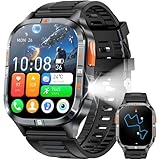
- BUILT-IN GPS & COMPASS– This military smartwatch features high-precision GPS to pinpoint your location while hiking, cycling, or traveling, keeping you safely on track without extra gear. Tap the compass icon and it locks your bearing within three seconds—engineered for pro-level outdoor adventures like camping, climbing, and trekking.
- BLUETOOTH CALLING & MESSAGES – Powered by the latest Bluetooth tech, the men’s smartwatch lets you answer or make calls right from your wrist—no need to pull out your phone. Get real-time alerts for incoming texts and app notifications so you never miss an invite. (Replying to SMS is not supported.)
- BIG SCREEN & DIY VIDEO WATCH FACE – The 2.01" military-spec display is dust-proof, scratch-resistant, and forged from high-strength glass with an aluminum alloy bezel, passing rigorous dust and abrasion tests so the screen stays crystal-clear. Upload a short family video to create a dynamic, one-of-a-kind watch face that keeps your memories alive.
- 24/7 HEALTH MONITORING – Equipped with a high-performance optical sensor, this Android smartwatch tracks heart rate and blood-oxygen levels around the clock. It also auto-detects sleep stages (deep, light, awake) for a complete picture of your health, ensuring you always know how your body is doing.
- MULTI SPORT MODES & FITNESS TRACK – Choose from running, cycling, hiking, basketball, and more to log every workout. Set goals, monitor progress, and sync data to the companion app. Bonus tools include photo gallery, weather, alarm, stopwatch, flashlight, hydration reminder, music/camera remote, find-my-phone, mini-games, and other everyday essentials.
As an everyday companion, its lightweight aluminum case and soft silicone strap make it comfortable enough to wear all day and night. At 38mm wide and slim on the wrist, it’s unobtrusive during sleep and long workdays.
Battery life as a performance feature
One of the Venu Sq 2’s most practical training advantages is battery life. With up to 11 days in smartwatch mode and multiple GPS workouts per week, it removes the friction of nightly charging.
By comparison, Apple Watch users often need to plan charging around workouts, sleep tracking, or long days. Garmin’s endurance encourages more consistent data collection, which ultimately improves the quality of training insights.
For users who value reliability over polish, that alone can be a deciding factor in daily performance tracking.
Battery Life and Charging Reality: Garmin Endurance vs Apple Convenience
If battery life already feels like part of the Venu Sq 2’s training toolkit, it’s because Garmin treats endurance as a core usability feature rather than a background spec. That philosophy becomes clearer once you look past headline numbers and into how the watch behaves across real weeks of wear.
Real-world longevity, not lab conditions
In mixed daily use with notifications, sleep tracking, and several GPS workouts per week, the Venu Sq 2 reliably stretches into the 8–10 day range. That includes continuous heart rate monitoring and nightly SpO2, features that quietly drain lesser watches much faster.
By contrast, even the latest Apple Watch models typically demand charging every 24 to 36 hours under similar conditions. For users tracking sleep and training consistently, that shorter cycle forces compromises about when the watch is actually worn.
GPS workouts and endurance under load
Garmin’s GPS efficiency remains a differentiator at this price point. Long outdoor runs, walks, or bike rides barely dent the battery, making multi-hour activities feel routine rather than risky.
Apple Watch GPS accuracy is excellent, but extended workouts accelerate battery depletion noticeably. That matters less for short sessions, yet it becomes limiting for endurance athletes or anyone who prefers to log full-day activities without battery anxiety.
Display choices and their battery trade-offs
The Venu Sq 2’s AMOLED display looks sharp and bright, but Garmin wisely avoids pushing an always-on mode by default. Without it, the screen wakes quickly on wrist raise and preserves battery life in a way that aligns with the watch’s long-haul intent.
Apple leans heavily into always-on display convenience, and it shows. The screen is more glanceable at all times, but that constant visibility is one reason daily charging becomes non-negotiable.
Charging speed versus charging frequency
Garmin’s proprietary charger isn’t glamorous, yet it fits the brand’s endurance-first mindset. Charging sessions are infrequent enough that plugging in every week or so feels like maintenance rather than routine.
Apple counters with fast charging and a ubiquitous charging ecosystem. Topping up during a shower or before bed is undeniably convenient, but it also normalizes frequent charging as part of ownership.
What this means for daily usability
For users who value uninterrupted tracking, especially overnight and across long training blocks, Garmin’s battery strategy reduces friction and improves data continuity. More wear time means better trend analysis for recovery, stress, and readiness.
Apple’s approach prioritizes immediacy and ecosystem polish over longevity. If you’re already comfortable planning your day around charging windows, that trade-off may feel reasonable, but it’s a very different philosophy from Garmin’s wear-it-and-forget-it endurance model.
Smartwatch Features and Ecosystem Limits: Notifications, Apps, and Daily Usability
That endurance-first philosophy inevitably shapes how the Venu Sq 2 behaves as a smartwatch. Compared to an Apple Watch, it feels less like a wrist-mounted iPhone companion and more like a focused daily dashboard that prioritizes awareness over interaction.
Notifications: Clear, Reliable, and Intentionally Passive
The Venu Sq 2 handles notifications with consistency rather than flair. Alerts arrive quickly, the AMOLED panel keeps text crisp, and vibration strength is strong enough to notice during workouts without being intrusive.
You can read messages in full and dismiss them, but interaction stops there for iPhone users. Android owners gain basic quick replies, yet this remains a one-way experience compared to Apple Watch’s deep message handling, dictation, and inline actions.
For many fitness-focused users, this restraint is a feature rather than a flaw. Notifications inform without encouraging endless wrist-based engagement, which aligns with Garmin’s emphasis on reduced distraction and longer wear time.
Calls, Voice Assistants, and the Things It Simply Doesn’t Do
There’s no microphone or speaker on the Venu Sq 2, which means no on-wrist calls and no voice assistant of any kind. Siri, dictation, and voice-driven controls are firmly in Apple’s corner at this price range.
This limitation is noticeable if you’re used to handling calls from your wrist or setting reminders verbally. On the flip side, it removes complexity, improves battery efficiency, and avoids the awkward “talking to your wrist” moments that some users never fully embrace.
Garmin’s design choice here is deliberate, but it draws a clear boundary between smartwatch convenience and fitness watch practicality.
Apps and the Reality of Garmin’s Ecosystem
Garmin’s Connect IQ app store exists, but expectations need to be set correctly. The selection covers basics like weather tools, calculators, simple productivity widgets, and a wide range of watch faces, yet it lacks the depth and polish of Apple’s App Store.
Third-party fitness apps are limited, and mainstream lifestyle services rarely offer full-featured Garmin versions. This is not a platform where you expand functionality dramatically after purchase; what you see out of the box is largely what you live with.
That said, Garmin’s native apps are stable, efficient, and well-integrated into the broader Garmin Connect ecosystem. For users invested in Garmin data, training plans, and long-term metrics, third-party apps often feel unnecessary.
Payments, Music, and Everyday Conveniences
Garmin Pay is supported, but bank compatibility varies significantly by region. When it works, payments are reliable, though the setup process is less seamless than Apple Pay and lacks the same universal acceptance.
Music support is notably absent on the Venu Sq 2, with no onboard storage or streaming controls beyond basic playback management from your phone. Apple Watch, even at lower tiers, remains far more versatile for phone-free runs and commutes.
These omissions reinforce the Venu Sq 2’s positioning as a fitness-first device rather than a lifestyle hub.
Daily Wearability and Software Flow
In day-to-day use, the interface is clean and logically structured. Garmin’s swipe-based navigation prioritizes glanceable data like steps, heart rate, stress, and Body Battery without burying essentials behind menus.
The square case sits comfortably on smaller wrists, and the lightweight polymer construction makes all-day and overnight wear effortless. Combined with multi-day battery life, this encourages continuous health tracking in a way that heavier, shorter-lived watches sometimes disrupt.
Software responsiveness is solid rather than flashy, but stability is excellent. Crashes, lag, and sync issues are rare, which matters more over months of use than slick animations ever will.
Ecosystem Lock-In: Garmin Versus Apple
Choosing the Venu Sq 2 means buying into Garmin Connect, not just the watch itself. Data lives primarily within Garmin’s ecosystem, with limited export flexibility compared to Apple Health’s wide integration across third-party services.
Apple Watch thrives as part of a broader Apple device network, effortlessly passing data between iPhone, AirPods, Mac, and third-party apps. Garmin’s ecosystem is narrower but deeper for training-focused users who value consistency over cross-platform convenience.
Rank #4

- 【Built-in GPS & Multi-System Positioning】Stay on track with the Tiwain smartwatch’s built-in GPS. Featuring military-grade single-frequency and six-satellite support (GPS, GLONASS, Beidou, Galileo, NAVIC, QZSS), this watch offers fast and accurate location tracking wherever you go. It also includes a compass, altimeter, and barometer, giving you real-time data on your altitude, air pressure, and position.
- 【Military-Grade Durability】Engineered to withstand the toughest conditions, the Tiwain smartwatch meets military standards for extreme temperatures, low pressure, and dust resistance. Crafted from tough zinc alloy with a vacuum-plated finish, this watch is also waterproof and built to resist wear and tear. The 1.43-inch AMOLED HD touchscreen offers clear visibility in all environments, and the watch supports multiple languages for global users.
- 【170+ Sport Modes & Fitness Tracking】Track your fitness journey with 170+ sport modes, including walking, running, cycling, hiking, basketball, and more. Set exercise goals, monitor progress, and sync your data to the companion app. The smartwatch also offers smart features like music control, camera remote, weather updates, long-sitting reminders, and more.
- 【LED Flashlight for Outdoor Adventures】The Tiwain smartwatch comes equipped with a built-in LED flashlight that can illuminate up to 20 meters. Activate it with the side button for added convenience during nighttime activities or outdoor adventures.
- 【Comprehensive Health Monitoring】Monitor your health with real-time heart rate, sleep, blood pressure, and blood oxygen level tracking. The smartwatch will vibrate to alert you of any abnormal readings. You can also make and receive calls directly from the watch, and stay connected with message and app notifications (receive only, no sending capability) – perfect for when you’re driving or exercising.
Ultimately, the Venu Sq 2 feels intentionally constrained as a smartwatch, but thoughtfully complete as a fitness companion. Whether that feels liberating or limiting depends entirely on how much you expect your watch to replace your phone versus simply supporting a more active, less interrupted day.
Garmin Connect vs Apple Fitness & Health: Data Presentation, Insights, and Long-Term Value
If the hardware differences between the Venu Sq 2 and Apple Watch are obvious within days, the software philosophies reveal themselves over months. This is where the decision becomes less about screens and sensors, and more about how you understand your body over time.
Garmin Connect and Apple Fitness with Apple Health aim to solve the same problem, but they approach it from fundamentally different directions.
Garmin Connect: Depth, Continuity, and Training Context
Garmin Connect is unapologetically data-first. Open the app and you’re greeted with dense dashboards covering steps, heart rate, sleep, stress, Body Battery, and activity history, all visible without digging.
The Venu Sq 2 feeds into this system continuously, with metrics designed to build context rather than chase daily streaks. Sleep tracking ties directly into recovery, stress influences Body Battery, and activity load quietly accumulates in the background.
Over weeks, this creates a longitudinal view of your habits that feels closer to a training log than a lifestyle app. Garmin’s strength is not how pretty the data looks on day one, but how meaningful it becomes after three months of consistent wear.
Apple Fitness & Health: Polished, Modular, and Behavior-Driven
Apple’s approach is more modular. Fitness handles activity rings and workouts, while Health acts as a central repository for everything from heart rate to lab results.
The presentation is clean and approachable, with strong visual cues that nudge daily behavior. Closing rings, earning awards, and receiving reminders are effective motivators, especially for users who thrive on immediate feedback.
However, the insight layer often relies on third-party apps to unlock deeper analysis. Apple Health excels as a data hub, but it assumes you’ll curate your own ecosystem of tools rather than providing a fully formed training narrative out of the box.
Actionable Insights vs Raw Transparency
Garmin Connect tends to explain the why. If your Body Battery is low, the app points to poor sleep, high stress, or accumulated exertion as contributing factors.
Apple focuses more on the what. You see that you slept less, moved more, or exercised harder, but interpretation is largely left to the user or external apps.
For users who want the watch to act as a quiet coach, Garmin’s integrated insight system feels more cohesive. For those who prefer flexibility and customization, Apple’s openness remains appealing.
Data Ownership, Export, and Platform Flexibility
Apple Health is unmatched in terms of third-party integration. Data flows freely between apps, services, and even healthcare providers, making it ideal for users already embedded in the iOS ecosystem.
Garmin Connect is more controlled. While exports are possible, the platform clearly prefers you to stay within its walls, where historical data remains consistent and uninterrupted even if you switch Garmin devices.
This matters long-term. Garmin users often carry years of uninterrupted fitness history across multiple watches, while Apple users benefit more from app-level continuity than hardware lineage.
Battery Life and Data Completeness
The Venu Sq 2’s multi-day battery life subtly but significantly improves data quality. Consistent overnight wear means fewer gaps in sleep, stress, and recovery metrics.
Apple Watch’s daily or near-daily charging cadence increases the likelihood of missed nights or partial data, especially for users who struggle to find a charging routine that doesn’t interrupt sleep tracking.
Over time, those gaps compound, and Garmin’s advantage here isn’t theoretical. More wear time simply equals more reliable long-term insight.
Which Platform Delivers Better Long-Term Value?
Garmin Connect rewards patience and consistency. The longer you use it, the more valuable it becomes, particularly for fitness-focused users who care about trends, not just daily wins.
Apple Fitness and Health shine in immediacy and integration, offering a smoother experience for users who want their watch tightly woven into a broader digital lifestyle.
With the Venu Sq 2, Garmin is betting that long-term understanding beats short-term motivation. For many users weighing Garmin against Apple, that philosophical difference ends up mattering far more than any individual feature on the spec sheet.
Compatibility and Platform Lock-In: iPhone Users, Android Users, and Who Gets the Better Deal
Garmin’s long-game advantage in data continuity sets the stage for a more practical question: how well does the Venu Sq 2 actually play with your phone day to day. This is where the philosophical gap between Garmin and Apple turns into very real usability differences, especially depending on whether you’re on iOS or Android.
Using the Venu Sq 2 With an iPhone
Paired to an iPhone, the Venu Sq 2 delivers reliable core functionality but stops well short of Apple Watch parity. Notifications arrive promptly and are easy to read on the square AMOLED display, but interaction is limited to dismissing alerts rather than responding.
There’s no microphone, no Siri access, and no deep system hooks into iOS. Calls, voice replies, and smart home controls remain Apple Watch exclusives, reinforcing Apple’s deliberate platform lock-in.
For fitness-first users, this trade-off can be acceptable. You gain dramatically better battery life and Garmin’s training ecosystem, but you give up the sense that the watch is an extension of the phone itself.
Android Compatibility: Where Garmin Feels More at Home
On Android, the Venu Sq 2 feels noticeably less constrained. Users can reply to messages using preset responses, manage notifications with more granularity, and generally experience fewer software limitations imposed by the phone’s operating system.
Garmin Pay, music controls, and app syncing behave more consistently here, making the overall experience feel closer to what Garmin intended. While it still isn’t a full smartwatch in the Apple or Wear OS sense, it’s a better-balanced hybrid on Android.
This is where Garmin’s cross-platform neutrality becomes a real advantage. Android users aren’t punished for stepping outside a single-brand ecosystem, and the Venu Sq 2 benefits directly from that openness.
App Ecosystems and Smart Features
The Garmin Connect IQ store remains modest regardless of platform. You’ll find watch faces, basic utilities, and niche fitness tools, but nothing approaching the depth or polish of Apple’s App Store.
Apple Watch users benefit from a massive third-party ecosystem that supports everything from airline check-ins to medical-grade integrations. The Venu Sq 2 counters with stability and consistency, prioritizing core health and fitness functions over experimental apps.
For users who expect their watch to replace frequent phone interactions, Apple’s platform still dominates. Garmin’s approach assumes your phone remains central, with the watch acting as a durable, data-focused companion.
Payments, Setup, and Daily Practicalities
Garmin Pay works on both iOS and Android, but bank support varies by region and is less comprehensive than Apple Pay. When it works, it’s reliable and convenient, though rarely the deciding factor in platform choice.
Setup and ongoing management happen through Garmin Connect, which is nearly identical on both operating systems. This consistency is refreshing, especially for users who switch phones over time without wanting to relearn their wearable.
💰 Best Value

- Smart Watch with GPS and Offline Map: This smart watch connects to multiple satellite systems for accurate real-time positioning, and includes a professional-grade compass, altimeter, and barometer for precise data, ensuring you maintain your sense of direction in any outdoor environment. The map version supports downloading offline maps; select a route or destination to view the route even without a signal, eliminating the risk of getting lost.
- Bluetooth Call & Message Functionality: This smart watches for men allows you to make and receive calls; receive text and social media notifications (Facebook, WhatsApp, Instagram, Twitter, etc.); and reply to text messages with voice-to-text or set up quick replies (text reply functionality is available for Android phones).
- Sports & Health Monitoring: This 5ATM waterproof fitness watch supports over 100 sports modes and tracks daily activity data, calories, distance, steps, and heart rate. You can use it to monitor your health metrics (blood oxygen, heart rate, stress, and sleep), monitor your fatigue and mood, and perform PAI analysis. You can also use this smartwatch to set water intake and sedentary reminders. Stay active and healthy with this fitness tracker watch.
- Customizable Watch Faces & AI Functionality: This smart watch features a 1.46-inch HD touchscreen and over 100 downloadable and customizable watch faces. You can even use your favorite photos as your watch face. Equipped with AI technology, it supports voice descriptions in multiple languages to generate personalized AI watch faces. The watch's AI Q&A and AI translation features provide instant answers to questions and break down language barriers, making it an ideal companion for everyday life and travel.
- Large Battery & High Compatibility & More Features: This smart watch for android phones and ios phone features a large 550ml battery for extended battery life. It's compatible with iOS 9.0 and above and Android 5.0 and above. It offers a wealth of features, including an AI voice assistant, weather display, music control, camera control, calculator, phone finder, alarm, timer, stopwatch, and more. (Package Includes: Smartwatch (with leather strap), spare silicone strap, charging cable, and user manual)
Apple’s setup experience is smoother and faster, but it only exists inside Apple’s walls. Once you leave the iPhone, the Apple Watch stays behind, while the Venu Sq 2 follows you without complaint.
So Who Actually Gets the Better Deal?
iPhone users face a clear choice between lifestyle integration and fitness autonomy. The Apple Watch offers unmatched smart features but demands daily charging and total ecosystem loyalty.
Android users, meanwhile, extract more balanced value from the Venu Sq 2. They get strong fitness tracking, excellent battery life, and fewer artificial software limitations.
Ultimately, Garmin’s advantage isn’t about winning feature checklists. It’s about minimizing regret if your phone, priorities, or routines change over time, and that flexibility quietly tilts the deal in Garmin’s favor for a surprising number of users.
Price, Value, and Competitive Alternatives: Venu Sq 2 vs Apple Watch SE and Series Options
By the time ecosystem lock-in and daily usability enter the conversation, price becomes the tiebreaker rather than the starting point. The Venu Sq 2 positions itself as a long-term value play, while Apple’s Watch lineup competes through tiered entry points that scale sharply with features and materials.
Retail Pricing and What You Actually Pay
The Garmin Venu Sq 2 typically sits in the lower-to-mid $200 range, often dipping further during sales without losing functionality. There are no LTE variants, no subscription requirements, and no upsell tiers hidden behind hardware revisions.
Apple Watch SE undercuts Apple’s flagship models but still commands a higher starting price than the Venu Sq 2 in most regions. Once you step into Series models, pricing climbs quickly, especially if you opt for cellular connectivity or upgraded case materials.
Over a two- to three-year ownership window, Garmin’s lack of paid software features and slower hardware depreciation meaningfully lowers total cost. Apple’s watches hold resale value better, but that advantage only matters if you plan to upgrade frequently.
Hardware Value: Display, Materials, and Wearability
The Venu Sq 2 uses a lightweight aluminum case with a polymer back and a bright AMOLED display that outperforms the Apple Watch SE’s LCD in contrast and outdoor legibility. Its squared-off design is thinner and less top-heavy than Apple’s rounded case, which improves comfort during sleep and long workouts.
Apple’s Series models counter with premium finishing, tighter haptic feedback, and more advanced displays with higher peak brightness and always-on support. The difference is immediately noticeable in daily interactions, even if it doesn’t translate directly to better fitness data.
Strap ecosystems also factor into value. Apple’s proprietary band system is expansive but expensive, while Garmin’s standard quick-release straps are cheaper, widely available, and easier to replace.
Battery Life as a Value Multiplier
Battery life is where the Venu Sq 2 quietly outclasses every Apple Watch alternative at its price. Real-world use lands between 9 and 11 days depending on display settings, with GPS workouts barely denting weekly endurance.
Apple Watch SE and Series models still require daily charging, with most users plugging in every night or by the following afternoon. This impacts long-term satisfaction more than spec sheets suggest, particularly for sleep tracking and travel.
For users who view charging as a chore rather than a habit, battery longevity becomes a core value feature rather than a convenience bonus.
Fitness and Health Features per Dollar
Garmin packs advanced fitness metrics into the Venu Sq 2 without reserving them for premium tiers. Body Battery, all-day stress tracking, VO2 max estimates, and structured workout support are included upfront.
Apple Watch SE delivers excellent heart rate tracking and reliable GPS, but omits features like ECG, blood oxygen, and temperature sensing found on higher Series models. To match Garmin’s fitness depth, most users need to step up the Apple ladder.
Apple’s health features skew more clinical and reactive, while Garmin’s lean toward training readiness and recovery trends. Which approach offers more value depends on whether you’re optimizing workouts or monitoring long-term health signals.
Apple Watch Series Models: When Paying More Makes Sense
Apple Watch Series models justify their higher cost with smoother animations, richer app experiences, and deeper iPhone integration. Features like advanced sensors, always-on displays, and faster processors improve daily interaction rather than raw tracking accuracy.
If smart features, third-party apps, and tight iOS integration define your expectations, the price premium feels rational. Apple’s watches function as extensions of the phone, not just companions.
For users who primarily train, commute, and sleep with their watch, those extras often go underused. In that context, the added cost delivers diminishing returns.
Cross-Platform Value and Longevity
The Venu Sq 2’s compatibility with both Android and iOS enhances its long-term value, especially for users who change phones over time. Garmin Connect remains consistent regardless of platform, preserving years of training data without friction.
Apple Watch ownership assumes lifelong iPhone use. The moment you step outside Apple’s ecosystem, the hardware becomes obsolete, regardless of condition or remaining lifespan.
Viewed through the lens of flexibility, durability, and cost stability, Garmin’s pricing strategy favors users who want fewer constraints and longer ownership cycles. Apple’s approach rewards those who prioritize polish, immediacy, and ecosystem depth, even if it costs more over time.
Verdict: Who Should Buy the Garmin Venu Sq 2—and Who Is Still Better Served by Apple
At this point, the divide between Garmin and Apple is less about raw capability and more about philosophy. The Venu Sq 2 and Apple Watch SE may sit near each other on price charts, but they reward very different priorities once you live with them day after day. Understanding which side you fall on is the key to a satisfying purchase rather than a spec-sheet win.
Buy the Garmin Venu Sq 2 if Fitness Is the Point, Not the Bonus
The Venu Sq 2 makes the strongest case for buyers who treat fitness tracking as the primary reason to wear a watch. Its combination of built-in GPS, strong battery life measured in days rather than hours, and Garmin’s training-focused metrics suits runners, gym-goers, and active users who want feedback without micromanagement.
Comfort and wearability reinforce that focus. The lightweight aluminum case, square profile, and soft silicone strap disappear on the wrist during long workouts and overnight sleep tracking, which matters when Body Battery, stress, and recovery trends are part of the value proposition.
It is also an excellent choice for users who want ownership stability. Cross-platform compatibility, consistent Garmin Connect software, and no dependency on a single phone ecosystem mean the watch remains useful for years, not just until your next smartphone upgrade.
Choose Apple Watch if Smartwatch Functionality Comes First
Apple Watch still dominates when the watch is expected to act as a wrist-mounted extension of the phone. Notifications are richer, third-party apps are deeper, and everyday conveniences like dictation, quick replies, and ecosystem handoffs feel effortless rather than functional.
The Apple Watch SE, in particular, suits users who prioritize responsiveness and polish over long-term tracking trends. If you live inside Apple’s ecosystem and want your watch to mirror your iPhone experience, Garmin’s more utilitarian interface can feel restrained.
For many users, the trade-off is acceptable. Shorter battery life and fewer training insights matter less when the watch’s main job is communication, payments, and lightweight activity tracking.
Where the Decision Gets Subtle
If your workouts are casual and your smartwatch habits are minimal, either platform will meet your needs. In that middle ground, battery life and long-term value become the quiet deciding factors, and here the Venu Sq 2 often pulls ahead.
Conversely, users drawn to health features like fall detection, emergency SOS, and deeper third-party medical integrations may still lean Apple, even if it means charging nightly. These features are less about performance optimization and more about peace of mind.
Final Takeaway
The Garmin Venu Sq 2 is best understood as a purpose-built fitness watch that happens to be smart enough for daily life. It rewards consistency, long-term ownership, and users who care more about how their body adapts over time than how many apps live on their wrist.
Apple Watch remains the better choice for those who want maximum convenience, richer interactions, and seamless integration with an iPhone-centric lifestyle. In the end, neither watch is universally better, but each is exceptionally good at serving the right kind of user.
If your watch is a training partner that you wear all day and all night, the Venu Sq 2 is one of the smartest mid-range buys available. If your watch is a digital companion first and a fitness tracker second, Apple still sets the standard.