Garmin’s smartwatch catalogue has become a spectrum rather than a ladder, and that can make choosing the right model harder than it should be. If you’ve ever found yourself torn between the athletic seriousness of a Forerunner, the outdoor credibility of a Fenix, and the everyday polish of a Venu, the Venu X1 exists precisely because that indecision is common. Its mission is not to replace Garmin’s hardcore tools, but to reinterpret them through a more design-forward, lifestyle-friendly lens.
This review starts by answering a deceptively simple question: what is the Venu X1 actually for? Understanding its place in the line-up is critical, because the Venu X1 is less about raw capability and more about how Garmin chooses to package and prioritize those capabilities for daily wear. The compromises it makes are deliberate, and for the right user, they’re not drawbacks at all.
A Design-First Garmin Without Abandoning Its Roots
The Venu X1 sits at the most style-conscious edge of Garmin’s ecosystem, yet it refuses to become a fashion watch with a fitness app bolted on. It uses the same core health and activity tracking foundation that underpins Garmin’s more serious devices, including continuous heart rate monitoring, advanced sleep tracking, Body Battery, stress metrics, and a broad suite of indoor and outdoor activity profiles. What changes is not the data itself, but how much the watch prioritizes looking and feeling like a refined everyday object on your wrist.
Physically, this positioning is obvious the moment you wear it. The case is slimmer and less aggressively shaped than a Fenix or Epix, with cleaner lines and a display that’s designed to be admired rather than merely endured. Comfort becomes part of the mission here, with lighter materials and a softer strap setup that favors all-day wear over extreme durability. Garmin is clearly targeting users who want their watch to work just as well in an office, café, or dinner setting as it does on a treadmill or bike.
🏆 #1 Best Overall

- Stylish Design, Vibrant Display: The lightweight aluminum build blends effortless style with workout durability, while the vivid 1.97" AMOLED display keeps your data easy to read, even under bright sunlight.
- All-in-One Activity Tracking: The Amazfit Bip 6 fitness tracker watch offers 140+ workout modes including HYROX Race and Strength Training, plus personalized AI coaching and 50m water resistance.
- Up to 14 Days Battery Life: The Amazfit Bip 6 smart watch powers through your training and recovery for up to two weeks at a time - no nightly charging needed.
- Accurate GPS Tracking & Navigation: Stay on course with free downloadable maps and turn-by-turn directions. Support from 5 satellite systems ensures precise tracking of every move and fast GPS connection.
- 24/7 Health Monitoring: The Amazfit Bip 6 smartwatch provides precise, real-time monitoring of heart rate, sleep, blood-oxygen and stress, empowering you with actionable insights to optimize your health and fitness.
Between Forerunner Performance and Lifestyle Simplicity
Functionally, the Venu X1 lives between the Forerunner series and Garmin’s more lifestyle-oriented models. Compared to a Forerunner 265 or 965, you lose some of the deeper performance analytics, training load nuance, and race-focused tools that serious runners and triathletes depend on. There’s less emphasis on structured training plans and recovery minutiae, and more emphasis on approachability and ease of use.
At the same time, it’s far more capable than a basic wellness tracker or entry-level smartwatch. GPS performance, multi-sport tracking, and health metrics remain robust, and the software experience still feels unmistakably Garmin rather than generic. This middle-ground approach makes the Venu X1 appealing to users who train regularly but don’t want their watch constantly reminding them that they’re not preparing for an ultramarathon.
How It Compares to Apple Watch and Galaxy Watch
Conceptually, the Venu X1 is Garmin’s clearest answer to the Apple Watch and Samsung Galaxy Watch, but it plays the comparison game on its own terms. It doesn’t try to outsmart them with app ecosystems or deep smartwatch integrations, and it won’t replace your phone in the same way. Instead, it competes by offering superior battery life, more consistent health tracking, and a calmer software experience that doesn’t demand constant interaction.
This is where the compromise becomes intentional rather than limiting. Notifications are handled cleanly but not obsessively, voice assistants are absent, and third-party apps are secondary rather than central. For users who value glanceable information, reliable fitness data, and fewer distractions, the Venu X1’s restraint is part of its appeal rather than a weakness.
Who the Venu X1 Is Actually For
The Venu X1 is designed for the Garmin user who has matured past spec-chasing and wants a watch that fits into their life rather than dominating it. It’s for people who exercise several times a week, care deeply about sleep and recovery, and still want something that looks intentional on the wrist. It’s also for those who’ve considered switching to an Apple Watch for its aesthetics but aren’t willing to give up Garmin’s health and fitness credibility.
By carving out this space, the Venu X1 doesn’t simplify Garmin’s line-up so much as clarify it. It stands as a statement that performance and polish don’t have to be mutually exclusive, even if achieving that balance means accepting a few carefully chosen limitations.
Design-First Garmin: Case, Display, Materials, and Everyday Wearability
That intentional middle ground shows up most clearly the moment you put the Venu X1 on your wrist. This is a Garmin that wants to be worn all day, not just tolerated between workouts, and its physical design reflects that shift in priorities. The Venu X1 doesn’t abandon Garmin’s functional DNA, but it clearly reinterprets it through a more lifestyle-conscious lens.
Case Design: Slimmer, Softer, and Less Tool-Like
The case profile is notably slimmer and more refined than Garmin’s performance-first models, avoiding the thick, top-heavy feel of Fenix or Epix watches. Edges are softened, lug transitions are smoother, and the overall silhouette feels closer to a traditional watch than a wrist-mounted computer. It’s still recognisably Garmin, but without the aggressive cues that signal “outdoor instrument” at a glance.
On-wrist balance is one of the Venu X1’s quiet strengths. The case sits flatter, distributing weight more evenly across the wrist, which makes it easier to forget you’re wearing it during long workdays or overnight sleep tracking. For users coming from bulkier Garmin models, this difference alone can feel transformative.
Materials and Finishing: Premium Without Going Precious
Garmin’s material choices reinforce the Venu X1’s positioning as premium but practical. The case construction leans toward lightweight metals rather than reinforced polymers, lending the watch a cooler, more substantial feel without tipping into luxury-watch fragility. Finishing is clean and restrained, with subtle brushing that resists fingerprints better than high-polish surfaces.
This isn’t a watch that tries to compete with traditional horology on craftsmanship, but it doesn’t feel disposable or purely utilitarian either. The Venu X1 sits comfortably alongside a casual leather strap or a tailored jacket, which is something many Garmin models still struggle to pull off convincingly.
Display: AMOLED Done the Garmin Way
The AMOLED display is central to the Venu X1’s design-first appeal. It’s bright, crisp, and richly saturated, but importantly, Garmin resists the temptation to push it into constant visual excess. Watch faces and UI elements remain clean and information-forward, avoiding the animated clutter common on lifestyle-first smartwatches.
Readability is excellent indoors and outdoors, with automatic brightness that behaves predictably rather than aggressively. Unlike Garmin’s transflective displays, this screen is clearly designed for everyday visual comfort, but battery management remains conservative enough that it doesn’t undermine the brand’s endurance advantage.
Controls and Interaction: Familiar, Intentionally Restrained
Physical buttons remain part of the experience, and that’s a deliberate choice rather than a holdover. They’re low-profile and well-integrated into the case, preserving the clean lines while still offering tactile control during workouts or wet conditions. Touch interaction handles most daily navigation, but buttons provide reassurance when precision matters.
This hybrid approach makes the Venu X1 feel calmer to use than fully touch-dependent rivals. There’s less accidental input, fewer interruptions, and a general sense that the watch is designed to serve rather than demand attention.
Strap System and Comfort: Built for All-Day Wear
Out of the box, the included strap prioritises comfort over visual drama. It’s soft, flexible, and breathable enough for workouts while remaining unobtrusive during long periods of desk wear. The attachment system supports quick changes, making it easy to swap between sport-focused bands and more refined options without tools.
Comfort over extended wear is excellent, particularly for sleep tracking. The lighter case, combined with a strap that doesn’t trap heat or moisture, makes the Venu X1 one of Garmin’s more forgettable watches in the best possible way.
Everyday Durability: Enough Protection Without Overengineering
Durability is present, but it’s not overemphasised. The Venu X1 offers sufficient water resistance and screen protection for swimming, gym use, and everyday knocks, but it doesn’t pretend to be an expedition watch. This is a conscious compromise, trading extreme ruggedness for comfort, aesthetics, and wearability.
For its intended audience, that trade-off makes sense. Most users will never test the limits of a Fenix-level build, but they will appreciate a watch that doesn’t catch on cuffs, feel oversized, or visually dominate their wrist.
Design as a Statement of Intent
Viewed as a whole, the Venu X1’s design isn’t about chasing fashion trends or mimicking competitors. It’s about redefining what a Garmin can look and feel like when performance takes a supporting role rather than the spotlight. The result is a watch that feels more human, more adaptable, and more aligned with daily life.
This design-first approach doesn’t erase Garmin’s compromises, but it clarifies them. The Venu X1 is less about extremes and more about balance, and its physical design makes that philosophy immediately obvious the moment you strap it on.
AMOLED Done Right: Screen Quality, Watch Faces, and Touch-First Interaction
If the Venu X1’s hardware design sets the tone, the AMOLED display is where that intent becomes unmistakable. This is the most smartphone-like Garmin experience to date, and it immediately reframes how the watch is meant to be used day to day.
Display Quality: Vibrancy Without Excess
Garmin’s AMOLED panel here is sharp, richly saturated, and confidently tuned rather than aggressively vivid. Colours pop without looking artificial, blacks are deep enough to give the interface real contrast, and fine details like data fields and typography remain crisp even at a glance.
Brightness is handled intelligently. Outdoors, the screen pushes high enough to remain legible in direct sunlight, while indoors it dials things back to avoid glare or eye fatigue. It never feels like it’s fighting for attention, which fits the Venu X1’s broader philosophy of being present without being intrusive.
Always-on display is available, but it’s clearly an optional luxury rather than the default recommendation. With AOD enabled, the watch still looks excellent, but battery life takes a noticeable hit. Garmin gives you enough control to decide whether aesthetics or endurance matter more on any given week.
Touch-First by Design, Not by Accident
Unlike Garmin’s more performance-driven lines, the Venu X1 is unapologetically touch-first. Swipes are fluid, taps register accurately, and the interface is clearly laid out with finger use in mind rather than reluctantly adapted from button-driven logic.
This matters most in everyday use. Navigating widgets, scrolling through health metrics, replying to notifications, or previewing workouts feels intuitive in a way that older Garmin interfaces never quite managed. The learning curve is minimal, especially for users coming from an Apple Watch or Galaxy Watch.
Physical buttons are still present, and they remain useful during workouts or when hands are wet or sweaty. But they act as a support system, not the primary control scheme. That balance is what makes the Venu X1 feel modern without alienating long-time Garmin users.
Watch Faces: Where Garmin Finally Loosens the Reins
Garmin’s watch face ecosystem has historically lagged behind competitors in visual flair, and the Venu X1 marks a noticeable step forward. Out of the box options are clean, contemporary, and designed to take advantage of the AMOLED panel rather than merely exist on it.
Customization is deep without being overwhelming. You can adjust data density, colours, complications, and layouts to suit both fitness-heavy days and more minimal, dress-forward setups. Importantly, most faces remain readable rather than decorative, keeping Garmin’s functional DNA intact.
Connect IQ expands the options further, though quality still varies. Some third-party faces look excellent on the Venu X1’s display, while others feel under-optimized or unnecessarily busy. Garmin’s own faces remain the safest bet if you value consistency, performance, and battery efficiency.
Battery Trade-Offs You Can Actually Control
AMOLED inevitably introduces compromises, and the Venu X1 doesn’t pretend otherwise. Battery life is shorter than Garmin’s transflective-display watches, especially with higher brightness settings, frequent wake gestures, or always-on display enabled.
What Garmin gets right is user agency. You can meaningfully extend battery life by choosing darker watch faces, disabling AOD, or limiting animation-heavy screens without the watch feeling crippled. It becomes a tool you can tune to your priorities rather than a device locked into a single mode of use.
Compared to mainstream smartwatches, endurance still lands on the favourable side, particularly for users who track workouts regularly. Compared to other Garmins, it’s clearly a lifestyle-first compromise, but one that feels deliberate rather than careless.
Rank #2

- Stylish Design, Bright Display: The sleek stainless steel build blends classic style with workout durability, while the bright 1.32" AMOLED display keeps your data easy to read, even under bright sunlight.
- Precise Heart Rate and Sleep Tracking: Amazfit's BioTracker technology tracks your heart rate and sleep data with accuracy that previous sensors just can't match.
- Up to 10 Days of Battery Life: With long battery life that lasts up to 10 days with typical use, nightly recharges are a thing of the past.
- Free Maps with Turn Directions: Stay on-track with free downloadable maps, and get turn-by-turn guidance on-screen or via your Bluetooth headphones. Enjoy ski maps for global resorts, including guidance for cable cars, slopes, and more.
- Faster and More Accurate GPS Tracking: 5 satellite positioning systems ensure fast GPS connection and accurate positioning whenever you're out running, walking, cycling or hiking.
A Screen That Changes How the Watch Is Used
More than any single spec, the AMOLED display reshapes the Venu X1’s identity. You interact with it more often, glance at it more willingly, and treat it less like a training computer and more like a daily companion.
That shift won’t appeal to everyone. Users who prioritise maximum battery life or pure outdoor legibility will still gravitate toward Garmin’s MIP-equipped models. But for those who want their watch to look as good in a meeting as it does mid-workout, the Venu X1’s screen is not just a feature, it’s a statement of intent.
Health Tracking as the Headliner: What Garmin Keeps, What It Simplifies
That shift toward a brighter, more glanceable display feeds directly into how the Venu X1 approaches health tracking. Garmin clearly wants this to be the watch you wear all day and all night, not just during workouts, and the health stack reflects that priority.
Rather than chasing medical-adjacent gimmicks or burying users in charts, the Venu X1 leans into the metrics Garmin already does well, then presents them in a way that feels lighter, faster, and more approachable.
The Core Metrics Are Fully Intact
At its foundation, the Venu X1 delivers the familiar Garmin health suite: continuous heart rate, all-day stress tracking, Body Battery, respiration rate, Pulse Ox during sleep, and detailed sleep staging. None of these feel watered down, and accuracy aligns closely with what you’d expect from Garmin’s recent mid-to-high-tier watches.
Sleep tracking remains a particular strength. You get sleep stages, duration, sleep score, and overnight recovery signals that actually connect back to daytime readiness, rather than existing as isolated data points.
Body Battery continues to be one of Garmin’s most intuitive health concepts, and it benefits from the Venu X1’s screen. It’s easier to check at a glance, easier to understand, and more likely to influence real decisions about training, rest, or stress management.
HRV and Recovery, Without the Athlete Overload
Garmin keeps HRV tracking onboard, but the Venu X1 stops short of turning it into a performance science project. You can view overnight HRV trends and see how they relate to sleep quality and stress, but you’re not constantly nudged toward training readiness scores or performance status metrics.
This is a deliberate simplification. Compared to Forerunner or Fenix models, the Venu X1 is less concerned with optimizing peak output and more focused on maintaining balance and long-term health consistency.
For many users, especially those training a few times a week rather than every day, this restraint makes the data more usable. You still get insight, just without the pressure.
What’s Missing Is Just as Intentional
You won’t find ECG functionality, advanced endurance scores, or deep physiological load breakdowns here. There’s also no attempt to turn the Venu X1 into a quasi-medical device, which keeps expectations realistic and the interface clean.
Compared to the Apple Watch, Garmin still avoids features like on-demand ECG or irregular rhythm notifications, but counters with longer battery life and more consistent background tracking. Compared to Fitbit, Garmin offers deeper physiological context, even if it’s presented more conservatively.
This middle ground won’t satisfy users chasing clinical features or elite training metrics. It will, however, appeal to those who want reliable health insight without constant prompts or anxiety-inducing alerts.
Presentation Matters More Than Ever
The AMOLED display changes how health data feels, not just how it looks. Metrics like stress, sleep, and Body Battery benefit from colour, spacing, and clearer visual hierarchy, making them easier to check quickly rather than analyze deeply.
Garmin’s UI choices here are restrained. Charts remain legible, colours are informative rather than decorative, and the data density never overwhelms the screen.
This reinforces the Venu X1’s role as a wearable you live with, not one that demands your attention. Health tracking becomes ambient, something that informs your day quietly instead of dominating it.
Comfort and Consistency Enable Better Data
Health tracking only works if the watch stays on your wrist, and the Venu X1’s slimmer profile and lighter feel help it succeed here. It’s comfortable enough for sleep, unobtrusive during work, and secure during workouts without feeling overbuilt.
The softer strap options and reduced bulk compared to Garmin’s rugged lines make long-term wear easier, which directly improves data continuity. Fewer gaps mean more reliable trends, especially for sleep and stress metrics.
This is where the design-first approach actually enhances health tracking rather than limiting it. The Venu X1 may track fewer extremes, but it captures everyday health more consistently.
A Clear Audience, Clearly Served
Garmin hasn’t stripped health tracking back so much as refocused it. The Venu X1 keeps the metrics that matter daily, simplifies how they’re interpreted, and avoids turning health into a competitive sport.
For users coming from an Apple Watch or Galaxy Watch, the depth and battery efficiency will feel like a step up. For longtime Garmin athletes, it will feel calmer, less demanding, and more lifestyle-oriented.
That balance won’t suit everyone, but it makes the Venu X1’s priorities unmistakable. Health is still the headliner here, just delivered with restraint rather than intensity.
Fitness and Sports Performance: Capable Enough or Casually Compromised?
The calmer, more wearable approach to health tracking naturally raises a bigger question once you start moving with purpose. When the Venu X1 shifts from passive monitoring to active performance, does that restraint become a limitation, or is it simply a different kind of Garmin?
This is where the Venu X1 reveals itself most clearly, not as a diluted sports watch, but as a deliberately edited one.
Sport Profiles: Broad Coverage, Selective Depth
On paper, the Venu X1 looks reassuringly Garmin. You get a wide range of activity profiles including running, cycling, strength training, yoga, HIIT, swimming, and a solid selection of indoor and outdoor cardio modes.
For most users, this breadth is more than enough. The activities people actually do week to week are all here, and they’re presented cleanly without the overwhelming sprawl of niche modes found on higher-end Forerunners or Fenix models.
Where the compromise appears is in how deep each profile goes. You won’t find advanced running dynamics via wrist-based metrics, detailed cycling power analysis without external sensors, or sport-specific training load breakdowns that cater to competitive athletes.
GPS and Sensors: Reliable, Not Specialized
The Venu X1’s GPS performance is consistent and accurate for everyday use. Runs, walks, and rides lock on quickly and track routes reliably in open environments, delivering clean maps and sensible pace data post-workout.
What’s missing is multi-band GNSS or enhanced satellite redundancy. In dense urban areas or challenging terrain, it won’t match the precision of Garmin’s more performance-focused watches, especially for runners who obsess over splits and elevation accuracy.
The optical heart rate sensor performs well during steady-state cardio and general training. During intervals or rapid intensity changes, it’s competent but not class-leading, again reinforcing that this watch is designed for regular fitness, not lab-grade precision.
Training Metrics: Insight Without Intimidation
Garmin includes enough performance feedback to keep workouts meaningful without turning every session into a data audit. VO2 max estimates, basic training status indicators, and recovery time suggestions are present, but they’re framed gently.
You’re informed, not judged. The watch nudges rather than pushes, which aligns perfectly with its lifestyle-first positioning.
However, seasoned Garmin users will notice what’s absent. There’s no deep dive into training load focus, no race prediction emphasis, and no sense that the watch is actively coaching you toward peak performance.
Strength Training and Indoor Workouts: Functional, Not Fancy
Strength training support is practical but pared back. The Venu X1 can track reps, sets, rest time, and muscle groups, but it lacks the granular polish found on Garmin’s more sport-centric models.
Rank #3
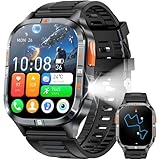
- BUILT-IN GPS & COMPASS– This military smartwatch features high-precision GPS to pinpoint your location while hiking, cycling, or traveling, keeping you safely on track without extra gear. Tap the compass icon and it locks your bearing within three seconds—engineered for pro-level outdoor adventures like camping, climbing, and trekking.
- BLUETOOTH CALLING & MESSAGES – Powered by the latest Bluetooth tech, the men’s smartwatch lets you answer or make calls right from your wrist—no need to pull out your phone. Get real-time alerts for incoming texts and app notifications so you never miss an invite. (Replying to SMS is not supported.)
- BIG SCREEN & DIY VIDEO WATCH FACE – The 2.01" military-spec display is dust-proof, scratch-resistant, and forged from high-strength glass with an aluminum alloy bezel, passing rigorous dust and abrasion tests so the screen stays crystal-clear. Upload a short family video to create a dynamic, one-of-a-kind watch face that keeps your memories alive.
- 24/7 HEALTH MONITORING – Equipped with a high-performance optical sensor, this Android smartwatch tracks heart rate and blood-oxygen levels around the clock. It also auto-detects sleep stages (deep, light, awake) for a complete picture of your health, ensuring you always know how your body is doing.
- MULTI SPORT MODES & FITNESS TRACK – Choose from running, cycling, hiking, basketball, and more to log every workout. Set goals, monitor progress, and sync data to the companion app. Bonus tools include photo gallery, weather, alarm, stopwatch, flashlight, hydration reminder, music/camera remote, find-my-phone, mini-games, and other everyday essentials.
For gym-goers who want a record of their sessions rather than a full digital coach, it does the job well. The AMOLED display actually improves usability here, making timers, rep counts, and exercise visuals easier to glance at mid-workout.
Those following structured, periodized strength programs may find the experience a little shallow, but for general fitness and consistency, it’s effective.
Battery Life: Performance That Doesn’t Punish Daily Wear
One of the Venu X1’s biggest advantages over mainstream smartwatches is how it handles battery life during training. GPS workouts don’t feel like a guilty indulgence, and you’re not planning sessions around a charger.
Compared to Apple Watch or Galaxy Watch, the Venu X1 feels liberating. Compared to Garmin’s endurance monsters, it’s clearly less extreme, but that’s the trade-off for a slimmer case, lighter weight, and more elegant design.
For users training several times a week rather than every day, the balance feels well judged.
Who This Fitness Experience Is Really For
The Venu X1 is not trying to replace a Forerunner or Fenix. It’s trying to outgrow the idea that fitness tracking has to look or feel technical to be effective.
For recreational runners, gym regulars, cyclists who ride for enjoyment, and anyone balancing fitness with work and social wear, it offers enough performance without demanding obsession.
For athletes chasing marginal gains, training plans, and race-day optimization, the compromises will feel obvious. For everyone else, those same compromises are what make the Venu X1 easier to live with, and more likely to stay on the wrist long enough to matter.
Smartwatch Features and Daily Life: Notifications, Apps, and Ecosystem Reality
After living with the Venu X1 as a training companion, the real question becomes whether it earns its place the rest of the day. Garmin clearly wants this watch to stay on your wrist after workouts, not get swapped for a “real” smartwatch when you head back to work or out for the evening.
This is where the Venu X1 reveals both its strengths and its intentional limits.
Notifications: Clear, Reliable, and Intentionally Passive
Notifications are handled in the familiar Garmin way: mirrored cleanly from your phone, presented clearly, and never overwhelming. The AMOLED display helps here, making text readable at a glance without the cramped feeling older Garmin screens could suffer from.
You can scroll messages, dismiss them, and on Android, send quick replies. On iOS, interaction is limited to viewing only, which remains one of Garmin’s longest-running platform constraints.
There’s no attempt to turn notifications into conversations or workflows. Compared to an Apple Watch, it feels restrained, but that restraint also means fewer interruptions and less battery anxiety.
Calls, Voice Features, and Smart Ambitions
Depending on configuration and region, the Venu X1 supports on-watch calling when paired to your phone, using a built-in microphone and speaker. Call quality is serviceable for quick interactions, but it’s not something you’ll want to rely on for long conversations.
Voice assistants are limited to passthrough functionality, meaning you can trigger your phone’s assistant rather than a native Garmin solution. It works, but it reinforces the sense that smart features here are supportive, not central.
This isn’t a watch that wants to compete with your phone. It’s a watch that wants to reduce how often you need to pull your phone out.
Apps and Connect IQ: Functional, Not Flourishing
Garmin’s Connect IQ store remains a mixed bag. There are useful additions, such as alternative watch faces, weather tools, and niche fitness utilities, but the ecosystem lacks the polish and depth of Apple’s App Store or Google’s Wear OS platform.
Most third-party apps feel lightweight, occasionally clunky, and rarely essential. The Venu X1 works best when you rely on Garmin’s native apps rather than trying to extend it into something it’s not designed to be.
The upside is stability and battery efficiency. The downside is limited personalization beyond aesthetics and minor utility tweaks.
Music, Payments, and Everyday Convenience
Offline music support is one of the Venu X1’s strongest lifestyle features. Syncing playlists from supported services or loading local files lets you train or commute phone-free, especially when paired with Bluetooth earbuds.
Garmin Pay is present and works reliably for quick purchases, though bank support varies by region. It’s convenient enough to become habit-forming, even if it lacks the universal acceptance of Apple Pay or Google Wallet.
These features don’t steal the spotlight, but they quietly improve daily usability in ways that feel aligned with the watch’s design-first philosophy.
Software Experience: Calm, Cohesive, and Very Garmin
Garmin’s software interface is consistent, logical, and unapologetically utilitarian. Menus are easy to learn, widgets are glanceable, and customization is deep enough without becoming overwhelming.
Animations are minimal, transitions are functional, and nothing feels designed to impress in a demo. Instead, it feels designed to disappear into routine, which is a compliment in daily wear.
Compared to Wear OS or watchOS, the experience is less playful and less expressive. Compared to other Garmin lines, it feels refined and slightly softened for broader appeal.
Ecosystem Reality: Where the Compromise Becomes Clear
The Venu X1 sits in a very specific ecosystem gap. It offers far more health and fitness depth than lifestyle-first smartwatches, but it doesn’t chase the app-centric, productivity-driven model of mainstream platforms.
There’s no LTE independence, no deep smart home control, and no ambition to replace your phone. What you get instead is consistency, long battery life, and a smartwatch that never forgets it’s also a watch.
For users deeply invested in Apple or Google ecosystems, the limitations will be obvious. For those who prioritize fitness, battery life, and a calm daily experience, the trade-offs will feel not only acceptable, but intentional.
Living With It Day to Day
On the wrist, the Venu X1’s slim case, lighter weight, and softer design language make it easy to wear from morning to night. Paired with its standard strap options, it’s comfortable during workouts and unobtrusive under a cuff or jacket.
It doesn’t demand attention, updates, or constant interaction. Instead, it quietly supports your routines, surfaces what matters, and stays out of the way when it doesn’t.
That, more than any individual smart feature, is the Venu X1’s defining daily-life characteristic.
Battery Life vs Beauty: Real-World Endurance of the Venu X1
That quiet, low-maintenance daily experience inevitably raises the next question: what does the Venu X1’s elegance cost in endurance. Garmin’s reputation is built on battery longevity, but the Venu line has always lived closer to the edge, prioritizing slimness and display quality over ultra-long runtimes.
With the X1, Garmin leans further into that design-first philosophy. The result is a battery profile that still outperforms mainstream smartwatches, but no longer dominates the category the way Garmin’s sport-focused models do.
Rated vs Real: What You Actually Get
On paper, the Venu X1 promises around 8 days in smartwatch mode, dropping to roughly 2 days with always-on display enabled. GPS usage trims that further, with around 16 to 18 hours of continuous tracking depending on signal quality and sensor load.
Rank #4

- 【Built-in GPS & Multi-System Positioning】Stay on track with the Tiwain smartwatch’s built-in GPS. Featuring military-grade single-frequency and six-satellite support (GPS, GLONASS, Beidou, Galileo, NAVIC, QZSS), this watch offers fast and accurate location tracking wherever you go. It also includes a compass, altimeter, and barometer, giving you real-time data on your altitude, air pressure, and position.
- 【Military-Grade Durability】Engineered to withstand the toughest conditions, the Tiwain smartwatch meets military standards for extreme temperatures, low pressure, and dust resistance. Crafted from tough zinc alloy with a vacuum-plated finish, this watch is also waterproof and built to resist wear and tear. The 1.43-inch AMOLED HD touchscreen offers clear visibility in all environments, and the watch supports multiple languages for global users.
- 【170+ Sport Modes & Fitness Tracking】Track your fitness journey with 170+ sport modes, including walking, running, cycling, hiking, basketball, and more. Set exercise goals, monitor progress, and sync your data to the companion app. The smartwatch also offers smart features like music control, camera remote, weather updates, long-sitting reminders, and more.
- 【LED Flashlight for Outdoor Adventures】The Tiwain smartwatch comes equipped with a built-in LED flashlight that can illuminate up to 20 meters. Activate it with the side button for added convenience during nighttime activities or outdoor adventures.
- 【Comprehensive Health Monitoring】Monitor your health with real-time heart rate, sleep, blood pressure, and blood oxygen level tracking. The smartwatch will vibrate to alert you of any abnormal readings. You can also make and receive calls directly from the watch, and stay connected with message and app notifications (receive only, no sending capability) – perfect for when you’re driving or exercising.
In real-world mixed use, the numbers land slightly below the headline claims. With notifications active, continuous heart rate tracking, sleep monitoring, a handful of GPS workouts per week, and the always-on display disabled, expect about 5 to 6 days between charges.
Turn on always-on display and regular GPS workouts, and that drops to closer to 2.5 to 3 days. That’s still comfortably ahead of Apple Watch and Galaxy Watch territory, but it’s a noticeable step down from watches like the Forerunner or Fenix lines.
The Display Is the Battery Trade-Off
The Venu X1’s AMOLED display is the single biggest factor shaping its endurance. It’s sharp, vibrant, and genuinely beautiful, with excellent outdoor visibility and smooth touch response that reinforces its premium feel.
That screen also changes how you interact with the watch. You glance at it more often, you swipe more, and you’re encouraged to engage visually rather than rely purely on gestures or buttons.
Compared to Garmin’s memory-in-pixel displays, the AMOLED panel demands more power even when idle. Garmin’s power management is efficient, but physics still applies, and the Venu X1 pays for its visual polish in milliamps.
Charging Rhythm: Predictable, Not Demanding
Where the Venu X1 redeems itself is consistency. Battery drain is linear and predictable, without the sudden drops or overnight surprises that plague some Wear OS watches.
Sleep tracking barely dents the battery, background health metrics are efficient, and idle drain during non-GPS days is impressively low for an AMOLED watch. You can comfortably settle into a routine of charging once or twice a week, rather than daily top-ups.
Charging itself is quick enough to fit into that rhythm. A short session while showering or at your desk can recover a meaningful chunk of battery, making the shorter overall endurance easier to live with.
GPS, Sensors, and Fitness Reality
During GPS workouts, the Venu X1 behaves like a modern Garmin rather than a fashion-first smartwatch. Tracking accuracy is solid, heart rate reliability is consistent for steady-state efforts, and battery drain during activities is well-controlled.
A one-hour GPS run typically consumes around 6 to 8 percent of the battery. Longer activities like hikes or bike rides are entirely feasible without anxiety, as long as you’re not stacking multiple long sessions back to back without charging.
This is where the Venu X1’s compromise becomes clear. It’s built for regular training, not multi-day adventures. Compared to a Fenix or Enduro, the margin for error is smaller, but compared to lifestyle watches, the fitness endurance is still clearly superior.
Always-On Display: The Fork in the Road
Choosing whether to enable the always-on display fundamentally changes the Venu X1 experience. With it on, the watch feels more like a traditional timepiece, always readable, always present.
The cost is battery life that shifts the watch closer to mainstream smartwatch norms. For users coming from Apple Watch or Galaxy Watch, that trade-off may feel perfectly reasonable.
Disable it, and the Venu X1 regains much of its Garmin identity. Gesture wake is reliable, the display lights instantly, and the extra days of battery life reinforce the sense that this is a watch you don’t need to think about every night.
How It Fits Garmin’s Lineup and the Wider Market
Within Garmin’s ecosystem, the Venu X1 clearly prioritizes wearability and aesthetics over extreme endurance. It sits below the Forerunner and Fenix lines in raw battery performance, but above them in visual refinement and everyday comfort.
Against Apple Watch and Galaxy Watch, the Venu X1 still feels liberating. Even at its shortest endurance, you’re charging every few days, not every night, and fitness tracking never feels like a background task fighting for power.
The compromise, then, isn’t between good and bad battery life. It’s between exceptional endurance and a watch that looks and feels genuinely elegant on the wrist. Garmin chose beauty, but not at the expense of practicality.
Garmin Venu X1 vs Apple Watch, Galaxy Watch, and Fitbit: Philosophical Differences
Stepping back from battery graphs and feature lists, the Venu X1 makes the most sense when you look at intent rather than specs. Garmin didn’t build this watch to win on app count, fashion cachet, or extreme endurance in isolation.
Instead, the Venu X1 exists as a deliberate midpoint, borrowing just enough from each camp to feel balanced on the wrist and in daily life. That philosophy puts it on a very different footing compared to Apple, Samsung, and Fitbit.
Apple Watch: A Computer First, a Fitness Tool Second
Apple Watch approaches fitness as one of many pillars in a tightly integrated computing platform. The experience is dominated by apps, notifications, voice assistants, and deep iPhone dependency, with fitness tracking woven neatly into that ecosystem.
By contrast, the Venu X1 never feels like a mini smartphone. Its interface prioritizes glanceable health metrics, training status, and body signals over interaction depth, and it remains fully functional without constant phone engagement.
This philosophical split shows up most clearly in battery behavior and mental load. Apple Watch assumes nightly charging and constant interaction, while the Venu X1 assumes you want to wear the watch, not manage it.
Galaxy Watch: Feature-Rich Versatility Over Physiological Depth
Samsung’s Galaxy Watch line aims to be everything at once. It leans heavily into Wear OS flexibility, visual flair, and smartphone-style interactions, particularly for Android users who value customization and app variety.
The trade-off is that fitness and recovery metrics often feel surface-level compared to Garmin’s long-term physiological modeling. Galaxy Watch excels at being reactive, but it rarely builds a deeper narrative about how your body is adapting over time.
Venu X1 goes the opposite direction. It sacrifices software breadth to maintain continuity, consistency, and low-friction health tracking that quietly accumulates value the longer you wear it.
Fitbit: Wellness Guidance Without Performance Ambition
Fitbit’s philosophy centers on accessibility and behavioral nudging. Its watches focus on sleep, stress, and general activity with a tone that feels supportive rather than analytical.
For many users, that’s exactly the appeal. However, once training intensity increases or sport specificity matters, Fitbit’s platform begins to feel shallow and occasionally opaque.
The Venu X1 sits well above Fitbit in training intelligence, GPS reliability, and sport versatility, but without drifting into the intimidating territory of Garmin’s hardcore models. It assumes curiosity and consistency, not elite performance or casual indifference.
Design Language and Daily Wearability as a Strategic Choice
Where Apple and Samsung treat design as a vehicle for screen-forward interaction, Garmin treats design here as a reason to keep the watch on your wrist. The Venu X1’s slim profile, refined materials, and restrained finishing are meant to disappear under a cuff as easily as they stand out in gym wear.
This matters because health tracking only works when the watch stays on. Garmin’s bet is that elegance improves compliance, and compliance improves data quality more than adding another app tile ever could.
It’s a watch designed to be worn continuously, not showcased intermittently.
What the Venu X1’s Compromise Really Means
Philosophically, the Venu X1 rejects extremes. It doesn’t chase the Apple Watch’s app-driven dominance, the Galaxy Watch’s feature sprawl, or Fitbit’s simplified wellness framing.
Instead, it treats health, fitness, and aesthetics as interdependent. Battery life supports training, design supports wearability, and software supports long-term understanding rather than momentary engagement.
For buyers comparing across these platforms, the decision isn’t about which watch does more. It’s about which watch aligns with how much attention, intention, and permanence you want on your wrist.
💰 Best Value

- Smart Watch with GPS and Offline Map: This smart watch connects to multiple satellite systems for accurate real-time positioning, and includes a professional-grade compass, altimeter, and barometer for precise data, ensuring you maintain your sense of direction in any outdoor environment. The map version supports downloading offline maps; select a route or destination to view the route even without a signal, eliminating the risk of getting lost.
- Bluetooth Call & Message Functionality: This smart watches for men allows you to make and receive calls; receive text and social media notifications (Facebook, WhatsApp, Instagram, Twitter, etc.); and reply to text messages with voice-to-text or set up quick replies (text reply functionality is available for Android phones).
- Sports & Health Monitoring: This 5ATM waterproof fitness watch supports over 100 sports modes and tracks daily activity data, calories, distance, steps, and heart rate. You can use it to monitor your health metrics (blood oxygen, heart rate, stress, and sleep), monitor your fatigue and mood, and perform PAI analysis. You can also use this smartwatch to set water intake and sedentary reminders. Stay active and healthy with this fitness tracker watch.
- Customizable Watch Faces & AI Functionality: This smart watch features a 1.46-inch HD touchscreen and over 100 downloadable and customizable watch faces. You can even use your favorite photos as your watch face. Equipped with AI technology, it supports voice descriptions in multiple languages to generate personalized AI watch faces. The watch's AI Q&A and AI translation features provide instant answers to questions and break down language barriers, making it an ideal companion for everyday life and travel.
- Large Battery & High Compatibility & More Features: This smart watch for android phones and ios phone features a large 550ml battery for extended battery life. It's compatible with iOS 9.0 and above and Android 5.0 and above. It offers a wealth of features, including an AI voice assistant, weather display, music control, camera control, calculator, phone finder, alarm, timer, stopwatch, and more. (Package Includes: Smartwatch (with leather strap), spare silicone strap, charging cable, and user manual)
Who the Garmin Venu X1 Is Actually For (and Who Should Look Elsewhere)
The Venu X1 only makes sense once you accept its central premise: this is a Garmin for people who want to live with their watch, not manage it. Everything about its design, feature set, and software priorities flows from that assumption.
Understanding whether that aligns with your habits matters far more than comparing spec sheets.
For the Fitness-Minded Who Train Regularly, Not Relentlessly
The Venu X1 is a strong fit for runners, cyclists, gym-goers, and multi-sport users who train several times a week and care about progress, but aren’t structuring their lives around peak performance. You get reliable dual-band GPS, solid heart rate tracking, VO2 max estimates, recovery guidance, and Garmin’s broader training ecosystem without the density or intimidation of a Forerunner or Fenix.
It rewards consistency more than obsession. If you want insight into how today’s workout affects tomorrow’s readiness without living inside charts and spreadsheets, this balance works remarkably well.
For People Who Want One Watch From Morning to Midnight
Garmin’s decision to slim the case, refine the finishing, and lean into a polished AMOLED display isn’t cosmetic fluff here. At roughly lifestyle-watch proportions and with a comfortable silicone strap that doesn’t scream “sports gear,” the Venu X1 is genuinely easy to forget on the wrist.
That matters for sleep tracking, stress monitoring, and body battery metrics that rely on continuous wear. If you routinely take off bulky watches at dinner, at work, or at night, the Venu X1’s comfort-first design is one of its most practical advantages.
For Buyers Who Value Battery Life Over App Quantity
The Venu X1’s battery life sits well above Apple Watch and Galaxy Watch territory, even with an always-on display in play. You’re looking at several days of mixed use, including workouts and sleep tracking, without changing habits or disabling features.
The trade-off is obvious but intentional. Garmin’s app ecosystem remains sparse, notifications are functional rather than interactive, and this is not a wrist-based productivity hub.
For Style-Conscious Users Who Still Want Real Fitness Credibility
Unlike rugged Garmins that wear their capability on the outside, the Venu X1’s materials and proportions aim for subtlety. The case finishing is clean, the screen dominates without excess bezel drama, and it pairs just as naturally with office attire as with gym wear.
This is not a fashion watch pretending to track fitness. It’s a serious health and training device that simply refuses to look like equipment.
Who Should Look Elsewhere: Performance Maximalists
If you want advanced training load analytics, deep endurance metrics, offline mapping, or multi-day expedition battery modes, the Venu X1 will feel constrained. Garmin deliberately walls off its most hardcore features to protect clarity and approachability.
Forerunner, Fenix, and Epix models exist precisely because some athletes want that complexity. The Venu X1 does not aspire to replace them.
Who Should Look Elsewhere: Smartwatch Power Users
If your watch needs to handle calls fluidly, manage third-party apps, reply intelligently to messages, or function as an extension of your phone’s ecosystem, Apple Watch and Galaxy Watch remain unmatched. Garmin’s software experience is stable and purposeful, but it is not dynamic.
The Venu X1 treats notifications as information, not interaction. For some users, that restraint will feel refreshing; for others, limiting.
Who Should Look Elsewhere: Casual Wellness-Only Users
Those coming from Fitbit-style devices who prefer simplified scores, minimal decision-making, and guided nudges may find the Venu X1 more serious than they want. Garmin expects a baseline level of engagement and curiosity about your data.
If you want your watch to interpret everything for you without asking much in return, this may feel like unnecessary responsibility rather than empowerment.
A Watch for People Who Know What They’re Giving Up
The Venu X1 is best understood as a conscious middle path. It gives up extremity on both ends to create something sustainable, wearable, and quietly capable.
If that sounds like compromise in the best sense of the word, this watch was likely designed with you in mind.
The Verdict: Is the Venu X1 the Most Livable Garmin Yet?
Seen in full, the Venu X1 feels like the clearest expression yet of what a “daily Garmin” is supposed to be. It doesn’t chase the extremes that define the brand’s halo products, nor does it dilute itself into a generic lifestyle gadget. Instead, it focuses on the hours that actually matter most: the 23 you’re not training.
This is a watch designed to be worn continuously, not tolerated between workouts. And that design intent shows up everywhere, from the slim case profile and display-forward design to the calmer, more approachable software experience.
A Design-Led Garmin That Still Feels Like a Garmin
The Venu X1 succeeds because it never forgets where it comes from. Underneath the refined exterior is still Garmin’s sensor stack, training logic, and long-term health modeling, delivered with the same consistency the brand is known for.
What’s changed is how little the watch demands from you visually and mentally. It sits flatter on the wrist, works with a wider range of straps and clothing, and avoids the “always on expedition” aesthetic that turns some users away from the Fenix and Epix lines.
For everyday comfort and wearability, this is one of Garmin’s most balanced builds to date. It’s light enough to sleep in, understated enough for work, and durable enough that you never feel the need to take it off.
The Right Compromises, Intentionally Made
Garmin made very deliberate trade-offs with the Venu X1, and that’s what gives it clarity. You lose deep endurance analytics, advanced mapping, and ultra-long adventure battery modes, but you gain simplicity, legibility, and a watch that doesn’t constantly remind you of what it isn’t.
Compared to an Apple Watch or Galaxy Watch, you give up app ecosystems and rich interaction. In return, you get battery life measured in days rather than hours, health data that prioritizes trends over tricks, and a platform that doesn’t feel disposable after two years.
These compromises don’t weaken the Venu X1; they define it. This is a watch for users who value coherence over feature accumulation.
How It Fits in Garmin’s Own Lineup
Within Garmin’s range, the Venu X1 may be the easiest to recommend to the widest audience. It doesn’t ask you to commit to a specific sport, training philosophy, or aesthetic identity.
Forerunner remains the better choice for runners chasing performance gains. Fenix and Epix are still unmatched for outdoor athletes and endurance obsessives. But for someone who trains regularly, cares about recovery and health, and wants a watch that feels normal in daily life, the Venu X1 hits a sweet spot those models intentionally ignore.
It’s less about being the most powerful Garmin, and more about being the most livable one.
Who Will Get the Most Out of It
The ideal Venu X1 owner is someone who already understands the smartwatch landscape and knows what they don’t need. They want accurate health tracking, reliable GPS workouts, and meaningful recovery insights, but not a wrist-mounted computer or a phone replacement.
This is a watch for people who wear mechanical watches on weekends, care about fit and finishing, and still want their smartwatch to feel like an object, not a gadget. It rewards consistency rather than obsession.
If that sounds like you, the Venu X1 will feel quietly satisfying rather than immediately impressive.
Final Judgment
Yes, the Venu X1 is arguably the most livable Garmin yet. Not because it does the most, but because it interferes the least while still delivering what matters.
It bridges the gap between fitness-first and lifestyle-first better than any Garmin before it, without losing the brand’s core identity. For users who want a smartwatch that supports their life instead of restructuring it, this is one of Garmin’s most thoughtful releases to date.
It’s a beautiful compromise, and in this case, that’s exactly the point.