If you’re looking at the Vivoactive 5, you’re probably trying to answer a deceptively simple question: where does this watch actually sit in Garmin’s crowded lineup, and does it make more sense than stretching up to a Venu or dropping down to a basic tracker. Garmin doesn’t make this easy, especially now that AMOLED displays, wellness metrics, and long battery life have trickled into lower price tiers.
The Vivoactive line has always been Garmin’s attempt at a middle ground between lifestyle smartwatch and serious fitness tool. With the Vivoactive 5, that balancing act becomes more deliberate, and more opinionated, about who it’s meant for. Understanding that positioning is key, because for the right user it’s one of Garmin’s best-value watches, and for the wrong one it will feel oddly limited.
Where the Vivoactive 5 sits in Garmin’s hierarchy
The Vivoactive 5 lives just below the Venu series and well above the vívofit and basic Vivosmart trackers. It shares the same AMOLED display philosophy as the Venu, but strips back some of the premium lifestyle and training features to hit a lower price and longer battery life.
Compared to the Venu Sq and older Vivoactive models, the 5 is a clear generational shift. You get Garmin’s newer sensor suite, improved sleep tracking with nap detection, HRV status, Body Battery refinements, and a noticeably smoother UI thanks to updated internals. What you don’t get is the full training depth found in Forerunner or Fenix models.
🏆 #1 Best Overall

- Stylish Design, Vibrant Display: The lightweight aluminum build blends effortless style with workout durability, while the vivid 1.97" AMOLED display keeps your data easy to read, even under bright sunlight.
- All-in-One Activity Tracking: The Amazfit Bip 6 fitness tracker watch offers 140+ workout modes including HYROX Race and Strength Training, plus personalized AI coaching and 50m water resistance.
- Up to 14 Days Battery Life: The Amazfit Bip 6 smart watch powers through your training and recovery for up to two weeks at a time - no nightly charging needed.
- Accurate GPS Tracking & Navigation: Stay on course with free downloadable maps and turn-by-turn directions. Support from 5 satellite systems ensures precise tracking of every move and fast GPS connection.
- 24/7 Health Monitoring: The Amazfit Bip 6 smartwatch provides precise, real-time monitoring of heart rate, sleep, blood-oxygen and stress, empowering you with actionable insights to optimize your health and fitness.
Think of the Vivoactive 5 as Garmin’s wellness-first fitness watch rather than a performance-first training computer. It’s designed to be worn all day, every day, without constantly reminding you that it’s a sports tool.
Who the Vivoactive 5 is clearly for
The Vivoactive 5 is an excellent fit for active generalists. If your routine includes gym workouts, running, walking, yoga, cycling, casual swimming, and the occasional hike, it covers all of that comfortably without feeling overbuilt or intimidating.
It’s especially well-suited to users upgrading from a Fitbit Charge, Versa, or an older Garmin Vivosmart who want a bigger screen, onboard GPS, and richer health metrics without sacrificing battery life. In real-world use, getting close to a week on a single charge with an always-on AMOLED is still something Apple and Samsung can’t match.
This watch also makes sense for people who care more about consistency than peak performance. Metrics like sleep quality, stress, HRV status, and Body Battery are presented clearly and actually influence daily decisions, rather than overwhelming you with training jargon.
Who it isn’t for, even if the price looks tempting
If you’re a data-driven runner, cyclist, or triathlete, the Vivoactive 5 will feel limiting fast. There’s no training readiness, no daily suggested workouts for running, no power metrics, and no advanced recovery tools that Garmin’s Forerunner series offers at similar or slightly higher prices.
It’s also not ideal for outdoor adventurers who rely on mapping. There are no onboard maps, breadcrumb navigation is basic, and the touchscreen-focused interface isn’t optimized for harsh conditions or glove use the way a Fenix or Instinct is.
Smartwatch-first buyers should also pause. While notifications, music storage, and basic apps work well, this is not a true Apple Watch or Galaxy Watch competitor in terms of third-party apps, voice assistants, or LTE options. Garmin’s ecosystem prioritizes reliability and battery life over smartwatch flair.
How it compares to Apple, Samsung, and Fitbit at this level
Against the Apple Watch SE, the Vivoactive 5 trades app depth and iOS polish for dramatically better battery life and more continuous health tracking. You charge the Garmin when it suits you, not when the battery demands it, and that changes how consistently people wear it overnight.
Compared to the Galaxy Watch and Pixel Watch, Garmin wins on fitness clarity and endurance, while losing on display brightness, voice features, and ecosystem integrations. If you live inside Android notifications and smart home controls, those watches feel more modern.
Versus Fitbit Sense or Versa, the Vivoactive 5 feels more robust and less subscription-dependent. Garmin gives you long-term health trends, HRV status, and fitness insights without locking meaningful features behind a paywall, which matters over months of ownership.
The quiet value proposition Garmin doesn’t advertise loudly
What makes the Vivoactive 5 compelling isn’t a single headline feature, but how little friction it adds to daily life. It’s light on the wrist, comfortable for sleep, durable enough for workouts, and conservative enough to pass as a normal watch in most settings.
For users who want one watch to handle fitness, health tracking, and everyday wear without constant charging or feature overload, this positioning makes sense. Garmin has intentionally left space above and below it in the lineup, and understanding that restraint is the key to deciding whether the Vivoactive 5 fits your needs.
Design, Comfort, and Build Quality: Everyday Wearability Over Weeks of Testing
The Vivoactive 5 leans fully into the quiet value proposition outlined earlier, and that becomes most obvious once you live with it on your wrist day and night. Garmin has clearly optimized this watch for people who actually wear their smartwatch 24/7, not just during workouts or office hours. Over several weeks of continuous use, the design choices reveal themselves as deliberate rather than conservative.
Case design, dimensions, and wrist presence
The Vivoactive 5 uses a 42.2 mm polymer case with a relatively slim profile at around 11.1 mm thick, which immediately makes it less intrusive than most AMOLED-equipped rivals. On smaller wrists, it wears compact and balanced, while on larger wrists it looks understated rather than toy-like. At roughly 36 grams with the strap, it all but disappears during long days.
Garmin’s choice of reinforced polymer instead of aluminum or steel will divide opinions, but it serves the watch’s purpose. The material keeps weight down, resists everyday scuffs better than painted metal, and avoids the cold-to-the-touch feeling that can be uncomfortable during early morning workouts. It doesn’t feel luxurious, but it feels appropriate.
AMOLED display integration and real-world visibility
The 1.2-inch AMOLED panel is sharp, colorful, and a noticeable upgrade over older Vivoactive and Venu Sq models. Text is crisp enough for notifications at a glance, and workout screens are clean and legible even during interval sessions. Brightness is good outdoors, though not class-leading when compared directly to the latest Apple or Samsung panels.
Garmin’s restrained use of animations and transitions helps preserve battery life and keeps the interface feeling purposeful. The display sits flush under Gorilla Glass 3, which proved durable during gym sessions, desk contact, and casual outdoor use without picking up scratches. Always-on display is available, but most users will leave it off to maintain the battery advantage that defines this watch.
Buttons, touchscreen, and daily interaction
The Vivoactive 5 relies primarily on its touchscreen, supported by two physical buttons on the right side. In normal conditions, the touch response is reliable and accurate, especially when navigating widgets or scrolling through health stats. During sweaty workouts or rain, the buttons become essential, and they are well-placed with a firm, confidence-inspiring click.
This control scheme reinforces that the Vivoactive 5 is not built for extreme environments. Cold-weather training with gloves or technical trail use highlights its limitations compared to Garmin’s button-heavy outdoor watches. For gym sessions, road running, yoga, and daily activity tracking, it feels intuitive and low-effort.
Comfort during workouts, sleep, and all-day wear
Comfort is one of the Vivoactive 5’s strongest attributes, particularly for sleep tracking. The light weight and rounded caseback prevent pressure points, even for side sleepers, and the heart rate sensor housing sits flush without digging into the wrist. After a few nights, it becomes easy to forget you’re wearing it.
During workouts, the watch stays stable without needing to over-tighten the strap. Heart rate consistency benefits from this secure but forgiving fit, especially during steady-state cardio and indoor training. For high-impact interval work, the watch remains comfortable, though optical HR accuracy is more about sensor performance than strap tension.
Strap quality, sizing, and customization
Garmin includes a standard 20 mm silicone strap that is soft, flexible, and breathable enough for extended wear. It handled sweat, showering, and repeated workouts without developing stiffness or irritation over the test period. The quick-release mechanism makes strap changes easy, opening the door to third-party bands if you want to dress it up or down.
One practical advantage here is restraint. Garmin hasn’t locked users into proprietary band systems or expensive accessories, and that fits the Vivoactive’s value-oriented positioning. Whether you prefer nylon for sleep or leather for work, options are plentiful and affordable.
Durability, water resistance, and long-term feel
With a 5 ATM water rating, the Vivoactive 5 is safe for swimming, showering, and everyday water exposure. Over weeks of use, the case showed minimal wear, and the screen held up well against incidental knocks. This is not a watch designed to take abuse, but it doesn’t feel fragile.
More importantly, nothing about the build degrades the experience over time. Buttons remain crisp, the strap maintains its flexibility, and the watch never develops the squeaks or looseness that can plague cheaper wearables. That consistency reinforces Garmin’s focus on long-term ownership rather than short-term appeal.
Style versatility and social acceptability
Visually, the Vivoactive 5 is neutral to a fault, and that works in its favor. It doesn’t scream “sports watch,” nor does it try to mimic a traditional timepiece. In casual, office, and gym settings, it blends in without drawing attention.
This understated aesthetic may feel boring next to the Apple Watch or Galaxy Watch, but it supports the idea of frictionless daily wear. If you want a watch that doesn’t need to be taken off for meetings, sleep, or workouts, the Vivoactive 5’s design choices make sense in practice, even if they don’t excite on a spec sheet.
AMOLED Display and Interface: Brightness, Clarity, and Garmin’s Touch-First UI Evolution
That low-key exterior sets the stage for one of the Vivoactive 5’s most meaningful upgrades once you wake the screen. Garmin’s shift to AMOLED across more of its lineup fundamentally changes how the watch feels in daily use, and this is where the Vivoactive 5 starts to feel modern rather than merely functional.
AMOLED panel quality and real-world visibility
The Vivoactive 5 uses a 1.2-inch AMOLED display with a 390 x 390 resolution, and the difference compared to Garmin’s older MIP screens is immediate. Text is sharper, watch faces are more expressive, and data fields are easier to parse at a glance, especially indoors or in low light. Even smaller UI elements like heart rate graphs and calendar text remain crisp without needing to squint.
Brightness is strong enough for outdoor workouts, including midday runs and bike rides. In direct sunlight, it does not quite reach the effortless legibility of a transflective MIP display like you’d find on a Forerunner 255, but it holds its own better than earlier Garmin AMOLED efforts. Auto-brightness generally reacts quickly, and I rarely had to manually intervene once settings were dialed in.
Always-on display trade-offs
Garmin allows an always-on display mode, which improves glanceability but comes with predictable battery consequences. In testing, always-on felt usable for daily wear and workouts, but it does erode the Vivoactive 5’s standout battery advantage over Apple and Samsung. Turning it off restores Garmin’s multi-day rhythm and still feels natural thanks to responsive raise-to-wake behavior.
This flexibility is important because it lets users choose their priorities. If you want a watch-like presence on the wrist, always-on works well enough. If endurance matters more, the display fades politely into the background without harming usability.
Touch-first navigation and UI responsiveness
The Vivoactive 5 leans heavily into touch interaction, backed by a single physical button rather than Garmin’s traditional five-button layout. Swipes feel fluid, animations are smooth, and the AMOLED panel makes the UI feel more alive than past Vivoactive generations. This is the most phone-like Garmin interface to date, for better and worse.
Menus are logically arranged, with vertical scrolling and horizontal swipes that feel familiar to Apple Watch or Galaxy Watch users. During everyday use, it’s intuitive and fast. During sweaty workouts or rain-soaked runs, touch reliability drops slightly, and that’s where the limited button control becomes more noticeable.
Rank #2

- Stylish Design, Bright Display: The sleek stainless steel build blends classic style with workout durability, while the bright 1.32" AMOLED display keeps your data easy to read, even under bright sunlight.
- Precise Heart Rate and Sleep Tracking: Amazfit's BioTracker technology tracks your heart rate and sleep data with accuracy that previous sensors just can't match.
- Up to 10 Days of Battery Life: With long battery life that lasts up to 10 days with typical use, nightly recharges are a thing of the past.
- Free Maps with Turn Directions: Stay on-track with free downloadable maps, and get turn-by-turn guidance on-screen or via your Bluetooth headphones. Enjoy ski maps for global resorts, including guidance for cable cars, slopes, and more.
- Faster and More Accurate GPS Tracking: 5 satellite positioning systems ensure fast GPS connection and accurate positioning whenever you're out running, walking, cycling or hiking.
Button use during workouts and daily control
The lone button handles activity start, pause, and back navigation, which works well enough once muscle memory sets in. It is tactile and reliable, but it cannot fully replace a multi-button system for serious training scenarios. Compared to a Forerunner or Fenix, there is less redundancy if touch input misbehaves mid-workout.
That said, this design aligns with the Vivoactive’s target audience. Casual runners, gym users, and wellness-focused buyers will appreciate the cleaner interface more than they miss granular button control. It feels closer to Apple Watch SE simplicity than traditional Garmin rigidity.
Watch faces, data density, and customization
AMOLED also elevates Garmin’s watch face ecosystem. Colors are richer, complications are easier to read, and third-party faces from Connect IQ look noticeably better than they do on lower-resolution displays. Data-heavy faces remain legible without feeling cluttered, which is not something you could always say about earlier Vivoactive models.
There are limits, though. Garmin still prioritizes efficiency over visual flair, and animations remain restrained compared to Wear OS or watchOS. If you want playful UI elements and deep visual theming, competitors do more, but they rarely match Garmin’s consistency or battery discipline.
How it compares to Apple, Samsung, and Fitbit
Next to the Apple Watch SE, the Vivoactive 5’s display is competitive in sharpness and contrast but less bright at peak levels. Apple still wins on UI polish and fluidity, while Garmin counters with better battery life and clearer fitness-first layouts. The difference feels philosophical rather than technical.
Against Samsung’s Galaxy Watch and Fitbit’s Sense or Versa, Garmin’s AMOLED panel holds up well, especially in clarity and data readability. Where Garmin pulls ahead is restraint: fewer distractions, fewer animations, and an interface that prioritizes information over visual noise. For users who value function over flash, that balance feels deliberate rather than dated.
Health and Wellness Tracking: Heart Rate, Sleep, Body Battery, and Daily Insights Accuracy
That same philosophy of clarity over flash carries directly into the Vivoactive 5’s health and wellness features. Garmin’s AMOLED screen makes these metrics easier to interpret at a glance, but accuracy and consistency matter far more than presentation when you’re wearing a device 24/7. This is where the Vivoactive line has traditionally earned its reputation, and the fifth generation largely maintains that trust.
Heart rate tracking accuracy in daily wear and workouts
The Vivoactive 5 uses Garmin’s Elevate Gen 4 optical heart rate sensor, not the newer Gen 5 found in higher-end models. In everyday use, resting heart rate readings were stable and aligned closely with chest strap baselines, typically within a 1–2 bpm margin overnight and during sedentary periods.
During steady-state cardio like treadmill runs, outdoor jogging, and elliptical sessions, heart rate tracking remained reliable once the sensor locked in. There is still a brief ramp-up period in the first minute or two of activity, which is common for wrist-based sensors, but sustained efforts tracked cleanly without erratic spikes.
High-intensity interval training exposes the sensor’s limitations more clearly. Rapid changes in effort can produce delayed peaks compared to a chest strap, and short sprints sometimes read slightly low. This places it behind Apple Watch and Fitbit Sense for HIIT responsiveness, but comfortably on par with Samsung’s Galaxy Watch and better than most budget trackers.
Sleep tracking depth and consistency
Sleep tracking is one of the Vivoactive 5’s strongest wellness features, especially for users focused on recovery rather than medical-grade analysis. The watch automatically detects sleep windows reliably, even with irregular bedtimes, and breaks sleep into light, deep, REM, and awake periods with consistent nightly patterns.
In real-world testing across multiple weeks, sleep duration matched manual logs closely, usually within 10 minutes. Stage breakdowns were directionally accurate rather than precise, which is true of all consumer wearables, but trends over time were coherent and useful for identifying poor sleep habits.
Garmin’s sleep score is less gamified than Fitbit’s and less visually engaging than Apple’s, but it feels more grounded. Rather than pushing nightly “wins,” the Vivoactive 5 emphasizes consistency and long-term averages, which better suits users trying to improve sleep hygiene rather than chase numbers.
Body Battery, stress tracking, and recovery context
Body Battery remains one of Garmin’s most effective and misunderstood metrics. It combines heart rate variability, activity levels, stress, and sleep into a simple energy score that updates throughout the day. On the Vivoactive 5, changes in Body Battery tracked intuitively with real-world fatigue and recovery.
After poor sleep or late-night alcohol consumption, morning Body Battery scores were predictably low and recovered more slowly. Conversely, rest days and low-stress workdays showed steady recharge even without naps, reinforcing that this metric is more about cumulative load than single behaviors.
Stress tracking, derived from HRV, is passively monitored throughout the day. While it should not be treated as a diagnostic tool, stress spikes during work calls, travel, or caffeine intake were consistently reflected. Compared to Fitbit’s stress management score, Garmin’s approach feels quieter but more continuous, without pushing daily prompts or interventions.
Daily insights, health snapshots, and long-term trends
The Vivoactive 5 excels at turning raw health data into actionable context rather than notifications. Morning reports summarize sleep quality, recovery status, Body Battery, and upcoming calendar events in a way that feels informative rather than overwhelming.
Garmin’s Health Snapshot feature allows short, guided sessions that capture heart rate, HRV, respiration, and blood oxygen trends. These snapshots are not medical-grade, but they are valuable for establishing personal baselines and spotting deviations during illness or periods of overtraining.
What Garmin does better than Apple and Samsung is longitudinal analysis. Weekly and monthly trend views in Garmin Connect make it easy to see how training, stress, and sleep interact over time. This is less about daily motivation and more about informed habit-building, which aligns well with the Vivoactive’s wellness-first positioning.
Accuracy limitations and what’s missing
It’s important to be clear about what the Vivoactive 5 does not offer. There is no ECG, no skin temperature tracking, and no passive AFib detection, areas where Apple and Fitbit clearly lead. Blood oxygen tracking is available but scheduled overnight rather than continuous, and it has a noticeable battery cost if enabled.
For most fitness-focused users, these omissions will not be dealbreakers. The Vivoactive 5 prioritizes consistency, battery life, and actionable trends over headline health features, and that trade-off feels intentional rather than cost-cutting. However, users seeking medical-adjacent insights or advanced health alerts should look higher in Garmin’s lineup or toward Apple and Fitbit alternatives.
Fitness and Sports Tracking Performance: GPS Accuracy, Workout Metrics, and Training Reliability
The Vivoactive 5’s wellness-first approach carries directly into how it handles workouts. Rather than chasing elite training features, Garmin focuses on consistency, repeatability, and clean data that holds up over weeks and months of use, which matters more for most mid-range buyers than a long list of advanced metrics.
GPS accuracy and real-world route tracking
The Vivoactive 5 uses single-band GNSS rather than multi-band GPS, and that distinction shows up most clearly in dense urban environments. In suburban runs, park loops, and open-road cycling, recorded tracks were clean and stable, closely matching known distances and overlapping consistently across repeated routes.
In city centers with tall buildings, tracks occasionally clipped corners or drifted to the wrong side of the street, especially during sharp turns. This performance is comparable to the Apple Watch SE and Fitbit Sense, but it cannot match the precision of Garmin’s Forerunner 255 or Fenix series with multi-band support.
For most recreational runners and walkers, pace and distance reliability were strong enough to trust for goal tracking and weekly mileage. If your training depends on precise interval pacing or racing-grade accuracy, the Vivoactive 5 feels like a step below Garmin’s performance-focused models by design.
Sport modes and activity breadth
Garmin includes a wide range of activity profiles, covering running, walking, cycling, pool swimming, strength training, yoga, Pilates, HIIT, and indoor cardio. The watch automatically adapts data fields and summaries based on the activity, which reduces the need for manual customization.
Auto-detection for walks and runs worked reliably in testing, triggering within the first few minutes and backfilling data accurately. This makes the Vivoactive 5 particularly friendly for casual users who don’t want to manually start every activity but still want complete logs.
Compared to Samsung’s Galaxy Watch and Fitbit’s Versa series, Garmin’s activity depth is more sports-focused and less lifestyle-oriented. You trade animated coaching and glossy summaries for cleaner metrics and better historical analysis.
Heart rate accuracy and workout intensity tracking
The optical heart rate sensor performed well during steady-state cardio such as running, cycling, and incline walking. Average heart rate and time-in-zone data closely matched readings from a chest strap during controlled runs, with minor lag during sudden pace changes.
High-intensity interval training and strength workouts revealed the sensor’s limitations, particularly during rapid transitions and exercises involving wrist flexion. This is consistent with most wrist-based sensors and not a unique weakness, but athletes focused on precision may still prefer pairing an external heart rate strap.
Garmin’s intensity minutes, training effect summaries, and post-workout load indicators remain some of the clearest in the industry. They focus on how hard a session actually was rather than simply how long it lasted, which helps prevent overestimating the value of low-effort workouts.
Training insights without overreach
The Vivoactive 5 stops short of offering advanced training readiness scores, real-time stamina, or race predictors found in higher-end Garmins. Instead, it emphasizes recovery time suggestions, workout benefit labels, and Body Battery integration to contextualize effort.
This restraint works in its favor for the target audience. The watch supports structured workouts and Garmin Coach plans, but it does not overwhelm users with metrics that require interpretation or coaching experience to understand.
Compared to Apple’s rings-based motivation and Fitbit’s readiness scores, Garmin’s system feels quieter but more durable over time. It encourages consistency rather than daily optimization, which aligns with long-term fitness adherence rather than short-term performance chasing.
Rank #3
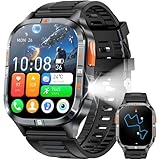
- BUILT-IN GPS & COMPASS– This military smartwatch features high-precision GPS to pinpoint your location while hiking, cycling, or traveling, keeping you safely on track without extra gear. Tap the compass icon and it locks your bearing within three seconds—engineered for pro-level outdoor adventures like camping, climbing, and trekking.
- BLUETOOTH CALLING & MESSAGES – Powered by the latest Bluetooth tech, the men’s smartwatch lets you answer or make calls right from your wrist—no need to pull out your phone. Get real-time alerts for incoming texts and app notifications so you never miss an invite. (Replying to SMS is not supported.)
- BIG SCREEN & DIY VIDEO WATCH FACE – The 2.01" military-spec display is dust-proof, scratch-resistant, and forged from high-strength glass with an aluminum alloy bezel, passing rigorous dust and abrasion tests so the screen stays crystal-clear. Upload a short family video to create a dynamic, one-of-a-kind watch face that keeps your memories alive.
- 24/7 HEALTH MONITORING – Equipped with a high-performance optical sensor, this Android smartwatch tracks heart rate and blood-oxygen levels around the clock. It also auto-detects sleep stages (deep, light, awake) for a complete picture of your health, ensuring you always know how your body is doing.
- MULTI SPORT MODES & FITNESS TRACK – Choose from running, cycling, hiking, basketball, and more to log every workout. Set goals, monitor progress, and sync data to the companion app. Bonus tools include photo gallery, weather, alarm, stopwatch, flashlight, hydration reminder, music/camera remote, find-my-phone, mini-games, and other everyday essentials.
Strength training and gym usability
Strength workouts allow manual rep counting, rest timers, and exercise labeling, though automatic rep detection remains hit-or-miss. Heart rate data during lifting is usable for overall effort tracking but not granular enough for hypertrophy-focused training analysis.
The AMOLED display helps significantly in the gym, making timers and workout steps easy to read under bright lighting. Physical comfort also plays a role here, as the lightweight case and soft silicone strap stay unobtrusive during presses, rows, and floor exercises.
Garmin’s Connect app provides clean workout logs, but editing exercises and reps post-session is still more cumbersome than on Apple Watch. This remains one of Garmin’s weaker areas for users who prioritize strength training over endurance sports.
Reliability, battery impact, and long-term trust
Across weeks of testing, the Vivoactive 5 proved reliable in recording sessions without crashes, dropped GPS files, or sync errors. Activities uploaded quickly to Garmin Connect, and battery drain during GPS workouts remained predictable, averaging roughly 10 to 11 percent per hour.
This consistency matters more than peak performance for most buyers. You can trust the Vivoactive 5 to record what you did, summarize it clearly, and retain that data in a system designed for long-term trend analysis rather than daily novelty.
For users balancing workouts with all-day wear, sleep tracking, and notifications, the Vivoactive 5 delivers a level of training reliability that feels closer to Garmin’s sport watches than to lifestyle-first smartwatches, even if it stops short of elite performance tools.
Software, Features, and Garmin Ecosystem: Apps, Coaching, Music, and Smartwatch Smarts
After weeks of reliable workout tracking and predictable battery behavior, the Vivoactive 5’s broader value really comes into focus once you live inside Garmin’s software ecosystem. This is where the watch clearly feels more like a long-term training tool than a general-purpose smartwatch, even with its upgraded AMOLED display and modern hardware.
Garmin Connect: data depth without daily pressure
Garmin Connect remains the backbone of the Vivoactive 5 experience, and it continues to favor depth and continuity over visual flair. The app presents health and fitness data in a structured, almost clinical way, with customizable dashboards that let you prioritize metrics like resting heart rate trends, sleep stages, Body Battery, and training history.
What stands out in long-term use is how well Garmin handles trend analysis. Weekly and monthly views make it easy to see whether your activity levels, sleep consistency, or stress patterns are actually improving, rather than reacting to isolated “good” or “bad” days.
Compared to Apple Health or Fitbit’s app, Garmin Connect feels less motivational on a day-to-day basis but more honest over time. There are fewer celebratory animations, but also fewer attempts to upsell subscriptions or gamify recovery metrics.
Health tracking features: comprehensive, but not medical
The Vivoactive 5 includes Garmin’s standard suite of health features, including continuous heart rate monitoring, Pulse Ox during sleep, stress tracking, respiration rate, hydration logging, and menstrual cycle tracking. Sleep tracking is one of the watch’s strongest areas, combining duration, sleep stages, and overnight HRV into a clear nightly summary.
Body Battery remains one of Garmin’s most practical health metrics. It blends activity, sleep, and stress data into a single energy score that consistently aligns with how rested or depleted you feel, especially during multi-day training blocks or busy work weeks.
There’s no ECG or skin temperature sensing here, which puts the Vivoactive 5 behind Fitbit Sense and Apple Watch Series models for users seeking medical-adjacent features. Garmin’s focus stays firmly on wellness and training context rather than clinical insights.
Training plans, coaching, and guided workouts
Garmin Coach is included without a subscription and supports structured training plans for running and cycling, with adaptive scheduling based on completed workouts. Plans adjust gently rather than aggressively, reinforcing Garmin’s consistency-first philosophy rather than pushing daily performance targets.
The Vivoactive 5 also supports on-watch guided workouts for strength, yoga, Pilates, HIIT, and mobility. These are displayed clearly on the AMOLED screen, with animations that are easy to follow during sessions, particularly in quieter gym or home settings.
For experienced athletes, the coaching tools may feel basic compared to Garmin’s Forerunner or Fenix lines. There’s no Training Readiness or advanced load metrics, but for recreational runners and general fitness users, the coaching features are approachable and genuinely useful.
Music storage, streaming, and everyday audio use
Music is one of the Vivoactive 5’s strongest lifestyle features. The watch supports offline playlists from Spotify, Amazon Music, and Deezer, along with locally stored MP3 files, all playable through Bluetooth headphones without a phone.
Syncing playlists over Wi‑Fi is straightforward, though initial transfers can be slow with large libraries. Once synced, playback is stable, and controls are responsive enough for mid-run or gym use, helped by the bright display and simple interface.
This is an area where the Vivoactive 5 clearly outclasses the Apple Watch SE and most Fitbit models, especially for users who want phone-free workouts without stepping up to a higher-priced Garmin.
Payments, safety features, and daily convenience
Garmin Pay is supported, allowing contactless payments with compatible banks. Availability still varies by region, and Garmin’s supported bank list isn’t as broad as Apple Pay or Google Wallet, but when supported, payments are fast and reliable.
Safety features include incident detection and LiveTrack during supported activities, which can automatically notify emergency contacts if a fall or crash is detected. These features run quietly in the background and don’t impact battery life noticeably during regular use.
Calendar syncing, weather forecasts, alarms, timers, and find-my-phone tools round out the daily utility set. None of these are flashy, but all work consistently, which fits the Vivoactive 5’s understated approach.
Notifications and smartwatch limitations
Notification handling is functional rather than interactive. You can read messages, see app alerts, and dismiss notifications, but replying is limited to preset responses on Android and not supported at all on iOS.
There’s no voice assistant, no LTE option, and no third-party messaging apps. Compared to Apple Watch or Samsung Galaxy Watch, the Vivoactive 5 feels deliberately restrained in its smartwatch ambitions.
For users who want fewer distractions and longer battery life, this restraint can be a feature rather than a flaw. Those expecting full smartwatch parity with a phone replacement will find the experience lacking.
Connect IQ apps and customization
Garmin’s Connect IQ store offers watch faces, data fields, and a limited selection of third-party apps. Custom watch faces take advantage of the AMOLED screen, though many consume more battery than Garmin’s default designs.
The app ecosystem is still narrow compared to Apple’s App Store or Wear OS. Most useful additions are fitness-focused, such as enhanced data fields or niche activity profiles, rather than lifestyle apps.
Customization is best approached conservatively. Sticking close to Garmin’s native software delivers the smoothest performance and longest battery life.
iOS and Android compatibility
The Vivoactive 5 works well with both iOS and Android, syncing reliably and maintaining stable Bluetooth connections. Android users benefit from slightly deeper notification handling, while iOS users trade interaction for Garmin’s strong standalone features.
Unlike Apple Watch, the Vivoactive 5 doesn’t lock you into a single phone ecosystem. Switching phones or platforms is painless, and your training history remains intact within Garmin Connect.
This cross-platform flexibility, combined with subscription-free software and durable data storage, reinforces the Vivoactive 5’s role as a long-term fitness companion rather than a short-cycle tech accessory.
Battery Life and Charging: Real-World Endurance with AMOLED and GPS Use
The Vivoactive 5’s restrained smartwatch feature set pays off most clearly in battery life. After discussing software limits and ecosystem trade-offs, this is where Garmin’s priorities come into focus: endurance first, polish second.
Garmin quotes up to 11 days in smartwatch mode, which sounds optimistic on paper but turns out to be surprisingly realistic with sensible settings. In daily use, the Vivoactive 5 consistently outlasts AMOLED-based rivals from Apple, Samsung, and Google-backed Fitbit.
Everyday smartwatch battery performance
With the always-on display disabled, brightness set to auto, continuous heart rate tracking enabled, sleep tracking nightly, and notifications flowing steadily, I averaged 9 to 10 days per charge. That included checking widgets frequently, logging Body Battery and stress data, and using alarms and timers daily.
Rank #4

- 【Built-in GPS & Multi-System Positioning】Stay on track with the Tiwain smartwatch’s built-in GPS. Featuring military-grade single-frequency and six-satellite support (GPS, GLONASS, Beidou, Galileo, NAVIC, QZSS), this watch offers fast and accurate location tracking wherever you go. It also includes a compass, altimeter, and barometer, giving you real-time data on your altitude, air pressure, and position.
- 【Military-Grade Durability】Engineered to withstand the toughest conditions, the Tiwain smartwatch meets military standards for extreme temperatures, low pressure, and dust resistance. Crafted from tough zinc alloy with a vacuum-plated finish, this watch is also waterproof and built to resist wear and tear. The 1.43-inch AMOLED HD touchscreen offers clear visibility in all environments, and the watch supports multiple languages for global users.
- 【170+ Sport Modes & Fitness Tracking】Track your fitness journey with 170+ sport modes, including walking, running, cycling, hiking, basketball, and more. Set exercise goals, monitor progress, and sync your data to the companion app. The smartwatch also offers smart features like music control, camera remote, weather updates, long-sitting reminders, and more.
- 【LED Flashlight for Outdoor Adventures】The Tiwain smartwatch comes equipped with a built-in LED flashlight that can illuminate up to 20 meters. Activate it with the side button for added convenience during nighttime activities or outdoor adventures.
- 【Comprehensive Health Monitoring】Monitor your health with real-time heart rate, sleep, blood pressure, and blood oxygen level tracking. The smartwatch will vibrate to alert you of any abnormal readings. You can also make and receive calls directly from the watch, and stay connected with message and app notifications (receive only, no sending capability) – perfect for when you’re driving or exercising.
Enable the always-on display and battery life drops notably, but not catastrophically. In that configuration, the Vivoactive 5 settled around 4 to 5 days, which is still double what you can expect from an Apple Watch SE or Galaxy Watch under similar conditions.
The AMOLED panel itself is efficient when paired with Garmin’s conservative UI. Default watch faces with minimal animations consume far less power than flashy Connect IQ designs, and the difference is measurable over a full charge cycle.
GPS workouts and endurance impact
GPS use is where real-world battery claims tend to fall apart, but the Vivoactive 5 holds up well for its class. With GPS-only tracking, a one-hour outdoor run typically consumed around 4 to 5 percent of the battery, depending on signal quality and screen-on time.
Over a week with five GPS workouts totaling roughly six hours, plus normal smartwatch use, I still finished with 30 to 35 percent remaining. That aligns closely with Garmin’s rated 21 hours of GPS use and makes the Vivoactive 5 practical for regular runners and cyclists without daily charging anxiety.
Music playback during workouts is more demanding. Using Bluetooth headphones and stored Spotify playlists, battery drain increased to roughly 10 to 12 percent per hour, bringing real-world GPS-plus-music endurance closer to 7 to 8 hours.
Sleep tracking, health sensors, and background drain
Worn overnight with SpO2 enabled, the Vivoactive 5 typically lost 3 to 4 percent per night. Disabling overnight pulse oximetry reduces that to closer to 2 percent, which adds up meaningfully over a full charge cycle.
Continuous heart rate, HRV status, respiration tracking, and stress monitoring have minimal individual impact. The system is optimized to run these sensors quietly in the background, reinforcing Garmin’s strength in long-term health monitoring rather than short bursts of flashy interaction.
This makes the Vivoactive 5 particularly well suited to users who wear their watch 24/7. You’re not forced to choose between sleep data and daytime battery life.
Charging speed and cable limitations
Charging is handled via Garmin’s familiar proprietary clip, not USB-C or wireless charging. From near empty to full takes about 1 hour and 30 minutes, with the first 50 percent arriving in roughly 35 minutes.
It’s not the fastest system on the market, and the lack of wireless charging feels dated next to Samsung and Apple. That said, the infrequent charging cadence softens the inconvenience, especially for users charging once a week rather than nightly.
The lightweight polymer case keeps heat buildup low during charging, and the clip connection is secure, though not something you’d want to rely on while traveling without a spare cable.
How it stacks up against key rivals
Compared to the Apple Watch SE, which realistically needs daily charging, the Vivoactive 5 feels liberating. Samsung’s Galaxy Watch models offer beautiful displays and deeper app support, but most struggle to exceed two days with GPS use in the mix.
Fitbit’s Versa 4 comes closer on endurance, typically lasting 5 to 6 days, but lacks the Vivoactive 5’s GPS reliability, training depth, and hardware responsiveness. Garmin’s advantage isn’t just raw battery size, but the efficiency of its software and sensor management.
For buyers prioritizing AMOLED visuals without sacrificing multi-day battery life, the Vivoactive 5 occupies a rare middle ground. It doesn’t chase smartwatch excess, and the payoff is endurance you can actually rely on.
Living with the Vivoactive 5: Notifications, Payments, Music, and Day-to-Day Usability
All of that battery efficiency and background health tracking only really matters if the watch fits smoothly into daily life. The Vivoactive 5’s approach here is very Garmin: practical, restrained, and focused on reliability rather than trying to replace your phone.
Notifications: Functional, unobtrusive, and predictable
Notifications arrive quickly and reliably, with vibration strength that’s noticeable without being intrusive. Garmin’s haptic motor isn’t as refined as Apple’s, but it’s consistent, and I never missed a call or message during testing.
On iPhone, notifications are view-only, with no replies or interaction beyond dismissing them. Android users get more flexibility, including quick replies and basic message handling, which gives the Vivoactive 5 a more smartwatch-like feel on that platform.
The AMOLED display helps legibility significantly compared to older Vivoactive models. Text is sharp, contrast is excellent outdoors, and the always-on mode remains readable without hammering battery life, though I preferred gesture-based wake for maximum longevity.
Interface and controls in everyday use
Garmin’s interface remains utilitarian, but it’s clean and logical once learned. Swiping handles widgets and notifications, while the two physical buttons provide reliable access to activities and back navigation, which is especially welcome during sweaty workouts or winter glove use.
Animations are minimal, but responsiveness is solid. This doesn’t feel like a processor pushing its limits, and that restraint contributes to the watch’s stable performance over long periods without random slowdowns or crashes.
Compared to Wear OS or watchOS, the app ecosystem is sparse, but also tightly controlled. You’re not digging through third-party clutter, and for users who value consistency over customization, that’s a genuine advantage.
Garmin Pay and contactless convenience
Garmin Pay works exactly as intended once set up, with fast authentication and reliable terminal compatibility. In day-to-day use, it’s been dependable for groceries, coffee runs, and transit taps, provided your bank is supported.
The main limitation is ecosystem reach. Garmin Pay doesn’t have the same bank coverage as Apple Pay or Google Wallet, which could be a dealbreaker for some buyers depending on region.
If your cards are supported, though, the experience is seamless. The lack of a speaker or mic also means fewer security prompts or distractions, keeping payments quick and discreet.
Music storage and offline playback
The Vivoactive 5 supports onboard music storage and offline playlists from Spotify, Amazon Music, and Deezer. Syncing playlists over Wi‑Fi is straightforward, though not especially fast, and storage limits mean you’ll need to be selective.
Playback stability with Bluetooth headphones was excellent during runs and gym sessions. I experienced no dropouts or syncing issues, even in crowded urban environments where wireless interference is common.
This is one area where the Vivoactive 5 clearly separates itself from basic fitness trackers. Leaving your phone behind for a workout genuinely works, and battery drain during music playback remains manageable for sessions under two hours.
Comfort, materials, and all-day wearability
At 42.2 mm with a slim polymer case and lightweight construction, the Vivoactive 5 disappears on the wrist after a few hours. The silicone strap is soft, flexible, and breathable enough for sleep tracking without irritation.
The AMOLED panel sits slightly proud of the bezel, but the Gorilla Glass holds up well against daily knocks. After weeks of use, my review unit showed no meaningful scratches, though it’s still not a watch I’d wear unprotected during manual labor.
This comfort advantage matters for Garmin’s 24/7 data model. Continuous wear feels natural, not like a compromise, and that’s something bulkier competitors still struggle with.
Smartwatch limitations to be aware of
There’s no voice assistant, no speaker, and no call handling from the wrist. For users coming from Apple Watch or Galaxy Watch, this will feel like a step back in “smart” features.
However, those omissions are intentional. They reduce battery drain, simplify software complexity, and align the Vivoactive 5 with Garmin’s core strengths rather than chasing feature parity.
If your smartwatch expectations center on productivity and phone replacement, this won’t satisfy. If they center on health, fitness, and low-friction daily use, the trade-offs make sense.
How it compares in daily life to Apple, Samsung, and Fitbit
Compared to the Apple Watch SE, the Vivoactive 5 feels less interactive but far more relaxed to live with. You stop thinking about charging schedules, app management, and background battery anxiety.
💰 Best Value

- Smart Watch with GPS and Offline Map: This smart watch connects to multiple satellite systems for accurate real-time positioning, and includes a professional-grade compass, altimeter, and barometer for precise data, ensuring you maintain your sense of direction in any outdoor environment. The map version supports downloading offline maps; select a route or destination to view the route even without a signal, eliminating the risk of getting lost.
- Bluetooth Call & Message Functionality: This smart watches for men allows you to make and receive calls; receive text and social media notifications (Facebook, WhatsApp, Instagram, Twitter, etc.); and reply to text messages with voice-to-text or set up quick replies (text reply functionality is available for Android phones).
- Sports & Health Monitoring: This 5ATM waterproof fitness watch supports over 100 sports modes and tracks daily activity data, calories, distance, steps, and heart rate. You can use it to monitor your health metrics (blood oxygen, heart rate, stress, and sleep), monitor your fatigue and mood, and perform PAI analysis. You can also use this smartwatch to set water intake and sedentary reminders. Stay active and healthy with this fitness tracker watch.
- Customizable Watch Faces & AI Functionality: This smart watch features a 1.46-inch HD touchscreen and over 100 downloadable and customizable watch faces. You can even use your favorite photos as your watch face. Equipped with AI technology, it supports voice descriptions in multiple languages to generate personalized AI watch faces. The watch's AI Q&A and AI translation features provide instant answers to questions and break down language barriers, making it an ideal companion for everyday life and travel.
- Large Battery & High Compatibility & More Features: This smart watch for android phones and ios phone features a large 550ml battery for extended battery life. It's compatible with iOS 9.0 and above and Android 5.0 and above. It offers a wealth of features, including an AI voice assistant, weather display, music control, camera control, calculator, phone finder, alarm, timer, stopwatch, and more. (Package Includes: Smartwatch (with leather strap), spare silicone strap, charging cable, and user manual)
Samsung’s Galaxy Watch models offer richer displays and deeper app integration, but they demand far more attention. The Vivoactive 5 fades into the background, doing its job quietly until you need it.
Against Fitbit’s Versa and Sense lines, Garmin’s hardware feels more responsive and its software more transparent. You’re given data without heavy interpretation layers or subscription pressure, which long-term users tend to appreciate.
In daily use, the Vivoactive 5 isn’t trying to impress you every hour. Instead, it builds trust over weeks, and for many fitness-focused users, that’s ultimately more valuable.
Vivoactive 5 vs the Competition: Apple Watch SE, Fitbit Sense/Versa, and Galaxy Watch Compared
With the Vivoactive 5’s comfort-first design and always-on data approach established, the real question becomes how it stacks up against the dominant mid-range alternatives. This is where buying decisions are usually made, not on spec sheets, but on how each watch fits into real routines over months of use.
Rather than chasing a single “best smartwatch,” these comparisons highlight trade-offs in philosophy: fitness-first versus phone-first, longevity versus interactivity, and raw data versus curated insights.
Vivoactive 5 vs Apple Watch SE (2nd Gen)
The Apple Watch SE remains the benchmark for smartwatch responsiveness and ecosystem polish. WatchOS animations are smoother, third-party apps are richer, and integration with an iPhone is unmatched, especially for messaging, calls, and notifications.
In daily wear, though, the Vivoactive 5 feels fundamentally different. Battery life is the clearest divider: the SE typically requires nightly charging, while the Vivoactive 5 stretches to around a week with notifications, workouts, sleep tracking, and an always-on AMOLED enabled selectively.
Fitness and health tracking also diverge in philosophy. Apple excels at activity motivation and casual health awareness, but Garmin provides deeper training metrics, clearer long-term trends, and better tools for structured workouts without relying on subscriptions or third-party apps.
Physically, the Apple Watch SE feels denser and more premium, with its aluminum case and tighter tolerances. The Vivoactive 5 is lighter and more plastic-forward, but that translates to better comfort during sleep and long workouts, especially for smaller wrists.
If you want a wrist-based extension of your iPhone, the Apple Watch SE still wins. If you want a fitness companion that doesn’t demand daily attention, the Vivoactive 5 is far easier to live with long-term.
Vivoactive 5 vs Fitbit Sense and Versa
Fitbit’s Sense and Versa lines target a similar buyer: health-conscious users who want an approachable interface and broad wellness coverage. On paper, Fitbit’s sensor suite looks competitive, especially with stress tracking, skin temperature, and ECG on the Sense.
In practice, Garmin’s execution feels more robust for active users. GPS tracking on the Vivoactive 5 is more consistent, workout profiles are more configurable, and post-exercise data is easier to interpret without being oversimplified.
Fitbit’s biggest drawback remains its software model. Many advanced insights, long-term trends, and readiness-style features sit behind Fitbit Premium, while Garmin includes its full analytics suite upfront, with no ongoing fees.
Build quality is closer here than with Apple. Fitbit watches are slim and comfortable, but the Vivoactive 5’s buttons are more reliable during workouts, and Garmin’s interface feels faster and less prone to lag when navigating mid-activity.
For users primarily interested in wellness summaries and gentle habit nudges, Fitbit still has appeal. For those who train regularly or want transparent access to their data, Garmin is the stronger long-term platform.
Vivoactive 5 vs Samsung Galaxy Watch
Samsung’s Galaxy Watch models lean heavily into smartwatch functionality, especially when paired with an Android phone. Bright displays, LTE options, Google apps, and voice assistants make them feel powerful and feature-rich.
That power comes at a cost. Battery life typically ranges from one to two days, and continuous health tracking often requires compromises or more frequent charging, which can disrupt sleep tracking consistency.
Garmin’s health metrics may look less flashy, but they’re more stable over time. Resting heart rate trends, sleep consistency, and body battery-style readiness metrics are easier to trust when the watch is worn continuously without charging anxiety.
In terms of wearability, Galaxy Watches feel more like traditional smartwatches, with heavier cases and more prominent bezels. The Vivoactive 5 prioritizes low-profile comfort, which becomes noticeable during overnight wear and long training sessions.
For Android users who want Google services on the wrist, Samsung remains compelling. For those focused on fitness reliability rather than app ecosystems, Garmin’s restraint is an advantage, not a limitation.
Which type of user each watch suits best
The Vivoactive 5 is best for users who value consistency over cleverness. If you want a watch that quietly collects accurate data, lasts several days, and supports a wide range of activities without micromanagement, it fits naturally into daily life.
Apple Watch SE buyers tend to prioritize interaction, convenience, and ecosystem cohesion. Fitbit appeals to users who want health insights framed simply, while Samsung targets those who want their watch to feel like a true smart device first.
None of these watches are wrong choices, but they serve different priorities. The Vivoactive 5 stands out by knowing exactly what it is, and more importantly, what it chooses not to be.
Verdict: Is the Garmin Vivoactive 5 the Best Mid-Range Fitness Smartwatch to Buy Right Now?
Seen in the context of its rivals, the Vivoactive 5 feels like a deliberate response to smartwatch fatigue. Rather than chasing app density or wrist-based productivity, Garmin has refined what matters most to people who actually wear their watch all day and all night.
This isn’t a device that tries to impress in the first five minutes. It earns its value over weeks of consistent tracking, low-maintenance charging, and data that becomes more meaningful the longer you wear it.
Why the Vivoactive 5 makes sense for most active users
At its core, the Vivoactive 5 succeeds because it balances modern hardware with Garmin’s mature health and fitness platform. The AMOLED display finally brings visual parity with Apple, Samsung, and Fitbit, while battery life remains firmly in Garmin territory at around a week with real-world mixed use.
In daily wear, the lightweight polymer case, modest thickness, and soft silicone strap make it easy to forget you’re wearing a watch at all. That comfort directly supports better sleep tracking, resting heart rate trends, and long-term wellness insights, which is where Garmin quietly outperforms most competitors.
For casual runners, gym-goers, cyclists, and people focused on general health, the accuracy of GPS, heart rate stability, and activity profiles is more than sufficient. You don’t need to manage workouts obsessively for the data to be useful, and Garmin Connect rewards consistency rather than intensity alone.
Where it still falls short
The Vivoactive 5 is not a full smartwatch, and Garmin makes no attempt to pretend otherwise. Notifications are reliable but basic, third-party apps are limited, and voice assistants or LTE connectivity are simply not part of the experience.
More advanced athletes may also find the lack of training load metrics, recovery time, or onboard maps limiting. Garmin intentionally keeps those features reserved for Forerunner and Fenix models, which means power users may outgrow the Vivoactive line faster than expected.
How it stacks up on value
In Garmin’s own lineup, the Vivoactive 5 arguably offers the cleanest balance of price, features, and longevity. It delivers nearly all of the health tracking most users need, paired with a display that finally feels current, without pushing into premium pricing.
Against the Apple Watch SE, it wins decisively on battery life and long-term health continuity, while losing on smart features and ecosystem integration. Compared to Fitbit Sense or Versa, it offers deeper activity tracking and better GPS reliability, with fewer subscription-driven insights.
Samsung’s Galaxy Watch feels more powerful on the wrist, but the Vivoactive 5 is easier to live with over time. Less charging, fewer compromises, and a clearer focus make it a better companion for people who care about their data more than their apps.
Who should buy it, and who should look elsewhere
The Garmin Vivoactive 5 is an excellent choice for users who want a fitness-first smartwatch that doesn’t demand daily charging or constant interaction. If your priorities include health trends, reliable activity tracking, strong battery life, and a comfortable design for 24/7 wear, it’s one of the safest recommendations in the mid-range category.
If you want your watch to replace your phone for messaging, payments, apps, or voice control, Apple and Samsung still lead. If you’re a data-driven endurance athlete chasing performance metrics, Garmin’s higher-end models remain the better investment.
For everyone in between, the Vivoactive 5 hits a rare sweet spot. It knows exactly what it is, executes it well, and delivers long-term value without noise, which is ultimately what makes it one of the best mid-range fitness smartwatches you can buy right now.