The Vivoactive HR arrived at a moment when Garmin was actively redefining what a fitness watch could be. Released in early 2016, it sat squarely between Garmin’s performance-driven Forerunner line and the more lifestyle-oriented smartwatches that were gaining momentum from Apple and Fitbit. For buyers today, understanding that positioning is key to judging both its strengths and its limitations with clear eyes.
This was not a flagship, and it was never meant to be. Instead, the Vivoactive HR functioned as a bridge product: a GPS sports watch with continuous wrist-based heart rate, touchscreen navigation, and everyday smartwatch features, all packaged in a slimmer, more approachable form factor than Garmin’s serious training tools of the time.
Garmin’s lineup at the time
When the Vivoactive HR launched, Garmin’s portfolio was far more segmented than it is today. The Forerunner series catered primarily to runners and triathletes who prioritized training metrics, physical buttons, and compatibility with chest straps and advanced sensors. At the top end, early Fenix models emphasized durability, navigation, and multisport depth, often at the expense of size and comfort.
The original Vivoactive, released in 2015, was Garmin’s first real attempt at a touchscreen GPS watch for everyday users. The Vivoactive HR replaced it just a year later, adding Elevate optical heart rate and significantly expanding its appeal to users who didn’t want to wear a chest strap or manage multiple devices.
🏆 #1 Best Overall

- Stylish Design, Vibrant Display: The lightweight aluminum build blends effortless style with workout durability, while the vivid 1.97" AMOLED display keeps your data easy to read, even under bright sunlight.
- All-in-One Activity Tracking: The Amazfit Bip 6 fitness tracker watch offers 140+ workout modes including HYROX Race and Strength Training, plus personalized AI coaching and 50m water resistance.
- Up to 14 Days Battery Life: The Amazfit Bip 6 smart watch powers through your training and recovery for up to two weeks at a time - no nightly charging needed.
- Accurate GPS Tracking & Navigation: Stay on course with free downloadable maps and turn-by-turn directions. Support from 5 satellite systems ensures precise tracking of every move and fast GPS connection.
- 24/7 Health Monitoring: The Amazfit Bip 6 smartwatch provides precise, real-time monitoring of heart rate, sleep, blood-oxygen and stress, empowering you with actionable insights to optimize your health and fitness.
The role of heart rate in its positioning
The addition of wrist-based heart rate was not a minor update; it fundamentally shifted where the Vivoactive sat in the lineup. At the time, optical heart rate was still maturing, and Garmin was cautious about deploying it in its most performance-critical models. The Vivoactive HR became the testing ground for all-day heart rate tracking, step-based activity monitoring, and calorie estimation tied to continuous physiological data.
This made it particularly attractive to fitness-focused users who trained recreationally rather than competitively. It could track runs, rides, swims, and gym sessions with GPS and heart rate, while also functioning as an always-on activity tracker in a way that Forerunners of the era did not.
Design language and everyday wearability
Physically, the Vivoactive HR reflected its middle-ground intent. The rectangular polymer case and integrated silicone strap prioritized lightness and comfort over traditional watch aesthetics, keeping weight low for all-day wear. At roughly 48 x 43 x 11.4 mm, it was thinner than most GPS watches of its generation, though still noticeably larger than a pure smartwatch.
The touchscreen interface reinforced its positioning as an everyday device, even if responsiveness lagged behind contemporary Apple Watch models. Garmin accepted that trade-off to deliver better battery life and outdoor visibility, aligning the Vivoactive HR more closely with sports use than with app-centric smartwatch ecosystems.
Software and feature boundaries
From a software standpoint, the Vivoactive HR intentionally stopped short of Garmin’s advanced training features. There was no structured workout support, no advanced recovery metrics, and limited data fields compared to Forerunner models. What it offered instead was simplicity: clear activity profiles, automatic activity tracking, and a user experience that didn’t require deep knowledge of training theory.
It also marked Garmin’s early expansion of Connect IQ, allowing basic apps, watch faces, and widgets. This was never meant to compete with Apple’s App Store, but it positioned the Vivoactive HR as more flexible and future-facing than earlier Garmin watches.
Who Garmin built it for
In Garmin’s hierarchy, the Vivoactive HR was designed for the fitness generalist. It appealed to runners who didn’t need race-level analytics, cyclists who wanted GPS and heart rate without a bike computer, and gym-goers who valued convenience over precision. It was also one of Garmin’s first credible answers to the “one watch for everything” question that still defines the brand’s strategy today.
Looking back, the Vivoactive HR represents an inflection point. It laid the groundwork for later Vivoactive models, Venu devices, and even the convergence seen in modern Forerunners. Understanding where it sat then helps explain both why it was so popular and why it feels clearly dated now.
Design, Build Quality, and Wearability: A Sports Watch First, Smartwatch Second
Seen through a retrospective lens, the Vivoactive HR’s physical design makes Garmin’s priorities unmistakably clear. This was never meant to be a fashion-forward smartwatch, but a lightweight, durable training tool that could survive daily workouts without becoming a burden on the wrist.
Its rectangular case immediately separated it from the round, watch-like designs Garmin would later embrace. That shape wasn’t accidental; it maximized screen real estate for data fields while keeping thickness under control for all-day wear.
Case design and materials
The Vivoactive HR uses a reinforced polymer case paired with a metal rear cover, prioritizing impact resistance and weight savings over premium finishing. At roughly 48 x 43 x 11.4 mm and about 48 grams with the strap, it felt substantial without crossing into bulky GPS-watch territory.
Edges are utilitarian rather than refined, with minimal chamfering and no decorative flourishes. This is a watch designed to be knocked against door frames and gym equipment, not admired under soft lighting.
Display philosophy: function over flair
Garmin’s transflective memory-in-pixel display was already a known quantity at launch, and it defines the Vivoactive HR experience. Colors are muted, contrast is modest, and resolution is low by modern standards, but visibility in direct sunlight remains excellent even today.
The trade-off becomes obvious indoors, where the backlight feels dated and viewing angles are limited. For outdoor athletes, though, this screen reinforces the Vivoactive HR’s identity as a training instrument rather than a lifestyle screen.
Controls and everyday interaction
A single physical button on the right side handles activity start, stop, and back navigation, while the rest of the interface relies on touch gestures. This hybrid approach worked reasonably well, but touch responsiveness was never a strength, particularly with sweat or gloves.
In practice, the interface encourages deliberate interaction rather than rapid, smartwatch-style tapping. That suits workouts and daily tracking, but it can feel slow compared to modern AMOLED-based Garmin models.
Heart rate sensor integration and comfort
The integrated Elevate optical heart rate sensor sits prominently on the caseback, and by modern standards it protrudes noticeably. During steady-state cardio this rarely causes discomfort, but pressure points can emerge during long desk-bound days or tight strap adjustments.
For running and cycling, the watch remains stable with minimal bounce thanks to its low overall mass. Compared to heavier Forerunner or Fenix models of the same era, the Vivoactive HR feels easier to forget once a workout is underway.
Strap design and long-term wearability
The stock silicone strap is soft, flexible, and clearly designed for sweat-heavy use. Ventilation is adequate, but it lacks the refinement and quick-release convenience Garmin would later standardize across its lineup.
After years of use, many original straps show stretching or cracking, which is worth factoring in for second-hand buyers. Replacement straps are available, but swapping them is more fiddly than on newer Garmin watches.
Water resistance and durability
With a 5 ATM water resistance rating, the Vivoactive HR is built for pool swimming, showers, and rain-soaked runs. The case sealing has proven durable over time, with fewer long-term water ingress complaints than some early touchscreen competitors.
Surface scratches on the display are common due to the lack of sapphire or modern hardened glass treatments. This doesn’t affect usability, but it reinforces the Vivoactive HR’s role as a tool rather than an object meant to age gracefully.
How it wears today
By current standards, the Vivoactive HR looks unmistakably utilitarian and slightly dated. Its slab-like profile and rectangular screen feel closer to early fitness trackers than to modern smartwatch hybrids.
Yet for users who value low weight, secure fit, and training-first ergonomics, it still wears better than many feature-heavy alternatives. The design may lack emotional appeal, but it succeeds in its original mission: staying out of the way while you move.
Display and Interface: Touchscreen Usability in Training and Daily Life
That utilitarian, training-first design carries directly into how the Vivoactive HR presents and controls information. Garmin’s decision to lean heavily on a touchscreen was ambitious for its time, especially for a device aimed at runners and cyclists rather than casual smartwatch users.
Display technology and real-world visibility
The Vivoactive HR uses a transflective memory-in-pixel (MIP) display, prioritizing visibility and battery efficiency over visual flair. Colors are muted, contrast is modest, and the rectangular 1.28-inch panel looks functional rather than expressive by today’s standards.
Outdoors, however, the display remains one of the watch’s enduring strengths. In bright sunlight the screen becomes clearer rather than worse, making pace, heart rate, and distance fields easy to read at a glance during runs or rides.
Indoor visibility is more mixed. The backlight is adequate but uneven, and in dim environments the screen never feels as crisp or inviting as modern AMOLED-based Garmin models, especially for notification reading.
Touchscreen responsiveness and limitations
Responsiveness is acceptable when conditions are ideal. Dry fingers, casual scrolling, and post-workout review all work smoothly enough, though animations are minimal and transitions feel dated.
The experience degrades quickly with sweat, rain, or cold fingers. During intense sessions or bad weather, false inputs and missed swipes are common, reinforcing why Garmin eventually pivoted back toward button-driven control on performance-focused watches.
There is a single physical button used primarily for back navigation and lap marking, which helps, but it cannot fully compensate for the touchscreen-first interface during high-intensity training.
Interface layout and data access
Garmin’s interface logic is straightforward and training-centric. Swiping cycles through widgets like steps, heart rate, calories, and weather, while activities are launched from a dedicated app list rather than a complex menu system.
During workouts, data fields are clean and uncluttered, with customizable screens allowing runners and cyclists to prioritize the metrics that matter most. The rectangular layout actually works in the Vivoactive HR’s favor here, fitting more data horizontally than early round Garmin displays.
Post-activity review on the watch itself is basic. Detailed analysis still relies heavily on Garmin Connect, which was true at launch and remains true today.
Touchscreen use during training sessions
Garmin anticipated the limitations of touch control in motion and included screen lock options during activities. This prevents accidental swipes but also means interacting mid-run requires deliberate unlocking, which interrupts flow.
Lap marking via the physical button is reliable and remains the preferred method for structured workouts. Interval runners will appreciate this consistency, even if the rest of the interface feels less purpose-built.
For cycling, especially on the road, touchscreen interaction is largely impractical. Most users will set data screens beforehand and avoid touching the display altogether once the ride starts.
Rank #2

- Stylish Design, Bright Display: The sleek stainless steel build blends classic style with workout durability, while the bright 1.32" AMOLED display keeps your data easy to read, even under bright sunlight.
- Precise Heart Rate and Sleep Tracking: Amazfit's BioTracker technology tracks your heart rate and sleep data with accuracy that previous sensors just can't match.
- Up to 10 Days of Battery Life: With long battery life that lasts up to 10 days with typical use, nightly recharges are a thing of the past.
- Free Maps with Turn Directions: Stay on-track with free downloadable maps, and get turn-by-turn guidance on-screen or via your Bluetooth headphones. Enjoy ski maps for global resorts, including guidance for cable cars, slopes, and more.
- Faster and More Accurate GPS Tracking: 5 satellite positioning systems ensure fast GPS connection and accurate positioning whenever you're out running, walking, cycling or hiking.
Daily smartwatch interactions
Outside of training, the touchscreen feels more at home. Notifications are readable and easy to dismiss, though the limited resolution and narrow font choices show their age when compared to modern Garmin Venu or Vivoactive models.
Music controls, basic app interactions, and widget browsing are functional but slow. This is not a watch that invites frequent interaction throughout the day, and it lacks the polish of newer Garmin UI layers.
Still, for users coming from button-only fitness watches of the same era, the Vivoactive HR felt progressive. In retrospect, it represents a transitional phase in Garmin’s interface philosophy rather than a fully realized solution.
How it holds up today
Viewed through a modern lens, the Vivoactive HR’s touchscreen is its most dated feature. It works best when you treat it as a set-and-forget training tool rather than an interactive smartwatch.
For resale buyers or Garmin users curious about the brand’s evolution, this interface explains why Garmin eventually doubled down on physical controls for serious training watches. The display and touch system were functional enough to move the platform forward, but they also revealed the limits of touchscreen reliance in endurance-focused wearables.
GPS Performance and Outdoor Tracking Accuracy
If the touchscreen represented Garmin experimenting with smartwatch conventions, the GPS performance is where the Vivoactive HR stayed firmly rooted in Garmin’s endurance heritage. Outdoor tracking accuracy was a core selling point at launch, and it remains one of the reasons this watch still holds interest on the secondary market today.
That said, understanding how its GPS behaves requires remembering the era it comes from. This is single-band GPS with no multi-constellation support, no modern chipset optimizations, and no software smoothing refinements found in current Garmin models.
Satellite acquisition and lock-on behavior
Cold starts are slower than what modern users will be accustomed to. In open areas, initial satellite lock typically takes 30 to 60 seconds, sometimes longer if the watch hasn’t been synced recently.
Once locked, the signal is generally stable, but it benefits from giving the watch a clear view of the sky before starting an activity. Starting a run immediately after stepping outside often results in early-track drift during the first minute.
Compared to newer Vivoactive and Forerunner models, this slower acquisition is one of the most noticeable regressions. It is not a deal-breaker, but it does require a bit more patience and intentional setup.
Running accuracy on roads and paths
On open roads, bike paths, and suburban routes, the Vivoactive HR delivers solid distance accuracy. Total mileage tends to fall within acceptable margins when compared against calibrated footpods or known course distances.
Pace data is usable for steady efforts but less responsive during sharp accelerations or short intervals. Runners relying on instant pace for tempo control will notice lag, especially compared to modern Garmin watches with more aggressive smoothing algorithms.
Track running exposes its limitations more clearly. Laps often drift inward or outward, and repeated intervals can stack small errors that add up over the session.
Performance in urban and wooded environments
In dense urban settings, GPS tracks can wander around corners or cut through buildings, particularly on narrow streets. This behavior is typical of first-generation GPS smartwatch implementations and not unique to this model.
Tree cover introduces mild wobble rather than severe dropouts. Forested trails remain generally traceable, but tight switchbacks and short zigzags may be simplified or smoothed over in post-activity maps.
For trail runners, elevation changes are captured reasonably well thanks to the built-in barometric altimeter, but horizontal accuracy remains the limiting factor. It records where you went, but not with the precision expected from modern trail-focused Garmins.
Cycling and outdoor sports tracking
For road cycling, the Vivoactive HR performs better than expected given its age. Sustained speeds and long straight sections allow the GPS to settle, producing clean tracks and reliable distance totals.
Cornering accuracy is weaker on twisty descents, where the watch may clip turns or slightly under-report distance. Riders used to dedicated bike computers will immediately notice the difference, but casual cyclists may not.
Outdoor activities like hiking and casual walking are well supported, especially when combined with the barometric altimeter. Elevation gain is more consistent than GPS-derived elevation alone, provided the watch has been properly calibrated.
Elevation, altitude, and barometric accuracy
The inclusion of a barometric altimeter was a meaningful upgrade at the time and still adds value today. Elevation gain during runs and hikes is more believable than GPS-only estimates, especially over rolling terrain.
Weather-related pressure changes can affect long activities if the watch is not recalibrated. Sudden storms or pressure drops may slightly inflate elevation gain, a known limitation of barometric systems without active weather compensation.
For cyclists and hikers reviewing post-activity elevation profiles, the Vivoactive HR remains serviceable. It does not match the refinement of newer Garmin elevation algorithms, but it avoids the worst spikes seen on GPS-only devices.
Impact on battery life during GPS activities
GPS use significantly increases power consumption, as expected. Real-world GPS tracking typically yields around 8 to 10 hours of continuous activity, depending on screen usage and sensor load.
This was competitive at launch but feels modest by today’s standards. Long events, ultras, or all-day adventures will push the watch to its limits without mid-activity charging.
For typical runs, rides, and daily outdoor workouts, battery performance remains adequate. It simply reinforces that this was designed as a fitness smartwatch, not an ultra-endurance tool.
How GPS performance holds up today
Viewed in isolation, the Vivoactive HR’s GPS is still reliable for basic outdoor tracking. Distances are generally trustworthy, routes are recognizable, and elevation data adds meaningful context to workouts.
Compared to newer Garmin models, the gaps are clear. Faster lock times, cleaner tracks, better pace stability, and multi-band support have moved expectations forward.
For buyers evaluating older Garmin hardware, the Vivoactive HR’s GPS reflects a transitional generation. It delivers dependable fundamentals, but it also highlights exactly how much Garmin’s outdoor tracking accuracy has evolved since.
Optical Heart Rate Performance: Strengths, Limitations, and Real-World Reliability
With GPS and elevation covered, the Vivoactive HR’s optical heart rate sensor completes the core tracking trio that defined this generation of Garmin fitness watches. It was one of Garmin’s earliest mass-market implementations of wrist-based heart rate, and understanding its behavior requires a slightly historical lens.
This is Garmin Elevate in its first widely deployed form. It works, it adds convenience, but it also shows the growing pains of early optical sensing.
Sensor hardware and fit-dependent behavior
The Vivoactive HR uses Garmin’s first-generation Elevate optical heart rate module, positioned in a raised window on the caseback. By modern standards the sensor is physically large and protrudes more, which affects both comfort and signal consistency depending on wrist shape.
Proper strap tension is critical. Worn too loosely, the sensor struggles with motion artifacts; worn too tightly, it can restrict blood flow and flatten readings during harder efforts.
The stock silicone strap does a decent job of keeping the watch stable, but the watch’s rectangular case and relatively tall profile make it more sensitive to placement than newer round Garmin designs. Sliding it slightly higher on the forearm often improves reliability.
Performance during steady-state cardio
For steady aerobic efforts like easy runs, long bike rides on smooth roads, treadmill sessions, and elliptical workouts, the Vivoactive HR performs reasonably well. Heart rate trends generally track expected exertion levels and align acceptably with chest strap averages once the sensor settles.
There is typically a short warm-up delay. The first five to ten minutes of an activity may show underreported heart rate before the optical sensor locks in.
Once stabilized, zone tracking for base training and endurance sessions is usable. For users focused on general fitness rather than precise physiological analysis, the data is good enough to guide intensity.
Intervals, rapid changes, and known weaknesses
High-intensity intervals expose the sensor’s limitations quickly. Rapid heart rate spikes during short repeats are often smoothed or delayed, making peak values unreliable.
Rank #3
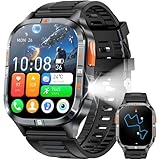
- BUILT-IN GPS & COMPASS– This military smartwatch features high-precision GPS to pinpoint your location while hiking, cycling, or traveling, keeping you safely on track without extra gear. Tap the compass icon and it locks your bearing within three seconds—engineered for pro-level outdoor adventures like camping, climbing, and trekking.
- BLUETOOTH CALLING & MESSAGES – Powered by the latest Bluetooth tech, the men’s smartwatch lets you answer or make calls right from your wrist—no need to pull out your phone. Get real-time alerts for incoming texts and app notifications so you never miss an invite. (Replying to SMS is not supported.)
- BIG SCREEN & DIY VIDEO WATCH FACE – The 2.01" military-spec display is dust-proof, scratch-resistant, and forged from high-strength glass with an aluminum alloy bezel, passing rigorous dust and abrasion tests so the screen stays crystal-clear. Upload a short family video to create a dynamic, one-of-a-kind watch face that keeps your memories alive.
- 24/7 HEALTH MONITORING – Equipped with a high-performance optical sensor, this Android smartwatch tracks heart rate and blood-oxygen levels around the clock. It also auto-detects sleep stages (deep, light, awake) for a complete picture of your health, ensuring you always know how your body is doing.
- MULTI SPORT MODES & FITNESS TRACK – Choose from running, cycling, hiking, basketball, and more to log every workout. Set goals, monitor progress, and sync data to the companion app. Bonus tools include photo gallery, weather, alarm, stopwatch, flashlight, hydration reminder, music/camera remote, find-my-phone, mini-games, and other everyday essentials.
This is especially noticeable in workouts with abrupt transitions, such as sprint intervals or HIIT-style sessions. The optical sensor simply cannot react as quickly as an electrical chest strap.
Cadence lock can also occur during running, where the sensor briefly mirrors step rate instead of true heart rate. This was common among early optical systems and remains one of the Vivoactive HR’s most cited issues during faster efforts.
Cycling, grip pressure, and vibration
Cycling performance varies significantly based on terrain and riding position. On smooth roads with relaxed hands, the sensor performs adequately for steady rides.
Once road vibration increases or the rider maintains sustained grip pressure on the handlebars, accuracy drops. Blood flow changes in the wrist combined with vibration make optical sensing less reliable.
For cyclists who care about training load, threshold work, or structured plans, pairing the Vivoactive HR with a chest strap remains the better solution.
Daily heart rate and resting metrics
Outside of workouts, the Vivoactive HR does a respectable job with all-day heart rate tracking. Resting heart rate trends are generally consistent and useful for spotting fatigue or illness over time.
Sleep-period heart rate data is relatively stable, helped by reduced motion. While it lacks modern sleep staging, nightly averages still provide baseline health insight.
For users tracking general wellness rather than performance optimization, this passive data remains one of the watch’s enduring strengths.
Skin tone, tattoos, and environmental factors
As with most optical sensors of its era, performance can be affected by darker skin tones, wrist tattoos, and cold weather. Reduced peripheral blood flow in winter conditions often leads to flatter readings early in workouts.
Sweat buildup under the sensor can improve signal quality mid-session, which partly explains why accuracy often improves after the first few minutes.
These behaviors are not unique to the Vivoactive HR, but newer Garmin sensors handle them more gracefully with better algorithms and multi-LED designs.
Comparison to chest straps and newer Garmin Elevate sensors
Against a chest strap, the Vivoactive HR’s optical sensor is clearly inferior for precision. Chest straps remain the gold standard for interval accuracy, responsiveness, and consistency across all sports.
Compared to newer Garmin watches using later Elevate generations, the gap is obvious. Modern sensors lock faster, track transitions better, and suffer less from cadence interference.
That contrast is useful context for buyers. The Vivoactive HR shows how far Garmin’s heart rate technology has evolved, while still offering functional baseline tracking for less demanding use cases.
Battery impact and long-term reliability
Continuous optical heart rate tracking has a modest impact on battery life but was well balanced at the time. All-day heart rate monitoring does not meaningfully compromise daily usability.
Sensor reliability over time has proven solid. Units that are still functioning today generally maintain consistent heart rate behavior, assuming the optical window remains clean and the strap still fits securely.
As with any aging wearable, degraded straps and worn housings affect performance more than the sensor itself, reinforcing how important physical fit is to optical accuracy on this model.
Sports and Activity Tracking: What It Covers Well—and What It Never Tried to Be
With heart rate as its physiological backbone, the Vivoactive HR’s sports tracking philosophy follows naturally. This was a watch designed to log activity reliably and consistently, not to coach, prescribe, or analyze performance at an elite level.
Core GPS Sports: Running, Walking, and Outdoor Cardio
Running and walking are where the Vivoactive HR feels most at home. GPS acquisition is reasonably quick by mid-2010s standards, and once locked, distance and pace tracking are stable enough for recreational training and long-term mileage logging.
The data fields are basic but functional, covering time, distance, pace, heart rate, and calories. There are no pace zones, power metrics, or adaptive training suggestions, which keeps the experience simple and largely distraction-free.
For runners coming from phone-based tracking or early fitness bands, this was a meaningful upgrade. For anyone accustomed to modern Forerunner metrics, it feels intentionally stripped back.
Cycling Support: Solid Recording, Limited Analysis
Outdoor cycling uses the same GPS engine and delivers similar consistency. Speed, distance, elevation trends, and heart rate are tracked reliably for road and casual gravel riding.
There is no native power meter support, no advanced cadence analytics, and no structured workout execution. This positions the Vivoactive HR squarely as a ride recorder rather than a training tool for cyclists chasing performance gains.
As a secondary device for commuting or casual weekend rides, it still does the job. As a primary cycling computer replacement, it never was one.
Swimming and Water-Based Activities
The Vivoactive HR supports pool swimming with length counting and basic stroke recognition. Accuracy is acceptable when form is consistent, though push-off detection can falter with drills or irregular pacing.
Open water swimming is not supported, reflecting both GPS limitations and Garmin’s product segmentation at the time. The water resistance is sufficient for swim tracking, but the touchscreen becomes less cooperative when wet, reinforcing its pool-only intent.
For triathletes, this immediately defines what the watch is not. It records swims, but it does not support multi-sport transitions or race-style workflows.
Gym Workouts and General Activity Modes
Indoor activities like strength training, cardio machines, and general gym sessions are supported through generic profiles. These rely primarily on time and heart rate, with calorie estimates that are broadly reasonable but not granular.
There is no automatic rep counting, muscle group detection, or exercise recognition. This predates Garmin’s later push into strength analytics and reinforces the Vivoactive HR’s role as an activity logger rather than a session analyst.
For users who simply want their gym time counted toward daily activity and weekly volume, this approach works. Those expecting modern gym insights will find the data sparse.
Daily Activity Tracking and Move Metrics
Beyond formal workouts, the Vivoactive HR tracks steps, floors climbed via the barometric altimeter, intensity minutes, and calories burned. These metrics integrate cleanly into Garmin Connect and remain one of the watch’s strongest long-term value propositions.
Move alerts and inactivity prompts are simple but effective, particularly for office-based users. The emphasis is on awareness and habit formation rather than optimization.
In this role, the Vivoactive HR arguably outperforms its workout modes by encouraging consistent, low-friction engagement with daily movement.
What’s Missing by Modern Standards—and Why That’s Okay
There is no training load, recovery time, VO2 max, race predictor, or body battery. There are no guided workouts, adaptive plans, or performance condition readouts.
These omissions were deliberate at launch and reflect Garmin’s clearer segmentation at the time. The Vivoactive HR sat below the Forerunner line and focused on breadth of activity rather than depth of insight.
Viewed through a modern lens, it feels limited. Viewed historically, it helped establish the foundation for Garmin’s later expansion into holistic fitness tracking without overwhelming the user.
Smartwatch Features and Everyday Use: Notifications, Apps, and Garmin IQ
After covering activity tracking and fitness limitations, the Vivoactive HR’s role as an everyday smartwatch becomes clearer. This is where Garmin aimed to broaden appeal beyond pure training, without drifting into full smartwatch territory.
Rank #4

- 【Built-in GPS & Multi-System Positioning】Stay on track with the Tiwain smartwatch’s built-in GPS. Featuring military-grade single-frequency and six-satellite support (GPS, GLONASS, Beidou, Galileo, NAVIC, QZSS), this watch offers fast and accurate location tracking wherever you go. It also includes a compass, altimeter, and barometer, giving you real-time data on your altitude, air pressure, and position.
- 【Military-Grade Durability】Engineered to withstand the toughest conditions, the Tiwain smartwatch meets military standards for extreme temperatures, low pressure, and dust resistance. Crafted from tough zinc alloy with a vacuum-plated finish, this watch is also waterproof and built to resist wear and tear. The 1.43-inch AMOLED HD touchscreen offers clear visibility in all environments, and the watch supports multiple languages for global users.
- 【170+ Sport Modes & Fitness Tracking】Track your fitness journey with 170+ sport modes, including walking, running, cycling, hiking, basketball, and more. Set exercise goals, monitor progress, and sync your data to the companion app. The smartwatch also offers smart features like music control, camera remote, weather updates, long-sitting reminders, and more.
- 【LED Flashlight for Outdoor Adventures】The Tiwain smartwatch comes equipped with a built-in LED flashlight that can illuminate up to 20 meters. Activate it with the side button for added convenience during nighttime activities or outdoor adventures.
- 【Comprehensive Health Monitoring】Monitor your health with real-time heart rate, sleep, blood pressure, and blood oxygen level tracking. The smartwatch will vibrate to alert you of any abnormal readings. You can also make and receive calls directly from the watch, and stay connected with message and app notifications (receive only, no sending capability) – perfect for when you’re driving or exercising.
The result is a device that feels intentionally restrained. It handles the essentials reliably, but always prioritizes battery life, clarity, and fitness continuity over app depth or visual flair.
Notifications: Practical, Readable, and Purposefully Limited
Smartphone notifications are delivered cleanly to the Vivoactive HR’s always-on touchscreen. Incoming calls, texts, emails, and app alerts mirror what appears on your phone, provided you’re within Bluetooth range.
There is no interaction beyond dismissing notifications. You cannot reply to messages, take calls, or trigger actions, which places it firmly behind modern Garmin models and far behind Apple or Wear OS devices.
That said, readability is excellent. The monochrome-style transflective display favors contrast over color richness, making notifications easy to glance at outdoors or mid-activity without wrist gymnastics.
Android users gain slightly more control, including the ability to selectively filter app notifications. iOS support is more restricted, reflecting Apple’s platform limitations at the time and reinforcing Garmin’s fitness-first priorities.
Touchscreen and Daily Navigation
The Vivoactive HR uses a single physical side button combined with a touchscreen for navigation. In dry conditions, the interface is intuitive, with swipe gestures handling widgets, data screens, and menus.
In wet conditions or during sweaty workouts, touch accuracy degrades noticeably. This is one of the clearest reminders of its generation, especially compared to Garmin’s later pivot back toward multi-button control on performance watches.
For everyday use, though, it works. Checking steps, weather, or notifications during the day feels lightweight and unobtrusive rather than fiddly.
Built-In Apps and Utilities
Out of the box, the Vivoactive HR includes a modest set of smartwatch-style utilities. These include a calendar view, weather widget, alarm, timer, stopwatch, and basic music controls for your phone.
Music control is strictly remote playback. There is no onboard storage, no Spotify support, and no Bluetooth audio pairing, which limits appeal for phone-free workouts.
Weather syncing is reliable when connected, and calendar alerts integrate cleanly with notifications. These are functional tools rather than lifestyle features, designed to reduce phone checks rather than replace the phone.
Garmin IQ: Customization Without Complexity
Garmin IQ support is one of the Vivoactive HR’s most important long-term strengths. Even years after launch, it allows users to install custom watch faces, data fields, widgets, and lightweight apps.
The ecosystem is more limited than on newer Garmin models due to hardware constraints. Expect simple designs, conservative animations, and functionality focused on data presentation rather than interactivity.
Performance remains solid as long as expectations are realistic. Overloading the watch with complex watch faces can introduce lag and slightly impact battery life, but restrained customization works well.
Watch Faces and Wearability in Daily Life
Custom watch faces significantly influence how the Vivoactive HR feels on the wrist day to day. Minimal designs enhance legibility and preserve the watch’s understated, almost instrument-like character.
Physically, the watch wears flat and light, with a polymer case and integrated silicone strap that prioritize comfort over visual refinement. At 11.4 mm thick, it slides under sleeves easily and never feels top-heavy.
This is not a fashion-forward smartwatch. It looks like a fitness tool first, which may be a positive or negative depending on expectations.
Battery Life in Smartwatch Mode
In everyday smartwatch use with notifications enabled, the Vivoactive HR consistently delivers around seven to eight days of battery life. This includes daily activity tracking, frequent screen checks, and occasional GPS sessions.
This longevity is a direct result of its restrained smartwatch feature set and low-power display. Compared to modern AMOLED-based wearables, it remains impressively efficient.
Garmin IQ apps and animated watch faces can reduce this slightly, but battery anxiety is rarely part of the ownership experience.
What You Don’t Get—and Why It Matters
There is no contactless payment, no voice assistant, no app store in the modern sense, and no deep third-party integrations. These omissions are noticeable today, especially for buyers cross-shopping with newer Vivoactive or Venu models.
However, the absence of these features contributes directly to stability and battery life. The Vivoactive HR rarely crashes, sync issues are minimal, and day-to-day operation remains predictable.
As an everyday smartwatch, it succeeds by doing less and doing it consistently. For users who value reliability and fitness continuity over lifestyle features, that balance still holds up remarkably well for a discontinued device.
Battery Life and Charging: How It Performs by Modern Standards
The Vivoactive HR’s restrained feature set does more than simplify daily use; it defines how the watch approaches power management. In a landscape now dominated by bright AMOLED displays and always-on connectivity, its battery behavior feels deliberately conservative, and that restraint remains one of its quiet strengths.
Real-World Endurance Across Use Cases
In pure smartwatch mode, the previously noted seven to eight days still represents realistic performance even by current standards. Many modern Garmin watches with richer displays and music storage struggle to exceed five days without compromise.
Where the Vivoactive HR shows its age is under sustained GPS use. Expect roughly 10 to 12 hours of continuous GPS tracking, which was competitive at launch but now sits below current midrange Garmin devices that can double that with newer chipsets and battery chemistry.
For runners and cyclists logging one-hour sessions several times a week, this translates to charging roughly once a week. For long-distance athletes or ultra-endurance users, it requires more planning than modern Forerunner or Fenix models.
Optical Heart Rate and Power Consumption
The original Elevate optical heart rate sensor is efficient but not especially intelligent by today’s standards. It samples consistently rather than dynamically adjusting based on activity type or motion quality, which slightly increases baseline power draw.
That said, the absence of advanced health metrics such as Body Battery, continuous SpO2, or HRV status works in its favor. The watch tracks what it needs to track, and nothing more, preserving battery life through simplicity rather than optimization algorithms.
Charging Method and Ownership Friction
Charging is handled via Garmin’s older proprietary clip-on cradle, which attaches to exposed contacts on the back of the case. It is functional but lacks the magnetic alignment and durability of Garmin’s modern charging cables.
This matters more today than it did at launch, as replacement cables are less common and vary in quality. Buyers considering used units should confirm cable condition, as intermittent charging contacts are a known weak point after years of wear.
A full charge from near empty takes roughly two hours, which feels slow by modern standards but aligns with the watch’s infrequent charging needs. Overnight charging is unnecessary, and short top-ups are rarely required.
Battery Aging and the Used-Market Reality
Any Vivoactive HR still in circulation is now operating on an aging lithium-ion cell. Real-world battery life will vary widely depending on usage history, storage conditions, and charge cycles accumulated over the years.
It is reasonable to expect reduced capacity on secondhand units, often closer to five or six days in smartwatch mode. This is still usable, but it narrows the gap between the Vivoactive HR and newer entry-level Garmin models that benefit from fresh batteries and efficiency gains.
Garmin does not support battery replacement for this model, so long-term ownership must be viewed as finite. For resale buyers, battery health should factor into pricing just as much as cosmetic condition.
How It Compares to Modern Garmin Watches
Against current Vivoactive and Venu models, the Vivoactive HR loses decisively on charging convenience and GPS endurance. It wins, however, in predictability, with fewer background processes draining power unexpectedly.
Modern Garmins are more capable but also more complex, with battery life fluctuating based on display mode, sensor stack, and software features. The Vivoactive HR’s consistency can still appeal to users who prefer knowing exactly how long their watch will last.
💰 Best Value

- Smart Watch with GPS and Offline Map: This smart watch connects to multiple satellite systems for accurate real-time positioning, and includes a professional-grade compass, altimeter, and barometer for precise data, ensuring you maintain your sense of direction in any outdoor environment. The map version supports downloading offline maps; select a route or destination to view the route even without a signal, eliminating the risk of getting lost.
- Bluetooth Call & Message Functionality: This smart watches for men allows you to make and receive calls; receive text and social media notifications (Facebook, WhatsApp, Instagram, Twitter, etc.); and reply to text messages with voice-to-text or set up quick replies (text reply functionality is available for Android phones).
- Sports & Health Monitoring: This 5ATM waterproof fitness watch supports over 100 sports modes and tracks daily activity data, calories, distance, steps, and heart rate. You can use it to monitor your health metrics (blood oxygen, heart rate, stress, and sleep), monitor your fatigue and mood, and perform PAI analysis. You can also use this smartwatch to set water intake and sedentary reminders. Stay active and healthy with this fitness tracker watch.
- Customizable Watch Faces & AI Functionality: This smart watch features a 1.46-inch HD touchscreen and over 100 downloadable and customizable watch faces. You can even use your favorite photos as your watch face. Equipped with AI technology, it supports voice descriptions in multiple languages to generate personalized AI watch faces. The watch's AI Q&A and AI translation features provide instant answers to questions and break down language barriers, making it an ideal companion for everyday life and travel.
- Large Battery & High Compatibility & More Features: This smart watch for android phones and ios phone features a large 550ml battery for extended battery life. It's compatible with iOS 9.0 and above and Android 5.0 and above. It offers a wealth of features, including an AI voice assistant, weather display, music control, camera control, calculator, phone finder, alarm, timer, stopwatch, and more. (Package Includes: Smartwatch (with leather strap), spare silicone strap, charging cable, and user manual)
By today’s standards, its battery performance is no longer impressive, but it remains respectable. More importantly, it reflects a design philosophy that prioritized reliability and simplicity over feature-driven power demands.
How the Vivoactive HR Holds Up Today: Comparisons to Newer Garmin Models
Viewed through a modern Garmin lens, the Vivoactive HR sits at an interesting crossroads between early smartwatch ambition and the brand’s later, more sport-specific refinement. It was one of the first Garmin watches to seriously blur the line between daily wearable and training tool, and that legacy still shapes how it compares to current models.
Rather than feeling obsolete across the board, it feels selectively outdated. Some areas show their age immediately, while others remain surprisingly competitive even years later.
Design, Display, and Wearability Versus Modern Vivoactive and Venu Watches
The Vivoactive HR’s design is unmistakably utilitarian compared to today’s Vivoactive 5 or Venu Sq models. Its thick rectangular case, prominent bezel, and visible heart rate bulge give it a more tool-like presence on the wrist, closer to a Forerunner than a lifestyle smartwatch.
Newer Garmin watches are slimmer, lighter, and visually softer, with better case finishing and more refined strap integration. The difference in comfort during all-day wear is noticeable, especially for smaller wrists or sleep tracking.
That said, the transflective display still holds up well outdoors. While modern AMOLED Garmins look far better indoors and for notifications, they can’t match the Vivoactive HR’s sunlight readability or low-power always-on behavior during long sessions.
Sensor Stack and Tracking Accuracy Compared to Current Models
The Vivoactive HR uses Garmin’s first-generation Elevate optical heart rate sensor, which is materially less accurate than the latest iterations found in current Vivoactive, Venu, or Forerunner models. During steady-state cardio, it performs adequately, but it struggles with rapid intensity changes and interval training.
Newer Garmins offer improved heart rate stability, better motion filtering, and additional metrics like HRV status, Body Battery, and stress tracking. These aren’t incremental upgrades; they fundamentally change how users interpret recovery and readiness.
GPS accuracy on the Vivoactive HR remains solid for its era, but modern multi-band and improved single-band chips deliver tighter tracks, faster locks, and fewer dropouts. Cyclists and runners training in dense urban or wooded areas will notice the difference immediately.
Training Features and Software Evolution
This is where the gap between generations becomes most apparent. The Vivoactive HR tracks activities reliably, but it lacks the depth of training analytics that Garmin now considers standard.
There is no training load, no recovery time guidance, no race widgets, and no adaptive coaching beyond basic Garmin Connect plans. Newer watches don’t just record workouts; they contextualize them within a broader training narrative.
The Vivoactive HR feels more like a recorder than an advisor. For athletes who already understand their training and simply want clean data, that simplicity can still be appealing.
Smartwatch Experience and Daily Usability
As a smartwatch, the Vivoactive HR is functional but clearly dated. Notifications are basic, responses are limited, and app support through Connect IQ feels sparse compared to modern offerings.
Current Garmin models offer smoother interfaces, faster processors, better animations, and deeper integrations with music services, contactless payments, and safety features. The Vivoactive HR predates Garmin Pay, onboard music, and incident detection.
Yet its simplicity works in its favor for users who want minimal distraction. It delivers alerts reliably, tracks steps and calories accurately, and avoids the bloat that sometimes accompanies newer software updates.
Battery Philosophy: Consistency Versus Capability
Compared to newer Garmin watches, the Vivoactive HR’s battery life is no longer competitive on paper. Fresh Vivoactive and Venu models can match or exceed its real-world endurance while offering more features and brighter displays.
However, modern Garmins often have more variable battery behavior depending on display mode, sensor usage, and background features. The Vivoactive HR’s simpler software stack results in more predictable drain patterns.
This predictability aligns with the older Garmin philosophy of set-it-and-forget-it reliability. While newer models are more capable, they also demand more user awareness to manage power effectively.
Value and Relevance in Today’s Garmin Lineup
When placed alongside current entry-level Garmin watches, the Vivoactive HR no longer makes sense as a primary purchase at anything close to its original retail price. Newer models are objectively better across most categories and benefit from ongoing software support.
Where it still holds relevance is as a low-cost, secondhand option for users who want GPS, wrist-based heart rate, and basic sport tracking without paying for modern extras. It also serves as a useful reference point for understanding how far Garmin’s ecosystem has evolved.
The Vivoactive HR doesn’t compete with today’s watches on features or polish. It competes on simplicity, reliability, and a training-first mindset that remains recognizable in Garmin’s DNA even now.
Who the Garmin Vivoactive HR Still Makes Sense For—and Who Should Skip It
Seen through the lens of Garmin’s current lineup, the Vivoactive HR feels like a snapshot of an earlier philosophy: practical, training-led, and intentionally restrained. That context matters when deciding whether it still deserves a place on your wrist today.
It Still Makes Sense For Budget-Focused GPS Athletes
If you want a no-frills GPS watch for running, cycling, or general fitness and you’re shopping on the secondhand market, the Vivoactive HR remains viable. GPS tracking is reliable, distance accuracy is solid, and recorded activities sync cleanly with Garmin Connect on both iOS and Android.
For casual runners and cyclists who train by time, distance, or basic heart rate zones, it covers the fundamentals without pushing you toward advanced metrics. You get structured activity profiles, auto laps, and consistent satellite performance without paying for features you won’t use.
It Works for Users Who Prefer Simplicity Over Smart Features
The Vivoactive HR suits people who want notifications, not interaction. Alerts come through clearly, but the touchscreen interface and limited app ecosystem discourage endless tapping, which many users will see as a benefit rather than a flaw.
There’s no music storage, no contactless payments, and no safety automation. What you get instead is a watch that behaves predictably, drains battery steadily, and doesn’t change meaningfully with software updates.
A Practical Backup or Secondary Training Watch
For experienced Garmin users, the Vivoactive HR still makes sense as a backup device. Its battery life in GPS mode is dependable, and it can step in for outdoor workouts without forcing you to compromise on data continuity in Garmin Connect.
It’s also useful as a dedicated gym or commuting watch, where scratches and wear matter less. The polymer case, Gorilla Glass display, and silicone strap are durable, if unrefined, and tolerate daily abuse better than they look.
Comfort Depends on Wrist Size and Expectations
At roughly 48 x 43 mm with a flat, slab-like profile, the Vivoactive HR wears larger than most modern fitness watches. The integrated heart rate sensor sits prominently against the wrist, which some users may notice during long runs or all-day wear.
For larger wrists, the fit is secure and stable during activity. For smaller wrists or those accustomed to slimmer Venu or Forerunner models, it can feel dated and bulky.
Who Should Skip the Vivoactive HR Entirely
Data-driven athletes should look elsewhere. The older Elevate heart rate sensor is less accurate during intervals and intensity changes, and there’s no access to modern metrics like training load, recovery time, HRV status, or adaptive coaching.
Smartwatch-first buyers will also be disappointed. Compared to even entry-level current Garmins, the interface feels slow, the screen lacks vibrancy, and the overall experience is functional rather than polished.
Long-Term Value Comes With Clear Limits
The Vivoactive HR no longer makes sense as a future-proof purchase. Software support is effectively frozen, compatibility will eventually narrow, and resale value is modest even at low prices.
That said, its core functionality remains intact. It still tracks workouts accurately, logs daily activity reliably, and embodies Garmin’s early commitment to training stability over feature excess.
Final Verdict: A Narrow but Honest Use Case
The Garmin Vivoactive HR isn’t a hidden gem waiting to be rediscovered, but it is a competent tool within a very specific use case. For cost-conscious users who want dependable GPS fitness tracking and minimal distractions, it still delivers on its original promise.
For everyone else, newer Garmin models are better in almost every measurable way. The Vivoactive HR’s value today lies less in what it offers, and more in how clearly it shows the foundations that Garmin has continued to build upon.