If you are looking for a first wearable for a child, the Garmin Vivofit Jr. 2 sits in a very specific and reassuring middle ground. It looks like a watch, tracks daily activity like a fitness band, and avoids most of the distractions and risks that make many parents hesitant about kids smartwatches. There is no touchscreen, no messaging, no app store, and no internet access on the device itself.
At its core, the Vivofit Jr. 2 is designed to encourage movement through gentle gamification while giving parents simple oversight through their own phone. It is aimed squarely at children roughly 4 to 10 years old who are curious about wearing a “real” watch but are not ready for a connected smartwatch. This section explains exactly what it does, how it works day to day, and whether it still makes sense as a purchase today.
A kids fitness tracker, not a smartwatch
The Garmin Vivofit Jr. 2 is a screen-based fitness tracker that focuses on steps, active minutes, and basic daily movement. It does not make calls, send texts, track GPS location, or connect to the internet on its own. For many families, that limitation is the entire appeal.
The display is a small monochrome LCD with physical button control rather than touch input. Kids can see the time, their steps, and simple icons, but everything else happens through the parent-controlled Garmin Jr. app. This keeps the device focused on wearing and moving rather than tapping and scrolling.
🏆 #1 Best Overall

- All-Day Activity Tracking: BIGGERFIVE BRAVE 2 Smart Watch for Kids Teens Automatically counts steps, distance, calories burned, and active minutes. Supports 80 sports modes like walking, running, cycling, basketball, and more.
- Without/With APP: BIGGERFIVE kids fitness tracker watch can be used seperately without APP and phone. But with APP, you could explore more functions. Compatible with Android 6.0+ and iOS 9.0+ smartphones.
- Comprehensive Health Monitoring: Monitors real-time heart rate and tracks sleep patterns to promote your child's well-being.
- Customizable Watch Face &1.8" HD Touch Screen:Our kids smartwatch boasts a 1.8" HD touch screen and offers 100+ exquisite cloud dials in APP BIGGERFIVE. Elevate personal style with custom dials using your kids' own photos and ignite their creativity!
- Puzzle Games under Parents' Control: 5 built-in puzzle games can help train your child's reaction ability and calculation ability. You could restrict your child from playing games at school in the BIGGERFIVE APP (supports also lock game all the time).
How it works in everyday use
Once the tracker is paired to a parent’s smartphone, the child simply wears it like a normal watch. Steps and activity are automatically tracked throughout the day with no input required from the child. There is no need to remember to charge it or open an app to make it work.
Parents use the Garmin Jr. app on iOS or Android to view activity data, set step goals, and manage optional chores and rewards. The watch syncs via Bluetooth when it is near the parent’s phone, typically once or twice a day without the child noticing. From the child’s perspective, it just works in the background.
Activity tracking and motivation for kids
The Vivofit Jr. 2 tracks steps and active minutes rather than advanced health metrics. There is no heart rate sensor, no sleep stage breakdown, and no calorie counting shown to the child. This keeps the experience age-appropriate and avoids turning health into a numbers game.
Motivation comes from simple goals and themed adventures tied to the watch band design. Completing daily activity goals unlocks progress in app-based stories, which parents can choose to engage with or ignore. It is intentionally light, focusing on consistency rather than competition or pressure.
Design, comfort, and durability
Physically, the Vivofit Jr. 2 is small, lightweight, and comfortable for all-day wear on young wrists. The case is low-profile and made from durable plastic designed to handle bumps, drops, and playground use. The silicone band is flexible, soft, and secured with a traditional buckle rather than a clasp that can pop open.
The tracker is rated for swimming and bathing, so it does not need to come off for handwashing, showers, or pool time. This is important for kids who may forget to put it back on if it is removed. Comfort and durability are two of the strongest real-world advantages of this model.
Battery life and maintenance
One of the defining features of the Vivofit Jr. 2 is its replaceable coin-cell battery with a rated life of up to one year. There is no charging cable, no nightly routine, and no risk of the device dying halfway through a school day. For many parents, this is a major quality-of-life benefit.
When the battery eventually runs out, it can be replaced at home in minutes. This makes the tracker more reliable for younger children who may not be responsible for charging yet. It also reduces long-term frustration compared to rechargeable kids wearables.
Parental controls, privacy, and data handling
All setup, controls, and data access live in the parent’s Garmin account, not the child’s. Children do not create their own logins or interact directly with online services. Activity data stays within Garmin’s ecosystem and is visible only to approved family members.
There is no microphone, no camera, and no location tracking, which significantly reduces privacy concerns. For parents focused on minimizing data collection and digital exposure, the Vivofit Jr. 2 is one of the more conservative options on the market. It is designed to track movement, not behavior or communication.
Age suitability and learning curve
The Vivofit Jr. 2 is best suited for younger children who are just learning routines and responsibility. Kids as young as four can wear it comfortably, while older children may eventually find it too simple. There is very little learning curve, which is intentional.
Because the device does not rely on reading, typing, or navigation skills, children can use it independently almost immediately. Parents handle everything else behind the scenes. This makes it especially appealing as a first wearable rather than a long-term device.
Is the Vivofit Jr. 2 still a good choice today?
Although it is not Garmin’s newest kids device, the Vivofit Jr. 2 remains relevant because its core strengths have not aged. Basic activity tracking, long battery life, strong durability, and limited connectivity still solve the same problems they did at launch. In some ways, newer devices have added features that certain families actively want to avoid.
That said, it is not the right choice for parents looking for GPS tracking, two-way communication, or advanced health insights. It is also not ideal for older kids who want more interaction or smartwatch-style features. Understanding those boundaries is key to deciding if it fits your family’s needs.
Age Suitability and Wearability: Is the Vivofit Jr. 2 Right for Your Child?
By this point, it should be clear that the Vivofit Jr. 2 is intentionally limited in what it does. That design philosophy directly affects which ages it suits best and how comfortably kids will actually wear it day after day. For parents, the real question is less about features and more about whether the device fits a child’s body, routines, and attention span.
Recommended age range in real-world use
Garmin markets the Vivofit Jr. 2 for children roughly ages 4 to 10, and that range largely holds up in practice. Children around preschool and early elementary age tend to get the most value from it. At this stage, novelty, visual rewards, and simple goals are powerful motivators.
For kids closer to 9 or 10, expectations start to change. Many will want touchscreens, games, messaging, or a device that feels more like what adults wear. The Vivofit Jr. 2 does not try to grow with your child beyond that point, and that simplicity can become a limitation rather than a benefit.
Size, weight, and wrist comfort
The Vivofit Jr. 2 is extremely small and lightweight compared to most kids smartwatches. The tracker module is slim and sits flush inside the silicone band, avoiding the top-heavy feel that can cause cheaper kids watches to rotate around the wrist. This matters more than it sounds, especially for smaller arms.
On most children aged 4 to 7, it feels almost invisible after a few minutes. The low profile reduces snagging on clothing, desks, or backpack straps, which helps prevent both discomfort and accidental removal. Kids who dislike bulky accessories are far more likely to tolerate this design.
Band materials and skin-friendliness
Garmin uses a soft, flexible silicone band that is designed to be worn all day and overnight. The material is smooth rather than rubbery, which helps reduce irritation during sweating or extended wear. It is also free of exposed metal against the skin.
For children with sensitive skin, this is one of the safer options in the kids wearable space. That said, like any silicone band, moisture can get trapped underneath if it is worn constantly. Parents should still remove it occasionally for cleaning and drying, especially after swimming or heavy activity.
Durability for active kids
The Vivofit Jr. 2 is built to take abuse. It is rated for swimming and bathing, handles playground impacts well, and does not rely on a charging port that can break or clog with debris. This makes it particularly suitable for kids who forget to be careful with their belongings.
The display is small and monochrome, but that also works in its favor. There is no fragile glass touchscreen to crack, and fewer components that can fail. In day-to-day family life, it behaves more like a rugged digital watch than a delicate piece of electronics.
Buttons, screen, and ease of interaction
Interaction is limited to a single physical button and a non-touch display. Children can scroll through steps, time, and icons with repeated presses, but there is no complex navigation. This keeps accidental changes and confusion to a minimum.
Because there is no touchscreen, very young children are less likely to tap randomly or expect tablet-like behavior. The device teaches basic cause-and-effect without demanding reading skills or fine motor precision. That simplicity aligns well with early developmental stages.
Day-and-night wear considerations
Many parents choose to have their child wear the Vivofit Jr. 2 around the clock, including during sleep. Its light weight and flat profile make this realistic for most kids, unlike thicker smartwatch-style devices. There are no bright screens or notifications to disrupt bedtime.
Sleep tracking is passive and does not require interaction. For families trying to establish consistent routines, this can be helpful without feeling intrusive. If a child dislikes sleeping with anything on their wrist, however, the device offers no alternative wearing position.
Style appeal and character bands
Garmin leaned heavily into themed bands, including licensed characters and bright patterns. For younger children, this can significantly increase buy-in and willingness to wear the tracker consistently. The band becomes part of the reward system rather than a parental imposition.
Older children may find the designs childish, especially if peers are wearing more advanced devices. While bands are interchangeable, the overall look remains clearly kid-focused. This reinforces the idea that the Vivofit Jr. 2 is a starter wearable, not a status gadget.
Who it fits best, and who it does not
The Vivofit Jr. 2 fits best for children who are just beginning to understand daily routines, movement goals, and personal responsibility. It works especially well in families that want to encourage activity without opening the door to messaging, apps, or constant screen engagement.
It is a poor fit for children who want independence, communication features, or customization beyond basic themes. Kids who already use tablets heavily or compare devices with friends may outgrow it quickly. In those cases, a more advanced kids smartwatch may be a better long-term investment.
Design, Build Quality, and Durability: How Kid-Proof Is It Really?
The clearly kid-focused styling of the Vivofit Jr. 2 isn’t just about fun characters and bright colors. It’s tightly connected to how Garmin has engineered the device to survive real childhood use, including playground falls, water exposure, and the occasional attempt to remove it with teeth. For many parents, durability ends up mattering more than features, and this is where the Vivofit Jr. 2 has always staked its reputation.
Overall form factor and dimensions
The Vivofit Jr. 2 uses a slim, capsule-style tracker permanently housed inside the silicone band. There is no detachable module, which eliminates one of the most common failure points seen in cheaper kids trackers. The watch sits flat on the wrist and avoids sharp edges, reducing snagging on clothing or bedding.
Its small size works well for wrists roughly in the 4–10 age range, especially younger children who find larger smartwatch bodies uncomfortable. The low-profile design also makes it easier for kids to forget they’re wearing it, which is often the key to consistent use.
Materials and construction
Garmin uses a soft, flexible silicone band designed to bend rather than crack. The material feels closer to a sports watch strap than a toy bracelet, with enough stretch to handle pulling without feeling flimsy. It’s also free of visible seams where dirt or moisture might easily collect.
The tracker housing itself is sealed and rigid, with no exposed charging contacts or ports. This sealed design is a major contributor to both water resistance and long-term reliability, especially for kids who don’t always remember to take devices off.
Water resistance and mess tolerance
The Vivofit Jr. 2 is rated to 5 ATM, meaning it’s safe for swimming, bathing, and general water play. Parents do not need to remove it for handwashing, pool time, or rainy-day adventures. This significantly reduces the risk of loss, since devices that must be removed tend to stay off.
Equally important for younger children, the tracker handles mud, sand, sunscreen, and food residue without complaint. A quick rinse under tap water is usually enough to clean it, and the screen remains readable even when slightly scuffed.
Screen durability and visibility
Instead of a color touchscreen, Garmin opted for a small monochrome display with a physical button. This choice dramatically improves durability, as there’s no glass touchscreen layer to crack easily. The display is recessed slightly below the band surface, offering extra protection against direct impact.
While the screen is basic, it’s highly legible in bright sunlight and doesn’t require swiping or precise gestures. For kids, this means fewer accidental inputs and less frustration. For parents, it means fewer repairs and replacements.
Strap security and comfort
The strap uses a traditional buckle closure rather than a snap or magnet. This makes it harder for younger children to remove on their own and reduces accidental loss. Once fitted correctly, it stays in place during running, climbing, and sleeping.
Comfort is a strong point, particularly for day-and-night wear. The silicone is soft enough to avoid pressure marks, and the lack of a bulky watch case prevents wrist irritation during sleep. That said, children with sensory sensitivities may still need breaks, especially in hot weather.
Battery design and its impact on durability
One of the most overlooked durability advantages is the replaceable coin-cell battery with a claimed life of up to a year. Because the device doesn’t need frequent charging, there’s no daily handling, no charging cables to break, and no ports to wear out. Fewer interactions generally translate into longer lifespan.
When the battery does need replacing, it’s done by an adult using a small screwdriver. This keeps the internals secure from curious hands while still avoiding the long-term degradation that comes with sealed rechargeable batteries.
Real-world resilience over time
In everyday use, the Vivofit Jr. 2 tends to hold up better than many touchscreen-based kids smartwatches. Drops onto hard floors, knocks against playground equipment, and rough play rarely cause functional damage. Cosmetic wear does appear over time, especially on lighter-colored bands, but this doesn’t affect performance.
Rank #2

- Brilliant AMOLED Screen: Experience crystal-C clarity and smooth interaction with the upgraded AMOLED screen—a big leap from ordinary LCD displays. This kids fitness watch lasts up to 10 days on one charge, keeping up with your child's day and night activities.
- No Phone or App Required: This kids watch operates independently without requiring a smartphone connection. Easy to set up and use, it delivers essential functions like step counting, heart rate monitoring, and sports modes—ideal for young users who want to use it right out of the box.
- Better Activity & Health Tracking: Equipped with advanced sensors, this watch for kids ensures precise step counting and reliable continuous heart rate monitoring. It also analyzes sleep stages and offers a daily sleep score along with tips to help your child rest better.
- 3ATM Waterproof & 10 Sports Modes: Whether running, cycling, or swimming, this boys watch supports 10 different activities. With its upgraded 3ATM water resistance, it's not just splash-proof—it's swim-proof! Kids can wear it all day, rain or shine, even in the pool.
- Good Habits, Fun Games & Virtual Pet: New interactive features inspire kids to stay active! habit reminders (e.g., study time, meals, exercise), interactive mini-games, and an e-pet that grows as they move. It's more than a kids watch boys love—it's a fun companion that encourages healthy habits.
The most common wear issue is band stretching or discoloration after long-term use. Replacement bands are readily available and relatively affordable, extending the usable life of the tracker without needing a full replacement.
Safety considerations for younger children
From a safety standpoint, the Vivofit Jr. 2 avoids many of the concerns associated with connected smartwatches. There is no microphone, speaker, camera, or cellular radio. This reduces both privacy risks and physical distractions.
The secure strap and sealed body also lower choking or ingestion risks compared to devices with detachable components. As with any wearable, proper sizing and regular checks are important, but Garmin’s design choices clearly prioritize cautious, age-appropriate use.
How it compares to newer kids wearables
Compared to modern kids smartwatches with color displays and apps, the Vivofit Jr. 2 feels intentionally conservative. That restraint works in its favor when durability is the priority. Touchscreens, charging pins, and speakers all introduce new failure points that this tracker simply avoids.
Parents choosing between durability and features should see the Vivofit Jr. 2 as a rugged baseline. It won’t impress with visuals, but it’s far more likely to survive a full school year, summer camp, and beyond without needing repairs or replacements.
Activity Tracking and Fitness Features: What the Vivofit Jr. 2 Can (and Can’t) Track
After looking at durability and safety, the next question most parents ask is simple: what does this thing actually track day to day? Garmin’s answer with the Vivofit Jr. 2 is intentionally narrow, focusing on basic movement, habits, and motivation rather than health metrics or sports performance.
That simplicity is a defining feature, not a limitation by accident. The Vivofit Jr. 2 is designed to encourage kids to move more, not to quantify their bodies in detail.
Daily steps and overall movement
At its core, the Vivofit Jr. 2 tracks steps using an internal motion sensor, much like an entry-level adult fitness band. Steps accumulate throughout the day and contribute toward a customizable daily activity goal set by parents in the Garmin Jr. app.
For children, this works surprisingly well. Running around the playground, walking to school, indoor play, and casual sports all register as activity without requiring the child to start or stop anything.
There is no need for interaction beyond wearing the band. Kids do not have to remember to tap a screen or select an activity mode, which makes the data more consistent for younger ages.
Active minutes instead of workouts
Rather than tracking individual workouts, the Vivofit Jr. 2 focuses on what Garmin calls active minutes. These are earned when sustained movement above a certain intensity threshold is detected.
This approach is far more age-appropriate than formal exercise tracking. A game of tag, a bike ride, or free play in the yard can all count as meaningful activity without framing movement as a “workout.”
Parents can view active minutes by day and week in the app, which helps identify general patterns without encouraging over-analysis.
No GPS, no heart rate, no sports modes
What the Vivofit Jr. 2 does not track is just as important to understand. There is no built-in GPS, no heart rate sensor, and no sport-specific tracking for activities like soccer, swimming laps, or running.
This means you won’t see distance maps, pace charts, calories burned, or cardiovascular metrics. For parents hoping to quantify training or athletic progress, this will feel limiting.
For most children in the 4–10 age range, however, this absence is intentional. It avoids collecting sensitive biometric data and keeps the focus on play rather than performance.
Sleep tracking with a basic, child-friendly approach
The Vivofit Jr. 2 does track sleep automatically when worn overnight. It records total sleep duration and typical sleep windows rather than detailed sleep stages.
Parents can see when their child falls asleep, wakes up, and how long they slept compared to recommended ranges. There are no sleep scores or readiness metrics to interpret.
This makes sleep tracking useful as a routine-awareness tool rather than a source of anxiety. It’s enough to spot late nights or inconsistent bedtimes without turning sleep into another number to optimize.
Chore tracking and rewards as part of “activity”
One unique aspect of the Vivofit Jr. 2 ecosystem is how non-physical activity is integrated. Parents can assign chores and responsibilities in the app, which children complete to earn rewards or unlock in-app content.
While chores are not physical activity, they reinforce daily habits and responsibility alongside movement goals. For many families, this blended approach keeps kids engaged longer than step counts alone.
The tracker itself does not manage chores; it simply acts as the child’s visible progress indicator while parents control everything from their phone.
Adventure mode and themed motivation
Depending on the band design, the Vivofit Jr. 2 includes themed “adventures” tied to popular characters. Completing daily activity goals unlocks progress through story-based paths in the app.
This gamified layer is where many kids find motivation. Activity becomes a means to an end rather than the focus itself, which aligns well with how younger children engage with goals.
Importantly, all of this happens in the parent-controlled app, not on the tracker screen. The watch face remains simple, avoiding constant visual stimulation.
Water activity and swimming use
The Vivofit Jr. 2 is swim-friendly and can be worn in pools, lakes, and the ocean without issue. General movement during water play contributes to activity totals, but it does not track swim strokes or laps.
For kids who spend a lot of time around water, this is a practical advantage. There’s no need to remove the tracker for swim lessons or beach days.
As with all wearables, rinsing after saltwater exposure helps preserve the band over time.
Accuracy expectations for children
Step tracking accuracy is solid for walking and running, but less precise for activities involving limited arm movement, such as cycling or scootering. This is typical for wrist-based trackers, especially on smaller wrists.
Garmin’s algorithms tend to err on the conservative side rather than inflating numbers. That’s usually preferable for kids, where consistency matters more than precision.
Parents should treat the data as directional, not exact. It’s about encouraging daily movement, not hitting a perfect number.
What kids see versus what parents see
On the tracker itself, kids see only the essentials: steps, progress bars, time, and occasional icons tied to achievements. There are no charts, graphs, or detailed stats on the device.
Parents, meanwhile, see a fuller picture in the Garmin Jr. app, including historical activity, sleep trends, and goal completion. This separation keeps children from fixating on numbers while giving adults the oversight they want.
It also reinforces that the tracker is a tool, not a toy or a miniature smartwatch.
How this compares to kids smartwatches with fitness features
Compared to kids smartwatches that offer GPS routes, heart rate monitoring, and app-based games, the Vivofit Jr. 2 feels restrained. Those devices can provide richer data but often at the cost of battery life, durability, and distraction.
The Vivofit Jr. 2 trades breadth for longevity and simplicity. With a year-long battery, no charging routine, and minimal data collection, it fits families who want movement encouragement without managing another screen.
For children just beginning to understand healthy habits, this focused approach often proves more sustainable than feature-heavy alternatives.
Battery Life and Daily Usability: The Appeal of a Screen-Light, Always-On Tracker
One of the biggest reasons the Vivofit Jr. 2 feels different from kids smartwatches shows up in everyday life rather than on a spec sheet. Garmin’s decision to keep the screen simple and the software lightweight directly shapes how the tracker fits into a child’s routine.
Instead of behaving like a miniature phone on the wrist, it acts more like a digital watch with fitness awareness layered on top.
One-year battery life changes the parent workload
The Vivofit Jr. 2 runs on a replaceable CR1632 coin cell battery rated for up to a year of use. There is no charging cable, no nightly dock, and no risk of the tracker being dead when a school day or weekend activity starts.
For parents, this removes one of the biggest friction points of children’s wearables. A device that doesn’t need regular charging is far more likely to stay on a child’s wrist consistently, which matters more than any advanced metric.
What “always-on” really means for kids
The display is always visible, showing time, steps, and progress bars without waking gestures or taps. This makes it intuitive even for younger children who may struggle with touchscreens or button combinations.
Because the screen relies on ambient light rather than a bright backlit panel, it stays readable outdoors and unobtrusive indoors. It looks and behaves more like a traditional digital watch than a gadget.
Screen-light design and reduced distraction
There are no notifications, animations, or apps competing for attention. Kids check their steps or time and move on, rather than lingering on the screen.
This matters in classrooms, at dinner tables, and before bed. The tracker delivers information without encouraging scrolling, tapping, or reward chasing in the moment.
Rank #3

- Brilliant AMOLED Screen: Experience crystal-C clarity and smooth interaction with the upgraded AMOLED screen—a big leap from ordinary LCD displays. This kids fitness watch lasts up to 10 days on one charge, keeping up with your child's day and night activities.
- No Phone or App Required: This kids watch operates independently without requiring a smartphone connection. Easy to set up and use, it delivers essential functions like step counting, heart rate monitoring, and sports modes—ideal for young users who want to use it right out of the box.
- Better Activity & Health Tracking: Equipped with advanced sensors, this watch for kids ensures precise step counting and reliable continuous heart rate monitoring. It also analyzes sleep stages and offers a daily sleep score along with tips to help your child rest better.
- 3ATM Waterproof & 10 Sports Modes: Whether running, cycling, or swimming, this girls watch supports 10 different activities. With its upgraded 3ATM water resistance, it's not just splash-proof—it's swim-proof! Kids can wear it all day, rain or shine, even in the pool.
- Good Habits, Fun Games & Virtual Pet: New interactive features inspire kids to stay active! habit reminders (e.g., study time, meals, exercise), interactive mini-games, and an e-pet that grows as they move. It's more than a kids watch girls love—it's a fun companion that encourages healthy habits.
Sleep-friendly and school-friendly by design
The lack of charging routines makes overnight wear practical, which supports basic sleep tracking without any extra effort. There is no glowing screen lighting up a bedroom or vibrating alerts disrupting rest.
Many schools that restrict smartwatches are more accepting of simple fitness trackers, especially ones without messaging or internet connectivity. The Vivofit Jr. 2’s low-profile behavior helps it pass as a watch rather than a distraction.
Physical usability on small wrists
The tracker module is compact and lightweight, sitting flush against the wrist without sharp edges or bulky lugs. Combined with a soft silicone band, it’s comfortable enough for all-day wear, including sports and sleep.
The button is firm enough to prevent accidental presses but easy for small fingers to operate. There is little learning curve, which reduces frustration for younger users.
Trade-offs of a replaceable battery
While avoiding charging is a major advantage, replacing a coin cell does require parental involvement. The battery compartment is secured with small screws, which adds safety but means this is not a child-managed task.
Some parents prefer rechargeable devices to avoid disposable batteries. Others appreciate that a quick annual replacement restores full battery life without dealing with aging lithium cells.
Visibility limits and real-world expectations
In very low light, the screen can be harder to read compared to backlit smartwatches. Kids may need to tilt their wrist toward a light source, especially at night.
This is a conscious trade-off for battery longevity and reduced screen stimulation. For most daily scenarios, especially active play and school hours, readability is more than sufficient.
Why this approach still makes sense today
In a market crowded with GPS, cameras, and constant connectivity, the Vivofit Jr. 2’s battery-first design feels almost countercultural. Yet for families prioritizing consistency, low maintenance, and minimal screen exposure, it remains highly practical.
The always-on, screen-light experience reinforces that this is a wearable meant to be worn, not managed. That distinction is central to its long-term usability for children in the 4–10 age range.
The Garmin Jr. App Experience: Parental Controls, Chores, Rewards, and Motivation
The hardware-first philosophy of the Vivofit Jr. 2 only really comes into focus once you pair it with the Garmin Jr. app. This companion app is where parents do the setup, oversight, and motivation, while the child mostly just wears the band and stays active.
Rather than trying to turn the watch into a mini smartphone, Garmin shifts complexity to the parent’s phone. That separation is intentional, and for many families, it’s the core appeal.
Setting expectations: parent-led, phone-based control
The Garmin Jr. app runs on iOS and Android and requires a parent-owned Garmin account. Children do not need an email address, login, or independent access to the app.
All settings, data review, and feature management live entirely on the parent’s device. The child interacts with the watch only through its button and screen, keeping the experience simple and age-appropriate.
This design removes common concerns around messaging, social features, and unsupervised app use. For parents wary of early digital independence, this is a reassuring boundary.
Daily activity goals that feel achievable
At its core, the app translates step counts into a daily activity goal, defaulting to 60 minutes of movement per day. This aligns with widely accepted pediatric activity guidelines without feeling clinical.
Activity minutes accumulate automatically through normal play, sports, and movement. There’s no need to manually start workouts or choose activity modes, which is ideal for younger kids.
Parents can view daily, weekly, and longer-term activity trends, but the presentation stays friendly and visual. The emphasis is on consistency rather than performance or comparison.
Chores and responsibilities: structure without nagging
One of the defining features of the Garmin Jr. ecosystem is its built-in chore system. Parents can assign tasks directly in the app, complete with due dates and recurrence.
Chores can be one-time or repeating, such as brushing teeth, making the bed, or feeding a pet. When a child completes a chore, the parent approves it in the app.
This approval step matters. It keeps accountability with the adult and prevents the system from becoming a self-checked checklist with no real oversight.
Virtual coins and rewards that stay offline
Completing chores and activity goals earns virtual coins, which act as an in-app currency. These coins don’t convert automatically into real-world money or purchases.
Instead, parents decide what coins are worth, such as extra screen time, a small toy, or choosing a family activity. The app becomes a tracking and motivation tool, not a payment system.
This approach keeps rewards tangible and family-defined. It avoids the slippery slope of in-app purchases or constant digital incentives.
Adventure Trails: light gamification without screen addiction
Depending on the band design, the Vivofit Jr. 2 unlocks themed Adventure Trails inside the app. These are simple, illustrated story paths that progress as the child accumulates activity minutes.
The stories are intentionally basic and slow-moving. Progress happens through real-world movement, not tapping or screen interaction.
Because the content lives mostly in the app and advances gradually, it encourages patience and long-term engagement. Kids stay curious, but not glued to a screen.
Motivation through habit, not pressure
What stands out over time is how gently the system nudges behavior. There are no leaderboards, no social comparisons, and no constant notifications sent to the child.
The watch itself stays quiet, showing progress only when the button is pressed. Motivation comes from routine, rewards, and parental encouragement rather than alerts or streak anxiety.
For children who are sensitive to pressure or easily overstimulated, this calmer tone can make a big difference in long-term adoption.
Privacy, data handling, and parental peace of mind
Garmin positions the Jr. platform with child privacy in mind. There is no GPS tracking, no location history, no messaging, and no social sharing.
Activity data is visible only to the parent account that manages the device. The child cannot communicate with others through the platform.
For families concerned about data collection and digital footprints, this limited scope is a strength. The app does its job without asking for unnecessary access or permissions.
What the app does not try to be
The Garmin Jr. app does not offer live location, calling, texting, or emergency features. It is not a safety smartwatch or a child phone replacement.
Parents looking for real-time tracking or communication will need a different category of device. Garmin’s approach is about wellness habits, not surveillance.
Understanding this boundary upfront helps avoid disappointment and ensures the product is evaluated on its intended purpose.
Real-world usability for busy parents
Day-to-day, the app requires minimal maintenance once routines are established. Chores recur automatically, activity tracking is passive, and battery management is infrequent.
Notifications can be kept subtle, and there’s no pressure to check the app constantly. Many parents find a quick weekly review is enough.
This low-friction experience mirrors the watch itself. It respects that parents want helpful structure, not another system demanding daily attention.
Safety, Privacy, and Data Management: What Parents Need to Know
With the Vivofit Jr. 2, Garmin’s philosophy around safety and privacy mirrors the low-pressure experience described earlier. The device and app are deliberately limited in scope, which reduces both digital risk and day-to-day parental oversight.
Rather than adding layers of features that require constant monitoring, Garmin focuses on physical safety, restrained data collection, and clear parental control.
Physical safety and kid-proof design
From a hardware perspective, the Vivofit Jr. 2 is built to be worn all day without drawing attention or creating hazards. The band is made from soft, flexible silicone with rounded edges, designed to sit flat on small wrists without pinching or pressure points.
There are no removable bezels, exposed ports, or sharp transitions in the case, which helps reduce the risk of irritation or snagging during play. The low-profile case and light weight also mean it is unlikely to catch on clothing or sports equipment.
Battery design and tamper resistance
The watch uses a sealed coin-cell battery rated to last up to a year, eliminating charging cables and open charging contacts. Access to the battery requires a small screwdriver, making it difficult for younger children to open on their own.
For parents, this design choice reduces both choking risk and daily maintenance. It also removes the temptation for kids to remove the device “just to charge it,” which helps with consistent wear.
Rank #4

- [ALL-DAY ACTIVITY TRACKING] Track your child's daily steps, calories burned, and distance walked. To keep the motivation high, kids earn virtual medals when they reach specific activity goals, making fitness fun and engaging.
- [10+ SPORT MODES & IP68 WATERPROOF] From running to basketball, soccer to cycling, our kids fitness tracker supports over 10 different sports modes. Whether your child is swimming (IP68 waterproof, safe for pool but not seawater) or showering, the BIGGERFIVE tracker is built to keep up with their active lifestyle.
- [HEART RATE & SLEEP MONITORING] Stay informed about your child's heart rate data 24/7. The sleep-monitor feature of our kids watch provides insights into various sleep stages, such as the duration of deep sleep, and offers helpful tips to improve sleep quality.
- [COMFORTABLE BAND & LONG BATTERY LIFE] Crafted with a soft, lightweight silicone band, this kids pedometer is designed for all-day comfort. Enjoy a long-lasting battery life of up to 7 days on a single charge, with just a 2-hour recharge time.
- [PERFECT GIFT FOR SPECIAL OCCASION] Packaged beautifully, the kids fitness watch makes an ideal gift for birthdays, Christmas, or any special occasion. Paired with BIGGERFIVE App, you can explore additional features and access detailed activity and health reports, making it a fantastic tool for both kids and parents.
Water resistance and everyday durability
Rated to 5 ATM, the Vivofit Jr. 2 is safe for swimming, bathing, and handwashing without special precautions. Parents do not need to remind children to take it off near water, which simplifies routines and reduces the chance of loss.
The screen is a basic monochrome display, but it is recessed and well-protected by the surrounding case. Scratches can still happen over time, yet real-world durability tends to be better than touchscreen-based kids wearables.
No GPS, no microphone, no camera
One of the most important safety characteristics is what the Vivofit Jr. 2 does not include. There is no GPS chip, no location tracking, no microphone, and no camera.
This means the device cannot be used to listen in, record, or track a child’s whereabouts. For families uncomfortable with wearable surveillance, this is often a deciding factor.
Bluetooth and data transmission basics
The watch communicates with the parent’s phone using Bluetooth Low Energy. Data syncs only when the parent app is opened nearby, rather than constantly transmitting in the background.
There is no independent internet connection on the device itself. Without the paired phone and parent account, the watch functions only as a simple step counter and clock.
Parental account ownership and visibility
All data collected by the Vivofit Jr. 2 lives under the parent-managed Garmin account. Children do not create standalone profiles, logins, or credentials.
Parents decide what is tracked, what is displayed, and how information is used within the app. This structure keeps ownership and responsibility firmly with the adult, not the child.
What data is collected, and what is not
The tracker records basic activity metrics such as steps, active minutes, and sleep duration. There is no heart rate tracking, no biometric health data, and no continuous physiological monitoring.
By limiting data types, Garmin reduces both sensitivity and long-term privacy exposure. For many parents, this simplicity feels more appropriate for children in the 4–10 age range.
Advertising, social features, and third-party access
The Garmin Jr. app does not include third-party ads targeted at children. There are no social feeds, friend lists, or public profiles that expose a child’s activity to others.
Data is not shared with other families or external services by default. This closed ecosystem contrasts sharply with some kid-focused platforms that encourage social competition or sharing.
Compliance and child privacy standards
Garmin designs the Jr. platform to align with child privacy regulations such as COPPA in the United States. Parental consent is required to create and manage a child profile.
While no system is entirely risk-free, Garmin’s long-standing presence in the fitness and navigation space gives many parents added confidence in its data handling practices.
Data retention and account control
Parents can edit or delete child profiles from their Garmin account at any time. When a profile is removed, associated activity data can also be deleted.
This control is important for families who want the option to reset, hand down the device to a sibling, or fully remove data as a child grows older.
What this approach means in daily life
In practice, the Vivofit Jr. 2 creates very little digital noise. There are no safety alerts to manage, no location pings to check, and no streams of data demanding interpretation.
For parents who want a fitness tracker that stays firmly in the background, this restrained approach can feel reassuring. It supports healthy habits without expanding a child’s digital footprint or adding new privacy concerns.
Pros, Cons, and Real-World Limitations in 2026
Seen through the lens of privacy-first design, the Vivofit Jr. 2’s strengths and weaknesses become easier to judge. What it does well is tightly aligned with what it intentionally leaves out, and that balance matters more in 2026 than when the device first launched.
Key advantages that still matter
The most enduring strength of the Vivofit Jr. 2 is its simplicity. It tracks steps, active minutes, and sleep duration without pulling children into notifications, messaging, or constant screen interaction.
Battery life remains a standout. Powered by a replaceable coin-cell battery rated for roughly a year of use, it avoids nightly charging routines that often derail kids’ wearables after the novelty fades.
Durability is another real-world win. The tracker uses a sealed, swim-safe module rated to 5 ATM, and it handles handwashing, swimming pools, mud, and playground abuse better than many low-cost kids smartwatches.
Comfort also plays a role in long-term wear. The lightweight plastic case and soft silicone band are easy for small wrists, and the lack of a touchscreen means fewer accidental inputs during play.
Parental controls that feel proportionate
For parents, the Garmin Jr. app offers a controlled environment that feels purposeful rather than overwhelming. Activity goals, virtual rewards, and optional chore assignments create structure without turning fitness into surveillance.
There are no real-time alerts or dashboards demanding attention. Many families find this refreshing, especially compared to kid smartwatches that generate frequent notifications without delivering meaningful insight.
The closed ecosystem also reduces decision fatigue. There are fewer settings to misconfigure and fewer permissions to audit over time.
Motivation without heavy screen time
The Vivofit Jr. 2’s on-device display is small, monochrome, and button-based. That limitation works in its favor for younger children who do not need animated interfaces or app-like interactions on their wrist.
Adventure themes and step-based progression exist mostly in the companion app, not on the tracker itself. This keeps the watch from becoming another mini-screen competing with tablets or phones.
In daily use, kids tend to forget they are wearing it until parents reference progress later. For many families, that is exactly the point.
Where the Vivofit Jr. 2 feels dated in 2026
The same minimalism that protects privacy also limits capability. There is no heart rate sensor, no GPS, no motion-based sport detection, and no way to track intensity beyond basic active minutes.
Sleep tracking is rudimentary by modern standards. It captures duration but offers no sleep stages, quality scoring, or insights that older children or data-oriented parents might expect in 2026.
The display is functional but basic. Compared to newer kids trackers with color screens and touch controls, the Vivofit Jr. 2 can feel underwhelming, especially for children approaching the upper end of the age range.
No safety features, by design
Parents coming from GPS-enabled kids smartwatches should understand this clearly. The Vivofit Jr. 2 does not offer location tracking, SOS buttons, calling, or geofencing.
For some families, this is a deal-breaker. For others, especially those with younger children or who prefer offline independence, the absence of safety tech is a conscious and welcome trade-off.
In 2026, many competing devices blur the line between fitness tracker and child phone. Garmin has deliberately chosen not to cross that line here.
Fit, sizing, and band considerations
The tracker itself is small and unobtrusive, but band comfort depends heavily on fit. Children with very slim wrists may find the band slightly bulky, while older kids may outgrow the playful designs faster than the hardware.
Bands are interchangeable, which helps extend the device’s lifespan. However, licensed character bands can wear faster, especially at the clasp, and replacements add to long-term cost.
The clasp design is secure but not child-proof. Younger kids may need help fastening it correctly at first.
Availability, value, and longevity concerns
As an older model, the Vivofit Jr. 2 is no longer the focus of Garmin’s innovation cycle. Software support continues through the Garmin Jr. app, but new features are unlikely.
Pricing varies widely depending on retailer and remaining stock. At the right price, it represents strong value; at inflated prices, newer alternatives may offer more for similar money.
Parents should also consider hand-me-down potential. The ability to delete profiles and reset the device makes it suitable for siblings, which improves long-term value despite its aging hardware.
Who these limitations matter most to
Families seeking health metrics, location awareness, or a device that grows with a child into their teen years may find the Vivofit Jr. 2 too restrictive in 2026.
Families prioritizing durability, minimal data collection, and habit-building over features often see those same limitations as strengths. The device succeeds when expectations are aligned with its original purpose.
Understanding these trade-offs upfront helps prevent disappointment later, especially as the kids wearable market continues to move toward more connected, more complex devices.
Garmin Vivofit Jr. 2 vs Modern Alternatives: Fitbit, Smartwatches, and Simpler Trackers
Understanding where the Vivofit Jr. 2 fits today requires looking at what it deliberately does not try to be. Since its release, the kids wearable market has split into three clear paths: app-driven fitness bands like Fitbit Ace, feature-rich kids smartwatches, and ultra-simple step counters.
💰 Best Value
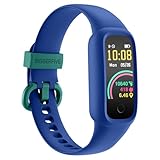
- [ALL-DAY ACTIVITY TRACKING] Track your child's daily steps, calories burned, and distance walked. To keep the motivation high, kids earn virtual medals when they reach specific activity goals, making fitness fun and engaging.
- [10+ SPORT MODES & IP68 WATERPROOF] From running to basketball, soccer to cycling, our kids fitness tracker supports over 10 different sports modes. Whether your child is swimming (IP68 waterproof, safe for pool but not seawater) or showering, the BIGGERFIVE tracker is built to keep up with their active lifestyle.
- [HEART RATE & SLEEP MONITORING] Stay informed about your child's heart rate data 24/7. The sleep-monitor feature of our kids watch provides insights into various sleep stages, such as the duration of deep sleep, and offers helpful tips to improve sleep quality.
- [COMFORTABLE BAND & LONG BATTERY LIFE] Crafted with a soft, lightweight silicone band, this kids pedometer is designed for all-day comfort. Enjoy a long-lasting battery life of up to 7 days on a single charge, with just a 2-hour recharge time.
- [PERFECT GIFT FOR SPECIAL OCCASION] Packaged beautifully, the kids fitness watch makes an ideal gift for birthdays, Christmas, or any special occasion. Paired with BIGGERFIVE App, you can explore additional features and access detailed activity and health reports, making it a fantastic tool for both kids and parents.
Each category solves a different parenting problem. The Vivofit Jr. 2 still sits firmly in the middle, and that positioning explains both its staying power and its limitations in 2026.
Vivofit Jr. 2 vs Fitbit Ace and Similar Fitness Bands
Fitbit’s Ace lineup is the most obvious comparison, as both target younger children with activity goals rather than communication tools. On paper, Fitbit Ace devices offer more modern hardware, including color touchscreens, rechargeable batteries, and deeper app integration.
In daily use, those upgrades come with trade-offs. Touchscreens invite fiddling, battery life drops from months to days, and charging becomes another task parents must manage.
The Vivofit Jr. 2’s monochrome display and coin-cell battery feel dated, but they also eliminate charging anxiety. A child can wear it continuously for up to a year without removing it, which dramatically improves consistency for younger kids.
Activity tracking accuracy is broadly comparable for steps and active minutes. Neither platform offers heart rate or advanced health metrics, and neither should be treated as a medical or training tool.
Fitbit’s app ecosystem is more visually polished, but it also collects more engagement data and encourages regular app interaction. Garmin’s Jr. app is utilitarian by comparison, with clearer boundaries between child data and adult accounts.
For families prioritizing simplicity, privacy restraint, and zero charging routines, the Vivofit Jr. 2 often feels calmer and easier to live with. For families who want a more modern interface and are comfortable managing charging and screen use, Fitbit Ace may feel more current.
Vivofit Jr. 2 vs Kids Smartwatches
Modern kids smartwatches represent the fastest-growing segment of this market. Many now include GPS tracking, calling, messaging, cameras, touchscreens, and app stores controlled through parent dashboards.
Compared to these devices, the Vivofit Jr. 2 is intentionally minimal. There is no location tracking, no communication, no internet access, and no social features.
This absence is either a relief or a deal-breaker. Parents concerned about constant connectivity, data exposure, or distraction often prefer the Garmin’s restraint. Parents seeking reassurance through GPS or wanting a way to contact their child directly will find the Vivofit Jr. 2 insufficient.
Smartwatches also introduce bulk and fragility concerns. Larger cases, glass screens, speakers, and charging pins are more vulnerable to drops, water exposure, and rough play.
The Vivofit Jr. 2’s sealed plastic case, recessed screen, and silicone band are built for playground abuse. It wears closer to a traditional watch in size and weight, making it easier for younger children to forget they are wearing it.
Cost over time also differs. Smartwatches often require subscriptions for GPS or messaging, while the Vivofit Jr. 2 has no ongoing fees beyond occasional band replacement.
Vivofit Jr. 2 vs Ultra-Simple Step Trackers
At the opposite end are basic pedometers and no-app step counters. These devices are inexpensive, often screen-only, and sometimes lack any parental interface.
Compared to those, the Vivofit Jr. 2 offers meaningful structure. Chore tracking, goal setting, rewards, and parental visibility turn raw step counts into habits and routines.
The Garmin Jr. app provides context that simple trackers cannot. Parents can see trends, adjust goals, and tie activity to responsibilities in a way that feels intentional rather than passive.
Durability and water resistance also tend to be stronger on the Garmin. Many budget trackers are splash-resistant at best, while the Vivofit Jr. 2 is swim-friendly and designed for all-day wear.
For families who simply want to count steps with no app involvement at all, simpler devices may suffice. For families trying to build routines and accountability, the Vivofit Jr. 2 remains more effective despite its age.
Age Range and Long-Term Fit Compared to Newer Devices
The Vivofit Jr. 2 is best suited for children roughly ages 4 to 9. Its design, challenges, and visuals skew younger, even when paired with neutral bands.
Modern alternatives often aim for longer lifespan by scaling features as children grow. Smartwatches, in particular, are designed to transition into pre-teen use.
Garmin’s approach is different. The Vivofit Jr. 2 is a starter device with a clear endpoint. Many families treat it as a first wearable before moving on to something more capable later.
That clarity can be helpful. It sets expectations and avoids feature creep that may be unnecessary or unwanted for younger children.
Privacy, Data, and Parental Control Differences
One of the Vivofit Jr. 2’s strongest advantages remains its conservative data model. Activity data is stored within the Garmin ecosystem, with no social sharing, messaging, or third-party app exposure for children.
Smartwatches and more connected trackers expand the data footprint significantly. Location history, voice recordings, contacts, and message logs introduce additional privacy considerations and account management complexity.
Fitbit sits somewhere in between, offering strong parental controls but still encouraging regular app interaction and cloud-based engagement.
For parents who value minimal data collection and clearly defined boundaries, the Vivofit Jr. 2 continues to feel purpose-built rather than compromised.
Which Families Should Look Beyond the Vivofit Jr. 2
Families wanting GPS tracking, communication features, or a device that evolves into the teen years will outgrow the Vivofit Jr. 2 quickly. In those cases, modern kids smartwatches or hybrid fitness watches are better aligned.
Families comfortable with charging routines and looking for a more modern screen experience may prefer Fitbit’s ecosystem or newer rechargeable trackers.
The Vivofit Jr. 2 remains most compelling for parents who want a durable, low-distraction, low-maintenance introduction to fitness habits. Its age shows, but its focus remains unusually clear in a market that often prioritizes features over fundamentals.
Who Should Buy the Vivofit Jr. 2 Today—and Who Should Look Elsewhere
After weighing privacy, longevity, and feature trade-offs, the decision around the Vivofit Jr. 2 comes down to expectations. This is not a mini smartwatch or a future-proof device, and Garmin has never positioned it as one.
Instead, it succeeds by doing a small number of things reliably, safely, and with minimal friction for both kids and parents.
The Vivofit Jr. 2 Is a Smart Buy If You Want a True First Wearable
The Vivofit Jr. 2 makes the most sense for families buying a child’s very first wearable. For kids roughly 4 to 8 years old, it introduces the idea of wearing a device daily without screens, notifications, or digital distractions.
There is no touchscreen to crack, no charging cable to lose, and no nightly routine to enforce. The coin-cell battery typically lasts close to a year, which is a major advantage for busy households.
It’s Ideal for Parents Who Prioritize Simplicity and Low Maintenance
Parents who do not want another device to manage will appreciate how little attention the Vivofit Jr. 2 demands. Once set up in the Garmin Jr. app, it quietly tracks steps, active minutes, and sleep without requiring frequent interaction.
The monochrome display, physical button, and lightweight plastic case are all optimized for durability rather than flash. It wears comfortably on small wrists, even during sleep, and rarely becomes a source of complaints.
It Works Well for Families Concerned About Privacy and Data Exposure
If your priority is keeping your child offline, the Vivofit Jr. 2 remains one of the most conservative options available. There is no GPS, no messaging, no microphone, and no social layer built into the experience.
All activity data stays within the parent-controlled Garmin ecosystem. For families wary of location tracking or connected features at a young age, this restraint is a feature, not a limitation.
The Motivational System Suits Younger Children Best
The adventure-based activity goals and chore rewards resonate most with early elementary-aged kids. Progress is tied to movement rather than screen engagement, which helps reinforce healthy habits without increasing screen time.
As children grow older, the narrative elements can start to feel juvenile. That transition point is typically where families begin to consider more advanced trackers.
You Should Look Elsewhere If You Want Communication or Safety Features
The Vivofit Jr. 2 does not offer GPS location tracking, calling, texting, or SOS features. Parents looking for real-time location awareness or emergency contact tools should be shopping in the kids smartwatch category instead.
Those devices come with added complexity, more frequent charging, and broader data collection, but they better serve families who want connectivity.
It’s Not the Right Choice for Older Kids or Long-Term Use
For children approaching 9 or 10, the Vivofit Jr. 2 can feel limiting. The small screen, basic metrics, and lack of evolving features mean there is little room to grow with the child.
If you want a device that transitions into the pre-teen years, a Fitbit Ace or a lightweight smartwatch will offer more longevity.
Skip It If You Expect a Modern Screen or Rechargeable Design
Families accustomed to color touchscreens and rechargeable gadgets may find the Vivofit Jr. 2 dated. The display is purely functional, and syncing requires deliberate parent involvement through the app.
That trade-off is intentional, but it is not for everyone.
Final Verdict: A Focused Tool With a Clear Endpoint
The Garmin Vivofit Jr. 2 remains a strong choice for parents who want a durable, distraction-free introduction to fitness and responsibility. It works best when treated as a starter device with a defined lifespan rather than a long-term solution.
If your goals align with simplicity, privacy, and low maintenance, it still delivers excellent value today. If you want connectivity, growth potential, or modern smartwatch features, it’s better to look elsewhere and start at the next tier up.