Garmin’s silence on LTE over the past five years hasn’t been accidental, but the market around it has shifted faster than Garmin likely expected. What once looked like an expensive, low‑value experiment now sits at the center of safety expectations, competitive pressure, and evolving athlete habits. If Garmin is preparing an LTE return, it’s because the conditions that sank the Vivoactive 3 LTE no longer exist in the same way.
This section explains why LTE makes strategic sense for Garmin again, what forced the company’s hand, and how today’s hardware, software, and subscription realities are fundamentally different. Understanding this context is key to judging whether an LTE Garmin in 2026 will feel essential or still optional.
The Vivoactive 3 LTE Failed for Structural Reasons, Not Conceptual Ones
The Vivoactive 3 LTE wasn’t rejected because Garmin users didn’t want connectivity, but because the execution was mismatched to the audience. LTE was locked to Verizon in the US, required a monthly fee, and offered extremely limited functionality beyond LiveTrack and emergency assistance. Battery life also took a hit, undermining one of Garmin’s strongest differentiators versus Apple Watch.
Just as importantly, it launched before safety features were a mainstream buying trigger. In 2019, LTE felt like a convenience add‑on rather than a personal security expectation, especially for runners and solo outdoor users.
🏆 #1 Best Overall

- Stylish Design, Vibrant Display: The lightweight aluminum build blends effortless style with workout durability, while the vivid 1.97" AMOLED display keeps your data easy to read, even under bright sunlight.
- All-in-One Activity Tracking: The Amazfit Bip 6 fitness tracker watch offers 140+ workout modes including HYROX Race and Strength Training, plus personalized AI coaching and 50m water resistance.
- Up to 14 Days Battery Life: The Amazfit Bip 6 smart watch powers through your training and recovery for up to two weeks at a time - no nightly charging needed.
- Accurate GPS Tracking & Navigation: Stay on course with free downloadable maps and turn-by-turn directions. Support from 5 satellite systems ensures precise tracking of every move and fast GPS connection.
- 24/7 Health Monitoring: The Amazfit Bip 6 smartwatch provides precise, real-time monitoring of heart rate, sleep, blood-oxygen and stress, empowering you with actionable insights to optimize your health and fitness.
Safety Has Become a Non‑Negotiable Feature, Not a Bonus
The Apple Watch shifted the market by reframing LTE as a safety tool, not a smartphone replacement. Fall detection, crash detection, emergency SOS, and location sharing now influence purchase decisions as much as heart rate accuracy or GPS performance. Parents buying watches for teens, runners training solo, and cyclists on open roads increasingly assume their watch works without a phone.
Garmin already excels at incident detection and LiveTrack, but phone dependence is now a visible weakness. LTE closes that gap while reinforcing Garmin’s credibility in endurance and outdoor use cases where phones are often left behind.
Competitive Pressure Is No Longer Coming Just from Apple
Samsung, Google, and even niche players are normalizing LTE across price tiers, while Apple continues to refine battery efficiency and dual‑frequency GPS. For buyers cross‑shopping a Forerunner or Fenix against an Apple Watch Ultra, LTE absence now feels like a missing checkbox rather than a philosophical choice. Garmin’s historical argument that athletes don’t want cellular rings hollow as competitors prove otherwise.
At the same time, Coros and Suunto remain phone‑dependent, creating an opening for Garmin to differentiate within the performance‑first segment. LTE could become a reason to choose Garmin rather than a reason to hesitate.
Hardware and Battery Tech Have Quietly Caught Up
Modern LTE chipsets are smaller, more power‑efficient, and easier to integrate without compromising multi‑band GNSS or long GPS recording times. Garmin’s latest watches already manage solar charging, AMOLED displays, and advanced sensors while maintaining multi‑day endurance. Adding LTE no longer requires the same battery sacrifices it did in 2019.
Equally important is antenna design and case architecture. Larger watches like Fenix, Epix, Enduro, and Forerunner 955/965 offer more internal volume to integrate LTE cleanly without harming comfort, durability, or water resistance.
Garmin’s Software and Ecosystem Are Finally Ready
Garmin Connect has matured into a platform that can intelligently use LTE without constant data drain. Features like selective LiveTrack pings, event‑based incident alerts, and low‑bandwidth messaging align perfectly with Garmin’s efficiency‑first philosophy. LTE doesn’t need to mean streaming music or app stores to be valuable.
Garmin also now has a clearer path to tiered subscriptions. With Connect Plus already establishing paid services, LTE can be positioned as a safety and tracking service rather than a lifestyle upsell, avoiding the confusion that surrounded Vivoactive 3 LTE’s value proposition.
Consumer Expectations Have Shifted in Garmin’s Favor
In 2019, Garmin LTE felt expensive for what it did. In 2026, buyers are already conditioned to paying monthly fees if the feature feels protective, reliable, and invisible in daily use. The question is no longer “why does my watch need LTE,” but “why doesn’t it have it.”
Garmin isn’t re‑entering LTE because it suddenly believes in cellular watches. It’s re‑entering because LTE now reinforces Garmin’s core identity: safety, endurance, and independence when it matters most.
A Brief History of Garmin LTE: What Failed Last Time and the Lessons Garmin Learned
Garmin’s renewed confidence around LTE only makes sense when you understand why its first attempt struggled. The company didn’t fail because LTE was incompatible with performance watches, but because it launched before the ecosystem, pricing logic, and consumer expectations were aligned.
The Vivoactive 3 LTE: Technically Sound, Strategically Confused
Garmin’s LTE debut arrived in late 2018 with the Vivoactive 3 LTE, a watch that was otherwise conservative by Garmin standards. It used the same polymer case, 43.4 mm footprint, and transflective display as the standard Vivoactive 3, prioritizing comfort and battery life over visual flair or ruggedness.
The LTE hardware itself was well integrated for the time. Battery life remained respectable at around four days in smartwatch mode, the watch retained full GPS tracking, and water resistance stayed at 5 ATM, making it swim-safe and genuinely wearable day to day.
Where things unraveled was the feature set. LTE was locked exclusively to safety-focused functions like LiveTrack, incident detection, and basic messaging relays, with no phone-free calling, no standalone texting, and no third-party app ecosystem to expand its usefulness.
The Subscription Problem That Undermined Trust
Garmin priced Vivoactive 3 LTE at a premium and layered on a mandatory monthly subscription through Verizon. In the US, users paid roughly $10 per month, with no option to use existing carrier plans or pause service seasonally.
For runners and cyclists, the value equation felt off. Paying an ongoing fee for features many users hoped they would never need created friction, especially when competing LTE watches from Apple offered full smartwatch independence for similar monthly costs.
International buyers were locked out entirely. The watch never launched beyond the US, immediately limiting its appeal and making LTE feel like a regional experiment rather than a core Garmin platform investment.
LTE Without Performance Context Missed Garmin’s Core Audience
The Vivoactive line has always targeted general fitness users, not endurance athletes or adventure users. That mismatch mattered, because LTE’s strongest value is in scenarios where the phone is intentionally left behind.
Serious runners, trail athletes, and cyclists were already using Forerunner and Fenix models for long sessions, races, and remote training. By putting LTE into a lifestyle-leaning watch with modest training depth and no multisport pedigree, Garmin failed to connect the technology to its most passionate user base.
The result was predictable. LTE felt like an insurance add-on rather than a performance enabler, and many users simply skipped it in favor of cheaper non-LTE models with identical training features.
Battery Anxiety and Early LTE Skepticism
In 2019, battery trade-offs were still front of mind for Garmin buyers. Multi-day endurance and ultra-long GPS recording were non-negotiable expectations, especially compared to daily-charging competitors like Apple Watch.
Even though Vivoactive 3 LTE’s real-world battery life was acceptable, the perception of LTE as a silent drain worked against it. Garmin struggled to communicate how selectively LTE was used, and buyers feared losing the one thing Garmin was famous for: reliability over days, not hours.
That skepticism no longer dominates the market, but it heavily shaped early reception and slowed adoption at launch.
What Garmin Learned: LTE Must Be Invisible, Optional, and Purpose-Built
The most important lesson from Vivoactive 3 LTE was that Garmin users don’t want LTE as a lifestyle convenience. They want it as an invisible safety net that activates only when needed and stays dormant the rest of the time.
Garmin also learned that subscriptions must feel proportional and flexible. A flat monthly fee tied to a single carrier and a narrow feature set created resistance that overshadowed the hardware’s strengths.
Just as critically, LTE must live in the right product families. When paired with watches designed for long runs, races, solo adventures, and outdoor exposure, LTE stops feeling redundant and starts feeling essential.
Why This Time Is Fundamentally Different
Today, Garmin controls more of the stack than it did in 2018. Its software platform is capable of granular LTE usage, its hardware is spacious enough to integrate antennas without compromising comfort or durability, and its audience now understands the value of connected safety features.
Garmin didn’t abandon LTE because it failed technically. It stepped back because the timing, positioning, and execution weren’t aligned with its core identity.
That retreat created the conditions for a more disciplined comeback, one that treats LTE not as a headline feature, but as infrastructure quietly supporting Garmin’s promise of independence, endurance, and trust when it matters most.
What Garmin LTE Will (and Won’t) Do: Safety, Live Tracking, Messaging vs True Phone Replacement
Seen through the lens of what Garmin learned last time, its LTE return is shaping up to be deliberately constrained. This is not about turning a Fenix or Forerunner into a wrist-mounted smartphone, but about removing the single biggest risk of going solo: being unreachable when something goes wrong.
Garmin’s internal logic appears consistent across leaks, firmware clues, and recent product behavior. LTE exists to support safety, awareness, and lightweight communication, while preserving battery life, comfort, and the expectation that the watch still works flawlessly when the network disappears.
Safety First: Incident Detection, SOS, and “Always There” Connectivity
The clearest and least controversial role for Garmin LTE is safety escalation. Think of it as InReach-lite for runners and cyclists who don’t need full satellite messaging but do need a guaranteed lifeline beyond Bluetooth range.
Automatic incident detection, already present on many Garmin watches, becomes far more powerful with LTE. Instead of relying on a nearby phone, the watch can independently notify emergency contacts, transmit last known GPS coordinates, and continue updating position if the user is moving or conscious.
Manual SOS is where LTE feels most aligned with Garmin’s DNA. A long-press action that opens a live connection, sends location data, and maintains a low-bandwidth link until help arrives fits endurance use far better than voice calls or app notifications ever could.
Critically, this model allows LTE radios to remain dormant until activated. For a 47–51 mm case like a Fenix or Enduro, the antenna and modem can be integrated without meaningful impact on comfort, water resistance, or ruggedness, while preserving multi-day GPS battery expectations.
Live Tracking Without the Phone Tether
LiveTrack has always been one of Garmin’s most useful but underutilized features, largely because it depended on a phone staying connected and alive. LTE removes that fragility entirely.
With native LTE, LiveTrack becomes a set-and-forget safety layer for races, long runs, gravel rides, and ultra-distance events. Friends or crew can follow progress in near real time, see pace and route adherence, and receive alerts if movement stops unexpectedly.
Garmin is unlikely to stream rich data or maps continuously. Instead, expect intelligent polling intervals that adjust based on movement, activity type, and battery state, prioritizing longevity over spectacle.
This also aligns with race regulations and athlete expectations. Many endurance events already allow GPS trackers but restrict phones, making LTE watches a clean, compliant solution rather than a loophole.
Messaging: Utility Over Conversation
Messaging is where Garmin draws its hardest line against becoming a phone replacement. LTE messaging is expected to remain short, structured, and purpose-built rather than conversational.
Predefined messages, quick replies, and simple text input for emergencies or coordination are the most realistic implementations. This mirrors Garmin’s InReach philosophy, but optimized for cellular bandwidth and urban or suburban coverage rather than global satellite reach.
Rank #2

- Stylish Design, Bright Display: The sleek stainless steel build blends classic style with workout durability, while the bright 1.32" AMOLED display keeps your data easy to read, even under bright sunlight.
- Precise Heart Rate and Sleep Tracking: Amazfit's BioTracker technology tracks your heart rate and sleep data with accuracy that previous sensors just can't match.
- Up to 10 Days of Battery Life: With long battery life that lasts up to 10 days with typical use, nightly recharges are a thing of the past.
- Free Maps with Turn Directions: Stay on-track with free downloadable maps, and get turn-by-turn guidance on-screen or via your Bluetooth headphones. Enjoy ski maps for global resorts, including guidance for cable cars, slopes, and more.
- Faster and More Accurate GPS Tracking: 5 satellite positioning systems ensure fast GPS connection and accurate positioning whenever you're out running, walking, cycling or hiking.
Full conversational texting, emoji-heavy threads, and third-party messaging apps would undermine Garmin’s battery and simplicity goals. More importantly, they would change how users interact with the watch during training, pushing it toward distraction rather than focus.
For most runners and outdoor athletes, that tradeoff is not desirable. A “running late” or “I’m OK, continuing” message carries far more value mid-activity than an open-ended chat interface.
What LTE Will Not Do: No Calls, No Apps, No Wrist Phone Fantasy
If expectations are anchored to Apple Watch Ultra or Galaxy Watch LTE, Garmin’s approach will feel intentionally limited. Voice calls are extremely unlikely, both due to microphone and speaker constraints and because continuous audio connectivity is a battery killer.
Streaming music directly over LTE also remains improbable. Garmin has invested heavily in offline music storage synced over Wi-Fi or phone, and cellular streaming would compromise the long-session endurance that defines its watches.
Third-party LTE apps, background data sync, and independent app stores would similarly conflict with Garmin’s tightly controlled power management. Garmin’s ecosystem favors predictability over openness, especially for devices expected to survive rain, cold, vibration, and multi-hour GPS sessions.
In short, LTE will not turn a Forerunner or Fenix into something you leave your phone at home all day. It will let you leave your phone behind for the run that matters.
How This Compares to Apple and Samsung’s LTE Vision
Apple and Samsung treat LTE as a lifestyle enabler. Their watches are designed for short daily charging cycles, constant connectivity, and frequent interaction with apps, notifications, and media.
Garmin’s LTE philosophy is almost the inverse. The watch remains primarily a tool, not a companion screen, and LTE is infrastructure rather than interface.
That difference matters for materials and design as well. Garmin can prioritize thicker cases, reinforced polymer or titanium bezels, and buttons over touch dependency, knowing users won’t be scrolling feeds or tapping replies mid-run.
For buyers deciding whether to wait for Garmin LTE, the key question is not “Can this replace my phone?” but “Does this remove my biggest risk when training alone?” For a large segment of endurance athletes, that answer increasingly looks like yes.
Most Likely LTE Candidates: Forerunner, Fenix/Epix, Enduro, and Why Venu Is Less Certain
If Garmin’s LTE strategy is about risk mitigation rather than lifestyle convenience, the short list of candidates narrows quickly. The watches most aligned with safety-first connectivity are already worn by athletes who train alone, go long, and push beyond reliable phone coverage.
That immediately puts Forerunner, Fenix/Epix, and Enduro at the front of the queue, while Venu sits in a far more ambiguous position.
Forerunner: The Most Obvious and Lowest-Risk LTE Expansion
The Forerunner line is Garmin’s cleanest LTE fit, both historically and technically. Garmin already tested LTE here with the Forerunner 945 LTE, establishing backend infrastructure for LiveTrack, emergency messaging, and spectator-facing features without turning the watch into a phone replacement.
Modern Forerunners like the 965 and its eventual successor have the physical room and battery headroom to absorb an LTE radio. Their lightweight polymer cases, mid-sized dimensions, and focus on runners make them ideal for short, high-value cellular bursts rather than constant connectivity.
From a wearability standpoint, Forerunner users tolerate slightly thicker cases and prioritize comfort over luxury materials. That gives Garmin flexibility to hide antennas in reinforced polymer shells without compromising GPS performance or wrist comfort during long runs.
If LTE returns, expect it to land first on a high-end Forerunner variant rather than midrange models. Garmin is unlikely to dilute the feature across price tiers until subscription adoption is proven.
Fenix and Epix: Premium Pricing Makes LTE Economically Viable
Fenix and Epix are where LTE starts to make financial sense for Garmin. These buyers already accept premium pricing, heavier builds, and thicker cases in exchange for durability, mapping, and multi-band GNSS reliability.
Titanium bezels, steel cases, sapphire glass, and button-driven interfaces also play well with LTE’s constraints. Garmin does not need to chase thinness here, and antenna placement is easier in larger, more rigid housings.
Battery life is the critical differentiator. Fenix and Epix users expect multi-day endurance even with always-on displays or AMOLED panels, meaning LTE would almost certainly be dormant unless a safety feature is triggered. That aligns perfectly with Garmin’s philosophy of LTE as infrastructure, not a constant data pipe.
A Fenix or Epix LTE variant would likely be positioned as a distinct SKU rather than a standard feature. Think “Pro LTE” rather than LTE baked into every model, keeping subscription opt-in tightly controlled.
Enduro: Technically Ideal, Commercially Niche
Enduro may be the most technically appropriate LTE candidate and the most commercially complicated. Its entire identity is built around ultra-endurance, solar-assisted battery life, and multi-day activities where a phone is either dead or nonexistent.
From a safety perspective, LTE on Enduro makes enormous sense. Ultra runners, bikepackers, and expedition athletes are exactly the users who benefit from emergency messaging and passive tracking without carrying additional hardware.
The challenge is scale. Enduro sells in much smaller volumes than Fenix or Forerunner, and LTE hardware plus certification costs do not amortize easily over a niche audience. Garmin may choose to share LTE architecture with Fenix rather than develop an Enduro-exclusive solution.
If LTE appears on Enduro, it will likely be framed explicitly as an expedition safety tool, not a general connectivity feature. Expect zero lifestyle concessions and absolute prioritization of battery preservation.
Why Venu Is the Least Certain LTE Candidate
At first glance, Venu seems like the obvious LTE play. AMOLED display, touch-first interface, and wellness-focused positioning put it closest to Apple Watch and Galaxy Watch on paper.
But that similarity is precisely the problem. LTE expectations in this segment include calls, assistants, streaming, and app notifications, all of which Garmin has shown no appetite to support. Delivering LTE without those features risks confusing buyers and inviting unfavorable comparisons.
Venu’s slimmer cases and lighter builds also leave less room for antennas and power buffers. Unlike Fenix or Forerunner users, Venu buyers are less tolerant of added thickness or weight, especially for a watch marketed as all-day wearable tech rather than a training instrument.
There is also brand strategy at play. Garmin has historically kept Venu distinct from its safety-forward narrative, focusing instead on health metrics, comfort, and visual appeal. Introducing LTE here could blur that message without delivering enough tangible benefit.
If Venu ever gains LTE, it would likely be a tightly scoped experiment rather than a full commitment. For now, Garmin’s LTE future looks far more grounded in performance and protection than in lifestyle convenience.
Hardware Implications of LTE: Battery Life, Antennas, Case Size, Weight, and Durability Trade‑Offs
If Garmin is serious about bringing LTE back beyond a one‑off experiment, the hardest problems are not software or subscriptions. They are physical. LTE fundamentally changes how a watch is designed, how it wears on the wrist, and how long it can survive between charges in real outdoor conditions.
This is where Garmin’s philosophy diverges most sharply from Apple and Samsung. Garmin designs watches from the battery outward, not from the screen inward, and LTE stresses that approach in ways that ripple through every layer of hardware.
Battery Drain Is the Primary Constraint
LTE radios are power‑hungry even when used sparingly, and exponentially worse when signal quality drops. In mountain terrain, forests, or urban fringe environments, the radio has to work harder to maintain a connection, which can dwarf the power draw of GPS itself.
Garmin’s earlier LTE attempt with Forerunner 945 LTE demonstrated this clearly. Battery life in standard GPS mode remained strong, but enabling LiveTrack or safety features shortened usable endurance enough that Garmin aggressively limited LTE activity to background tasks only.
For watches like Fenix or Enduro, the expectation is measured in days or weeks, not hours. Any LTE implementation that meaningfully dents expedition‑grade battery claims risks undermining the core reason these watches exist.
Why Solar, Larger Cells, or Strict LTE Throttling Become Mandatory
To offset LTE power draw, Garmin has three levers: battery size, charging augmentation, and usage control. Solar charging on Fenix Solar and Enduro already plays a role here, even if it only meaningfully extends life in optimal conditions.
A physically larger battery is the simplest solution, but it immediately impacts case thickness and weight. That trade‑off is acceptable for Fenix and Enduro buyers, but far less so for Forerunner athletes who care about race‑day comfort and wrist bounce.
The most likely approach is aggressive LTE throttling. Expect LTE to remain dormant 99 percent of the time, waking only for scheduled check‑ins, incident detection, or brief outbound messaging, not continuous connectivity.
Antenna Design Forces Case and Bezel Compromises
LTE antennas cannot be hidden as easily as Bluetooth or Wi‑Fi. They require careful isolation from metal components and enough physical length to perform reliably across multiple frequency bands.
This has direct implications for bezel materials. Titanium and steel are excellent for durability and premium feel, but they complicate radio performance. Garmin may need to rely more heavily on polymer antenna windows, segmented bezels, or internal frame redesigns to maintain signal integrity.
These antenna considerations also influence case diameter. Smaller watches leave less room to separate GPS, LTE, and Wi‑Fi antennas, increasing the risk of interference and degraded performance, particularly during motion.
Case Thickness and Weight Are Not Just Aesthetic Issues
Adding LTE hardware almost always increases stack height. Between the modem, shielding, antenna routing, and larger battery, watches tend to get thicker even if diameter stays constant.
Rank #3
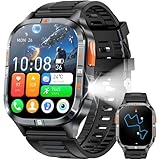
- BUILT-IN GPS & COMPASS– This military smartwatch features high-precision GPS to pinpoint your location while hiking, cycling, or traveling, keeping you safely on track without extra gear. Tap the compass icon and it locks your bearing within three seconds—engineered for pro-level outdoor adventures like camping, climbing, and trekking.
- BLUETOOTH CALLING & MESSAGES – Powered by the latest Bluetooth tech, the men’s smartwatch lets you answer or make calls right from your wrist—no need to pull out your phone. Get real-time alerts for incoming texts and app notifications so you never miss an invite. (Replying to SMS is not supported.)
- BIG SCREEN & DIY VIDEO WATCH FACE – The 2.01" military-spec display is dust-proof, scratch-resistant, and forged from high-strength glass with an aluminum alloy bezel, passing rigorous dust and abrasion tests so the screen stays crystal-clear. Upload a short family video to create a dynamic, one-of-a-kind watch face that keeps your memories alive.
- 24/7 HEALTH MONITORING – Equipped with a high-performance optical sensor, this Android smartwatch tracks heart rate and blood-oxygen levels around the clock. It also auto-detects sleep stages (deep, light, awake) for a complete picture of your health, ensuring you always know how your body is doing.
- MULTI SPORT MODES & FITNESS TRACK – Choose from running, cycling, hiking, basketball, and more to log every workout. Set goals, monitor progress, and sync data to the companion app. Bonus tools include photo gallery, weather, alarm, stopwatch, flashlight, hydration reminder, music/camera remote, find-my-phone, mini-games, and other everyday essentials.
On the wrist, this affects more than looks. Thicker cases shift center of mass upward, which can increase rotational movement during running and cause pressure points under straps, especially on lightweight nylon bands favored by endurance athletes.
Garmin will likely accept incremental weight gain on Fenix and Enduro models, where ruggedness is part of the appeal. For Forerunner, even a few extra grams can be controversial among competitive runners accustomed to featherlight designs.
Durability, Water Resistance, and LTE Are in Tension
Every additional antenna opening, seam, or non‑metallic window is a potential vulnerability. Maintaining 10 ATM or 20 ATM water resistance while routing LTE antennas is materially harder than doing so for GPS alone.
This matters for multisport users who swim, surf, or train in heavy rain for hours. LTE hardware must survive not just brief submersion, but prolonged exposure to water, sweat, salt, and temperature swings.
Garmin’s advantage is experience. The company has decades of RF engineering across marine, aviation, and outdoor devices, but integrating that expertise into a compact, wrist‑mounted form factor remains a non‑trivial challenge.
Comfort and Wearability Over Long Durations
LTE watches are not worn for an hour; they are worn for days. Hot spots from internal components, uneven weight distribution, or reduced airflow under the caseback become more noticeable the longer the watch stays on the wrist.
Materials matter here. Resin and fiber‑reinforced polymers manage heat differently than metal, which could influence Garmin’s material choices even on premium models. Strap integration also becomes more important, as a well‑balanced strap can offset added head weight from LTE components.
For expedition users, comfort is not a luxury feature. It directly affects compliance, sleep tracking accuracy, and the willingness to keep LTE safety features enabled continuously.
Why These Trade‑Offs Narrow Garmin’s LTE Targets
Taken together, these hardware constraints explain why Garmin cannot simply sprinkle LTE across its lineup. Each LTE watch requires deliberate acceptance of size, weight, and battery compromises that only certain user groups will tolerate.
This strongly favors Fenix, Enduro, and select Forerunner variants, while making slim lifestyle watches like Venu far harder to justify. Garmin’s LTE future is therefore less about mass adoption and more about precision targeting.
LTE, in Garmin’s world, is not a checkbox feature. It is a structural design decision that reshapes the entire watch, and Garmin will only make that decision where the trade‑offs clearly align with how the watch is meant to be used.
Subscription Rumors Explained: Expected Pricing, Bundling With Garmin Connect, and Carrier Independence
If hardware constraints determine which Garmin watches can realistically support LTE, the subscription model determines whether users will actually turn it on. Garmin’s previous LTE attempt showed that endurance athletes will tolerate size and battery trade‑offs, but only if the ongoing cost feels aligned with safety, training, and autonomy rather than lifestyle convenience.
The current wave of rumors points to Garmin treating LTE less like a smartwatch upsell and more like an infrastructure layer that quietly supports its existing ecosystem.
Expected Pricing: Why Garmin Is Unlikely to Chase Apple or Samsung
Most credible pricing chatter clusters around a monthly fee in the $5 to $10 range, with strong indications that Garmin wants to stay closer to the lower end. This would mirror the original Forerunner 945 LTE pricing model, but with expanded functionality and better regional support.
Unlike Apple Watch or Galaxy Watch LTE plans, Garmin has no incentive to subsidize carriers with voice or SMS usage. Garmin LTE is expected to focus on low‑bandwidth data: live tracking, incident detection, limited messaging, weather alerts, and possibly short burst uploads for training and safety telemetry.
That usage profile matters. It allows Garmin to negotiate wholesale data rates rather than consumer phone plans, keeping costs predictable and globally scalable. For users, it means LTE feels like an always‑on safety net rather than a replacement for a smartphone.
Bundling With Garmin Connect: A Subtle Shift Toward Tiered Services
One of the more interesting rumors is that LTE may no longer be sold as a fully standalone subscription. Instead, Garmin appears to be exploring deeper integration with Garmin Connect, potentially tying LTE access to higher‑tier Connect plans.
This does not necessarily mean Garmin Connect becomes paywalled. The base platform remains too central to Garmin’s brand identity. More likely is a layered approach, where advanced safety features, expedition tracking, and LTE‑powered live sharing sit alongside existing premium offerings like advanced training insights and coaching.
For Garmin, this creates stickiness without alienating its core user base. For users, it reframes LTE as part of a broader performance and safety toolkit rather than a bolt‑on feature that feels disconnected from the rest of the watch experience.
Carrier Independence: Why eSIM Without Carrier Stores Matters
Perhaps the most consistent rumor, and the most important for global users, is Garmin’s continued push toward full carrier independence. Activation is expected to remain entirely inside Garmin Connect, with no carrier store visits, QR codes, or regional phone plan dependencies.
This approach aligns with Garmin’s audience. Runners, triathletes, and outdoor athletes travel across borders far more often than typical smartwatch users, and they expect LTE to work in the background without administrative friction.
Carrier independence also explains why Garmin LTE will never offer voice calls in the traditional sense. Voice and SMS force deep carrier integration and regional complexity. Data‑only LTE keeps the experience clean, predictable, and compatible with Garmin’s global distribution model.
What LTE Will Actually Enable, and What It Will Not
Rumors consistently suggest that Garmin LTE will expand beyond emergency assistance but stop well short of full smartwatch independence. Expect live location sharing that updates more frequently, two‑way preset and possibly free‑text messaging, automated safety check‑ins, and weather or hazard alerts tied to activity context.
Do not expect app stores, music streaming, or phone‑free social features. Those experiences demand constant connectivity, high power draw, and user interface compromises that clash with Garmin’s battery‑first design philosophy.
This distinction is critical for buyers. Garmin LTE is not about replacing your phone on a coffee run. It is about letting you leave your phone behind on a long trail run, open‑water swim support session, or ultra training day without losing a safety connection to the outside world.
Value Perception: Who the Subscription Makes Sense For
At $5 to $10 per month, LTE only makes sense if it meaningfully changes how you train or explore. For urban users who already carry a phone, LTE will feel redundant. For solo runners, backcountry hikers, and endurance athletes training for hours at a time, the value proposition looks very different.
The watch itself already carries a premium price, often with titanium cases, sapphire lenses, robust water resistance, and straps designed for multi‑day comfort. LTE, in this context, becomes a functional extension of that investment rather than an impulse add‑on.
This is why Garmin’s LTE comeback is not aimed at everyone. The subscription rumors suggest a narrowly targeted, purpose‑driven service designed to disappear into the background, quietly doing its job until the moment it is genuinely needed.
Carrier and Regional Support: eSIM, Global Roaming Challenges, and Why Garmin Avoids Traditional Telcos
Once you accept that Garmin LTE is data-only and safety-focused, the next question becomes more complicated: how that connectivity actually works across borders, carriers, and regulatory environments. This is where Garmin’s strategy diverges sharply from Apple, Samsung, and even its own earlier LTE experiments.
eSIM Is Non-Negotiable for Garmin’s LTE Strategy
Any modern Garmin LTE revival almost certainly relies on embedded eSIM rather than removable SIMs or carrier-provisioned hardware. eSIM allows Garmin to ship a single SKU globally, maintain tight control over provisioning, and abstract carrier relationships away from the end user.
For endurance watches with sealed cases, sapphire lenses, and 10 ATM or higher water resistance, eSIM also avoids physical compromises. There is no SIM tray, no additional gasket failure point, and no impact on the ruggedness expected from Fenix-, Enduro-, or Forerunner-tier hardware.
Just as importantly, eSIM allows Garmin to treat connectivity as a service layer rather than a carrier feature. That distinction underpins nearly every decision Garmin is making this time around.
Why Global Roaming Is the Hard Part, Not the Hardware
From a radio perspective, adding LTE-M or NB-IoT to a watch is solvable. The real complexity lies in global roaming agreements, regional frequency support, and regulatory approval across dozens of countries.
Apple solves this by leaning heavily on major telcos, which is why Apple Watch LTE availability varies wildly by region and carrier. Samsung follows a similar model, often with even more fragmented support outside North America and Western Europe.
Garmin’s user base is fundamentally international. A Forerunner or Fenix buyer might live in the US, race in Europe, and train at altitude in South America, all with the same watch. LTE that silently stops working at a border undermines the very safety promise Garmin is selling.
The Garmin Response: MVNO-Style Aggregation Instead of Telco Partnerships
Rather than negotiating consumer-facing plans with Verizon, Vodafone, or Deutsche Telekom, Garmin is expected to aggregate connectivity behind the scenes. This mirrors how Garmin currently handles inReach satellite subscriptions and how many IoT platforms operate at scale.
In this model, Garmin becomes the customer of multiple carriers, not the other way around. The watch connects to whichever partner network is available locally, while the user pays Garmin directly for the service.
For consumers, this removes carrier compatibility checks, store visits, and regional plan confusion. For Garmin, it prevents LTE from becoming a support nightmare tied to telecom politics rather than product performance.
Lessons Learned From Garmin’s First LTE Attempt
The original Forerunner 945 LTE was limited not by hardware ambition, but by geographic availability. Service was restricted to a short list of countries, with no path to expansion that didn’t involve complex carrier negotiations.
That watch also made clear that Garmin had no interest in becoming a miniature smartphone platform. The LTE experience was intentionally narrow, but the regional lock-in still frustrated globally mobile athletes.
A second-generation LTE rollout would almost certainly avoid repeating this mistake. Expect broader launch regions, fewer country-specific exclusions, and clearer messaging around where LTE works on day one.
Rank #4

- 【Built-in GPS & Multi-System Positioning】Stay on track with the Tiwain smartwatch’s built-in GPS. Featuring military-grade single-frequency and six-satellite support (GPS, GLONASS, Beidou, Galileo, NAVIC, QZSS), this watch offers fast and accurate location tracking wherever you go. It also includes a compass, altimeter, and barometer, giving you real-time data on your altitude, air pressure, and position.
- 【Military-Grade Durability】Engineered to withstand the toughest conditions, the Tiwain smartwatch meets military standards for extreme temperatures, low pressure, and dust resistance. Crafted from tough zinc alloy with a vacuum-plated finish, this watch is also waterproof and built to resist wear and tear. The 1.43-inch AMOLED HD touchscreen offers clear visibility in all environments, and the watch supports multiple languages for global users.
- 【170+ Sport Modes & Fitness Tracking】Track your fitness journey with 170+ sport modes, including walking, running, cycling, hiking, basketball, and more. Set exercise goals, monitor progress, and sync your data to the companion app. The smartwatch also offers smart features like music control, camera remote, weather updates, long-sitting reminders, and more.
- 【LED Flashlight for Outdoor Adventures】The Tiwain smartwatch comes equipped with a built-in LED flashlight that can illuminate up to 20 meters. Activate it with the side button for added convenience during nighttime activities or outdoor adventures.
- 【Comprehensive Health Monitoring】Monitor your health with real-time heart rate, sleep, blood pressure, and blood oxygen level tracking. The smartwatch will vibrate to alert you of any abnormal readings. You can also make and receive calls directly from the watch, and stay connected with message and app notifications (receive only, no sending capability) – perfect for when you’re driving or exercising.
Why Garmin Avoids Traditional Telcos at All Costs
Traditional smartwatch LTE plans are built around voice numbers, SMS routing, and shared billing with a phone. None of that aligns with Garmin’s use case, and all of it adds cost, power drain, and regulatory overhead.
Garmin watches prioritize battery life measured in days or weeks, not hours. Continuous carrier handshakes, background messaging services, and voice standby states directly conflict with that design goal.
By avoiding telcos, Garmin also avoids feature creep. There is no pressure to add calling, streaming, or third-party apps simply because the network supports them.
Regional Reality Check for Buyers
Even with an aggregated backend, LTE coverage will not be truly universal at launch. Some regions will lag due to regulatory approvals, limited LTE-M infrastructure, or local restrictions on eSIM provisioning.
Garmin is likely to publish a supported-country list that grows over time rather than promising worldwide coverage from day one. For buyers who routinely train or race in less-connected regions, satellite-based inReach devices may remain the more reliable option.
The difference is that LTE will finally feel like a global feature, not a country-specific experiment. That alone would mark a significant shift from Garmin’s previous LTE posture.
What This Means for Subscription Pricing and Longevity
Avoiding telcos allows Garmin to price LTE as a flat monthly service rather than a region-dependent plan. This is why rumors consistently cluster around the $5 to $10 range instead of carrier-style add-ons.
It also gives Garmin long-term control. If a carrier changes terms or exits a market, Garmin can reroute connectivity without forcing hardware replacements or plan cancellations.
For users investing in premium watches with titanium cases, sapphire glass, and multi-year lifespans, that stability matters. LTE becomes a durable capability rather than a fragile add-on tied to external partners Garmin cannot fully control.
How Garmin LTE Will Differ From Apple Watch and Samsung Galaxy Watch LTE
Once Garmin’s rumored LTE direction is viewed through the subscription and backend lens, the contrast with Apple Watch and Samsung Galaxy Watch LTE becomes stark. This is not a battle over who offers the most features, but over fundamentally different definitions of what “connected” should mean on a wrist.
Garmin is not trying to replace your phone. Apple and Samsung very much are, and that philosophical split drives nearly every technical and user-experience difference.
Connectivity Model: Event-Based vs Always-On
Apple Watch and Galaxy Watch LTE are designed for persistent connectivity. They maintain constant network registration to support calls, iMessage or RCS, push notifications, background app refresh, and live data syncing.
Garmin’s LTE approach is expected to remain event-driven. The radio wakes when a safety trigger is activated, when LiveTrack is initiated, or when a short message needs to be sent, then returns to a low-power state.
This difference alone explains why Apple quotes battery life in hours with LTE active, while Garmin continues to target multi-day endurance even on connected models.
No Phone Number, No Voice Calls, No App Store Arms Race
Apple Watch LTE is assigned a mirrored phone number and operates as a secondary endpoint on your carrier plan. Samsung follows a similar model, enabling voice calls, SMS, streaming, and standalone app usage.
Garmin LTE deliberately avoids phone-number identity. There is no dialer, no speakerphone conversations mid-run, and no expectation that the watch can replace a smartphone during daily life.
This keeps hardware simpler. Garmin can prioritize lighter cases, thicker battery cells, physical buttons usable with gloves, and antennas tuned for outdoor reliability rather than indoor call quality.
Battery Life Is the Product, Not the Trade-Off
Apple and Samsung accept battery drain as the cost of smartwatch independence. Even with aggressive power management, LTE models typically need daily charging, especially once workouts or navigation enter the mix.
Garmin’s user base measures value differently. A Fenix or Forerunner worn for ultramarathons, multi-day hikes, or back-to-back training blocks cannot afford LTE that halves battery life.
Expect Garmin LTE watches to maintain near-identical endurance to their non-LTE counterparts when connectivity is idle, with only modest impact during active tracking or emergency use.
Data Scope: Safety, Location, and Short Bursts Only
Apple Watch LTE excels at rich data use. Music streaming, map tiles, voice dictation, cloud photo sync, and third-party apps all assume continuous bandwidth.
Garmin’s LTE data needs are narrow by design. GPS coordinates, biometric snapshots, pre-defined messages, and incident alerts require very little throughput.
This narrower scope aligns with LTE-M or NB-IoT style implementations and explains why Garmin can operate without regional carrier plans or complex roaming agreements.
Subscription Philosophy: Service Fee vs Carrier Dependency
Apple and Samsung LTE models are effectively extensions of carrier ecosystems. Pricing, availability, and even feature sets vary by region and carrier support.
Garmin’s rumored flat-rate subscription flips that model. Users pay Garmin directly, coverage is abstracted behind the scenes, and features remain consistent regardless of country, subject only to network availability.
For endurance athletes and travelers, that predictability may matter more than raw LTE speed or app compatibility.
Hardware Design Priorities Diverge
Apple Watch and Galaxy Watch prioritize slimness, bright AMOLED displays, microphones, speakers, and touch-first interfaces. These choices favor urban daily wear but impose constraints on battery volume and thermal headroom.
Garmin LTE watches are likely to retain transflective or memory-in-pixel displays, thick mid-cases, reinforced lugs, and metal-reinforced bezels. Comfort is achieved through balance and strap design rather than thinness.
Materials like titanium, fiber-reinforced polymer, and sapphire make more sense in a watch expected to scrape rocks, survive crashes, and be worn continuously for days.
Fitness and Outdoor Use Come First, Not Last
On Apple and Samsung watches, fitness features coexist with productivity, media, and communication tools. The watch must constantly juggle priorities.
Garmin’s software stack remains singularly focused. LTE exists to enhance training safety, remote tracking, and peace of mind, not to introduce distractions.
That focus reduces software complexity and long-term maintenance risk, an important factor for users who keep a watch for four to six years rather than upgrading annually.
Who Each LTE Approach Is Actually For
Apple Watch LTE is ideal for users who want to leave their phone behind during errands, gym sessions, or short runs without losing access to calls and apps.
Samsung’s LTE models appeal to Android users seeking a similar lifestyle-centric experience with deeper integration into Google services.
Garmin LTE is aimed at runners heading out alone, cyclists training beyond cell dead zones, and outdoor athletes who value safety and autonomy over digital convenience. For those users, LTE is not about independence from a phone, but independence from risk.
Who Garmin LTE Is Really For: Runners, Endurance Athletes, Outdoor Safety Users, and Who Should Skip It
The clearest way to understand Garmin’s LTE comeback is to stop thinking about it as “cellular on a smartwatch” and start thinking about it as a safety and logistics layer added to an already capable training computer.
Garmin is not trying to win the Apple Watch buyer who wants Spotify streaming, phone calls, and app notifications without a phone. The company is doubling down on users whose training and outdoor routines create real risk when something goes wrong.
Solo Runners Who Train Away From Phones
Garmin LTE makes the most sense for runners who deliberately leave their phone behind, not because they want digital freedom, but because they want less weight, less bounce, and fewer distractions.
For this group, LTE enables live tracking, incident detection, and emergency alerts without needing to pair to a smartphone at the start of every run. A lightweight Forerunner-class watch with LTE would likely keep polymer cases, slim straps, and restrained dimensions to preserve comfort over long distances.
Battery life matters more than speaker quality here. If LTE drains the battery too quickly, runners will simply turn it off, so Garmin’s rumored low-bandwidth, event-driven LTE model fits this audience far better than always-on connectivity.
Endurance Athletes Training Beyond Cell Dead Zones
Cyclists, trail runners, and triathletes often spend hours moving through patchy or nonexistent cellular coverage. For them, LTE is not about constant connectivity but about critical moments when something goes wrong.
💰 Best Value

- Smart Watch with GPS and Offline Map: This smart watch connects to multiple satellite systems for accurate real-time positioning, and includes a professional-grade compass, altimeter, and barometer for precise data, ensuring you maintain your sense of direction in any outdoor environment. The map version supports downloading offline maps; select a route or destination to view the route even without a signal, eliminating the risk of getting lost.
- Bluetooth Call & Message Functionality: This smart watches for men allows you to make and receive calls; receive text and social media notifications (Facebook, WhatsApp, Instagram, Twitter, etc.); and reply to text messages with voice-to-text or set up quick replies (text reply functionality is available for Android phones).
- Sports & Health Monitoring: This 5ATM waterproof fitness watch supports over 100 sports modes and tracks daily activity data, calories, distance, steps, and heart rate. You can use it to monitor your health metrics (blood oxygen, heart rate, stress, and sleep), monitor your fatigue and mood, and perform PAI analysis. You can also use this smartwatch to set water intake and sedentary reminders. Stay active and healthy with this fitness tracker watch.
- Customizable Watch Faces & AI Functionality: This smart watch features a 1.46-inch HD touchscreen and over 100 downloadable and customizable watch faces. You can even use your favorite photos as your watch face. Equipped with AI technology, it supports voice descriptions in multiple languages to generate personalized AI watch faces. The watch's AI Q&A and AI translation features provide instant answers to questions and break down language barriers, making it an ideal companion for everyday life and travel.
- Large Battery & High Compatibility & More Features: This smart watch for android phones and ios phone features a large 550ml battery for extended battery life. It's compatible with iOS 9.0 and above and Android 5.0 and above. It offers a wealth of features, including an AI voice assistant, weather display, music control, camera control, calculator, phone finder, alarm, timer, stopwatch, and more. (Package Includes: Smartwatch (with leather strap), spare silicone strap, charging cable, and user manual)
Garmin’s likely LTE implementation prioritizes position pings, emergency triggers, and check-in messages rather than continuous data streaming. That allows thicker mid-cases, larger batteries, and transflective displays to remain unchanged, preserving the multi-day battery life that endurance athletes expect.
On watches like a potential Forerunner 965 LTE or Fenix/Epix LTE variant, the value proposition is clear: LTE adds a safety net without compromising training metrics, GPS accuracy, or durability.
Outdoor Safety Users and Remote Workers
Hikers, mountaineers, backcountry skiers, and outdoor professionals represent the most compelling use case for Garmin LTE. These users already accept bulky cases, metal bezels, sapphire lenses, and aggressive strap designs in exchange for reliability.
For them, LTE complements features like breadcrumb navigation, altitude tracking, weather alerts, and SOS-style functions. It does not replace satellite messengers entirely, but it lowers the barrier to safety in regions where LTE coverage exists and satellite subscriptions feel excessive.
This is also where subscription predictability matters. A flat, region-agnostic LTE fee is far easier to justify for occasional but high-stakes use than carrier-tied smartwatch plans.
Parents, Partners, and Peace-of-Mind Buyers
There is a quieter audience Garmin is likely targeting: people who buy the watch not just for themselves, but for the reassurance it provides to someone else.
Live tracking links, automated incident alerts, and simple “I’m OK” messages carry emotional weight that app ecosystems cannot replicate. Garmin’s conservative software approach, limited LTE scope, and long-term device support make sense for users who value reliability over features.
This group is less sensitive to screen technology or smartwatch aesthetics and more concerned with trust, uptime, and durability over years of use.
Who Should Probably Skip Garmin LTE
If your primary goal is phone replacement, Garmin LTE will disappoint. There is no indication that Garmin plans to support voice calls, rich messaging, music streaming, or third-party LTE apps in the way Apple or Samsung do.
Urban users who already carry a phone, value AMOLED displays, slim cases, microphones, speakers, and fast app interactions will find more satisfaction in mainstream LTE smartwatches. Garmin’s thicker cases, button-first interfaces, and restrained software experience are deliberate trade-offs, not oversights.
Cost-sensitive buyers should also pause. Even a modest monthly LTE fee adds up over a four- to six-year ownership cycle, and if you rarely train solo or outside phone coverage, the value diminishes quickly.
The Common Thread: LTE as Risk Management, Not Convenience
Across all its likely audiences, Garmin LTE is about reducing exposure to risk rather than increasing digital freedom. It is designed for people who accept physical discomfort, bulk, and higher upfront costs in exchange for autonomy and safety.
If that description matches how you train, travel, or work outdoors, Garmin’s LTE return may be worth waiting for. If not, the company is unlikely to bend its philosophy to meet lifestyle smartwatch expectations anytime soon.
Product Forecast and Launch Timeline: What to Watch in Upcoming Garmin Releases
If Garmin LTE is truly about risk management rather than convenience, the rollout cadence matters as much as the feature set. Garmin rarely launches connectivity experiments broadly; it seeds them into specific product families, learns quietly, and expands only when battery life, reliability, and support economics align.
What follows is not a prediction of a single headline LTE watch, but a pattern-based forecast of where LTE fits naturally into Garmin’s existing portfolio over the next 12 to 24 months.
Short Term (Next 6–9 Months): Evolution, Not Reinvention
In the near term, the safest bet is an LTE refresh tied to an existing platform rather than a brand-new product line. Garmin has already laid the groundwork with LTE-capable antennas, certification experience, and back-end infrastructure from earlier efforts.
The most plausible candidates are niche-focused variants rather than mainstream flagships. Expect something closer in spirit to Forerunner 945 LTE than a Fenix “LTE for everyone” moment.
From a hardware perspective, this suggests minimal visual change. Case sizes would likely remain familiar, with reinforced polymer bodies, steel or titanium bezels depending on tier, and button-first navigation rather than touch-heavy interfaces.
Battery life will be the gating factor. Early LTE implementations will almost certainly preserve Garmin’s multi-day GPS endurance by keeping LTE dormant unless triggered by events like LiveTrack, incident detection, or manual SOS.
Forerunner Series: The Testing Ground Returns
The Forerunner line remains Garmin’s most logical LTE sandbox. Its audience already accepts utilitarian design, prioritizes training metrics, and tolerates slightly thicker cases in exchange for functionality.
A Forerunner 975 LTE or parallel LTE edition is the cleanest next step. Dimensions would likely stay in the 47mm range, with a lightweight polymer case, Gorilla Glass or sapphire depending on variant, and a focus on comfort during long runs rather than visual refinement.
For runners, LTE here would enhance solo training safety rather than replace a phone. Expect LiveTrack without a phone, automatic incident alerts, and limited outbound messaging such as predefined “I’m OK” pings, but no microphone, speaker, or app ecosystem expansion.
If this lands first, it will signal Garmin is still validating LTE economics before scaling upward.
Outdoor Watches: Fenix and Enduro LTE Are a Longer Play
Despite constant speculation, Fenix LTE is unlikely to be first. The Fenix audience is broader, more international, and more demanding in terms of battery life and expedition reliability.
Adding LTE to a Fenix-class watch introduces challenges around antenna performance in metal-heavy cases, thermal management, and maintaining multi-week battery claims that define the line’s value proposition. These are solvable problems, but not ones Garmin rushes.
Enduro, however, presents an interesting middle ground. Its solar-first philosophy, endurance-focused buyer, and acceptance of size and weight make it a more plausible LTE testbed for ultra-distance athletes and remote adventurers.
If LTE reaches the outdoor line, expect it to arrive as a specialized edition rather than a standard feature, with solar-assisted charging offsetting idle LTE drain and use cases framed tightly around safety and tracking.
Venu and Lifestyle Lines: Unlikely and Philosophically Misaligned
It is tempting to assume Garmin will chase Apple Watch-style LTE adoption in Venu or lifestyle-focused models. All available signals suggest the opposite.
These watches emphasize AMOLED displays, slimmer profiles, and daily wear aesthetics. LTE would compromise battery life, increase thickness, and raise subscription friction for users who already carry phones and expect richer smartwatch interactions.
Garmin also avoids microphones, speakers, and third-party app messaging on principle, making LTE far less compelling in this category. If LTE appears here at all, it would be years away and heavily restricted.
Subscription and Carrier Timing: When the Back End Catches Up
Product timing cannot be separated from subscription readiness. Garmin’s previous LTE pricing positioned it as a premium safety feature, not a mass-market add-on.
Any near-term relaunch is likely to follow a similar model: a single, Garmin-managed subscription rather than carrier-specific plans. Pricing rumors consistently cluster around low double digits monthly, with regional adjustments and annual billing discounts.
Watch for announcements that focus on global coverage expansion rather than domestic carrier partnerships. Garmin’s customer base travels, races, and trains internationally, and LTE that fails at borders undermines the core promise of safety.
Signals to Watch Before an Official Announcement
Garmin rarely telegraphs launches directly, but several indicators tend to surface months in advance. Regulatory filings referencing LTE bands, firmware strings referencing cellular services, and backend app updates tied to LiveTrack or emergency features are the usual tells.
More subtly, marketing language shifts often precede hardware. An increased emphasis on “phone-free safety,” “solo training confidence,” or “connected independence” across product pages and event sponsorships would strongly suggest LTE is moving back into focus.
Retail silence is also a clue. Garmin typically limits pre-launch leaks, so absence of denial amid growing regulatory evidence is often confirmation in itself.
What This Timeline Means for Buyers Right Now
If LTE is central to how you train or explore, waiting makes sense, but only with realistic expectations. Early LTE models will be conservative, functionally narrow, and more expensive over time than non-LTE equivalents.
If your priority is battery life, navigation depth, and training metrics, today’s non-LTE Garmin watches remain exceptional tools. LTE will not fundamentally change how these watches train you; it will change how they protect you when things go wrong.
Garmin’s LTE comeback, if executed as expected, will not be loud or disruptive. It will be incremental, restrained, and designed to earn trust over years rather than attention in a single launch cycle.
For the right user, that patience may be exactly the point.