Google Daydream arrived at a moment when smartphone-powered VR felt like the most democratic path into immersive tech. If you owned a capable Android phone, you didn’t need a bulky PC, external sensors, or a four-figure budget to step into virtual reality. Slip your phone into a sleek fabric headset, grab a minimalist motion controller, and suddenly Google’s vision of mobile VR felt both accessible and surprisingly polished.
For many Android users, Daydream wasn’t just a headset but an ecosystem experiment. Google wanted to prove that VR could live comfortably alongside everyday mobile use, much like Wear OS did for smartwatches, without demanding lifestyle compromises. This section breaks down what Daydream actually was, why Google believed in it so strongly, how it differed from rivals like Samsung Gear VR and Oculus Go, and why it ultimately faded despite some genuinely excellent apps and games.
Understanding Daydream’s rise and fall matters because its ideas still echo through modern XR platforms. From controller design to app discovery and comfort-first hardware, Daydream quietly influenced how today’s standalone headsets and immersive wearables are built.
Google’s vision: VR as a phone-first wearable experience
Announced at Google I/O in 2016, Daydream was positioned as a step beyond the basic Google Cardboard experience. Where Cardboard was intentionally crude and disposable, Daydream aimed for consistency, comfort, and quality control across hardware and software. Google defined strict phone specifications, known as Daydream-ready requirements, covering display resolution, low latency sensors, sustained performance, and thermal management.
🏆 #1 Best Overall

- NEARLY 30% LEAP IN RESOLUTION — Experience every thrill in breathtaking detail with sharp graphics and stunning 4K Infinite Display.
- NO WIRES, MORE FUN — Break free from cords. Play, exercise and explore immersive worlds— untethered and without limits.
- 2X GRAPHICAL PROCESSING POWER — Enjoy lightning-fast load times and next-gen graphics for smooth gaming powered by the Snapdragon XR2 Gen 2 processor.
- EXPERIENCE VIRTUAL REALITY — Blend virtual objects with your physical space and experience two worlds at once.
- 2+ HOURS OF BATTERY LIFE — Charge less, play longer and stay in the action with an improved battery that keeps up.
This was crucial for usability. Mobile VR lives or dies by comfort, and Daydream-certified phones were designed to reduce motion blur, overheating, and frame drops that could ruin immersion or cause nausea. In wearable terms, this was Google treating VR like a serious all-day device category, not a novelty accessory.
The Daydream View headset and controller
The Daydream View headset reflected Google’s design-first philosophy. Wrapped in soft, breathable fabric, it was lighter and more comfortable than most plastic competitors, with better weight distribution for longer sessions. Adjustable straps, decent facial padding, and a hinged phone tray made it feel closer to a lifestyle wearable than a tech demo.
The real innovation, however, was the Daydream controller. Instead of complex tracking rings or multi-button gamepads, Google shipped a single-hand, motion-sensing controller with a touchpad, trigger, and app buttons. It wasn’t room-scale VR, but it enabled intuitive pointing, swiping, and gestural input that worked well for games, media apps, and navigation. This controller-first interaction model later became standard across many standalone VR platforms.
Daydream OS and the curated app ecosystem
Daydream wasn’t just hardware; it was a custom VR layer built into Android. When you docked your phone, the interface transformed into a clean, spatial environment designed for head tracking and controller input. App discovery, system menus, notifications, and media playback were all rethought for VR-first interaction.
Google tightly curated the Daydream app store, prioritizing performance, comfort, and usability. While this limited the sheer volume of content, it resulted in a surprisingly high-quality library. Apps like YouTube VR, Google Photos VR, Tilt Brush, and immersive narrative experiences showcased what mobile VR could do when software was optimized rather than brute-forced.
The golden era of Daydream apps and games
Between 2016 and 2018, Daydream attracted serious developer interest. Well-known studios released polished games, cinematic experiences, and experimental storytelling projects that took advantage of the platform’s strengths. Titles emphasized seated or standing play, short-to-medium session lengths, and intuitive controls that respected mobile battery life and thermal limits.
Many of Daydream’s standout experiences focused on presence rather than complexity. Narrative adventures, atmospheric exploration games, and creative tools flourished, proving that VR didn’t need photorealism or massive worlds to feel compelling. For many users, this era defined what mobile VR could be at its best.
Why Google pulled the plug
Despite solid design and a strong content lineup, Daydream faced structural challenges. Daydream-ready phones were limited, OEM support waned, and developers struggled with a shrinking install base. At the same time, standalone headsets like Oculus Go and later Oculus Quest offered better performance without relying on a phone’s battery or thermals.
In 2019, Google officially discontinued Daydream hardware and stopped supporting the platform on new devices. The Daydream View headset was quietly retired, and newer Pixel phones dropped VR compatibility entirely. By 2020, the Daydream VR app was removed from the Play Store, marking the platform’s effective end.
Daydream’s legacy and modern relevance
Even discontinued, Daydream still matters. Many of its design principles, from lightweight controllers to comfort-focused hardware and curated software experiences, shaped the evolution of consumer VR. For users who still own compatible phones and headsets, some apps remain functional, though access requires workarounds and expectations should be realistic.
More importantly, Daydream serves as a case study in how wearable VR must balance ambition with practicality. It showed that accessibility, comfort, and thoughtful software design are just as important as raw power, a lesson that continues to influence modern XR headsets, smart glasses, and immersive wearables today.
Is Google Daydream Discontinued? Platform Status, Support Timeline, and What Still Works in 2026
The short answer is yes, Google Daydream is fully discontinued. The longer answer matters more if you still own the hardware or are curious how much of the experience survives today.
Daydream’s shutdown was gradual rather than abrupt, which is why confusion still lingers. Hardware, software, and storefront support ended at different times, leaving behind a platform that technically still functions in limited, increasingly fragile ways.
Official discontinuation: what Google actually ended
Google stopped active development of Daydream in 2019. That year, Pixel 4 launched without Daydream support, and Google confirmed it was no longer investing in mobile VR.
The Daydream View headset was quietly discontinued soon after, with no successor announced. By 2020, the Daydream VR app was removed from the Play Store, effectively cutting off the official gateway to apps, system updates, and onboarding.
Since then, there have been no firmware updates, controller software updates, or compatibility fixes. In platform terms, Daydream is frozen in time.
Support timeline at a glance
Daydream launched in late 2016 alongside Daydream-ready Android phones and the original Daydream View. Peak platform health ran roughly from 2017 through early 2019, when most major apps and games were released.
In 2019, Google confirmed Daydream was discontinued for new devices. In 2020, Play Store distribution ended, and by Android 11 and later, official compatibility effectively broke for most phones.
By 2026, Daydream exists only as legacy software running on legacy hardware, with no official support channels remaining.
Which phones still work with Daydream in 2026
Functionality depends almost entirely on your phone. Daydream requires specific sensors, display characteristics, and Google VR services that newer Android versions no longer support.
In practical terms, only older phones running Android 10 or earlier tend to work reliably. This includes devices like Pixel, Pixel XL, Pixel 2, Pixel 2 XL, Moto Z, Moto Z2 Force, and select Samsung Galaxy models from the Daydream-ready era.
Newer Pixels, Samsung phones, and modern Android builds will not work, even if you have the headset and controller. This limitation is software-based and not realistically fixable without custom ROMs, which introduce their own instability.
Does the Daydream View headset still hold up physically
From a hardware perspective, the Daydream View has aged better than expected. The soft fabric shell remains lightweight and comfortable for short sessions, and its breathability still outclasses many rigid plastic mobile headsets from the same era.
Fit and comfort depend heavily on face shape and glasses use, but weight distribution remains a strong point. Because the phone provides all processing, thermal buildup can be an issue, especially during longer sessions or in warmer environments.
The controller is the bigger concern. It uses a small internal battery that degrades over time, and replacements are increasingly difficult to find. When it works, the controller remains one of Daydream’s most elegant design achievements, with excellent ergonomics and intuitive input.
Can you still download Daydream apps and games
Officially, no. The Play Store no longer lists or supports Daydream VR apps, and the Daydream app itself is unavailable through standard channels.
Unofficially, yes, with caveats. Many users rely on APK sideloading from archived sources to reinstall the Daydream app and individual VR titles. This process assumes comfort with manual installs, permissions management, and troubleshooting compatibility issues.
Not every app works reliably. Some launch but crash, others fail to detect the headset or controller, and online features are often broken due to deprecated services.
What types of Daydream content still work best
Single-player, offline experiences are the most reliable in 2026. Narrative titles, atmospheric exploration apps, creative tools, and passive experiences tend to function with fewer issues.
Games that rely on Google Play Services, cloud sync, or multiplayer infrastructure are far more likely to fail. Video apps may work if they rely on local playback rather than streaming APIs that have since changed.
Short session experiences also age better, aligning with Daydream’s original design philosophy of comfort, low thermal load, and minimal motion complexity.
Battery life, thermals, and real-world usability today
Even when everything works, usability is constrained by aging phone batteries. Phones from the Daydream era often struggle to sustain VR workloads for more than 20 to 40 minutes without significant drain or heat.
Thermal throttling can impact frame rate, leading to discomfort more quickly than when the platform was new. This makes Daydream better suited to occasional, intentional sessions rather than extended play.
In this sense, it behaves more like a wearable accessory than a primary gaming device, similar to how early smartwatches feel today compared to modern models.
Is Daydream still worth using in 2026
Daydream is no longer a practical VR platform for most users, but it remains meaningful for enthusiasts, developers, and collectors. If you already own compatible hardware and enjoy experimenting with legacy tech, it can still deliver moments of presence that feel surprisingly refined.
For everyone else, its value is historical and educational rather than functional. Daydream represents a specific chapter in wearable computing, one where comfort, accessibility, and thoughtful interaction design briefly took center stage before the industry shifted toward standalone headsets.
Understanding what still works today helps set expectations for the apps and games that defined Daydream’s best moments, which is exactly where the platform continues to earn its place in VR history.
Daydream Hardware Explained: Headsets, Controllers, and Compatible Phones
To understand why certain Daydream apps still feel surprisingly polished while others struggle today, it helps to revisit the hardware assumptions Google built the platform around. Daydream was designed as a lightweight, phone-powered VR system that behaved more like a wearable accessory than a dedicated gaming console.
Everything about the hardware stack prioritized comfort, low friction, and short sessions, and those choices continue to shape what works in 2026.
What Google Daydream was, and why it was different
Launched in 2016, Google Daydream was Google’s second attempt at mobile VR, following the far simpler Cardboard initiative. Unlike Cardboard, Daydream imposed strict hardware standards, covering display quality, motion sensors, thermal behavior, and sustained performance.
This made Daydream less open, but far more consistent. Apps could rely on predictable tracking, stable frame rates, and a standardized input method, which is why its best experiences still feel thoughtfully designed even today.
Rank #2
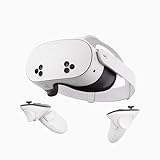
- NO WIRES, MORE FUN — Break free from cords. Game, play, exercise and explore immersive worlds — untethered and without limits.
- 2X GRAPHICAL PROCESSING POWER — Enjoy lightning-fast load times and next-gen graphics for smooth gaming powered by the SnapdragonTM XR2 Gen 2 processor.
- EXPERIENCE VIRTUAL REALITY — Take gaming to a new level and blend virtual objects with your physical space to experience two worlds at once.
- 2+ HOURS OF BATTERY LIFE — Charge less, play longer and stay in the action with an improved battery that keeps up.
- 33% MORE MEMORY — Elevate your play with 8GB of RAM. Upgraded memory delivers a next-level experience fueled by sharper graphics and more responsive performance.
Google officially discontinued Daydream in 2019, ending hardware certification, software updates, and Play Store support. However, the physical hardware itself remains usable if you already own compatible devices.
Daydream View headsets: soft design, smart ergonomics
The most recognizable Daydream headset was Google’s own Daydream View, produced across three generations. Instead of hard plastic shells common at the time, Google opted for a fabric-covered, foam-lined enclosure that felt closer to a soft wearable than a gadget.
The headset was lightweight, well-balanced, and comfortable enough for seated use without excessive face pressure. Venting and materials were tuned to reduce heat buildup from the phone, which mattered given how quickly mobile SoCs could warm up under VR loads.
Optical quality was modest by modern standards, with fixed-focus lenses and limited field of view, but clarity was well-matched to the displays of the era. For narrative and exploration apps, the optics remain perfectly serviceable.
Third-party headsets from Lenovo and others existed, but Daydream View defined the reference experience and remains the most reliable option today.
The Daydream controller: a defining interaction design
Daydream’s small, wand-like controller is one of the platform’s most enduring ideas. Instead of dual controllers or hand tracking, Google shipped a single 3DoF controller with a clickable touchpad, app button, and home button.
It tracked orientation, not position, which kept power consumption low and avoided complex setup. For pointing, swiping, and gentle motion input, it proved remarkably intuitive.
The controller ran on a single AAA battery, often lasting weeks of casual use. Today, battery contacts and drift can be an issue, but replacement batteries and careful recalibration usually restore usability.
Many of Daydream’s best apps were explicitly designed around this controller, making it essential for anything beyond passive viewing.
Compatible phones: strict requirements, shrinking options
Daydream compatibility was limited to a relatively small list of Android phones that met Google’s certification standards. These included select Pixel models, Moto Z, Samsung Galaxy S8 and S9 variants, and a handful of others.
Key requirements included high-resolution OLED displays, low-latency sensors, sustained performance without aggressive throttling, and specific thermal behavior. These constraints ensured a smoother experience but drastically limited the platform’s reach.
In 2026, finding a fully compatible phone in good condition is often harder than finding a headset. Aging batteries, outdated Android versions, and worn USB-C ports can all impact reliability.
Later Android updates also removed native Daydream support, meaning many compatible phones must remain on older OS versions to function properly.
Comfort, wearability, and session length today
Viewed through a wearables lens, Daydream’s strengths are still clear. The headset’s low weight, soft materials, and minimal pressure points make it more comfortable than many early VR systems.
However, real-world session length is now governed almost entirely by phone health. Even well-preserved devices tend to cap comfortable use at 20 to 30 minutes before heat or battery drain becomes noticeable.
This aligns with Daydream’s original intent. It was never meant for marathon gaming, but for intentional, short-form immersion that fits naturally into everyday use.
What hardware you realistically need in 2026
To use Daydream today, you need three things: a Daydream View headset, the original Daydream controller, and a compatible Android phone running a supported OS version. Missing any one of these severely limits the experience.
Used hardware can still be found, but condition matters more than model year. A well-kept older phone with a healthy battery will outperform a newer but unsupported device.
For collectors and enthusiasts, assembling a working Daydream setup is part of the appeal. For everyone else, understanding the hardware constraints helps explain why Daydream’s best apps were designed the way they were, and why some of them still quietly shine despite the platform’s sunset status.
How Daydream Apps and Games Were Distributed: Play Store Access, Accounts, and Installation Today
Once you’ve assembled workable hardware, the next question is software. Daydream’s app ecosystem was tightly integrated with Google’s mobile platform, which made discovery elegant in its prime but more complicated now that official support has ended.
Understanding how apps were originally distributed, and what still works today, is essential to setting realistic expectations before you start hunting for specific titles.
Daydream’s original Play Store model
At launch, Daydream apps and games were distributed exclusively through the Google Play Store. There was no separate storefront app in the traditional sense; instead, Daydream-ready content lived inside a dedicated VR section of Play Store, filtered by device compatibility.
When a compatible phone was inserted into a Daydream View headset, the Daydream Home interface acted as a launcher rather than a store. App discovery, purchasing, installation, and updates all happened through the same Google account and billing system used for standard Android apps.
This approach lowered friction for users and developers alike. It also meant Daydream content inherited Play Store features like automatic updates, cloud-based purchase history, regional pricing, and refund policies.
Account continuity and what still carries over
One advantage of Google’s centralized approach is that purchases are tied to your Google account, not the headset or phone itself. If you bought a Daydream app or game during the platform’s active years, it should still appear in your Play Store library under that same account.
In practice, visibility varies. Some apps still show up clearly under “Not installed,” while others are hidden unless accessed via a direct Play Store link or the developer’s page.
As long as the app hasn’t been fully delisted and your phone meets the original compatibility checks, re-downloading is often still possible in 2026. This is one of the few areas where Daydream has aged better than many other discontinued VR platforms.
Play Store access on supported and unsupported phones
This is where things become fragile. Phones running Android versions that still include Daydream services can access the VR-enabled Play Store listings normally, assuming the device passes compatibility checks.
Phones updated beyond Google’s removal of Daydream support will not show Daydream-specific listings at all, even if the hardware is otherwise capable. The Play Store effectively pretends the platform never existed.
For this reason, many surviving Daydream setups are deliberately kept on older Android versions. Software stability and access matter more here than security updates or modern features.
Installing apps today: what works and what doesn’t
If your phone is properly recognized as Daydream-compatible, installation remains straightforward. Apps download like any other Android title, then appear inside Daydream Home once the headset is inserted.
Problems arise when compatibility flags fail. Some users resort to sideloading APKs, but this is inconsistent and often breaks controller tracking, in-app licensing checks, or VR mode detection.
Even when sideloading works, the experience is rarely identical to a proper Play Store install. Daydream apps were deeply dependent on Google’s VR services layer, not just the app binary itself.
Updates, patches, and long-term stability
Most Daydream apps are effectively frozen in time. Active development stopped years ago, and very few titles have received updates compatible with newer Android builds.
This has an upside and a downside. On supported phones, the software experience is remarkably stable, with no shifting UI paradigms or live-service mechanics to break immersion.
The downside is that bugs, performance quirks, and compatibility issues will never be fixed. What worked well in 2018 is exactly what you get today, for better or worse.
Paid apps, DRM, and offline use
Paid Daydream apps continue to respect Google Play’s licensing system. As long as the phone can authenticate your account periodically, purchased content generally works offline after installation.
If a device loses account access entirely, some paid apps may fail to launch. This is another reason why keeping a minimally functional Google account login is important, even on a “sealed” Daydream phone.
There are no subscription-based Daydream titles left in circulation. Everything that remains is a one-time purchase or free download, which suits the platform’s archival status.
Regional availability and missing listings
During Daydream’s active years, regional licensing affected which apps appeared in the Play Store. Those restrictions still apply, even though the platform is discontinued.
An app that was never released in your region may still be inaccessible without switching account regions, which carries its own risks. Google has not relaxed or unified regional listings for Daydream content.
Rank #3
- NO WIRES, MORE FUN — Break free from cords. Game, play, exercise and explore immersive worlds — untethered and without limits.
- 2X GRAPHICAL PROCESSING POWER — Enjoy lightning-fast load times and next-gen graphics for smooth gaming powered by the SnapdragonTM XR2 Gen 2 processor.
- EXPERIENCE VIRTUAL REALITY — Take gaming to a new level and blend virtual objects with your physical space to experience two worlds at once.
- 2+ HOURS OF BATTERY LIFE — Charge less, play longer and stay in the action with an improved battery that keeps up.
- 33% MORE MEMORY — Elevate your play with 8GB of RAM. Upgraded memory delivers a next-level experience fueled by sharper graphics and more responsive performance.
This can make some of the platform’s most celebrated experiences feel oddly elusive, depending on where your account was originally registered.
What this distribution model means in 2026
Daydream’s reliance on the Play Store is both its greatest strength and its biggest limitation today. It preserved purchase history and installation simplicity, but only for users willing to maintain aging software environments.
There is no official archival mode, no open repository, and no sanctioned migration path. Access depends on a careful balance of old hardware, old software, and modern account infrastructure.
For enthusiasts, that challenge is part of the appeal. For everyone else, it explains why Daydream’s best apps feel like carefully preserved time capsules rather than living platforms.
The Best Daydream Apps That Defined the Platform (Media, Creativity, Exploration)
If Daydream now feels like a carefully preserved ecosystem rather than a living one, its best apps explain why it still matters. Google’s VR ambitions were never just about games or technical demos; the platform was built to showcase what mobile VR could do when hardware constraints, software design, and content goals aligned.
These apps leaned into Daydream’s strengths: consistent controller input, predictable performance on approved phones, and a seated, comfortable form factor that encouraged longer sessions. Media consumption, creative tools, and exploratory experiences ended up defining the platform far more than traditional gameplay.
YouTube VR: Daydream’s Anchor App
YouTube VR was effectively Daydream’s killer app, and the clearest expression of Google’s strategy. It turned the world’s largest video platform into a virtual cinema, a 360-degree documentary hub, and a social viewing experiment, all in one interface.
The app’s strength was not visual fidelity, which was limited by phone displays and video compression, but scale and familiarity. Users could jump from flat videos on a massive virtual screen to immersive 360 content without changing apps or learning new controls.
Even today, YouTube VR remains one of the more functional Daydream apps, provided the backend services still authenticate properly. For archival Daydream setups, it is often the first app people reinstall because it immediately justifies wearing the headset again.
Google Arts & Culture VR: Museums Without Walls
Google Arts & Culture VR represented Daydream at its most aspirational. It combined photogrammetry, Street View-style navigation, and curated storytelling to create museum visits and cultural tours that felt deliberate rather than gimmicky.
The experience worked particularly well with Daydream’s controller, allowing slow, precise navigation through galleries and landmarks. Sessions were comfortable, seated, and educational, aligning perfectly with the headset’s weight and thermal limits.
While updates have slowed and some experiences have been folded into non-VR versions of the app, the Daydream edition remains a snapshot of how Google envisioned VR as a learning medium, not just entertainment.
Google Earth VR (Daydream Edition): A Different Kind of Scale
Unlike the PC-based Google Earth VR, the Daydream version was simplified and more restrained. That limitation turned out to be a feature rather than a flaw.
Instead of free-flight and complex controls, Daydream Earth emphasized guided exploration and smooth transitions. The result was less physically intense and far more approachable for first-time VR users.
Even in 2026, it remains one of the most compelling demonstrations of presence on mobile hardware. The sense of global scale, delivered through modest visuals and careful interaction design, captures what Daydream did best.
Tilt Brush: Creative VR Without Intimidation
Tilt Brush became iconic on high-end VR systems, but its Daydream version deserves specific recognition. It distilled the core experience into something that ran reliably on a smartphone without overwhelming the user.
Brush selection, color control, and spatial drawing were mapped cleanly to the Daydream controller. The experience encouraged experimentation rather than precision, which suited both the hardware and the casual creativity Google wanted to promote.
Although Google later open-sourced Tilt Brush and shifted focus away from Daydream, the original mobile implementation remains a reminder that creative VR did not have to be expensive or technically complex to be meaningful.
Within VR: Cinematic Storytelling That Fit the Medium
Within VR, formerly known as Vrse, brought high-production-value immersive films to Daydream at a time when narrative VR was still finding its language. These were not passive videos, but carefully staged experiences designed around where the viewer could look and how long they would stay engaged.
The app worked well with Daydream’s strengths: seated viewing, short-to-medium-length sessions, and consistent performance across supported phones. Audio design, in particular, carried much of the emotional weight, compensating for visual limitations.
Access today can be inconsistent due to backend dependencies, but when it works, Within remains one of the clearest examples of VR storytelling done thoughtfully on mobile hardware.
Expeditions and Educational Experiences
Google Expeditions brought classroom-style VR to Daydream, allowing guided tours of historical sites, natural wonders, and scientific concepts. The experience was intentionally slow and instructional, with visual anchors and narrated points of interest.
While Expeditions as a product has largely been sunset or absorbed into other Google offerings, the Daydream versions highlight how the platform was positioned for education and shared discovery. It was less about individual escapism and more about structured exploration.
For users revisiting Daydream today, these apps feel like curated time capsules from an era when VR was being pitched as a tool for learning as much as for play.
Why These Apps Still Matter
Taken together, these apps explain why Daydream occupies a distinct place in VR history. They were designed around comfort, accessibility, and coherence rather than raw power or visual spectacle.
None of them push modern VR boundaries, and many rely on services that could disappear without notice. Yet they remain surprisingly usable, provided the underlying Android environment is intact.
For owners of legacy Daydream hardware, these experiences are the clearest argument for keeping that old phone charged and that Google account alive. They show what mobile VR did well when everything worked in harmony, and why Daydream is still worth revisiting, even as a discontinued platform.
The Best Daydream Games: Must‑Play Titles That Showed Mobile VR’s Potential
If the earlier Daydream apps demonstrated how well mobile VR could tell stories and teach concepts, the games showed how far interaction could be pushed on modest hardware. These titles were built around the Daydream controller, seated play, and short sessions, turning limitations into design constraints rather than weaknesses.
Most of these games are no longer actively supported, and availability can vary depending on your Android version and account history. Still, for owners with compatible phones and functioning controllers, they remain some of the clearest examples of what Daydream did uniquely well.
Eclipse: Edge of Light
Eclipse: Edge of Light is often cited as Daydream’s standout original game, and for good reason. It blends light environmental puzzles, exploration, and narrative discovery into a cohesive experience that feels purpose-built for mobile VR.
Movement is handled through gaze and controller inputs that minimize motion discomfort, while interactions are slow and deliberate. The visuals rely on strong art direction rather than high polygon counts, which keeps performance stable even on older Snapdragon-powered phones.
What makes Eclipse endure is its sense of presence. It proves that compelling VR does not require complex mechanics, only thoughtful pacing and an understanding of how long players want to stay inside a headset like Daydream View.
Gunjack
Gunjack arrived on Daydream with pedigree, originally developed for high-end VR platforms by CCP Games. The Daydream version strips the concept down to its essentials: seated turret combat, gaze-assisted targeting, and short, replayable missions.
The game works because it respects the hardware. There is no artificial locomotion, no unnecessary UI clutter, and no expectation that players will spend hours at a time inside VR.
On Daydream, Gunjack became a showcase for how action-oriented games could still feel comfortable and polished on a phone-based headset, especially when paired with the controller’s simple pointing and trigger input.
Mekorama VR
Mekorama VR is a masterclass in adapting an existing mobile game to virtual reality without losing its charm. The diorama-style puzzles are perfectly suited to VR, allowing players to lean in, look around corners, and physically inspect each level.
Performance is rock-solid, and the game avoids flashy effects in favor of clean geometry and readable interactions. The controller is used sparingly, reinforcing the sense that you are manipulating a tiny world rather than controlling an avatar.
This is one of the rare Daydream games that still feels timeless today, largely because it never tried to impress with spectacle. Instead, it focused on clarity, comfort, and tactile satisfaction.
Keep Talking and Nobody Explodes
Keep Talking and Nobody Explodes brought asymmetric multiplayer to Daydream in a way few other mobile VR titles attempted. One player wears the headset and disarms a bomb, while others use a printed or digital manual outside VR.
On Daydream, the experience is streamlined and accessible, with clear visuals and minimal input demands. The headset wearer remains seated, reducing fatigue, while the tension comes entirely from communication rather than physical movement.
Even years later, this remains one of the strongest arguments for VR as a social experience. It also highlights Daydream’s strength as a living-room-friendly platform that did not require external sensors or complex setup.
Rank #4

- 256GB Storage Capacity
- Top VR Experience: Oculus Quest 2 features a blazing-fast processor, top hand-tracking system, and 1832 x 1920 Pixels Per Eye high-resolution display, offering an incredibly immersive and smooth VR gaming experience.
- Anti-Slip Controller Grip Covers: grip covers are made of nice silicone material that effectively prevents sweat, dust, and scratches. Anti-slip bumps enhance the handgrip and feel.
- Adjustable Knuckle Straps: knuckle straps make it possible to relax your hands without dropping the controllers. High-quality PU material offers extra durability and velcro design makes it easy to adjust the strap length to different needs.
Virtual Virtual Reality
Virtual Virtual Reality stands out for its tone as much as its mechanics. Part satire, part narrative experiment, it uses simple interactions to explore themes of automation, digital labor, and virtual escapism.
The game leans heavily on voice acting and environmental storytelling, both areas where Daydream consistently punched above its weight. Locomotion is handled through short hops and scene transitions, keeping comfort high.
While some backend elements may no longer function as originally intended, the core experience remains playable and distinctive. It captures a moment in VR history when experimentation was valued over polish.
Need for Speed No Limits VR
Racing games are notoriously difficult in VR, yet Need for Speed No Limits VR managed a credible adaptation on Daydream. By locking the player into a cockpit view and keeping sessions brief, it avoided many common comfort issues.
The visuals are simplified compared to console versions, but the sense of speed comes through via audio design and controlled motion. The Daydream controller is used for steering and menu navigation without overwhelming the player.
This title is a reminder that licensed, mainstream franchises did experiment seriously with mobile VR, even if those efforts were short-lived.
What Playing Daydream Games Feels Like Today
Revisiting these games now requires patience. Some titles may only be accessible through previous purchases, sideloading, or older device configurations, and controller compatibility can be inconsistent.
When everything does work, the experience feels focused and surprisingly refined. Battery life on supported phones typically allows for multiple short sessions, and the lightweight fabric headsets remain comfortable for seated play.
These games do not compete with modern standalone VR systems, but they were never meant to. They represent a period when mobile VR was optimized for approachability, and in that context, they still demonstrate how thoughtful design can elevate limited hardware into something memorable.
Google’s Own Daydream Experiences: YouTube VR, Google Earth VR, Arts & Culture, and First‑Party Experiments
After exploring what third‑party developers achieved on Daydream, it is impossible to separate the platform from Google’s own software ambitions. Daydream was not just a headset initiative, but a broader attempt to reimagine how Google services could feel when wrapped around your head instead of flattened onto a screen.
These first‑party apps defined Daydream’s identity more than any single game. They emphasized comfort, clarity, and short‑session usability, reflecting Google’s belief that VR would be something you dip into, not live inside.
YouTube VR: The Platform’s Beating Heart
YouTube VR was Daydream’s most important app, both practically and philosophically. It offered a dedicated VR interface for standard videos, 180‑degree clips, and full 360‑degree content, all navigated with the Daydream controller’s touchpad.
Unlike many early VR video apps, YouTube VR felt stable and thoughtfully designed. Menus floated at a comfortable distance, text remained legible, and playback rarely induced motion discomfort, even during longer viewing sessions.
For Android users already embedded in Google’s ecosystem, this app alone justified owning a Daydream headset. Even today, if accessed on compatible hardware, it remains one of the most usable examples of mobile VR video consumption ever released.
Google Earth, Street View, and the Promise of Virtual Travel
While the full Google Earth VR experience became best known on high‑end PC headsets, Daydream received a more lightweight but still compelling interpretation. Through a mix of Google Earth features, Street View integration, and curated Voyager content, users could float above cities or stand inside photographed locations around the world.
Performance was carefully managed to suit smartphone hardware. Movement relied on teleportation and fixed viewpoints, which kept nausea low while still conveying a sense of scale and place.
This approach aligned perfectly with Daydream’s strengths. Rather than simulating flight at full freedom, it delivered moments of presence that felt calm, informative, and surprisingly emotional when revisiting familiar places.
Google Arts & Culture: Museums Without the Crowd
The Arts & Culture VR app showcased Google at its most quietly ambitious. It allowed users to step inside digitized museums, examine artifacts at close range, and experience curated cultural stories in immersive formats.
Visual fidelity was less about raw resolution and more about presentation. Objects were well lit, text was readable, and navigation favored slow exploration over spectacle, which suited seated VR sessions and shorter attention spans.
For wearables enthusiasts, this app demonstrated how VR could function as an educational extension of mobile computing. It felt closer to a virtual exhibition than a tech demo, and that restraint has aged well.
Tilt Brush, Spotlight Stories, and Experimental Google VR
Tilt Brush remains one of Google’s most influential VR creations, even beyond Daydream. On mobile hardware it was understandably scaled back, but the core experience of painting in three dimensions translated remarkably well using the single Daydream controller.
Spotlight Stories, another Google initiative, leaned into narrative immersion rather than interactivity. These short, animated VR films placed the viewer inside carefully directed scenes, using head movement as a storytelling tool instead of traditional input.
Together, these experiments revealed how seriously Google treated VR as a creative medium. They were not chasing high scores or competitive loops, but exploring how presence could enhance art, animation, and expression.
What Still Works Today, and What Does Not
Most Google Daydream apps are no longer actively maintained, and official support has been discontinued for years. Access now depends on previously installed apps, compatible Android versions, and in some cases sideloading archived APKs.
When they do run, these experiences still reflect Google’s original design philosophy. Battery drain remains manageable due to conservative performance targets, and the fabric Daydream View headsets remain among the most comfortable lightweight VR wearables ever released.
For modern users, Google’s Daydream software is best approached as a preserved ecosystem rather than a living platform. It offers insight into how one of the world’s largest tech companies once imagined VR fitting seamlessly into everyday mobile life, even if that vision ultimately moved elsewhere.
Using Daydream Content Today: Workarounds, Emulation, and Alternative Headsets
Seen through today’s lens, Google Daydream sits in an unusual middle ground. It is neither fully inaccessible nor truly alive, which makes using its content now less about convenience and more about informed tinkering.
For owners of legacy hardware or those curious about mobile VR’s formative years, there are still viable paths forward. Each comes with trade-offs around comfort, compatibility, and authenticity that are worth understanding before diving in.
Running Daydream Apps on Legacy Android Phones
The most faithful way to experience Daydream content remains original hardware: a Daydream View headset, controller, and a compatible Pixel or supported Android phone running an older OS version. Android 10 and earlier are generally the safest targets, as later versions removed key VR services.
Many users rely on sideloading archived APKs for apps that are no longer listed on the Play Store. This process is straightforward for intermediate Android users, but stability varies, and controller pairing can be inconsistent depending on firmware versions.
From a wearability standpoint, the original setup still holds up surprisingly well. The fabric headset is light, breathable, and far less fatiguing than modern standalone VR for short sessions, while phone battery drain remains reasonable thanks to Daydream’s modest performance targets.
Using Daydream Content Without the Original Controller
One of the bigger hurdles today is the Daydream controller, which relies on discontinued services and aging Bluetooth firmware. Some apps will launch without it, defaulting to gaze-based input, while others become effectively unusable.
Third-party Bluetooth controllers can sometimes stand in for basic navigation, but this varies by app and rarely replicates the original motion-tracked experience. Tilt Brush, for example, loses much of its precision without proper 3DoF input.
As a result, content focused on passive viewing, storytelling, or simple interaction tends to age best. Spotlight Stories, VR galleries, and educational experiences remain accessible even when input options are limited.
Emulation and PC-Based Workarounds
True emulation of Daydream as a platform is limited. Google’s VR SDK was tightly coupled to Android services, making full-feature emulation on PC impractical for most users.
That said, certain experiences have indirect afterlives. Tilt Brush lives on in Open Brush, an open-source project available on PC VR headsets, preserving the creative DNA of the original even if the mobile context is gone.
For technically inclined users, extracting assets or viewing 360-degree content outside Daydream is possible, but this becomes more archival than experiential. At that point, the value lies in preservation rather than immersion.
Using Alternative Headsets for Similar Experiences
While Daydream-specific apps rarely run natively on modern headsets, their design philosophy is easy to find elsewhere. Meta Quest headsets, for example, now host lightweight, seated VR apps that echo Daydream’s emphasis on comfort and accessibility.
From a wearables perspective, the contrast is striking. Modern standalone headsets offer vastly more power but at the cost of weight, heat, and shorter comfortable session lengths, especially compared to Daydream View’s minimalist design.
For users who valued Daydream as a casual, low-friction VR wearable rather than a gaming console, this shift explains why some experiences still feel unmatched despite technical progress.
Is Daydream Still Worth Exploring?
Approaching Daydream today requires the mindset of a collector or enthusiast rather than a mainstream user. The platform no longer evolves, but its apps remain instructive examples of thoughtful VR design constrained by real-world wearability and mobile hardware limits.
💰 Best Value

- VR HEADSET COMPATIBILITY: Works seamlessly with 4.7-6.5 inches smartphones such as for iPhone 16/16 Pro/15/15 Pro/14/13 Pro/13/13 Mini/12 Pro/12/12 Mini/11 Pro/11/8 Plus/8/7 Plus/7/ MAX/XR/X; for Samsung Galaxy S25/S24/S23/S22/S21/S21 Ultra/S20/S10/S10e/S10 Plus/S9/S9 Plus/Note 10 Plus/Note 10/ 9/8/A20e/A50 etc
- INTEGRATED AUDIO VR SET: Features built-in foldable Bluetooth headphones for complete audio immersion while enjoying VR content
- VERSATILE USE VIRTUAL REALITY HEADSET: Perfect for watching 3D movies and playing virtual reality games with comfortable viewing experience for both adults and kids
- VIRTUAL REALITY VISUAL EXPERIENCE: Delivers immersive 3D viewing with adjustable focal settings to accommodate different visual requirements
- ADJUSTABLE DESIGN VR HEADSET: Ergonomically designed headset with adjustable straps for secure and comfortable fit during extended VR sessions. Ideal gift option for everyone
In that sense, Daydream content still has relevance. It offers lessons in comfort-first design, battery-conscious software, and the idea that immersive technology does not always need maximal horsepower to be meaningful.
For Android users willing to experiment, and VR enthusiasts interested in where mobile immersion once pointed, Daydream remains a quietly influential chapter that can still be experienced with the right expectations and a bit of patience.
Daydream vs Its Rivals: How It Compared to Gear VR, Oculus Go, and Cardboard
Looking back at Daydream in context helps explain both its strengths and its limitations. Google was never trying to win a raw power contest; instead, Daydream was positioned as a wearable-friendly, design-led alternative in a crowded early VR field.
Where rivals often chased performance or scale, Daydream focused on comfort, visual clarity, and frictionless use. That philosophical split defined how it stacked up against Gear VR, Oculus Go, and Cardboard.
Daydream vs Samsung Gear VR
Samsung’s Gear VR was Daydream’s closest contemporary rival, and on paper it often looked superior. Backed by Oculus software and paired with Samsung’s highest-end Galaxy phones, Gear VR delivered better graphical performance and a deeper game catalog.
The trade-off was wearability. Gear VR headsets were heavier, bulkier, and more heat-prone, with long sessions often limited by phone thermals and battery drain rather than user comfort.
Daydream View, by contrast, felt more like a soft wearable than a piece of consumer electronics. Its fabric construction, lighter weight, and balanced fit made it easier to use for quick sessions, even if the visuals were less demanding.
Controller Design and Interaction Philosophy
Daydream’s small, motion-sensing controller remains one of its most influential ideas. It was simple, single-handed, and unintimidating, designed for casual interaction rather than precision gaming.
Gear VR initially relied on touchpad-based headset controls, which were functional but less immersive. Samsung’s later Gear VR controller narrowed the gap, but it arrived after Daydream had already defined a cleaner interaction model.
For seated apps, media viewing, and exploration, Daydream’s controller felt more natural and less fatiguing. For action-heavy games, Gear VR’s ecosystem had the advantage.
Daydream vs Oculus Go
Oculus Go effectively inherited many of Daydream’s best ideas while removing its biggest dependency. By integrating the display, processor, and battery into a single headset, Oculus Go eliminated phone compatibility issues entirely.
In use, Oculus Go felt more powerful and more reliable. App loading was faster, tracking was more stable, and developers had a fixed hardware target rather than a fragmented Android phone landscape.
Daydream still held an edge in physical comfort. Oculus Go’s plastic shell and internal heat made it noticeably heavier during longer sessions, while Daydream View remained lighter and more breathable.
Software Ecosystem and App Quality
Daydream’s app library was smaller, but often more carefully curated. Google emphasized polish, performance consistency, and usability over sheer volume, resulting in fewer but more refined experiences.
Oculus Go quickly surpassed Daydream in content quantity, especially for games and social apps. However, many Daydream titles, such as Tilt Brush and Google Earth VR, carried outsized influence far beyond the platform itself.
In hindsight, Daydream’s software lineup reads more like a museum of early mobile VR design than a living storefront, but its highlights remain historically important.
Daydream vs Google Cardboard
Cardboard represented the opposite end of Google’s VR strategy. It was cheap, disposable, and deliberately limited, designed to introduce VR rather than sustain it.
Daydream built on Cardboard’s accessibility while addressing its biggest flaws: lack of input, poor optics, and inconsistent comfort. The jump from Cardboard to Daydream felt substantial, not incremental.
While Cardboard reached far more users, Daydream delivered experiences that felt complete rather than experimental. For many, it was the first time mobile VR felt intentional instead of improvised.
Compatibility, Longevity, and Platform Fragility
One area where Daydream struggled was longevity. Its reliance on specific phone models and Android versions made long-term compatibility fragile, especially once Google shifted focus away from VR.
Oculus Go, despite also being discontinued, aged more gracefully thanks to fixed hardware and tighter software control. Gear VR suffered similar issues to Daydream once Samsung and Oculus deprioritized mobile VR.
From a wearables perspective, Daydream’s failure was not conceptual but structural. The platform depended on an Android ecosystem that was never optimized for sustained immersive workloads.
What Daydream Did Better Than Anyone Else
Daydream treated VR as something you wore casually, not something you prepared for. Session length, heat management, and physical comfort were considered as important as frame rate.
That mindset aligns closely with modern wearable thinking, where devices must disappear into daily life rather than dominate it. In that sense, Daydream was ahead of its time, even if the hardware could not keep up.
When viewed alongside its rivals, Daydream stands out not for what it lacked, but for what it prioritized. It was less a gaming platform and more a philosophy about how immersive technology could fit into everyday use.
The Legacy of Daydream: What It Got Right, What It Got Wrong, and Why It Still Matters for Wearables
Seen in context, Daydream was less a failed product and more a transitional platform that revealed both the promise and the limits of phone-based VR. It arrived at a moment when Google believed immersive computing could ride on the back of Android’s scale rather than dedicated hardware.
That bet didn’t pay off commercially, but it left behind ideas that still shape how wearables and lightweight XR devices are designed today.
What Daydream Got Right
Daydream’s greatest success was comfort-first design. The fabric headsets, balanced weight distribution, and breathable face interfaces made it possible to wear for 15 to 30 minutes without the fatigue common to early VR.
The controller was another quiet breakthrough. Its single-hand, motion-tracked design lowered the cognitive load of interaction and anticipated the minimalist input schemes now common in AR glasses and spatial computing experiments.
On the software side, Daydream’s interface respected the limits of mobile hardware. Apps launched quickly, menus were legible, and experiences were designed around short, repeatable sessions rather than marathon play.
The Apps and Games That Defined the Platform
Experiences like Google Earth VR, YouTube VR, and Street View demonstrated how immersive media could extend everyday mobile services rather than replace them. These apps felt useful as well as impressive, which remains a key challenge for modern XR.
Games such as Keep Talking and Nobody Explodes, Eclipse: Edge of Light, and Virtual Virtual Reality showed that thoughtful design could overcome hardware constraints. They relied on presence, narrative, and clever interaction instead of raw performance.
Many of these titles later migrated to standalone headsets, preserving Daydream’s creative influence even after the platform itself faded.
What Daydream Got Wrong
Daydream’s dependence on specific Android phones was its undoing. Thermal throttling, battery drain, and inconsistent performance varied wildly between devices, undermining developer confidence and user trust.
Google also struggled to commit long-term. As Android updates quietly dropped Daydream support and the Play Store de-emphasized VR, the ecosystem withered without a clear sunset plan.
For consumers, this meant hardware that aged poorly despite being physically intact, a recurring risk in wearable platforms tied too closely to fast-moving mobile operating systems.
Discontinuation and What Still Works Today
Google officially discontinued Daydream in 2019, and newer Android versions no longer support it natively. The Daydream View headset and controller are no longer manufactured, and app discovery is fragmented.
That said, some Daydream-era apps remain accessible on other VR platforms, and sideloading is still possible for enthusiasts using compatible legacy phones. YouTube VR and certain media apps continue to live on in updated forms elsewhere.
As a result, Daydream today functions more as a historical archive than a living platform, valuable for exploration rather than daily use.
Why Daydream Still Matters for Wearables
Daydream proved that immersive devices must earn their place alongside phones and watches, not compete with them. Its emphasis on casual use, fast onboarding, and physical comfort mirrors the priorities of modern smart glasses and lightweight XR wearables.
It also highlighted the dangers of platform fragility. Wearables that rely on external ecosystems, whether phones, cloud services, or app stores, must plan for longevity or risk rapid obsolescence.
Most importantly, Daydream reframed VR as something you dip into, not disappear inside. That philosophy now underpins the next generation of wearable computing, even as the hardware evolves beyond phones and fabric headsets.
In hindsight, Daydream’s true legacy is not the headset itself but the lessons it taught. For anyone interested in how immersive technology fits into everyday life, it remains a reference point worth revisiting.