Google’s latest Android XR smart glasses tease is deliberately light on spectacle and heavy on subtext, which is exactly why it matters. Rather than showing a flashy prototype or promising a near-term product, Google hinted that “updates” are coming next week, a phrasing that signals platform progress, partnerships, and developer-facing changes more than a consumer-ready launch. For anyone tracking smart glasses after years of false starts, this kind of restrained messaging is often more meaningful than a dramatic demo.
What follows is not about what Google showed, but what it carefully chose to say. By breaking down the wording, timing, and context of the teaser, it becomes clearer how Android XR is being positioned, what kind of smart glasses Google is realistically preparing the ecosystem for, and why this matters if you already use Wear OS, Android phones, or connected wearables daily.
This section unpacks the signals behind the tease itself, before moving on to what those updates are likely to include and how they fit into Google’s broader wearable strategy.
The teaser focused on Android XR, not a product
The most important detail is that Google teased Android XR updates, not new smart glasses hardware. That distinction matters. Android XR is the operating system layer Google announced to unify augmented reality, virtual reality, and mixed reality devices, built on Android foundations and deeply tied into Google services like Maps, Assistant, Gemini, and notifications.
🏆 #1 Best Overall
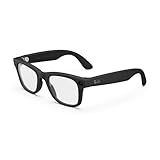
- #1 SELLING AI GLASSES - Tap into iconic style for men and women, and advanced technology with the newest generation of Ray-Ban Meta glasses. Capture photos and videos, listen to music, make hands-free calls or ask Meta AI questions on-the-go.
- UP TO 8 HOURS OF BATTERY LIFE - On a full charge, these smart AI glasses can last 2x longer than previous generations, up to 8 hours with moderate use. Plus, each pair comes with a charging case that provides up to 48 hours of charging on-the-go.
- 3K ULTRA HD: RECORD SHARP VIDEOS WITH RICH DETAIL - Capture photos and videos hands-free with an ultra-wide 12 MP camera. With improved 3K ultra HD video resolution you can record sharp, vibrant memories while staying in the moment.
- LISTEN WITH OPEN-EAR AUDIO — Listen to music and more with discreet open-ear speakers that deliver rich, quality audio without blocking out conversations or the ambient noises around you.
- ASK YOUR GLASSES ANYTHING WITH META AI - Chat with Meta AI to get suggestions, answers and reminders straight from your smart AI glasses.
By centering the message on the platform rather than a device, Google is reinforcing that Android XR is intended to be the long-term backbone for multiple form factors. Smart glasses are part of that vision, but so are headsets, lightweight viewers, and potentially future wearable displays that blur the line between glasses and watches. This is the same playbook Google used with Wear OS: stabilize the software, attract partners, then let hardware mature.
“Updates next week” suggests software and ecosystem progress
The wording strongly points toward software-level announcements rather than consumer availability. Updates in this context likely mean new APIs, developer tools, UI refinements, or clearer guidance on how Android XR handles core use cases like glanceable notifications, contextual overlays, voice interaction, and battery-conscious background processing.
For smart glasses specifically, this could include improvements to how Android XR manages low-power displays, camera access, and always-on sensors, all of which are critical to daily usability. Unlike phones or even smartwatches, smart glasses live or die by comfort, heat management, and battery life measured in hours of active use without feeling intrusive. Software efficiency is not optional here, and Google knows it.
The timing lines up with partner momentum, not a solo Google device
Google’s Android XR push has always been framed as partner-driven, with Samsung and other hardware makers positioned to ship the first serious devices. Teasing updates now suggests Google is preparing the platform for partners to show more later this year, rather than undercutting them with a surprise Google-branded product.
This mirrors what happened with Wear OS after the Samsung collaboration reset the platform. Google focused on improving performance, health integrations, and compatibility across phones and watches before Pixel Watch hardware truly matured. Android XR appears to be following the same arc, with smart glasses treated as an ecosystem category rather than a single hero device.
Smart glasses are being framed as extensions of existing wearables
Another quiet signal is how Android XR is being discussed alongside Google’s broader wearable stack rather than as a standalone moonshot. Smart glasses under Android XR are likely to rely heavily on a paired Android phone for compute and connectivity, similar to how many early smart glasses offload processing to reduce weight and heat.
This has real-world implications for consumers. Expect smart glasses that prioritize all-day comfort, lightweight materials, and subtle displays over full visual immersion. Notifications, navigation cues, quick replies, translation, and contextual information will matter more than cinematic AR, at least in the near term. For smartwatch owners, this positions smart glasses as complementary rather than competitive, with watches handling health tracking and quick interactions while glasses handle visual context.
The restraint itself is the clearest signal
Perhaps the strongest takeaway from Google’s tease is what it avoided. There were no promises of launch dates, no lifestyle shots, and no claims about replacing phones. After Google Glass, Daydream, and other XR experiments, this restraint suggests a more disciplined approach focused on not repeating past mistakes.
For consumers watching the space, this means Android XR smart glasses are moving out of the concept phase and into the slow, necessary work of becoming usable, comfortable, and socially acceptable. Next week’s updates are unlikely to wow casual observers, but they are likely to matter a great deal to developers, partners, and anyone serious about where smart glasses fit into everyday wearable tech.
Android XR Explained: Google’s Long Game for Smart Glasses, Headsets, and Wearables
To understand why Google’s latest Android XR tease matters, it helps to step back from the glasses themselves and look at the platform strategy underneath. Android XR is not a single product announcement or a one-cycle experiment. It is Google laying a long foundation for how visual computing fits alongside phones, watches, and other wearables over the next decade.
Android XR is a platform first, not a product reveal
Google’s messaging around Android XR has consistently avoided device-specific hype, and that is deliberate. Android XR is positioned as a software layer that can scale from lightweight smart glasses to more immersive headsets, rather than a tightly coupled OS built for one flagship device.
This mirrors how Wear OS eventually stabilized after years of fragmented launches. Google is clearly trying to avoid repeating the mistake of building hardware ahead of a mature developer and services ecosystem, especially in a category where comfort, battery life, and social acceptance matter as much as raw capability.
What “XR” actually means in Google’s ecosystem
In Google’s framing, XR is an umbrella that includes smart glasses, mixed reality headsets, and future form factors that blur the line between the two. Android XR is designed to support everything from glanceable monocular displays to full spatial interfaces, depending on the hardware.
For consumers, this matters because it signals flexibility. The same core apps, APIs, and account services should eventually follow you from glasses to headset to phone, much like Wear OS apps today sync across watches with different screen sizes and capabilities.
Smart glasses are the entry point, not the end goal
Based on what Google has shown so far, smart glasses are the most realistic near-term expression of Android XR. These are not meant to replace phones or deliver all-day immersive visuals, but to surface information when and where it is useful.
Expect Android XR glasses to focus on low-power displays, limited fields of view, and aggressive offloading to a paired Android phone. That approach directly supports all-day wearability, lighter frames, reduced heat, and battery life measured in hours of active use rather than minutes.
Why pairing with phones and watches is central
Android XR’s tight relationship with phones is not a compromise, it is the strategy. Phones already handle connectivity, heavy compute, cameras, and app ecosystems, which allows glasses to remain thin, balanced, and socially wearable.
Smartwatches play a complementary role here. Watches remain better suited for continuous health tracking, haptics, and quick glance interactions, while glasses handle visual overlays like navigation arrows, translation captions, and contextual prompts that make sense in your line of sight.
What updates are realistically coming next week
Given Google’s restrained tone, next week’s Android XR updates are unlikely to include consumer launch hardware. More realistically, expect deeper details around developer tools, emulator updates, reference designs, and clearer guidance on how apps adapt across phones, watches, and XR displays.
We may also see updates around input methods, such as voice, subtle gestures, and integration with existing Wear OS controls. These are the unglamorous but essential pieces that determine whether smart glasses feel natural or frustrating in daily use.
Android XR and the lessons of Google Glass
The shadow of Google Glass still hangs over every smart glasses conversation, and Google appears acutely aware of that. Android XR avoids the confrontational, future-now posture that Glass embodied, instead emphasizing gradual adoption and optional use cases.
This shift suggests Google understands that smart glasses succeed only when they fade into daily routines. Comfort, discreet design, materials that feel like normal eyewear, and predictable battery behavior matter more than headline-grabbing features.
How Android XR fits with Pixel Watch and Wear OS
Android XR does not replace Wear OS, it extends the same philosophy into a new sensory domain. Wear OS matured once Google aligned software updates, health features, and hardware reference designs like Pixel Watch.
A similar arc is likely here. Pixel-branded or partner-led Android XR reference hardware could quietly guide the ecosystem, setting expectations for comfort, display placement, and daily usability without forcing consumers into a single design vision.
Why developers matter more than hardware at this stage
Smart glasses live or die by software usefulness, not specs. Google’s focus on Android XR APIs signals that the company wants developers experimenting now, even before consumers can buy hardware.
Navigation apps, messaging platforms, accessibility tools, and contextual assistants are likely early winners. These are scenarios where brief, glanceable information genuinely improves daily life rather than distracting from it.
The consumer takeaway for smartwatch and Android users
For smartwatch owners and Android users watching this space, Android XR is not a signal to wait for a specific product next week. It is a signal that Google is finally aligning smart glasses with the realities of wearables: battery constraints, comfort, interoperability, and incremental adoption.
If you already rely on a smartwatch for health tracking and quick interactions, Android XR glasses are being designed to sit alongside that experience, not replace it. That makes the platform more believable, and far more likely to stick this time.
Why Google’s patience is the most important update
The most telling aspect of Android XR so far is how little Google is rushing. After years of starts and stops in XR, the company appears focused on building something that can evolve over many hardware cycles.
Rank #2
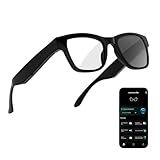
- 3-in-1 AI Glasses: Enjoy ① AI Voice Assistant (Powered by ChatGPT, Gemini & Deepseek), ② Stylish Photochromic Lenses Glasses, and ③ Bluetooth Open-Back Headphones, all in one.
- Free Talk Translation: Automatically detects and translates over 160 languages in real-time, allowing seamless work and translation without touching your phone or glasses.
- Voice, Video & Photo Translation: Supports over 98% of global languages, offering fast and accurate translations—ideal for international travel, business meetings, or cross-cultural communication.
- AI Meeting Assistant: Converts recordings from smart glasses into text and generates mind maps, making it easier to capture and organize meeting insights.
- Long Battery Life, Bluetooth 5.4 & Eye Protection: Up to 10 hours of music and 8 hours of talk time, with easy Type-C charging. Bluetooth 5.4 ensures stronger, stable connections, while photochromic lenses block UV rays and blue light, protecting your eyes in any environment.
That patience suggests Android XR is meant to be as foundational as Wear OS eventually became. For anyone interested in the future of smart glasses, watches, and connected wearables, that long-term thinking is exactly what has been missing until now.
What Updates Are Realistically Coming Next Week (And What Definitely Isn’t)
With Google framing Android XR as a long-term platform rather than a splashy product launch, expectations for next week need to be grounded. The signals so far point to software clarity and ecosystem nudges, not consumer hardware you can preorder.
Expect clearer Android XR software direction, not finished features
The most realistic update is a tighter explanation of what Android XR actually looks like in practice. That likely means UI walkthroughs, interaction models, and examples of how glanceable information behaves on transparent displays.
Think notification handling, navigation prompts, Assistant-style contextual cards, and how these experiences differ from a phone or smartwatch. These are foundational design questions, and Google needs developers aligned before hardware ever ships.
Expanded developer tools and emulator support are likely
Google has already made it clear that developers are the priority at this stage, so expect updates aimed squarely at them. Improved SDKs, clearer API documentation, and more robust emulation tools for smart glasses are far more plausible than consumer-facing features.
This mirrors early Wear OS development, where tooling maturity mattered more than polish. Better developer access now increases the odds of useful apps later, especially ones that complement smartwatch workflows rather than duplicating them.
Deeper ties to existing Android and Wear OS experiences
Another likely update is clarification around how Android XR fits alongside phones and smartwatches. Expect Google to outline how notifications, media controls, navigation, and Assistant handoffs move between devices.
Battery life and comfort constraints make this essential. Smart glasses will almost certainly rely on a paired phone and coexist with a smartwatch handling health tracking, haptics, and longer interactions.
Reference hardware hints, not a Pixel smart glasses reveal
What we may see are conceptual reference designs or partner prototypes used to illustrate Android XR’s intent. These would help developers understand display placement, field of view expectations, and interaction zones without locking consumers into a single form factor.
What you should not expect is a Pixel-branded smart glasses announcement. Google has learned that announcing hardware too early creates pressure the ecosystem cannot support.
What definitely isn’t coming: pricing, release dates, or specs
There will be no shipping timeline, no regional availability, and no spec sheets detailing battery capacity, display resolution, or materials. Those details only make sense once hardware partners are ready, and Android XR is not at that stage yet.
Anyone waiting for a buying decision next week will be disappointed. The real audience for these updates is developers and platform watchers, not shoppers.
Why this still matters for smartwatch and wearable buyers
Even without consumer hardware, next week’s updates shape what Android wearables look like over the next several years. Decisions about interaction models, device roles, and ecosystem integration directly affect future smartwatches and companion devices.
If Android XR succeeds, your smartwatch becomes more valuable, not less. It turns into the stable, comfortable anchor for health tracking and control, while smart glasses handle brief, contextual moments where pulling out a phone never made sense.
Smart Glasses Hardware Expectations: Design, Displays, Cameras, and Battery Trade‑offs
If Google is going to show anything tangible next week, it will almost certainly be hardware in service of explaining constraints rather than promising products. Android XR’s smart glasses ambitions live or die on physical realities that software alone cannot solve, and Google knows the audience needs to understand those limits early.
This is where the conversation shifts from platforms and ecosystems to millimeters, grams, and minutes of battery life.
Design priorities: glasses first, gadgets second
The strongest signal Google has sent so far is that Android XR smart glasses are meant to look like eyewear, not face-mounted computers. That immediately caps how much technology can be embedded in the frame without compromising comfort, weight distribution, and long-term wearability.
Expect reference designs that resemble thick-rimmed optical glasses rather than wraparound visors. Materials will likely skew toward lightweight plastics and aluminum cores, prioritizing balance across the temples instead of concentrating mass at the front.
From a wearables perspective, this mirrors the lessons learned from smartwatches: devices that fight natural ergonomics rarely succeed. Just as oversized smartwatch cases struggled outside niche audiences, bulky smart glasses will remain curiosities unless they disappear on the face during daily use.
Display expectations: small, directional, and intentionally limited
Display technology is where expectations need the most recalibration. Android XR smart glasses are not aiming for immersive, always-on visuals like a VR headset or even a mixed reality visor.
What Google is likely to emphasize is small, monocular or lightly binocular displays positioned near the upper field of view. These would be designed for glanceable information such as navigation cues, notifications, translations, or contextual prompts rather than full app interfaces.
Resolution, brightness, and field of view will be secondary to legibility in varied lighting and minimal power draw. Think of it less like wearing a floating phone screen and more like a heads-up notification layer that complements your phone and smartwatch instead of replacing them.
Cameras and sensors: context over content creation
Cameras are unavoidable in smart glasses, but Google appears cautious about their role. Rather than promoting first-person video capture or social recording, Android XR is more likely to frame cameras as sensors for context, vision-based assistance, and environmental understanding.
That means modest camera hardware optimized for computer vision tasks like object recognition, text scanning, and spatial awareness. Expect wide-angle lenses with limited emphasis on high-resolution video or photography.
This approach also reduces privacy concerns and power consumption, two factors that doomed earlier smart glasses attempts. For consumers already comfortable with smartwatch heart rate sensors and always-on microphones, this feels like a more defensible and practical evolution.
Battery life: the unavoidable compromise
Battery capacity is the single biggest limiter shaping every other hardware decision. With frames that cannot hide large cells and no room for active cooling, Android XR smart glasses will depend heavily on offloading work to a paired smartphone.
Realistically, all-day battery life will only be achievable through aggressive power management and selective use. Displays will not be on constantly, cameras will activate briefly, and many interactions will be initiated elsewhere, often from a smartwatch or phone.
This mirrors how modern smartwatch ecosystems evolved. Watches stopped trying to do everything independently and instead became efficient nodes within a larger system, extending usability without inflating size or weight.
Why these trade‑offs reinforce the smartwatch’s role
Taken together, these hardware realities explain why Google keeps positioning smart glasses as complementary rather than standalone. Glasses handle immediacy and awareness, while smartwatches remain the durable, all-day wearable managing health tracking, haptics, and richer interactions.
Rank #3

- 【AI Real-Time Translation & ChatGPT Assistant】AI glasses break language barriers instantly with AI real-time translation. The built-in ChatGPT voice assistant helps you communicate, learn, and handle travel or business conversations smoothly—ideal for conferences, overseas trips, and daily use.
- 【4K Video Recording & Photo Capture 】Smart glasses with camera let you capture your world from a first-person view with the built-in 4K camera. Take photos and record videos hands-free anytime—perfect for travel moments, vlogging, outdoor adventures, and work documentation.
- 【Bluetooth Music & Hands-Free Calls 】Camera glasses provide Bluetooth music and crystal-clear hands-free calls with an open-ear design. Stay aware of your surroundings while listening—comfortable for long wear and safer for commuting, cycling, and outdoor use.
- 【IP65 Waterproof & Long Battery Life】 Recording glasses are designed for daily wear with IP65 waterproof protection against sweat, rain, and dust. The built-in 290mAh battery provides reliable performance for workdays and travel—no anxiety when you’re on the go.
- 【Smart App Control & Object Recognition】Smart glasses connect to the companion app for easy setup, file management, and feature control. They support AI object recognition to help identify items and improve your daily efficiency—perfect for travel exploration and a smart lifestyle.
For existing smartwatch owners, this should feel reassuring. Android XR is not a replacement cycle; it is an expansion that leans on the strengths of devices already on your wrist.
Google’s hardware messaging next week is unlikely to excite shoppers looking for specs. Instead, it will quietly define what kinds of smart glasses are even viable, setting expectations that favor comfort, subtlety, and ecosystem balance over flashy demos.
How Android XR Will Work With Your Existing Android Phone and Wear OS Watch
If Android XR glasses are shaped by battery limits and comfort-first design, then their real intelligence has to live elsewhere. Google’s teaser all but confirms that your phone and smartwatch will do far more than act as accessories; they are foundational to how XR glasses function day to day.
This is not a new playbook for Google. It mirrors how Wear OS matured once phones handled heavy lifting, and how modern smartwatches became viable only after leaning into ecosystem cooperation rather than brute-force independence.
Your Android phone as the XR compute hub
At the center of the Android XR experience will be your existing Android phone, acting as the primary compute engine. Tasks like AI inference, computer vision processing, cloud lookups, and app logic are expected to run on the phone, with the glasses serving as an input and display layer.
This allows the glasses to remain lightweight and thermally stable, avoiding the heat and bulk that doomed earlier standalone designs. It also means Android XR can scale with your phone, improving automatically as chipsets, NPUs, and on-device AI get better each year.
Practically, this setup should feel familiar to anyone using Wear OS today. Just as your watch mirrors notifications, syncs apps, and defers heavy tasks to your phone, Android XR glasses will surface context at the moment you need it without forcing you to manage another fully independent device.
Contextual notifications, not a floating phone screen
One of the clearest signals from Google’s positioning is that Android XR is not about recreating your phone display in front of your eyes. Instead, notifications are expected to be filtered, summarized, and selectively surfaced based on relevance.
Your phone already decides what matters through notification channels, priority settings, and adaptive alerts. Android XR can tap directly into that system, showing navigation cues, message previews, calendar reminders, or translation prompts only when they add value in the moment.
This approach reduces cognitive overload and battery drain while reinforcing the idea that glasses are for awareness, not consumption. Long replies, app browsing, and media playback will still make more sense on the phone or watch, where screens and input are better suited.
The Wear OS watch as the control surface
Where things get especially interesting is the role of the Wear OS smartwatch. Rather than forcing touch controls onto the glasses frame, Google is clearly leaning toward the watch as the primary interaction hub.
Wrist-based gestures, physical buttons, rotating crowns, and haptics offer far more precise and socially acceptable input than face-mounted touchpads. A subtle tap on the watch to dismiss a notification or trigger an XR action is faster and less awkward than reaching for your glasses.
This also preserves the watch’s relevance as an all-day wearable. Health tracking, heart rate monitoring, step counting, and sleep data remain anchored on the wrist, while the glasses momentarily extend that data into your field of view when it’s contextually useful.
Shared sensors and smarter context awareness
Android XR becomes far more compelling when phone, watch, and glasses share sensor data. Location from your phone, motion and biometrics from your watch, and visual context from the glasses can combine to form a richer understanding of what you’re doing.
For example, the system could recognize that you are walking, elevated heart rate suggests exertion, and your gaze is fixed ahead, then surface navigation arrows without you asking. None of that requires constant display use, only brief, timely prompts.
This multi-device sensor fusion is something Google has been quietly building toward across Android and Wear OS updates. XR glasses simply become another node in that network rather than a standalone gadget fighting for attention.
Battery life through intelligent task splitting
From a daily usability perspective, this division of labor is what makes Android XR plausible. Glasses conserve power by keeping displays off most of the time, activating cameras briefly, and transmitting lightweight data to the phone.
The phone absorbs the energy-intensive processing it is already optimized for, while the watch continues to handle low-power sensing and haptic feedback. Each device plays to its strengths, extending usable time across the system rather than draining a single fragile battery.
For users, this should translate into glasses that last through real-world use cases like commuting, errands, or social outings, without the anxiety of watching a tiny battery percentage collapse by midday.
Compatibility and upgrade paths for existing users
Perhaps the most consumer-friendly implication is that Android XR is not starting from zero. If you already own a modern Android phone and a Wear OS watch, you are likely already equipped for much of the experience.
Google’s incentive is clear: make Android XR additive rather than disruptive. Glasses should feel like a natural extension of devices you already trust for comfort, durability, and daily reliability, not another expensive ecosystem reset.
That strategy also future-proofs early adopters. As phones and watches improve, Android XR glasses can evolve through software updates and deeper integrations, rather than needing constant hardware replacements to stay relevant.
Google vs Apple vs Meta: Where Android XR Smart Glasses Fit in the XR Arms Race
Seen through the lens of ecosystem design rather than spectacle hardware, Android XR starts to make sense relative to Apple and Meta. Google is not chasing a single hero device that does everything, but a distributed experience that leans on the phone and watch you already wear every day.
That framing matters, because the XR race is no longer just about who ships the most advanced optics. It is about which company can make extended reality disappear into normal life without demanding behavioral change.
Apple’s vertical integration: powerful, polished, and heavy
Apple’s XR strategy is currently defined by the Vision Pro, a technically stunning but physically and financially demanding device. It centralizes compute, displays, sensors, and battery into one unit, delivering unmatched visual fidelity at the cost of comfort, price, and everyday practicality.
Even as rumors of lighter Apple smart glasses persist, Apple’s historical pattern suggests a tightly controlled, all-in-one product that expects users to adapt. That approach works brilliantly for immersive sessions, but it struggles with the kind of glanceable, low-friction interactions Google is signaling with Android XR.
For smartwatch owners, the contrast is familiar. Apple Watch thrives because it does not replace the iPhone; Vision Pro currently behaves more like a spatial Mac than a wearable companion.
Meta’s split focus: social-first glasses and immersive VR
Meta is effectively running two XR tracks at once. Ray-Ban Meta smart glasses prioritize camera capture, audio, and AI-assisted social sharing, while Quest headsets target gaming, fitness, and immersive VR experiences.
What Meta lacks is deep system-level integration with a phone-and-watch stack. Ray-Ban Meta glasses are compelling for content creation, but they remain largely accessory-driven rather than context-aware, with limited understanding of your broader digital and physical state.
Rank #4
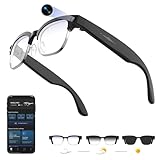
- 【8MPW Camera & 1080P Video and Audio】:These camera glasses feature an 800W camera that outputs sharp 20MP photos and smooth 1080P 30fps videos. Ultra-Clear Video + Powerful Anti-Shake tech+ Built-in dual microphones, you can capture crystal-clear video and audio together -sharply restoring details, perfect for vlogging, travel, and everyday moments
- 【Real-time AI translation Smart Glasses with Camera】:Instantly translate multiple major languages, breaking down language barriers in an instant—no phone required. Ideal for office settings, travel, academic exchanges, international conferences, watching foreign videos, and more
- 【Voice Assistant Recognition and Announcement】:Powered by industry-leading AI large models such as Doubao AI and OpenAI's GPT-4.0. AI voice wake-up lets you ask questions, recognize objects, and get answers on the go. Automatically recognizes objects, menus, landmarks, plants, and more, quickly analyzing the results and announcing them in real time. It instantly becomes your mobile encyclopedia on the go
- 【Bluetooth 5.3 Connection and Automatic Sync to Phone】:Equipped with a low-power BT5.3 chip and Wi-Fi dual transmission technology, offering ultra-low power and high-speed transmission. Captured images and videos are transferred to your phone in real time, eliminating manual export and eliminating storage worries
- 【290mAh Ultra-Long Battery Life】:Ultra-light at 42g, it's made of a durable, skin-friendly material, as light as a feather. Lenses are removable. Its simple, versatile design makes it a comfortable and comfortable wearer. 290mAh ultra-long battery life, 12 hours of music playback and 2 hours of photo or video recording, making it a perfect travel companion
Android XR appears to sit between these poles. It aims to be more intelligent and proactive than Meta’s smart glasses, without asking users to commit to the bulk and isolation of a full VR headset.
Google’s ecosystem play: XR as a quiet layer, not a destination
This is where the earlier discussion about sensor fusion and task splitting becomes strategic rather than technical. Google’s advantage is not hardware flash, but the sheer reach of Android phones and Wear OS watches already collecting motion, health, location, and usage data.
Android XR glasses, in this context, are designed to surface the right information at the right moment, then get out of the way. Navigation cues, translation prompts, message summaries, and contextual reminders can all be delivered without turning glasses into a constant display or social signal.
If next week’s updates expand on this, expect Google to emphasize APIs, developer tools, and cross-device intelligence rather than product specs. The real update may be less about what the glasses look like, and more about what they understand.
Why this positioning matters for consumers
For consumers weighing future smart glasses alongside smartwatches and phones, Google’s approach lowers risk. You are not buying into a siloed XR platform that demands frequent hardware refreshes or locks you into a single use case.
Instead, Android XR promises gradual value accumulation. As your phone gains AI features, your watch improves health sensing or battery efficiency, and Android itself becomes more context-aware, the glasses benefit without needing to be replaced.
In an XR arms race often dominated by demos and developer conferences, Google is betting that quiet usefulness wins long-term. If Android XR delivers on that promise, it could make smart glasses feel less like experimental tech and more like the next logical step after the smartwatch.
Why This Matters for Wearable Buyers Today—Even If You’re Not Buying Glasses Yet
The practical impact of Android XR does not start the day you put on a pair of smart glasses. It starts much earlier, in the devices many Android users already wear every day.
If Google’s teaser points to deeper system-level integration rather than a flashy hardware reveal, the ripple effects will be felt across phones, watches, earbuds, and fitness trackers long before glasses become mainstream.
Your smartwatch becomes more than a tiny phone screen
Wear OS watches already juggle notifications, health tracking, navigation hints, and voice interactions within severe size and battery constraints. Android XR gives Google a reason to rethink how information is distributed across your body, not just mirrored on your wrist.
Instead of cramming turn-by-turn navigation, message previews, and AI responses onto a 1.3-inch display, future Wear OS updates could offload glanceable context to glasses while keeping the watch focused on sensing. That means heart rate, sleep, stress, motion, and temperature data can quietly inform what your other devices surface, without draining the watch battery or overwhelming the interface.
For buyers considering a Pixel Watch, Galaxy Watch, or any Wear OS device today, this suggests longer relevance. The hardware you buy now could gain new roles later, rather than being sidelined by a new category.
Battery life and comfort quietly benefit from XR thinking
One of the least discussed advantages of cross-device XR is efficiency. When tasks are split intelligently, no single device has to do everything all the time.
Smartwatches can prioritize low-power sensing and haptic feedback. Phones handle heavy AI processing and connectivity. Glasses, when present, act as brief visual endpoints rather than always-on displays. This division matters for real-world wearability, because battery life and comfort remain the biggest friction points across all wearables.
Even if you never buy glasses, Android XR-driven optimization could lead to watches that last longer, run cooler, and rely less on constant screen interaction. That translates into lighter designs, slimmer cases, and fewer compromises between features and daily comfort.
Software longevity matters more than specs
Wearable buyers have learned that specs age quickly. Displays get brighter, sensors get marginally better, and processors increment annually. What actually determines whether a watch or wearable feels modern after two years is software support and ecosystem momentum.
Android XR signals that Google is investing in a shared intelligence layer across devices, not just launching another standalone platform. If next week’s updates emphasize APIs, context-sharing, and developer tools, it strengthens the case that Wear OS and Android wearables are part of a longer roadmap rather than short-lived experiments.
For consumers, this reduces the risk of buying into dead-end hardware. A well-built smartwatch with solid materials, good strap options, and reliable sensors holds its value better when the software ecosystem around it keeps evolving.
Glasses influence design decisions before they ship
Even unannounced hardware shapes current products. Knowing that glasses may handle navigation cues, translations, or real-time prompts allows Google and partners to simplify other interfaces.
That could mean cleaner watch faces, fewer intrusive notifications, and more emphasis on subtle haptics and glance interactions. It also affects durability choices, water resistance priorities, and how aggressively manufacturers chase ultra-thin designs versus battery capacity.
For buyers comparing wearables today, this explains why some recent Android watches feel more restrained rather than overloaded. They are being designed for a future where they are part of a system, not the system itself.
This is about choice, not pressure to upgrade
Perhaps the most buyer-friendly aspect of Google’s Android XR direction is what it does not demand. You are not being told that glasses replace your watch, your phone, or your habits overnight.
Instead, Android XR positions glasses as optional enhancements. If and when you add them, your existing devices gain new context. If you do not, they continue to function as capable, self-contained wearables.
For Android users who value flexibility, this matters. It means you can buy a smartwatch today based on comfort, materials, health features, and price, without worrying that it will become obsolete the moment smart glasses go mainstream.
Developer Ecosystem and Apps: Why Android XR Lives or Dies on Software Adoption
All of that flexibility and optionality only works if developers show up. Hardware can suggest a future, but software is what turns Android XR glasses from a clever accessory into something people actually wear day after day.
Google knows this better than most. The company has shipped compelling wearable hardware before, only to watch momentum stall when third-party apps failed to materialize or update consistently.
APIs matter more than demos
When Google teases Android XR updates, the most important signals are rarely flashy visuals. What matters is whether next week’s announcements expand APIs for spatial anchoring, glanceable UI, voice-first interactions, and cross-device context sharing.
Developers need clear ways to decide what runs on glasses versus a watch or phone, without rewriting entire apps. If Android XR offers familiar Android tools with XR-specific extensions, adoption becomes an evolution rather than a risky rewrite.
This is where Google has a structural advantage over more closed platforms. Millions of Android apps already handle notifications, location, health data, and background services; Android XR’s job is to let those same apps surface information in new, wearable-friendly ways.
💰 Best Value

- #1 SELLING AI GLASSES - Move effortlessly through life with Ray-Ban Meta glasses. Capture photos and videos, listen to music, make hands-free calls or ask Meta AI* questions on-the-go. Ray-Ban Meta glasses deliver a slim, comfortable fit for both men and women.
- CAPTURE WHAT YOU SEE AND HEAR HANDS-FREE - Capture exactly what you see and hear with an ultra-wide 12 MP camera and a five-mic system. Livestream it on Facebook and Instagram.
- LISTEN WITH OPEN-EAR AUDIO — Listen to music and more with discreet open-ear speakers that deliver rich, quality audio without blocking conversations or the ambient noises around you.
- GET REAL-TIME ANSWERS FROM META AI — The Meta AI* built into Ray-Ban Meta’s wearable technology helps you flow through your day. When activated, it can analyze your surroundings and provide context-rich suggestions - all from your smart AI glasses.
- CALL AND MESSAGE HANDS-FREE — Take calls, text friends or join work meetings via bluetooth straight from your glasses.
Glasses-first apps will be rare, and that is okay
The early success of Android XR will not come from bespoke “killer apps” built only for smart glasses. It will come from existing services adding small but meaningful XR layers.
Think navigation apps that shift turn-by-turn cues from a vibrating watch to subtle visual arrows. Fitness platforms that move lap times, heart rate zones, or pace guidance into peripheral vision. Messaging apps that prioritize quick replies and contextual prompts over full conversations.
This mirrors what made Wear OS viable after its early stumbles. Apps did not become watch-only experiences; they became better companions, optimized for comfort, battery life, and glanceability.
Cross-device intelligence is the real platform
Android XR’s biggest differentiator is not 3D graphics or immersive visuals. It is the promise of shared intelligence across devices you already wear.
For developers, that means one app session can span phone, watch, and glasses without the user actively managing it. A calendar reminder might originate on your phone, vibrate on your watch, and surface as a quiet visual nudge on glasses when you look up.
This kind of handoff only works if Google provides robust lifecycle management, power controls, and consistent behavior across hardware from different manufacturers. If next week’s update clarifies how Android XR handles battery budgets, sensor access, and background tasks, it sends a strong signal that Google is serious about real-world usability, not just prototypes.
Why developer trust is fragile
There is also a credibility gap Google needs to address. Developers remember Google Glass, Daydream, and other platforms that launched with enthusiasm but faded without long-term support.
For Android XR to avoid that fate, Google must show commitment through tooling, documentation, and predictable update cycles. Clear compatibility promises with Wear OS and future Android releases matter as much as any hardware reveal.
From a consumer perspective, this translates directly into value. A smartwatch with solid build quality, comfortable straps, and reliable health sensors becomes a better long-term purchase when the apps it relies on are actively maintained and expanding into new form factors like glasses.
What to watch for in next week’s announcements
If Google wants to convince both developers and buyers, next week’s updates should focus on practical enablers rather than vision statements. Look for SDK updates that let apps declare XR-friendly surfaces, clearer guidelines for glanceable UI, and examples of cross-device workflows that actually ship this year.
Support for familiar frameworks, backward compatibility, and emulator tools will matter more than concept videos. So will early partner apps that demonstrate restraint, comfort, and battery-aware design rather than information overload.
Ultimately, Android XR lives or dies on whether developers see it as a natural extension of Android, not a detour. If Google gets that balance right, smart glasses stop being a speculative gadget and start becoming a quiet, useful layer in the wearable ecosystem many Android users already trust.
The Road Ahead: Timelines, Partners, and What to Watch After Next Week’s Update
If next week’s update is about credibility, what follows will be about execution. Google’s teaser matters less for what it reveals immediately and more for how it sets expectations about pace, partners, and permanence. For Android XR to feel real, the roadmap after the announcement has to look measurable, not aspirational.
Realistic timelines: think phases, not a sudden launch
It is unlikely that next week ends with a surprise consumer-ready pair of Android XR glasses. A more plausible outcome is a phased timeline that starts with developer previews, reference hardware, and limited partner programs running through the rest of the year.
Expect Google to frame Android XR glasses more like early Wear OS did: first establishing software conventions, power management rules, and comfort guidelines before pushing mass-market hardware. For consumers, that means 2025 is a more realistic window for broadly available products, with 2024 focused on foundations and proof points.
That slower pace is not a weakness. Battery life, thermal limits, weight distribution, and all-day comfort are far harder problems in glasses than in watches, and rushing those compromises trust quickly.
Hardware partners will define credibility more than specs
One of the most important signals to watch after next week is which hardware partners publicly commit to Android XR glasses. Google cannot repeat the Pixel-only strategy here; glasses live or die on fit, materials, and design diversity in a way phones do not.
Samsung, already aligned through Wear OS and XR collaboration hints, feels like the anchor partner. But smaller, optics-focused companies matter just as much, especially those with experience balancing lightweight frames, waveguide displays, and prescription compatibility.
If Google highlights partners talking about frame weight, hinge durability, lens coatings, and battery placement instead of megapixels or field-of-view bragging, that is a strong sign the platform is maturing around wearability rather than demos.
How Android XR fits into Google’s broader wearable stack
Android XR will not succeed as a standalone category. Its real value emerges when it slots cleanly into Google’s existing wearable ecosystem, especially Wear OS smartwatches and Android phones.
Watch for explicit examples of task handoff: notifications filtered by your watch but surfaced on glasses, navigation cues that start on a phone and become glanceable arrows in your field of view, or fitness sessions where heart-rate data from a watch informs contextual coaching through glasses. These workflows turn multiple good devices into a coherent system.
From a user perspective, this also protects value. A smartwatch with good sensors, comfortable straps, and solid battery life becomes more future-proof if it gains new roles as input, authentication, or context provider for XR glasses without needing replacement.
What happens after the announcement matters more than the announcement
The weeks following next week’s update will be telling. Regular SDK drops, public issue trackers, and visible iteration are far more important than a polished launch event.
Early signs to watch include developer forums becoming active, emulator updates that mirror real hardware constraints, and Google engineers engaging openly about limitations. Silence or long gaps would quickly reopen old wounds from past XR efforts.
For consumers, the practical takeaway is patience paired with attention. This is the moment to evaluate whether Google is building an ecosystem meant to last years, or another experiment that peaks at announcement.
Why this moment matters for wearable buyers today
Even if you never plan to buy smart glasses, Android XR’s direction influences the devices you already wear. Smartwatches, earbuds, and phones increasingly act as sensors, controllers, and companions for future form factors.
A credible Android XR roadmap signals that Google sees wearables as a connected system, not isolated gadgets. That mindset leads to better software support, longer update horizons, and accessories designed with comfort and daily usability in mind.
If next week’s update is followed by steady, transparent progress, Android XR glasses move from curiosity to consideration. Not overnight, but in a way that finally feels aligned with how people actually wear, use, and live with technology.