The Honor Watch GS 3 sits in an increasingly crowded middle ground where style-driven smartwatches collide with serious fitness trackers. It’s aimed squarely at buyers who want something that looks like a traditional watch on the wrist, lasts for days rather than hours, and covers the health basics without pulling them into a locked-down ecosystem. If you’re comparing Honor against Huawei, Samsung, Amazfit, or even entry-level Garmin models, this is the kind of device that promises to split the difference.
What makes the GS 3 interesting in 2024 and heading into 2025 isn’t that it’s new, but that it’s matured. Software updates have stabilized the experience, pricing has softened considerably, and its strengths are clearer now than they were at launch. This review will focus on whether those strengths still hold up today, and where the compromises become deal-breakers depending on how you actually use a smartwatch.
Before diving into design, tracking accuracy, and battery life, it’s worth understanding exactly where the Watch GS 3 is positioned in Honor’s lineup and the wider market, what it costs now, and what Honor claims it can do.
Where the Honor Watch GS 3 Fits in the Market
The Watch GS 3 is positioned as a premium-looking mid-range smartwatch rather than a full smartwatch replacement for your phone. It runs Honor’s lightweight wearable software rather than Wear OS, which immediately signals a focus on battery life, health tracking, and stability over app depth. This places it closer to Huawei Watch GT models and Amazfit’s GTR line than to the Samsung Galaxy Watch or Google Pixel Watch.
🏆 #1 Best Overall
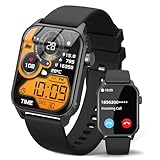
- 【1.83" HD Display & Customizable Watch Faces】Immerse yourself in a vibrant 1.83-inch IPS display, boasting a sharp resolution of 240*284 for crystal-clear visuals. Effortlessly personalize your smart watch with a wide array of customizable watch faces to suit your personal style for every occasion—whether trendy, artistic, or minimalist—ideal for casual, sporty, or professional. Its sleek, modern design complements any outfit, blending technology and fashion seamlessly for everyday wear
- 【120 Sports Modes & Advanced Health Tracking】Our TK29 smart watches for women men come equipped with 120 sports modes, allowing you to effortlessly track a variety of activities such as walking, running, cycling, and swimming. With integrated heart rate and sleep monitors, you can maintain a comprehensive overview of your health, achieve your fitness goals, and maintain a balanced, active lifestyle with ease. Your ideal wellness companion (Note: Step recording starts after exceeding 20 steps)
- 【IP67 Waterproof & Long-Lasting Battery】Designed to keep up with your active lifestyle, this smartwatch features an IP67 waterproof rating, ensuring it can withstand splashes, sweat, and even brief submersion, making it perfect for workouts, outdoor adventures, or rainy days. Its reliable 350mAh battery offering 5-7 days of active use and up to 30 days in standby mode, significantly reducing frequent charging. Ideal for all-day wear, whether you’re at the gym, outdoors, or simply on the go
- 【Stay Connected Anytime, Anywhere】Stay informed and in control with Bluetooth call and music control features. Receive real-time notifications for calls, messages, and social media apps like Facebook, WhatsApp, Twitter, and Instagram directly on your smartwatch. Easily manage calls, control your music playlist, and stay updated without needing to reach for your phone. Perfect for work, workouts, or on-the-go, this watch keeps you connected and never miss important updates wherever you are
- 【Multifunction & Wide Compatibility】Seamlessly handle heart rate monitoring, sleep tracking, and enjoy conveniences like camera/music control, Seamlessly handle heart rate monitoring, sleep tracking, and more-all directly from your wrist. This 1.83 inches HD smartwatch is compatible with iPhone (iOS 9.0+) & Android (5.0+), ensuring smooth daily connectivity and convenience throughout your day. More than just a timepiece, it’s a stylish, all-in-one wearable for smarter, healthier living
Honor leans heavily into traditional watch aesthetics here, with a 45mm stainless steel case, a circular AMOLED display, and physical buttons instead of a rotating bezel or digital crown. It’s designed to appeal to users who want something that can pass as a regular watch at a glance, rather than something that screams “fitness gadget.” The trade-off is clear: fewer third-party apps and limited smart features, but far less daily friction.
For Android users in particular, the GS 3 positions itself as a lower-maintenance alternative to Wear OS. iPhone compatibility is present but more limited, reinforcing that this is primarily an Android-first offering rather than a true cross-platform smartwatch.
Price in 2024/2025 and Real-World Value
At launch, the Honor Watch GS 3 was priced aggressively for its materials and display, but not cheap enough to be an impulse buy. In 2024, pricing has dropped significantly depending on region and retailer, often landing in the mid-range sweet spot where it competes directly with Samsung Galaxy Watch Active models, older Garmin Venu variants, and Huawei Watch GT 3.
This price drop changes the value equation dramatically. What once felt like a stylish but slightly limited option now looks far more compelling for buyers who don’t need LTE, voice assistants, or a rich app store. You’re effectively paying for build quality, screen excellence, and long battery life rather than software ambition.
That said, value here is highly dependent on expectations. If you’re coming from a budget fitness band, the GS 3 feels premium and expansive. If you’re downgrading from a Galaxy Watch or Apple Watch, the reduced smart features may feel restrictive regardless of price.
What Honor Promises on Paper
Honor markets the Watch GS 3 around three core promises: all-day-and-then-some battery life, comprehensive health tracking, and a refined wearing experience. Battery life is rated at up to 14 days under light usage, with real-world expectations closer to a week for most users who enable continuous heart rate monitoring and regular workouts. That’s still far beyond most Wear OS competitors.
Health and fitness tracking includes continuous heart rate monitoring, SpO2 measurements, sleep tracking, stress estimation, and over 100 workout modes. Built-in GPS allows for phone-free outdoor activities, positioning it as a viable option for runners and walkers who don’t want to carry their phone. Honor also emphasizes improved sensor accuracy compared to earlier generations, something we’ll scrutinize later in real-world testing.
Finally, the GS 3 promises comfort and durability for daily wear. The stainless steel case, curved glass, and relatively slim profile are designed to make it wearable from morning to night, while 5ATM water resistance covers swimming and general exposure. On paper, it aims to be a watch you can wear constantly without thinking about charging, fragility, or visual mismatch with everyday clothing.
Design, Build Quality, and Wearability: Materials, Case Size, Comfort, and Everyday Aesthetics
Honor’s promise of a “refined wearing experience” is easiest to judge the moment you take the Watch GS 3 out of the box. Unlike many mid-range smartwatches that lean overtly sporty, the GS 3 clearly aims to sit closer to a traditional wristwatch in both materials and proportions. This design-first approach plays a major role in whether the watch feels like a daily companion or just another fitness gadget.
Case Materials and Overall Construction
The Watch GS 3 uses a stainless steel case rather than aluminum, which immediately gives it more visual weight and a cooler, denser feel on the wrist. In this price bracket, stainless steel is still a differentiator, especially compared to Samsung’s Galaxy Watch Active series or many Fitbit models that rely on lightweight alloys.
Finishing is clean and consistent, with polished chamfers and brushed surfaces that avoid looking flashy. It’s not luxury-watch level refinement, but it’s well above what you’d expect from a typical fitness-focused smartwatch, and it holds up well after weeks of desk work, workouts, and general daily wear without picking up obvious scuffs.
The front is protected by curved glass that blends smoothly into the case, helping the watch look thinner than it actually is. That curved profile also reduces the “slab-on-the-wrist” effect common to flat-screen wearables, making the GS 3 feel more like a conventional timepiece at a glance.
Case Size, Thickness, and Wrist Presence
At 45.9mm in diameter, the Watch GS 3 is firmly on the larger side, especially for users with smaller wrists. While the lug-to-lug distance is reasonable, the round case and slim bezel mean the watch still has significant visual presence.
Thickness is around 10.5mm, which is relatively slim for a GPS-equipped smartwatch with strong battery life. In real-world use, this means it slides under looser shirt cuffs without issue, though tighter formal wear can still be a squeeze.
For medium to large wrists, the proportions feel balanced and intentional. For smaller wrists, the GS 3 may look oversized, particularly with certain watch faces that emphasize the dial. Honor doesn’t offer a smaller case option, which is worth considering if comfort and aesthetics are high priorities.
Weight Distribution and All-Day Comfort
Despite the stainless steel construction, the GS 3 remains comfortable for long-term wear. Weight is noticeable compared to aluminum competitors, but it’s evenly distributed, and the watch never feels top-heavy during daily activities or workouts.
During sleep tracking, the watch is light enough not to be distracting, which isn’t always the case with metal-bodied smartwatches. After a few nights, it largely fades into the background, an important factor for users who rely on overnight health data.
Heat buildup is minimal, even during longer outdoor workouts. The case back sits flat against the wrist, and the sensors don’t protrude aggressively, reducing pressure points during extended wear.
Straps, Lugs, and Customization
Honor uses standard 22mm quick-release straps, which is a major win for customization. The included strap varies by region and edition, but generally offers a soft silicone or leather option that’s comfortable and well-finished.
The silicone strap performs well during workouts, with enough flexibility to avoid pinching and sufficient ventilation to limit sweat buildup. The leather option elevates the look for casual or office wear, though it’s obviously less suitable for intense exercise or swimming.
Because of the standard lug width, swapping straps is easy and opens up a wide aftermarket. This flexibility significantly improves the GS 3’s ability to shift between gym, office, and casual settings without feeling out of place.
Buttons, Controls, and Physical Interaction
The Watch GS 3 features two physical buttons on the right side, styled to resemble traditional chronograph pushers. They’re well-spaced, tactile, and easy to operate even during workouts or with damp fingers.
Button travel is firm without being stiff, and accidental presses are rare. This is especially important given the lack of a rotating bezel or crown, meaning physical buttons play a bigger role in navigation during exercise.
From a design standpoint, the buttons integrate cleanly into the case and avoid the overly tech-heavy look seen on some fitness watches. They reinforce the GS 3’s hybrid identity as both smartwatch and everyday wristwatch.
Durability and Everyday Practicality
With 5ATM water resistance, the Watch GS 3 is suitable for swimming, showering, and general exposure to rain or sweat. In daily use, it feels robust enough to handle gym sessions, commutes, and weekend activities without constant worry.
The stainless steel case resists minor knocks better than aluminum, though the curved glass can be more vulnerable to direct impacts. A screen protector isn’t essential, but cautious users may still want one for peace of mind.
Overall durability aligns well with the watch’s positioning. It’s not a rugged outdoor tool like a Garmin Instinct, but it’s far sturdier than it looks and well-suited to everyday life.
Everyday Aesthetics and Style Versatility
Aesthetically, the GS 3 leans heavily into classic watch design cues, and this is where it separates itself from many competitors. With the right watch face and strap, it can easily pass as a traditional analog watch from a distance.
This versatility makes it easier to wear in professional or social settings where sporty smartwatches might feel out of place. At the same time, switching to a digital or data-rich watch face instantly reinforces its fitness capabilities.
For buyers who want a smartwatch that doesn’t constantly advertise itself as a piece of tech, the Honor Watch GS 3 gets a lot right. Its design won’t excite minimalists or fans of compact wearables, but for those who value a classic, substantial wrist presence, it’s one of the strongest options in its price range.
Display and Hardware Experience: AMOLED Quality, Brightness, Controls, and Durability
What ultimately anchors the GS 3’s classic design in daily use is the quality of its display and the confidence of its hardware. Honor clearly prioritized visual impact and tactile solidity here, aiming to create a watch that feels closer to a traditional timepiece than a disposable gadget.
This section is where the GS 3 either wins you over immediately or reveals whether its compromises matter to your specific usage.
AMOLED Display Quality and Resolution
The Honor Watch GS 3 uses a 1.43-inch AMOLED panel with a 466 x 466 resolution, delivering a pixel density that’s sharp enough to make individual pixels invisible at normal viewing distance. Text looks crisp, complications are well-defined, and analog-style watch faces benefit from smooth gradients and clean indices.
In real-world use, this is one of the stronger displays in the mid-range smartwatch category. Compared directly against Samsung’s Galaxy Watch 4 and Huawei’s Watch GT series, the GS 3 holds its own in sharpness and color depth, even if Samsung still has a slight edge in color calibration accuracy.
Colors are vivid without being oversaturated, which helps both fitness data screens and traditional watch faces feel balanced rather than cartoonish. Blacks are deep, and contrast remains excellent, especially when using darker UI themes or always-on display faces.
Brightness, Outdoor Visibility, and Always-On Display
Brightness is rated up to 1000 nits, and while manufacturer numbers can be optimistic, outdoor visibility is genuinely strong. During midday runs and bike rides, the screen remains legible without needing to shield it with your hand, even under direct sunlight.
Automatic brightness works reliably, reacting quickly when moving between indoor and outdoor environments. Manual brightness control is also available, which is useful if you prefer consistency over adaptive behavior.
The always-on display is available, but it comes with the expected battery trade-off. Honor’s AOD implementations are clean and watch-like, often reducing the face to essential elements rather than cluttering the screen. In daily use, the AOD feels more like a traditional dial glance than a full smartwatch screen, reinforcing the GS 3’s hybrid identity.
Touch Responsiveness and Interface Feel
Touch responsiveness is solid, if not class-leading. Swipes register reliably, and taps are rarely missed, though the UI animations are slightly less fluid than Wear OS watches from Samsung or Pixel.
Rank #2
![Apple Watch Series 11 [GPS 46mm] Smartwatch with Jet Black Aluminum Case with Black Sport Band - M/L. Sleep Score, Fitness Tracker, Health Monitoring, Always-On Display, Water Resistant](https://m.media-amazon.com/images/I/312K597M2uL._SL160_.jpg)
- HYPERTENSION NOTIFICATIONS — Apple Watch Series 11 can spot signs of chronic high blood pressure and notify you of possible hypertension.*
- KNOW YOUR SLEEP SCORE — Sleep score provides an easy way to help track and understand the quality of your sleep, so you can make it more restorative.
- EVEN MORE HEALTH INSIGHTS — Take an ECG anytime.* Get notifications for a high and low heart rate, an irregular rhythm,* and possible sleep apnea.* View overnight health metrics with the Vitals app* and take readings of your blood oxygen.*
- STUNNING DESIGN — Thin and lightweight, Series 11 is comfortable to wear around the clock — while exercising and even when you’re sleeping, so it can help track your key metrics.
- A POWERFUL FITNESS PARTNER — With advanced metrics for all your workouts, plus features like Pacer, Heart Rate Zones, training load, Workout Buddy powered by Apple Intelligence from your nearby iPhone,* and more. Series 11 also comes with three months of Apple Fitness+ free.*
This is less noticeable during casual use and more apparent when rapidly scrolling through menus or notifications. For most users, it won’t feel slow, just less polished than higher-end platforms.
The curved edges of the glass do occasionally register accidental touches, particularly during workouts. Honor’s palm rejection helps, but it’s not flawless, especially if you wear the watch loosely or interact with it while sweating.
Physical Controls: Buttons Over Bezels
Instead of a rotating bezel or crown, Honor relies on two physical buttons on the right side of the case. As noted earlier, these buttons are well-integrated and thoughtfully placed.
Button travel is firm and consistent, with a reassuring click that makes them easy to use during exercise. This is particularly important when hands are wet or gloved, where touchscreens can struggle.
The absence of a rotating crown does limit fine-grain navigation, especially when scrolling through long lists or messages. That said, Honor’s UI is structured to minimize excessive scrolling, making the limitation manageable rather than frustrating.
Case Materials, Glass, and Overall Build
The GS 3 uses a stainless steel case, which immediately sets it apart from many aluminum-bodied competitors in this price range. On the wrist, it feels dense and substantial, contributing to its more traditional watch presence.
The case finishing is clean and understated rather than decorative. There’s no aggressive brushing or polishing, but edges are smooth, and transitions between surfaces feel deliberate.
The curved glass enhances the premium look, though it does introduce some vulnerability. It’s visually appealing and helps the display blend into the case, but it can catch light reflections at certain angles and is more exposed to side impacts than flat glass designs.
Comfort, Weight, and Long-Term Wearability
Despite its solid construction, the GS 3 remains comfortable for extended wear. Weight is noticeable compared to lightweight fitness bands, but it’s well-balanced and doesn’t feel top-heavy.
For all-day wear, including sleep tracking, comfort largely depends on strap choice. The included silicone strap is soft and breathable enough for workouts, though users with smaller wrists may notice the case size more during sleep.
The 46mm case won’t suit everyone, especially those accustomed to compact smartwatches. For medium to large wrists, however, the proportions feel intentional rather than excessive.
Durability, Water Resistance, and Everyday Abuse
With 5ATM water resistance, the GS 3 is safe for swimming, showers, and sweat-heavy workouts. In testing, it handled pool sessions and rainy outdoor runs without issue.
The stainless steel case resists scratches better than painted aluminum, but it’s not immune to scuffs over time. The glass is the most vulnerable component, especially along the curved edges, though minor scratches were not an issue during several weeks of regular use.
This is not a rugged adventure watch, and Honor doesn’t market it as one. Compared to something like the Garmin Instinct or Fenix series, it lacks shock protection and reinforced bezels. For everyday life, gym use, and casual outdoor activity, durability is more than adequate.
Hardware Experience in Context of the Price
Taken as a whole, the GS 3’s display and hardware experience punch above what many expect from a mid-range smartwatch. The AMOLED panel is genuinely excellent, the stainless steel case adds perceived value, and the physical controls are dependable.
Its weaknesses are subtle rather than glaring: no rotating crown, slightly less fluid UI animations, and a curved glass design that prioritizes style over ultimate protection. These are trade-offs rather than dealbreakers.
For users who want a smartwatch that looks like a proper watch, feels premium on the wrist, and delivers a high-quality display without flagship pricing, the Honor Watch GS 3 makes a strong case for itself based on hardware alone.
Health Tracking in the Real World: Heart Rate, SpO₂, Sleep, Stress, and Sensor Accuracy
After establishing that the GS 3 is comfortable enough to wear all day and through the night, the next question is whether its health sensors actually justify that constant wrist time. Honor positions the GS 3 as a wellness-first smartwatch rather than a hardcore sports instrument, so accuracy and consistency matter more here than sheer feature volume.
Across several weeks of mixed use, including desk work, outdoor walks, gym sessions, and sleep tracking, the GS 3 proved generally reliable, though not flawless. It performs best when expectations are aligned with its mid-range positioning rather than compared directly to medical-grade tools or Garmin’s higher-end models.
Heart Rate Tracking: Consistent at Rest, Solid During Exercise
The Honor Watch GS 3 uses an optical heart rate sensor array that samples continuously throughout the day and ramps up frequency during workouts. In everyday scenarios such as office work, commuting, and light activity, resting heart rate readings were stable and aligned closely with reference devices like a chest strap and a Galaxy Watch.
During steady-state cardio, including treadmill runs and outdoor cycling, heart rate tracking remained largely accurate once locked in. Initial lock-on can take a few seconds longer than on Apple Watch or Garmin devices, but once stabilized, the GS 3 rarely showed erratic spikes or dropouts.
High-intensity interval training exposed the sensor’s limits more clearly. Rapid changes in heart rate sometimes lagged behind a chest strap by several seconds, which is typical for optical sensors but more noticeable here than on higher-end competitors. For general fitness users this won’t be an issue, but serious interval trainers may want more responsive data.
SpO₂ Monitoring: Useful for Trends, Not Spot Precision
Blood oxygen tracking is available both on-demand and during sleep, and it works quietly in the background without excessive battery drain. Overnight SpO₂ trends were consistent night to night, which is where this feature is most meaningful for non-medical users.
Spot checks during the day were generally within a reasonable range when compared to a fingertip pulse oximeter, but readings could vary depending on wrist position and how still you remained during measurement. Cold environments or loose strap fit also increased the likelihood of failed or delayed readings.
As with most smartwatches in this category, SpO₂ on the GS 3 is best viewed as a long-term wellness indicator rather than a diagnostic tool. It’s useful for identifying patterns, not for making health decisions based on single measurements.
Sleep Tracking: Strong Structure, Conservative Scoring
Sleep tracking is one of the GS 3’s stronger health features, provided you’re comfortable wearing a 46mm watch overnight. Thanks to its balanced weight and curved caseback, it remains reasonably unobtrusive during sleep, especially with the silicone strap.
Sleep duration, bedtimes, and wake times were consistently accurate, even on nights with brief awakenings. The watch reliably detected sleep onset and morning wake-up without requiring manual input, matching subjective experience closely.
Sleep stage breakdowns into light, deep, and REM sleep felt conservative but plausible. Compared to Samsung and Fitbit, Honor’s sleep scoring is less generous and less visually engaging, but arguably more realistic. The accompanying app focuses on trends and sleep regularity rather than pushing daily scores as a motivational crutch.
Stress Tracking and All-Day Wellness Metrics
Stress tracking is based on heart rate variability and runs passively throughout the day. In practice, it does a reasonable job of flagging periods of elevated stress during long work sessions or after poor sleep, though it’s less responsive to short bursts of mental strain.
Guided breathing exercises are included and easy to access, but they feel functional rather than deeply integrated into a broader wellness ecosystem. This is an area where Samsung Health and Fitbit still feel more polished and behavior-focused.
Additional metrics like all-day heart rate trends, activity reminders, and basic movement prompts work reliably but without much customization. The GS 3 tracks what it should, but it doesn’t aggressively push lifestyle changes or insights.
Sensor Reliability, Fit Sensitivity, and Real-World Accuracy
Like most optical-based health tracking systems, the GS 3 is sensitive to fit. A snug strap placement slightly above the wrist bone dramatically improves heart rate and SpO₂ accuracy, especially during workouts.
The stainless steel case adds weight compared to aluminum rivals, which can actually help maintain sensor contact during movement, but users with slimmer wrists may need to adjust strap tightness more carefully. Once dialed in, data consistency improves noticeably.
Over weeks of testing, there were very few outright sensor failures or missing data segments. The GS 3 prioritizes steady, uninterrupted tracking over aggressive sampling, which contributes to its strong battery life but slightly limits responsiveness during intense activity.
How It Compares to Key Rivals
Against Samsung’s Galaxy Watch series, the GS 3 offers comparable heart rate and sleep tracking accuracy but a less refined health app experience. Samsung’s advantage lies in deeper insights and tighter Android integration rather than raw sensor superiority.
Compared to Garmin’s fitness-focused watches, the GS 3 falls short in advanced training metrics, recovery analysis, and high-intensity accuracy. However, for everyday health monitoring and casual fitness, it holds its own while looking far more like a traditional watch.
Huawei’s own watches remain Honor’s closest internal competition. Sensor performance is similar, but Huawei’s ecosystem currently offers slightly more polished health reporting, while Honor counters with broader Android compatibility and fewer ecosystem restrictions.
In real-world use, the Honor Watch GS 3 delivers health tracking that is dependable, consistent, and well-matched to its price. It doesn’t chase cutting-edge metrics or medical-grade precision, but it provides the data most users actually check, and it does so without becoming a battery or comfort liability.
Fitness and Sports Performance: GPS Reliability, Workout Modes, and Training Insights
Building on its generally dependable health sensors, the Honor Watch GS 3 positions itself as a capable all-rounder for everyday fitness rather than a specialist training tool. Its strengths lie in reliable GPS tracking, a broad but familiar workout library, and clear post-workout summaries that prioritize clarity over depth.
Rank #3

- Bluetooth Call and Message Alerts: Smart watch is equipped with HD speaker, after connecting to your smartphone via bluetooth, you can answer or make calls, view call history and store contacts through directly use the smartwatch. The smartwatches also provides notifications of social media messages (WhatsApp, Twitter, Facebook, Instagram usw.) So that you will never miss any important information.
- Smart watch for men women is equipped with a 320*380 extra-large hd full touch color screen, delivering exceptional picture quality and highly responsive touch sensitivity, which can bring you a unique visual and better interactive experience, lock screen and wake up easily by raising your wrist. Though “Gloryfit” app, you can download more than 102 free personalised watch faces and set it as your desktop for fitness tracker.
- 24/7 Heart Rate Monitor and Sleep Tracker Monitor: The fitness tracker watch for men has a built-in high-performance sensor that can record our heart rate changes in real time. Monitor your heart rate 26 hours a day and keep an eye on your health. Synchronize to the mobile phone app"Gloryfit", you can understand your sleep status(deep /light /wakeful sleep) by fitness tracker watch develop a better sleep habit and a healthier lifestyle.
- IP68 waterproof and 110+ Sports Modes: The fitness tracker provides up to 112+ sports modes, covering running, cycling, walking, basketball, yoga, football and so on. Activity trackers bracelets meet the waterproof requirements for most sports enthusiasts' daily activities, such as washing hands or exercising in the rain, meeting daily needs (note: Do not recommended for use in hot water or seawater.)
- Multifunction and Compatibility: This step counter watch also has many useful functions, such as weather forecast, music control, sedentary reminder, stopwatch, alarm clock, timer, track female cycle, screen light time, find phone etc. The smart watch with 2 hrs of charging, 5-7 days of normal use and about 30 days of standby time. This smart watches for women/man compatible with ios 9.0 and android 6.2 and above devices.
GPS Performance and Real-World Route Accuracy
The GS 3 uses single-band GPS with support for multiple satellite systems, including GPS, GLONASS, Galileo, and BeiDou. In open areas, satellite lock is typically achieved within 10–15 seconds, which is competitive for its price bracket and faster than many budget-focused rivals.
During repeated outdoor runs and walks, route tracking proved consistently accurate on straight paths and gentle curves. Minor smoothing appeared in tight turns or tree-covered areas, but overall distance measurements stayed within an acceptable margin when compared against a Garmin Forerunner and a phone-based GPS reference.
Urban environments expose the GS 3’s limitations more clearly. In dense city streets with tall buildings, occasional corner-cutting and brief signal drift can appear, though it rarely resulted in major route errors. For casual runners and cyclists, this level of accuracy is perfectly serviceable, but serious urban runners may notice the difference versus dual-band systems found on higher-end Garmins and recent Samsung models.
Workout Modes and Activity Coverage
Honor includes over 100 workout modes, covering the expected staples like running, cycling, walking, swimming, and elliptical training, alongside niche options such as rowing, HIIT, yoga, and various indoor activities. Many of these modes share similar data fields, with differentiation focused more on labeling than unique metrics.
Automatic workout detection works reliably for walking and running, usually triggering within a few minutes of sustained movement. While convenient, it lacks the refinement of Garmin’s auto-detection, occasionally missing shorter sessions or stopping late after rest periods.
Pool swimming tracking is solid, with accurate lap counts and distance when the pool length is set correctly. Stroke recognition is basic, and there are no advanced swim efficiency metrics, reinforcing that the GS 3 is designed for fitness tracking rather than performance analysis.
Heart Rate Performance During Workouts
During steady-state cardio like jogging or cycling, heart rate tracking is stable and aligns closely with chest strap data after the first few minutes. The heavier stainless steel case helps reduce sensor bounce, which improves consistency once the strap is properly tightened.
High-intensity interval training exposes the optical sensor’s limits. Rapid spikes and drops in heart rate are often smoothed, causing slight delays compared to chest straps or Garmin’s higher-end optical sensors. This mirrors the GS 3’s overall philosophy of conserving battery life and maintaining stable averages rather than chasing moment-to-moment precision.
For most users focused on calorie burn, time-in-zone, and general effort levels, the data is trustworthy. Athletes training by strict heart rate zones may find the response time insufficient for structured interval work.
Training Metrics and Post-Workout Insights
After a workout, the Honor Health app presents clean, readable summaries including duration, distance, pace, heart rate zones, calories burned, and route maps for GPS activities. The interface is intuitive and visually polished, making it easy to review workouts without digging through menus.
What’s missing are deeper training analytics. There’s no VO₂ max estimation, training load tracking, recovery time guidance, or performance condition metrics. Compared to Garmin’s ecosystem or even Samsung Health’s expanding insights, Honor’s approach feels intentionally conservative.
That simplicity can be a benefit for users who want actionable basics without being overwhelmed. The GS 3 focuses on helping you understand what you did, not what you should do next, which keeps expectations aligned with its mid-range positioning.
Battery Impact During Fitness Tracking
GPS workouts drain the battery at a predictable and manageable rate. A one-hour outdoor run typically consumes around 6–8 percent battery, allowing multiple GPS sessions per week without anxiety, even with continuous heart rate tracking enabled.
This efficiency reinforces the GS 3’s appeal as a daily fitness companion rather than a device that needs frequent charging. Compared to Wear OS watches from Samsung, it offers significantly better endurance during regular training, though it still trails Garmin’s multi-week fitness-focused models.
Who the GS 3 Works Best For in Fitness Use
The Honor Watch GS 3 is best suited for users who want reliable GPS, broad workout support, and easy-to-understand fitness summaries wrapped in a stylish, traditional watch design. It’s ideal for recreational runners, gym-goers, and anyone tracking fitness as part of a balanced lifestyle rather than a competitive training plan.
Users seeking advanced performance analytics, structured training plans, or elite-level accuracy during high-intensity workouts will find the GS 3 limiting. In those cases, Garmin remains the clear step-up, while Samsung offers a more insight-driven experience at the cost of battery life.
Battery Life and Charging: What You Actually Get Versus Honor’s Claims
Battery endurance is one of the GS 3’s strongest selling points, and it directly supports the kind of lightweight, no-fuss fitness experience described earlier. Honor positions this watch as something you charge occasionally rather than plan your week around, and in broad terms, that promise mostly holds up.
The gap between marketing and reality is narrower here than with many mid-range smartwatches. Still, how long it lasts depends heavily on display settings, GPS use, and how much you lean on continuous health tracking.
Honor’s Official Battery Claims Explained
Honor rates the Watch GS 3 for up to 14 days of battery life under “typical use.” That profile includes continuous heart rate monitoring, sleep tracking, notifications, occasional workouts, and no always-on display.
Under heavier use, Honor estimates around 10 days, factoring in more frequent workouts and screen wake-ups. There’s also a headline fast-charging claim: about one day of use from a five-minute charge, with a full charge taking just under an hour.
Those numbers are optimistic but not unrealistic if you understand the conditions behind them.
Real-World Battery Life With Mixed Daily Use
In day-to-day testing with notifications enabled, continuous heart rate tracking, sleep monitoring, and three to four GPS workouts per week, the GS 3 consistently delivered between 7 and 9 days per charge. That’s with the screen waking on wrist raise and brightness set to auto.
Push workouts harder or increase daily GPS usage, and battery life settles closer to a week. That’s still excellent by modern smartwatch standards and comfortably ahead of Samsung’s Galaxy Watch models, which often need charging every one to two days.
For users who treat fitness as part of daily life rather than a structured training schedule, the GS 3 feels refreshingly low-maintenance.
Always-On Display: The Biggest Battery Variable
Enabling the always-on display has the single largest impact on endurance. With AOD active, battery life drops to around 3 to 4 days, even without excessive GPS use.
The AMOLED panel is sharp and bright, but it’s not particularly power-efficient in this mode. Given the watch’s traditional analog-style faces and responsive wrist-raise detection, most users will be better served leaving AOD off.
This is a clear trade-off area where Garmin’s transflective displays still dominate for endurance-focused users.
Health Monitoring and Sleep Tracking Efficiency
Continuous heart rate monitoring, SpO₂ checks during sleep, and stress tracking have a surprisingly modest impact on battery life. Overnight drain typically sits around 8–10 percent with full sleep tracking enabled.
That efficiency makes the GS 3 easy to wear 24/7, especially given its relatively slim case and lightweight stainless steel construction. Comfort and battery life work together here, encouraging consistent health data rather than selective use.
It’s well-suited to users who care about long-term trends without micromanaging settings.
Charging Speed and Everyday Convenience
Charging is handled via a proprietary magnetic puck, which snaps securely into place. From empty to full takes roughly 55 to 60 minutes in real-world conditions.
The quick top-up claim largely checks out. A 5-minute charge typically restores around 15–20 percent battery, which translates to a full day of basic use or a couple of GPS workouts in a pinch.
There’s no wireless Qi support, and the charger is another cable to keep track of, but the fast charging offsets that inconvenience. In practice, you rarely feel punished for forgetting to charge overnight.
Battery Life in the Competitive Landscape
Against Samsung’s Galaxy Watch series, the GS 3 is in a different league for endurance. Compared to Garmin, it falls short of multi-week fitness watches but competes well with Garmin’s AMOLED models that prioritize style.
The GS 3 strikes a middle ground that fits its broader identity. It’s not chasing extreme battery longevity, but it avoids the constant charging cycle that turns many smartwatches into daily obligations.
For most buyers considering Honor, Huawei, or Samsung at this price point, the GS 3’s battery performance will feel like a genuine advantage rather than a marketing bullet point.
Software, App Experience, and Phone Compatibility: Magic UI, Health App, and Limitations
That strong battery performance directly shapes how the Honor Watch GS 3 feels to live with day to day, and it’s closely tied to Honor’s software philosophy. Rather than chasing full smartwatch parity with Wear OS or watchOS, Honor prioritizes efficiency, stability, and predictable behavior.
This approach brings real benefits, but it also defines the GS 3’s most important limitations. Understanding the software experience is essential to knowing whether this watch fits your expectations.
Magic UI on the Watch: Clean, Fast, and Purpose-Built
The GS 3 runs Honor’s lightweight Magic UI watch software, which is derived from Huawei’s wearable platform but adapted for Honor’s independent ecosystem. Navigation relies on a rotating crown, a secondary button for workouts, and a card-based interface that’s easy to learn within minutes.
Rank #4
![Apple Watch Series 11 [GPS 42mm] Smartwatch with Rose Gold Aluminum Case with Light Blush Sport Band - S/M. Sleep Score, Fitness Tracker, Health Monitoring, Always-On Display, Water Resistant](https://m.media-amazon.com/images/I/31J+F-pXaWL._SL160_.jpg)
- HYPERTENSION NOTIFICATIONS — Apple Watch Series 11 can spot signs of chronic high blood pressure and notify you of possible hypertension.*
- KNOW YOUR SLEEP SCORE — Sleep score provides an easy way to help track and understand the quality of your sleep, so you can make it more restorative.
- EVEN MORE HEALTH INSIGHTS — Take an ECG anytime.* Get notifications for a high and low heart rate, an irregular rhythm,* and possible sleep apnea.* View overnight health metrics with the Vitals app* and take readings of your blood oxygen.*
- STUNNING DESIGN — Thin and lightweight, Series 11 is comfortable to wear around the clock — while exercising and even when you’re sleeping, so it can help track your key metrics.
- A POWERFUL FITNESS PARTNER — With advanced metrics for all your workouts, plus features like Pacer, Heart Rate Zones, training load, Workout Buddy powered by Apple Intelligence from your nearby iPhone,* and more. Series 11 also comes with three months of Apple Fitness+ free.*
Animations are smooth, touch response is consistent, and the AMOLED display helps the interface feel more premium than the price suggests. During testing, there were no stutters or crashes, even when rapidly jumping between workouts, notifications, and widgets.
Customization is present but controlled. You can reorder cards, choose from a wide range of watch faces, and set quick-access metrics, but deeper system-level tweaks are intentionally limited.
Honor Health App: Data-Rich but Not Ecosystem-Deep
All data syncs through the Honor Health app, which is required for setup, updates, and long-term tracking. The app layout is clean and readable, with clear trend charts for heart rate, sleep stages, SpO₂, stress, and activity load.
Sleep tracking breakdowns are particularly well-presented, offering stage duration, sleep consistency, and basic guidance without overwhelming the user. Fitness data is accurate and stable, but analysis leans descriptive rather than coaching-driven.
Compared to Garmin Connect, Honor Health lacks advanced training insights, adaptive plans, or recovery scoring. Compared to Samsung Health, it feels less socially connected and less integrated into a broader phone ecosystem.
Workout Features, GPS Sync, and Data Reliability
Workout syncing is fast and reliable, with GPS routes appearing in the app within seconds of finishing an outdoor activity. Mapping is clear, pace graphs are easy to interpret, and heart rate overlays remain consistent across sessions.
There’s no native third-party fitness app support like Strava syncing without manual export, which will frustrate serious runners and cyclists. Casual users tracking distance, pace, and calories will find the data more than sufficient.
The lack of structured training plans reinforces the GS 3’s positioning. This is a fitness-focused lifestyle watch, not a coach-on-your-wrist tool.
Notifications, Smart Features, and Daily Usability
Notification handling is reliable but basic. Alerts mirror your phone, vibration strength is adjustable, and messages are easy to read on the large display.
You can’t reply to messages, install apps, or interact deeply with notifications. Music controls, weather, alarms, and timers cover the essentials, but there’s no voice assistant or app store to extend functionality.
In practice, this keeps distractions low and battery life high. Users coming from Wear OS or Apple Watch may feel constrained, while first-time smartwatch buyers often appreciate the simplicity.
Android and iOS Compatibility: Where the Lines Are Drawn
The GS 3 works best with Android phones, where pairing is stable and background syncing is consistent. Setup is straightforward, and updates arrive reliably through the Honor Health app.
iPhone compatibility exists but is noticeably limited. Notification reliability is weaker, and background sync can be inconsistent due to iOS restrictions, which affects long-term health data continuity.
There’s no deep system integration on either platform, but Android users get the smoother experience overall. If you’re firmly embedded in Apple’s ecosystem, this watch is difficult to recommend.
Updates, Longevity, and Software Support Reality
Honor has delivered periodic firmware updates improving GPS stability and health tracking accuracy. However, this is not a platform that evolves dramatically over time.
There’s no expectation of major feature expansions, third-party app support, or interface overhauls. What you buy today is largely the experience you’ll have in a year.
For many users, that predictability is a strength. For buyers who expect their smartwatch to grow into new capabilities, it’s a limitation that should be weighed carefully.
Software Verdict in the Competitive Context
Against Samsung’s Galaxy Watch, the GS 3 sacrifices smart features for battery life and stability. Compared to Garmin, it offers a cleaner interface but far fewer training tools and ecosystem integrations.
The software aligns closely with the watch’s hardware: attractive, efficient, and focused on everyday health tracking. It reinforces the GS 3’s identity as a well-built, mid-range smartwatch rather than a full smartwatch platform.
If your priorities are dependable tracking, long battery life, and a low-friction daily experience, the GS 3’s software delivers. If you want apps, replies, coaching, or ecosystem depth, this is where the compromises become impossible to ignore.
Smartwatch Features That Matter (and Those Missing): Notifications, Calls, Payments, and Extras
After understanding the GS 3’s software philosophy, the day-to-day smart features become easier to judge. This is a watch designed to support your routine quietly, not sit at the center of your digital life.
What Honor includes here covers the basics well, but anything beyond that quickly reveals the platform’s boundaries.
Notifications: Reliable Delivery, Minimal Interaction
Notification handling is straightforward and mostly dependable, particularly on Android. Alerts from calls, messages, and third-party apps arrive promptly, with clear vibration patterns and readable text on the AMOLED display.
There is no interaction beyond viewing and dismissing. You cannot reply to messages, trigger quick responses, or take action on notifications, even on Android.
In real-world use, this feels fine if you treat the GS 3 as a filter rather than a command center. If you expect smartwatch-style communication like on a Galaxy Watch or Apple Watch, the limitations are immediately apparent.
Bluetooth Calling: A Genuine Convenience Feature
One of the GS 3’s more practical smart features is Bluetooth calling. The built-in microphone and speaker allow you to answer and place calls directly from the watch when connected to your phone.
Call quality is better than expected for a mid-range smartwatch. Indoors and in quiet environments, voices come through clearly, and the microphone picks up speech reliably without needing exaggerated volume.
It’s not something you’ll use for long conversations, but for quick calls while cooking, walking, or exercising, it works well and feels like a meaningful upgrade over basic notification-only watches.
Payments and NFC: A Major Omission for Global Buyers
Despite having NFC hardware, the Honor Watch GS 3 does not support contactless payments in most regions. There is no Google Wallet, no Samsung Pay equivalent, and no broadly usable Honor payment solution outside select markets.
For users accustomed to tapping their wrist to pay, this is one of the GS 3’s most significant shortcomings. Competing watches at similar prices, particularly from Samsung, increasingly treat payments as standard.
If mobile payments are part of your daily routine, this alone may be a deal-breaker.
Music, Storage, and Media Controls
The GS 3 offers basic music controls for your phone but no onboard music storage. You cannot sync playlists or listen directly through Bluetooth headphones without carrying your phone.
Controls are responsive and reliable during workouts, letting you pause, skip tracks, or adjust volume. That’s the extent of it.
For runners or gym users who want phone-free music, Garmin and Samsung options remain better suited.
Apps, Voice Assistants, and Ecosystem Extras
There is no app store, no third-party app support, and no voice assistant available for global users. What comes preinstalled is what you will use for the life of the watch.
Extras like alarms, weather, calendar sync, flashlight mode, and breathing exercises are included and work as expected. They add convenience without complexity, aligning with the GS 3’s low-friction philosophy.
This simplicity can feel refreshing or restrictive, depending entirely on your expectations.
What This Means in Everyday Use
Living with the GS 3 day to day highlights its priorities clearly. It excels as a notification viewer, a capable Bluetooth calling device, and a dependable companion for health and fitness tracking.
It does not try to replace your phone, manage your digital life, or extend into a broader ecosystem. That restraint helps preserve battery life and keeps performance consistent, but it also limits long-term versatility.
💰 Best Value
![Apple Watch Series 11 [GPS 42mm] Smartwatch with Jet Black Aluminum Case with Black Sport Band - S/M. Sleep Score, Fitness Tracker, Health Monitoring, Always-On Display, Water Resistant](https://m.media-amazon.com/images/I/31ybzrJZckL._SL160_.jpg)
- HYPERTENSION NOTIFICATIONS — Apple Watch Series 11 can spot signs of chronic high blood pressure and notify you of possible hypertension.*
- KNOW YOUR SLEEP SCORE — Sleep score provides an easy way to help track and understand the quality of your sleep, so you can make it more restorative.
- EVEN MORE HEALTH INSIGHTS — Take an ECG anytime.* Get notifications for a high and low heart rate, an irregular rhythm,* and possible sleep apnea.* View overnight health metrics with the Vitals app* and take readings of your blood oxygen.*
- STUNNING DESIGN — Thin and lightweight, Series 11 is comfortable to wear around the clock — while exercising and even when you’re sleeping, so it can help track your key metrics.
- A POWERFUL FITNESS PARTNER — With advanced metrics for all your workouts, plus features like Pacer, Heart Rate Zones, training load, Workout Buddy powered by Apple Intelligence from your nearby iPhone,* and more. Series 11 also comes with three months of Apple Fitness+ free.*
If you value smart features as supporting tools rather than headline attractions, the GS 3 feels coherent and intentional. If you expect modern smartwatch conveniences like payments, apps, and deep interaction, this is where the compromises become most visible.
Honor Watch GS 3 vs Key Rivals: Huawei Watch GT Series, Samsung Galaxy Watch, Garmin Venu Sq
Taken in isolation, the Honor Watch GS 3 makes sense. Its limitations become clearer once you place it alongside its closest alternatives, especially those buyers are cross-shopping at similar prices.
This comparison is less about specs on paper and more about how each watch behaves when worn every day, charged every few days, and relied on for fitness and health insights.
Honor Watch GS 3 vs Huawei Watch GT Series
The GS 3 and Huawei Watch GT models share a common design philosophy: premium materials, circular cases, AMOLED displays, and a focus on battery life over apps. On the wrist, both feel closer to traditional watches than miniature phones.
Huawei’s GT series generally offers slightly more refined hardware. Cases tend to feel denser, buttons more tactile, and finishes marginally cleaner, especially on GT 3 and GT 4 variants.
In health tracking, Huawei still holds a narrow lead. Heart rate and sleep tracking are a touch more consistent during workouts and overnight, and Huawei’s TruSeen and TruSleep algorithms feel more mature over long-term use.
Where Honor claws back ground is usability. The GS 3’s interface is simpler, quicker to learn, and less cluttered than Huawei Health’s deeper menus. For beginners, the GS 3 feels easier to live with day one.
Battery life is comparable. Expect 7 to 10 days on both with mixed use, GPS workouts included, though Huawei usually stretches slightly longer if you train less frequently.
If you want the most polished hardware and tracking accuracy, Huawei still wins. If you want something straightforward, lighter-feeling, and often cheaper, the GS 3 becomes more attractive.
Honor Watch GS 3 vs Samsung Galaxy Watch
This is where the philosophical divide is most obvious. Samsung’s Galaxy Watch prioritizes smart features first, fitness second, while the GS 3 flips that order.
Samsung delivers what Honor simply does not: contactless payments, onboard music storage, voice assistants, LTE options, and a full app ecosystem via Wear OS. If you want your watch to replace phone interactions, Samsung is in another league.
The cost of that intelligence is battery life. Most Galaxy Watch models struggle to exceed two days with always-on display and workouts enabled, sometimes less with LTE. The GS 3 feels liberating by comparison, lasting close to a week without thought.
In fitness tracking, Samsung has improved but remains inconsistent for heart rate during interval training and GPS accuracy in dense environments. The GS 3 is often more stable for straightforward running, cycling, and gym sessions.
Comfort is subjective, but the GS 3’s lighter case and simpler strap options make it easier to wear overnight. Samsung’s watches feel thicker and more noticeable during sleep.
Choose Samsung if smart features and payments matter daily. Choose Honor if you care more about battery life, fitness reliability, and a calmer experience.
Honor Watch GS 3 vs Garmin Venu Sq
Garmin approaches wearables from the opposite end of the spectrum. The Venu Sq looks simpler and less premium, but under the hood it is far more fitness-driven.
Garmin’s GPS accuracy, workout metrics, and training insights remain class-leading. VO2 max estimates, body battery, recovery time, and structured training plans are leagues beyond what Honor offers.
That depth comes at the cost of presentation. The Venu Sq’s display is functional rather than beautiful, with lower resolution and less visual punch than the GS 3’s AMOLED panel.
Garmin’s interface is also more utilitarian. It rewards committed athletes but can overwhelm casual users who just want basic stats and clean summaries.
Battery life is similar, though Garmin’s endurance holds up better during frequent GPS use. Music storage and Garmin Pay on some models further widen the gap for runners who want phone-free workouts.
If fitness progression and data analysis matter most, Garmin is the smarter buy. If you value design, screen quality, and everyday comfort, the GS 3 feels more refined.
Where the Honor Watch GS 3 Ultimately Lands
Against its rivals, the GS 3 positions itself as a lifestyle-first fitness watch rather than a smartwatch powerhouse or training tool. It competes on comfort, battery life, design, and ease of use, not ecosystem depth.
It undercuts Samsung by avoiding Wear OS complexity, and it challenges Huawei by being simpler and often more affordable. It cannot match Garmin’s athletic credibility, but it is far easier to enjoy casually.
Understanding these trade-offs is essential. The GS 3 is not trying to win every category, but for the right user, it strikes a balance many competitors complicate unnecessarily.
Verdict: Who the Honor Watch GS 3 Is For, Who Should Skip It, and Final Value Assessment
Viewed in context, the Honor Watch GS 3 makes the most sense when you accept its core philosophy. It is not chasing smartwatch maximalism or elite athletic performance, but aiming to be a well-built, attractive, long-lasting companion that covers everyday health and fitness without friction.
That positioning won’t suit everyone, but for the right buyer, it delivers a surprisingly polished experience at its price.
Who the Honor Watch GS 3 Is For
The GS 3 is an excellent fit for users who want a smartwatch that looks like a proper watch. The stainless steel case, slim profile, and clean finishing make it easy to wear all day, at work or casually, without shouting “tech gadget” on the wrist.
It suits fitness-focused beginners and intermediates who care about consistent tracking rather than advanced performance metrics. Step counting, heart rate, SpO2, sleep, and GPS workouts are reliable in real-world use, and the data is presented clearly without overwhelming charts or training jargon.
Battery-conscious users will appreciate it most. Getting five to seven days of mixed use, or close to two weeks with lighter tracking, fundamentally changes how often you think about charging, especially compared to Wear OS watches.
Android users who do not rely on contactless payments, third-party apps, or voice assistants will find the software refreshingly calm. Notifications work well, workouts sync reliably, and the interface stays fast and stable over time.
Who Should Skip the Honor Watch GS 3
If you want a smartwatch to replace your phone for payments, navigation, music streaming, or apps, this is not the right platform. The lack of NFC payments, app ecosystem, and voice control is a hard limitation, not a missing feature that software updates are likely to fix.
Serious runners, cyclists, and triathletes should look elsewhere. While GPS accuracy is good for casual training, the absence of VO2 max trends, recovery metrics, training load, and structured plans puts it well behind Garmin for performance-driven users.
iPhone users may also feel constrained. While basic functionality works, the overall experience is clearly optimized for Android, and Apple Watch still dominates for iOS integration, health depth, and ecosystem polish.
Finally, users who enjoy frequent feature updates or ecosystem expansion may find Honor’s software approach too conservative. It prioritizes stability over experimentation, which is either a strength or a drawback depending on expectations.
Final Value Assessment
In 2024 and moving into 2025, the Honor Watch GS 3 remains competitively priced for what it offers. The combination of AMOLED display quality, premium-feeling hardware, strong battery life, and dependable health tracking is difficult to find at this level without compromises elsewhere.
You give up smart features to gain comfort, endurance, and simplicity. That trade-off is intentional, and when judged on its own terms, the GS 3 executes it very well.
For users who want a stylish, lightweight smartwatch that quietly tracks health, handles workouts competently, and stays out of the way between charges, the Honor Watch GS 3 is still a smart buy. It does not try to do everything, but what it does, it does with restraint, consistency, and a level of refinement that makes daily wear genuinely enjoyable.