VO₂ max is one of the most overloaded numbers in endurance sport. Garmin presents it as a single, precise value with decimal points and age‑based rankings, which makes it feel definitive—almost diagnostic. In reality, that number is a model output, not a direct measurement of how much oxygen your body can truly use.
If you’ve ever wondered why your Garmin VO₂ max jumps after a good race, drops during a hot training block, or disagrees with how fit you actually feel, you’re asking the right question. Understanding what VO₂ max really represents—and what Garmin is actually estimating—is essential before you use it to judge fitness, compare devices, or guide training decisions.
This section strips VO₂ max back to its physiological meaning, explains how it is measured in a laboratory, and then shows precisely where Garmin’s estimate diverges. Once you see the difference, Garmin’s number becomes far more useful—and far less mysterious.
What VO₂ max actually measures in human physiology
VO₂ max is the maximum rate at which your body can take in, transport, and use oxygen during intense exercise. It reflects the combined capacity of your lungs, heart, blood, and working muscles, not just cardiovascular “fitness” in a generic sense.
🏆 #1 Best Overall
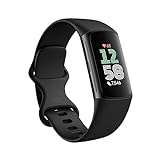
- Find your way seamlessly during runs or rides with turn-by-turn directions from Google Maps on Fitbit Charge 6[7, 8]; and when you need a snack break on the go, just tap to pay with Google Wallet[8, 9]
In physiological terms, it is limited by oxygen delivery and utilization, often expressed in milliliters of oxygen per kilogram of body mass per minute. Genetics, training history, muscle fiber composition, altitude exposure, and even hemoglobin levels all influence it.
Crucially, VO₂ max is not a measure of performance. Two athletes with identical VO₂ max values can have very different race results depending on efficiency, lactate threshold, durability, biomechanics, and pacing skill.
How VO₂ max is measured in a lab—and why that matters
A true VO₂ max test is performed with a metabolic cart, a sealed mask, and controlled workload increases on a treadmill or cycle ergometer. The system directly measures oxygen inhaled and carbon dioxide exhaled, breath by breath, while workload increases until exhaustion.
To qualify as a true VO₂ max, the test must reach a physiological plateau where oxygen consumption no longer rises despite increasing effort. Heart rate, respiratory exchange ratio, and perceived exertion are used to confirm maximal effort.
This matters because the lab test measures oxygen usage directly. No assumptions about pace, efficiency, or heart‑rate response are required—the number comes from gas exchange, not inference.
What Garmin’s VO₂ max number actually represents
Garmin does not measure oxygen consumption. It estimates VO₂ max using mathematical models originally developed by Firstbeat, based on the relationship between external workload and internal physiological response.
For running, the primary inputs are pace and heart rate. For cycling, the model relies heavily on power output paired with heart rate. These data are then compared against population norms and your historical responses to similar efforts.
What Garmin is really estimating is how much oxygen someone with your heart‑rate response would need to sustain a given workload. It is a proxy for aerobic capacity, not a direct observation of oxygen use.
Why heart rate is both powerful and problematic
Heart rate is a useful physiological signal because it reflects cardiovascular demand, but it is also highly sensitive to non‑fitness factors. Heat, dehydration, altitude, caffeine, sleep debt, illness, and stress can all elevate heart rate at the same workload.
Garmin’s algorithm attempts to filter out obvious anomalies, but it cannot fully distinguish between a higher heart rate caused by fatigue and one caused by lower aerobic fitness. As a result, VO₂ max estimates can drift during heavy training blocks or environmental stress.
This is why many athletes see their VO₂ max drop during peak mileage weeks, even as race fitness improves. The model interprets strain as reduced efficiency.
Sport specificity and why accuracy varies
Garmin’s VO₂ max estimates are most accurate for steady, outdoor running on flat terrain with reliable GPS and clean heart‑rate data. This environment best matches the assumptions built into the model.
Accuracy drops for trail running, treadmill running, interval‑heavy sessions, or stop‑start workouts where pace and effort are decoupled. Wrist‑based heart‑rate errors during cold weather or high arm movement further degrade estimates.
Cycling VO₂ max is more sensitive to data quality but potentially more accurate when a calibrated power meter is used. Swimming, strength training, and mixed‑modal activities do not produce valid VO₂ max estimates at all.
Why Garmin’s VO₂ max is still useful—if you know its limits
Despite its limitations, Garmin’s VO₂ max estimate can be valuable as a long‑term trend rather than a single truth value. When conditions, device, and sport remain consistent, changes over weeks or months often reflect real aerobic adaptations.
It is best used comparatively against your own history, not against lab values, other athletes, or different devices. Treat it as a performance signal embedded in a broader training ecosystem, alongside threshold pace, power, and perceived exertion.
Once you understand that Garmin is estimating oxygen cost from performance data—not measuring oxygen itself—you can stop chasing the number and start interpreting it. That distinction sets the foundation for evaluating when the metric deserves your trust, and when it should be ignored entirely.
The Science Under the Hood: How Garmin (via Firstbeat) Estimates VO₂ Max
Once you accept that Garmin is modeling aerobic efficiency rather than directly measuring oxygen uptake, the mechanics become easier to follow. At its core, the system asks a simple question: how much external work are you producing for a given cardiovascular cost?
Firstbeat’s VO₂ max engine answers that question statistically, using large population datasets and physiological modeling rather than respiratory gas analysis. The watch never “sees” oxygen; it infers it from performance patterns that correlate strongly with oxygen consumption under controlled conditions.
The foundational idea: efficiency reveals aerobic capacity
In lab testing, VO₂ max is defined as the maximum rate at which your body can consume oxygen during incremental exercise. In the field, Firstbeat replaces gas exchange with a proxy: the relationship between workload and heart rate.
If two athletes run at the same pace on flat ground, the one with the lower steady-state heart rate is assumed to be more aerobically efficient. Over enough clean data, that efficiency curve can be scaled to an estimated maximal oxygen uptake.
The raw inputs Garmin actually uses
For running, the primary inputs are pace from GPS, heart rate from the optical sensor or chest strap, and time spent at steady intensities. Elevation data is used to exclude or downweight segments where terrain breaks the pace-to-effort relationship.
For cycling, speed is largely ignored in favor of power when a calibrated power meter is present. Power provides a far cleaner measure of external work, which is why cycling VO₂ max estimates improve dramatically with good hardware and stable conditions.
User profile data matters more than most people realize. Age, sex, body mass, and training history shape the baseline model before a single workout is analyzed.
From heart rate to oxygen cost: the invisible step
Heart rate is not a measure of oxygen consumption, but it is correlated with it across submaximal workloads. Firstbeat models this relationship using known physiological constraints, such as expected heart-rate drift, stroke volume behavior, and maximal heart-rate ranges.
The algorithm focuses on steady-state segments where heart rate and workload stabilize. Spikes, surges, pauses, and recovery periods are intentionally excluded because they break the assumptions of linearity.
This is why long, even efforts are disproportionately influential in shaping your VO₂ max estimate. Intervals may improve fitness faster, but they provide messier data.
Why pace and power matter more than intensity alone
A high heart rate by itself tells the model very little. What matters is how much mechanical output accompanies that cardiovascular strain.
For runners, pace on flat terrain becomes the stand-in for work rate, assuming similar biomechanics and running economy. For cyclists, power removes that assumption entirely, making the estimate more robust when data quality is high.
This distinction explains why trail runners and treadmill users often see unstable values. When pace no longer reflects actual work, the inference breaks down.
The role of population models and historical data
Garmin does not estimate VO₂ max from a single workout. Each new activity nudges a longer-term model that is anchored to population norms and your own historical trends.
If your data suddenly contradicts your established pattern, the system resists large jumps. This inertia is intentional, preventing wild swings from bad GPS, heat stress, illness, or sensor errors.
The downside is lag. Real improvements or temporary declines may take weeks to fully register, especially for experienced athletes whose margins are small.
Quality filters you never see—but feel
The algorithm actively rejects workouts that fail its internal validity checks. Erratic heart rate, short duration, excessive elevation change, or inconsistent pacing can all cause an activity to be ignored for VO₂ max purposes.
This is why two runs that feel identical may affect your VO₂ max differently. One aligned cleanly with the model’s assumptions, while the other quietly failed them.
From the user’s perspective, this can feel arbitrary. From a modeling standpoint, it is necessary to avoid compounding error.
Why the estimate behaves differently across athletes
Newer athletes tend to see faster and larger changes because their efficiency curve is still steep. Small improvements in pacing or cardiovascular response translate into noticeable shifts in the model.
Highly trained athletes sit near the flatter end of that curve. Day-to-day noise, fatigue, or environmental stress can mask real gains, making the estimate feel stubborn or even regressive.
Body composition, biomechanics, and running economy also play a role, even though the watch cannot measure them directly. Two athletes with identical lab VO₂ max values may receive different Garmin estimates because one converts oxygen into forward motion more efficiently.
What the model is doing—and what it never claims to do
Garmin’s VO₂ max is a probabilistic estimate derived from performance, not a physiological measurement. It is calibrated against lab data at scale, but it is not individualized gas analysis.
Understanding that distinction explains both its strengths and its failure modes. The metric is powerful when conditions are controlled and expectations are realistic, and misleading when treated as a precise biological truth.
Inputs That Matter Most: Heart Rate Quality, Pace, Power, GPS, and Training History
If Garmin’s VO₂ max estimate is a model, these inputs are its raw materials. When they are clean and consistent, the estimate behaves sensibly and trends in the right direction. When one of them degrades, the model does not “partially fail”—it quietly reshapes the result around flawed assumptions.
Understanding which inputs matter most, and how the watch interprets them, is the difference between using VO₂ max as a useful training lens and chasing a number that never quite makes sense.
Heart rate quality is the foundation
Heart rate is the single most important input in Garmin’s VO₂ max estimation. The algorithm assumes that heart rate is a reliable proxy for internal workload and that it rises predictably with increasing metabolic demand.
Optical wrist sensors can be accurate, but only under stable conditions. Sudden pace changes, downhill running, cold weather vasoconstriction, dark tattoos, or a loose fit can all introduce lag or dropouts that flatten or spike the heart rate curve.
When heart rate appears artificially low for a given pace, the model interprets that as exceptional efficiency and inflates VO₂ max. When it reads too high, often due to cadence lock or motion artifact, VO₂ max is suppressed even if the effort felt controlled.
This is why chest straps still produce the most stable VO₂ max trends, especially for intervals, hill work, and racing. It is not that the watch “needs” a strap, but that cleaner heart rate data reduces the need for the algorithm to second-guess what your body was actually doing.
Pace defines external performance
Pace is the outward expression of what your cardiovascular system produces. Garmin’s model looks at how fast you move relative to how hard your heart appears to work, then compares that relationship to population and individual baselines.
Steady pacing matters more than raw speed. A well-controlled tempo run or long interval at consistent intensity provides a clearer signal than a fast but erratic session with frequent surges, braking, or terrain-driven variability.
This is also why VO₂ max updates skew toward outdoor running. Treadmill pace relies on manual calibration or footpod estimates, which often drift enough to break the assumed heart rate–speed relationship the model depends on.
For runners, pace is not just speed—it is signal clarity. The smoother the curve, the more confident the estimate.
Rank #2

- Inspire 3 is the tracker that helps you find your energy, do what you love and feel your best. All you have to do is wear it.Operating temperature: 0° to 40°C
- Move more: Daily Readiness Score(1), Active Zone Minutes, all-day activity tracking and 24/7 heart rate, 20+ exercise modes, automatic exercise tracking and reminders to move
- Stress less: always-on wellness tracking, daily Stress Management Score, mindfulness sessions, relax breathing sessions, irregular heart rhythm notifications(2), SpO2(3), menstrual health tracking, resting heart rate and high/low heart rate notifications
- Sleep better: automatic sleep tracking, personalized Sleep Profile(1), daily detailed Sleep Score, smart wake vibrating alarm, sleep mode
- Comfortably connected day and night: calls, texts & smartphone app notifications(4), color touchscreen with customizable clock faces, super lightweight and water resistant to 50 meters, up to 10 day battery life(5)
Power adds context, but only when it’s trustworthy
For cycling, power replaces pace as the primary performance input. Unlike speed, power directly reflects mechanical output, which makes VO₂ max estimation more robust across wind, gradient, and surface changes.
This is why cyclists often see more stable VO₂ max trends than runners, especially when using a calibrated crank-, spider-, or pedal-based power meter. Smart trainers also perform well here, provided they are warmed up and regularly calibrated.
Running power, derived from wrist motion or footpods, is more controversial. While it can help normalize effort across terrain, it is not yet a direct physiological measure and varies meaningfully between devices and running styles.
Garmin uses running power as a supporting input rather than a replacement for pace. When it aligns with heart rate and speed, it can improve confidence. When it diverges, the algorithm tends to down-weight its influence rather than let it dominate the estimate.
GPS accuracy quietly shapes everything
GPS errors rarely announce themselves, but they can distort every downstream metric. Short-distance drift, corner cutting, or poor satellite lock can inflate or deflate pace just enough to skew the efficiency calculation.
Urban canyons, tree cover, and worn watch antennas increase this risk. Multi-band GNSS helps, but it does not eliminate the problem, especially at lower speeds or during frequent direction changes.
A run that looks fine on the map can still contain enough micro-error to be rejected or misinterpreted. This is one reason repeated runs on the same routes often produce more stable VO₂ max behavior over time.
Training history anchors the estimate
Garmin does not evaluate each workout in isolation. Your recent training load, intensity distribution, and historical VO₂ max values shape how new data is interpreted.
For newer users, the model adapts quickly because it has little prior information to contradict incoming data. For long-term users, especially trained athletes, the algorithm is more conservative and resists abrupt changes unless multiple sessions confirm them.
This historical anchoring explains why illness, heat stress, or a short layoff may not immediately crash VO₂ max, and why real fitness gains can take weeks to register. The model is designed to filter noise, not react emotionally to single data points.
It also means consistency matters more than hero workouts. A watch worn daily, fitted the same way, during similar types of sessions, produces a far more reliable VO₂ max trend than sporadic, high-intensity efforts mixed with long gaps.
Why hardware choice and wear habits matter more than specs
Sensor quality, fit, and wear consistency often matter more than model year or price. A midrange Garmin worn snugly, with stable GPS lock and a chest strap, will outperform a flagship watch worn loosely with erratic data.
Comfort plays a role here. A watch that shifts on the wrist, causes irritation, or feels intrusive during long runs is more likely to produce compromised heart rate data, especially as sweat accumulates and form degrades.
Battery life also affects behavior. If you avoid longer or more representative sessions to conserve charge, the algorithm loses valuable data. Reliable VO₂ max estimation benefits from normal training, not adjusted habits to accommodate the device.
What the algorithm is really evaluating
Taken together, these inputs allow Garmin to estimate how much aerobic output you appear to generate for a given internal cost. It is a performance efficiency model constrained by physiology, not a direct measurement of oxygen uptake.
When heart rate, pace or power, GPS, and training history agree, the estimate is surprisingly informative. When they conflict, the watch still produces a number, but its meaning becomes increasingly abstract.
Recognizing which input is likely responsible for odd behavior is what turns VO₂ max from a source of frustration into a diagnostic tool.
Sport‑Specific Estimation: Why Running VO₂ Max Is Usually Better Than Cycling (and Why Strength Training Doesn’t Count)
Once you understand that Garmin is modeling efficiency rather than measuring oxygen directly, the next constraint becomes obvious: the model only works as well as the sport allows. Some activities produce clean, repeatable relationships between effort and output. Others introduce too much noise for the algorithm to resolve confidently.
This is why Garmin treats VO₂ max as sport‑specific, and why running almost always produces the most stable and believable estimates for most users.
Why running is the algorithm’s “home turf”
Running is uniquely well suited to VO₂ max estimation because pace is tightly coupled to metabolic cost. On flat ground, at steady speed, the oxygen demand of running increases in a near‑linear fashion as pace rises.
Garmin can combine GPS‑derived speed, elevation change, and heart rate to infer how much aerobic work you are sustaining. The physics are simple, the biomechanics are consistent, and the historical data behind the model is enormous.
Importantly, running pace already accounts for body mass. Heavier runners naturally move slower at the same aerobic cost, but that cost is baked into the pace‑heart‑rate relationship. The algorithm does not need to guess how much load you are moving.
Environmental noise still exists. Heat, wind, hills, and surface compliance all affect heart rate, but over repeated sessions the signal stabilizes. This is why outdoor running, done regularly, produces the most trustworthy VO₂ max trends on Garmin devices.
Cycling: powerful, but harder to interpret
Cycling VO₂ max estimation can be excellent, but only under specific conditions. The critical difference is that speed alone tells Garmin almost nothing about metabolic cost on a bike.
Aerodynamics, drafting, rolling resistance, tire pressure, road surface, and wind dominate cycling speed. Two riders producing wildly different power outputs can travel at the same pace, especially outdoors.
This is why Garmin’s cycling VO₂ max becomes meaningfully accurate only when a power meter is used. Power is a direct measure of external work, and when paired with heart rate, it gives the algorithm a usable efficiency signal.
Even with power, cycling introduces more variability than running. Cooling from airflow suppresses heart rate at higher speeds. Seated versus standing efforts change muscular recruitment. Terrain alters cadence and torque demands without proportional changes in oxygen uptake.
Indoor cycling improves consistency but introduces its own artifacts. Trainer calibration, flywheel inertia, and cooling all influence heart rate response. A fan can lower heart rate without any change in true aerobic strain, nudging VO₂ max estimates upward.
For cyclists, the trend matters far more than the absolute number. If your cycling VO₂ max rises and falls in step with training phases, it is useful. Comparing it directly to a lab test or to your running VO₂ max is rarely meaningful.
Why VO₂ max differs between running and cycling for the same athlete
Many athletes are surprised to see different VO₂ max values for running and cycling. This is not a Garmin flaw; it reflects real physiological specificity.
Running recruits more total muscle mass and imposes higher eccentric loading. Most people can utilize a higher fraction of their aerobic capacity while running than cycling unless they are highly bike‑trained.
Cyclists often have excellent peripheral adaptations in the legs but a lower central oxygen uptake ceiling when tested in a run‑like movement pattern. Runners experience the opposite when placed on a bike.
Garmin’s sport‑specific estimates track this reality. The watch is not claiming you have multiple VO₂ max values in a laboratory sense. It is modeling how effectively you express aerobic capacity within each movement pattern.
Why strength training, HIIT, and mixed workouts don’t count
VO₂ max estimation requires sustained, steady‑state aerobic work. Strength training violates every assumption the algorithm relies on.
Heart rate during lifting is driven by intrathoracic pressure, isometric contractions, and nervous system activation, not oxygen consumption. Short sets can spike heart rate with minimal aerobic demand.
There is also no continuous external workload to anchor the model. Reps, sets, tempo, and rest intervals cannot be translated into metabolic output in a way that scales reliably across users.
High‑intensity interval training occupies a gray zone. Short intervals with long recoveries prevent heart rate from stabilizing relative to output. The algorithm may log the session for training load, but it will not use it to update VO₂ max.
This is why Garmin ignores gym sessions, CrossFit‑style workouts, and most team sports for VO₂ max purposes. The data is real, but it answers a different physiological question.
What this means for how you should use the metric
If running is part of your routine, treat running VO₂ max as your primary reference. It will be the least distorted by equipment, environment, and modeling assumptions.
If you are primarily a cyclist, invest in a reliable power meter and focus on consistency rather than chasing a number. The watch needs repeated, comparable rides to separate fitness changes from noise.
If your training is dominated by strength work or mixed modalities, VO₂ max is simply not the right metric to guide progress. Garmin is not failing you; it is correctly declining to guess beyond what the data can support.
Understanding which sports feed the model, and which ones don’t, is the difference between using VO₂ max as a meaningful performance lens and treating it as an abstract score detached from your actual training.
Accuracy in the Real World: What Independent Studies and Field Data Say
Once you understand what Garmin’s VO₂ max model is actually measuring, the next question becomes unavoidable: how close does it get to the real thing when tested outside Garmin’s own documentation?
This is where independent lab comparisons, peer‑reviewed studies, and large‑scale field data help separate marketing optimism from practical usefulness.
How close Garmin gets to lab‑measured VO₂ max
Multiple independent studies comparing Garmin and Firstbeat‑based VO₂ max estimates to direct gas‑exchange testing consistently land in the same range: average error of roughly ±5 percent for steady‑state runners and cyclists under controlled conditions.
For a runner with a true lab VO₂ max of 55 ml/kg/min, that typically translates to a Garmin estimate somewhere between 52 and 58 when the data quality is good. That spread sounds large, but it is comparable to the test‑retest error you see between different lab protocols or even repeat tests on different days.
In other words, Garmin’s estimate is usually not wildly wrong. It is directionally accurate, but not a precision instrument.
Why averages hide individual error
Population‑level accuracy masks meaningful individual variation. Some users see near‑perfect alignment with lab tests, while others experience persistent over‑ or under‑estimation by 8–12 percent.
The largest source of error is not the algorithm itself, but the assumptions it has to make about your physiology. Heart rate response to workload varies dramatically between individuals due to genetics, heat adaptation, caffeine intake, altitude exposure, and cardiac drift.
If your heart rate runs unusually low or high for a given pace or power, the model can misinterpret efficiency as fitness, or stress as deconditioning.
Running accuracy: Garmin’s strongest case
Outdoor running on flat terrain remains the scenario where Garmin VO₂ max performs best. GPS‑derived pace is reasonably accurate, heart rate stabilizes predictably, and the cost of running per unit distance is well understood.
Rank #3

- 【BUILT-IN GPS SMART WATCH – GO FURTHER, FREER, SMARTER】No phone? No problem. This fitness watch for women, featuring the latest 2025 technology, includes an advanced professional-grade GPS chip that precisely tracks every route, distance, pace (real-time & average), and calorie burned—completely phone-free. Whether you're chasing new personal records or exploring off the beaten path, your full journey is automatically mapped and synced in the app. Train smarter. Move with purpose. Own your progress. Own your journey.
- 【BLUETOOTH 5.3 CALLS & SMART NOTIFICATIONS】Stay effortlessly connected with this smart watch for men and women, featuring dual Bluetooth modes (BT 3.0 + BLE 5.3) and a premium microphone for crystal-clear calls right from your wrist—perfect for driving, workouts, or busy days. Receive instant alerts for calls, texts, and popular social apps like WhatsApp and Facebook. Just raise your wrist to view notifications and never miss an important moment.
- 【100+ SPORT MODES & IP68 WATERPROOF & DUSTPROOF】This sport watch is a versatile activity and fitness tracker with 100+ modes including running, cycling, yoga, and more. It features quick-access buttons and automatic running/cycling detection to start workouts instantly. Accurately track heart rate, calories, distance, pace, and more. Set daily goals on your fitness tracker watch and stay motivated with achievement badges. With IP68 waterproof and dustproof rating, it resists rain and sweat for any challenge. Not suitable for showering, swimming, or sauna.
- 【24/7 HEALTH ASSISTANT & SMART REMINDERS】This health watch continuously monitors heart rate, blood oxygen, and stress levels for comprehensive wellness tracking. Sleep monitoring includes deep, light, REM sleep, and naps to give you a full picture of your rest. Stay on track with smart reminders for sedentary breaks, hydration, medication, and hand washing. Women can also monitor menstrual health. Includes guided breathing exercises to help you relax. Your ultimate health watch with event reminders for a healthier life.
- 【ULTRA HD DISPLAY, LIGHTWEIGHT & CUSTOMIZABLE DIALS】This stylish wrist watch features a 1.27-inch (32mm) 360×360 ultra HD color display with a 1.69-inch (43mm) dial, offering vivid details and responsive touch. Its minimalist design fits both business and casual looks. Switch freely among built-in designer dials or create your own DIY watch face using photos, colors, and styles to showcase your unique personality. Perfect as a cool digital watch and fashion wrist watch.
Independent treadmill comparisons show that steady runs of 10–20 minutes at moderate to hard intensity tend to produce the closest alignment with lab values. Erratic pacing, frequent stops, or heavy elevation changes increase noise and reduce confidence in the estimate.
Trail running, even when logged correctly, introduces variability from footing, grade, and muscular fatigue that the model cannot fully disentangle.
Cycling accuracy depends almost entirely on power data
With a calibrated power meter, cycling VO₂ max estimates are broadly comparable to running estimates in terms of average error. Without power, accuracy degrades rapidly.
Speed alone is a poor proxy for workload due to wind, drafting, rolling resistance, and terrain. Two rides at the same average speed can differ by 30 percent or more in actual metabolic cost.
Field studies consistently show that cyclists without power meters see greater day‑to‑day volatility and weaker correlation with lab results. This is not a Garmin limitation so much as a physics problem.
Indoor training and the problem of missing context
Indoor treadmill runs and smart‑trainer rides sit in an awkward middle ground. The workload may be controlled, but the watch often lacks environmental context or relies on manually entered calibration data.
Small errors in treadmill pace reporting or trainer power accuracy can cascade into larger VO₂ max estimation errors. Even a 3 percent power offset is enough to shift VO₂ max by several points over time.
This is why Garmin often requires repeated indoor sessions before updating the metric, and why indoor‑only athletes sometimes report slower or inconsistent VO₂ max changes.
Age, sex, and body composition effects
Garmin normalizes VO₂ max relative to body weight, which is standard practice but not physiologically neutral. Athletes with higher lean mass or strength‑oriented builds may score lower despite excellent aerobic engines.
Older athletes often see conservative estimates, particularly if heart rate max is auto‑detected incorrectly. An underestimated max heart rate compresses the perceived intensity of all efforts, leading the model to understate aerobic capacity.
Women tend to see slightly higher relative error ranges in published comparisons, largely because female‑specific heart rate and efficiency patterns are harder to generalize in population‑trained models.
Where Garmin is consistently misleading
Short tests, hard races with tactical surges, or workouts performed under heat stress can all distort the estimate. The algorithm assumes a stable relationship between heart rate and oxygen uptake that simply does not hold in those conditions.
Highly trained athletes near their genetic ceiling also see reduced sensitivity. When real VO₂ max changes are small, normal biological noise can be larger than the signal Garmin is trying to detect.
In these cases, the number may stagnate or fluctuate without reflecting meaningful changes in performance.
What large‑scale user data tells us
Looking across millions of activities, Garmin’s strength is trend detection rather than absolute accuracy. When VO₂ max rises steadily over weeks, users almost always report improved race times and training tolerance.
When it declines persistently, it usually coincides with illness, detraining, or accumulated fatigue, even if the exact value is off by a few points.
This is the key distinction: the metric is better at telling you which direction you are moving than pinpointing where you truly are.
How to interpret accuracy as an athlete
If your Garmin VO₂ max is within a few points of a lab test, consider that good alignment rather than expected perfection. If it is consistently higher or lower, treat it as a personalized index rather than a universal score.
Comparing your own values over time is valid. Comparing your number to a friend’s, or to elite norms, is where the accuracy breaks down.
Used within its limits, Garmin’s VO₂ max is a reliable performance trend indicator. Used as a literal measurement of your oxygen uptake ceiling, it will always fall short of the lab.
Who Gets Reliable VO₂ Max Estimates—and Who Should Be Skeptical
Once you understand that Garmin’s VO₂ max is a modeled outcome rather than a direct measurement, the next question becomes practical: who does this model actually work well for, and where does it struggle?
The answer depends less on brand loyalty or watch price and more on how closely your physiology, training habits, and data quality match the assumptions baked into the algorithm.
Endurance athletes with steady pacing benefit the most
Runners and cyclists who train at consistent intensities on relatively flat terrain tend to get the most reliable estimates. Their heart rate–to–pace or heart rate–to–power relationship is stable enough for the model to extract a meaningful signal.
This includes recreational runners, marathon trainees, and amateur cyclists who spend most sessions in aerobic zones with occasional structured intensity. For these users, Garmin’s VO₂ max usually lands within a few points of lab testing and tracks fitness changes convincingly over time.
Treadmill runners can also see good alignment if GPS calibration is handled properly and workouts include steady-state efforts long enough for heart rate to stabilize.
Cyclists with power meters see improved accuracy
Garmin’s cycling VO₂ max estimates are meaningfully stronger when a reliable power meter is paired. Power removes many environmental and biomechanical variables that confound pace-based running models.
For riders training with structured intervals and consistent equipment, VO₂ max trends often mirror changes in functional threshold power and race performance. The absolute number may still be imperfect, but the directionality is usually trustworthy.
Indoor smart trainers with accurate power reporting further reduce noise, especially compared to outdoor rides affected by wind, drafting, and rolling terrain.
Recreationally fit users get useful—but not diagnostic—numbers
Casual athletes who exercise three to five times per week at moderate intensity generally receive estimates that are directionally correct. The number is often good enough to flag improvements or regressions in cardiovascular fitness.
Where this group can go wrong is treating the value as a clinical assessment. Garmin’s VO₂ max can suggest that fitness is improving, but it cannot diagnose whether you are “above average” or “elite” in any physiological sense.
As long as the metric is used to track personal progress rather than self-ranking, it remains valuable.
Highly trained and elite athletes should be cautious
As athletes approach their genetic ceiling, the relationship between heart rate, pace, and oxygen uptake becomes less linear. Small real improvements in VO₂ max may not register at all, while normal day-to-day variability can look like regression.
This is why elite runners often see a stagnant VO₂ max reading for months despite improving race times. At that level, performance gains come from economy, lactate clearance, and neuromuscular efficiency rather than higher oxygen uptake.
For these athletes, Garmin’s VO₂ max is usually less sensitive than other metrics like race results, power-duration curves, or lab testing.
Interval-heavy and stop-start trainers confuse the model
Athletes whose training revolves around short intervals, HIIT classes, CrossFit-style workouts, or team sports tend to see unreliable estimates. Heart rate lags rapid intensity changes, violating one of the model’s core assumptions.
Garmin attempts to filter these sessions, but mixed-intensity workouts still bleed noise into the system. The result is often a VO₂ max that fluctuates unpredictably or trends downward despite improved conditioning.
If most of your training lacks sustained aerobic efforts of 10–20 minutes or more, skepticism is warranted.
Heat, altitude, and travel amplify error
Environmental stressors significantly affect heart rate independent of oxygen consumption. Heat raises cardiovascular strain, while altitude reduces oxygen availability, both distorting the modeled relationship.
Garmin partially compensates using acclimation tracking, but short-term exposure still biases the estimate downward. Athletes who travel frequently for races or training blocks often misinterpret these drops as fitness loss.
In reality, the algorithm is reacting to stress, not reduced aerobic capacity.
Women and smaller-bodied athletes may see wider variance
Although Garmin uses sex-specific modeling, published validation studies still show slightly higher error ranges for women. Differences in heart rate dynamics, hemoglobin levels, and efficiency are harder to generalize at scale.
Smaller or lighter athletes can also appear artificially strong or weak depending on how pace or power normalizes to body mass. This does not invalidate the trend, but it does limit comparability across individuals.
For these users, internal consistency over time matters far more than the displayed percentile ranking.
Optical heart rate quality can make or break the estimate
Wrist-based heart rate accuracy is a silent gatekeeper for VO₂ max reliability. Poor sensor contact, cold weather, tattoos, or high arm swing can introduce systematic error.
Users relying on optical sensors during hard efforts often see inflated VO₂ max values early in a workout, followed by abrupt corrections. A chest strap dramatically improves signal quality and stabilizes long-term trends.
This is one of the simplest ways to improve estimate reliability without changing training.
Multi-sport athletes should interpret with discipline-specific context
Garmin maintains separate VO₂ max estimates for running and cycling, but many users mentally blend them. This is a mistake.
A strong cyclist with limited running economy may see a high cycling VO₂ max and a mediocre running value, both of which can be accurate within their domains. Comparing them directly leads to confusion.
Each estimate should be interpreted only within the sport it was derived from.
When ignoring the number is the smarter choice
If your training is dominated by strength work, mixed-modal fitness, or non-steady endurance activities, Garmin’s VO₂ max adds little actionable insight. In these cases, metrics like training load tolerance, resting heart rate trends, and subjective performance are more informative.
Likewise, if the number causes unnecessary anxiety or constant second-guessing, it has outlived its usefulness. A metric that distracts from consistent training is worse than no metric at all.
Rank #4

- 24H Accurate Heart Rate Monitoring: Go beyond basic tracking. Our watch automatically monitors your heart rate, blood oxygen (SpO2), and sleep patterns throughout the day and night. Gain deep insights into your body's trends and make informed decisions for a healthier lifestyle.
- Practical Sports Modes & Smart Activity Tracking: From running and swimming to yoga and hiking, track a wide range of activities with precision. It automatically records your steps, distance, calories burned, and duration, helping you analyze your performance and crush your fitness goals.
- 1-Week Battery Life & All-Day Wear: Say goodbye to daily charging. With an incredible up to 7-10 days of battery life on a single charge, you can wear it day and night for uninterrupted sleep tracking and worry-free travel. Stay connected to your data without the hassle.
- Comfortable to Wear & IP68 Waterproof: The lightweight, skin-friendly band is crafted for all-day comfort, even while you sleep. With IP68 waterproof, it withstands rain, sweat, It is not suitable for swimming or showering.
- Ease of Use and Personalized Insights via Powerful App: The display is bright and easy to read, even outdoors. Unlock the full potential of your watch. Sync with our dedicated app to view detailed health reports, customize watch faces, set sedentary reminders, and manage your preferences with ease.
Garmin’s VO₂ max works best when it quietly confirms what your training and performance already suggest—and should be questioned when it contradicts them without explanation.
Common Sources of Error: Wrist HR Limitations, Environmental Factors, and Bad Data Days
Even when you understand what Garmin’s VO₂ max is trying to estimate, the number is only as good as the data feeding the model. Most unexplained swings come from a small set of repeat offenders that have nothing to do with your actual aerobic fitness.
This is where otherwise well-trained athletes start distrusting the metric—not because the algorithm is broken, but because real‑world conditions quietly violate its assumptions.
Why wrist heart rate is the weakest link
Garmin’s VO₂ max estimation depends heavily on the relationship between external work (pace or power) and internal load (heart rate). If heart rate is wrong, everything downstream is compromised.
Optical wrist sensors struggle most during rapid intensity changes, hard intervals, and cold or dry conditions. Reduced blood perfusion makes it harder for the LEDs to track pulse accurately, often producing artificially low heart rate early in a session.
When the watch thinks you are running fast at a surprisingly low heart rate, the algorithm interprets this as exceptional efficiency and inflates VO₂ max. Later, when the signal stabilizes, the value “corrects” downward—creating the illusion of declining fitness.
Fit, watch design, and real-world wearability matter more than specs
Sensor performance is not just about hardware generation; it is about how the watch sits on your arm. Lightweight polymer cases with curved casebacks tend to maintain better contact during movement than heavier metal cases, especially on smaller wrists.
Loose straps, worn silicone bands, or wearing the watch too close to the wrist bone increase micro‑movement that corrupts the signal. Nylon straps can help by spreading pressure more evenly, while chest straps bypass the issue entirely.
This is one reason serious Garmin users often see more stable VO₂ max trends when switching to a chest strap—even if the optical sensor looks “accurate enough” on average.
Environmental stress skews heart rate before pace ever changes
Heat is one of the most common causes of underestimated fitness. As core temperature rises, heart rate drifts upward at the same pace or power due to cardiovascular strain rather than reduced aerobic capacity.
Garmin attempts to correct for heat and altitude using weather data and barometric sensors, but these adjustments are imperfect. A hot, humid run can still look like declining VO₂ max because the algorithm sees higher heart rate without a matching increase in output.
Altitude introduces the opposite problem. Early acclimatization often produces inflated heart rates at moderate paces, temporarily depressing the estimate even though sea‑level fitness has not changed.
Terrain, GPS error, and pacing noise contaminate the model
VO₂ max estimation assumes relatively steady movement over reliable distance data. Hilly terrain, technical trails, tight urban turns, or tree cover all reduce GPS accuracy and distort pace.
When pace fluctuates independently of effort—such as steep climbs or uneven footing—the model struggles to isolate metabolic demand. Cycling power meters handle this better, which is why cycling VO₂ max estimates tend to be more stable than running ones under variable conditions.
This also explains why treadmill runs, despite their controlled environment, rarely produce VO₂ max updates: Garmin lacks trustworthy pace calibration without external validation.
Fatigue, illness, and cumulative load create misleading “bad days”
VO₂ max is not a daily readiness metric, but Garmin still recalculates it opportunistically when conditions are met. Training fatigue, poor sleep, dehydration, or early illness elevate heart rate for a given workload.
On these days, the algorithm correctly detects reduced efficiency—but that inefficiency is transient, not structural. The resulting dip reflects short‑term strain, not loss of aerobic capacity.
Experienced athletes learn to mentally flag these updates and wait for fresh, rested efforts before interpreting trends.
Historical data cuts both ways
Garmin does not estimate VO₂ max in isolation; it contextualizes each effort against your historical training profile. This stabilizes the number over time but also means early errors can linger.
If your first weeks of data were dominated by poor wrist HR, inconsistent pacing, or unusual conditions, the baseline may be skewed. Subsequent improvements then appear muted, even when performance clearly rises.
This is why resetting expectations—rather than chasing an absolute value—is often more productive for long‑term users.
When a data day should be ignored outright
Not every qualifying activity deserves analytical weight. Races with tactical pacing, group rides with drafting, stop‑start urban runs, or sessions fueled by caffeine spikes all violate model assumptions.
Garmin will still produce a number, but that does not obligate you to believe it. Treat VO₂ max updates like lab samples: some are clean, some are contaminated, and judgment matters.
The athletes who benefit most from this metric are not those who watch it obsessively, but those who know when the signal is meaningful—and when noise has taken over.
How to Improve the Accuracy of Your Garmin VO₂ Max Reading
Once you understand when Garmin’s VO₂ max estimate becomes unreliable, the next step is learning how to consistently feed the algorithm cleaner data. You cannot force a higher number, but you can dramatically reduce noise and prevent misleading drops or plateaus.
Improving accuracy is less about hacking the software and more about aligning your training habits, hardware setup, and expectations with how the model actually works.
Prioritize steady, outdoor efforts at moderate-to-hard intensity
Garmin’s VO₂ max model performs best during steady-state aerobic work where pace and heart rate have a predictable relationship. Continuous outdoor runs of 10–40 minutes at roughly tempo to threshold effort are ideal.
Erratic pacing, frequent stops, or interval-heavy sessions confuse the efficiency signal the algorithm is trying to isolate. Think “controlled discomfort,” not maximal suffering or casual jogging.
Use GPS conditions that favor clean pace data
Because pace is a core input, environmental factors matter more than many users realize. Open sky, minimal tree cover, and consistent terrain help stabilize GPS-derived speed.
Dense urban routes, sharp switchbacks, tunnels, or heavily wooded trails introduce pace jitter that inflates perceived inefficiency. Even a highly capable multi-band Garmin watch cannot fully compensate for chaotic signal geometry.
Improve heart rate data quality before anything else
If wrist heart rate is noisy, everything downstream degrades. A loose strap, cold skin, tattoos, or high arm swing can all elevate or lag heart rate readings in ways the algorithm interprets as poor fitness.
For runners who care about VO₂ max trends, a chest strap is the single biggest upgrade in data fidelity. It is not about absolute accuracy on one run, but consistency across months of training.
Let your watch “learn” you with repeated similar efforts
Garmin’s model benefits from repetition. When you regularly perform similar runs under similar conditions, the algorithm becomes better calibrated to your physiology.
Randomizing every workout, surface, and intensity may be good training variety, but it slows convergence of the VO₂ max estimate. You are not gaming the system by being consistent; you are giving it enough structure to work properly.
Avoid judging VO₂ max during heavy fatigue blocks
As discussed earlier, Garmin does not distinguish between temporary fatigue and permanent capacity loss. During high-volume weeks or poor recovery phases, elevated heart rate at submaximal pace is expected.
If VO₂ max dips during these blocks, that is a physiological stress signal, not a fitness regression. Accuracy improves when readings are taken during rested or normalized training periods.
Fuel, hydrate, and sleep like the athlete you are measuring
VO₂ max estimation assumes a reasonably stable internal environment. Under-fueling, dehydration, or sleep deprivation all elevate heart rate relative to output.
From the algorithm’s perspective, this looks identical to reduced aerobic efficiency. Consistent fueling and recovery are not just performance fundamentals; they are data hygiene.
Be cautious with treadmill and indoor workouts
Even with a calibrated footpod or smart treadmill, Garmin treats indoor pace as lower confidence. Small calibration errors compound quickly when pace is inferred rather than measured via GPS.
This is why VO₂ max updates from treadmill runs are rare or absent. Use indoor sessions for training stimulus, not for validating aerobic capacity metrics.
Use cycling power if you are a cyclist
For cycling VO₂ max estimates, power data is non-negotiable. Without a power meter, Garmin cannot model oxygen cost with sufficient precision.
Once power is available, accuracy improves substantially, especially for steady climbs or sustained efforts. Drafting, however, still breaks assumptions by lowering power at higher speeds.
Keep your device physically comfortable and stable
Watch fit affects optical heart rate more than many users expect. A lightweight polymer Garmin with a snug silicone strap often outperforms heavier metal-cased models during high-intensity running simply due to reduced micro-movement.
Comfort is not just a wearability concern; it is a measurement issue. A watch that stays planted during arm swing produces cleaner physiological signals.
Update your user profile honestly and keep it current
Garmin uses age, sex, body mass, and training history as priors in its model. An outdated weight or optimistic max heart rate setting skews outputs before you even start moving.
Revisit these settings periodically, especially after significant training adaptations or body composition changes. Garbage assumptions lead to garbage estimates.
Track trends, not single-point values
The most accurate use of Garmin VO₂ max is longitudinal. Individual updates are noisy; multi-week trends are informative.
If your training pace at threshold improves while VO₂ max stays flat, the metric is lagging, not lying. If both move together across months, the signal is strong.
Know when precision matters—and when it doesn’t
For elite or lab-tested athletes, Garmin’s VO₂ max is a proxy, not a replacement. For recreational and competitive amateurs, it is often accurate enough to guide aerobic development when interpreted correctly.
Accuracy improves when expectations are aligned with purpose. Use the number to track direction, validate training effectiveness, and flag anomalies—not to define your physiological worth.
How Garmin Actually Uses VO₂ Max in Training Status, Race Predictions, and Load Metrics
Once you understand VO₂ max as a modeled estimate rather than a lab measurement, Garmin’s broader training ecosystem starts to make more sense. The number itself is not the end product; it is a calibration anchor that quietly influences nearly every performance-facing metric on the watch.
💰 Best Value

- 【Superb Visual Experience & Effortless Operation】Diving into the latest 1.58'' ultra high resolution display technology, every interaction on the fitness watch is a visual delight with vibrant colors and crisp clarity. Its always on display clock makes the time conveniently visible. Experience convenience like never before with the intuitive full touch controls and the side button, switch between apps, and customize settings with seamless precision.
- 【Comprehensive 24/7 Health Monitoring】The fitness watches for women and men packs 24/7 heart rate, 24/7 blood pressure and blood oxygen monitors. You could check those real-time health metrics anytime, anywhere on your wrist and view the data record in the App. The heart rate monitor watch also tracks different sleep stages for light and deep sleep,and the time when you wake up, helps you to get a better understanding of your sleep quality.
- 【120+ exercise modes & All-Day Activity Tracking】There are more than 120 exercise modes available in the activity trackers and smartwatches, covering almost all daily sports activities you can imagine, gives you new ways to train and advanced metrics for more information about your workout performance. The all-day activity tracking feature monitors your steps, distance, and calories burned all the day, so you can see how much progress you've made towards your fitness goals.
- 【Messages & Incoming Calls Notification】With this smart watch fitness trackers for iPhone and android phones, you can receive notifications for incoming calls and read messages directly from your wrist without taking out your phone. Never miss a beat, stay in touch with loved ones, and stay informed of important updates wherever you are.
- 【Essential Assistant for Daily Life】The fitness watches for women and men provide you with more features including drinking water and sedentary reminder, women's menstrual period reminder, breath training, real-time weather display, remote camera shooting, music control,timer, stopwatch, finding phone, alarm clock, making it a considerate life assistant. With the GPS connectivity, you could get a map of your workout route in the app for outdoor activity by connecting to your phone GPS.
Garmin is not asking “what is your true physiological ceiling?” Instead, it is asking “how efficiently do you convert effort into speed or power right now, relative to your recent history?” That distinction explains why VO₂ max feeds into training status, race predictions, and load calculations rather than standing alone as a vanity stat.
VO₂ Max as the Baseline for Training Status
Training Status is Garmin’s attempt to answer a deceptively simple question: is your current training load pushing you toward improvement, stagnation, or breakdown? VO₂ max sits underneath this system as a reference point for what “productive” even means for you.
When Garmin labels training as Productive, it is typically detecting rising VO₂ max alongside a load that is challenging but recoverable. Maintaining status often reflects stable VO₂ max with sufficient volume to preserve fitness but not drive adaptation.
If VO₂ max trends downward while load remains high, Garmin often flags Overreaching or Unproductive. This is not a judgment of effort; it is a mismatch between how much stress you are accumulating and how your aerobic system appears to be responding.
Critically, Training Status does not assume VO₂ max should always increase. Plateaus during race-specific phases or high-intensity blocks are normal. The algorithm is sensitive to direction and consistency, not heroic single workouts.
Why VO₂ Max Shapes Race Time Predictions
Garmin’s race predictions for 5K through marathon distances are fundamentally VO₂ max–anchored performance models. They combine your estimated aerobic capacity with recent pace sustainability and training volume to predict what you could do in a rested, well-paced effort.
VO₂ max sets the ceiling, but it does not decide the outcome alone. Two athletes with identical VO₂ max values can receive very different predictions depending on long-run history, threshold pace, and fatigue resistance.
This is why race predictions often improve without a visible VO₂ max increase. If your watch sees that you can hold a higher percentage of that VO₂ max for longer, predicted times drop even if the headline number stays flat.
The flip side is where many users get misled. If VO₂ max is underestimated due to poor heart rate data, heat stress, or erratic pacing, race predictions will skew pessimistic. The watch is not doubting your toughness; it is working from flawed inputs.
How VO₂ Max Influences Training Load and Load Focus
Training Load is measured in EPOC-based units, but VO₂ max provides the context that gives those units meaning. A hard session for a beginner is not the same physiological stress as the same session for a highly trained athlete.
Garmin uses VO₂ max to scale how stressful a workout should be relative to your capacity. As VO₂ max increases, the same pace or power generates less relative load, which is why experienced athletes often need higher absolute intensity to register the same training effect.
Load Focus categories like Low Aerobic, High Aerobic, and Anaerobic also lean on VO₂ max–informed thresholds. These zones are not purely heart rate bands; they are dynamic estimates of where your metabolic transitions likely sit.
If VO₂ max is drifting downward due to fatigue or illness, previously routine workouts can suddenly appear excessively stressful. This is intentional. Garmin is reacting to what your body seems capable of today, not what it could do at peak form months ago.
The Quiet Role VO₂ Max Plays in Daily Suggested Workouts
Daily Suggested Workouts rely heavily on VO₂ max even when the watch does not say so explicitly. The system uses your estimated aerobic capacity to decide what intensities are likely to stimulate adaptation without excessive risk.
As VO₂ max improves, suggested workouts tend to become more demanding in absolute terms. As it declines, the watch pulls intensity back, sometimes aggressively, to protect recovery.
This can feel conservative to athletes accustomed to rigid plans. However, it reflects Garmin’s preference for physiological readiness over calendar-based progression.
The quality of these suggestions rises dramatically when VO₂ max trends are stable and well-supported by clean data. Erratic VO₂ max estimates lead to erratic workout prescriptions.
Performance Condition and Short-Term VO₂ Max Signals
Performance Condition is Garmin’s attempt to capture day-to-day deviation from your baseline VO₂ max. Early in a run, the watch compares your current heart rate–pace relationship to what it expects from your established model.
A negative Performance Condition does not mean your fitness is gone. It usually indicates acute fatigue, heat stress, dehydration, or poor sleep disrupting efficiency.
Positive values suggest you are operating above your recent norm, often during tapering or periods of high freshness. These short-term signals can inform pacing decisions but should not override long-term trends.
Importantly, Performance Condition can temporarily influence VO₂ max updates. A string of poor days can drag the estimate down, even if underlying fitness has not meaningfully changed.
Where This System Works Well—and Where It Breaks
For steady-state endurance sports like road running and cycling with power, Garmin’s VO₂ max–driven ecosystem is internally consistent. Training status, load, and predictions usually tell the same story from different angles.
The system struggles when inputs violate its assumptions. Trail running with variable terrain, stop-start urban routes, heavy strength training blocks, or sports with high eccentric load can all distort VO₂ max estimates and everything downstream.
Wrist comfort and optical heart rate quality remain silent gatekeepers. A watch that shifts during intervals or loses contact under sweat will quietly poison the model, no matter how advanced the software.
Understanding how deeply VO₂ max is embedded in Garmin’s analytics helps explain both the brilliance and the frustration. The watch is not just measuring performance; it is constantly recalibrating its understanding of who you are as an athlete, for better or worse.
When to Trust Garmin VO₂ Max—and When to Ignore It for Training Decisions
Once you understand how deeply VO₂ max feeds Garmin’s training logic, the key question becomes practical rather than academic. When does this number deserve your trust, and when should it be treated as background noise rather than a steering wheel?
Trust It When Conditions Are Stable and Boring
Garmin’s VO₂ max is most reliable when your training environment is predictable. Consistent routes, similar weather, steady pacing, and a stable heart rate signal allow the model to compare like with like.
Road running on flat or gently rolling terrain is the ideal case. The same is true for cycling when using a reliable power meter, where external workload is precisely known.
In these scenarios, the absolute VO₂ max number still may not equal a lab test, but the trend direction is usually meaningful. A slow rise over weeks or months generally reflects real improvements in aerobic efficiency.
Use Trends, Not Single Readings
VO₂ max is not a daily diagnostic tool, even though Garmin updates it frequently. Short-term fluctuations often reflect fatigue, heat, or poor recovery rather than genuine fitness changes.
A single drop after a hard week or a bad night of sleep should not trigger panic or a training reset. What matters is whether the estimate drifts consistently over multiple weeks under similar conditions.
When VO₂ max, Training Status, and race predictions all move in the same direction, the system is usually telling a coherent story. That alignment is when Garmin’s ecosystem earns its credibility.
Be Cautious During Training Transitions
VO₂ max estimates often lag or misbehave during major changes in training. Switching from base work to intervals, adding hills, or increasing volume can temporarily distort the heart rate–pace relationship.
Strength training blocks are a common culprit. Heavy lifting increases neuromuscular fatigue and heart rate response without improving aerobic output, which can make VO₂ max appear to fall.
During these periods, use VO₂ max as a background metric rather than a decision-maker. Let your workouts, perceived exertion, and recovery markers lead instead.
Ignore It for Trail, Ultra, and Mixed-Surface Running
Garmin’s VO₂ max model assumes relatively steady mechanical efficiency. Trail running violates that assumption almost immediately.
Elevation changes, technical footing, hiking sections, and downhill eccentric load all break the link between pace and oxygen cost. The watch interprets this as declining fitness when it is really just terrain complexity.
For trail and ultra athletes, VO₂ max trends are often misleading. Metrics like time-on-feet, vertical gain tolerance, heart rate drift, and durability across long efforts are far more actionable.
Cycling Accuracy Depends on Power, Not GPS
On the bike, Garmin’s VO₂ max estimate is only as good as your power data. With a well-calibrated power meter, cycling VO₂ max trends can be very informative.
Without power, the system relies on speed and heart rate, which are heavily influenced by wind, drafting, road surface, and tire choice. In those cases, VO₂ max becomes unreliable quickly.
If you care about cycling VO₂ max, power is not optional. Battery life, sensor pairing stability, and clean data matter more than the watch’s marketing claims.
Wrist Heart Rate Is the Silent Deal-Breaker
All of Garmin’s VO₂ max math assumes accurate heart rate data. Optical sensors struggle with cold weather, darker skin tones, heavy arm swing, and loose fit during intervals.
A lightweight watch with a secure fit and good strap material improves data quality more than most software tweaks. Silicone straps that stretch or slide under sweat can quietly degrade the estimate.
If VO₂ max behaves erratically, validate heart rate first. A chest strap often stabilizes VO₂ max trends almost immediately.
Do Not Use It to Set Interval Intensities
Garmin’s VO₂ max should not be used directly to prescribe high-intensity training zones. Lab-derived VO₂ max intervals are tightly controlled and do not translate cleanly to field estimates.
For intervals, pace, power, and repeatability matter more than a calculated oxygen ceiling. Threshold-based zones or critical power models are more stable for day-to-day execution.
VO₂ max is better suited to tracking long-term aerobic development than micromanaging hard sessions.
Trust It Most for Endurance Identity, Not Ego
Garmin’s VO₂ max excels at answering one question: how efficiently you sustain submaximal work over time. It is a proxy for endurance phenotype, not a full portrait of athletic ability.
Sprinters, strength-dominant athletes, and highly anaerobic performers are often underrepresented by this metric. A “low” VO₂ max does not mean low performance in many sports.
Used correctly, the number provides context, not validation. It helps explain why certain paces feel easy or hard, not whether you are a good athlete.
The Bottom Line for Training Decisions
Trust Garmin VO₂ max when your data is clean, your sport fits the model, and you are looking at long-term trends. Ignore it when conditions are chaotic, inputs are compromised, or training demands fall outside steady-state endurance.
The real value lies in understanding what the watch is trying to estimate and where its assumptions hold. When VO₂ max is treated as one signal among many, Garmin’s ecosystem becomes a powerful guide rather than a misleading authority.
Used with skepticism and context, it can sharpen your training decisions. Used blindly, it can just as easily dull them.