Modern smartwatches promise a lot about health, but many still feel like collections of isolated features rather than a coherent wellbeing system. Huawei TruSense System is designed to address that gap by rebuilding health tracking from the sensor layer upward, with the goal of making everyday data more continuous, more contextual, and more actionable for real people wearing a watch all day. Instead of focusing on a single headline metric, TruSense treats health as an interconnected signal network that evolves over time.
For users comparing platforms or upgrading from earlier Huawei watches, TruSense represents a shift in philosophy as much as a technical upgrade. It reframes the smartwatch from a reactive fitness recorder into a proactive health companion that quietly monitors trends across sleep, stress, cardiovascular signals, respiration, and recovery. Understanding how TruSense works helps explain why newer Huawei wearables behave differently in daily use, from background monitoring to battery efficiency.
From isolated sensors to a unified sensing architecture
At its core, Huawei TruSense System is an integrated health sensing and analytics platform rather than a single sensor or feature. It combines upgraded optical heart rate sensors, blood oxygen photoplethysmography, temperature sensing, motion sensors, and barometric data into a coordinated hardware stack. The key change is that these sensors are designed to work together continuously, rather than activating independently for specific measurements.
Huawei has focused heavily on sensor placement, light path optimization, and skin contact stability to improve signal quality during real-world wear. That includes accounting for wrist shape, strap tension, movement artifacts, and skin tone variation, all of which affect optical accuracy. The result is cleaner raw data before any algorithms are applied, which is essential for reliable long-term health tracking.
🏆 #1 Best Overall
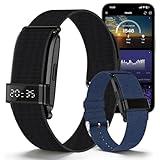
- 【24/7 Multi-Dimensional Health Real-Time Monitoring】 Equipped with advanced sensors and intelligent algorithms, it delivers non-stop active detection of core health metrics: sleep data, heart rate, blood oxygen saturation (SpO2), and heart rate variability (HRV). The side button triggers instant heart rate testing, with clear results displayed directly on the integrated screen—prioritizing both user convenience and monitoring accuracy.Offline Data Recording & Automatic Sync Capability,Built-in independent memory enables the bracelet to record basic health monitoring data offline without a paired smartphone. Once reconnected to your device, all stored data auto-uploads seamlessly to APP.
- 【Intuitive Wrist-Lift Wake & One-Button Interface Navigation】 Featuring the user-preferred wrist-lift wake function, it balances convenience and energy efficiency for daily use. A single side button allows effortless switching between time display, step count, sleep data, and health metrics. The simplified operation logic is user-friendly for all age groups.
- 【Remote Photography & Smart Notification Vibration Alerts】 A standout lifestyle feature: pair with your phone via the app, then lift your wrist or shake the bracelet to trigger remote photography—ideal for group gatherings and hands-free shooting. It also sends timely vibration alerts for incoming calls, text messages, and app notifications, ensuring you never miss important updates in noisy environments or meetings.
- 【2 Bands—Sleek Lightweight Design for All-Day Comfortable Wear】 Breaking the bulky mold of traditional wearables, this bracelet features a streamlined integrated screen that stays sleek and low-profile when off, doubling as a stylish wrist accessory. Weighing max 30g, it delivers invisible wearing comfort, balancing function and aesthetics perfectly. It comes with 2 interchangeable straps: a sporty strap ideal for workouts, gym, and outdoor activities; a premium business strap tailored for office meetings, formal events wear. Its minimalist look complements casual, athletic, and professional outfits seamlessly, enabling smooth transitions between fitness, work, and social occasions.
- 【15-Day Ultra-Long Battery Life with Low-Power Optimization】 Solve the common pain point of frequent charging with an impressive 15-day battery lifespan—far exceeding mainstream models (3–7 days of battery life). Adopting low-power chip technology and an optimized power management system, it maintains continuous health monitoring, vibration alerts, and daily function operation without performance loss. The screen stays off by default to save energy, activating only when you lift your wrist.
Algorithmic fusion: turning raw signals into health insight
TruSense relies on multi-sensor data fusion algorithms that analyze overlapping signals rather than treating each metric in isolation. Heart rate variability, for example, is interpreted alongside respiration rate, sleep stage transitions, and activity load to better estimate stress and recovery states. This layered approach allows the system to distinguish between similar physiological responses, such as physical exertion versus emotional stress.
Machine learning models trained on large-scale datasets help TruSense adapt measurements to individual baselines over time. Instead of applying fixed thresholds, the system learns what “normal” looks like for each wearer, improving sensitivity to meaningful deviations. This is especially important for metrics like resting heart rate, overnight SpO2, and sleep breathing patterns, where personal trends matter more than one-off readings.
Continuous health tracking without constant user input
One of TruSense’s defining traits is its emphasis on passive, background monitoring. Many health metrics are captured automatically throughout the day and night without manual activation, reducing friction and improving data continuity. This approach aligns with how people actually wear smartwatches, prioritizing comfort, battery life, and unobtrusive operation.
Huawei balances this always-on monitoring with power-efficient sampling strategies. Sensors dynamically adjust measurement frequency based on activity level, sleep state, and data confidence, allowing multi-day battery life even with advanced health features enabled. For users, this means fewer trade-offs between comprehensive tracking and daily usability.
A broader definition of wellbeing metrics
TruSense enables a wider range of health indicators that go beyond basic fitness stats. These include advanced sleep analysis, stress load estimation, breathing quality during sleep, menstrual cycle insights, and early warning signs based on physiological trend shifts. Rather than presenting raw numbers alone, the system contextualizes data with explanations and guidance aimed at everyday wellbeing decisions.
Importantly, Huawei positions these metrics as wellness insights rather than medical diagnoses. TruSense is designed to support awareness, habit formation, and early attention to potential issues, especially for users managing busy schedules, training loads, or long-term health goals. This framing helps set realistic expectations while still delivering meaningful value.
How TruSense fits into Huawei’s broader ecosystem
The TruSense System extends beyond the watch itself into Huawei Health, where long-term data visualization and cross-device integration take place. Health trends are displayed over weeks and months, making it easier to spot gradual changes that would be invisible in daily snapshots. Compatibility across Android devices, and increasingly independent operation on the watch, ensures flexibility for different user setups.
Compared conceptually to rival platforms like Apple’s health stack or Garmin’s performance-focused ecosystem, TruSense leans toward holistic wellbeing and continuous physiological awareness. It is particularly well-suited to users who want rich health insight without the complexity of athlete-level training analytics. This foundation sets the stage for how Huawei builds advanced features on top of TruSense in its latest and future wearables.
Inside the TruSense Hardware Stack: Multi-Channel Sensors, Optical Design, and Signal Capture
The breadth of health insights TruSense delivers is only possible because Huawei has invested heavily in the physical sensor layer beneath the software. Rather than relying on a single optical heart rate module or isolated sensors, TruSense is built around a tightly integrated, multi-channel hardware stack designed to capture cleaner physiological signals across more real-world conditions. This hardware-first approach is what allows TruSense algorithms to adapt intelligently instead of compensating for weak or inconsistent data.
Multi-channel optical sensing beyond basic heart rate
At the core of TruSense is a next-generation optical heart rate and blood oxygen sensing module that uses multiple light wavelengths and parallel photodiodes. Instead of treating heart rate, SpO₂, and variability as separate measurements, the system captures them simultaneously from overlapping optical channels. This improves correlation between metrics and reduces the noise that typically appears when sensors operate in isolation.
Different wavelengths penetrate the skin at different depths, allowing TruSense to sample blood flow dynamics closer to capillaries as well as deeper tissue layers. In practice, this helps maintain accuracy across a wider range of skin tones, wrist sizes, and temperatures. It also reduces dropouts during movement, which is critical for both exercise tracking and continuous background monitoring.
Advanced optical layout and skin contact engineering
Sensor accuracy in a smartwatch is as much about physical design as electronics. Huawei has refined the optical window shape, lens curvature, and emitter placement so that light is distributed more evenly across the wrist. This minimizes light leakage and reflection artifacts, two of the biggest contributors to inaccurate readings in slim wearable designs.
Equally important is how the watch sits on the wrist. Huawei’s recent TruSense-equipped models use subtly contoured casebacks and soft, skin-friendly materials to maintain consistent contact without excessive pressure. The result is a sensor module that stays stable during sleep, daily movement, and workouts, improving signal consistency without sacrificing comfort or all-day wearability.
Beyond optics: motion, temperature, and environmental context
TruSense does not rely on optical data alone. High-resolution accelerometers and gyroscopes continuously feed motion context into the system, allowing algorithms to distinguish between physiological changes and movement-induced noise. This is especially important for metrics like heart rate variability, stress estimation, and sleep stage detection, where motion artifacts can otherwise distort results.
Temperature sensing also plays a growing role in TruSense’s hardware stack. Skin temperature trends provide valuable context for recovery, sleep quality, and potential illness indicators when interpreted over time. Rather than treating temperature as a standalone metric, TruSense uses it to help explain fluctuations in heart rate, breathing patterns, and stress-related indicators.
High-fidelity signal capture with power efficiency in mind
Capturing richer data usually comes at the cost of battery life, but TruSense hardware is designed to balance precision with efficiency. The sensor array dynamically adjusts sampling rates and emitter intensity based on confidence levels and activity state. When the signal is clean and stable, the system can reduce power draw without losing meaningful resolution.
This adaptive capture strategy is one reason Huawei watches are able to offer continuous health monitoring while still delivering multi-day battery life. For users, it means TruSense remains active in the background without demanding charging habits that interrupt daily routines or sleep tracking.
Why the hardware stack matters for real-world wellbeing tracking
Many wearables promise advanced health insights, but their effectiveness is ultimately limited by the quality of raw sensor data. TruSense’s multi-channel, context-aware hardware stack gives Huawei a stronger foundation than platforms that rely on fewer optical channels or simpler sensor fusion. Cleaner inputs allow algorithms to focus on interpretation rather than correction.
For everyday users, this translates into fewer gaps in data, more stable trends, and insights that feel consistent rather than erratic. Whether worn during workouts, at a desk, or overnight, TruSense’s hardware is built to capture the physiological signals that matter most for long-term wellbeing, not just ideal lab conditions.
From Raw Signals to Meaningful Insights: TruSense Algorithms and AI Health Modeling
High-quality sensor data is only the starting point. What ultimately defines a health platform is how effectively it can translate noisy biological signals into insights that feel coherent, timely, and personally relevant. This is where the TruSense system shifts from being a strong hardware foundation into a genuinely intelligent health engine.
Huawei’s approach centers on layered algorithms and AI health models that operate continuously, adapting to both the user and their environment rather than applying static thresholds or one-size-fits-all interpretations.
Signal refinement before interpretation
Before any health metric is calculated, TruSense runs raw sensor inputs through a multi-stage signal refinement pipeline. Motion artifacts, ambient light interference, and skin-contact inconsistencies are filtered using contextual data from accelerometers, gyroscopes, and activity recognition models.
This matters because many inaccuracies in heart rate, SpO₂, or HRV don’t come from weak sensors, but from poor handling of real-world movement. By stabilizing signals first, TruSense reduces the need for aggressive smoothing later, preserving physiological detail that would otherwise be lost.
Context-aware physiological modeling
Rather than treating each metric in isolation, TruSense builds context-aware physiological models that factor in activity state, time of day, recent exertion, and recovery trends. A resting heart rate reading after a night of poor sleep is interpreted differently than the same number measured during a relaxed evening on the sofa.
This contextual modeling is especially visible in stress, recovery, and readiness-style insights. TruSense does not simply label moments as “high stress” or “low stress” but evaluates autonomic balance over time using HRV patterns, breathing regularity, and skin temperature deviations.
Personal baselines that evolve over time
A key limitation of many health platforms is their reliance on population averages. TruSense places greater emphasis on individual baselines, allowing its algorithms to learn what is normal for each wearer rather than what is statistically typical.
As users wear their Huawei watch over weeks, the system gradually recalibrates thresholds for metrics like resting heart rate, sleep duration, and recovery capacity. This is why alerts and trend insights tend to feel more relevant over time, with fewer false positives and less generic guidance.
AI-driven sleep stage and recovery analysis
Sleep tracking is one of the areas where TruSense’s algorithmic depth becomes most apparent. Beyond basic motion-based detection, Huawei combines optical heart data, HRV shifts, breathing rate, and temperature trends to model sleep architecture more holistically.
The result is sleep stage classification that is less reactive to small movements and more anchored in physiological state. Recovery insights derived from sleep are then cross-referenced with daytime exertion and stress load, helping users understand not just how long they slept, but how restorative that sleep actually was.
Continuous health trends instead of isolated readings
TruSense is designed around longitudinal analysis rather than spot checks. Metrics such as SpO₂, skin temperature, and HRV gain meaning primarily through trends, and the platform prioritizes consistency and continuity over dramatic moment-to-moment feedback.
This approach aligns well with daily wearability. Users are less likely to be overwhelmed by fluctuating numbers and more likely to notice meaningful deviations that persist across days or weeks, which is where early wellbeing signals often emerge.
Balancing intelligence with on-device efficiency
Not all AI processing happens in the cloud. TruSense distributes workloads intelligently between the watch and Huawei’s health platform, allowing core monitoring and anomaly detection to occur on-device while deeper trend modeling benefits from aggregated data.
This hybrid approach supports both responsiveness and battery life. Watches can deliver timely insights without constant connectivity, while still improving accuracy through longer-term analysis when synced with the companion app.
How TruSense compares conceptually to rival platforms
Compared to ecosystems that prioritize performance metrics or clinical-style dashboards, TruSense leans toward holistic wellbeing modeling. It is less about chasing peak VO₂ max numbers and more about understanding balance between activity, stress, sleep, and recovery.
For users who value continuous, low-friction health awareness over competitive training analytics, this algorithmic philosophy feels more natural. It reflects a system designed to live quietly on the wrist, interpreting the body’s signals in the background rather than demanding constant attention.
Who benefits most from TruSense’s algorithmic approach
TruSense is particularly well suited to users who wear their watch all day and night. Its insights become more valuable the more consistently it is worn, making comfort, battery life, and unobtrusive design central to the experience rather than secondary concerns.
Rank #2

- 【Ajblg Fitness Tracker】Experience 24/7 continuous health tracking with AJBLG fitness tracker. Advanced sensors and AI algorithms continuously monitor real-time heart rate, blood pressure, blood oxygen, heart rate variability, and stress levels day and night. Get comprehensive health insights through detailed trends and analysis reports on the companion app to understand your health status, prevent risks, and improve your health level.
- 【All-Day Sleep Tracking】Experience all-day sleep tracking with our newly upgraded health watch. Monitor your nighttime sleep and daytime naps for a comprehensive rest analysis. Get professional insights into your sleep stages (light, deep, REM), sleep duration, and awake time. Understand your unique sleeping patterns with detailed reports. Optimize your sleep, enhance recovery, and wake up refreshed—make smarter adjustments for truly restful nights.
- 【24/7 Activity Tracking & 120+ Sports Modes】Maximize every workout with 120+ sports modes and 24/7 activity tracking. AJBLG fitness tracker accurately monitors steps, distance, and calories burned all day to accelerate your goal achievement. Train smarter in 120+ activities including running, yoga, basketball. View real-time workout tracks on the app to analyze performance and optimize progress.
- 【Instant Vibration Reminder】Stay seamlessly connected with intelligent vibration reminders. AJBLG smart bracelet provides call, SMS, and app notification reminders (Whatsapp/Facebook/Skype) via Bluetooth sync. Gentle, private vibrations ensure only you feel alerts—no disruptive sounds. Never miss important messages in meetings, workouts, or quiet moments. Maintain focus without phone-checking while avoiding social awkwardness.
- 【Long Battery Life & IP68 Waterproof】Solve your daily charging worries with the AJBLG ultra-long 30 day battery life fitness tracker—designed for low power consumption and minimalist convenience. Built-in IP68 water resistance makes it easy to handle workouts, hand washing and active lifestyles. Enjoy uninterrupted, all-day health tracking without having to worry about frequent charging. Whether you're sweating in the gym or caught in the rain, wear it worry-free as your always-ready health companion.
Health-conscious users, shift workers, and those focused on long-term wellbeing trends stand to gain the most. For them, TruSense’s real strength lies not in any single metric, but in how its algorithms weave many subtle signals into a clearer picture of everyday health.
The Health Metrics TruSense Enables: Heart, Sleep, Stress, Respiration, and Beyond
With TruSense’s algorithmic foundation in place, the real-world value shows up in the breadth and coherence of the health metrics it unlocks. Rather than treating each measurement as a standalone widget, Huawei uses overlapping sensor signals to cross-check, contextualize, and refine what the watch reports throughout the day and night.
The result is a health profile that feels continuous rather than episodic, built from data captured during normal living instead of short, intentional check-ins.
Heart health: continuous rhythm, not just spot checks
At the core of TruSense is optical heart-rate monitoring that prioritizes stability over raw sampling speed. Multi-channel PPG sensors work in tandem with motion compensation algorithms, allowing the watch to maintain reliable heart-rate tracking during everyday movement, sleep, and low-intensity activity where many wearables struggle.
Beyond basic beats per minute, TruSense uses inter-beat timing to estimate heart rate variability trends. While not presented as a clinical HRV dashboard, these fluctuations quietly feed into stress, recovery, and sleep quality assessments, giving the heart a central role in the broader wellbeing model.
On supported models and regions, TruSense also underpins ECG functionality and irregular rhythm alerts. These features are tightly regulated and device-specific, but when available, they benefit from the same long-term signal consistency that powers the rest of the platform.
Sleep tracking that emphasizes physiology over bedtime rituals
TruSense’s sleep tracking is designed for people who wear their watch comfortably overnight, often for multiple days between charges. By combining heart rate patterns, movement data, and respiration signals, the system estimates sleep stages with an emphasis on trend reliability rather than minute-by-minute precision.
Sleep duration, deep sleep continuity, REM patterns, and nighttime awakenings are interpreted in relation to daytime stress and activity load. This helps explain not just how long you slept, but why a night felt restorative or fragmented.
Importantly, TruSense does not rely on rigid bedtime schedules. It adapts to irregular sleep windows, making it particularly useful for shift workers, frequent travelers, or anyone whose sleep routine does not fit a traditional pattern.
Stress monitoring driven by autonomic signals
Stress tracking within TruSense is primarily derived from heart rhythm variability and contextual activity data. Instead of reacting to short-lived spikes, the system looks for sustained patterns that suggest elevated sympathetic nervous system activity.
These stress insights are presented as gentle prompts rather than alarms, often paired with breathing exercises or recovery suggestions. The aim is awareness, not judgment, reinforcing Huawei’s philosophy of low-friction wellbeing guidance.
Because stress estimation runs continuously in the background, it benefits from TruSense’s emphasis on efficient on-device processing. Users can receive meaningful feedback without a noticeable impact on battery life, even with 24/7 monitoring enabled.
Respiration and blood oxygen: subtle signals with long-term value
Respiratory rate tracking, particularly during sleep, adds an additional physiological layer to TruSense’s health model. Changes in breathing patterns can influence sleep scoring and recovery assessments, helping to identify nights where the body was under unusual strain.
Blood oxygen saturation monitoring is supported on many Huawei wearables, with TruSense algorithms smoothing readings across time to reduce false dips caused by movement or poor sensor contact. Rather than focusing on isolated values, the platform highlights longer-term deviations from a user’s personal baseline.
These metrics are especially relevant for users interested in altitude exposure, illness recovery, or sleep-related breathing irregularities, even if they are not framed as diagnostic tools.
Skin temperature, activity load, and contextual health signals
On select devices, TruSense integrates skin temperature sensing to detect subtle overnight changes relative to personal norms. While not a replacement for core body temperature, this data can enrich sleep analysis and early wellness insights when viewed across multiple nights.
Daily activity tracking feeds into the same system, but with a different emphasis than performance-oriented platforms. Steps, movement minutes, and exercise sessions are used to contextualize recovery and stress rather than to push aggressive training goals.
This approach pairs well with Huawei’s hardware design priorities. Lightweight cases, curved backs, skin-friendly materials, and multi-day battery life make consistent wear more realistic, which directly improves the quality of TruSense’s long-term data modeling.
Beyond individual metrics: how TruSense connects the dots
What ultimately distinguishes TruSense is not any single measurement, but how these metrics influence one another behind the scenes. A night of poor sleep affects stress interpretation the next day, while sustained stress reshapes how activity and recovery are evaluated.
This interconnected model reflects a shift away from dashboard-driven health tracking toward something more ambient and adaptive. For users comparing health platforms across smartwatch ecosystems, TruSense stands out as a system designed to understand patterns first and present numbers second.
As Huawei continues to expand sensor capabilities across its watch lineup, TruSense provides a flexible framework that can absorb new data types without overwhelming the user. The health metrics feel less like features to manage and more like signals quietly working together in the background.
Continuous Wellbeing in the Real World: Accuracy, Comfort, and 24/7 Monitoring Challenges
All of TruSense’s interconnected modeling only works if the watch is worn consistently, across sleep, work, exercise, and recovery. That reality introduces a different set of challenges than lab-grade accuracy claims or short workout tests.
In daily life, motion artifacts, skin tone variation, temperature changes, strap fit, and simple comfort determine whether continuous monitoring delivers meaningful insights or fragmented data. Huawei’s approach with TruSense is shaped by this constraint, prioritizing stability, wearability, and long-term signal quality over momentary precision spikes.
Accuracy over time, not just at rest
Most smartwatch health sensors perform best when the user is still, warm, and relaxed, conditions that rarely define real life. TruSense leans heavily on multi-sensor redundancy and temporal averaging to maintain reliability during movement, sleep shifts, and everyday activity.
Optical heart rate data, for example, is not interpreted in isolation. Motion data from accelerometers, sleep stage confidence scores, and historical baselines all influence how aggressively the system trusts or smooths incoming signals.
This means TruSense may feel more conservative than performance-focused platforms during short, high-intensity efforts. In return, it tends to produce fewer erratic stress or recovery readings across long, mixed-activity days, which matters more for users focused on wellbeing rather than training metrics.
Skin contact, fit, and sensor ergonomics
Sensor accuracy starts with physical design, and Huawei’s watch hardware reflects that priority. Curved casebacks, broad sensor windows, and evenly distributed weight help maintain consistent skin contact without excessive pressure.
Materials also play a role in real-world wearability. Fluoroelastomer sport straps, woven nylon options, and smooth ceramic or polymer casebacks reduce sweat buildup and irritation, making overnight wear more tolerable for a wider range of users.
From a watchmaking perspective, these choices trade traditional luxury finishing for functional ergonomics. For continuous health tracking, that tradeoff directly improves data completeness, which is more valuable than marginal gains in optical sensor resolution.
Battery life as a health feature
Continuous monitoring is meaningless if users disable sensors to save power. One of TruSense’s quiet advantages is how closely it is tied to Huawei’s multi-day battery philosophy.
By combining efficient chipsets, adaptive sampling rates, and selective background processing, many Huawei watches can track heart rate, sleep, SpO₂, and stress continuously without daily charging. This reduces gaps in data that often distort long-term trends on watches with shorter battery life.
In practice, this allows TruSense to detect slower changes, such as gradual stress accumulation or sleep debt, rather than reacting only to isolated events. For wellbeing tracking, continuity often matters more than frequency.
Sleep tracking without sleep disruption
Sleep is where TruSense extracts some of its most valuable insights, but only if the watch itself does not interfere with rest. Case thickness, weight, edge curvature, and strap flexibility all influence whether users keep the watch on through the night.
Huawei’s slimmer designs and rounded profiles help reduce pressure points during side sleeping. Combined with automatic night mode behaviors and minimal haptic interruptions, the system supports passive data collection rather than demanding user interaction.
From a data perspective, TruSense prioritizes consistency across nights over granular staging claims. Sleep duration, breathing stability, heart rate variability trends, and movement patterns are treated as long-term signals rather than single-night verdicts.
Managing expectations around non-medical data
Despite its breadth, TruSense remains a consumer wellness system, not a diagnostic platform. Huawei is generally conservative in how it presents alerts, framing them as awareness cues rather than actionable medical advice.
Rank #3

- Inspire 3 is the tracker that helps you find your energy, do what you love and feel your best. All you have to do is wear it.Operating temperature: 0° to 40°C
- Move more: Daily Readiness Score(1), Active Zone Minutes, all-day activity tracking and 24/7 heart rate, 20+ exercise modes, automatic exercise tracking and reminders to move
- Stress less: always-on wellness tracking, daily Stress Management Score, mindfulness sessions, relax breathing sessions, irregular heart rhythm notifications(2), SpO2(3), menstrual health tracking, resting heart rate and high/low heart rate notifications
- Sleep better: automatic sleep tracking, personalized Sleep Profile(1), daily detailed Sleep Score, smart wake vibrating alarm, sleep mode
- Comfortably connected day and night: calls, texts & smartphone app notifications(4), color touchscreen with customizable clock faces, super lightweight and water resistant to 50 meters, up to 10 day battery life(5)
This restraint is intentional. Continuous health tracking can create anxiety if normal physiological variation is overinterpreted, especially with metrics like blood oxygen or stress scores.
By anchoring readings to personal baselines and multi-day patterns, TruSense reduces the risk of false alarms while still highlighting meaningful deviations. For most users, this makes the system easier to live with over months and years.
Environmental and lifestyle variability
Real-world wellbeing tracking must contend with travel, irregular schedules, altitude changes, illness, and lifestyle shifts. TruSense is designed to absorb this variability rather than flag it as constant anomalies.
Altitude exposure, for instance, subtly influences SpO₂ and sleep respiration, but the system contextualizes these changes alongside activity and rest rather than treating them as standalone warnings. Similarly, periods of illness or high stress reshape baseline expectations temporarily instead of permanently skewing the model.
This adaptive behavior reflects a philosophy closer to digital health monitoring than fitness analytics. The watch becomes a background observer, adjusting its interpretation as the user’s life changes.
Who benefits most from continuous TruSense monitoring
Users who value steady insights over performance optimization will find TruSense particularly well suited to their needs. This includes people focused on sleep quality, stress management, general fitness maintenance, and long-term health awareness.
Those seeking second-by-second workout precision or deep training load analytics may find other platforms more specialized. TruSense’s strength lies in how quietly it works when worn all day, every day.
Ultimately, continuous wellbeing tracking is as much about human behavior as sensor technology. Huawei’s TruSense System acknowledges that reality, designing for comfort, endurance, and interpretive nuance rather than raw measurement bravado.
Battery Life vs. Health Depth: How TruSense Balances Power Efficiency and Data Richness
That philosophy of quiet, continuous observation only works if the watch itself can stay on the wrist. Battery endurance is not a secondary spec in wellbeing tracking; it is the enabler that determines whether longitudinal health data is possible at all.
Huawei’s TruSense System is built with this constraint front and center. Rather than treating battery life and health depth as opposing goals, the platform treats power as a managed resource that is allocated dynamically based on context, confidence, and user behavior.
Why continuous health tracking usually drains smartwatches
Advanced health metrics rely on optical sensors, LEDs, analog front ends, and signal processing pipelines that are inherently power-hungry. Continuous heart rate, SpO₂ sampling, sleep respiration analysis, and stress estimation all compete for the same energy budget.
Many platforms respond by either reducing sampling frequency or asking users to manually enable features, fragmenting the experience. The result is often impressive-looking metrics on paper that users quietly disable to preserve battery life.
TruSense takes a different route by questioning when high-resolution data is actually necessary, and when lower-power inference is sufficient.
Adaptive sampling instead of constant maximum output
At the sensor level, TruSense relies on variable sampling rates rather than fixed, always-on measurement. During periods of rest, sleep, or stable physiological patterns, the system reduces optical intensity and sampling density while still maintaining trend continuity.
When the algorithms detect transitions such as waking, increased movement, elevated heart rate variability, or abnormal patterns, sampling automatically intensifies. This allows the watch to capture meaningful events without wasting power during physiological steady states.
The user experiences this as continuous monitoring, even though under the hood the system is constantly negotiating precision versus efficiency.
On-device intelligence reduces radio and cloud drain
Battery life is not only affected by sensors, but also by data transmission and processing. TruSense emphasizes on-device signal cleaning, feature extraction, and preliminary interpretation before syncing data to the phone.
By sending processed insights rather than raw sensor streams, the system minimizes Bluetooth activity and background sync cycles. This approach also improves responsiveness, as many health insights are available immediately on the watch without waiting for cloud analysis.
From a daily usability perspective, this means fewer invisible battery hits throughout the day and more predictable endurance across mixed use.
Sleep tracking as the power-efficiency stress test
Sleep monitoring is one of the most demanding scenarios for health wearables because it requires long-duration sensing with minimal movement. TruSense uses this window to demonstrate its efficiency-first design.
Instead of running all sensors at peak output all night, the system layers measurements intelligently. Core metrics like heart rate, motion, and breathing patterns are maintained continuously, while higher-resolution analysis is triggered selectively during sleep stage transitions or irregular breathing events.
This layered approach enables multi-night sleep trend analysis without forcing users into nightly charging routines that break long-term data continuity.
Hardware design supports software efficiency
Huawei’s hardware choices play a critical role in enabling TruSense’s power strategy. Efficient optical sensor arrays, tuned LED wavelengths, and low-noise analog components reduce the need for brute-force signal amplification.
Combined with lightweight operating systems and power-aware chipsets, the watches can sustain days of real-world use even with health tracking enabled. Case materials, sensor window curvature, and skin contact stability also matter, as better optical coupling reduces measurement retries and wasted energy.
In practice, this translates to wearables that remain comfortable and reliable for all-day and overnight wear, rather than becoming devices users consciously remove to conserve power.
Real-world battery life versus advertised numbers
Manufacturer battery claims are often based on simplified usage profiles that exclude continuous health features. TruSense’s design aims to narrow the gap between rated endurance and lived experience.
Users who keep heart rate, sleep, stress, and SpO₂ tracking enabled typically see multi-day battery life that remains stable over time, rather than degrading as features accumulate. This consistency is essential for building trust in long-term health trends.
The system’s restraint in when and how it measures is what allows health depth to scale without quietly taxing the battery.
How this compares conceptually to rival platforms
Some competitors prioritize maximal sensor resolution and real-time dashboards, accepting daily charging as a tradeoff. Others simplify health tracking to preserve endurance, sacrificing contextual richness in the process.
TruSense occupies a middle ground that leans toward health continuity rather than momentary precision. It prioritizes staying on the wrist, collecting enough data to understand patterns, and intervening intelligently when something changes.
For users focused on wellbeing rather than athletic optimization, this balance often proves more valuable than headline-grabbing metrics that come at the cost of usability.
Who this balance matters most to
Battery-efficient health depth benefits users who wear their watch as a background companion rather than an active training tool. People tracking sleep quality, stress recovery, general cardiovascular health, and lifestyle impacts gain the most from uninterrupted data streams.
It also matters to those who value comfort and convenience, preferring fewer charging cycles and lighter daily maintenance. In that sense, TruSense’s power philosophy is not just technical, but behavioral.
By aligning battery life with how people actually live, the system reinforces its broader goal: making health tracking sustainable, not demanding.
TruSense in the Huawei Ecosystem: HarmonyOS, Huawei Health App, and Cross-Device Intelligence
The restraint and continuity described earlier only work because TruSense is not operating in isolation. Its real leverage comes from how deeply it is embedded into Huawei’s wider software and device ecosystem, where sensing, interpretation, and feedback are distributed intelligently rather than forced onto the watch alone.
This ecosystem-level design is what allows TruSense to remain power-efficient on the wrist while still delivering insights that feel richer than the raw data would suggest.
Rank #4

- 【Comprehensive Health Monitoring】With high-precision sensors, NOVA5.0 screenless smart bracelet is 24/7 continuous heart rate monitor wristband with sleep, blood pressure and women menstrual cycle monitor, helping optimize post-workout recovery, adjust exercise intensity, and monitor daily health.
- 【173 Sports Modes & GPS Tracking】Designed for men and women, the fitness tracker bracelet supports 173 professional sports modes (covering running, yoga, swimming, hiking and more) and can link to your smartphone’s GPS—providing runners with precise sports data tracking.
- 【Automatic Daily Activity Recording】NOVA5.0 fitness bracelet automatically tracks daily activities, accurately counting steps, distance and calories. Whether walking to work, strolling casually or doing chores, it captures all movement data, helping you grasp daily activity volume and reach fitness goals.
- 【Long Battery Life & IP68 Waterproof】NOVA5.0 smart health wristband offers 20-25 days of battery life on a single charge. Featuring an IP68 waterproof rating, it handles rain and sweat effortlessly no need to take it off for daily hand washing. Free yourself from frequent charging hassles and enjoy life unburdened.
- 【24-Hour Comfortable Wearing】Featuring a nylon woven strap, screenless activity fitness tracker soft and comfortable to wear, lightweight with no sense of burden, and fits wrist sizes perfectly and its lightweight, hypoallergenic design suits work, workouts, and even sleep
HarmonyOS as the coordination layer
HarmonyOS acts as the connective tissue between the watch, the phone, and Huawei’s cloud services, allowing TruSense to offload complexity without breaking continuity. Lightweight sensing and first-pass analysis happen on the watch, while deeper trend processing and contextual correlation occur when additional computing resources are available.
This division of labor keeps the watch responsive and comfortable to wear, even in slim, lightweight cases that prioritize all-day comfort over sheer battery mass. From a real-world wearability standpoint, it enables Huawei to use thinner housings, curved casebacks, and softer strap materials without compromising health depth.
Because HarmonyOS is designed around distributed tasks rather than app silos, TruSense features feel native rather than bolted on. Health monitoring continues smoothly whether the user is actively interacting with the watch or ignoring it entirely for days.
The Huawei Health app as a long-term health ledger
The Huawei Health app is where TruSense data becomes understandable rather than overwhelming. Instead of emphasizing moment-to-moment graphs, the app prioritizes baselines, deviations, and longitudinal trends that reflect how the body behaves over weeks and months.
Metrics like resting heart rate, sleep stages, overnight breathing patterns, stress load, and blood oxygen variability are presented in context, not isolation. This makes it easier for non-athletes to interpret changes without needing sports science literacy.
From a usability perspective, the app’s clean visual hierarchy mirrors TruSense’s sensing philosophy: show what matters, suppress noise, and surface insights only when patterns meaningfully shift.
Cross-device intelligence and contextual awareness
TruSense becomes more powerful when multiple Huawei devices contribute context. Smartphones provide behavioral signals such as activity levels, location changes, and daily routines, while tablets and PCs extend visualization and historical review without duplicating data collection.
This cross-device awareness allows the system to better distinguish physiological stress from lifestyle-driven fluctuations. For example, elevated heart rate variability paired with reduced sleep quality is interpreted differently if the system knows the user traveled, worked late, or changed time zones.
The result is health feedback that feels situational rather than generic, which is crucial for maintaining user trust in everyday wellbeing tracking.
Adaptive health feedback rather than static dashboards
Instead of presenting fixed goals or rigid thresholds, TruSense adapts its guidance based on personal history stored across the ecosystem. Recommendations around sleep consistency, recovery, or stress management evolve as the system learns what is normal for the individual, not just what is statistically average.
This adaptive approach reduces alert fatigue and discourages obsessive checking, reinforcing the idea of the watch as a background companion. It also aligns with the earlier emphasis on sustainable battery use, since feedback is triggered by meaningful change rather than constant monitoring.
Over time, this creates a feedback loop where the system becomes quieter but more precise, intervening less often but with greater relevance.
Privacy, data control, and on-device boundaries
Huawei positions TruSense health data as user-owned, with core measurements processed locally whenever possible and cloud synchronization used primarily for trend continuity. Users can control what data is stored, shared, or synchronized across devices, which is increasingly important for health-conscious buyers.
This approach also supports reliability in low-connectivity scenarios, ensuring that health tracking remains consistent during travel or offline periods. From a practical standpoint, it reinforces the idea that TruSense is designed for daily life, not ideal lab conditions.
In an ecosystem where software, hardware, and health sensing are tightly integrated, TruSense demonstrates how wellbeing tracking improves not by adding more sensors, but by making existing ones work together intelligently.
How TruSense Compares Conceptually to Apple Health, Garmin Health, and Fitbit Platforms
Seen in context, TruSense sits at the intersection of sensor fusion, adaptive algorithms, and pragmatic on-device processing. Where many platforms excel in one dimension, Huawei’s approach is to balance accuracy, continuity, and daily usability without demanding constant user attention.
Rather than asking which system tracks more metrics, the more useful comparison is how each platform interprets data and turns it into guidance that fits real life.
TruSense vs Apple Health: system intelligence versus data centralization
Apple Health is best understood as a data clearinghouse that aggregates inputs from the Apple Watch and a wide range of third-party apps. Its strength lies in breadth, interoperability, and tight integration with iOS, rather than in a single, unified health intelligence layer.
TruSense takes a more vertically integrated approach. Sensors, algorithms, and feedback loops are designed together, allowing Huawei to shape how heart rate variability, sleep stages, activity load, and stress indicators influence one another in real time.
Conceptually, Apple Health excels when users want to curate their own health ecosystem, manually selecting apps and metrics. TruSense is more opinionated, offering fewer customization paths but stronger default interpretations that require less setup and less daily intervention.
TruSense vs Garmin Health: wellbeing-first versus performance-first logic
Garmin Health is rooted in endurance training science, with metrics like training readiness, body battery, and load ratios optimized for athletes and structured fitness plans. Its watches prioritize multi-band GPS accuracy, long battery life, and physical controls suited to demanding outdoor use.
TruSense borrows some recovery-oriented thinking but applies it to everyday wellbeing rather than peak performance. Instead of focusing on whether the user is ready to train hard, TruSense is more concerned with whether stress, sleep disruption, or inconsistent routines are quietly degrading baseline health.
For fitness-focused users, this difference matters. Garmin’s insights are exceptional for those chasing performance gains, while TruSense is better aligned with users who want health stability, sustainable habits, and subtle course correction across workdays, travel, and rest.
TruSense vs Fitbit: context-aware interpretation versus behavior nudging
Fitbit’s platform has historically emphasized accessibility and behavior change through scores, streaks, and simplified metrics like readiness and sleep scores. Its strength lies in motivating consistency, particularly for users new to wearables or structured activity.
TruSense shifts the emphasis from nudging behavior to interpreting context. Instead of pushing daily targets aggressively, it evaluates whether deviations from normal patterns are meaningful given recent stressors, schedule changes, or environmental factors.
This reduces the feeling of being graded every day. For users who already understand basic health behaviors, TruSense’s quieter, more situational feedback can feel more respectful and less psychologically taxing over long-term use.
Ecosystem boundaries and platform philosophy
Apple Health thrives inside Apple’s ecosystem, with the Apple Watch acting as an extension of the iPhone and cloud services. Garmin Health is device-centric, with watches designed to operate independently for long periods, syncing data when convenient.
TruSense occupies a middle ground. Huawei watches are designed for extended battery life and reliable on-wrist processing, but they still lean on ecosystem continuity across phones, tablets, and cloud services for longitudinal insights.
This balance reinforces TruSense’s philosophy: health tracking should be resilient when offline, informative when connected, and consistent regardless of daily disruptions.
What these differences mean for everyday users
Conceptually, TruSense is less about dashboards and more about decision support. It prioritizes when to surface information rather than how much to show, aligning with the earlier emphasis on adaptive feedback and reduced alert fatigue.
Apple Health suits users who enjoy assembling their own health toolkit. Garmin Health rewards those who train with intent and structure. Fitbit supports habit-building through motivation and simplicity.
TruSense is best matched to users who want health tracking that fades into the background, learns quietly over time, and intervenes only when patterns genuinely shift. In that sense, Huawei’s system reflects a broader evolution in wearables, from measuring more to understanding better.
Who Benefits Most from Huawei TruSense? Use Cases for Everyday Users, Fitness Fans, and Health-Conscious Buyers
Viewed through the lens of adaptive feedback and contextual awareness, TruSense is not trying to be everything for everyone. Its real strength lies in how it supports different user types without forcing them into rigid routines or data-heavy workflows.
Rather than segmenting features behind modes, Huawei applies the same sensing stack and interpretation logic across daily life, exercise, and recovery. What changes is how visible the system becomes, and how assertively it communicates.
Everyday users who want health tracking without friction
For everyday users, TruSense works best when it is barely noticed. Continuous heart rate, blood oxygen trends, sleep staging, and stress indicators are captured automatically, with minimal prompts and long gaps between required interactions.
Huawei’s emphasis on stable baselines means these users are less likely to see confusing day-to-day swings. Instead of reacting to single outliers, TruSense flags sustained deviations, such as elevated resting heart rate over several days or gradual sleep fragmentation tied to lifestyle changes.
💰 Best Value

- 【Superb Visual Experience & Effortless Operation】Diving into the latest 1.58'' ultra high resolution display technology, every interaction on the fitness watch is a visual delight with vibrant colors and crisp clarity. Its always on display clock makes the time conveniently visible. Experience convenience like never before with the intuitive full touch controls and the side button, switch between apps, and customize settings with seamless precision.
- 【Comprehensive 24/7 Health Monitoring】The fitness watches for women and men packs 24/7 heart rate, 24/7 blood pressure and blood oxygen monitors. You could check those real-time health metrics anytime, anywhere on your wrist and view the data record in the App. The heart rate monitor watch also tracks different sleep stages for light and deep sleep,and the time when you wake up, helps you to get a better understanding of your sleep quality.
- 【120+ exercise modes & All-Day Activity Tracking】There are more than 120 exercise modes available in the activity trackers and smartwatches, covering almost all daily sports activities you can imagine, gives you new ways to train and advanced metrics for more information about your workout performance. The all-day activity tracking feature monitors your steps, distance, and calories burned all the day, so you can see how much progress you've made towards your fitness goals.
- 【Messages & Incoming Calls Notification】With this smart watch fitness trackers for iPhone and android phones, you can receive notifications for incoming calls and read messages directly from your wrist without taking out your phone. Never miss a beat, stay in touch with loved ones, and stay informed of important updates wherever you are.
- 【Essential Assistant for Daily Life】The fitness watches for women and men provide you with more features including drinking water and sedentary reminder, women's menstrual period reminder, breath training, real-time weather display, remote camera shooting, music control,timer, stopwatch, finding phone, alarm clock, making it a considerate life assistant. With the GPS connectivity, you could get a map of your workout route in the app for outdoor activity by connecting to your phone GPS.
Hardware design reinforces this passive experience. Huawei watches using TruSense tend to be thin, lightweight, and balanced on the wrist, with curved cases, soft fluororubber or woven straps, and finishes that avoid sharp edges. Combined with multi-day battery life, often stretching to a week or more depending on model, users are not pressured into daily charging habits that disrupt wear consistency.
This makes TruSense especially suitable for people new to wearables, or those who previously abandoned fitness trackers because they felt intrusive, judgmental, or demanding.
Fitness-focused users who train regularly but not obsessively
TruSense is well-matched to recreational athletes who train for health, enjoyment, or personal goals rather than competition. Runners, cyclists, gym-goers, and class-based fitness fans benefit from accurate optical heart rate tracking, refined motion sensors, and improved signal stability during moderate-to-high intensity efforts.
Where TruSense differs from more performance-driven platforms is in how it frames training feedback. Instead of pushing aggressive recovery scores or daily readiness metrics, it contextualizes fatigue using recent sleep quality, stress load, and activity density. Missed sessions are not treated as failures, and rest days are framed as adaptive responses rather than setbacks.
Huawei’s watches also prioritize comfort during long workouts. Case sizes are typically restrained, weight distribution is even, and strap materials are chosen to minimize pressure points during sweat-heavy sessions. For users who wear the watch all day, then train in the evening, this matters as much as sensor accuracy.
TruSense may not replace advanced training analytics for elite athletes, but for fitness-focused users who want guidance without rigidity, it offers a calmer and more sustainable approach.
Health-conscious buyers managing stress, sleep, or long-term wellbeing
TruSense is particularly compelling for users focused on long-term health patterns rather than immediate performance gains. This includes people monitoring stress levels, sleep consistency, cardiovascular trends, or general recovery as part of a broader wellness mindset.
The system’s strength lies in longitudinal interpretation. Sleep tracking is not just about duration but continuity and recovery signals, while stress metrics are assessed alongside physical activity and daily rhythm rather than in isolation. Over time, this allows TruSense to surface insights that feel personalized rather than generic.
On-device processing plays an important role here. Many TruSense-supported metrics continue to function reliably even when the watch is offline, with data syncing later for deeper analysis. For users who travel frequently, limit phone usage, or value data resilience, this independence adds trust to the platform.
From a buying perspective, Huawei’s value proposition is also attractive. Compared to many flagship competitors, TruSense-equipped watches often deliver premium materials, refined displays, and robust health tracking at a more accessible price point, without locking users into subscription-heavy models.
Users who prioritize battery life, comfort, and long-term wearability
Across all user types, TruSense consistently benefits those who actually wear their watch continuously. Extended battery life reduces gaps in data, improving baseline accuracy and trend detection over weeks and months.
Comfort-driven design choices, such as slim case profiles, ceramic or polished steel finishes that resist skin irritation, and breathable strap options, support 24/7 wear. This is essential for capturing sleep, overnight heart rate variability, and early-morning recovery signals.
For buyers comparing platforms, this often becomes the deciding factor. TruSense delivers its insights not by demanding attention, but by earning trust through consistency, comfort, and restraint in how it communicates.
In practice, the users who benefit most from Huawei TruSense are not chasing perfect metrics. They are looking for a system that adapts to real life, respects variability, and quietly builds an understanding of their health over time.
Why TruSense Matters for the Future of Smartwatches: From Fitness Tracking to Preventive Health
Taken in context, TruSense represents a clear shift in what smartwatches are meant to do. Rather than acting as reactive fitness logbooks, Huawei’s platform positions the watch as a continuously worn health instrument that builds context, detects deviation, and supports earlier, more informed decisions about wellbeing.
This evolution matters because the next phase of wearables is not about adding more metrics, but about making existing data more meaningful, reliable, and usable over long periods of real-world wear.
Moving Beyond Activity Scores to Health Signals
Traditional fitness tracking focuses on what you did: steps taken, calories burned, workouts completed. TruSense reframes the question toward how your body is responding, using resting heart rate trends, heart rate variability, respiratory patterns, sleep architecture, and stress markers as leading indicators rather than afterthoughts.
By correlating these signals across time, the system can highlight subtle changes that would be invisible in day-by-day summaries. A gradual rise in overnight heart rate or reduced sleep recovery, for example, can surface before users consciously feel run down.
This is where TruSense begins to resemble a preventive health layer rather than a fitness dashboard. It does not diagnose, but it does contextualize, which is a critical distinction for consumer wearables.
Sensor Fusion as the Foundation for Preventive Insight
At a technical level, TruSense’s importance lies in how it treats sensors as a unified system rather than isolated components. Optical heart rate, SpO₂, motion sensors, temperature trends, and barometric data are interpreted together to reduce noise and improve confidence in the resulting insights.
This sensor fusion approach is especially valuable during everyday activities, when wrist movement, posture changes, and environmental factors typically degrade accuracy. By validating signals across multiple inputs, TruSense can maintain more stable baselines during sleep, work, and light activity.
For users, this translates into fewer misleading spikes, less contradictory feedback, and a greater sense that the watch understands what is actually happening rather than reacting to momentary artifacts.
Longitudinal Health Tracking as a Core Design Principle
One of TruSense’s most future-facing qualities is its emphasis on long-term trend analysis. Health changes rarely occur overnight, and meaningful insights often emerge only after weeks or months of consistent data collection.
Huawei’s focus on battery life, efficient on-device processing, and comfortable case design directly supports this goal. A watch that lasts multiple days and remains comfortable during sleep captures more complete datasets, which in turn improves the system’s ability to recognize meaningful deviations from personal norms.
This stands in contrast to platforms that deliver impressive daily metrics but struggle to maintain continuity due to charging friction or notification overload.
From Wellness Awareness to Preventive Behavior
Preventive health is not about constant alerts or medical-grade claims. TruSense takes a more restrained approach, using trends and contextual prompts to encourage reflection rather than anxiety.
When the system flags elevated stress, reduced recovery, or declining sleep quality, it does so in relation to recent behavior and routine. This helps users connect cause and effect, whether that is training load, work stress, travel, or disrupted sleep schedules.
Over time, this feedback loop supports behavior adjustment rather than short-term optimization, which is ultimately more sustainable for long-term wellbeing.
How TruSense Compares Conceptually to Rival Platforms
Compared to ecosystems like Apple Health or Fitbit, TruSense places greater emphasis on on-device resilience and holistic interpretation rather than cloud-first analytics or social competition. Insights are designed to remain available and functional even when connectivity is limited.
Against sports-oriented platforms like Garmin, TruSense is less focused on performance marginal gains and more on everyday physiological balance. It prioritizes recovery, sleep, and stress alongside activity rather than framing them as secondary metrics.
This positioning makes Huawei’s approach particularly compelling for users who value health continuity over athletic optimization.
Why This Direction Shapes the Future of Smartwatches
As smartwatches mature, differentiation will increasingly come from trust, accuracy, and long-term relevance rather than feature checklists. TruSense demonstrates how tightly integrated hardware, software, and algorithms can elevate wearables from lifestyle accessories to daily health companions.
The platform’s focus on comfort, battery life, and restrained communication reflects an understanding that the most valuable health data comes from watches people actually wear, not ones they admire on a charger.
For buyers evaluating the next generation of smartwatches, TruSense signals a future where health tracking is quieter, smarter, and more preventive by design. It shows that the real transformation in wearables is not louder alerts or more graphs, but systems that learn over time and help users understand their bodies with confidence and clarity.