Your fitness tracker’s step count feels concrete, like a simple tally of footfalls across the day. In reality, it’s a carefully filtered estimate built from motion data, pattern recognition, and assumptions about how people usually move. Understanding what that number really represents is the first step toward using it intelligently rather than obsessively.
This section breaks down what your tracker is actually detecting, what gets excluded, and where gray areas creep in. Once you know what’s being counted and what isn’t, the differences you see between devices, wrists, and daily routines start to make a lot more sense.
It’s counting motion patterns, not footsteps
At the core of every fitness tracker is an accelerometer, a tiny sensor that measures changes in movement along three axes. When you walk, your arm follows a repeating swing pattern that creates a distinctive acceleration waveform. The device’s software looks for that rhythm and labels each recognized cycle as a step.
Your tracker never knows your foot touched the ground. It only knows that your wrist moved in a way that usually corresponds to walking, and it applies an algorithm trained on large datasets of human movement to decide when that motion counts.
🏆 #1 Best Overall
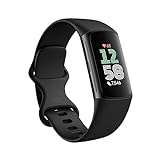
- Find your way seamlessly during runs or rides with turn-by-turn directions from Google Maps on Fitbit Charge 6[7, 8]; and when you need a snack break on the go, just tap to pay with Google Wallet[8, 9]
Each “step” is an algorithm’s best guess
A step is not a raw sensor event but a classified one. The software applies thresholds for timing, force, and consistency to avoid counting random movements like scratching your head or shifting in a chair. Those thresholds differ between brands and even between product generations, which is why two watches worn side by side can disagree by hundreds of steps.
Some platforms, like Apple and Fitbit, aggressively filter out short or erratic movements to reduce false positives. Others, including certain Garmin and Xiaomi models, may be more permissive to ensure slow walking or assisted movement still registers.
Arm movement matters more than leg movement
Because most trackers live on your wrist, arm swing plays a major role in step detection. Walking with hands in pockets, pushing a stroller, carrying groceries, or gripping gym equipment can reduce detected steps even though your legs are doing the work. Conversely, animated arm movements during conversation or cooking can occasionally inflate your count.
This is why ankle-worn trackers or phones carried in pockets often produce different totals than wrist-worn devices. They are sampling different parts of the same activity, not measuring it incorrectly.
What usually counts as steps
Most normal walking and running, even at slow speeds, will be captured once you maintain a consistent rhythm for several seconds. Indoor walking, treadmill sessions, and short trips around the house generally count as long as your arm is moving naturally. Many devices also count steps during hikes, city wandering, and day-to-day errands without GPS involvement.
Modern trackers are especially good at recognizing steady-state walking patterns. That’s why a long, boring walk often produces a more reliable step count than a busy day filled with starts, stops, and multitasking.
What usually does not count
Cycling, driving, weightlifting, and desk work are intentionally excluded, even though they involve movement and energy use. These activities don’t match the cadence and acceleration profile of walking, so the algorithm ignores them to avoid polluting your step total. This is by design, not a failure.
Certain edge cases sit in the middle. Activities like rowing machines, elliptical trainers, or pushing a lawn mower may partially register depending on arm motion, strap tightness, and software tuning.
Why steps are filtered, smoothed, and adjusted
Trackers don’t simply add up detected steps in real time. They often smooth data over short windows, discard bursts that don’t persist, and retroactively adjust totals if motion patterns change. This prevents wild swings in your daily count but also means the number can update slightly as the day goes on.
Some platforms also apply user-specific calibration, factoring in height, stride tendencies, and historical movement patterns. Over time, your step count becomes more consistent for you, even if it’s not identical to someone else’s wearing the same model.
Why step counts differ between devices
Different brands prioritize different trade-offs between sensitivity and specificity. Apple tends to aim for conservative accuracy, minimizing false steps, while Fitbit historically favors higher sensitivity to capture everyday movement. Garmin often exposes more raw activity data but applies sport-specific logic that can change how steps are tallied during workouts.
Hardware placement, sampling rates, battery-saving strategies, and software updates all influence the final number. A slimmer tracker with a smaller battery may sample motion differently than a larger smartwatch designed for multi-day endurance.
What your step count does not measure
Steps are not a direct measure of fitness, calories burned, or cardiovascular effort. A slow 10,000-step day can be less demanding than a short, intense workout that barely registers any steps at all. The metric reflects volume of walking-like movement, not overall health or exertion.
This is why step counts work best as a consistency tool rather than a scorecard. They show patterns over time, not precision in isolation, and their real value emerges when you interpret them alongside activity minutes, heart rate trends, and how your body actually feels.
The Core Sensor Behind Step Counting: How Accelerometers Detect Movement
To understand why step counts behave the way they do, it helps to look beneath the software and focus on the one piece of hardware that makes all of this possible. Nearly every fitness tracker and smartwatch, from a basic clip-on to an Apple Watch Ultra or Garmin Fenix, relies on an accelerometer as its primary step-detection sensor.
This tiny component is always on, quietly measuring how your body moves through space. Everything else, including step algorithms, filtering, and calibration, builds on the raw data it produces.
What an accelerometer actually measures
An accelerometer does not know what a “step” is. It simply measures acceleration, meaning changes in speed and direction, across three axes: up and down, side to side, and forward and backward.
In a wrist-worn device, those axes constantly shift as your arm swings, twists, or rests. The sensor records these changes hundreds of times per second, creating a stream of motion data that reflects how your wrist is moving relative to gravity.
Gravity is critical here because it gives the accelerometer a fixed reference point. Even when you are standing still, the sensor can “feel” which direction is down, helping the software distinguish between orientation changes and actual movement.
Why walking creates a recognizable motion pattern
When you walk, your body produces a rhythmic, repeatable motion. Your arm swings forward and back, rises slightly, and decelerates at the end of each swing, creating a characteristic acceleration pattern.
This pattern tends to fall within a predictable frequency range. Most people walk at a cadence of roughly 90 to 130 steps per minute, and the accelerometer data reflects that rhythm clearly enough for algorithms to latch onto it.
Running produces a similar pattern, but with higher impact forces and faster oscillations. That is why most trackers can detect steps during both walking and running without switching modes, even though the movement intensity is very different.
From raw motion to detected steps
The accelerometer’s output is a noisy waveform, not a neat series of step markers. Software first cleans this signal by removing tiny jitters from strap movement, vibrations, or device rotation.
Once the noise is reduced, the algorithm looks for repeating peaks and valleys that match expected step-like motion. Each qualifying cycle is counted as a step, provided it passes timing and consistency checks.
This is also why sudden, isolated movements are often ignored. A single wrist flick does not repeat, so it fails the persistence checks needed to register as a step.
Why wrist placement complicates things
Wrist-worn trackers are convenient and comfortable, but they introduce ambiguity. Your arms move for many reasons that have nothing to do with walking, including typing, cooking, brushing teeth, or gesturing while talking.
The accelerometer captures all of this motion faithfully. It is the software’s job to decide whether the movement looks enough like walking to be counted, which is where false positives and missed steps can occur.
Devices worn closer to your center of mass, such as phones in a pocket or older clip-on trackers, often detect steps more consistently. However, they sacrifice the comfort, screen visibility, and heart-rate tracking that modern wrist wearables offer.
Sampling rates, power use, and accuracy trade-offs
Accelerometers can sample motion at very high rates, but doing so consumes battery. A slim fitness band designed to last a week may sample less frequently than a larger smartwatch with a bigger battery and more aggressive power management.
Lower sampling rates can slightly reduce sensitivity to subtle steps, especially during slow walking. Higher sampling rates capture more detail but require smarter filtering to avoid counting noise as steps.
This balance between battery life and motion fidelity is one reason two devices worn at the same time can report different totals by the end of the day.
Why step detection is probabilistic, not exact
Even with advanced sensors, step counting is based on probability rather than certainty. The algorithm is constantly asking whether the current motion looks more like walking than anything else.
Factors like stride length, arm swing symmetry, walking speed, and even how tightly the strap is fastened influence that judgment. A loose band allows extra micro-movements that can blur the signal, while a snug fit produces cleaner acceleration data.
Over a full day, these small decisions add up. The result is a number that reflects your overall movement pattern rather than a precise tally of footfalls.
How this sensor-centric approach shapes daily usability
Because accelerometers are low-power and always active, step counting works continuously without you needing to start or stop anything. This makes steps one of the most reliable all-day metrics across platforms, regardless of phone compatibility or workout habits.
It also means steps are tracked even when GPS, heart rate sensors, or workout modes are turned off to save battery. On devices with multi-day endurance, such as Fitbit trackers or Garmin’s lifestyle-focused watches, the accelerometer is doing most of the heavy lifting.
Understanding that your step count starts as raw motion data helps explain both its strengths and its limitations. It is excellent at capturing trends and routines, but it was never designed to function like a laboratory-grade pedometer counting every single step with absolute certainty.
From Arm Swings to Steps: How Algorithms Decide What Counts as a Step
If accelerometers provide the raw motion data, algorithms are the translators that turn those squiggles into something meaningful. They sit between constant background movement and the final step total, deciding which motions deserve to be counted and which should be ignored.
At a basic level, the software is looking for repeating patterns that resemble human walking. In practice, that means identifying a specific rhythm, intensity, and direction of movement that matches how most people move when taking steps.
Recognising the walking pattern
When you walk, your body produces a fairly consistent acceleration waveform. Each step creates a small spike as your foot hits the ground, followed by a predictable recovery motion as weight shifts to the next step.
On a wrist-worn device, this shows up as a combination of vertical bounce and forward-back arm swing. The algorithm looks for that repeating pattern over several cycles rather than reacting to a single movement.
This is why one exaggerated arm swing does not usually count as a step. Most trackers require multiple consecutive peaks, spaced at roughly walking cadence, before they start adding to your step total.
Why thresholds matter more than you think
To avoid counting random motion, algorithms apply amplitude thresholds. The movement has to be strong enough to suggest purposeful locomotion, not just fidgeting or typing at a desk.
Set that threshold too low, and brushing your teeth or folding laundry starts inflating your steps. Set it too high, and slow walking, shuffling, or indoor pacing may be undercounted.
Rank #2

- Inspire 3 is the tracker that helps you find your energy, do what you love and feel your best. All you have to do is wear it.Operating temperature: 0° to 40°C
- Move more: Daily Readiness Score(1), Active Zone Minutes, all-day activity tracking and 24/7 heart rate, 20+ exercise modes, automatic exercise tracking and reminders to move
- Stress less: always-on wellness tracking, daily Stress Management Score, mindfulness sessions, relax breathing sessions, irregular heart rhythm notifications(2), SpO2(3), menstrual health tracking, resting heart rate and high/low heart rate notifications
- Sleep better: automatic sleep tracking, personalized Sleep Profile(1), daily detailed Sleep Score, smart wake vibrating alarm, sleep mode
- Comfortably connected day and night: calls, texts & smartphone app notifications(4), color touchscreen with customizable clock faces, super lightweight and water resistant to 50 meters, up to 10 day battery life(5)
Different brands tune these thresholds differently based on their priorities. Fitbit traditionally leans toward capturing everyday movement, while Garmin often errs on the side of filtering noise, especially on sport-focused watches.
Cadence windows and timing rules
Steps are not just about movement strength, but also timing. Algorithms expect steps to occur within a realistic cadence range, usually somewhere between slow walking and brisk walking speeds.
If the motion peaks come too quickly or too slowly, they may be discarded. This helps prevent counting vibrations from riding in a car or repetitive wrist movements that do not involve actual walking.
It also explains why pushing a shopping trolley or stroller can reduce step counts. Your arms are moving less freely, breaking the expected cadence pattern even though your legs are working normally.
Context awareness and activity filtering
Modern wearables do not rely on accelerometer data alone. They combine it with contextual clues such as heart rate trends, GPS movement, and even barometric pressure changes on higher-end watches.
If your heart rate is elevated and GPS shows forward movement, the algorithm becomes more confident that you are walking or running. Without those signals, it may be more conservative about what it counts.
This layered approach is especially noticeable on smartwatches like Apple Watch or Samsung Galaxy Watch, where richer sensor data allows more aggressive filtering without losing too many real steps.
Why wrist placement complicates everything
Unlike traditional pedometers worn at the hip, wrist-based trackers have to interpret indirect motion. Your arm swing is related to walking, but it is not guaranteed to mirror every step perfectly.
Carry groceries in one hand, hold a phone, or walk with hands in pockets, and the signal changes dramatically. The algorithm compensates by allowing some variability, but it cannot fully correct for unusual arm behavior.
This is one reason step counts can feel inconsistent during certain activities. The device is still doing what it was designed to do, but the input data no longer fits the ideal walking model.
Learning your habits over time
Some platforms quietly adapt to your behavior. By analyzing long-term patterns, the algorithm can adjust sensitivity based on how you typically move throughout the day.
Apple and Google, in particular, use large population datasets to refine detection models, while brands like Garmin focus more on individual consistency. The result is a tracker that becomes better at recognizing your normal walking style over weeks and months.
This does not mean the device learns every step perfectly. It means your daily totals become more internally consistent, even if they differ from another brand worn on the same wrist.
Why two trackers rarely agree
Every decision point in the algorithm introduces variation. Differences in thresholds, cadence windows, sensor fusion, and learning models all influence what ends up being counted.
Even strap material and comfort play a role, as a heavier watch or looser silicone band can introduce extra motion artifacts. A lightweight tracker with a snug fabric strap often produces cleaner data than a bulky smartwatch worn loosely.
This is why step counts should be compared against your own history, not someone else’s device. The number is best understood as a personal movement score shaped by how your tracker interprets your daily motion.
Why Walking, Running, and Daily Life Movements Are Treated Differently
Once you understand that step counting is pattern recognition rather than literal foot detection, it becomes easier to see why not all movement is handled the same way. Walking, running, and everyday arm motion produce very different signals at the wrist, and the tracker has to decide which ones deserve to be counted.
To avoid wildly inflated totals, modern wearables apply different rules depending on how consistent, rhythmic, and forceful your movement appears.
Walking has a slow, repeatable signature
Normal walking produces a relatively low-impact, evenly spaced rhythm. At the wrist, this shows up as a gentle back-and-forth acceleration pattern that repeats every half to one second for most people.
Step algorithms are tuned to this range because it represents the majority of daily movement. If the signal falls within expected timing and amplitude windows for several cycles in a row, the tracker becomes confident that walking is happening and starts counting steps.
This is why casual walking around the house or at the office often registers reliably, even if your pace varies slightly.
Running triggers a different detection model
Running creates sharper impacts, faster cadence, and more vertical motion than walking. The accelerometer sees higher peaks, shorter gaps between steps, and a more pronounced rebound pattern.
Most trackers switch to a different internal model once cadence crosses a certain threshold. This helps prevent fast walking from being misread as running, and it reduces the chance of counting random arm movement as steps during high-intensity activities.
On many devices, this transition also affects stride length estimation, calorie calculations, and even GPS smoothing if location tracking is active.
Why slow or irregular walking can be undercounted
Very slow walking sits in an uncomfortable middle ground for algorithms. The motion may be too soft or too inconsistent to confidently separate from general arm movement.
This is common when browsing in shops, pacing while on a call, or walking indoors with frequent stops. To avoid counting fidgeting as steps, the tracker may require several consecutive step-like motions before it starts adding to your total.
The result is that short bursts of movement can disappear entirely from the step count, even though you were technically walking.
Daily life movements look deceptively similar to steps
Activities like cooking, brushing teeth, folding laundry, or gesturing while talking all generate wrist motion that can resemble walking. The difference is that these movements lack consistent cadence and directional repetition.
Algorithms look for sustained rhythm rather than single swings. One or two step-like motions are usually ignored unless they are followed by more that match the same pattern.
This filtering is intentional. Without it, your step count would skyrocket during a day of active chores or expressive hand movements.
Why pushing carts, strollers, or holding phones causes issues
When your arms are constrained or moving asymmetrically, the wrist signal breaks down. Pushing a shopping cart or stroller removes natural arm swing entirely, while holding a phone can dampen motion on one side.
Some platforms try to compensate by allowing lower-amplitude steps if cadence is consistent. Others prioritize avoiding false positives and accept that steps will be missed in these scenarios.
This is why a phone-based tracker in your pocket may record more steps in these situations than a watch on your wrist.
Activity modes change how steps are interpreted
Starting a dedicated walking or running mode tells the device to expect step-like motion. Thresholds are adjusted, cadence windows widen, and the algorithm becomes more forgiving of variation.
This does not magically improve sensor accuracy, but it reduces hesitation in counting marginal steps. That is why treadmill walks or outdoor runs often show higher step totals than the same pace logged passively.
Battery life and comfort also play a role here, as extended activity modes increase sensor sampling and processing demands.
Why steps are not counted equally across all movement
From the tracker’s perspective, a step is not just motion, but motion that fits a trusted pattern over time. Walking and running provide that pattern clearly, while daily life movements are messy and unpredictable.
Different brands draw the line in different places. Apple tends to be more inclusive with slow, real-world movement, while Garmin often favors cleaner signals and consistency over absolute totals.
Neither approach is universally right or wrong. They simply reflect different philosophies about whether it is better to miss some real steps or accidentally count movements that were never steps at all.
Why Different Trackers Give Different Step Totals on the Same Day
Once you understand that step counting is a pattern-recognition problem rather than a literal foot counter, it becomes easier to see why two devices can disagree. Even when worn on the same wrist, trackers are making different judgement calls about what qualifies as a real step.
Each brand uses its own step-detection algorithm
The accelerometer hardware across major brands is surprisingly similar, but the software interpreting that data is not. Every company trains its algorithms using different datasets, priorities, and definitions of acceptable motion.
Some brands are tuned to capture slow, casual movement like wandering around the house. Others are deliberately conservative, preferring to miss borderline steps rather than inflate totals with false positives.
This is why an Apple Watch, a Garmin, and a Fitbit can all be technically accurate while still reporting noticeably different numbers.
Different thresholds for motion amplitude and cadence
Trackers look for a combination of movement strength and rhythm. One device may count a light, shuffling step, while another requires a clearer acceleration spike and a more stable cadence.
Rank #3

- 【BUILT-IN GPS SMART WATCH – GO FURTHER, FREER, SMARTER】No phone? No problem. This fitness watch for women, featuring the latest 2025 technology, includes an advanced professional-grade GPS chip that precisely tracks every route, distance, pace (real-time & average), and calorie burned—completely phone-free. Whether you're chasing new personal records or exploring off the beaten path, your full journey is automatically mapped and synced in the app. Train smarter. Move with purpose. Own your progress. Own your journey.
- 【BLUETOOTH 5.3 CALLS & SMART NOTIFICATIONS】Stay effortlessly connected with this smart watch for men and women, featuring dual Bluetooth modes (BT 3.0 + BLE 5.3) and a premium microphone for crystal-clear calls right from your wrist—perfect for driving, workouts, or busy days. Receive instant alerts for calls, texts, and popular social apps like WhatsApp and Facebook. Just raise your wrist to view notifications and never miss an important moment.
- 【100+ SPORT MODES & IP68 WATERPROOF & DUSTPROOF】This sport watch is a versatile activity and fitness tracker with 100+ modes including running, cycling, yoga, and more. It features quick-access buttons and automatic running/cycling detection to start workouts instantly. Accurately track heart rate, calories, distance, pace, and more. Set daily goals on your fitness tracker watch and stay motivated with achievement badges. With IP68 waterproof and dustproof rating, it resists rain and sweat for any challenge. Not suitable for showering, swimming, or sauna.
- 【24/7 HEALTH ASSISTANT & SMART REMINDERS】This health watch continuously monitors heart rate, blood oxygen, and stress levels for comprehensive wellness tracking. Sleep monitoring includes deep, light, REM sleep, and naps to give you a full picture of your rest. Stay on track with smart reminders for sedentary breaks, hydration, medication, and hand washing. Women can also monitor menstrual health. Includes guided breathing exercises to help you relax. Your ultimate health watch with event reminders for a healthier life.
- 【ULTRA HD DISPLAY, LIGHTWEIGHT & CUSTOMIZABLE DIALS】This stylish wrist watch features a 1.27-inch (32mm) 360×360 ultra HD color display with a 1.69-inch (43mm) dial, offering vivid details and responsive touch. Its minimalist design fits both business and casual looks. Switch freely among built-in designer dials or create your own DIY watch face using photos, colors, and styles to showcase your unique personality. Perfect as a cool digital watch and fashion wrist watch.
These thresholds are not fixed across brands or even across models. Smaller trackers, lighter watches, or devices designed for long battery life often use stricter rules to reduce noise.
As a result, slow walking, short strides, or indoor movement tends to show the biggest differences between platforms.
Sensor placement and hardware tuning matter
A wrist-worn tracker experiences motion very differently from a phone in your pocket or a band worn higher or lower on the arm. Even among watches, case size, weight, strap material, and how snugly it fits all influence the motion signal.
A heavier stainless steel smartwatch with a loose bracelet produces a different acceleration profile than a lightweight plastic tracker on a tight silicone band. The algorithm has to be tuned to expect that behavior, and not all brands tune it the same way.
This is one reason identical movements can be interpreted differently across devices with different designs and materials.
User profile data subtly influences step detection
Your height, weight, stride length, age, and sex are not just used for calorie estimates. Some platforms use this information to contextualize cadence and expected movement patterns.
If one device assumes a longer stride or higher walking efficiency, it may be more hesitant to count slow or irregular steps. Another may treat the same motion as perfectly valid walking.
Incomplete or outdated profile data can quietly widen the gap between trackers, even when everything else seems equal.
Dominant wrist settings and real-world hand use
Many watches ask which wrist you wear them on, but not all users answer correctly or remember to change it. The dominant hand tends to move more, gesture more, and experience sharper acceleration.
Brands compensate for this differently. Some apply aggressive filtering on the dominant wrist, while others assume more natural arm swing and accept the extra motion.
If two devices make different assumptions here, step totals can drift apart quickly during normal daily activities.
Software updates can change step counts overnight
Step algorithms are not static. Brands regularly adjust detection rules through firmware and app updates, often without explicitly calling out step-count changes.
An update might reduce false positives during driving or desk work, but it can also lower your daily totals compared to previous weeks. Another update might loosen thresholds to better capture slow walking, increasing counts without any change in your behavior.
This is why comparing step data across months or years on different platforms can be misleading.
Power management and battery priorities affect sensitivity
Devices optimized for multi-day battery life often sample sensors less aggressively outside of workouts. This saves power but reduces sensitivity to subtle or short-duration movement.
More power-hungry smartwatches can afford higher sampling rates, which helps capture fragmented activity but increases processing and battery drain. The step total you see is partly a reflection of these design trade-offs.
Comfort, charging frequency, and daily usability all influence how much raw motion data the device is willing to process.
Phone-based tracking plays by different rules
When steps come from a phone instead of a watch, the motion source shifts from arm swing to hip or pocket movement. That changes everything about the signal the algorithm sees.
Phones often perform better when your arms are still, such as pushing a cart or carrying bags. Wrist-based trackers usually win during free walking or running with natural arm motion.
If your ecosystem blends phone and watch data, differences in how those sources are merged can further complicate the final step total you see.
There is no single “correct” step count
All of these systems are estimates built on probabilities, not precise measurements. Two trackers can both be reasonable, consistent, and useful while still disagreeing by thousands of steps over a full day.
What matters most is internal consistency within one platform. Trends, habits, and relative changes over time are far more meaningful than comparing absolute numbers across different devices.
Common Accuracy Myths: Treadmills, Pushing Carts, Driving, and Desk Work
Once you understand that step counts are estimates shaped by sensors, algorithms, and power priorities, many everyday “accuracy problems” start to make more sense. Most complaints aren’t about broken hardware, but about situations where the movement your body makes doesn’t look like walking to a wrist-mounted accelerometer.
These scenarios come up so often that they’ve become myths, repeated across forums and reviews without much context.
Treadmills: why indoor walking sometimes looks wrong
On a treadmill, your feet are moving, but your environment isn’t. For wrist-based trackers, step detection relies heavily on arm swing patterns rather than forward travel.
If you lightly hold the handrails, rest your hands on the console, or scroll on your phone, the accelerometer sees far less rhythmic motion. The result is often undercounting, even though your legs are doing the work.
Some watches improve treadmill accuracy after you calibrate stride length or complete an indoor walk workout, but they still infer steps from arm movement, not belt speed. Without GPS or external references, the watch has no idea how fast the treadmill is actually moving.
Pushing shopping carts, strollers, or lawn mowers
This is one of the most misunderstood situations in step tracking. When your arms are fixed in front of you, the wrist sensor loses its primary signal.
From the tracker’s perspective, your body looks oddly still despite your legs moving continuously. That’s why step totals can be dramatically lower during grocery shopping or stroller walks.
Phone-based tracking often performs better here because the phone moves with your hips or torso. Some ecosystems merge phone and watch data intelligently, while others default to one source and ignore the other, which explains wildly different results for the same activity.
Driving: why phantom steps happen
Most modern trackers are much better at filtering out driving than they used to be, but it hasn’t disappeared entirely. Road vibration, steering wheel movement, and repeated wrist motions can resemble low-confidence walking patterns.
Algorithms typically use speed, duration, and motion consistency to suppress these false positives. Short drives with lots of stops are more likely to generate stray steps than long, smooth highway trips.
If a recent update suddenly reduced your “driving steps,” that’s usually a sign the platform tightened its motion thresholds. The change reflects better filtering, not worse tracking.
Desk work and typing: micro-movements add up
Typing, mouse use, fidgeting, and gesturing all create small acceleration spikes. Individually, they don’t look like steps, but over hours they can accumulate into short walking-like patterns.
Trackers differ in how aggressively they ignore these signals. Devices tuned for higher sensitivity may record more incidental steps, while conservative algorithms aim to avoid false positives at the cost of missing very slow walking.
This is also where battery strategy matters. Watches sampling motion less frequently are more likely to miss or misclassify brief, low-intensity movement during sedentary time.
Why these “errors” are often expected behavior
None of these scenarios mean your tracker is broken or lying to you. They simply highlight that step detection works best when your movement matches the patterns the algorithm expects.
Wrist-worn devices are optimized for natural walking and running with free arm swing. The further you move away from that pattern, the more interpretation and estimation come into play.
Understanding these edge cases helps you read your daily step total as a rough activity indicator, not a literal count of every footfall you made.
Wrist vs Pocket vs Ankle: How Wear Location Changes Step Accuracy
All of the quirks you’ve just read about become even more pronounced once you change where the tracker sits on your body. The same accelerometer can produce very different step totals depending on whether it’s on your wrist, in your pocket, or strapped near your ankle.
That’s not because one location is “right” and the others are wrong. It’s because step algorithms are trained around specific movement patterns, and wear location determines how closely your real-world motion matches those expectations.
Wrist-worn trackers: optimized for convenience, not perfection
Most smartwatches and fitness bands are designed first and foremost for the wrist. The algorithms expect a rhythmic forward-and-back arm swing that lines up with normal walking or running cadence.
When your arms swing freely, wrist placement works surprisingly well. In everyday testing, modern Apple Watch, Fitbit, Garmin, and Samsung devices often land within a few percentage points of actual steps during steady outdoor walking.
Accuracy drops when arm movement changes. Carrying groceries, pushing a stroller, walking on a treadmill while holding rails, or keeping your hands in pockets all reduce arm swing, which can lead to undercounting.
Rank #4

- 24H Accurate Heart Rate Monitoring: Go beyond basic tracking. Our watch automatically monitors your heart rate, blood oxygen (SpO2), and sleep patterns throughout the day and night. Gain deep insights into your body's trends and make informed decisions for a healthier lifestyle.
- Practical Sports Modes & Smart Activity Tracking: From running and swimming to yoga and hiking, track a wide range of activities with precision. It automatically records your steps, distance, calories burned, and duration, helping you analyze your performance and crush your fitness goals.
- 1-Week Battery Life & All-Day Wear: Say goodbye to daily charging. With an incredible up to 7-10 days of battery life on a single charge, you can wear it day and night for uninterrupted sleep tracking and worry-free travel. Stay connected to your data without the hassle.
- Comfortable to Wear & IP68 Waterproof: The lightweight, skin-friendly band is crafted for all-day comfort, even while you sleep. With IP68 waterproof, it withstands rain, sweat, It is not suitable for swimming or showering.
- Ease of Use and Personalized Insights via Powerful App: The display is bright and easy to read, even outdoors. Unlock the full potential of your watch. Sync with our dedicated app to view detailed health reports, customize watch faces, set sedentary reminders, and manage your preferences with ease.
The opposite problem also exists. Animated conversations, cooking, or repetitive hand motions can look step-like to a sensitive algorithm, especially on platforms that favor higher daily totals over strict filtering.
Comfort and wearability play a role too. A loose strap allows extra movement and noise, while a snug but comfortable fit keeps the sensor aligned with your arm, improving signal quality without hurting battery life or skin comfort.
Pocket placement: closer to the legs, different assumptions
Phones and clip-on trackers in a pocket sit much closer to your center of mass than your wrist does. The motion they detect comes from hip and thigh movement rather than arm swing.
This can improve accuracy during slow walking or when your arms are stationary. For users who push carts, carry bags, or walk hands-free inconsistently, pocket placement often produces more stable step counts.
However, pocket tracking introduces its own variables. Loose clothing, baggy pockets, or a phone shifting orientation can distort the motion signal and confuse step detection.
Most phone-based pedometers also rely on power-saving strategies. Lower sampling rates help battery life but can miss very short or shuffling steps, especially indoors or on soft surfaces like carpet.
Ankle and foot placement: why it often feels “more accurate”
Ankle-mounted trackers sit closest to the source of stepping itself. Every footfall produces a clear, repeatable acceleration pattern that’s hard for algorithms to miss.
This is why ankle placement is commonly recommended for treadmill walking, rehabilitation, and mobility tracking. Even very slow or assisted walking produces strong signals near the foot.
The downside is practicality. Ankle wear isn’t comfortable or socially convenient for most people, and step algorithms on mainstream consumer devices aren’t always tuned for it.
Some wrist-based trackers worn on the ankle may overcount during activities like cycling or fidgeting while seated, because the algorithm still assumes arm-like movement unless explicitly told otherwise.
Why the same walk gives different step totals
Imagine two people walking side by side for a mile. One wears a smartwatch on their wrist, the other carries a phone in a jacket pocket, and a third uses an ankle strap.
They all take the same number of steps, but the motion signatures reaching each sensor are completely different. Each algorithm filters, thresholds, and interprets that data based on its expected wear location.
That’s why comparing step counts across devices or placements often leads to confusion. You’re not just comparing hardware, you’re comparing assumptions baked into software.
Which placement is “best” for you
For most people, wrist-worn tracking offers the best balance of convenience, battery life, and all-day usability. It’s consistent, easy to wear, and integrated with heart rate, GPS, and health features.
Pocket tracking can make sense if you don’t like wearing a watch or if your daily routine limits arm movement. Just be aware that clothing and carry habits matter more than you might expect.
Ankle placement is best reserved for specific use cases like treadmill walking, medical recovery, or very slow gait patterns. It can feel impressively accurate, but it’s outside the design intent of most consumer wearables.
Understanding how wear location shapes step accuracy helps explain why no tracker can deliver a perfectly “true” number. What you’re seeing is a best estimate based on where the device lives on your body and how you move through your day.
Calibration, Stride Length, and Why Your Height Still Matters
Once you understand how wear location and motion patterns shape step detection, the next layer is calibration. This is where your body measurements and walking habits quietly influence what your tracker thinks a “normal” step looks like.
Even though most modern devices can count steps without knowing anything about you, they still lean on profile data to refine the math. Height, weight, age, and sex aren’t just for calorie estimates, they help anchor stride length and movement expectations.
What calibration actually means on a fitness tracker
Calibration isn’t usually a one-time manual process anymore. On most modern trackers, it’s a background system that constantly adjusts based on your movement history.
When you enter your height during setup, the device assigns an estimated stride length. This gives the algorithm a baseline for how often step-like motion should occur at different walking speeds.
Over time, that baseline can be refined. If your watch has GPS and you record outdoor walks or runs, it compares detected steps against known distance to quietly fine-tune stride assumptions in the background.
Why stride length still matters even though steps are counted, not measured
At first glance, stride length shouldn’t affect step count at all. A step is a step, regardless of how long it is.
In reality, stride length influences how algorithms interpret cadence and movement intensity. Taller users with longer strides often produce lower-frequency arm swings at the same walking speed, while shorter users generate faster, tighter motion patterns.
If the algorithm’s expectations don’t match your body mechanics, it may miss steps at slow speeds or merge movements together at faster ones. Height helps narrow that expectation window before the software ever sees real-world data.
Why slow walking exposes calibration weaknesses
This is where many users notice discrepancies. Slow walking produces smaller, softer acceleration peaks that sit closer to background noise.
If your stride is longer than average for your height, or your arm swing is minimal, those signals can fall below detection thresholds. That’s why step counts often lag during indoor pacing, grocery shopping, or rehabilitation walks.
Some brands are better here than others. Fitbit and Apple tend to prioritize sensitivity at low speeds, while Garmin often favors cleaner signals to avoid false positives, sometimes at the expense of slow-walk accuracy.
GPS calibration and why outdoor walks improve accuracy
Trackers with built-in GPS have a quiet advantage. When you record outdoor walks or runs, the device knows exactly how far you traveled.
It compares that distance to the number of steps detected and adjusts stride length assumptions accordingly. This doesn’t change how steps are counted, but it helps the algorithm better recognize what your personal step signature looks like.
This is why two people of the same height can still get different results. One regularly logs GPS walks, the other doesn’t, and their trackers learn very different movement profiles.
Treadmills, indoor walking, and manual stride settings
Indoor walking removes GPS from the equation, which puts more pressure on calibration quality. That’s why treadmill step counts can feel inconsistent, especially at slower speeds.
Some platforms allow manual stride length entry, but this is usually applied to distance estimation rather than raw step counting. It can help align reported distance, but it won’t magically fix missed steps if your movement pattern doesn’t match the algorithm’s expectations.
A better approach is consistency. Wearing the device the same way, on the same wrist, and recording similar activities helps the system learn your habits more reliably.
Why two people of the same height still get different step totals
Height is only one piece of the puzzle. Arm swing, posture, walking surface, footwear, and even fatigue change how acceleration looks at the wrist.
One person may walk with pronounced arm movement and clean rhythmic impacts. Another may keep their hands still, carry a bag, or walk with a shuffling gait that softens motion peaks.
From the sensor’s perspective, these are very different signals. The algorithm isn’t wrong, it’s interpreting motion through probabilities rather than certainties.
Device ecosystems handle calibration differently
Apple Watch leans heavily on background learning. The more outdoor walks you log with GPS, the better it gets at matching your stride and cadence, especially for walking pace changes.
Fitbit uses a mix of profile-based estimates and adaptive learning, with a focus on daily consistency rather than athletic precision. This works well for all-day tracking but can undercount in edge cases like very slow walking.
Garmin prioritizes structured activity accuracy and offers more transparency for stride and pace during workouts. Outside of tracked activities, it can be more conservative in counting steps to avoid false movement detection.
Samsung and Xiaomi sit somewhere in the middle, with solid baseline calibration but less aggressive long-term personalization unless you regularly log activities.
Why calibration doesn’t make step counts “true”
Even with perfect height data and years of learning, step counts remain estimates. The sensor sees motion, not feet hitting the ground.
Calibration helps the algorithm decide what motion is likely a step and what isn’t. It reduces bias, improves consistency, and makes trends more meaningful, but it doesn’t turn a wrist device into a medical-grade pedometer.
Understanding that limitation helps reframe expectations. Your step count is best used as a comparative daily metric, not a literal tally of every step you’ve ever taken.
💰 Best Value

- 【Superb Visual Experience & Effortless Operation】Diving into the latest 1.58'' ultra high resolution display technology, every interaction on the fitness watch is a visual delight with vibrant colors and crisp clarity. Its always on display clock makes the time conveniently visible. Experience convenience like never before with the intuitive full touch controls and the side button, switch between apps, and customize settings with seamless precision.
- 【Comprehensive 24/7 Health Monitoring】The fitness watches for women and men packs 24/7 heart rate, 24/7 blood pressure and blood oxygen monitors. You could check those real-time health metrics anytime, anywhere on your wrist and view the data record in the App. The heart rate monitor watch also tracks different sleep stages for light and deep sleep,and the time when you wake up, helps you to get a better understanding of your sleep quality.
- 【120+ exercise modes & All-Day Activity Tracking】There are more than 120 exercise modes available in the activity trackers and smartwatches, covering almost all daily sports activities you can imagine, gives you new ways to train and advanced metrics for more information about your workout performance. The all-day activity tracking feature monitors your steps, distance, and calories burned all the day, so you can see how much progress you've made towards your fitness goals.
- 【Messages & Incoming Calls Notification】With this smart watch fitness trackers for iPhone and android phones, you can receive notifications for incoming calls and read messages directly from your wrist without taking out your phone. Never miss a beat, stay in touch with loved ones, and stay informed of important updates wherever you are.
- 【Essential Assistant for Daily Life】The fitness watches for women and men provide you with more features including drinking water and sedentary reminder, women's menstrual period reminder, breath training, real-time weather display, remote camera shooting, music control,timer, stopwatch, finding phone, alarm clock, making it a considerate life assistant. With the GPS connectivity, you could get a map of your workout route in the app for outdoor activity by connecting to your phone GPS.
How Software Updates and Brand Philosophy Affect Step Counts Over Time
Once you accept that step counts are estimates shaped by calibration and probability, the next surprise is this: your step totals can change even if your walking habits don’t. That’s because the algorithm interpreting your motion isn’t fixed forever.
Fitness trackers are software-driven products. As brands refine their models of what a “real” step looks like, your device may start counting the same wrist movement differently than it did a year ago.
Why a software update can change your daily steps overnight
When a firmware or app update rolls out, it often includes adjustments to motion filtering, step thresholds, or how aggressively false movements are rejected. These changes are usually made to reduce overcounting during activities like driving, brushing teeth, or gesturing while seated.
The result is that some users notice a sudden drop or increase in daily steps after an update. You didn’t become less active overnight; the definition of a step quietly shifted.
This is especially noticeable on wrist-worn devices, where non-walking arm movement is unavoidable. Tightening the algorithm improves accuracy on average, but it can feel jarring if you’re used to higher numbers.
Different brands optimize for different goals
Apple’s philosophy leans toward long-term personalization and consistency within its ecosystem. Apple Watch step counts may fluctuate early on, but over time they aim to stabilize around your typical movement patterns rather than chase maximum sensitivity.
Fitbit traditionally prioritizes daily motivation and habit tracking. Its algorithms tend to err slightly toward inclusion, ensuring casual movement contributes to activity totals without requiring perfectly defined walking form.
Garmin takes a more conservative approach outside of workouts. Step counting is designed to avoid false positives, especially for users who value training metrics and structured activities over casual motion tracking.
Samsung and Xiaomi often tune their algorithms for broad usability and battery efficiency. That can mean fewer background adjustments over time, but also less aggressive filtering in complex real-world scenarios.
Why step trends matter more than step totals
Because software evolves, comparing today’s step count to one from several years ago isn’t always meaningful. Even on the same device, the algorithm interpreting your motion may no longer be the same one that generated older data.
What remains valuable is the trend within a consistent period. If your weekly average rises or falls under the same software version and wearing habits, that change likely reflects real differences in activity.
This is why most platforms emphasize streaks, averages, and goals rather than single-day precision. The system is designed to guide behavior, not to act as a forensic record.
The trade-off between sensitivity and trust
Every brand balances sensitivity against credibility. Count too aggressively, and users lose trust when steps rack up during clearly non-walking activities.
Filter too strictly, and slow walkers, indoor pacing, or people with limited arm swing feel shortchanged. Software updates often shift this balance as companies respond to user feedback and larger datasets.
Over time, most platforms aim to reduce obvious errors rather than maximize totals. Lower numbers can actually indicate a more confident algorithm, not a worse one.
What this means for long-term users
If you’ve worn trackers for years, your step history reflects multiple generations of software logic layered onto the same sensor hardware. The accelerometer didn’t change much, but the interpretation did.
This is why step counts are best treated as a personal activity language defined by your device and brand. Switching ecosystems or comparing numbers with friends using different platforms will always introduce differences that have nothing to do with effort.
Understanding that philosophy helps set expectations. Your tracker isn’t moving the goalposts to confuse you; it’s slowly redefining what it believes a step actually is.
How to Interpret Your Daily Step Count Realistically (And Use It Properly)
By this point, it should be clear that a step count is not a literal tally of footfalls, but the outcome of sensors, algorithms, and design choices working together. That doesn’t make the number useless; it simply means it needs to be read with the right mindset.
When you stop treating steps as a precise measurement and start treating them as a directional signal, they become far more valuable and far less frustrating.
Think of steps as an activity indicator, not a measurement tool
Your daily step total is best understood as a proxy for overall movement rather than a pedometer-grade count. It answers the question “How active was I today compared to my usual?” not “How many times did my foot hit the ground?”
This is why two watches worn on the same walk can disagree by a few hundred steps and still both be correct in context. They are describing your activity level using different interpretation rules, not reporting a universal truth.
Once you accept that, minor discrepancies stop feeling like errors and start feeling like normal system behavior.
Consistency matters more than accuracy
The most useful step data comes from wearing the same device, in the same way, over time. Wrist position, strap tightness, dominant versus non-dominant hand, and even case weight subtly affect how motion is captured.
A lightweight plastic fitness band and a stainless steel smartwatch with a chunky bracelet will not move identically on your wrist. That difference doesn’t make one better; it just means their baselines are different.
If you stick to one device, those quirks stay consistent, which is exactly what you want for meaningful trends.
Daily goals are behavioral tools, not physiological targets
The famous 10,000-step goal was never a medical requirement, and modern platforms quietly acknowledge this. Apple, Garmin, Fitbit, Samsung, and Xiaomi all now emphasize adaptive goals, activity minutes, or training load alongside steps.
Steps work well as a motivation anchor because they’re simple and intuitive. They encourage movement throughout the day, including light activity that doesn’t register as a workout.
Missing a step goal doesn’t mean you failed, especially if you did strength training, cycling, swimming, or structured cardio that produces fewer arm movements.
Understand where step counts struggle
Step tracking is most reliable during steady walking or running with natural arm swing. It becomes less confident during slow shuffling, pushing a stroller, carrying groceries, or walking with hands in pockets.
Non-walking motions like cooking, folding laundry, or driving on rough roads can occasionally add steps, though modern filtering has reduced this dramatically. Conversely, treadmill desk walking or indoor pacing with minimal arm motion can undercount.
Knowing these edge cases helps you interpret odd days without assuming your tracker is broken.
Why comparing with friends rarely helps
Different brands use different motion thresholds, filtering strategies, and validation rules. A Garmin might be conservative during casual movement, while a Fitbit might be more generous during all-day activity.
Even within the same brand, models differ due to sensor placement, sampling rates, and processing power. A slim tracker optimized for battery life won’t behave identically to a flagship smartwatch running complex sensor fusion.
Comparing step totals across ecosystems often says more about device philosophy than personal effort.
Use steps as part of a bigger activity picture
Steps are most powerful when viewed alongside other metrics like active minutes, heart rate trends, calorie estimates, and workout history. A day with fewer steps but elevated heart rate and structured training may be more demanding than a high-step day of casual walking.
This is why modern platforms blend step data into rings, scores, and readiness metrics. They are trying to contextualize movement rather than crown a single number as king.
Let steps guide you, but let patterns inform you.
What a “good” step count really looks like
A good step count is one that is higher than your personal baseline when you’re trying to be more active, and stable when you’re maintaining. For some people that’s 6,000 steps, for others it’s 14,000, depending on lifestyle, mobility, and goals.
Sudden drops or gradual declines are often more meaningful than missing an arbitrary target. Likewise, gradual increases usually reflect real behavior change, even if the exact number isn’t perfect.
Your body responds to movement, not to the precision of the counter.
Using step data without overthinking it
Check your steps to stay aware, not to audit every movement. If the number broadly matches how active the day felt, the system is doing its job.
If it doesn’t, look for explanations in wearing habits, activity type, or recent software updates before assuming failure. Fitness trackers are tools for guidance, not judges of effort.
Used properly, your step count becomes a quiet, consistent nudge toward healthier behavior rather than a source of daily doubt.
The takeaway
Your fitness tracker isn’t counting steps the way a mechanical counter would, and it was never meant to. It’s translating wrist motion into a usable signal that encourages movement and helps you see patterns over time.
When you interpret step data with that perspective, differences between devices make sense, small errors lose importance, and the number becomes genuinely helpful. The goal isn’t perfect counting; it’s better understanding of how you move through your day.