Charging a Galaxy Watch should be simple, yet it’s one of the areas where Samsung has quietly changed the rules over time. Owners often discover this the hard way when an older dock won’t work, a phone refuses to share power, or a third-party pad charges painfully slowly. If you’ve ever wondered why Galaxy Watch charging feels inconsistent across models, you’re not imagining it.
This section breaks down what charging has always meant for Galaxy Watches, what Samsung has altered across generations, and why compatibility matters more than ever. By the end, you’ll understand the core technology behind Galaxy Watch charging and be better prepared for the cable, phone, or wireless pad you actually need.
Magnetic wireless charging has always been the foundation
Every Samsung Galaxy Watch, from the original Galaxy Watch and Active series to the latest Galaxy Watch 6 and Watch 6 Classic, charges wirelessly using a magnetic puck. There are no exposed charging pins on modern Galaxy Watches, which helps with water resistance, sweat durability, and long-term reliability for daily wear.
The puck snaps into place using magnets and aligns the internal charging coil automatically. This design is comfortable for bedside charging and travel, but it also means placement matters, and not every wireless charger can deliver stable power.
🏆 #1 Best Overall

- 15W Samsung Wireless Charger: Put your phone on the wireless charger samsung Charging Pad Station to get started Charging, up to 1.8X faster than standard wireless charger, 3X faster than the original 5W charger. Wireless charging station provides 15W for Samsung Galaxy S26 S25 S24 S23 S22 S21, 10W for Samsung Galaxy Note 10, 7.5W output for iPhone 14 13 12 11 Series, and 5W for other smartphones and AirPods & Galaxy Buds.The wireless iPhone charger comes with a QC 3.0 18W adapter for a stable power supply.
- Wide Compatibility: Wireless phone charger is optimized for the fastest charging on most devices,can support for Google Pixel 9 Pro/9 Pro XL/9/9 Pro Fold/8A/8 Pro/8/7A/7 Pro/7/6/6 Pro/5,Samsung Galaxy S25/S25+/S25 Ultra/S25 FE/S25/S25+/S25 Ultra/S24/S24+/S24 Ultra, S23/S23+/S23 Ultra, S22/S22+/S22 Ultra, S21/S21 FE/S21+/S21 Ultra, S20/S20 FE/S20+/S20 Ultra, iPhone 14/14 Pro/14 Pro Max/14 Plus,iPhone 13/13 Pro/13 Pro Max/13 Mini,iPhone 12/12 Pro/12 Pro Max/12 Mini,11/11 Pro/11 Pro Max,X/XS/XR/XS MAX, AirPods 2/Pro, Galaxy Buds, Pixel Buds
- Easy Charging wireless phone charger for android: Our wireless iphone charger fast charging features non-slip silicone material on the up and down sides, ensuring that your device stays in place while charging. The GREEN LED Indicator will flash for 3s if power source is connected, and will turn off after 16 seconds while going charging mode, never disturbing your sleep.
- Case-Friendly: Fast wireless charger samsung S23 charger is slim enough to put it in your pocket and supports charging through general plastic/silicone phone cases less than 5mm thick. It's lightweight, sleek, and compact, making it easy to carry and store during travel or business. (Note: Magnetic and metal attachments or cards will prevent charging.)
- Certified & Safe Charging: Our Google Pixel 7Pro wireless fast charger come with 18W Wall Plug is rigorously Certified & Charging tested to ensure a secured and easy charging experience. It prevents the wireless charger and your iPhone from overcharging, over current, over voltage, over heating, and short circuit, giving your phone multiple protection. We offer 24-hour customer service. If you have any questions while using our product,Please do not hesitate to get in touch with us.
Samsung uses Qi-based charging, but not standard Qi behavior
Galaxy Watches technically use Qi wireless charging, but with important caveats. Samsung implements a modified Qi profile designed for small wearables, which requires precise coil alignment and lower power output than phones.
Because of this, many standard Qi pads either fail to charge the watch at all or charge it extremely slowly while generating heat. Samsung-certified chargers and watch-specific third-party docks are built to handle this limitation properly, protecting battery health and ensuring consistent charging speeds.
Charging speed has improved, but not evenly across models
Early Galaxy Watch and Galaxy Watch Active models charged slowly by modern standards, often taking over two hours for a full top-up. Battery capacities were smaller, but charging efficiency was also more limited, especially when using non-original cables.
Starting with Galaxy Watch 4 and continuing through Watch 5 and Watch 6, Samsung improved charging efficiency and thermal management. Newer models support faster wireless charging with compatible pucks, though the gains are modest compared to smartphone fast charging and still heavily dependent on the charger used.
Reverse wireless charging arrived, but only for specific pairings
Samsung introduced reverse wireless charging, branded as Wireless PowerShare, alongside flagship Galaxy smartphones. This allows compatible Galaxy phones to charge a Galaxy Watch directly from the phone’s battery, which is extremely useful for travel or emergencies.
However, PowerShare compatibility is tightly controlled. Not every Galaxy phone supports it, and not every Galaxy Watch charges reliably from every compatible phone. Case thickness, coil placement, and software limits all play a role, which is why this feature works best as a backup rather than a primary charging method.
Older chargers don’t always work with newer watches
One of the biggest generational changes is charger compatibility. While Galaxy Watch chargers look similar, Samsung has adjusted coil designs and power profiles over time, meaning a puck from an older generation may not charge a newer watch, or may charge it very slowly.
This became especially noticeable with the shift to the Galaxy Watch 4 generation and later. Samsung officially recommends using the charger included with your watch or a certified replacement designed for your exact model range to avoid overheating, interrupted charging, or battery degradation.
USB power sources matter more than most people realize
Galaxy Watch chargers typically end in USB-A or USB-C, depending on generation. The power source you plug into, whether it’s a wall adapter, laptop, car port, or power bank, directly affects charging stability.
Low-output USB ports can cause slow or inconsistent charging, especially with newer watches that expect higher baseline power. Samsung doesn’t require high-wattage adapters, but a quality, modern USB power source makes a noticeable difference in daily usability.
Battery health and charging habits have become more important
As Galaxy Watches gained brighter displays, faster processors, and deeper health tracking like continuous heart rate, sleep monitoring, and body composition analysis, battery management became more critical. Samsung now actively manages charging speed and heat to preserve long-term battery health.
This means you may notice charging slowdowns near 80 to 90 percent or brief pauses during charging sessions. These are intentional behaviors designed to extend battery lifespan, especially for watches worn all day and night.
Understanding these basics sets the stage for choosing the right charging method for your watch and your lifestyle. Next, it’s time to look closely at the standard magnetic charging cable, how it works in real-world use, and what to watch out for when replacing or upgrading it.
Charging with the Official Magnetic Cable: Compatibility, Speeds, and Real‑World Charge Times
Once you understand why charger compatibility and power sources matter, the official magnetic charging cable becomes the reference point for everything else. It’s the method Samsung designs around, tests with, and expects most owners to use day in and day out.
Despite its simplicity, there are meaningful differences between generations, connectors, and real‑world performance that are easy to miss if you assume all Galaxy Watch pucks are interchangeable.
How the official magnetic charger actually works
Samsung’s magnetic cable uses a proprietary wireless charging system rather than standard Qi pads. The puck contains a coil and alignment magnet tuned specifically to Galaxy Watch case sizes and sensor layouts.
When placed correctly, the watch snaps into position and begins charging immediately, with software monitoring temperature, battery health, and power draw in real time. If alignment is off or the charger isn’t compatible, charging may fail to start or stop intermittently.
Because the sensors sit flush against the puck, most Galaxy Watches charge best off‑wrist with the strap open or removed, especially on larger cases like the Watch 5 Pro or Watch Ultra.
Galaxy Watch charger compatibility by generation
This is where most confusion happens. While many Samsung charging pucks look nearly identical, internal changes mean not all of them work across generations.
Galaxy Watch Active, Active 2, Galaxy Watch (2018), and Galaxy Watch 3 share older charging profiles and are generally cross‑compatible with each other’s cables. Charging speeds are modest, but reliability is good.
Galaxy Watch 4, Watch 4 Classic, Watch 5, Watch 5 Pro, Watch 6, Watch 6 Classic, and newer models use a revised charging system. These watches require newer magnetic chargers and may not charge at all on older pucks, even if the magnets line up.
Samsung’s rule of thumb is simple: if your watch launched with Wear OS powered by Samsung, use the charger included in the box or a certified replacement explicitly labeled for Watch 4 and later.
USB‑A vs USB‑C cables and why it matters
Older Galaxy Watch chargers typically terminate in USB‑A, while newer ones increasingly use USB‑C. The connector itself doesn’t change how the puck talks to the watch, but it affects power stability.
USB‑C chargers paired with modern wall adapters tend to deliver more consistent current, reducing slowdowns and dropouts. USB‑A cables plugged into older adapters or laptops are more likely to cause slow charging warnings, especially on newer watches.
If you’re replacing a lost cable, matching both the puck generation and the USB connector style to your existing power adapters helps avoid unnecessary friction.
Charging speeds you can realistically expect
Samsung doesn’t market Galaxy Watch charging in watts, but real‑world testing paints a clear picture.
Most Galaxy Watch models from Watch 4 onward take about 1 hour 45 minutes to 2 hours to go from near empty to 100 percent using the official cable and a solid wall adapter. Smaller case sizes often finish 10 to 15 minutes sooner.
Charging from 0 to 50 percent typically happens in the first 35 to 45 minutes. After that, speeds taper intentionally as the battery approaches full, especially once it crosses 80 percent.
Older watches like the Galaxy Watch 3 charge more slowly overall, often needing a full 2.5 hours, but they also have smaller batteries and simpler power management.
Why charging may slow down or pause mid‑session
If you notice charging briefly stopping or slowing dramatically, it’s usually working as intended. Samsung’s software monitors temperature closely, especially on watches with metal cases and sapphire glass backs.
Heat buildup from warm rooms, thick straps pressing against the puck, or poor airflow can trigger temporary slowdowns. The watch will resume normal charging once temperatures stabilize.
This behavior is more common on larger, heavier models designed for durability, such as the Watch 5 Pro, where thicker materials retain heat longer.
Using the official cable safely and effectively
For daily charging, place the puck on a flat, hard surface with good airflow rather than soft furniture or bedding. This improves heat dissipation and charging consistency.
Avoid stacking the puck on top of other wireless chargers or metal objects, which can interfere with the magnetic field. If your watch charges inconsistently, rotate it slightly on the puck until the charging animation appears reliably.
Third‑party cables can work, but unless they’re certified for your exact watch generation, they often charge slower and run hotter. For overnight charging, the official cable remains the safest option for long‑term battery health.
Replacing or buying a spare magnetic charger
If you need a second cable for travel or work, look for Samsung‑branded replacements or certified accessories clearly labeled for your watch model range. Generic listings that claim compatibility with “all Galaxy Watches” are usually inaccurate.
Price differences often reflect internal coil quality and temperature control rather than just branding. Spending slightly more on a proper replacement can prevent charging failures and premature battery wear.
The official magnetic cable may not be the most exciting accessory, but it sets the baseline for reliability, speed, and battery longevity. Understanding how it behaves makes it much easier to evaluate alternative charging methods without surprises.
USB Power Sources Explained: Wall Adapters, Laptops, Power Banks, and What Actually Matters
Once you’ve got the right magnetic charging cable, the next variable is where that cable gets its power. This is where many Galaxy Watch owners overthink things, assuming faster wall chargers or higher wattage always translate to faster watch charging.
In practice, Galaxy Watches are extremely conservative about how much power they accept. Understanding this makes it much easier to choose a power source that’s safe, consistent, and travel‑friendly without wasting money.
How much power a Galaxy Watch actually uses
Across generations, Samsung Galaxy Watches typically draw a very small amount of power, usually around 5 watts or less. Even newer models with larger batteries and sapphire backs, like the Watch 5 Pro or Watch 6 Classic, cap charging well below what modern phone chargers can deliver.
This means a 45 W or 65 W USB‑C wall adapter offers no charging speed advantage over a basic 5 W or 10 W USB‑A adapter. The watch, not the charger, controls the flow.
If charging ever seems slow, it’s almost always due to heat management or coil alignment rather than insufficient power from the source.
Wall adapters: old, new, and USB‑C confusion
Standard wall adapters remain the most stable and predictable option for daily charging. Samsung’s own USB‑C phone chargers work perfectly, as do older USB‑A adapters, as long as the cable fits.
Rank #2

- Strong Magnetic Alignment|Secure & Stable Charging: Equipped with an advanced magnetic array, the charger automatically aligns to the optimal charging position and holds your Phone firmly in place (✅ no slipping even when shaken). ⚠️ Note: Be must used with a MagSafe/magnetic case to achieve the magnetic effect For stronger attachment, we recommend using a MagSafe-compatible case
- 15W Samsung Fast Wireless Charging|Quick Power Boost: Supports up to 15W fast charging for samsung Galaxy series, delivering a 50% charge in just 30 minutes and a full charge in 2.5 hours (✅ 3x faster than standard 5W charging). ⚠️ Note: A 15W/20W or higher PD adapter is required to achieve maximum speed. Using an adapter below 10W may result in slower charging performance
- Silent Breathing LED|Sleep-Friendly Design: Blue breathing pulse: Soft light during normal charging (automatically turns off after 1 minute, ✅ no sleep disturbance). Standby/abnormal alerts: Standby mode: Gentle Blue breathing light for 3 seconds before turning off. Foreign object detection: Rapid blue flashing for clear notification
- Advanced Safety Protection + Efficient Cooling: Adopts the latest chip, passed FCC/CE/ROHS certification, featuring overcurrent, overvoltage, overheating, . In case of any abnormality, the LED indicator will flash blue and green rapidly and automatically stop charging. Features honeycomb cooling vents on the back to dissipate heat effectively, ensuring safe and stable charging
- Wide Compatibility|Works with Samsung Devices: Compatible models: Samsung Galaxy: S25/S25+/S25 Ultra/S24/S24+/S24 Ultra, S23/S23+/S23 Ultra, S22/S22+/S22 Ultra, S21/S21 FE/S21+/S21 Ultra, S20/S20 FE/S20+/S20 Ultra, iPhone 17 Series: 17/17 Air/17 Pro/17 Pro Max iPhone 16 Series: 16/16 Plus/16 Pro/16 Pro Max iPhone 15 Series: 15/15 Plus/15 Pro/15 Pro Max iPhone 14 Series: 14/14 Plus/14 Pro/14 Pro Max iPhone 13 Series: 13/13 Mini/13 Pro/13 Pro Max iPhone 12 Series: 12/12 Mini/12 Pro/12 Pro Max Earbuds: AirPods Pro 3/2 (requires wireless charging case)
Using a high‑wattage USB‑C fast charger is completely safe because the watch will only pull what it needs. There is no risk of “overpowering” the watch when using reputable adapters.
Where problems arise is with ultra‑cheap wall plugs that lack proper voltage regulation. These can cause intermittent charging, unexpected stops, or excess heat, especially on watches with stainless steel or titanium cases that retain warmth.
Charging from a laptop or desktop USB port
Laptop USB ports are generally safe and convenient, particularly for desk charging during work hours. They deliver consistent low power, which aligns well with how Galaxy Watches prefer to charge.
The trade‑off is speed. Charging from a laptop is often slightly slower than a wall adapter, especially if multiple devices are drawing power from the same machine.
Another practical consideration is sleep behavior. Some laptops cut power to USB ports when they sleep or shut down, which can leave your watch only partially charged if you don’t notice.
Power banks and portable charging on the go
Power banks are excellent for travel, hiking, or long days away from an outlet. Even small, low‑capacity banks can recharge a Galaxy Watch multiple times due to the watch’s modest battery size.
For best results, use a power bank with a stable low‑output mode rather than aggressive fast‑charge profiles designed for phones and tablets. Most reputable brands handle this automatically, but bargain models may pulse power in ways that interrupt charging.
Heat matters more than raw capacity here. If your power bank gets warm while charging your watch, place both on a hard surface and avoid enclosing them in a bag or pocket.
Why wattage ratings matter less than stability
It’s easy to focus on numbers like watts and amps, but charging stability and temperature control are far more important for Galaxy Watches. The watch’s internal charging logic prioritizes battery longevity over speed, especially once it passes roughly 70 percent.
This is why a simple, boring wall adapter often outperforms a flashy multi‑port charger in real‑world reliability. Fewer variables mean fewer interruptions.
For overnight charging in particular, consistency beats speed every time. A cool, steady charge puts less stress on the battery and reduces long‑term capacity loss.
What to avoid, even if it technically works
USB ports built into lamps, alarm clocks, airplanes, or car dashboards often deliver unstable power. While your watch may charge, it’s more likely to stop unexpectedly or trigger thermal throttling.
Extension cables and USB splitters can also introduce voltage drops that confuse the charging process. If your watch repeatedly starts and stops charging, simplify the setup before assuming the cable or watch is faulty.
In short, almost any reputable USB power source will work with a Galaxy Watch, but the most reliable setups are usually the simplest ones. The less heat and variability you introduce, the better your charging experience will be day after day.
Reverse Wireless Charging from a Samsung Phone (Wireless PowerShare): Supported Models and Step‑by‑Step Use
When outlets and power banks aren’t convenient, Samsung’s Wireless PowerShare can act as a reliable fallback. It builds directly on the stability principles discussed earlier, using your phone as a controlled, temperature‑managed power source rather than an improvised one.
This method is slower and less efficient than a cable, but it’s designed for exactly those moments when you need a quick top‑up to get through the rest of the day.
Which Samsung phones support Wireless PowerShare
Wireless PowerShare is limited to higher‑end Galaxy phones with built‑in reverse Qi charging hardware. Most Galaxy S, Z Fold, and Z Flip flagships from recent years include it, while Galaxy A and M series phones generally do not.
Supported models typically include the Galaxy S10 series and newer, Galaxy S20, S21, S22, S23, and S24 families, Galaxy Note10 and Note20 series, Galaxy Z Fold and Z Fold2 through current generations, and Galaxy Z Flip and Z Flip3 onward. Regional variants can differ slightly, so it’s worth checking Samsung’s official specs if your model sits on the edge.
Battery level matters. Most phones disable PowerShare automatically if the phone battery drops below roughly 30 percent, prioritizing the phone’s own endurance.
Which Galaxy Watches work with PowerShare
All modern Galaxy Watches that use Samsung’s magnetic Qi‑based charging system are compatible. This includes Galaxy Watch Active and Active2, Galaxy Watch 3, Galaxy Watch 4 and Watch 4 Classic, Galaxy Watch 5 and Watch 5 Pro, and Galaxy Watch 6 and Watch 6 Classic.
Older Tizen‑based watches and newer Wear OS models behave similarly here. Charging speed is capped by the watch, not the phone, so newer watches don’t charge faster via PowerShare than older ones.
If your watch requires a proprietary pogo‑pin dock rather than a flat magnetic puck, PowerShare will not work. This mainly affects much older Samsung wearables rather than current Galaxy Watch models.
How to turn on Wireless PowerShare
Start by unlocking your phone and pulling down the quick settings panel. Look for Wireless PowerShare, which may be hidden behind the three‑dot menu or additional toggles if you haven’t used it before.
Tap to enable it, and place the phone face down on a flat, stable surface. The phone will confirm that PowerShare is active and waiting for a device.
If you don’t see the toggle, you can also find it under Settings, Battery and device care, Battery, then Wireless PowerShare.
Correct placement for reliable charging
Place your Galaxy Watch flat against the back center of the phone. The charging coils must align, and even slight misplacement can prevent charging from starting.
For most Galaxy phones, the sweet spot sits just below the camera module rather than dead center. You’ll feel the watch magnetically settle once aligned correctly.
Remove thick phone cases if charging doesn’t start. Leather, metal, or wallet cases often interfere with coil alignment and heat dissipation.
What to expect for charging speed
Wireless PowerShare is slow by design. Expect roughly 5 to 10 percent charge gained over 15 minutes, depending on the watch model and battery temperature.
This makes it ideal for emergency boosts rather than full recharges. Topping up from 20 to 40 percent to survive the evening is realistic; going from empty to full is not.
The phone will warm up slightly during use. This is normal, but if it becomes noticeably hot, charging may pause automatically to protect both devices.
Real‑world tips from daily use
Keep both devices still. Any vibration, incoming call, or movement can interrupt charging, especially if the watch shifts off the coil.
Disable phone features that generate heat, such as mobile hotspot or intense navigation, while PowerShare is active. Lower heat equals fewer interruptions.
If you wear a metal bracelet or thick strap, rotating the watch so the case back sits fully flat can make the difference between charging and frustration.
Limitations to keep in mind
PowerShare drains your phone faster than it charges your watch. You are effectively trading phone battery life for watch uptime, so plan accordingly.
It also won’t work well on soft surfaces like beds or couches, where heat builds up and alignment shifts. A desk, table, or even a book works far better.
Think of Wireless PowerShare as a safety net, not a daily habit. Used occasionally, it’s extremely convenient. Used constantly, it’s inefficient compared to a simple magnetic cable.
Qi Wireless Chargers and Pads: What Works, What Doesn’t, and Why Galaxy Watches Are Picky
After using a phone as a power source, the next logical question is whether a Galaxy Watch can sit on a regular Qi charging pad like your earbuds or phone. In theory it sounds simple. In practice, this is where Galaxy Watches become surprisingly selective.
Why most Qi pads don’t charge Galaxy Watches
Although Galaxy Watches use wireless charging, they are not fully Qi-compliant in the way smartphones are. Samsung uses a watch-specific implementation based on WPC standards, tuned for very small coils and tight magnetic alignment.
Most Qi pads are designed for phones with large charging coils and broad tolerance zones. A 40–44mm watch case has a tiny coil by comparison, so even when a pad technically delivers power, the watch often fails to recognize it or immediately stops charging.
This is why you can place a Galaxy Watch on a random Qi pad and see nothing happen, or see the charging icon flash briefly before disappearing.
The coil alignment problem (and why magnets matter)
Samsung’s official magnetic charging puck does more than deliver power. The magnets physically pull the watch into the exact position needed for stable charging, holding the curved caseback flat against the coil.
Most third‑party Qi pads lack magnets or use magnet layouts designed for phones or earbuds. Without that guided alignment, the watch can shift by a few millimeters, which is enough to break the charging connection.
This becomes worse if your watch has a metal band or a thick strap that prevents the case from sitting perfectly flat. Comfort and finishing are great on the wrist, but they work against you on generic charging pads.
Rank #3

- SUPER FAST WIRELESS CHARGING: Get the charge you need quickly, thanks to up to 15W of Fast Charging support; This boost of battery is compatible with USB PD and Adaptive Fast Charging travel adapters for an easy pick-me-up*
- DIRECT COOLING FAN: The Super Fast Wireless Charger Pad has a built-in cooling system with a fan and charges your phone fast**
- DEVICE DESIGN: Simply place the Wireless Charger where you want it; With a slim, smooth and compact design, it fits even in your smaller spaces, so it's easy to access when your phone or earbuds need a little extra juice****
- LED INDICATOR: LED light tells you the charging status of your device with different colors: red for charging, flashing red for charging error, and green for fully charged; When it’s time for lights out, you can dim it to not disturb your sleep*****
Qi pads that sometimes work (with caveats)
A small number of flat, low‑profile Qi pads can deliver a charge if you are patient and precise. These are usually basic pads without raised edges, stands, or camera bumps, and they tend to work best when the watch is laid face-down and carefully centered.
Even when charging does start, speeds are extremely slow. Think single-digit percentage gains over 20 to 30 minutes, with frequent interruptions if the watch warms up or shifts slightly.
This is not a dependable setup for daily use. It is closer to an experiment than a solution, and Samsung does not officially support or recommend it.
Why Samsung’s Duo and Trio chargers are different
Samsung’s own multi-device wireless chargers, like the Wireless Charger Duo and Trio, include a dedicated watch charging zone. That zone uses the same magnetic and coil design as the bundled puck, just built into a larger pad.
These chargers work reliably with supported Galaxy Watch generations, including Active models and modern Galaxy Watch 4, 5, and 6 series. Charging speeds are similar to the standard magnetic cable, and alignment is largely foolproof.
The key detail is that only the watch-specific area works. Placing a Galaxy Watch on the phone side of the pad will fail for the same reasons generic Qi pads fail.
Apple Watch chargers and “watch-shaped” pads
Apple Watch chargers are completely incompatible with Galaxy Watches. Apple uses a proprietary charging system with different communication protocols, coil layouts, and magnet positioning.
Even if the charger looks similar in size or shape, a Galaxy Watch will not charge on it. There is no adapter or workaround that makes this safe or reliable.
Be cautious with third‑party “universal watch chargers” that claim compatibility with both ecosystems. In real-world testing, these often charge unreliably, overheat, or stop working after software updates.
Heat management and safety concerns
Because Galaxy Watches have small batteries and compact internal layouts, they are sensitive to heat buildup during wireless charging. Poor coil alignment increases resistance, which increases heat.
When the watch detects excessive temperature, charging slows dramatically or stops altogether. This protects battery health and long-term capacity, but it can make unreliable Qi pads feel broken.
Charging on soft surfaces like beds or couches makes this worse. A hard, cool surface improves consistency, but it cannot fix fundamental compatibility issues.
The practical takeaway for daily use
If you want dependable wireless charging without thinking about placement, stick to Samsung’s magnetic cable or official Duo/Trio chargers. They are designed around the watch’s dimensions, materials, and thermal limits.
Generic Qi pads are not harmful when used briefly, but they are not a realistic primary charging method. At best they are slow and finicky; at worst they simply do nothing.
Galaxy Watches are picky because they are engineered to prioritize battery health, comfort, and compact design. Once you understand that tradeoff, their charging behavior makes far more sense.
Model‑by‑Model Charging Compatibility Guide: Galaxy Watch Active to Galaxy Watch 6 Classic
With the limitations of generic Qi pads in mind, the easiest way to avoid frustration is to know exactly what your specific Galaxy Watch supports. Samsung has quietly changed coil design, charging speeds, and PowerShare behavior over the years, even when the watches look similar on the wrist.
Below is a practical, real‑world compatibility breakdown from the original Galaxy Watch Active through the Galaxy Watch 6 Classic, based on daily use, travel charging, and long‑term battery care.
Galaxy Watch Active (2019)
The original Galaxy Watch Active uses Samsung’s first‑generation magnetic wireless charging puck. It snaps into place securely and remains the most reliable way to charge this model.
It supports Wireless PowerShare from compatible Samsung phones, but alignment is finicky and charging is slow. Expect this to work as an emergency top‑up rather than a daily habit.
Standard Qi pads technically register the watch, but in practice charging is inconsistent and often stalls due to coil mismatch. Stick to the included cable or official Samsung chargers for predictable results.
Galaxy Watch Active2 (2019)
The Active2 uses a refined version of the same magnetic charging system and charges more consistently than the original Active. Heat management is better, especially during longer charging sessions.
Wireless PowerShare works more reliably here, particularly with Galaxy S and Note phones released after 2020. Charging remains slow, but stability is improved compared to the first Active.
Generic Qi pads still struggle with alignment and thermal throttling. They are usable only if the pad has a recessed or watch‑specific charging zone.
Galaxy Watch 3 (2020)
The Galaxy Watch 3 introduced slightly faster charging and better thermal control while retaining the same puck‑style magnetic charger. Build quality and stainless steel cases make stable contact especially important.
Wireless PowerShare is officially supported and works well with flat‑back Samsung phones. Charging speed is slow but dependable if the phone stays still.
Despite being Qi‑based, most flat wireless pads remain unreliable. This is not a fault of the watch, but a geometry and coil‑size mismatch.
Galaxy Watch 4 and Watch 4 Classic (2021)
These models marked the shift to Wear OS and introduced a new charging puck that looks similar but is not interchangeable with older Galaxy Watch chargers. Using the wrong cable results in slow or failed charging.
Wireless PowerShare works across a wide range of Samsung phones and is more forgiving with placement. Heat throttling is still aggressive to protect battery longevity.
Third‑party watch‑shaped chargers became more common around this generation, but quality varies wildly. Many work at first and degrade after software updates, so caution is warranted.
Galaxy Watch 5 and Watch 5 Pro (2022)
The Watch 5 series brought faster charging, especially noticeable on the Watch 5 Pro with its larger battery. Samsung’s updated magnetic cable is strongly recommended to take advantage of this.
Wireless PowerShare remains supported, though the larger Watch 5 Pro sits less comfortably on smaller phones. Charging speed is noticeably slower than cable charging.
Generic Qi pads continue to be unreliable unless explicitly designed for Galaxy Watches. Even then, charging speed is usually capped well below the watch’s capability.
Galaxy Watch 6 and Watch 6 Classic (2023)
The Watch 6 generation refines fast charging further, with improved efficiency and better heat control. The included USB‑C magnetic puck delivers the best balance of speed and battery health.
Wireless PowerShare is fully supported and stable, but still best reserved for travel or emergencies. Larger cases like the Watch 6 Classic benefit from careful phone placement to avoid disconnects.
Flat Qi pads remain a poor match. Even premium pads often fail to maintain alignment long enough for a meaningful charge.
Quick compatibility notes worth remembering
Samsung’s magnetic charging cables are not universally interchangeable across generations, even if they look similar. Always match the charger to your watch generation for best results.
Wireless PowerShare works across nearly all modern Galaxy Watches, but it prioritizes safety over speed. If the watch or phone warms up, charging will slow or pause automatically.
If charging reliability matters more than convenience, the official Samsung cable or Duo/Trio charger remains the gold standard across every model listed here.
Charging Speed, Heat, and Battery Health: Best Practices for Long‑Term Wearable Care
By this point, it should be clear that how you charge a Galaxy Watch matters almost as much as how often you charge it. Samsung’s charging system is deliberately conservative, prioritising battery longevity and skin safety over headline-grabbing wattage numbers.
Understanding what’s normal, what’s avoidable, and what genuinely harms long‑term battery health will help your watch age more gracefully over years of daily wear.
What “fast charging” actually means on a Galaxy Watch
Even on the fastest Galaxy Watch models, charging speeds are modest compared to smartphones. Most recent generations peak around 10W under ideal conditions, and only for a short window at low battery levels.
As the battery passes roughly 60–70 percent, charging slows significantly. This tapering isn’t a flaw; it’s a deliberate strategy to reduce heat buildup in a compact case that’s designed to sit against your skin for hours.
In real-world use, this means quick top‑ups are efficient, but chasing a rapid 0–100 percent every day offers little practical benefit.
Why heat is the real enemy, not charging time
Lithium‑ion cells degrade fastest when exposed to sustained heat, and smartwatches are especially vulnerable due to their size, sealed construction, and proximity to processors and sensors.
Rank #4

- Extensive Compatibility: 15W Samsung wireless charger fast charging compatible with Samsung Galaxy S25 Ultra/S25 Plus/S25 edge/S25/S24 FE/S24 Plus/S24 Ultra/S23 Ultra/S23 FE/ Google Pixel 10/10 Pro/10 Pro XL/9a/9/9 Pro XL/9 Pro/8a/8Pro/8/7A/7/7 Pro/6/Motorola razr+ 2024/razr 2024/Edge/G Stylus 5G/G Power 2024 2023 2022, Edge 50 Ultra Pro, X50 Ultra X40, Razr 50 Ultra, Razr 2023-2022. 10W Fast wireless charging mats compatible with Samsung Galaxy S22/S21/S20/S10/S9/S8 . 7.5W wireless Charging docks for iPhone 16/16 Pro Max/16 Plus/15/15 Pro Max/14/13/12. 5W standard wireless charger for Airpods 3/2/Pro. Note:Pls ensure your phone model can support wireless charging.
- 15W Wireless Charger Android:The wireless phone charger for android automatically adjusts between the various power levels of 5W, 7.5W,10W ,and up to a maximum of 15W to deliver superior high-speed charging experience,also our samsung S25 Ultra adapter phone charger pad compatible with more usb devices at your hand. The Samsung galaxy S25 Plus or samsung galaxy S25 edge wireless charger offers fast charging for the Motorola Razr 60 Ultra/ Edge 60 Pro/Razr Ultra 2025/ Razr 60/Razr 2025/Moto G Stylus (2025)/galaxy Z Flip 7/Z Fold 7 from 0% to 60% in just 30 minutes. Note: The charging speed depends on the maximum wireless charging speed that the phone itself can support.
- Easy Wireless Charging and Case friendly: Our fast wireless charger samsung or or wireless charging pad allows you to charge your device at a higher charging speed which up to 1.8X faster than standard galaxy S25/S25 edge/S25 lus/S25 Ultra/S24 ultra/S24 Plus/ Z Flip6/ Z Fold6 wireless charger.Don't fumble with your phone case. Inductive charging directly through protective cases up to 6mm/0.23inch thick (not including cases with magnetic or metal attachments).Turbo charging or magnetic charger for samsung is active even through a medium thickness plastic phone case.
- Ultra thin & Portable Samsung S25 Ultra wireless Charger :Our google 9 Pro XL or Pixel 9a wireless charger fast charging pad is just 0.3inch super slim make it easier to put the cargador inalámbrico para samsung S25 Ultra/S24 Plus in your pocket, more easier to be carried on anywhere.Our USB C google Cable cable(included) allows Pixel 9A/9 Pro/9 Pro XL/8A wireless charger to charge in a faster rate.
- What You Get: 1 x Fast Samsung Wireless Charger Pad, 1 x samsung Type-C USB Charging Cable. Magnetic and metal attachments or cards will prevent charging. Any problem with this android wireless phone charging pad or wireless fast charger samsung S25 Plus S25 edge s24 plus s24 ultra s24 fe Z Flip 6 Z fold 6 google pixel 9A 9 pro xl Fold 8 Pro Charging Pad Station , Pls let me know, response within 24 hours Note: It is normal for the device to feel slightly warm during wireless charging, as some of the electrical energy is converted into heat and released in the process.
If your Galaxy Watch feels warm while charging, that’s normal to a point. If it feels hot to the touch, charging will usually slow or stop automatically, particularly with Wireless PowerShare or poorly aligned Qi pads.
Removing cases, avoiding direct sunlight, and charging on a hard, cool surface all make a noticeable difference, especially during summer or while travelling.
Cable charging vs wireless: long‑term impact
The official magnetic charging cable consistently produces the least heat for the amount of power delivered. That’s why it remains Samsung’s recommended daily charging method across all generations.
Wireless PowerShare is safe but inefficient. It generates more heat in both the phone and the watch, which is why charging speeds drop quickly once temperatures rise.
Flat Qi pads are the least predictable. Even when they work, misalignment forces the watch to constantly renegotiate power delivery, increasing heat and extending charge time.
Is overnight charging safe for Galaxy Watches?
Yes, with caveats. Galaxy Watches use smart charging logic that slows dramatically once full, and there’s no true trickle charging in the traditional sense.
However, keeping the battery pinned at 100 percent for many hours, night after night, does slightly accelerate long‑term wear. If you’re charging overnight daily, enabling battery protection features where available is a smart move.
Many experienced users settle into a routine of charging during a shower or morning routine, keeping the battery between roughly 20 and 90 percent most days.
Battery protection features and software safeguards
Recent Galaxy Watch generations quietly manage battery health through software. Charging speed is dynamically adjusted based on temperature, charging method, and even historical usage patterns.
If charging pauses or slows unexpectedly, it’s usually the system protecting the battery, not a faulty charger. This is especially common with PowerShare, where phone heat triggers aggressive throttling.
Keeping your watch updated ensures these safeguards evolve over time, particularly as Samsung refines thermal management with new One UI Watch releases.
Common charging habits that shorten battery lifespan
Using cheap third‑party chargers with weak magnets or inconsistent power delivery is a frequent culprit. They often work initially, then degrade after software updates or prolonged heat exposure.
Charging immediately after intense workouts can also increase wear, as the case is already warm from sensor activity and body heat. Letting the watch cool for 10–15 minutes helps more than most people realise.
Finally, storing a watch fully discharged or fully charged for long periods, such as during travel or seasonal rotation, places unnecessary stress on the battery.
Practical routines for everyday, long‑term use
For most owners, the healthiest pattern is simple. Use the official magnetic cable at home, PowerShare only when needed, and avoid flat Qi pads unless specifically designed for Galaxy Watches.
Top up opportunistically rather than running the battery to zero. Galaxy Watch batteries are happiest with shallow, frequent charges rather than deep discharge cycles.
Done right, this approach keeps charging fast, temperatures low, and battery capacity far more stable over years of real‑world wear.
Travel and Emergency Charging Scenarios: How to Power Your Galaxy Watch Away from Home
Once you move beyond your usual home setup, charging habits shift from optimisation to improvisation. The good news is that Galaxy Watches are flexible about where power comes from, as long as you understand the limits of each method.
Whether you’re travelling light, stuck without your cable, or trying to squeeze a charge in between flights, knowing what works reliably can make the difference between a dead watch and a full day of tracking.
Using your Samsung phone as a lifeline with Wireless PowerShare
Reverse wireless charging is the most common emergency solution, especially for users already carrying a recent Galaxy S, Z Fold, or Z Flip device. Place the watch flat against the marked PowerShare zone on the back of the phone, then start Wireless PowerShare from Quick Settings.
Charging is slow and inefficient, often delivering 5 to 10 percent per 20 minutes depending on heat and alignment. It’s best used as a top-up to get you through a workout, sleep tracking, or navigation rather than a full recharge.
Heat is the limiting factor here. If the phone or watch feels warm, charging may pause entirely, which is normal behaviour rather than a failure.
What works and what doesn’t with power banks
Standard USB power banks work perfectly with the official Galaxy Watch magnetic charging cable. Any bank that can deliver stable 5W to 10W output is sufficient, and higher wattage makes no difference to charging speed.
Qi-enabled power banks are more hit-and-miss. Flat pads rarely align with the raised sensor cluster on Galaxy Watches, and many simply refuse to initiate charging.
If you travel often, a compact power bank plus the official cable is still the most dependable combination, offering predictable results without overheating.
Hotel rooms, airports, and public USB ports
Public USB-A ports in hotels, planes, or airport lounges can charge a Galaxy Watch safely, but they tend to be slow. Expect longer charge times, especially if the port is shared or current-limited.
Using your own wall plug or a multi-port travel adapter improves consistency and reduces the chance of intermittent charging. The watch itself draws very little power, but stability matters more than raw output.
If security is a concern, stick to your own charger rather than unknown USB ports, particularly during long layovers.
Charging in the car or on long road trips
Car USB ports work similarly to public ports, with variable results depending on the vehicle. Older ports often provide limited current and can take several hours for a meaningful charge.
A dedicated car charger paired with the magnetic cable is far more reliable. This setup is especially useful for topping up during navigation-heavy drives, where GPS and LTE models drain faster.
Avoid charging immediately after removing the watch from a hot dashboard or after intense fitness tracking, as elevated temperatures slow charging dramatically.
Flying with your Galaxy Watch and charger
Airlines generally allow smartwatch chargers in both carry-on and checked luggage, but carrying the cable with you is smarter. Seat-back USB ports can deliver enough power for a partial charge on longer flights.
Wireless PowerShare works in-flight, but it will noticeably drain your phone, which may already be under strain from roaming or offline navigation.
If sleep tracking is important during travel, aim for even a short top-up before boarding rather than relying on in-seat power alone.
Emergency charging without any official accessories
If you’re completely without the magnetic cable, options are extremely limited. Galaxy Watches do not charge reliably on generic Qi pads, and alignment issues make success rare.
Borrowing another Galaxy Watch charger from a friend or colleague is the only realistic alternative, provided the generation is compatible. Chargers for Galaxy Watch 4, 5, and 6 families are interchangeable, while older Tizen-era chargers may not work.
In true emergencies, prioritise battery saver modes and disable non-essential features to stretch remaining power until proper charging is available.
How to pack smart for travel without overpacking
The smallest and most effective addition to a travel kit is the official magnetic charging puck paired with a shared USB-C wall plug. This adds almost no bulk and avoids reliance on phone-based charging.
Frequent travellers often keep a second charger permanently in a bag or suitcase to eliminate last-minute packing mistakes. Given the watch’s daily wear role, this is one accessory worth duplicating.
With a little foresight, charging away from home becomes routine rather than stressful, even when plans change or gear is forgotten.
Third‑Party Chargers and Accessories: Safe Alternatives vs Risky Knock‑Offs
Once you start keeping spare chargers in travel bags or at the office, third‑party options become tempting. Some are genuinely useful and well‑made, while others can cause slow charging, overheating warnings, or outright failure to charge.
Understanding what is safe to use with a Galaxy Watch helps you save money without risking battery health or daily reliability.
Why Galaxy Watches are picky about chargers
Modern Galaxy Watches use a proprietary magnetic wireless system rather than standard open Qi charging. Although it looks similar to Qi, the power delivery, coil alignment, and communication handshake are tuned specifically for Samsung’s watches.
This is why a Galaxy Watch often refuses to charge on a random Qi pad and why low‑quality third‑party pucks struggle to maintain a stable connection.
💰 Best Value
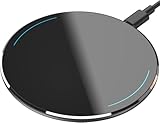
- 【Compatible with iPhone and Android Devices】Enabled wireless charging devices or devices with receivers, such as compatible with iPhone 17/17 Pro/17 Pro Max/Air/16/16 Plus/16 Pro Max/15/15 Plus/15 Pro/15 Pro Max/14/14 Plus/14 Pro/14 Pro Max/13/13 mini/13 Pro/13 Pro Max/iPhone 12/12 mini/12 Pro/12 Pro Max, compatible with Samsung Galaxy S25/S24/S23/S22/S21/S20/ S20+/S10 and so on; 5W charging mode works on Any wireless-charging-enabled devices like Google Pixel 3/3XL/4XL and other wireless charging enabled phones.
- 【Upgraded Charging Efficiency Up to 15W】The TOZO W1 charger has passed millions of tests in our lab, the optimized chipset provides 15W charging Compatible for LG phones, 10W charging Compatible for Samsung phones, and 7.5W charging Compatible for iPhone phones.; this Wireless Charging Pads Charge your iPhone from 0 to 100% in just 2-2.5 hours and can charge iPhone 15 up to 50% in half an hour, three times faster than the original 5W iPhone charger.
- 【Type-C Charging Port and Intelligent Protection】Type-C charging port has a reversible design, which means you can plug the cable in either way without worrying about the orientation.When a metal foreign object is detected, the green light will flash, indicating that the device cannot charge the metal foreign object.
- 【Sleep-Friendly LED Indicator and Safe to Use】The wireless charger will light up blue for 10 seconds and then turn off during charging, quietly uses LED lights to display charge status, allowing undisturbed sleep with no notification sounds.With built-in protections against over-voltage, over-temperature, over-current, short-circuit, and other potential hazards, it keeps your device's battery safe from overcharge damage, it stop charging when full.
- 【Upgraded Anti-Slip Material】Compared to the old W1 wireless charger, the upgraded W1 charger uses upgraded anti-slip materials on the top and bottom, allowing you to keep your device stable during charging and prevent it from sliding easily.
Third‑party chargers that are generally safe
Reputable accessory brands that explicitly list Galaxy Watch compatibility can be a solid alternative to Samsung’s official puck. These typically mirror Samsung’s charging profile and include temperature and power regulation that the watch expects.
Well‑designed third‑party pucks often charge slightly slower than Samsung’s original cable, but the difference is usually measured in minutes rather than hours. For overnight charging or desk use, this trade‑off is rarely noticeable in daily life.
Multi‑device charging stands and docks
Charging stands that hold a Galaxy Watch, phone, and earbuds in one place are popular for bedside or desk setups. The safest versions use an embedded Galaxy Watch–specific charging module rather than a generic Qi coil.
If the stand requires you to insert your own official Samsung watch puck, it is generally a safer design. This keeps the watch’s charging behavior identical to Samsung’s original accessory while improving ergonomics and reducing cable clutter.
Portable and keychain-style chargers
Ultra‑compact USB‑C or keychain chargers can be useful for emergency top‑ups, especially when paired with a phone or laptop. Quality versions snap securely into place and maintain consistent alignment during charging.
Cheaper versions often suffer from weak magnets and poor coil placement, causing the watch to disconnect repeatedly. This can lead to slow charging, excessive heat, or the watch appearing charged when it is not.
Risks of cheap knock‑offs and unbranded cables
Unbranded chargers sold at extremely low prices are the biggest gamble. Many lack proper thermal management, which can trigger overheating warnings or cause the watch to stop charging mid‑session.
Over time, inconsistent power delivery can accelerate battery wear. While it is unlikely to cause immediate damage, repeated exposure to unstable charging undermines long‑term battery health and day‑to‑day reliability.
Compatibility traps across Galaxy Watch generations
Even within third‑party ecosystems, compatibility claims can be misleading. Chargers designed for Galaxy Watch 4, 5, and 6 families are usually interchangeable, but older chargers built for early Tizen models may not work at all.
Larger watches like the Galaxy Watch Ultra or Classic models with thicker cases also demand stronger magnets and better alignment. A charger that works fine for a Watch 6 may struggle with heavier designs during overnight charging.
What to look for before buying
Clear model listings are essential. If a product does not explicitly mention your Galaxy Watch generation, assume compatibility is uncertain.
Build quality matters more than advertised wattage. A solid magnetic hold, stable base, and heat‑resistant materials contribute more to safe daily charging than chasing faster speeds that the watch cannot use anyway.
Best practices when using third‑party accessories
Monitor the first few charging sessions closely. If the watch becomes unusually warm, disconnects frequently, or charges significantly slower than expected, stop using the accessory.
For daily wear devices that handle sleep tracking, workouts, and notifications, reliability matters more than saving a few dollars. Third‑party chargers can be excellent additions, but only when chosen with the same care as the watch itself.
Common Charging Problems and Fixes: Alignment Issues, Slow Charging, and Non‑Charging Watches
Even with the right charger and good compatibility on paper, charging hiccups still happen. Most Galaxy Watch charging problems come down to alignment, power delivery, or simple wear‑and‑tear, not a faulty watch.
Before assuming the battery is failing, it’s worth working through the common scenarios below. In real‑world testing across multiple Galaxy Watch generations, these fixes resolve the vast majority of charging complaints.
Watch not charging at all: what to check first
If your Galaxy Watch shows no charging icon or vibration when placed on the puck, start with the basics. Remove the strap and place the watch flat on the charger to eliminate any tension pulling it off center.
Check the charging contacts area on the watch back for sweat residue, dust, or skin oils. A quick wipe with a dry microfiber cloth often restores proper contact, especially after workouts or sleep tracking.
Next, try a different power source. Plug the charging cable directly into a wall adapter rather than a laptop or power strip, which may not supply consistent current.
Alignment issues and weak magnetic connection
Samsung’s magnetic charging system is precise by design. If the watch is even slightly off‑center, charging can pause or cycle on and off without obvious warning.
Heavier models like the Galaxy Watch Classic or Galaxy Watch Ultra are more sensitive to alignment due to thicker cases and raised sensors. Overnight, vibration from notifications or a bumped nightstand can break the connection.
If this happens regularly, rotate the watch slowly on the puck until you feel the magnet snap firmly into place. A stable, flat surface matters more than many users realize.
Slow charging despite a working connection
Galaxy Watches are designed to charge conservatively to protect long‑term battery health. That means even in ideal conditions, charging speeds are modest compared to smartphones.
If charging feels unusually slow, check for background heat. High ambient temperatures, recent workouts, or sleep tracking can cause the watch to throttle charging speed until it cools down.
Using reverse wireless charging from a phone will always be slower than the magnetic cable. It’s best treated as a short‑term top‑up rather than an overnight solution.
Overheating warnings and interrupted charging
If your watch displays a temperature warning and stops charging, don’t ignore it. Heat buildup is usually caused by poor airflow, misalignment, or low‑quality third‑party chargers.
Remove any cases or covers from the watch and ensure it is not charging under pillows, blankets, or direct sunlight. Let the watch cool for several minutes before reconnecting.
Repeated overheating during charging is a sign to replace the cable or adapter. In testing, official Samsung chargers and well‑built third‑party stands are far more consistent at managing heat.
Reverse wireless charging not working from your phone
Wireless PowerShare only works on select Samsung phones and must be manually enabled each time. If the phone’s battery drops too low, it will automatically disable the feature.
The watch must be placed sensor‑side down, centered on the phone’s wireless charging coil. Even small shifts can stop charging entirely.
Cases on either device can interfere with the connection. If charging fails, remove the phone case and try again on a flat surface.
Charging stops partway through the night
This is one of the most common complaints among daily wearers who rely on sleep tracking. In most cases, the watch shifted off the charging sweet spot while you slept.
Check whether the charger base is lightweight or prone to sliding. Stands with rubberized feet or heavier bases reduce overnight disconnects significantly.
Also confirm that notifications or alarms aren’t vibrating the watch enough to break the magnetic seal. Disabling haptic alerts during charging can help.
Battery drains quickly even after a full charge
If your Galaxy Watch charges normally but still struggles to last the day, the issue may not be charging at all. Software updates, new health features, or always‑on display settings can dramatically affect battery life.
Restart the watch after a full charge and monitor usage for a day. If battery drain improves, the issue was likely a background process rather than battery wear.
For older watches used daily for workouts, GPS, and notifications, some capacity loss over time is normal. Consistent, stable charging helps slow that decline.
When to consider a cable or battery replacement
If none of the above fixes help and charging remains unreliable across multiple power sources, the cable is the most likely failure point. Even official cables can degrade after years of bending and travel.
Battery replacement is rarely needed within the first few years, but heavy users may notice reduced endurance over time. Samsung service centers can confirm battery health if problems persist.
For most users, restoring proper alignment, switching to a stable charger, and improving airflow resolves charging problems completely.
Final charging sanity check
A Galaxy Watch is designed to be worn daily, tracked through workouts, and charged quickly during downtime. When charging feels frustrating, it usually points to a setup issue rather than a design flaw.
With the right charger, a stable surface, and realistic expectations around charging speed, Samsung’s system is dependable across generations. Once dialed in, charging becomes a background task rather than a daily concern.