Huawei Petal Maps is Huawei’s own navigation app, built to replace Google Maps within the Huawei Mobile Services ecosystem and designed to work seamlessly across Huawei phones and wearables. If you use a Huawei smartphone or smartwatch and want reliable walking directions without workarounds, Petal Maps is meant to feel native, predictable, and easy to trust on foot. This guide will show you exactly how it supports pedestrian navigation and why it makes sense for everyday walking, commuting, and city exploring.
For walking specifically, Petal Maps focuses less on flashy extras and more on clarity and consistency. Directions are readable at a glance, rerouting is quick when you miss a turn, and the app integrates cleanly with Huawei location services to preserve battery life during longer walks. If you have ever struggled with delayed GPS locks, confusing voice prompts, or poor smartwatch support, this is where Petal Maps quietly stands out.
What Huawei Petal Maps actually is
Petal Maps is a full-featured navigation and mapping app developed by Huawei and distributed through AppGallery. It uses a combination of Huawei’s own mapping data and regional partners, optimized for pedestrian, driving, and public transport routes. Because it is built around HMS rather than Google Mobile Services, it runs smoothly on Huawei devices without missing permissions or background limitations.
On Huawei phones, Petal Maps integrates deeply with system-level location services, motion sensors, and battery management. This matters for walking navigation because the app can better detect movement changes, pauses, and direction shifts without aggressively draining power. On supported Huawei watches, directions can mirror to your wrist, reducing how often you need to pull your phone out while walking.
🏆 #1 Best Overall

- Bright, high-resolution 5” glass capacitive touchscreen display lets you easily view your route
- Get more situational awareness with alerts for school zones, speed changes, sharp curves and more
- View food, fuel and rest areas along your active route, and see upcoming cities and milestones
- View Tripadvisor traveler ratings for top-rated restaurants, hotels and attractions to help you make the most of road trips
- Directory of U.S. national parks simplifies navigation to entrances, visitor centers and landmarks within the parks
Why Petal Maps works especially well for walking
Walking navigation demands different priorities than driving, and Petal Maps reflects that in its design. Pedestrian routes favor sidewalks, crossings, footpaths, and short connectors that car navigation often ignores. The map view stays clean when zoomed in, which makes it easier to spot turns and landmarks while moving.
Turn-by-turn walking instructions are timed for slower speeds, so prompts usually arrive early enough to react without feeling rushed. Visual cues such as arrows, distance countdowns, and clear street names are easy to read in bright outdoor conditions. This is particularly helpful if you rely on quick glances rather than continuous screen attention.
Designed for Huawei phones and wearables
One of the strongest reasons to use Petal Maps is how well it fits into the Huawei ecosystem. On Huawei watches running HarmonyOS, walking directions can appear as vibration alerts and on-screen prompts, which is ideal for hands-free navigation. This reduces phone usage and improves safety when walking in busy areas.
Battery efficiency is another practical benefit. Because Petal Maps works with Huawei’s power management rather than against it, long walking sessions are less likely to trigger aggressive background app closures. This is noticeable on mid-range phones and smaller wearables where battery headroom matters most.
Offline maps and reliability on the move
Petal Maps allows you to download offline maps by region, which is extremely useful for walking navigation in areas with poor signal. Once downloaded, the app can still provide route guidance and map visibility without constant data access. For travelers or commuters passing through underground walkways or dense city blocks, this improves reliability significantly.
Offline maps also reduce data usage and can improve GPS stability since the app does not need to constantly fetch map tiles. When combined with pedestrian mode, this makes Petal Maps a dependable option for long walks, sightseeing, or daily routines where connectivity may fluctuate.
A practical alternative to Google Maps for everyday walking
For Huawei users, Petal Maps is not just an alternative but often the most friction-free choice. Setup is straightforward, permissions are clearly explained, and there is no need to install additional services to unlock full functionality. Everything from location access to voice guidance is handled within Huawei’s own software environment.
If your goal is simple, accurate walking directions that work smoothly with your phone and watch, Petal Maps delivers without unnecessary complexity. The next sections will walk you through setting it up properly and using pedestrian mode step by step, so you can get confident turn-by-turn guidance from your very first walk.
Before You Start: Checking Compatibility, HMS Requirements, and App Version
Before jumping into pedestrian navigation, it’s worth taking a minute to make sure your phone and watch are set up correctly. Petal Maps is tightly integrated with Huawei Mobile Services, and having the right software foundation avoids missing features or unreliable walking guidance later on.
This quick checklist-style section is designed to remove friction up front, especially if you’re new to HMS or recently switched from a Google-dependent setup.
Compatible Huawei phones and software versions
Petal Maps is officially supported on Huawei smartphones running EMUI 10.1 or later, as well as HarmonyOS-based phones. This covers most Huawei devices released in recent years, including popular P-series, Mate-series, Nova models, and newer foldables.
For walking directions to work properly, your phone must have full HMS support enabled. This is standard on global Huawei models without Google Mobile Services, but it’s still important to confirm that HMS Core is installed and up to date in the background.
If you’re using an older Huawei phone that originally shipped with Google services, Petal Maps will still run, but some deeper system optimizations may be less consistent. Walking navigation will function, but battery efficiency and background reliability may vary depending on system settings.
Huawei Mobile Services (HMS) requirements explained simply
Petal Maps relies on Huawei Mobile Services for location accuracy, voice guidance, and background navigation stability. HMS Core acts as the backbone, handling permissions, GPS behavior, and integration with other Huawei apps and wearables.
You don’t need to manually configure HMS in most cases. As long as HMS Core is installed and updated through AppGallery, Petal Maps will automatically tap into the required services when you grant location and movement permissions.
If walking directions pause unexpectedly or voice prompts fail to play, it’s often a sign that HMS Core is outdated or restricted by battery management. Checking this early saves troubleshooting later when you’re already on the move.
Petal Maps app version: why updates matter for walking navigation
Always check that Petal Maps is running the latest version available in AppGallery. Huawei frequently improves pedestrian routing, crosswalk handling, and turn-by-turn cues through app updates rather than system updates.
Newer versions also improve how walking routes behave when you briefly leave the suggested path. Rerouting is faster and more intuitive, which is especially useful in dense urban areas where sidewalks and shortcuts are common.
To check your version, open AppGallery, search for Petal Maps, and confirm that no update button is shown. Keeping the app current ensures the best walking experience and smoother interaction with your watch.
Smartwatch compatibility and what to expect on your wrist
Petal Maps works with Huawei watches running HarmonyOS, including Watch GT models, Watch Fit series, and newer Huawei Watch releases. When paired correctly, walking directions appear as vibration alerts and on-screen prompts that mirror key turns from your phone.
The experience is intentionally lightweight to preserve battery life. You’ll typically see upcoming turns, distance indicators, and directional arrows rather than full maps, which keeps the watch comfortable to wear all day without excessive power drain.
Make sure your watch is connected through the Huawei Health app and that notification permissions are enabled. Without this link, walking directions will stay on the phone only, even if the watch supports navigation prompts.
Location services, sensors, and permissions to verify
Before starting your first walking route, confirm that Location Services are set to high accuracy on your phone. This allows Petal Maps to combine GPS, Wi‑Fi positioning, and motion sensors for smoother pedestrian tracking.
Petal Maps should be allowed to access location at all times, not just while the app is open. Walking navigation often runs with the screen off, and restricting background access can cause delayed turn prompts or missed vibrations on your watch.
It’s also worth enabling motion and physical activity permissions. These help the app better understand walking speed and direction changes, improving accuracy when navigating tight corners or crowded sidewalks.
Offline maps and storage considerations
If you plan to rely on offline maps, check that your phone has enough free storage before downloading regions. Walking maps don’t take as much space as full driving maps, but large cities can still add up.
Offline maps work best when downloaded over Wi‑Fi and updated periodically. An outdated offline map may still function, but newer pedestrian paths or crossings might be missing, which affects route quality.
Once downloaded, offline maps integrate seamlessly with pedestrian mode. You don’t need to toggle anything manually, making them ideal for travel, roaming-free navigation, or areas with inconsistent signal.
Enabling Location Services and Permissions for Accurate Pedestrian Tracking
For walking directions to feel natural and reliable, Petal Maps needs consistent access to your phone’s location and motion data. This setup step is especially important if you want timely turn alerts mirrored to a Huawei Watch without lag or missed prompts.
A few minutes spent checking these settings can dramatically improve real‑world accuracy, particularly in dense urban areas, parks, or places where GPS signals fluctuate.
Turning on high-accuracy location mode
Start by opening Settings on your Huawei phone and navigating to Location. Make sure Location Services are switched on, then confirm the location mode is set to use GPS, Wi‑Fi, and mobile networks together.
On newer EMUI and HarmonyOS versions, this is often labeled as Precise location or High accuracy. This combination allows Petal Maps to smoothly track walking paths, even when GPS alone struggles near tall buildings or under tree cover.
If you notice your position snapping or drifting while walking, this setting is usually the culprit.
Granting Petal Maps full location access
Next, go to Settings > Apps > Petal Maps > Permissions. Location should be set to Allow all the time rather than only while the app is open.
Walking navigation frequently runs with the screen off while your phone is in a pocket or bag. Limiting access to foreground-only use can delay route recalculations or prevent vibration alerts from reaching your watch at the right moment.
Also confirm that Precise location is enabled, not approximate. Approximate positioning is fine for browsing maps, but it’s not accurate enough for turn-by-turn pedestrian guidance.
Allowing motion and physical activity permissions
Petal Maps benefits from access to motion and physical activity data, which helps it understand when you are walking, stopping, or changing pace. This improves timing for turn prompts and reduces false reroutes.
Check that Physical activity or Motion sensors permissions are enabled in the app’s permission list. This is particularly helpful when navigating busy sidewalks or indoor‑adjacent areas like malls and transit hubs.
These permissions have minimal impact on battery life but noticeably improve responsiveness during real-world walking.
Managing battery optimization for uninterrupted navigation
Huawei’s battery management is aggressive by design, which is great for daily use but can interfere with navigation apps. To prevent Petal Maps from being paused in the background, open Settings > Battery > App launch.
Rank #2

- Compact, Undetectable Vehicle Tracker – Tracki Pro is a small GPS tracker with a strong magnet, hiding easily under your car or any metal surface. Includes Screw Mount and Double-Sided Tape. Ideal as an undetectable car tracker device.
- Real-Time GPS & Advanced Alerts – Monitor your vehicle anywhere with real-time GPS tracker updates. Get alerts for speed, movement, fence crossing, and battery via Email, SMS, or app. Works with Android, iOS, and browsers.
- Long Battery Life & Durable Design – Up to 7 months per charge, 200 days in battery save mode. Waterproof and rugged, perfect for long-term use as a tracking device for cars hidden.
- Worldwide Coverage – Supports GPS, Glonass, BDS, LTE CAT4 & CAT1, plus Wi-Fi for indoor tracking. Vehicle tracker functionality works in 180+ countries.
- Complete Setup & Accessories – Lifetime warranty, easy out-of-the-box setup. Includes mounts, straps, and harness slots. Great as a rastreador GPS para carros or car tracker device hidden.
Find Petal Maps, disable Smart management, and allow it to run in the background. This ensures walking directions continue uninterrupted when the screen is off or when switching briefly between apps.
If you rely on a Huawei Watch for navigation cues, this step is critical. Background restrictions can stop notifications from being pushed to the watch mid-route.
Ensuring Bluetooth and watch permissions are active
For turn-by-turn walking prompts to appear on your watch, Bluetooth must remain enabled and stable. Check that your watch is connected in the Huawei Health app before starting navigation.
Notification access for Petal Maps should also be enabled within Huawei Health. Without this, the phone may navigate correctly, but the watch won’t receive vibration alerts or direction cards.
This setup keeps the experience lightweight on the wrist, preserving battery life while still delivering timely guidance.
Calibrating compass and sensors for better direction awareness
If directions occasionally point the wrong way when you first start walking, your phone’s compass may need calibration. Open Petal Maps and follow any on-screen prompts to move the phone in a figure‑eight motion.
This quick calibration improves initial heading detection, which is crucial when starting a walking route from a standstill. It’s a small step, but it prevents those confusing first few seconds where the map spins or points backward.
Once calibrated, pedestrian tracking feels more confident and requires fewer corrections as you move.
Finding a Destination in Petal Maps: Search, Pins, and Saved Places
With sensors calibrated and background permissions sorted, the next step is telling Petal Maps exactly where you want to go. Getting this right upfront makes walking navigation smoother, especially when you plan to rely on quick glances at your phone or turn prompts on your Huawei Watch.
Petal Maps offers three main ways to set a destination, each suited to different real-world walking scenarios.
Searching by name, address, or category
The most direct method is using the search bar at the top of Petal Maps. You can enter a business name, street address, landmark, or even a general phrase like “coffee” or “pharmacy.”
Search results are optimized for nearby relevance, which works well when walking in dense urban areas. Tapping a result opens a location card with distance, estimated walking time, and a clear Walk option to start pedestrian routing.
If you are wearing a Huawei Watch, this is the best moment to check connectivity. Once walking navigation starts on the phone, turn-by-turn cues can be mirrored to the watch without needing any further input.
Using map categories for nearby places
Below the search bar, Petal Maps surfaces quick-access categories such as Restaurants, Transport, Shopping, and Attractions. These are especially useful when you do not have a specific destination in mind and want options within walking distance.
Category browsing works well with pedestrian navigation because results are ranked by proximity rather than driving convenience. This helps avoid routes that look short by car but are impractical or unsafe on foot.
For casual exploration, this method feels natural and low effort. You can tap through a few options, preview walking times, and commit without typing anything.
Dropping a pin for precise locations
When navigating to a spot that does not have a clear address, dropping a pin is the most reliable option. Long-press anywhere on the map to place a pin, then tap Navigate and choose walking mode.
This is ideal for park entrances, trailheads, meeting points, or specific building access points. It also avoids confusion in areas where businesses share the same address or are set back from the road.
Pin-based navigation tends to produce cleaner walking routes because the endpoint is exact. That precision reduces last-minute rerouting, which helps maintain steady watch notifications and consistent vibration alerts.
Using Saved Places for repeat walks
Petal Maps lets you save frequently visited locations such as Home, Work, or custom places. These appear instantly when you tap the search bar, cutting down setup time before a walk.
Saving places is especially useful if you rely on your watch for navigation prompts. Faster destination selection means you can start walking sooner without spending extra time on your phone.
Saved Places also sync across your Huawei account, so switching phones does not mean rebuilding your navigation habits from scratch. For daily walks or commutes, this consistency improves usability and reduces friction.
Choosing the correct entry before starting walking mode
Before tapping Walk, take a second to confirm the destination card shows the correct entrance or location marker. In dense areas like shopping centers or transit hubs, multiple pins may appear close together.
Selecting the right entry point ensures Petal Maps calculates a pedestrian-friendly route from the start. This helps avoid unnecessary detours and keeps turn-by-turn instructions predictable on both phone and watch.
Once the destination is locked in, you are ready to switch fully into walking navigation. From here, Petal Maps focuses on footpaths, crossings, and real-world walking flow rather than vehicle logic.
Switching to Walking Mode: How Pedestrian Navigation Works in Petal Maps
With the destination confirmed, switching to walking mode changes how Petal Maps thinks about your journey. The app stops prioritising roads and traffic flow, and instead focuses on pavements, footpaths, crossings, and human-scale shortcuts.
This shift is what makes Petal Maps genuinely usable on foot and on a Huawei smartwatch. Navigation becomes slower-paced, more precise, and far better aligned with how people actually move through cities and neighbourhoods.
How to enable walking mode correctly
After tapping Navigate, Petal Maps presents transport options across the top of the screen. Select the walking icon, usually shown as a pedestrian figure, before starting guidance.
Once walking mode is active, the route preview changes immediately. You will see narrower paths, pedestrian crossings, park walkways, and shortcuts that would never appear in driving mode.
If you are using a Huawei watch paired to your phone, start navigation from the phone first. The walking route and turn-by-turn prompts will then sync automatically to the watch, ready for wrist-based guidance.
Location services and accuracy for pedestrian navigation
Walking navigation relies heavily on precise location data, especially in dense areas. Before starting, make sure Location Services are set to High accuracy in your phone’s system settings.
For best results, enable Wi‑Fi and Bluetooth scanning even if you are not connected. These signals help Petal Maps fine-tune your position when GPS alone struggles, such as between tall buildings or inside transit hubs.
On Huawei watches, location accuracy improves after the first minute of movement. This is normal, as the watch calibrates stride, direction, and motion to stabilise turn notifications and vibration alerts.
What changes when Petal Maps switches to pedestrian logic
Once walking mode is active, Petal Maps recalculates everything around foot travel. Estimated arrival times are based on average walking speed, not traffic assumptions.
The app also prioritises safer crossings and legal pedestrian access points. You will often be routed to zebra crossings, footbridges, or underpasses rather than being directed across busy roads.
In parks, campuses, and residential zones, Petal Maps frequently uses internal walkways that are invisible to car navigation. This makes routes feel more natural and less like workarounds.
Understanding turn-by-turn walking cues
Walking directions use shorter, more frequent prompts than driving navigation. Instructions focus on landmarks, crossings, and path changes rather than street names alone.
On your phone, visual cues include arrows, path highlights, and distance countdowns measured in meters. These small increments are easier to process while walking.
On Huawei watches, navigation relies on vibration patterns and brief text prompts. This keeps the experience discreet and comfortable, especially on longer walks where constantly checking the phone would be distracting.
Using map orientation and compass mode while walking
Petal Maps automatically switches to heading-up orientation in walking mode. The map rotates as you turn, helping you align what you see on screen with what is in front of you.
Rank #3

- 【Latest 2026 North America Maps】 Comes with up-to-date 2026 maps of the U.S., Canada, and Mexico already installed. Easily update your maps for free via USB—no extra charges or subscriptions. Additional global maps (EU, UK, AU) available for download.
- 【Clear Navigation with Voice Assistance】 Provides real-time spoken directions in various languages. Choose between 2D and 3D mapping views and benefit from automatic day/night display modes for better visibility during any driving condition.
- 【Vehicle-Specific Routing for All Drivers】 Customize your route based on the type and size of your vehicle—ideal for cars, vans, RVs, buses, or trucks. Avoids restricted roads by factoring in height, width, and weight limits.
- 【Built-In Safety & Warning Alerts】 Receive timely alerts for speed limits, traffic light cameras, sharp turns, school zones, and more. View your trip progress including current speed, distance remaining, and estimated arrival time on a 7-inch clear screen.
- 【Smart Route Planning and Search】 ① GPS for Car supports postal code addresses, coordinates, favorite locations, and POI searches. ② 4 route options: Fast/Green/Shortest/Simple. ③ Supports GPS time and map time settings. ④ Supports FM broadcast—note that FM here refers not to an FM radio, but to transmitting GPS audio into the vehicle.
If you find the map spinning too much, you can tap the compass icon to lock north-up temporarily. This is useful when orienting yourself in unfamiliar areas or reading complex intersections.
Huawei watches benefit from heading-up mode the most. Subtle wrist vibrations combined with directional arrows reduce the need to stop and recheck your surroundings.
Offline maps and walking navigation reliability
Walking navigation continues to work offline as long as the map area is downloaded in advance. This is especially useful for travel, hiking paths, or areas with weak mobile signal.
Offline walking routes may update less frequently if you deviate from the path. However, turn prompts and distance tracking remain reliable, particularly on watches that store route data locally during active navigation.
For regular walking areas, downloading offline maps once can noticeably improve responsiveness and battery efficiency on both phone and wearable.
Practical tips to improve walking navigation accuracy
Start navigation while standing still and facing the direction you plan to walk. This helps Petal Maps lock onto your initial heading correctly.
Keep your phone out of deep pockets or bags during the first minute. Clear GPS reception at the start reduces early rerouting and improves watch notification timing.
If prompts feel delayed on your watch, slow slightly at intersections. Walking navigation is tuned for real-world pacing, and brief pauses help recalibrate positioning without disrupting the route.
Understanding Turn-by-Turn Walking Directions, Visual Cues, and Voice Guidance
Once walking navigation is active, Petal Maps shifts from a traditional overview map into a guidance-first interface. Everything on screen, on your watch, and through audio cues is designed to reduce hesitation and keep you moving naturally.
Understanding how these cues work together makes a noticeable difference in confidence, especially in busy streets or unfamiliar neighborhoods.
How turn-by-turn walking instructions are presented
Petal Maps breaks walking routes into clear, bite-sized steps rather than long-distance instructions. Each turn appears as a short prompt showing the direction, distance remaining, and the street or path name when available.
On the phone, upcoming turns are displayed at the top of the screen with a progress bar that counts down as you approach. This makes it easy to glance quickly without stopping or unlocking the device for long.
Huawei watches mirror this approach in a simplified way. You’ll see a directional arrow, remaining distance to the next action, and receive a vibration just before the turn, which is ideal for hands-free navigation.
Understanding visual cues on the map while walking
The walking map view prioritizes clarity over detail. Roads, pedestrian paths, crossings, and footways are emphasized, while unnecessary labels fade into the background as you move.
A blue route line shows your planned path, with your position centered and slightly forward-facing. As you walk, the map subtly zooms in near intersections, then zooms back out once the turn is completed.
Crosswalks, stairs, and pedestrian-only shortcuts are often included in walking routes. Seeing these visually helps explain why Petal Maps may guide you differently than driving navigation.
Directional arrows, lane-style guidance, and intersections
At complex intersections, Petal Maps switches from simple arrows to more descriptive visuals. You may see a curved arrow, forked path indicator, or multiple exit choices when paths split.
This is especially useful in parks, plazas, or older city centers where streets don’t follow a strict grid. The app focuses on which physical path to take, not just street names.
On Huawei watches, these moments are handled through stronger vibration patterns and clearer arrow graphics. Even without detailed maps on the wrist, the timing of the alert usually aligns well with the physical intersection.
Using voice guidance effectively while walking
Voice guidance is optional but highly recommended for walking navigation. Spoken prompts announce turns a few seconds before you reach them, reducing the need to look at the screen.
Petal Maps keeps walking voice guidance concise. Instructions focus on direction and distance, avoiding unnecessary detail that could distract you in traffic or crowds.
You can adjust voice volume independently from system sounds. This is useful if you want quieter prompts when using earbuds, or louder guidance when walking without headphones.
Combining phone audio with watch-based navigation
When paired with a Huawei watch, the phone and watch work together rather than duplicating effort. The phone handles voice guidance and detailed visuals, while the watch focuses on timing and direction.
This split reduces battery drain on the watch and keeps interactions minimal. A quick wrist glance and vibration often replaces the need to hear or read full instructions.
For longer walks, this combination feels more natural than relying on the phone alone. Your posture stays relaxed, and navigation fades into the background rather than demanding attention.
What happens if you miss a turn or deviate
If you walk past a turn or choose a different path, Petal Maps recalculates automatically. For walking, this usually happens within a few seconds and doesn’t interrupt navigation flow.
You’ll see the route line adjust on the map, followed by a new instruction once positioning stabilizes. On watches, a fresh vibration and updated arrow signal the change.
In dense areas, small deviations are handled gracefully. Petal Maps often adapts by guiding you back gently rather than forcing a full stop or sharp correction.
Reading distance and timing cues while walking
Distances in walking mode are intentionally short and specific, such as “in 30 meters” rather than longer estimates. This matches real walking pace and helps with timing turns accurately.
Arrival time updates continuously based on your speed. If you slow down or stop briefly, the estimate adjusts without triggering unnecessary reroutes.
On Huawei watches, distance countdowns are particularly useful. Feeling a vibration at 20 to 30 meters gives you time to look ahead and identify the correct turn before reaching it.
Adjusting guidance for comfort and usability
If you prefer fewer interruptions, you can lower voice prompt frequency and rely more on visual and vibration cues. This works well for familiar areas or relaxed walks.
For unfamiliar routes, keeping voice guidance enabled reduces mental load. You can focus on your surroundings instead of second-guessing the map.
Finding the right balance between visuals, voice, and haptics turns Petal Maps into a quiet walking companion rather than a demanding navigation tool.
Using Petal Maps While Walking: Screen Layout, Compass Mode, and Live Route Adjustments
Once you’re actively navigating on foot, Petal Maps shifts into a walking-first interface that’s designed to be glanced at, not studied. Everything on screen prioritizes direction, distance, and clarity so you can keep moving naturally.
This is where the app really separates itself from car-focused navigation tools. The layout, compass behavior, and live adjustments all work together to reduce friction while walking.
Understanding the walking navigation screen layout
In walking mode, the map automatically zooms in closer than driving navigation. Streets, paths, and footways appear larger, making small turns and pedestrian shortcuts easier to spot at a glance.
Your current position sits slightly lower on the screen rather than dead center. This forward-looking layout gives more space to see what’s coming next, which is especially helpful when approaching intersections or plazas.
At the top of the screen, you’ll see the next instruction with a clear directional arrow and distance countdown. Arrival time and remaining distance are shown more subtly, so they’re always available without cluttering the view.
Turn-by-turn cues and visual hierarchy
Walking instructions in Petal Maps are intentionally simple. Instead of complex lane diagrams or long text, you get clean arrows, short phrases, and distance-based timing.
Rank #4
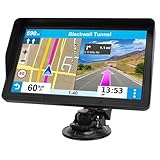
- 【2026 Lifetime Free Map Updates】This premium car GPS comes preloaded with the latest maps for North America (United States/Canada/Mexico). Enjoy lifetime free map updates + downloadable maps for the EU/UK
- 【9‑Inch Large Touchscreen Display】Offers 30% more screen area than 7‑inch models, enhancing visibility. Easily switch between 2D/3D views and day/night modes for a comfortable driving experience
- 【Active Safety Alerts】Provides real‑time warnings for speed limits, school zones, sharp curves, and more. Clearly displays real‑time estimated arrival time/distance
- 【Smart Vehicle‑Specific Routing】Customize your route based on the type and size of your vehicle—ideal for cars, vans, RVs, buses, or trucks. Avoids restricted roads by factoring in height, width, and weight limits
- 【Complete Ready‑to‑Use Kit】Includes 9‑inch car GPS device, car charger, USB cable, dashboard mount, and user manual
When you’re far from the next action, the map stays calm and stable. As you approach a turn, the interface tightens its focus, zooming slightly and emphasizing the arrow so your attention is guided naturally.
If you’re using a Huawei watch alongside your phone, this hierarchy carries over nicely. The watch mirrors only the essentials, relying on arrow direction, distance, and haptic feedback to avoid overloading a small screen.
Using compass mode for natural orientation
Compass mode is one of the most important tools for walking navigation, especially when starting a route or exiting buildings. Petal Maps uses your phone’s compass and motion sensors to rotate the map so it matches the direction you’re facing.
You can toggle between north-up and heading-up views by tapping the compass icon. For walking, heading-up is usually more intuitive, as the map aligns with your real-world perspective.
If the compass feels slightly off, walking a few steps in a straight line usually stabilizes it. This helps Petal Maps distinguish between standing orientation and actual movement.
Keeping compass accuracy high while walking
For best results, hold your phone naturally rather than flat in your palm. Extreme angles can confuse the compass temporarily, especially in dense urban areas.
If accuracy seems inconsistent, a quick compass calibration can help. Moving the phone in a gentle figure-eight motion for a few seconds often resolves minor orientation issues.
On Huawei watches, compass-assisted navigation relies more heavily on phone sensors. Keeping Bluetooth connected and location accuracy set to high ensures smooth direction updates on your wrist.
Live route adjustments when you change pace or direction
Walking isn’t perfectly predictable, and Petal Maps is built with that in mind. If you slow down, stop to check a shop window, or take a slightly different path, the app adapts without making navigation feel jumpy.
Small deviations are usually handled by extending the current instruction rather than immediately recalculating. This avoids constant rerouting for harmless variations in foot traffic or sidewalk positioning.
If you clearly leave the planned route, recalculation happens quickly and quietly. The new route appears smoothly, with updated timing and instructions that match your new direction of travel.
Handling pedestrian shortcuts and informal paths
Petal Maps often recognizes pedestrian-only paths, parks, and shortcuts that aren’t available to cars. When walking, this can result in routes that feel more natural and efficient.
If you notice the app guiding you through a plaza or pathway that doesn’t look like a formal street, zooming in confirms whether it’s a recognized foot route. These paths are usually reliable, especially in city centers.
Should you choose to avoid a suggested shortcut, simply continue along your preferred path. The app recalculates without penalty and adjusts timing based on real walking speed.
Using pinch, tilt, and quick gestures while moving
You can pinch to zoom or drag the map while walking without stopping navigation. Petal Maps recenters automatically after a short pause, so you’re never stuck in an awkward view.
Tilting the map into a slight 3D perspective can help in areas with layered streets or complex intersections. This view gives better depth perception without overwhelming the screen.
If you prefer a fixed view, returning the map to flat mode keeps everything consistent. Walking navigation remains stable regardless of how often you adjust the view.
What you see on Huawei watches during live navigation
On compatible Huawei watches, walking directions are stripped down to their most useful elements. Direction arrows, distance to the next turn, and gentle vibrations do most of the work.
The watch face stays readable even in bright daylight, and the vibration strength is tuned to be noticeable without feeling intrusive. This makes it easy to follow directions without constantly checking your phone.
Battery impact during walking navigation is modest. Short city walks barely affect watch battery life, while longer routes still remain practical for day-long wear.
Adapting the interface to your walking style
If you like to walk quickly, keeping the map slightly zoomed out gives more context ahead. Slower walkers often benefit from a tighter zoom that highlights immediate turns.
You can also choose to rely more on compass alignment or more on route lines, depending on personal preference. Petal Maps is flexible enough to support both styles.
Over time, small adjustments like zoom level, compass mode, and cue frequency make walking navigation feel less like following instructions and more like being quietly guided.
Offline Maps and Data Saving Tips for Walking Navigation
Once you’re comfortable adjusting views and following turn cues, the next step is making sure navigation still works smoothly when mobile data is limited. Petal Maps is designed to stay reliable even when your signal drops, which is especially useful for long walks, travel, or battery-conscious days.
Downloading offline maps before you head out
Offline maps in Petal Maps are downloaded by region, usually at the city or provincial level. Open the app, tap your profile icon, choose Offline maps, then search for the area where you’ll be walking.
Each download includes road layouts, pedestrian paths, and place names, so the map remains fully readable without a connection. File sizes are reasonable, making it practical to store multiple cities without filling your phone’s storage.
If you regularly walk in different neighborhoods, downloading nearby areas in advance avoids gaps when crossing district boundaries. Updates can be set to manual, which prevents surprise downloads over mobile data.
What still works offline during walking navigation
With offline maps saved, Petal Maps can display your route line, track your position via GPS, and show upcoming turns while walking. Distance countdowns and basic turn alerts continue to function, even if you lose signal mid-route.
Voice guidance may be limited depending on language packs and system settings, but visual cues remain clear and easy to follow. On Huawei watches, vibration alerts and arrow prompts still trigger as expected because they rely on GPS rather than data.
Live traffic conditions, newly added paths, and place reviews won’t refresh offline, but for pedestrian navigation this rarely affects accuracy. For everyday walking, the experience remains dependable and calm.
Reducing mobile data usage during live navigation
Even when you’re online, Petal Maps can be tuned to sip data rather than consume it. Keeping the map at a consistent zoom level reduces background tile loading as you walk.
Avoid frequent switching between 2D and 3D views if you’re trying to conserve data, as perspective changes can prompt additional map redraws. Letting the app auto-recenter instead of manually dragging the map also helps keep data use low.
If you’re pairing navigation with a Huawei watch, relying on wrist prompts instead of constantly waking your phone screen reduces both data and battery drain. It also makes walking feel more natural and less screen-focused.
Managing location accuracy without constant connectivity
Petal Maps uses GPS, motion sensors, and compass data to track walking movement, so it doesn’t depend on mobile data for positioning. For best results, enable high-accuracy location mode in system settings before starting your walk.
Calibrating the compass occasionally, especially after traveling or using the phone in a car, improves directional stability. This helps prevent the map from spinning or briefly pointing the wrong way when you set off.
When walking among tall buildings, offline maps combined with steady GPS tracking often perform more consistently than constantly reconnecting to weak data signals. The route line may lag slightly for a second, but it quickly realigns.
Battery-saving habits that complement offline maps
Offline navigation naturally reduces battery drain because the phone isn’t constantly fetching map data. Lowering screen brightness slightly and relying on turn prompts rather than continuous screen-on use extends walking time further.
On Huawei watches, walking navigation has a light impact on battery thanks to efficient vibration alerts and simplified visuals. Even on longer walks, the watch remains comfortable to wear, with no noticeable heat or performance drop.
For extended days on foot, offline maps combined with watch-based cues strike a strong balance between usability and endurance. It keeps navigation dependable without turning your phone or watch into a battery liability.
Using Petal Maps with Huawei Smartwatches and Wearables
Building on phone-based walking navigation, pairing Petal Maps with a Huawei smartwatch shifts most of the guidance to your wrist. This reduces screen dependency while keeping directions timely and easy to follow.
💰 Best Value

- Explore confidently with the reliable handheld GPS
- 2.2” sunlight-readable color display with 240 x 320 display pixels for improved readability
- Preloaded with Topo Active maps with routable roads and trails for cycling and hiking
- Support for GPS and GLONASS satellite systems allows for tracking in more challenging environments than GPS alone
- 8 GB of internal memory for map downloads plus a micro SD card slot
Huawei’s ecosystem handles this handoff smoothly, especially on HarmonyOS watches designed to mirror navigation cues without overwhelming the small display. The result feels closer to a guided walk than constant map-checking.
Compatible Huawei watches and basic requirements
Petal Maps works best with Huawei watches running HarmonyOS, including Watch GT series, Watch 3 and 4, and newer Watch Fit models. Your phone must have Petal Maps installed and location permissions enabled, with Bluetooth active for a stable connection.
Make sure the watch is paired through the Huawei Health app and logged into the same Huawei ID as your phone. This ensures navigation alerts, vibrations, and route updates sync correctly during a walk.
Before heading out, confirm that notification access is enabled for Petal Maps in system settings. Without this, turn prompts won’t reach the watch even if navigation is running on the phone.
Starting walking navigation with watch support
Begin by setting your walking route in Petal Maps on your phone, selecting pedestrian mode as you normally would. Once navigation starts, the watch automatically enters a guidance state without extra setup.
The watch displays simplified direction cues, distance-to-turn information, and subtle arrows rather than a full map view. This minimal approach keeps text legible on smaller screens and avoids unnecessary battery drain.
If your watch supports on-device Petal Maps views, you may see a basic route preview. On most models, however, the phone handles mapping while the watch focuses on timely instructions.
Understanding vibration and visual turn-by-turn cues
Walking directions rely heavily on vibration alerts, which are especially useful in noisy environments or when the phone is in a pocket. A stronger vibration usually signals an imminent turn, while lighter prompts indicate upcoming guidance.
Visual cues appear briefly when you raise your wrist, showing turn direction and remaining distance. This quick-glance interaction feels natural and avoids long screen-on times that affect battery life.
Because the watch doesn’t constantly refresh maps, guidance remains consistent even when mobile data is weak. GPS tracking stays on the phone, while the watch acts as a reliable companion display.
Using offline maps with a connected watch
Offline maps on your phone work seamlessly with watch-based walking navigation. Once the route is calculated, the watch continues receiving turn prompts even without active data.
This is especially helpful in city centers, parks, or travel situations where roaming data is limited. The watch experience doesn’t change, since it depends on route instructions rather than live map tiles.
To avoid recalculation delays, download offline maps before starting navigation and let the GPS lock in for a few seconds. This improves timing accuracy for turn alerts sent to the watch.
Battery life and all-day wear comfort
Huawei watches are well suited for walking navigation thanks to efficient processors and vibration motors. Even with continuous guidance, battery impact remains modest compared to full workout tracking or always-on display use.
Comfort also matters on longer walks, and Huawei’s lightweight cases, curved lugs, and soft silicone or fluoroelastomer straps stay comfortable over hours of wear. There’s no added heat or stiffness during navigation.
For extended days out, keeping the watch in standard power mode rather than performance-heavy fitness modes preserves battery without sacrificing navigation reliability.
Practical tips for smoother wrist-based navigation
Keep your watch snug but not tight so vibration cues are easy to feel without discomfort. A loose fit can cause missed alerts, especially during brisk walking.
If directions feel delayed, briefly wake the phone screen to confirm GPS accuracy, then return to watch-only guidance. This quick check often resolves compass-related orientation issues.
Rely on wrist prompts for turns and let the phone stay in your pocket unless you need a route overview. This habit not only saves battery but also makes walking navigation feel calmer and more intuitive.
Practical Tips to Improve Accuracy, Battery Life, and Real-World Usability
Once you’re comfortable relying on wrist-based prompts, a few small adjustments can make Petal Maps feel noticeably more accurate and less demanding on both your phone and watch. These are the habits that experienced Huawei users tend to adopt after a few days of real-world walking navigation.
Let GPS settle before you start moving
Before you begin walking, stand still for a few seconds after tapping Start. This allows the phone’s GPS to lock your position and heading more precisely.
If you launch navigation while already moving, especially in dense urban areas, initial turn prompts can arrive late or feel slightly off. Giving GPS that brief moment upfront often prevents early recalculations.
Keep location settings optimized, not maxed out
On your phone, leave location mode set to High accuracy, but avoid unnecessary background apps that also request location access. Multiple apps competing for GPS can introduce small delays in direction updates.
Huawei’s location services are efficient, so there’s no benefit to forcing constant screen-on use. Let Petal Maps run normally with the screen off while the watch handles alerts.
Use pedestrian mode intentionally
Always confirm that pedestrian navigation is selected before starting your route. Walking mode uses different assumptions for speed, crossing behavior, and path access compared to driving or cycling.
This is especially important in parks, shopping areas, and older city centers where footpaths don’t follow road logic. Pedestrian mode ensures turns align with where people actually walk.
Understand how turn-by-turn cues behave on the watch
Huawei watches rely primarily on vibration patterns and brief text prompts rather than constant map visuals. A single vibration usually signals an upcoming turn, while repeated pulses indicate immediate action.
You don’t need to look at the watch constantly. Let vibrations guide you, then glance only when confirming direction or distance.
Reduce screen usage to extend battery life
Frequent phone screen checks drain far more battery than background navigation. Trust the watch prompts and only unlock the phone when you need a broader route overview.
On the watch side, disabling always-on display during navigation can significantly extend battery life, especially on smaller models with compact batteries.
Manage battery intelligently for long days out
If you expect several hours of walking, start the day with a fully charged phone and avoid switching between apps mid-route. App hopping increases background activity and energy use.
Huawei watches are efficient enough to handle all-day navigation, but switching to standard power mode instead of workout modes keeps vibration alerts reliable without unnecessary sensor usage.
Improve accuracy in dense urban environments
Tall buildings can interfere with GPS direction at intersections. If the watch prompts feel momentarily confusing, pause briefly and let your heading recalibrate.
A quick glance at the phone map can confirm orientation, after which the watch usually resumes accurate guidance. This is normal behavior and not a fault of the watch itself.
Use offline maps as a reliability backup
Even when you expect strong data coverage, offline maps reduce the chance of rerouting delays. They also make initial route calculation faster and more predictable.
This is particularly useful when traveling or navigating unfamiliar neighborhoods where connectivity may fluctuate unexpectedly.
Wear comfort affects usability more than you think
A watch that’s too loose can mute vibration alerts, while one that’s too tight becomes uncomfortable on longer walks. Aim for a secure but relaxed fit so cues remain noticeable without fatigue.
Huawei’s lightweight cases and flexible straps are well suited for navigation-heavy days, making it easy to forget the watch is even there until it’s needed.
Make wrist navigation part of your routine
The real strength of Petal Maps with a Huawei watch is how quietly it fits into daily movement. You walk naturally, keep your phone pocketed, and receive guidance only when necessary.
Once this habit forms, navigation feels less like following instructions and more like being gently guided along the way.
In everyday use, Petal Maps proves that walking navigation doesn’t need constant screen attention to be effective. With a properly set up phone, a well-fitted watch, and a few smart habits, Huawei’s ecosystem delivers reliable, battery-friendly guidance that works comfortably in real-world conditions.