If you’ve opened Apple Health, Garmin Connect, or the Whoop app and seen HRV rising, falling, or flashing warnings, you’re not alone in wondering what it actually means. It looks like a single number, often framed as a recovery or readiness signal, yet it behaves very differently from heart rate, VO₂ max, or calories burned. That confusion is exactly why HRV is both one of the most powerful and most misunderstood metrics in modern wearables.
At its core, HRV is not a fitness score, a stress meter, or a prediction of how hard you should train today. It’s a window into how your nervous system is responding to life, training, sleep, illness, alcohol, work pressure, and everything in between. When you understand what HRV truly measures, and just as importantly what it does not, it becomes far more useful and far less anxiety‑inducing.
This section breaks down the physiology behind HRV in plain language, explains why higher is not always “better,” and sets expectations for how Apple Watch, Garmin, Whoop, and other platforms capture and present HRV differently. Once that foundation is clear, interpreting your own data becomes much more intuitive instead of guesswork.
HRV is the variation between heartbeats, not your heart rate
Despite the name, Heart Rate Variability has nothing to do with how fast your heart is beating. It measures the tiny differences in time between consecutive heartbeats, often down to milliseconds. Even at a steady 60 bpm, your heart does not beat once every exact second, and that variability is the signal HRV captures.
🏆 #1 Best Overall
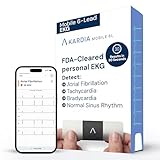
- Accurate Detailed EKG in 30 Seconds: Capture a medical-grade 6-lead EKG in just 30 seconds. This FDA-cleared EKG Monitor provides six times more information than a single view (1-lead) heart monitor or a smartwatch. Record unlimited EKGs and email to your doctor or anyone using the free Kardia app.
- Six Leads, Six Times more Information: Kardia personal EKG device detects Normal Sinus Rhythm and irregular arrhythmias AFib, Bradycardia and Tachycardia. Suitable for seniors employing self care, caregivers monitoring chronic conditions, proactive health-conscious individuals and fitness enthusiasts tracking cardio activity.
- No Subscription Needed, Compatible with most Smartphones and Tablets: Download app and connect KardiaMobile 6L to your phone/tablet via Bluetooth. No Wi-Fi, cords or PC needed. Add optional KardiaCare subscription for additional arrhythmia detections including Sinus Rhythm with PVCs, Sinus Rhythm with SVE and Sinus Rhythm with Wide QRS, cardiologist EKG reviews, and more.
- Pocket-size Peace of Mind: A compact, portable monitor built for comfort and simplicity. Use at home, office, gym or while traveling. Simply place fingers on top electrodes and the bottom sensor on your leg or knee for a quick check. FSA/HSA-eligible cardio mobile device with EKG that helps you get the clarity you need quickly and easily.
- #1 Cardiologist Recommended Personal EKG brand: Recommended by cardiologists worldwide, with over 350 million EKGs recorded, recipient of health technology awards, trusted by leading hospitals and healthcare providers. KardiaMobile 6L delivers detailed heart data anytime and anywhere.
Those timing variations are driven primarily by your autonomic nervous system, which balances sympathetic activity (fight or flight) and parasympathetic activity (rest and digest). A more flexible, responsive nervous system creates greater variability between beats. A more stressed or fatigued system produces a more rigid, uniform rhythm.
This is why two people with the same resting heart rate can have very different HRV values. Heart rate reflects output; HRV reflects control.
HRV is a proxy for nervous system balance, not willpower or toughness
One of the biggest misconceptions is that low HRV means you’re weak or unfit. In reality, HRV is highly individual and deeply influenced by genetics, age, training history, and baseline health. What matters is not how your number compares to someone else’s watch, but how it compares to your own long-term baseline.
High HRV generally suggests strong parasympathetic activity and good recovery capacity. Low HRV suggests higher sympathetic load, which can come from intense training, poor sleep, illness, psychological stress, dehydration, or even long travel days. None of those are moral failures; they’re physiological states.
Elite endurance athletes often have very high baseline HRV, but they also see sharp drops during heavy training blocks. That drop isn’t a problem unless it stays low while performance, mood, or sleep also deteriorate.
HRV is about trends and context, not single-day decisions
A single low HRV reading does not mean you should skip training, panic, or assume something is wrong. HRV fluctuates naturally day to day, even when routines are identical. What makes HRV powerful is pattern recognition over time.
Platforms like Garmin and Whoop emphasize rolling baselines and deviations from your personal norm for this reason. Apple Watch shows raw measurements in Apple Health, which gives transparency but less immediate interpretation. Neither approach is wrong, but they require different mindsets from the user.
The real value appears when HRV trends align with how you feel, how you slept, and how you’re performing. HRV is a supporting actor, not the director.
HRV is not a universal number across devices
Not all HRV numbers are directly comparable, even if they appear to be measuring the same thing. Different platforms use different metrics, sampling windows, and algorithms. Apple Watch typically reports SDNN from short, passive measurements taken during rest and sleep. Whoop focuses heavily on RMSSD captured during deep sleep when movement and external noise are lowest. Garmin may show nightly averages, stress correlations, or readiness scores derived from HRV trends.
These differences matter. An RMSSD value of 80 ms on Whoop is not equivalent to an SDNN value of 80 ms on Apple Health. Even two Apple Watches worn differently or with different sleep consistency can produce slightly different results.
This is why switching platforms often confuses users. The goal is consistency within an ecosystem, not chasing identical numbers across brands.
HRV is influenced by how and when your watch measures it
Unlike heart rate during a run, HRV is extremely sensitive to motion, posture, breathing patterns, and measurement timing. Chest straps in clinical or lab settings are still the gold standard, but modern wrist-based optical sensors have improved dramatically when conditions are controlled.
Whoop’s strap design prioritizes constant skin contact and overnight measurement, which helps reduce noise. Apple Watch captures HRV opportunistically during periods of stillness, often while sleeping or resting. Garmin blends nighttime data with broader daily context, depending on the model and settings.
Fit, strap tightness, sleep movement, battery level, and even how cold your wrist is can subtly influence readings. That doesn’t make HRV unreliable, but it does mean perfect precision is unrealistic in daily life.
HRV is not a diagnosis or a guarantee
HRV cannot diagnose overtraining syndrome, burnout, anxiety disorders, or cardiovascular disease on its own. It can flag that something is changing, but it cannot tell you exactly what or why without context. Treating HRV as a medical verdict is one of the fastest ways to misuse it.
Likewise, a high HRV does not guarantee peak performance that day. Some athletes perform exceptionally well with suppressed HRV during competition phases. Others need higher values to feel sharp. Individual response always trumps textbook interpretation.
HRV works best when combined with subjective feedback, training load, sleep quality, and common sense. Wearables provide data, not wisdom.
Why understanding this foundation matters before going further
Once you understand that HRV reflects nervous system adaptability, not effort or fitness in isolation, the metric becomes far more actionable. You stop chasing someone else’s number and start paying attention to your own signals. You also become better equipped to understand why Apple, Garmin, and Whoop sometimes tell very different stories from the same body.
With that groundwork in place, the next step is learning how each platform actually measures, visualizes, and interprets HRV in practice. That’s where differences in hardware, software philosophy, and recovery models start to matter just as much as the physiology itself.
The Physiology Behind HRV: Nervous System Balance, Recovery, and Stress
Understanding how HRV behaves inside the body makes the differences you see across Apple Watch, Garmin, and Whoop far less confusing. At its core, HRV is a window into how your nervous system is managing competing demands, not a direct score of fitness or effort. What your wearable captures is the outcome of constant physiological negotiation happening beneath the surface.
The autonomic nervous system: the real driver behind HRV
HRV reflects activity within the autonomic nervous system, which regulates processes you do not consciously control, like heart rate, breathing, digestion, and hormonal release. This system operates continuously, adjusting your internal state based on physical load, psychological stress, sleep, illness, and environment. The more adaptable this system is, the more variability you tend to see between heartbeats.
Rather than measuring how fast your heart beats, HRV measures how flexibly it responds to signals from the brain and peripheral nerves. Even at the same resting heart rate, two people can have dramatically different HRV depending on nervous system balance. This is why HRV can change without any noticeable difference in pulse.
Sympathetic vs parasympathetic: stress and recovery in constant tension
The autonomic nervous system has two main branches that shape HRV patterns. The sympathetic branch prepares you for action, increasing heart rate and reducing variability when demands are high. The parasympathetic branch, largely mediated by the vagus nerve, slows the heart and increases beat-to-beat variability when recovery is prioritized.
Higher HRV generally reflects stronger parasympathetic influence, especially during sleep and rest. Lower HRV suggests sympathetic dominance, which can be appropriate during training, competition, or acute stress. Problems arise not from either state, but from getting stuck in one for too long.
Why recovery shows up so clearly in HRV
Training, especially endurance and high-intensity work, temporarily suppresses HRV as the body shifts toward sympathetic activation. With adequate recovery, parasympathetic tone rebounds and HRV returns to baseline or rises. This rebound pattern is one of the most useful signals wearables can capture when measurements are taken consistently.
If HRV stays suppressed across multiple days, it can indicate insufficient recovery relative to training load, poor sleep, under-fueling, or accumulating life stress. That signal does not identify the cause, but it tells you the nervous system has not regained flexibility. This is why HRV often responds before soreness, fatigue, or performance decline becomes obvious.
Stress is not just training load
The nervous system does not distinguish cleanly between physical stress and psychological stress. Work pressure, travel, alcohol, illness, emotional strain, and sleep disruption all pull on the same autonomic levers that training does. HRV reflects the total load, not just what happened in the gym or on the run.
This explains why a rest day does not always produce higher HRV. If sleep was fragmented, hydration was poor, or mental stress remained elevated, parasympathetic recovery may still be limited. Wearables capture this blended signal, which is both their strength and their limitation.
Why timing and context matter physiologically
HRV is most stable when the body is not actively responding to external demands. During sleep, breathing is slower, movement is minimal, and hormonal rhythms favor recovery, allowing parasympathetic influence to dominate. This is why nighttime HRV tends to be more reliable than daytime spot checks.
Daytime measurements can still be useful, but they are more sensitive to posture, movement, caffeine, temperature, and even conversation. From a physiological standpoint, consistency matters more than frequency. Comparing HRV measured under similar conditions allows nervous system trends to emerge.
Individual baselines matter more than population norms
HRV values vary widely between individuals due to genetics, age, sex, training history, and even heart anatomy. A value that is low for one person may be completely normal for another with equal health and performance capacity. The nervous system’s adaptability relative to your own baseline is what carries meaning.
This is why wearables that emphasize trends over time align better with HRV physiology than those highlighting single-day numbers. Your nervous system cares about patterns, not rankings. Interpreting HRV through that lens prevents overreaction to normal fluctuations and keeps the metric grounded in biology rather than hype.
How Wearables Measure HRV: Optical Sensors, Timing, and Data Quality Limits
Understanding why HRV behaves the way it does physiologically sets the stage for how wearables attempt to capture it. Once you move from biology to hardware, software, and real-world wearability, the picture becomes more nuanced. HRV is not measured directly by most consumer devices, but inferred through a chain of optical sensing, signal processing, and timing decisions that vary by platform.
PPG vs ECG: what your wrist is actually measuring
Most smartwatches and fitness bands estimate HRV using photoplethysmography, or PPG. Green or infrared LEDs shine light into the skin, and sensors detect changes in light absorption caused by blood volume pulses with each heartbeat. From these pulses, the device estimates the timing between beats, which becomes the raw input for HRV calculations.
This approach is very different from electrocardiography, which measures the heart’s electrical activity directly. Chest straps and medical ECGs capture R-R intervals with far greater precision, especially during movement. Wrist-based PPG is good enough for trends at rest, but it has inherent noise that wearables must filter aggressively.
Why motion, fit, and materials matter more than specs
PPG accuracy depends heavily on stable skin contact. A loose strap, a bony wrist, tattoos, or significant arm movement can distort the pulse signal and introduce timing errors that inflate or suppress HRV values. This is why devices often feel more “accurate” at night, when movement is minimal and the watch sits still on the wrist.
Hardware design plays a role here. Apple Watch uses a curved ceramic or sapphire-backed sensor array that sits flush against the skin, while Garmin’s Elevate sensor prioritizes battery efficiency and durability for long wear. Whoop’s fabric strap trades display and rigidity for constant contact, improving overnight signal consistency despite its minimalist build.
Why most platforms prefer nighttime HRV
Because HRV is most meaningful when measured under stable physiological conditions, many platforms prioritize sleep-based sampling. During deep and REM sleep, respiration slows, movement drops, and parasympathetic activity dominates, creating cleaner interbeat interval data. This aligns well with the physiological principles discussed earlier.
Apple Watch records HRV opportunistically throughout the day but emphasizes nighttime values when Sleep Focus is enabled. Garmin and Whoop lean even harder into overnight averages, explicitly avoiding daytime noise. The tradeoff is fewer data points, but higher confidence in the trend.
Sampling windows and algorithm choices shape the number you see
Not all HRV is calculated the same way. Most wearables use RMSSD, a time-domain metric sensitive to parasympathetic activity, but they may compute it over windows ranging from one minute to five minutes or longer. Short windows are more responsive but noisier, while longer windows smooth variability at the cost of immediacy.
Apple Health stores raw HRV samples that can appear scattered if viewed individually. Garmin and Whoop tend to present a single daily value derived from multiple filtered segments, prioritizing interpretability over transparency. None of these approaches are inherently right or wrong, but they are not interchangeable.
Why HRV from different platforms should not be compared directly
Even if two devices sit on the same wrist, differences in sensor wavelength, sampling frequency, artifact rejection, and exclusion rules will produce different HRV values. One platform may discard data during micro-movements, while another attempts to correct it algorithmically. The result is that absolute numbers diverge, even if trends move in the same direction.
Rank #2
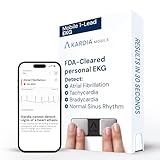
- On-the-Go Accurate EKG: Capture a single lead medical-grade electrocardiogram in just 30 seconds with the pocket-sized KardiaMobile EKG Monitor. Download the free Kardia app and record an EKG on your smartphone or tablet anytime and anywhere.
- Clear Results: EKG detects Atrial Fibrillation, Tachycardia, Bradycardia and Normal Sinus Rhythm and displays easy-to-read result. Email EKG to your doctor or anyone. Add KardiaCare subscription for additional heart rhythm detections, doctor reviews of your EKG, and more. Subscription requires additional fee.
- Simple to Use Without a Subscription: No Bluetooth, Wi-Fi, cords or PC needed. Place the device near your smartphone. Monitor your heart by placing your fingers or thumbs on the silver KardiaMobile EKG sensors. Know in 30 seconds whether your heart rhythm is normal.
- Pocket-size Peace of Mind: Weighs less than 1 ounce, KardiaMobile is small enough to take anywhere. Ideal for home, office, gym or outdoors. FSA/HSA-eligible and FDA-cleared cardio mobile device gives you answers quickly and easily.
- #1 Cardiologist Recommended Personal EKG brand: Recommended by cardiologists worldwide, with over 350 million EKGs recorded, recipient of health technology awards, trusted by leading hospitals and healthcare providers.
This is why switching ecosystems often feels like starting over. Your nervous system did not change overnight, but the measurement lens did. Treat each platform’s HRV as internally consistent rather than universally comparable.
Battery life and comfort quietly shape HRV quality
Long battery life enables continuous overnight wear, which is essential for reliable HRV trends. Devices that require daily charging increase the odds of missed sleep data, especially for users who charge overnight. Comfort matters just as much, because a watch that is removed halfway through the night cannot measure recovery effectively.
Whoop’s multi-day battery and soft strap excel here, while Garmin’s larger cases balance endurance with ruggedness for outdoor athletes. Apple Watch prioritizes a refined case, premium materials, and broad smartwatch functionality, but its shorter battery life demands more charging discipline. HRV quality is often determined by what stays on your wrist, not what has the best sensor on paper.
The ceiling of wrist-based HRV accuracy
Even under ideal conditions, wrist-based HRV has limits. PPG cannot perfectly resolve beat-to-beat timing during irregular rhythms, high sympathetic drive, or subtle arrhythmias. This does not make wearables useless, but it does mean they are better suited for longitudinal insight than diagnostic precision.
For athletes and biohackers chasing marginal gains, chest straps or morning ECG-based readings can complement wearable data. For most users, however, a consistently worn device that captures clean nighttime HRV provides more actionable insight than sporadic “perfect” measurements. The key is understanding what your wearable is optimized to do, and what it is not.
HRV Metrics Explained: RMSSD, SDNN, Nightly Averages, and Why Units Matter
Once you accept that wrist-based HRV is best used for trends rather than absolute truth, the next challenge is understanding what your device is actually reporting. HRV is not a single number or method, but a family of statistical approaches applied to the tiny timing differences between heartbeats. Different platforms choose different metrics because each emphasizes a slightly different aspect of nervous system behavior.
This is where confusion often starts. Two watches can both say “HRV,” measured in milliseconds, yet be describing fundamentally different physiological signals.
RMSSD: the recovery-focused metric most wearables rely on
RMSSD, or Root Mean Square of Successive Differences, is the most common HRV metric used by modern wearables. It focuses on short-term, beat-to-beat variability, which is strongly influenced by parasympathetic activity, the branch of your nervous system associated with recovery, digestion, and rest.
Because RMSSD is less affected by slow trends and breathing patterns, it works well with overnight data and imperfect optical sensors. This is why Apple Watch, Whoop, Oura, and many Garmin recovery features either use RMSSD directly or base their readiness scores on it.
In practical terms, higher RMSSD generally suggests better recovery capacity and lower physiological stress, while suppressed RMSSD often appears after hard training, poor sleep, illness, or alcohol. The key is consistency: your personal baseline matters far more than any population “ideal.”
SDNN: broader variability with different use cases
SDNN, or Standard Deviation of Normal-to-Normal intervals, captures overall variability across a longer recording window. It includes both short-term parasympathetic influence and longer-term fluctuations driven by circadian rhythm, thermoregulation, and hormonal cycles.
Clinically, SDNN has a long history in ECG-based assessments and is useful for evaluating general autonomic balance. In wearables, however, SDNN can be more sensitive to noise, movement, and recording length, which makes it harder to standardize overnight with wrist-based PPG.
Some Garmin devices and third-party platforms expose SDNN values, especially during longer rest periods. For daily recovery guidance, most consumer ecosystems favor RMSSD because it produces more stable, actionable trends with less data cleaning.
Why Apple, Garmin, and Whoop present HRV so differently
Apple Watch records multiple short HRV samples throughout the day and night, then surfaces RMSSD values in milliseconds inside the Health app. There is no single “daily HRV score” by default, which reflects Apple’s philosophy of raw data access rather than coaching. This appeals to data-literate users but can feel opaque to beginners.
Garmin typically emphasizes nightly averages and trends, integrating HRV into Training Readiness, Body Battery, and stress metrics. The watch does the interpretation for you, which suits endurance athletes who want fast context without opening spreadsheets.
Whoop leans hardest into HRV as a recovery anchor. It captures HRV during deep sleep, averages it into a single daily value, and ties it directly to strain and recovery recommendations. The soft strap and long battery life support this overnight-first approach, trading general smartwatch features for physiological focus.
Nightly averages versus spot readings
Nighttime HRV averages are generally more reliable than daytime spot measurements. Sleep minimizes movement, posture changes, and cognitive stress, allowing cleaner capture of autonomic activity.
Daytime HRV can still be useful, especially for guided breathing or meditation sessions, but it is highly context-dependent. Caffeine, meetings, temperature, and even scrolling on your phone can influence short readings.
This is why most platforms emphasize overnight HRV for recovery insights. If your device prioritizes sleep-based averages, it is not ignoring data, it is filtering for quality.
Why units matter, even when trends matter more
HRV is typically reported in milliseconds, but not all milliseconds are equal. RMSSD values tend to be lower and more compressed than SDNN, which means a change of 5 ms can be meaningful on one platform and trivial on another.
Some apps further transform HRV using logarithmic scales or proprietary normalization. Whoop’s recovery percentages, Garmin’s readiness scores, and third-party apps built on Apple Health all start from HRV but end up speaking very different languages.
This is why copying a friend’s “good HRV number” is pointless. What matters is how your current value compares to your recent baseline, measured the same way, on the same device, worn the same way.
Interpreting HRV without turning it into a superstition
HRV reflects how adaptable your nervous system is, not how fit, disciplined, or healthy you are as a person. A low HRV day does not mean you must cancel training, just as a high HRV day does not guarantee peak performance.
Use HRV as a conversation starter with your body. Pair it with sleep quality, resting heart rate, subjective fatigue, and training load before making decisions.
The most valuable HRV insight does not come from chasing a higher number. It comes from recognizing patterns, respecting recovery signals, and understanding how your wearable chooses to measure them in the first place.
Apple Watch HRV: Background Measurements, Health App Presentation, and Real-World Use
Apple’s approach to HRV fits neatly with the principles outlined above. Rather than pushing a single daily “score,” Apple Watch quietly collects background data, then leaves interpretation largely up to the user or third-party apps built on Apple Health.
This makes HRV on Apple Watch powerful, but also easy to misunderstand if you expect instant guidance or a readiness number spelled out for you.
How Apple Watch measures HRV in the background
Apple Watch measures HRV using optical heart rate data from the green LED photoplethysmography sensor on the back of the watch. These measurements are taken opportunistically throughout the day when you are still, relaxed, and not moving your wrist much.
There is no dedicated overnight HRV mode in the way Garmin or Whoop handle sleep-based sampling. Instead, Apple relies on multiple short windows of clean data collected during rest, sleep, or mindful breathing sessions.
This aligns with Apple’s broader hardware philosophy. The watch prioritizes comfort, slimness, and all-day wearability over aggressive sensor sampling, which helps preserve battery life on devices that typically last 18 to 36 hours depending on model and usage.
SDNN, not RMSSD: a critical detail many users miss
Apple Watch reports HRV using SDNN, not RMSSD. SDNN reflects overall variability across a sampling window and is more sensitive to breathing patterns, posture changes, and measurement duration.
This choice matters. SDNN values are typically higher than RMSSD values and fluctuate more throughout the day, making them less intuitive for recovery tracking without context.
When users compare Apple Watch HRV to Garmin or Whoop numbers, confusion often follows. The discrepancy is not sensor quality, it is a fundamentally different mathematical lens applied to the same underlying heart rhythm data.
Where HRV lives inside the Health app
HRV data is stored inside the Apple Health app under Heart > Heart Rate Variability. By default, Apple surfaces daily averages, with the option to view weekly, monthly, and yearly trends.
The presentation is intentionally neutral. There are no green or red zones, no performance labels, and no alerts telling you to rest or train harder.
This design reflects Apple’s medical-adjacent posture. Health app metrics are framed as observational data, not prescriptions, which reduces overreaction but demands more literacy from the user.
Mindfulness sessions and intentional HRV readings
Apple Watch can capture cleaner HRV samples during guided Mindfulness or Breathe sessions. These sessions reduce movement and stabilize respiration, improving signal quality.
For users trying to understand personal baselines, these intentional measurements can be useful. However, they should not be treated as equivalent to overnight recovery metrics.
A calm breathing session at 3 p.m. says more about acute stress than long-term readiness. Apple does not explicitly explain this distinction, which is where many beginners misinterpret sudden HRV spikes or drops.
Sleep, background sampling, and why Apple feels “inconsistent”
Even though Apple Watch tracks sleep, HRV is not reported as a dedicated overnight average. Instead, HRV points may appear clustered around nighttime hours when motion is low.
This creates the impression that HRV readings are random or sparse. In reality, Apple is simply conservative about when it trusts the data enough to log it.
Compared to devices with tight straps, thicker sensor modules, and multi-day battery life, Apple Watch trades measurement density for comfort, lighter weight, and better daytime usability.
Rank #3
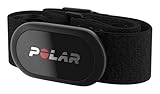
- WORKS WITH EVERYTHING: Polar HRM works with ALL HRM compatible Equipment.
- SUPREME ACCURACY: Widely recognized for its top precision by many sources, Polar H10 is the most accurate heart rate sensor in Polar's history. Polar H10 provides top quality measurement.
- CONNECTIVITY: Bluetooth, ANT plus and 5 kHz provide an excellent variety of connection options. You can use Bluetooth and ANT plus connections simultaneously as well as two Bluetooth connections simultaneously.
- POLAR PRO CHEST STRAP: With improved electrodes, an easy-to-use buckle and silicone dots, the strap is comfortable and interference-free.
- VERSATILITY: Polar H10 is fully waterproof and it has internal memory for multiple hours.
Using trends instead of chasing daily numbers
Apple Watch HRV becomes meaningful when viewed as a rolling trend, not a daily verdict. Weekly and monthly averages often reveal clearer patterns tied to sleep debt, illness, training blocks, or sustained stress.
Many experienced users export HRV data to third-party apps like HRV4Training, Athlytic, or Training Today. These apps transform Apple’s SDNN data into recovery-oriented insights without changing the underlying measurement.
The key is consistency. Wearing the watch overnight, keeping strap tension similar, and avoiding frequent wrist switching all improve long-term interpretability.
Real-world strengths and limitations of Apple’s HRV approach
Apple Watch excels for users who value transparency, data ownership, and flexibility. The aluminum, steel, and titanium cases remain comfortable for 24/7 wear, and band options make it easy to sleep with, which indirectly improves data quality.
The limitation is guidance. Apple does not tell you what to do with HRV, and it will not stop you from training on a low-HRV day or reassure you on a high one.
For some, that feels empowering. For others, especially athletes seeking structured recovery advice, it can feel like work. Understanding that trade-off is essential before treating Apple Watch HRV as a performance tool rather than a health signal.
Garmin HRV Status & Training Readiness: Overnight Baselines and Athlete-Focused Insights
If Apple Watch treats HRV as a raw signal you’re expected to interpret, Garmin goes the opposite direction. It builds HRV into a structured overnight system designed to answer one core question athletes care about: how ready is your body to handle stress today?
This philosophical shift starts with when and how Garmin measures HRV, and it shapes everything from daily training guidance to long-term performance trends.
Overnight HRV: why Garmin measures when you’re asleep
Garmin calculates HRV almost exclusively during sleep, using RMSSD rather than SDNN. RMSSD is more sensitive to parasympathetic nervous system activity and short-term recovery changes, which makes it better suited for training decisions.
By limiting measurement to overnight periods, Garmin avoids daytime noise from movement, posture changes, caffeine, or emotional stress. The result is a clean, repeatable signal that reflects baseline physiological state rather than momentary fluctuations.
This approach depends heavily on consistent overnight wear. Garmin’s larger cases, thicker sensor housings, and snug silicone straps are not accidental design choices here; they’re optimized to keep the sensor stable during long, motion-light sleep windows.
HRV Status: your personal baseline, not a universal score
Garmin’s HRV Status is built around a rolling baseline, typically established after about three weeks of nightly wear. Your current overnight HRV is then compared against your own historical range, not population averages.
Statuses like Balanced, Unbalanced, Low, or Poor aren’t judgments. They’re contextual labels indicating whether your nervous system is behaving within its normal adaptive range or showing signs of accumulated stress.
This is where many users misunderstand Garmin HRV. A “low” HRV Status doesn’t mean something is wrong, and a “high” value doesn’t automatically mean you’re primed for a personal best. It means your body is responding differently than usual, and Garmin wants you to notice that pattern.
Training Readiness: HRV as one input, not the final verdict
HRV feeds directly into Garmin’s Training Readiness score, alongside sleep duration and quality, acute training load, recovery time, and recent stress. This layered model is one of Garmin’s biggest strengths.
If HRV drops but sleep and training load are stable, Training Readiness may only dip slightly. If HRV drops alongside poor sleep and high load, readiness can fall sharply, signaling a need to back off.
This prevents HRV from becoming a single-point-of-failure metric. Garmin treats it as a piece of physiological context, not a command to train or rest in isolation.
Device ecosystem: why Garmin hardware matters for HRV accuracy
Garmin’s HRV experience is tightly linked to its hardware design. Watches like the Forerunner, Fenix, and Epix lines use reinforced polymer or metal cases, flat-backed optical sensors, and high clamp-force straps that maintain consistent skin contact overnight.
Battery life plays a huge role here. With 7 to 14 days of use on many models, users are far less likely to skip sleep tracking due to charging needs, which improves baseline stability over time.
The trade-off is comfort for some users. These watches are thicker and heavier than Apple Watch, and side sleepers or users with smaller wrists may notice pressure during the night, which can affect adherence even if the data quality is excellent.
What Garmin HRV does well for athletes
Garmin excels at showing longitudinal trends. Weekly and monthly HRV graphs, baseline ranges, and annotations tied to illness, travel, or training blocks help athletes understand adaptation rather than chase daily numbers.
Endurance athletes, in particular, benefit from how HRV interacts with training load metrics like Acute Load and Load Focus. A suppressed HRV paired with high anaerobic load tells a very different story than the same HRV drop during a low-volume base phase.
For coached athletes or self-directed planners, Garmin’s HRV is less about reassurance and more about risk management.
Limitations and common misinterpretations
Garmin’s overnight-only model means you won’t see how work stress, hydration, or caffeine affect HRV during the day. Users coming from Apple Watch or Whoop sometimes mistake this absence for missing data rather than intentional filtering.
The system also assumes regular sleep schedules. Irregular shift work, frequent travel across time zones, or fragmented sleep can distort baselines and lead to misleading HRV Status labels.
Finally, Garmin’s guidance can feel prescriptive. Training Readiness scores are helpful, but they can also encourage over-reliance if users stop listening to subjective signals like soreness, motivation, or mood.
Who Garmin HRV is really for
Garmin’s HRV approach is best suited to athletes who value structure, consistency, and long-term trend analysis over granular control. It rewards disciplined wear, stable routines, and a willingness to let the platform contextualize your data.
If Apple Watch HRV feels like raw ingredients, Garmin serves a finished meal. Whether that’s empowering or restrictive depends less on the science and more on how much autonomy you want in interpreting your body’s signals.
Whoop HRV: Daily Readiness Scores, Recovery Algorithms, and Lifestyle Context
If Garmin treats HRV as a long-term risk signal, Whoop reframes it as a daily decision-making tool. The shift is subtle but important: instead of asking how your nervous system is trending, Whoop asks what your body is prepared to handle today.
This philosophy shapes everything about how Whoop measures, interprets, and surfaces HRV, from its recovery scores to its emphasis on lifestyle behaviors beyond training alone.
How Whoop measures HRV
Whoop calculates HRV using RMSSD, measured once per night during slow-wave sleep. Like Garmin, it deliberately avoids daytime readings to reduce noise from posture, movement, and mental stress.
The key difference is presentation. You never see HRV in isolation by default; it is always framed relative to your personal baseline and rolled into your Recovery score.
This makes HRV less of a number to optimize and more of a signal to contextualize.
Recovery score: HRV as a readiness signal
Whoop’s Recovery score combines HRV, resting heart rate, sleep performance, and respiratory rate into a single percentage. The familiar green, yellow, and red zones are not arbitrary; they are calibrated to how far your current HRV deviates from your established baseline.
A high HRV relative to baseline boosts Recovery even if the absolute value is modest. Conversely, an elite-level HRV number that drops sharply can trigger a yellow or red day.
This relative framing is one of Whoop’s biggest strengths. It reduces unhealthy comparison and keeps the focus on individual physiology rather than leaderboard-style metrics.
Strain, recovery, and the closed-loop system
Whoop’s HRV does not exist on its own; it feeds directly into the Strain and Sleep coaching loop. High Recovery days unlock higher recommended Strain targets, while suppressed HRV pulls those targets down.
This creates a self-regulating system that discourages stacking hard days on top of inadequate recovery. For endurance athletes and CrossFit-style trainers alike, this can act as a governor against overreaching.
The downside is that the logic is mostly opaque. You are trusting Whoop’s model to translate HRV changes into training advice without full transparency into weighting or thresholds.
Lifestyle context: where Whoop pulls ahead
Where Whoop truly differentiates itself is in behavioral correlation. The daily Journal allows users to log factors like alcohol intake, late meals, screen time, magnesium use, cold exposure, or meditation.
Over time, Whoop surfaces correlations between these behaviors and changes in HRV and Recovery. While these are not causal relationships, they are often directionally useful.
For many users, this is the first time HRV feels actionable beyond training volume. You start to see how non-exercise stressors quietly suppress recovery even when workouts look reasonable on paper.
Rank #4

- ✨【Size Before You Buy】The Tiantianka Smart Ring follows US ring sizing standards. If you know your US ring size, simply order the same size for a perfect fit. If you’re unsure of your size, we recommend getting our Tiantianka Sizing Kit to find your ideal fit for maximum comfort. You can also refer to the size chart and measure your finger's circumference to determine the correct ring size.
- ✨【Intelligent Sleep Monitor】: Equipped with a high-end chip, this sleep tracking ring can automatically monitor your sleep while you're sleeping at night. Monitor your falling asleep, waking up time, sleep quality (deep/light sleep) through graphs. You can view daily, weekly and monthly sleep data in the App, It helps you better understand your sleep and develop healthier sleep habits. The ring health tracker is so lightweight and comfortable that you won’t even notice it while wearing it to bed.
- ✨【Health Tracker Ring】: This smart health rings for women men automatically tracks your heart rate, blood oxygen, heart rate variability, Stress level 24/7 with precise accuracy. You can easily check all your daily, weekly and monthly health data right from the app.Tiantianka smart health ring provides you a more accurate monitoring information to help you explore a healthier lifestyle.
- ✨【Activity Tracker & 100+ Sports】: Our fit ring automatically tracks your daily steps, calories burned, and distance traveled everyday. With 100+ sport modes - including running, cycling, jump rope, walking, hiking, yoga, dancing, and golf - this ring health tracker provides comprehensive workout data through the companion App.
- ✨【NO Subscription Fees】: Your purchase includes lifetime access to both the ring fitness tracker and the Q Ring App — no subscription fees, ever. Enjoy real-time health tracking by the smart ring without any extra fees. No subscription fees to download the App and use it for lifetime.
24/7 wear, comfort, and data continuity
Whoop’s hardware design supports this lifestyle-first approach. The lightweight sensor, fabric strap, and lack of a screen make it easy to wear continuously, including during sleep.
Battery life typically spans four to five days, and the slide-on battery pack allows charging without removing the device. This dramatically improves adherence, which matters more for HRV accuracy than sensor precision alone.
Compared to bulkier watches, Whoop is often better tolerated by light sleepers or users with smaller wrists, reducing night-to-night measurement gaps.
What Whoop HRV does not show you
The trade-off for simplicity is reduced visibility. You cannot easily inspect raw HRV trends across months without digging, and there is limited ability to separate HRV from the Recovery construct.
Advanced users may find this frustrating, especially if they want to overlay HRV with external training plans or subjective notes outside the Whoop ecosystem.
There is also no morning HRV spot check or daytime variability view. If your recovery is suppressed due to work stress or dehydration after waking, you will not see that reflected until the following day.
Subscription model and value considerations
Unlike Apple Watch or Garmin, Whoop is entirely subscription-based. The hardware is functionally tied to the service, and without the subscription, the data loses most of its utility.
For users who thrive on coaching, feedback loops, and habit tracking, the value can be compelling. For those who prefer owning their data outright and interpreting it independently, the model can feel restrictive.
Whoop’s HRV is not trying to be neutral or academic. It is deliberately opinionated, optimized for behavior change rather than physiological education.
Who Whoop HRV works best for
Whoop’s HRV approach suits users who want guidance more than granularity. It works especially well for athletes balancing training with work stress, sleep debt, and inconsistent schedules.
If Garmin feels like a performance dashboard and Apple Watch feels like a raw data stream, Whoop feels like a coach quietly steering the wheel. Whether that feels empowering or limiting depends on how much interpretation you want to do yourself.
Other Platforms Compared: Fitbit, Oura Ring, Polar, and Coros HRV Approaches
After Whoop’s highly guided, coach-like interpretation, the landscape widens considerably. These next platforms sit at different points on the spectrum between passive wellness tracking and performance-first physiology, and their HRV philosophies reflect that.
Some prioritize comfort and adherence over training context, others lean hard into exercise science, and a few quietly calculate HRV without ever making it the star of the dashboard.
Fitbit: HRV as a background wellness signal
Fitbit treats HRV as a long-term health indicator rather than a daily decision-making tool. Most users see a nightly HRV value derived from sleep, typically presented as a rolling personal range instead of a single number to react to each morning.
The platform uses RMSSD calculated during deep sleep, when parasympathetic activity is highest and motion artifacts are minimal. This makes the data relatively stable, but also intentionally conservative in how it is surfaced.
On-device hardware like the Sense and Charge series is slim, lightweight, and comfortable for overnight wear, which supports consistent data capture. Battery life ranging from 5 to 7 days reduces missed nights, a quiet but important factor for HRV reliability.
Where Fitbit holds back is interpretation depth. HRV is loosely tied into the Daily Readiness Score, but users cannot easily correlate HRV with specific workouts, stressors, or recovery interventions without manual effort.
For beginners or health-focused users, this restraint is a feature, not a flaw. Fitbit avoids encouraging overreaction to normal HRV noise, but advanced users may feel the platform hides potentially useful signals behind simplicity.
Oura Ring: HRV through the lens of sleep and recovery
Oura approaches HRV almost entirely through nocturnal measurement, using infrared PPG sensors inside a titanium ring worn on the finger. The finger offers excellent blood flow and signal quality during sleep, often outperforming wrist-based readings in low-motion conditions.
HRV is calculated nightly, again using RMSSD, and heavily weighted in Oura’s Readiness Score alongside resting heart rate, body temperature trends, and sleep architecture. You are not encouraged to chase the number, but to notice deviations from your baseline.
The ring form factor is central to Oura’s HRV philosophy. With no screen, no haptics, and up to a week of battery life, it disappears during sleep, improving adherence for people who dislike wearing watches overnight.
The trade-off is daytime blindness. There is no spot HRV, no post-workout variability view, and limited ability to contextualize HRV against specific training loads unless you integrate third-party apps.
Oura works best when HRV is treated as a reflection of overall recovery capacity rather than training readiness. It excels for users focused on sleep quality, illness detection, and lifestyle stress, less so for athletes planning intervals based on physiology.
Polar: HRV rooted in exercise science
Polar’s HRV pedigree runs deep, with decades of heart rate research behind its algorithms. Unlike platforms that restrict HRV to sleep, Polar actively encourages orthostatic tests and structured measurements to assess readiness.
Tools like the Orthostatic Test use morning HRV, heart rate, and posture changes to evaluate autonomic balance. This approach appeals to endurance athletes who want repeatable, protocol-driven insights rather than passive averages.
On watches like the Vantage and Grit X series, HRV is tightly integrated with Training Load Pro and recovery status. You can see how hard sessions suppress variability and whether your system is adapting or accumulating fatigue.
Build quality matters here. Polar watches tend to be lightweight, purpose-built, and comfortable with breathable silicone straps designed for sweat-heavy training blocks. Battery life is strong enough for multi-day sessions, reducing data gaps.
The downside is approachability. Polar assumes a level of physiological literacy, and users unwilling to perform structured tests may never unlock the platform’s full HRV value.
Coros: HRV as a supporting actor, not the headline
Coros includes HRV primarily as part of its evolving recovery and fatigue modeling rather than a standalone metric. Nightly HRV trends feed into training status and wellness indicators, but are rarely front-and-center.
The hardware philosophy prioritizes battery life and durability. Watches like the Pace and Vertix series can run for weeks, which dramatically improves sleep tracking continuity and long-term HRV baselines.
Coros does not currently offer the same depth of HRV visualization as Garmin or Polar. You are expected to trust the system’s training recommendations rather than interrogate the underlying variability data.
For ultrarunners, climbers, and endurance athletes who value uninterrupted tracking over granular metrics, this makes sense. HRV is present, but intentionally quiet.
The limitation is flexibility. If you want to experiment with HRV-guided training adjustments or cross-reference variability with subjective stress, Coros may feel opaque.
Why these differences matter more than accuracy specs
Across all four platforms, sensor accuracy during sleep is generally good enough for trend analysis. The real differentiator is how often HRV is captured, how it is contextualized, and what the platform encourages you to do with it.
A perfectly measured HRV value that you never see, never understand, or never act on is functionally useless. Conversely, a slightly noisier signal that drives better sleep habits or smarter training decisions can be far more valuable.
Understanding each platform’s intent helps prevent misinterpretation. Fitbit and Oura protect users from overreacting, Polar empowers structured experimentation, and Coros favors long-term consistency over physiological curiosity.
HRV is not a universal language across wearables. It is the same underlying physiology, filtered through very different philosophies about what users should notice, question, and change.
How to Interpret Your HRV Correctly: Trends vs. Single Readings, Context, and Common Pitfalls
Once you understand that each platform frames HRV differently, the next challenge is interpretation. This is where many users go wrong, not because the data is bad, but because human intuition is poorly matched to how variability actually behaves.
HRV is inherently noisy, deeply personal, and highly contextual. Treating it like a single “score” rather than a moving signal is the fastest way to misunderstand what your watch is telling you.
Why trends matter far more than any single HRV number
A single low HRV reading rarely means anything on its own. It could reflect poor sleep, late alcohol intake, dehydration, emotional stress, travel, or even a restless night caused by strap tightness or movement.
What matters is the direction and stability of your HRV over time. Most platforms implicitly acknowledge this by showing rolling averages, baselines, or trend arrows rather than encouraging day-to-day comparison.
Apple Watch users often panic when they see a sudden drop in nightly HRV, especially if they check raw values in the Health app. Garmin and Whoop soften this by anchoring HRV to a personal baseline, which makes deviations easier to interpret without emotional overreaction.
💰 Best Value
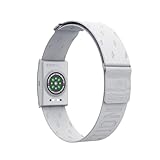
- COROS Heart Rate Monitor armband is designed for measuring heart rate during sports and activities. It is not intended to aid in collecting heart rate data for daily tracking purposes.
- MULTIPLE CONNECTIONS: The COROS heart rate monitor chest strap is designed to work seamlessly with your COROS watches and apps, it can also simultaneously pair with up to three devices, including Sports Watches, Indoor Trainers, Bike, Computers, Phones, Apps, Treadmills, and Indoor Rowers. Connects via Bluetooth only, not compatible with ANT+.
- COMFORTABLE AND QUICK CLEANING: The fabric band is soft and breathable, more comfortable to wear than a chest strap. You can quickly clean the band by removing the sensor of COROS heart rate monitor chest strap ."COROS heart rate monitor armband is designed for measuring heart rate during sports and activities. It is not intended to aid in collecting heart rate data for daily tracking purposes.”
- EASY TO WEAR and FLEXIBLE FIT: The band of COROS heart rate monitor lays flat around your arm and locks in place with its textured surface. Set the perfect placement and tension on the elasticated band by sliding the buckle.
- ADVANCED SENSOR and PRECISE DATA: Housed in a tough yet sleek body and protected under a scratch-resistant cover, COROS Heart Rate Monitor's advanced sensor will deliver reliable and accurate heart rate data monitoring to track your workouts in distraction-free comfort.
Your baseline is personal, not comparative
HRV varies dramatically between individuals. A healthy endurance athlete might average 40 ms while another sits comfortably at 90 ms, and both can be equally well-recovered.
Comparing your HRV to friends, influencers, or online charts is meaningless. The only valid comparison is you versus your own historical data, captured consistently on the same device.
This is where long battery life and overnight wearability matter. Devices like Garmin, Whoop, Oura, and Coros benefit from uninterrupted sleep tracking, while Apple Watch users who skip nights for charging often end up with fragmented baselines that are harder to trust.
Context turns HRV from trivia into insight
HRV does not exist in isolation. Training load, sleep duration, sleep quality, illness, calorie intake, mental stress, and even life events all influence autonomic balance.
Platforms that combine HRV with training stress and recovery metrics reduce the burden on the user. Garmin’s Training Readiness and Whoop’s Recovery score are essentially context engines built around HRV, while Apple leaves interpretation largely up to you.
If your HRV drops but your resting heart rate is elevated and sleep was poor, the story is clearer. If HRV drops while resting heart rate is stable and sleep was strong, the signal may be transient noise rather than physiological strain.
Why morning readiness can mislead without weekly perspective
Many users check HRV first thing in the morning and let it dictate their day. This can be useful, but only if it is balanced with longer-term patterns.
A single “red” recovery day does not automatically mean you should skip training. Elite athletes often train through short-term HRV suppression when it aligns with a planned overload phase.
Conversely, chronically declining HRV over several weeks is more concerning than one bad night. This is where Whoop’s multi-week trend views and Garmin’s rolling baselines tend to outperform raw-number dashboards.
Measurement timing changes what HRV actually reflects
Not all HRV readings are created equal. Nighttime HRV primarily reflects parasympathetic recovery, while spot measurements taken during the day are far more sensitive to posture, breathing, and mental state.
Apple Watch supports both, but the Health app mixes them unless you filter carefully. Garmin and Whoop largely avoid this confusion by emphasizing overnight averages and discouraging ad hoc interpretation.
If you take manual HRV readings, consistency is critical. Same time, same position, same breathing pattern, otherwise you are measuring situational stress rather than recovery status.
Common pitfalls that undermine otherwise good data
Overreacting to normal variability is the most common mistake. HRV naturally fluctuates, even in perfectly healthy, well-rested individuals.
Another pitfall is ignoring hardware and wear factors. Loose straps, cold skin, excessive movement, or inconsistent overnight wear can introduce noise that looks physiological but is actually mechanical.
Finally, many users assume higher HRV is always better. Extremely high HRV relative to your norm, especially when paired with fatigue, can sometimes reflect accumulated stress or maladaptation rather than peak readiness.
Using HRV as a decision-support tool, not a dictator
The most productive way to use HRV is as a conversation starter with your body. It should prompt questions, not issue commands.
If HRV is trending down, consider adjusting intensity, prioritizing sleep, or fueling better. If it is trending up, it may confirm that your current routine is working, not that you should automatically push harder.
Platforms differ in how much autonomy they give you, but the responsibility ultimately sits with the wearer. HRV is a signal, not a verdict, and it works best when combined with subjective feel, training goals, and real-world constraints.
Who Should Care About HRV (and Who Shouldn’t): Practical Takeaways for Everyday Users, Athletes, and Biohackers
Once you understand that HRV is a context-dependent signal rather than a universal score, the obvious next question becomes whether it deserves your attention at all. The honest answer is that HRV is extremely useful for some users, marginally helpful for others, and largely unnecessary for a few.
Where HRV shines is not in telling everyone the same thing, but in helping different types of wearers make better decisions within their own constraints, goals, and tolerance for data interpretation.
Everyday smartwatch users: Stress awareness, not performance optimization
If you wear an Apple Watch, Galaxy Watch, or Pixel Watch primarily for health awareness, HRV can be useful, but only at a high level. Think trend awareness rather than daily judgment.
For everyday users, HRV works best as a background indicator of how lifestyle factors like sleep, alcohol, illness, or prolonged stress affect your nervous system. A sustained dip across several nights often lines up with poor sleep quality, emotional strain, or getting sick, even if your resting heart rate looks normal.
This is where Apple’s passive, always-on collection makes sense. The watch is light, comfortable, and easy to wear overnight, and the Health app quietly builds a baseline without demanding action. The downside is that Apple offers little interpretation, so HRV is only helpful if you resist micromanaging single-day readings.
If you find yourself checking HRV every morning and feeling anxious about normal fluctuations, this metric may do more harm than good. For many people, focusing on sleep duration, movement consistency, and subjective stress delivers 80 percent of the benefit with far less cognitive load.
Fitness enthusiasts: A guardrail against digging recovery holes
For recreational runners, cyclists, gym-goers, and class-based athletes, HRV starts to earn its keep. This group trains hard enough to accumulate fatigue, but often lacks formal recovery planning.
Garmin’s overnight HRV Status and Training Readiness features are particularly well suited here. By combining HRV trends with sleep quality, recent load, and resting heart rate, Garmin gives users a practical nudge when recovery is lagging, without requiring them to interpret raw physiology.
HRV is most valuable for fitness enthusiasts during periods of increasing volume, poor sleep, or life stress. If your training feels harder than expected and HRV is trending down for several days, that is often a sign to reduce intensity or prioritize recovery before performance plateaus or minor injuries appear.
If your routine is very consistent and low intensity, HRV may not change enough to justify daily attention. In that case, it becomes confirmation rather than guidance.
Competitive and endurance athletes: HRV as a planning input
For endurance athletes, team sport competitors, and serious amateurs training multiple times per week, HRV can meaningfully influence training decisions. At this level, small changes in recovery status can affect performance, injury risk, and adaptation.
Platforms like Whoop and higher-end Garmin watches shine here because they anchor HRV firmly to overnight recovery. Whoop’s strain and recovery model is particularly effective at translating HRV trends into actionable context, especially during heavy blocks, travel, or altitude exposure.
For athletes, the real value of HRV is longitudinal. It helps answer questions like whether a taper is working, whether accumulated fatigue is resolving, or whether external stress is compromising adaptation even when training metrics look fine.
This is also where hardware consistency matters. A well-fitting strap, stable overnight wear, and reliable battery life are not luxuries but prerequisites. Missed nights or inconsistent wear undermine the very trends athletes rely on.
Biohackers and data-driven users: Powerful, but easy to misuse
Biohackers and quantified-self users are often drawn to HRV because it feels like a direct line into autonomic control. Breathing exercises, cold exposure, supplements, and sleep protocols all seem to move the number.
The danger is mistaking short-term manipulability for long-term improvement. It is easy to inflate HRV acutely through breathing techniques or relaxation while masking poor recovery, inadequate fueling, or excessive training stress.
For this group, Apple Watch paired with third-party apps, Oura Ring, or chest-strap morning readings can provide high-resolution data, but only if interpreted with restraint. HRV should be evaluated over weeks, not hours, and always cross-checked against performance, mood, and sleep architecture.
If HRV becomes a game to optimize at all costs, it often backfires. The goal is resilience and adaptability, not chasing the highest possible number.
Who probably doesn’t need HRV at all
If your primary goals are basic activity tracking, weight management, or step counting, HRV is optional. It rarely provides unique insight unless stress or recovery is already a concern.
People prone to health anxiety should also approach HRV cautiously. Because it fluctuates naturally and responds to emotions, it can create false alarms that feel physiological but are psychologically driven.
In these cases, simpler metrics like sleep consistency, resting heart rate trends, and subjective energy are often more actionable and less stressful.
Choosing how seriously to take HRV on your platform
How much HRV matters depends not just on you, but on how your device frames it. Apple Watch offers raw access with minimal guidance, Garmin contextualizes HRV within training systems, and Whoop builds its entire experience around recovery status.
None of these approaches is universally better. The right choice is the one that matches your goals, tolerance for ambiguity, and willingness to wear the device consistently.
If HRV helps you ask better questions, adjust behavior thoughtfully, and stay engaged with your health, it is doing its job. If it creates confusion, guilt, or obsession, it is safe to step back.
Used appropriately, HRV is not a magic metric, but it is one of the few wearable signals that connects physiology, lifestyle, and long-term adaptation. Knowing whether you should care about it is just as important as knowing what it measures.