If you’ve ever looked at a slim fitness band and thought the screen felt cramped, the Huawei Band 6 immediately stands out. It takes the familiar band form factor and stretches it in the one place that matters most for everyday use: the display. The result is a tracker that feels closer to a small smartwatch on the wrist, without crossing into smartwatch pricing or complexity.
This review is written for people who want reliable health and fitness tracking, clear on-wrist data, and long battery life, but don’t want to manage apps, charging every night, or paying extra for features they’ll never use. The Huawei Band 6 sits squarely between ultra-basic trackers like the Xiaomi Mi Band series and entry-level smartwatches, and that middle ground is exactly where its strengths show.
What follows is a clear-eyed look at who the Band 6 makes the most sense for, where it outperforms similarly priced rivals, and where its limitations might matter depending on how you plan to use it day to day.
If you want a big, readable screen without smartwatch bulk
The Huawei Band 6 is ideal for users who prioritize screen readability above all else. Its 1.47-inch AMOLED panel is unusually large for a fitness band, making stats like heart rate, steps, sleep scores, and notifications easy to glance at without squinting or swiping repeatedly.
🏆 #1 Best Overall

- 24/7 Heart Rate Monitor :This blood pressure watch supports real-time dynamic heart rate, blood oxygen, blood pressure ,Sleep Tracking,temperature monitoring so you can know more about your physical condition
- 1.10 inch AMOLED HD Touch screen: The Stopwatch pairs flawlessly with the Skin-friendly fitness straps, while its 1.10 inch AMOLED HD Touch Color Screen design and multitude of invigorating watch faces blow you away any moment
- 25 Sport Modes Activity Tracker: you can select any number of sports modes in the app as your exclusive sports mode to record your sports data.can record all daily health data such as steps, distance, and calorie consumption in the App "Keep Health"
- 5 ATM Waterproof activity & fitness trackers :step counter for walking Designed according to waterproof and dustproof standard, you can wear it when washing hands, taking bath, swimming, diving or getting caught in the rain will not damage your watches
- Multiple Convenient Functions :This smart band has multiple functions such as remote photography, mobile search, drinking water reminder, sedentary reminder, menstrual reminder cycle, real-time weather display, etc
Despite the screen size, the case remains lightweight and slim enough for all-day wear, including sleep. If you find square smartwatches too heavy or traditional bands too narrow, this hits a comfortable middle ground that feels modern without being intrusive.
If health tracking matters more than apps
This band is best suited to people who care about continuous health monitoring rather than smartwatch-style interaction. Features like 24/7 heart rate tracking, SpO2 monitoring, stress tracking, and detailed sleep analysis are front and center, and they work quietly in the background without constant user input.
There’s no app store, no third-party watch faces beyond Huawei’s ecosystem, and no reply-to-message functionality. If your priority is seeing trends and insights rather than interacting from your wrist, the Band 6 stays focused and avoids unnecessary distractions.
If you want long battery life with minimal maintenance
The Band 6 is a strong fit for users who don’t want to think about charging every couple of days. In real-world use, it comfortably lasts well over a week with continuous tracking enabled, and longer if you’re conservative with features like always-on display.
This makes it especially appealing to beginners, casual exercisers, or anyone coming from a smartwatch who’s tired of nightly charging rituals. It’s a set-it-and-forget-it experience that aligns well with daily fitness habits rather than tech upkeep.
If you’re comparing fitness bands to cheap smartwatches
For buyers torn between a premium fitness band and a low-cost smartwatch, the Huawei Band 6 often makes more sense. Entry-level smartwatches may offer apps and calling features, but they usually compromise on battery life, display quality, or sensor consistency at this price point.
The Band 6 trades smart features for stronger fundamentals: a better screen than most bands, more reliable health tracking than many cheap watches, and fewer software frustrations overall. If you don’t need GPS or standalone apps, it’s often the more satisfying long-term choice.
If you’re not deeply locked into Apple or Google ecosystems
The Band 6 works best for Android users and those comfortable using Huawei Health as their primary fitness app. While it can function with iOS, some integrations and conveniences are more limited compared to Apple Watch alternatives.
This isn’t the right device if you want deep ecosystem tie-ins, voice assistants, or tight control over smart home features. It’s for users who value practical fitness tracking over platform loyalty, and who want their wearable to stay quietly competent rather than constantly demanding attention.
Design, Comfort, and Build Quality: Living With an Oversized Band on the Wrist
After weighing software focus and long-term usability, the Band 6’s physical design becomes the next deciding factor. Huawei’s approach here is unapologetically bold for a fitness band, and whether that’s a strength or a drawback depends entirely on your wrist size and expectations.
A Fitness Band That Thinks It’s a Watch
The defining trait of the Huawei Band 6 is its oversized rectangular AMOLED display. At 1.47 inches, it’s closer in footprint to small smartwatches than traditional bands like the Mi Band series, and it immediately changes how the device wears and feels.
On the wrist, it looks modern and functional rather than discreet. This isn’t a tracker you forget is there visually, but it does give you more glanceable data, clearer workout screens, and readable notifications without squinting.
Dimensions, Weight, and Real-World Wearability
Despite the large screen, the Band 6 remains impressively light at around 18 grams without the strap. That low weight does a lot of work in keeping the device comfortable during long days, workouts, and sleep tracking.
However, the casing is tall rather than slim, so it sits higher off the wrist than slimmer bands. On smaller wrists, this can feel slightly top-heavy at first, especially during arm movements, though most users adapt quickly after a few days.
Comfort During Workouts and Sleep
During exercise, the Band 6 stays secure thanks to its flexible silicone strap and strong clasp tension. It doesn’t bounce during runs or loosen during high-rep strength sessions, which is essential for consistent heart rate tracking.
Sleep comfort is more subjective. The light weight helps, but the wider body can press into the wrist when sleeping on your side. It’s not uncomfortable, but users used to very slim bands may notice it more at night.
Strap Quality and Adjustability
Huawei includes a soft-touch silicone strap that feels durable without being stiff. It resists sweat buildup well and doesn’t cause irritation during all-day wear, even during warmer conditions or extended workouts.
Adjustment holes are closely spaced, making it easy to get a precise fit. The strap uses a proprietary attachment system, though, which limits third-party strap options compared to more open ecosystems.
Materials and Build Quality Expectations at This Price
The Band 6 uses a plastic chassis with a smooth matte finish, paired with a glass front over the display. It doesn’t feel cheap, but it also doesn’t pretend to be premium in the way metal-bodied smartwatches do.
That said, durability is solid for daily use. The screen holds up well against minor knocks, the casing doesn’t creak or flex, and water resistance is suitable for swimming, showers, and sweat-heavy workouts.
Button Placement and Everyday Interaction
A single side button handles wake, back, and quick access functions. Its placement is intuitive and easy to reach, even during workouts, without accidental presses when bending the wrist.
Combined with responsive swipe gestures on the display, navigation feels straightforward. The large screen helps here, making menus less cramped than on smaller bands and reducing mistaps during sweaty sessions.
Style Versus Discretion
Visually, the Band 6 leans toward sporty minimalism rather than fashion-forward design. It works well with gym wear, casual outfits, and work-from-home setups, but it’s not designed to blend into formal attire.
If you want a tracker that disappears under a shirt cuff, this isn’t it. If you want something that looks purposeful and functional while delivering a near-smartwatch viewing experience, the Band 6 makes a strong case.
Who the Design Works Best For
The Band 6 is ideal for users who prioritize screen clarity, ease of interaction, and workout visibility over subtlety. Beginners and casual fitness users benefit most from the larger display, especially when checking stats mid-activity.
Those with very small wrists or a preference for ultra-slim trackers may find it visually overwhelming. For everyone else, the design strikes a practical balance between fitness band simplicity and smartwatch-like usability without the added cost or bulk of a full watch.
AMOLED Display Deep Dive: Brightness, Readability, and Why Screen Size Changes the Experience
After talking about design and interaction, it becomes clear that almost everything you do with the Band 6 is filtered through its screen. This is where Huawei made its most important decision, and it’s the single feature that separates the Band 6 from traditional fitness bands more than any sensor or software tweak.
A Screen That Redefines What a “Band” Feels Like
The Huawei Band 6 uses a 1.47-inch rectangular AMOLED display, which is enormous by fitness band standards. Compared to the narrow pill-shaped screens on devices like the Xiaomi Mi Band series, the Band 6 feels closer to a compact smartwatch than a tracker.
That extra surface area changes daily use immediately. Notifications display more text without awkward line breaks, workout metrics are readable at a glance, and menus feel spaced out instead of compressed.
AMOLED Quality and Contrast in Daily Use
AMOLED technology brings deep blacks and strong contrast, which works particularly well on a device that’s often used outdoors. Watch faces pop with color, and health graphs are easier to interpret because data lines stand out clearly against dark backgrounds.
In dim environments, the display doesn’t feel harsh or overpowered. Automatic brightness does a good job of scaling down indoors, making late-night stat checks comfortable without needing manual adjustment.
Brightness and Outdoor Readability
Huawei rates the Band 6 for high brightness, and in real-world testing it holds up well under direct sunlight. Whether you’re running midday or checking heart rate during a bright outdoor workout, the screen remains legible without shielding it with your hand.
This is an area where cheaper bands often struggle, washing out or forcing you to pause to read stats. The Band 6 stays readable mid-stride, which matters more than spec-sheet brightness numbers for active users.
Resolution, Sharpness, and Text Clarity
The display resolution is well-matched to its size, delivering sharp text and clean icons without visible pixelation at normal viewing distance. Small UI elements like battery indicators, pace numbers, and notification text remain crisp rather than fuzzy.
Rank #2

- 【Superb Visual Experience & Effortless Operation】Diving into the latest 1.58'' ultra high resolution display technology, every interaction on the fitness watch is a visual delight with vibrant colors and crisp clarity. Its always on display clock makes the time conveniently visible. Experience convenience like never before with the intuitive full touch controls and the side button, switch between apps, and customize settings with seamless precision.
- 【Comprehensive 24/7 Health Monitoring】The fitness watches for women and men packs 24/7 heart rate, 24/7 blood pressure and blood oxygen monitors. You could check those real-time health metrics anytime, anywhere on your wrist and view the data record in the App. The heart rate monitor watch also tracks different sleep stages for light and deep sleep,and the time when you wake up, helps you to get a better understanding of your sleep quality.
- 【120+ exercise modes & All-Day Activity Tracking】There are more than 120 exercise modes available in the activity trackers and smartwatches, covering almost all daily sports activities you can imagine, gives you new ways to train and advanced metrics for more information about your workout performance. The all-day activity tracking feature monitors your steps, distance, and calories burned all the day, so you can see how much progress you've made towards your fitness goals.
- 【Messages & Incoming Calls Notification】With this smart watch fitness trackers for iPhone and android phones, you can receive notifications for incoming calls and read messages directly from your wrist without taking out your phone. Never miss a beat, stay in touch with loved ones, and stay informed of important updates wherever you are.
- 【Essential Assistant for Daily Life】The fitness watches for women and men provide you with more features including drinking water and sedentary reminder, women's menstrual period reminder, breath training, real-time weather display, remote camera shooting, music control,timer, stopwatch, finding phone, alarm clock, making it a considerate life assistant. With the GPS connectivity, you could get a map of your workout route in the app for outdoor activity by connecting to your phone GPS.
This sharpness contributes directly to reduced eye strain. You spend less time squinting or rechecking stats, especially during workouts when attention is split.
Why Screen Size Improves Workout Tracking
During workouts, the larger display pays off more than anywhere else. Heart rate, duration, distance, and calorie data can be shown simultaneously without shrinking numbers to an unreadable size.
Swiping between workout screens is easier, even with sweaty fingers, and accidental inputs are less common than on slimmer bands. For beginners especially, this reduces friction and keeps the focus on movement rather than device management.
Always-On Display: Useful, With Trade-Offs
The Band 6 supports an always-on display option, which is still rare at this price point. It provides basic time visibility without wrist gestures, adding to the watch-like feel.
The trade-off is battery life. With always-on enabled, endurance drops noticeably, making it a feature best suited for users who prioritize convenience over maximum runtime.
Touch Responsiveness and Gesture Accuracy
Touch input on the AMOLED panel is responsive and consistent. Swipes register cleanly, taps feel immediate, and there’s minimal lag when waking the display or transitioning between menus.
Combined with the side button, the screen interaction feels deliberate rather than fiddly. This reinforces the Band 6’s positioning as a device you can comfortably use during activity, not just before or after it.
How It Compares to Smaller Bands and Entry-Level Smartwatches
Against competitors like the Mi Band 6 or older Fitbit Inspire models, Huawei’s display simply offers more breathing room. You get better readability without stepping up to the cost, weight, or complexity of a full smartwatch.
Compared to entry-level smartwatches, the Band 6 holds its own in brightness and clarity while remaining lighter and less intrusive on the wrist. The compromise is app depth and third-party support, not screen quality.
The Real Impact on Everyday Wearability
The larger AMOLED display does make the Band 6 more noticeable on the wrist, especially for users accustomed to ultra-slim trackers. However, the benefit is a device that feels easier to live with throughout the day.
From quick notification checks to mid-workout glances and evening health reviews, the screen reduces friction at every touchpoint. For many users, this alone justifies choosing the Band 6 over smaller, cheaper alternatives.
Health Tracking Performance: Heart Rate, SpO2, Sleep, and Stress in Real-World Use
That larger, easier-to-read display isn’t just about convenience. It directly shapes how often you actually check your health metrics, and with the Band 6, Huawei leans heavily into making health data feel immediate rather than buried in menus or apps.
In daily use, the Band 6 positions itself closer to an entry-level smartwatch than a basic tracker when it comes to health monitoring breadth. The key question is whether the data it captures is reliable enough to trust.
Heart Rate Tracking: Consistent for Daily Fitness and Workouts
The Huawei Band 6 uses continuous optical heart rate monitoring, sampling throughout the day and during workouts. For everyday activities like walking, desk work, and light exercise, readings remain stable and believable, without sudden spikes or drops.
During structured workouts such as treadmill runs, outdoor jogging, or cycling, heart rate tracking holds up well for a wrist-based optical sensor at this price. Compared side-by-side with a chest strap, peak heart rate tended to lag slightly during sudden intensity changes, but average heart rate stayed within an acceptable margin for casual and intermediate users.
Where the Band 6 performs particularly well is recovery tracking. Post-workout heart rate drop-offs are captured clearly, giving useful context for users trying to understand fitness improvements rather than chase perfect accuracy.
SpO2 Monitoring: Convenient, Not Clinical
SpO2 tracking is available both as a manual measurement and as an optional all-day background feature. Readings typically fall in expected ranges for healthy users and align reasonably well with fingertip pulse oximeters during spot checks.
The Band 6 does require you to stay still for accurate SpO2 readings, which is standard for optical sensors. Movement or loose fit can lead to failed measurements, so comfort and strap adjustment matter more here than with heart rate tracking.
Continuous SpO2 tracking does have a noticeable impact on battery life. Most users will be better served using overnight or manual checks rather than leaving it enabled around the clock.
Sleep Tracking: Detailed and Easy to Interpret
Sleep tracking is one of the Band 6’s strongest health features, especially for users new to wearables. The device automatically detects sleep, naps, and wake periods with impressive consistency, even during irregular schedules.
Sleep stages are broken down into light, deep, REM, and awake time, with clear visual summaries on both the band and the Huawei Health app. While stage accuracy can’t rival medical-grade sleep studies, trends over time are coherent and useful.
Huawei’s sleep insights focus more on pattern recognition than alarmist scoring. Suggestions around bedtime consistency and sleep duration feel practical rather than overwhelming, which suits the Band 6’s beginner-friendly positioning.
Stress Monitoring: Passive Awareness, Not Intervention
Stress tracking runs in the background using heart rate variability data, presenting results as a simple scale rather than minute-by-minute detail. In real-world use, elevated stress readings generally align with work pressure, poor sleep, or heavy training days.
The Band 6 avoids overcomplicating stress data. Instead of constant alerts, it offers occasional prompts for breathing exercises when sustained stress is detected.
This passive approach works well for users who want awareness without feeling monitored. Advanced athletes or data-driven users may find it limited, but that’s consistent with the Band 6’s overall philosophy.
Comfort, Fit, and Sensor Reliability Over Long Wear
At around 18 grams without the strap, the Band 6 remains comfortable enough for 24/7 wear, which is essential for meaningful health tracking. The curved plastic body and soft silicone strap help maintain consistent skin contact without pressure points.
Sensor accuracy improves noticeably when the band is worn snugly but not tightly. During sleep and long workdays, the lightweight design minimizes wrist fatigue, making it easier to collect uninterrupted data.
Sweat resistance and water resistance up to 5 ATM mean heart rate tracking remains reliable during workouts and showers. For a tracker in this price range, durability does not feel compromised.
How It Stacks Up Against Mi Band and Entry-Level Smartwatches
Compared to the Xiaomi Mi Band 6, Huawei’s heart rate and sleep tracking feel similarly accurate, but the larger screen makes reviewing data directly on the device far more practical. You’re less dependent on the phone app for basic insights.
Against entry-level smartwatches, the Band 6 often matches or exceeds them in continuous health monitoring consistency, even if it lacks advanced app ecosystems or ECG features. What you gain is longer battery life and simpler, more focused health tracking.
For users who care about understanding their body rather than collecting endless metrics, the Band 6 strikes a balance that’s hard to fault at its price point.
Fitness and Workout Tracking: Modes, Accuracy, and How It Handles Everyday Exercise
Where the Band 6’s always-on health monitoring leaves off, its fitness tracking picks up with the same uncomplicated mindset. It’s designed to support regular exercise and movement habits rather than structured training plans or competitive performance analysis.
For most everyday users, that focus makes the Band 6 easier to live with. You spend more time moving and less time fiddling with settings or deciphering charts after the fact.
Workout Modes and What They’re Actually For
Huawei includes over 90 workout modes, covering everything from walking and outdoor running to rowing machines, yoga, and a long list of niche activities. In practice, most users will rely on the core modes like walk, run, cycle, elliptical, and swim, which are the most refined.
Rank #3

- Inspire 3 is the tracker that helps you find your energy, do what you love and feel your best. All you have to do is wear it.Operating temperature: 0° to 40°C
- Move more: Daily Readiness Score(1), Active Zone Minutes, all-day activity tracking and 24/7 heart rate, 20+ exercise modes, automatic exercise tracking and reminders to move
- Stress less: always-on wellness tracking, daily Stress Management Score, mindfulness sessions, relax breathing sessions, irregular heart rhythm notifications(2), SpO2(3), menstrual health tracking, resting heart rate and high/low heart rate notifications
- Sleep better: automatic sleep tracking, personalized Sleep Profile(1), daily detailed Sleep Score, smart wake vibrating alarm, sleep mode
- Comfortably connected day and night: calls, texts & smartphone app notifications(4), color touchscreen with customizable clock faces, super lightweight and water resistant to 50 meters, up to 10 day battery life(5)
The extra modes mainly adjust calorie algorithms and labeling rather than unlocking new sensors or metrics. That’s not a flaw, but it’s important to understand that the depth of data doesn’t scale with the number of modes.
For casual exercisers, this breadth is reassuring rather than overwhelming. You’re unlikely to encounter an activity that isn’t at least recognized and logged.
Accuracy for Heart Rate, Steps, and Calories
Heart rate tracking during steady-state workouts like walking, jogging, or cycling is generally reliable. When worn snugly, readings stay consistent with chest strap comparisons during moderate-intensity sessions, with only occasional lag during rapid pace changes.
High-intensity interval workouts expose the Band 6’s limitations. Quick spikes and drops in heart rate can take several seconds to register, which is typical for optical sensors in this price bracket.
Step counting is accurate enough for daily movement goals, even during mixed activity days. Calorie burn estimates trend conservative, which is preferable to inflated numbers for users tracking weight or overall fitness.
Outdoor Exercise and the Lack of Built-In GPS
The Band 6 does not include built-in GPS, which is one of the clearest distinctions between it and entry-level smartwatches. Outdoor runs and walks rely on connected GPS through your phone if you want route mapping.
When paired with a phone, distance and pace tracking are dependable, provided you start the workout with the phone connection active. If you leave your phone behind, the Band 6 falls back on step-based distance estimates, which are serviceable but less precise.
For users who run or walk mainly for fitness rather than performance metrics, this compromise is easy to accept. Dedicated runners will feel the absence more acutely.
Automatic Workout Detection and Daily Movement
Automatic workout detection works quietly in the background, identifying walking, running, elliptical use, and rowing after a few minutes of sustained activity. The delayed start means you’ll miss the first portion of a workout, but the trade-off is fewer false positives.
This feature is especially useful for people who don’t want to manually start tracking every walk or casual gym session. It reinforces the Band 6’s role as a passive fitness companion rather than a demanding coach.
Daily activity rings and reminders are gentle rather than intrusive. You’re encouraged to move without being constantly interrupted.
Strength Training and Gym Use
Strength training tracking is functional but basic. Sessions log duration, heart rate, and estimated calories without rep counting or exercise recognition.
For circuit training or general gym workouts, this is usually sufficient. Those following structured lifting programs will likely find the data too shallow to replace a dedicated training app or smartwatch.
On the upside, the lightweight body and flexible strap make the Band 6 comfortable under wrist wraps or gloves. It stays out of the way during most gym movements.
Swimming and Water-Based Activities
With 5 ATM water resistance, the Band 6 handles pool swimming confidently. Stroke recognition works reliably for freestyle and breaststroke, while lap counts remain consistent in standard-length pools.
Heart rate tracking in water is predictably less stable, but session summaries still provide a useful overview of effort and duration. For recreational swimmers, the experience is smooth and low maintenance.
The quick-drying strap and corrosion-resistant materials help preserve comfort and sensor contact after repeated water exposure.
Post-Workout Data and App Experience
Workout summaries on the band itself are clear but concise, showing duration, heart rate zones, and calories burned. The large AMOLED display makes reviewing this information surprisingly pleasant for a fitness band.
Deeper analysis happens in the Huawei Health app, where trends are easier to spot over time. The app prioritizes clarity over complexity, which aligns well with the Band 6’s overall approach.
You won’t find advanced performance insights, but you will get consistent, readable feedback that supports healthier routines without overwhelming detail.
Software, App Experience, and Phone Compatibility: Huawei Health on Android vs iOS
All of the workout data and health metrics discussed so far ultimately live or die by the companion app. With the Band 6, that experience is centered entirely around Huawei Health, and your phone choice has a noticeable impact on how smooth the day-to-day experience feels.
At its best, Huawei Health reinforces the Band 6’s identity as a low-friction fitness companion. At its worst, it introduces a few platform-specific compromises that are important to understand before buying.
Huawei Health App Overview
Huawei Health presents information in a clean, card-based layout that prioritizes daily stats first. Steps, heart rate, sleep, stress, and recent workouts are all visible at a glance without needing to dig through menus.
Data presentation favors long-term trends over deep analysis. Weekly and monthly views make it easy to see whether you are moving more, sleeping better, or maintaining consistency, which aligns well with the Band 6’s gentle coaching style.
Navigation is intuitive even for first-time fitness tracker users. Compared to feature-heavy platforms like Garmin Connect or Fitbit, Huawei Health feels calmer and less intimidating, especially for beginners.
Health Metrics and Data Depth
Heart rate trends, SpO2 readings, and sleep tracking are displayed clearly with simple explanations. Sleep stages are broken down into deep, light, REM, and awake time, accompanied by short guidance tips rather than medical-style analysis.
The app’s stress tracking and breathing exercises feel more like wellness tools than performance metrics. They are easy to access and simple to use, but not particularly actionable for users seeking detailed recovery insights.
For most everyday users, the level of detail strikes a sensible balance. You get enough context to understand your habits without feeling pressured to optimize every metric.
Workout Analysis and Training Logs
Workout data syncs quickly and reliably, with each session presented in a straightforward timeline. Maps are absent due to the lack of built-in GPS, but heart rate zones, duration, and calorie estimates are easy to interpret.
Historical workout logs are organized by activity type, making it simple to track consistency over time. The large AMOLED display on the band complements this by providing readable summaries immediately after a session, with the app acting as the deeper archive.
This approach works well for walking, running, gym sessions, and swimming, but advanced athletes may find the analysis too surface-level. The Band 6 and Huawei Health are designed to support routine, not performance optimization.
Android Experience: The Best Case Scenario
On Android, Huawei Health delivers the most complete and stable experience. Notifications are reliable, background syncing is consistent, and the app maintains a steady connection with the band throughout the day.
Android users also benefit from easier app updates and fewer restrictions around permissions. Watch face downloads, firmware updates, and health data syncing all feel seamless once initial setup is complete.
If you are using a Huawei phone or a mainstream Android device, the Band 6 integrates smoothly into daily life. It behaves more like a simplified smartwatch than a basic fitness band in this environment.
Rank #4
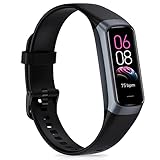
- 【All-day Health Monitor】The fitness tracker watch will automatically track your real-time heart rate, blood pressure and blood oxygen throughout the day to help you better understand your health. Equipped with a high-performance chipset, the fitness tracker automatically analyzes your overall sleep quality (deep/light/wake time) at night and gives you a nightly sleep score in the app to help you adjust your lifestyle and make you healthier.
- 【Smart Notification Remider】 With Bluetooth connection to your phone, it can support incoming calls/text alerts/APP message notifications (WhatsApp/Facebook/Instagram etc.), you will never miss your important messages. With the fitness watch, you can also perform sedentary reminder, water reminder, alarm clock, stopwatch, remote control photo, find devices, etc. to make your life healthier and smarter.
- 【25 Sports Modes】 Fitness tracker supports 25 professional sports modes, you can choose any number of sports modes as your exclusive sports modes in the app, such as walking, running, swimming, yoga, etc. and track your steps, heart rate, distance and calories to help you stay motivated, accomplish your sports goals, record your sports data, and make your sports more scientific.
- 【Long Battery Life】The fitness watch uses magnetic fast charging to provide a better battery life experience. It takes 1-2 hours to fully charge and can be used for up to 7 days of regular use and 15 days of standby. Compatible mobile phone system: android5.0 (inclusive) and IOS9.0 (inclusive) or above.
- 【1.1" AMOLED Touch Color Screen】AMOLED HD touch color screen is designed with clear and bright display, providing you with high quality touch and visual experience. This smartwatch includes a large number of original dials and supports custom dials.
iOS Experience: Functional but Limited
On iPhone, Huawei Health remains usable, but the experience is noticeably more constrained. Notification mirroring works, but interactions are limited to basic alerts without replies or advanced controls.
Background syncing can be less consistent on iOS, occasionally requiring the app to be opened manually to refresh data. This does not affect tracking accuracy, but it can interrupt the sense of “set it and forget it” convenience.
Apple’s platform restrictions also limit deeper system integration. Compared to Apple Watch or even some competing fitness bands, the Band 6 feels more peripheral on iOS rather than tightly woven into the ecosystem.
Third-Party App Support and Ecosystem Gaps
Huawei Health does not offer broad third-party app integration. There is no native syncing with popular platforms like Strava, Google Fit, or Apple Health without workarounds or manual exports.
For casual users, this may not matter. Everything you need to understand your activity lives inside Huawei Health, and the app is designed to be a closed but coherent ecosystem.
More serious fitness enthusiasts, however, may find this limiting. If your routines rely on cross-platform data sharing or advanced analytics, the Band 6’s software ecosystem can feel restrictive.
Software Stability, Updates, and Longevity
During daily use, the Band 6 remains stable with few crashes or sync failures. Firmware updates are infrequent but generally focused on bug fixes rather than adding major new features.
This conservative update approach reinforces the Band 6’s long battery life. The software avoids heavy background processing or power-hungry features, which helps maintain the strong multi-day endurance discussed earlier.
From a longevity standpoint, Huawei Health feels mature and predictable. You are unlikely to see dramatic feature expansion, but the core experience remains dependable over time.
Real-World Usability and Value Perspective
Taken as a whole, the software experience supports the Band 6’s value-driven positioning. It delivers clear health insights, reliable syncing, and an approachable interface without demanding constant interaction.
Android users will get the most out of the Band 6, both in convenience and overall polish. iPhone users can still enjoy the core fitness tracking features, but should be comfortable with a more limited companion role.
At this price point, the software trade-offs are understandable. Huawei Health may not compete with premium smartwatch ecosystems, but it complements the Band 6’s hardware well enough to make the overall experience feel cohesive and purpose-built for everyday fitness tracking.
Battery Life and Charging: How the Band 6 Performs Across a Full Week (and Beyond)
The conservative software approach discussed earlier directly feeds into one of the Huawei Band 6’s biggest strengths: battery endurance. This is a tracker that prioritizes staying on your wrist, not on a charger, and that design philosophy becomes obvious within the first week of use.
Rated Claims vs Real-World Use
Huawei advertises up to 14 days of battery life under typical usage, with heavy use dropping closer to 10 days. In real-world testing, those numbers are largely achievable if your expectations are realistic and your settings are balanced.
With continuous heart rate tracking enabled, sleep tracking every night, notifications active, and three to four workouts per week, the Band 6 consistently lasted around 9 to 11 days. That puts it well ahead of most entry-level smartwatches and competitive with top-tier fitness bands like Xiaomi’s Mi Band series.
Impact of the Large AMOLED Display
The Band 6’s oversized 1.47-inch AMOLED screen is a double-edged sword for battery life. It is bright, sharp, and genuinely enjoyable to use, but it draws more power than the smaller displays found on traditional fitness bands.
Huawei manages this trade-off well by keeping background activity minimal and offering granular control over screen behavior. Short screen timeout settings and wrist-raise sensitivity adjustments make a noticeable difference in daily drain without sacrificing usability.
Always-On Display and Power Trade-Offs
Enabling the always-on display has the biggest impact on endurance. With AOD active, battery life drops to roughly 3 to 5 days depending on brightness and daily usage patterns.
For most users, the always-on option feels more like a novelty than a necessity. Given how responsive the raise-to-wake gesture is, leaving AOD disabled preserves the Band 6’s core advantage while still delivering a smartwatch-like experience when you need it.
Health Tracking Features and Battery Drain
Continuous SpO2 monitoring, stress tracking, and TruSleep sleep analysis all contribute modestly to battery consumption. Even with these features enabled around the clock, the Band 6 avoids the steep overnight drops seen on some competitors.
This efficiency is especially noticeable during sleep tracking. Overnight drain typically sits between 5 and 8 percent, making multi-night tracking reliable without constant battery anxiety.
Workout Tracking and GPS-Free Efficiency
Because the Band 6 lacks built-in GPS, workout sessions are far less taxing on the battery than on smartwatch-class devices. Indoor workouts, outdoor runs using phone-assisted GPS, and guided exercises barely dent the charge.
A week that includes multiple cardio sessions, strength workouts, and casual activity tracking still leaves enough battery headroom to avoid midweek charging. For everyday fitness users, this reliability is more valuable than advanced metrics that come at the cost of endurance.
Charging Speed and Practicality
Charging is handled via a proprietary magnetic charger that snaps securely into place. A full charge from near empty takes roughly 60 to 65 minutes, which feels reasonable given the overall battery life.
A short 10-minute top-up provides enough power for one to two days of use. That makes quick charging before work or after a workout genuinely useful rather than a last-resort solution.
How It Compares to Rivals
Against rivals like the Xiaomi Mi Band and entry-level smartwatches from Amazfit or Samsung, the Band 6 holds its ground confidently. It outlasts most budget smartwatches by a wide margin while offering a much larger and more readable display than typical fitness bands.
The key difference is consistency. Battery estimates remain predictable over time, with minimal degradation during extended use, reinforcing the Band 6’s reputation as a dependable daily companion rather than a feature-heavy device that needs constant management.
Battery Longevity as a Value Feature
Long battery life is not just a convenience here; it is part of the Band 6’s value proposition. Fewer charging cycles reduce long-term battery wear, which matters for a device designed to be worn daily for years rather than upgraded annually.
For users who want health tracking that fades into the background instead of demanding attention, the Band 6’s battery performance feels intentionally tuned. It supports the device’s broader goal of delivering big, bold fitness tracking without the maintenance burden of a full smartwatch.
Smart Features and Daily Usability: Notifications, Controls, and What You Don’t Get
Strong battery life sets the foundation, but day-to-day usability ultimately decides whether a band stays on your wrist. The Huawei Band 6 approaches smart features with restraint, prioritizing clarity and reliability over smartwatch-style ambition. That philosophy shapes everything from notifications to controls and, just as importantly, the features it deliberately leaves out.
Notification Handling: Clear, Reliable, and Limited by Design
Notifications are one of the Band 6’s strongest everyday conveniences. Messages, calls, calendar alerts, and app notifications arrive promptly and are easy to read thanks to the large 1.47-inch AMOLED display. Text is cleanly formatted, with enough screen real estate to avoid constant scrolling for short messages.
That said, interaction stops at viewing and dismissing. You cannot reply to messages, send quick responses, or interact with notifications beyond clearing them. This keeps the experience simple, but users coming from entry-level smartwatches may miss even basic canned replies.
Call Alerts Without Calling Features
Incoming calls trigger a vibration and full-screen caller ID, making it easy to decide whether to grab your phone. You can silence or reject a call directly from the band, which is genuinely useful during workouts or meetings.
There is no microphone or speaker, so calls cannot be answered on the wrist. This reinforces the Band 6’s role as a companion device rather than a phone replacement.
💰 Best Value
![SAMSUNG Galaxy FIT 3 [2024] 1.6' AMOLED Display | 14 Days Battery Life | 100+ Watchfaces | 100+ Exercise Modes | International Model - (Gray)](https://m.media-amazon.com/images/I/41nTjvUQRPL._SL160_.jpg)
- Vibrant 1.6” AMOLED Display – Large, high-res screen with smooth touch for easy navigation
- 5ATM & IP68 Water Resistance – Swim-ready and dust-resistant for active lifestyles
- Up to 14 Days Battery Life – Powerful 208mAh battery for long-lasting performance
- 101+ Workout Modes with Auto Detection – Automatically tracks common workouts for seamless fitness tracking. Advanced Health Tracking – Includes sleep coaching, SpO2, heart rate, and snore detection
- International Model No Warranty in the US. Compatible with Android and iOS devices. Samsung Pay - Not Supported.
Touch Controls and Navigation in Daily Use
Navigation relies entirely on the touchscreen and a single side button. Swipes are responsive, animations are smooth, and the interface feels well scaled to the display, avoiding the cramped menus common on smaller fitness bands.
The side button acts as both a wake button and a quick exit, which keeps interactions intuitive even for first-time users. There is no rotating crown or physical navigation controls, but the UI rarely feels like it needs them.
Watch Faces, Widgets, and Glanceable Information
Huawei offers a wide selection of watch faces through the Huawei Health app, ranging from minimal digital layouts to data-heavy fitness dashboards. Many faces take full advantage of the tall screen, showing steps, heart rate, weather, and battery status at a glance.
Customization is mostly visual rather than functional. You can change faces and reorder widgets, but you cannot install third-party apps or deeply customize data fields the way you can on Wear OS or watchOS devices.
Music Controls and Phone Tools
Basic music controls are included, allowing you to play, pause, and skip tracks on your connected phone. Volume adjustment is not available, and there is no onboard music storage, so phone-free workouts are not supported.
Other phone tools like weather, alarms, timers, and a find-my-phone function work reliably. These features feel polished and practical, reinforcing the Band 6’s focus on everyday utility rather than experimentation.
Compatibility and App Experience
The Band 6 works with both Android and iOS, though the experience is smoother on Android. Huawei Health handles setup, syncing, and data visualization, presenting health metrics in a clean, approachable layout.
iOS users may encounter slightly more restrictive notification behavior due to platform limitations, but core features remain intact. Syncing is stable, and data accuracy is consistent across platforms.
What You Don’t Get: Smartwatch Features Left on the Table
There is no built-in GPS, NFC payments, voice assistant, or app ecosystem. You also won’t find Wi‑Fi, downloadable apps, or advanced smart integrations like smart home controls.
These omissions are intentional rather than oversights. By avoiding power-hungry and complexity-heavy features, Huawei keeps the Band 6 focused on fitness tracking, readability, and battery longevity, which will matter more to its target audience than ticking every smartwatch checkbox.
Huawei Band 6 vs Xiaomi Mi Band and Entry-Level Smartwatches: Where the Value Lines Are Drawn
After understanding what the Band 6 intentionally leaves out, the real question becomes where it sits against its closest rivals. This is less about raw specs and more about how different types of users draw the line between simplicity, features, and price.
Against Xiaomi Mi Band: Similar Price, Different Priorities
The most obvious comparison is Xiaomi’s Mi Band series, particularly the Mi Band 6 and Mi Band 7. These trackers often undercut Huawei slightly on price while offering a comparable core feature set focused on steps, workouts, sleep, and SpO2.
Xiaomi’s bands typically offer a slightly larger AMOLED panel on paper, but the Huawei Band 6’s taller, more rectangular display behaves more like a mini smartwatch. Text is easier to read, notifications feel less cramped, and workout metrics are clearer mid-activity, especially for users with aging eyes or larger wrists.
Health tracking is broadly similar across both brands, but Huawei’s strength lies in consistency rather than novelty. Heart rate and sleep data on the Band 6 trend slightly smoother and more stable in day-to-day use, while Xiaomi often pushes experimental features faster, sometimes at the expense of polish.
Battery life is a near draw. Both brands comfortably last over a week with heavy use and closer to two weeks with conservative settings, but Huawei’s power management feels more predictable when continuous SpO2 and sleep tracking are enabled.
Software experience is where preferences diverge. Xiaomi’s app offers more granular fitness insights and deeper community features, while Huawei Health is calmer, cleaner, and easier to navigate. Beginners tend to find Huawei’s approach less overwhelming, even if power users may crave more charts and toggles.
Build Quality, Comfort, and Daily Wear
Physically, the Huawei Band 6 feels closer to a lightweight smartwatch than a traditional capsule-style band. The polymer case, curved glass, and wider strap distribute weight evenly, making it comfortable for all-day wear and overnight sleep tracking.
Mi Band models are smaller and more discreet, which some users prefer for 24/7 wear. However, the narrower screen can feel limiting when interacting with notifications or navigating menus during workouts.
Neither device feels premium in a luxury sense, but Huawei’s finishing and screen integration give it a slightly more refined look. It blends better with casual clothing, while Xiaomi leans more overtly fitness-first.
Stepping Up to Entry-Level Smartwatches
Entry-level smartwatches like the Amazfit Bip series, Redmi Watch, or older Wear OS budget models introduce features the Band 6 simply does not have. Built-in GPS, larger cases, speaker support, and sometimes limited app ecosystems start to appear at this tier.
Those features come with trade-offs. Battery life often drops to three to five days, interfaces can feel slower, and health tracking accuracy varies more widely depending on brand and software maturity.
For users who want phone-free run tracking or basic app extensibility, a cheap smartwatch may make sense. For everyone else, especially those focused on health trends rather than routes and maps, the Band 6 delivers a cleaner and more reliable daily experience.
Where the Value Line Is Clearly Drawn
The Huawei Band 6 makes sense for users who want smartwatch-like readability and comfort without smartwatch complexity. It sits above basic fitness bands in usability and screen quality, yet avoids the compromises that often plague low-cost smartwatches.
Compared to Xiaomi, it trades some feature experimentation and price aggressiveness for stability, clarity, and ease of use. Compared to entry-level smartwatches, it sacrifices GPS and apps in exchange for battery life, simplicity, and consistent health tracking.
That positioning is deliberate. The Band 6 is not trying to be the cheapest or the most powerful option, but for everyday fitness-focused users who want something reliable, readable, and easy to live with, its value lands in a very well-judged middle ground.
Final Verdict: Is the Huawei Band 6 Still One of the Best Affordable Fitness Trackers?
The value line for the Huawei Band 6 becomes clearest when you step back and look at how it fits into everyday life rather than spec sheets. It is not the newest band on the market, but its fundamentals remain unusually strong for the price. The oversized AMOLED display, dependable health tracking, and week-long-plus battery life still combine into a package that feels thoughtfully balanced rather than compromised.
In daily use, the Band 6 succeeds because it removes friction. The screen is large enough to read at a glance during workouts or meetings, the interface stays responsive, and the band is light and comfortable enough to disappear on your wrist. That combination is exactly what many affordable trackers promise, but fewer actually deliver as consistently.
Why the Band 6 Still Holds Up
The defining feature remains the display. At roughly 1.47 inches, it feels closer to a small smartwatch than a traditional fitness band, and the AMOLED panel delivers excellent contrast and outdoor visibility. Notifications, workout stats, and health metrics are simply easier to interact with here than on narrower rivals like the Mi Band series.
Health tracking is another area where the Band 6 continues to perform reliably. Heart rate tracking is stable during steady workouts, sleep tracking is detailed without being overwhelming, and SpO2 monitoring works quietly in the background. Huawei’s software focuses more on trend consistency than flashy insights, which makes the data genuinely useful over time.
Battery life reinforces that sense of balance. Even with continuous heart rate monitoring and frequent notifications, getting 10 to 14 days is realistic for most users. That reliability matters more in long-term ownership than any single headline feature.
Where Its Limits Are Clearly Defined
The Band 6 is still a fitness tracker, not a smartwatch, and it never pretends otherwise. There is no built-in GPS, no speaker or microphone, and no third-party app ecosystem. If your workouts depend on phone-free run tracking or smartwatch-style interactions, this is not the right tool.
Huawei’s ecosystem also deserves consideration. The Huawei Health app is polished and data-rich, but syncing and permissions can be less seamless on some Android phones, and iOS users should expect a more limited experience. These are manageable trade-offs, but they are worth understanding before buying.
Who Should Buy the Huawei Band 6 in 2026
The Band 6 remains an excellent choice for beginners and intermediate users who want clear health data without complexity. It suits people focused on steps, workouts, heart rate trends, sleep quality, and general wellness rather than performance metrics like pace maps or VO2 max.
It is also ideal for users deciding between a fitness band and a cheap smartwatch. If you value battery life, comfort, and reliability more than apps and GPS, the Band 6 still delivers a cleaner daily experience than many entry-level smartwatches at similar prices.
The Bottom Line
The Huawei Band 6 is no longer the newest option, but it remains one of the most well-judged affordable fitness trackers you can buy. Its large, readable screen, dependable health tracking, and long battery life create a user experience that feels mature and cohesive rather than cost-driven.
If you want a wearable that fades into your routine while quietly doing its job well, the Band 6 still earns a confident recommendation. For everyday fitness-focused users who want strong fundamentals without paying smartwatch prices, it continues to hit a very satisfying sweet spot.