In Europe, a smartwatch claiming medical insight is judged less by marketing claims and more by paperwork. ECG functionality sits at the center of that scrutiny because it crosses the line from wellness tracking into regulated medical territory, triggering a very different set of expectations from regulators, clinicians, and informed buyers. For Huawei, securing ECG approval is not a feature add-on; it is the price of admission for being taken seriously in Europe’s health wearable market.
Buyers following the Huawei Watch D story are really asking two questions at once. First, whether Huawei can meet Europe’s medical device standards in the same way Apple and Samsung already have, and second, whether Watch D’s unique blood pressure hardware gives it genuine clinical relevance rather than another checkbox sensor. Understanding why ECG approval matters explains both.
What follows unpacks how ECG certification works in Europe, why it is far harder than many consumers realise, and why Huawei’s success or failure here will shape not just the Watch D’s launch, but the credibility of Huawei Health as a medical platform in Western markets.
ECG turns a smartwatch into a regulated medical device
In the EU, ECG is not treated as a lifestyle feature. Once a watch records and interprets electrical heart signals intended to detect conditions like atrial fibrillation, it falls under the Medical Device Regulation rather than consumer electronics rules.
🏆 #1 Best Overall
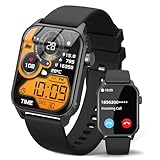
- 【1.83" HD Display & Customizable Watch Faces】Immerse yourself in a vibrant 1.83-inch IPS display, boasting a sharp resolution of 240*284 for crystal-clear visuals. Effortlessly personalize your smart watch with a wide array of customizable watch faces to suit your personal style for every occasion—whether trendy, artistic, or minimalist—ideal for casual, sporty, or professional. Its sleek, modern design complements any outfit, blending technology and fashion seamlessly for everyday wear
- 【120 Sports Modes & Advanced Health Tracking】Our TK29 smart watches for women men come equipped with 120 sports modes, allowing you to effortlessly track a variety of activities such as walking, running, cycling, and swimming. With integrated heart rate and sleep monitors, you can maintain a comprehensive overview of your health, achieve your fitness goals, and maintain a balanced, active lifestyle with ease. Your ideal wellness companion (Note: Step recording starts after exceeding 20 steps)
- 【IP67 Waterproof & Long-Lasting Battery】Designed to keep up with your active lifestyle, this smartwatch features an IP67 waterproof rating, ensuring it can withstand splashes, sweat, and even brief submersion, making it perfect for workouts, outdoor adventures, or rainy days. Its reliable 350mAh battery offering 5-7 days of active use and up to 30 days in standby mode, significantly reducing frequent charging. Ideal for all-day wear, whether you’re at the gym, outdoors, or simply on the go
- 【Stay Connected Anytime, Anywhere】Stay informed and in control with Bluetooth call and music control features. Receive real-time notifications for calls, messages, and social media apps like Facebook, WhatsApp, Twitter, and Instagram directly on your smartwatch. Easily manage calls, control your music playlist, and stay updated without needing to reach for your phone. Perfect for work, workouts, or on-the-go, this watch keeps you connected and never miss important updates wherever you are
- 【Multifunction & Wide Compatibility】Seamlessly handle heart rate monitoring, sleep tracking, and enjoy conveniences like camera/music control, Seamlessly handle heart rate monitoring, sleep tracking, and more-all directly from your wrist. This 1.83 inches HD smartwatch is compatible with iPhone (iOS 9.0+) & Android (5.0+), ensuring smooth daily connectivity and convenience throughout your day. More than just a timepiece, it’s a stylish, all-in-one wearable for smarter, healthier living
That typically places ECG-enabled watches into Class IIa medical devices, requiring clinical evaluation, risk management documentation, post-market surveillance plans, and review by a notified body. This is why features like ECG often arrive years after hardware is technically capable, and why regional rollouts are staggered even within Europe.
Without this approval, a watch can still measure heart rate or stress, but it cannot legally present ECG results or frame them as health insights. For European buyers, the absence of approved ECG is a clear signal that a device remains a wellness gadget rather than a medical-grade tool.
CE marking under MDR is the real barrier, not the sensor
Most modern smartwatches already contain ECG-capable electrodes and signal processors. The real hurdle is proving accuracy, reliability, and safety across diverse populations and use cases under MDR rules that tightened significantly after 2021.
Manufacturers must demonstrate that ECG readings are clinically comparable to reference devices, that algorithms perform consistently across skin tones, wrist sizes, and motion conditions, and that users are clearly warned about limitations. Documentation, not silicon, is what slows things down.
Apple Watch and Samsung Galaxy Watch now serve as the benchmark here. Both brands went through lengthy approval cycles country by country, and both limit ECG availability based on regulatory clearance rather than hardware generation. Huawei must now show it can operate at the same regulatory maturity level.
Why this matters more for Huawei than for most rivals
Huawei’s situation is unique because its strongest health claims go beyond ECG alone. The Watch D combines ECG electrodes with an inflatable cuff-based blood pressure system, making it one of the few wrist-worn devices attempting near-clinical BP measurement rather than optical estimation.
That ambition raises the regulatory stakes. European authorities will not evaluate ECG in isolation but as part of a broader health measurement ecosystem, including how readings are presented, stored, and used within Huawei Health. Any weakness in software explanations, user guidance, or data handling could delay or restrict approvals.
For consumers, ECG approval would act as a trust signal that Watch D’s more advanced health claims are grounded in validated medical processes rather than experimental hardware.
ECG approval shapes everyday usability, not just credibility
Regulatory clearance directly affects how a watch behaves day to day. Approved ECG features integrate into health reports, allow PDF exports for clinicians, and present alerts in medically accepted language rather than vague wellness prompts.
Without approval, features are often hidden, geo-blocked, or stripped down to raw data views. That limits practical value, especially for users managing known heart conditions or sharing results with healthcare professionals.
If Huawei secures ECG approval for Watch D in Europe, users can expect deeper integration within the Huawei Health app, clearer diagnostic framing, and longer-term software support aligned with medical compliance rather than fitness trends.
What ECG approval does not guarantee
Even with approval, ECG on a smartwatch is not a diagnostic replacement for hospital-grade equipment. European regulators are explicit about positioning these tools as early warning systems, not definitive diagnostic devices.
Battery life, comfort, and wearability still matter. The Watch D’s bulkier case and cuff mechanism may affect all-day comfort compared to slimmer ECG watches, and regular charging habits influence how often users actually capture meaningful readings.
ECG approval signals seriousness, not perfection. It tells buyers that Huawei is willing to play by Europe’s strictest health rules, but real-world value will still depend on how seamlessly Watch D fits into daily life, from strap comfort to software clarity and long-term support.
What Huawei Is Actually Applying For: ECG, MDR Classification, and CE Medical Claims Explained
To understand what Huawei is trying to unlock for the Watch D in Europe, it helps to separate marketing language from regulatory reality. Huawei is not applying for a vague “ECG feature approval” in isolation, but for a combination of medical device recognition pathways that collectively determine what the watch is legally allowed to claim, display, and enable.
At the centre of this is ECG clearance under the EU’s Medical Device Regulation (MDR), supported by CE marking that explicitly covers medical use rather than general wellness tracking. Each layer builds on the other, and missing one can materially change how the Watch D is sold, configured, and supported in European markets.
ECG approval in Europe is a medical claim, not a software toggle
In the EU, an ECG feature on a smartwatch is treated as a medical function because it measures and interprets cardiac electrical signals, even when positioned as an early warning tool. That places it firmly under MDR oversight rather than consumer electronics self-certification.
For Huawei, this means submitting clinical validation data showing the Watch D’s ECG readings can reliably detect specific rhythm patterns, typically atrial fibrillation, within defined accuracy thresholds. The bar is similar to what Apple, Samsung, and Withings have already cleared, but regulators evaluate each device independently based on hardware design, electrode placement, signal quality, and algorithm performance.
Approval governs more than detection accuracy. It also controls how results are worded, how risk notifications are framed, and whether users can export ECG PDFs for clinical review. Without this clearance, Huawei would be limited to non-diagnostic phrasing and potentially blocked from enabling ECG at all in certain EU countries.
MDR classification determines how “medical” the Watch D really is
ECG approval sits within a broader MDR classification that defines what category of medical device the Watch D falls under. Most smartwatch ECG implementations are classified as Class IIa medical devices, which reflects moderate risk and requires notified body assessment rather than self-declaration.
This classification matters because the Watch D is not just an ECG watch. Its inflatable cuff-based blood pressure system already pushes it closer to traditional medical hardware than optical-only wearables. Regulators will assess whether Huawei is presenting Watch D as a multi-function medical device or as a consumer smartwatch with one regulated feature.
A higher-risk classification increases scrutiny across the entire system, including hardware reliability, long-term calibration stability, and failure handling. It can also influence how frequently Huawei must submit post-market surveillance data and software updates for regulatory review, affecting how quickly features evolve after launch.
CE marking defines what Huawei can legally promise in Europe
CE marking is often misunderstood as a single logo, but in this context it represents a specific scope of approved medical claims. A CE mark for general electronics is not the same as a CE mark that explicitly covers ECG and blood pressure measurement under MDR.
If Huawei secures CE marking tied to ECG and blood pressure monitoring, it can advertise those functions as medically validated within defined limits. That affects packaging language, retail descriptions, in-app explanations, and even how sales staff are trained to position the product.
Without medical CE coverage, Huawei would be forced to soften claims, potentially labeling features as “reference only” or disabling them entirely depending on local enforcement. This is why some wearables launch in Europe with hardware present but features locked behind region checks until approvals are finalized.
Why Watch D faces closer scrutiny than slimmer ECG watches
Unlike most ECG-enabled smartwatches, the Watch D combines electrical heart measurement with an active cuff mechanism, making it physically closer to ambulatory medical devices than lifestyle wearables. Its thicker case, rigid strap sections, and inflation system introduce additional safety and reliability considerations.
Regulators will examine how consistently the cuff inflates, how wrist position affects readings, and how the system behaves over long-term daily wear. Comfort and wearability are not cosmetic concerns here; poor fit or user fatigue can directly impact data quality and clinical reliability.
This is also where battery life and charging habits come into play. The Watch D’s more complex hardware draws more power than optical-only ECG watches, and regulators expect realistic assumptions about how often users can capture valid readings in everyday use, not just under ideal conditions.
What approval would change for European buyers
If Huawei completes this approval stack, the Watch D would ship with ECG and blood pressure features fully enabled, medically framed, and supported across the EU. Users would see clearer guidance on when to take readings, how to interpret results, and when to seek professional advice.
Rank #2
![Apple Watch Series 11 [GPS 46mm] Smartwatch with Jet Black Aluminum Case with Black Sport Band - M/L. Sleep Score, Fitness Tracker, Health Monitoring, Always-On Display, Water Resistant](https://m.media-amazon.com/images/I/312K597M2uL._SL160_.jpg)
- HYPERTENSION NOTIFICATIONS — Apple Watch Series 11 can spot signs of chronic high blood pressure and notify you of possible hypertension.*
- KNOW YOUR SLEEP SCORE — Sleep score provides an easy way to help track and understand the quality of your sleep, so you can make it more restorative.
- EVEN MORE HEALTH INSIGHTS — Take an ECG anytime.* Get notifications for a high and low heart rate, an irregular rhythm,* and possible sleep apnea.* View overnight health metrics with the Vitals app* and take readings of your blood oxygen.*
- STUNNING DESIGN — Thin and lightweight, Series 11 is comfortable to wear around the clock — while exercising and even when you’re sleeping, so it can help track your key metrics.
- A POWERFUL FITNESS PARTNER — With advanced metrics for all your workouts, plus features like Pacer, Heart Rate Zones, training load, Workout Buddy powered by Apple Intelligence from your nearby iPhone,* and more. Series 11 also comes with three months of Apple Fitness+ free.*
It would also place Huawei in a smaller competitive group alongside Apple, Samsung, and Withings as brands offering regulator-backed cardiac monitoring in Europe. For health-focused buyers, that credibility matters as much as hardware innovation, especially for long-term use.
Crucially, approval would signal that Huawei is committing to ongoing compliance, not just a one-time launch. MDR-certified devices are expected to receive structured updates, documentation changes, and post-market monitoring, which directly influences software longevity and trust in the ecosystem surrounding the Watch D.
Huawei Watch D: A Different Kind of Health Watch (Blood Pressure Cuff, ECG Hardware, and Design Trade-offs)
Against that regulatory backdrop, it becomes clearer why the Watch D stands apart even before approvals enter the conversation. This is not a conventional smartwatch that happens to offer health insights; it is a wrist-worn medical instrument first, with smartwatch functions built around it.
An inflatable cuff on the wrist, not a software workaround
The defining feature of the Watch D is its micro air pump and inflatable cuff integrated into the strap, a design more commonly associated with upper-arm blood pressure monitors. During a measurement, the cuff tightens around the wrist, actively occluding blood flow rather than estimating pressure through optical pulse transit time.
This approach allows Huawei to claim clinically comparable systolic and diastolic readings, but it also explains why regulators treat the device differently. Active inflation introduces mechanical wear, calibration drift, and safety considerations that simply do not exist on optical-only watches.
From a user perspective, this also changes how and when measurements are taken. Blood pressure checks are intentional sessions rather than passive background tracking, requiring correct posture, stillness, and strap alignment for valid results.
ECG hardware with a medical, not lifestyle, orientation
Alongside the cuff, the Watch D includes dedicated ECG electrodes built into the case and button, enabling single-lead electrocardiogram recordings similar in principle to Apple Watch and Samsung Galaxy Watch models. The difference lies in how those readings are contextualised.
Because blood pressure and ECG data are captured on the same device, Huawei positions the Watch D as a tool for cardiovascular screening rather than episodic rhythm checks. This pairing increases clinical relevance but also raises the bar for data accuracy, user instructions, and result interpretation under European medical regulations.
For approval, regulators will not only assess signal quality but also how ECG results are presented to users. Clear warnings, limitations, and follow-up guidance are critical when a device straddles the line between consumer electronics and medical equipment.
Design trade-offs: thickness, rigidity, and daily comfort
The Watch D’s case is noticeably thicker than mainstream smartwatches, with sharper edges and a flatter profile designed to stabilise readings rather than disappear on the wrist. Combined with semi-rigid strap sections housing the inflatable bladder, the result is a watch that prioritises function over elegance.
Comfort is acceptable for scheduled wear, but it is less forgiving during sleep or extended all-day use compared to slimmer health watches. This matters because regulators will assess whether the device can realistically be worn often enough to justify its intended medical claims.
Material choices reflect this trade-off. The casing and strap feel durable and purposeful, but finishing is utilitarian, closer to clinical equipment than lifestyle accessory, which may influence buyer expectations in fashion-conscious European markets.
Battery life shaped by hardware, not just software
Power consumption is another area where the Watch D diverges from typical ECG watches. The air pump, pressure sensors, and repeated calibration cycles draw significantly more energy than optical heart rate tracking alone.
In real-world use, battery life depends heavily on how often blood pressure measurements are taken. Light smartwatch use with occasional readings can stretch several days, but frequent monitoring shortens that window quickly.
From a regulatory standpoint, this matters because charging habits affect data continuity. Approval assumes realistic usage patterns, not ideal lab conditions, and Huawei must demonstrate that users can maintain compliant monitoring without excessive friction.
Smartwatch features are present, but clearly secondary
HarmonyOS provides notifications, basic fitness tracking, and compatibility with Android smartphones, but the experience is intentionally constrained. App availability is limited, and there is little emphasis on third-party ecosystems or advanced sports analytics.
This is a deliberate positioning choice. The Watch D is not trying to outcompete Apple or Samsung on smartwatch versatility; it is targeting users who value structured health measurements over app-rich experiences.
For European buyers, that distinction is crucial. Those expecting a full-featured smartwatch with medical extras may find the Watch D restrictive, while users seeking a wrist-based alternative to home medical devices may see its focus as a strength rather than a compromise.
How Watch D Compares to Apple Watch, Samsung Galaxy Watch, and Withings in ECG Credibility
Seen against the broader ECG smartwatch landscape, Huawei’s challenge is not inventing wrist-based cardiology from scratch, but convincing European regulators and consumers that its approach belongs in the same medical credibility tier as established players. Apple, Samsung, and Withings have each taken different paths to ECG approval, and those paths shape how Watch D will be judged.
Apple Watch: the regulatory gold standard
Apple Watch remains the benchmark for consumer ECG credibility in Europe. Its single-lead ECG has held CE marking as a medical device for years, supported by extensive clinical validation, ongoing post-market surveillance, and deep integration with Apple’s health data frameworks.
Crucially, Apple’s ECG is embedded in a device people already wear all day. Comfort, slim case dimensions, refined materials, and broad strap options mean compliance is driven by lifestyle appeal as much as medical utility, something regulators increasingly factor into real-world effectiveness.
Huawei’s Watch D approaches the problem from the opposite direction. It prioritises measurement fidelity and blood pressure accuracy over wearability, which may strengthen clinical arguments but weakens the everyday-use narrative that has helped Apple sustain regulatory trust.
Samsung Galaxy Watch: hybrid medical credibility with Android reach
Samsung occupies a middle ground between Apple’s ecosystem dominance and Huawei’s medical-first design. Its ECG and blood pressure features are CE-marked in many European markets, but availability has varied by country due to local regulatory interpretation and calibration requirements.
From a hardware perspective, Galaxy Watch models feel closer to conventional smartwatches. Slimmer cases, AMOLED displays, lighter materials, and strong fitness tracking encourage constant wear, which supports ECG screening rather than episodic measurement.
Huawei lacks Samsung’s deep integration with Android system-level health services and faces additional geopolitical scrutiny. Even if Watch D secures ECG approval, Samsung’s advantage lies in familiarity, comfort, and software maturity rather than raw sensor ambition.
Withings: medical heritage without smartwatch complexity
Withings is arguably Huawei’s closest philosophical competitor in ECG credibility. Its ScanWatch line combines long battery life, understated design, and CE-certified ECG with a focus on passive monitoring rather than app-heavy smartwatch features.
Unlike Watch D, Withings does not attempt blood pressure measurement from the wrist, avoiding one of the most complex regulatory hurdles in consumer wearables. This narrower scope has allowed Withings to build trust with European regulators through consistency and restraint.
Watch D aims higher but risks more. By combining ECG and oscillometric blood pressure in a single wrist device, Huawei is asking regulators to validate a broader medical claim set, which raises the evidentiary bar well beyond what Withings has pursued.
ECG credibility is not just approval, but context
All three competitors benefit from something Huawei is still building in Europe: continuity. Apple, Samsung, and Withings have iterated their ECG implementations across multiple product generations, refining algorithms, hardware tolerances, and user education over time.
Rank #3

- Bluetooth Call and Message Alerts: Smart watch is equipped with HD speaker, after connecting to your smartphone via bluetooth, you can answer or make calls, view call history and store contacts through directly use the smartwatch. The smartwatches also provides notifications of social media messages (WhatsApp, Twitter, Facebook, Instagram usw.) So that you will never miss any important information.
- Smart watch for men women is equipped with a 320*380 extra-large hd full touch color screen, delivering exceptional picture quality and highly responsive touch sensitivity, which can bring you a unique visual and better interactive experience, lock screen and wake up easily by raising your wrist. Though “Gloryfit” app, you can download more than 102 free personalised watch faces and set it as your desktop for fitness tracker.
- 24/7 Heart Rate Monitor and Sleep Tracker Monitor: The fitness tracker watch for men has a built-in high-performance sensor that can record our heart rate changes in real time. Monitor your heart rate 26 hours a day and keep an eye on your health. Synchronize to the mobile phone app"Gloryfit", you can understand your sleep status(deep /light /wakeful sleep) by fitness tracker watch develop a better sleep habit and a healthier lifestyle.
- IP68 waterproof and 110+ Sports Modes: The fitness tracker provides up to 112+ sports modes, covering running, cycling, walking, basketball, yoga, football and so on. Activity trackers bracelets meet the waterproof requirements for most sports enthusiasts' daily activities, such as washing hands or exercising in the rain, meeting daily needs (note: Do not recommended for use in hot water or seawater.)
- Multifunction and Compatibility: This step counter watch also has many useful functions, such as weather forecast, music control, sedentary reminder, stopwatch, alarm clock, timer, track female cycle, screen light time, find phone etc. The smart watch with 2 hrs of charging, 5-7 days of normal use and about 30 days of standby time. This smart watches for women/man compatible with ios 9.0 and android 6.2 and above devices.
Watch D arrives as a first impression rather than an evolution. Even with CE approval, clinicians and informed buyers will scrutinise how ECG readings are presented, stored, exported, and interpreted, especially given HarmonyOS’s limited integration with European healthcare platforms.
In practical terms, ECG credibility is as much about trust infrastructure as it is about signal quality. Huawei must demonstrate not only that Watch D can record an ECG accurately, but that it fits into European expectations around data handling, physician review, and long-term support.
What buyers should realistically expect
If approved, Watch D will not immediately displace Apple Watch or Galaxy Watch as an everyday ECG screening tool. Its size, stiffness, and medical-device ergonomics make it better suited to intentional measurements than constant background monitoring.
Where it could stand out is in households already using blood pressure cuffs and seeking consolidation into a single device. For those users, ECG approval would elevate Watch D from experimental hybrid to legitimate medical-adjacent hardware.
However, credibility in Europe will ultimately be comparative. Against competitors that feel like watches first and medical tools second, Huawei is betting that clinical seriousness can compensate for reduced comfort, ecosystem depth, and brand trust in Western healthcare contexts.
Europe Is Not China: Regulatory Scrutiny, Data Privacy, and Trust Barriers Huawei Must Clear
If ECG credibility is already fragile without historical continuity, Europe adds an additional layer of friction that Huawei cannot shortcut. Regulatory approval here is not a marketing milestone but a gatekeeping process shaped by medical conservatism, legal liability, and deep sensitivity around health data governance.
Unlike its domestic market, where Watch D has been positioned as a quasi-clinical consumer device, Europe demands formal proof, documentation transparency, and long-term compliance structures that extend well beyond the hardware itself.
MDR reality: CE marking is necessary, but no longer simple
For ECG functionality, Huawei is operating under the EU Medical Device Regulation, not the lighter pre-2021 framework many early wearables benefited from. MDR raises requirements around clinical evidence, post-market surveillance, risk management, and traceability, especially for devices making diagnostic-adjacent claims.
An ECG-cleared Watch D would almost certainly fall under Class IIa, placing it in the same regulatory tier as Apple Watch ECG and Withings ScanWatch. That classification brings ongoing obligations, including vigilance reporting and periodic reassessment, which test whether a company intends to support a medical feature for years, not just launch it.
This is where first-generation hardware becomes a liability. Regulators will look closely at whether Huawei can realistically maintain software updates, algorithm validation, and customer support across the full lifecycle of a device that already trades comfort and wearability for medical functionality.
Data privacy is not a checkbox, it is a credibility test
Even with ECG approval, European buyers and clinicians will ask where the data lives, who can access it, and how easily it can be exported. GDPR compliance is assumed, but expectations now go further, covering cloud infrastructure transparency, data residency, and interoperability with third-party health systems.
Huawei Health’s European implementation remains relatively siloed. ECG PDFs, raw waveform access, and physician-friendly exports must feel routine, not improvised, especially when compared to Apple’s tight Health app integration or Withings’ established clinical reporting workflows.
For a device like Watch D, which encourages intentional measurements rather than passive tracking, data handling becomes central to daily usability. If users cannot easily share results with a doctor or retain long-term records independent of Huawei’s ecosystem, trust erodes regardless of signal accuracy.
Brand trust and geopolitical context still matter in healthcare
Healthcare technology operates on a different trust curve than consumer electronics. Even buyers who are comfortable using Huawei phones or earbuds may hesitate when ECG and blood pressure data are involved, particularly in markets where institutional guidance shapes purchasing decisions.
Hospitals, insurers, and clinicians are conservative by design. They tend to favour platforms with regulatory track records, visible partnerships, and continuity across device generations, areas where Huawei remains an outsider in Europe.
This does not mean rejection is inevitable, but it does mean Huawei must overperform. Clear communication about clinical validation, European data handling, and long-term product support will matter as much as the Watch D’s stainless steel case, inflatable cuff mechanism, or two-week battery life claims.
Trust infrastructure will define competitiveness more than hardware
On paper, Watch D’s combination of oscillometric blood pressure and ECG is technically impressive. In practice, European acceptance will hinge on whether Huawei can build the surrounding infrastructure that makes medical features feel safe, boring, and dependable.
That includes regulatory responsiveness, conservative software updates, and a willingness to limit claims rather than oversell them. In Europe, restraint often signals seriousness, and Watch D’s success will depend on whether Huawei can recalibrate its health ambitions to match that reality.
Until then, ECG approval would mark a starting point, not a finish line, in Huawei’s attempt to re-enter Europe’s health-focused wearable conversation.
What ECG Approval Would Unlock for Huawei’s Health Ecosystem (and What It Still Won’t Fix)
ECG clearance would represent Huawei’s first meaningful step toward medical legitimacy in Europe rather than a symbolic checkbox. After years of shipping ECG-capable hardware that remained functionally restricted outside China, regulatory approval would finally allow Huawei to activate one of Watch D’s most headline-grabbing sensors without caveats or asterisks.
That shift matters because ECG is not just another health metric. In European markets, it is widely understood as a regulated medical function rather than a wellness proxy, and approval would reposition Watch D from an experimental hybrid to a device that regulators are at least willing to tolerate in clinical-adjacent use.
ECG approval legitimises Watch D’s core concept
Watch D is built around intentional, episodic measurement rather than background trend analysis. Its inflatable cuff, stainless steel case, and relatively bulky profile only make sense if the data produced carries weight beyond casual self-tracking.
With ECG approval, the watch’s design philosophy gains coherence. A device that asks users to sit still, tighten a strap, and actively initiate readings feels justified when the output can be discussed with a clinician rather than treated as an informal curiosity.
This also differentiates Watch D from mainstream ECG-enabled smartwatches. Apple Watch and Samsung Galaxy Watch emphasise passive monitoring layered onto lightweight, all-day wearables, while Huawei is pushing toward a wrist-based medical instrument that happens to be wearable.
It would unlock deeper credibility for Huawei Health, not just a feature toggle
ECG approval would extend beyond Watch D itself and into Huawei Health as a platform. Once ECG data is legally classed as medical-grade, expectations around data retention, export, and transparency increase sharply.
That could force Huawei to improve long-term record management, clearer report formats, and more consistent sharing options across EU healthcare workflows. These are areas where Huawei Health currently lags behind Apple Health’s clinician-facing PDFs and Samsung’s increasingly interoperable exports.
If Huawei treats ECG approval as an ecosystem upgrade rather than a single-device win, it could elevate its entire health software stack in Europe. If it does not, the feature risks feeling isolated and underutilised despite regulatory clearance.
Regulatory clearance strengthens competitive positioning, but only in a narrow lane
In practical terms, ECG approval would place Huawei alongside Apple, Samsung, and Withings in the small group of brands offering regulated wrist-based cardiac screening in Europe. That alone changes how Watch D is evaluated by reviewers, retailers, and cautious buyers.
However, it would not suddenly make Watch D a mass-market smartwatch alternative. Its size, cuff-based measurement system, and focus on blood pressure and ECG make it less comfortable for continuous wear and less versatile for fitness-heavy users.
Rank #4
![Apple Watch Series 11 [GPS 42mm] Smartwatch with Rose Gold Aluminum Case with Light Blush Sport Band - S/M. Sleep Score, Fitness Tracker, Health Monitoring, Always-On Display, Water Resistant](https://m.media-amazon.com/images/I/31J+F-pXaWL._SL160_.jpg)
- HYPERTENSION NOTIFICATIONS — Apple Watch Series 11 can spot signs of chronic high blood pressure and notify you of possible hypertension.*
- KNOW YOUR SLEEP SCORE — Sleep score provides an easy way to help track and understand the quality of your sleep, so you can make it more restorative.
- EVEN MORE HEALTH INSIGHTS — Take an ECG anytime.* Get notifications for a high and low heart rate, an irregular rhythm,* and possible sleep apnea.* View overnight health metrics with the Vitals app* and take readings of your blood oxygen.*
- STUNNING DESIGN — Thin and lightweight, Series 11 is comfortable to wear around the clock — while exercising and even when you’re sleeping, so it can help track your key metrics.
- A POWERFUL FITNESS PARTNER — With advanced metrics for all your workouts, plus features like Pacer, Heart Rate Zones, training load, Workout Buddy powered by Apple Intelligence from your nearby iPhone,* and more. Series 11 also comes with three months of Apple Fitness+ free.*
ECG approval strengthens Huawei’s position in a specific health-first niche rather than broadening its appeal. For users who want a medical-adjacent device with long battery life and occasional measurements, Watch D becomes easier to recommend, but it remains a specialist tool.
What ECG approval still will not solve
Regulatory clearance does not erase ecosystem fragmentation. Huawei’s limited integration with Google services, reduced third-party app support, and constrained smartwatch software ecosystem remain barriers for users accustomed to Apple Watch or Wear OS flexibility.
It also does not guarantee clinical adoption or endorsement. ECG approval allows use, not recommendation, and European healthcare systems are slow to incorporate consumer devices without large-scale partnerships or reimbursement frameworks.
Finally, approval does not resolve lingering trust questions around data handling and long-term support. Buyers will still judge Huawei on update cadence, software restraint, and whether today’s approved features remain supported across future device generations.
In that sense, ECG approval would act as a credibility multiplier rather than a reputational reset. It amplifies Huawei’s strengths where they already exist, but it also makes weaknesses harder to ignore once the device steps onto regulated ground.
Real-World Usability: Battery Life, Wearability, Comfort, and Accuracy Expectations
If regulatory approval is the credibility multiplier, day-to-day usability is where the Huawei Watch D ultimately earns or loses trust. This is the area where its medical ambitions collide most directly with the realities of living with the device on your wrist.
Unlike slimmer ECG-capable smartwatches, Watch D is built around a compromise-heavy hardware stack that prioritises measurement capability over all-day invisibility. Understanding those trade-offs is essential before interpreting what ECG approval actually delivers for European buyers.
Battery life remains a core advantage, even with regulated sensors
One of Watch D’s strongest real-world differentiators is battery life, particularly in a category where regulated ECG often comes with daily charging expectations. Huawei typically rates the Watch D at around seven days of use, and real-world reports from existing markets suggest four to five days is achievable with conservative measurement habits.
That figure matters because ECG and blood pressure readings are not passive background features here. Each measurement involves active hardware components, including the micro-pump and airbag system inside the strap, which draw significantly more power than optical heart rate monitoring alone.
Compared with Apple Watch or Galaxy Watch models offering ECG, Watch D’s endurance feels closer to a Withings ScanWatch than a traditional smartwatch. For users who value infrequent charging and deliberate health checks over constant app interaction, this battery profile aligns well with its specialist positioning.
Wearability is the defining compromise
Comfort is where Watch D most clearly signals that it is not trying to be an everyday fashion-first smartwatch. The case is thick and wide, and the integrated cuff strap adds both bulk and stiffness compared to silicone or fabric bands used by mainstream competitors.
The inflatable strap section must sit snugly against the wrist for accurate blood pressure readings, which limits how loosely the watch can be worn. This makes extended wear during sleep, workouts, or hot weather more noticeable than on slimmer devices.
For shorter daily sessions, such as scheduled measurements or intermittent wear, the trade-off is manageable. As a 24/7 companion, however, Watch D demands tolerance for size and a willingness to prioritise function over discretion.
Software experience supports occasional use, not constant interaction
Huawei’s software approach reinforces the Watch D’s intended usage pattern. Health features are clearly surfaced, guided, and slow-paced, with prompts designed to ensure correct posture and wrist positioning during measurements.
This deliberate friction improves measurement consistency but makes spontaneous or frequent checks less convenient than tap-and-go ECG apps on Apple or Samsung devices. The interface feels closer to a medical instrument than a lifestyle gadget, which some users will appreciate and others will find limiting.
Outside health tracking, the broader smartwatch experience remains competent but restrained. Notifications, basic fitness tracking, and system apps function reliably, yet the absence of a rich third-party app ecosystem keeps Watch D firmly in the health-first category.
Accuracy expectations: credible, conditional, and context-dependent
With ECG approval in place, expectations around accuracy naturally rise, but they should remain grounded. Regulatory clearance confirms that the ECG feature meets defined performance and safety thresholds under controlled conditions, not that it rivals clinical-grade equipment in all scenarios.
Blood pressure measurement, in particular, remains sensitive to user behaviour. Cuff positioning, arm posture, movement, and measurement timing all influence results, and Watch D requires stricter adherence to guidance than optical-only wearables.
For users willing to follow instructions carefully, accuracy should be competitive with other consumer blood pressure wearables, and more consistent than cuffless estimation approaches. For casual users hoping for effortless, background-grade readings, the experience may feel demanding.
Durability and daily practicality
The Watch D’s construction feels purposeful rather than luxurious. Materials prioritise rigidity and internal space for sensors over slimness, and while water resistance is adequate for daily life, it is not designed as a swim-focused or rugged sports watch.
Strap longevity is another practical consideration. The integrated airbag strap is central to the device’s function, which means replacements are not optional accessories but critical components that must meet calibration and compatibility requirements.
This reinforces the Watch D’s identity as a semi-specialised health device rather than a modular smartwatch platform. Ownership feels closer to maintaining a medical tool than rotating through fashion straps or treating the watch as a disposable upgrade.
In daily use, Watch D rewards intentionality. It suits users who plan when to wear it, when to measure, and when to charge, rather than those expecting an always-on, invisible companion.
Who the Huawei Watch D Is Really For in Europe—and Who Should Look Elsewhere
Taken together, the Watch D’s accuracy constraints, durability trade-offs, and regulatory framing make its ideal audience unusually specific. This is not a generalist smartwatch that happens to do health tracking; it is a health instrument that happens to live on the wrist, and that distinction matters when deciding whether it belongs in a European buyer’s daily routine.
Best suited to: health-conscious users with a clinical mindset
The Watch D makes the most sense for European users who actively monitor cardiovascular health and already understand the discipline required for reliable measurements. That includes people managing hypertension, users tracking blood pressure trends over time, or those who want an ECG-cleared wearable as a supplementary tool alongside medical advice.
For this audience, the appeal is not elegance or app abundance, but consistency and regulatory legitimacy. CE and MDR alignment, combined with ECG approval, gives Watch D a level of medical credibility that most mainstream smartwatches still lack in Europe, even if their ECG features exist in parallel ecosystems.
These users are also more likely to tolerate the watch’s physical presence. At roughly 51 mm across with noticeable thickness driven by the inflatable cuff mechanism, the Watch D is not subtle, but it is stable on the wrist, which matters for repeatable measurements more than aesthetics.
Good fit for: Android users prioritising battery life and offline reliability
Huawei’s software stack remains strongest for users who do not depend on Google’s services. Android users willing to work within Huawei Health, rather than expecting deep third-party app integration, will find the Watch D predictable and power-efficient.
Battery life typically stretches several days even with regular blood pressure and ECG usage, which compares favourably to ECG-enabled rivals that require daily charging. For users who see missed readings as more disruptive than missed notifications, this endurance is a meaningful advantage.
💰 Best Value
![Apple Watch Series 11 [GPS 42mm] Smartwatch with Jet Black Aluminum Case with Black Sport Band - S/M. Sleep Score, Fitness Tracker, Health Monitoring, Always-On Display, Water Resistant](https://m.media-amazon.com/images/I/31ybzrJZckL._SL160_.jpg)
- HYPERTENSION NOTIFICATIONS — Apple Watch Series 11 can spot signs of chronic high blood pressure and notify you of possible hypertension.*
- KNOW YOUR SLEEP SCORE — Sleep score provides an easy way to help track and understand the quality of your sleep, so you can make it more restorative.
- EVEN MORE HEALTH INSIGHTS — Take an ECG anytime.* Get notifications for a high and low heart rate, an irregular rhythm,* and possible sleep apnea.* View overnight health metrics with the Vitals app* and take readings of your blood oxygen.*
- STUNNING DESIGN — Thin and lightweight, Series 11 is comfortable to wear around the clock — while exercising and even when you’re sleeping, so it can help track your key metrics.
- A POWERFUL FITNESS PARTNER — With advanced metrics for all your workouts, plus features like Pacer, Heart Rate Zones, training load, Workout Buddy powered by Apple Intelligence from your nearby iPhone,* and more. Series 11 also comes with three months of Apple Fitness+ free.*
The Watch D also functions reliably as a self-contained device. Measurements are not cloud-dependent in real time, and health data synchronisation is stable once paired, reinforcing its positioning as a monitoring tool rather than a lifestyle extension of the phone.
Less suitable for: fitness-first users and multisport enthusiasts
Despite basic activity tracking, the Watch D is not built for runners, swimmers, or gym-focused users. Its water resistance is adequate for everyday exposure but does not encourage regular swimming, and the inflatable strap mechanism makes rapid, sweaty workouts less appealing than on lighter, sport-oriented watches.
GPS, training analytics, and recovery insights are functional rather than competitive. Compared with Garmin, Polar, or even Huawei’s own GT-series watches, Watch D feels constrained by its health hardware priorities.
Users who expect their smartwatch to fade into the background during exercise, or to serve as a performance coach, will likely find the Watch D cumbersome and over-engineered for their needs.
Not ideal for: iPhone users and ecosystem-driven buyers
While iOS compatibility exists, the experience is clearly secondary. Feature parity, background syncing behaviour, and notification handling remain more limited than on Apple Watch or even some cross-platform competitors.
For buyers embedded in Apple’s ecosystem, Watch D’s ECG approval alone is unlikely to outweigh the loss of seamless integration, app diversity, and accessory support. Apple Watch’s ECG is already medically cleared in Europe, and its overall platform breadth remains unmatched.
Similarly, users who value app experimentation, smart home control, or frequent software-driven feature expansion may find Huawei’s more closed ecosystem restrictive, regardless of regulatory progress.
Who should wait and watch
There is also a category of buyers for whom the Watch D is compelling in theory but premature in practice. Those interested in blood pressure wearables but hesitant about strap maintenance, long-term calibration, or replacement availability may prefer to see how Huawei supports the product over multiple years in Europe.
ECG approval strengthens confidence, but sustained regulatory compliance, accessory supply, and software updates will ultimately define whether Watch D becomes a trusted long-term health companion or a niche experiment.
For these users, the Watch D’s European launch is less a final recommendation and more a signal that Huawei is serious about medical-grade wearables, even if the broader ecosystem case is still evolving.
The Bigger Picture: Huawei’s Long-Term Health Tech Ambitions Beyond This Single Approval
Viewed in isolation, ECG certification for the Watch D might look like a narrow regulatory milestone. In context, it is better understood as part of a much longer strategy to reposition Huawei from a consumer electronics brand with health features into a serious medical-adjacent platform provider in Europe.
This distinction matters because ECG approval is not an endpoint. It is one of the most demanding gateways under EU medical device rules, and clearing it signals that Huawei is willing to invest in clinical validation, post-market surveillance, and regulatory maintenance rather than treating health features as marketing add-ons.
From feature parity to clinical credibility
Huawei’s health trajectory over the past five years shows a clear shift away from chasing checkbox parity with Apple or Samsung. Instead of iterating on convenience metrics, it has focused on harder problems: optical SpO2 accuracy, arterial stiffness estimation, sleep respiration analysis, and now cuff-based blood pressure with ECG.
The Watch D embodies that pivot, even at the cost of elegance and comfort. Its bulky case, rigid strap architecture, and deliberate measurement rituals reflect a device designed around physiological accuracy rather than passive wearability.
In regulatory terms, this approach aligns more closely with medical device logic than mainstream smartwatch design. Approval in Europe suggests Huawei is willing to accept narrower appeal in exchange for higher clinical trust.
Building a regulatory foundation, not a single product win
ECG approval under the EU MDR is rarely pursued for a one-off product. It requires ongoing compliance, documentation updates, vigilance reporting, and the ability to respond to regulatory audits years after launch.
By pushing Watch D through this process, Huawei is effectively building internal infrastructure that can support future medically regulated wearables. That could include lighter successors to Watch D, broader ECG rollouts across the GT or Watch series, or entirely new health-focused form factors.
Once that regulatory muscle exists, subsequent approvals become faster and cheaper. This is how Apple gradually expanded ECG and AFib features across regions, and Huawei appears to be following a similar long-term playbook.
Why Europe matters more than China for this strategy
Huawei already operates in a permissive environment at home, where health features can launch earlier and iterate faster. Europe, by contrast, is the credibility market.
CE marking under MDR carries global weight, influencing acceptance in other regulated regions and shaping how clinicians, insurers, and research partners view a company’s data. For Huawei, success in Europe is less about immediate sales volume and more about legitimacy.
This also explains why Watch D is arriving despite its obvious compromises. It is not designed to outsell sport watches or lifestyle smartwatches, but to anchor Huawei’s medical narrative in one of the world’s toughest regulatory environments.
The ecosystem constraint that still limits the vision
Even with regulatory progress, Huawei’s health ambitions remain constrained by software openness and platform reach. Data portability, third-party clinical integrations, and cross-platform services are still limited compared with Apple Health or even Google’s expanding health stack.
For European users, this creates a tension. The hardware may be medically credible, but the surrounding ecosystem does not yet fully support long-term health journeys, clinician sharing, or multi-device continuity.
Until Huawei addresses these gaps, its health wearables will appeal most strongly to self-directed users who value measurement accuracy over ecosystem breadth.
What this means for buyers and the wider market
For consumers, ECG approval on Watch D is not simply a reassurance about one feature. It is evidence that Huawei is committing to a slower, more regulated, and more expensive path in wearable health.
For competitors, it signals that Huawei is no longer content to compete only on battery life, materials, or price-to-spec ratios. It is positioning itself as a parallel track to Apple: less ecosystem-driven, more hardware-led, and increasingly anchored in clinical validation.
For the European wearable market, Watch D’s arrival suggests that medical-grade features will continue to trickle down, even if early implementations are bulky, niche, or imperfect.
In that sense, Huawei Watch D is less a finished product than a statement of intent. ECG approval gives it credibility today, but its real importance lies in what it enables next, and whether Huawei can translate regulatory success into devices that feel as natural to wear as they are serious about health.