The Huawei Watch Buds exists because a familiar problem refuses to go away: truly wireless earbuds are small enough to forget, lose, or leave uncharged, yet essential enough that you notice the moment they are missing. Huawei’s answer is radical in a way only wearables can be, turning the smartwatch itself into the storage case, charger, and always‑with‑you home for a pair of earbuds. It is not a gimmick by accident, but a deliberate attempt to collapse two everyday devices into one object that never leaves your wrist.
This idea immediately raises uncomfortable questions for experienced smartwatch users. A watch already fights for battery life, comfort, thickness, and durability; adding earbuds sounds like a recipe for compromise. The core promise here is convenience, but convenience only matters if the trade‑offs do not undermine the fundamentals of a good watch or a good pair of earbuds.
What follows is not about novelty for novelty’s sake, but whether Huawei’s mechanical and ecosystem decisions actually solve real daily friction. Understanding why the earbuds are inside the watch, and how that choice reshapes everything from case construction to charging behavior, is essential to judging whether the Watch Buds make sense beyond a demo table.
A mechanical solution to a lifestyle problem
Huawei approached the problem as a hardware challenge first, not a software trick. The Watch Buds uses a hinged case design where the circular display lifts open, revealing two magnetically docked earbuds nested inside the watch body itself. This turns the watch into a miniature clamshell, borrowing more from traditional horology and industrial design than from typical smartwatch minimalism.
🏆 #1 Best Overall
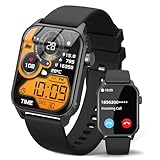
- 【1.83" HD Display & Customizable Watch Faces】Immerse yourself in a vibrant 1.83-inch IPS display, boasting a sharp resolution of 240*284 for crystal-clear visuals. Effortlessly personalize your smart watch with a wide array of customizable watch faces to suit your personal style for every occasion—whether trendy, artistic, or minimalist—ideal for casual, sporty, or professional. Its sleek, modern design complements any outfit, blending technology and fashion seamlessly for everyday wear
- 【120 Sports Modes & Advanced Health Tracking】Our TK29 smart watches for women men come equipped with 120 sports modes, allowing you to effortlessly track a variety of activities such as walking, running, cycling, and swimming. With integrated heart rate and sleep monitors, you can maintain a comprehensive overview of your health, achieve your fitness goals, and maintain a balanced, active lifestyle with ease. Your ideal wellness companion (Note: Step recording starts after exceeding 20 steps)
- 【IP67 Waterproof & Long-Lasting Battery】Designed to keep up with your active lifestyle, this smartwatch features an IP67 waterproof rating, ensuring it can withstand splashes, sweat, and even brief submersion, making it perfect for workouts, outdoor adventures, or rainy days. Its reliable 350mAh battery offering 5-7 days of active use and up to 30 days in standby mode, significantly reducing frequent charging. Ideal for all-day wear, whether you’re at the gym, outdoors, or simply on the go
- 【Stay Connected Anytime, Anywhere】Stay informed and in control with Bluetooth call and music control features. Receive real-time notifications for calls, messages, and social media apps like Facebook, WhatsApp, Twitter, and Instagram directly on your smartwatch. Easily manage calls, control your music playlist, and stay updated without needing to reach for your phone. Perfect for work, workouts, or on-the-go, this watch keeps you connected and never miss important updates wherever you are
- 【Multifunction & Wide Compatibility】Seamlessly handle heart rate monitoring, sleep tracking, and enjoy conveniences like camera/music control, Seamlessly handle heart rate monitoring, sleep tracking, and more-all directly from your wrist. This 1.83 inches HD smartwatch is compatible with iPhone (iOS 9.0+) & Android (5.0+), ensuring smooth daily connectivity and convenience throughout your day. More than just a timepiece, it’s a stylish, all-in-one wearable for smarter, healthier living
The mechanism matters because it dictates thickness, weight distribution, and long‑term durability. Compared to a standard Huawei Watch, the Watch Buds is noticeably thicker, and you feel that added mass on the wrist, especially during typing or workouts. The trade‑off is that the earbuds are always charged when docked, removing the separate charging case from your daily carry entirely.
Why a watch is the “least bad” place for earbuds
Putting earbuds in a watch is not about audio performance first; it is about behavior. People already accept wearing a watch all day, and unlike pockets or bags, the wrist is a fixed, predictable location. For quick calls, short commutes, or impromptu listening, the Watch Buds turns earbuds into something you access as instinctively as checking the time.
This choice also sidesteps one of the biggest failure points of true wireless earbuds: dead batteries. Because the earbuds are constantly topped up by the watch, short listening sessions rarely require planning. However, the watch itself now becomes the single point of failure, and heavy earbud use directly eats into smartwatch battery life.
The impact on watch design, comfort, and daily wear
Housing earbuds forces compromises that traditional smartwatch buyers will notice immediately. The case is thicker, the center of gravity sits higher on the wrist, and slim cuffs or tight jacket sleeves are less forgiving. Huawei mitigates this with rounded case edges, solid hinge tolerances, and a strap that distributes weight evenly, but physics does not disappear.
From a materials perspective, the Watch Buds leans into durability over elegance, prioritizing a robust shell and secure latching system. This positions it closer to a practical daily tool than a fashion‑first smartwatch, and that distinction is important. If your expectations are shaped by thin, lightweight watches like the Apple Watch Series models or Huawei’s own Watch GT line, this will feel like a conscious step sideways rather than a straight upgrade.
Convenience versus specialization
The defining idea behind the Watch Buds is not that it replaces your favorite earbuds or your favorite smartwatch outright. It aims to be good enough at both that you stop carrying, charging, and thinking about two separate devices. That philosophy favors immediacy and availability over peak audio fidelity or ultra‑slim wrist profiles.
This is where the concept becomes polarizing. Users who value seamless calls, quick media access, and fewer objects in their pockets may find the trade‑off liberating. Those who already own excellent earbuds and prioritize long smartwatch battery life or slim design will see the integration as an unnecessary compromise rather than a breakthrough.
Design, Case Construction, and the Hinge Mechanism: Engineering a Watch That Opens
Once you accept the philosophical trade‑off of combining a smartwatch and true wireless earbuds, the Watch Buds lives or dies by its physical execution. This is not a device you can judge from renders or spec sheets alone, because its defining feature is mechanical, tactile, and exposed to daily wear. Huawei’s challenge here was less about aesthetics and more about trust: convincing you that a watch with a hinged lid is something you can open dozens of times a day without anxiety.
The result is a product that feels more like a precision instrument than a fashion accessory. It is deliberately overbuilt in places where traditional smartwatches aim for thinness, and that choice shapes every aspect of the design.
Case size, proportions, and wrist presence
The Watch Buds uses a large, circular case that measures roughly 47mm across, with thickness that immediately stands out even among rugged smartwatches. On paper, the numbers look intimidating, and on smaller wrists the visual mass is impossible to hide. This is not a watch that disappears under a shirt cuff or blends quietly into formal wear.
In practice, the rounded case sides and domed profile soften the bulk more than the raw measurements suggest. The weight is noticeable but well balanced, avoiding the top‑heavy wobble that plagues some oversized watches. After a full day, the sensation is more “substantial” than uncomfortable, though users accustomed to slim Apple Watch or Huawei Watch GT models will feel the difference immediately.
The center of gravity sits higher than normal due to the internal earbud bay. Huawei compensates with careful strap geometry and lug placement, but physics still asserts itself during wrist rotation or fast arm movement. This is a watch that asks you to be aware of it.
Materials, finishing, and durability priorities
Huawei opts for a stainless steel case with a matte, bead‑blasted finish rather than polished surfaces. This choice reduces fingerprint visibility and visually downplays the watch’s thickness, while also signaling that durability takes precedence over jewelry‑like refinement. It feels closer to an everyday tool watch than a lifestyle smartwatch.
The front glass is slightly recessed and surrounded by a raised bezel, adding a layer of protection against knocks. While not positioned as an extreme sports device, the Watch Buds clearly anticipates real‑world abuse, from desk edges to door frames. The construction inspires confidence in a way that slimmer, more delicate watches often do not.
Water resistance is rated at 5 ATM, which is respectable given the moving parts involved. However, Huawei explicitly limits water exposure during earbud access, reinforcing that this is a mechanically complex product first and a swim‑proof fitness watch second.
The hinge: the heart of the Watch Buds concept
The defining engineering achievement here is the hinged display lid. Pressing the lower portion of the case triggers a spring‑loaded mechanism that lifts the screen upward and backward, revealing the earbuds stored vertically inside the case. The motion is smooth, damped, and deliberate, with none of the rattling or looseness you might fear from an early‑generation design.
Huawei claims extensive cycle testing for the hinge, and it shows. The resistance is consistent, the opening angle is precisely controlled, and the lid locks into place when closed with a reassuring click. There is no flex when pressing on the screen, even when the lid is shut, which is critical for long‑term confidence.
What’s particularly impressive is how the hinge disappears during normal watch use. There are no exposed gaps or awkward seams that catch the eye, and from a distance, the Watch Buds still reads as a conventional round smartwatch. This subtlety is essential, because a gimmicky appearance would undermine the entire concept.
Internal layout and earbud docking system
Inside the case, Huawei uses a symmetrical layout that houses the left and right earbuds vertically, magnetically aligned for charging. The earbuds are extracted by pressing lightly on their top edges, where they tilt outward for easy grip. It’s an intuitive motion that becomes second nature after a day or two.
The magnets are strong enough to prevent accidental dislodging, even during vigorous movement, yet not so aggressive that removal feels forced. Charging contacts align reliably every time, which matters because inconsistent charging would instantly erode trust in the system.
This internal architecture is the reason the case is as thick as it is. Rather than stacking components, Huawei prioritizes accessibility and mechanical clearance, reducing the risk of wear over time. It’s a conservative engineering choice, but one that favors longevity over compactness.
Strap design and long‑term comfort considerations
The included strap is a fluoroelastomer band with a conventional pin buckle, chosen for durability and weight distribution rather than luxury feel. It’s supple enough for all‑day wear and wide enough to stabilize the heavier case. Crucially, it avoids creating pressure points near the lugs, which would be amplified by the watch’s mass.
Because the watch sits taller than average, strap adjustment becomes more important than usual. A slightly loose fit exaggerates movement, while a snug but not tight fit keeps the watch planted. Users who typically wear their watches loose may need to adapt their habits here.
Standard quick‑release lugs allow strap swapping, but not all third‑party straps balance the weight equally well. Narrow or stiff bands can make the watch feel less stable, so strap choice directly affects comfort more than with slimmer smartwatches.
Everyday usability of a mechanical smartwatch
Living with a watch that opens introduces subtle behavioral changes. You become more deliberate about interactions, opening the lid only when needed rather than fidgeting with it. Over time, this reinforces the idea that the hinge is a functional tool, not a toy.
The lid can be opened one‑handed, though it’s easier with the opposite hand. Importantly, accidental openings are rare; the release mechanism requires intentional pressure, avoiding embarrassing moments in public or during exercise.
This mechanical layer adds character but also responsibility. Sand, grit, and careless handling matter more here than on sealed smartwatches. The Watch Buds rewards mindful use, and while it doesn’t feel fragile, it does demand respect.
In the end, the design and hinge mechanism are not just technical novelties; they define how the Watch Buds fits into daily life. Huawei has engineered a solution that feels credible, durable, and thoughtfully executed, even if it challenges conventional expectations of what a smartwatch should look and feel like on the wrist.
Wearability on the Wrist: Size, Weight, Comfort, and Everyday Practicality
All of the mechanical thoughtfulness described earlier ultimately lives or dies by how the Watch Buds behaves on the wrist over long days. Once the novelty fades, this device has to coexist with desks, sleeves, workouts, and sleep, while quietly carrying two earbuds inside its case.
Case dimensions and visual presence
The Watch Buds is unapologetically large, both in diameter and thickness, and there’s no disguising the fact that it’s built around a hollow interior. On the wrist, it reads closer to a chunky sports watch than a sleek modern smartwatch, with a taller mid‑case that immediately sets it apart from Huawei’s own Watch GT line.
Height is the more noticeable factor than width. The extra verticality makes the watch sit proud of the wrist, which can cause occasional sleeve friction with tighter cuffs, especially on dress shirts or lightweight jackets.
For wearers used to traditional mechanical tool watches, the proportions feel familiar rather than shocking. For those coming from Apple Watch or Galaxy Watch models, there is an adjustment period where the watch simply feels more “present” at all times.
Weight distribution and balance
On paper, the Watch Buds is heavy, and you feel that weight the first time you strap it on. What matters more, however, is how evenly that mass is distributed, and Huawei has done commendable work here.
The center of gravity stays relatively close to the wrist, despite the hinged lid and earbuds. This prevents the top‑heavy wobble that often plagues oversized smartwatches, especially during walking or casual arm movement.
That said, the watch is not forgiving of poor fit. If the strap isn’t properly adjusted, the mass becomes far more noticeable, and micro‑shifts on the wrist are amplified compared to slimmer devices.
All‑day comfort and skin contact
The caseback sits flat and smooth against the wrist, with no aggressive sensor protrusions digging into the skin. Over long days, this proves more important than absolute weight, as pressure points are what typically cause fatigue or irritation.
Heat buildup is moderate but manageable. The sealed construction and thicker case do trap warmth more than minimalist smartwatches, yet it never reaches the clammy feeling that discourages continuous wear.
For desk work, the watch remains comfortable against hard surfaces, though its height means you’re more aware of it when typing or resting your wrist. It’s not intrusive, but it never fully disappears either.
Movement, exercise, and stability
During light workouts, walking, and everyday errands, the Watch Buds remains stable as long as the strap is snug. The mass doesn’t bounce excessively, and heart rate tracking remains consistent, suggesting good sensor contact.
Higher‑intensity movement is where the design shows its limits. Running or rapid arm swings highlight the watch’s bulk, making it feel more like a rugged sports watch than a fitness‑first wearable.
This isn’t a dealbreaker, but it does position the Watch Buds as a generalist device rather than a dedicated training companion. Users who prioritize long runs or interval training may find slimmer alternatives more comfortable.
Rank #2
![Apple Watch Series 11 [GPS 46mm] Smartwatch with Jet Black Aluminum Case with Black Sport Band - M/L. Sleep Score, Fitness Tracker, Health Monitoring, Always-On Display, Water Resistant](https://m.media-amazon.com/images/I/312K597M2uL._SL160_.jpg)
- HYPERTENSION NOTIFICATIONS — Apple Watch Series 11 can spot signs of chronic high blood pressure and notify you of possible hypertension.*
- KNOW YOUR SLEEP SCORE — Sleep score provides an easy way to help track and understand the quality of your sleep, so you can make it more restorative.
- EVEN MORE HEALTH INSIGHTS — Take an ECG anytime.* Get notifications for a high and low heart rate, an irregular rhythm,* and possible sleep apnea.* View overnight health metrics with the Vitals app* and take readings of your blood oxygen.*
- STUNNING DESIGN — Thin and lightweight, Series 11 is comfortable to wear around the clock — while exercising and even when you’re sleeping, so it can help track your key metrics.
- A POWERFUL FITNESS PARTNER — With advanced metrics for all your workouts, plus features like Pacer, Heart Rate Zones, training load, Workout Buddy powered by Apple Intelligence from your nearby iPhone,* and more. Series 11 also comes with three months of Apple Fitness+ free.*
Sleeping with the Watch Buds
Sleep tracking is technically supported, but comfort will vary greatly by user. Side sleepers are most likely to notice the watch’s thickness, particularly if the wrist ends up under the pillow.
Back sleepers or those accustomed to wearing large mechanical watches at night may adapt more easily. Still, this is not a watch that disappears during sleep, and it requires a conscious choice to wear overnight.
If sleep tracking is a priority, many users will likely remove the watch at night and rely on daytime metrics instead, especially given the added consideration of charging both watch and earbuds.
Everyday practicality of carrying earbuds on the wrist
From a wearability standpoint, the integrated earbuds subtly change how you think about the watch. You’re more conscious of its purpose, and that awareness reinforces its presence on the wrist.
The convenience of always having earbuds available offsets some of the size compromise. In daily life, this trade feels intentional rather than gimmicky, particularly for short calls or spontaneous listening.
However, it also means the watch never gets the “lightweight accessory” pass that traditional smartwatches enjoy. You’re always wearing both a watch and an audio device, whether you need the earbuds or not.
This constant readiness is the Watch Buds’ defining ergonomic trade‑off, and it’s one that will either feel empowering or excessive depending on how often you truly value that convenience.
Smartwatch Fundamentals: Display Quality, Performance, and HarmonyOS Experience
Once you accept the physical compromise of carrying earbuds on your wrist, the next question is whether the Watch Buds still functions as a credible smartwatch. Huawei’s challenge here is less about innovation and more about fundamentals: screen quality, responsiveness, and a software experience that doesn’t feel like an afterthought to the hardware spectacle.
This is where the Watch Buds has to stand on its own, separate from the novelty of its hinge mechanism. As a smartwatch, it needs to feel fluent, legible, and dependable across dozens of small daily interactions.
Display quality and real‑world legibility
The Watch Buds uses a circular AMOLED display measuring 1.43 inches, a familiar size for Huawei’s recent watches and one that feels appropriately proportioned despite the thicker case. Resolution is high enough that text and watch face complications remain crisp, even when viewed at off‑angles during quick wrist checks.
Color reproduction leans vivid rather than strictly neutral, which works well for watch faces, fitness rings, and notification previews. Blacks are deep, and contrast remains strong indoors and outdoors, giving the display a premium visual character that aligns with Huawei’s flagship positioning.
Brightness is more than adequate for outdoor use, including direct sunlight. While Huawei does not aggressively chase headline‑grabbing nit numbers, auto‑brightness responds quickly and rarely leaves the display washed out during midday use.
The curved glass integrates smoothly into the surrounding bezel, though it does reflect light more readily than flat sapphire designs found on traditional luxury watches. It’s a trade‑off that favors visual drama over absolute glare control, but in daily use it rarely becomes distracting.
Touch responsiveness and navigation
Touch response is immediate and reliable, with no noticeable lag when swiping through tiles or scrolling long notification lists. Even with slightly sweaty fingers or during quick interactions on the move, the display remains accurate.
Huawei retains its familiar navigation logic: vertical swipes for notifications, horizontal swipes for widgets, and a physical crown for scrolling and selection. The crown adds a welcome sense of precision, especially when navigating dense menus or adjusting settings one‑handed.
Despite the Watch Buds’ added mechanical complexity, the interface never feels burdened by the hardware. Animations remain fluid, and there’s no sense that system resources are being stretched thin by the earbud integration.
Performance and day‑to‑day fluidity
Huawei does not publish detailed chipset specifications, but real‑world performance tells the story clearly. App launches are quick, transitions are smooth, and the system rarely stutters, even when bouncing between workouts, music controls, and notifications.
This level of responsiveness matters more on a device like the Watch Buds, where friction would quickly undermine the convenience narrative. In practice, it behaves like a mature smartwatch platform rather than an experimental prototype.
Multitasking is limited in the traditional smartwatch sense, but state retention is solid. You can leave a workout screen, check a message, and return without losing context, which reinforces confidence in everyday use.
HarmonyOS on the wrist
HarmonyOS remains one of the most visually cohesive smartwatch operating systems on the market. Typography, iconography, and animation language feel intentional, and the interface avoids the cluttered density that can plague feature‑heavy wearables.
Menus are logically grouped, and system settings are easier to navigate than on many Wear OS watches. For users coming from other Huawei wearables, the learning curve is minimal.
That said, HarmonyOS still carries ecosystem limitations that advanced users will immediately recognize. Third‑party app availability remains modest, and those expecting a deep app catalog comparable to Apple Watch or Wear OS will find the selection constrained.
Huawei’s strength lies instead in system‑level features: fitness tracking, health metrics, media controls, and notifications all feel deeply integrated and stable. The Watch Buds is designed to do core smartwatch tasks very well rather than attempting to be an app‑centric micro‑computer.
Notifications, calls, and communication handling
Notifications are clear, well‑formatted, and easy to dismiss or act upon. Message previews are readable, and scrolling through longer texts remains smooth thanks to the high‑resolution display and responsive crown input.
Call handling is where the Watch Buds begins to blur categories. Even without deploying the earbuds, the watch’s speaker and microphone are serviceable for short calls in quiet environments.
With the earbuds engaged, call quality improves noticeably, shifting the experience closer to a dedicated wireless headset. This seamless transition between wrist and ear reinforces the device’s hybrid identity without complicating the interface.
Battery impact of a full‑featured smartwatch
Running a bright AMOLED display, a fluid interface, continuous health tracking, and Bluetooth connectivity inevitably places demands on the battery. As a smartwatch alone, the Watch Buds delivers respectable endurance, typically covering a full day and a half of mixed use.
However, the presence of earbuds changes user behavior. Frequent interactions, media playback, and call handling can compress battery life, especially if both the watch and earbuds are being actively used throughout the day.
This doesn’t undermine the smartwatch fundamentals, but it reframes expectations. The Watch Buds performs like a capable modern smartwatch, yet its energy budget is shared with an entirely separate device category.
Compatibility and ecosystem considerations
The Watch Buds works best within Huawei’s ecosystem, particularly when paired with Huawei smartphones. Setup is smoother, feature access is broader, and system updates arrive more predictably.
Android users outside the Huawei ecosystem will still find the core experience functional, but with occasional friction around notifications and app syncing. iOS compatibility exists but is notably limited, making this a difficult recommendation for iPhone users.
These constraints don’t detract from the quality of the smartwatch experience itself, but they do shape who will truly benefit from it. The Watch Buds is a polished smartwatch at its core, yet one whose strengths are amplified—or restricted—by the phone it’s paired with.
What ultimately stands out is that Huawei did not sacrifice smartwatch fundamentals to make room for a clever mechanical trick. The Watch Buds feels like a complete smartwatch first, with the earbud integration layered on top rather than awkwardly stitched in.
Health, Fitness, and Sensors: What You Gain—and What You Sacrifice
Once you move past the novelty of earbuds hidden under a hinged dial, the Watch Buds still has to earn its place as a health and fitness companion. Huawei’s recent wearables have built a strong reputation for sensor accuracy and wellness depth, and this hybrid device largely follows that lineage rather than reinventing it.
What’s notable is not just what’s included, but what had to be balanced to make room for the earbuds without turning the watch into a compromised health tracker.
Core health sensors: familiar, reliable, but not cutting‑edge
The Watch Buds includes Huawei’s standard optical heart‑rate sensor, SpO2 monitoring, sleep tracking, stress estimation, and basic skin temperature deviation tracking. In daily use, heart‑rate readings are stable during rest and walking, with only minor lag during abrupt intensity changes, comparable to recent Huawei Watch GT models.
Blood oxygen measurements are consistent for spot checks and overnight trends, though they lack the clinical framing or alerting depth found in more medically oriented wearables. There’s no ECG or arterial stiffness analysis here, which feels like a conscious omission rather than a technical oversight.
This positions the Watch Buds squarely as a wellness‑focused device rather than a health‑first diagnostic tool.
Fitness tracking: broad coverage, conservative execution
Huawei supports a wide range of workout modes, covering everything from outdoor running and cycling to strength training and guided walking. GPS performance is solid for casual fitness, with routes generally tracking cleanly in open areas, though it lacks the multi‑band precision seen in higher‑end sport watches.
Metrics focus on duration, heart‑rate zones, calories, and pace rather than advanced training load or recovery insights. For users coming from Apple Watch or Samsung Galaxy Watch, this will feel familiar but less analytically aggressive.
The Watch Buds is well suited to habitual exercise and general activity monitoring, but it’s not built to satisfy endurance athletes or data‑driven trainers.
Rank #3

- Bluetooth Call and Message Alerts: Smart watch is equipped with HD speaker, after connecting to your smartphone via bluetooth, you can answer or make calls, view call history and store contacts through directly use the smartwatch. The smartwatches also provides notifications of social media messages (WhatsApp, Twitter, Facebook, Instagram usw.) So that you will never miss any important information.
- Smart watch for men women is equipped with a 320*380 extra-large hd full touch color screen, delivering exceptional picture quality and highly responsive touch sensitivity, which can bring you a unique visual and better interactive experience, lock screen and wake up easily by raising your wrist. Though “Gloryfit” app, you can download more than 102 free personalised watch faces and set it as your desktop for fitness tracker.
- 24/7 Heart Rate Monitor and Sleep Tracker Monitor: The fitness tracker watch for men has a built-in high-performance sensor that can record our heart rate changes in real time. Monitor your heart rate 26 hours a day and keep an eye on your health. Synchronize to the mobile phone app"Gloryfit", you can understand your sleep status(deep /light /wakeful sleep) by fitness tracker watch develop a better sleep habit and a healthier lifestyle.
- IP68 waterproof and 110+ Sports Modes: The fitness tracker provides up to 112+ sports modes, covering running, cycling, walking, basketball, yoga, football and so on. Activity trackers bracelets meet the waterproof requirements for most sports enthusiasts' daily activities, such as washing hands or exercising in the rain, meeting daily needs (note: Do not recommended for use in hot water or seawater.)
- Multifunction and Compatibility: This step counter watch also has many useful functions, such as weather forecast, music control, sedentary reminder, stopwatch, alarm clock, timer, track female cycle, screen light time, find phone etc. The smart watch with 2 hrs of charging, 5-7 days of normal use and about 30 days of standby time. This smart watches for women/man compatible with ios 9.0 and android 6.2 and above devices.
Comfort and accuracy: the weight trade‑off
One unavoidable consequence of housing earbuds inside the case is mass. The Watch Buds is noticeably heavier and thicker than a typical smartwatch, and while the curved case and soft strap distribute weight well, it’s something you feel during long wear.
This has subtle implications for health tracking. During sleep, some users may notice more wrist awareness, which can affect compliance rather than accuracy itself. During workouts, the added heft doesn’t destabilize the watch, but it’s less “disappearing” on the wrist than slimmer fitness‑focused models.
In practice, the sensors perform reliably, but the ergonomics demand a higher tolerance for bulk.
Sleep tracking: detailed insights, but less effortless
Huawei’s sleep analysis remains one of the stronger aspects of the platform, breaking down sleep stages, breathing regularity, and overnight heart‑rate trends. Data presentation in the Health app is clear and longitudinal trends are easy to follow.
The challenge is wearability. The Watch Buds can track sleep accurately, but it’s not the most comfortable device to wear overnight, especially for side sleepers. Users who are sensitive to case thickness may find themselves removing it at night, undermining one of its stronger health features.
This is a recurring theme: the software is capable, but the hardware form factor asks for compromise.
What’s missing—and why it matters less than you’d expect
There’s no ECG, no blood pressure estimation, and no body composition analysis. On paper, that places the Watch Buds behind some flagship competitors.
In reality, the target audience is unlikely to choose this device primarily for advanced health diagnostics. The appeal lies in consolidation and convenience, not clinical depth. Huawei appears to have prioritized sensor reliability and battery stability over headline‑grabbing features that would further strain space, power, and thermal limits.
For most users, the health feature set feels complete enough rather than incomplete.
Fitness meets audio: an understated advantage
One subtle benefit of the integrated earbuds shows up during workouts. Not needing to carry or remember separate earphones removes a layer of friction that often derails spontaneous exercise.
Pairing is instant, controls are always accessible, and audio coaching or music playback feels tightly integrated with activity tracking. While the earbuds themselves aren’t optimized for high‑impact sports, the overall experience favors consistency over peak performance.
It’s a small psychological win, but one that aligns with the Watch Buds’ broader philosophy.
The real trade‑off: depth versus integration
Viewed in isolation, the Watch Buds is not Huawei’s most advanced health watch. Viewed as a system, it offers something few others do: a reasonably full health and fitness platform combined with always‑available audio.
You gain convenience, cohesion, and fewer devices to manage. You sacrifice cutting‑edge sensors, absolute comfort, and some analytical depth.
Whether that trade makes sense depends less on your fitness goals and more on how much you value frictionless daily use over maximum feature density.
The Integrated Earbuds Explained: Fit, Controls, and the Reality of Watch‑Stored TWS
If the Watch Buds makes sense anywhere, it’s here. After talking about trade‑offs and integration, the earbuds are where Huawei’s philosophy either clicks immediately or falls apart under scrutiny.
This isn’t a novelty add‑on strapped to a watch. The earbuds define the entire product, mechanically, ergonomically, and emotionally.
How the mechanism actually works
The watch case opens via a spring‑loaded, hinged display that flips upward from the bottom edge. Inside, two tiny true wireless earbuds sit vertically in a circular charging cradle, secured magnetically and shaped to slide out with a pinch.
The mechanism feels more precise than gimmicky. There’s a reassuring resistance when opening and closing the lid, and tolerances are tight enough that nothing rattles during daily wear.
That said, this engineering comes at a cost. The Watch Buds is thick, top‑heavy, and visually unmistakable on the wrist, measuring around 15mm thick and weighing notably more than a standard Huawei Watch of similar diameter.
Earbud size, shape, and real‑world fit
The earbuds themselves are smaller than most mainstream TWS designs, closer in scale to older compact earbuds than modern stem‑based models. Huawei uses a short, rounded body with soft silicone tips, aiming for a shallow‑in‑ear fit rather than deep canal insertion.
Comfort is better than expected for casual listening and calls. For walking, commuting, or light workouts, the earbuds stay secure without pressure fatigue.
High‑impact movement exposes the limits of the design. There’s no ear hook, no stabilizing fin, and no aggressive seal, so running or intense gym sessions can feel precarious compared to sport‑focused earbuds.
Controls: simple by necessity
Physical constraints dictate the control scheme. Each earbud supports basic touch gestures: tap for play and pause, tap to answer calls, long press to summon the voice assistant or toggle noise reduction.
There’s no gesture customization depth here. Volume control from the earbuds is limited, pushing you back to the watch screen or paired phone more often than with premium standalone TWS.
This simplicity isn’t a flaw so much as an inevitability. With earbuds this small and battery‑constrained, Huawei has clearly prioritized reliability over ambitious control layers.
Sound quality: better than it has any right to be
Expectations should be tempered, but not dismissed. The Watch Buds’ earbuds deliver a surprisingly balanced sound signature, with clear mids, present vocals, and restrained but audible bass.
They won’t satisfy audiophiles, and they don’t reach the richness or spatial depth of Huawei’s own FreeBuds Pro series. Still, for podcasts, calls, and everyday music playback, they outperform what their size suggests.
Noise reduction is basic rather than transformative. It softens environmental noise rather than actively cancelling it, making it useful indoors but limited on public transport or busy streets.
Call quality and microphone performance
Calls are where the integrated approach shines quietly. Microphone pickup is clear, and voice isolation is competent enough that callers rarely notice you’re using watch‑stored earbuds.
Wind handling is average, and loud outdoor environments can creep in. Compared to premium TWS, call quality lands in the “good enough” category, but that’s still impressive given the form factor.
For quick calls without digging for earbuds or holding your phone, the convenience payoff is immediate.
Battery life: the unavoidable compromise
Each earbud delivers roughly three hours of continuous playback, sometimes less with noise reduction enabled. The watch case provides multiple recharges, but total combined listening time still trails far behind standalone earbuds with dedicated charging cases.
The bigger impact is on the watch itself. Charging the earbuds draws from the watch’s battery, meaning heavy audio use shortens smartwatch longevity noticeably.
This reinforces how the Watch Buds should be used. They’re for frequent short sessions, not all‑day listening or long flights.
Durability, maintenance, and daily friction
The earbuds are rated for basic sweat resistance, but they’re not designed for harsh environments. Cleaning requires more care than typical TWS because debris inside the watch cavity is harder to ignore.
The hinge mechanism inspires confidence, but it also introduces a long‑term durability variable that traditional watches don’t have. This is a device that rewards mindful ownership rather than rough handling.
Over time, you become aware that you’re wearing a mechanical system, not just a sealed slab of electronics.
The psychological shift of always‑available audio
What changes most isn’t sound quality or battery metrics, but behavior. Knowing your earbuds are always on your wrist subtly increases how often you use them.
Quick calls, short music breaks, spontaneous workouts, and voice replies happen more naturally. That frictionless access is the Watch Buds’ real innovation, not the earbuds themselves.
Whether that’s enough to justify the compromises depends on how often you’ve wished your earbuds were already with you, and how much bulk you’re willing to wear to make that wish disappear.
Rank #4
![Apple Watch Series 11 [GPS 42mm] Smartwatch with Rose Gold Aluminum Case with Light Blush Sport Band - S/M. Sleep Score, Fitness Tracker, Health Monitoring, Always-On Display, Water Resistant](https://m.media-amazon.com/images/I/31J+F-pXaWL._SL160_.jpg)
- HYPERTENSION NOTIFICATIONS — Apple Watch Series 11 can spot signs of chronic high blood pressure and notify you of possible hypertension.*
- KNOW YOUR SLEEP SCORE — Sleep score provides an easy way to help track and understand the quality of your sleep, so you can make it more restorative.
- EVEN MORE HEALTH INSIGHTS — Take an ECG anytime.* Get notifications for a high and low heart rate, an irregular rhythm,* and possible sleep apnea.* View overnight health metrics with the Vitals app* and take readings of your blood oxygen.*
- STUNNING DESIGN — Thin and lightweight, Series 11 is comfortable to wear around the clock — while exercising and even when you’re sleeping, so it can help track your key metrics.
- A POWERFUL FITNESS PARTNER — With advanced metrics for all your workouts, plus features like Pacer, Heart Rate Zones, training load, Workout Buddy powered by Apple Intelligence from your nearby iPhone,* and more. Series 11 also comes with three months of Apple Fitness+ free.*
Sound Quality and Call Performance: Can Ultra‑Compact Earbuds Actually Compete?
All that convenience only matters if the earbuds themselves are worth using. After the novelty wears off, the Watch Buds live or die on whether their sound and call performance can hold up against even mid‑range true wireless earbuds.
Huawei’s engineering ambition is obvious here, but physics never fully steps aside.
Driver size, tuning, and first impressions
The earbuds are dramatically smaller than mainstream TWS models, and that sets expectations before you even press play. There’s only so much air a driver this compact can move, and low‑frequency authority is the first casualty.
Out of the box, the tuning leans consumer‑friendly with an elevated mid‑bass and softened treble. It avoids sounding thin or brittle, but it also lacks the sub‑bass extension and dynamic punch you’d get from Huawei’s own FreeBuds Pro or Samsung’s Galaxy Buds series.
Midrange clarity and everyday listening
Where the Watch Buds surprise is in the midrange. Vocals come through cleanly, speech is well articulated, and podcasts or audiobooks sound more natural than expected.
This is helped by restrained upper mids that avoid harshness at higher volumes. For casual music sessions, YouTube, or background listening during chores, the sound profile is easy to live with.
Treble detail and soundstage limitations
High frequencies are present but polite. Cymbals, string harmonics, and ambient effects lack air and sparkle, especially compared to premium ANC earbuds.
The soundstage is narrow, with limited separation between instruments. That’s not a flaw so much as a consequence of extreme miniaturization, and it becomes noticeable mostly with complex or well‑recorded tracks.
Active noise cancellation: better than expected, still constrained
Huawei includes active noise cancellation, and its mere presence in earbuds this small is impressive. Low‑frequency hums like air conditioners and traffic are reduced, though not erased.
Higher‑pitched sounds and sudden noise leak through more easily. ANC here is functional rather than immersive, designed to take the edge off rather than create a cocoon.
Fit, seal, and comfort over time
Because the earbuds are so light, they virtually disappear once seated correctly. Pressure build‑up is minimal, and long‑term comfort is better than their size would suggest.
The challenge is achieving a consistent seal. Ear shape matters more than usual, and without a solid seal, bass response and ANC effectiveness drop noticeably.
Call quality: the real strength of the system
Call performance is where the Watch Buds make their strongest case. Huawei’s beamforming microphones and noise reduction do a solid job isolating your voice in everyday environments.
In quiet settings, calls sound clear and natural on both ends. Outdoors or in light traffic, background noise is suppressed well enough that conversations remain intelligible without constant repetition.
Wind handling and real‑world mobility
Wind noise is controlled better than expected, though not eliminated. Sudden gusts can still cut through, but they don’t overwhelm your voice the way many compact earbuds do.
Because the earbuds are always with you, you’re more likely to take calls while walking or moving. In those scenarios, the Watch Buds perform reliably, if not spectacularly.
Latency and device switching
Latency is low enough for video watching and casual gaming, assuming you’re within Huawei’s ecosystem. Lip‑sync issues are minimal on supported phones, but performance varies more on non‑Huawei devices.
Automatic device switching is functional rather than seamless. The experience is smoother when paired primarily with one phone, reinforcing that this is not a power‑user multi‑device audio solution.
How they compare to traditional TWS earbuds
Against full‑size true wireless earbuds with dedicated charging cases, the Watch Buds simply can’t compete on raw sound quality. Bass depth, spatial detail, and ANC strength all lag behind.
What they offer instead is immediacy. For quick music bursts, voice notes, and short calls, the performance is more than acceptable, and the convenience often outweighs the sonic compromises in real use.
The reality check for audio‑focused users
If sound quality is your primary buying criterion, these earbuds will feel like a downgrade. They’re tuned for practicality, not for critical listening or immersive sessions.
But if audio is something you dip into dozens of times a day rather than for hours at a stretch, the Watch Buds’ sound and call performance make more sense than the spec sheet alone suggests.
Battery Life Trade‑Offs: Managing Power Across Watch and Earbuds
After spending time with the earbuds for calls and quick listening, the next constraint becomes obvious: all of this convenience is powered by a single wrist‑mounted battery system. The Huawei Watch Buds asks you to think about power not as one spec, but as a shared resource split between two very different devices.
This is where the novelty of the concept turns into a daily management exercise, especially for users coming from multi‑day Huawei watches or earbuds with dedicated charging cases.
Two devices, one charging habit
Unlike traditional smartwatch plus earbud setups, the Watch Buds consolidates charging into a single routine. You charge the watch, and by extension, you charge the earbuds stored inside it.
That sounds simpler on paper, but it also means you lose the redundancy of separate batteries. If the watch is low, everything is low.
Smartwatch endurance under real use
On its own, the watch portion delivers roughly what you’d expect from a compact Huawei smartwatch with a bright AMOLED display. With notifications, continuous heart‑rate tracking, sleep tracking, and occasional workouts, it typically lasts a full day and a half.
Once you factor in regular earbud use, that window shrinks. Frequent calls or music sessions noticeably accelerate battery drain, making nightly charging more of a requirement than a recommendation.
Earbud battery limits by design
The earbuds themselves are extremely small, and that imposes hard physical limits. You’re looking at roughly three hours of continuous listening per charge, less if you’re on calls or using noise reduction aggressively.
They recharge quickly once docked inside the watch, but the total available listening time across a day is constrained by the watch’s remaining capacity. This is not a system built for long flights or all‑day audio.
The hidden cost of convenience charging
Every time you drop the earbuds back into the watch, you’re drawing power from the watch battery. Over the course of a day, those micro‑charges add up.
In practice, this means that quick, frequent earbud usage is more efficient than long sessions. The Watch Buds favor short bursts of audio rather than sustained listening marathons.
Charging speed and recovery time
Huawei’s fast charging helps soften the compromise. A short top‑up can recover enough power for several hours of watch use or a couple of earbud sessions.
Still, charging is no longer something you can put off for days. Compared to Huawei’s more traditional watches, the Watch Buds demand a tighter charging routine to avoid mid‑day anxiety.
Battery wear and long‑term ownership
There’s also the long view to consider. You’re cycling the watch battery more aggressively than a standard smartwatch, and the earbuds rely entirely on that shared system for longevity.
Over time, battery degradation affects both experiences simultaneously. Unlike standalone earbuds, you can’t just replace or upgrade one half of the equation.
Who this power trade‑off works for
If your audio usage is opportunistic rather than continuous, the battery compromises feel reasonable. Quick calls, short playlists, voice notes, and occasional media fit comfortably within the system’s limits.
If you expect your watch to last multiple days or your earbuds to survive hours‑long sessions, the Watch Buds will feel restrictive. The power architecture makes its priorities clear, and it rewards users who align their habits accordingly.
Ecosystem Compatibility and Limitations: Android, iOS, and Huawei’s Walled Garden
All of the battery compromises and hardware cleverness only make sense if the Watch Buds fit cleanly into your existing phone ecosystem. This is where the device stops feeling experimental and starts feeling opinionated.
Huawei’s ecosystem decisions shape not just what the Watch Buds can do, but how much friction you’ll tolerate day to day. The experience varies dramatically depending on whether you’re on Android, iOS, or already inside Huawei’s own mobile world.
Android: The least compromised pairing, with caveats
On Android, the Watch Buds operate closest to their intended design. Pairing is handled through Huawei Health, and core smartwatch functions like notifications, call handling, music control, fitness tracking, and earbud management work reliably.
💰 Best Value
![Apple Watch Series 11 [GPS 42mm] Smartwatch with Jet Black Aluminum Case with Black Sport Band - S/M. Sleep Score, Fitness Tracker, Health Monitoring, Always-On Display, Water Resistant](https://m.media-amazon.com/images/I/31ybzrJZckL._SL160_.jpg)
- HYPERTENSION NOTIFICATIONS — Apple Watch Series 11 can spot signs of chronic high blood pressure and notify you of possible hypertension.*
- KNOW YOUR SLEEP SCORE — Sleep score provides an easy way to help track and understand the quality of your sleep, so you can make it more restorative.
- EVEN MORE HEALTH INSIGHTS — Take an ECG anytime.* Get notifications for a high and low heart rate, an irregular rhythm,* and possible sleep apnea.* View overnight health metrics with the Vitals app* and take readings of your blood oxygen.*
- STUNNING DESIGN — Thin and lightweight, Series 11 is comfortable to wear around the clock — while exercising and even when you’re sleeping, so it can help track your key metrics.
- A POWERFUL FITNESS PARTNER — With advanced metrics for all your workouts, plus features like Pacer, Heart Rate Zones, training load, Workout Buddy powered by Apple Intelligence from your nearby iPhone,* and more. Series 11 also comes with three months of Apple Fitness+ free.*
Notification mirroring is stable, but granular app‑level control isn’t as deep as Wear OS or One UI Watch. You can choose which apps can push alerts, but interactive actions remain limited, and replies are preset rather than contextual.
Fitness and health data sync smoothly, but it lives inside Huawei Health unless you manually bridge it to third‑party platforms. Google Fit integration is indirect at best, and there’s no native pathway into Google’s health ecosystem without workarounds.
The earbuds themselves behave like standard Bluetooth audio devices once removed from the watch. Call switching, media playback, and quick reconnection are dependable, but you don’t get advanced codec transparency or spatial audio features found in flagship Android earbuds.
iOS: Functionally supported, experientially constrained
The Watch Buds technically support iPhone, but this is where the walled garden starts to feel tall. Huawei Health is available on iOS, yet it operates with stricter background limits and reduced system privileges.
Notifications arrive, but with more latency and less reliability under heavy app load. Call handling works, but the integration feels closer to a smart accessory than a true smartwatch extension of the iPhone.
Health data remains siloed inside Huawei Health, with no native Apple Health write‑back. For users invested in Apple’s health graphs, trends, and rings, this alone will be a deal‑breaker.
Earbud behavior on iOS is competent but unremarkable. You lose seamless device switching, deep system‑level controls, and the invisible handoff that Apple users expect from AirPods, especially across MacBooks and iPads.
Huawei phones: Where the concept finally clicks
Paired with a Huawei smartphone, particularly those running HarmonyOS, the Watch Buds feel far more coherent. Setup is faster, background sync is more stable, and system‑level optimizations smooth over many of the small frictions seen elsewhere.
Audio handoff is quicker, notification delivery is more consistent, and fitness data flows more fluidly across Huawei’s ecosystem. You’re still not getting third‑party app abundance, but the core experience feels intentionally designed rather than compromised.
This is also where battery behavior becomes more predictable. Smarter background management reduces unnecessary drain, which matters when your watch battery is also feeding your earbuds.
If you already live in Huawei’s ecosystem, the Watch Buds feel less like a curiosity and more like a logical extension of the brand’s design philosophy.
App ecosystem and software longevity
The Watch Buds run Huawei’s wearable OS, not Wear OS. That means no Google Play Store, limited third‑party apps, and a heavy reliance on Huawei’s own software stack.
For basic smartwatch duties, this is fine. Timekeeping, workouts, sleep tracking, heart rate monitoring, SpO₂ measurements, and call notifications are all handled competently and efficiently.
Where it falls short is extensibility. You’re not installing niche fitness tools, advanced navigation apps, or deep productivity workflows. What ships on the watch is largely what you live with long‑term.
Software updates arrive, but they tend to focus on stability rather than transformative new features. This is a product that matures slowly, not one that evolves dramatically over time.
Cross‑platform audio expectations versus reality
Because the earbuds are physically tied to the watch, their ecosystem limitations are inseparable from the smartwatch itself. You can’t independently pair them to multiple devices without going through the watch as the anchor.
This makes casual phone use convenient but multi‑device lifestyles less so. Switching between a phone, tablet, and laptop is slower and more manual than with standalone true wireless earbuds.
If your audio habits involve frequent device hopping, the novelty of wrist‑stored earbuds wears off quickly. The Watch Buds reward simplicity, not complexity.
Who this ecosystem works for—and who it doesn’t
The Watch Buds make the most sense for Android users who value convenience over customization, and for Huawei phone owners who want tighter integration without carrying extra gear. In those contexts, the compromises feel intentional rather than accidental.
For iPhone users, the experience is functional but perpetually second‑class. You’ll always be aware that the Watch Buds are operating around Apple’s ecosystem rather than within it.
Ultimately, Huawei’s walled garden isn’t hostile, but it is selective. The Watch Buds don’t try to be everything for everyone, and your satisfaction will depend heavily on whether your digital life aligns with Huawei’s boundaries.
Who the Huawei Watch Buds Is Really For—and Who Should Skip This Experiment
By this point, it should be clear that the Huawei Watch Buds is less about raw specification dominance and more about rethinking how two everyday devices can coexist on the wrist. The question isn’t whether it works—it does—but whether this particular balance of convenience and compromise fits your daily habits.
This is a wearable that asks you to buy into an idea, not just a feature list. If that idea resonates, the Watch Buds can feel quietly brilliant; if it doesn’t, the trade-offs become impossible to ignore.
This is for the convenience-first minimalist
If you routinely forget your earbuds, misplace charging cases, or dislike carrying pockets full of tech, the Watch Buds solves a real problem. Having always-available earbuds built directly into the watch turns quick calls, short meetings, and spontaneous listening into frictionless moments.
The mechanism itself is more than a gimmick. The spring-loaded clamshell feels mechanically sound, and in daily use the action becomes second nature rather than a novelty you show friends once.
For urban commuters, remote workers who take frequent short calls, or anyone who values readiness over audiophile-grade sound, this integrated approach genuinely earns its keep.
It suits people who already accept smartwatch compromises
The Watch Buds works best if you already view a smartwatch as a practical tool rather than a platform for endless customization. Huawei’s fitness tracking is reliable, battery life is strong for a device with moving parts, and health metrics like heart rate and SpO₂ are dependable in everyday use.
The stainless steel case, thick mid-body, and rounded crystal won’t win traditional watch design awards, but the finishing is solid and the weight is well distributed. On-wrist comfort is surprisingly good given the internal complexity, especially with the included fluoroelastomer strap that balances flexibility and durability.
If you’re comfortable with a smartwatch that prioritizes consistency over experimentation, the Watch Buds fits neatly into that mindset.
This is not for audio purists or long listening sessions
The earbuds themselves are tuned for clarity and intelligibility, not immersive soundscapes. They perform well for calls, podcasts, and background music, but they lack the depth, isolation, and dynamic range you’d expect from premium standalone true wireless earbuds.
Battery life reinforces this positioning. You’re getting multiple short listening sessions rather than all-day playback, and while the watch case provides convenient recharging, it doesn’t replace a traditional earbud charging ecosystem.
If your earbuds are your primary music device for workouts, travel, or focused listening, the Watch Buds will feel like a compromise too far.
Multi-device power users should think twice
Because the earbuds are anchored to the watch, flexibility takes a hit. Pairing and switching between phones, tablets, and laptops is possible, but it’s slower and more manual than with conventional earbuds that remember multiple devices seamlessly.
This design favors a single-phone lifestyle. If you live across multiple operating systems or regularly jump between work and personal devices, the convenience equation quickly flips.
The Watch Buds rewards predictability and routine, not complex digital ecosystems.
iPhone users will always feel the ceiling
While the Watch Buds technically works with iOS, the experience is constrained. Notifications are limited, deeper integrations are missing, and system-level features remain out of reach due to platform restrictions.
Nothing is broken, but nothing feels native either. You’re constantly aware that the hardware is capable of more than the software environment allows.
For iPhone users already frustrated by non-Apple wearables, this won’t change your mind.
Who should actively skip this experiment
If you want the best smartwatch and the best earbuds as separate, optimized tools, the Watch Buds isn’t trying to compete for your attention. It is intentionally specialized, and specialization always excludes someone.
Those who value app ecosystems, advanced sports metrics, rich third-party support, or modular upgrade paths will find the device limiting over time. The same applies to anyone who prioritizes slim watch profiles or traditional watch aesthetics.
This is not a safe recommendation; it’s a deliberate one.
The bottom line
The Huawei Watch Buds succeeds because it doesn’t pretend to be a universal solution. It delivers meaningful real-world value for users who want immediate access to basic audio without carrying extra hardware, and who are comfortable living within Huawei’s software boundaries.
Seen through that lens, the integrated earbud-in-watch concept isn’t a gimmick—it’s a thoughtful reallocation of convenience. Just make sure your lifestyle actually benefits from that trade, because this is a wearable that makes its priorities very clear from the moment you strap it on.