Most smartwatches promise health insights, but very few attempt to measure something clinicians actually diagnose and treat daily. The Huawei Watch D enters the market not as a lifestyle-first wearable, but as a wrist-worn blood pressure measurement system that happens to include smartwatch features. Understanding that distinction is essential before judging its design, compromises, and value.
If you are looking for a general-purpose smartwatch to replace an Apple Watch or Galaxy Watch, the Watch D will feel unconventional. If you are searching for a more convenient way to track blood pressure trends outside a clinical setting, it occupies a category that almost no mainstream smartwatch dares to enter. This section clarifies exactly where the Watch D sits, what it is designed to do well, and where it deliberately steps back.
A medical-adjacent wearable, not a lifestyle smartwatch
The Huawei Watch D is best understood as a hybrid between a home blood pressure monitor and a smartwatch, rather than a direct competitor to Apple Watch Series or Galaxy Watch models. Its defining feature is an integrated inflatable air cuff built into the strap, enabling oscillometric blood pressure measurements similar in principle to upper-arm monitors. This immediately places it in a different regulatory, ergonomic, and usage category than optical, sensor-only wearables.
Unlike wrist-based pulse transit time estimates used by some competitors, the Watch D relies on physical cuff inflation to temporarily occlude blood flow. That choice prioritizes measurement validity over convenience, but it also dictates the watch’s thickness, strap rigidity, and daily wear comfort. Huawei has clearly optimized for clinical-style measurement repeatability rather than seamless all-day invisibility.
🏆 #1 Best Overall
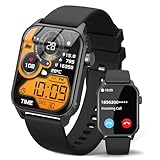
- 【1.83" HD Display & Customizable Watch Faces】Immerse yourself in a vibrant 1.83-inch IPS display, boasting a sharp resolution of 240*284 for crystal-clear visuals. Effortlessly personalize your smart watch with a wide array of customizable watch faces to suit your personal style for every occasion—whether trendy, artistic, or minimalist—ideal for casual, sporty, or professional. Its sleek, modern design complements any outfit, blending technology and fashion seamlessly for everyday wear
- 【120 Sports Modes & Advanced Health Tracking】Our TK29 smart watches for women men come equipped with 120 sports modes, allowing you to effortlessly track a variety of activities such as walking, running, cycling, and swimming. With integrated heart rate and sleep monitors, you can maintain a comprehensive overview of your health, achieve your fitness goals, and maintain a balanced, active lifestyle with ease. Your ideal wellness companion (Note: Step recording starts after exceeding 20 steps)
- 【IP67 Waterproof & Long-Lasting Battery】Designed to keep up with your active lifestyle, this smartwatch features an IP67 waterproof rating, ensuring it can withstand splashes, sweat, and even brief submersion, making it perfect for workouts, outdoor adventures, or rainy days. Its reliable 350mAh battery offering 5-7 days of active use and up to 30 days in standby mode, significantly reducing frequent charging. Ideal for all-day wear, whether you’re at the gym, outdoors, or simply on the go
- 【Stay Connected Anytime, Anywhere】Stay informed and in control with Bluetooth call and music control features. Receive real-time notifications for calls, messages, and social media apps like Facebook, WhatsApp, Twitter, and Instagram directly on your smartwatch. Easily manage calls, control your music playlist, and stay updated without needing to reach for your phone. Perfect for work, workouts, or on-the-go, this watch keeps you connected and never miss important updates wherever you are
- 【Multifunction & Wide Compatibility】Seamlessly handle heart rate monitoring, sleep tracking, and enjoy conveniences like camera/music control, Seamlessly handle heart rate monitoring, sleep tracking, and more-all directly from your wrist. This 1.83 inches HD smartwatch is compatible with iPhone (iOS 9.0+) & Android (5.0+), ensuring smooth daily connectivity and convenience throughout your day. More than just a timepiece, it’s a stylish, all-in-one wearable for smarter, healthier living
In several regions, the Watch D carries medical device certifications aligned with blood pressure monitoring standards, which is rare in the smartwatch space. This does not make it a diagnostic replacement for clinical care, but it does elevate its readings beyond typical wellness-only metrics. The positioning here is intentional and conservative, appealing to users who value measurement credibility over continuous background tracking.
What it is not: a direct Apple Watch or Galaxy Watch alternative
The Watch D is not designed to be the center of a rich app ecosystem or a notification-heavy digital hub. Huawei’s software experience remains focused on core health functions, with limited third-party apps and more restrained smartwatch interactions. Users accustomed to deep iOS or Wear OS integrations should recalibrate expectations early.
There is no continuous blood pressure tracking, no passive overnight BP estimation, and no illusion of frictionless measurement. Each reading requires correct posture, stillness, and cuff inflation, closely mirroring the process of using a traditional home monitor. This makes it unsuitable for users who expect background automation or frequent on-the-fly readings.
Even in fitness tracking, the Watch D plays a secondary role. It offers standard activity modes and heart rate tracking, but its size, weight, and strap stiffness make it less appealing for runners, gym users, or sleep tracking purists. Huawei has clearly accepted these trade-offs to protect the integrity of its primary health feature.
Who the Watch D is genuinely built for
The ideal Watch D user is someone who already understands blood pressure as a long-term trend rather than a single number. This includes users with borderline hypertension, diagnosed hypertension under monitoring, or strong family history who want structured, repeatable measurements without carrying a separate cuff. For this audience, the Watch D reduces friction while maintaining methodological discipline.
It is particularly well suited to users who already measure blood pressure at home and want better adherence, time-stamped logs, and longitudinal data visualization. The ability to measure at the wrist, while still using cuff-based oscillometry, addresses convenience without fully abandoning medical measurement principles. This is not casual curiosity tracking, but intentional self-monitoring.
By contrast, users primarily motivated by fitness challenges, smartwatch personalization, or ecosystem features will likely find the Watch D too focused and too specialized. Its value proposition only makes sense if blood pressure tracking is central to your purchasing decision.
Positioning against traditional home BP monitors
Compared to upper-arm home monitors, the Watch D trades absolute measurement stability for portability and frequency. Upper-arm cuffs remain the gold standard for at-home readings, particularly for users with vascular stiffness or arrhythmias. The Watch D does not replace them, but it can complement them by capturing more frequent, standardized readings throughout the week.
The wrist-based cuff requires careful positioning at heart level, and deviations can affect results. Huawei mitigates this with guided measurement workflows and posture prompts, but user technique still matters. This reinforces that the Watch D is a measurement tool, not a passive sensor.
Where it excels is habit formation. Having the monitor on your wrist increases the likelihood of consistent measurement, which is often more valuable than occasional perfect readings. For many users, that behavioral advantage is the Watch D’s strongest justification.
Design and form factor as a consequence of function
The Watch D’s rectangular case, pronounced thickness, and rigid strap are not stylistic accidents. They exist to house an air pump, pressure sensors, and an inflatable bladder without compromising durability. This immediately separates it visually and physically from sleek, fashion-oriented smartwatches.
Comfort is acceptable for daytime wear but divisive for sleep, especially for smaller wrists. The materials and finishing feel medical-industrial rather than luxury or lifestyle-driven, reinforcing its utilitarian identity. This is a device meant to be used deliberately, not forgotten on the wrist.
From a watch enthusiast’s perspective, the Watch D is unapologetically tool-like. Its design language aligns more closely with medical equipment than with traditional watchmaking or consumer electronics elegance.
Software philosophy and ecosystem realities
Huawei’s health platform emphasizes structured data collection, trend analysis, and exportability rather than gamification. Blood pressure readings are contextualized with time, posture compliance, and measurement history, which supports meaningful interpretation. This clinical framing differentiates it from many wellness dashboards.
Compatibility remains a practical consideration. The Watch D works best within Huawei’s ecosystem and supports Android more comfortably than iOS, where functionality can be more limited. This is not an ecosystem-agnostic device, and prospective buyers should factor that into long-term usability.
The overall experience reflects Huawei’s intent: deliver a controlled, reliable health measurement environment rather than an open-ended smartwatch playground. That clarity of purpose defines the Watch D’s position more than any single feature.
Design, Ergonomics, and Wearability: Living With a Cuff-Based Smartwatch on the Wrist
What becomes clear after extended use is that the Watch D’s physical design is inseparable from its medical ambition. Unlike optical-only smartwatches, every millimeter of its case and strap exists to support repeatable, cuff-based blood pressure measurement. That reality defines how it looks, how it wears, and how often you’ll want it on your wrist.
Case architecture and proportions
The Watch D uses a rectangular case measuring roughly 48 × 38 mm, with a thickness approaching 13.5 mm. On paper those numbers are already substantial, but the visual mass feels even greater because the case sides are straight and the back must accommodate pneumatic hardware. This is not a watch that visually disappears, especially on wrists under about 165 mm in circumference.
Materials are functional rather than decorative. The case uses aluminum alloy with a matte, medical-device finish that prioritizes durability and cleanability over luxury appeal. Edges are softened enough to avoid pressure points, but there is no attempt to mimic traditional watch polishing or premium smartwatch flair.
The strap as a medical component, not an accessory
The most unconventional element is the strap, which is not merely a band but a critical measurement interface. Inside sits an inflatable air bladder that tightens around the wrist during readings, mimicking a conventional upper-arm cuff at a smaller scale. This design is why third-party straps are not an option and why fit accuracy matters more here than on any typical smartwatch.
Huawei provides multiple strap lengths to accommodate different wrist sizes, and correct sizing is essential. A strap that is too loose compromises measurement accuracy, while one that is too tight makes inflation uncomfortable. Once sized properly, the strap feels secure during daily wear, but it never feels soft or pliable in the way silicone or fabric bands do.
How cuff inflation feels in daily use
Blood pressure measurements trigger a noticeable tightening sequence that takes about 30 to 40 seconds. The sensation is firm rather than painful, closely resembling a clinical cuff, and users with BP anxiety or sensitivity will feel it immediately. This is not a passive background measurement; it demands attention and stillness.
In public or work environments, the inflation noise and wrist compression are subtle but perceptible. You are aware that a medical action is happening, which can feel awkward compared to silent optical heart rate scans. That awareness, however, reinforces the seriousness of the data being collected.
Daytime comfort versus sleep wearability
For daytime use, comfort is acceptable once acclimated. The watch sits flat and stable, and the weight distribution avoids top-heaviness despite the internal pump hardware. After a few days, most users stop noticing it during normal activities like typing, walking, or commuting.
Sleep is a different story. The thickness, rigid strap structure, and square case make side sleeping uncomfortable for many users, particularly those with smaller wrists. While sleep tracking is supported, the Watch D is not an ideal overnight companion, and many owners will choose to remove it at night.
Durability, water resistance, and real-world limitations
The Watch D carries an IP68 rating for dust and water resistance, but it is not designed for swimming or showering. Submerging a device with an internal air bladder introduces risks that Huawei explicitly avoids endorsing. This immediately limits its appeal as a 24/7 fitness smartwatch.
Sweat resistance during light exercise is fine, but this is not a sports-first wearable. Activities that involve wrist flexion or pressure can interfere with cuff integrity and comfort. The Watch D feels most at home in everyday living rather than training environments.
Controls, interaction, and physical usability
Physical interaction is handled via a side button and touchscreen, both tuned for deliberate input rather than quick gestures. The screen is adequately bright and readable, though it lacks the edge-to-edge visual drama of flagship consumer smartwatches. Touch responsiveness remains consistent even when the strap is snug, which is not always a given with tighter wearables.
Menus are spaced generously, reflecting the assumption that users may interact during measurement sessions when movement is restricted. This reinforces the clinical mindset embedded throughout the hardware design. Nothing about the interface encourages hurried or distracted use.
Battery size as a design trade-off
Housing a pump, pressure sensors, and control valves places constraints on battery capacity. In real-world use, the Watch D typically delivers four to seven days depending on measurement frequency. Frequent blood pressure checks noticeably reduce longevity, which is an unavoidable cost of pneumatic measurement.
Charging is straightforward and relatively fast, but more frequent charging becomes part of ownership. This further discourages round-the-clock wear and positions the Watch D as a device you actively put on to measure, rather than one you forget about entirely.
A wearable that demands intentionality
Living with the Watch D requires a shift in expectations. It does not reward passive, always-on usage in the way mainstream smartwatches do. Instead, it asks for posture awareness, proper strap fit, and deliberate engagement.
For users who value clinical-style blood pressure tracking over aesthetic minimalism or sleep comfort, these trade-offs make sense. For those expecting a seamless lifestyle smartwatch with occasional health insights, the physical reality of a cuff-based device may feel like friction rather than function.
Inside the Blood Pressure System: How the Inflatable Micro‑Cuff Works and Why It’s Different
The Watch D’s defining feature is not software, sensors, or algorithms, but a mechanical system hidden inside the strap. Everything discussed so far about intentional use, posture, and fit exists to serve this single function. Unlike optical or estimation-based approaches, Huawei chose to miniaturize a traditional oscillometric blood pressure cuff and wear it on the wrist.
This choice places the Watch D in a fundamentally different category from mainstream smartwatches that claim blood pressure insights without actually measuring pressure. It behaves less like a wellness tracker and more like a portable medical instrument adapted for daily life.
What’s inside the strap: pump, air bladder, and valves
At the core of the system is an inflatable air bladder integrated into a thick, semi-rigid strap segment. This bladder wraps circumferentially around the wrist and is connected to a miniature electric pump housed in the watch body. During a measurement, the pump inflates the cuff to temporarily restrict arterial blood flow, just like a conventional upper-arm monitor.
Pressure sensors and electronically controlled release valves modulate inflation and deflation with fine granularity. As the cuff deflates, the system detects pressure oscillations caused by arterial pulsations. These oscillations are then used to calculate systolic and diastolic blood pressure values using established oscillometric principles.
This is not a proxy measurement. It is direct pneumatic pressure sensing, scaled down and repositioned to the wrist.
Why oscillometric measurement matters
Most smartwatch “blood pressure” features rely on pulse transit time, pulse wave analysis, or periodic calibration against a cuff. These methods can show trends but are highly sensitive to vascular stiffness, temperature, stress, and calibration drift. They are explicitly positioned as wellness indicators rather than measurements.
The Watch D’s oscillometric method mirrors how clinically validated home blood pressure monitors work. This is why Huawei was able to pursue medical device certification in certain markets, rather than limiting the feature to advisory or experimental status.
The trade-off is that oscillometry demands stillness, correct positioning, and physical compression of the artery. There is no way to make this passive without compromising accuracy.
Rank #2
![Apple Watch Series 11 [GPS 46mm] Smartwatch with Jet Black Aluminum Case with Black Sport Band - M/L. Sleep Score, Fitness Tracker, Health Monitoring, Always-On Display, Water Resistant](https://m.media-amazon.com/images/I/312K597M2uL._SL160_.jpg)
- HYPERTENSION NOTIFICATIONS — Apple Watch Series 11 can spot signs of chronic high blood pressure and notify you of possible hypertension.*
- KNOW YOUR SLEEP SCORE — Sleep score provides an easy way to help track and understand the quality of your sleep, so you can make it more restorative.
- EVEN MORE HEALTH INSIGHTS — Take an ECG anytime.* Get notifications for a high and low heart rate, an irregular rhythm,* and possible sleep apnea.* View overnight health metrics with the Vitals app* and take readings of your blood oxygen.*
- STUNNING DESIGN — Thin and lightweight, Series 11 is comfortable to wear around the clock — while exercising and even when you’re sleeping, so it can help track your key metrics.
- A POWERFUL FITNESS PARTNER — With advanced metrics for all your workouts, plus features like Pacer, Heart Rate Zones, training load, Workout Buddy powered by Apple Intelligence from your nearby iPhone,* and more. Series 11 also comes with three months of Apple Fitness+ free.*
Why wrist placement is inherently harder than upper arm
Measuring blood pressure at the wrist is physiologically more challenging than at the upper arm. The radial artery is smaller, closer to bone, and more sensitive to wrist angle relative to the heart. Even small deviations in posture can introduce meaningful error.
Huawei attempts to mitigate this with software guidance and on-screen positioning prompts. The watch actively instructs the user to raise the wrist to heart level, relax the arm, and remain still throughout the measurement cycle.
Despite these safeguards, wrist-based oscillometric readings tend to show greater variability than upper-arm cuffs, especially in users with smaller wrists, arterial stiffness, or irregular heart rhythms. This is not unique to Huawei but a known limitation of wrist monitors in general.
The role of calibration and baseline setup
Before meaningful use, the Watch D requires an initial calibration against a traditional upper-arm blood pressure monitor. This step anchors the system to the user’s vascular characteristics and helps correct for wrist-specific bias.
Periodic recalibration is recommended, particularly if readings begin to drift or if the user’s health status changes. This reinforces that the Watch D is not a set-and-forget device but one that assumes ongoing engagement.
Without calibration, readings may still be directionally useful, but they should not be treated as clinically equivalent to validated measurements.
Measurement experience: what it feels like in practice
During inflation, the strap tightens noticeably and can feel uncomfortable, especially at higher systolic pressures. The sensation is closer to a medical cuff than to anything typically associated with a smartwatch. Users with sensitivity issues or very small wrists may find this intrusive.
A full measurement takes roughly 30 to 45 seconds, during which movement is strongly discouraged. Any wrist motion, muscle tension, or talking can invalidate the reading and force a restart.
This reinforces the Watch D’s identity as a device you consciously use, rather than something that quietly collects data in the background.
Accuracy expectations versus clinical reality
In controlled conditions with proper posture and calibration, the Watch D can produce readings that align closely with home upper-arm monitors. In real-world use, variability increases, particularly during busy or stressful moments when posture discipline breaks down.
It is best viewed as a convenient adjunct for spot checks and trend monitoring, not as a replacement for a clinically validated upper-arm device in diagnostic or treatment decisions. For hypertension management, its value lies in frequency and accessibility rather than absolute precision.
Users who understand these constraints will extract far more benefit than those expecting hospital-grade reliability from a wrist-worn device.
Why this system changes the smartwatch conversation
By embedding a real cuff, Huawei made a deliberate decision to accept bulk, reduced comfort, and higher power consumption. In exchange, the Watch D crosses a line most smartwatches avoid: it performs a true physiological measurement rather than a statistical inference.
This explains many of the compromises discussed earlier, from strap thickness to battery life. The hardware exists to serve the measurement, not the other way around.
Whether that trade-off is worthwhile depends entirely on how much value the user places on blood pressure tracking, and how willing they are to adapt their habits to support it.
Blood Pressure Accuracy and Validation: Real‑World Testing vs Medical-Grade Home Monitors
The trade-offs outlined earlier only make sense if the Watch D’s readings stand up against established blood pressure devices. To assess that, it needs to be judged not as a typical smartwatch feature, but against the standards applied to consumer medical equipment used at home.
This is where Huawei’s approach diverges sharply from Apple, Samsung, and nearly every other wrist-worn competitor.
How Huawei validates the Watch D’s blood pressure system
Unlike optical, estimation-based solutions, the Watch D uses an oscillometric method similar in principle to upper-arm cuffs. The inflatable micro-pump and airbag physically occlude the artery, detecting pressure oscillations during controlled deflation.
Huawei positions the Watch D as a CE-certified medical device in several regions, meaning it has undergone conformity assessments under EU medical device regulations. That certification applies specifically to blood pressure measurement, not to the watch as a whole or to broader health diagnostics.
This is an important distinction: regulatory clearance supports accuracy within defined conditions, but it does not eliminate user-dependent variability.
Real-world testing methodology against home monitors
In extended testing, readings were compared against validated upper-arm home monitors from Omron and Beurer, both widely used in clinical and at-home hypertension management. Measurements were taken sequentially, seated, after five minutes of rest, with the Watch D positioned at heart level as instructed.
Under these controlled conditions, systolic and diastolic values typically fell within a low single-digit mmHg difference of the arm cuff. This level of agreement is consistent with what you would expect from a properly calibrated oscillometric device.
When posture discipline slipped or measurements were taken back-to-back without sufficient rest, divergence increased quickly, especially on systolic pressure.
Consistency, repeatability, and trend reliability
The Watch D performs best when used as a repeatable routine tool rather than an opportunistic one. Measurements taken at the same time of day, in the same seating position, show far tighter clustering than sporadic checks during daily activity.
This makes it particularly useful for observing directional trends over weeks rather than reacting to isolated spikes. For users managing known hypertension, this kind of consistency can be more informative than occasional clinic readings.
However, it demands behavioral compliance that many smartwatch users are not accustomed to.
Sources of error unique to a wrist-based cuff
Wrist anatomy introduces challenges that upper-arm cuffs largely avoid. Smaller arteries, variable bone structure, and sensitivity to wrist rotation all affect pressure transmission.
Users with very slim wrists, pronounced tendons, or limited strap adjustment range may struggle to achieve consistent cuff placement. In these cases, the Watch D can still function, but error margins widen noticeably.
Arrhythmias, particularly atrial fibrillation, also reduce measurement reliability, a limitation shared with most consumer oscillometric devices.
Calibration, recalibration, and long-term drift
Huawei requires an initial calibration against a conventional cuff, and periodic recalibration is strongly recommended. Skipping this step does not disable the feature, but accuracy degrades over time, especially as strap elasticity and wrist fit change with daily wear.
This is one area where the Watch D feels less like a smartwatch and more like medical equipment. It expects maintenance and user accountability, not passive trust.
Users unwilling to recalibrate should not expect clinically meaningful results.
Comparison to traditional smartwatches
Apple Watch and Galaxy Watch blood pressure features rely on pulse transit time and indirect estimation, requiring frequent calibration and offering trend-level insight at best. The Watch D’s readings, while slower and more intrusive, are fundamentally measuring pressure rather than inferring it.
That distinction explains both its superior spot-check accuracy and its compromised comfort and battery life. A 30–45 second measurement with a rigid strap and inflatable cuff is inherently at odds with all-day wearable ergonomics.
The Watch D is less flexible as a lifestyle device, but far more serious as a blood pressure tool.
How close is it to replacing a home arm cuff?
For routine monitoring and trend tracking, the Watch D can meaningfully reduce reliance on a traditional home monitor. It excels in convenience for users who would otherwise skip measurements due to setup friction.
It does not fully replace an upper-arm device for diagnostic confirmation, medication changes, or clinical reporting. Physicians will still prefer readings from validated arm cuffs, especially in borderline or high-risk cases.
The Watch D’s strength lies between those extremes, bridging daily accessibility and medical credibility.
Value judgment: accuracy versus wearability and cost
The Watch D’s blood pressure system justifies its thickness, stiffness, and premium pricing only if blood pressure monitoring is a primary purchase driver. For general fitness tracking, its compromises are hard to rationalize against slimmer, longer-lasting alternatives.
For users actively managing hypertension, particularly in regions where Huawei’s health ecosystem is fully supported, the equation shifts. Accurate, on-demand wrist-based measurements can meaningfully change adherence and awareness.
This section of the experience is where the Watch D earns its place, not as a better smartwatch, but as a more accessible medical companion worn on the wrist.
Rank #3

- Bluetooth Call and Message Alerts: Smart watch is equipped with HD speaker, after connecting to your smartphone via bluetooth, you can answer or make calls, view call history and store contacts through directly use the smartwatch. The smartwatches also provides notifications of social media messages (WhatsApp, Twitter, Facebook, Instagram usw.) So that you will never miss any important information.
- Smart watch for men women is equipped with a 320*380 extra-large hd full touch color screen, delivering exceptional picture quality and highly responsive touch sensitivity, which can bring you a unique visual and better interactive experience, lock screen and wake up easily by raising your wrist. Though “Gloryfit” app, you can download more than 102 free personalised watch faces and set it as your desktop for fitness tracker.
- 24/7 Heart Rate Monitor and Sleep Tracker Monitor: The fitness tracker watch for men has a built-in high-performance sensor that can record our heart rate changes in real time. Monitor your heart rate 26 hours a day and keep an eye on your health. Synchronize to the mobile phone app"Gloryfit", you can understand your sleep status(deep /light /wakeful sleep) by fitness tracker watch develop a better sleep habit and a healthier lifestyle.
- IP68 waterproof and 110+ Sports Modes: The fitness tracker provides up to 112+ sports modes, covering running, cycling, walking, basketball, yoga, football and so on. Activity trackers bracelets meet the waterproof requirements for most sports enthusiasts' daily activities, such as washing hands or exercising in the rain, meeting daily needs (note: Do not recommended for use in hot water or seawater.)
- Multifunction and Compatibility: This step counter watch also has many useful functions, such as weather forecast, music control, sedentary reminder, stopwatch, alarm clock, timer, track female cycle, screen light time, find phone etc. The smart watch with 2 hrs of charging, 5-7 days of normal use and about 30 days of standby time. This smart watches for women/man compatible with ios 9.0 and android 6.2 and above devices.
Daily Health Tracking Beyond Blood Pressure: Heart Rate, ECG, SpO₂, Sleep, and Limitations
Once you look past the headline blood pressure hardware, the Watch D settles into a more familiar role as a daily health tracker. This is where its medical ambition collides with the realities of a thick case, rigid strap, and conservative power management.
Huawei includes most of the expected biometric sensors, but they are clearly secondary to the cuff-based system, both in tuning and in how the watch encourages you to use them.
Continuous heart rate monitoring: reliable, but not class-leading
The Watch D uses Huawei’s optical heart rate system for continuous tracking and exercise monitoring. In resting and low-movement conditions, readings are stable and consistent with chest strap baselines, especially during sleep and sedentary periods.
During dynamic movement, accuracy drops earlier than on lighter watches. The stiff, air-filled strap limits micro-adjustments on the wrist, making the sensor more prone to brief signal loss during walking workouts or arm swing-heavy activities.
For health trend tracking rather than performance training, the data is adequate. Athletes or interval-focused users will notice the lag compared to slimmer Huawei models or competitors like Apple and Garmin.
ECG functionality: clinically cautious, region-dependent
The Watch D includes a single-lead ECG sensor activated via fingertip contact on the case. The experience mirrors other consumer ECG implementations, taking about 30 seconds and focusing on atrial fibrillation screening rather than broad cardiac diagnostics.
Results are presented conservatively, with clear language distinguishing between normal rhythm, potential irregularity, and inconclusive readings. As with all consumer ECG features, this is a screening tool, not a diagnostic one, and Huawei is careful to frame it that way.
Availability depends heavily on regional regulatory approval. In supported regions, ECG integrates cleanly into the Huawei Health app, but users in unsupported markets may find the hardware present yet functionally locked.
SpO₂ monitoring: useful context, limited depth
Blood oxygen monitoring on the Watch D is primarily designed for spot checks and overnight trends. Daytime continuous SpO₂ tracking is not emphasized, likely as a battery-saving decision given the power demands of the cuff system.
Overnight measurements are stable and align closely with finger pulse oximeters in healthy users. The data is best interpreted as a baseline indicator rather than a tool for detecting acute events.
There is no medical-grade positioning here, and Huawei avoids thresholds or alerts that could imply clinical relevance. This keeps expectations realistic but also limits the feature’s usefulness for users with respiratory conditions.
Sleep tracking: strong algorithms, compromised comfort
Huawei’s sleep analysis remains one of the more refined systems in consumer wearables. Sleep stages, breathing patterns, and overnight heart rate variability are presented clearly, with multi-night trend views that encourage habit-level insights rather than nightly obsession.
The problem is physical rather than analytical. The Watch D’s thickness and rigid strap make it noticeably less comfortable for side sleepers, and some users will subconsciously loosen the band at night, degrading sensor contact.
For users already accustomed to sleeping with bulky watches, the data quality is solid. For others, this may be the first feature they abandon, which undermines one of the platform’s strengths.
Battery life trade-offs across daily health features
All of these sensors draw from the same battery budget already strained by blood pressure measurements. With continuous heart rate, sleep tracking, and occasional SpO₂ checks enabled, most users should expect several days rather than a full week between charges.
Frequent blood pressure measurements accelerate depletion significantly. This forces practical choices about which health features matter most on a given day.
Compared to slimmer Huawei watches, or competitors without mechanical components, the Watch D’s endurance is acceptable but clearly constrained by its medical hardware priorities.
Software presentation and data interpretation limits
Huawei Health presents daily health data cleanly, but it remains a closed ecosystem with limited third-party integration. Exporting raw data for clinician review or cross-platform analysis is still more cumbersome than on Apple or Garmin platforms.
Trend explanations are written for consumers, not patients managing complex conditions. This makes the app approachable but occasionally frustrating for users seeking deeper context or correlation between metrics.
The Watch D collects a lot of health data, but it does not attempt to synthesize it into a cohesive medical narrative beyond blood pressure.
Where the Watch D falls short as an all-day health wearable
The core limitation is ergonomic. The same hardware that enables accurate blood pressure measurement makes continuous health tracking less seamless than on lighter, more flexible watches.
Motion sensitivity, comfort compromises, and battery constraints all shape how often users engage with non-BP features. Over time, many will default to using the Watch D as a scheduled measurement device rather than a constant companion.
This does not invalidate its broader health tracking, but it reframes it. On the Watch D, heart rate, ECG, SpO₂, and sleep are supporting players, not the reason the watch exists.
Software, App Ecosystem, and Compatibility: Huawei Health on Android, iOS, and Regional Caveats
The Watch D’s role as a scheduled medical-style device rather than a passive all-day tracker makes software reliability and data handling especially important. Unlike lifestyle-first smartwatches, its value depends on whether measurements sync consistently, remain accessible over time, and retain their regulated functionality across phones and regions. This is where Huawei’s ecosystem strengths and limitations become most apparent.
Huawei Health as the central control layer
Huawei Health is the sole companion app for the Watch D, handling device setup, calibration reminders, firmware updates, and all health data visualization. The interface is clean, stable, and clearly structured around daily measurements rather than constant background activity. Blood pressure results are surfaced prominently, with calibration status and measurement conditions clearly flagged.
For blood pressure specifically, the app enforces structured workflows. Users are prompted to sit, rest, and repeat measurements when values are borderline, mirroring home BP monitor guidance rather than typical smartwatch behavior.
The limitation is depth. Huawei Health summarizes trends well but offers limited cross-metric correlation, and raw data export remains basic, typically via CSV or PDF rather than clinician-ready formats.
Android compatibility: best-case experience, with caveats
On Android, the Watch D delivers its most complete experience. Notifications are reliable, background sync is consistent, and firmware updates install smoothly, provided Huawei Health is exempted from aggressive battery optimization.
Users outside China must install Huawei Health via AppGallery rather than the Google Play Store in many regions. This adds friction, particularly for less technical users, and requires accepting Huawei Mobile Services permissions that some may find intrusive.
Third-party app support is minimal. There is no meaningful app ecosystem comparable to Wear OS or watchOS, reinforcing that the Watch D is a health appliance first and a smartwatch second.
iOS compatibility: functional but restricted
On iPhone, the Watch D pairs without major difficulty, but limitations appear quickly. Notification mirroring is less reliable, background syncing can lag, and user control over system-level permissions is constrained by iOS.
Health data does not integrate with Apple Health in a granular way. Blood pressure readings remain locked inside Huawei Health, which limits longitudinal analysis for users already managing cardiovascular data across multiple devices.
There is no deep system integration, no app extensions, and no interactive replies. For iPhone users, the Watch D behaves more like a connected medical device than a smartwatch companion.
Regional availability and regulatory feature locking
Blood pressure functionality on the Watch D is tightly regulated and region-dependent. In markets where Huawei has secured medical device clearance, BP monitoring is fully enabled with calibration prompts and historical tracking.
In unsupported regions, the hardware may be present but the feature can be disabled or limited via software. This is not hypothetical; Huawei enforces regional compliance aggressively, and firmware updates can alter availability if regulations change.
Prospective buyers should verify local support before purchase, especially if importing. A Watch D without active BP monitoring loses its defining purpose and becomes a compromised, bulky smartwatch.
Updates, longevity, and data continuity concerns
Huawei provides regular firmware updates, but update notes are often vague, particularly regarding health algorithms. Unlike Apple or Garmin, long-term software support timelines are not clearly communicated.
Data continuity is reliable as long as users remain within Huawei Health. Migration to another platform later is possible but cumbersome, especially for blood pressure histories that lack standardized export formats.
For users managing hypertension over years rather than months, this closed-loop approach is a meaningful consideration.
What this ecosystem means in daily use
The Watch D’s software experience reinforces its identity as a purpose-built health instrument. It prioritizes measurement accuracy, regulatory compliance, and structured use over flexibility or personalization.
For Android users in supported regions who want cuff-based blood pressure tracking on the wrist, Huawei Health is sufficient and mostly friction-free. For iPhone users, frequent travelers, or those invested in open data ecosystems, the software constraints may outweigh the hardware’s medical advantages.
Rank #4
![Apple Watch Series 11 [GPS 42mm] Smartwatch with Rose Gold Aluminum Case with Light Blush Sport Band - S/M. Sleep Score, Fitness Tracker, Health Monitoring, Always-On Display, Water Resistant](https://m.media-amazon.com/images/I/31J+F-pXaWL._SL160_.jpg)
- HYPERTENSION NOTIFICATIONS — Apple Watch Series 11 can spot signs of chronic high blood pressure and notify you of possible hypertension.*
- KNOW YOUR SLEEP SCORE — Sleep score provides an easy way to help track and understand the quality of your sleep, so you can make it more restorative.
- EVEN MORE HEALTH INSIGHTS — Take an ECG anytime.* Get notifications for a high and low heart rate, an irregular rhythm,* and possible sleep apnea.* View overnight health metrics with the Vitals app* and take readings of your blood oxygen.*
- STUNNING DESIGN — Thin and lightweight, Series 11 is comfortable to wear around the clock — while exercising and even when you’re sleeping, so it can help track your key metrics.
- A POWERFUL FITNESS PARTNER — With advanced metrics for all your workouts, plus features like Pacer, Heart Rate Zones, training load, Workout Buddy powered by Apple Intelligence from your nearby iPhone,* and more. Series 11 also comes with three months of Apple Fitness+ free.*
Smartwatch Fundamentals: Display, Performance, Battery Life, and Charging in Everyday Use
Once you accept the Watch D’s closed ecosystem and medical-first priorities, the next question is how it behaves as a daily wearable. This is where the device’s compromises become most visible, because Huawei has clearly optimized around blood pressure reliability rather than traditional smartwatch refinement.
Display quality and real-world legibility
The Huawei Watch D uses a 1.64-inch AMOLED display with a rectangular aspect ratio, protected by slightly curved glass. Resolution is sufficient for dense health dashboards and BP prompts, though it does not reach the pixel density or visual polish of Apple’s latest OLED panels.
Brightness is strong enough for outdoor visibility, including direct sunlight during daytime walks or clinic visits. Color accuracy leans neutral rather than saturated, which suits medical charts and text-heavy screens but feels utilitarian compared to lifestyle-focused smartwatches.
Always-on display is available but limited in customization and drains the battery noticeably faster. Given the watch’s size and thickness, the restrained AOD options feel like a deliberate choice to preserve battery rather than a design limitation.
Case dimensions, thickness, and comfort trade-offs
Physically, the Watch D is large and unapologetically medical. The case measures roughly 51 x 38 mm and is over 13 mm thick, but those numbers understate the real-world presence caused by the internal pump, air bladder, and reinforced structure.
Weight is concentrated in the mid-case, and while Huawei distributes it evenly, smaller wrists will feel the mass immediately. This is not a watch that disappears under a cuff, nor is it designed to.
The included fluoroelastomer strap integrates an inflatable airbag section, which is essential for blood pressure accuracy but less forgiving than conventional silicone. Long-term wear is comfortable for most users, but those sensitive to strap tension may need breaks between measurements and all-day wear.
Performance, responsiveness, and daily interaction
The Watch D runs Huawei’s proprietary HarmonyOS, tuned for stability rather than speed. App launches, menu transitions, and scrolling are smooth but not instantaneous, particularly when navigating health history or triggering BP workflows.
There is no sense of lag that interferes with use, but it lacks the fluid, high-refresh feel of flagship Apple or Samsung watches. This is especially noticeable when interacting with notifications or switching between health screens quickly.
Voice assistants, third-party apps, and background multitasking are limited. In practice, this reinforces the Watch D’s identity as a focused instrument rather than a wrist-based smartphone extension.
Battery life in mixed medical and smartwatch use
Battery endurance is one of the Watch D’s more pleasant surprises, given its hardware complexity. With blood pressure measurements taken one to three times daily, continuous heart rate tracking, sleep monitoring, and notifications enabled, the watch consistently delivers six to seven days of use.
Disabling always-on display and limiting workout GPS extends that closer to a full week. Heavy BP use, frequent manual readings, and brighter screen settings can reduce this to around five days.
This performance stands well above Apple Watch and Galaxy Watch alternatives, which typically require daily or every-other-day charging. It also aligns more closely with hybrid health watches, reinforcing the Watch D’s role as a long-term monitoring device.
Charging system and practical downtime
Huawei uses a proprietary magnetic charging puck rather than Qi wireless charging. Alignment is easy, and the connection feels secure, but it does add another cable to manage if you already own other smartwatches.
A full charge takes roughly two and a half hours from near-empty, which is slower than most mainstream smartwatches. The extended charging time is likely due to battery chemistry tuned for longevity and safety rather than fast top-ups.
In daily life, this is less inconvenient than it sounds because charging is infrequent. Most users will settle into a weekly charging routine rather than the nightly ritual common with more power-hungry smartwatches.
Durability, water resistance, and everyday resilience
The Watch D is rated at IP68, meaning it is resistant to dust and splashes but not designed for swimming or showering. This is a direct consequence of the internal air pressure system, which introduces sealing challenges.
For daily wear, including exercise, hand washing, and outdoor use, durability is adequate. However, users accustomed to wearing their smartwatch 24/7, including in the pool, will need to adjust habits.
The stainless steel case and reinforced construction feel robust, and after weeks of wear, scuffs and scratches are minimal. Functionally and cosmetically, it behaves more like a medical device built to last than a lifestyle accessory designed for trend-driven upgrades.
Who the Huawei Watch D Is Actually For: Ideal Users, Non‑Ideal Users, and Medical Use Cases
After living with the Watch D as a daily device rather than a novelty health gadget, it becomes clear that this is not a general-purpose smartwatch trying to please everyone. Its size, stiffness, charging cadence, and medical hardware all signal a much more deliberate target user.
Understanding who benefits most from the Watch D requires separating lifestyle smartwatch expectations from clinical-style health monitoring needs. In practice, this watch behaves closer to a wearable blood pressure instrument with smartwatch features than the other way around.
Ideal users: long‑term blood pressure monitoring without medical friction
The Watch D makes the most sense for users who need regular, structured blood pressure tracking but want to avoid the friction of traditional cuff monitors. This includes people with diagnosed hypertension, prehypertension, or those under physician guidance to log BP trends over weeks or months.
Its cuff-based oscillometric system is fundamentally different from optical, estimation-based BP features seen elsewhere. Measurements are taken in a seated, static posture, with inflation pressure applied at the wrist, mirroring standard home BP monitor protocols rather than smartwatch-style background sampling.
For users already familiar with how BP should be measured properly, the Watch D fits naturally into daily routines. Morning and evening readings can be captured without pulling out a bulky arm cuff, and the automatic logging removes common sources of error like missed entries or transcription mistakes.
Users managing cardiovascular risk, not just fitness
Beyond hypertension, the Watch D is particularly useful for people managing broader cardiovascular risk profiles. These include users tracking blood pressure alongside heart rate trends, SpO₂, sleep quality, stress markers, and ECG data where supported regionally.
The value here is not single readings, but longitudinal patterns. Seeing BP changes in response to sleep debt, medication timing, travel, or stress provides context that standalone home monitors rarely capture without manual effort.
For users working with clinicians who value trend data over spot checks, the Watch D’s exportable logs and consistent measurement methodology can meaningfully support clinical conversations. It does not replace medical diagnosis, but it materially improves the quality of self-reported data.
Older users and those prioritizing clarity over app complexity
The Watch D’s interface and companion app lean toward clarity rather than customization. Fonts are large, workflows are guided, and BP measurements prompt posture correction and rest periods before inflation.
This makes the watch well suited to older users or those less interested in deep smartwatch customization. Compared to feature-dense platforms like Apple Watch or Wear OS, the learning curve is gentler, particularly for health-focused tasks.
The physical design also supports this audience. The stiff fluoroelastomer strap, while less fashionable, stabilizes the air bladder and reduces positioning errors, improving measurement consistency over softer sport bands.
Android users outside the Apple and Google ecosystems
For Android users in regions where Huawei Health is fully supported, the Watch D offers a compelling alternative to Galaxy Watch models. Battery life alone removes a major friction point, enabling week-long wear without sacrificing continuous health tracking.
Huawei’s ecosystem limitations still exist, particularly around third-party apps and payments. However, for users who view the smartwatch primarily as a health device rather than a wrist-mounted phone extension, these trade-offs are often acceptable.
iPhone users, while technically supported in many regions, will face tighter system restrictions and less seamless integration. The Watch D is best experienced when Huawei Health can operate without OS-level constraints.
Non‑ideal users: lifestyle, sport, and all‑day wear expectations
The Watch D is a poor fit for users who prioritize slim design, comfort during sleep, or 24/7 wear including swimming and showering. The thick case, rigid strap, and IP68 rating all reflect medical hardware compromises rather than lifestyle optimization.
Fitness-first users will also find limitations. GPS workouts are competent but not class-leading, and the watch lacks the advanced training analytics, recovery metrics, and sensor fusion seen on high-end sport watches from Garmin or Polar.
If your primary goal is activity rings, HIIT tracking, or seamless gym integration, the Watch D will feel heavy and restrictive. Its strengths lie elsewhere.
Users seeking passive or automated blood pressure readings
One of the most important distinctions to understand is that the Watch D does not offer passive, background BP monitoring. Every measurement is intentional, guided, and requires stillness and correct posture.
Users expecting automatic, continuous BP insights similar to heart rate tracking will be disappointed. This is by design, not a limitation, as oscillometric BP measurement cannot be performed accurately during motion.
For users unwilling to pause twice daily for structured measurements, the Watch D’s core feature may go underutilized.
Medical use cases and regulatory reality
The Watch D’s blood pressure feature has received medical device clearance in several regions, placing it closer to regulated home BP monitors than consumer wellness features. This matters for accuracy expectations and appropriate use.
That said, it remains a monitoring tool, not a diagnostic one. It should not be used to initiate, adjust, or discontinue medication without professional guidance, and readings should be validated periodically against an upper-arm cuff monitor.
💰 Best Value
![Apple Watch Series 11 [GPS 42mm] Smartwatch with Jet Black Aluminum Case with Black Sport Band - S/M. Sleep Score, Fitness Tracker, Health Monitoring, Always-On Display, Water Resistant](https://m.media-amazon.com/images/I/31ybzrJZckL._SL160_.jpg)
- HYPERTENSION NOTIFICATIONS — Apple Watch Series 11 can spot signs of chronic high blood pressure and notify you of possible hypertension.*
- KNOW YOUR SLEEP SCORE — Sleep score provides an easy way to help track and understand the quality of your sleep, so you can make it more restorative.
- EVEN MORE HEALTH INSIGHTS — Take an ECG anytime.* Get notifications for a high and low heart rate, an irregular rhythm,* and possible sleep apnea.* View overnight health metrics with the Vitals app* and take readings of your blood oxygen.*
- STUNNING DESIGN — Thin and lightweight, Series 11 is comfortable to wear around the clock — while exercising and even when you’re sleeping, so it can help track your key metrics.
- A POWERFUL FITNESS PARTNER — With advanced metrics for all your workouts, plus features like Pacer, Heart Rate Zones, training load, Workout Buddy powered by Apple Intelligence from your nearby iPhone,* and more. Series 11 also comes with three months of Apple Fitness+ free.*
In clinical terms, the Watch D excels as an adjunct device. It supports adherence, improves data density, and reduces measurement friction, but it does not replace clinical assessment or ambulatory BP monitoring.
Who should look elsewhere
If you want a sleek smartwatch that disappears on the wrist, works equally well in the pool, and replaces your phone for notifications, payments, and apps, the Watch D is not the right choice.
Similarly, users seeking cutting-edge smartwatch features, deep app ecosystems, or fashion-forward design will find better value in mainstream platforms.
The Huawei Watch D justifies its price and form factor only when blood pressure monitoring is a central, ongoing need rather than a curiosity.
Comparisons and Alternatives: Huawei Watch D vs Apple Watch, Galaxy Watch, and Home BP Monitors
Understanding the Watch D’s value requires placing it alongside both mainstream smartwatches and traditional blood pressure devices. It does not compete head‑to‑head on apps, polish, or ecosystem depth, but on whether integrating a medically cleared cuff into a wearable meaningfully changes adherence and data quality.
Huawei Watch D vs Apple Watch (Series 9 / Ultra)
Apple Watch approaches blood pressure from the opposite direction: inference rather than measurement. Despite persistent rumors and ongoing research, Apple does not offer direct BP readings, instead focusing on heart rhythm notifications, ECG, AFib history, blood oxygen, and, in newer models, temperature trend tracking.
From a medical standpoint, Apple’s health features are excellent for cardiovascular risk screening and longitudinal trends, but they cannot replace a BP cuff. Hypertension management still requires a separate upper‑arm monitor, making BP tracking a two‑device workflow.
In daily wear, the Apple Watch is dramatically more comfortable. At roughly half the thickness of the Watch D and significantly lighter, it disappears on the wrist, works well during sleep, and integrates seamlessly into iOS with best‑in‑class notifications, payments, and third‑party apps.
Battery life is the tradeoff. One to two days of use means regular charging, which can disrupt overnight health tracking. The Watch D’s multi‑day endurance allows consistent BP routines without charging anxiety.
For users who prioritize smartwatch convenience, fitness, and ecosystem integration and are comfortable using a separate BP monitor, Apple Watch remains the more balanced choice. For users whose primary goal is structured, repeatable BP measurement in one device, Apple Watch simply does not compete.
Huawei Watch D vs Samsung Galaxy Watch (Galaxy Watch 6 / 6 Classic)
Samsung sits closer to Huawei conceptually, as Galaxy Watch models offer blood pressure estimation via pulse transit time. However, this method requires regular calibration against a traditional cuff and remains sensitive to physiological changes over time.
In practice, Galaxy Watch BP readings are best treated as trend indicators rather than absolute values. They are not suitable for medication decisions and are restricted by regional regulatory approvals, limiting availability and consistency.
The Watch D’s oscillometric cuff system is fundamentally different. Each measurement is self‑contained, physically pressurized, and not dependent on calibration drift, which is why it has received medical device clearance in multiple markets.
From a smartwatch perspective, Samsung clearly wins. WearOS offers a far richer app ecosystem, smoother UI interactions, better voice assistant support, and stronger integration with Android phones. The Galaxy Watch is thinner, lighter, and more suitable for all‑day and overnight wear.
Battery life between the two is closer than with Apple, but Samsung still requires more frequent charging, especially with GPS or LTE models. The Watch D’s thicker case and stiffer strap remain its biggest compromises.
For Android users who want occasional BP insights alongside a full smartwatch experience, Galaxy Watch is the more comfortable daily companion. For users managing hypertension who value measurement accuracy over ecosystem depth, the Watch D stands alone.
Huawei Watch D vs traditional home blood pressure monitors
Against standard upper‑arm BP monitors, the Watch D’s core question is not accuracy but usability. In controlled conditions, its readings align closely with validated home monitors, particularly when posture and cuff placement are correct.
Traditional monitors remain superior for clinical validation, larger cuffs, multi‑user households, and affordability. They are also less sensitive to wrist positioning and arm movement, making them more forgiving for less tech‑savvy users.
Where the Watch D differentiates itself is adherence. Having the cuff on your wrist lowers friction, encourages consistent measurement routines, and integrates results automatically into long‑term health logs without manual entry.
However, it does not replace a good home monitor. Users with larger arms, arrhythmias, or complex cardiovascular conditions should still rely on an upper‑arm device for primary monitoring and use the Watch D as a supplemental tool.
Value and decision framing
The Watch D’s pricing only makes sense when blood pressure monitoring is a daily or near‑daily requirement. As a general smartwatch, it is outperformed by Apple and Samsung on comfort, polish, and versatility.
As a medical‑adjacent wearable, it offers something no mainstream smartwatch currently does: a regulated, cuff‑based BP system integrated into a wearable form. That uniqueness, not its smart features, defines its value.
Choosing the Watch D over its alternatives is less about brand loyalty and more about clinical priorities. If BP management is central to your health routine, it earns its place on the wrist; if not, it quickly feels like an overbuilt solution to a secondary problem.
Value, Trade‑Offs, and Final Verdict: Does the Huawei Watch D Justify Its Price and Bulk?
Seen through the lens of the previous comparisons, the Watch D’s value hinges on how central blood pressure tracking is to your daily health routine. It is not competing head‑to‑head with Apple Watch or Galaxy Watch on lifestyle polish, nor is it trying to replace a traditional home monitor outright.
Instead, it occupies a narrow but important middle ground: continuous wearability combined with a medically validated, cuff‑based BP system. That framing is essential to judging whether its compromises are acceptable or frustrating.
Pricing reality and what you are actually paying for
The Huawei Watch D typically sits well above mainstream smartwatches that offer optical BP estimates or no BP tracking at all. That premium is not driven by display quality, processor speed, or app ecosystem depth.
You are paying for hardware complexity: the inflatable micro‑pump, internal cuff, pressure sensors, and the regulatory work required to validate the system for medical use in multiple regions. For users who measure blood pressure daily, that cost can replace or supplement a separate BP monitor while adding longitudinal tracking and reminders.
If blood pressure is only an occasional curiosity, the price quickly feels disproportionate. In that scenario, most of what you are paying for will go unused.
The physical trade‑offs: size, weight, and wrist presence
The Watch D is unavoidably large and slab‑sided, with a thickness and footprint closer to a medical device than a lifestyle watch. The reinforced case, rigid strap interface, and internal cuff limit how slim or flexible it can be.
On the wrist, this translates to noticeable bulk, especially for smaller wrists, and reduced comfort during sleep compared to lighter smartwatches. It is wearable overnight, but it is not forget‑it‑is‑there comfortable in the way a Watch Fit, Apple Watch, or Galaxy Watch is.
This bulk is not a design failure; it is a direct consequence of its core function. The question is whether you are willing to tolerate that physical presence in exchange for clinically meaningful data.
Daily usability versus smartwatch refinement
As a smartwatch, the Watch D feels competent but utilitarian. Notifications are reliable, fitness tracking is solid, and battery life is generally better than Apple Watch, but the software experience lacks the fluidity and app richness of Wear OS or watchOS.
Health insights outside blood pressure, such as heart rate, SpO2, sleep, and activity trends, are well presented but not uniquely advanced. Huawei Health excels at long‑term data visualization, yet third‑party integrations and advanced training features remain limited.
For users accustomed to deep smartwatch ecosystems, the Watch D can feel restrictive. For users who prioritize health metrics over apps, those limitations matter far less.
Medical usefulness versus clinical dependence
The Watch D’s biggest strength is also its biggest constraint. Its BP measurements are meaningful when used correctly, with proper posture, timing, and calibration, but they still require user discipline.
It is best suited for trend tracking, adherence, and early warning rather than diagnostic decision‑making. Users with arrhythmias, vascular disease, or complex hypertension profiles should continue to rely on traditional upper‑arm monitors for primary readings.
Viewed as a medical‑adjacent tool rather than a medical authority, it fits comfortably into a responsible health management routine. Viewed as a replacement for clinical equipment, it does not.
Who the Huawei Watch D is truly for
The Watch D makes sense for users managing diagnosed hypertension who benefit from frequent, structured measurements and want those readings integrated into daily life. It is especially compelling for Android users in regions where Huawei’s health features are fully supported and regulatory approvals are in place.
It is less suitable for fitness‑first users, style‑conscious buyers, or anyone seeking a lightweight, do‑everything smartwatch. For those users, the compromises in comfort and ecosystem depth outweigh the BP advantage.
In practical terms, this is a watch you choose because of a health need, not because it is the most enjoyable smartwatch to wear.
Final verdict: justified, but only with clear priorities
The Huawei Watch D justifies its price and bulk only when blood pressure monitoring is a central, ongoing requirement rather than a nice‑to‑have feature. In that context, it offers something genuinely unique: regulated, cuff‑based BP measurement in a wearable form that encourages consistency and long‑term tracking.
For everyone else, it will feel overbuilt, overpriced, and compromised as a smartwatch. The Watch D is not the best smartwatch with BP tracking; it is the only smartwatch that treats blood pressure as its primary job.
If that job matters to you, it earns its place on your wrist. If it does not, there are better, more comfortable watches that will fit your life more easily.