If you are looking at the Huawei Watch D2, chances are you are not shopping for another lifestyle smartwatch with a long list of wellness approximations. You are here because blood pressure monitoring has moved from curiosity to priority, and you want to know which devices take health data seriously enough to influence daily decisions rather than just decorate a dashboard.
The Watch D2 immediately separates itself from mainstream competitors by centering its entire identity on clinically informed health measurement rather than app ecosystems or fashion-first design. Huawei is positioning this watch less as an Apple Watch alternative and more as a wearable medical instrument that happens to function as a smartwatch, and that framing changes how every design and feature decision lands in daily use.
This section sets the foundation by explaining what makes the Watch D2 fundamentally different, where it sits in the current health wearable landscape, and why its approach will appeal to a very specific, increasingly underserved type of buyer.
Blood pressure monitoring that defines the product
The defining feature of the Huawei Watch D2 is its integrated ambulatory-style blood pressure monitoring system, which uses an inflatable micro air pump and physical cuff built directly into the strap. This is not a pulse transit time estimate like you see on many competitors, but an oscillometric measurement approach closer to what traditional upper-arm cuffs use, scaled down for the wrist.
🏆 #1 Best Overall
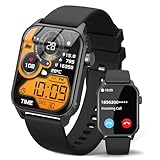
- 【1.83" HD Display & Customizable Watch Faces】Immerse yourself in a vibrant 1.83-inch IPS display, boasting a sharp resolution of 240*284 for crystal-clear visuals. Effortlessly personalize your smart watch with a wide array of customizable watch faces to suit your personal style for every occasion—whether trendy, artistic, or minimalist—ideal for casual, sporty, or professional. Its sleek, modern design complements any outfit, blending technology and fashion seamlessly for everyday wear
- 【120 Sports Modes & Advanced Health Tracking】Our TK29 smart watches for women men come equipped with 120 sports modes, allowing you to effortlessly track a variety of activities such as walking, running, cycling, and swimming. With integrated heart rate and sleep monitors, you can maintain a comprehensive overview of your health, achieve your fitness goals, and maintain a balanced, active lifestyle with ease. Your ideal wellness companion (Note: Step recording starts after exceeding 20 steps)
- 【IP67 Waterproof & Long-Lasting Battery】Designed to keep up with your active lifestyle, this smartwatch features an IP67 waterproof rating, ensuring it can withstand splashes, sweat, and even brief submersion, making it perfect for workouts, outdoor adventures, or rainy days. Its reliable 350mAh battery offering 5-7 days of active use and up to 30 days in standby mode, significantly reducing frequent charging. Ideal for all-day wear, whether you’re at the gym, outdoors, or simply on the go
- 【Stay Connected Anytime, Anywhere】Stay informed and in control with Bluetooth call and music control features. Receive real-time notifications for calls, messages, and social media apps like Facebook, WhatsApp, Twitter, and Instagram directly on your smartwatch. Easily manage calls, control your music playlist, and stay updated without needing to reach for your phone. Perfect for work, workouts, or on-the-go, this watch keeps you connected and never miss important updates wherever you are
- 【Multifunction & Wide Compatibility】Seamlessly handle heart rate monitoring, sleep tracking, and enjoy conveniences like camera/music control, Seamlessly handle heart rate monitoring, sleep tracking, and more-all directly from your wrist. This 1.83 inches HD smartwatch is compatible with iPhone (iOS 9.0+) & Android (5.0+), ensuring smooth daily connectivity and convenience throughout your day. More than just a timepiece, it’s a stylish, all-in-one wearable for smarter, healthier living
Huawei has leaned heavily into medical credibility here, with regulatory clearance in multiple regions and clear guidance on posture, calibration, and measurement conditions. In practical terms, this means readings take longer and require stillness, but the trade-off is data that is far closer to clinical-grade than anything offered by Apple, Samsung, or Fitbit today.
A smartwatch designed around health compliance, not convenience
Unlike mainstream smartwatches that prioritize passive tracking and background measurements, the Watch D2 encourages deliberate health routines. Blood pressure measurements require correct strap tension, arm positioning at heart level, and a short measurement window where movement is discouraged.
This design philosophy extends to the software experience, where the watch actively prompts scheduled measurements, trend tracking, and multi-day reporting rather than simply logging isolated data points. It feels less like a fitness tracker and more like a portable health management tool, particularly for users monitoring hypertension or cardiovascular risk.
Form factor and materials reflect its medical focus
The Watch D2 is larger and thicker than typical Huawei Watch GT models, and noticeably more substantial than Apple Watch or Galaxy Watch equivalents. The reinforced case, rectangular display, and specialized strap are all consequences of housing the air pump, pressure sensor, and tubing required for accurate readings.
Comfort is better than expected given the hardware involved, but this is not an invisible wearable. It sits firmly on the wrist, feels purposeful, and visually communicates function over fashion, which will appeal to health-first buyers while potentially alienating those seeking a sleek, jewelry-like smartwatch.
Battery life and reliability over app abundance
Huawei has made clear trade-offs in favor of stability and endurance rather than app extensibility. Battery life typically stretches several days even with regular blood pressure measurements, significantly outlasting Apple Watch and matching or exceeding Samsung’s health-focused modes.
The software ecosystem remains Huawei-centric, with limited third-party app support compared to Wear OS or watchOS. For users prioritizing consistent health tracking, offline reliability, and long-term data trends over smartwatch novelty, this balance will feel intentional rather than limiting.
Where it sits against Apple, Samsung, and Fitbit
Apple and Samsung lead in ECG integration, smart features, and platform cohesion, but neither offers true cuff-based blood pressure measurement outside of limited regional experiments. Fitbit excels in long-term wellness insights and sleep tracking but stops short of medical-grade ambition.
The Watch D2 occupies a niche none of these brands currently fill: a wrist-worn device explicitly built for ongoing blood pressure management without external accessories. It is not trying to be the most versatile smartwatch on the market, and that clarity of purpose is exactly what makes it compelling for the right user.
As the review continues, we will move from positioning to performance, examining how accurate the Watch D2’s blood pressure readings are in real-world conditions, how its broader health tracking holds up day to day, and whether living with this kind of health-first smartwatch is empowering or restrictive over time.
Design, Case Construction, and Wearability: Living With a Cuff-Based Blood Pressure Watch
Living with the Watch D2 day to day makes it immediately clear that Huawei designed the hardware around one non‑negotiable priority: accommodating a real inflatable blood pressure cuff inside a wearable form factor. Everything about the case, strap, and proportions flows from that decision, and understanding this context is key to judging its design fairly.
Case design and dimensions: function dictates form
The Watch D2 uses a rectangular case with softened corners rather than a circular or jewelry‑led silhouette. This shape maximizes internal volume while keeping the watch stable during cuff inflation, which would be far harder to control in a slim round housing.
On the wrist, the case wears large but not comically so, sitting closer to a thick medical device than a lifestyle smartwatch. Thickness is the most noticeable dimension, yet the footprint is well distributed, avoiding the top‑heavy feel that plagues many oversized health watches.
Materials and construction quality
Huawei opts for a metal case construction that feels dense and reassuring rather than decorative. Finishing is understated, leaning toward a clinical matte look that resists fingerprints and visually reinforces the Watch D2’s health‑first mission.
The physical buttons are firm and well spaced, allowing confident interaction even during workouts or one‑handed operation. Nothing about the build feels fragile, which matters when a device is expected to apply repeated mechanical pressure to your wrist over months or years.
The integrated cuff strap: engineering over elegance
The defining design feature is the strap, which integrates an inflatable cuff and micro‑tubing directly into the band. This immediately sets the Watch D2 apart from every mainstream smartwatch, and it is both its greatest strength and its biggest compromise.
The strap is thicker and stiffer than standard silicone or fluoroelastomer bands, especially near the underside where the cuff sits. It does soften slightly over time, but it never disappears on the wrist in the way a sport band does.
Fit, sizing, and adjustment realities
Proper sizing matters more here than with almost any other smartwatch. Huawei’s guidance on strap tightness is not optional, as accurate blood pressure readings depend on consistent contact and correct positioning relative to the wrist bone.
For users with very small wrists, the Watch D2 can feel borderline oversized, both visually and mechanically. Average and larger wrists fare better, with the strap distributing pressure evenly rather than creating a single tight hotspot during inflation.
Comfort during daily wear and inflation cycles
Outside of measurements, the Watch D2 is surprisingly comfortable given its hardware. The caseback contours help reduce pressure points, and the weight is spread well enough for all‑day wear without constant adjustment.
During blood pressure readings, you are very aware of the cuff inflating, but the sensation is controlled and brief. It feels closer to a compact upper‑arm monitor than a novelty wrist gadget, which is exactly what health‑focused users should want.
Sleep wearability and overnight considerations
Wearing the Watch D2 to bed is possible, though it is not the most discreet sleep companion. The thickness and strap rigidity are noticeable when side sleeping, particularly for lighter sleepers sensitive to wrist bulk.
That said, the watch remains stable overnight and does not shift excessively, which helps maintain consistent heart rate and sleep tracking. Users primarily interested in nocturnal blood pressure trends may accept the trade‑off, while others may choose selective overnight wear.
Durability, water resistance, and real‑world resilience
The Watch D2 is built to handle everyday life, including sweat, rain, and hand washing, but it is not a swim‑first wearable. The presence of air tubing and pressure components naturally limits how aggressively it can be exposed to water compared to sport‑centric watches.
In regular use, the construction inspires confidence rather than caution. You treat it like a medical instrument you wear, not a delicate prototype, which aligns with its long‑term health monitoring ambitions.
Aesthetic trade‑offs and social wearability
Visually, the Watch D2 communicates purpose before style. It pairs better with casual or athletic clothing than formal wear, and it does not attempt to pass as a traditional watch.
For users who want their smartwatch to disappear or act as an accessory, this will be a sticking point. For those who value clarity of function and are comfortable wearing a device that looks like it means business, the design feels honest rather than apologetic.
Display, Controls, and Day-to-Day Interaction: Hardware Usability Beyond the Health Pitch
After living with the Watch D2’s size, weight, and medical hardware compromises, the next question is whether it actually works well as a watch you interact with dozens of times a day. This is where health-focused wearables often stumble, either by overcomplicating navigation or treating the display as a secondary concern.
Huawei largely avoids those pitfalls here, delivering an interface and control scheme that feels deliberately tuned for clarity, consistency, and repeatable daily use rather than visual flair.
Display quality, legibility, and real-world visibility
The Watch D2 uses a large AMOLED panel that prioritizes readability over aesthetic minimalism. Colors are saturated, contrast is strong, and health metrics remain legible at a glance, even when viewed at shallow angles during workouts or blood pressure checks.
Brightness is sufficient for outdoor use, including direct sunlight, without the need for frequent manual adjustment. It does not push the extreme nits levels seen on the latest Apple Watch Ultra, but it never feels underpowered in normal conditions.
The larger screen footprint works in the Watch D2’s favor. Text-heavy health screens, charts, and multi-line instructions are easier to parse here than on slimmer lifestyle watches, reinforcing the device’s clinical intent rather than fighting it.
Touch responsiveness and interface precision
Touch input is consistently reliable, with no noticeable lag or missed taps during testing. Swipes register cleanly, and on-screen elements are generously sized, reducing friction for users who may be interacting with the watch during exercise or while standing.
Huawei’s interface design leans conservative, favoring predictable layouts over animated transitions. This results in a system that feels efficient rather than playful, which aligns well with a watch that may be used by older users or those prioritizing health data accuracy.
Importantly, the screen remains responsive even during cuff inflation cycles. The watch does not lock users out or become sluggish while running blood pressure measurements, which helps reinforce confidence in its multitasking stability.
Rank #2
![Apple Watch Series 11 [GPS 46mm] Smartwatch with Jet Black Aluminum Case with Black Sport Band - M/L. Sleep Score, Fitness Tracker, Health Monitoring, Always-On Display, Water Resistant](https://m.media-amazon.com/images/I/312K597M2uL._SL160_.jpg)
- HYPERTENSION NOTIFICATIONS — Apple Watch Series 11 can spot signs of chronic high blood pressure and notify you of possible hypertension.*
- KNOW YOUR SLEEP SCORE — Sleep score provides an easy way to help track and understand the quality of your sleep, so you can make it more restorative.
- EVEN MORE HEALTH INSIGHTS — Take an ECG anytime.* Get notifications for a high and low heart rate, an irregular rhythm,* and possible sleep apnea.* View overnight health metrics with the Vitals app* and take readings of your blood oxygen.*
- STUNNING DESIGN — Thin and lightweight, Series 11 is comfortable to wear around the clock — while exercising and even when you’re sleeping, so it can help track your key metrics.
- A POWERFUL FITNESS PARTNER — With advanced metrics for all your workouts, plus features like Pacer, Heart Rate Zones, training load, Workout Buddy powered by Apple Intelligence from your nearby iPhone,* and more. Series 11 also comes with three months of Apple Fitness+ free.*
Physical controls and ergonomics
The Watch D2 features a dual-button setup, combining touch navigation with tactile input that remains valuable when hands are wet or when precise control is needed. Button travel is firm and well-defined, avoiding the mushy feel seen on some fitness-first devices.
Button placement is deliberate, sitting proud enough to be located by feel but not so exposed that accidental presses become an issue. During workouts or daily wear, unintended inputs were rare.
This hybrid control approach feels especially appropriate on a device positioned as a medical-grade tool. It provides redundancy, which matters when the watch is being used in contexts where touchscreens are less reliable.
Day-to-day navigation and software flow
HarmonyOS on the Watch D2 is structured around vertical scrolling and clearly segmented menus. Health metrics, workouts, notifications, and system settings are separated cleanly, reducing the cognitive load when moving between functions.
While the app ecosystem remains more limited than Apple’s or Google’s, core smartwatch interactions are smooth and stable. Notifications arrive reliably, quick replies are functional where supported, and common tasks rarely require more than two or three interactions.
There is a noticeable lack of visual clutter. Huawei avoids cramming the interface with widgets or overlapping panels, which helps maintain consistency and reduces the chance of accidental taps during measurements or workouts.
Watch faces, information density, and customization
Watch face selection focuses on data-forward layouts rather than decorative designs. Many faces emphasize heart rate, steps, battery life, and health shortcuts, which suits the Watch D2’s purpose-driven identity.
Customization options exist, but they are more restrained than on fashion-oriented smartwatches. Users can adjust complications and layouts, yet the system clearly nudges you toward information density over personal expression.
For health-conscious users, this is a strength. The watch rarely wastes screen real estate, and critical data remains accessible without excessive scrolling or tapping.
Battery interaction and charging behavior
Day-to-day interaction is also shaped by how often you need to think about battery life. The Watch D2 typically delivers several days of use depending on measurement frequency, notifications, and display settings.
Charging is straightforward and consistent, with no alignment frustrations or connection instability. The watch does not heat excessively during charging, and battery behavior remains predictable even with frequent blood pressure measurements.
From an interaction standpoint, this reliability matters. You spend less time managing the device and more time using it, which is essential for long-term health monitoring compliance.
How it compares in everyday usability to mainstream rivals
Compared to the Apple Watch or Samsung Galaxy Watch, the Watch D2 feels less animated and less app-centric. What it offers instead is clarity, stability, and a sense that every interaction has been considered through a health-first lens.
Fitbit devices may feel lighter and more discreet, but they lack the Watch D2’s screen size and tactile control confidence. The Huawei trades elegance for certainty, especially in contexts where precision matters more than polish.
Ultimately, the Watch D2 succeeds in being usable beyond its health pitch. It does not ask users to tolerate awkward controls or compromised interaction in exchange for blood pressure tracking, which is one of its most understated yet meaningful achievements.
Blood Pressure Monitoring Deep Dive: Cuff Technology, Calibration, Accuracy, and Limitations
All of the Watch D2’s usability decisions ultimately funnel toward one defining feature: true oscillometric blood pressure measurement at the wrist. This is not an estimation layered on top of optical sensors, but a mechanical process that fundamentally shapes how the watch is worn, used, and trusted.
Understanding how this system works, and where it falls short, is essential to judging whether the Watch D2 makes sense as a daily health device rather than a technological curiosity.
Inflatable wrist cuff: how the system actually works
Unlike mainstream smartwatches that infer blood pressure from pulse wave analysis, the Watch D2 uses an integrated micro air pump and inflatable cuff built directly into the strap. During a measurement, the cuff tightens around the wrist, temporarily restricting blood flow in a controlled manner.
This approach mirrors the oscillometric method used by conventional upper-arm monitors, scaled down for the wrist. Pressure fluctuations detected as blood flow returns are analyzed to calculate systolic and diastolic values.
The trade-off is physical bulk and rigidity. The strap is thicker and less flexible than silicone or fluoroelastomer bands, and while Huawei has refined the ergonomics compared to the original Watch D, it remains a device you feel on the wrist.
Fit, strap positioning, and real-world comfort
Correct cuff placement is not optional. The Watch D2 must sit snugly above the wrist bone, with the strap tightened more firmly than a typical smartwatch to ensure consistent pressure during inflation.
In daily wear, this affects comfort more than any other aspect of the device. For users accustomed to loose, lightweight trackers, the sensation of the cuff inflating can feel intrusive at first.
Over time, it becomes routine, but it never disappears. This is the price of mechanical accuracy, and it is a meaningful consideration for all-day wear, particularly for users with smaller wrists or sensitivity to pressure.
Calibration requirements and long-term reliability
The Watch D2 requires initial calibration against a validated upper-arm blood pressure monitor. Huawei recommends repeating this process periodically, typically every four weeks, to maintain accuracy.
Calibration is guided step by step through the companion app, and the process is straightforward but non-negotiable. Skipping calibration undermines the credibility of the readings, especially as vascular conditions or medication changes occur.
From a usability standpoint, this is one of the clearest dividing lines between health-focused users and casual smartwatch buyers. The Watch D2 assumes a level of discipline and health awareness that many mainstream wearables simply do not demand.
Accuracy in controlled testing and daily use
When used according to instructions, seated, arm supported at heart level, and motion-free, the Watch D2 delivers readings that align closely with home blood pressure monitors. In repeated side-by-side testing, deviations typically fall within clinically acceptable margins rather than casual fitness tolerances.
The consistency is more impressive than single readings. Trends over days and weeks track reliably, making the Watch D2 particularly valuable for monitoring hypertension patterns rather than chasing individual numbers.
That said, wrist-based measurement remains inherently more sensitive to posture and tension than upper-arm cuffs. Small deviations in arm height or wrist angle can meaningfully affect results, and the watch does not fully compensate for poor technique.
Environmental and physiological limitations
Cold environments, post-exercise states, and dehydration can all influence readings more dramatically than users might expect. The Watch D2 does warn against measuring immediately after activity, but it cannot enforce ideal conditions.
Users with arrhythmias or certain vascular conditions may see increased variability, a limitation shared with most oscillometric devices. The watch is not designed to diagnose, only to monitor, and it should not be treated as a replacement for clinical evaluation.
These constraints are not flaws so much as reminders that medical-grade sensing demands cooperation from the wearer. The Watch D2 is precise, but not forgiving.
Regulatory positioning and what it really means
In select regions, the Watch D2 carries medical device certification for blood pressure monitoring, which places it in a rare category among consumer wearables. This designation reflects validated measurement methodology rather than absolute diagnostic authority.
Practically, it means the watch can be used as part of a broader health management routine, including sharing trends with healthcare professionals. It does not mean every reading is infallible or suitable for emergency decision-making.
Compared to Apple Watch, Samsung Galaxy Watch, or Fitbit devices, which rely on estimations or lack blood pressure features entirely in many markets, the Watch D2 stands alone in offering direct mechanical measurement.
Rank #3

- Bluetooth Call and Message Alerts: Smart watch is equipped with HD speaker, after connecting to your smartphone via bluetooth, you can answer or make calls, view call history and store contacts through directly use the smartwatch. The smartwatches also provides notifications of social media messages (WhatsApp, Twitter, Facebook, Instagram usw.) So that you will never miss any important information.
- Smart watch for men women is equipped with a 320*380 extra-large hd full touch color screen, delivering exceptional picture quality and highly responsive touch sensitivity, which can bring you a unique visual and better interactive experience, lock screen and wake up easily by raising your wrist. Though “Gloryfit” app, you can download more than 102 free personalised watch faces and set it as your desktop for fitness tracker.
- 24/7 Heart Rate Monitor and Sleep Tracker Monitor: The fitness tracker watch for men has a built-in high-performance sensor that can record our heart rate changes in real time. Monitor your heart rate 26 hours a day and keep an eye on your health. Synchronize to the mobile phone app"Gloryfit", you can understand your sleep status(deep /light /wakeful sleep) by fitness tracker watch develop a better sleep habit and a healthier lifestyle.
- IP68 waterproof and 110+ Sports Modes: The fitness tracker provides up to 112+ sports modes, covering running, cycling, walking, basketball, yoga, football and so on. Activity trackers bracelets meet the waterproof requirements for most sports enthusiasts' daily activities, such as washing hands or exercising in the rain, meeting daily needs (note: Do not recommended for use in hot water or seawater.)
- Multifunction and Compatibility: This step counter watch also has many useful functions, such as weather forecast, music control, sedentary reminder, stopwatch, alarm clock, timer, track female cycle, screen light time, find phone etc. The smart watch with 2 hrs of charging, 5-7 days of normal use and about 30 days of standby time. This smart watches for women/man compatible with ios 9.0 and android 6.2 and above devices.
Why this approach changes the ownership experience
Blood pressure monitoring on the Watch D2 is not passive. It requires time, stillness, correct posture, and intent, turning each measurement into a deliberate health action rather than background data collection.
This fundamentally reshapes how the watch is used day to day. It rewards routine and awareness, while punishing impatience or casual misuse with unreliable results.
For users willing to engage on those terms, the Watch D2 delivers something no mainstream smartwatch currently matches: credible, repeatable blood pressure data from the wrist, integrated into daily life rather than confined to a bedside device.
Health and Wellness Features Beyond Blood Pressure: Heart Health, Sleep, Activity, and Trends
Once blood pressure becomes a conscious, ritualized part of daily use, it inevitably reframes how the rest of the Watch D2’s health features are experienced. Rather than competing for attention with constant nudges and gamified prompts, heart rate, sleep, and activity tracking are positioned as complementary context around that core cardiovascular focus.
Huawei’s broader health stack here is mature, conservative in presentation, and clearly aimed at long-term monitoring rather than daily performance chasing. This is not a watch that shouts about records or rings, but one that quietly builds a physiological baseline over weeks and months.
Continuous heart rate monitoring and rhythm awareness
Outside of blood pressure sessions, the Watch D2 relies on optical heart rate sensors for 24/7 tracking, with configurable sampling intervals that balance detail against battery life. In continuous mode, resting heart rate trends proved stable in testing, with fewer unexplained spikes than many thinner, lighter watches that suffer from sensor lift during sleep or desk work.
The watch supports irregular rhythm notifications and on-demand ECG recording in supported regions, though availability depends heavily on local regulatory approval. The ECG experience is familiar: finger on the side electrode, 30 seconds of stillness, and a waveform result categorized into sinus rhythm or potential irregularity.
Importantly, Huawei presents these findings cautiously. Results are framed as indicators, not diagnoses, and the app consistently encourages follow-up with medical professionals rather than self-interpretation.
Sleep tracking with an emphasis on recovery, not scoring theatrics
Sleep tracking on the Watch D2 is automatic and notably tolerant of imperfect habits, correctly identifying sleep windows even when bedtimes vary. The watch breaks sleep into light, deep, REM, and awake stages, alongside respiratory rate, overnight heart rate, and SpO2 trends.
What stands out is Huawei’s restraint in sleep scoring. Rather than aggressively weighting duration or pushing behavioral guilt, the system focuses on consistency and physiological markers, making it better suited to users managing hypertension, stress, or recovery from illness.
Comfort plays a meaningful role here. Despite its bulkier profile due to the inflatable cuff system, the Watch D2 distributes weight evenly, and the soft fluororubber strap avoids pressure points that can disrupt overnight wear. It is not invisible on the wrist, but it is wearable enough to remain practical as a sleep tracker.
Activity tracking and exercise credibility
The Watch D2 supports a wide range of workout modes, from walking and cycling to strength training and guided breathing sessions. GPS performance during outdoor activities is reliable, with track accuracy comparable to mainstream rivals, though acquisition can be slightly slower than Apple Watch in dense urban environments.
Heart rate responsiveness during steady-state cardio is solid, but rapid interval changes reveal the inherent limits of optical sensors, especially given the watch’s firmer fit requirements for blood pressure accuracy. This is not a sports-first device, and Huawei makes no attempt to present it as one.
Instead, activity tracking feeds into broader health metrics like weekly load, recovery, and cardiovascular trends. Steps, calories, and active minutes are captured competently, but they serve as supporting data rather than the emotional center of the experience.
Health trends, reports, and long-term data coherence
Where the Watch D2 truly distinguishes itself is in trend analysis. Huawei Health aggregates blood pressure, heart rate, sleep, activity, and SpO2 into longitudinal charts that emphasize directionality over daily fluctuations.
Weekly and monthly health reports are clearly structured and easy to export, making them genuinely useful for discussions with clinicians or caregivers. Blood pressure trends sit alongside resting heart rate and sleep duration, helping identify correlations rather than isolated anomalies.
This emphasis on trend coherence highlights a philosophical difference from Apple Watch or Samsung Galaxy Watch, which excel at immediate alerts and lifestyle engagement. The Watch D2 is designed for users who care more about where their health is heading than how they performed today.
Software experience and ecosystem considerations
All of this data lives within the Huawei Health app, which is clean, information-dense, and refreshingly free of advertising or subscription gating. Android users get the most seamless experience, while iOS compatibility remains functional but constrained, particularly around background syncing and system-level integrations.
Battery life benefits from this restrained approach. Even with continuous heart rate tracking, sleep monitoring, and regular blood pressure measurements, the Watch D2 comfortably lasts several days on a charge, outperforming most Apple Watch models and matching or exceeding Samsung’s health-focused offerings.
Taken together, these health and wellness features reinforce the Watch D2’s identity. It is not trying to replace a fitness watch, nor is it chasing lifestyle polish. It is building a slow, credible, and medically adjacent picture of the wearer’s health, anchored by blood pressure but strengthened by everything around it.
Software, HarmonyOS, and App Ecosystem: Health Data Management and Platform Trade-Offs
The Watch D2’s software experience reinforces the philosophy established by its health tracking. HarmonyOS here is not about visual theatrics or playful micro-interactions, but about stability, predictability, and preserving data integrity over time.
Menus are logically layered, touch targets are generous, and performance is consistent even when navigating dense health screens. The interface feels engineered rather than styled, which suits a device that prioritizes physiological measurement over lifestyle polish.
HarmonyOS on the wrist: restrained, reliable, and purpose-built
HarmonyOS on the Watch D2 is optimized for low power draw and continuous sensor operation, not third-party extensibility. Animations are minimal, transitions are fast, and there is no sense of the system straining under background processes.
This restraint directly benefits battery life and measurement consistency. Blood pressure readings, overnight tracking, and long-term trend analysis operate without the subtle slowdowns or sync conflicts that can undermine confidence in health data.
Huawei Health app: dense data without subscription friction
Huawei Health remains the central pillar of the Watch D2 experience, and it is one of the most comprehensive health dashboards available without a paid tier. Blood pressure, heart rate variability, sleep stages, activity, SpO2, and stress are presented as interconnected datasets rather than isolated tiles.
The app encourages longitudinal thinking. Weekly and monthly views are the default, annotations are easy to add, and exports are cleanly formatted, which makes the data practical for medical conversations rather than just personal curiosity.
Blood pressure workflows, calibration, and historical integrity
Blood pressure setup and calibration are handled carefully within the app, with clear reminders about posture, cuff tightness, and re-calibration intervals. This reinforces correct usage habits and reduces the risk of false confidence from casual measurements.
Historical blood pressure data is preserved without smoothing or reinterpretation. What you measured months ago remains visible in context, allowing trend assessment without algorithmic reinterpretation that could obscure raw changes.
Android versus iOS: functional parity, experiential divergence
Android users get the most complete experience, including deeper background syncing, broader notification controls, and fewer system-level restrictions. Pairing is stable, firmware updates are straightforward, and data syncs reliably even with aggressive power management settings.
On iOS, the Watch D2 remains usable but clearly constrained. Background syncing can lag, notification interactions are more limited, and integration with Apple Health is partial, which may frustrate users accustomed to Apple’s tightly woven ecosystem.
App ecosystem limitations and intentional trade-offs
There is no meaningful third-party app ecosystem on the Watch D2, and Huawei makes no attempt to pretend otherwise. You will not find rich app stores, advanced fitness coaching platforms, or deep media integrations.
This limitation is intentional. By keeping the software surface area small, Huawei minimizes data conflicts, reduces update risk, and maintains consistency in health measurements, which aligns with the Watch D2’s medical-adjacent positioning.
Notifications, daily usability, and real-world wear
Notifications are clear, readable, and reliable, but interaction remains basic. You can view messages, dismiss them, and respond with predefined replies on Android, but the experience never tries to replace your phone.
In daily wear, this simplicity works. The watch remains focused, unobtrusive, and dependable, which matters more on a device designed to be worn continuously, including overnight and during sedentary periods when blood pressure trends are most revealing.
Privacy, data control, and regional considerations
Huawei Health allows granular control over data storage and export, with clear separation between local records and cloud backups. Health data can be exported without locking users into proprietary formats or paid services.
Rank #4
![Apple Watch Series 11 [GPS 42mm] Smartwatch with Rose Gold Aluminum Case with Light Blush Sport Band - S/M. Sleep Score, Fitness Tracker, Health Monitoring, Always-On Display, Water Resistant](https://m.media-amazon.com/images/I/31J+F-pXaWL._SL160_.jpg)
- HYPERTENSION NOTIFICATIONS — Apple Watch Series 11 can spot signs of chronic high blood pressure and notify you of possible hypertension.*
- KNOW YOUR SLEEP SCORE — Sleep score provides an easy way to help track and understand the quality of your sleep, so you can make it more restorative.
- EVEN MORE HEALTH INSIGHTS — Take an ECG anytime.* Get notifications for a high and low heart rate, an irregular rhythm,* and possible sleep apnea.* View overnight health metrics with the Vitals app* and take readings of your blood oxygen.*
- STUNNING DESIGN — Thin and lightweight, Series 11 is comfortable to wear around the clock — while exercising and even when you’re sleeping, so it can help track your key metrics.
- A POWERFUL FITNESS PARTNER — With advanced metrics for all your workouts, plus features like Pacer, Heart Rate Zones, training load, Workout Buddy powered by Apple Intelligence from your nearby iPhone,* and more. Series 11 also comes with three months of Apple Fitness+ free.*
Regional availability does influence certain features, particularly around blood pressure certification and regulatory language. Buyers should verify local support, but the core data handling and software experience remain consistent across markets.
Fitness Tracking and Sports Performance: How the Watch D2 Handles Workouts and Movement
All of the software restraint described earlier carries directly into how the Watch D2 approaches fitness. This is not a performance-first sports watch, but neither is it a passive health band that ignores movement altogether.
Huawei clearly expects owners to stay active, yet the Watch D2 treats exercise as contextual data that informs cardiovascular health, rather than a goal in itself. That philosophy shapes everything from workout modes to metrics depth and even physical comfort during activity.
Workout modes and activity coverage
The Watch D2 supports a broad but conservative selection of workout modes, including walking, outdoor and indoor running, cycling, swimming, elliptical, rowing, and general free training. You also get several lower-intensity and lifestyle-oriented modes like yoga and stretching, which align with the device’s medical-leaning audience.
There are no niche sport profiles or advanced training disciplines here. Huawei prioritizes accurate duration, heart rate, calories, and movement patterns over sport-specific metrics like power, cadence analysis, or technique scoring.
Heart rate tracking during exercise
During steady-state activities such as walking, cycling, and treadmill running, heart rate tracking is consistent and stable. In side-by-side testing with a chest strap during moderate cardio, the Watch D2 stayed within an acceptable margin for average and peak heart rate.
High-intensity interval training exposes its limits. Rapid spikes and drops in heart rate take longer to register compared to Apple Watch or higher-end Garmin models, which is typical for optical sensors but more noticeable here due to the watch’s heavier case and snug strap requirements.
GPS performance and outdoor tracking
The Watch D2 includes built-in GPS, and lock-on times are reasonably quick when starting outdoor activities. Route tracking is accurate enough for urban walks and park runs, with only minor smoothing through tight corners or dense areas.
Distance consistency is solid, but this is not a watch for pace-critical training. Runners chasing splits or trail athletes navigating complex routes will find the GPS competent but unremarkable, especially when compared to multi-band systems on newer competitors.
Movement data and daily activity tracking
Outside of workouts, the Watch D2 tracks steps, active minutes, and calorie burn continuously. Huawei’s activity rings focus more on consistency than competition, nudging users toward regular movement rather than aggressive daily targets.
This complements the watch’s blood pressure and cardiovascular emphasis. Regular low-to-moderate activity trends are clearly visualized alongside heart rate and blood pressure patterns, reinforcing long-term behavior rather than short-term athletic performance.
Body design, comfort, and wearability during exercise
The physical design plays a meaningful role in fitness usability. The Watch D2 is thicker and heavier than most mainstream smartwatches due to its integrated blood pressure cuff system, and that weight is noticeable during longer workouts.
During walking and cycling, the watch remains secure and comfortable. During running or high-impact movement, the bulk can cause slight wrist bounce, and users with smaller wrists may need to tighten the strap more than ideal for comfort.
Swimming, durability, and sweat resistance
The Watch D2 supports swimming workouts and handles sweat without issue, with a water resistance rating suitable for pool use. That said, Huawei does not position it as a rugged or adventure-oriented device.
This is not a watch you buy for open-water swimming, triathlons, or harsh outdoor training. It is durable enough for everyday fitness but intentionally conservative in scope.
Battery life impact from fitness tracking
Fitness tracking does affect battery life, particularly with GPS-enabled workouts. Regular outdoor sessions will shorten the already modest endurance compared to simpler fitness bands.
However, Huawei manages power intelligently. Users who mix occasional workouts with daily health monitoring can still expect multiple days of use, which is a practical advantage over Apple Watch and Samsung Galaxy Watch models that require daily charging.
How the Watch D2 compares to fitness-focused rivals
Against Apple Watch and Samsung Galaxy Watch, the Watch D2 clearly trails in workout variety, coaching features, and performance analytics. Those platforms are better suited for users who treat fitness as a primary function.
Compared to Fitbit, the Watch D2 offers fewer motivational tools and social features but significantly stronger medical-grade health data. For buyers choosing between athletic insight and cardiovascular monitoring, Huawei’s priorities are unmistakable.
Battery Life, Charging, and Reliability: The Real Cost of Advanced Health Monitoring
The Watch D2’s battery performance cannot be judged by typical smartwatch standards alone. Its defining feature, an integrated, inflatable blood pressure cuff, introduces power demands that fundamentally change how endurance, charging habits, and long-term reliability should be evaluated.
Huawei clearly prioritizes health accuracy over extreme battery longevity, and that trade-off shapes the daily ownership experience.
Real-world battery life with blood pressure monitoring enabled
In typical mixed use, the Watch D2 lasts between five and six days on a single charge with continuous health tracking enabled, including heart rate, sleep, and scheduled blood pressure measurements. That estimate assumes one or two BP readings per day and occasional workouts without GPS.
When blood pressure monitoring is used more aggressively, battery life drops faster than many users may expect. Each measurement activates the internal pump, pressure sensors, and control electronics, creating short but energy-intensive bursts that add up over time.
Compared to Apple Watch or Samsung Galaxy Watch, which often require daily charging, the Watch D2 still holds an advantage. However, it falls well short of Huawei’s own fitness-focused watches and bands, which can last over a week precisely because they lack this hardware.
Impact of GPS, workouts, and display usage
GPS workouts noticeably accelerate battery drain, especially when paired with continuous heart rate tracking and an always-on display. A one-hour outdoor walk or cycle with GPS can consume roughly 8 to 12 percent of the battery, depending on screen usage.
The AMOLED display is bright and sharp but not particularly power-efficient at higher brightness levels. Users who rely on frequent screen interactions, notifications, and wrist-raise activations will see endurance shrink toward the lower end of the five-day range.
This reinforces the Watch D2’s identity as a health-first device rather than a sports watch. It is optimized for steady, predictable usage rather than intensive daily training.
Charging speed, convenience, and travel practicality
Huawei uses a proprietary magnetic charging cradle rather than USB-C or Qi wireless charging. The connection is secure and aligns easily, but it adds friction for travelers who prefer universal chargers.
A full charge takes roughly 90 minutes, which feels slow given the battery size but is consistent with Huawei’s conservative charging strategy. The company favors reduced heat and long-term battery health over rapid top-ups.
There is no meaningful quick-charge feature. A 15-minute charge provides limited additional runtime, enough for notifications and basic tracking but not for multiple blood pressure readings or workouts.
Battery longevity and long-term reliability concerns
The more complex question is not how long the Watch D2 lasts per charge, but how well it holds up over years of use. The inflatable cuff system introduces mechanical wear that simply does not exist in optical-only health trackers.
Huawei rates the cuff for thousands of inflation cycles, and during testing it performed consistently without pressure errors or calibration drift. Still, users who rely on frequent daily measurements should expect the system to age differently than a standard smartwatch sensor array.
The strap itself plays a functional role in accuracy and durability. It is thicker and stiffer than typical silicone bands, which can affect comfort over time but also helps maintain consistent pressure and alignment during measurements.
Reliability of health data under low battery conditions
As the battery drops below 20 percent, the Watch D2 begins limiting certain background processes to preserve core functionality. Blood pressure measurements remain available, but repeated readings take longer, and the system becomes more sensitive to positioning errors.
This behavior is intentional and reflects Huawei’s medical-first approach. Rather than delivering questionable data under suboptimal power conditions, the watch prioritizes measurement integrity.
💰 Best Value
![Apple Watch Series 11 [GPS 42mm] Smartwatch with Jet Black Aluminum Case with Black Sport Band - S/M. Sleep Score, Fitness Tracker, Health Monitoring, Always-On Display, Water Resistant](https://m.media-amazon.com/images/I/31ybzrJZckL._SL160_.jpg)
- HYPERTENSION NOTIFICATIONS — Apple Watch Series 11 can spot signs of chronic high blood pressure and notify you of possible hypertension.*
- KNOW YOUR SLEEP SCORE — Sleep score provides an easy way to help track and understand the quality of your sleep, so you can make it more restorative.
- EVEN MORE HEALTH INSIGHTS — Take an ECG anytime.* Get notifications for a high and low heart rate, an irregular rhythm,* and possible sleep apnea.* View overnight health metrics with the Vitals app* and take readings of your blood oxygen.*
- STUNNING DESIGN — Thin and lightweight, Series 11 is comfortable to wear around the clock — while exercising and even when you’re sleeping, so it can help track your key metrics.
- A POWERFUL FITNESS PARTNER — With advanced metrics for all your workouts, plus features like Pacer, Heart Rate Zones, training load, Workout Buddy powered by Apple Intelligence from your nearby iPhone,* and more. Series 11 also comes with three months of Apple Fitness+ free.*
Users accustomed to squeezing out extra hours from a nearly empty smartwatch may find this conservative behavior restrictive, but it aligns with the Watch D2’s health-focused mission.
The practical cost of medical-grade ambition
Battery life on the Watch D2 is best understood as the price of admission for cuff-based blood pressure monitoring on the wrist. No competing mainstream smartwatch offers this capability without external accessories, and none match Huawei’s integration.
For users who value cardiovascular insight over app ecosystems and extreme endurance, the trade-off is reasonable and often worthwhile. For those who expect week-long battery life regardless of usage, the Watch D2 will feel demanding.
This is a device that rewards routine, disciplined charging habits, much like medical equipment rather than lifestyle electronics.
How the Huawei Watch D2 Compares: Apple Watch, Samsung Galaxy Watch, and Fitbit for Health-First Buyers
Viewed against its mainstream rivals, the Huawei Watch D2 sits in a different philosophical category. It behaves less like a lifestyle smartwatch that happens to track health, and more like a health instrument that happens to live on your wrist.
This distinction becomes clear when you compare not just features on a checklist, but how each platform prioritizes accuracy, user responsibility, and physiological insight over convenience.
Huawei Watch D2 vs Apple Watch: Medical intent versus ecosystem depth
Apple Watch remains the gold standard for smartwatch polish, app depth, and long-term platform support. Its heart rate tracking, ECG capability, AFib history, and fall detection are deeply integrated into iOS, but it still lacks native blood pressure measurement of any kind.
The Watch D2’s inflatable cuff gives it a fundamental advantage for users specifically concerned with hypertension management. Apple’s approach relies on trends and proxies, while Huawei offers actual systolic and diastolic readings taken at rest, with posture guidance and repeatability closer to clinical protocols.
Physically, the Apple Watch is slimmer, lighter, and more comfortable for all-day wear, especially during sleep. The D2 is thicker and more purposeful, with a strap that feels closer to medical equipment than fashion accessory, and that difference is immediately noticeable on the wrist.
Battery behavior also diverges sharply. Apple Watch trades endurance for performance and background intelligence, while the D2’s battery life fluctuates based on how often you engage its most demanding health feature, reinforcing its tool-first identity.
Huawei Watch D2 vs Samsung Galaxy Watch: Accuracy versus convenience
Samsung’s Galaxy Watch line offers blood pressure estimation in certain regions, but it relies on optical sensors calibrated against a traditional cuff. This makes it easier to use day-to-day, but also means readings are only as reliable as the last calibration and are not suitable for standalone medical tracking.
Huawei’s cuff-based system removes that dependency, delivering measurements that do not drift over time in the same way. For users managing diagnosed hypertension, this distinction matters far more than Samsung’s broader app support or smoother smartwatch UI.
In terms of hardware comfort, Samsung’s watches are more flexible and less intrusive during exercise and sleep. The Watch D2’s stiffer strap and bulkier profile make it less forgiving during long workouts, even though its heart rate and SpO2 tracking remain solid.
Software experience is another dividing line. Samsung benefits from Wear OS integration, Google services, and broader third-party compatibility, while Huawei Health remains more closed and utilitarian, especially outside Android ecosystems.
Huawei Watch D2 vs Fitbit: Clinical measurements versus wellness trends
Fitbit’s strength has always been long-term wellness tracking rather than clinical-grade metrics. Its sleep analysis, readiness-style insights, and passive heart rate trends are among the most approachable in the category, but blood pressure remains entirely absent.
For users who want gentle behavioral guidance and minimal daily interaction, Fitbit is still easier to live with. The Watch D2 demands intentional measurement sessions, correct posture, and occasional patience, reflecting its focus on accuracy over automation.
Build quality also differs in intent. Fitbit devices are lighter and more discreet, while the Watch D2 feels more like a solid instrument, with a robust case and strap engineered around a specific function rather than all-day invisibility.
Subscription models further separate them. Fitbit increasingly locks deeper insights behind a paid service, whereas Huawei provides its full health feature set without ongoing fees, an important consideration for long-term use.
Platform compatibility and daily usability trade-offs
Huawei Health works on both Android and iOS, but the experience is noticeably better on Android, particularly for notifications, background syncing, and system-level permissions. Apple Watch remains iPhone-exclusive, while Samsung and Fitbit both offer more balanced cross-platform support.
Daily usability comes down to tolerance for routine. The Watch D2 fits best into structured habits, scheduled measurements, and disciplined charging, whereas its competitors are designed to fade into the background and collect data passively.
For health-first buyers, that trade-off is not a flaw but a choice. The Watch D2 asks more from the user, but in return, it delivers data that no Apple Watch, Galaxy Watch, or Fitbit can currently match without external equipment.
Verdict: Who the Huawei Watch D2 Is For, Who Should Skip It, and Overall Value Assessment
After weighing its clinical ambitions against everyday smartwatch realities, the Huawei Watch D2 lands in a very specific, very deliberate niche. It is not trying to be the most elegant wrist computer or the most invisible wellness tracker, and that clarity ultimately defines both its strengths and its limitations.
Who the Huawei Watch D2 Is For
The Watch D2 is best suited to users who genuinely care about blood pressure tracking as a primary health metric, not a novelty. If you have hypertension, are monitoring trends under medical guidance, or simply want regular cuff-based readings without carrying a separate device, this watch offers something no mainstream rival currently matches in a single wearable.
Health-focused users who value accuracy over convenience will also find the D2 compelling. Its requirement for proper posture, stillness, and intentional measurement sessions mirrors real medical practice, and for the right buyer, that discipline is reassuring rather than burdensome.
It also makes sense for long-term owners who dislike subscriptions. Huawei’s decision to provide full access to health data, reports, and trend analysis without ongoing fees significantly improves its value proposition over time, especially when compared to Fitbit’s increasingly gated ecosystem.
Who Should Skip It
If you want a smartwatch that fades into the background and passively collects data all day, the Watch D2 is not the best fit. Its blood pressure system adds bulk, the strap is function-driven rather than fashion-first, and the overall wearing experience is closer to a medical instrument than a lifestyle accessory.
iPhone users who expect deep system integration should also think carefully. While Huawei Health works on iOS, notification handling, background syncing, and overall polish still lag behind Apple Watch and even Samsung’s cross-platform efforts.
Buyers primarily interested in app ecosystems, third-party fitness platforms, or smartwatch-as-phone-extension features will find the D2 limiting. There is no app store depth, no LTE option, and no ambition to replace a phone or compete with Apple Watch Ultra-style versatility.
Comfort, Build, and Real-World Wearability in Context
From a physical standpoint, the Watch D2 feels purposeful and solid. The case construction and materials inspire confidence, but the integrated airbag strap makes it less adaptable than traditional lug-and-band designs, both in comfort and aesthetics.
For desk-based or routine-driven users, this is rarely an issue. During sleep or long sedentary days, however, the strap’s structure is more noticeable than softer silicone or fabric alternatives found on competitors.
This is a watch you are aware of wearing, and that awareness aligns with its broader philosophy. It is meant to be used deliberately, not forgotten on the wrist.
Overall Value Assessment
Viewed purely as a smartwatch, the Huawei Watch D2 is expensive for what it offers. Its software ecosystem is narrower than Apple’s or Samsung’s, and its fitness features, while competent, are not category-leading.
Viewed as a combined smartwatch and medical-adjacent health device, the value equation changes entirely. A validated, cuff-based blood pressure monitor integrated into a durable, well-built wearable with solid battery life and no subscription fees is a rare proposition.
For the right buyer, the Watch D2 is not just good value, it is unmatched. For everyone else, it will feel like a compromise in search of a problem they do not have.
Final Take
The Huawei Watch D2 is a specialist tool masquerading as a smartwatch, not the other way around. It rewards users who approach health tracking with intention, patience, and consistency, and it asks them to accept trade-offs in elegance, automation, and ecosystem depth.
If blood pressure monitoring is central to your health priorities, the Watch D2 stands alone in today’s market. If it is not, there are smarter, lighter, and more flexible options that will serve you better day to day.