If you’re coming from a basic fitness band and wondering whether a “sports watch” has to mean something bulky, expensive, or complicated, the Huawei Watch Fit sits right in that moment of uncertainty. It looks like a smartwatch, promises sports tracking, and costs closer to a tracker than a full-fat performance watch. The real question is what kind of sports watch it actually is once you strip away the marketing.
This is not a scaled-down Garmin, and it’s not trying to be an Apple Watch alternative either. The Watch Fit is best understood as a fitness-first wearable with smartwatch elements, designed for people who care about activity tracking, battery life, and comfort more than apps or wrist-based computing. Understanding that positioning is key to deciding whether it fits your needs or leaves you wanting more.
What follows is a clear-eyed look at where the Watch Fit sits in the wearable landscape, what it does better than most at this price, and the trade-offs Huawei has consciously made to keep it affordable and approachable.
A fitness tracker at heart, shaped like a smartwatch
Despite the rectangular case and touchscreen interface, the Watch Fit behaves much more like an advanced fitness band than a traditional sports watch. Its lightweight polymer body, slim profile, and soft silicone strap prioritize all-day wear comfort over ruggedness or visual heft. At roughly 21 grams without the strap, it’s easy to forget you’re wearing it, which matters more for sleep and health tracking than for style.
🏆 #1 Best Overall
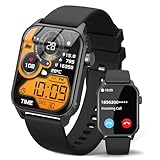
- 【1.83" HD Display & Customizable Watch Faces】Immerse yourself in a vibrant 1.83-inch IPS display, boasting a sharp resolution of 240*284 for crystal-clear visuals. Effortlessly personalize your smart watch with a wide array of customizable watch faces to suit your personal style for every occasion—whether trendy, artistic, or minimalist—ideal for casual, sporty, or professional. Its sleek, modern design complements any outfit, blending technology and fashion seamlessly for everyday wear
- 【120 Sports Modes & Advanced Health Tracking】Our TK29 smart watches for women men come equipped with 120 sports modes, allowing you to effortlessly track a variety of activities such as walking, running, cycling, and swimming. With integrated heart rate and sleep monitors, you can maintain a comprehensive overview of your health, achieve your fitness goals, and maintain a balanced, active lifestyle with ease. Your ideal wellness companion (Note: Step recording starts after exceeding 20 steps)
- 【IP67 Waterproof & Long-Lasting Battery】Designed to keep up with your active lifestyle, this smartwatch features an IP67 waterproof rating, ensuring it can withstand splashes, sweat, and even brief submersion, making it perfect for workouts, outdoor adventures, or rainy days. Its reliable 350mAh battery offering 5-7 days of active use and up to 30 days in standby mode, significantly reducing frequent charging. Ideal for all-day wear, whether you’re at the gym, outdoors, or simply on the go
- 【Stay Connected Anytime, Anywhere】Stay informed and in control with Bluetooth call and music control features. Receive real-time notifications for calls, messages, and social media apps like Facebook, WhatsApp, Twitter, and Instagram directly on your smartwatch. Easily manage calls, control your music playlist, and stay updated without needing to reach for your phone. Perfect for work, workouts, or on-the-go, this watch keeps you connected and never miss important updates wherever you are
- 【Multifunction & Wide Compatibility】Seamlessly handle heart rate monitoring, sleep tracking, and enjoy conveniences like camera/music control, Seamlessly handle heart rate monitoring, sleep tracking, and more-all directly from your wrist. This 1.83 inches HD smartwatch is compatible with iPhone (iOS 9.0+) & Android (5.0+), ensuring smooth daily connectivity and convenience throughout your day. More than just a timepiece, it’s a stylish, all-in-one wearable for smarter, healthier living
The 1.64-inch AMOLED display is one of its standout features, offering bright colors and excellent outdoor visibility that outclasses most bands and many budget watches. This large screen allows Huawei to present guided workouts, metrics, and notifications clearly, but it doesn’t change the underlying focus on structured fitness rather than deep smartwatch interaction.
Entry-level sports tracking, not performance training
The Watch Fit supports a wide range of workout modes, including running, cycling, swimming, walking, and various indoor activities, with built-in GPS handling outdoor distance tracking independently from your phone. For casual runners and recreational athletes, GPS accuracy is generally reliable enough for pace and distance consistency, though it lacks the advanced metrics, multi-band positioning, or training load analysis found on higher-end sports watches.
Heart rate tracking is continuous and stable for steady-state activities, with Huawei’s optical sensor performing competitively in its class. However, during high-intensity intervals or rapid pace changes, it can lag behind chest straps and more advanced watches, reinforcing its role as a general fitness companion rather than a serious training tool.
Battery life over smart features, by design
One of the clearest signals of the Watch Fit’s positioning is its battery life, which can stretch close to 10 days with mixed use and several hours of GPS activity. This is a deliberate trade-off against richer smartwatch features, and for many users, it’s a welcome one. You spend less time charging and more time wearing it consistently, which improves the quality of long-term health data.
Smartwatch functions like notifications, weather, music controls, and alarms are present but basic. There’s no third-party app ecosystem, no voice assistant integration, and no native music storage on most versions, placing it firmly outside the smartwatch-first category occupied by Apple, Samsung, or Wear OS devices.
Software experience and ecosystem limitations
The Watch Fit relies on Huawei Health, which is clean, data-rich, and easy to navigate, especially for fitness summaries and trend tracking. It works on both Android and iOS, but iPhone users should expect a more restricted experience, particularly around notifications and background syncing. This cross-platform compatibility is useful, but it doesn’t erase the reality that Huawei’s ecosystem is more closed than those of Fitbit or Apple.
There’s also limited integration with third-party fitness platforms, which may frustrate users who rely on Strava or other training apps as a central hub. If you’re focused on personal progress within Huawei Health itself, this won’t be a deal-breaker, but data-driven athletes may feel constrained.
Who this sports watch actually makes sense for
The Huawei Watch Fit is best suited to beginners, casual exercisers, and everyday users who want structured activity tracking without the learning curve or cost of a full sports watch. It excels as a first step beyond a basic band, offering GPS, a large display, guided workouts, and excellent battery life in a comfortable, affordable package.
If your priorities include deep training analytics, advanced smartwatch features, or a broad app ecosystem, you’ll quickly find its limits. But if you want something simple, reliable, and focused on helping you move more and track it clearly, the Watch Fit occupies a very specific and sensible middle ground.
Design, Comfort, and Wearability: Lightweight by Design, Practical on the Wrist
After understanding where the Watch Fit sits functionally, its physical design makes immediate sense. Huawei has clearly prioritized comfort, low weight, and all-day wear over visual drama, and for an entry-level sports watch, that’s a sensible trade-off. This is a device meant to disappear on your wrist rather than demand attention.
Rectangular form factor: functional, not fashionable
The Watch Fit uses a slim rectangular case that sits somewhere between a fitness band and a small smartwatch. At roughly 46 x 30 mm and just over 10 mm thick, it looks large on paper but wears smaller thanks to the curved edges and narrow profile. The design won’t appeal to traditional watch enthusiasts, but it maximizes screen real estate without adding bulk.
This shape is particularly effective during workouts. Data fields are easy to read at a glance, especially when running or cycling, and the vertical layout works well for stats-heavy fitness screens. Compared to round alternatives like the Amazfit Bip or Xiaomi Watch S1 Active, the Watch Fit’s display feels more information-dense and immediately legible.
Materials and build quality at this price
The case is made from reinforced polymer rather than metal, which helps keep the weight extremely low at around 21 grams without the strap. It doesn’t feel luxurious, but it also doesn’t feel flimsy, and there’s no creaking or flex when worn tightly during exercise. The single side button has a clean click and is easy to locate mid-workout.
Huawei opts for a glossy finish on the case, which looks clean out of the box but does pick up smudges over time. It’s not the sort of device you buy for premium tactile satisfaction, but the construction feels appropriate for daily use, gym sessions, and outdoor activity at this price point.
Comfort during long wear and sleep tracking
Comfort is one of the Watch Fit’s strongest attributes. The low weight and balanced case mean there’s no top-heavy feeling, even on smaller wrists, and it sits flat without digging into the skin. This matters not just during workouts, but also for sleep tracking, where bulkier watches can quickly become intrusive.
During extended wear, including overnight use, the Watch Fit remains largely unnoticeable. There’s minimal pressure build-up under the case, and the heart rate sensor housing is shallow enough to avoid discomfort. For users transitioning from a basic fitness band, this familiarity will be reassuring.
Strap design and adjustability
The included silicone strap is soft, flexible, and designed for sport-first use. It handles sweat well, dries quickly, and doesn’t cause irritation during longer sessions, even when worn snugly for accurate heart rate tracking. The standard buckle is secure, if unremarkable, and holds its position reliably.
One limitation is the proprietary strap attachment system. While it allows the case to sit more flush against the wrist, it also limits third-party strap options compared to standard 20 mm or 22 mm lugs. Huawei does offer replacement straps in different colors, but users who enjoy customizing their watch may find this restrictive.
Display integration and real-world visibility
The Watch Fit’s AMOLED display blends well into the case, with slim bezels that make the screen feel larger than expected. Brightness is sufficient for outdoor use, including direct sunlight, and viewing angles remain strong during movement. This enhances both workout usability and everyday interactions like notifications or timers.
Because the watch is so light, the display never feels like it’s pulling the device forward on the wrist. This balance is often overlooked but becomes noticeable during longer runs or high-impact workouts, where heavier watches can shift or bounce.
Durability for everyday fitness use
With water resistance rated for swimming and a design clearly intended for active use, the Watch Fit holds up well to daily wear. It’s not a rugged sports watch, and the screen lacks the raised bezels or sapphire protection found on higher-end models, so some care is still required. That said, for gym sessions, runs, casual swims, and general use, it feels adequately robust.
This balance between lightness and durability reinforces the Watch Fit’s role. It’s built to be worn constantly, tracked consistently, and forgotten about when you’re not actively checking it, which is exactly what many first-time sports watch buyers want from their device.
Display and Interface: AMOLED Brilliance Meets Simple Navigation
The Watch Fit’s lightweight build and balanced fit set the stage for what is arguably its biggest strength: the screen you interact with dozens of times a day. Huawei pairs the slim case with a tall, rectangular AMOLED panel that immediately feels more “mini smartwatch” than oversized fitness band. That visual confidence plays a big role in making the Watch Fit feel like a meaningful upgrade from entry-level trackers.
AMOLED quality that outperforms its price
Huawei uses a 1.64-inch AMOLED display with a resolution that keeps text, icons, and workout metrics crisp without looking artificially sharpened. Colors are vibrant, blacks are genuinely deep, and contrast remains strong even when viewed at an angle mid-run or during a gym set. Compared to similarly priced Xiaomi or Amazfit models, the Watch Fit’s panel feels more polished and less budget-oriented.
Outdoor visibility is reliably strong, helped by ample peak brightness and an automatic brightness system that reacts quickly to changing light. In direct sunlight, workout screens remain readable without exaggerated color shifting or washed-out whites. For an entry-level sports watch, that consistency matters more than raw brightness numbers.
Rectangular layout that favors fitness data
The elongated screen shape isn’t just a design choice; it works especially well for fitness and health metrics. Heart rate graphs, pace data, and workout timers fit comfortably without feeling cramped, reducing the need to swipe mid-activity. This is an area where the Watch Fit feels closer to an Apple Watch SE than to narrower fitness bands from Fitbit.
That added vertical space also benefits notifications and quick glances. Messages and alerts display more text at once, which reduces scrolling and keeps interactions brief. For users coming from a band-style tracker, this alone can feel like a quality-of-life upgrade.
Touch-first navigation with minimal friction
Navigation is handled primarily through the touchscreen, supported by a single side button for quick access and back functions. Swipes are responsive and predictable, with no noticeable lag when moving between menus or starting workouts. The interface is deliberately simple, favoring clarity over customization.
Huawei’s software avoids deep menu trees, which makes it easy for first-time smartwatch users to find core features quickly. Workouts, health stats, weather, and music controls are all logically grouped, minimizing the learning curve. It’s not as flexible as Wear OS or watchOS, but it’s far less intimidating.
Watch faces and everyday personalization
The AMOLED panel shines when paired with Huawei’s growing library of watch faces. Options range from data-heavy fitness layouts to minimal analog-style designs, many of which take full advantage of the screen’s size and color depth. While third-party face support is more limited than on Apple or Google platforms, the built-in selection is broad enough for most users.
Always-on display is available, but it comes with clear trade-offs. Visuals are simplified to preserve battery life, and enabling AOD noticeably shortens the already impressive endurance. Most users will be better served by raise-to-wake, which is reliable and fast without excessive false activations.
Interface limitations to be aware of
The simplicity that makes the Watch Fit approachable also defines its limits. There’s no app store in the traditional sense, and smart features remain basic compared to full smartwatches. Notification handling is functional but not interactive on iOS, with limited reply options even on Android.
That said, the interface rarely gets in the way of the watch’s primary mission. For fitness tracking, daily activity, and quick checks throughout the day, it stays out of your way and does exactly what you expect. This clarity of purpose aligns well with the Watch Fit’s entry-level positioning and helps justify its value-focused appeal.
Fitness and Sports Tracking: Strengths Where It Counts for Beginners
Where the Watch Fit truly earns its place is in fitness and sports tracking, which feels like a natural extension of the simplified interface discussed earlier. Huawei has clearly prioritized the basics that matter most to new and casual athletes, rather than chasing advanced metrics that would go unused by its target audience.
Wide activity support without complexity
Out of the box, the Watch Fit supports a broad range of workout modes, covering staples like walking, running, cycling, swimming, and indoor training, alongside yoga, strength training, and various cardio-focused sessions. The list looks generous on paper, but more importantly, it’s presented cleanly, with no confusion about which mode to use for everyday exercise.
For beginners, this approach reduces friction. You select an activity, wait a moment for GPS if needed, and start moving, with no pre-workout configuration or profile tweaking required. Compared to feature-heavy platforms from Garmin or Polar, this simplicity is a genuine advantage at this price point.
Rank #2
![Apple Watch Series 11 [GPS 46mm] Smartwatch with Jet Black Aluminum Case with Black Sport Band - M/L. Sleep Score, Fitness Tracker, Health Monitoring, Always-On Display, Water Resistant](https://m.media-amazon.com/images/I/312K597M2uL._SL160_.jpg)
- HYPERTENSION NOTIFICATIONS — Apple Watch Series 11 can spot signs of chronic high blood pressure and notify you of possible hypertension.*
- KNOW YOUR SLEEP SCORE — Sleep score provides an easy way to help track and understand the quality of your sleep, so you can make it more restorative.
- EVEN MORE HEALTH INSIGHTS — Take an ECG anytime.* Get notifications for a high and low heart rate, an irregular rhythm,* and possible sleep apnea.* View overnight health metrics with the Vitals app* and take readings of your blood oxygen.*
- STUNNING DESIGN — Thin and lightweight, Series 11 is comfortable to wear around the clock — while exercising and even when you’re sleeping, so it can help track your key metrics.
- A POWERFUL FITNESS PARTNER — With advanced metrics for all your workouts, plus features like Pacer, Heart Rate Zones, training load, Workout Buddy powered by Apple Intelligence from your nearby iPhone,* and more. Series 11 also comes with three months of Apple Fitness+ free.*
GPS accuracy that’s reliable for everyday training
The built-in GPS is one of the Watch Fit’s most important inclusions, especially for users upgrading from a basic fitness band. In real-world outdoor runs and walks, route tracking is generally consistent, with only minor smoothing in tighter turns or tree-covered areas.
Distance and pace data align closely with smartphone GPS and mid-range sports watches, which is reassuring for entry-level users tracking progress over time. It’s not tuned for precision interval training or trail navigation, but for urban routes, parks, and casual outdoor exercise, it performs exactly as expected.
Heart rate tracking focused on trends, not lab precision
Huawei’s optical heart rate sensor performs best when viewed as a long-term trend tracker rather than a medical-grade tool. During steady-state cardio like jogging or cycling, readings remain stable and believable, with fewer erratic spikes than older budget wearables.
High-intensity intervals and strength sessions can still introduce brief lag, particularly during rapid changes in effort. That’s common at this level, and it’s unlikely to impact beginners who are more focused on consistency and overall effort than precise zone training.
Clear, readable workout screens in motion
The elongated AMOLED display plays a quiet but important role during workouts. Data fields are large, well-spaced, and easy to read at a glance, even while moving, which reduces the need to slow down or stop mid-session.
Customization of workout screens is limited compared to more advanced sports watches, but the defaults are well chosen. Time, distance, heart rate, and pace are prioritized, reinforcing the Watch Fit’s beginner-friendly philosophy.
Guided workouts and on-screen animations
One area where the Watch Fit stands out is its use of guided workouts and animated exercise demos. For users new to structured training or home workouts, these visual cues make a meaningful difference, especially for stretching, bodyweight routines, and mobility sessions.
The animations are clear and well-paced, helping users maintain form without constantly checking a phone. This feature bridges the gap between a simple tracker and a more coach-like experience, something few competitors manage as cleanly at this price.
Swimming and durability for everyday activity
With 5ATM water resistance, the Watch Fit handles pool swimming and general water exposure without concern. Swim tracking includes laps, distance, and duration, which covers the needs of recreational swimmers.
The lightweight polymer case and soft silicone strap also contribute to comfort during longer sessions. At around 21 grams without the strap, it’s easy to forget you’re wearing it, which encourages consistent use, a crucial factor for beginners building fitness habits.
Recovery, activity rings, and daily motivation
Beyond workouts, Huawei’s activity tracking focuses on movement, exercise time, and active hours rather than aggressive calorie targets. This gentler approach feels more sustainable for new users, avoiding the pressure-heavy gamification seen on some platforms.
Sleep tracking and recovery insights are presented in simple terms, offering guidance without overwhelming charts or jargon. While advanced metrics like training readiness or VO2 max estimates are absent, the core feedback remains useful and easy to act on.
How it compares to similarly priced rivals
Against fitness-focused bands from Xiaomi or Amazfit, the Watch Fit’s advantage lies in its larger display, built-in GPS, and more polished workout experience. Compared to Fitbit, Huawei offers stronger battery life and guided workouts, though Fitbit still holds an edge in app ecosystem and social features.
It’s not a replacement for an Apple Watch SE or a Garmin Forerunner, but it’s also not trying to be. For beginners who want reliable tracking, readable data, and minimal setup, the Watch Fit delivers where it matters most, without unnecessary distractions.
Health Tracking Essentials: Heart Rate, Sleep, SpO₂, and Daily Insights
After covering workouts and daily activity, the Watch Fit’s health tracking fills in the quieter moments between exercise sessions. This is where entry-level users tend to spend most of their time, checking trends rather than chasing advanced performance metrics.
Huawei’s approach here is consistent with the rest of the watch: clear presentation, steady background tracking, and minimal friction once everything is set up.
24/7 heart rate monitoring in everyday use
The Watch Fit uses an optical heart rate sensor that tracks continuously throughout the day and ramps up during workouts. In real-world testing, resting heart rate trends are stable and believable, aligning closely with chest-strap data when averaged rather than compared beat by beat.
During steady cardio like walking, cycling, or treadmill runs, readings remain smooth with minimal spikes. Faster interval training can introduce brief lag, which is typical for wrist-based sensors at this price, but it rarely undermines overall workout summaries.
For beginners, the value lies more in spotting patterns than chasing precision. Seeing elevated resting heart rate after poor sleep or heavier training days is often more useful than pinpoint accuracy.
Sleep tracking that prioritizes clarity over complexity
Sleep tracking is enabled automatically and works reliably as long as the watch is worn overnight, which is easy thanks to its low weight and slim profile. The silicone strap stays comfortable without pinching, and the flat case back avoids pressure points even for side sleepers.
Sleep is broken down into light, deep, REM, and awake stages, presented in a timeline that’s easy to understand. Huawei’s sleep scores and duration estimates feel reasonable and consistent night to night, even if stage accuracy isn’t on par with more expensive platforms.
What stands out is the tone of the feedback. Instead of overwhelming users with graphs, the app focuses on simple advice, such as bedtime consistency and sleep duration, which fits the Watch Fit’s beginner-friendly positioning.
SpO₂ tracking for spot checks and passive trends
Blood oxygen monitoring is available both as manual spot checks and as an optional background measurement during sleep. Readings generally fall within expected ranges for healthy users, though results can vary depending on fit and arm position, as with most consumer wearables.
This is not a medical-grade feature, and Huawei is careful not to present it as one. Its real usefulness is in long-term awareness, particularly for users interested in altitude exposure, respiratory health, or sleep quality correlations.
Compared to rivals from Xiaomi and Amazfit, SpO₂ tracking here feels equally reliable but better integrated into the broader health picture. It adds context rather than acting as a standalone gimmick.
Daily insights, stress tracking, and health summaries
The Watch Fit includes stress tracking based on heart rate variability trends, displayed as low, medium, or high stress periods throughout the day. While it lacks deep explanations, the visual timeline helps users connect stress spikes with work hours, poor sleep, or heavy training.
Daily health summaries pull together steps, activity minutes, heart rate trends, and sleep performance into a single view. This makes it easy to get a quick snapshot without digging through menus, which is especially important for first-time smartwatch owners.
Huawei’s Health app supports this experience well, with clean layout and logical navigation across both Android and iOS. iPhone users miss out on some system-level integration, but core health tracking remains unaffected.
Battery life and consistency of health tracking
One of the biggest advantages of the Watch Fit’s health tracking is how little it impacts battery life. With continuous heart rate monitoring, sleep tracking, and occasional SpO₂ checks enabled, the watch comfortably lasts around a week on a charge.
This consistency encourages users to leave health features turned on rather than disabling them to save power. Compared to Fitbit and Apple’s entry-level options, the reduced charging anxiety makes long-term habit building easier.
The magnetic charger is simple and secure, though it’s proprietary, so it’s best kept in a predictable spot.
What’s missing and why it likely won’t matter
Advanced health metrics such as ECG, skin temperature trends, or recovery readiness scores are not included. There’s also no deep integration with third-party health platforms beyond basic data syncing.
For the Watch Fit’s target audience, these omissions are largely irrelevant. The focus is on consistency, comfort, and understandable insights, and in those areas, Huawei delivers a well-balanced experience that supports everyday health awareness without demanding constant attention.
GPS Performance and Workout Accuracy: How It Holds Up in Real-World Training
With day-to-day health tracking covered, the Watch Fit’s real test comes when you take it outside and ask it to record a workout on its own. This is where it steps beyond fitness band territory and starts behaving like a proper entry-level sports watch.
GPS acquisition and signal reliability
The Watch Fit uses a built-in GPS chipset, allowing it to track outdoor runs, walks, and cycling sessions without carrying a phone. In open environments like parks, riverside paths, or suburban streets, satellite lock typically takes under a minute, which is acceptable for its price bracket.
Once locked, the signal is generally stable. Routes recorded on familiar running loops closely match known paths, with only minor smoothing at sharp corners rather than dramatic cut-throughs.
Rank #3

- Bluetooth Call and Message Alerts: Smart watch is equipped with HD speaker, after connecting to your smartphone via bluetooth, you can answer or make calls, view call history and store contacts through directly use the smartwatch. The smartwatches also provides notifications of social media messages (WhatsApp, Twitter, Facebook, Instagram usw.) So that you will never miss any important information.
- Smart watch for men women is equipped with a 320*380 extra-large hd full touch color screen, delivering exceptional picture quality and highly responsive touch sensitivity, which can bring you a unique visual and better interactive experience, lock screen and wake up easily by raising your wrist. Though “Gloryfit” app, you can download more than 102 free personalised watch faces and set it as your desktop for fitness tracker.
- 24/7 Heart Rate Monitor and Sleep Tracker Monitor: The fitness tracker watch for men has a built-in high-performance sensor that can record our heart rate changes in real time. Monitor your heart rate 26 hours a day and keep an eye on your health. Synchronize to the mobile phone app"Gloryfit", you can understand your sleep status(deep /light /wakeful sleep) by fitness tracker watch develop a better sleep habit and a healthier lifestyle.
- IP68 waterproof and 110+ Sports Modes: The fitness tracker provides up to 112+ sports modes, covering running, cycling, walking, basketball, yoga, football and so on. Activity trackers bracelets meet the waterproof requirements for most sports enthusiasts' daily activities, such as washing hands or exercising in the rain, meeting daily needs (note: Do not recommended for use in hot water or seawater.)
- Multifunction and Compatibility: This step counter watch also has many useful functions, such as weather forecast, music control, sedentary reminder, stopwatch, alarm clock, timer, track female cycle, screen light time, find phone etc. The smart watch with 2 hrs of charging, 5-7 days of normal use and about 30 days of standby time. This smart watches for women/man compatible with ios 9.0 and android 6.2 and above devices.
Urban environments and route accuracy
In dense city areas with tall buildings or narrow streets, the Watch Fit shows the expected limitations of a single-band GPS system. You may see occasional drift near intersections or brief zig-zagging where signal reflections interfere.
That said, it performs on par with rivals from Xiaomi and Amazfit at similar prices. It is not as precise as multi-band systems found in higher-end Garmin or Apple models, but it remains consistent enough for tracking distance, pace trends, and route history.
Pace, distance, and workout data consistency
Pace readings settle quickly once the workout starts and remain stable throughout steady runs. Short bursts of interval training can show slight lag in pace changes, but averages over longer sessions are reliable.
Distance measurements over repeated routes tend to fall within a small margin of error compared to phone GPS apps. For beginner and intermediate runners, this level of accuracy is more than sufficient for progress tracking and goal setting.
Heart rate tracking during exercise
The optical heart rate sensor performs best during steady-state activities like jogging, brisk walking, and indoor cardio. Heart rate curves align well with perceived effort, and recovery trends after workouts are easy to interpret in the Huawei Health app.
During high-intensity intervals or rapid pace changes, readings can lag briefly, which is common for wrist-based sensors at this level. It is not designed to replace a chest strap, but it delivers dependable data for everyday training.
Supported sports modes and practical accuracy
The Watch Fit supports a wide range of workout modes, including outdoor running, walking, cycling, swimming, elliptical, rowing, and strength training. For swimming, pool length detection is generally accurate once properly configured, with stroke recognition working best for freestyle.
Strength training relies more on time and heart rate than precise rep detection, which is realistic for an entry-level watch. The animated workout guidance is helpful for beginners but does not influence tracking accuracy itself.
Battery impact during GPS workouts
GPS use has a noticeable but manageable impact on battery life. Continuous GPS tracking drains the Watch Fit faster than day-to-day health monitoring, but it still comfortably supports several long workouts before needing a recharge.
For users training three to five times per week, battery anxiety remains low. This is an advantage over many smaller fitness bands that either lack GPS entirely or require frequent charging when workouts are logged regularly.
Comfort and wearability during training
Weighing very little and sitting flat on the wrist, the Watch Fit remains comfortable during longer sessions. The soft silicone strap avoids hot spots and does not trap sweat excessively, even during warm-weather runs.
Its rectangular case may look unconventional compared to round sports watches, but it stays secure and readable at a glance. The bright AMOLED display makes pace and distance easy to check mid-workout without exaggerated wrist movement.
How it compares to alternatives at this price
Against Fitbit’s entry-level trackers, the Watch Fit’s built-in GPS is a clear advantage, removing the need to carry a phone. Compared to Xiaomi and Amazfit models with GPS, Huawei’s tracking is similarly accurate, but paired with a cleaner app layout and longer overall battery life.
It does not compete with dedicated running watches in terms of advanced metrics or GPS precision, but it also does not pretend to. As a first sports watch, it delivers reliable outdoor tracking without complexity, which aligns well with its target audience.
Smartwatch Features and Limitations: Notifications Yes, Ecosystem No
After establishing itself as a reliable sports companion, the Watch Fit shifts gears into everyday smartwatch territory. This is where its priorities become clear: it handles the basics confidently but stops well short of being a full smartwatch replacement.
If you are coming from a fitness band, the added convenience is noticeable. If you are expecting Apple Watch SE or Galaxy Watch-style depth, the limitations appear quickly.
Notifications: clear, reliable, and intentionally simple
The Watch Fit delivers notifications consistently, with alerts arriving promptly for calls, messages, and third-party apps. The large rectangular AMOLED display works in its favour here, showing full message previews that are easy to read without scrolling.
You cannot interact deeply with notifications beyond dismissing them, and there is no on-watch keyboard. On Android, limited quick replies are available for messages, but iOS users are restricted to read-only notifications due to platform rules.
No calls, no voice assistant, no distractions
There is no microphone or speaker built into the Watch Fit, which means calls must be handled on your phone. Voice assistants are also absent, removing the ability to set reminders or control smart home devices from the wrist.
For some users, this will feel like a drawback. For others, especially those focused on training and battery life, it keeps the experience focused and free of unnecessary interruptions.
Music control rather than music independence
The Watch Fit allows basic control of music playing on your phone, including play, pause, and track skipping. There is no onboard storage for music and no support for Bluetooth headphones directly from the watch.
During workouts, this means you still need your phone if music matters to you. In contrast, some Amazfit and Fitbit models offer limited onboard playback at similar prices, though often with trade-offs elsewhere.
Huawei Health: polished but tightly controlled
All smartwatch features are routed through the Huawei Health app, which is clean, stable, and well-organised. Health data, workouts, watch faces, and settings are easy to access, and syncing is generally reliable across both Android and iOS.
What you will not find is a broader app ecosystem. There is no app store in the traditional sense, and third-party app support is extremely limited compared to Wear OS or watchOS platforms.
Watch faces and customization over apps
Customization focuses on watch faces rather than functionality. Huawei offers a wide range of faces, including data-rich sports layouts and simpler everyday designs, many of which make excellent use of the tall display.
Strap changes are straightforward thanks to standard lugs on most variants, and the lightweight polymer case keeps the watch comfortable for all-day wear. These physical customization options partially offset the lack of software extensibility.
Platform compatibility and long-term expectations
The Watch Fit works with both Android and iOS, which immediately makes it more flexible than many ecosystem-locked devices. That said, iPhone users should expect fewer interactive features and slightly slower firmware update rollouts.
Huawei’s ecosystem remains largely self-contained, and there is no pathway to expand functionality over time through apps or services. What you buy on day one is largely what the watch will remain, aside from minor feature updates.
Where the limitations make sense
These constraints are not accidental; they reflect the Watch Fit’s positioning as a sports-first wearable with smart features added for convenience. By avoiding power-hungry features like calls, apps, and assistants, Huawei preserves battery life and system stability.
For users who value fitness tracking, comfort, and low-maintenance daily use over smartwatch experimentation, this balance feels intentional rather than compromised.
Battery Life and Charging: One of the Watch Fit’s Biggest Wins
The Watch Fit’s stripped-back, sports-first approach pays off most clearly when it comes to battery life. By avoiding always-on assistants, third-party apps, and cellular features, Huawei delivers endurance that genuinely changes how often you think about charging.
For first-time smartwatch buyers, this is one of the most immediately satisfying aspects of daily use. The Watch Fit behaves more like a reliable sports watch than a phone extension, and that distinction matters over weeks, not days.
Real-world battery life, not lab-condition promises
Huawei advertises up to 10 days of battery life, and in practical use that figure is surprisingly attainable. With continuous heart rate tracking, sleep tracking enabled, regular notifications, and three to five GPS workouts per week, the Watch Fit typically lasts 7 to 9 days on a single charge.
If you reduce GPS usage or notifications, pushing closer to the full 10 days is realistic. This puts it well ahead of the Apple Watch SE, which still requires daily charging, and comfortably ahead of Fitbit Versa models that often land closer to four to five days.
GPS usage and workout impact
GPS is one of the biggest battery drains on any sports watch, and the Watch Fit is no exception. A one-hour outdoor run or walk with GPS enabled typically consumes around 8 to 10 percent of the battery, which is efficient for a watch at this price.
Even with frequent outdoor workouts, you are unlikely to hit battery anxiety during the week. This makes the Watch Fit particularly appealing for users training several times per week who do not want to plan workouts around charging schedules.
Rank #4
![Apple Watch Series 11 [GPS 42mm] Smartwatch with Rose Gold Aluminum Case with Light Blush Sport Band - S/M. Sleep Score, Fitness Tracker, Health Monitoring, Always-On Display, Water Resistant](https://m.media-amazon.com/images/I/31J+F-pXaWL._SL160_.jpg)
- HYPERTENSION NOTIFICATIONS — Apple Watch Series 11 can spot signs of chronic high blood pressure and notify you of possible hypertension.*
- KNOW YOUR SLEEP SCORE — Sleep score provides an easy way to help track and understand the quality of your sleep, so you can make it more restorative.
- EVEN MORE HEALTH INSIGHTS — Take an ECG anytime.* Get notifications for a high and low heart rate, an irregular rhythm,* and possible sleep apnea.* View overnight health metrics with the Vitals app* and take readings of your blood oxygen.*
- STUNNING DESIGN — Thin and lightweight, Series 11 is comfortable to wear around the clock — while exercising and even when you’re sleeping, so it can help track your key metrics.
- A POWERFUL FITNESS PARTNER — With advanced metrics for all your workouts, plus features like Pacer, Heart Rate Zones, training load, Workout Buddy powered by Apple Intelligence from your nearby iPhone,* and more. Series 11 also comes with three months of Apple Fitness+ free.*
Always-on display trade-offs
The AMOLED display is one of the Watch Fit’s visual highlights, but enabling always-on display does reduce endurance noticeably. With AOD turned on, battery life drops closer to four to five days, depending on usage.
For most users, the raise-to-wake gesture is responsive enough that always-on display feels unnecessary. Leaving it disabled preserves one of the Watch Fit’s strongest advantages without sacrificing everyday usability.
Charging speed and convenience
Charging is handled via Huawei’s proprietary magnetic charger, which snaps into place easily and feels secure. A full charge from near-empty takes roughly 60 to 75 minutes, which is fast enough to top up during a shower or while getting ready in the morning.
A 10-minute charge can deliver enough power for a full day of use, which adds flexibility if you do manage to run the battery down unexpectedly. While it would be nice to see USB-C directly on the puck, the overall charging experience is simple and reliable.
How it compares to key rivals
Against fitness bands like the Xiaomi Smart Band series, the Watch Fit offers similar endurance with a much larger screen and built-in GPS. Compared to Amazfit’s entry-level watches, Huawei’s battery performance is competitive, though Amazfit often edges ahead slightly in pure standby time.
Where the Watch Fit clearly wins is against full smartwatches. If you are choosing between a Watch Fit and an Apple Watch SE or Galaxy Watch FE, the difference in charging frequency alone can be enough to sway budget-conscious and fitness-focused users.
Why battery life reinforces the Watch Fit’s identity
This level of endurance reinforces the Watch Fit’s role as a low-maintenance sports companion rather than a miniature smartphone. You can wear it continuously for sleep tracking, daily activity, and workouts without constantly interrupting that flow to recharge.
For users upgrading from a fitness band, the battery life feels familiar rather than compromised. For first-time smartwatch buyers, it sets expectations in a way that many more expensive watches struggle to match.
Huawei Health App and Platform Compatibility: Android-Friendly, iOS-Acceptable, Huawei-Centric
Strong battery life only really pays off if the software experience around it is stable and easy to live with. The Huawei Watch Fit relies entirely on the Huawei Health app for setup, data syncing, and long-term tracking, making the app just as important as the hardware on your wrist.
This is where the Watch Fit’s value proposition becomes more nuanced. The experience ranges from genuinely good on Android, to functional but limited on iOS, with clear advantages if you are already using a Huawei phone.
Huawei Health on Android: full access, best experience
On Android, Huawei Health offers the most complete and least compromised version of the Watch Fit experience. Pairing is straightforward, syncing is reliable, and fitness data flows smoothly between the watch and the app in the background.
The app presents activity, workouts, heart rate, sleep, SpO₂, and stress data in a clean, card-based layout. It is less visually playful than Fitbit’s app but more detailed than Xiaomi’s, with enough depth for users who want to track trends without drowning in charts.
Workout analysis is especially well handled at this level. GPS routes, pace splits, heart rate zones, and training load are clearly explained, making the Watch Fit feel closer to a basic sports watch than a simple step counter.
Android permissions and app installation quirks
One caveat on non-Huawei Android phones is app installation. In many regions, Huawei Health is no longer distributed through the Google Play Store, requiring users to install Huawei AppGallery first.
This extra step is not difficult, but it does add friction compared to Fitbit or Amazfit, which still rely on Play Store updates. Once installed, however, updates are stable, and long-term use is largely trouble-free.
Notifications, call alerts, and basic music controls work reliably on Android. You cannot reply to messages or take calls on the Watch Fit, but that limitation is consistent with its entry-level positioning.
iOS compatibility: usable, but clearly second-tier
The Watch Fit does work with iPhones, and for basic fitness tracking, it remains perfectly usable. Pairing through the iOS version of Huawei Health is straightforward, and core metrics like steps, workouts, heart rate, and sleep sync without major issues.
That said, iOS users will notice tighter restrictions almost immediately. Notification handling is more limited, background syncing can be less consistent, and integration with Apple Health is more basic than what Fitbit or Apple’s own watches offer.
There is also no path into Apple’s broader ecosystem features. You do not get deep HealthKit data sharing, app extensions, or any form of Siri interaction, reinforcing that this is a fitness-first device rather than a smartwatch substitute for iPhone users.
Huawei phones and ecosystem advantages
If you are using a Huawei smartphone, especially one without Google Mobile Services, the Watch Fit makes considerably more sense. Huawei Health integrates more deeply, updates are smoother, and system-level optimizations improve sync stability and battery efficiency.
Huawei’s ecosystem features, such as shared health data across devices and tighter background permissions, feel more intentional here. While this does not unlock exclusive watch features, it removes many of the small annoyances present on other platforms.
This Huawei-centric approach is not unique in the smartwatch world. Apple, Samsung, and Google all prioritize their own ecosystems, and at this price point, Huawei’s strategy is arguably more forgivable given the hardware value on offer.
Third-party apps and smart features: intentionally minimal
Unlike Wear OS or watchOS devices, the Watch Fit does not support third-party app installations. What you see out of the box is what you live with long-term.
For fitness-focused users, this simplicity can be a benefit. There are fewer background processes, fewer bugs, and far less impact on battery life, which aligns with the Watch Fit’s identity as a low-maintenance sports companion.
The trade-off is obvious if you want music streaming apps, navigation, contactless payments, or voice assistants. Those features simply are not part of the Watch Fit’s mission, and buyers expecting smartwatch-like flexibility will feel constrained.
Data portability and long-term use
Huawei Health allows basic data export, but it is not as open as platforms like Garmin or even Fitbit. If you plan to switch brands later, your historical data may not transfer cleanly.
For first-time smartwatch buyers or users upgrading from a fitness band, this is rarely a deal-breaker. The app provides enough insight for day-to-day motivation and long-term trend tracking without demanding ecosystem lock-in from the start.
Viewed in context, the Huawei Health app supports the Watch Fit’s role effectively. It prioritizes clarity, stability, and battery-friendly operation over ecosystem breadth, which will suit many entry-level and budget-conscious users better than a more complex alternative.
Huawei Watch Fit vs the Competition: Fitbit, Xiaomi, Amazfit, and Apple SE Compared
Placed against its closest rivals, the Huawei Watch Fit makes more sense when you stop viewing it as a “cheap smartwatch” and start judging it as a focused entry-level sports watch. Its strengths and weaknesses become clearer once you compare how competing brands prioritize fitness accuracy, smart features, battery life, and ecosystem control.
Huawei Watch Fit vs Fitbit Charge and Versa series
Fitbit’s closest equivalents sit across two product lines: the Charge series for band-style trackers and the Versa line for lightweight smartwatches. Compared to a Charge, the Watch Fit feels more like a watch thanks to its rectangular AMOLED display, aluminum case, and larger surface for workout data.
In fitness tracking, Fitbit still holds an edge in sleep analysis and long-term health insights, particularly with trends and readiness-style metrics. However, much of Fitbit’s deeper data is now locked behind a subscription, whereas Huawei provides full access to its health metrics without ongoing costs.
Battery life is another dividing line. Fitbit devices typically last 5 to 7 days, while the Watch Fit can comfortably stretch beyond a week with GPS workouts mixed in. If you value simplicity, no subscriptions, and longer runtime, Huawei pulls ahead; if you want richer health interpretation and social features, Fitbit still has the more mature platform.
Huawei Watch Fit vs Xiaomi Mi Band and Redmi Watch
Xiaomi’s wearables are often cheaper, and that price gap is real. A Mi Band undercuts the Watch Fit significantly, but it also feels like a compromise in display size, build quality, and on-device interaction.
The Watch Fit’s screen is sharper, brighter, and easier to read during workouts, especially outdoors. Its aluminum body and quick-release strap system also give it better long-term comfort and durability compared to Xiaomi’s softer plastic designs.
Where Xiaomi competes strongly is value per dollar and broad phone compatibility with fewer regional limitations. If your budget is extremely tight, Xiaomi wins on cost alone, but if you want something that feels closer to a proper sports watch without jumping to mid-range pricing, the Watch Fit is the more refined option.
Huawei Watch Fit vs Amazfit GTS and Bip models
Amazfit is arguably Huawei’s most direct competitor in this space. Models like the GTS and Bip series offer similar AMOLED displays, multi-sport tracking, and long battery life, often at comparable prices.
💰 Best Value
![Apple Watch Series 11 [GPS 42mm] Smartwatch with Jet Black Aluminum Case with Black Sport Band - S/M. Sleep Score, Fitness Tracker, Health Monitoring, Always-On Display, Water Resistant](https://m.media-amazon.com/images/I/31ybzrJZckL._SL160_.jpg)
- HYPERTENSION NOTIFICATIONS — Apple Watch Series 11 can spot signs of chronic high blood pressure and notify you of possible hypertension.*
- KNOW YOUR SLEEP SCORE — Sleep score provides an easy way to help track and understand the quality of your sleep, so you can make it more restorative.
- EVEN MORE HEALTH INSIGHTS — Take an ECG anytime.* Get notifications for a high and low heart rate, an irregular rhythm,* and possible sleep apnea.* View overnight health metrics with the Vitals app* and take readings of your blood oxygen.*
- STUNNING DESIGN — Thin and lightweight, Series 11 is comfortable to wear around the clock — while exercising and even when you’re sleeping, so it can help track your key metrics.
- A POWERFUL FITNESS PARTNER — With advanced metrics for all your workouts, plus features like Pacer, Heart Rate Zones, training load, Workout Buddy powered by Apple Intelligence from your nearby iPhone,* and more. Series 11 also comes with three months of Apple Fitness+ free.*
The difference lies in polish and data consistency. Huawei’s GPS tracking tends to be more stable in urban environments, and heart rate tracking during steady-state workouts is generally more reliable. Amazfit devices can deliver impressive battery numbers, but firmware updates and metric interpretation sometimes feel uneven across models.
If you enjoy tweaking settings and don’t mind occasional software quirks, Amazfit offers excellent hardware variety. If you prefer a smoother, more predictable day-to-day experience with fewer surprises, the Watch Fit feels better tuned out of the box.
Huawei Watch Fit vs Apple Watch SE
Comparing the Watch Fit to the Apple Watch SE highlights just how different their missions are. The SE is a true smartwatch with deep app support, seamless iPhone integration, contactless payments, and powerful third-party fitness apps.
That flexibility comes at a cost. Battery life on the Apple Watch SE rarely exceeds a day and a half, and its higher price places it well above the Watch Fit’s entry-level positioning. For basic fitness tracking, notifications, and GPS workouts, the Huawei delivers the essentials without demanding daily charging.
If you live entirely within Apple’s ecosystem and want smartwatch versatility first and fitness second, the SE is the better tool. If you want a lighter, simpler device that stays out of the way while quietly tracking your activity for days on end, the Watch Fit makes a far more compelling case for first-time buyers.
Which type of buyer each watch suits best
The Huawei Watch Fit is best suited to users upgrading from a fitness band who want a larger screen, built-in GPS, and structured workouts without stepping into full smartwatch complexity. It rewards users who value battery life, comfort, and clarity over app stores and digital assistants.
Fitbit appeals to users who care deeply about health trends and community features, Xiaomi to strict budget shoppers, Amazfit to spec-driven buyers, and Apple to ecosystem loyalists. The Watch Fit sits squarely in the middle, offering a balanced, low-friction entry into sports tracking that avoids both feature overload and budget compromises.
Seen in that light, Huawei’s approach is not about winning on specs alone. It is about delivering a dependable, easy-to-live-with sports watch that asks very little of the user, and for many entry-level buyers, that restraint is exactly the point.
Who the Huawei Watch Fit Is For — and Who Should Look Elsewhere
Seen against the alternatives, the Huawei Watch Fit succeeds because it knows exactly where it belongs. It does not try to replace a phone, nor does it chase advanced training metrics meant for competitive athletes. Instead, it focuses on being an easy, comfortable, and reliable step up from a basic fitness band.
First-time smartwatch buyers coming from a fitness band
If you are upgrading from a Mi Band, Fitbit Inspire, or similar tracker, the Watch Fit feels like a natural next step rather than a leap. The larger rectangular AMOLED display makes workout data, notifications, and daily stats far easier to read at a glance. Built-in GPS alone will feel transformative if you are used to carrying your phone on runs or walks.
The watch is light on the wrist and thin enough to disappear under sleeves, which matters if you are not yet used to wearing a watch all day. Its polymer case and soft silicone strap may not feel luxurious, but they are practical, sweat-friendly, and comfortable for sleep tracking.
Casual to intermediate fitness enthusiasts
The Watch Fit is well suited to users who exercise regularly but do not need advanced performance analytics. It handles running, cycling, gym sessions, and guided workouts with clarity and consistency, offering clean pacing data, heart rate tracking, and post-workout summaries that are easy to understand. For most recreational athletes, this level of feedback is more useful than dense training load graphs.
Battery life reinforces that low-friction experience. With several workouts per week and notifications enabled, lasting close to a week between charges removes a major annoyance found on many entry-level smartwatches. You spend more time wearing it and less time thinking about it.
Users who value simplicity over smartwatch features
The Watch Fit is ideal if you want notifications, alarms, weather, and music controls without managing apps or system updates. Huawei’s software is stable and visually clear, even if it is more closed than Wear OS or watchOS. That simplicity reduces distractions and makes the watch feel predictable day to day.
It also works equally well with Android phones and iPhones for basic functionality. While iOS users will miss deeper integration features found on Apple Watch, the core fitness tracking experience remains intact and consistent across platforms.
Budget-conscious buyers who want strong hardware fundamentals
At its typical price point, the Watch Fit delivers excellent value through hardware choices that matter in daily use. The AMOLED display is bright, sharp, and easy to read outdoors, outperforming many similarly priced LCD-based competitors. GPS reliability and heart rate tracking are generally solid for the category, which is not always a given at this level.
The trade-off is refinement rather than capability. Materials are functional rather than premium, and finishing is clean but unremarkable. For buyers prioritising performance per pound over brand prestige or metal cases, this balance makes sense.
Who should consider other options instead
If you want a true smartwatch experience with third-party apps, voice assistants, mobile payments, and rich messaging interactions, the Watch Fit will feel limiting. Devices like the Apple Watch SE or Wear OS alternatives offer far greater flexibility, albeit with shorter battery life and higher prices. Power users who enjoy customisation and app ecosystems should look elsewhere.
Dedicated athletes may also outgrow the Watch Fit quickly. Runners training for races, cyclists using power data, or users who want advanced recovery metrics will find more depth in Garmin or higher-end Amazfit models. The Watch Fit is capable, but it is not designed to be a performance training tool.
Style-focused buyers and traditional watch enthusiasts
Those who care deeply about case materials, interchangeable metal bracelets, or classic watch aesthetics may find the Watch Fit too utilitarian. Its rectangular shape and lightweight construction emphasise function over form. If the watch is as much a fashion object as a fitness tool for you, hybrid smartwatches or round sports watches may be more satisfying.
For everyone else, especially buyers who want their first sports watch to be comfortable, dependable, and unintimidating, the Huawei Watch Fit lands exactly where it should.
Final Verdict: Why the Watch Fit Is Still One of the Best Entry-Level Sports Watches
All of those caveats and comparisons lead to a fairly simple conclusion. The Huawei Watch Fit succeeds because it knows exactly what it is meant to be, and just as importantly, what it is not trying to replace.
It is not a mini smartphone on your wrist, nor is it a stripped-down version of a serious training watch. Instead, it sits confidently in the middle ground, offering the essentials of a modern sports watch in a package that is easy to live with, easy to understand, and easy to recommend.
A strong foundation for everyday fitness tracking
At the core of the Watch Fit’s appeal is how well it handles the basics of fitness tracking. Step counting, heart rate monitoring, sleep tracking, and GPS-based workouts are all reliable enough to build trust, which is critical for first-time sports watch users. You are not constantly second-guessing the data, and that consistency matters more than advanced metrics at this level.
GPS performance is particularly important here. For outdoor walks, runs, and casual cycling, the Watch Fit generally locks on quickly and tracks routes accurately enough to review distance and pace trends over time. It may not satisfy data-obsessed athletes, but for everyday training and motivation, it does the job well.
Excellent battery life changes how you use it
Battery life remains one of the Watch Fit’s biggest real-world advantages. With around a week of use including workouts, and even more if GPS is used sparingly, it avoids the constant charging cycle that frustrates many smartwatch owners. This makes it feel more like a dependable fitness companion than a gadget that demands attention.
That long battery life also improves sleep tracking and all-day health monitoring. You are far more likely to wear it overnight and throughout the day when charging is an occasional task rather than a daily chore. For many users, this alone is reason enough to choose it over more feature-rich alternatives.
A display and design that prioritise comfort and clarity
The rectangular AMOLED display is one of the Watch Fit’s quiet strengths. It is bright, sharp, and easy to read outdoors, with enough space to show workout data clearly without feeling cramped. Compared to budget fitness bands, it feels like a genuine upgrade, even if the case materials remain firmly functional.
Comfort is another area where the Watch Fit excels. The lightweight polymer case and soft silicone strap make it easy to wear for long periods, including sleep. While it lacks the premium feel of aluminium or steel-bodied rivals, the trade-off is a watch that never feels heavy, awkward, or intrusive during exercise.
Software simplicity works in its favour
Huawei’s software experience is intentionally streamlined, and for the intended audience, that is mostly a positive. Menus are straightforward, workout modes are easy to access, and the companion app presents health data in a way that is understandable without being overwhelming. There is very little friction between deciding to exercise and actually starting a session.
The downside, of course, is limited smartwatch functionality. Notifications are basic, interactions are minimal, and there is no meaningful third-party app ecosystem. However, for users upgrading from a fitness band or buying their first sports watch, this simplicity often feels refreshing rather than restrictive.
Value that still holds up against newer rivals
Even as competition has intensified from brands like Xiaomi, Amazfit, and Fitbit, the Watch Fit remains compelling on value. You are paying for a quality display, dependable tracking, built-in GPS, and long battery life, rather than premium materials or software extras that many entry-level buyers rarely use.
When viewed through that lens, the Watch Fit often feels more focused than its rivals. Some competitors offer more features on paper but compromise on battery life, display quality, or tracking consistency. Huawei’s approach prioritises the fundamentals, and that balance continues to age well.
The right choice for the right buyer
The Huawei Watch Fit is best suited to people who want to be more active, not more connected. It works particularly well for walkers, casual runners, gym-goers, and anyone who wants structured workouts without committing to a full-blown sports ecosystem. It is also an excellent step up from basic fitness bands without the cost or complexity of a true smartwatch.
If your priorities are comfort, clarity, battery life, and dependable fitness tracking, the Watch Fit remains one of the safest recommendations in its class. It may not excite power users or style purists, but as an entry-level sports watch that delivers where it matters most, it continues to earn its place near the top of the shortlist.