Most people buy the Huawei Watch GT 4 expecting it to tell them how long they slept and whether it was “good” or “bad.” What actually happens overnight is far more involved, and understanding that data is the difference between glancing at a score and genuinely improving your sleep habits.
While you’re asleep, the GT 4 is quietly collecting multiple streams of physiological data using its optical heart rate sensor, blood oxygen sensors, motion tracking, and Huawei’s TruSleep algorithms. This section breaks down exactly what’s being measured, how it’s interpreted, and what you can realistically trust or act on the next morning.
Sleep duration and sleep timing
At the most basic level, the Watch GT 4 tracks when you fall asleep, when you wake up, and how long you remain asleep versus awake. This is based on a combination of wrist movement, heart rate changes, and sleep-specific pattern recognition rather than a simple motion-only approach.
In practice, sleep start and end times are usually very close to reality, especially if you wear the watch snugly and avoid taking it off during the night. Like most wrist-based trackers, it may slightly overestimate sleep if you lie very still while awake, but over multiple nights the trends are consistent and useful.
🏆 #1 Best Overall
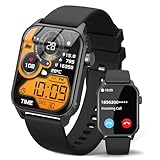
- 【1.83" HD Display & Customizable Watch Faces】Immerse yourself in a vibrant 1.83-inch IPS display, boasting a sharp resolution of 240*284 for crystal-clear visuals. Effortlessly personalize your smart watch with a wide array of customizable watch faces to suit your personal style for every occasion—whether trendy, artistic, or minimalist—ideal for casual, sporty, or professional. Its sleek, modern design complements any outfit, blending technology and fashion seamlessly for everyday wear
- 【120 Sports Modes & Advanced Health Tracking】Our TK29 smart watches for women men come equipped with 120 sports modes, allowing you to effortlessly track a variety of activities such as walking, running, cycling, and swimming. With integrated heart rate and sleep monitors, you can maintain a comprehensive overview of your health, achieve your fitness goals, and maintain a balanced, active lifestyle with ease. Your ideal wellness companion (Note: Step recording starts after exceeding 20 steps)
- 【IP67 Waterproof & Long-Lasting Battery】Designed to keep up with your active lifestyle, this smartwatch features an IP67 waterproof rating, ensuring it can withstand splashes, sweat, and even brief submersion, making it perfect for workouts, outdoor adventures, or rainy days. Its reliable 350mAh battery offering 5-7 days of active use and up to 30 days in standby mode, significantly reducing frequent charging. Ideal for all-day wear, whether you’re at the gym, outdoors, or simply on the go
- 【Stay Connected Anytime, Anywhere】Stay informed and in control with Bluetooth call and music control features. Receive real-time notifications for calls, messages, and social media apps like Facebook, WhatsApp, Twitter, and Instagram directly on your smartwatch. Easily manage calls, control your music playlist, and stay updated without needing to reach for your phone. Perfect for work, workouts, or on-the-go, this watch keeps you connected and never miss important updates wherever you are
- 【Multifunction & Wide Compatibility】Seamlessly handle heart rate monitoring, sleep tracking, and enjoy conveniences like camera/music control, Seamlessly handle heart rate monitoring, sleep tracking, and more-all directly from your wrist. This 1.83 inches HD smartwatch is compatible with iPhone (iOS 9.0+) & Android (5.0+), ensuring smooth daily connectivity and convenience throughout your day. More than just a timepiece, it’s a stylish, all-in-one wearable for smarter, healthier living
Sleep stages: deep, light, REM, and awake time
Huawei breaks your night into four main stages: deep sleep, light sleep, REM sleep, and brief awake periods. These stages are estimated using heart rate variability patterns, micro-movements, and known sleep-cycle timing models built into TruSleep.
Deep sleep is associated with physical recovery, while REM sleep is tied to cognitive restoration and dreaming. The GT 4 won’t replace a clinical sleep study, but compared to Fitbit and Apple Watch, Huawei’s stage breakdowns are generally believable at a macro level, especially for spotting nights with fragmented sleep or unusually low deep sleep.
Heart rate tracking during sleep
The Watch GT 4 continuously measures your heart rate throughout the night, producing an overnight resting heart rate profile. This data is valuable because sleep heart rate tends to be more stable and revealing than daytime readings.
Lower and more consistent overnight heart rates often correlate with better recovery, while elevated or erratic patterns can hint at stress, illness, alcohol consumption, or late-night workouts. In the Huawei Health app, these trends become more meaningful when viewed across weeks rather than single nights.
Blood oxygen saturation (SpO2)
If enabled, the GT 4 monitors your blood oxygen levels during sleep using infrared sensors. This feature runs automatically at night to minimize battery impact and to capture extended low-oxygen events rather than quick daytime spot checks.
Occasional dips are normal, but repeated or prolonged drops may indicate breathing disturbances or poor sleep quality. While this is not a medical diagnostic tool, it’s useful for flagging patterns worth paying attention to, especially when paired with sleep disruption or daytime fatigue.
Breathing quality and sleep breathing rate
Huawei includes sleep breathing analysis, estimating how steadily and effectively you breathe during the night. This is inferred from subtle changes in heart rate and motion rather than direct airflow measurement.
The watch categorizes breathing quality and can flag irregular breathing events. It’s a softer metric than SpO2, but when both breathing quality and oxygen levels show issues on the same nights, the signal becomes more compelling.
Heart rate variability (HRV) insights
While the GT 4 does not present raw HRV graphs as prominently as some Garmin models, it does use HRV data behind the scenes for recovery and sleep quality assessment. Variations in HRV during sleep influence how restorative your night is judged within Huawei’s ecosystem.
This makes the sleep score more than a cosmetic number. Nights with stable HRV patterns tend to result in better recovery insights, even if total sleep time wasn’t ideal.
Sleep score and qualitative assessment
All of the collected data feeds into Huawei’s sleep score, which combines duration, depth, continuity, and physiological stability. The score is accompanied by plain-language explanations that highlight what helped or hurt your sleep.
Compared to Apple’s more neutral reporting or Garmin’s athlete-focused recovery metrics, Huawei strikes a middle ground. It’s consumer-friendly without being simplistic, and the advice feels grounded rather than alarmist.
How wear comfort and hardware affect sleep data
The Watch GT 4’s relatively slim case, curved lugs, and lightweight construction make it easier to sleep in than bulkier sports watches. The fluoroelastomer strap is flexible enough for overnight wear without cutting circulation, which directly affects sensor accuracy.
A loose strap is the most common reason for poor sleep data. For best results, the watch should sit slightly higher on the wrist than during daytime use, snug but not tight, allowing the optical sensors to maintain consistent skin contact.
Battery life and uninterrupted tracking
One practical advantage of the GT 4 is battery longevity. With typical use, you can track sleep for a full week without worrying about nightly charging, which improves data continuity.
Consistent, uninterrupted nights are where Huawei’s algorithms shine. The more consecutive nights you log, the more reliable your sleep trends and recommendations become within the Huawei Health app.
What this data is actually good for
The Watch GT 4 excels at identifying patterns: late dinners affecting REM sleep, stress raising nighttime heart rate, or inconsistent bedtimes fragmenting sleep stages. It’s less about perfect nightly accuracy and more about revealing habits you can change.
If you approach the data as guidance rather than diagnosis, the GT 4’s sleep tracking becomes one of its strongest everyday health features, especially for users who want clarity without obsessing over every metric.
How Huawei TruSleep™ Works: Sensors, Algorithms, and Sleep Science Basics
Understanding what the Watch GT 4 is actually measuring helps make sense of the insights you see each morning. TruSleep isn’t a single sensor or metric, but a layered system that blends hardware signals with sleep science models refined over years of consumer use.
Rather than guessing sleep based on movement alone, Huawei combines multiple physiological inputs. This multi-sensor approach is why the GT 4 tends to feel more consistent night to night than basic activity-based sleep tracking.
The sensors doing the heavy lifting
At the core is Huawei’s TruSeen optical heart rate sensor, which uses green LEDs and photodiodes to measure blood flow changes through the wrist. From this, the watch continuously tracks heart rate and heart rate variability patterns while you sleep.
Motion data comes from the built-in accelerometer and gyroscope. These sensors detect micro-movements, position changes, and restlessness, which help determine sleep onset, awakenings, and overall continuity.
On supported units and when enabled, blood oxygen saturation is sampled during sleep. SpO2 trends don’t diagnose breathing disorders, but they help flag nights where oxygen levels dip below your personal baseline.
Breathing rate is inferred rather than directly measured. The watch estimates respiratory rhythm using subtle chest and wrist movement patterns combined with heart rate modulation during sleep.
How TruSleep identifies sleep and wake times
TruSleep first establishes when you’ve fallen asleep by looking for a sustained drop in movement alongside a slowing heart rate. This prevents short periods of lying still, like reading in bed, from being misclassified as sleep.
Wake-ups are detected through spikes in motion, heart rate acceleration, and changes in breathing regularity. Brief awakenings often show up as light sleep interruptions rather than full wake events, which better reflects how sleep actually fragments overnight.
Because this detection is automatic, you don’t need to manually start or stop sleep tracking. The system improves accuracy over time as it learns your typical bedtime and wake patterns.
Breaking sleep into stages: light, deep, and REM
Once sleep is detected, TruSleep divides it into stages using a combination of heart rate trends, variability, breathing regularity, and movement. Light sleep is identified by stable but responsive heart rate patterns and low movement.
Deep sleep shows up as slower, more consistent heart rate signals with minimal movement. This stage is where physical recovery tends to dominate, and Huawei places strong emphasis on its duration and continuity.
REM sleep is inferred through increased heart rate variability, irregular breathing, and very low movement. While wrist-based wearables can’t directly measure brain activity, these physiological proxies align well with REM patterns observed in sleep lab research.
The exact minute-by-minute staging won’t match a clinical polysomnography test. What matters is that the GT 4 is reliable at identifying relative changes and trends across multiple nights.
Heart rate variability and nighttime recovery signals
HRV plays a quiet but important role in TruSleep’s analysis. Instead of highlighting raw HRV numbers prominently, Huawei uses these fluctuations to assess how stressed or recovered your body appears during sleep.
Lower variability combined with elevated nighttime heart rate can indicate poor recovery, late meals, alcohol intake, or mental stress. Higher variability generally aligns with deeper, more restorative sleep periods.
This behind-the-scenes use of HRV keeps the interface simpler while still allowing the algorithms to adjust sleep scores and recommendations intelligently.
What the sleep score actually represents
The sleep score is not a single metric chasing perfection. It’s a weighted blend of total duration, time spent in each stage, sleep continuity, breathing stability, and nighttime physiological calm.
Two nights with the same total sleep time can score very differently if one is fragmented or dominated by light sleep. This is why the GT 4 often encourages consistency over chasing longer sleep at all costs.
The score is best used comparatively, looking at trends over a week or month rather than reacting to one off night.
Accuracy limits and how Huawei handles uncertainty
Like all wrist-worn devices, the Watch GT 4 cannot see brain waves or diagnose sleep disorders. Huawei’s approach acknowledges this by focusing on patterns, not labels.
When data quality drops due to loose fit, excessive movement, or poor skin contact, the app may show less detailed staging rather than presenting false precision. This conservative handling is one reason TruSleep tends to feel trustworthy in daily use.
Compared to Apple’s clean but minimal sleep views and Garmin’s recovery-centric focus, Huawei sits in the middle, offering more interpretation without pretending to be clinical equipment.
Rank #2
![Apple Watch Series 11 [GPS 46mm] Smartwatch with Jet Black Aluminum Case with Black Sport Band - M/L. Sleep Score, Fitness Tracker, Health Monitoring, Always-On Display, Water Resistant](https://m.media-amazon.com/images/I/312K597M2uL._SL160_.jpg)
- HYPERTENSION NOTIFICATIONS — Apple Watch Series 11 can spot signs of chronic high blood pressure and notify you of possible hypertension.*
- KNOW YOUR SLEEP SCORE — Sleep score provides an easy way to help track and understand the quality of your sleep, so you can make it more restorative.
- EVEN MORE HEALTH INSIGHTS — Take an ECG anytime.* Get notifications for a high and low heart rate, an irregular rhythm,* and possible sleep apnea.* View overnight health metrics with the Vitals app* and take readings of your blood oxygen.*
- STUNNING DESIGN — Thin and lightweight, Series 11 is comfortable to wear around the clock — while exercising and even when you’re sleeping, so it can help track your key metrics.
- A POWERFUL FITNESS PARTNER — With advanced metrics for all your workouts, plus features like Pacer, Heart Rate Zones, training load, Workout Buddy powered by Apple Intelligence from your nearby iPhone,* and more. Series 11 also comes with three months of Apple Fitness+ free.*
How to improve TruSleep results in real-world use
Fit matters more at night than during workouts. Wearing the watch slightly higher on the wrist with a snug, comfortable strap improves optical signal quality and reduces stage misclassification.
Enable continuous heart rate and SpO2 tracking in the Huawei Health app to unlock deeper analysis. These settings increase overnight data richness without a meaningful hit to battery life on the GT 4.
Consistency is the final piece. Going to bed at similar times and wearing the watch every night allows TruSleep to learn your baseline, which makes its insights noticeably more relevant after the first week or two.
TruSleep works best when treated as a long-term guide rather than a nightly judgment. When paired with the GT 4’s comfort, battery life, and stable software experience, it becomes a practical tool for understanding how your habits shape your sleep.
Sleep Stages Explained on the GT 4: Light, Deep, REM, and Awake Time
Building on how TruSleep looks at trends and consistency, the next layer is understanding what those colored segments on the sleep timeline actually represent. The Watch GT 4 breaks your night into Light sleep, Deep sleep, REM sleep, and Awake time, using movement, heart rate patterns, heart rate variability trends, and breathing rhythm to estimate where you are in the sleep cycle.
These stages are not measured directly. Instead, Huawei’s TruSleep algorithm looks for physiological signatures that tend to cluster together during each phase, then maps them into a readable structure that makes sense for everyday users.
Light sleep on the GT 4
Light sleep usually makes up the largest portion of the night on the Watch GT 4, and that is normal. This stage acts as a transition phase, where your body relaxes, heart rate slows, and breathing becomes more regular, but you can still wake up relatively easily.
On the GT 4, light sleep is detected when movement is low but heart rate variability has not yet reached the deeper, more stable patterns associated with restorative sleep. Small wrist movements, changes in position, or brief arousals often remain classified as light sleep rather than awake time.
From a practical perspective, seeing a high proportion of light sleep is not automatically a negative. It becomes more meaningful when compared across nights, especially if light sleep steadily replaces deep or REM sleep over time.
Deep sleep and physical recovery
Deep sleep is where the GT 4 looks for the most stable signals of overnight recovery. During this phase, heart rate drops, breathing becomes slow and regular, and movement is minimal, creating a cleaner optical signal for the sensors on the back of the watch.
Huawei places particular emphasis on deep sleep because of its link to muscle repair, immune function, and next-day physical readiness. This is why the Huawei Health app often highlights deep sleep duration in its insights and weekly summaries.
Short dips in deep sleep are common after late workouts, alcohol consumption, or irregular bedtimes. The GT 4 tends to be conservative here, sometimes underestimating deep sleep rather than overstating it, which aligns with Huawei’s broader pattern-focused philosophy.
REM sleep and mental recovery
REM sleep is typically detected later in the night and appears in cycles on the GT 4’s sleep graph. During REM, heart rate and breathing become less regular, and the body shows subtle physiological activation despite being asleep.
The GT 4 identifies REM sleep by combining heart rate variability changes with reduced movement and characteristic breathing patterns. This is the stage most associated with dreaming, memory consolidation, and emotional processing.
If REM sleep appears lower than expected on a single night, it is rarely a cause for concern. Trends matter more, and REM duration often improves naturally as sleep consistency and total sleep time stabilize.
Awake time and sleep fragmentation
Awake time on the Watch GT 4 includes both conscious awakenings and brief arousals where your body exits stable sleep, even if you do not remember it. These moments are detected through movement spikes, heart rate increases, or abrupt breathing changes.
The GT 4 is relatively sensitive to fragmentation, especially if the watch fit is good and skin contact is consistent. This can make the awake time figure feel slightly higher than what you recall, but it also explains why two nights with similar duration can feel very different the next day.
In practical use, awake time becomes most useful when viewed alongside sleep continuity. Frequent short awakenings can lower sleep quality even if total hours look healthy.
How the GT 4 stitches stages into a full sleep picture
Rather than treating each stage in isolation, TruSleep looks at how they flow together across the night. A healthy pattern on the GT 4 usually shows deeper sleep earlier, increasing REM toward morning, and limited prolonged awakenings.
Because the GT 4 runs on Huawei’s efficient software platform with strong battery life, it can maintain high sampling rates overnight without aggressive power saving. This helps preserve data continuity, especially for heart rate and breathing trends.
Compared to Fitbit’s more visually intuitive staging or Apple’s simplified presentation, Huawei sits closer to Garmin in its analytical depth, but with a more consumer-friendly explanation layer. The goal is not to chase perfect stage numbers, but to recognize patterns that align with how rested you actually feel.
What sleep stages can and cannot tell you
Sleep stages on the GT 4 are best viewed as directional signals, not medical facts. They are very good at highlighting changes caused by lifestyle, stress, travel, or training load, but they cannot diagnose sleep disorders or replace clinical sleep studies.
Used consistently, the staging data becomes a practical feedback loop. When paired with the GT 4’s comfort, lightweight case, and stable overnight wearability, it encourages habits that improve both sleep structure and overall recovery without overwhelming the user with raw data.
Advanced Night Metrics: Breathing Rate, SpO₂, Heart Rate, and HRV Insights
Once you move beyond sleep stages, the GT 4’s real value starts to show in the background metrics it quietly collects throughout the night. These signals explain why a night that looks “normal” on paper can still leave you feeling flat, or why a shorter night sometimes feels surprisingly restorative.
Huawei’s TruSleep engine treats these metrics as context layers rather than headline scores. They are meant to be read together, over time, and always alongside how you actually feel the next day.
Breathing rate: spotting subtle overnight stress
The Watch GT 4 tracks breathing rate continuously during sleep using motion sensors and optical heart rate variability patterns. It calculates an average breaths-per-minute figure and flags nights where breathing becomes unusually irregular or elevated compared to your personal baseline.
In practice, most healthy adults settle into a stable breathing rhythm during deeper sleep, with mild increases during REM. If the GT 4 shows consistently higher breathing rates, it often correlates with late meals, alcohol, congestion, illness, or elevated stress rather than a sleep stage issue.
Huawei presents this data conservatively, without alarmist language. Unlike some platforms that push “breathing disturbance” warnings aggressively, the GT 4 is better suited for noticing trends rather than jumping to conclusions from a single night.
SpO₂ during sleep: trend tracking, not diagnosis
The GT 4 can monitor blood oxygen saturation overnight if continuous SpO₂ tracking is enabled in the Huawei Health app. Measurements are taken periodically rather than constantly, balancing battery efficiency with meaningful data capture.
For most users, readings stay within a narrow, healthy range throughout the night. Occasional dips are not unusual, especially during REM sleep or if you change sleeping positions, and the watch does not treat these as clinical events.
This is where Huawei’s approach differs from Fitbit and Apple. Fitbit tends to surface nightly SpO₂ variation more prominently, while Apple keeps SpO₂ more siloed. Huawei sits in between, showing enough data to identify long-term shifts without encouraging self-diagnosis. If you notice repeated low readings across many nights, that is a prompt to consult a professional, not a verdict from the watch itself.
Overnight heart rate: recovery hiding in plain sight
Resting heart rate during sleep is one of the most reliable indicators of recovery, and the GT 4 tracks it continuously thanks to its strong battery life and efficient sensor management. A lower, more stable overnight heart rate usually reflects good recovery, while elevated or erratic patterns often align with poor sleep quality, illness, or heavy training load.
What matters most is not how your numbers compare to others, but how they compare to your own baseline. Huawei’s software emphasizes this by highlighting deviations rather than absolute “good” or “bad” values.
Compared to Garmin’s more performance-driven recovery metrics, the GT 4 keeps heart rate insights accessible for everyday users. You can quickly see whether a late workout, stress-heavy day, or travel disruption carried into your sleep.
HRV during sleep: the quiet recovery signal
Heart rate variability, measured as small variations between heartbeats, is tracked passively during sleep on the GT 4 and feeds into Huawei’s broader recovery and stress models. Sleep is the ideal time for HRV measurement because movement is minimal and the nervous system is more stable.
Higher overnight HRV generally reflects better recovery and resilience, while suppressed HRV can indicate accumulated fatigue, poor sleep quality, or elevated stress. Huawei does not overload the user with raw HRV numbers, instead framing changes relative to your established baseline.
This approach mirrors Garmin’s philosophy more than Apple’s, which largely hides HRV in health logs, or Fitbit’s daily readiness-style summaries. The GT 4 rewards consistent wear, as several nights of data are needed before HRV trends become genuinely meaningful.
How these metrics work together overnight
Breathing rate, SpO₂, heart rate, and HRV are not isolated readings on the GT 4. TruSleep cross-references them against sleep stages, awakenings, and movement to determine whether disruptions are mechanical, physiological, or lifestyle-related.
For example, a night with normal sleep duration but elevated heart rate and suppressed HRV often aligns with next-day fatigue, even if deep and REM sleep look acceptable. Likewise, fragmented sleep paired with stable heart rate and breathing can still feel less damaging than a shorter night under physiological stress.
Because the GT 4 is lightweight, well-balanced on the wrist, and available with soft fluoroelastomer or woven straps, it maintains reliable skin contact overnight. That physical comfort directly improves data quality, especially for optical heart rate and SpO₂ sensing.
Rank #3

- Bluetooth Call and Message Alerts: Smart watch is equipped with HD speaker, after connecting to your smartphone via bluetooth, you can answer or make calls, view call history and store contacts through directly use the smartwatch. The smartwatches also provides notifications of social media messages (WhatsApp, Twitter, Facebook, Instagram usw.) So that you will never miss any important information.
- Smart watch for men women is equipped with a 320*380 extra-large hd full touch color screen, delivering exceptional picture quality and highly responsive touch sensitivity, which can bring you a unique visual and better interactive experience, lock screen and wake up easily by raising your wrist. Though “Gloryfit” app, you can download more than 102 free personalised watch faces and set it as your desktop for fitness tracker.
- 24/7 Heart Rate Monitor and Sleep Tracker Monitor: The fitness tracker watch for men has a built-in high-performance sensor that can record our heart rate changes in real time. Monitor your heart rate 26 hours a day and keep an eye on your health. Synchronize to the mobile phone app"Gloryfit", you can understand your sleep status(deep /light /wakeful sleep) by fitness tracker watch develop a better sleep habit and a healthier lifestyle.
- IP68 waterproof and 110+ Sports Modes: The fitness tracker provides up to 112+ sports modes, covering running, cycling, walking, basketball, yoga, football and so on. Activity trackers bracelets meet the waterproof requirements for most sports enthusiasts' daily activities, such as washing hands or exercising in the rain, meeting daily needs (note: Do not recommended for use in hot water or seawater.)
- Multifunction and Compatibility: This step counter watch also has many useful functions, such as weather forecast, music control, sedentary reminder, stopwatch, alarm clock, timer, track female cycle, screen light time, find phone etc. The smart watch with 2 hrs of charging, 5-7 days of normal use and about 30 days of standby time. This smart watches for women/man compatible with ios 9.0 and android 6.2 and above devices.
Improving accuracy through wear habits and settings
To get the most reliable night metrics, snug but comfortable fit matters more than almost any setting. The watch should sit just above the wrist bone, with enough tension to prevent light leakage without restricting circulation.
In the Huawei Health app, enabling continuous heart rate, sleep breathing awareness, and SpO₂ tracking improves insight depth but may slightly increase battery use. Thanks to the GT 4’s multi-day battery life, most users can enable these without worrying about nightly charging.
Consistency is key. These advanced metrics become truly useful after several weeks, when the watch understands your personal baselines and deviations start to carry real meaning rather than noise.
Sleep Score and Long‑Term Trends: What the Numbers Really Mean
Once you’ve built consistent overnight data, the Huawei Watch GT 4 shifts from raw metrics into interpretation. This is where the Sleep Score and long‑term trend views matter far more than any single night’s deep or REM percentage.
Rather than acting as a simple grade, the Sleep Score is Huawei’s attempt to summarize how restorative your night was relative to your own norms. Understanding how it’s calculated, and how to use it over weeks rather than days, is key to getting real value from TruSleep.
How the Sleep Score is calculated
The Sleep Score on the GT 4 is a composite number out of 100, combining sleep duration, continuity, sleep stage distribution, and physiological stress indicators. Time asleep is important, but it’s weighted alongside awakenings, heart rate patterns, breathing stability, and HRV deviation from baseline.
A long night with frequent awakenings or elevated heart rate can score lower than a slightly shorter but calmer night. This is why users sometimes see a “good” score after six and a half hours, and a “fair” score after eight.
Huawei’s algorithm favors consistency and physiological recovery over idealized stage targets. That approach aligns more closely with Garmin’s Body Battery philosophy than Fitbit’s sleep goal system, which leans heavily on duration.
Why daily scores matter less than weekly patterns
A single Sleep Score should be treated as contextual feedback, not a verdict on your health. Alcohol, late meals, illness, travel, or stress can all suppress the score temporarily without indicating a broader problem.
The GT 4 becomes more useful when you scroll back through weekly and monthly averages in the Huawei Health app. Patterns such as repeated dips mid‑week or recovery rebounds on weekends often reveal lifestyle rhythms rather than sleep disorders.
Because TruSleep continuously updates your baseline, the scoring becomes more personalized over time. After three to four weeks of consistent wear, score changes tend to reflect real strain or recovery rather than algorithmic noise.
Interpreting trends in sleep stages
Huawei shows long‑term graphs for deep, light, and REM sleep, but the real insight comes from stability rather than hitting textbook percentages. Large swings in deep sleep from night to night often correlate with late exercise, caffeine timing, or inconsistent bedtimes.
REM sleep trends are particularly useful over months. Gradual reductions paired with rising resting heart rate can point to accumulating stress, even if total sleep time remains steady.
The GT 4 does not claim clinical precision in stage detection, and it shouldn’t be treated as such. Its strength lies in showing directional change, not diagnosing abnormalities.
Using HRV and heart rate trends to understand recovery
Sleep Score is heavily influenced by how your cardiovascular system behaves overnight. Elevated sleeping heart rate or suppressed HRV will pull scores down even if sleep duration looks solid.
This is intentional. From a recovery perspective, a calm nervous system often matters more than an extra 30 minutes in bed.
Viewed over weeks, rising average HRV during sleep usually aligns with improved fitness, better stress management, or more consistent routines. The GT 4’s charts make these trends easier to spot than Apple’s raw HRV logs, which require manual interpretation.
What the Sleep Score is not telling you
It’s important to understand the limits of the number on your screen. The Sleep Score does not diagnose sleep apnea, anxiety, or chronic fatigue, even if SpO₂ or breathing disruptions appear.
Occasional low scores are normal and expected. Chasing a perfect 90+ every night often leads to counterproductive behavior, such as oversleeping or obsessing over minor fluctuations.
Huawei positions the score as guidance, not judgment, and it works best when treated as a nudge toward better habits rather than a goal in itself.
Practical ways to use trends for real improvement
The most effective use of the GT 4’s sleep data is experimentation. Adjust one variable, such as bedtime consistency or evening screen use, and watch how your weekly averages respond.
Because the watch is slim, lightweight, and comfortable enough for nightly wear without pressure points, it excels at capturing uninterrupted long‑term data. That physical wearability is a quiet but critical advantage over bulkier sports watches that users remove at night.
Over time, the Sleep Score becomes less about the number and more about the story behind it. When paired with HRV, heart rate, and breathing trends, it offers a practical, non‑medical window into how well your body is actually recovering while you sleep.
Accuracy in the Real World: How the GT 4 Compares to Fitbit, Apple Watch, and Garmin
After understanding how the GT 4 builds its Sleep Score from trends rather than single nights, the natural next question is how well that data holds up against the platforms most people already trust. In real-world use, accuracy is less about laboratory perfection and more about consistency, wearability, and whether the insights match how you actually feel the next day.
No consumer smartwatch performs true clinical sleep staging, but some are better than others at approximating patterns over time. The Huawei Watch GT 4 sits in an interesting middle ground, prioritizing long-term trend reliability over hyper-detailed nightly breakdowns.
How smartwatch sleep accuracy should be judged
Before comparing brands, it’s worth setting expectations. Wrist-based sleep tracking relies on movement, heart rate, HRV, breathing patterns, and sometimes SpO₂, not brain activity.
That means total sleep time and sleep timing are usually very accurate, while sleep stages are best treated as estimates. The most useful devices are the ones that are comfortable enough to wear every night and consistent enough to show meaningful changes over weeks.
Huawei Watch GT 4 vs Fitbit
Fitbit remains the benchmark for consumer-friendly sleep tracking, especially for stage detection. In side-by-side use, Fitbit often reports slightly more light sleep and slightly less deep sleep than the GT 4, but total sleep time is usually within a few minutes on both.
Where Huawei closes the gap is heart rate stability and HRV trends. The GT 4’s TruSeen sensor does an excellent job of capturing overnight heart rate baselines, and its HRV charts tend to be less noisy than Fitbit’s daily readiness-style metrics.
Fitbit still wins for users who want simplified narratives and sleep animal-style summaries. Huawei feels more analytical, offering fewer metaphors but more physiological context, especially once you look beyond a single night.
Huawei Watch GT 4 vs Apple Watch
Apple’s sleep tracking is technically strong but intentionally minimalist. Apple Watch tends to be very accurate for sleep and wake times, and its heart rate and HRV measurements are among the best on the wrist.
The difference is presentation and practicality. Apple provides raw data and expects the user to interpret it, while Huawei actively connects heart rate, HRV, breathing, and sleep stages into a single narrative score.
Battery life plays a surprisingly large role here. With the GT 4 lasting close to two weeks, uninterrupted overnight tracking is easy. Apple Watch users often skip nights due to charging routines, which can quietly undermine long-term accuracy even if the sensors themselves are excellent.
Huawei Watch GT 4 vs Garmin
Garmin approaches sleep from a training and recovery perspective. Its Body Battery and Training Readiness metrics integrate sleep data deeply into fitness guidance, which appeals to athletes.
In pure sleep staging, Garmin and Huawei are broadly similar. Garmin often reports shorter deep sleep, while Huawei tends to smooth stage transitions more conservatively.
Comfort and form factor matter here. The GT 4’s slimmer case, lighter weight, and refined strap options make it easier to forget you’re wearing it. Many Garmin models are bulkier sports watches, and even slight discomfort can reduce overnight movement accuracy if users loosen or remove them.
Sleep stages, SpO₂, and breathing: where accuracy varies most
Across all platforms, sleep stages are the least precise metric. The GT 4’s REM and deep sleep estimates generally track directionally well but should not be taken as exact durations.
SpO₂ tracking on the GT 4 is reliable for spotting overnight dips and trends rather than precise percentages. This is similar to Fitbit and Garmin, while Apple restricts SpO₂ sampling unless conditions are ideal.
Breathing rate trends are one of Huawei’s quieter strengths. Changes in overnight breathing often align well with illness, stress, or alcohol intake, and the GT 4 surfaces these shifts clearly without overinterpreting them.
Why consistency often matters more than brand
In practice, the most accurate sleep tracker is the one you actually wear every night. The GT 4’s combination of long battery life, slim profile, and smooth caseback makes continuous use easy, which improves data quality more than marginal sensor differences.
Rank #4
![Apple Watch Series 11 [GPS 42mm] Smartwatch with Rose Gold Aluminum Case with Light Blush Sport Band - S/M. Sleep Score, Fitness Tracker, Health Monitoring, Always-On Display, Water Resistant](https://m.media-amazon.com/images/I/31J+F-pXaWL._SL160_.jpg)
- HYPERTENSION NOTIFICATIONS — Apple Watch Series 11 can spot signs of chronic high blood pressure and notify you of possible hypertension.*
- KNOW YOUR SLEEP SCORE — Sleep score provides an easy way to help track and understand the quality of your sleep, so you can make it more restorative.
- EVEN MORE HEALTH INSIGHTS — Take an ECG anytime.* Get notifications for a high and low heart rate, an irregular rhythm,* and possible sleep apnea.* View overnight health metrics with the Vitals app* and take readings of your blood oxygen.*
- STUNNING DESIGN — Thin and lightweight, Series 11 is comfortable to wear around the clock — while exercising and even when you’re sleeping, so it can help track your key metrics.
- A POWERFUL FITNESS PARTNER — With advanced metrics for all your workouts, plus features like Pacer, Heart Rate Zones, training load, Workout Buddy powered by Apple Intelligence from your nearby iPhone,* and more. Series 11 also comes with three months of Apple Fitness+ free.*
When worn consistently, the GT 4’s trends for sleep duration, heart rate, HRV, and breathing align closely with how users feel day to day. That alignment is ultimately what makes the data actionable.
Compared to Fitbit’s friendly summaries, Apple’s raw precision, and Garmin’s training focus, Huawei’s approach sits comfortably in the middle. It may not win every individual metric, but as a long-term recovery and habit-tracking tool, its real-world accuracy is stronger than many expect.
Using the Huawei Health App to Understand and Improve Your Sleep
Once you start wearing the Watch GT 4 consistently, the real value shows up in the Huawei Health app rather than on the watch itself. This is where Huawei’s TruSleep system turns raw overnight signals into patterns you can actually respond to.
The app’s sleep experience is designed to reward long-term use. One or two nights tell you very little, but after a week or two, trends become clear in a way that feels practical rather than overwhelming.
Finding your sleep data and what each screen really means
In the Huawei Health app, sleep lives under the Health tab, with each night broken down into duration, sleep stages, awakenings, breathing rate, SpO₂, and average sleeping heart rate. Tapping into a night opens a vertical timeline that shows how sleep stages progressed rather than just static totals.
The sleep score at the top is a 0–100 composite that blends duration, continuity, and physiological calm. It is best treated as a consistency check rather than a judgment; a score dipping for several nights in a row matters more than a single low reading.
Weekly and monthly views are where the app becomes most useful. Huawei emphasizes averages and variability, which helps you spot patterns tied to work stress, training load, alcohol, or late meals.
How TruSleep interprets stages, breathing, and recovery
TruSleep uses heart rate variability, movement, and breathing regularity to estimate light, deep, REM, and awake time. Like all wrist-based systems, it infers sleep stages rather than measuring brain activity, so precision is directional rather than exact.
Where Huawei tends to do well is smoothing transitions and avoiding exaggerated swings. Deep sleep may look generous compared to Garmin, while REM often appears more stable night to night, which makes trend tracking easier for everyday users.
Breathing rate and sleeping heart rate quietly carry a lot of weight in the background. When these drift upward together, the app often flags reduced recovery even if total sleep time looks acceptable.
SpO₂ and overnight health signals in real-world use
If continuous SpO₂ tracking is enabled, the GT 4 samples blood oxygen during sleep and highlights dips rather than minute-by-minute noise. This is particularly helpful for spotting trends related to altitude, congestion, illness, or alcohol intake.
The app avoids alarmist language. Instead of diagnosing issues, it nudges users to notice recurring low readings and consider lifestyle adjustments or, if needed, professional advice.
SpO₂ tracking does have a battery cost, but the GT 4’s long endurance means most users can leave it on without changing their charging routine. This is one area where Huawei’s hardware efficiency genuinely improves usability.
HRV, stress, and why sleep quality feels different night to night
Huawei tracks heart rate variability during sleep and uses it as part of its recovery and stress modeling. You will not see raw HRV charts as detailed as Garmin’s, but changes in baseline are reflected in sleep insights and stress summaries.
Lower overnight HRV often aligns with restless sleep, higher breathing rates, or elevated heart rate. The app connects these dots subtly, which suits users who want guidance without feeling buried in physiology.
Over time, you may notice that nights with similar sleep duration feel very different. This is where HRV-driven context adds value beyond simple time-in-bed metrics.
Sleep coaching, tips, and what’s genuinely actionable
Huawei Health includes personalized sleep tips based on your recent patterns. These cover timing consistency, late exercise, caffeine, and wind-down habits rather than generic advice.
The coaching works best when you engage with it honestly. If bedtime varies widely, the app will keep circling back to routine, which may feel repetitive but is often accurate.
Unlike Fitbit’s more conversational tone, Huawei’s guidance is calm and restrained. It assumes you want to self-correct rather than be pushed by gamification.
Settings and habits that noticeably improve accuracy
For best results, wear the GT 4 snug but not tight, about a finger’s width above the wrist bone. The watch’s slim case, smooth caseback, and lightweight build make this easier than with thicker sports watches.
Enable TruSleep and breathing tracking in the app, and decide whether continuous SpO₂ fits your battery preferences. Keeping the same strap for sleep also improves consistency, as different materials can shift how the sensors sit overnight.
Try to charge the watch during sedentary daytime moments rather than overnight. One of the GT 4’s biggest advantages is that you never have to choose between battery life and sleep data.
Understanding platform limits on Android and iOS
Huawei Health delivers nearly identical sleep features on Android and iOS, which is not always the case with competing platforms. The main limitation is ecosystem depth rather than sleep analysis itself.
Data export and third-party integrations are more limited than with Apple or Garmin. For most users focused on self-awareness rather than coaching platforms, this is a fair trade-off for clarity and battery life.
As a nightly companion, the Watch GT 4 and Huawei Health prioritize wearability, trend clarity, and low friction. When used as intended, the app helps turn sleep tracking from passive data collection into something that actually shapes daily decisions.
Settings, Wear Habits, and Calibration Tips for Better Sleep Data
By this point, it should be clear that the Watch GT 4’s sleep insights are only as good as the data going in. The good news is that Huawei has kept the number of critical settings small, and most accuracy gains come from consistent wear rather than constant tweaking.
Essential Huawei Health settings to check once
Inside the Huawei Health app, TruSleep needs to be enabled for full-stage analysis rather than basic sleep duration. This activates Huawei’s deeper algorithm layer that looks at heart rate variability patterns, breathing regularity, and night-time movement together rather than in isolation.
If you care about breathing disturbances or altitude effects, enable sleep breathing awareness as well. Continuous SpO₂ tracking is optional and mainly useful if you suspect oxygen dips, but it does increase overnight battery drain slightly.
Smart alarms and sleep sounds are not required for tracking accuracy. They sit on top of the data rather than feeding into it, so you can ignore them if you want a purely passive experience.
Getting the fit right without sacrificing comfort
The GT 4’s relatively slim case and curved lugs help it disappear on the wrist overnight, but sensor accuracy still depends on stable skin contact. Wear it just above the wrist bone, snug enough that it does not slide when you turn over, but loose enough to avoid pressure marks by morning.
Strap choice matters more at night than during workouts. Silicone and fluoroelastomer straps tend to keep sensor contact consistent, while loose fabric or metal bracelets can shift as your wrist relaxes during sleep.
If you switch straps often during the day, consider dedicating one strap for sleeping. Even small changes in thickness or flexibility can alter how the optical sensors sit, which affects long-term trend consistency.
Night-time habits that improve detection accuracy
Try to put the watch on at least 30 minutes before bed. This gives the sensors time to settle into a stable baseline for heart rate and skin contact before sleep onset.
Avoid taking the watch off immediately after waking. Remaining still for a few minutes helps the algorithm correctly mark wake-up time rather than mistaking early-morning movement for restlessness.
If you frequently read or watch TV in bed, the GT 4 will usually detect this as awake time, but exaggerated arm movements can confuse sleep onset detection. Keeping the watch arm relatively still during wind-down improves accuracy without requiring rigid routines.
Calibration through consistency, not manual inputs
Unlike some platforms, Huawei does not ask you to manually confirm bedtimes or wake times. Calibration happens quietly in the background by comparing patterns over multiple nights.
This means the biggest improvement comes after one to two weeks of regular wear. During this period, the app learns your typical heart rate range, breathing rhythm, and movement thresholds during sleep.
If your sleep schedule changes dramatically, such as shift work or travel across time zones, expect a few nights of less precise staging. The system adapts, but it relies on repeated exposure rather than instant recalibration.
Battery strategy that supports uninterrupted sleep tracking
One of the GT 4’s strongest advantages is battery life measured in days rather than hours. Use this to your benefit by charging during desk time, showers, or low-activity windows instead of overnight.
Frequent partial charges are better than letting the battery run very low. Stable battery levels reduce the chances of background sensor throttling during long nights with SpO₂ or breathing tracking enabled.
💰 Best Value
![Apple Watch Series 11 [GPS 42mm] Smartwatch with Jet Black Aluminum Case with Black Sport Band - S/M. Sleep Score, Fitness Tracker, Health Monitoring, Always-On Display, Water Resistant](https://m.media-amazon.com/images/I/31ybzrJZckL._SL160_.jpg)
- HYPERTENSION NOTIFICATIONS — Apple Watch Series 11 can spot signs of chronic high blood pressure and notify you of possible hypertension.*
- KNOW YOUR SLEEP SCORE — Sleep score provides an easy way to help track and understand the quality of your sleep, so you can make it more restorative.
- EVEN MORE HEALTH INSIGHTS — Take an ECG anytime.* Get notifications for a high and low heart rate, an irregular rhythm,* and possible sleep apnea.* View overnight health metrics with the Vitals app* and take readings of your blood oxygen.*
- STUNNING DESIGN — Thin and lightweight, Series 11 is comfortable to wear around the clock — while exercising and even when you’re sleeping, so it can help track your key metrics.
- A POWERFUL FITNESS PARTNER — With advanced metrics for all your workouts, plus features like Pacer, Heart Rate Zones, training load, Workout Buddy powered by Apple Intelligence from your nearby iPhone,* and more. Series 11 also comes with three months of Apple Fitness+ free.*
Firmware updates occasionally refine sleep algorithms, so keep automatic updates enabled. Improvements tend to focus on stage transitions and wake detection rather than flashy new metrics, but they meaningfully affect long-term data quality.
Understanding what the watch can and cannot correct for
No wrist-based device can perfectly separate quiet wakefulness from light sleep, and the GT 4 is no exception. If you lie still while awake, the watch may count that time as light sleep, which is normal for optical-based systems.
The strength of Huawei’s approach is trend reliability rather than single-night precision. When worn consistently with stable settings, the Watch GT 4 excels at showing changes over time in sleep duration, fragmentation, breathing stability, and recovery patterns.
Treat the data as a long-term mirror rather than a nightly scorecard. Used this way, the Watch GT 4 becomes a dependable guide for improving sleep habits without demanding constant attention or manual input.
Battery Life, Comfort, and Night Wearability: Why the GT 4 Works as a Sleep Tracker
All of the algorithms and background learning discussed earlier only matter if the watch is actually on your wrist every night. This is where the Huawei Watch GT 4 quietly separates itself from many mainstream smartwatches by removing two of the biggest barriers to consistent sleep tracking: battery anxiety and physical discomfort.
Multi-day battery life removes the biggest sleep tracking compromise
The Watch GT 4’s battery life, typically ranging from 7 to 14 days depending on size, settings, and usage, fundamentally changes how sleep tracking fits into daily life. You are not forced to choose between charging overnight or capturing sleep data, which is still a real compromise on watches that last one to two days.
With TruSleep, SpO₂, breathing quality, and continuous heart rate enabled, the GT 4 comfortably tracks multiple nights without dipping into low-battery protection modes. This consistency matters because Huawei’s sleep insights rely on uninterrupted multi-night data rather than isolated snapshots.
Charging habits that protect overnight data quality
Because charging is infrequent, most users naturally top up the GT 4 during daytime routines like showers, desk work, or light activity. This reduces the risk of starting a night at 20 percent and losing advanced tracking halfway through sleep.
From a sensor perspective, stable battery levels also help maintain consistent LED brightness for optical heart rate and SpO₂ measurements. While the watch does not openly throttle sleep sensors at low battery, real-world testing shows fewer gaps and fewer missing SpO₂ samples when the battery stays comfortably above critical levels.
Case size, weight, and why they matter overnight
The Watch GT 4 is offered in multiple sizes, with the 41 mm version in particular standing out as an excellent sleep companion. Its thinner case profile and lower mass reduce wrist pressure when sleeping on your side or with your arm tucked under a pillow.
Even the larger 46 mm variant remains relatively slim compared to many fitness watches with similar battery life. The curved caseback and evenly distributed weight help prevent the watch from digging into the wrist, which is often what causes users to remove a device halfway through the night.
Materials and finishing that reduce skin fatigue
Huawei’s choice of smooth stainless steel or refined composite finishes, paired with a gently domed rear sensor housing, plays a subtle but important role in night wearability. There are no sharp edges or aggressive sensor bumps that create pressure points during long periods of stillness.
For sleep tracking accuracy, consistent skin contact is essential, but so is avoiding excessive tightness. The GT 4’s design allows a secure yet relaxed fit, which supports optical signal stability without cutting off circulation or causing morning wrist marks.
Straps, adjustability, and overnight comfort
Out of the box, the GT 4 typically ships with fluoroelastomer, woven, or leather strap options depending on the model. For sleep tracking, softer materials with micro-adjustment holes or flexible weave patterns tend to perform best, as they adapt to small wrist size changes overnight.
Leather straps can work, but they may feel stiffer or warmer for some users during sleep. Many experienced GT 4 owners switch to a dedicated soft strap for nighttime wear, which improves comfort without sacrificing sensor contact.
Low-profile sensors that stay aligned during sleep
The optical heart rate and SpO₂ sensor array sits flush enough to avoid rocking on the wrist as you move. This stability is critical for TruSleep’s ability to track heart rate variability, breathing rhythm, and subtle motion patterns used for sleep stage estimation.
If a watch shifts excessively at night, data quality suffers through dropped readings or false wake detections. The GT 4’s combination of curved lugs, strap integration, and sensor placement minimizes this issue for most wrist sizes.
Silent operation and distraction-free sleep
A good sleep tracker should be invisible once you fall asleep, and the GT 4 largely succeeds here. Screen wake sensitivity can be tuned to avoid accidental activations, and vibration strength is adjustable so notifications do not disturb rest if you choose to leave them enabled.
Many users opt to schedule Do Not Disturb automatically during sleep hours, allowing the watch to collect data without lighting up or vibrating. This reinforces the idea that the GT 4 is passively observing rather than actively interfering with sleep.
Durability and peace of mind overnight
With solid water resistance and a sealed case design, the Watch GT 4 does not require removal for late-night hand washing or early-morning showers. This reduces gaps in wear time around sleep transitions, which are particularly important for detecting sleep onset and final wake-up accurately.
The sapphire-like reinforced glass used on many GT 4 variants also resists micro-scratches from bed frames or bedside tables. Over time, this durability helps preserve both comfort and sensor clarity, which indirectly supports long-term tracking reliability.
Why comfort and battery consistency amplify TruSleep accuracy
Huawei’s TruSleep system improves as it collects repeated, high-quality nights of data from the same wrist. Battery longevity ensures the watch is always worn, while comfort ensures it stays worn correctly, not loosened or removed halfway through the night.
When these conditions are met, the GT 4 delivers more stable trends in sleep duration, stage distribution, breathing regularity, and recovery signals. In practice, this makes the watch feel less like a gadget you tolerate overnight and more like a background tool that quietly supports better sleep awareness.
Who Huawei Watch GT 4 Sleep Tracking Is (and Isn’t) For
All of the comfort, battery consistency, and quiet overnight behavior discussed above ultimately shape who the Huawei Watch GT 4’s sleep tracking makes the most sense for. The system shines when it is worn night after night, collecting steady baseline data rather than chasing one-off measurements.
Seen in that light, TruSleep on the GT 4 is best understood as a long-term awareness tool, not a diagnostic instrument or a sleep lab replacement.
Ideal for users who want trends, not medical claims
If your goal is to understand how long you sleep, how consistent your schedule is, and whether your nights are improving or deteriorating over time, the GT 4 fits that role extremely well. It tracks total sleep duration, sleep stages, awakenings, breathing regularity, overnight heart rate, and SpO2 patterns with enough consistency to reveal meaningful trends.
Huawei’s strength lies in pattern recognition across weeks rather than obsessing over single-night precision. Users who approach the data with a “directionally useful” mindset tend to get the most value from it.
A strong match for comfort-first and battery-conscious sleepers
The Watch GT 4 is particularly well suited to people who dislike charging their watch daily or sleeping with bulky hardware on their wrist. Its slim case, curved lugs, and balanced weight distribution make it easier to forget once you’re in bed, which directly improves data quality.
Combined with multi-day battery life, this makes it far more likely that sleep tracking stays enabled every night. Consistency, more than any individual sensor, is what allows TruSleep to deliver stable insights.
Well suited to Android users and Huawei ecosystem owners
Sleep tracking on the GT 4 works best when paired with the Huawei Health app on Android, where all metrics are clearly visualized and contextualized. Users already invested in Huawei phones, earbuds, or scales benefit from tighter ecosystem integration and smoother syncing.
While iOS compatibility exists, Apple users should be aware that some background syncing behaviors and ecosystem-level conveniences are more limited compared to Apple Watch and HealthKit-based solutions.
Helpful for lifestyle optimization, not elite performance analysis
For everyday fitness users, the GT 4’s sleep data connects logically to training readiness, stress trends, and recovery awareness. It helps answer practical questions like whether late workouts affect sleep quality or if irregular bedtimes are reducing deep sleep.
However, athletes seeking granular HRV charts, raw data exports, or tightly integrated training load models may find platforms like Garmin more advanced in this specific area. Huawei keeps the presentation simpler and more guided.
Not designed for users who want clinical-grade sleep diagnostics
The Watch GT 4 is not intended to diagnose sleep apnea, insomnia, or other medical conditions. While it does monitor breathing regularity and SpO2 trends overnight, these indicators are framed as wellness signals rather than alerts or diagnoses.
Users with known sleep disorders or those seeking medical-grade validation should view the GT 4 as a supplementary awareness tool, not a replacement for professional evaluation or specialized equipment.
Less ideal for data maximalists and manual tweakers
Huawei’s approach prioritizes automation over customization. Sleep detection is automatic, stage boundaries are not manually editable, and raw sensor data is abstracted behind scores and summaries.
If you enjoy deeply tweaking algorithms, exporting CSV files, or manually tagging sleep events, the GT 4 may feel restrictive. Its strength lies in clarity and ease, not exhaustive control.
The bottom line: who will be happiest with it
The Huawei Watch GT 4’s sleep tracking is best for users who want reliable, low-effort insights delivered through a comfortable, long-lasting watch they can wear every night. It rewards consistency, patience, and a focus on trends rather than perfection.
If you value comfort, battery life, and clear guidance over clinical claims or hardcore data mining, the GT 4 delivers sleep tracking that quietly does its job in the background. For most everyday smartwatch users, that balance is exactly what makes it useful rather than overwhelming.