Choosing between the Watch GT 4 and the Watch 4 isn’t really about which is “better” in isolation; it’s about what kind of smartwatch you actually want to live with every day. Huawei deliberately positions these two models on different sides of the usability spectrum, even though they share design language, health sensors, and the same brand badge. One is tuned for long battery life, comfort, and unobtrusive wellness tracking, while the other aims to behave more like a compact wrist computer.
If you’re torn between them, you’re likely deciding how much “smartwatch” you really need versus how much you’re willing to charge, manage, and tolerate on your wrist. This section breaks down who each watch is really for, beyond spec sheets, so you can quickly see which philosophy aligns with your lifestyle before diving into design, software, and health tracking details.
Huawei Watch GT 4: Lifestyle-first, battery-led
The Watch GT 4 is built for users who want a watch that blends seamlessly into daily life without demanding attention. Its HarmonyOS Lite-style software prioritizes stability, smooth animations, and extremely low power draw over app variety or deep system access. In real-world use, this translates to a watch you can wear continuously for a week or more, tracking sleep, workouts, and notifications without battery anxiety.
This positioning suits people who treat their smartwatch more like a modern sports watch than a miniature phone. The GT 4 focuses on reliable heart rate tracking, SpO₂ checks, sleep insights, and GPS workouts, wrapped in a lightweight case that stays comfortable during long days and overnight wear. You get notifications and call alerts, but interaction is intentionally minimal, keeping distractions low.
🏆 #1 Best Overall

- 【Bluetooth Call and Voice Assistant】: Smart watch built-in microphone and HD speaker, you can make and receive calls directly from this smart watches for men. You can also use the built-in voice assistant to ask questions, control music playback and more
- 【Smart Notification and Quick Reply】: When you receive a message, call, or notification, this digital smart watch will remind you by vibration or ringing, so you will not miss important calls and messages from your lover/friend. Make your life simpler and smarter. The quick reply function for Android phones allows you to send preset short replies to received messages.
- 【24 Hour Health Monitoring】: This smart watch is compatible for most iphone and Android phones, and the digital chip inside is scientifically developed using the latest technology. The chip uses advanced sensors to monitor heart rate, blood oxygen and female cycle, and can also perform timely sleep quality tracking at night. All recorded data can be synced to your phone for analysis, providing valuable insights into your health and promoting lifestyle adjustments. (non-medical standard)
- 【IP68 Waterproof】: Sports watch is IP68 waterproof, and can be used normally even when washing hands, washing face or sweating. (Note: Not suitable for long-term immersion in water)
- 【100+ Sports Modes】: The sports watch is equipped with more than a hundred sports modes, including walking, running, cycling, hiking, yoga, football, strength training, etc, helping you achieve a healthier lifestyle.Receive real-time stats directly on your wrist and record your stats in the "Halofit" app
The GT line also appeals strongly to users on both Android and iOS who want consistency. While iPhone users face Huawei’s usual ecosystem limits, the GT 4’s feature set doesn’t lean heavily on third-party apps anyway, making it a more balanced experience across platforms. If you value long battery life, elegant design, and dependable health tracking over app installs, the GT 4 is very clearly the intended choice.
Huawei Watch 4: Feature-heavy, smartphone-adjacent
The Watch 4 targets a different buyer: someone who wants their watch to act independently from their phone as often as possible. Running full HarmonyOS with access to Huawei’s AppGallery, it supports richer apps, more interactive watch faces, and deeper system functions. Optional eSIM connectivity reinforces this positioning, allowing calls, messages, and data without carrying a phone.
This “full-fat” approach brings trade-offs that Huawei doesn’t hide. Battery life is significantly shorter in typical use, especially with LTE enabled, and the watch is heavier and thicker on the wrist. It feels more like a compact gadget than a background wellness tool, which will appeal to power users but may frustrate those who value comfort and endurance.
The Watch 4 makes the most sense for Android users already invested in Huawei’s ecosystem, or those who actively want on-wrist apps and standalone connectivity. It’s closer in spirit to a Wear OS or Apple Watch competitor than to a fitness-first wearable, even if its health tracking credentials remain strong.
Two watches, two priorities
At a strategic level, Huawei uses the GT 4 to capture users who want reliability, elegance, and battery longevity, while the Watch 4 is designed to showcase what HarmonyOS can do when power efficiency isn’t the primary constraint. Neither watch is trying to replace the other; they exist to serve different habits, charging tolerance levels, and expectations of what a smartwatch should be.
Understanding this split early makes the rest of the comparison clearer. Design decisions, software limitations, health features, and pricing all flow directly from whether Huawei is optimizing for lifestyle endurance or full smartwatch capability, which becomes increasingly obvious as we dig deeper into the details.
Design, Case Sizes, Materials, and Wearability on the Wrist
The strategic split outlined earlier becomes immediately tangible once you put these watches on your wrist. Huawei hasn’t just differentiated the GT 4 and Watch 4 through software and battery life; the physical design language clearly signals how each model is meant to be worn and lived with day to day.
Case sizes and proportions
The Watch GT 4 is offered in two distinctly lifestyle-friendly sizes: a 41 mm option that wears compact and refined, and a 46 mm version that maintains presence without tipping into bulk. Both variants keep thickness under control, which matters more in daily comfort than raw diameter, especially for sleep tracking and all-day wear.
The Watch 4 lineup skews larger and denser. The standard Watch 4 comes in a 46 mm case, while the Watch 4 Pro steps up to a more imposing 48 mm footprint. Even before considering weight, the Watch 4 sits taller on the wrist, reflecting the additional hardware needed for LTE, a more powerful processor, and full HarmonyOS functionality.
Materials and finishing
Huawei leans into classic watchmaking cues with the GT 4. Stainless steel cases dominate the lineup, paired with polished and brushed surfaces that feel deliberately styled rather than overtly technical. The overall effect is closer to a traditional sports watch than a piece of consumer electronics, especially when paired with leather or woven straps.
The Watch 4 feels more industrial by comparison. The standard model uses stainless steel, while the Watch 4 Pro upgrades to titanium with sapphire glass, pushing it firmly into premium smartwatch territory. These materials improve scratch resistance and long-term durability, but they also contribute to a colder, more tool-like feel on the wrist.
Bezels, buttons, and visual identity
The GT 4 favors visual simplicity. Slim bezels and restrained case lines help the display blend into the overall design, reinforcing its role as a background companion rather than a constant point of interaction. Physical controls are present but unobtrusive, prioritizing aesthetics and comfort over frequent tactile input.
The Watch 4, by contrast, embraces its identity as a wrist computer. Thicker bezels, a more pronounced crown, and bolder case geometry make it easier to operate apps, scroll menus, and interact without touching the screen. It looks and feels purposeful, but it’s also more visually dominant, especially on smaller wrists.
Weight and long-term comfort
Weight distribution is where the GT 4 quietly excels. Even the larger 46 mm model remains comfortable over extended periods, with balanced mass that doesn’t shift during workouts or sleep. This is a watch you can forget you’re wearing, which aligns with its emphasis on passive health tracking and long battery life.
The Watch 4 is noticeably heavier, particularly the Pro variant. That extra weight is not a flaw, but it is a commitment. You’re more aware of it during sleep tracking, longer runs, or all-day wear, and users sensitive to wrist fatigue may find it less forgiving than the GT 4.
Straps, fit, and everyday wearability
Huawei offers a wide range of strap options for both models, but the GT 4 feels more versatile in everyday styling. Leather, metal, and fabric straps all pair naturally with its case design, making it easier to transition from workouts to office wear without the watch looking out of place.
The Watch 4 works best with sport-oriented or technical straps that complement its utilitarian build. While it can be dressed up, it never fully escapes its gadget-first aesthetic. That’s not a downside for users who value function over form, but it does affect how naturally it integrates into different wardrobes.
From a pure wearability standpoint, the GT 4 prioritizes comfort, subtlety, and visual balance, while the Watch 4 trades some of that ease for capability and durability. Those design decisions echo everything discussed earlier, reinforcing that these watches are built for fundamentally different relationships with your wrist and your phone.
Displays, Controls, and Everyday Usability
If comfort and visual balance define how these watches feel on the wrist, the display and control systems determine how often you actually interact with them. This is where the philosophical split between the GT 4 as a long-life lifestyle watch and the Watch 4 as a true smartwatch becomes most obvious in daily use.
Display quality and sizing
Both watches use AMOLED panels, and on paper they look similar, but they behave differently in real-world conditions. The GT 4’s display prioritizes efficiency, with slightly more restrained brightness tuning that helps preserve battery life during always-on use. Indoors and during most outdoor activities, it remains crisp, legible, and color-accurate.
The Watch 4’s display is more aggressive. Peak brightness is higher, outdoor visibility is stronger under harsh sunlight, and UI elements feel more vivid when navigating apps or reading dense text. That extra luminance comes at a cost, but it reinforces the Watch 4’s role as a device you actively look at and interact with throughout the day.
Screen size also affects usability. The Watch 4’s marginally larger usable display area makes lists, notifications, and app layouts feel less cramped, especially when scrolling through health metrics or maps. The GT 4 compensates with cleaner layouts and fewer on-screen elements, which aligns with its glance-first design philosophy.
Always-on display and readability
Always-on display behavior further separates the two. On the GT 4, AOD feels like an extension of a traditional watch face, offering time and basic complications without encouraging constant interaction. It’s understated, readable at a glance, and extremely battery-efficient.
The Watch 4 treats AOD more like a paused interface. It surfaces more contextual information and transitions more fluidly back into full interaction, but battery consumption rises accordingly. Users who rely heavily on AOD throughout the day will notice a larger endurance gap between the two models.
Physical controls and navigation
Huawei equips both watches with a rotating crown and a secondary button, but their tuning and intent differ. The GT 4’s crown is precise and smooth, ideal for occasional scrolling through menus or widgets. It complements touch input rather than replacing it, which keeps interactions minimal and deliberate.
The Watch 4’s crown is larger, more tactile, and central to navigation. Scrolling through apps, zooming content, and navigating dense menus feels faster and more controlled, especially with one hand. This matters when you’re using standalone apps, replying to messages, or interacting with features that go beyond quick glances.
Button mapping also reflects intent. On the Watch 4, physical controls feel integral to the experience, while on the GT 4 they serve as convenient shortcuts rather than essential inputs.
Touch responsiveness and interface flow
Touch performance is excellent on both, but interface complexity changes how that responsiveness feels. The GT 4’s UI is streamlined, with fewer layers and simpler animations. Swipes are predictable, and most interactions resolve in one or two gestures, reinforcing a low-friction experience.
The Watch 4 runs a fuller version of HarmonyOS with deeper app support, and that complexity is immediately noticeable. Multitasking, app switching, and deeper settings menus are handled well, but they demand more frequent interaction. This is not a watch you passively wear; it expects engagement.
Notifications, calls, and daily interactions
For notifications, the GT 4 excels at clarity. Messages are easy to read, quick actions are limited but reliable, and the experience feels intentionally restrained. It’s ideal if your watch is meant to filter notifications rather than replace your phone.
The Watch 4 leans into communication. Call handling is more robust, on-watch replies feel more natural, and the overall notification system encourages interaction. Paired with its speaker and microphone quality, it behaves more like a wrist-mounted extension of your smartphone.
Haptics and subtle feedback
Haptic feedback is solid on both, but again tuned differently. The GT 4 uses softer vibrations that fade into the background, ideal for health alerts and passive reminders. It’s noticeable without being intrusive.
The Watch 4’s haptics are firmer and more assertive, better suited for navigation prompts, app feedback, and interactive alerts. Over a full day, this reinforces the sense that it’s a more demanding but more capable device.
Cross-platform usability considerations
Everyday usability also depends on your phone. Both watches work with Android and iOS, but the Watch 4’s deeper smart features are better realized on Huawei phones, where app availability and connectivity are less restricted. On non-Huawei Android devices, the experience remains strong, but some features feel less integrated.
Rank #2

- 【1.83" HD Display & Customizable Watch Faces】Immerse yourself in a vibrant 1.83" IPS display, boasting a sharp resolution of 240*284 for crystal-clear visuals. Effortlessly personalize your smart watch with a wide array of customizable watch faces to suit your personal style for every occasion—whether trendy, artistic, or minimalist—ideal for casual, sporty, or professional. Its sleek, modern design complements any outfit, blending technology and fashion seamlessly for everyday wear
- 【120 Sports Modes & Advanced Health Tracking】Our TG08 smart watches for women men come equipped with 120 sports modes, allowing you to effortlessly track a variety of activities such as walking, running, cycling, and swimming. With integrated heart rate and sleep monitors, you can maintain a comprehensive overview of your health, achieve your fitness goals, and maintain a balanced, active lifestyle with ease. TG08L is your ideal companion for a healthier and more informed lifestyle
- 【Stay Connected Anytime, Anywhere】Stay informed and in control with Bluetooth call and music control features. Receive real-time notifications for calls, messages, and social media apps like Facebook, WhatsApp, Twitter, and Instagram directly on your smartwatch. Easily manage calls, control your music playlist, and stay updated without needing to reach for your phone. Perfect for work, workouts, or on-the-go, this watch keeps you connected and never miss important updates wherever you are
- 【IP67 Waterproof & Long-Lasting Battery】Designed to keep up with your active lifestyle, this smartwatch features an IP67 waterproof rating, ensuring it can withstand splashes, sweat, and even brief submersion, making it perfect for workouts, outdoor adventures, or rainy days. Its reliable 350mAh battery offering 5-7 days of active use and up to 30 days in standby mode, significantly reducing frequent charging. Ideal for all-day wear, whether you’re at the gym, outdoors, or simply on the go
- 【Multifunction & Wide Compatibility】Seamlessly handle heart rate monitoring, sleep tracking, and enjoy conveniences like camera/music control, Seamlessly handle heart rate monitoring, sleep tracking, and more-all directly from your wrist. This 1.83" HD smartwatch is compatible with iPhone (iOS 9.0+) & Android (5.0+), ensuring smooth daily connectivity and convenience throughout your day. More than just a timepiece, it’s a stylish, all-in-one wearable for smarter, healthier living
The GT 4 is more consistent across platforms. Its core functions, health tracking, and notification handling behave similarly regardless of phone, which makes it easier to recommend to iPhone users who want a reliable, low-maintenance smartwatch with excellent endurance.
Taken together, the GT 4 feels optimized for effortless daily wear, while the Watch 4 rewards users who want to interact, customize, and rely on their watch throughout the day. That distinction shapes every swipe, press, and glance, and it’s one of the most important differences to understand before choosing between them.
Software Experience: HarmonyOS, App Support, and UI Differences
All of those interaction differences stem from how Huawei positions these two watches at a software level. Both run HarmonyOS, but they are not equivalent implementations, and the day-to-day experience reflects two very different priorities: efficiency and longevity on the GT 4, versatility and app-driven functionality on the Watch 4.
HarmonyOS philosophy: lightweight vs full-featured
The Watch GT 4 runs a streamlined version of HarmonyOS designed to minimize background processes and preserve battery life. Animations are fluid, transitions are quick, and nothing feels overloaded, but the system is intentionally closed off compared to Huawei’s more advanced wearables. You’re meant to consume information, track health, and glance at data rather than live inside apps.
The Watch 4 runs a fuller HarmonyOS build that’s much closer to a traditional smartwatch operating system. It supports multitasking, richer app interactions, and deeper system-level features, all of which make it feel closer to Wear OS in ambition, if not ecosystem scale. That added complexity is what enables LTE, native apps, and more advanced communication tools.
User interface layout and navigation
On the GT 4, Huawei leans heavily into visual simplicity. The app grid is clean, widgets are glanceable, and the rotating crown is primarily a navigation aid rather than a control surface. It feels closer to a fitness watch UI, where information density is carefully limited to avoid distraction.
The Watch 4’s interface is denser and more interactive. Tiles hold more data, menus are deeper, and the crown is used more frequently for scrolling through lists, messages, and apps. This suits users who actively manage tasks, calls, or apps on the watch, but it also means a slightly steeper learning curve.
App support and the AppGallery reality
This is where the gap between the two watches becomes most apparent. The GT 4 has very limited third-party app support, with most functionality baked directly into the system. What you get out of the box is largely what you’ll use long-term, which keeps performance predictable and battery drain minimal.
The Watch 4 supports Huawei’s AppGallery for Wearables, allowing you to install standalone apps, utilities, and watch-specific services. The selection is still modest compared to Apple Watch or Wear OS, but it meaningfully expands what the watch can do, from navigation tools to media controls and productivity apps. That flexibility comes at the cost of increased power consumption and occasional inconsistency in app quality.
Health and fitness software depth
Both watches share Huawei Health as the backbone for fitness and wellness data, but the on-watch presentation differs. The GT 4 focuses on clean, workout-centric displays with minimal interaction during sessions. Metrics are easy to read, and post-workout summaries prioritize clarity over customization.
The Watch 4 exposes more health features directly on the watch. Advanced metrics, trend views, and health snapshots are easier to access without reaching for your phone. This reinforces the Watch 4’s role as a self-sufficient health device rather than a companion display.
Customization, watch faces, and system controls
Watch face selection is strong on both, with Huawei offering a mix of digital, analog, and hybrid designs. The GT 4 emphasizes style and readability, pairing well with its lifestyle-focused design and long battery life. Customization is mostly cosmetic, with limited system-level tweaking.
The Watch 4 allows deeper personalization. Complications can display more live data, system settings are more granular, and quick toggles give you faster control over connectivity, power modes, and background behavior. Power users will appreciate the control, even if it adds complexity.
Updates, stability, and long-term usability
In real-world use, the GT 4 feels extremely stable. Software updates tend to be conservative, focusing on bug fixes and incremental improvements rather than feature overhauls. That restraint helps preserve performance and battery life over time.
The Watch 4 evolves more actively. Huawei pushes new features and refinements more frequently, but that also means occasional growing pains, especially with third-party apps. Long-term, it’s the more future-facing platform, provided you’re comfortable with a more dynamic software environment.
Platform compatibility and ecosystem fit
Both watches work with Android and iOS through the Huawei Health app, but HarmonyOS shows its full potential on Huawei smartphones. On non-Huawei Android phones, the Watch 4 still performs well, though app installation and permissions can feel less seamless. iPhone users face tighter restrictions, particularly with app support and background syncing.
The GT 4 is less affected by these limitations. Because it relies less on apps and system-level integrations, its experience remains consistent across platforms. For users outside the Huawei ecosystem, this consistency is often more valuable than raw capability.
In practice, the GT 4’s software fades into the background, doing its job quietly and efficiently. The Watch 4’s software demands more attention, but rewards that engagement with greater independence and functionality. Choosing between them is less about which software is “better” and more about how much of your digital life you want to manage from your wrist.
Health, Fitness, and Sensors: What You Gain (and Lose) Between Models
That difference in software philosophy carries directly into health and fitness. Both watches cover the fundamentals well, but they approach monitoring from opposite directions: the GT 4 prioritizes efficiency and consistency, while the Watch 4 aims to be more clinically ambitious, even if that comes with trade-offs in battery life and complexity.
Core health tracking: similar foundations, different ceilings
At a baseline level, the two watches track the same everyday metrics. Continuous heart rate, blood oxygen (SpO₂), stress estimation, sleep stages, and activity reminders are present on both, using Huawei’s TruSeen optical heart rate system and TruSleep sleep analysis.
In daily wear, heart rate and SpO₂ readings are broadly comparable between the two, especially during steady-state activities like walking or casual workouts. The GT 4’s advantage is predictability: measurements are consistent, background sampling is conservative, and you rarely feel the sensors working against battery life.
The Watch 4 pushes harder. Sampling can be more frequent, and background monitoring feels more aggressive, particularly when multiple health features are enabled simultaneously. That results in richer datasets, but also explains why the Watch 4 never quite matches the GT 4’s endurance in real-world use.
Advanced health features: where the Watch 4 clearly pulls ahead
The Watch 4’s defining advantage is its expanded health sensor array. It adds ECG functionality and Huawei’s arterial stiffness detection, features that are completely absent on the GT 4 and aimed at users who want deeper cardiovascular insights rather than just wellness trends.
ECG readings on the Watch 4 are easy to initiate from the wrist, with results presented clearly in the Huawei Health app. While it’s not a medical device replacement, it’s useful for spot checks and long-term pattern awareness, particularly for users who already monitor heart health closely.
Arterial stiffness measurement is more niche, but it reinforces the Watch 4’s positioning as a more health-focused device. It’s not something most users will run daily, yet it adds a layer of data that the GT 4 simply cannot provide, no matter how long you use it.
Sleep tracking and recovery insights
Both watches deliver detailed sleep stage breakdowns, including REM, deep, and light sleep, along with breathing quality and overnight SpO₂ trends. Huawei’s sleep algorithms remain among the more reliable in the mainstream smartwatch space, especially for consistency over long periods.
The difference lies in interpretation. The Watch 4 ties sleep more tightly into broader health insights, linking recovery metrics with stress levels and cardiovascular data. For users who like to analyze cause and effect, the Watch 4 feels more holistic.
The GT 4 takes a calmer approach. Sleep data is presented clearly and accessibly, without pushing you toward constant optimization. Combined with its lighter case and longer battery life, it’s often the more comfortable watch to wear overnight, especially for users sensitive to bulk on the wrist.
Fitness tracking and workout depth
On the fitness side, both watches support a wide range of workout modes, from running and cycling to swimming and indoor training. GPS accuracy is solid on both, with reliable route tracking and stable pace data during outdoor sessions.
The Watch 4 benefits from more advanced metrics during certain activities, particularly for runners and fitness enthusiasts who care about heart rate zones, recovery status, and training load trends. Its processing power allows more real-time analysis, which can be useful during structured workouts.
The GT 4 focuses on usability and endurance. It tracks workouts accurately, presents data clearly on the AMOLED display, and rarely surprises you with sudden battery drain during long sessions. For marathon training or multi-day outdoor use, that reliability matters more than marginal metric depth.
Body measurements and emerging features
Huawei markets the Watch 4 as a bridge between smartwatch and health instrument, and that’s most evident in its body measurement tools. The watch can perform quick, multi-metric health checks that bundle heart rate, SpO₂, stress, and ECG into a single session.
These snapshots are compelling for users who want fast, repeatable health overviews. They also rely on frequent sensor activation, which reinforces the Watch 4’s higher power demands and makes it less forgiving if you forget to charge regularly.
The GT 4 skips these bundled assessments entirely. Its health tracking is continuous but understated, designed to fade into the background rather than prompt active measurement sessions. For many users, that restraint actually improves long-term adherence.
Rank #3
![Apple Watch Series 11 [GPS 42mm] Smartwatch with Rose Gold Aluminum Case with Light Blush Sport Band - S/M. Sleep Score, Fitness Tracker, Health Monitoring, Always-On Display, Water Resistant](https://m.media-amazon.com/images/I/31J+F-pXaWL._SL160_.jpg)
- HYPERTENSION NOTIFICATIONS — Apple Watch Series 11 can spot signs of chronic high blood pressure and notify you of possible hypertension.*
- KNOW YOUR SLEEP SCORE — Sleep score provides an easy way to help track and understand the quality of your sleep, so you can make it more restorative.
- EVEN MORE HEALTH INSIGHTS — Take an ECG anytime.* Get notifications for a high and low heart rate, an irregular rhythm,* and possible sleep apnea.* View overnight health metrics with the Vitals app* and take readings of your blood oxygen.*
- STUNNING DESIGN — Thin and lightweight, Series 11 is comfortable to wear around the clock — while exercising and even when you’re sleeping, so it can help track your key metrics.
- A POWERFUL FITNESS PARTNER — With advanced metrics for all your workouts, plus features like Pacer, Heart Rate Zones, training load, Workout Buddy powered by Apple Intelligence from your nearby iPhone,* and more. Series 11 also comes with three months of Apple Fitness+ free.*
Comfort, materials, and sensor contact in daily wear
Physical design influences sensor reliability more than spec sheets suggest. The GT 4’s lighter build and curved caseback sit comfortably against the wrist, maintaining good sensor contact without feeling intrusive during sleep or extended wear.
The Watch 4, with its stainless steel construction and thicker profile, feels more substantial. That can improve stability during workouts for some wrist sizes, but smaller wrists may notice pressure points during sleep, which can affect overnight tracking consistency.
Strap choice matters on both models. Silicone or fluoroelastomer bands tend to provide better sensor contact during exercise, while leather or metal bracelets look better but can slightly reduce measurement reliability, particularly for SpO₂ and sleep tracking.
What the trade-off really looks like in practice
Choosing between these two is less about which watch tracks health “better” and more about how actively you want to engage with your data. The Watch 4 rewards curiosity and involvement, offering deeper tools for users who want to explore cardiovascular health and detailed fitness metrics.
The GT 4 prioritizes balance. It delivers dependable health and fitness tracking with minimal maintenance, longer battery life, and fewer compromises in comfort. You give up advanced sensors, but gain a watch that’s easier to live with every single day.
In real-world use, the difference shows up not in the first week, but after months of wear. One asks more of you and gives more back; the other quietly supports healthier habits without demanding constant attention.
Smart Features and Connectivity: eSIM, Calls, Payments, and Notifications
After living with these watches day to day, the philosophical split becomes even clearer once you move beyond health and into “smartwatch” behavior. This is where the Huawei Watch 4 asserts itself as a true connected device, while the GT 4 deliberately keeps things simpler to preserve battery life and reduce friction.
eSIM and standalone connectivity
The defining difference is eSIM support. The Huawei Watch 4 includes LTE via eSIM, allowing it to operate independently from your phone for calls, messages, navigation, and cloud-connected apps when you leave your phone behind.
In practice, this changes how you use the watch. You can go for a run, head to the gym, or even run errands without carrying your phone, while still receiving calls, replying to messages, and streaming limited data.
The GT 4 does not support eSIM or LTE. It relies entirely on a Bluetooth connection to your phone, which simplifies setup and dramatically improves battery life, but limits independence.
Real-world trade-off matters here. LTE on the Watch 4 is genuinely useful, but it comes with a noticeable battery penalty. Heavy standalone use can shrink multi-day endurance down to roughly one to two days, even faster if GPS and calls are involved.
Calling experience: Bluetooth vs LTE
Both watches support Bluetooth calling when connected to a phone. Speaker and microphone quality are surprisingly solid on each, with clear indoor performance and usable outdoor volume in quieter environments.
The Watch 4 goes further by enabling direct LTE calling via eSIM. Call quality is comparable to Bluetooth calls, though battery drain increases quickly during longer conversations.
The GT 4’s calling experience is more predictable. As long as your phone is nearby, it handles quick calls reliably without the background power draw of cellular radios.
Payments and NFC limitations
Both models include NFC hardware, but functionality depends heavily on region. Huawei Pay availability remains limited outside select markets, and support for Google Pay or Apple Pay is not present.
In regions where Huawei Pay is supported, payments work similarly on both watches for transit and contactless payments. Elsewhere, NFC may be restricted to access cards or remain unused entirely.
This is an area where neither watch competes directly with Apple Watch or Wear OS devices. Buyers expecting seamless global payments should temper expectations, regardless of which Huawei model they choose.
Notifications and phone integration
Notification handling is broadly similar on both watches, but with subtle differences tied to HarmonyOS and phone compatibility. You receive alerts for calls, messages, apps, and calendar events with reliable vibration and clear on-screen presentation.
Android users get the best experience. Notifications sync more consistently, quick replies are available for supported messaging apps, and system integration feels tighter.
iOS support is functional but limited. Notifications come through reliably, but replies, app interactions, and deeper system hooks are restricted, which is a platform limitation rather than a Huawei-specific flaw.
Apps, smart features, and everyday usability
Both watches run HarmonyOS, but the Watch 4 benefits more from it. LTE enables cloud-backed apps, standalone navigation, voice services, and richer interactions without a phone.
The GT 4 supports apps, widgets, music control, and offline features, but the ecosystem remains modest compared to Wear OS or watchOS. Most users will rely on core functions rather than third-party apps.
In daily use, the GT 4 feels less demanding. Fewer background processes, no cellular radio, and simpler smart features make it predictable and low-maintenance.
Which approach fits real life better?
The Watch 4 is the more capable smartwatch in a technical sense. eSIM, LTE calling, and deeper smart features make it feel closer to a wrist-mounted companion device rather than an accessory.
The GT 4 chooses restraint. By avoiding cellular connectivity and complex smart layers, it delivers notifications, calls, and basic smart functions without undermining its standout battery life.
The decision comes down to independence versus endurance. If you want your watch to replace your phone occasionally, the Watch 4 justifies its compromises. If you want smart features that never get in the way, the GT 4 is easier to live with long term.
Battery Life and Charging: Real‑World Endurance Compared
Battery life is where the philosophical split between the Watch GT 4 and Watch 4 becomes impossible to ignore. The same differences that define their smart features and connectivity show up even more clearly once you start wearing them day after day without thinking about a charger.
Huawei Watch GT 4: Built for multi‑day wear
The Watch GT 4 continues Huawei’s long-running focus on endurance-first wearables. In real-world mixed use—always-on heart rate tracking, sleep monitoring, regular notifications, and several GPS workouts per week—the GT 4 consistently lands in the 7 to 10 day range.
Push it harder with frequent GPS sessions, brighter display settings, and heavier notification traffic, and it still comfortably clears 5 to 6 days. That’s the kind of battery life that lets you forget charging routines entirely and treat the watch more like a traditional timepiece that happens to be smart.
A big reason is restraint. There’s no LTE radio, fewer background services, and a lighter software load, which keeps idle drain impressively low even overnight with sleep tracking enabled.
Huawei Watch 4: Power comes at a cost
The Watch 4 tells a very different story. With LTE enabled, always-connected services running, and a more aggressive smart feature set, real-world battery life typically sits around 2 to 3 days under moderate use.
Heavy LTE usage—streaming music, taking calls without a phone, cloud navigation, or voice services—can shorten that to closer to 36 hours. Disable LTE and trim background features, and it can stretch toward 3 to 4 days, but it never escapes the need for frequent charging.
This isn’t a flaw so much as a consequence of ambition. Cellular connectivity and true standalone behavior demand energy, and the Watch 4 prioritizes independence over longevity.
Always-on display and workout drain
Both watches offer always-on display modes, but their impact differs. On the GT 4, enabling AOD typically shaves one to two days off total battery life, which still leaves it well ahead of most mainstream smartwatches.
Rank #4

- Bluetooth Call and Message Alerts: Smart watch is equipped with HD speaker, after connecting to your smartphone via bluetooth, you can answer or make calls, view call history and store contacts through directly use the smartwatch. The smartwatches also provides notifications of social media messages (WhatsApp, Twitter, Facebook, Instagram usw.) So that you will never miss any important information.
- Smart watch for men women is equipped with a 320*380 extra-large hd full touch color screen, delivering exceptional picture quality and highly responsive touch sensitivity, which can bring you a unique visual and better interactive experience, lock screen and wake up easily by raising your wrist. Though “Gloryfit” app, you can download more than 102 free personalised watch faces and set it as your desktop for fitness tracker.
- 24/7 Heart Rate Monitor and Sleep Tracker Monitor: The fitness tracker watch for men has a built-in high-performance sensor that can record our heart rate changes in real time. Monitor your heart rate 26 hours a day and keep an eye on your health. Synchronize to the mobile phone app"Gloryfit", you can understand your sleep status(deep /light /wakeful sleep) by fitness tracker watch develop a better sleep habit and a healthier lifestyle.
- IP68 waterproof and 110+ Sports Modes: The fitness tracker provides up to 112+ sports modes, covering running, cycling, walking, basketball, yoga, football and so on. Activity trackers bracelets meet the waterproof requirements for most sports enthusiasts' daily activities, such as washing hands or exercising in the rain, meeting daily needs (note: Do not recommended for use in hot water or seawater.)
- Multifunction and Compatibility: This step counter watch also has many useful functions, such as weather forecast, music control, sedentary reminder, stopwatch, alarm clock, timer, track female cycle, screen light time, find phone etc. The smart watch with 2 hrs of charging, 5-7 days of normal use and about 30 days of standby time. This smart watches for women/man compatible with ios 9.0 and android 6.2 and above devices.
On the Watch 4, AOD combined with LTE is far more punishing. Expect to charge daily or every other day if you want the screen always visible alongside full smart functionality.
During GPS workouts, both watches are efficient by modern standards, but the GT 4 remains more predictable. Long outdoor sessions barely dent its weekly rhythm, while the Watch 4 feels every extended GPS and LTE-heavy activity more immediately.
Charging speed and everyday practicality
Charging is fast and frictionless on both models thanks to Huawei’s magnetic wireless puck. The Watch 4 charges slightly faster in percentage terms, often hitting around 80 percent in under an hour, which helps offset its shorter endurance.
The GT 4 doesn’t feel slow, but it also doesn’t need urgency. A brief top-up while showering or getting ready can add multiple days of use, reinforcing its low-maintenance personality.
Neither watch supports true Qi charging from standard phone pads, which means keeping Huawei’s charger nearby. In practice, this matters far more for Watch 4 owners who’ll reach for it several times a week.
Battery health, longevity, and long-term ownership
Over months of use, the GT 4’s slower charge cycles and deeper reserve work in its favor. Fewer full discharges and less daily charging stress are likely to translate into better long-term battery health.
The Watch 4’s frequent charging isn’t unusual for a full-featured smartwatch, but it does mean the battery is worked harder over time. For buyers planning to keep their watch for several years, this is a subtle but real ownership consideration.
Ultimately, battery life reinforces the core identity of each watch. The GT 4 is designed to fade into your routine and stay there. The Watch 4 demands more attention, but it gives you more freedom in return every time you leave your phone behind.
Phone Compatibility and Ecosystem Limitations (Android vs iOS)
Battery life sets expectations for how often you interact with a smartwatch, but phone compatibility defines how deep that interaction can go. With Huawei, the phone you use matters almost as much as the watch you buy, and the gap between Android and iOS remains one of the most important buying considerations for both the Watch GT 4 and Watch 4.
Android compatibility and the Huawei Health ecosystem
On Android, both watches deliver their intended experience, provided you’re willing to live inside Huawei’s ecosystem. Setup runs through the Huawei Health app, which must be installed directly or via Huawei’s AppGallery rather than the Google Play Store on many devices.
Once installed, Huawei Health is stable and comprehensive, with deep control over watch faces, health metrics, training plans, and firmware updates. Notifications are reliable, quick replies work as expected, and music controls behave consistently across most Android phones.
The Watch 4 benefits more from Android than the GT 4 does. Its app support, standalone calling, and LTE features feel less compromised when paired with Android, especially if you rely on Google-based services on your phone but want a watch that can occasionally operate independently.
iOS support: functional, but clearly secondary
Both the Watch GT 4 and Watch 4 technically support iPhones, but the experience is more constrained. Pairing is straightforward, and core health tracking, workouts, and notifications work reliably, but that’s where parity ends.
On iOS, you lose the ability to respond to notifications, app syncing is slower, and background processes are more aggressively restricted. Huawei Health updates can also feel less seamless, sometimes requiring manual intervention to keep data syncing correctly.
The GT 4 tolerates these limitations better because it’s designed as a low-interaction watch. If your primary goal is passive health tracking, timekeeping, and long battery life, the iOS compromises are noticeable but not deal-breaking.
Smart features, app ecosystem, and software constraints
Huawei’s HarmonyOS sits somewhere between a fitness OS and a full smartwatch platform, and the distinction between these two models is important. The Watch GT 4 leans heavily toward the fitness-first side, with a limited but polished app selection focused on workouts, health, and utility functions.
The Watch 4 pushes further into smartwatch territory with support for third-party apps, voice calling, and LTE connectivity. That said, Huawei’s app ecosystem remains smaller and more region-dependent than Apple’s or Google’s, regardless of phone platform.
On iOS, these software ambitions are further curtailed. The Watch 4 still works, but its app advantage shrinks significantly, making it harder to justify over the GT 4 unless LTE independence is a top priority.
LTE, eSIM, and regional limitations
The Watch 4’s eSIM support is one of its headline features, but compatibility depends heavily on carrier support and region. Android users tend to have a smoother activation process, while iPhone users may encounter limited carrier options or inconsistent setup experiences.
Even when LTE is active, certain cloud-dependent features behave differently depending on phone platform. Call handling and message syncing are more predictable on Android, reinforcing the Watch 4’s positioning as a phone-adjacent device rather than a true cross-platform standalone.
The GT 4 sidesteps this entirely by avoiding cellular connectivity. For many users, that simplicity removes friction and makes platform differences less impactful day to day.
Data ownership, exports, and long-term platform lock-in
Huawei Health stores data locally and in Huawei’s cloud, with limited direct integration into Apple Health or Google Fit. Android users have more flexibility through third-party syncing tools, while iOS users are largely confined to Huawei’s own dashboards.
This matters if you switch phones or ecosystems in the future. Historical health data doesn’t move as freely as it does between Apple devices, and long-term trends are best preserved if you stay within Huawei’s environment.
Between the two watches, the GT 4 feels less risky for ecosystem-hopping users because it asks less of the platform. The Watch 4 rewards commitment, but it’s far less forgiving if your phone choice changes down the line.
Which phone works best with each watch
Android users get the most out of both watches, but especially the Watch 4. Its smart features, LTE independence, and app capabilities feel fully realized only when paired with Android, making it the better choice for users who want a watch that can sometimes replace their phone.
iPhone users will generally find the GT 4 the safer and more satisfying option. Its strengths lie in battery life, comfort, and reliable health tracking, areas that remain largely unaffected by iOS restrictions.
In practice, phone compatibility reinforces the broader identities of these two models. The GT 4 is resilient and low-friction across platforms, while the Watch 4 is powerful but platform-sensitive, rewarding Android users and asking iOS users to accept more trade-offs.
Pricing, Variants, and Long‑Term Value
Once you factor in platform compatibility and how much independence you actually want from your phone, price becomes more than a simple spec comparison. Huawei positions the Watch GT 4 and Watch 4 at very different ends of its lineup, and that gap has real implications not just at checkout, but over years of ownership.
Launch pricing and current street value
At launch, the Watch GT 4 sat firmly in the upper‑midrange smartwatch bracket, typically priced well below the Watch 4. Depending on size and finish, GT 4 models have generally landed closer to fitness‑focused watches than full smartwatch flagships, and retail pricing has softened quickly in many regions.
The Watch 4 debuted as a premium device, with pricing reflecting its LTE hardware, richer materials, and more complex internal architecture. Even as discounts have appeared, it remains meaningfully more expensive than the GT 4, especially once you factor in the LTE variant and higher-end case finishes.
In practical terms, the GT 4 often undercuts the Watch 4 by a wide enough margin that the difference alone can pay for accessories, extra straps, or even several years of potential battery degradation before replacement becomes a concern.
Sizes, materials, and variant differentiation
The Watch GT 4 lineup is intentionally broad. Huawei offers multiple case sizes, a wider range of colorways, and strap options that lean into lifestyle wearability, including leather, fluoroelastomer, and metal bracelets that change the character of the watch dramatically on the wrist.
The Watch 4 range is narrower but more upscale. Case materials feel more utilitarian and technical, with a focus on durability and a denser, more substantial wrist presence that matches its standalone ambitions. It wears more like a compact instrument than a fashion accessory, particularly in LTE configurations.
This distinction affects long-term comfort and flexibility. GT 4 owners can refresh the look and feel of the watch more easily over time, while Watch 4 buyers are committing to a more fixed, tool-like identity.
💰 Best Value
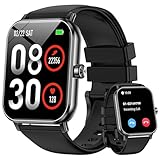
- 1.85'' Display & 300+ Watch Faces: Smart watch for men women adopts 1.85 HD screen that provides excellent visual experience. There are 300+ watch faces built-in, which can be changed by long-pressing the screen or selected/cutomized through the “Da Fit” app
- Bluetooth Calls & Smart Reminders: Fitness tracker makes calls directly from your wrist with clear audio. Receive real-time notifications for SMS and apps, ensuring you never miss important messages while driving or exercising hands-free (No reply)
- 24/7 Health Monitoring: Smart watches for men equipped with a high-performance optical sensor that can record your activities throughout the day, monitor your heart rate, sleep status and other data, and help you develop a healthier lifestyle
- 130+ Sport Modes : Built-in 3-axis gravity sensor enables this fitness watch to accurately track daily steps, distance and calories for safer and more effective workouts. These data can be viewed on the watch or mobile phone APP (note: step counting starts after 20 steps)
- 5 ATM Waterproof: Multifunctional fitness tracker watch features 5 ATM waterproof performance, wearable for swimming, handwashing and rainy days. No worry about sweat or rain damage during outdoor workouts with multiple sports modes (note: high water temperatures can affect service life)
Ongoing costs: LTE plans and battery wear
The Watch 4’s headline feature, LTE connectivity, introduces recurring costs that are easy to overlook. Carrier plans vary by region, but even modest monthly fees add up over the life of the watch, especially if LTE is used sporadically rather than daily.
There’s also the matter of battery aging. The Watch 4’s shorter endurance and higher power draw mean more frequent charging cycles, which can accelerate long-term battery wear compared to the GT 4. Over several years, that difference can affect day-to-day usability more than initial specs suggest.
By contrast, the GT 4 has no subscriptions and far fewer incentives to charge aggressively. Its simpler architecture and longer battery life translate into lower total cost of ownership, particularly for users who plan to keep the watch for three to four years.
Software longevity and feature depreciation
Huawei’s software support tends to prioritize stability over rapid feature expansion, and both watches benefit from that philosophy. However, the Watch 4’s value is more closely tied to software evolution, app availability, and how well its advanced features remain supported over time.
If LTE services, third-party apps, or standalone functions stagnate, the Watch 4 risks feeling over-specified for what it actually delivers day to day. Its value proposition depends on those features continuing to matter and work reliably.
The GT 4 is less exposed to this risk. Its core strengths, health tracking, battery life, and comfort, are less likely to feel obsolete, even if software updates slow. That makes its long-term value more predictable, especially for users who don’t chase new smartwatch features every year.
Resale value and upgrade cycles
Historically, Huawei watches depreciate faster than Apple or Samsung equivalents, and the Watch 4 is no exception. Higher launch pricing means sharper resale drops, particularly once newer LTE-capable models enter the lineup.
The GT 4’s lower entry price and lifestyle positioning tend to cushion that depreciation. It’s easier to resell or hand down without feeling like you’re losing a premium investment, which matters for users who upgrade frequently.
For buyers thinking beyond the next 12 months, the GT 4 behaves more like a dependable long-term companion. The Watch 4, while more capable on paper, demands a clearer commitment to its features and ecosystem to justify its higher cost over time.
Which One Should You Buy? Clear Recommendations by Use Case
By this point, the decision between the Huawei Watch GT 4 and Watch 4 should feel less about raw specifications and more about how you actually live with a smartwatch day after day. Their differences are not subtle, but they matter in very different ways depending on your habits, phone, and tolerance for charging, subscriptions, and software friction.
Below are clear, scenario-driven recommendations to help you choose with confidence.
Buy the Huawei Watch GT 4 if you want a reliable daily companion
If your priority is a smartwatch that fades into the background and simply works, the GT 4 is the safer and more satisfying choice. Its lighter case, slimmer profile, and excellent strap comfort make it easy to wear all day and night, which directly benefits sleep and recovery tracking.
Battery life is the GT 4’s defining strength in real-world use. Going a full week, often longer, without charging changes how you interact with the watch and removes a constant source of friction that many advanced smartwatches introduce.
For fitness and health tracking, the GT 4 delivers Huawei’s strongest fundamentals without unnecessary complexity. Heart rate, SpO₂, sleep staging, stress, and activity tracking are consistent and dependable, even if you are not obsessing over every metric.
The GT 4 also makes sense for long-term ownership. With no subscriptions, fewer software dependencies, and lower upfront cost, it remains useful even if you keep it for three or four years without upgrading.
Buy the Huawei Watch 4 if you want maximum smartwatch functionality
The Watch 4 is designed for users who want their watch to function more independently from their phone. LTE connectivity, app support, and advanced health features make it feel closer to a compact wrist computer than a traditional fitness watch.
If you value features like standalone calling, streaming, navigation, and app interactions without your phone nearby, the Watch 4 delivers capabilities the GT 4 simply does not attempt. For some users, that independence is worth the trade-offs.
Health tracking on the Watch 4 goes deeper, particularly with its more advanced sensors and Health Glance-style measurements. If you enjoy experimenting with detailed health snapshots and emerging metrics, the Watch 4 offers more room to explore.
However, these strengths come with compromises. Battery life is dramatically shorter, the watch is heavier on the wrist, and long-term value depends more heavily on Huawei maintaining software and LTE services.
For Android users versus iPhone users
Android users will generally get a smoother experience with both watches, but the difference matters more with the Watch 4. Its app ecosystem and LTE features make far more sense when paired with an Android phone, especially within Huawei’s own software environment.
iPhone users should approach the Watch 4 cautiously. While basic functionality works, limitations around notifications, apps, and system integration reduce the value of its advanced features.
For iPhone users, the GT 4 is the more balanced option. Its strengths are less dependent on deep OS integration, making the experience more consistent regardless of phone brand.
For fitness-focused users and casual athletes
Runners, cyclists, and gym users who prioritize consistency over experimentation should lean toward the GT 4. Its multi-band GPS performance, long battery life during workouts, and lighter feel make it better suited for frequent training sessions.
The Watch 4 can handle fitness just as well on paper, but its shorter battery life becomes a real constraint for long runs, hikes, or multi-day activities. Charging anxiety is not something endurance-focused users typically want to manage.
Unless you specifically want LTE safety features or advanced health snapshots during training, the GT 4 offers a cleaner and more reliable fitness experience.
For users who care about design, comfort, and wearability
Despite both watches looking premium, they wear very differently. The GT 4’s thinner case and refined proportions make it feel closer to a traditional watch, especially with leather or woven straps.
The Watch 4 feels more technical and substantial, which some users will appreciate and others may find fatiguing. Its added thickness and weight are noticeable during sleep and long workdays.
If you plan to wear your smartwatch 24/7, comfort should outweigh feature count, and that favors the GT 4.
For value-driven buyers and long-term ownership
If you are buying with your own money and planning to keep the watch for several years, the GT 4 is the smarter investment. Lower upfront cost, no subscriptions, and predictable performance translate into better long-term satisfaction.
The Watch 4 can justify its price only if you actively use its LTE and app features. Without that engagement, much of what you are paying for goes unused.
In terms of cost per year of ownership, the GT 4 consistently comes out ahead.
Final recommendation
Choose the Huawei Watch GT 4 if you want a comfortable, long-lasting smartwatch that excels at health tracking, fitness, and everyday usability without demanding attention. It is the better choice for most users, especially those who value battery life, simplicity, and long-term value.
Choose the Huawei Watch 4 if you want advanced smartwatch features, LTE independence, and deeper health experimentation, and you are willing to accept shorter battery life and higher ongoing complexity. It is a more ambitious device, but one that only makes sense if you fully commit to its strengths.
In short, the GT 4 is the better watch to live with, while the Watch 4 is the better watch to experiment with. Knowing which of those matters more to you is the key to making the right choice.