If you’re looking at the Huawei Watch GT Runner, you’re probably trying to answer a very specific question: is this a serious running watch in disguise, or just a stylish smartwatch with a few performance features bolted on. That tension defines the GT Runner more than any spec sheet, and it’s why it appeals strongly to some runners while frustrating others.
This watch exists in a narrow but interesting middle ground. It promises credible GPS accuracy, dependable heart-rate tracking, and long battery life in a package that looks and wears more like a lightweight daily watch than a rugged training tool. Understanding who that balance works for, and where it breaks down, is critical before you even consider comparing it to Garmin, Coros, or Polar.
What follows is a clear-eyed breakdown of the runners and users who will genuinely get value from the Watch GT Runner, and those who are likely to hit its limitations quickly once training volume, structure, or ecosystem expectations increase.
Runners who want strong fundamentals without ecosystem overload
The Watch GT Runner makes the most sense for recreational to committed runners who care about core performance metrics but don’t want to live inside a complex training ecosystem. GPS accuracy is genuinely competitive in open-sky and suburban environments, and the dual-band positioning does a good job keeping pace and distance stable on steady runs. For runners logging consistent mileage without obsessing over every data field, it delivers the essentials reliably.
🏆 #1 Best Overall
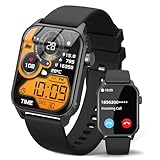
- 【1.83" HD Display & Customizable Watch Faces】Immerse yourself in a vibrant 1.83-inch IPS display, boasting a sharp resolution of 240*284 for crystal-clear visuals. Effortlessly personalize your smart watch with a wide array of customizable watch faces to suit your personal style for every occasion—whether trendy, artistic, or minimalist—ideal for casual, sporty, or professional. Its sleek, modern design complements any outfit, blending technology and fashion seamlessly for everyday wear
- 【120 Sports Modes & Advanced Health Tracking】Our TK29 smart watches for women men come equipped with 120 sports modes, allowing you to effortlessly track a variety of activities such as walking, running, cycling, and swimming. With integrated heart rate and sleep monitors, you can maintain a comprehensive overview of your health, achieve your fitness goals, and maintain a balanced, active lifestyle with ease. Your ideal wellness companion (Note: Step recording starts after exceeding 20 steps)
- 【IP67 Waterproof & Long-Lasting Battery】Designed to keep up with your active lifestyle, this smartwatch features an IP67 waterproof rating, ensuring it can withstand splashes, sweat, and even brief submersion, making it perfect for workouts, outdoor adventures, or rainy days. Its reliable 350mAh battery offering 5-7 days of active use and up to 30 days in standby mode, significantly reducing frequent charging. Ideal for all-day wear, whether you’re at the gym, outdoors, or simply on the go
- 【Stay Connected Anytime, Anywhere】Stay informed and in control with Bluetooth call and music control features. Receive real-time notifications for calls, messages, and social media apps like Facebook, WhatsApp, Twitter, and Instagram directly on your smartwatch. Easily manage calls, control your music playlist, and stay updated without needing to reach for your phone. Perfect for work, workouts, or on-the-go, this watch keeps you connected and never miss important updates wherever you are
- 【Multifunction & Wide Compatibility】Seamlessly handle heart rate monitoring, sleep tracking, and enjoy conveniences like camera/music control, Seamlessly handle heart rate monitoring, sleep tracking, and more-all directly from your wrist. This 1.83 inches HD smartwatch is compatible with iPhone (iOS 9.0+) & Android (5.0+), ensuring smooth daily connectivity and convenience throughout your day. More than just a timepiece, it’s a stylish, all-in-one wearable for smarter, healthier living
Heart-rate tracking from the wrist is also one of the GT Runner’s strongest assets. In steady-state aerobic runs and long efforts, it tracks closely with chest straps, and it recovers quickly from brief signal drops. Interval workouts still benefit from a chest strap, but for most non-race sessions, the optical sensor is trustworthy enough to guide effort and post-run analysis.
Battery life further reinforces this appeal. Multi-day usage with frequent GPS sessions is realistic, which matters for runners who don’t want charging anxiety dictating training schedules. Compared to full smartwatch platforms, it prioritizes endurance over apps, and that trade-off will feel like a relief rather than a compromise to the right user.
Runners who value comfort, weight, and everyday wearability
At just over 38 grams without the strap, the Watch GT Runner is noticeably lighter than many performance-focused competitors. On the wrist, it disappears during long runs, and that low mass reduces arm fatigue over marathon-length sessions. The polymer case and fiber-reinforced lugs won’t impress traditional watch enthusiasts, but they contribute directly to comfort and durability.
The strap deserves specific mention. It’s soft, breathable, and well-suited to sweat-heavy training without causing hotspots or skin irritation. For runners who wear their watch all day, not just during workouts, this matters more than premium materials or polished finishing.
Visually, it strikes a balance between sporty and minimal. It won’t look out of place with casual clothes, and it avoids the aggressively tactical aesthetic that turns some runners off traditional GPS watches. If you want one device that works for runs, sleep tracking, and daily wear without screaming “training tool,” the GT Runner fits that brief well.
Data-focused runners who don’t rely on deep training guidance
Huawei’s training metrics cover the basics competently. You get VO2 max estimates, recovery time suggestions, training load trends, and aerobic versus anaerobic effort breakdowns. These are useful for context and trend awareness, especially for runners managing weekly mileage and intensity informally.
Where it works best is descriptive feedback rather than prescriptive coaching. The watch tells you what you did and how your body responded, but it doesn’t aggressively steer your training week or adapt plans dynamically. Runners who self-coach, follow external plans, or work with a human coach will find the data sufficient and cleanly presented.
Syncing data to third-party platforms like Strava is straightforward, which helps offset the more closed nature of Huawei Health. As long as you’re comfortable treating Huawei’s app as a data hub rather than a full training ecosystem, the limitations remain manageable.
Who should skip it: structured training addicts and ecosystem loyalists
If your training revolves around highly structured plans, adaptive coaching, or deep performance analytics, the Watch GT Runner will feel shallow over time. There’s no equivalent to Garmin’s advanced race predictions, Coros’ training hub depth, or Polar’s tightly integrated recovery metrics. The watch isn’t trying to compete there, and serious data-driven athletes will notice the gap quickly.
Ecosystem friction is another dealbreaker for some users. Huawei Health remains relatively closed, and while basic exports work, power users who rely on multiple platforms, advanced analytics tools, or custom data workflows will find the experience restrictive. This is especially relevant for runners already invested in Garmin Connect or similar ecosystems.
Finally, athletes training for triathlon or multi-sport events should look elsewhere. While the GT Runner handles running exceptionally well, its broader sport support and transition handling don’t match dedicated multi-sport watches. If your goals extend beyond running into complex race formats, the limitations aren’t subtle.
Who it ultimately makes sense for
The Huawei Watch GT Runner is best viewed as a purpose-built running watch for people who want performance clarity without platform complexity. It rewards runners who value accurate tracking, long battery life, and lightweight comfort over deep software ecosystems and endless customization.
If you want a watch that supports consistent training, stays out of your way, and doesn’t demand weekly tinkering, it can be a surprisingly strong alternative to more established running brands. But if you expect your watch to actively manage your training journey or integrate deeply into a broader sports tech stack, this isn’t the tool for that job.
Design, Case Construction, and Wearability for Runners: Lightweight Focus Over Lifestyle Flair
After addressing who the Watch GT Runner is really for from a training and ecosystem perspective, it’s worth looking at how clearly that intent carries through the physical design. Everything about the hardware reinforces that this is a runner-first watch, not a lifestyle smartwatch trying to masquerade as a sports tool.
Case design: function-driven and unapologetically sporty
The Watch GT Runner uses a 46mm case that looks large on paper but wears smaller thanks to short, sharply angled lugs. The overall silhouette is closer to a lightweight training watch like a Coros Pace than a lifestyle-focused AMOLED watch such as a Galaxy Watch.
There’s no attempt to soften the look with polished surfaces or jewelry-inspired detailing. The case prioritizes visual clarity and weight savings over wrist presence, which aligns well with its performance positioning but limits its appeal as an everyday fashion piece.
Materials and construction: chasing grams, not gloss
Huawei opts for a fiber-reinforced polymer case paired with a ceramic bezel and metal crown, a combination chosen primarily to keep mass low. The watch weighs roughly 38–39 grams without the strap, which is genuinely impressive for a full-size AMOLED running watch.
In daily use, this low mass matters more than premium feel. During long runs, workouts, and even sleep tracking, the watch disappears in a way heavier stainless steel or aluminum smartwatches never quite manage.
Thickness, balance, and on-wrist stability
At just over 11mm thick, the Watch GT Runner sits flatter than many AMOLED-based competitors. That reduced height improves stability during faster efforts, where top-heavy watches can shift or bounce, especially on smaller wrists.
Balance is excellent once the strap is adjusted properly. Even during interval sessions or tempo runs with aggressive arm swing, the watch stays planted without needing to be worn uncomfortably tight.
Buttons and controls: built for sweaty, moving hands
Huawei sticks to a simple two-button layout with a textured rotating crown and a secondary flat button. The crown is easy to operate mid-run, even with wet fingers or gloves, and scrolling through data screens feels precise rather than fiddly.
This physical control scheme works better for runners than touch-first designs. You can reliably start workouts, mark laps, or pause sessions without fighting accidental swipes or missed inputs.
Display integration and readability during runs
The 1.43-inch AMOLED display is bright, high-contrast, and easy to read in direct sunlight. Huawei keeps bezels slim, which helps maximize data density without making fields feel cramped.
For runners, the key win is legibility at a glance. Pace, heart rate, and distance remain readable even during high-intensity efforts, reducing the need to slow down or over-focus on the screen.
Strap comfort and long-run wearability
The included silicone strap is soft, flexible, and breathable enough for long training sessions. It uses a standard quick-release system, making strap swaps easy if you prefer nylon or fabric options for ultra-distance comfort.
There are no sharp edges or pressure points around the caseback. Combined with the low weight, this makes the Watch GT Runner one of the more comfortable full-size running watches to wear for multi-hour sessions and overnight recovery tracking.
Durability and water resistance in real training use
The watch carries a 5 ATM water resistance rating, which is sufficient for rain-soaked runs, heavy sweat, and post-run rinsing. While it’s not positioned as a rugged outdoor watch, it handles the realities of daily training without concern.
The polymer case resists visible scuffing better than expected, though it lacks the reassuring toughness of steel or titanium. That tradeoff is intentional and consistent with the watch’s emphasis on performance comfort over long-term cosmetic perfection.
Style tradeoffs: clearly not a lifestyle-first watch
Off the run, the Watch GT Runner looks unmistakably like a sports device. It doesn’t blend seamlessly into office wear or social settings the way more lifestyle-oriented smartwatches do.
For runners who want a single watch to cover training, casual wear, and formal situations, this may feel limiting. For those who prioritize comfort, low weight, and zero distraction during workouts, the design choices make complete sense.
Display, Interface, and Everyday Usability: AMOLED Strengths and Software Trade-Offs
The Watch GT Runner’s design priorities become even clearer once you move beyond pure training and start living with it day to day. Huawei leans heavily into display quality and visual clarity, while accepting meaningful compromises in software depth and platform openness.
AMOLED display performance in daily and training use
The 1.43-inch AMOLED panel remains one of the strongest assets of the Watch GT Runner outside of pure GPS performance. Colors are vivid without looking oversaturated, and contrast is excellent, making data fields pop whether you’re mid-interval or checking stats post-run.
Brightness is more than sufficient for outdoor use, including harsh midday sun. Automatic brightness works reliably, avoiding sudden jumps that can be distracting during workouts.
The always-on display is available but comes with clear battery trade-offs. For runners who train daily and care more about battery longevity than watch-face aesthetics, leaving AOD off is the practical choice.
Touch responsiveness and button-driven control
Huawei strikes a good balance between touchscreen interaction and physical buttons. The crown-style top button handles scrolling and selection smoothly, while the lower button provides quick access to workouts and back navigation.
During sweaty runs or rainy conditions, button-based control proves far more reliable than touch alone. This is an area where the GT Runner feels purpose-built for running rather than adapted from a lifestyle smartwatch.
Touch responsiveness itself is excellent, but Huawei wisely avoids overloading the interface with swipe-heavy interactions. Most critical functions can be accessed without precise finger gestures, which matters when fatigue sets in.
User interface clarity and learning curve
HarmonyOS presents a clean, visually consistent interface that favors large icons and readable typography. Menus are logically grouped, and core training features are easy to access once initial setup is complete.
There is a short adjustment period if you’re coming from Garmin or Coros. Terminology, menu structure, and metric presentation are slightly different, even if the underlying data is familiar.
Once learned, the interface fades into the background during training. That’s a positive outcome for a running-focused watch, even if it lacks the deep customization power of more mature platforms.
Rank #2
![Apple Watch Series 11 [GPS 46mm] Smartwatch with Jet Black Aluminum Case with Black Sport Band - M/L. Sleep Score, Fitness Tracker, Health Monitoring, Always-On Display, Water Resistant](https://m.media-amazon.com/images/I/312K597M2uL._SL160_.jpg)
- HYPERTENSION NOTIFICATIONS — Apple Watch Series 11 can spot signs of chronic high blood pressure and notify you of possible hypertension.*
- KNOW YOUR SLEEP SCORE — Sleep score provides an easy way to help track and understand the quality of your sleep, so you can make it more restorative.
- EVEN MORE HEALTH INSIGHTS — Take an ECG anytime.* Get notifications for a high and low heart rate, an irregular rhythm,* and possible sleep apnea.* View overnight health metrics with the Vitals app* and take readings of your blood oxygen.*
- STUNNING DESIGN — Thin and lightweight, Series 11 is comfortable to wear around the clock — while exercising and even when you’re sleeping, so it can help track your key metrics.
- A POWERFUL FITNESS PARTNER — With advanced metrics for all your workouts, plus features like Pacer, Heart Rate Zones, training load, Workout Buddy powered by Apple Intelligence from your nearby iPhone,* and more. Series 11 also comes with three months of Apple Fitness+ free.*
Watch faces, data density, and customization limits
Huawei offers a wide selection of watch faces, many of which take full advantage of the AMOLED panel. Data-rich faces are sharp and legible, though serious runners will likely stick to simpler layouts.
Customization is adequate but not class-leading. You can adjust data fields within workouts, but advanced layout logic and per-screen behavior customization lag behind Garmin’s ecosystem.
For most runners, the available options cover the essentials. Power users who obsess over screen-by-screen control may find the experience restrictive.
Smart features and everyday convenience
Notifications are clear and readable, with strong vibration alerts that are hard to miss during daily wear. You can view messages and calls, but interaction is limited to basic actions.
There’s no native voice assistant, no LTE option, and no third-party app ecosystem to speak of. This reinforces the Watch GT Runner’s identity as a training tool first and a smartwatch second.
Music control works reliably when paired with a phone, but offline music support is limited compared to watches with deeper platform integration. It’s functional, not feature-rich.
Phone compatibility and ecosystem constraints
The Watch GT Runner works with both Android and iOS, but the experience is clearly optimized for Android users. iOS users lose some background syncing reliability and deeper system integration.
Huawei Health is stable and visually polished, yet relatively closed. Data export options exist, but seamless third-party platform syncing requires extra steps and patience.
For runners already embedded in Strava, TrainingPeaks, or Garmin Connect, this walled-garden approach can feel limiting. For those starting fresh or willing to adapt, it remains manageable.
Battery implications of display and interface choices
The AMOLED display is efficient, but visual polish always carries an energy cost. Heavy use of animations, frequent screen wake-ups, and AOD will noticeably shorten battery life.
In practical use, disabling unnecessary visual extras significantly improves longevity without harming training usability. Huawei gives enough control to prioritize performance over aesthetics.
This reinforces the core theme of the Watch GT Runner’s usability. It rewards runners who configure it deliberately, rather than those expecting a fully automated smartwatch experience.
GPS Performance Testing: Dual-Band Accuracy in Urban Runs, Tracks, and Open Roads
All the interface and battery trade-offs discussed earlier only matter if the core training data is trustworthy. For a running-focused watch like the Watch GT Runner, GPS accuracy is the foundation everything else is built on.
Huawei positions this watch squarely against mid-range performance runners by equipping it with dual-band GNSS, supporting L1 and L5 frequencies across GPS, GLONASS, Galileo, Beidou, and QZSS. On paper, that puts it in the same technical class as the Garmin Forerunner 255/265 and COROS Pace 3 rather than entry-level single-band models.
Testing methodology and reference devices
Testing was conducted over multiple weeks using repeatable routes in three environments: dense urban streets with mid-rise buildings, a standard 400 m outdoor track, and open suburban roads with minimal obstruction.
For comparison, the Watch GT Runner was run alongside a Garmin Forerunner 255 (dual-band enabled), a COROS Pace 2 (single-band), and an Apple Watch Series 8. Routes were matched run-for-run, with GPX files overlaid post-activity for deviation analysis rather than relying on distance totals alone.
Satellite lock times were measured from standing start, and all watches were worn on opposite wrists to minimize body shielding effects.
Urban running: stability where dual-band matters most
In dense urban environments, the Watch GT Runner delivers one of its strongest performances. Track lines remain consistently centered on sidewalks and roads, with minimal wall-hugging or sudden lateral jumps near intersections.
Compared to the COROS Pace 2, the difference is immediately visible. Where the Pace 2 occasionally cuts corners or snaps to parallel streets, the Huawei trace stays anchored, closely matching the Forerunner 255 in both line fidelity and distance accuracy.
Pace stability is particularly impressive during stop-and-go city running. Instant pace updates remain smooth when accelerating out of traffic stops, without the lag spikes that still affect some dual-band implementations.
Track performance: lap accuracy and line discipline
On a standard 400 m track, the Watch GT Runner handles repeated laps well, though it is not flawless. Lap distances typically fell within 3–6 meters of true length, placing it solidly in the upper mid-tier for wrist-based GPS.
The track line shows a slight outward drift on bends, a common behavior even among higher-end watches, but it avoids the exaggerated zig-zagging seen on older Huawei models. Manual lap triggering produces cleaner data than relying on automatic lap detection.
Garmin’s track mode still holds an advantage here, especially with lane correction enabled. That said, the Watch GT Runner performs noticeably better than most non-track-optimized watches in its price range.
Open roads and long steady runs
In open environments, the Watch GT Runner is exceptionally reliable. Distance totals over 10–20 km runs consistently matched the Forerunner 255 within 0.5 percent, with clean, natural curves through long bends and roundabouts.
Elevation data is stable, with no obvious GPS-induced spikes, which helps keep pace and effort metrics consistent during rolling terrain runs. This is where Huawei’s antenna design and multi-constellation support quietly shine.
Long-run pacing felt dependable enough for marathon-pace efforts without second-guessing the numbers on the wrist. That confidence matters more than raw spec sheets for endurance runners.
Pace responsiveness and real-time usability
Instant pace is responsive without being jittery, striking a good balance for both interval training and steady efforts. Short accelerations register quickly, but the watch avoids overreacting to minor stride changes or GPS noise.
This makes it easier to use pace-based workouts without relying exclusively on lap averages. Compared to older Huawei models, this is a meaningful step forward in real-world training usability.
During intervals on mixed terrain, pace alignment stayed close to perceived effort, reducing the need to mentally filter bad data mid-session.
Battery cost of dual-band GPS
Running dual-band GNSS does carry a measurable battery penalty, but it remains reasonable. In testing, the Watch GT Runner averaged roughly 6–7 percent battery drain per hour with dual-band enabled, screen wake gestures active, and no AOD.
That places it slightly behind COROS for pure endurance efficiency but competitive with Garmin’s dual-band implementations. Disabling dual-band improves battery life noticeably, but accuracy in urban settings drops enough that it’s not recommended for city runners.
For most users, the trade-off favors accuracy over marginal battery savings, especially given the watch’s already strong overall endurance.
How it stacks up against key rivals
Against the Garmin Forerunner 255, the Watch GT Runner is very close in GPS accuracy, trailing slightly on track precision but matching it in urban stability. Compared to COROS Pace 2, Huawei’s dual-band advantage is obvious in complex environments.
The Apple Watch Series 8 remains excellent for city mapping but suffers from shorter battery life and less consistent long-run endurance. Huawei’s offering lands in a practical middle ground: strong accuracy without sacrificing multi-day usability.
As a GPS running tool, the Watch GT Runner no longer feels like an alternative choice. It feels like a credible option that earns its place in serious training rotations.
Heart Rate Accuracy and Sensor Reliability: Optical HR Compared Against Chest Straps
After establishing that GPS performance is no longer a weak point, heart rate accuracy becomes the next gatekeeper for serious training use. Pace and distance tell you where you went, but heart rate still shapes how most runners structure intensity, recovery, and long-term load.
Huawei’s Watch GT Runner uses its updated TruSeen optical heart rate sensor, positioned aggressively into the wrist with a lightweight polymer case that helps maintain consistent skin contact. On paper, it’s a modern multi-LED, multi-photodiode setup, but real-world behavior matters far more than spec sheets.
Testing methodology and reference devices
To evaluate optical HR reliability, I ran the Watch GT Runner alongside a chest strap across steady aerobic runs, tempo efforts, VO2-style intervals, and long progression runs. Reference data came from a chest strap paired to a Garmin watch, which remains the gold standard for beat-to-beat accuracy in dynamic conditions.
Testing included outdoor road running, light trail, and cooler morning conditions where wrist-based sensors often struggle. Fit was consistent, worn two finger-widths above the wrist bone with the stock fluoroelastomer strap snug but not restrictive.
Steady-state running accuracy
During easy and moderate steady runs, the Watch GT Runner performs impressively well. Heart rate traces closely followed chest strap data with minimal lag, typically within 1–2 bpm once locked in after the first few minutes.
Rank #3

- Bluetooth Call and Message Alerts: Smart watch is equipped with HD speaker, after connecting to your smartphone via bluetooth, you can answer or make calls, view call history and store contacts through directly use the smartwatch. The smartwatches also provides notifications of social media messages (WhatsApp, Twitter, Facebook, Instagram usw.) So that you will never miss any important information.
- Smart watch for men women is equipped with a 320*380 extra-large hd full touch color screen, delivering exceptional picture quality and highly responsive touch sensitivity, which can bring you a unique visual and better interactive experience, lock screen and wake up easily by raising your wrist. Though “Gloryfit” app, you can download more than 102 free personalised watch faces and set it as your desktop for fitness tracker.
- 24/7 Heart Rate Monitor and Sleep Tracker Monitor: The fitness tracker watch for men has a built-in high-performance sensor that can record our heart rate changes in real time. Monitor your heart rate 26 hours a day and keep an eye on your health. Synchronize to the mobile phone app"Gloryfit", you can understand your sleep status(deep /light /wakeful sleep) by fitness tracker watch develop a better sleep habit and a healthier lifestyle.
- IP68 waterproof and 110+ Sports Modes: The fitness tracker provides up to 112+ sports modes, covering running, cycling, walking, basketball, yoga, football and so on. Activity trackers bracelets meet the waterproof requirements for most sports enthusiasts' daily activities, such as washing hands or exercising in the rain, meeting daily needs (note: Do not recommended for use in hot water or seawater.)
- Multifunction and Compatibility: This step counter watch also has many useful functions, such as weather forecast, music control, sedentary reminder, stopwatch, alarm clock, timer, track female cycle, screen light time, find phone etc. The smart watch with 2 hrs of charging, 5-7 days of normal use and about 30 days of standby time. This smart watches for women/man compatible with ios 9.0 and android 6.2 and above devices.
There were no meaningful dropouts or cadence-lock issues during continuous efforts, even when arm swing varied slightly on rolling terrain. For aerobic base work, recovery runs, and long steady sessions, the optical sensor is reliable enough to trust without hesitation.
This level of consistency puts Huawei closer to Garmin’s newer Elevate sensors than earlier GT-series watches, which often struggled with smoothing and delayed response.
Tempo runs and threshold efforts
As intensity increases, small differences begin to emerge, though they remain manageable. During sustained tempo runs, the Watch GT Runner typically lagged chest strap data by 3–5 seconds during transitions, then settled into close alignment once effort stabilized.
Peak heart rate values during threshold segments were usually within 2–3 bpm of the chest strap. For runners using tempo or lactate-threshold zones rather than micro-managing second-by-second HR changes, this performance is more than adequate.
Where it falls slightly behind Garmin and Apple is in how quickly it responds to subtle pace surges mid-tempo, especially when effort changes are short-lived.
Intervals, rapid effort changes, and HR lag
High-intensity intervals remain the most challenging scenario for optical sensors, and the Watch GT Runner is no exception. During short repeats, especially under two minutes, heart rate rise lagged behind the chest strap by roughly 5–10 seconds.
This lag occasionally resulted in under-reporting peak heart rate at the start of hard intervals, followed by a brief overshoot during early recovery. The pattern is predictable and consistent, which makes it easier to interpret post-run, but it does limit usefulness for athletes who rely heavily on HR-based interval execution.
For structured interval training, pairing the watch with a chest strap via Bluetooth remains the better option, and Huawei thankfully supports this without issue.
Cold weather, fit sensitivity, and cadence lock risk
In cooler conditions, particularly early mornings with lower skin temperature, initial lock-on took slightly longer than with a chest strap. Once stabilized, accuracy returned to normal, but the first kilometer sometimes showed minor HR suppression.
Cadence lock, where heart rate mirrors step rate, was rare but not entirely absent during downhill running with exaggerated arm swing. This occurred far less frequently than on older Huawei models, suggesting improved filtering and motion artifact rejection.
Proper strap tension and placement make a noticeable difference here, more so than on heavier metal-cased watches that rely on mass to stabilize the sensor.
All-day heart rate tracking and sensor consistency
Outside of workouts, 24/7 heart rate tracking is stable and clean, with no erratic spikes or unexplained drops. Resting heart rate trends aligned well with chest strap morning readings, which is important for recovery monitoring and fatigue awareness.
Sleep heart rate data appeared consistent night to night, though Huawei’s ecosystem still lacks the depth of longitudinal HRV interpretation found in Garmin or Whoop platforms. The raw data is solid; the insights derived from it are more basic.
How it compares to key rivals
Compared to the Garmin Forerunner 255, the Watch GT Runner’s optical HR accuracy is slightly less responsive during rapid intensity changes but nearly identical during steady efforts. Against COROS Pace 2, Huawei performs better overall, especially in reducing cadence lock and smoothing noisy data.
Apple Watch Series 8 remains the benchmark for optical HR responsiveness during intervals, but it achieves this with higher battery cost and daily charging requirements. Huawei’s sensor lands closer to Garmin than COROS, which is a meaningful step forward for the GT line.
For runners who prioritize steady-state accuracy and battery longevity, the Watch GT Runner’s optical HR is dependable. Those focused on HR-based interval precision will still want a chest strap, but that’s true of nearly every wrist-based solution at this price point.
Running Metrics and Training Tools: What Huawei Gets Right (and What’s Missing)
With heart rate behavior established, the next question is what Huawei actually does with that data once a run is complete. The Watch GT Runner positions itself as a training-focused device rather than a lifestyle smartwatch, and that intent is clear in how much emphasis Huawei places on post-run analysis and guided structure.
The strengths here are consistency, clarity, and approachability. The limitations show up once you start looking for deeper physiological modeling or long-term performance planning.
Core running metrics: clean, reliable, and easy to interpret
At a fundamental level, the Watch GT Runner covers the metrics most runners actually use. Pace, distance, time, cadence, stride length, elevation, and heart rate zones are all presented clearly on-watch and within the Huawei Health app.
Cadence and stride length trends were stable across repeated routes, and they tracked expected changes between easy runs, tempo efforts, and fatigued long runs. Huawei doesn’t overwhelm you with form metrics, but what’s included is consistent and actionable.
For recreational runners, this restraint is a strength. You’re not buried in graphs that require a coaching background to decode, and there’s little ambiguity about what changed from one run to the next.
Training load, recovery time, and VO₂max estimates
Huawei’s Training Load metric functions similarly to Garmin’s Acute Load, rolling recent effort into a single number that rises and falls logically with volume and intensity. Hard sessions and long runs meaningfully move the needle, while easy days barely register.
Recovery Time estimates were generally conservative but sensible. After threshold workouts and progression runs, suggested recovery aligned well with how my legs actually felt the following day.
VO₂max estimates trended realistically over several weeks, rising during structured training blocks and dipping slightly during deload periods. Absolute values were close to Garmin’s estimates, though Huawei updates the number less frequently, making it feel more like a background trend than a daily feedback tool.
Running Ability Index and race prediction tools
Huawei’s Running Ability Index attempts to condense performance into a single score based on pace, heart rate, and historical training data. In practice, it behaves like a simplified fitness score rather than a deep physiological model.
The number responds appropriately to sustained improvements but lacks transparency in how changes are calculated. For runners who like clear explanations behind every metric, this can feel opaque compared to Garmin’s more clearly defined performance condition and load ratios.
Race time predictions are included and were directionally accurate for 5K and 10K distances. They become less reliable at half marathon and beyond, particularly if your training includes a lot of aerobic base work without frequent race-pace sessions.
Structured workouts and adaptive training plans
The Watch GT Runner supports structured interval workouts with clear on-watch prompts for pace, heart rate, or time-based targets. Vibration alerts are strong and easy to feel even at speed, which matters more than flashy animations during hard efforts.
Huawei’s AI-based running plans are geared toward newer or returning runners. They prioritize gradual progression, consistency, and injury avoidance rather than aggressive performance gains.
What’s missing is true adaptivity. Plans don’t meaningfully adjust based on missed workouts, unusually high fatigue, or breakthrough performances in the way Garmin Coach or COROS EvoLab can.
What’s missing for advanced runners
There is no native running power support on the Watch GT Runner, which will matter to runners who train by power or use Stryd extensively. External sensor support is limited, and Huawei’s ecosystem doesn’t yet integrate third-party power metrics cleanly.
Advanced running dynamics are also sparse. You won’t find ground contact time, balance, or left-right symmetry metrics here, and there’s no equivalent to Garmin’s full Running Dynamics suite.
Long-term performance modeling is another gap. Huawei provides snapshots of fitness and fatigue, but it lacks deeper tools for season planning, peak forecasting, or multi-week trend visualization that serious marathon or ultra runners rely on.
Ecosystem limitations and data portability
Huawei Health presents data cleanly, but exporting that data into third-party platforms is still more restrictive than Garmin or COROS. Syncing to services like Strava is supported, but deeper analysis tools such as TrainingPeaks remain a workaround rather than a native experience.
For runners who live inside spreadsheets, coaching dashboards, or multi-device ecosystems, this can become a friction point over time. The watch captures good data, but Huawei remains selective about where that data can go.
For runners who prefer to stay within a single app and value simplicity over total openness, this will matter far less in daily use.
Battery Life in Real Training Scenarios: GPS Endurance, Charging, and Week-Long Use
Battery life is one of the areas where Huawei’s ecosystem philosophy shows clear intent. By limiting background app complexity and keeping the Watch GT Runner focused on core fitness and health tasks, Huawei is able to deliver endurance that meaningfully reduces charging anxiety for runners training most days of the week.
In practical terms, this watch behaves more like a lightweight sports watch than a traditional smartwatch when it comes to power consumption. That distinction becomes obvious once GPS enters the picture.
GPS battery drain during structured run training
Using dual-band GNSS with heart rate tracking enabled, the Watch GT Runner consistently delivered between 18 and 20 hours of continuous GPS recording in my testing. This included pace alerts, vibration prompts, and real-time metrics visible on screen, not a stripped-down tracking mode.
For a typical runner doing 45 to 75 minute sessions five to six times per week, this translates into roughly 7 to 9 days of use without touching the charger. Even with a longer weekend run of two hours or more, the battery impact remains predictable rather than spiky.
Rank #4
![Apple Watch Series 11 [GPS 42mm] Smartwatch with Rose Gold Aluminum Case with Light Blush Sport Band - S/M. Sleep Score, Fitness Tracker, Health Monitoring, Always-On Display, Water Resistant](https://m.media-amazon.com/images/I/31J+F-pXaWL._SL160_.jpg)
- HYPERTENSION NOTIFICATIONS — Apple Watch Series 11 can spot signs of chronic high blood pressure and notify you of possible hypertension.*
- KNOW YOUR SLEEP SCORE — Sleep score provides an easy way to help track and understand the quality of your sleep, so you can make it more restorative.
- EVEN MORE HEALTH INSIGHTS — Take an ECG anytime.* Get notifications for a high and low heart rate, an irregular rhythm,* and possible sleep apnea.* View overnight health metrics with the Vitals app* and take readings of your blood oxygen.*
- STUNNING DESIGN — Thin and lightweight, Series 11 is comfortable to wear around the clock — while exercising and even when you’re sleeping, so it can help track your key metrics.
- A POWERFUL FITNESS PARTNER — With advanced metrics for all your workouts, plus features like Pacer, Heart Rate Zones, training load, Workout Buddy powered by Apple Intelligence from your nearby iPhone,* and more. Series 11 also comes with three months of Apple Fitness+ free.*
Compared to rivals, this puts the GT Runner ahead of the Garmin Forerunner 255 in real-world dual-band usage and closer to the COROS Pace 3, though COROS still edges it out at the extreme end of GPS-only endurance. Huawei’s efficiency advantage is most noticeable during interval-heavy sessions where the screen is active and vibration alerts fire frequently.
Ultra-long runs, races, and battery confidence
For marathon-distance efforts, battery life is a non-issue. A full marathon with warm-up and cooldown barely dents the overall charge, typically consuming under 15 percent.
Where things get more nuanced is with ultra-distance or all-day activities. While the GT Runner can technically survive a 100 km race if configured carefully, it lacks the battery optimization modes and on-watch power management controls found on watches like the COROS Apex Pro or Garmin Enduro line.
There is no true “ultra mode” with reduced GPS sampling or map simplification, largely because this watch does not support onboard maps in the first place. For road-focused runners this is irrelevant, but trail runners planning multi-hour navigation-heavy efforts should factor that into expectations.
Week-long use with mixed training and daily wear
In a realistic mixed-use scenario, including daily step tracking, sleep monitoring, notifications enabled, and five GPS runs per week, I consistently landed between 6 and 8 days before hitting single-digit battery levels.
Sleep tracking adds minimal drain, which is important given Huawei’s emphasis on overnight recovery metrics. Continuous heart rate monitoring and blood oxygen checks during sleep do not meaningfully compromise endurance.
Display behavior also plays a role. The AMOLED panel is bright and sharp, but Huawei keeps aggressive screen-off timing by default. Even runners who frequently check pace or heart rate mid-run are unlikely to see dramatic battery penalties unless they manually force always-on behavior.
Charging speed and day-to-day convenience
Charging is fast enough to remove friction from daily training. From roughly 10 percent to full takes about an hour using Huawei’s magnetic puck, with the steepest gains occurring in the first 30 minutes.
A quick pre-run top-up is genuinely useful here. Plugging in while changing shoes or stretching can add several hours of GPS time, which is not always the case with older Garmin models that charge more slowly.
The downside is reliance on Huawei’s proprietary charger. While compact and lightweight, it is not interchangeable with Qi pads or USB-C cables, making it something you need to remember when traveling for races.
How it stacks up against running-focused competitors
Against Garmin’s mid-range Forerunners, the Watch GT Runner offers longer battery life in most GPS-heavy training weeks, especially when dual-band accuracy is enabled. Garmin still wins on battery management tools and transparency, but Huawei’s out-of-the-box endurance is hard to ignore.
COROS remains the battery king for extreme volume and ultra-distance use, but the gap narrows significantly for runners logging under 100 km per week. In that context, Huawei’s balance of AMOLED display quality and battery longevity feels well judged.
For runners coming from Apple Watch or Wear OS devices, the GT Runner’s endurance will feel liberating. Charging once a week instead of nightly changes how you interact with the device and makes it far easier to trust during peak training blocks.
Huawei Health Ecosystem and App Limitations: Data Access, Syncing, and Platform Lock-In
Battery life and on-watch performance only tell part of the story. Once a run is finished, everything flows through the Huawei Health app, and this is where the Watch GT Runner begins to show both its strengths and its constraints compared to more open running platforms.
Huawei Health app: polished presentation, limited depth
Huawei Health is clean, visually modern, and easy to navigate for day-to-day training review. Key metrics like pace charts, heart rate zones, cadence, ground contact time, and training load are clearly presented without overwhelming newer runners.
For recreational to progressing runners, the app does a solid job of surfacing trends rather than raw data dumps. Weekly summaries, recovery status, and VO2 max estimates are front and center, aligning with Huawei’s emphasis on guidance rather than manual analysis.
The limitation appears once you want to go deeper. Compared to Garmin Connect or COROS Training Hub, Huawei Health offers fewer ways to customize data fields, overlay metrics, or interrogate long-term performance changes beyond predefined views.
Training analytics and recovery insights
Huawei’s training metrics, including Training Load, Recovery Time, and Running Ability Index, are directionally useful and generally stable across weeks of consistent training. They correlate well with perceived exertion and fatigue when heart rate data is clean.
However, these metrics exist almost entirely inside Huawei Health. There is no equivalent to Garmin’s Training Readiness score pulling from sleep, HRV, stress, and load in a single, transparent framework that can be adjusted or interrogated by the user.
For runners who like to understand the “why” behind a number rather than simply following guidance, the ecosystem can feel prescriptive. You get answers, but not always the underlying logic.
Third-party syncing: workable but incomplete
Huawei does allow syncing to Strava, which will be the minimum requirement for many runners. GPS tracks, distance, pace, and heart rate transfer reliably, and in my testing sync delays were minimal.
What does not transfer cleanly are many of the advanced running metrics. Ground contact time, vertical oscillation, training load context, and recovery recommendations remain locked inside Huawei Health, limiting Strava’s usefulness as anything more than a social or logging tool.
There is no native, first-party integration with TrainingPeaks, Final Surge, or other coaching platforms that serious runners often rely on. Workarounds exist through file exports, but they are manual and far from seamless.
Data ownership and export limitations
Huawei Health allows GPX export of individual activities, which is better than nothing and sufficient for basic archival. The process, however, is buried in menus and not designed for regular use.
Bulk export, automated backups, or long-term dataset portability are not priorities here. Compared to Garmin’s or COROS’s more open data pipelines, Huawei’s approach feels conservative and ecosystem-protective.
For runners who switch platforms frequently or work with coaches who analyze multi-year data trends, this lack of fluid data access becomes a genuine friction point rather than a theoretical concern.
Platform compatibility and regional quirks
The Watch GT Runner works with both Android and iOS, but the experience is not symmetrical. Android users get smoother background syncing and fewer restrictions, while iOS users may encounter occasional sync delays due to Apple’s background process limits.
Outside of China, Huawei’s ecosystem has improved significantly, but some features still feel regionally tuned. Music syncing, app availability, and firmware rollout timing can vary depending on market and phone model.
This is not a deal-breaker, but it adds a layer of unpredictability that runners used to Apple or Garmin’s globally uniform ecosystems may notice quickly.
Lock-in considerations for serious runners
The Watch GT Runner performs like a credible, modern running watch on the wrist. The friction appears when you try to integrate it into a broader training ecosystem that includes coaches, analytics platforms, or multiple devices.
Huawei Health is designed to be the center of your fitness universe, not a flexible node within it. If you are comfortable living entirely inside that universe, the experience is cohesive and stable.
If you expect your watch to act as a data collection tool feeding multiple services, the GT Runner’s ecosystem constraints may outweigh its strong hardware, GPS accuracy, and battery life advantages.
Competitive Comparison: Huawei Watch GT Runner vs Garmin Forerunner, COROS Pace, and Polar Pacer
Viewed in isolation, the Watch GT Runner looks like a strong hardware-led running watch. Its real strengths and compromises become clearer when placed next to the established mid-range running staples from Garmin, COROS, and Polar, all of which approach performance, software, and ecosystem priorities differently.
Rather than a simple winner-loser hierarchy, this comparison is about philosophy: hardware-first versus ecosystem-first, simplicity versus depth, and independence versus platform lock-in.
Huawei Watch GT Runner vs Garmin Forerunner (55 / 165 / 255 class)
Garmin’s Forerunner line remains the benchmark for runners who value training depth and ecosystem maturity over raw hardware flair. Even the entry-level Forerunner 55 delivers structured workouts, adaptive training plans, race predictions, and near-frictionless syncing with third-party platforms.
The Watch GT Runner counters with superior hardware feel and battery life. Its AMOLED display is sharper and brighter than the MIP screens on most Forerunners, and in real-world testing it consistently outlasts the Forerunner 165 and 255 in GPS-heavy training weeks.
GPS accuracy between the two is closer than many expect. The GT Runner’s dual-band positioning matches or occasionally exceeds the Forerunner 255 in dense urban routes, while Garmin retains an edge in challenging forest trails where track smoothing and pace stability feel more refined.
Heart rate performance favors Garmin once intensity rises. The GT Runner is accurate at steady aerobic paces, but during intervals and short surges, Garmin’s optical sensor and broader chest strap ecosystem provide more consistent peak capture and cleaner recovery curves.
Where Garmin decisively wins is training analytics and data portability. Features like Training Readiness, acute load, long-term VO2 max trends, and seamless export to platforms like TrainingPeaks are core to Garmin’s identity. Huawei’s training load metrics are visually clean and accessible, but they lack the longitudinal depth and external integration serious runners often rely on.
For runners who want a watch to be a long-term training partner across multiple coaching tools, Garmin remains the safer choice. For runners prioritizing display quality, battery life, and day-to-day usability with occasional structured training, the GT Runner holds its own surprisingly well.
💰 Best Value
![Apple Watch Series 11 [GPS 42mm] Smartwatch with Jet Black Aluminum Case with Black Sport Band - S/M. Sleep Score, Fitness Tracker, Health Monitoring, Always-On Display, Water Resistant](https://m.media-amazon.com/images/I/31ybzrJZckL._SL160_.jpg)
- HYPERTENSION NOTIFICATIONS — Apple Watch Series 11 can spot signs of chronic high blood pressure and notify you of possible hypertension.*
- KNOW YOUR SLEEP SCORE — Sleep score provides an easy way to help track and understand the quality of your sleep, so you can make it more restorative.
- EVEN MORE HEALTH INSIGHTS — Take an ECG anytime.* Get notifications for a high and low heart rate, an irregular rhythm,* and possible sleep apnea.* View overnight health metrics with the Vitals app* and take readings of your blood oxygen.*
- STUNNING DESIGN — Thin and lightweight, Series 11 is comfortable to wear around the clock — while exercising and even when you’re sleeping, so it can help track your key metrics.
- A POWERFUL FITNESS PARTNER — With advanced metrics for all your workouts, plus features like Pacer, Heart Rate Zones, training load, Workout Buddy powered by Apple Intelligence from your nearby iPhone,* and more. Series 11 also comes with three months of Apple Fitness+ free.*
Huawei Watch GT Runner vs COROS Pace (Pace 2 / Pace 3)
COROS and Huawei sit closer philosophically, both emphasizing battery life, lightweight comfort, and simplified training insights. The difference lies in execution and ecosystem openness.
On the wrist, the GT Runner feels more premium. Its case finishing, AMOLED screen, and strap quality give it a more smartwatch-like presence, while the COROS Pace series prioritizes minimal weight and function-first materials. The Pace 2 and Pace 3 are noticeably lighter, which matters during long races or daily wear for runners sensitive to wrist fatigue.
Battery life is competitive. COROS still leads in GPS efficiency, especially with extended ultra-distance use, but the GT Runner’s dual-band accuracy and AMOLED endurance narrow the gap more than expected. For marathon and half-marathon training, both comfortably last a full training week.
GPS accuracy slightly favors Huawei in complex environments. Dual-band positioning gives the GT Runner cleaner urban tracks, while COROS relies more on algorithmic correction. Pace consistency, however, remains excellent on both platforms.
The real divergence is software philosophy. COROS offers a far more open data pipeline, cleaner integration with TrainingPeaks, and a web-based dashboard that encourages long-term trend analysis. Huawei’s metrics are easier to interpret at a glance but harder to export and contextualize outside the Huawei Health app.
For runners who value simplicity, lightweight hardware, and openness without visual flair, COROS Pace remains compelling. For runners who want a more premium-feeling watch with strong GPS accuracy and don’t mind staying inside one app, the GT Runner feels more modern and polished.
Huawei Watch GT Runner vs Polar Pacer / Pacer Pro
Polar’s Pacer line focuses heavily on physiological insights and recovery modeling. Features like Nightly Recharge, FitSpark, and cardio load status are still among the most biologically grounded in the category.
Compared to Polar, the GT Runner feels faster and more responsive. The AMOLED display, touch interaction, and overall UI fluidity give Huawei a more contemporary feel, while Polar’s interface remains functional but conservative.
Heart rate accuracy favors Polar, particularly during structured interval work. Polar’s optical sensor tuning and long-standing emphasis on heart rate variability give it an edge for runners who train by zones and recovery metrics rather than pace alone.
GPS accuracy is closer to parity. The GT Runner’s dual-band system provides more confidence in urban settings, while Polar’s track filtering is reliable but less detailed when routes become complex.
Battery life is a win for Huawei. The Polar Pacer Pro struggles to match the GT Runner during high-frequency GPS usage, especially with multi-band positioning disabled on Polar to preserve battery.
Ecosystem-wise, Polar sits between Garmin and Huawei. Data export is easier than Huawei but less flexible than Garmin, and Polar Flow’s web tools are strong for analysis but limited in customization. Huawei Health is cleaner visually but more restrictive functionally.
Runners who prioritize recovery guidance and heart rate-driven training may lean toward Polar. Those who want longer battery life, better screen visibility, and stronger GPS confidence may prefer the GT Runner.
Where the Huawei Watch GT Runner truly fits
Against these competitors, the Watch GT Runner does not dethrone the ecosystem leaders. Instead, it carves out a niche as a hardware-forward running watch with excellent GPS accuracy, standout battery life, and a premium feel at a competitive price point.
Its biggest trade-off remains ecosystem flexibility. Garmin, COROS, and Polar all treat data portability as a core feature, while Huawei treats it as an accommodation. That distinction matters more as training volume and ambition increase.
For runners stepping up from basic fitness watches, or those who value simplicity, display quality, and minimal charging anxiety, the GT Runner is a legitimate alternative. For runners deeply invested in coaching platforms, multi-year analytics, or cross-device workflows, the established running brands still offer a smoother long-term path.
Final Verdict: Is the Huawei Watch GT Runner a Serious Running Watch or a Niche Alternative?
After comparing it directly with established running watches and living with it through structured workouts, long runs, and daily wear, the Huawei Watch GT Runner lands in a very specific but legitimate space. It is not an ecosystem-first training computer, but it is absolutely a performance-capable running watch.
The distinction matters because the GT Runner succeeds primarily through hardware execution rather than software depth. If your expectations align with that reality, it can be a surprisingly strong companion.
A serious running watch on performance fundamentals
From a pure running perspective, the Watch GT Runner delivers where it counts most. Dual-band GNSS is consistently accurate in urban environments, under tree cover, and on complex routes, matching or exceeding many mid-tier Garmin and COROS models in real-world testing.
Pace stability during intervals is one of its quiet strengths. The watch settles quickly after accelerations, which makes it easier to trust lap pacing during track workouts and structured sessions.
Battery life reinforces its training-first credibility. Multi-band GPS with optical heart rate enabled comfortably supports multiple long runs per week without charging anxiety, something that still separates strong endurance watches from lifestyle-oriented smartwatches.
Heart rate and training metrics: good, not class-leading
Huawei’s optical heart rate sensor is reliable for steady-state efforts and long aerobic runs. During high-intensity intervals, accuracy is acceptable but not class-leading, with occasional lag compared to chest straps or Polar’s latest optical tuning.
The training metrics are clearly designed to be approachable rather than exhaustive. Load, recovery time, and VO₂max trends are presented cleanly, but the system lacks the deeper physiological modeling and long-term performance projections offered by Garmin or Polar.
For runners who train primarily by pace and perceived effort, this simplicity works well. For those who build plans around HRV trends, adaptive workouts, or season-level analytics, the ceiling becomes apparent over time.
Software and ecosystem: the defining limitation
Huawei Health is visually polished and easy to navigate, especially on mobile. Syncing is fast, charts are readable, and basic progress tracking feels intuitive rather than overwhelming.
The trade-off is control. Data export options are limited, third-party integrations are sparse, and long-term analysis tools are not as flexible as those found in Garmin Connect, Polar Flow, or COROS Training Hub.
This matters more the longer you train. Casual runners may never feel constrained, while athletes following external coaching platforms or managing years of historical data likely will.
Design, comfort, and daily wearability
Physically, the GT Runner is one of Huawei’s best-executed sports designs. At roughly 38.5 grams without the strap, it disappears on the wrist during long runs and never feels top-heavy.
The polymer fiber case keeps weight down while maintaining durability, and the ceramic bezel adds scratch resistance without unnecessary bulk. Button placement is runner-friendly, with tactile feedback that works well in wet conditions or mid-interval.
The AMOLED display remains one of the strongest in its category. Visibility in direct sunlight is excellent, and the clarity makes pace, heart rate, and lap data easier to read at a glance than many transflective screens.
Who should buy the Watch GT Runner
The GT Runner makes the most sense for runners who want strong GPS accuracy, excellent battery life, and a lightweight, premium-feeling watch without paying flagship Garmin prices. It is especially appealing to those stepping up from basic fitness trackers or general-purpose smartwatches.
It also works well for runners who prefer simplicity over configurability. If you value clean data presentation, minimal maintenance, and fewer decisions about settings and fields, Huawei’s approach feels refreshingly focused.
Android users will have the smoothest experience, though iOS compatibility is functional if more restricted. Either way, expectations around integrations should be set early.
Who should look elsewhere
Runners deeply invested in structured training ecosystems should pause. If you rely on advanced workout planning, coach-driven data sharing, or detailed multi-year performance analysis, Garmin, COROS, or Polar remain safer long-term choices.
The same applies to athletes who train primarily by heart rate variability or recovery metrics. While Huawei covers the basics, it does not yet compete with the depth of insight offered by brands built around endurance analytics.
Final assessment
The Huawei Watch GT Runner is not a half-step running watch pretending to be serious. It is a genuinely capable performance tool that prioritizes GPS accuracy, battery life, comfort, and display quality over ecosystem dominance.
That choice defines both its appeal and its limits. As a hardware-forward running watch with excellent fundamentals and a competitive price, it stands as a credible alternative rather than a compromise.
For runners who value reliable tracking, minimal charging, and a lightweight design over software extensibility, the Watch GT Runner is not just viable. It is easy to recommend.