Huawei isn’t trying to win the smartwatch arms race on apps or voice assistants with the Watch GT2 Pro. Instead, it’s making a deliberate play for buyers who care more about materials, battery endurance, and reliable fitness tracking than deep platform integration. That intent becomes clear within minutes of wearing it, long before you dig into the software.
If you’re comparing this watch against an Apple Watch, Galaxy Watch, or Pixel Watch, you’re already asking the wrong question. The GT2 Pro exists in a parallel lane, one where a smartwatch is expected to behave more like a modern sports watch with luxury aspirations than a miniature smartphone on your wrist.
This section is about clarifying that lane. Understanding who Huawei designed this watch for, and just as importantly who it quietly excludes, is essential to deciding whether its compromises feel refreshing or frustrating.
Huawei’s real target: premium hardware first, platform second
The Watch GT2 Pro is positioned as a premium object before it is positioned as a smart device. Sapphire crystal, a titanium case, and a ceramic back put it closer to entry-level luxury watch materials than typical consumer electronics, and that’s not accidental. Huawei wants the GT2 Pro to appeal to users who value durability, scratch resistance, and understated finishing over screens crowded with widgets and notifications.
🏆 #1 Best Overall
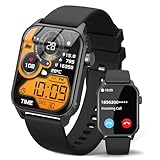
- 【1.83" HD Display & Customizable Watch Faces】Immerse yourself in a vibrant 1.83-inch IPS display, boasting a sharp resolution of 240*284 for crystal-clear visuals. Effortlessly personalize your smart watch with a wide array of customizable watch faces to suit your personal style for every occasion—whether trendy, artistic, or minimalist—ideal for casual, sporty, or professional. Its sleek, modern design complements any outfit, blending technology and fashion seamlessly for everyday wear
- 【120 Sports Modes & Advanced Health Tracking】Our TK29 smart watches for women men come equipped with 120 sports modes, allowing you to effortlessly track a variety of activities such as walking, running, cycling, and swimming. With integrated heart rate and sleep monitors, you can maintain a comprehensive overview of your health, achieve your fitness goals, and maintain a balanced, active lifestyle with ease. Your ideal wellness companion (Note: Step recording starts after exceeding 20 steps)
- 【IP67 Waterproof & Long-Lasting Battery】Designed to keep up with your active lifestyle, this smartwatch features an IP67 waterproof rating, ensuring it can withstand splashes, sweat, and even brief submersion, making it perfect for workouts, outdoor adventures, or rainy days. Its reliable 350mAh battery offering 5-7 days of active use and up to 30 days in standby mode, significantly reducing frequent charging. Ideal for all-day wear, whether you’re at the gym, outdoors, or simply on the go
- 【Stay Connected Anytime, Anywhere】Stay informed and in control with Bluetooth call and music control features. Receive real-time notifications for calls, messages, and social media apps like Facebook, WhatsApp, Twitter, and Instagram directly on your smartwatch. Easily manage calls, control your music playlist, and stay updated without needing to reach for your phone. Perfect for work, workouts, or on-the-go, this watch keeps you connected and never miss important updates wherever you are
- 【Multifunction & Wide Compatibility】Seamlessly handle heart rate monitoring, sleep tracking, and enjoy conveniences like camera/music control, Seamlessly handle heart rate monitoring, sleep tracking, and more-all directly from your wrist. This 1.83 inches HD smartwatch is compatible with iPhone (iOS 9.0+) & Android (5.0+), ensuring smooth daily connectivity and convenience throughout your day. More than just a timepiece, it’s a stylish, all-in-one wearable for smarter, healthier living
At 46mm, it’s unapologetically large, but the curved lugs and relatively low visual thickness help it sit flatter than the dimensions suggest. On the wrist, it feels more like a modern sports watch than a tech gadget, especially on the fluoroelastomer strap, which is soft, breathable, and well-suited for long workouts or sleep tracking. Comfort is one of its quiet strengths, particularly given the size.
That physical confidence allows Huawei to lean away from rapid software churn. The watch runs HarmonyOS in a highly controlled configuration, prioritizing stability and battery efficiency rather than flexibility. It’s a strategy that makes sense if you believe hardware longevity matters more than feature velocity.
The fitness-focused buyer Huawei understands very well
Huawei clearly understands endurance athletes and casual fitness users who hate charging their watch every night. Real-world battery life of 10 to 14 days with mixed use remains one of the GT2 Pro’s strongest selling points, and it fundamentally changes how you interact with the device. You wear it continuously, not strategically.
GPS accuracy is consistently solid, heart rate tracking is dependable for steady-state activities, and the inclusion of features like route back tracking, elevation data, and offline maps reinforces its outdoor ambitions. It’s not a replacement for a dedicated Garmin Fenix or Epix, but it borrows enough of that philosophy to appeal to runners, hikers, and cyclists who don’t want a rugged tool watch on their wrist.
Sleep tracking, SpO2 monitoring, and recovery insights are presented clearly and without excessive gamification. Huawei Health isn’t flashy, but it’s coherent, and for users focused on trends rather than social competition, that restraint is a positive.
Where the premium positioning starts to crack
The cost of this hardware-first approach is paid almost entirely in software freedom. App support is minimal, third-party watch faces are limited, and there is no true app ecosystem in the sense that Apple or Google users expect. Notifications are reliable but shallow, and replies are constrained or nonexistent depending on platform.
iOS users face even tighter restrictions, with fewer integrations and less control than Android users, though neither experience could be called open. There’s no native voice assistant worth relying on, no LTE option, and no ambition to turn the watch into a productivity hub. Huawei is effectively asking you to accept a ceiling on smart features in exchange for consistency.
This is where the price becomes contentious. At a premium asking point, the GT2 Pro competes emotionally with watches that do far more, even if they feel less refined or require daily charging. Whether that trade feels acceptable depends entirely on your priorities.
Who should buy it, and who absolutely shouldn’t
The Watch GT2 Pro makes sense for users who want a beautiful, durable smartwatch that behaves predictably, tracks fitness well, and disappears into daily life without demanding attention. If battery anxiety drives you crazy, and if you treat notifications as a convenience rather than a command center, this watch fits naturally.
It is a poor choice for anyone who enjoys customizing their smartwatch experience, relies on third-party apps, or expects tight integration with digital assistants and smart home platforms. Power users will hit its limits quickly, and those limits do not expand over time.
Huawei isn’t pretending otherwise. The GT2 Pro is a statement of restraint, betting that some buyers are tired of watches that try to do everything and excel at very little. Whether that restraint feels like focus or frustration is the central question this review will keep returning to.
Design, Materials, and Wearability: Titanium, Sapphire, and the Luxury Illusion
After laying out the GT2 Pro’s software ceilings, it becomes easier to understand why Huawei leans so heavily on physical design to make its case. This is a watch that clearly wants to be judged first on how it looks and feels, not on what apps it can run. In that context, the hardware choices make immediate sense.
Titanium and sapphire done right
The Watch GT2 Pro uses a titanium case paired with a sapphire crystal, a combination more commonly associated with mid-tier Swiss tool watches than consumer electronics. The sapphire is flat, not domed, and resists scratches exceptionally well in daily use, even after months of desk contact and gym sessions. Titanium keeps weight down while giving the case a cool, matte presence that avoids the glossy, gadget-like feel of aluminum.
At roughly 46mm in diameter and about 11.4mm thick, it’s undeniably large, but it doesn’t wear as heavy as the dimensions suggest. At around 52 grams without a strap, the case disappears more than most steel-bodied competitors. The ceramic caseback adds skin comfort and improves long-term durability where it actually matters.
Finishing that mimics luxury, not craftsmanship
Huawei’s finishing is clean and consistent, but it’s industrial rather than expressive. The brushing is uniform, edges are safe and rounded, and tolerances are tight, yet there’s little of the nuanced case geometry you’d find in traditional watchmaking. It looks premium, but it doesn’t invite inspection the way a mechanical watch does.
This is where the “luxury illusion” begins to surface. The materials are objectively excellent, but they’re deployed to signal quality rather than celebrate it. Compared to a true luxury sports watch, the GT2 Pro borrows the visual language without offering the emotional depth or mechanical intrigue that enthusiasts often associate with those materials.
Bezel, buttons, and physical interaction
The fixed bezel keeps the design minimal, framing the AMOLED display without unnecessary decoration. Two pushers on the right side provide reliable tactile feedback, though their function is limited by software rather than hardware ambition. There’s no rotating element, no crown-like control, and no haptic personality beyond basic vibration cues.
That restraint aligns with Huawei’s overall philosophy here. The watch avoids playful or expressive hardware features in favor of predictability and durability. It feels more like a sealed instrument than a platform meant to evolve through interaction.
Straps, lugs, and real-world comfort
Huawei sticks to standard 22mm lugs, which is a small but important win for wearability and personalization. The included straps, typically leather or fluoroelastomer depending on region, are comfortable and well-finished, though neither feels particularly special for the asking price. Swapping straps is easy, and the watch pairs well with everything from silicone to fabric, helping it adapt to different roles.
Despite the 46mm case, the lug-to-lug distance is reasonable, allowing it to sit flatter on the wrist than many rugged fitness watches. Smaller wrists will still feel its presence, but the lightweight titanium keeps it from becoming fatiguing over long days. This is a watch you can wear from morning workouts through evening downtime without constantly adjusting it.
Durability without rugged theatrics
With 5ATM water resistance and support for free diving up to 30 meters, the GT2 Pro quietly outperforms many lifestyle-oriented smartwatches. There’s no oversized bezel or shock-resistant styling, yet it holds up well to swimming, rain, and general abuse. Huawei’s confidence in its materials shows here, even if the design remains conservative.
What’s notable is how little the watch advertises this toughness. There’s no visual aggression, no “outdoor watch” signaling, just a calm, almost understated robustness. For users who want durability without looking like they’re wearing a survival instrument, this balance will feel intentional.
Luxury feel versus luxury reality
On the wrist, the Watch GT2 Pro succeeds in feeling expensive. It’s cool to the touch, scratch-resistant, and visually restrained in a way that reads mature rather than flashy. For many buyers, that will be enough.
The trade-off is that this sense of luxury lives almost entirely on the surface. There’s no mechanical movement to admire, no artisanal finishing to discover over time, and no evolving software experience to deepen the relationship. What you see and feel on day one is largely what you’ll still have a year later, for better or worse.
Display and Interface Experience: AMOLED Brilliance Meets Software Restraint
That surface-level luxury becomes most convincing the moment the screen wakes up. Huawei leans heavily on display quality to reinforce the GT2 Pro’s premium positioning, and visually, it delivers in a way few fitness-first watches at the time could match. The problem is not what you see, but what you’re allowed to do with it.
AMOLED excellence that elevates daily wear
The 1.39-inch AMOLED panel is sharp, richly saturated, and comfortably legible in direct sunlight. With a 454 x 454 resolution, text and watch face details look crisp enough to pass casual inspection alongside far more expensive lifestyle smartwatches. Blacks are inky, colors pop without looking cartoonish, and the sapphire crystal helps suppress glare rather than amplify it.
Brightness is well judged for both indoor and outdoor use, and automatic adjustment behaves predictably. You rarely find yourself manually nudging the brightness, which matters more than peak nit levels in daily wear. The display also pairs well with Huawei’s minimalist watch face designs, many of which lean into negative space and subtle gradients rather than information overload.
Always-on display support is present and visually refined, but it comes with predictable trade-offs. Enabling it noticeably reduces battery life, though the GT2 Pro still outlasts most Wear OS and Apple Watch competitors even with AOD enabled. The bigger compromise is functional: always-on faces are largely decorative, offering limited glanceable data compared to full active screens.
Touch responsiveness and navigation logic
Touch input is smooth and reliable, aided by a 60Hz-feeling responsiveness even if Huawei doesn’t advertise refresh rates. Swipes register cleanly, scrolling through widgets feels fluid, and there’s little input lag when launching workouts or checking notifications. The physical buttons provide reassuring tactile feedback and help compensate when wet fingers make touch less reliable during workouts or swimming.
Navigation follows Huawei’s now-familiar tile-based layout, with horizontal swipes cycling through data screens and vertical swipes opening notifications or quick settings. It’s intuitive within minutes, especially for users coming from earlier Huawei wearables. The learning curve is shallow, but so is the depth once you move past the basics.
What’s missing becomes clear as you spend more time with the interface. There’s no real concept of complication-driven customization beyond watch faces, and widgets are fixed in both order and behavior. Compared to Wear OS or watchOS, the interface feels more like a polished dashboard than an evolving operating system.
Watch faces: visually rich, functionally narrow
Huawei’s watch face library is one of the GT2 Pro’s strongest visual assets. There’s a wide selection ranging from traditional analog styles that suit the titanium case to data-heavy digital layouts for workouts and recovery tracking. Many are well-designed, balanced, and feel purpose-built for the display’s resolution and color depth.
Customization within those faces, however, is limited. Complication slots are often locked, data fields can’t be freely swapped, and third-party face options are constrained by Huawei’s ecosystem. You can make the watch look different, but you can’t meaningfully tailor how information is prioritized.
This is where the “luxury surface, fixed experience” theme resurfaces. The watch face may change, but the underlying interaction never really does. For users who enjoy fine-tuning their smartwatch to reflect changing routines or priorities, this rigidity becomes noticeable over time.
Rank #2
![Apple Watch Series 11 [GPS 46mm] Smartwatch with Jet Black Aluminum Case with Black Sport Band - M/L. Sleep Score, Fitness Tracker, Health Monitoring, Always-On Display, Water Resistant](https://m.media-amazon.com/images/I/312K597M2uL._SL160_.jpg)
- HYPERTENSION NOTIFICATIONS — Apple Watch Series 11 can spot signs of chronic high blood pressure and notify you of possible hypertension.*
- KNOW YOUR SLEEP SCORE — Sleep score provides an easy way to help track and understand the quality of your sleep, so you can make it more restorative.
- EVEN MORE HEALTH INSIGHTS — Take an ECG anytime.* Get notifications for a high and low heart rate, an irregular rhythm,* and possible sleep apnea.* View overnight health metrics with the Vitals app* and take readings of your blood oxygen.*
- STUNNING DESIGN — Thin and lightweight, Series 11 is comfortable to wear around the clock — while exercising and even when you’re sleeping, so it can help track your key metrics.
- A POWERFUL FITNESS PARTNER — With advanced metrics for all your workouts, plus features like Pacer, Heart Rate Zones, training load, Workout Buddy powered by Apple Intelligence from your nearby iPhone,* and more. Series 11 also comes with three months of Apple Fitness+ free.*
HarmonyOS smoothness, but a closed world
The GT2 Pro runs Huawei’s lightweight wearable operating system, branded under HarmonyOS for later updates, and it’s undeniably efficient. Animations are smooth, battery drain is tightly controlled, and system stability is excellent. Crashes and slowdowns are virtually nonexistent, even months into regular use.
That efficiency is achieved by keeping the system closed and tightly controlled. App support is minimal, third-party integrations are scarce, and functionality is largely limited to what Huawei ships out of the box. You won’t find deep smart home controls, rich voice assistants, or expansive app ecosystems here.
Notifications arrive reliably, but interaction is basic. You can read them, dismiss them, and sometimes respond with predefined replies on Android, but that’s largely the extent of it. iOS users face even stricter limitations, reinforcing the sense that this is a fitness-centric companion rather than a true smartwatch replacement.
Polished restraint that defines the trade-off
In isolation, the GT2 Pro’s display and interface feel premium, deliberate, and thoughtfully designed. Everything works, nothing stutters, and the visual experience consistently matches the quality of the hardware surrounding it. For users who want a beautiful screen primarily to surface health data, workouts, and time, this restraint can actually feel refreshing.
But that restraint is also the cost. The display has the resolution and brightness to support far richer interactions than the software allows, and the interface rarely evolves beyond its initial promise. You’re buying into stability and efficiency, not flexibility or growth, and that distinction matters as much here as it does in any other part of the GT2 Pro experience.
Health and Fitness Tracking Accuracy: Where Huawei Quietly Excels
That same restraint seen in the software experience carries into health and fitness, but here it works decisively in Huawei’s favor. By limiting complexity and tightly controlling hardware, algorithms, and data presentation, the Watch GT2 Pro delivers a level of consistency that often gets overlooked amid louder smartwatch feature lists. This is where Huawei’s priorities become clear, and largely justified.
Heart rate monitoring built for stability, not spectacle
The GT2 Pro uses Huawei’s in-house optical heart rate sensor array paired with continuous background sampling, and in day-to-day wear it proves impressively steady. Resting heart rate trends track closely with chest strap baselines over time, even if peak readings during sudden intensity spikes can lag by a second or two. That delay is typical for wrist-based optical sensors, but Huawei’s smoothing avoids the wild oscillations seen on less refined implementations.
During steady-state cardio like running or cycling, the data is notably clean. There’s minimal drop-off from sweat or arm movement, and cadence locking is rare compared to early-generation Wear OS watches. For most users training in heart rate zones rather than chasing lab-grade precision, the accuracy here is more than sufficient.
GPS performance that prioritizes reliability over speed
Huawei equips the GT2 Pro with dual satellite positioning support, and while lock-on times aren’t class-leading, tracking quality is consistently strong once established. Routes stay tightly aligned to paths and roads, even under moderate tree cover or urban interference. Distance measurements over repeated routes remain dependable, with only minor variance across sessions.
What stands out is how predictably the GPS behaves over long workouts. There’s little sign of signal drift or late-session degradation, an area where battery-optimized watches often stumble. Combined with the GT2 Pro’s long endurance, it’s well suited for extended hikes or multi-hour outdoor activities without anxiety creeping in.
Sleep tracking that favors insight over novelty
Huawei’s sleep tracking has matured quietly, and the GT2 Pro benefits from that refinement. Sleep duration and timing align closely with real-world patterns, while sleep stage breakdowns tend to be conservative rather than exaggerated. Light, deep, and REM segmentation feels plausible when cross-checked against movement and wake events.
What makes it useful is consistency across nights. Trends emerge quickly, and the watch avoids overinterpreting brief disturbances as full awakenings. While the presentation lacks the coaching depth of platforms like Fitbit or the contextual integration of Apple Health, the underlying data is reliable enough to inform real habit changes.
SpO2 and recovery metrics as passive companions
Blood oxygen monitoring runs automatically during sleep and spot checks, and readings fall within expected ranges for healthy users. It’s not designed for medical insight, but it adds contextual depth to sleep and recovery metrics without demanding attention. The GT2 Pro treats SpO2 as background data, not a headline feature.
Huawei’s broader recovery indicators, including stress estimation and training load, follow a similar philosophy. They’re best understood as directional rather than prescriptive, helping users gauge when rest might be more valuable than pushing harder. The lack of third-party integrations limits validation, but internally the system remains coherent.
Workout tracking breadth, with a focus on form and durability
The GT2 Pro supports a wide range of workout modes, including outdoor sports, strength training, and even niche activities like golf and skiing. Automatic workout detection works reliably for walking and running, though it still favors deliberate starts over spontaneous recognition. Metrics recorded during sessions are logically organized and easy to review post-workout.
Comfort plays a role here as well. The titanium case and ceramic back distribute weight evenly, and despite its premium materials, the watch sits securely during high-movement activities. Paired with the sapphire glass and strong water resistance, it encourages consistent wear, which ultimately improves data accuracy over time.
Accuracy enabled by limitations
What makes the GT2 Pro’s health tracking effective is the same closed ecosystem that limits its smartwatch ambitions. Huawei controls the sensors, algorithms, and data flow end to end, avoiding the fragmentation that can undermine accuracy on more open platforms. There’s no clutter of competing apps interpreting the same data differently.
The trade-off is flexibility. You can’t export data as freely, sync with every training platform, or layer in third-party analytics. But if your priority is dependable, repeatable health and fitness tracking backed by excellent battery life, the GT2 Pro delivers quietly, consistently, and with far fewer compromises than its software ecosystem might suggest.
Battery Life and Charging: The GT2 Pro’s Undeniable Competitive Advantage
The same tightly controlled ecosystem that underpins the GT2 Pro’s health accuracy also defines its most tangible advantage: endurance. Where many premium smartwatches feel like daily obligations, Huawei’s approach reframes the watch as something you wear continuously rather than manage constantly.
Battery life here isn’t just good by smartwatch standards; it fundamentally changes how the device fits into everyday routines.
Real-world longevity that reshapes daily use
Huawei rates the GT2 Pro for up to two weeks of use, and while that headline figure assumes restrained settings, real-world performance remains exceptional. With continuous heart-rate tracking, sleep monitoring, regular notifications, and several GPS workouts per week, 8 to 10 days is a realistic expectation rather than an optimistic one.
That places the GT2 Pro in a different category from Apple Watch and Wear OS competitors, which typically require nightly charging under similar usage. Even against fitness-first rivals like Garmin’s Venu series, Huawei holds its own while offering a more refined case finish and slimmer wear profile.
GPS efficiency without endurance anxiety
GPS tracking is often where smartwatch batteries collapse, but the GT2 Pro manages power with notable restraint. Long outdoor sessions, including hiking or cycling with continuous GPS, barely dent the battery in a way that forces behavioral changes.
This matters for users who train across multiple days or travel frequently. You can track workouts, sleep, and recovery without mentally budgeting battery percentage, which reinforces the watch’s role as a passive, always-on companion rather than an active device demanding attention.
Charging speed that complements, rather than compensates
Charging doesn’t need to be fast when it’s infrequent, but Huawei still delivers competent top-up performance. A full charge takes just under two hours, while a short 20 to 30-minute session provides several days of use.
The GT2 Pro supports wireless charging via Huawei’s proprietary puck and works with many Qi-compatible pads in practice, though alignment can be finicky. Reverse wireless charging from compatible Huawei smartphones adds a layer of convenience, particularly while traveling, even if it’s more of a contingency feature than a daily habit.
Battery life as a byproduct of strategic restraint
This endurance doesn’t come from a single breakthrough component, but from deliberate omissions. There’s no LTE radio, no power-hungry third-party apps running in the background, and no always-listening voice assistant draining resources.
The AMOLED display is sharp and bright, but Huawei keeps refresh rates conservative and background activity tightly controlled. It’s an approach that prioritizes consistency over spectacle, and it shows in how rarely the battery becomes a limiting factor.
The hidden cost behind the longevity
The trade-off, as with much of the GT2 Pro experience, is flexibility. You’re gaining days of battery life by giving up interactive apps, rich background services, and deep system-level integrations that competitors rely on.
For users coming from an Apple Watch or modern Wear OS device, this endurance can feel almost liberating at first, then subtly restrictive over time. The battery life is extraordinary, but it exists because the watch does less, not because it does the same things more efficiently.
Who benefits most from this endurance-first philosophy
The GT2 Pro’s battery performance best serves users who value uninterrupted tracking, infrequent charging, and long-term wear comfort over smartwatch versatility. Outdoor athletes, frequent travelers, and anyone fatigued by daily charging rituals will immediately feel the difference.
Those who expect their watch to behave like a wrist-mounted smartphone may see the endurance as compensation rather than innovation. The GT2 Pro proves that exceptional battery life is achievable, but only by redefining what a smartwatch is allowed to be.
Smart Features and Everyday Usability: What You Gain – and What’s Missing
Living with the GT2 Pro day to day makes the earlier battery discussion feel less like a technical sidebar and more like a guiding philosophy. Huawei’s idea of “smart” is intentionally narrow, focusing on reliability and polish rather than extensibility. That focus shapes nearly every interaction once the watch leaves the charger and becomes part of your routine.
A clean, stable interface that rarely surprises
HarmonyOS on the GT2 Pro is fast, visually coherent, and almost entirely free of lag. Swipes, button presses, and workout launches feel immediate, even after months of use, which isn’t always true of more app-heavy platforms.
Rank #3

- Bluetooth Call and Message Alerts: Smart watch is equipped with HD speaker, after connecting to your smartphone via bluetooth, you can answer or make calls, view call history and store contacts through directly use the smartwatch. The smartwatches also provides notifications of social media messages (WhatsApp, Twitter, Facebook, Instagram usw.) So that you will never miss any important information.
- Smart watch for men women is equipped with a 320*380 extra-large hd full touch color screen, delivering exceptional picture quality and highly responsive touch sensitivity, which can bring you a unique visual and better interactive experience, lock screen and wake up easily by raising your wrist. Though “Gloryfit” app, you can download more than 102 free personalised watch faces and set it as your desktop for fitness tracker.
- 24/7 Heart Rate Monitor and Sleep Tracker Monitor: The fitness tracker watch for men has a built-in high-performance sensor that can record our heart rate changes in real time. Monitor your heart rate 26 hours a day and keep an eye on your health. Synchronize to the mobile phone app"Gloryfit", you can understand your sleep status(deep /light /wakeful sleep) by fitness tracker watch develop a better sleep habit and a healthier lifestyle.
- IP68 waterproof and 110+ Sports Modes: The fitness tracker provides up to 112+ sports modes, covering running, cycling, walking, basketball, yoga, football and so on. Activity trackers bracelets meet the waterproof requirements for most sports enthusiasts' daily activities, such as washing hands or exercising in the rain, meeting daily needs (note: Do not recommended for use in hot water or seawater.)
- Multifunction and Compatibility: This step counter watch also has many useful functions, such as weather forecast, music control, sedentary reminder, stopwatch, alarm clock, timer, track female cycle, screen light time, find phone etc. The smart watch with 2 hrs of charging, 5-7 days of normal use and about 30 days of standby time. This smart watches for women/man compatible with ios 9.0 and android 6.2 and above devices.
The UI favors glanceability over density, with large icons, clear typography, and logical menus. You won’t find deep customization or power-user shortcuts, but you also won’t encounter crashes, stutters, or half-baked features.
Notifications: reliable delivery, limited interaction
Notification handling is competent but basic. Messages arrive promptly from most major apps, and vibration strength is well tuned for everyday awareness without being intrusive.
Interaction stops at reading and dismissing. There are no inline replies, no emoji responses, and no keyboard or voice dictation, which makes the experience feel closer to a fitness watch than a modern smartwatch.
Calls, music, and offline convenience
Bluetooth calling is supported, and call quality through the built-in microphone and speaker is surprisingly usable in quiet environments. It’s practical for quick calls at home or during walks, though not something you’d rely on in noisy settings.
Music storage allows for offline playback with Bluetooth headphones, a genuinely useful feature for phone-free workouts. However, streaming service integration is absent, so managing music requires manual transfers through Huawei Health.
The app ecosystem ceiling
This is where the GT2 Pro’s strategic restraint becomes most visible. There is no meaningful third-party app ecosystem, and what exists through Huawei’s AppGallery is sparse and region-dependent.
You won’t find equivalents to Google Maps, Spotify, WhatsApp, or productivity tools that extend the watch beyond its core functions. What the GT2 Pro does out of the box is largely what it will always do, with little room to grow.
No voice assistant, no LTE, no background intelligence
There is no always-available voice assistant, and that absence is felt most when setting reminders, controlling smart home devices, or dictating quick actions. Tasks that feel natural on Wear OS or watchOS simply aren’t part of the GT2 Pro workflow.
LTE connectivity is also missing, meaning the watch remains phone-dependent for most smart features. This reinforces its role as a companion device rather than a semi-independent one.
Navigation and mapping: functional, not exploratory
Route tracking and breadcrumb navigation work well for outdoor activities, especially when paired with strong GPS performance. You can follow preloaded routes and review paths afterward without issue.
What you don’t get is turn-by-turn navigation, real-time rerouting, or map-based discovery. For runners and hikers who plan ahead, this is sufficient; for spontaneous urban navigation, it falls short.
Payments, or the lack thereof
NFC hardware is present, but contactless payments are largely unavailable outside limited markets. For many users, this effectively removes a feature that has become standard on premium smartwatches.
The omission doesn’t impact fitness tracking or battery life, but it does affect everyday convenience, especially for those accustomed to leaving their wallet behind.
Watch faces, customization, and long-term wear
Huawei offers an extensive library of watch faces, many of which showcase the GT2 Pro’s sapphire glass and AMOLED display beautifully. Customization within faces is minimal, but the visual variety helps keep the watch feeling fresh.
Physical comfort remains a strength during long wear, thanks to the titanium case, ceramic back, and balanced weight distribution. Even with limited software evolution, the hardware itself encourages consistent daily use.
Cross-platform compatibility and hidden friction
The GT2 Pro works with both Android and iOS, but the experience is clearly better on Android. iPhone users lose deeper system integration, faster syncing, and certain feature parity over time.
Even on Android, the reliance on Huawei Health and Huawei Mobile Services introduces an extra layer of ecosystem commitment. It’s manageable, but it reminds you that this watch exists slightly outside the mainstream smartwatch world.
Smart enough by design, constrained by intent
The GT2 Pro delivers a controlled, predictable smart experience that aligns perfectly with its endurance-first mindset. What you gain is stability, simplicity, and freedom from constant charging.
What’s missing are the small, compounding conveniences that define modern smartwatch living. Whether that trade-off feels refreshing or restrictive depends entirely on how much “smart” you expect from your wrist.
Software, App Ecosystem, and Platform Lock-Ins: The Real Cost of HarmonyOS Lite
All of the compromises hinted at earlier ultimately converge here. The Watch GT2 Pro’s software philosophy is deliberately narrow, prioritizing efficiency and control over openness, and that choice defines both its strengths and its most frustrating limitations.
HarmonyOS Lite in practice: fast, stable, and intentionally closed
The GT2 Pro runs a lightweight variant of HarmonyOS, often referred to as HarmonyOS Lite, and it behaves exactly as such. Menus are fluid, animations are smooth, and nothing feels sluggish even years after launch.
This stability is not accidental. Huawei tightly controls what runs on the watch, which keeps battery drain low and avoids the creeping performance decay seen on more open platforms.
The trade-off is that the system rarely evolves in meaningful ways. What the GT2 Pro could do at launch is largely what it will do for the rest of its usable life.
The near-absence of a third-party app ecosystem
Unlike Wear OS or watchOS, there is no meaningful third-party app ecosystem to speak of. Huawei’s AppGallery for wearables exists, but the selection is extremely limited and region-dependent.
You won’t find native clients for popular services like Spotify, WhatsApp, Strava, or Google Maps. There are no background-running apps, no downloadable utilities, and no way to extend functionality beyond Huawei’s predefined boundaries.
For users accustomed to smartwatch platforms that grow richer over time, this feels less like minimalism and more like a dead end.
Huawei Health: powerful, polished, and unavoidable
Everything routes through the Huawei Health app, and in isolation, it’s one of the better fitness dashboards on the market. Activity data is detailed, sleep tracking is among the best in its class, and long-term trends are presented clearly.
Training metrics like VO2 max estimates, recovery guidance, and route tracking integrate seamlessly with the watch’s hardware sensors. For runners, hikers, and cyclists, this core experience is genuinely strong.
The issue is that Huawei Health is not optional. There is no official way to sync data directly to third-party platforms without workarounds, and cloud integration is tightly controlled.
Data portability and ecosystem friction
Exporting your fitness history to platforms like Google Fit, Apple Health, or TrainingPeaks is either limited or indirect. Sync reliability varies by region and phone OS, and features can quietly disappear with app updates.
This matters more over time than it does in the first few months. Once years of training data live inside Huawei’s ecosystem, switching watches becomes less appealing and more disruptive.
It’s a subtle lock-in, but a very real one, especially for serious fitness users who value continuity.
Notifications, smart features, and what you don’t get
Core smartwatch functions are present but stripped back. Notifications are reliable and readable on the AMOLED display, but interaction is minimal and replies are limited or nonexistent.
There’s no voice assistant, no smart home control, and no deep integration with phone-level services. Music control exists, but offline storage support is selective and ecosystem-dependent.
Rank #4
![Apple Watch Series 11 [GPS 42mm] Smartwatch with Rose Gold Aluminum Case with Light Blush Sport Band - S/M. Sleep Score, Fitness Tracker, Health Monitoring, Always-On Display, Water Resistant](https://m.media-amazon.com/images/I/31J+F-pXaWL._SL160_.jpg)
- HYPERTENSION NOTIFICATIONS — Apple Watch Series 11 can spot signs of chronic high blood pressure and notify you of possible hypertension.*
- KNOW YOUR SLEEP SCORE — Sleep score provides an easy way to help track and understand the quality of your sleep, so you can make it more restorative.
- EVEN MORE HEALTH INSIGHTS — Take an ECG anytime.* Get notifications for a high and low heart rate, an irregular rhythm,* and possible sleep apnea.* View overnight health metrics with the Vitals app* and take readings of your blood oxygen.*
- STUNNING DESIGN — Thin and lightweight, Series 11 is comfortable to wear around the clock — while exercising and even when you’re sleeping, so it can help track your key metrics.
- A POWERFUL FITNESS PARTNER — With advanced metrics for all your workouts, plus features like Pacer, Heart Rate Zones, training load, Workout Buddy powered by Apple Intelligence from your nearby iPhone,* and more. Series 11 also comes with three months of Apple Fitness+ free.*
Compared to Wear OS or Apple Watch, the GT2 Pro feels less like an extension of your phone and more like a high-end digital instrument.
Android vs iOS: compatibility is not equality
Huawei advertises cross-platform compatibility, and technically, that claim holds. In practice, Android users get faster syncing, more stable updates, and broader feature support.
iOS users face more friction, including slower data transfers, missing features, and a greater reliance on Huawei’s own account systems. Over time, these small inconveniences add up.
For iPhone owners already deep in Apple’s ecosystem, the GT2 Pro will always feel like an outsider.
Updates, longevity, and software stagnation
Huawei has delivered stability updates, but feature updates are rare and conservative. There is little sense that the platform will meaningfully expand or adapt to new use cases.
This makes the GT2 Pro feel more like a finished product than a growing one. That’s reassuring if you value predictability, but limiting if you expect your smartwatch to evolve alongside your habits.
In a market where software increasingly defines long-term value, this static approach quietly undercuts the watch’s premium positioning.
The real cost behind the battery life
The GT2 Pro’s exceptional battery life doesn’t come for free. It’s achieved by avoiding background apps, restricting connectivity, and tightly controlling software behavior.
For users who prioritize days of wear over digital convenience, this is a fair and even refreshing exchange. For anyone who expects their smartwatch to replace small daily phone interactions, it’s a noticeable sacrifice.
Understanding this balance is critical, because HarmonyOS Lite is not a temporary compromise. It is the core design philosophy of the Watch GT2 Pro.
Compatibility with Android and iOS: How Phone Choice Changes the Experience
The trade-offs described earlier become far more tangible once the Watch GT2 Pro is paired to a phone. While Huawei positions it as platform-agnostic, the reality is that your smartphone choice fundamentally shapes what this watch can and cannot do day to day.
This is not a subtle difference measured in edge cases. It affects setup friction, feature depth, long-term usability, and how premium the experience actually feels relative to the price.
Android pairing: the intended experience
On Android, the GT2 Pro operates closest to how Huawei envisioned it. Pairing through the Huawei Health app is straightforward, syncing is generally reliable, and feature access is broader than on iOS.
Fitness data syncs quickly, workout metrics feel complete, and health trends like sleep, SpO₂, and stress tracking are presented with decent clarity. GPS activity uploads are stable, and the watch rarely drops connection during daily wear.
That said, even on Android, limitations remain obvious. Notifications are mirrored rather than interactive, replies are not supported, and third-party app expansion is minimal to nonexistent.
Android without Google: a quiet complication
For Android users on non-Huawei phones, the lack of Google services integration is less disruptive but still noticeable. There is no Google Assistant, no Google Pay, and no native tie-in to Google Fit without manual data bridges.
Music control works reliably, but offline playback depends on supported formats and Huawei’s own music handling. Spotify, YouTube Music, and other mainstream platforms remain external, controlled rather than integrated.
The result is a watch that complements Android hardware but never fully integrates into the Android ecosystem in the way Wear OS devices do.
iOS pairing: functional, but constrained
On iPhone, the GT2 Pro immediately feels more restricted. Setup works, but syncing is slower, background refreshes are less consistent, and feature parity with Android is absent.
Notifications arrive, but customization is limited, and reliability can vary depending on iOS background permissions. Health data remains siloed within Huawei Health, with no seamless Apple Health integration beyond basic exports.
For users accustomed to the deep cohesion of Apple Watch and iOS, this experience feels utilitarian rather than premium.
What iOS users give up in daily use
There is no Siri integration, no iMessage interaction, and no ecosystem handoff features. Even small conveniences, like responding to texts or managing calls beyond basic acceptance, are missing.
Firmware updates tend to arrive later on iOS, and syncing large activity logs can feel sluggish. Over months of use, these delays subtly erode the sense of polish.
The GT2 Pro still tracks fitness accurately on iOS, but it never feels native. It behaves like an external instrument rather than an extension of the phone.
Health data, accounts, and long-term ownership
Regardless of platform, using the GT2 Pro means committing to Huawei’s account ecosystem. Health history, settings, and device management live inside Huawei Health, not system-level services.
For Android users, this is an acceptable parallel system. For iOS users, it’s an additional layer that competes with Apple Health rather than enhancing it.
This matters over years, not weeks. Switching phones, migrating data, or consolidating health records becomes more complicated than with platform-native watches.
Who the compatibility trade-off actually suits
Android users who prioritize battery life, GPS reliability, and durable hardware will find the GT2 Pro easy to live with. The watch delivers its core functions cleanly, without constant charging or software instability.
iPhone users, especially those invested in Apple services, should approach with caution. The GT2 Pro works, but it always feels one step removed from the ecosystem it inhabits.
Ultimately, compatibility here is about tolerance, not capability. The Watch GT2 Pro asks you to accept fewer integrations in exchange for endurance, materials, and predictability—and your phone choice determines how heavy that cost feels.
Comparative Context: GT2 Pro vs Apple Watch, Galaxy Watch, and Garmin Rivals
Once compatibility and ecosystem friction are on the table, the GT2 Pro’s real competition comes into focus. It is not trying to outsmart Apple or Samsung at software, nor does it chase Garmin’s depth of training analytics, but it sits uncomfortably close to all three in price.
Understanding where it wins and where it concedes ground requires looking at daily wear, long-term ownership, and how much “smart” you actually expect from a premium smartwatch.
GT2 Pro vs Apple Watch: Hardware endurance versus ecosystem gravity
Against the Apple Watch Series lineup, the GT2 Pro feels like a different philosophy entirely. Huawei prioritizes materials and longevity: sapphire glass, a titanium case, and two weeks of battery life that makes daily charging feel archaic.
Apple’s aluminum and stainless steel cases feel lighter and less rugged, but the trade-off buys you unmatched polish. Notifications are actionable, apps are abundant, and health data flows seamlessly into Apple Health, Fitness+, and third-party services.
💰 Best Value
![Apple Watch Series 11 [GPS 42mm] Smartwatch with Jet Black Aluminum Case with Black Sport Band - S/M. Sleep Score, Fitness Tracker, Health Monitoring, Always-On Display, Water Resistant](https://m.media-amazon.com/images/I/31ybzrJZckL._SL160_.jpg)
- HYPERTENSION NOTIFICATIONS — Apple Watch Series 11 can spot signs of chronic high blood pressure and notify you of possible hypertension.*
- KNOW YOUR SLEEP SCORE — Sleep score provides an easy way to help track and understand the quality of your sleep, so you can make it more restorative.
- EVEN MORE HEALTH INSIGHTS — Take an ECG anytime.* Get notifications for a high and low heart rate, an irregular rhythm,* and possible sleep apnea.* View overnight health metrics with the Vitals app* and take readings of your blood oxygen.*
- STUNNING DESIGN — Thin and lightweight, Series 11 is comfortable to wear around the clock — while exercising and even when you’re sleeping, so it can help track your key metrics.
- A POWERFUL FITNESS PARTNER — With advanced metrics for all your workouts, plus features like Pacer, Heart Rate Zones, training load, Workout Buddy powered by Apple Intelligence from your nearby iPhone,* and more. Series 11 also comes with three months of Apple Fitness+ free.*
In real-world wear, the GT2 Pro is more comfortable over long days thanks to its lighter titanium build and lower thermal output. The Apple Watch, however, feels more responsive and alive, particularly when interacting with messages, calls, and system features.
For iPhone users, the deciding factor is not hardware quality but ecosystem gravity. Even the best battery life cannot fully compensate for the loss of Siri, native apps, and deep OS-level integration that the Apple Watch delivers effortlessly.
GT2 Pro vs Galaxy Watch: Battery life versus flexibility
Samsung’s Galaxy Watch models sit closer to the GT2 Pro in intent, especially on Android. Both offer circular designs, AMOLED displays, and broad fitness tracking, but their priorities diverge quickly in daily use.
The GT2 Pro outclasses Galaxy Watch models on battery life by a wide margin. Where Samsung watches typically require charging every one to two days, Huawei’s endurance fundamentally changes how you relate to the device.
Galaxy Watch models, particularly newer Wear OS versions, offer far greater flexibility. Google Maps, Google Assistant, Spotify offline syncing, and a growing app ecosystem make Samsung’s watches feel smarter and more adaptable.
From a materials standpoint, the GT2 Pro feels more upscale than most Galaxy Watch variants, especially in its sapphire crystal and ceramic back. Samsung’s watches prioritize slimness and features over long-term durability, which shows after months of wear.
Android users must decide whether convenience or consistency matters more. The Galaxy Watch behaves like an extension of the phone, while the GT2 Pro behaves like a dependable instrument that rarely asks for attention.
GT2 Pro vs Garmin: Style and simplicity versus training depth
Garmin is arguably the GT2 Pro’s most natural rival, especially models like the Venu, Forerunner, and Fenix lines. All emphasize fitness accuracy, GPS reliability, and durability over app-centric experiences.
The GT2 Pro matches Garmin on core tracking reliability and often exceeds it in display quality and perceived luxury. Its AMOLED panel is richer than Garmin’s transflective screens, and its design works just as well in an office as on a trail.
Where Garmin dominates is depth. Training load, recovery metrics, performance condition, and advanced coaching tools are leagues beyond Huawei’s more surface-level fitness insights.
Battery life is closer here, but Garmin still holds an edge in GPS-heavy use, particularly for multi-day hikes or endurance athletes. Huawei’s two-week claim shrinks quickly with frequent GPS workouts, while Garmin’s estimates tend to be more conservative and realistic.
For casual athletes and style-conscious users, the GT2 Pro feels more wearable day to day. For serious runners, cyclists, or triathletes, Garmin’s ecosystem is not just better—it is foundational.
Price positioning and the hidden cost of compromise
The GT2 Pro’s pricing places it squarely among feature-rich competitors that offer broader ecosystems. At this level, consumers are no longer forgiving of missing conveniences or closed platforms.
Huawei asks you to pay for materials, battery life, and consistency, not software ambition. That is a fair trade for some users, but it becomes harder to justify as competitors continue improving endurance without sacrificing smart features.
Over time, the cost is not financial but experiential. Limited app support, slower updates, and isolated health data compound into a sense of being fenced off from the wider smartwatch world.
This is the GT2 Pro’s defining tension. It is a beautifully built, highly reliable watch that competes at a premium level while deliberately refusing to play the ecosystem game that defines that segment.
Verdict: Impressive Hardware, Strategic Compromises – Should You Buy the GT2 Pro?
Stepping back from feature charts and ecosystem comparisons, the Huawei Watch GT2 Pro ultimately feels like a product built with absolute clarity of priorities. It is a smartwatch that values materials, endurance, and dependable core performance over extensibility and platform breadth.
That focus results in one of the most physically impressive fitness watches in its price bracket. It also creates compromises that are impossible to ignore if you expect a modern smartwatch to behave like an extension of your phone.
What the GT2 Pro gets undeniably right
As a piece of wearable hardware, the GT2 Pro is outstanding. The titanium case, ceramic back, and sapphire glass are rare at this price and give it a durability and refinement closer to a traditional sports watch than a gadget.
On the wrist, it wears comfortably despite its size, with well-balanced weight and a case profile that slips under a cuff more easily than most rugged fitness watches. The AMOLED display remains one of the best in its generation, with excellent brightness, color depth, and legibility in daily use.
Battery life remains a defining strength. Even with regular workouts, notifications, and continuous health tracking, going a full week without charging is realistic, and lighter users will still see double-digit days, something Apple and Wear OS devices simply cannot match.
Fitness reliability without performance ambition
For everyday fitness tracking, the GT2 Pro is dependable. GPS accuracy is solid, heart rate tracking is consistent, and core metrics like steps, sleep, stress, and SpO2 are handled with minimal fuss.
What it lacks is interpretive depth. There is no meaningful sense of training readiness, recovery guidance, or long-term performance analysis, which limits its appeal for users who train with structure or specific goals.
Compared to Garmin, the GT2 Pro feels observational rather than instructional. It tells you what happened, not what to do next, and that distinction matters as fitness tracking becomes increasingly data-driven.
The ecosystem trade-off you live with every day
The real cost of choosing the GT2 Pro reveals itself over time. Limited app support, basic notification handling, and minimal smart interactions gradually remind you that this is not a platform designed to evolve alongside your digital life.
HarmonyOS is stable and efficient, but it is also insular. If you rely on third-party apps, voice assistants, mobile payments, or deep Android or iOS integration, the experience will feel constrained almost immediately.
This is not a watch that grows with your habits. What you buy on day one is largely what you will still be using two years later, for better and for worse.
Who the GT2 Pro is actually for
The GT2 Pro makes the most sense for users who value build quality, battery life, and a refined aesthetic above all else. If you want a watch that looks premium, tracks workouts reliably, and rarely needs charging, it delivers with confidence.
It also suits users who are deliberately avoiding ecosystem lock-in, notifications overload, or constant software churn. In that context, its simplicity becomes a feature rather than a limitation.
Conversely, power users, serious athletes, and anyone who expects their smartwatch to mirror phone functionality should look elsewhere. Garmin offers far deeper fitness insight, while Apple and Wear OS watches provide vastly richer smart experiences.
Final recommendation
The Huawei Watch GT2 Pro is impressive not because it tries to do everything, but because it refuses to. It is a carefully engineered device that prioritizes physical quality and consistency over ecosystem ambition.
Whether it is worth its price depends entirely on what you expect from a smartwatch. If your priorities align with Huawei’s, the GT2 Pro remains a compelling, even elegant choice. If not, its compromises will feel less like trade-offs and more like walls.
This is a premium watch for a very specific type of buyer, and in that narrow lane, it executes its vision exceptionally well.