Choosing between the Huawei Watch GT 3 and the Huawei Watch 3 often feels confusing because, at a glance, they look like variations of the same premium round smartwatch. Both share similar industrial design cues, AMOLED displays, and Huawei’s health-focused messaging, yet they are built on very different assumptions about how a smartwatch should fit into your daily life. This distinction becomes clear once you understand what the GT series is meant to prioritize versus what the main Watch series is trying to compete against.
Huawei effectively runs two parallel smartwatch philosophies. One is optimized for efficiency, endurance, and reliability over days or even weeks. The other leans toward a richer software experience that behaves more like a wrist-mounted extension of your phone, with the trade-offs that usually come with that ambition.
Understanding this split upfront is critical, because it influences everything that follows in this comparison, from battery life and app support to how often you actually interact with the screen versus letting the watch quietly work in the background.
GT Series: Battery-first wearables for everyday tracking
The Watch GT line, including the GT 3, is built around the idea that a smartwatch should feel dependable rather than demanding. Huawei designs these watches to deliver core smartwatch functions, comprehensive health tracking, and sport modes while minimizing how often you need to think about charging or system maintenance. In daily use, this philosophy translates into a watch that can be worn continuously, including overnight, without altering your routine.
🏆 #1 Best Overall
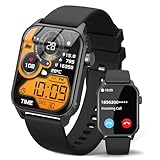
- 【1.83" HD Display & Customizable Watch Faces】Immerse yourself in a vibrant 1.83-inch IPS display, boasting a sharp resolution of 240*284 for crystal-clear visuals. Effortlessly personalize your smart watch with a wide array of customizable watch faces to suit your personal style for every occasion—whether trendy, artistic, or minimalist—ideal for casual, sporty, or professional. Its sleek, modern design complements any outfit, blending technology and fashion seamlessly for everyday wear
- 【120 Sports Modes & Advanced Health Tracking】Our TK29 smart watches for women men come equipped with 120 sports modes, allowing you to effortlessly track a variety of activities such as walking, running, cycling, and swimming. With integrated heart rate and sleep monitors, you can maintain a comprehensive overview of your health, achieve your fitness goals, and maintain a balanced, active lifestyle with ease. Your ideal wellness companion (Note: Step recording starts after exceeding 20 steps)
- 【IP67 Waterproof & Long-Lasting Battery】Designed to keep up with your active lifestyle, this smartwatch features an IP67 waterproof rating, ensuring it can withstand splashes, sweat, and even brief submersion, making it perfect for workouts, outdoor adventures, or rainy days. Its reliable 350mAh battery offering 5-7 days of active use and up to 30 days in standby mode, significantly reducing frequent charging. Ideal for all-day wear, whether you’re at the gym, outdoors, or simply on the go
- 【Stay Connected Anytime, Anywhere】Stay informed and in control with Bluetooth call and music control features. Receive real-time notifications for calls, messages, and social media apps like Facebook, WhatsApp, Twitter, and Instagram directly on your smartwatch. Easily manage calls, control your music playlist, and stay updated without needing to reach for your phone. Perfect for work, workouts, or on-the-go, this watch keeps you connected and never miss important updates wherever you are
- 【Multifunction & Wide Compatibility】Seamlessly handle heart rate monitoring, sleep tracking, and enjoy conveniences like camera/music control, Seamlessly handle heart rate monitoring, sleep tracking, and more-all directly from your wrist. This 1.83 inches HD smartwatch is compatible with iPhone (iOS 9.0+) & Android (5.0+), ensuring smooth daily connectivity and convenience throughout your day. More than just a timepiece, it’s a stylish, all-in-one wearable for smarter, healthier living
The GT 3 runs a streamlined version of HarmonyOS tailored specifically for low power consumption. App interactions are limited, background processes are tightly controlled, and system animations are intentionally conservative. This approach allows Huawei to advertise battery life measured in days rather than hours, which in real-world mixed usage often lands between one and two weeks depending on size and settings.
From a wearer’s perspective, the GT 3 behaves more like a modern digital instrument than a mini smartphone. You check notifications, log workouts, monitor health metrics, and occasionally interact with lightweight apps, but the watch rarely demands attention. For many users, especially those coming from fitness bands or traditional watches, this unobtrusive nature is the GT series’ biggest strength.
Watch Series: Huawei’s full smartwatch statement
The Huawei Watch 3 represents a different ambition entirely. This is Huawei’s attempt at a flagship smartwatch platform designed to rival feature-rich ecosystems like Apple Watch and Wear OS devices. It runs a full version of HarmonyOS with multitasking, a more flexible app framework, and support for standalone connectivity features.
This broader scope brings capabilities the GT 3 simply does not aim to match. The Watch 3 supports a more extensive app ecosystem, deeper system-level features, and, in some markets, LTE connectivity for calls and data without a phone nearby. It is designed for users who expect to interact with their watch frequently throughout the day rather than treating it as a background companion.
That ambition comes with trade-offs. The Watch 3’s more powerful hardware and software stack places greater demands on the battery, making daily or near-daily charging a realistic expectation for many users. It also introduces more complexity, both in system behavior and in how you manage apps, permissions, and updates.
Different users, different expectations
Huawei does not position the GT 3 as a “lesser” Watch 3; it is a deliberately different product aimed at users who value endurance, comfort, and consistency over software depth. The lighter system load often makes the GT 3 feel faster and more predictable in everyday interactions, even if it lacks advanced third-party apps or cellular independence.
The Watch 3, by contrast, is built for users who want their smartwatch to act independently, handle richer interactions, and replace certain phone tasks when needed. If you enjoy experimenting with apps, taking calls from your wrist, or using your watch as an always-connected device, the Watch series philosophy aligns more closely with that mindset.
This philosophical divide sets the foundation for every practical difference discussed later in this comparison. Design choices, health tracking behavior, battery performance, and pricing all make far more sense once you understand which experience Huawei intended each watch to deliver.
Design, Case Sizes, and Wearability Differences in Daily Use
That philosophical split between endurance-focused simplicity and feature-heavy independence is immediately visible on the wrist. Huawei’s design choices for the Watch GT 3 and Watch 3 reflect how each model is meant to be worn, interacted with, and lived with throughout a long day.
Overall design language and visual presence
The Watch GT 3 leans heavily into the look of a traditional sports watch, with a cleaner dial layout, softer case lines, and a generally more understated presence. It is designed to disappear into daily wear, whether paired with gym gear or casual clothing, without constantly reminding you that it is a computer on your wrist.
The Watch 3, by contrast, feels more overtly like a flagship smartwatch. Its case design is bolder, with sharper transitions between surfaces and a more prominent bezel that visually frames the display, reinforcing its role as a primary interaction device rather than a passive tracker.
Case sizes and how they translate on the wrist
Huawei offers the GT 3 in two main sizes, 42mm and 46mm, which gives it a wider range of wrist compatibility. The 42mm version in particular suits smaller wrists extremely well, maintaining balanced proportions and avoiding the top-heavy feel that can plague larger smartwatches.
The Watch 3 is physically larger and thicker overall, with its case dimensions reflecting the extra hardware required for LTE, speakers, and more powerful internals. On medium to smaller wrists, it can feel noticeably more substantial, and users sensitive to bulk may be more aware of it during all-day wear.
Materials, finishing, and perceived durability
Both watches use premium materials, but they communicate durability differently. The GT 3 typically pairs a stainless steel case with a refined brushed or polished finish, giving it a more classic, watch-like aesthetic that blends easily with leather or fabric straps.
The Watch 3 often feels more industrial in execution, with finishes that emphasize robustness and modernity. Its construction supports features like onboard calling and louder speakers, which adds confidence for active use but also contributes to its heavier, more technical feel.
Weight distribution and long-term comfort
In daily use, weight distribution becomes one of the most noticeable differences. The GT 3 is lighter and better balanced, which makes it easier to forget you are wearing it, especially during sleep tracking or extended fitness sessions.
The Watch 3’s extra weight is not uncomfortable, but it is more present. During long workdays or overnight wear, some users may prefer to loosen the strap slightly or remove it entirely, particularly if they are sensitive to pressure on the wrist.
Buttons, crown, and physical interaction
Both watches use a rotating crown paired with a secondary button, but their intent differs subtly. On the GT 3, the crown feels more like a navigation aid, helping you scroll through menus quickly without encouraging constant interaction.
On the Watch 3, the crown is central to the experience. It is used more frequently for app navigation, notifications, and multitasking, reinforcing the idea that this watch expects you to engage with it often and for longer periods at a time.
Strap options and adaptability to different lifestyles
The GT 3 benefits from its standard lug design and lighter case, making strap changes feel natural and visually cohesive. Swapping between silicone, leather, or third-party straps can dramatically change its personality without affecting comfort.
While the Watch 3 also supports strap changes, its larger case means that not all materials balance equally well. Heavier straps often feel more appropriate, which can limit how discreet or dressy the watch feels compared to the GT 3.
Everyday wearability in real-world scenarios
For users who want a watch that stays comfortable from morning workouts through evening downtime, the GT 3 excels. Its slimmer profile, lighter weight, and restrained design make it easier to live with continuously, including during sleep.
The Watch 3 suits users who prioritize interaction over invisibility. If you regularly take calls from your wrist, browse apps, or rely on your watch as a semi-independent device, the added size and weight feel justified, even if they come at the cost of subtlety and all-day comfort.
Display Technology and User Interaction (Bezels, Buttons, Touch)
Having already touched on comfort and physical controls, the way you actually see and interact with these watches becomes the next clear point of separation. Huawei uses high-quality AMOLED panels on both models, but the execution and intent behind each display are noticeably different once you start using them day to day.
Display panels and visual characteristics
Both the Watch GT 3 and Watch 3 use bright AMOLED displays with rich contrast and deep blacks, but the Watch 3 pushes slightly harder on visual impact. Its panel appears sharper in practice thanks to marginally higher pixel density, which becomes noticeable when reading dense notifications, scrolling through app lists, or viewing maps and widgets.
The GT 3’s display still looks excellent, especially for fitness metrics and watch faces, but it prioritizes clarity over complexity. Text is clean, colors are natural rather than saturated, and the screen feels tuned for quick glances rather than prolonged interaction.
Bezel size and perceived screen immersion
The Watch 3 features a more prominent bezel that visually frames the display, reinforcing its tool-like, almost instrument-inspired design. While this slightly reduces the feeling of edge-to-edge immersion, it adds structure and makes rotating through menus with the crown feel more precise.
The GT 3, by contrast, uses a slimmer bezel that allows the display to feel more open on the wrist. This gives watch faces a more traditional analog-watch look and helps the GT 3 blend into casual or dress settings without drawing attention to itself as a piece of tech.
Touch responsiveness and gesture control
Touch sensitivity is excellent on both models, with no meaningful lag in swipes or taps. The difference lies in how often you are expected to rely on touch input, rather than in raw performance.
On the Watch 3, touch gestures are central to the experience. Scrolling through apps, interacting with widgets, and managing notifications feels closer to a compact smartphone interface, encouraging longer sessions on the screen.
The GT 3 treats touch as a supporting input rather than the main event. Most interactions are brief and purposeful, such as checking heart rate, starting a workout, or changing a watch face, which aligns with its longer battery life and fitness-first philosophy.
Rank #2
![Apple Watch Series 11 [GPS 46mm] Smartwatch with Jet Black Aluminum Case with Black Sport Band - M/L. Sleep Score, Fitness Tracker, Health Monitoring, Always-On Display, Water Resistant](https://m.media-amazon.com/images/I/312K597M2uL._SL160_.jpg)
- HYPERTENSION NOTIFICATIONS — Apple Watch Series 11 can spot signs of chronic high blood pressure and notify you of possible hypertension.*
- KNOW YOUR SLEEP SCORE — Sleep score provides an easy way to help track and understand the quality of your sleep, so you can make it more restorative.
- EVEN MORE HEALTH INSIGHTS — Take an ECG anytime.* Get notifications for a high and low heart rate, an irregular rhythm,* and possible sleep apnea.* View overnight health metrics with the Vitals app* and take readings of your blood oxygen.*
- STUNNING DESIGN — Thin and lightweight, Series 11 is comfortable to wear around the clock — while exercising and even when you’re sleeping, so it can help track your key metrics.
- A POWERFUL FITNESS PARTNER — With advanced metrics for all your workouts, plus features like Pacer, Heart Rate Zones, training load, Workout Buddy powered by Apple Intelligence from your nearby iPhone,* and more. Series 11 also comes with three months of Apple Fitness+ free.*
Rotating crown integration with on-screen UI
Both watches use a rotating crown, but the way the display responds to it differs subtly. On the Watch 3, the UI is clearly designed around crown-driven navigation, with smooth, continuous scrolling and visual cues that invite frequent use.
The GT 3 also supports crown scrolling, but the interface feels more segmented and task-focused. You scroll to reach what you need, then stop, reinforcing the idea that the screen is there to inform rather than entertain.
Always-on display behavior and visibility
Always-on display is available on both models, but it feels more integral to the GT 3’s identity. Its AOD modes are restrained, legible, and optimized for minimal battery drain, making it practical to leave enabled all day without anxiety.
On the Watch 3, always-on display is visually richer but more power-hungry. It works well for users who value constant visibility and quick glances, though it subtly nudges you toward more frequent charging if left on continuously.
Real-world usability across lighting and motion
Outdoor visibility is strong on both watches, with automatic brightness reacting quickly to changes in light. The Watch 3’s higher brightness ceiling gives it an edge in harsh sunlight, particularly when navigating or reading longer messages.
The GT 3 compensates with better consistency during workouts and movement. Whether running, cycling, or lifting, its display remains easy to read at a glance, reinforcing its role as a dependable fitness companion rather than a wrist-mounted computer.
HarmonyOS Experience: Software Limits vs Full Smartwatch Capabilities
If the previous sections highlighted how differently these two watches invite interaction, HarmonyOS is where that philosophy becomes unmistakable. Both run Huawei’s in-house operating system, but they operate at very different levels of software ambition and day-to-day capability.
Two flavors of HarmonyOS, not one
The Huawei Watch 3 runs a fuller implementation of HarmonyOS, closer in spirit to a compact smartwatch OS with app-level depth. It supports third-party apps, background processes, and richer system animations, making it feel like an extension of your phone rather than a self-contained tracker.
The Watch GT 3 uses a lighter, more controlled version of HarmonyOS that prioritizes stability and efficiency. It looks familiar, but many system elements are simplified or locked down to preserve battery life and keep performance predictable over long wear periods.
App ecosystem and third-party support
On the Watch 3, Huawei’s AppGallery plays a central role. You can install navigation tools, productivity apps, music services, simple games, and region-dependent utilities, which meaningfully expands what the watch can do without reaching for your phone.
The GT 3 technically supports apps, but the selection is far narrower and more tightly curated. Most additions feel like enhanced widgets rather than standalone tools, reinforcing that the GT 3 is not designed for frequent app discovery or experimentation.
Notifications, messaging, and on-wrist interaction
Notifications are handled well on both watches, but the Watch 3 encourages deeper engagement. You can scroll through longer messages, interact with supported notifications, and spend more time managing information directly on the wrist.
On the GT 3, notifications are intentionally transactional. You read, acknowledge, and move on, which aligns with its fitness-first approach and reduces the temptation to treat the watch as a messaging hub.
Connectivity features and standalone potential
One of the Watch 3’s defining advantages is its support for eSIM on select variants. This allows calls, streaming, and data access without a phone nearby, transforming it into a genuinely independent wearable for short trips or workouts.
The GT 3 relies entirely on a connected smartphone for data-heavy tasks. While Bluetooth stability is excellent, the lack of standalone connectivity keeps its role firmly anchored as a companion device rather than a replacement.
System performance and long-term fluidity
With more powerful internals and higher software overhead, the Watch 3 feels faster and more dynamic when multitasking or navigating complex menus. Animations are smoother, transitions are richer, and the overall experience feels more “alive.”
The GT 3 trades visual flourish for consistency. Menus load instantly, transitions are restrained, and performance remains unchanged even after days of continuous wear, which matters more to users who value reliability over spectacle.
Software updates, longevity, and regional realities
Both watches receive HarmonyOS updates, but the Watch 3 benefits more visibly from new features thanks to its broader software foundation. New apps, system functions, and UI enhancements tend to land here first, assuming regional availability allows it.
The GT 3’s updates focus on refinement rather than expansion. Improvements usually arrive in the form of better health metrics, workout algorithms, or minor interface tweaks, which fits its long-term role as a dependable daily wearable.
Which HarmonyOS experience fits your lifestyle
Choosing between these two HarmonyOS experiences is ultimately about intent. The Watch 3 is built for users who want their smartwatch to feel like a small, capable computer on the wrist, even if that means charging more often and managing a more complex system.
The Watch GT 3 is for those who want software that stays out of the way. Its HarmonyOS implementation favors endurance, clarity, and fitness reliability, making it easier to live with day after day without ever feeling demanding.
App Ecosystem, Connectivity, and Smart Features Compared
Once you move past core performance and update cadence, the real philosophical split between the Watch 3 and Watch GT 3 becomes impossible to ignore. These two watches may share HarmonyOS branding, but their approach to apps, connectivity, and everyday “smart” behavior could not be more different in practice.
App support and third‑party ecosystem depth
The Huawei Watch 3 is the only model in this comparison that meaningfully supports third‑party apps. Through Huawei AppGallery, users can install navigation tools, simple productivity apps, utilities, and region-dependent services that run directly on the watch, reinforcing its identity as a self-sufficient device rather than a passive display.
That said, the ecosystem remains modest compared to Apple’s watchOS or Google’s Wear OS. App availability varies by country, many apps feel lightweight, and long-term support depends heavily on regional Huawei services, which is an important reality check for buyers outside China.
The Watch GT 3 does not aim to compete here. App installation is extremely limited, with only a small selection of watch faces and basic utilities available, and no expectation of expanding into a broader app platform. This keeps storage demands low and software behavior predictable, but it also means you should not expect future “killer apps” to unlock new use cases.
Notifications, calls, and messaging behavior
Both watches handle notifications reliably, displaying messages, alerts, and app notifications with excellent Bluetooth stability. Text clarity is strong on both AMOLED panels, and vibration motors are well-tuned for daily use without becoming intrusive.
The Watch 3 goes further with richer interaction. On supported phones, users can answer calls directly, manage contacts, and, in some regions, reply to messages using voice dictation or preset responses, especially when connected via eSIM rather than Bluetooth.
The GT 3 supports call handling through a connected phone and allows notification viewing, but interaction is intentionally limited. You are informed, not engaged, which aligns with its fitness-first philosophy and helps preserve battery life during long days or multi-day workouts.
Connectivity options and independence from your phone
Connectivity is where the Watch 3 firmly separates itself. With optional eSIM support, built-in Wi‑Fi, GPS, Bluetooth, and NFC (region-dependent), it can stream music, download apps, track outdoor workouts, and handle calls without a smartphone nearby, making it genuinely useful for runs, gym sessions, or short errands.
This independence comes at a cost. Active connectivity places higher demands on the battery, and managing mobile plans adds another layer of setup that casual users may never fully exploit.
The Watch GT 3 strips connectivity down to the essentials. Bluetooth and GPS are excellent, positioning is fast and accurate, and syncing with the Huawei Health app is seamless, but everything assumes your phone is nearby. For most users, this companion-style approach feels simpler and more reliable in everyday use.
Rank #3

- Bluetooth Call and Message Alerts: Smart watch is equipped with HD speaker, after connecting to your smartphone via bluetooth, you can answer or make calls, view call history and store contacts through directly use the smartwatch. The smartwatches also provides notifications of social media messages (WhatsApp, Twitter, Facebook, Instagram usw.) So that you will never miss any important information.
- Smart watch for men women is equipped with a 320*380 extra-large hd full touch color screen, delivering exceptional picture quality and highly responsive touch sensitivity, which can bring you a unique visual and better interactive experience, lock screen and wake up easily by raising your wrist. Though “Gloryfit” app, you can download more than 102 free personalised watch faces and set it as your desktop for fitness tracker.
- 24/7 Heart Rate Monitor and Sleep Tracker Monitor: The fitness tracker watch for men has a built-in high-performance sensor that can record our heart rate changes in real time. Monitor your heart rate 26 hours a day and keep an eye on your health. Synchronize to the mobile phone app"Gloryfit", you can understand your sleep status(deep /light /wakeful sleep) by fitness tracker watch develop a better sleep habit and a healthier lifestyle.
- IP68 waterproof and 110+ Sports Modes: The fitness tracker provides up to 112+ sports modes, covering running, cycling, walking, basketball, yoga, football and so on. Activity trackers bracelets meet the waterproof requirements for most sports enthusiasts' daily activities, such as washing hands or exercising in the rain, meeting daily needs (note: Do not recommended for use in hot water or seawater.)
- Multifunction and Compatibility: This step counter watch also has many useful functions, such as weather forecast, music control, sedentary reminder, stopwatch, alarm clock, timer, track female cycle, screen light time, find phone etc. The smart watch with 2 hrs of charging, 5-7 days of normal use and about 30 days of standby time. This smart watches for women/man compatible with ios 9.0 and android 6.2 and above devices.
Music, payments, and daily convenience features
Music handling reflects each watch’s priorities. The Watch 3 can store music locally, stream tracks over cellular in supported regions, and pair directly with Bluetooth headphones, reinforcing its standalone credentials.
The GT 3 also supports onboard music storage and headphone pairing, but playback management typically relies on syncing content through the phone. It works well for workouts, just without the sense of full independence.
Mobile payments via NFC are technically present on both, but real-world usability is heavily region-locked. In many markets, these features remain dormant or limited to specific banks, so they should be viewed as potential bonuses rather than core buying factors.
Smart assistants, sensors, and contextual awareness
The Watch 3 offers deeper system-level intelligence, including tighter integration with Huawei services and voice assistant support where available. Combined with its richer sensor fusion and connectivity, it can act on context more dynamically, such as location-aware functions or cloud-assisted features.
The GT 3 focuses on sensor-driven insights rather than assistant-led interaction. Its smart behavior centers on automatic workout detection, health trend analysis, and subtle reminders, all delivered with minimal user input.
This distinction also affects daily comfort. The GT 3 feels calmer on the wrist, with fewer prompts and interruptions, while the Watch 3 behaves more like a traditional smartwatch that actively asks for your attention.
Real-world usability and lifestyle fit
In daily wear, the Watch 3 feels closer to a compact wrist computer, offering flexibility, autonomy, and feature density that reward users willing to engage with its ecosystem. The trade-off is complexity, shorter battery endurance, and a greater dependence on regional software support.
The Watch GT 3 prioritizes frictionless usability. Its smart features are focused, its connectivity is predictable, and its behavior remains consistent whether you are tracking workouts, sleeping, or wearing it as an everyday timepiece.
If your definition of “smart” includes apps, cellular freedom, and experimentation, the Watch 3 is clearly more capable. If smart means dependable, unobtrusive, and fitness-centric, the GT 3’s restrained approach will feel far more satisfying over the long term.
Health Monitoring Accuracy: Heart Rate, SpO₂, Stress, and Sleep Tracking
That difference in philosophy carries directly into health tracking. Both watches are packed with sensors, but they prioritize accuracy and consistency in very different ways depending on how often they sample, how aggressively they process data, and how much battery they are willing to spend to do it.
Heart rate tracking: sensor generation and stability
The Watch GT 3 benefits from Huawei’s newer TruSeen 5.0+ optical heart rate system, which uses a redesigned LED layout and improved light capture to reduce noise during movement. In real-world use, this translates into steadier readings during walking, running, and gym workouts, especially when wrist movement is inconsistent.
The Watch 3 uses the earlier TruSeen 4.5+ system, which is still accurate at rest and during steady-state cardio but more prone to brief spikes or drops during interval training. Its tighter integration with HarmonyOS allows faster on-demand readings, but sustained accuracy favors the GT 3 over long sessions.
Fit and comfort play a role here as well. The GT 3’s lighter case and flatter caseback tend to sit more evenly on the wrist, helping maintain sensor contact, while the Watch 3’s thicker body can shift slightly during dynamic movement depending on strap choice.
SpO₂ monitoring: continuous tracking versus spot checks
Blood oxygen tracking is where the GT 3 clearly leans into passive health awareness. It supports continuous SpO₂ monitoring in the background, particularly during sleep, without a dramatic impact on battery life thanks to its efficient sampling strategy.
The Watch 3 supports SpO₂ measurements primarily as manual or periodic checks, and enabling more frequent monitoring has a noticeable effect on endurance. For users concerned with overnight oxygen trends or altitude-related data, the GT 3 provides a more complete picture with less user intervention.
It is important to note that neither watch is intended for medical use. However, for spotting trends or anomalies over time, the GT 3’s approach feels more consistent and informative in everyday wear.
Stress tracking and recovery insights
Both watches rely on Huawei’s TruRelax system, which estimates stress levels using heart rate variability. In practice, the accuracy of stress detection is similar on both models, particularly during work hours or prolonged sedentary periods.
Where the difference appears is in presentation and frequency. The GT 3 surfaces stress trends more quietly, focusing on long-term patterns and gentle breathing prompts, while the Watch 3 delivers more immediate notifications that align with its more interactive smartwatch personality.
Neither device replaces dedicated recovery platforms, but the GT 3’s calmer approach tends to feel more supportive rather than intrusive during daily use.
Sleep tracking: depth, consistency, and overnight comfort
Sleep tracking is a strong area for both watches, using Huawei TruSleep 2.0 with detailed stage breakdowns including light, deep, REM, and awake time. The GT 3’s lighter weight and slimmer profile make it easier to wear through the night, which directly improves data completeness.
The Watch 3 captures similarly detailed sleep data but is more sensitive to fit and strap tightness, especially for side sleepers. Missed readings are rare, but the GT 3 shows greater consistency across multiple nights.
Battery behavior also matters here. The GT 3 can track sleep, heart rate, and SpO₂ for days without charging, while the Watch 3’s shorter endurance means sleep tracking may occasionally be skipped to preserve power.
Overall accuracy versus health tracking reliability
In isolation, both watches deliver reliable health metrics, but their strengths diverge over time. The Watch 3 offers competent measurements backed by richer software, while the GT 3 focuses on long-term accuracy through efficient sensors and uninterrupted tracking.
For users who want health data to quietly accumulate in the background with minimal charging and minimal adjustment, the GT 3 feels more dependable. The Watch 3 suits those who value interactive health features and system-level intelligence, even if it means making occasional compromises in endurance and overnight monitoring.
Fitness and Sports Tracking: GPS Performance and Training Tools
After establishing how each watch handles continuous health monitoring, the differences become more pronounced once you start tracking workouts outdoors. Both the Watch GT 3 and Watch 3 are clearly positioned as capable fitness devices, but they prioritize endurance and depth in slightly different ways.
GPS hardware and real-world accuracy
Both watches use multi-system GNSS support, tapping into GPS, GLONASS, Galileo, and BeiDou for broad satellite coverage. In practical use, route tracking on both is accurate enough for road running, park loops, and open-sky cycling, with clean traces and minimal corner cutting.
The GT 3 tends to lock onto a signal faster and maintain consistency during longer sessions. Its updated antenna layout and power-efficient positioning hardware translate into steadier pace and distance data, especially noticeable during runs exceeding an hour.
The Watch 3 remains accurate, but its GPS performance is more sensitive to environmental factors like dense buildings or tree cover. Shorter activities track cleanly, while extended sessions can show slightly more variance as battery-saving behaviors begin to kick in.
Battery impact during GPS workouts
GPS usage highlights one of the clearest practical differences between the two watches. The GT 3 can handle frequent outdoor workouts without forcing changes to charging habits, even when combined with continuous heart rate tracking and post-workout analysis.
The Watch 3 consumes noticeably more power during GPS sessions. Runners or cyclists training several times a week will need to plan charging more carefully, particularly if they also rely on notifications, calls, or app usage during the day.
For endurance athletes or users who value spontaneity, the GT 3’s ability to absorb long GPS sessions without anxiety becomes a meaningful advantage.
Rank #4
![Apple Watch Series 11 [GPS 42mm] Smartwatch with Rose Gold Aluminum Case with Light Blush Sport Band - S/M. Sleep Score, Fitness Tracker, Health Monitoring, Always-On Display, Water Resistant](https://m.media-amazon.com/images/I/31J+F-pXaWL._SL160_.jpg)
- HYPERTENSION NOTIFICATIONS — Apple Watch Series 11 can spot signs of chronic high blood pressure and notify you of possible hypertension.*
- KNOW YOUR SLEEP SCORE — Sleep score provides an easy way to help track and understand the quality of your sleep, so you can make it more restorative.
- EVEN MORE HEALTH INSIGHTS — Take an ECG anytime.* Get notifications for a high and low heart rate, an irregular rhythm,* and possible sleep apnea.* View overnight health metrics with the Vitals app* and take readings of your blood oxygen.*
- STUNNING DESIGN — Thin and lightweight, Series 11 is comfortable to wear around the clock — while exercising and even when you’re sleeping, so it can help track your key metrics.
- A POWERFUL FITNESS PARTNER — With advanced metrics for all your workouts, plus features like Pacer, Heart Rate Zones, training load, Workout Buddy powered by Apple Intelligence from your nearby iPhone,* and more. Series 11 also comes with three months of Apple Fitness+ free.*
Sports modes and activity coverage
Both watches support a wide range of sports profiles, covering common activities like running, cycling, swimming, rowing, and strength training, alongside niche options such as trail running and indoor conditioning. Metrics like pace, cadence, heart rate zones, elevation, and training load are available on both.
The GT 3 leans more heavily into sport-first customization. Data screens are clean and easy to read mid-workout, and the watch prioritizes metrics that matter most during training rather than secondary smart features.
The Watch 3 offers similar data depth but places it within a broader smartwatch environment. During workouts, occasional background processes or notifications can make the experience feel slightly busier, especially for users focused purely on training.
Running tools, coaching, and performance insights
Huawei’s running-focused features are stronger on the GT 3. Structured training plans, adaptive guidance, and post-run analysis are easier to access and feel more tightly integrated into the daily fitness experience.
Metrics like aerobic and anaerobic training effect, recovery time, and long-term performance trends are clearly presented, encouraging consistency rather than one-off workouts. The GT 3 feels designed to quietly support progression over weeks and months.
The Watch 3 includes similar performance metrics, but they are framed more as data points than coaching tools. Users who already understand training concepts will appreciate the information, while beginners may find the guidance less proactive.
Swimming, durability, and comfort during exercise
Both watches are suitable for pool swimming and open-water exposure, with reliable stroke detection and lap tracking. Button placement and water lock behavior are similar, making either option safe for regular swim sessions.
Comfort plays a larger role during longer workouts. The GT 3’s lighter case and slimmer profile reduce wrist fatigue, particularly during long runs or sleep-plus-training routines.
The Watch 3 feels more substantial, which some users may prefer for everyday wear, but it can become noticeable during extended training sessions or high-intensity workouts where wrist movement is constant.
Who each watch suits from a training perspective
The GT 3 is clearly the better choice for users who prioritize outdoor fitness, GPS reliability, and long-term training consistency. Its combination of stable tracking, strong endurance, and focused coaching tools makes it feel closer to a dedicated fitness watch.
The Watch 3 works best for users who see fitness as one part of a broader smartwatch experience. It tracks workouts accurately, but its strengths lie in versatility rather than pure training efficiency, making it better suited to mixed-use lifestyles than performance-driven routines.
Battery Life and Charging: Endurance vs Functionality Trade-offs
Battery performance is where the philosophical split between the Watch GT 3 and Watch 3 becomes most obvious in daily use. The training focus described earlier naturally rewards consistency, and that consistency is far easier to maintain when charging becomes an occasional task rather than a daily one.
Rated battery life versus real-world usage
The Huawei Watch GT 3 is built around efficiency first, and that shows in its endurance. Huawei rates it at up to 14 days for the larger 46mm version and around 7 days for the 42mm, but real-world mixed use commonly lands just under those figures.
With continuous heart-rate monitoring, sleep tracking, several GPS workouts per week, and notifications enabled, most users can expect around 10 to 12 days from the 46mm GT 3. Even heavier GPS usage rarely pushes it below a full week, which aligns well with its role as a long-term training companion.
The Watch 3 operates under a different set of constraints. Its HarmonyOS smartwatch environment supports richer apps, background processes, and LTE connectivity on select models, all of which draw significantly more power.
In practice, the Watch 3 typically delivers between 2 and 3 days of battery life with normal smartwatch use. Enabling LTE, frequent app interactions, and longer GPS sessions can shorten that window further, making regular charging part of ownership rather than an occasional interruption.
Performance under GPS and workout load
GPS usage is a critical stress test for any fitness-focused watch. The GT 3 handles long outdoor sessions with impressive efficiency, maintaining accurate dual-band positioning without dramatic battery drain.
Multi-hour runs, hikes, or cycling sessions barely dent its remaining charge, which reinforces its suitability for endurance athletes or users who train frequently. This reliability allows users to focus on performance rather than constantly monitoring battery percentages before heading out.
The Watch 3’s GPS accuracy is solid, but its power consumption is notably higher during active tracking. Long workouts combined with on-wrist music playback or cellular data can accelerate drain quickly, limiting its appeal for ultra-long sessions or back-to-back training days without charging access.
Charging speed and convenience
Both watches support wireless charging via Huawei’s magnetic charging puck, and charging behavior is broadly similar. A short top-up can add several days of use on the GT 3, which makes occasional charging feel forgiving rather than mandatory.
The GT 3 typically reaches a full charge in around two hours, but because charging is infrequent, speed feels less critical in daily life. Many users can charge once a week or even less, often doing so opportunistically rather than on a strict schedule.
The Watch 3 charges at a comparable pace, but its shorter battery life makes charging frequency far more noticeable. Even though the charging process itself is not slow, the need to repeat it every couple of days can become a friction point, especially for users tracking sleep or relying on continuous health monitoring.
Battery modes and power management trade-offs
Huawei offers power-saving options on both devices, but they serve different purposes. The GT 3 already operates in an efficiency-focused mode by default, so power-saving features mainly extend already long endurance rather than rescue low battery situations.
The Watch 3 includes an Ultra-long Battery Life mode that significantly extends runtime by disabling many smart features and limiting app functionality. While effective, this mode essentially turns the Watch 3 into a GT-style fitness watch, highlighting the inherent trade-off between smart features and endurance.
Switching between modes can be useful, but it also underscores the Watch 3’s identity crisis for some users. Those who frequently rely on this mode may question whether they need the full smartwatch hardware in the first place.
Everyday usability and ownership experience
Over weeks of use, battery life directly affects how seamlessly a watch integrates into daily routines. The GT 3 fades into the background, quietly tracking health, sleep, and workouts without demanding attention or planning around charging.
This hands-off experience complements its lighter case and training-first design, reinforcing comfort not just on the wrist, but in how it fits into daily life. For users who value reliability and minimal maintenance, this consistency becomes one of its strongest advantages.
The Watch 3, by contrast, feels more like a traditional smartwatch in terms of energy demands. Its richer software experience and optional cellular independence come at the cost of endurance, making it better suited to users who prioritize functionality and app access over long-term battery confidence.
Compatibility with Android and iOS: What Actually Works
Battery life and software ambition naturally lead into the question of phone compatibility, because with Huawei watches, what you can actually do depends heavily on the device they’re paired with. Both the Watch GT 3 and Watch 3 rely on the Huawei Health app as the control center, but the experience diverges meaningfully between Android and iOS, and even between Huawei and non-Huawei Android phones.
Android compatibility: best-case vs real-world experience
On Android, both watches deliver their most complete experience, particularly when paired with Huawei smartphones. Setup is straightforward, syncing is stable, and core features like health tracking, workout data, notifications, and watch face management work reliably on both models.
The Watch GT 3 feels especially at home on Android because its feature set doesn’t push beyond what Huawei Health comfortably supports. You get full access to continuous heart rate tracking, SpO₂ spot checks, sleep analysis, stress monitoring, and detailed workout metrics without friction, and the watch rarely feels limited by the phone connection.
💰 Best Value
![Apple Watch Series 11 [GPS 42mm] Smartwatch with Jet Black Aluminum Case with Black Sport Band - S/M. Sleep Score, Fitness Tracker, Health Monitoring, Always-On Display, Water Resistant](https://m.media-amazon.com/images/I/31ybzrJZckL._SL160_.jpg)
- HYPERTENSION NOTIFICATIONS — Apple Watch Series 11 can spot signs of chronic high blood pressure and notify you of possible hypertension.*
- KNOW YOUR SLEEP SCORE — Sleep score provides an easy way to help track and understand the quality of your sleep, so you can make it more restorative.
- EVEN MORE HEALTH INSIGHTS — Take an ECG anytime.* Get notifications for a high and low heart rate, an irregular rhythm,* and possible sleep apnea.* View overnight health metrics with the Vitals app* and take readings of your blood oxygen.*
- STUNNING DESIGN — Thin and lightweight, Series 11 is comfortable to wear around the clock — while exercising and even when you’re sleeping, so it can help track your key metrics.
- A POWERFUL FITNESS PARTNER — With advanced metrics for all your workouts, plus features like Pacer, Heart Rate Zones, training load, Workout Buddy powered by Apple Intelligence from your nearby iPhone,* and more. Series 11 also comes with three months of Apple Fitness+ free.*
The Watch 3 is more complicated. While Android users gain access to HarmonyOS features like onboard apps, Wi‑Fi connectivity, and optional LTE on supported models, the AppGallery ecosystem remains modest. Third-party apps are limited in number and scope, and many serve more as functional extensions than full smartwatch replacements for phone apps.
Huawei phones vs non-Huawei Android devices
When paired with a Huawei phone, especially newer models running recent versions of EMUI or HarmonyOS, the Watch 3 benefits from tighter system integration. Features like quick pairing, more reliable background syncing, and smoother app installation feel noticeably more refined.
On non-Huawei Android phones, both watches still function well, but there can be small annoyances. Battery optimization settings sometimes need manual adjustment to prevent delayed notifications or background sync interruptions, particularly on aggressively managed Android skins.
The GT 3 is less sensitive to these issues because it leans on continuous background syncing rather than real-time app interactions. The Watch 3’s more ambitious software makes it slightly more vulnerable to inconsistencies when system permissions aren’t perfectly configured.
iOS compatibility: functional, but clearly limited
iPhone users can pair both watches with Huawei Health, but the experience is pared back. Core fitness and health tracking still works, including heart rate, sleep, workouts, and daily activity summaries, and data syncs reliably for long-term trends.
Notifications come through, but interaction is minimal. You can read messages, but replies, quick actions, and deeper app-based interactions are largely unavailable due to iOS restrictions. This limitation applies equally to the GT 3 and Watch 3, regardless of hardware capability.
The Watch 3’s smart features take the biggest hit on iOS. AppGallery support is extremely limited, LTE functionality is effectively sidelined for most users, and the watch loses much of its standalone appeal. In this context, it behaves more like an overbuilt fitness watch rather than a true smartwatch.
Health data access and ecosystem lock-in
Huawei Health acts as a closed ecosystem on both platforms, which is especially relevant for users invested in third-party fitness services. Direct syncing to platforms like Google Fit, Apple Health, or Strava is inconsistent or unavailable without workarounds.
This affects both watches equally, but the GT 3’s positioning makes it easier to accept. Its strength lies in long-term health trends and training guidance within Huawei’s own interface, rather than exporting data elsewhere.
For Watch 3 buyers expecting broader ecosystem integration, especially on iOS, this limitation can feel restrictive. The hardware and sensors are capable, but software boundaries prevent the data from flowing as freely as some users expect.
Which watch fits which ecosystem
For Android users, especially those on Huawei phones, both watches are viable, but the GT 3 feels more predictable and maintenance-free. Its lighter case, simpler software model, and long battery life align well with Android’s background behavior and notification handling.
The Watch 3 makes the most sense for Android users who actively want HarmonyOS features, are curious about onboard apps, and are comfortable accepting a smaller app ecosystem in exchange for cellular independence and richer watch-side functionality.
For iPhone users, the choice is clearer. The Watch GT 3 delivers nearly all of its intended value on iOS with minimal compromise, while the Watch 3’s headline features are largely neutralized. In practice, the GT 3 offers the more balanced, less frustrating ownership experience within Apple’s tightly controlled ecosystem.
Pricing, Value Proposition, and Which Watch Is Right for You
With ecosystem limitations and feature trade-offs clearly defined, price becomes the final lens through which these two watches should be judged. On paper, the Watch 3 is the more advanced product, but real-world value depends heavily on how much of that capability you can actually use day to day.
Launch pricing vs real-world street prices
At launch, the Huawei Watch 3 sat firmly in flagship territory, with pricing closer to premium Wear OS and Apple Watch models than to fitness-first wearables. LTE variants and higher-end case finishes pushed it even further up the ladder, especially once you factored in optional cellular plans.
The Watch GT 3 debuted at a noticeably lower price, reflecting its simpler software approach and fitness-led positioning. Over time, that gap has widened on the secondary and retail markets, with the GT 3 frequently discounted and bundled, while the Watch 3 holds its value less consistently due to its niche appeal.
In practical terms, the GT 3 often costs significantly less than the Watch 3 today, despite offering nearly identical health sensors, GPS performance, and build quality. That pricing reality fundamentally shifts the value conversation.
What you’re actually paying for
With the Watch 3, a portion of the price premium goes toward potential rather than guaranteed utility. HarmonyOS, onboard apps, LTE hardware, and higher internal storage all add cost, but their usefulness varies dramatically depending on region, phone pairing, and tolerance for Huawei’s limited app ecosystem.
The GT 3 channels its budget into the parts most users interact with constantly: display quality, battery capacity, comfort, and reliable health tracking. Its stainless steel case, AMOLED panel, and polished finishing do not feel like cost-cutting measures, even if the software experience is intentionally restrained.
Viewed through a value lens, the Watch 3 asks you to buy into Huawei’s smartwatch vision. The GT 3 asks you to buy a watch that quietly does its job every day without demanding compromises or adjustments to your habits.
Long-term ownership costs and durability
Both watches are well-built, with solid water resistance, scratch-resistant glass, and cases that hold up well to daily wear. Strap compatibility is also similar, using standard lug widths that make replacement bands easy and affordable.
Battery longevity plays a bigger role in long-term satisfaction. The Watch 3’s shorter runtime means more frequent charging, which compounds wear on the battery over time and subtly increases maintenance friction. The GT 3’s multi-day endurance reduces that burden and aligns better with how most people actually use a watch.
Neither model locks essential features behind subscriptions, which is a welcome advantage over some competitors. Once purchased, the core experience remains intact without ongoing costs.
Which watch makes sense for different buyers
Choose the Huawei Watch GT 3 if you want a dependable daily smartwatch that prioritizes comfort, battery life, and health tracking over experimentation. It is especially well-suited to users who wear their watch continuously, value sleep and training data, and prefer a set-it-and-forget-it experience that behaves predictably on both Android and iOS.
The Huawei Watch 3 is better suited to a narrower audience. It makes sense for Android users who actively want LTE independence, enjoy exploring HarmonyOS features, and are comfortable with a smaller app ecosystem in exchange for more watch-side autonomy. For these users, the Watch 3 can feel like a glimpse into Huawei’s long-term smartwatch ambitions.
For iPhone users, or anyone unsure whether they will fully use LTE and onboard apps, the Watch 3’s premium is difficult to justify. The GT 3 delivers a more complete version of its promise with fewer compromises.
Final value verdict
The core irony of this comparison is that the more affordable Watch GT 3 often delivers the better ownership experience. It aligns its hardware, software, and battery life around realistic usage, making it easier to live with and easier to recommend.
The Watch 3 is not a bad product, but it is a conditional one. Its value only fully unlocks under specific circumstances, while the GT 3’s value is immediate and consistent.
For most buyers weighing these two watches side by side, the GT 3 is the smarter, safer choice. The Watch 3 remains an interesting alternative for enthusiasts, but the GT 3 is the watch that gets the fundamentals right—and that is ultimately what gives it the stronger long-term value.