Android Wear has always promised flexibility, but for years its visual identity was quietly dictated by silicon-first companies building around screens, sensors, and spec sheets. The result was a generation of smartwatches that worked well but often looked like shrunken phones strapped to the wrist, asking style-conscious buyers to compromise. The Hugo Boss Touch matters because it was an early, confident signal that fashion brands were no longer content to simply license their logos onto generic tech hardware.
What Hugo Boss understood, and what the Touch makes immediately clear on the wrist, is that design authority changes how Android Wear is perceived and worn. This isn’t a smartwatch trying to impress you with features you’ll use once; it’s a watch that prioritizes how it looks under a cuff, how it feels after a full day, and how seamlessly it fits into an existing wardrobe. In doing so, it reframes Android Wear as a platform that can support aesthetic intent, not just technical ambition.
This section explores why that shift matters, how Hugo Boss used materials and interface design to reclaim visual control, and why the Touch still serves as a reference point for fashion-led smartwatches today, even if its internals now feel dated.
Design-first thinking, not tech-first compromise
The Hugo Boss Touch was never about winning spec comparisons, and that’s precisely the point. With its 44mm stainless steel case, slim profile for its era, and restrained bezel, it reads as a modern fashion watch first and a smartwatch second. The proportions are deliberate, avoiding the thick, top-heavy feel that plagued many early Android Wear devices.
🏆 #1 Best Overall

- 【Bluetooth Call and Voice Assistant】: Smart watch built-in microphone and HD speaker, you can make and receive calls directly from this smart watches for men. You can also use the built-in voice assistant to ask questions, control music playback and more
- 【Smart Notification and Quick Reply】: When you receive a message, call, or notification, this digital smart watch will remind you by vibration or ringing, so you will not miss important calls and messages from your lover/friend. Make your life simpler and smarter. The quick reply function for Android phones allows you to send preset short replies to received messages.
- 【24 Hour Health Monitoring】: This smart watch is compatible for most iphone and Android phones, and the digital chip inside is scientifically developed using the latest technology. The chip uses advanced sensors to monitor heart rate, blood oxygen and female cycle, and can also perform timely sleep quality tracking at night. All recorded data can be synced to your phone for analysis, providing valuable insights into your health and promoting lifestyle adjustments. (non-medical standard)
- 【IP68 Waterproof】: Sports watch is IP68 waterproof, and can be used normally even when washing hands, washing face or sweating. (Note: Not suitable for long-term immersion in water)
- 【100+ Sports Modes】: The sports watch is equipped with more than a hundred sports modes, including walking, running, cycling, hiking, yoga, football, strength training, etc, helping you achieve a healthier lifestyle.Receive real-time stats directly on your wrist and record your stats in the "Halofit" app
Material choice does much of the work here. Brushed steel surfaces reduce visual bulk, while polished accents catch light in a way that feels intentional rather than flashy. On the wrist, the Touch wears closer to a traditional three-hand watch than a gadget, helped by thoughtfully curved lugs and well-integrated straps that sit flat and comfortably over long periods.
The touch bezel as a statement of control
The Touch’s defining feature, its pressure-sensitive bezel, isn’t just a clever interaction trick. It’s a declaration that fashion brands can rethink smartwatch interfaces in ways that respect watchmaking conventions. Swiping or tapping the bezel to navigate notifications keeps fingerprints off the display and preserves the visual integrity of the dial.
This matters because it shifts attention back to the watch face itself. Android Wear’s circular UI finally feels at home when paired with a control scheme that echoes traditional bezels rather than touchscreens. The result is a cleaner, calmer experience that feels more like wearing a watch than managing a device.
Brand identity over feature overload
Hugo Boss didn’t attempt to out-Google Google. The Touch delivers standard Android Wear functionality of its generation: notifications, basic fitness tracking, voice commands, and app support, all running smoothly enough for daily use at the time. Battery life lands where you’d expect for early Android Wear, roughly a day with mixed use, reinforcing that this is not a multi-day endurance device.
Instead, the value proposition is emotional and visual. Buyers are paying for coherence, for a smartwatch that aligns with tailored jackets and minimalist sneakers rather than gym wear. Compared to tech-first rivals, the Touch makes a clearer promise: it will look right in more situations than it will do everything better.
Why this approach reshaped expectations
The Hugo Boss Touch helped legitimize the idea that Android Wear could be a canvas rather than a constraint. By asserting design control, Hugo Boss demonstrated that fashion houses could influence not just cases and straps, but how smartwatches are interacted with and perceived socially.
That legacy matters today as more brands revisit the balance between software capability and physical design. The Touch doesn’t need to be perfect, or current, to be important. It proved that when fashion brands lead with confidence and clarity, Android Wear becomes less about tolerating tech on the wrist and more about choosing it.
Industrial Design First: Case Architecture, Materials, and Wrist Presence
If the software philosophy reframed how Android Wear could behave like a watch, the physical design is where Hugo Boss made that argument impossible to ignore. The Touch doesn’t hide its smartwatch nature, but it deliberately wraps it in proportions, materials, and surface treatments that borrow more from contemporary dress watches than consumer electronics.
This is a product designed to be noticed for its restraint. On the wrist, it reads as intentional rather than technical, a subtle but important distinction that many early Android Wear devices struggled to achieve.
Case architecture that prioritizes symmetry
The Touch uses a clean, round case with a deliberately flat, uninterrupted profile. There’s no protruding crown, no aggressive lug articulation, and no overtly sporty beveling, which keeps the silhouette calm and balanced from every angle.
At roughly 44mm in diameter, it sits firmly in modern fashion-watch territory, but careful lug shaping prevents it from wearing oversized. The short, downward-curving lugs help the case hug the wrist, minimizing the slab-sided effect that plagued many first-generation smartwatches.
Materials and finishing over spec-sheet flexing
Hugo Boss opted for stainless steel across the range, with finishes that prioritize visual cohesion over technical bravado. Brushed surfaces dominate, reducing glare and fingerprints, while polished accents are used sparingly to add definition without tipping into flashiness.
This choice matters because it aligns the Touch more closely with traditional watch expectations. It feels like a solid object rather than a plastic gadget, and that tactile impression carries through daily wear, especially when paired with tailored clothing or structured outerwear.
Bezel-led interaction shapes the physical design
The touch-sensitive bezel isn’t just an interface decision, it fundamentally informs the watch’s architecture. The bezel is visually distinct without being bulky, creating a subtle frame around the display that reinforces the illusion of a conventional dial.
By keeping the screen largely free of fingerprints, the watch maintains a cleaner look throughout the day. This is a small but meaningful win for wrist presence, as the Touch continues to look composed even after hours of notifications and interactions.
Strap choices and fashion adaptability
Hugo Boss leaned into interchangeable leather and rubber straps, each clearly styled rather than generic. The leather options skew toward smooth, minimally stitched designs that echo the brand’s tailoring heritage, while rubber variants stay sleek rather than overtly athletic.
Standard lug widths make third-party straps an easy upgrade, which enhances long-term wearability. This flexibility reinforces the idea that the Touch is meant to adapt to outfits and occasions, not dictate them.
How it actually wears, day to day
On the wrist, the Touch feels balanced rather than heavy, with weight distributed evenly across the case and strap. Thickness is noticeable compared to a mechanical dress watch, but restrained relative to other Android Wear models of its era.
It slides under a shirt cuff with some awareness but without snagging, and it never feels visually out of place in professional settings. That real-world comfort and social versatility are arguably its strongest industrial design achievements.
Design-led value in context
The Hugo Boss Touch was never positioned as a bargain, and its value isn’t rooted in cutting-edge internals. What buyers were paying for was confidence: a smartwatch that looked resolved, deliberate, and brand-authentic at a time when many competitors felt experimental or compromised.
Seen through that lens, the industrial design isn’t just successful, it’s foundational. It demonstrates how Android Wear could be elevated through proportion, material choice, and restraint, proving that sometimes the most persuasive innovation happens on the surface rather than under it.
Minimalism With Intent: Dial Aesthetics, Display Integration, and Visual Restraint
Where the Touch’s case design establishes credibility, the dial is where Hugo Boss asserts control. This is the point where many Android Wear watches of its era defaulted to novelty or visual noise, yet the Touch instead doubles down on restraint, treating the screen as a design surface rather than a feature checklist.
That approach reframes expectations immediately. Rather than advertising its smartness at every glance, the Touch prioritizes composure, allowing the technology to recede unless it’s actively needed.
A digital dial that behaves like an analog one
The default watch faces are intentionally sparse, borrowing heavily from traditional dress watch layouts. Indices are clean, typography is neutral, and complications are limited to essentials like time, date, and subtle notification cues.
Crucially, the faces avoid exaggerated depth effects or hyper-saturated colors that date quickly. This makes the Touch feel less like a gadget frozen in a specific Android Wear generation and more like a contemporary accessory that can age gracefully.
Display integration without visual disruption
The circular display sits flush within the case, framed by a slim bezel that neither draws attention nor feels like an afterthought. There’s no attempt to disguise the screen as something else, but there’s also no visual drama pulling focus away from the overall form.
Brightness and contrast are tuned toward legibility rather than spectacle. Outdoors, the screen remains readable without pushing into harsh luminance, while indoors it avoids the glowing “black hole” effect that undermines the illusion of a traditional dial.
Restraint as a usability decision
Minimalism here isn’t purely aesthetic. By limiting on-screen clutter, interactions become more deliberate, with swipes and taps feeling purposeful rather than reactive.
Notifications appear cleanly and disappear just as quietly, reinforcing the idea that the watch supports daily life rather than competes for attention. For users who want Android Wear functionality without the constant visual reminders of it, this balance is surprisingly effective.
What it doesn’t try to be
The Touch never chases the ultra-dense data dashboards favored by fitness-first wearables. Health tracking exists, but it’s visually de-emphasized, tucked behind menus rather than surfaced as default identity.
This makes expectations clear. If your priority is metrics, graphs, and persistent activity rings, the Touch will feel reserved. If you want a watch that looks complete even when doing very little, its visual discipline becomes a strength rather than a compromise.
Rank #2

- 【1.83" HD Display & Customizable Watch Faces】Immerse yourself in a vibrant 1.83" IPS display, boasting a sharp resolution of 240*284 for crystal-clear visuals. Effortlessly personalize your smart watch with a wide array of customizable watch faces to suit your personal style for every occasion—whether trendy, artistic, or minimalist—ideal for casual, sporty, or professional. Its sleek, modern design complements any outfit, blending technology and fashion seamlessly for everyday wear
- 【120 Sports Modes & Advanced Health Tracking】Our TG08 smart watches for women men come equipped with 120 sports modes, allowing you to effortlessly track a variety of activities such as walking, running, cycling, and swimming. With integrated heart rate and sleep monitors, you can maintain a comprehensive overview of your health, achieve your fitness goals, and maintain a balanced, active lifestyle with ease. TG08L is your ideal companion for a healthier and more informed lifestyle
- 【Stay Connected Anytime, Anywhere】Stay informed and in control with Bluetooth call and music control features. Receive real-time notifications for calls, messages, and social media apps like Facebook, WhatsApp, Twitter, and Instagram directly on your smartwatch. Easily manage calls, control your music playlist, and stay updated without needing to reach for your phone. Perfect for work, workouts, or on-the-go, this watch keeps you connected and never miss important updates wherever you are
- 【IP67 Waterproof & Long-Lasting Battery】Designed to keep up with your active lifestyle, this smartwatch features an IP67 waterproof rating, ensuring it can withstand splashes, sweat, and even brief submersion, making it perfect for workouts, outdoor adventures, or rainy days. Its reliable 350mAh battery offering 5-7 days of active use and up to 30 days in standby mode, significantly reducing frequent charging. Ideal for all-day wear, whether you’re at the gym, outdoors, or simply on the go
- 【Multifunction & Wide Compatibility】Seamlessly handle heart rate monitoring, sleep tracking, and enjoy conveniences like camera/music control, Seamlessly handle heart rate monitoring, sleep tracking, and more-all directly from your wrist. This 1.83" HD smartwatch is compatible with iPhone (iOS 9.0+) & Android (5.0+), ensuring smooth daily connectivity and convenience throughout your day. More than just a timepiece, it’s a stylish, all-in-one wearable for smarter, healthier living
Brand influence expressed through restraint
Hugo Boss’s fashion DNA is evident not through logos or flourishes, but through editing. The brand’s experience with tailoring and proportion shows up in what’s been left out as much as what remains.
The result is a smartwatch dial that feels confident enough to stay quiet. In the context of Android Wear, that confidence was rare, and it’s what ultimately allows the Touch to elevate the platform visually, not by adding more, but by knowing exactly when to stop.
Wearability as Luxury: Case Dimensions, Comfort, and How It Sits on the Wrist
That same restraint carries directly into how the Hugo Boss Touch wears. The design never asks the wrist to accommodate the technology; instead, the technology adapts itself to the conventions of a modern fashion watch.
Rather than chasing extremes, the Touch lands in a familiar, broadly wearable zone that prioritizes proportion over presence. It’s a decision that quietly reinforces the idea that luxury, even in a smartwatch, begins with comfort.
Case size that respects tailoring
The Touch occupies the mid‑40mm category, but it avoids the slab-like feel that defined many early Android Wear launches. Lug-to-lug length is kept in check, allowing the watch to sit centered rather than spilling over the edges of the wrist.
Thickness is equally considered. While it’s not ultra-thin by traditional watch standards, the profile is softened by case shaping, making the height feel intentional rather than dictated by components.
On smaller wrists, the Touch reads as assertive but not overwhelming. On larger wrists, it settles in naturally, maintaining balance without relying on sheer scale.
Materials that prioritize skin contact
Case finishing plays a significant role in perceived comfort. The Touch uses smooth, uninterrupted surfaces where the case meets the wrist, reducing pressure points during extended wear.
Edges are rounded rather than chamfered aggressively, a subtle choice that matters over a full day. It’s the kind of detail more common in fashion-led watches than tech-first wearables.
Even the caseback avoids unnecessary visual complexity. Sensors are present, but they’re integrated cleanly, keeping the underside functional without feeling clinical.
Weight distribution and all-day wear
Weight is moderate, but more importantly, it’s well balanced. There’s no sense of the watch tipping forward or pulling against the strap, a common issue with display-heavy smartwatches.
This balance makes the Touch easier to forget you’re wearing, which is arguably the highest compliment for a connected device. Notifications arrive, interactions happen, and then the watch recedes again.
For users transitioning from traditional quartz or automatic watches, this familiar weight profile reduces the learning curve. It behaves like a watch first, a computer second.
Strap integration and visual continuity
The supplied strap options lean classic rather than experimental, reinforcing the Touch’s fashion-watch roots. Whether leather or rubber, the straps flow cleanly into the case without awkward gaps or exaggerated lugs.
This integration matters visually. The watch reads as a single object rather than a screen bolted onto a band, preserving the illusion of completeness even when the display is inactive.
Comfort-wise, the strap flexibility allows the case to settle naturally as the wrist moves. There’s no rigid articulation fighting against motion, which helps during long wear periods.
How it wears in real life
In daily use, the Touch works best as a constant companion rather than a performance tool. It slides under shirt cuffs without catching, pairs comfortably with tailored clothing, and doesn’t demand outfit coordination.
Sweat and movement never feel like afterthoughts, but neither does the watch broadcast its fitness capabilities. The experience stays aligned with its visual promise: discreet, polished, and composed.
Ultimately, the Touch’s wearability reinforces its broader design philosophy. By treating comfort and proportion as luxury features, Hugo Boss delivers a smartwatch that feels designed for people who wear watches because they enjoy wearing them, not because they’re tracking something every minute.
Android Wear, Styled Not Supersized: Interface Experience and Everyday Usability
After spending time with the Touch on the wrist, the software experience feels like a continuation of the same design logic rather than a competing layer. Android Wear is present in full, but it’s restrained, visually calm, and scaled to suit the watch’s proportions rather than overwhelm them.
This is not a smartwatch that tries to dazzle through interface density. Instead, it leans into clarity, legibility, and a sense of visual breathing room that mirrors the physical balance discussed earlier.
Android Wear as a supporting actor, not the headline
Hugo Boss hasn’t attempted to reinvent Android Wear, and that’s a strength rather than a shortcoming. The familiar card-based notification system, swipe gestures, and app drawer behave exactly as seasoned Android users expect, which removes friction from the first interaction.
What changes is how often you feel the need to dive in. Notifications are readable at a glance, actions are limited to essentials, and the watch rarely pressures you into extended on-wrist sessions. It aligns well with the idea of the Touch as a watch you check, not a device you manage.
This lighter interaction model also suits users coming from analog watches. There’s no sense that you need to learn a new digital language; the interface fades politely into the background once you’ve acknowledged it.
Display behavior and visual restraint
The circular display is used with a notable degree of discipline. Fonts are clean, complications are kept modest, and there’s a conscious avoidance of cramming data edge-to-edge just because the pixels are available.
Watch faces favor symmetry and contrast over novelty. Even the more information-rich options maintain a clear hierarchy, ensuring time remains the focal point rather than one element among many.
Crucially, the screen doesn’t dominate the watch when inactive. With ambient mode enabled, the Touch reads like a traditional timepiece from across the room, preserving its fashion-watch credibility instead of advertising itself as a gadget.
Navigation that respects wrist-based use
Scrolling, tapping, and swiping feel deliberate rather than twitchy. The interface speed is responsive enough for everyday tasks without encouraging rapid-fire interaction that would feel out of place on a dress-leaning smartwatch.
The absence of excessive haptics or animated flourishes keeps the experience composed. Feedback is subtle, confirming actions without drawing attention to the technology doing the work.
In practice, this makes the Touch well suited to moments when phones stay in pockets: quick replies, calendar checks, or dismissing notifications without breaking stride.
Everyday functions over performance theatrics
Health and activity tracking are present, but they’re framed as background features rather than a lifestyle mandate. Step counts, movement reminders, and basic workout tracking integrate quietly, without visual aggression or constant prompts.
Rank #3
![Apple Watch Series 11 [GPS 42mm] Smartwatch with Rose Gold Aluminum Case with Light Blush Sport Band - S/M. Sleep Score, Fitness Tracker, Health Monitoring, Always-On Display, Water Resistant](https://m.media-amazon.com/images/I/31J+F-pXaWL._SL160_.jpg)
- HYPERTENSION NOTIFICATIONS — Apple Watch Series 11 can spot signs of chronic high blood pressure and notify you of possible hypertension.*
- KNOW YOUR SLEEP SCORE — Sleep score provides an easy way to help track and understand the quality of your sleep, so you can make it more restorative.
- EVEN MORE HEALTH INSIGHTS — Take an ECG anytime.* Get notifications for a high and low heart rate, an irregular rhythm,* and possible sleep apnea.* View overnight health metrics with the Vitals app* and take readings of your blood oxygen.*
- STUNNING DESIGN — Thin and lightweight, Series 11 is comfortable to wear around the clock — while exercising and even when you’re sleeping, so it can help track your key metrics.
- A POWERFUL FITNESS PARTNER — With advanced metrics for all your workouts, plus features like Pacer, Heart Rate Zones, training load, Workout Buddy powered by Apple Intelligence from your nearby iPhone,* and more. Series 11 also comes with three months of Apple Fitness+ free.*
This approach suits the watch’s broader identity. The Touch is not competing with sport-first wearables on metrics or sensor depth; it’s offering reassurance that everyday activity is accounted for without asking the wearer to change habits.
Battery life benefits from this restraint. By avoiding always-on visual noise and heavy background processes, the watch comfortably makes it through a full day with normal use, aligning expectations with real-world routines rather than lab conditions.
Compatibility and daily reliability
Paired with Android smartphones, the Touch behaves consistently and predictably. Syncing is stable, notifications arrive promptly, and software updates follow standard Android Wear channels rather than bespoke brand layers.
There’s value in that simplicity. Owners aren’t locked into a fashion brand’s experimental software ecosystem, nor are they burdened with learning a unique interface that may age poorly.
Over time, this reliability becomes part of the appeal. The watch feels dependable rather than flashy, which suits a product designed to live on the wrist across workdays, evenings, and quieter weekends.
Usability shaped by taste, not specs
What ultimately sets the Hugo Boss Touch apart in daily use is not what Android Wear can do, but how selectively it’s presented. The interface respects the physical object it lives within, never pushing beyond what feels appropriate for the case size, finishing, and brand positioning.
It’s a smartwatch that understands its audience. Users drawn to Hugo Boss are likely seeking polish, consistency, and visual confidence, not constant interaction or feature escalation.
By letting Android Wear operate as an enabler rather than a spectacle, the Touch elevates the platform through design discipline. It proves that smart functionality doesn’t need to announce itself loudly to feel modern, useful, or desirable.
What You Gain — and Don’t: Performance, Battery Life, and Feature Reality Check
With the design philosophy clearly established, the reality check comes into focus. The Hugo Boss Touch is a smartwatch that prioritises visual coherence and brand alignment over chasing the fastest processors or the longest feature list, and that trade-off shapes the ownership experience in meaningful ways.
Everyday performance, not power-user speed
Under the case, performance is firmly in the “good enough” category rather than cutting-edge. App launches, swipes, and notification handling are smooth when used casually, but the Touch does not reward rapid-fire interactions or constant multitasking the way tech-led flagships do.
This is not a watch built for bouncing between fitness dashboards, voice queries, and third-party apps all day. Instead, it performs best when treated as a refined extension of the phone, handling timekeeping, alerts, and light interactions without demanding attention.
Battery life that mirrors real-world habits
Battery expectations are refreshingly realistic. In typical daily use—notifications enabled, occasional interaction, and restrained background activity—the Touch comfortably lasts a full day and often nudges into the following morning.
That endurance comes from moderation rather than capacity. There’s no always-on display draining power for visual theatre, and sensor usage is tuned for lifestyle tracking rather than constant biometric scrutiny.
Charging becomes part of a daily routine rather than a frustration. For its intended audience, that predictability matters more than multi-day claims that rarely survive real wear.
Feature set: intentionally selective
The Hugo Boss Touch offers the essentials of Android Wear without trying to be a fitness lab or digital assistant hub. Step tracking, basic activity logging, heart rate monitoring, and notification mirroring cover the core use cases without overwhelming the interface.
What you don’t get is advanced sports metrics, GPS-led workout analysis, or deep health insights that rival fitness-first wearables. There’s no ambition here to replace a dedicated training watch or wellness tracker.
That omission is deliberate. The Touch positions smart features as background support, not the primary reason the watch exists.
Software experience over spec chasing
Running standard Android Wear software gives the Touch a quiet advantage. Updates arrive through familiar channels, app compatibility remains broad, and there’s no custom skin attempting to reinvent the platform for the sake of branding.
This keeps the experience stable over time, even if it never feels experimental. The interface respects the case dimensions and screen size, avoiding visual clutter that would undermine the watch’s tailored proportions and finishing.
For users wary of fashion smartwatches with short-lived software ecosystems, this restraint adds confidence.
Comfort, materials, and daily wear trade-offs
The stainless steel case, slim profile, and carefully finished surfaces contribute to all-day comfort, particularly in work and social settings. Weight is balanced enough to avoid wrist fatigue, and the watch sits closer to a traditional dress watch than a sporty wearable.
Strap options lean toward leather and refined textures rather than silicone or performance materials. That enhances visual appeal but limits suitability for intense workouts or wet environments.
Durability is adequate for daily life, but this is not a watch designed to be knocked around. The Touch rewards mindful wear rather than rugged use.
Value defined by aesthetics, not specifications
Viewed purely through a spec sheet, the Hugo Boss Touch can feel expensive for what it offers. Comparable Android Wear devices deliver more sensors, stronger performance, and deeper fitness tools at similar prices.
What the Touch sells instead is design credibility. You’re paying for proportion, finishing, brand identity, and the confidence that the watch looks intentional with tailored clothing rather than borrowed from a gym bag.
For buyers who value how a smartwatch integrates into their personal style as much as what it tracks, that equation can make sense.
Boss Versus Tech-First Smartwatches: Design Priorities Compared to Fossil, Samsung, and Moto
Seen alongside mainstream Android Wear competitors, the Hugo Boss Touch makes its priorities immediately clear. It approaches the smartwatch as a finished object first, and a technology platform second, which puts it on a different axis from brands that begin with features and engineer the case around them.
That distinction becomes clearer when compared directly to Fossil, Samsung, and Moto, all of which balance design and technology differently, often revealing their origins as tech products despite improving aesthetics.
Fossil: Fashion-led, but still modular
Fossil is the most obvious point of comparison, sharing a similar fashion-brand approach to Android Wear. Its smartwatches often look good at a glance, but closer inspection reveals design compromises made to accommodate interchangeable cases, aggressive SKU expansion, and cost efficiencies.
The Hugo Boss Touch feels more resolved. Case proportions are tighter, finishing is more consistent, and the watch appears designed as a single object rather than part of a modular ecosystem. Lug transitions are cleaner, and the watch sits flatter on the wrist, contributing to a more traditional watch-like presence.
Where Fossil wins is versatility. Broader strap compatibility, lighter cases, and more casual styling make Fossil smartwatches easier to wear across workouts and weekends. The Boss Touch is more deliberate, favoring tailored outfits and professional settings over all-purpose flexibility.
Rank #4

- Bluetooth Call and Message Alerts: Smart watch is equipped with HD speaker, after connecting to your smartphone via bluetooth, you can answer or make calls, view call history and store contacts through directly use the smartwatch. The smartwatches also provides notifications of social media messages (WhatsApp, Twitter, Facebook, Instagram usw.) So that you will never miss any important information.
- Smart watch for men women is equipped with a 320*380 extra-large hd full touch color screen, delivering exceptional picture quality and highly responsive touch sensitivity, which can bring you a unique visual and better interactive experience, lock screen and wake up easily by raising your wrist. Though “Gloryfit” app, you can download more than 102 free personalised watch faces and set it as your desktop for fitness tracker.
- 24/7 Heart Rate Monitor and Sleep Tracker Monitor: The fitness tracker watch for men has a built-in high-performance sensor that can record our heart rate changes in real time. Monitor your heart rate 26 hours a day and keep an eye on your health. Synchronize to the mobile phone app"Gloryfit", you can understand your sleep status(deep /light /wakeful sleep) by fitness tracker watch develop a better sleep habit and a healthier lifestyle.
- IP68 waterproof and 110+ Sports Modes: The fitness tracker provides up to 112+ sports modes, covering running, cycling, walking, basketball, yoga, football and so on. Activity trackers bracelets meet the waterproof requirements for most sports enthusiasts' daily activities, such as washing hands or exercising in the rain, meeting daily needs (note: Do not recommended for use in hot water or seawater.)
- Multifunction and Compatibility: This step counter watch also has many useful functions, such as weather forecast, music control, sedentary reminder, stopwatch, alarm clock, timer, track female cycle, screen light time, find phone etc. The smart watch with 2 hrs of charging, 5-7 days of normal use and about 30 days of standby time. This smart watches for women/man compatible with ios 9.0 and android 6.2 and above devices.
Samsung: Technology-forward with visual weight
Samsung’s Galaxy Watch line represents the opposite philosophy. These watches are engineered around sensors, battery capacity, and performance first, which often results in thicker cases, bolder bezels, and a more overtly technical aesthetic.
Compared to Samsung, the Hugo Boss Touch feels restrained and refined. It avoids rotating bezels, oversized crowns, or sporty textures, opting instead for smooth surfaces and understated detailing. On the wrist, this translates to less visual dominance and better compatibility with formal clothing.
The trade-off is obvious. Samsung delivers superior health tracking, stronger battery life, brighter displays, and deeper fitness integration. The Boss Touch does not attempt to compete here; it simply refuses to let hardware ambition dictate its visual identity.
Moto: Minimalism versus material confidence
Moto’s Android Wear watches historically leaned into clean, minimal design, often praised for their circular cases and uncluttered faces. However, cost-driven materials and lighter construction sometimes undermined that elegance in daily wear.
The Hugo Boss Touch takes a similar minimalist direction but executes it with more material confidence. Stainless steel construction, polished and brushed contrasts, and a more substantial feel elevate the experience beyond visual simplicity. It feels like a watch you notice when you put it on, not just when it vibrates.
Moto’s strength lies in approachability and comfort. Boss leans toward presence and perceived value, even if that means slightly more weight and less tolerance for casual abuse.
Design coherence over feature dominance
What ultimately separates the Hugo Boss Touch from tech-first smartwatches is coherence. Every visible element serves the overall aesthetic, from the restrained bezel to the choice of strap materials and the way the screen integrates into the case.
Tech brands often treat the display as the hero, with the case acting as a functional shell. Boss treats the display as one component within a broader design language, ensuring it never overwhelms the proportions or finishing.
This results in a smartwatch that feels calmer, more intentional, and less disposable. It may not excite spec-focused buyers, but it resonates with those who see a watch as part of their personal presentation rather than a wearable dashboard.
Who this design-first approach really suits
For buyers cross-shopping Fossil, Samsung, or Moto, the decision comes down to priorities rather than price. If fitness metrics, battery endurance, and ecosystem features dominate your checklist, tech-first options will satisfy more completely.
If, however, your smartwatch needs to disappear under a shirt cuff, complement tailored clothing, and feel appropriate in meetings and social settings, the Hugo Boss Touch offers something rarer. It treats Android Wear as an invisible enabler, allowing the design to lead without apology.
That clarity of intent is what elevates it. The Touch doesn’t try to out-tech its rivals; it out-designs them for a very specific kind of wearer.
Straps, Finishing, and Fashion Modularity: Where the Brand DNA Really Shows
That design-first philosophy becomes most tangible once you look past the case and onto the elements that actually touch your skin. Straps, surface finishing, and the way the watch adapts to different outfits are where Hugo Boss separates itself most clearly from tech-native rivals.
This is also where the Touch feels less like an Android Wear device wearing a fashion logo and more like a Boss watch that happens to be smart.
Strap choices that feel styled, not bundled
Out of the box, the Hugo Boss Touch is typically paired with a smooth leather strap that prioritises visual refinement over athletic versatility. The leather has a clean, lightly grained finish rather than the heavily padded look common on entry-level fashion watches, keeping the profile slim against the wrist.
Comfort is immediate, with minimal break-in time, and the strap drapes naturally rather than resisting the curve of the wrist. It reinforces the idea that this watch is meant to be worn all day, not just during workouts or notifications bursts.
Unlike many Android Wear watches that ship with generic silicone bands as a default, Boss makes a deliberate statement here. This is a smartwatch designed to live in the same wardrobe as dress shoes, tailored jackets, and structured casualwear.
Standard sizing enables real modularity
Crucially, the Touch avoids proprietary strap systems. The lugs accept standard watch straps, making it easy to swap leather for steel, nylon, or rubber without special adapters or brand-locked accessories.
This may sound minor, but it fundamentally changes how the watch fits into daily life. A brown leather strap softens the look for business casual, while black leather sharpens it for formal settings, and a mesh or bracelet option adds a more contemporary edge.
It also future-proofs the watch better than many smartwatches. As tastes change or straps wear out, the Touch remains adaptable rather than disposable.
Case finishing that rewards close inspection
The stainless steel case is where Boss’ fashion-watch experience quietly pays off. Polished chamfers catch light without looking flashy, while brushed surfaces do the work of hiding everyday scuffs.
The transitions between finishes are clean and deliberate, giving the case more visual depth than most Android Wear devices in this class. It feels considered rather than stamped, even if it stops short of true luxury-watch detailing.
This level of finishing also contributes to perceived value. When viewed from arm’s length across a table, the Touch reads as a traditional watch first and a piece of tech second.
Hardware details that support the aesthetic
Buttons and bezels are kept visually restrained, avoiding oversized crowns or aggressive knurling. Interaction points blend into the case design rather than demanding attention, reinforcing the calm, cohesive look established earlier in the design.
Even the way the display sits within the case feels intentional. The screen doesn’t dominate the front view, and when inactive it blends convincingly into the overall dial area rather than screaming “smartwatch.”
This restraint matters for buyers who want technology without visual noise.
Everyday wearability over sport-driven durability
The trade-off for this fashion-led execution is that the Touch doesn’t chase ruggedness. The leather strap, polished steel, and slimmer profile are better suited to offices, dinners, and urban routines than gyms or outdoor abuse.
That said, daily durability is sufficient for normal use, and the materials hold up well to regular wear when treated like a watch rather than a fitness tool. It’s designed to age gracefully, not to be replaced after a year of hard use.
For its intended audience, that’s an acceptable and even desirable compromise.
Fashion credibility as functional value
What Hugo Boss ultimately understands is that modularity is emotional as much as practical. The ability to change straps, refine the look, and adapt the watch to different social contexts gives the Touch a kind of value that doesn’t show up on a spec sheet.
In a market where many smartwatches feel locked into a single aesthetic identity, the Touch behaves more like a traditional watch with a digital core. That flexibility is the clearest expression of the brand’s DNA, and one of the strongest reasons this Android Wear device stands out visually rather than technically.
💰 Best Value
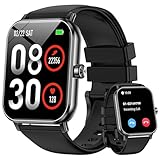
- 1.85'' Display & 300+ Watch Faces: Smart watch for men women adopts 1.85 HD screen that provides excellent visual experience. There are 300+ watch faces built-in, which can be changed by long-pressing the screen or selected/cutomized through the “Da Fit” app
- Bluetooth Calls & Smart Reminders: Fitness tracker makes calls directly from your wrist with clear audio. Receive real-time notifications for SMS and apps, ensuring you never miss important messages while driving or exercising hands-free (No reply)
- 24/7 Health Monitoring: Smart watches for men equipped with a high-performance optical sensor that can record your activities throughout the day, monitor your heart rate, sleep status and other data, and help you develop a healthier lifestyle
- 130+ Sport Modes : Built-in 3-axis gravity sensor enables this fitness watch to accurately track daily steps, distance and calories for safer and more effective workouts. These data can be viewed on the watch or mobile phone APP (note: step counting starts after 20 steps)
- 5 ATM Waterproof: Multifunctional fitness tracker watch features 5 ATM waterproof performance, wearable for swimming, handwashing and rainy days. No worry about sweat or rain damage during outdoor workouts with multiple sports modes (note: high water temperatures can affect service life)
Who the Hugo Boss Touch Is Actually For — and Who Should Look Elsewhere
All of that restraint, modularity, and visual discipline ultimately narrows the audience rather than broadening it. The Hugo Boss Touch isn’t trying to be a universal Android Wear solution, and understanding that intention is key to deciding whether it belongs on your wrist.
For buyers who want a smartwatch that behaves like a watch
The Touch makes the most sense for people who care how a watch reads in social settings before they care about step charts or VO₂ estimates. If your priorities lean toward clean proportions, materials that feel deliberate, and a case that looks at home under a cuff, this is exactly the kind of Android Wear execution you’ve been waiting for.
It wears closer to a conventional three-hander than a miniature phone screen. The case thickness is restrained, the lugs sit naturally on the wrist, and the overall footprint avoids the top-heavy feel common to sport-driven smartwatches.
Comfort plays a major role here. On a leather strap, the Touch disappears during a workday in a way rubber-strapped fitness watches rarely do, and the balanced weight distribution helps it feel like jewelry rather than equipment.
Style-first Android users who don’t want Apple Watch energy
For Android users specifically, the Touch offers an aesthetic alternative that doesn’t mimic Apple Watch design language or lean into overt tech symbolism. The round display, restrained bezel, and traditional finishing cues make it feel culturally closer to fashion watches than consumer electronics.
Android Wear runs competently in the background, handling notifications, basic fitness tracking, and light app use without asking for constant interaction. Battery life is best described as workday-friendly rather than multi-day impressive, but that trade-off aligns with the design goal of keeping the case slim and visually clean.
If you want your smartwatch to complement outfits rather than dictate them, this approach will resonate strongly.
Fashion-brand buyers entering smartwatches for the first time
The Touch is also well positioned for buyers who already trust Hugo Boss as a fashion label and are cautiously stepping into wearables. There’s familiarity in the materials, finishing, and branding that makes the technology feel less intimidating and more lifestyle-oriented.
This is not a watch that demands technical literacy. Setup is straightforward, daily use is intuitive, and most of its value comes from how seamlessly it integrates into existing routines rather than adding new ones.
For someone choosing between a quartz fashion watch and their first smartwatch, the Touch can act as a comfortable bridge between those worlds.
Who should think twice before buying
If your expectations revolve around advanced health metrics, long battery endurance, or aggressive fitness tracking, the Touch will feel underwhelming. Android Wear here is tuned for elegance and restraint, not for athletes or data obsessives.
The same applies to buyers who want maximum value through raw specifications. There are Android smartwatches at similar prices that offer larger displays, tougher materials, and deeper sensor arrays, but they make those gains by sacrificing subtlety and wearability.
Traditional watch collectors may also hesitate. While the Touch looks convincingly watch-like, it doesn’t offer mechanical interest, long-term serviceability, or the emotional permanence that defines traditional horology.
A clear, intentional middle ground
What the Hugo Boss Touch ultimately serves is a narrow but very real middle space. It’s for people who want modern convenience wrapped in a form that respects classic watch design and fashion sensibility.
If you understand that you’re paying for materials, proportions, and brand-led design rather than technical dominance, the value proposition becomes clearer. The Touch isn’t trying to win a spec war—it’s trying to look right on your wrist, day after day, and for the right buyer, that’s exactly enough.
The Bigger Picture: What the Touch Signals About the Future of Fashion-Led Smartwatches
Seen in context, the Hugo Boss Touch feels less like a single product and more like a directional statement. It suggests where fashion brands believe smartwatches can go when design, brand confidence, and everyday wearability are treated as primary features rather than secondary considerations.
Instead of chasing technical supremacy, the Touch reframes success around how naturally a smartwatch fits into someone’s life and wardrobe. That shift has wider implications for Android Wear and the fashion-led segment as a whole.
Android Wear as a design platform, not a spec race
The Touch shows how Android Wear can function as a quiet, adaptable foundation rather than a headline feature. The software stays largely out of the way, allowing the case proportions, materials, and finishing to do the visual heavy lifting.
This approach highlights an often-overlooked strength of Android Wear: its flexibility. Brands like Hugo Boss can shape the experience around aesthetics and brand identity without needing to reinvent the software layer or overwhelm users with complexity.
In doing so, the Touch demonstrates that Android Wear doesn’t have to look overtly technical. It can feel tailored, restrained, and intentionally minimal when paired with confident industrial design.
Fashion credibility matters more than feature depth
What separates the Touch from many tech-first smartwatches is credibility in the fashion space. Hugo Boss understands how a watch should sit on the wrist, how polished surfaces catch light, and how straps and cases contribute to an overall silhouette.
Those details matter enormously to buyers who are choosing a smartwatch as part of their personal style rather than as a gadget. For them, comfort, thickness, lug shape, and material finish are more influential than processor generation or sensor count.
The Touch signals that fashion brands no longer need to overcompensate with technology to justify their entry into wearables. Strong brand DNA and coherent design can be enough.
A maturing audience with different priorities
There is a growing group of smartwatch buyers who are no longer impressed by raw capability alone. They want notifications, basic health tracking, and phone integration, but they also want a watch that feels appropriate in professional and social settings.
The Touch caters directly to that mindset. Battery life is adequate rather than exceptional, health tracking is functional rather than exhaustive, and durability is tuned for daily wear rather than extreme use.
This balance reflects a maturing market where not every smartwatch needs to be a fitness instrument or a productivity hub. Some just need to be good watches first, and smart enough second.
Raising expectations for fashion-led wearables
Perhaps the most important impact of the Touch is how it quietly raises expectations for fashion-brand smartwatches. It proves that these watches don’t have to look compromised, bulky, or obviously digital to offer modern functionality.
As more fashion houses enter or refine their presence in wearables, the benchmark is shifting. Materials, finishing quality, comfort, and proportions are no longer optional extras; they are the baseline.
For Android Wear specifically, this is a positive signal. It shows that the platform can support diverse expressions of design, from rugged sports watches to understated, brand-driven pieces like the Touch.
A clear signal, not a final destination
The Hugo Boss Touch doesn’t redefine what a smartwatch can do, and it doesn’t pretend to. What it does redefine is how a smartwatch can feel when design leads and technology follows.
As a bridge between traditional fashion watches and fully fledged smart devices, it points toward a future where wearables are chosen as much for identity and comfort as for capability. For the right buyer, that future already looks very wearable.
In that sense, the Touch isn’t just a product—it’s a signal that fashion-led smartwatches are no longer playing catch-up. They’re carving out their own, more considered lane.